


Mental Wellness and Chronic Pain: Breaking the Cycle
Chronic pain and mental distress fuel each other; breaking the cycle involves treating both simultaneously with integrated care.
Chronic pain and mental distress fuel each other; breaking the cycle involves treating both simultaneously with integrated care.
%402x.svg)
For millions, chronic pain isn't just a symptom—it's an all-consuming reality that rewires the brain, drains the spirit, and traps individuals in a relentless cycle of suffering. If you're reading this, you likely know this reality intimately: the way a throbbing back or fiery nerve pain doesn't just hurt the body, but casts a shadow over your mood, your relationships, and your very sense of self. What modern science is now revealing, however, is a paradigm shift as profound as it is hopeful: chronic pain and mental wellness are not just connected; they are two sides of the same coin. The path to relief isn't found solely in a pill bottle or a surgeon's table, but in understanding and intentionally reshaping the intricate dialogue between your nervous system and your mind.
This isn't about "it's all in your head." Far from it. This is about acknowledging that pain is a complex perception generated by the brain based on threat signals, past experiences, emotions, and beliefs. When pain becomes chronic, the brain's alarm system gets stuck in the "on" position. Anxiety, depression, and stress feed this alarm, amplifying the pain. The pain, in turn, fuels more distress, creating a vicious, self-perpetuating loop. Breaking this cycle is the single most important step toward reclaiming your life.
In this comprehensive exploration, we will dismantle this cycle piece by piece, offering not just explanation, but a practical roadmap. We will journey through the neuroscience of the pain-mind connection, uncover the silent roles of stress and sleep, and examine how modern tools—from cognitive behavioral techniques to cutting-edge wearable technology like the Oxyzen smart ring—provide unprecedented insights and empowerment. This is the beginning of a new approach, where managing your mental landscape becomes a critical, non-negotiable component of managing your pain. The cycle can be broken. Let's discover how.

We are taught from a young age that pain is a straightforward signal: you touch something hot, nerves fire, the brain registers "ouch," and you pull away. Acute pain is exactly that—a brilliant, protective warning system. Chronic pain, however, is a different beast entirely. It represents a profound malfunction in this system, where the brain and nervous system continue to sound the alarm long after the initial injury has healed. To understand this, we must first dismantle the artificial barrier between "physical" and "mental" pain.
At the heart of this fusion is the brain. Neurological imaging studies show that when you experience chronic pain, it's not just the somatosensory cortex (the area that processes physical sensation) that lights up. The limbic system—the brain's emotional core, responsible for fear, anxiety, and memory—becomes equally, and sometimes more, active. The anterior cingulate cortex, which governs emotional reaction to pain, and the prefrontal cortex, responsible for cognition and interpretation, are deeply involved. In essence, chronic pain becomes a whole-brain event.
This has a crucial implication: the brain can learn pain. Through a process called central sensitization, the nervous system becomes in a constant state of high reactivity. The threshold for triggering a pain signal lowers, so non-painful stimuli (like light touch) can become painful (allodynia), and painful stimuli feel exponentially worse (hyperalgesia). This learning is reinforced by emotional states. A day filled with stress and anxiety sends a cascade of stress hormones like cortisol and adrenaline through your body, effectively "turning up the volume" on your already hypersensitive nervous system. The brain, interpreting this heightened state of threat, amplifies the pain signal. The pain then causes more distress, and the loop tightens.
Consider the story of Maya, a graphic designer with chronic migraines. She noticed her pain was not random. It reliably spiked in the late afternoon on days packed with back-to-back video calls, looming deadlines, and unresolved conflicts with colleagues. The tightening in her shoulders wasn't just muscular tension; it was her body's physical manifestation of psychological pressure. The migraine was not an isolated physical event, but the end result of a mind-body cascade. Her brain had learned to associate professional stress with crippling head pain.
Breaking the cycle, therefore, must start here: with the recognition that treating chronic pain requires addressing the brain's perception of threat. This isn't about denying the very real physical sensation. It's about changing the context in which your brain interprets it. Techniques that calm the limbic system—like mindfulness, meditation, and certain forms of therapy—directly target the neurological heart of chronic pain. They begin to teach the brain a new, less threatening story about the sensations it is receiving. As you'll discover in our deeper dives into specific techniques, this mind-body fusion is the greatest challenge in chronic pain, but also the source of its most promising solutions. For a broader look at how technology is bridging this mind-body gap, you can explore our blog for more wellness insights and research.
If the mind and body are fused in chronic pain, then stress is the glue that binds them ever tighter. The stress-pain axis is a well-documented biological pathway where psychological stress exacerbates physical pain, and physical pain acts as a monumental stressor. Understanding this axis is critical because it moves stress from being a vague "contributing factor" to a central, modifiable target in pain management.
Physiologically, when you encounter stress—be it a work deadline, financial worry, or even the constant vigilance about your own pain—your body activates the hypothalamic-pituitary-adrenal (HPA) axis. This triggers the release of cortisol and sparks the sympathetic nervous system, launching the classic "fight-or-flight" response. Your heart rate increases, muscles tense, blood flow shifts, and inflammation-promoting cytokines are released. In the short term, this is adaptive. In chronic pain, this state becomes semi-permanent.
This sustained stress response directly fuels pain in several ways:
The insidious part is that pain itself is one of the most potent stressors imaginable. It threatens your autonomy, your joy, your plans. This creates a perfect, self-feeding loop: Stress → Heightened Pain Perception → More Distress and Fear → Further Stress Response → Even Greater Pain.
To break this, we must intercept the cycle at the point of the stress response. This is where biomarker tracking becomes revolutionary. Traditional pain and stress management often relies on subjective recall ("How was your week?"), which is flawed. By objectively measuring the physiological footprints of stress, we gain a true picture of our body's internal state. This is the core of our mission at Oxyzen—to provide clarity from the chaos. You can learn more about Oxyzen's approach to decoding your body's signals on our homepage.
For instance, tracking Heart Rate Variability (HRV)—the subtle variations in time between heartbeats—is a powerful, non-invasive window into your autonomic nervous system balance. A low HRV typically indicates dominant sympathetic ("fight-or-flight") activity, a sign of chronic stress load. A higher HRV suggests a healthier balance with the parasympathetic ("rest-and-digest") system, associated with resilience and recovery. By using a device like a smart ring to monitor HRV trends, you can identify what truly stresses your system (e.g., a certain type of work, a difficult conversation, poor sleep) and, more importantly, verify which interventions (e.g., a 10-minute breathing exercise, a walk in nature, a mindfulness app session) actually shift your physiology toward calm.
By moving from subjective guesswork to objective data, you transform stress from an abstract enemy into a manageable set of biological signals. You empower yourself to take actionable steps to calm your nervous system, directly dismantling one of the strongest pillars supporting the chronic pain cycle.
The relationship between chronic pain and mental health conditions like anxiety and depression is so strong that it approaches a rule rather than an exception. Studies suggest that up to 50% of chronic pain patients also struggle with depression, and rates of anxiety disorders are similarly elevated. This is not a coincidence or a character flaw. It is a neurobiological relationship so tightly wound that disentangling "which came first" is often impossible—and less important than understanding the mechanisms of the trap.
From Pain to Distress:
Chronic pain is a relentless assault on a person's life. It leads to:
From Distress to Pain:
Conversely, anxiety and depression dramatically worsen pain perception.
This creates the "vicious loop": Pain causes mood disturbances, which lower pain thresholds and increase inflammation, which intensifies pain, which deepens the mood disturbance. It's a downward spiral that leaves individuals feeling powerless.
Breaking this loop requires a dual-front attack: treating the mood disorder as an integral part of treating the pain. Cognitive Behavioral Therapy for Chronic Pain (CBT-CP) is a gold-standard approach that does exactly this. It helps patients identify and reframe catastrophic pain thoughts, develop coping strategies, and gradually re-engage with valued activities (a process called behavioral activation) to improve mood and function. When you improve mood and reduce anxiety, you are not just "feeling better mentally"—you are sending direct, physiology-altering commands to your pain-processing centers to turn down the volume. For individuals seeking support and understanding on this journey, reading about real user experiences and testimonials can provide powerful validation and hope.

In the quest to manage chronic pain, sleep is often the sacrificed pillar. Yet, it may be the most important one we have. The relationship between sleep and pain is another bidirectional nightmare: pain disrupts sleep, and poor sleep intensifies pain sensitivity. Neglecting sleep hygiene is akin to pouring gasoline on the fire of chronic pain.
Pain makes it difficult to fall asleep, causes frequent awakenings, and prevents the deep, restorative stages of sleep (especially slow-wave sleep and REM sleep). This results in sleep fragmentation. The consequences of this are severe and direct:
Therefore, prioritizing sleep is not a luxury; it is a non-negotiable component of pain treatment. But how can you improve sleep when pain itself is the primary disrupter? This is where objective data and gentle interventions become key.
Moving beyond simply counting hours, we need to understand sleep architecture—the structure and quality of our sleep cycles. A wearable device that tracks sleep stages (light, deep, REM, awake) can reveal if pain is causing you to miss crucial deep sleep, even if you're in bed for eight hours. It can also identify patterns: does pain wake you at a specific time each night? Do your restless minutes correlate with days of higher stress?
Armed with this data, you can implement targeted strategies:
By treating sleep as a core therapeutic target and using data to refine your approach, you build a foundation of restoration. A well-rested nervous system is a more resilient, less reactive one, capable of better modulating pain signals. Improving your sleep is a direct investment in lowering your pain sensitivity for the following day.
What if the key to reducing pain wasn't fighting the sensation, but changing your relationship to it? This is the revolutionary premise behind mindfulness-based interventions and a specific, powerful modality known as Pain Reprocessing Therapy (PRT). These approaches don't aim to distract from pain or tough it out. Instead, they guide you to observe the sensation with curiosity and non-judgment, fundamentally altering the brain's threat appraisal.
Mindfulness-Based Stress Reduction (MBSR), pioneered by Jon Kabat-Zinn, has extensive research backing its efficacy for chronic pain. Mindfulness teaches you to:
Pain Reprocessing Therapy (PRT) takes this a step further. It is based on the neuroscience of neuroplasticity—the brain's ability to rewire itself. PRT operates on the principle that much chronic pain is due to "learned neural pathways" that can be unlearned. The therapy involves:
The result is not always the complete disappearance of pain, though that can happen. More commonly, the pain loses its emotional charge and its centrality in one's life. The volume gets turned down. The brain begins to prune the well-worn "pain pathways" and build new ones that don't default to alarm.
Practicing these techniques builds what we call interoceptive awareness—a nuanced understanding of your body's internal signals. This skill allows you to detect early signs of stress or tension before they escalate into a full pain flare. Combining this cultivated awareness with objective physiological data from a tool like a smart ring creates a powerful feedback loop. You can observe how a 10-minute mindfulness session directly improves your HRV, providing tangible, reinforcing proof that your mental practice is creating real, measurable change in your nervous system. To understand the technology that can support this awareness, you can discover how Oxyzen's precise tracking works.
Medical interventions and psychological tools form the core of breaking the pain cycle, but they are built upon the foundation of daily life. Three lifestyle pillars—movement, nutrition, and social connection—are often overlooked yet possess immense power to either fuel the cycle of pain or help dismantle it.
Movement as Medicine (Not Punishment):
The fear of movement (kinesiophobia) is common in chronic pain, creating a destructive pattern: pain leads to avoidance, avoidance leads to deconditioning, weakness, and stiffness, which then creates more pain. The key is pacing and finding joyful movement. This isn't about high-intensity workouts, but about gentle, consistent activity that reminds the body of its capacity.
Nutrition: Feeding an Anti-Inflammatory State:
While no single "pain diet" exists, chronic inflammation is a key pain amplifier. An anti-inflammatory eating pattern can help calm the systemic fire.
Social Connection: The Antidote to Isolation:
Pain is inherently isolating. Social withdrawal leads to loneliness, which is itself a potent stressor linked to increased inflammation and depression. Maintaining social bonds is protective.
These lifestyle elements work synergistically. A gentle walk (movement) with a friend (social connection) followed by a healthy meal (nutrition) is a triple intervention that addresses the pain cycle on multiple fronts. They are the daily practices that build a body and mind more resilient to pain's disruptions.
For too long, managing chronic pain has been a process of guesswork and delayed feedback. You try a new therapy or technique and wait days or weeks to subjectively assess if it "worked." This fog of uncertainty is disempowering. What if you could see, in real-time, how your body responds to different thoughts, activities, and interventions? This is the promise of biofeedback and the new generation of consumer wearables—they turn the internal, invisible processes of your nervous system into external, observable data, making you the expert on your own body.
Biofeedback is a clinical technique where sensors measure physiological functions like muscle tension (EMG), skin temperature, or brainwaves (neurofeedback), and display the information back to you on a screen. You then learn, through practice, to consciously influence these functions. For example, seeing your muscle tension level drop on a screen as you breathe deeply provides instant proof that you can affect your physiology, breaking the feeling of helplessness.
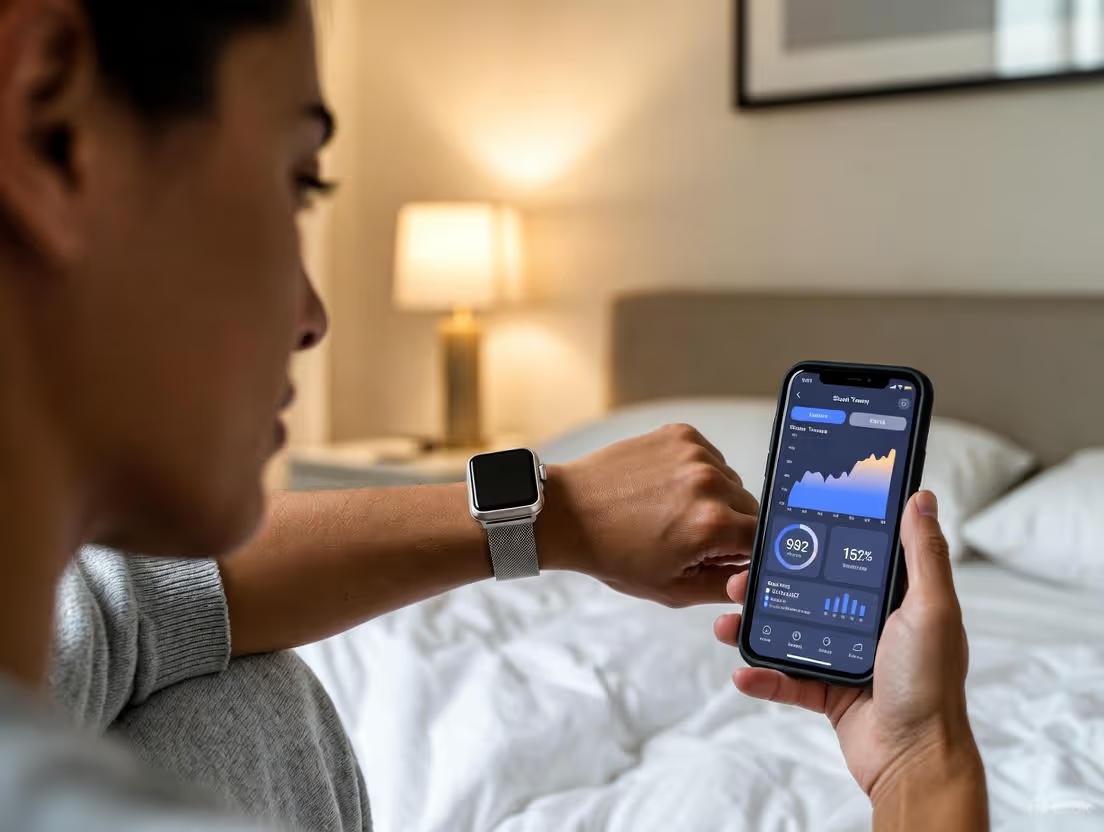
Modern wearable technology, like advanced smart rings, brings a form of continuous biofeedback into daily life. By tracking key biomarkers, these devices provide an objective diary of your body's story:
The power lies not in a single data point, but in trends and correlations. Over time, you can see clear patterns:
This transforms pain management from reactive to proactive. Instead of wondering what triggered a flare, you can review your data to identify potential precursors (e.g., two nights of poor sleep, a stressful meeting, over-activity). You can also test interventions with clarity: "I will practice deep breathing for 10 minutes at noon for one week and see if it improves my afternoon HRV dip." The data provides validation and motivation, showing you what works for your unique system. To see how this approach is implemented and to get your questions answered, our FAQ page offers detailed support.
By externalizing your internal state, wearable data bridges the gap between intention and outcome. It empowers you to have an informed conversation with your healthcare providers and moves you from being a passive patient to an active, knowledgeable participant in your own healing journey. This sense of agency is, in itself, a powerful medicine against the helplessness that chronic pain so often breeds.
Your thoughts are not silent bystanders to your pain; they are active participants in its volume and duration. Cognitive Behavioral Therapy for Chronic Pain (CBT-CP) is a structured, evidence-based approach that provides the tools to identify and change the thought and behavior patterns that intensify suffering. It operates on a simple but powerful model: our Thoughts about a situation influence our Emotions and Physical Sensations, which in turn drive our Behaviors, creating a cycle that can either amplify or dampen pain.
The most common cognitive distortion in chronic pain is catastrophizing—the mental habit of predicting the worst possible outcome and ruminating on it. Thoughts like, "This pain is unbearable and will never end," or "If I move, I'll cause permanent damage," directly activate the brain's threat centers. CBT-CP teaches you to become a detective of your own mind, to "catch, check, and change" these thoughts.
The Process in Action:
Alongside cognitive restructuring, CBT-CP focuses on behavioral activation—gradually and systematically re-engaging in activities you value but have avoided due to pain, a process called pacing. Instead of the "boom-bust" cycle (overdoing on good days, crashing on bad days), you learn to break activities into manageable pieces, using activity diaries or even wearable step data to find your sustainable baseline and increase it gradually without triggering flares.
Another key technique is attention management. Pain demands attention. CBT teaches you to consciously shift your focus to a engaging, sensory-rich task (a puzzle, a craft, a conversation, a podcast) to "dilute" the mental resources devoted to pain. This isn't denial; it's strategic resource allocation.
Integrating these cognitive tools with physiological data creates a formidable strategy. When you see your HRV crash after a spiral of catastrophic thoughts, it provides concrete, biological proof of the mind-body connection. Conversely, when you successfully reframe a thought and see your stress metrics stabilize, it reinforces the efficacy of the mental work. This synergy between psychological technique and biological feedback accelerates the rewiring process, helping you build a new, more empowered narrative around your pain and your capabilities.
There is no magic bullet for chronic pain. What works for one person may not work for another, and what works for you may change over time. Therefore, the most effective strategy is to build a personalized, integrative toolkit—a collection of evidence-based practices from both conventional and complementary medicine that you can draw upon based on your daily needs. Think of it not as a single treatment plan, but as a dynamic ecosystem of self-care.
A robust toolkit contains elements from several categories:
Foundational Medical Care:
Mind-Body Techniques (The Core of Cycle-Breaking):
Somatic & Body-Based Practices:
Technological & Data Tools:
Lifestyle & Environmental Adjustments:
The process is one of self-experimentation. Use your symptom diary and your wearable data to test adding one new tool at a time. For example: "For two weeks, I will add a 10-minute guided body scan meditation before bed and track my deep sleep and morning pain levels." Or, "I will work with a nutritionist to reduce added sugars for one month and monitor my energy and inflammation markers."
The goal is to cultivate a deep sense of self-efficacy—the belief that you have the skills and resources to influence your own well-being. This belief is the ultimate antidote to the helplessness of chronic pain. By curating your own toolkit, you move from a passive recipient of care to an active architect of your own healing. This journey is deeply personal, and at Oxyzen, we are committed to supporting it; you can learn more about our company's mission to empower this personalized health journey here.
We stand at the frontier of a new era in chronic pain management, one defined by precision, personalization, and patient empowerment. The old model of trial-and-error prescriptions and generic advice is giving way to a future where treatment is as unique as your fingerprint and your own data guides the way. This future is being built on several converging trends.
Advanced Biometric Monitoring: The wearable of today, tracking HRV and sleep, is just the beginning. Future devices may non-invasively track specific inflammatory biomarkers (like CRP), cortisol rhythms, blood glucose variability, and even subtle neurotransmitters related to mood and pain. This would provide a holistic, real-time dashboard of the biological factors fueling your individual pain cycle.
AI-Powered Personal Insights: Artificial intelligence will move beyond simple data tracking to predictive analytics. An AI could analyze your months of sleep, stress, activity, and pain log data to identify your unique precursor patterns: "Based on your history, a combination of less than 6 hours of sleep for two nights and an HRV drop below 40ms makes a significant pain flare 85% likely within 24 hours." It could then nudge you with a personalized intervention: "Consider an extra rest period and your evening meditation tonight to mitigate risk."
Digital Therapeutics (DTx): These are FDA-cleared software applications used to treat medical conditions. We already see DTx for insomnia (CBT-I) and depression. The future will bring DTx programs specifically for chronic pain that deliver personalized CBT, PRT, and mindfulness exercises, dynamically adjusting the program based on your input and biometric feedback from your wearable.
Virtual Reality (VR) & Immersive Therapeutics: VR is already showing promise as a powerful distractor from acute procedural pain. For chronic pain, immersive VR environments could be used for graded exposure therapy (re-learning movement without fear), guided somatic tracking in calming virtual landscapes, or mindfulness practices that are fully immersive, offering profound nervous system regulation.
The through-line of this future is agency. The tools will provide ever-clearer mirrors to reflect your body's inner state, and the therapies will become more accessible and tailored. The role of the healthcare provider will evolve to that of a guide and interpreter, helping you navigate your own rich dataset. The goal is a seamless integration of lifestyle, technology, and therapy that allows individuals to not just manage pain, but to thrive in spite of it. This vision of empowered, data-informed well-being is what drives innovation in this space every day.
The journey of breaking the chronic pain cycle can feel overwhelming. The key is to start small, with curiosity and self-compassion, not with an expectation of immediate transformation. Here are concrete, actionable first steps you can take today, right now, to begin shifting the cycle.
1. Cultivate One Minute of Awareness.
Set a timer for 60 seconds. Sit comfortably and simply notice your breath flowing in and out. Don't try to change it. When your mind wanders to pain or worry (and it will), gently note "thinking" and return to the breath. This tiny practice begins to build the "muscle" of mindfulness—the ability to observe sensation without immediate reaction. Do this once today.
2. Start a Simple Pain & Context Journal.
For one week, keep a very basic log. Each evening, note:
3. Practice "Paced Breathing" for Nervous System Reset.
Try the 4-7-8 technique: Inhale quietly through your nose for a count of 4. Hold your breath for a count of 7. Exhale completely through your mouth, making a whoosh sound, for a count of 8. Do this for just 4 breath cycles. This directly stimulates the vagus nerve, triggering the parasympathetic relaxation response. Use it when you feel stress building or pain intensifying.
4. Reframe One Catastrophic Thought.
When you notice an absolute, fear-based thought about your pain ("This is never going to get better"), pause. Ask yourself: "Is this 100% true, all of the time?" Then, try to formulate a slightly more balanced, realistic version: "This is really hard right now, and I have had better moments in the past. I don't know what tomorrow holds."
5. Investigate Your Data.
If you have a fitness tracker or smartwatch, don't just look at steps. Find the HRV or "stress" score feature (often found in companion apps). Look at the graph over the last week. See if you can spot a day that looks calmer or more stressed. What was different about that day? This begins the practice of linking life to physiology.
6. Schedule One Small Pleasure.
Chronic pain steals joy. Reclaim it intentionally. Block 20 minutes in your day to do something purely for enjoyment that is within your current energy limits: listen to a favorite album, sit outside with a cup of tea, watch a funny video, or text a friend.
The act of starting—of choosing one small point of intervention in the vast cycle of pain—is itself a revolutionary act. It is a declaration that you are more than your pain, and that you have the power to influence your own experience. From this small start, a new path forward can be built, one mindful breath, one reframed thought, one piece of data at a time. For continued learning and support as you take these steps, a wealth of resources awaits you on our blog, dedicated to your holistic wellness journey.
As we delve deeper into the biopsychosocial model of chronic pain, we encounter a major player that has long been overlooked: the gut. The gut-brain axis—the bidirectional communication network linking your enteric nervous system (the "second brain" in your gut) with your central nervous system—is now understood to be a critical pathway in modulating inflammation, mood, and pain perception. This connection reveals that what you eat and the health of your digestive system are not separate from your chronic pain; they are integral to its intensity and persistence.
At the core of this axis are several key mechanisms:
Consider the case of David, who struggled with fibromyalgia and constant "brain fog." Standard pain treatments offered minimal relief. On a hunch, he worked with a functional medicine practitioner who suggested a comprehensive stool test. The results revealed significant dysbiosis and markers of gut inflammation. Through a targeted protocol of dietary changes (removing inflammatory triggers like gluten and dairy), probiotics, and prebiotics, David didn’t just experience improved digestion. Over several months, his pain levels dropped noticeably, and his mental clarity returned. He was treating his brain by healing his gut.
Actionable Steps for the Gut-Brain Axis:
By addressing gut health, you attack the chronic pain cycle at the source of systemic inflammation, providing a more stable biological foundation for all other psychological and neurological interventions. It is a powerful reminder that true healing requires a whole-system view.
For many individuals with chronic pain, there is a hidden layer to their suffering: a history of psychological or physical trauma. The correlation is stark—studies show that people with a history of adverse childhood experiences (ACEs) or post-traumatic stress disorder (PTSD) are at a significantly higher risk of developing chronic pain conditions later in life. This is not a coincidence or a manifestation of psychological weakness. It is a neurobiological scar, where the body’s systems for handling threat—both physical and emotional—have become deeply intertwined.
How Trauma Sculpts a Pain-Prone Nervous System:
Trauma, especially early-life or complex trauma, fundamentally rewires the developing brain and nervous system for hypervigilance.
When trauma underlies chronic pain, standard pain management often falls short because it fails to address the root cause of the nervous system’s hypersensitivity. The pain itself can become a trigger, re-activating traumatic stress responses and creating a terrifying loop where Pain Triggers Trauma Memories/Feelings → Trauma Response Amplifies Nervous System Sensitization → Pain Intensifies.
Healing the Nexus: Trauma-Informed Pain Care:
Breaking this cycle requires a trauma-informed approach. This means creating a sense of safety, choice, and collaboration in treatment. Key modalities include:
The goal here is not necessarily to recall every detail of a traumatic event, but to regulate the dysregulated nervous system that the trauma created. As the nervous system learns it is now safe, the baseline level of threat decreases, and with it, the amplified pain signals can begin to soften. This is profound, challenging work that underscores why a compassionate, holistic view of the person in pain is non-negotible. At Oxyzen, we believe in supporting every individual's unique journey, including the complex path of trauma recovery; our story is rooted in empathy for these multifaceted challenges.
Chronic pain is an isolating experience. It can feel like you are living in a different world from friends and family who don’t understand the constant, invisible burden you carry. This isolation is more than just emotionally painful; it is physiologically harmful. Loneliness is a potent stressor, elevating inflammation and depression. Therefore, intentionally building a functional support system is not a luxury—it is a critical component of your treatment plan, as important as any medication or therapy.
A support system is multi-layered, each layer serving a distinct purpose:
1. The Inner Circle: Emotional & Practical Support.
This includes partners, family, and close friends. The key here is communication. Teach them about your condition. Use clear, "I-statements" to express needs: "I’m having a high-pain day. What would help me most is if we could order in dinner and watch a movie quietly," instead of withdrawing or expecting them to guess. Share articles (like this one) to help them understand the mind-body connection. Their role isn’t to fix you, but to believe you, validate your experience, and offer practical help.
2. The Middle Circle: Peer & Community Support.
This is where you find people who truly get it. Chronic pain support groups, whether in-person or online, provide unparalleled validation. Hearing someone else describe your exact experience dismantles the shame and self-doubt pain cultivates. These groups are also invaluable resources for practical tips, doctor recommendations, and coping strategies. The relief of saying, "Me too," cannot be overstated. Reading about others who have navigated similar paths can be incredibly affirming; consider browsing real testimonials from individuals who have integrated new tools into their lives.
3. The Outer Circle: Professional Support.
This is your healthcare team, but think of it expansively:
Navigating Unsupportive Relationships:
Not everyone will be able to offer support. Some may offer unhelpful advice ("Have you tried yoga?"), express disbelief, or drift away due to the constraints of your condition. It’s vital to recognize this as a reflection of their limitations, not your worth. Grieve the loss, and re-invest your energy in relationships that are nourishing. Setting boundaries with draining people is an act of self-care that directly conserves your limited energy for healing.
Your support system acts as a buffer against the stress of pain. They provide distraction, practical aid, laughter, touch, and love—all of which release oxytocin, endorphins, and other neurochemicals that counteract stress hormones and provide natural pain relief. They remind you of your identity beyond the pain. Investing in these connections is a direct investment in calming your nervous system and breaking the cycle of suffering.
For those with chronic pain, the healthcare system itself can become a significant source of stress and frustration. From misdiagnosis and dismissal to the challenges of insurance and fragmented care, the journey to effective treatment often feels like a labyrinth. Becoming an empowered advocate for yourself is not just helpful—it’s essential for navigating this maze and securing the care you deserve.
The Challenge of Invisible Illness:
Chronic pain is often an "invisible illness." You may look fine on the outside, leading to implicit (or explicit) bias from providers who may question the validity of your suffering. This medical gaslighting—being told "it's all stress" or "the tests are normal, so you must be fine"—is devastating and can worsen the trauma-pain cycle. It’s crucial to remember: Normal test results do not mean you are not in pain. They often indicate that the problem is rooted in central sensitization and nervous system dysregulation, not acute tissue damage.
Strategies for Effective Self-Advocacy:
Remember, you are hiring these professionals for their expertise. If a provider is dismissive, unwilling to collaborate, or makes you feel judged, it is perfectly acceptable—and necessary—to seek a second, third, or fourth opinion. Your perseverance is not being "difficult"; it is the necessary fuel for finding a partner in your care. For common questions about integrating technology with traditional care, our FAQ resource can be a helpful starting point.

In the relentless fight against chronic pain, one of the most counterintuitive yet transformative shifts is moving from a stance of struggle and resistance to one of acceptance and commitment. This is the cornerstone of Acceptance and Commitment Therapy (ACT), a powerful modality for chronic pain that doesn’t focus on reducing pain intensity as its primary goal, but on increasing psychological flexibility—the ability to feel pain and still choose to live a meaningful life.
What Acceptance Is NOT:
It is not resignation, giving up, or liking your pain. It is not passive suffering. Rather, it is the conscious choice to stop pouring your limited energy into the exhausting, often futile, battle to not have pain. That battle—the constant scanning for pain, the frustration when it’s present, the desperate search for a cure—often creates more suffering than the pain sensation itself.
What Acceptance IS:
It is the willingness to experience pain, along with the thoughts and emotions that come with it, as they are, without automatically struggling against them. It is saying, "Okay, here is the tightening sensation in my shoulder. Here is the thought, 'I can’t stand this.' I can feel that, and still choose to read this book to my child." It is making room for the discomfort so it is not in the driver’s seat of your life.
ACT uses powerful metaphors, like "Carrying Your Pain": Imagine you’re forced to carry a heavy, awkward backpack (your pain) everywhere you go. Your instinct is to wrestle with it, kick it, scream at it to go away—actions that only exhaust you while the backpack remains. Acceptance is about stopping the struggle, putting the backpack on as comfortably as you can, and then turning your attention to the path ahead and where you want to go. The backpack is still there, but it no longer receives all your energy and attention.
This leads to the most vital part: Values-Based Living. When pain dominates, life shrinks around it. Values are your compass, pointing you toward what gives your life meaning, richness, and vitality—qualities like connection, creativity, learning, nature, family, or contribution.
The ACT process involves:
Example: Your value is Connection. A committed action might be, "I will call my sister for a 10-minute chat twice a week." On a high-pain day, the thought arises: "I’m too tired and miserable to talk." Defusion: "I’m having the thought that I’m too miserable." Acceptance: "I feel exhausted and in pain. I can feel that and still pick up the phone for a short, low-energy call." The outcome isn't a pain-free call; it's a valued action taken, which builds a sense of vitality and self-respect that pain cannot touch.
By pivoting your focus from pain control to life enhancement, you reclaim your identity. The pain may persist, but its significance diminishes. You build a life that is not defined by absence of pain, but by the presence of purpose. This philosophical and practical shift is often the key that unlocks long-term resilience.
Building on the principles of mindfulness and acceptance, the frontier of chronic pain treatment actively leverages neuroplasticity—the brain's lifelong ability to reorganize itself by forming new neural connections. The goal is explicit: to use mental exercises to literally rewire the brain out of its well-grooved "pain pathways" and strengthen pathways for safety, movement, and normal sensation. This moves beyond coping and into the realm of curative potential for central sensitization.
The Principle of "Neurons That Fire Together, Wire Together":
Every time you experience pain coupled with fear and negative thought, you strengthen that association. The reverse is also true: by repeatedly pairing the sensation or thought of movement with safety and positive outcome, you can forge new associations.
Key Neuroplasticity Techniques:
1. Graded Motor Imagery (GMI):
This is a staged, evidence-based program for retraining the brain after pain, particularly effective for complex regional pain syndrome (CRPS) and other neuropathic pains. It works by gently challenging the brain's distorted "body map."
2. Sensory Retraining:
For pain characterized by allodynia (light touch hurts) or distorted sensations (burning, freezing), this involves gentle, safe re-education of the sense of touch.
3. Pain Reprocessing Therapy (PRT) in Depth:
As introduced earlier, PRT’s somatic tracking is a direct neuroplasticity exercise. By consciously attending to the pain with an attitude of safety and curiosity, you are engaging the prefrontal cortex (rational observation) to inhibit the amygdala (fear) and anterior cingulate cortex (emotional reaction to pain). Each session is a workout for building a new, non-threatening neural pathway for that sensation.
4. Adjunctive Use of Technology:
Wearable data supercharges these techniques by providing objective feedback. After a 20-minute session of motor imagery, you can check your HRV. Seeing an increase provides concrete, reinforcing evidence that the exercise is calming your nervous system. Tracking your progress through the stages of GMI with a journal and correlating it with changes in your daily pain metrics turns an abstract concept into a tangible, data-driven journey of brain change. To explore how precise biometrics can support this retraining process, you can learn more about Oxyzen's technology here.
The message of neuroplasticity is one of profound hope: your brain is not statically broken. It is adaptable. With consistent, correct practice, you can be the architect of your own neural remodeling, gradually dissolving the learned pain patterns and restoring the brain's natural state of balanced perception.
Reaching a place of improved management is a monumental achievement, but chronic pain is often characterized by fluctuations. The goal of long-term maintenance is not to achieve a mythical, static state of being "pain-free," but to build resilience—the capacity to anticipate, withstand, and recover from inevitable flares and setbacks without collapsing back into the destructive core of the pain cycle. This phase is about solidifying your toolkit into a sustainable lifestyle.
The Flare-Up Management Plan:
Every person with chronic pain needs a pre-negotiated, written plan for bad days. Creating this while you are feeling relatively well prevents decision-making from a place of panic and despair. Your plan should include:
Building Resilience Through Lifestyle Rhythm:
Resilience is built in the good times, not just summoned in the bad. It comes from creating a stable, health-promoting rhythm to your days and weeks that acts as a buffer.
The Role of Continuous Monitoring:
Long-term, a wearable device transitions from an investigative tool to a guardrail system. By establishing your personal baselines for HRV, sleep, and resting heart rate, you can spot early warning signs of system strain days before a full-blown flare might hit. A subtle, multi-day dip in HRV and rise in RHR is your body’s whisper that it’s under stress. This early alert allows you to proactively implement your de-escalation plan—increasing rest, doubling down on relaxation practices, simplifying your schedule—potentially heading off a major setback.
This maintenance phase is where you transition from patient to practitioner—the expert practitioner of your own well-being. You move from fighting a war against pain to skillfully managing a chronic condition with wisdom, data, and self-compassion. It’s about crafting a life of meaning and vitality, with chronic pain as one manageable aspect of your human experience, not its defining center. For ongoing inspiration and education on maintaining this balance, our blog offers a continually updated resource library.
Your Trusted Sleep Advocate: Sleep Foundation — https://www.sleepfoundation.org
Discover a digital archive of scholarly articles: NIH — https://www.ncbi.nlm.nih.gov/
39 million citations for biomedical literature :PubMed — https://pubmed.ncbi.nlm.nih.gov/
Experts at Harvard Health Publishing covering a variety of health topics — https://www.health.harvard.edu/blog/
Every life deserves world class care :Cleveland Clinic - https://my.clevelandclinic.org/health
Wearable technology and the future of predictive health monitoring :MIT Technology Review — https://www.technologyreview.com/
Dedicated to the well-being of all people and guided by science :World Health Organization — https://www.who.int/news-room/
Psychological science and knowledge to benefit society and improve lives. :APA — https://www.apa.org/monitor/
Cutting-edge insights on human longevity and peak performance:
Lifespan Research — https://www.lifespan.io/
Global authority on exercise physiology, sports performance, and human recovery:
American College of Sports Medicine — https://www.acsm.org/
Neuroscience-driven guidance for better focus, sleep, and mental clarity:
Stanford Human Performance Lab — https://humanperformance.stanford.edu/
Evidence-based psychology and mind–body wellness resources:
Mayo Clinic — https://www.mayoclinic.org/healthy-lifestyle/
Data-backed research on emotional wellbeing, stress biology, and resilience:
American Institute of Stress — https://www.stress.org/


