


The Mindful Conflict Resolution Method: Navigating Disagreements Consciously
Evening awareness practices like a body scan or gratitude reflection improve sleep quality by calming the mind.
Evening awareness practices like a body scan or gratitude reflection improve sleep quality by calming the mind.
%402x.svg)
Conflict is an inevitable part of the human experience. From minor misunderstandings with a colleague to deep-seated disagreements with a partner, these moments of friction can leave us feeling drained, defensive, and disconnected. Our typical responses—fight, flight, or freeze—are hardwired into our nervous systems, often leading to escalation, resentment, or unresolved tension. But what if there was a different way? What if conflict, instead of being a source of destruction, could become a catalyst for deeper understanding, innovation, and connection?
This is the promise of the Mindful Conflict Resolution Method. It is not a script to win an argument but a transformative framework for navigating disagreements with conscious awareness, empathy, and intentionality. It moves us from reacting from our limbic system to responding from our prefrontal cortex. This approach combines timeless wisdom from mindfulness practices with modern psychology and neuroscience, creating a structured yet flexible path through the turbulent waters of disagreement.
In our hyper-connected, high-pressure world, the cost of unconscious conflict is immense: stifled creativity in teams, eroded trust in relationships, and chronic stress that impacts our physical and mental well-being. Conversely, the ability to navigate conflict consciously is a superpower. It fosters psychological safety, strengthens relational bonds, and unlocks collaborative potential. This journey requires more than intellectual understanding; it demands a new way of being in relationship with ourselves and others. It requires cultivating the inner stability to face turbulence without being swept away.
Interestingly, the very first step in this method begins not with the other person, but with tuning into ourselves. Modern wellness technology, like the advanced biometric tracking offered by smart rings from Oxyzen.ai, can provide a surprising and data-driven entry point into this self-awareness. By revealing our body’s unconscious stress signals—a rising heart rate, a change in heart rate variability, or a drop in skin temperature—these devices act as an early-warning system, prompting us to pause before we react. It’s a perfect example of how marrying internal wisdom with external insight can create profound behavioral change.
This article will guide you through the foundational pillars of the Mindful Conflict Resolution Method. We will explore the science of conflict in the body and brain, build the essential toolkit of self-regulation, and master the communication skills that transform dialogue. We will delve into empathy, navigate high-stakes scenarios, and learn how to repair and rebuild after a rupture. This is not a quick fix but a deep, integrative practice for anyone looking to lead, love, and live with greater peace and effectiveness.

To navigate conflict mindfully, we must first understand the ancient biological machinery that drives our unconscious reactions. When we perceive a threat—which a heated disagreement can easily trigger—our brain’s alarm system, the amygdala, sounds the alarm. This tiny, almond-shaped structure bypasses our slower, rational prefrontal cortex and activates the sympathetic nervous system, launching the body into fight-or-flight mode.
This process happens in milliseconds. Adrenaline and cortisol flood the bloodstream. Your heart rate accelerates, blood pressure rises, muscles tense, and digestion halts. Your field of vision literally narrows (tunnel vision), and your cognitive capacity shrinks. You are physiologically primed for survival, not for nuanced, empathetic conversation. This is why, in the heat of an argument, you might struggle to find words, forget valid points, or say something you later regret. Your brain’s resources have been diverted to your body for a perceived physical threat.
The Hijacking of the Rational Mind
Neuropsychologist Daniel Goleman famously termed this an "amygdala hijack." During a hijack, the higher brain functions responsible for logic, emotional regulation, and perspective-taking are effectively offline. You are operating from your reactive, emotional brain. This explains the paradoxical feeling of knowing you should calm down but being utterly unable to do so in the moment.
“Between stimulus and response there is a space. In that space is our power to choose our response. In our response lies our growth and our freedom.” — Viktor E. Frankl
The goal of mindful conflict resolution is to widen that space Frankl describes. It’s about creating a buffer between the triggering event and your response, allowing the prefrontal cortex to come back online.
The Role of Neuroplasticity
The hopeful news lies in neuroplasticity—the brain’s ability to rewire itself based on experience. Each time you consciously pause before reacting, you strengthen the neural pathways between the amygdala and the prefrontal cortex. You are literally building a "mindful muscle." With consistent practice, your baseline reactivity lowers, and your capacity for a measured response increases. This isn’t about suppressing emotion; it’s about regulating your nervous system so that emotion can be felt and channeled constructively.
Biometric Feedback: Illuminating the Invisible
This is where awareness of our physiology becomes a critical tool. We often notice we’re stressed only after we’ve snapped or shut down. Biometric devices offer real-time, objective feedback on our internal state. For instance, a smart ring that tracks heart rate variability (HRV)—a key indicator of nervous system balance—can show you the moment your body shifts into stress mode, even before your conscious mind registers it.
By checking in with this data, you can learn your unique stress signatures. Do your palms get clammy? Does your HRV dip? As noted in resources on the Oxyzen.ai blog, understanding these personal biometric cues can serve as a non-judgmental prompt to employ a breathing technique or take a break, effectively short-circuiting the amygdala hijack before it derails a conversation. This fusion of ancient mindfulness and modern technology creates a powerful feedback loop for self-mastery.
You cannot navigate a disagreement consciously if you are a mystery to yourself. The cornerstone of the Mindful Conflict Resolution Method is a deep, honest, and compassionate self-awareness. This is the internal groundwork that makes every subsequent skill possible. It involves mapping your emotional landscape, recognizing your triggers, and understanding your default conflict styles.
Mapping Your Emotional Landscape
Begin by simply noticing what you feel, without judgment, throughout the day. Anger is often a secondary emotion, masking more vulnerable feelings like hurt, fear, shame, or sadness. In a conflict, the ability to identify the primary emotion underneath the anger is transformative. Instead of lashing out with "You never listen to me!" (anger), you might discover the deeper truth: "I feel hurt and insignificant when I feel cut off" (hurt). This reframes the entire conversation.
Identifying Your Triggers and Hot Buttons
We all have them: specific words, tones of voice, topics, or behaviors that reliably send us into a reactive spiral. These triggers are usually tied to past wounds or core vulnerabilities. Perhaps being micromanaged triggers a childhood sense of helplessness. Or being criticized publicly touches a deep fear of inadequacy. Mindful conflict resolution requires excavating these triggers. When you feel that familiar surge of heat, ask yourself: What old story is this activating? Is this person’s intention truly to harm me, or have they accidentally brushed against a bruise from my past?
Knowing Your Default Conflict Style
Psychologists often describe five common conflict styles: Competing (assertive, uncooperative), Accommodating (unassertive, cooperative), Avoiding (unassertive, uncooperative), Collaborating (assertive, cooperative), and Compromising (mid-range on both). None are inherently bad; each can be useful in certain contexts. However, operating on autopilot, you likely default to one or two styles based on your personality and upbringing. The mindful practitioner learns to consciously choose the style most appropriate for the situation and relationship, rather than habitually retreating or attacking.
The Daily Practice of Mindfulness
Self-awareness isn’t a switch you flip on during an argument. It’s a capacity built through daily, consistent practice. A simple 10-minute daily meditation focusing on the breath trains the mind to observe thoughts and feelings without getting entangled in them. This meta-awareness—the ability to watch yourself becoming angry—is the key to creating Frankl’s "space." It’s the difference between being angry and noticing that anger is present.
Journaling for Clarity
Regular journaling is another potent tool. Writing about conflicts after they occur helps you deconstruct them without the heat of the moment. Explore questions like: What was I really needing in that moment? What part did I play? What is my responsibility? This practice builds emotional literacy and reduces the charge around future similar events.
As you cultivate this inner witness, you build a stable internal platform. From this platform, you can engage with others without losing yourself. This foundational self-work is what the team at Oxyzen.ai would describe as the "inner operating system" upon which all effective external interaction runs. It’s the prerequisite for moving from blame to curiosity.
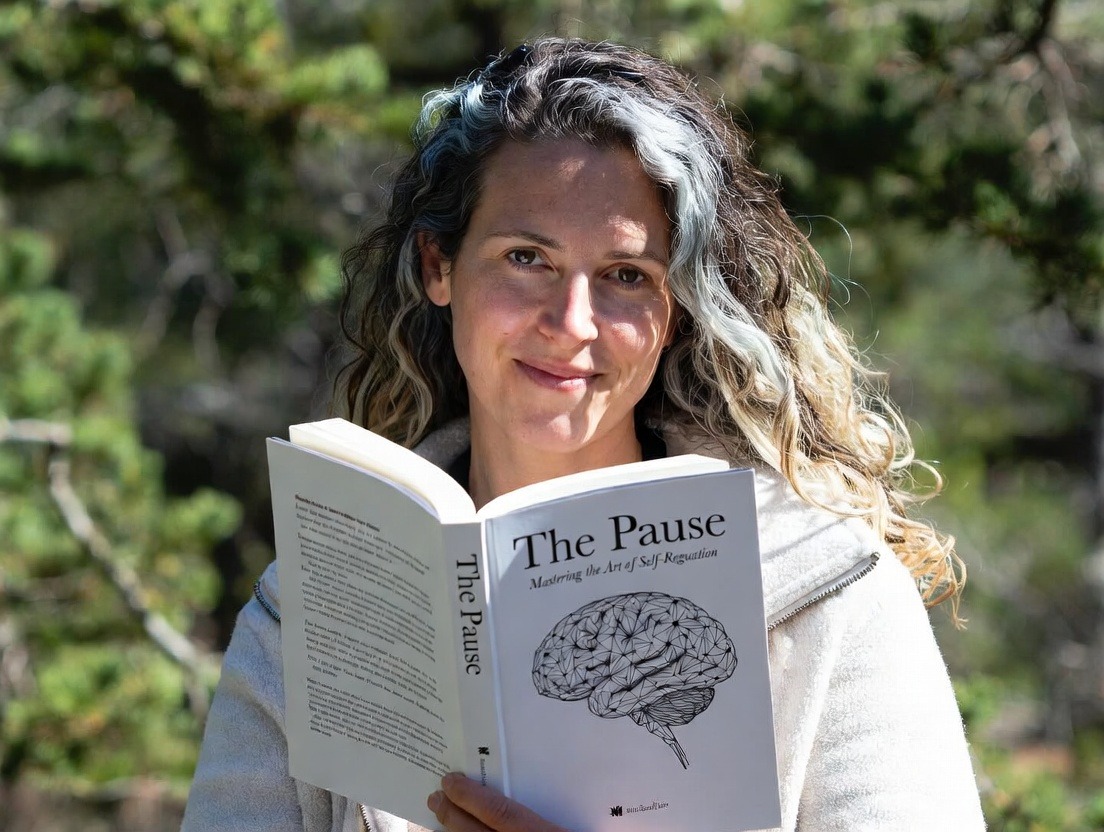
When the trigger is pulled and the amygdala sounds its alarm, the single most powerful action you can take is… nothing. This is The Pause. It is the deliberate, conscious interruption of the automatic reaction cycle. It is the essential bridge between the unconscious hijack and a mindful response. Self-regulation is the skill of calming your own nervous system so you can access your full intelligence and empathy.
Physiology First: Calming the Body
Since conflict triggers a physiological storm, the most direct way to regain control is through the body. Techniques that activate the parasympathetic nervous system (the "rest and digest" system) are crucial:
Creating Space with Tactical Delays
There is no rule that you must respond immediately. It is perfectly acceptable—and often wise—to buy yourself time.
The Role of Real-Time Biometric Awareness
This is where a wearable like a smart ring transitions from a fitness tracker to a conflict resolution aid. Imagine your phone gently vibrating or an app notification showing a significant dip in your HRV during a tense work call. That objective data is a neutral, third-party signal to "Pause." It externalizes your internal state, making it easier to acknowledge and act upon. As shared in user experiences on Oxyzen.ai/testimonials, many find this objective feedback removes the shame or denial around stress, allowing them to take constructive action much earlier in the escalation cycle.
Cultivating a "Container" for Emotion
Self-regulation is not about becoming a emotionless robot. It’s about building a bigger, stronger container to hold intense feelings without being overwhelmed by them. Think of your emotions as a stormy sea. Without a container, you are the boat tossed by every wave. With a strong container, you are the lighthouse, standing firm amidst the storm, observing it without being destroyed by it. The Pause is the moment you become the lighthouse.
Mastering this art means that when conflict arises, your first move is internal. You steady yourself. From this place of regulated calm, you can now choose how to engage. And the most effective way to engage is through a specific, intentional form of communication.
With a regulated nervous system, we can now turn our attention outward with clarity and intention. Conscious Communication is the skill set that allows us to express our truth and understand another’s without fueling the fire of conflict. It replaces blaming, generalizing, and assuming with curiosity, specificity, and vulnerability.
The Power of "I" Statements
This is the bedrock of non-violent communication. An "I" statement owns your experience without blaming the other person. It follows a simple but profound structure: "I feel [emotion] when [specific behavior] because [need/impact]. I would appreciate [clear request]."
The difference is seismic. The first statement puts the listener on the defensive. The second invites them into your emotional world and makes a collaborative request.
Deep Listening: Listening to Understand, Not to Reply
Most of us listen with the intent to craft our next argument. Conscious listening requires we suspend our own agenda and fully focus on comprehending the other person’s perspective, feelings, and needs. This involves:
Asking Open-Ended, Curious Questions
Move from interrogation ("Why would you do that?") to curiosity. Use questions that open up dialogue:
These questions signal that you value their viewpoint and are engaged in a joint problem-solving mission, not a battle to be won.
Managing Tone and Non-Verbals
Communication is only 7% words. Tone of voice (38%) and body language (55%) carry the majority of the message. A regulated body naturally supports a calm tone and open posture (uncrossed arms, relaxed shoulders). Be mindful of a sarcastic tone, eye-rolling, or dismissive gestures—they can negate the most carefully chosen words.
Conscious communication transforms a confrontation into a dialogue. It requires practice and courage, as it often feels vulnerable to express needs so clearly. Yet, this vulnerability is the gateway to true connection and resolution. For more on building these relational skills, you can explore resources on the Oxyzen.ai/blog, which often covers the intersection of emotional intelligence and daily wellness.

Empathy is the fuel that powers the engine of mindful conflict resolution. It is the conscious, deliberate effort to understand another person’s experience from their frame of reference. It is the antidote to demonization and the foundation for genuine compromise. Without empathy, conflict resolution is merely a cold transaction. With it, it becomes a bridge between two human hearts.
Cognitive vs. Emotional Empathy
It’s important to distinguish between two key types:
Both are valuable. Cognitive empathy helps us understand perspectives different from our own, while emotional empathy builds bonds and motivates compassionate action. In conflict, we must employ cognitive empathy even—especially—when we don’t initially feel emotional empathy.
The Practice of Perspective-Taking
This is a structured exercise in cognitive empathy. When stuck, literally switch chairs. Sit in another chair and speak as the other person. Articulate their argument, their fears, their needs, as convincingly as you can. Then, have them do the same for you. This physical act of changing positions can break mental logjams and reveal hidden concerns. The goal is not to agree, but to accurately represent their viewpoint to their satisfaction. "Do I have your position right?"
Uncovering the "Why" Behind the Position
In any disagreement, people present their positions (what they say they want). Empathy seeks to discover their underlying interests (why they want it). Two siblings fighting over an orange are in a position-based conflict. If one wants the peel for baking and the other wants the juice, their interests are not in conflict—a collaborative solution is possible. In a workplace dispute over a project timeline, one person’s interest may be "quality assurance," while another’s is "client satisfaction." These interests can be aligned, even if the positions ("I need two more weeks!" vs. "We must ship Friday!") seem irreconcilable.
Empathy as a Boundary, Not a Sponge
Empathy does not mean abandoning your own needs or accepting abusive behavior. This is a critical distinction. You can understand why someone is hurtful (e.g., "He’s lashing out because he’s terrified of failure") without condoning the hurtful behavior. You can hold empathy in one hand and a firm boundary in the other: "I understand you’re under immense pressure, and it’s not okay to yell at the team. Let’s talk about the pressure and find another way to address it."
Building the Empathy Muscle
Empathy, like a muscle, strengthens with use. Practice it in low-stakes situations: with a frustrated barista, a complaining friend, or a character in a film. Try to imagine their backstory, their hopes, their fears. This daily practice makes it more accessible when you need it most in high-stakes conflict. The journey of Oxyzen.ai itself was built on a deep empathy for the modern individual’s struggle to balance performance and well-being, a principle that informs their approach to human-centered technology.
When we truly engage the empathy engine, we stop seeing an adversary and start seeing a partner with a different set of data and experiences. This shift is the turning point where conflict ceases to be a war and starts to become a collaborative puzzle to be solved together.
Not all conflicts are calm, sitting-down conversations. Some erupt suddenly, are charged with intense emotion, or involve power imbalances. In these high-stakes scenarios, the primary goal shifts from resolution to de-escalation—lowering the emotional temperature to create a space where mindful resolution can later occur. This is crisis management for relationships.
Recognizing the Point of No Return
The first skill is recognizing when a conversation has passed the threshold where productive dialogue is possible. Signs include: raised voices, repetitive circular arguments, personal attacks, physical agitation (pacing, clenched fists), or one party shutting down completely (stonewalling). At this point, pushing for a solution will only cause damage.
The "NAME" Protocol for De-escalation
A useful acronym to guide your intervention:
The "Biological Reset" Break
A standard 20-minute break is not just psychological; it’s biological. It takes approximately that long for stress hormones like cortisol and adrenaline to begin clearing from the bloodstream. Encourage activities that aid this reset: a walk outside (nature and movement are potent nervous system regulators), drinking a glass of water, or doing a short breathing exercise. Discourage activities that ruminate on the conflict, like drafting angry emails.
Managing Your Own Triggers in the Storm
When the other person is highly escalated, their amygdala is hijacked. Anything you say may be filtered through their threat perception. Your most important job is to manage your own reactivity. Use your self-regulation tools intensely. Speak slowly and softly—this can unconsciously influence their nervous system to mirror your calm. Avoid matching their volume or intensity.
When to Involve a Third Party
There is wisdom in knowing when a conflict is beyond the two parties to de-escalate alone. This is not failure; it’s pragmatism. A skilled mediator, therapist, or HR professional can provide a neutral container and facilitate communication. Suggesting this should be framed as a desire for a better outcome, not a punishment. "I think we’re both too close to this to see a way forward. Would you be open to having [neutral person] help us talk this through?"
De-escalation is an act of profound respect—for the other person, for the relationship, and for yourself. It prevents the scorched earth that makes future reconciliation impossible. Once the storm has passed and a measure of calm has been restored, you can then move into the creative work of finding a solution.

Once the emotional charge has been reduced and both parties are regulated enough to think creatively, you can transition from confronting each other to confronting the problem together. Collaborative problem-solving is a structured, interest-based approach that seeks a "win-win" outcome, or at least a "win-learn" outcome where both parties feel heard and respected.
Shift from "Me vs. You" to "Us vs. The Problem"
This is a fundamental mental reframe. Physically, you might even move from facing each other to sitting side-by-side, looking at a whiteboard or notepad that represents "the problem." The language changes from "Your idea won’t work because…" to "The challenge we need to solve is… How can we address both of our core concerns?"
Brainstorming with a "Yes, And..." Mindset
Suspend judgment and evaluation entirely in the initial phase. Set a timer and generate as many possible solutions as you can, no matter how impractical they seem. Use the improvisational principle of "Yes, and..." to build on each other’s ideas. This fosters a sense of teamwork and unlocks creative possibilities that wouldn’t emerge from a debate format. The goal is quantity, not quality.
Evaluating Options Against Shared Criteria
Once you have a list, establish the criteria for a good solution. These often arise from the underlying interests you uncovered during the empathy phase. Criteria might include: "Must stay within budget," "Must respect both our time commitments," "Must uphold our team’s quality standards," "Must be implemented by Friday." Then, collaboratively evaluate each brainstormed idea against these criteria. This depersonalizes the evaluation; an idea isn’t rejected because you don’t like it, but because it doesn’t meet our shared standards.
The "Third Way"
Often, the best solution is not a simple compromise where everyone loses a little, nor is it one person’s original idea. It is a novel "Third Way"—a new option synthesized from the concerns and creativity of both parties. This is the gold standard of collaboration. It requires letting go of attachment to your initial position and being genuinely open to a new, co-created reality.
Building in Feedback Loops
Agree on a trial period for the solution. "Let’s try this new workflow for two weeks and then check in on Tuesday the 15th to see how it’s feeling for both of us." This reduces the pressure for the solution to be perfect forever and establishes a mechanism for iterative improvement. It’s a living agreement.
Documenting the Agreement
Once a solution is found, briefly summarize it in writing. This can be a simple email: "As we agreed, I will handle X, and you will take care of Y. We’ll review on Z date." This prevents future misunderstandings and provides a reference point. It formalizes the mutual commitment.
Collaborative problem-solving transforms conflict from a zero-sum game into a creative, relational process. It builds trust and demonstrates that the relationship can withstand and even grow from disagreement. For common questions on applying these frameworks in personal or professional life, resources like the Oxyzen.ai/faq can offer practical guidance on integrating wellness and interpersonal skills.
Conflict rarely occurs on a level playing field. Differences in authority, social identity, gender, seniority, or emotional dependency create power dynamics that can distort communication and make mindful resolution feel risky or impossible for the less powerful party. Ignoring these dynamics is a critical failure of the mindful practitioner. Conscious conflict resolution requires us to see, acknowledge, and skillfully navigate these imbalances.
Recognizing the Forms of Power
Power can be:
The Responsibility of the "Holder of Power"
If you are in the position of greater power, your responsibility is magnified. You must:
Strategies for the "Less Powerful" Party
Navigating conflict from a position of less power requires courage and tactical skill.
Addressing the Dynamic Directly
In relationships with trust, it can be powerful to name the dynamic. The less powerful person might say, "It feels risky for me to disagree with you, given our roles, but I trust you want my honest input." The more powerful person can say, "I’m aware our titles might make it hard for you to push back, so I want to double-check: are you fully comfortable with this plan?"
Creating Systems to Balance Power
In teams and families, proactive systems can help. Implement processes like "round-robin" sharing where everyone speaks, anonymous feedback channels, or a rotating "devil’s advocate" role. These structures institutionalize psychological safety.
Navigating power with mindfulness means wielding influence with compassion and advocating for oneself with wisdom. It ensures that conflict resolution does not reinforce oppression but moves toward greater equity and respect within the relationship or system.
A conflict does not end with an agreement or a solved problem. The emotional and relational residue remains. Ignoring this residue is like fixing a broken bone but never doing the physical therapy—the relationship may heal crookedly, weaker at the break point. The final, crucial phase of the Mindful Conflict Resolution Method is intentional repair and integration, which deepens trust and resilience for the future.
The Necessity of Repair
Even in the most conscious conflicts, hurt feelings, embarrassment, or a sense of distance can linger. A repair attempt is a gesture that acknowledges the emotional impact and reaffirms the value of the relationship. It separates the issue from the person. Without repair, small resentments accumulate, creating a brittle relationship prone to future fractures.
The Anatomy of a Good Apology
A true apology is not a tool to end discomfort; it’s a gift of accountability. A mindful apology includes:
Receiving an Apology Gracefully
If you are on the receiving end of a sincere apology, your role is to acknowledge it. You don’t have to say "It’s okay" if it wasn’t. You can say, "Thank you for apologizing. I appreciate you saying that, and it means a lot to me." If you can, offer forgiveness—not as absolution for them, but as a release of the resentment for yourself.
Re-establishing Connection Rituals
After a rift, reconnect through positive interaction. Go for a coffee, work on a low-stakes collaborative task, or simply share a moment of lightness or humor. These actions rebuild the positive neural associations that conflict temporarily overwrote. They remind your nervous systems that you are allies.
The "Lesson Learned" Integration
The most growth-oriented step is to jointly reflect on the conflict as a learning opportunity. Have a meta-conversation once emotions are fully settled. "What did we learn about how we communicate under stress? Is there a process we could put in place to catch this earlier next time?" This transforms the conflict from a painful event into a source of relational wisdom and a stronger "operating manual" for your relationship.
When Repair Seems Impossible
Some breaches of trust are profound. In cases of betrayal, abuse, or fundamentally incompatible values, repair may not be possible or healthy. Mindful conflict resolution in this context may mean resolving to end the relationship with as much clarity, honesty, and lack of malice as possible. The "integration" then becomes a personal process of healing and learning for your own future.
Repair is the keystone of the entire method. It ensures that the process of conflict leads to growth rather than decay. It is how we write a story of resilience, proving to ourselves and each other that our connections are stronger than our disagreements. This philosophy of continuous growth and repair is core to the vision behind innovative wellness tools, much like the iterative, user-focused development shared in Oxyzen.ai/our-story.
While the core principles of mindful conflict resolution are universal, their application requires nuance depending on the relational context. The stakes, power dynamics, and emotional histories differ dramatically between a boardroom, a bedroom, and a family dinner table. Tailoring your approach is key to effectiveness.
In Romantic Partnerships: From Trigger to Intimacy
Conflict with a life partner is often the most emotionally charged because the stakes—love, security, belonging—are so high. Triggers are deeply intertwined with attachment needs (fear of abandonment, need for validation).
In the Workplace: Balancing Empathy with Efficacy
Workplace conflict involves hierarchical structures, competing resources, and the need for decisive action. The emotional stakes are often tied to competence, respect, and career security.
Within Families: Navigating History and Heart
Family conflict is layered with decades of history, ingrained roles (the peacemaker, the rebel, the caregiver), and unconditional (but often conditional-feeling) love.
In all these contexts, the method’s constants are self-regulation, empathetic listening, and interest-based problem-solving. The variable is the weighting and framing of these skills. For more nuanced examples of applying emotional intelligence in high-stakes environments, you can often find case studies and reflections on the Oxyzen.ai/blog.
Texts, emails, and virtual meetings have become primary conflict zones. The absence of tone, body language, and real-time feedback dramatically increases the potential for misunderstanding and escalation. Practicing mindful conflict resolution digitally requires extra vigilance and new protocols.
Why Digital Conflict is Uniquely Toxic
The Mindful Digital Communication Framework
Mindfulness in Virtual Meetings
The Digital Reconciliation
A repair attempt over digital media must be explicit. A heartfelt apology via text can be powerful, but follow up. "I sent you a note earlier because I wanted to apologize in writing, but I also want to hear your voice on this when you're ready." The digital space is a tool; it should not become the entire relational landscape, especially when conflict arises.
Theory is essential, but practice is where transformation occurs. This section provides a concrete, actionable toolkit—a set of exercises, scripts, and routines—to integrate the Mindful Conflict Resolution Method into your daily life. Think of this as your personal training regimen for relational fitness.
Daily Foundational Practices (5-10 minutes)
In-the-Moment "Flash Cards" for Your Mind
Memorize or keep these simple scripts handy:
The "Pre-Mortem" for High-Stakes Conversations
Before an anticipated difficult conversation, mentally walk through it.
Role-Playing with a Trusted Ally
Practice with a friend or coach. Have them play the role of your boss, partner, or parent. Rehearse your "I" statements, your listening responses, and your de-escalation phrases. This builds neural pathways and reduces anxiety.
Utilizing Technology as a Toolkit Component
The Weekly Relationship Audit
Once a week, spend 15 minutes reflecting on the health of your key relationships. Not on problems, but on the climate. "Do I feel generally safe to express myself with [Person]? What small repair or appreciation can I offer this week to strengthen our connection?" This proactive maintenance prevents the buildup of unresolved minor conflicts.
The true power of the Mindful Conflict Resolution Method is magnified when it moves beyond individual practice and becomes a shared cultural norm in a team, family, or community. A culture of conscious communication transforms the very ecosystem in which conflict occurs, making it safer, less frequent, and more productive for everyone.
Defining the Culture
A culture of conscious communication is one where:
Leadership’s Role (In Teams and Families)
Whether you’re a CEO, a team lead, or a parent, you set the tone.
Creating Rituals of Connection and Check-In
Training and Shared Language
Invest in training for your team or family. Read a book together, take a workshop, or watch a series of videos on nonviolent communication. Having a shared vocabulary (e.g., "I think I'm having an amygdala hijack," or "Can we find a third way?") makes it easier to call for pauses and process in the moment.
Designing the Physical and Digital Environment
By intentionally cultivating this culture, you reduce the cognitive and emotional load of conflict for every individual within it. The system supports the practice, making mindful responses the default rather than the difficult exception. This philosophy of building supportive systems for human well-being is at the heart of many modern wellness initiatives, including the mission-driven approach you can learn about at Oxyzen.ai/about-us.
Even with the best intentions and tools, you will encounter internal and external resistance. The old neural pathways are well-worn, and not everyone will welcome your new approach. Anticipating these obstacles prepares you to meet them with compassion and persistence.
Internal Obstacles: The Saboteur Within
External Obstacles: When Others Push Back
When Progress Feels Slow
Transformation is not linear. You will have regressions. After a "failure," conduct a compassionate autopsy. "What happened? What was my trigger? What skill did I forget? What will I try next time?" This is learning, not failing. The very act of reflecting means you are still on the path.
Finding Support and Community
Do not practice in isolation. Join a mindfulness group, find a therapist skilled in interpersonal dynamics, or create a peer circle where you can discuss these challenges. Seeing others struggle and grow normalizes the difficulty and provides fresh perspectives. For those integrating tech with mindfulness, communities around platforms like Oxyzen.ai often provide forums for discussing these very integrations of data and personal growth.
When we commit to the Mindful Conflict Resolution Method, we sign up for more than better arguments. We embark on a path of profound personal and relational evolution. We begin to see conflict not as a dysfunctional interruption of peace, but as an inevitable and valuable source of information, differentiation, and ultimately, deeper connection.
Conflict as a Revealer
Every conflict reveals something true: an unmet need, a buried value, a hidden assumption, a personal boundary. It shines a light on the parts of ourselves and our relationships that require attention. A conflict about money reveals values around security and freedom. A conflict about time reveals needs for autonomy or connection. By listening to the message of the conflict, we learn about our own inner landscape and that of others.
From Enmeshment to Healthy Differentiation
Unconscious conflict often arises from enmeshment—the blurring of boundaries where we hold others responsible for our feelings, or take on responsibility for theirs. Mindful conflict resolution forces healthy differentiation. "This is my feeling and my need. That is your feeling and your need. Our task is to find a way to respect both." This differentiation is the foundation of mature love and effective collaboration.
Building Relational Resilience
Each time you navigate a conflict consciously and repair successfully, you deposit trust into the "emotional bank account" of the relationship. You prove to each other that the relationship can withstand disagreement. This builds a resilient bond, one that is flexible and strong, able to withstand life's inevitable stresses without breaking. You create a story of "we can work through anything," which becomes a self-fulfilling prophecy.
The Ripple Effect
Your practice doesn't exist in a vacuum. As you become more regulated, you become a regulating presence for others. Your capacity to listen deeply gives others the rare experience of feeling truly heard. Your willingness to apologize models humility and accountability. You become a subtle teacher, influencing your partner, your children, your colleagues, and your friends simply by how you show up. You contribute to a less reactive, more compassionate world in your sphere of influence.
The Integration of Shadow
Ultimately, mindful conflict resolution is a practice of integrating our "shadow"—the disowned parts of ourselves that we project onto others. The colleague we call "irresponsible" may be mirroring our own fear of letting go of control. The partner we accuse of being "cold" may trigger our own disowned vulnerability. By withdrawing our projections and owning our parts, we become more whole. Conflict becomes a mirror for our own evolution.
This long-game perspective is what turns a method into a philosophy of relationship. It aligns with the deepest goals of holistic wellness: not just the absence of disease or discord, but the presence of integration, meaning, and flourishing connection. It’s a journey that asks for courage and consistency, but the reward is a life lived with less fear of friction and more confidence in connection—a state of being that advanced wellness tools aim to support by providing the foundational self-awareness from which all else grows. For ongoing support and answers to common questions on this integrative journey, resources like the Oxyzen.ai/faq can be a valuable touchpoint.
Not all conflict is created equal. Some individuals exhibit persistent patterns of behavior—such as intense blaming, all-or-nothing thinking, emotional volatility, and a refusal to take responsibility—that can overwhelm standard mindful techniques. Labeled by some experts as High-Conflict Personalities (HCPs), interacting with them requires a specialized, strategic application of the method, with a primary focus on self-protection and boundary management.
Recognizing the Patterns, Not Diagnosing
The goal is not to armchair diagnose, but to identify behavior patterns that signal a need for a different approach. Key patterns include:
The C.A.L.M. Strategy for Engagement
When you must engage (in co-parenting, with a family member, or a colleague you cannot avoid), the C.A.L.M. acronym provides a guide:
The Primacy of Boundaries and Self-Preservation
With HCPs, the goal shifts dramatically. It is not mutual understanding or win-win resolution. The primary goals are:
Detaching with Compassion
This is perhaps the most challenging but essential skill. It means caring for yourself enough to stop trying to get water from a stone. It involves grieving the fantasy of a functional relationship with this person and accepting the reality of what is possible. Compassion here is directed inward, and outward as a wish for their peace, but from a safe distance.
Navigating conflict with HCPs is the ultimate test of your self-regulation. It reinforces that the method is not a tool to control others, but a way to govern your own responses in the stormiest of seas. For additional support in maintaining your own equilibrium during such protracted stresses, exploring holistic support systems, including technology that aids self-awareness like that from Oxyzen.ai, can be part of a robust self-preservation strategy.
After a conflict, especially one involving betrayal or deep hurt, the path forward often hinges on forgiveness. Yet forgiveness is widely misunderstood. In the Mindful Conflict Resolution Method, it is not an obligation, a condonation of wrong behavior, or a quick emotional fix. It is a deliberate, internal process of releasing the grip of resentment for your own peace. It is the final, profound stage of integration.
What Forgiveness Is and Is Not
The Four-Stage Mindful Forgiveness Process
This is a journey you take for yourself, often independent of the other person.
When Reconciliation is Possible
If the other person has taken full responsibility, shown genuine remorse, and made amends, you may choose the separate path of reconciliation. This rebuilds trust through consistent, trustworthy behavior over time. Mindful forgiveness can occur without reconciliation, but reconciliation cannot last without a foundation of genuine forgiveness.
Forgiving Yourself
Often, the hardest person to forgive is ourselves—for our role in a conflict, for poor reactions, for not knowing better. Apply the same process with compassionate self-talk. "I made a mistake from a place of pain/ignorance. I am learning. I offer myself the same understanding I would strive to offer a friend."
This deep internal work is the ultimate "repair" with the self. It ensures that past conflicts do not become permanent prisons. For reflections on the long-term journey of personal growth and integration that underpin such processes, the narrative at Oxyzen.ai/our-story often resonates with those committed to turning life's challenges, including relational ones, into sources of strength.
Conflicts are not always dyadic. They can be embedded in teams, families, or entire organizations as systemic issues—chronic tension, siloed departments, pervasive distrust. These are conflicts of culture, structure, and process. Addressing them requires zooming out from the interpersonal to the systemic level, using the mindful principles as a lens for organizational change.
Diagnosing Systemic Conflict
Symptoms include:
Applying Mindful Principles to Systems
The Role of the Mindful Facilitator
In group conflict, a skilled facilitator is often essential. Their role is to:
Systemic change is slow, but by applying mindful principles to design and culture, you can transform an ecosystem from a conflict-generator to a conflict-resolver. This proactive, architectural approach is the pinnacle of applying the method at scale. For teams interested in how biometric awareness can contribute to understanding collective stress patterns and building a healthier culture, insights from the Oxyzen.ai/blog can offer a modern, data-informed perspective.
The final challenge of the Mindful Conflict Resolution Method is not learning it, but living it consistently over a lifetime—through stress, fatigue, and complacency. The goal is for the method to transition from a conscious discipline you do to an embodied wisdom that is part of who you are. This requires a sustainable practice ecosystem.
Building a Sustainable Personal Infrastructure
Navigating Burnout and Compassion Fatigue
Helping others navigate conflict or being the "mindful one" can be exhausting. Signs of practice burnout include cynicism ("This doesn't even work"), resentment ("Why am I the only one trying?"), and a reversion to old, reactive patterns.
The Lifelong Learner Mindset
Accept that you will never be "finished." Each new relationship and conflict will present fresh challenges. Adopt the mindset of a perpetual student. Attend occasional workshops, read new books on communication, or seek supervision/coaching if you facilitate conflict for others. The field of interpersonal neurobiology and mindfulness is always evolving; stay curious.
Integrating the Wisdom: The Embodied State
Over time, with sustained practice, the signs of embodiment appear:
This embodied state is the ultimate goal: a way of moving through the world with less friction internally and externally, not because you avoid conflict, but because you have a trusted, reliable, and compassionate process for meeting it.
We have journeyed from the neuroscience of the amygdala hijack to the serenity of embodied wisdom, from tactical de-escalation scripts to the profound internal work of forgiveness. The Mindful Conflict Resolution Method is more than a set of steps; it is a philosophical shift in our relationship with disagreement itself.
We have learned that conflict is not a sign of dysfunction, but a signal of diversity—diversity of thought, need, and perspective. The friction generated is not merely heat to be dissipated, but energy that can be harnessed for creation, much like the tectonic pressures that form majestic mountains. Our old models taught us to see conflict as a battle to be won or a fire to be extinguished. This method teaches us to see it as a complex, living system to be navigated, a conversation to be had, and a potential catalyst for intimacy and innovation.
The practice asks of us courage: the courage to look inward before lashing outward, the courage to be vulnerable with our "I" statements, the courage to listen to an opposing view with genuine curiosity, and the courage to forgive when every fiber of our being wants to hold a grudge. It returns agency to us. We cannot control the other person, the initial spark, or the history. But we have immense power over our own presence, our responses, and the quality of the container we bring to the interaction.
This work is a lifelong conversation—with ourselves, with those we love, and with the world. It is a practice that deepens with every conscious engagement. It invites us to build not just better arguments, but better relationships, better teams, better families, and a more compassionate inner world.
As you move forward, carry these core tenets as your compass:
May this method serve as a guide, offering a path through the inevitable disagreements of life not with fear, but with conscious, compassionate, and creative intention. The journey of mastering mindful conflict is, ultimately, a journey of mastering the art of human connection.
For those seeking to pair this internal work with external tools that provide biofeedback and support for self-regulation, exploring what modern wellness technology has to offer, such as the solutions detailed at Oxyzen.ai, can be a logical and supportive next step in your holistic development. And for continued learning, the repository of articles and experiences found on the Oxyzen.ai/blog remains a resource for integrating mindfulness into all facets of a modern, conscious life.


