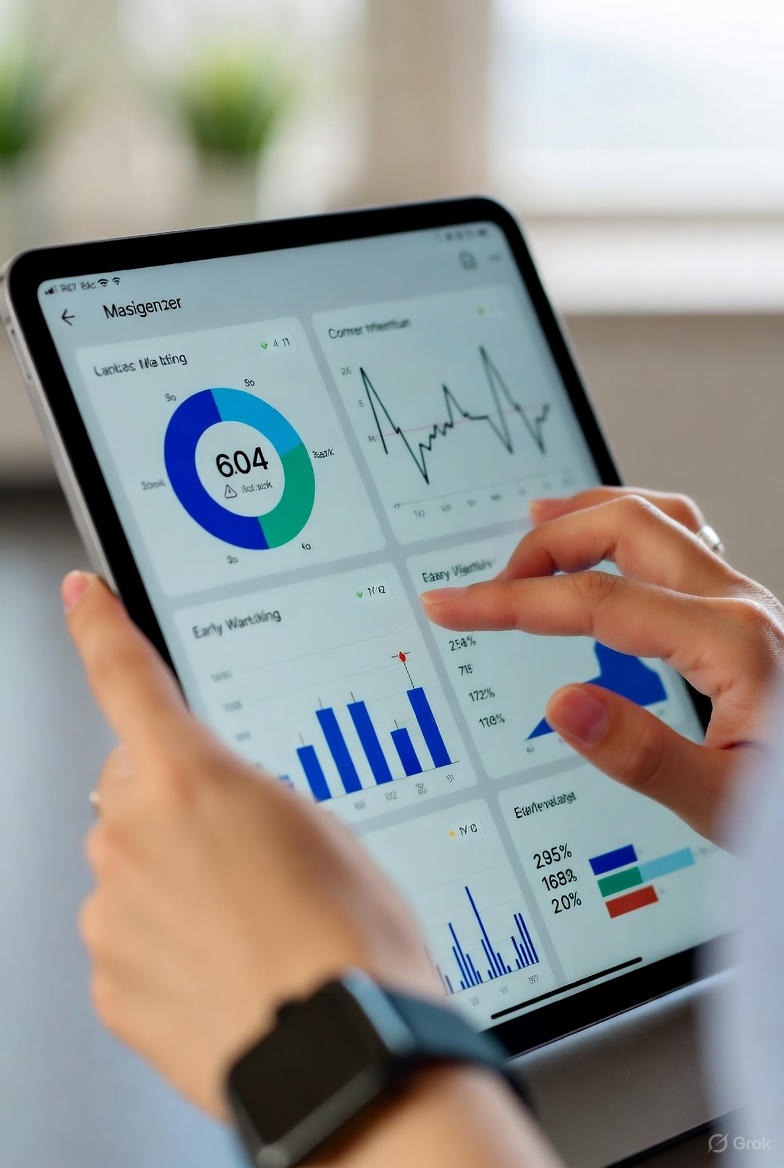
Modern Health Monitoring: Privacy and Security in the Digital Age
Discusses the ethical and security challenges of collecting continuous, sensitive health data.
Modern Health Monitoring: Privacy and Security in the Digital Age
The silent, steady beep of a hospital monitor is no longer the sole soundtrack to health tracking. Today, that rhythm has been supplanted by the gentle vibrations of a smartwatch reminding us to stand, the soft glow of a ring tracing our sleep cycles, and the seamless, invisible data streams flowing from our bodies into the digital cloud. We have entered an unprecedented era of democratized health insight, where sophisticated sensors once confined to clinical settings now reside on our wrists, our fingers, and in our homes. This revolution in modern health monitoring promises a future of proactive wellness, personalized medicine, and empowered individuals.
From rings that analyze your blood oxygen levels overnight to wearables that perform electrocardiograms on-demand, the power to understand our bodies is literally at our fingertips. This data can reveal the earliest signs of illness, optimize athletic performance, demystify chronic conditions, and fundamentally transform our relationship with our own health. The potential for positive impact is staggering.
Yet, with this great power comes a profound and often underestimated responsibility. Every heartbeat logged, every sleep stage classified, every stress level measured is a deeply intimate piece of a person’s biological story. This story is no longer penned in a private doctor’s chart locked in a filing cabinet. It is a digital narrative, transmitted, stored, and processed across vast networks of servers, apps, and third-party platforms. We are willingly trading droplets of our most personal essence—our biological data—for the fountain of knowledge these devices provide.
This trade forms the central paradox of our digital health age: the very tools that illuminate the inner workings of our bodies can also cast a long shadow over our personal privacy and security. Where does your sleep data go after it leaves your smart ring? Who owns your heart rate variability trends? Could your resting heart rate data one day be used by an insurer to adjust your premiums? Or by an employer to gauge your stress resilience? The security of this data is equally critical; a breached fitness database is not just a leak of passwords, but a leak of personhood.
This article is a deep exploration of this new frontier. We will journey through the intricate landscape of data collection, unravel the complex web of privacy policies, and confront the tangible risks that accompany our quantified selves. We will equip you with the knowledge to navigate this world wisely, ensuring that your pursuit of wellness does not come at the cost of your personal sovereignty. The goal is not to inspire fear, but to foster informed empowerment—because in the digital age, the most important health metric to monitor might just be the integrity of your own data.
The Quantified Self: How Modern Devices Monitor Your Health
The journey into our biological data begins with the remarkable devices we invite onto our bodies. Modern health monitors are feats of miniaturization, packing clinical-grade technologies into sleek, consumer-friendly forms. Understanding how they gather data is the first step in understanding what that data represents, and ultimately, what is at stake.
From Macro to Micro: The Sensor Revolution Early pedometers counted steps through a simple mechanical pendulum. Today’s devices employ a symphony of sensors. The foundational trio includes:
Optical Photoplethysmography (PPG): This is the tiny green light on the back of your watch or ring. It emits light into your skin and measures the amount reflected back. As blood volume in your capillaries changes with each heartbeat, so does the light absorption. This allows the device to calculate heart rate, and with advanced algorithms, derive heart rate variability (HRV), blood oxygen saturation (SpO2), and even estimate blood pressure trends.
Accelerometers and Gyroscopes: These micro-electromechanical systems track motion in three dimensions. They distinguish between a step, a swim stroke, and the subtle movements of sleep. They are crucial for activity tracking, sleep stage detection (by measuring restlessness), and fall detection for older adults.
Bioimpedance Sensors: By sending a tiny, imperceptible electrical current through the body, these sensors measure the resistance of tissues. This can estimate body composition (like fat and muscle mass), track stress via electrodermal activity (skin sweat), and even be used for advanced features like non-invasive blood glucose monitoring, which is on the horizon.
The Rise of the Smart Ring While wrist-worn devices dominate, the smart ring represents a significant evolution in form factor and data quality. Positioned on a finger, it often provides more consistent PPG readings than the wrist, which is prone to movement artifacts. The finger also has a rich capillary bed, offering a strong signal for metrics like SpO2, a key indicator of sleep apnea and overall respiratory health. For many, a ring is less obtrusive than a watch, enabling 24/7 wear without discomfort or fashion friction, leading to more comprehensive datasets. This constant wear is particularly valuable for building a complete picture of nocturnal wellness, capturing the full arc of your body’s restoration process each night.
The Invisible Network: Ecosystem Integration A device alone is just a sensor. Its intelligence emerges within an ecosystem. Data is wirelessly synced to a smartphone app, which serves as the primary interface. Here, raw sensor data is processed by sophisticated machine learning algorithms. These algorithms are trained on massive datasets to, for example, differentiate between REM and deep sleep based on your movement and heart rate patterns. This data then often travels further, to cloud servers managed by the device manufacturer. Cloud storage enables long-term trend analysis, cross-device syncing, and sometimes, sharing with third-party wellness apps like Apple Health, Google Fit, or Strava. This creates a interconnected health data profile that is more valuable—and more vulnerable—than any single data point.
A Story in the Stream: From Data Points to Insights Consider a single night’s sleep tracked by a advanced smart ring:
10:30 PM: You wind down. The ring notes a gradual decrease in heart rate and a slight increase in HRV, signaling the onset of your nighttime wellness routine.
11:15 PM - 1:30 AM: You enter deep sleep (N3). The ring detects minimal movement, a slow, steady heart rate, and consistent breathing.
2:00 AM: A sleep cycle transition. You enter REM sleep. The ring picks up increased brain activity (inferred from subtle physiological noise) and rapid, irregular breathing.
3:15 AM: A spike in movement and a sudden drop in blood oxygen. The algorithm flags a potential sleep apnea event or a disturbance.
6:30 AM: Wake time. The ring generates a "readiness" or "recovery" score, synthesizing sleep duration, quality, resting heart rate, and HRV into a single metric to guide your day.
This narrative, woven from thousands of data points, offers powerful insight. It can reveal the impact of evening caffeine, the benefits of a consistent bedtime, or the early signs of a brewing illness. But this intimate story of your night now exists digitally, initiating a critical conversation about where it lives, who can access it, and how it is protected.
Beyond Heartbeats: The Surprisingly Intimate Data You Generate
When we think of health data, we often picture straightforward metrics: 72 beats per minute, 8 hours of sleep, 10,000 steps. However, the true power—and privacy concern—of modern biosensors lies in their ability to infer profoundly intimate aspects of our lives from seemingly innocuous data streams. This inferred data paints a portrait of a person that goes far beyond physiology, touching on behavior, psychology, and personal identity.
The Inferential Power of Algorithms Machine learning algorithms excel at finding patterns invisible to the human eye. By correlating primary sensor data (heart rate, movement) with time, location, and other inputs, they can deduce:
Emotional and Mental State: Elevated resting heart rate coupled with low HRV is a strong biomarker for stress. A device that notes this pattern every weekday at 9 AM can effectively chart your job-related anxiety. Similarly, algorithms are being trained to detect signatures associated with mood disorders like depression or anxiety attacks.
Behavioral and Lifestyle Patterns: Your device knows when you sleep, how consistently you sleep, and when you are active. It can infer your work schedule (night shift vs. 9-to-5), your social habits (late nights on weekends), and even potentially harmful patterns. Consistent late-night activity paired with poor sleep scores could suggest insomnia or irregular lifestyle habits.
Reproductive and Sexual Health: For those who menstruate, basal body temperature and resting heart rate shifts tracked over time can accurately predict ovulation and menstrual cycles. This data is intensely private. The aggregation of this data has already sparked major debates, particularly in regions where reproductive rights are contested, raising the terrifying specter of health data being used for surveillance or prosecution.
Cognitive Performance & Focus: Preliminary research links certain HRV patterns to states of focus or cognitive fatigue. In the future, your wearable might know not just that you’re stressed, but that you’re too distracted to be productive.
Creating a Digital Phenotype Together, these data points form what researchers call a "digital phenotype"—a dynamic, multifaceted digital representation of your health and behavior. This phenotype includes:
Chronotype: Are you a natural early bird or night owl?
Metabolic Health Indicators: Trends in resting heart rate, sleep quality, and activity can paint a picture of metabolic efficiency and risk.
Recovery and Resilience Capacity: Your body’s ability to bounce back from stress, both physical and mental.
Long-Term Degeneration Signs: Gradual changes in sleep architecture, walking steadiness (gait analysis), or voice quality (for devices with mics) can be early indicators of neurological or age-related conditions.
The Anonymity Myth A common reassurance is that data is "anonymized." However, health data is notoriously difficult to truly anonymize. A landmark study demonstrated that just four spatio-temporal points (like time and location of a few device uses) are enough to uniquely identify 95% of individuals in a dataset. Your sleep pattern, activity timeline, and heart rate trend are as unique as a fingerprint. If "Anon123’s" data shows they wake at 5:30 AM, run every other day in a specific park, and have a heart rate dip every Saturday night, it wouldn’t be impossible for a determined entity—an employer, an advertiser, or a malicious actor—to cross-reference this with other data to uncover Anon123’s real identity.
This layer of inferred intimacy transforms the privacy conversation. It’s no longer just about securing a list of numbers; it’s about protecting a dynamic, digital mirror of your inner life. The next sections will explore where this mirror is reflected: the complex and often opaque world of data ownership, corporate policies, and the hidden economy of your most personal information.
Who Owns Your Body's Data? The Murky Landscape of Data Ownership
You purchased the device. You wear it on your body. The data is, quite literally, a product of your physical existence. Intuitively, you might feel a fundamental sense of ownership over your heart rate, your sleep patterns, your stress levels. Unfortunately, the legal and digital reality is far less clear, and often, deeply unsettling. The concept of "ownership" dissolves in the digital stream, replaced by a patchwork of licenses, rights, and terms of service that overwhelmingly favor corporations.
The Illusion of Ownership When you unbox a new health tracker and pair it with its app, you are almost certainly required to click "Agree" to a lengthy Terms of Service (ToS) and Privacy Policy. Buried within this legal jargon is the foundational truth: in most cases, you do not own the data in a property sense. Instead, you grant the company a broad, often perpetual, license to use it. A typical clause might state that by using the service, you grant the company "a worldwide, royalty-free, sublicensable, and transferable license" to host, store, use, modify, and create derivative works from your data. This legal framework allows them to operate their service, but its vagueness opens the door to a wide range of secondary uses.
Data as a Business Model For many companies in the wellness technology space, the hardware—the ring, the watch, the scale—is not the primary product. It is the gateway. The core product is the data ecosystem. This model manifests in several ways:
Service Provision: Your data is used to provide the core service (e.g., showing you your sleep score). This is the expected and necessary use.
Product Improvement and R&D: Aggregated, anonymized data is invaluable for training better algorithms, developing new features, and conducting internal research. This can benefit all users but requires pooling your data.
The Third-Party Marketplace: This is the greatest area of concern. Your privacy policy often allows for sharing "non-identifiable" or "aggregated" data with "trusted partners." These partners can include:
Advertisers: While most premium health brands claim they don’t sell data for ads, the line is blurry. Data can be used for "personalized marketing" within the company's own ecosystem.
Pharmaceutical and Research Companies: De-identified datasets of sleep, activity, and heart data are incredibly valuable for large-scale population health studies. Companies can sell access to these datasets for substantial sums.
Insurance and Corporate Wellness Programs: This is a particularly sensitive area. Employers or insurers offering subsidized wearables may gain access to aggregated group data or, in some programs, individual-level data with consent, raising questions about pressure and privacy.
Contrasting Models: The "Walled Garden" vs. Open Ecosystems Different companies approach this differently:
The Walled Garden (e.g., Apple): Companies like Apple position themselves as privacy champions. They emphasize on-device processing (where data is analyzed on your iPhone or Watch, not their servers) and give you granular control over what is shared. Their business model is centered on selling hardware and services, not monetizing your health data. However, you are still locked into their ecosystem.
The Data-Platform Model (e.g., Google/Fitbit): Here, data is more central to the broader business. Google’s acquisition of Fitbit raised immediate alarms among privacy advocates, given Google’s core advertising business. While they make privacy promises, the potential for data integration across search, location, and health profiles is vast.
The Niche Wellness Brand: Many smart ring and dedicated wellness device companies fall here. They often state strong privacy principles, but as smaller entities, their long-term fate—including being acquired by a larger company with different policies—is a real risk. It is crucial to read their specific policies.
The Right to Access, Port, and Delete Regulations like the European Union’s General Data Protection Regulation (GDPR) and the California Consumer Privacy Act (CCPA) have introduced critical digital rights. These often include:
Right of Access: You can request a copy of all data a company holds on you.
Right to Data Portability: You can request your data in a machine-readable format to take it to another service.
Right to Deletion: You can request your data be erased. Exercising these rights can be cumbersome, but they are powerful tools. They acknowledge that while you may not "own" the data in a database, you have sovereignty over your personal information.
The essential takeaway is that ownership is a mirage. Control and consent are the real currencies. The next section will delve into the primary tool companies use to obtain that consent: the privacy policy, and why simply clicking "agree" is one of the most consequential actions we take in the digital health landscape.
Decoding the Privacy Policy: What You're Really Agreeing To
The privacy policy is the foundational contract of the digital age, yet it is arguably the most widely ignored document. In the context of health monitoring, skimming or blindly accepting these terms is akin to signing a medical release form without reading it. These policies dictate the lifecycle of your most sensitive data. Learning to decode their key sections is not just prudent; it is an act of self-defense in the digital wellness world.
The Architecture of a Health Data Privacy Policy While dense, most policies follow a similar structure. Here are the critical sections to hunt for and understand:
1. Data Collection: The "What" This section lists every datum the company collects. Go beyond the obvious. It’s not just "heart rate and sleep."
Device-Collected Data: The primary biometrics.
Manually Logged Data: Notes on mood, diet, symptoms, or medication you enter.
Derived/Inferred Data: The scores (readiness, stress), insights, and patterns the algorithm creates.
Technical Data: Device identifiers, IP addresses, app crash logs, and usage statistics (e.g., which features you use most).
Linked Data from Other Services: If you connect your wearable to Apple Health, Strava, or MyFitnessPal, data flows between these services, governed by multiple policies.
2. Data Use: The "Why" This explains the company’s justifications for processing your data. Look for vague, catch-all phrases.
Legitimate Uses: "To provide and maintain our Service," "To personalize your experience," "To notify you about changes."
Red-Flag Phrases: "For research and development," "For marketing and promotional purposes," "To share with affiliates and partners," "To create anonymized, aggregated datasets for commercial use." These open the door to secondary monetization.
3. Data Sharing and Disclosure: The "Who Else" This is the most critical section. It details the third parties that may receive your data.
Service Providers: Necessary partners like cloud hosting (e.g., Amazon AWS), data analytics firms, or customer support platforms. They are legally bound to act only on the company’s instructions, but it still expands the attack surface.
Affiliates and "Trusted Partners": Often a euphemism for advertising networks or data brokers. The policy should specify the types of partners (e.g., "research institutions," "advertising partners").
For Legal Reasons: Disclosures required by law, subpoena, or to protect safety.
Business Transfers: In the event of a merger, acquisition, or sale of assets, your data is part of the transferred assets. This is a major, often overlooked risk when choosing a startup's product.
4. Data Storage, Security, and Retention: The "How" and "How Long"
Storage Location: Where in the world are the servers? Data stored in certain countries may be subject to different, less protective laws.
Security Measures: Look for specifics like "end-to-end encryption," "data encryption at rest and in transit," and "regular security audits." Vague promises like "we use industry-standard security" are insufficient.
Retention Period: How long do they keep your data after you stop using the service? "For as long as necessary" is not an acceptable answer. A good policy states a defined period or the criteria for deletion.
5. Your Rights and Choices This should clearly outline how you can exercise the rights granted by GDPR, CCPA, or other regulations, as discussed earlier. Is there an easy-to-find "Data Subject Request" portal, or do you have to email a generic support address?
The Consent Trap: "Agree or Do Not Use" Critically, you almost never have the ability to negotiate these terms. It’s a binary choice: accept the entire policy, or forgo using the product. This "take-it-or-leave-it" structure, combined with the complexity of the text, creates a power imbalance. Companies know that the desire for the product’s benefits will almost always trump privacy concerns, leading to informed consent being a legal fiction in practice.
Actionable Steps for the Informed User:
Prioritize Reading: Before buying a device, find its privacy policy online and read the "Data Use" and "Data Sharing" sections.
Use Privacy-Focused Brands: Seek out companies that loudly and clearly state "We do not sell your data" and "We use on-device processing" as core tenets.
Manage Connections: Be ruthless about which third-party apps you connect to your primary health ecosystem. Each connection creates a new data pipeline governed by another policy.
Exercise Your Rights: Periodically, request your data archive to see what’s stored. It is enlightening and reinforces your role as a data stakeholder.
Understanding the policy is understanding the rules of the game. The following section will explore the consequences when those rules fail, examining the real and present dangers of data breaches and unauthorized access to your health information.
The Breach of the Body: Security Risks in Health Data
Privacy policies outline intentions, but security practices determine reality. A company can have the most ethical data-use policy in the world, but if its digital doors are unlocked, your intimate data is vulnerable. The security of health data is not a theoretical concern; it is a pressing issue in an era of sophisticated cyberattacks. A breach of health information is uniquely damaging because, unlike a credit card number, you cannot change your sleep patterns, your heart history, or your genetic code.
Why Health Data is a Prime Target For cybercriminals, health data is a high-value commodity on the dark web, often fetching a higher price than financial data. The reasons are simple:
Permanence: Financial data can be canceled and reissued. Your health history is forever.
Richness: It provides a comprehensive profile for identity theft. Combining a health record with a Social Security number and address allows for more convincing medical fraud.
Lack of User Vigilance: People monitor bank statements meticulously but rarely think to check for fraudulent medical claims.
Exploitation Potential: Detailed health data can be used for blackmail, targeted phishing ("We've noticed an anomaly in your heart data, click here to review"), or insurance fraud.
Common Attack Vectors and Vulnerabilities The journey of your data from sensor to cloud presents multiple points of failure:
The Device Itself: Wearables and apps can have software vulnerabilities. A flaw could allow an attacker to intercept unencrypted Bluetooth data during syncing or, in rare cases, gain access to the device’s stored data.
The Mobile App: A compromised or malicious app on your phone could request permissions to read the data from your health app, siphoning it off.
The Transmission (In Transit): Data traveling from your phone to the company’s servers must be encrypted (look for HTTPS/TLS). Unsecured transmissions are easy pickings.
The Servers (At Rest): This is the most critical point. Company databases are the honeypot. Attacks here include:
Phishing & Credential Stuffing: An employee’s login is phished, giving attackers access to internal systems.
SQL Injection & Software Flaws: Exploiting bugs in the company’s software to gain unauthorized database access.
Ransomware: Encrypting the company’s data and demanding payment for the decryption key. Healthcare providers are frequent targets, and wellness companies are not immune.
Third-Party Partners: As outlined in privacy policies, data is shared. A breach at a smaller, less secure analytics partner can expose data from a major wearable company.
The Ripple Effects of a Health Data Breach The impact goes far beyond embarrassment.
Medical Identity Theft: Criminals can use your identity to obtain prescription drugs, file fraudulent insurance claims, or receive medical care, leaving you with incorrect information in your medical records and potentially massive bills.
Discrimination and Stigma: Leaked data revealing a mental health condition, a sexually transmitted infection, or a substance use pattern could lead to social stigma, workplace discrimination, or harassment.
Financial Fraud: The personal information accompanying health data is perfect for opening new lines of credit.
Psychological Harm: The violation of having one’s inner biological life exposed can cause significant anxiety and a lasting sense of vulnerability.
Case in Point: The Fitness Tracker Map A non-malicious but stark example of security oversights occurred years ago when a fitness app used by military personnel published global heatmaps of user runs. The data was aggregated and anonymized, but users in secret military bases had effectively mapped the locations and perimeter patterns of those facilities simply by tracking their workouts. It demonstrated how even "safe" data can be re-identified or reveal sensitive information in context.
The Onus of Security While the primary responsibility lies with companies to implement robust security (like end-to-end encryption, regular penetration testing, and minimal data retention), users must practice good hygiene.
Use Strong, Unique Passwords: Never reuse passwords. Use a password manager.
Enable Two-Factor Authentication (2FA): Wherever offered, especially for your main health app account.
Keep Software Updated: Update your wearable firmware, phone OS, and apps promptly to patch known vulnerabilities.
Audit App Permissions: Regularly check which apps have permission to read your health data (in iOS Health or Google Fit) and revoke access for anything suspicious or unused.
Security is the shield that protects the privacy promises made in a policy. The next logical concern is what happens when entities operate within those policies but use your data in ways that feel like a violation—the world of legal but ethically dubious data exploitation.
The Invisible Marketplace: How Your Health Data is Monetized
Even in the absence of a dramatic breach, your health data is likely participating in a vibrant, hidden economy. This monetization occurs within the bounds of the privacy policy you consented to, making it legal but often at odds with user expectations. Understanding these commercial flows is key to understanding the true cost of "free" or subsidized wellness services.
The Data Brokerage Industry At the heart of this marketplace are data brokers—companies you’ve likely never heard of, like Acxiom, LiveRamp, or Oracle Data Cloud. They operate in the shadows, aggregating data from countless sources: purchase histories, website cookies, public records, loyalty programs, and, increasingly, data from connected devices and apps. They cleanse, package, and sell these detailed consumer profiles. A wellness company might sell "anonymized" datasets to a broker. The broker then enriches this data, potentially combining your sleep score trend with data showing you purchase melatonin supplements and read articles about insomnia. This creates a highly valuable "anxious sleeper" profile that can be sold to, for example, a pharmaceutical company marketing a new sleep aid.
Targeted Advertising: The Subtle Influence While most premium wearable brands claim not to serve ads based on health data, the lines blur in broader ecosystems.
Contextual Advertising: You might see ads for sleep aids within your health app’s "Discover" tab. The company argues this isn’t using your data, just the context of the app. But your presence in the app is a data point.
Cross-Platform Retargeting: More concerning is if a company’s privacy policy allows sharing a "hashed" identifier (like your email in coded form) with an advertising partner. If you’ve searched for "high blood pressure" on a search engine, an ad for a blood pressure monitor might follow you around the web. If that same hashed identifier links to your wearable data showing elevated resting heart rate, the targeting becomes frighteningly precise.
The Corporate Wellness and Insurance Nexus This is one of the most ethically charged areas. Many employers and health insurers offer subsidized or free wearables to encourage healthy behavior.
The Gamified Carrot: Programs offer financial rewards (gift cards, reduced insurance premiums) for meeting step goals or sleep targets. This seems positive but raises questions of coercion and data access.
The Data Access Question: Does your employer get your individual data, or just aggregated, anonymized reports? The policy must be crystal clear. Individual access can lead to subtle discrimination ("Why is John’s recovery score always low? Can he handle the new project?") or penalize those with health conditions that prevent them from hitting targets.
Risk Pooling and Future Pricing: Insurers are intensely interested in predictive health data. While currently regulated against using genetic data (by the Genetic Information Nondiscrimination Act or GINA), no such federal law protects wearable data in the U.S. The long-term fear is "risk-based pricing" where your premiums are dynamically adjusted based on your real-time activity, sleep, and heart data—a form of digital redlining.
Research and Development: A Double-Edged Sword The use of aggregated data for medical research holds immense promise. It can accelerate studies on sleep disorders, cardiovascular health, and pandemic tracking. However, the ethical framework matters.
Informed Consent for Research: A good policy will have a separate, explicit opt-in for research participation, explaining the scope and who the partners are. A bad policy buries it in the main consent.
Commercialization of Research Outcomes: If a pharmaceutical company pays a wearable firm for a dataset that leads to a billion-dollar drug, the users who generated that data see no benefit. There is a growing debate about data dividends or collective bargaining models for health data.
Protecting Yourself in the Marketplace As a consumer, you have limited power to stop this industry, but you can make informed choices:
Seek "We Don’t Sell Your Data" Guarantees: Look for this as a written, public commitment, not just a vague assurance.
Opt-Out Relentlessly: Every privacy policy should have an "opt-out" section for data sharing for marketing/research. Use it. It’s often hidden in account settings.
Be Wary of "Free" Devices: If you’re not paying for the product, you are the product. Scrutinize employer/insurer programs thoroughly before joining.
Support Stronger Legislation: Advocate for laws that treat health data from wearables with the same protection as medical records (HIPAA in the U.S. currently does not cover most consumer wellness data).
This commercial landscape reveals that privacy is not just about secrecy; it’s about autonomy—the right to decide how your personal narrative is used. This leads us to one of the most profound future implications: the potential for algorithmic bias and digital discrimination based on the very data meant to empower us.
Algorithmic Bias: When Your Data Works Against You
The algorithms that transform raw sensor data into health insights are not neutral arbiters of truth. They are mathematical models created by humans, trained on datasets curated by humans, and deployed in social systems riddled with historical inequities. As a result, they can perpetuate, and even amplify, biases that lead to inaccurate results for certain groups and create new forms of digital discrimination. This is a critical privacy-adjacent issue: it’s not just about who sees your data, but about how your data is unfairly judged.
The Root of the Bias: Homogenous Training Data The gold standard for algorithm development is large, diverse, and representative datasets. In practice, the datasets used to train health algorithms are often skewed.
Demographic Skews: Early adopters of wearable technology have historically been wealthier, younger, and more likely to be male and white. If an algorithm to detect atrial fibrillation (AFib) is trained primarily on heart rate data from middle-aged white men, it may be less accurate for women, older adults, or people with different ethnic backgrounds whose cardiac physiology can present differently.
The "Fitness Bias": Many baseline metrics, like "resting heart rate" or "recovery score," are implicitly calibrated against a norm of good health and fitness. An algorithm might interpret a naturally higher resting heart rate in a deconditioned but otherwise healthy individual as a sign of poor cardiovascular health or high stress, potentially triggering unnecessary anxiety or misleading insights.
Sleep Stage Ambiguity: The rules for classifying sleep stages (REM, Deep, Light) were largely defined using polysomnography data from young, healthy subjects. These patterns can differ significantly in older adults or people with neurological conditions, leading to inaccurate sleep scoring that fails to capture their true restorative rest.
Real-World Consequences of Biased Insights These inaccuracies are not merely academic; they have tangible impacts on user experience and trust.
The Stress Score Spiral: Imagine a user from a demographic poorly represented in the training data. Their device consistently gives them a poor "stress" or "readiness" score because their biometric baselines don’t match the model’s "normal." This could lead to genuine distress, medical anxiety, or the user dismissing the technology entirely—missing out on its valid insights.
The Performance Gap: Early optical heart rate sensors were notoriously inaccurate on darker skin tones and during high-intensity exercise due to the way light absorption differs. While largely improved, it highlights how a physical bias in sensor design can cascade into faulty data and flawed algorithmic output.
Reinforcing Health Disparities: If wellness algorithms are less accurate for marginalized groups, it could widen the "digital health divide." Those who could benefit most from affordable health monitoring might receive inferior or misleading feedback, perpetuating existing healthcare inequalities.
From Inaccuracy to Discrimination: The Slippery Slope The danger intensifies when algorithmic outputs are used for decision-making beyond the individual.
In Corporate Wellness: If an employer uses aggregated "productivity" or "resilience" scores derived from biased algorithms to inform team assignments or promotions, it could systematically disadvantage certain employees.
In Insurance: As discussed, if wearable data ever becomes admissible for risk assessment, biased algorithms could unjustly penalize entire demographic groups, mistaking their biological norms for risk factors.
In Clinical Contexts: While doctors should not diagnose based on consumer wearables, they often see the data. A biased reading could lead to a misinformed clinical impression or cause a doctor to dismiss a patient’s legitimate concerns because "their smart ring says they sleep fine."
Demanding Transparency and Accountability Combating algorithmic bias requires action from both companies and consumers:
For Companies: They must commit to diverse dataset collection, algorithmic fairness audits, and transparency about the limitations of their insights. They should publish, in plain language, what populations their devices are validated for.
For Users: We must cultivate "informed skepticism." Understand that your wellness score is an estimate, not an absolute truth. Compare it to your subjective feelings. If your device says you had a great night's sleep but you feel exhausted, trust your body. Use the data as a conversation starter with a healthcare professional, not a definitive diagnosis.
The goal of modern health monitoring should be personalized insight, not standardized judgment. Navigating this requires an understanding of the legal frameworks—or lack thereof—that are supposed to govern this entire ecosystem, which is the focus of our next section.
The Legal Void: Why Your Health Data Isn't as Protected as You Think
There is a pervasive assumption that health information is among the most strictly regulated forms of data. For information in a doctor’s office or hospital, this is true. But for the vast, flowing river of data generated by consumer wellness devices, the legal landscape is a patchwork of inadequate regulations, glaring loopholes, and jurisdictional confusion. Your wearable data exists in a legal void, leaving it vulnerable in ways your medical records are not.
HIPAA: The Great Misconception The Health Insurance Portability and Accountability Act (HIPAA) is the cornerstone of medical privacy in the United States. It strictly governs how "covered entities" (healthcare providers, insurers, clearinghouses) and their "business associates" can use and disclose Protected Health Information (PHI). Crucially, HIPAA does not apply to most wearable tech companies. Unless a device is prescribed by a doctor and the data is integrated into a covered entity’s system, the data it collects is considered consumer-generated, not clinician-generated. Therefore, it falls outside HIPAA’s protections. A fitness app can legally do things a hospital could never dream of—like sell your aggregated sleep data to a broker—without violating HIPAA.
The Regulatory Patchwork: GDPR, CCPA, and State Laws In the absence of a comprehensive federal law for consumer health data, protection is piecemeal:
General Data Protection Regulation (GDPR): This European Union regulation is the global gold standard. It is extraterritorial, meaning it applies to any company processing data of EU citizens. It grants strong rights (access, portability, deletion, the "right to be forgotten") and imposes heavy fines for violations. It treats all health data as a special "sensitive" category, requiring explicit opt-in consent for processing. For global companies, GDPR often sets the de facto standard, but its protections for non-EU users can be weaker.
California Consumer Privacy Act (CCPA) & CPRA: California’s laws are the closest the U.S. has to GDPR. They give Californians the right to know what data is collected, to opt-out of its sale, and to delete it. The CPRA amendment creates a special category for "sensitive personal information," which includes health data, requiring businesses to limit its use. However, enforcement and the sheer number of opt-out requests dilute its effectiveness.
State-by-State Battleground: Other states like Virginia, Colorado, and Utah have passed their own laws, creating a complex compliance maze for companies but no uniform national standard for users.
The FTC as a Watchdog (With Limited Teeth) The U.S. Federal Trade Commission (FTC) acts as the primary enforcer against "unfair or deceptive" practices in the consumer space. It can bring action against a company that violates its own privacy policy (a "deceptive" practice) or that fails to implement reasonable security, leading to a breach (an "unfair" practice).
Notable Cases: The FTC has settled cases with companies like Flo Health (a period-tracking app that shared sensitive data with Facebook) and GoodRx (for sharing health data with advertisers). These enforcements are important but reactive—they come after the harm has occurred and typically result in fines and mandated privacy programs, not fundamental business model change.
The Legislative Lag Technology evolves at a blistering pace; lawmaking moves at a glacial one. Legislators often lack the technical expertise to draft effective laws for data types that didn’t exist five years ago. Lobbying by the tech and data brokerage industries further stalls comprehensive privacy legislation. The result is that the legal framework is always playing catch-up, leaving users exposed to novel forms of data exploitation.
Implications for the User: Assume Minimal Protection This legal void means you must operate on the assumption that your data has minimal legal protection. Your recourse after a privacy violation is often limited to:
The Court of Public Opinion: Calling out companies on social media or to journalists.
Filing Complaints: With the FTC or your state Attorney General.
Joining Class-Action Lawsuits: These are often filed after major breaches, but settlements are small for individuals.
The Path Forward: Advocacy and Informed Choice Until stronger laws are passed, your power lies in:
Voting with Your Wallet: Support companies that advocate for stronger privacy laws and adhere to standards like GDPR globally.
Supporting Legislative Efforts: Advocate for a U.S. federal digital privacy law that treats consumer-generated health data as sensitive, requiring opt-in consent and granting strong individual rights.
Demanding Transparency: Ask companies directly: "Do you comply with GDPR standards for all users?" "Can you show me where my data is processed?"
Understanding this legal vacuum is essential for setting realistic expectations. It underscores why the final responsibility for managing your digital health footprint ultimately falls on you. The following section will provide a practical, actionable toolkit for taking back control.
Taking Control: A Practical Guide to Securing Your Digital Health Footprint
Knowledge of the risks is only empowering if it leads to action. While we cannot eliminate all risks in the digital ecosystem, we can dramatically reduce our exposure and become more conscious stewards of our own data. This section provides a concrete, step-by-step guide to auditing, securing, and controlling your digital health footprint across devices, apps, and accounts.
Step 1: The Pre-Purchase Audit (The Most Important Step) Before buying any new health device, conduct due diligence.
Find and Skim the Privacy Policy & ToS: Use a search function (Ctrl+F) for key phrases: "sell," "share with third parties," "affiliates," "marketing," "research," "business transfer." What is the default opt-in setting?
Research the Company’s Reputation: Search "[Company Name] privacy scandal" or "[Company Name] data breach." Read tech privacy news from sources like The Markup, Consumer Reports, or dedicated privacy blogs.
Choose Privacy-Forward Brands: Prioritize companies that use on-device processing (data is analyzed on the ring/watch itself, not sent to the cloud), offer end-to-end encryption (data is encrypted before it leaves your device), and have a clear, public-facing privacy charter.
Step 2: The Setup Lockdown When you unbox your device, configure it for maximum privacy from the start.
Minimize Permissions: During app setup, deny unnecessary permissions. Does a sleep tracker really need access to your contacts or location at all times? Often, these are for "social features" you may not use.
Use a "Burner" or Dedicated Email: Consider creating a new email address solely for your wellness accounts. This limits the linkage to your primary digital identity.
Create a Strong, Unique Password: Use a password manager to generate and store a complex password for this account alone.
Immediately Enable 2FA: If two-factor authentication is available, turn it on. This is one of the single most effective security measures.
Step 3: The Ongoing Hygiene Ritual Privacy is not a set-and-forget setting; it's a practice.
Monthly App Permission Review: On your phone, navigate to Settings > Privacy & Security (iOS) or Settings > Privacy (Android). Review which apps have access to "Health," "Motion & Fitness," "Sensors," and "Location." Revoke access for anything unused or suspicious.
Audit Connected Third-Party Apps: Open your primary health app (Apple Health, Google Fit, Samsung Health) and find the "Apps with Access" or "Connected Services" menu. Prune this list mercilessly. Each connection is a data pipeline. Your sleep data doesn’t need to be in your running app, and your running app doesn’t need your heart rate data 24/7.
Manage Data Retention: If the service offers it, set data to auto-delete after a certain period (e.g., 90 days). For long-term trend viewing, you can export your own data to a secure, encrypted personal drive periodically.
Opt-Out of Everything: Find the privacy settings in your account. Opt-out of data sharing for "research," "product improvement," and "marketing." Opt-out of "personalized" or "interest-based" ads.
Step 4: The Mindful Usage Philosophy
Practice Data Skepticism: Your device provides correlations, not causations. Use it to observe patterns, not as an oracle. Did your readiness score drop because of poor sleep, or because you’re fighting off a cold? Context matters.
Subjective Over Objective: Never let a device override your lived experience. If you feel rested despite a "poor" sleep score, you are rested. The data is a tool, not a judge. This is a core principle of a healthy nighttime wellness routine—listening to your body’s signals above all else.
Be Selective with Social Sharing: Think twice before sharing detailed health metrics on social platforms, even in private groups. You are enlarging your digital footprint unnecessarily.
Step 5: The Exit Strategy When you decide to stop using a device or service, don't just toss it in a drawer.
Request Data Deletion: Use the company’s process (GDPR/CCPA request) to request deletion of your account and all associated data. Get confirmation in writing.
Factory Reset the Device: Wipe all personal data from the hardware itself.
Disconnect from Ecosystems: Ensure the device is disconnected from Apple Health, Google Fit, etc.
Dispose of Hardware Securely: If not donating, physically destroy the device’s storage components if possible.
By implementing this guide, you transition from a passive data subject to an active data custodian. This mindset is crucial as we look toward the horizon, where new technologies like AI and advanced biometrics promise even deeper insights—and present even greater challenges for privacy and security, which we will explore next.
The Future Frontier: AI, Advanced Biometrics, and Emerging Threats
The landscape of digital health monitoring is not static; it is accelerating. The next wave of technology, supercharged by artificial intelligence and novel sensors, promises to dissolve the line between external device and integrated human even further. While the potential benefits are revolutionary, the privacy and security implications are staggering, demanding proactive consideration today.
AI as Your Personal Health Prophet Current devices are largely descriptive: they tell you what happened (sleep, steps, heart rate). The future is predictive and prescriptive, driven by AI.
Predictive Analytics: AI models will analyze your long-term data streams to identify subtle, pre-symptomatic patterns. They could alert you to a potential illness days before you feel sick, predict a migraine, or forecast a period of high anxiety. The privacy concern is the creation of health forecasts—data about what might happen to you. Who owns a prediction? Could an insurer deny coverage based on an AI’s forecast of future disease risk?
Prescriptive & Contextual Insights: AI won’t just say "you’re stressed." It will analyze the context—your calendar, location, recent activity—and suggest interventions: "Based on your elevated HRV and clear schedule, a 20-minute meditation now would optimize your recovery." This requires integrating health data with other personal data streams (calendar, email, GPS), creating an ultra-comprehensive life-log.
Beyond the Ring: Implantables and "Ingestibles" Wearables will give way to more intimate form factors.
Continuous, Clinical-Grade Implantables: Subdermal chips or tiny devices implanted just under the skin could provide continuous, clinical-grade glucose monitoring, core temperature, and hormone levels without any external device. The data security and ownership questions become literally embedded in the body.
Ingestible Sensors: Pills with tiny sensors that transmit data from your digestive tract before being passed. These could monitor gut health, medication adherence, or internal bleeding.
Multimodal Data Fusion: The Ultimate Profile The greatest power—and peril—lies in fusion. Your smart ring data combined with:
Smart Home Data: Your sleep pattern + your refrigerator’s contents + ambient noise levels from smart speakers.
Digital Phenotyping: Keystroke dynamics, typing speed, and social media usage patterns from your phone, analyzed for mental health indicators.
Facial Analysis & Voice Biomarkers: Cameras and microphones assessing stress from micro-expressions or vocal tremors. This fusion creates a "360-degree health avatar," a digital twin so accurate it blurs the boundary between you and your data profile. Securing this avatar becomes paramount, as a breach would be a total compromise of self.
Emerging Threat Vectors New technologies bring new attack surfaces:
AI-Powered Social Engineering: Hackers could use stolen health data to craft hyper-personalized, believable phishing attacks. "Hi [Name], your Oxyzen ring detected an abnormal heart rhythm last night. Click here to review with our security team." The pretext is terrifyingly credible.
Data Poisoning & Algorithmic Manipulation: If AI is trained on user data, what if malicious actors inject false data to corrupt the models? This could cause devices to give dangerously inaccurate health advice to targeted groups.
The "Bio-Surveillance" State: The most dystopian threat. In authoritarian regimes, mandatory health wearables or integrated national health apps could be used not for care, but for control—tracking dissenters' stress levels during protests, monitoring fertility data, or enforcing social mandates.
Navigating the Future with Foresight We cannot stop technological progress, nor should we want to. But we must build ethical and secure foundations now.
Privacy by Design: Consumers must demand that companies build products with privacy and security as the core architecture, not an afterthought. This includes data minimization (collect only what is necessary), purpose limitation (use data only for stated purposes), and user-centric controls.
Advocacy for "Neuro-Rights" and Cognitive Liberty: As devices begin to infer mental states, we need new legal frameworks protecting our cognitive liberty—the right to self-determination over our own brains and mental experiences.
Personal Data Sovereignty Movements: Technologies like solid (Social Linked Data) pods, where individuals store their own data in personal online vaults and grant temporary, revocable access to apps, could redefine ownership. Imagine your health data living in your own "pod," and your smart ring app asks to read it for the night, rather than taking a copy.
The future of health monitoring is one of breathtaking intimacy and insight. To ensure it empowers rather than enslaves us, the principles we establish today—of consent, control, security, and equity—will determine whether this digital mirror reflects a tool for human flourishing or an instrument of unprecedented surveillance. Our final section will synthesize these principles into a core philosophy for thriving in the age of the quantified self.
A Philosophy for the Quantified Self: Balancing Insight with Autonomy
We stand at a unique crossroads in human history, equipped with tools that can reflect our inner workings back to us with a clarity our ancestors could never have imagined. The quantified self is no longer a niche concept for biohackers; it is a mainstream reality. The central challenge of this era is not technological, but philosophical: How do we harness this profound insight without surrendering our autonomy, our privacy, and the essential, unquantifiable mystery of being human?
This is not a call to abandon technology, but to engage with it more intentionally. The goal is to cultivate a mindful relationship with our data—one where we are the authors of our health narrative, not merely its subjects. This requires a foundational shift from being passive consumers of wellness technology to becoming conscious curators of our digital well-being.
From External Validation to Internal Authority The first pillar of this philosophy is reclaiming internal authority. Wearables provide external, objective metrics. These are useful inputs, but they must be subordinate to our subjective, lived experience.
The Data-Informed Self, Not the Data-Driven Self: Use your sleep score to inform how you feel, not to define it. If your readiness score is low but you feel energized and clear-headed, honor that feeling. The device’s algorithm has a limited view; you have the full, rich context of your life. This is especially crucial when building habits; a rigid obsession with metrics can undermine the intuitive joy of a nighttime wellness routine that actually sticks, turning a restorative practice into a source of performance anxiety.
Embodiment Over Abstraction: It’s easy to become fixated on the abstract graph of your heart rate variability while disconnecting from the actual sensation of your heartbeat, your breath, your energy. Periodically, practice using the device as a prompt for checking in, then look away. Feel your pulse. Notice your breathing. Ground yourself in the physical reality the data is attempting to represent.
The Principle of Proportionality Not all data is equally valuable, and the value of data must always be weighed against the cost of collecting it.
Question the "More is Better" Mantra: Do you need second-by-second stress tracking, or would a morning and evening check-in suffice? Constant monitoring can itself become a source of stress, a phenomenon sometimes called "cyberchondria" or "data anxiety." Define what questions you genuinely want answered (e.g., "Do I sleep better with an earlier bedtime?"), collect data purposefully to answer them, and then take a break. You wouldn’t weigh yourself 50 times a day; apply the same discretion to other metrics.
The Utility vs. Intrusion Scale: For every new feature or data point, ask: What tangible benefit does this provide me? What does it cost me in terms of battery life, mental bandwidth, and privacy exposure? A feature like fall detection for an elderly adult has high utility. A feature that guesses your mood from your typing speed may be more intrusive than useful.
Digital Minimalism for Health Data Inspired by Cal Newport’s concept, apply digital minimalism to your health ecosystem. This means consciously decluttering your data inputs and outputs to focus on what truly adds value.
The One-Central-Repository Rule: Designate one primary, secure health data repository (like Apple Health or Google Fit, configured with strict privacy controls) as your "source of truth." Be extremely selective about which apps you allow to write data to it and which apps you allow to read from it. Every connection increases complexity and risk.
The Periodic Data Detox: Schedule quarterly "data audits." Delete old apps, revoke unused permissions, download and archive your raw data from services, and then delete the online copies if possible. This practice reinforces your control and prevents passive data hoarding by companies.
Cultivating Data Literacy and Skepticism An empowered quantified self is a literate one. This means understanding not just what the numbers are, but where they come from and their limitations.
Learn the Language: Know the difference between precision and accuracy. Understand that SpO2 from a ring is an estimate, not a medical-grade measurement. Know what "HRV" actually represents (the variation in time between heartbeats) so you can interpret trends intelligently, not mystically.
Follow the Chain of Custody: Ask basic questions about your data’s journey. Where is it processed? Is it end-to-end encrypted? Who are the company’s cloud providers? A company that is transparent about these details is one that respects your role as a stakeholder.
Embrace "Good Enough" Data: For most wellness purposes, you don’t need clinical-grade precision. You need consistent, directional data. A smart ring can reliably tell you if your sleep is getting better or worse over time, which is far more valuable for habit change than an absolute, perfect score on a single night.
The Unquantifiable Core: Protecting What Cannot Be Measured Finally, and most importantly, we must fiercely protect the aspects of our health and humanity that defy quantification. Our sense of joy, connection, purpose, creativity, and love will never be captured by a photoplethysmography sensor. These are the foundations of well-being.
Schedule Unmeasured Time: Deliberately engage in activities without wearing your tracker. Go for a walk and leave your phone behind. Have a meal without logging it. Let your body exist in its own rhythm, free from observation. This is not anti-technology; it is pro-wholeness.
Let Data Serve Life, Not the Reverse: Never let the pursuit of an optimal metric detract from a real-life experience. Don’t avoid a late-night conversation with a loved one because it will "ruin your sleep score." Don’t skip a spontaneous dance because you’ve already hit your step goal. The data should be a tool to enhance a life well-lived, not become the scorecard for it.
This philosophy provides the ethical and practical compass for navigating the remainder of this article, where we will move from the individual to the societal, examining the collective actions, policy changes, and technological shifts needed to build a healthier digital ecosystem for everyone.
Building a Healthier Data Ecosystem: Policy, Design, and Collective Action
Individual vigilance, while essential, is not a sufficient solution to systemic problems. We cannot "opt-out" our way to a secure and ethical digital health future. The vulnerabilities and exploitative practices are embedded in the business models and regulatory gaps of the ecosystem itself. Therefore, alongside personal responsibility, we must advocate for and support structural changes that raise the floor for everyone. Building a healthier data ecosystem requires action on three fronts: policy reform, ethical design principles, and informed collective pressure from consumers.
1. Policy Reform: Closing the Legal Void The most urgent need is for robust, modern legislation that treats consumer-generated health data with the seriousness it deserves.
A Federal Health Data Privacy Law (U.S.): The U.S. desperately needs a law that closes the HIPAA loophole. This law should:
Define "Consumer Health Data" Broadly: Encompass any data from wearables, wellness apps, direct-to-consumer genetic tests, and health search histories.
Require Explicit, Affirmative Opt-In Consent: Move beyond the deceptive "notice and consent" model. Users should actively check a box for each distinct use case (e.g., service provision, research, marketing). Bundled consent should be illegal.
Prohibit Conditional Service: Companies should not be allowed to deny core service functionality if a user opts out of data sharing for secondary purposes like research or ads.
Establish Data Fiduciary Duties: Some proposals suggest treating data-collecting companies as "fiduciaries"—legally obligated to act in the best interest of the user regarding their data, not their own corporate interest. This would be a paradigm shift.
Grant Strong Private Rights of Action: Allow individuals to sue companies for violations, creating a powerful deterrent beyond government enforcement.
Global Harmonization and Strengthening: Support efforts to bring GDPR-level protections to more jurisdictions and to strengthen existing laws. The global nature of data flows makes strong international standards imperative.
2. Ethical by Design: Engineering Privacy and Security from the Ground Up Regulation sets the rules, but technology design determines the reality. We must demand that companies adopt "Ethical by Design" and "Privacy by Design" frameworks as a core engineering mandate, not a marketing afterthought.
Data Minimization: Devices and apps should be engineered to collect the minimum necessary data to provide the promised service. If a feature can work with on-device processing and never send data to the cloud, that should be the default architecture.
End-to-End Encryption (E2EE) as Default: All health data in transit and at rest should be encrypted with keys controlled by the user, not the company. This means even the company cannot read your raw data, only you can. This is technically feasible and is already implemented by some privacy-focused brands.
Transparency in Algorithms: Companies should publish high-level "algorithmic nutrition labels" that explain what factors go into scores (e.g., "Your Sleep Score is 70% based on duration, 20% on resting heart rate, 10% on movement") and disclose the demographics of their validation studies. This combats bias and builds trust.
Sunset Clauses and Data Expiration: Data should have a built-in expiration date. Unless a user actively chooses to archive it, raw, identifiable data should be automatically purged from company servers after a reasonable period (e.g., 12 months). Aggregate trends can be maintained without keeping the detailed, personal timeline.
3. Collective Consumer Power: The Force of Informed Demand The market responds to demand. As consumers, our collective choices and voices can shape industry behavior faster than any regulator.
Prioritize Privacy as a Feature: When comparing devices, weigh privacy and security features as heavily as sensor accuracy or battery life. Ask sales representatives about the company’s data policies. Support and publicly champion companies that are leaders in ethical data practices.
Use Our Voices and Stories: Share your positive experiences with privacy-forward companies. More importantly, call out bad actors. File detailed complaints with the FTC and state attorneys general. Share your concerns on reputable review platforms. Journalists and regulators pay attention to patterns of user complaints.
Support Digital Rights Organizations: Contribute to or follow organizations like the Electronic Frontier Foundation (EFF), the Center for Digital Democracy, or Consumer Reports’ Digital Lab, which advocate for user privacy, conduct independent product testing, and lobby for stronger laws.
Demand Transparency in Employer/Insurer Programs: If your workplace or insurer offers a wearable program, ask the hard questions in group meetings. Request the full data-sharing agreement. Advocate for programs that use fully anonymized, aggregate data only and that have clear, independent oversight.
Building this healthier ecosystem is a long-term project, but every informed purchase, every privacy setting configured, and every letter to a legislator contributes to a future where health technology is a tool of unambiguous empowerment. The final step in our exploration is to look at the most intimate sphere where this technology is used: our homes and families, where the stakes of privacy and modeling healthy behavior are profoundly personal.
The Family Data Dynamic: Monitoring Children, Teens, and Aging Parents
The introduction of health monitoring technology into the family unit introduces a deeply nuanced layer to the privacy conversation. The dynamics of care, autonomy, consent, and safety become intertwined in complex ways. Whether it’s a parent tracking a child’s activity, a teen using a smart ring to manage anxiety, or an adult child monitoring an aging parent’s safety, these scenarios move beyond individual data sovereignty into the realm of relational ethics. Navigating this requires a careful balance between protection and respect, guidance and intrusion.
Monitoring Children: Safety vs. Surveillance For young children, parents are the legal stewards of their health and data. Devices like GPS-enabled smartwatches or simple fitness trackers can provide peace of mind. However, as children grow, the calculus changes.
The Consent Conversation: With school-age children, begin age-appropriate conversations about what the device does, what data it collects, and why it’s being used (e.g., "This helps us make sure you’re active and sleeping well, not for checking on you every minute"). This builds early data literacy.
Creating a Family Digital Wellness Compact: Establish clear, agreed-upon rules as a family. For example: Data is only checked at the end of the week for a family review of activity goals; location is only used in emergencies or for checking if a child arrived safely at a friend’s house; certain data (like detailed sleep) is off-limits for parental scrutiny unless there’s a health concern. This mirrors the principles of a family nighttime wellness routine, where collaboration and mutual respect are key to success.
Preparing for Adolescence: The leap to teenage years is critical. A teen’s drive for autonomy clashes with parental concerns. Forcing a tracking device on a resistant teen can damage trust and provoke subversion. The focus should shift to partnership. A teen struggling with sleep or anxiety might choose to use a smart ring as a tool for self-understanding, sharing insights with a parent or therapist voluntarily. The parent’s role becomes that of a coach helping interpret the data, not a warden monitoring it.
Aging Parents and Elder Care: Dignity and Independence On the other end of the spectrum, monitoring an aging parent presents a different ethical challenge. The goal is to support independence and safety while preserving dignity.
Prioritizing Consent and Dignity: The conversation must start with the parent’s consent and involvement. Frame the technology as a tool for their empowerment and safety, not just for the caregiver’s convenience. "This smart home sensor can alert me if there’s a fall, so you can feel confident staying in your home longer."
Choosing the Least Invasive Method: A wearable fall-detection pendant is less invasive than constant camera monitoring. A smart pill dispenser that sends a "medication taken" notification is better than a camera watching the kitchen. A motion sensor that detects routine activity (like getting out of bed in the morning) can provide peace of mind without revealing private moments.
The Slippery Slope to "Parenting the Parent": It is easy for care to slip into paternalism. Data should inform conversations, not replace them. A drop in a parent’s activity level is a prompt to call and ask, "How have you been feeling this week?" not a reason to show up unannounced with accusations. The human connection must remain paramount.
The Data Legacy and Inheritance A seldom-discussed but crucial issue is the inheritance of digital health data. If a family member passes away, who has the right to access their decades of heart data, sleep logs, or genetic information? This data could be of immense sentimental or even medical value to surviving relatives (to understand hereditary conditions). However, it is also intensely private.
Digital Estate Planning: Individuals should be encouraged to include digital assets and data in their estate plans. They can specify whether health data should be preserved, deleted, or shared with specific family members or their physician. Companies should provide clear mechanisms for lawful next-of-kin data access or deletion.
Modeling Healthy Digital Boundaries Ultimately, how families use health technology sets powerful precedents. Parents who constantly check their own metrics and fret over scores model anxiety, not wellness. Parents who use data thoughtfully, who respect their own and their children’s unmeasured time, and who prioritize open conversation over surveillance teach the most valuable lesson: that technology is a servant to a healthy life, not the master of it.
This focus on the human context leads us to consider a powerful, timeless counterbalance to the quantified self: the role of analog wellness practices. In a world obsessed with data, the intentional return to unmeasured, embodied experience may be the ultimate act of health sovereignty.
Conclusion: Towards a Future of Empowered, Secure Well-Being
Our exploration has traversed a wide landscape: from the miniature sensors on our fingers to the vast, hidden marketplaces for our data; from the legal voids that leave us exposed to the personal philosophies that can make us resilient; from the intimate dynamics of family monitoring to the liberating silence of analog practices. The picture that emerges is complex, but the path forward is clear. The future of modern health monitoring must be built on a new paradigm—one that seamlessly integrates deep insight with unwavering security, and that places human autonomy at the very center of the design.
We are not passive patients in this new world. We are active participants, citizens of our own bodies and stewards of our digital selves. The power—and the responsibility—rests with us to demand better, to choose wisely, and to engage mindfully.
Synthesizing the Journey: Key Imperatives Let’s consolidate the critical lessons into a set of core imperatives for individuals, companies, and policymakers:
For Individuals: Cultivate Informed Agency. Move from user to curator. Own your decisions: read the policies, lockdown your settings, practice data hygiene, and balance the quantified with the unmeasured. Let your wearable be a compass, not a cage. Remember that the most sophisticated algorithm is your own embodied sense of well-being.
For Technology Companies: Embrace Ethical Fiduciary Duty. Privacy and security are not premium features; they are foundational requirements. Adopt Privacy by Design, implement end-to-end encryption by default, practice radical transparency, and reject business models that exploit user data. Build tools that empower, not tools that addict and expose. As you help users build a nighttime routine that actually sticks, ensure the data from that routine is protected with the highest guardianship.
For Policymakers: Legislate with Foresight and Force. Close the regulatory gaps. Create comprehensive laws that treat consumer health data with the sensitivity of medical records. Establish clear rights, enforce strong penalties, and promote global standards. Protect citizens from discriminatory uses of their own biological information.
A Vision of Symbiotic Wellness The ideal future is not one where we discard our monitors for fear of surveillance. Nor is it one where we become slavishly devoted to every data point. The ideal future is symbiotic. Imagine a smart ring that processes all your sleep and recovery data locally, offering insights on-device. It syncs only encrypted, high-level summaries to your phone, which you own. You use this insight to tweak your minimal nighttime wellness routine, feeling the improvements not just in a score, but in your morning energy. Your doctor, with your explicit, one-time permission, can view a relevant, anonymized trend to inform a conversation. The company that made the ring earns your loyalty through its transparent practices and robust security, not its data-harvesting prowess. You feel empowered, informed, and safe.
This future is technologically possible today. It awaits our collective demand to become the standard.
The digital age has gifted us with mirrors that can show us our inner workings. Let us ensure these mirrors are not two-way glass. Let us build a world where we can gaze into the data of our own lives with curiosity and benefit, confident that the reflection is for our eyes only, a private tool for a more public flourishing. The journey to secure, private, and empowering health monitoring is perhaps the most important wellness routine we can collectively adopt. It begins with the next choice you make—the next device you wear, the next policy you read, the next conversation you have about the value of your own biological story. Choose wisely.



%402x.svg)