


The Neuroplasticity of Calm: How Long-Term Mind Training Rewires Your Stress Response
The neuroplasticity of calm refers to the brain's ability to rewire itself through repeated mindful practices, creating lasting calmness.
The neuroplasticity of calm refers to the brain's ability to rewire itself through repeated mindful practices, creating lasting calmness.
%402x.svg)
You’re exhausted. It’s 2:17 AM, and the blue glow of your phone screen is the only light in the room. You’ve scrolled through social media, tried a “military sleep hack,” counted backwards from 1,000, and even listened to 45 minutes of “delta wave” sounds. Tomorrow promises a critical meeting, a mountain of deadlines, and the need for a sharp, present mind—a mind currently shrouded in a thick fog of sleep deprivation. In this moment, the siren song of a quick fix is deafening: a powerful supplement, a new miracle app, the promise of deep sleep in 60 minutes or less.
Our culture is wired for instant gratification. We expect next-day delivery, instant streaming, and rapid results. So, when it comes to sleep—the foundation of our mental, physical, and emotional health—it’s no wonder we seek a shortcut. The market for sleep aids, from over-the-counter pills to advanced gadgets, is a billion-dollar testament to our collective desperation for a fast solution.
But what if the very pursuit of a quick fix is perpetuating the problem? What if the path to truly restorative, sustainable sleep isn’t a sprint, but a mindful, measured journey? This article explores the fundamental dichotomy at the heart of modern sleep health: the Gradual Sleep Improvement Approach versus Quick Fixes.
The quick fix offers the illusion of control—a tangible, immediate intervention. The gradual approach requires patience, self-compassion, and a shift from merely treating symptoms to understanding the root causes of your sleep disruption. It’s the difference between taking a painkiller for a chronic headache versus identifying the dehydration, stress, or vision strain causing it.
Emerging from the latest neuroscience and chronobiology research is a clear, if challenging, truth: sleep is not a passive state you “fall into.” It is a complex, active, and finely tuned biological process governed by two main systems—your circadian rhythm (your internal 24-hour clock) and your sleep-wake homeostasis (your body’s sleep pressure meter). These systems are influenced by a symphony of factors: light exposure, daily routines, stress levels, nutrition, and even your evening mindset. You cannot “hack” a symphony into harmony with a single loud note; you must tune each instrument, practice consistently, and learn the music.
This is where modern technology, specifically the advent of sophisticated personal biometric trackers like the Oxyzen smart ring, becomes a game-changer. No longer are we guessing in the dark. A device that continuously tracks heart rate variability (HRV), skin temperature, blood oxygen saturation, and movement provides an objective, night-by-night narrative of your sleep architecture. It transforms sleep from a mysterious, frustrating void into a landscape of data you can understand and, gradually, optimize. You can explore our blog for more on how these metrics paint a complete picture of your recovery.
In the following sections, we will dismantle the seductive myths of quick fixes, build a robust case for the gradual method, and provide a detailed, actionable framework for embarking on your own journey to sustainable sleep health. This isn’t about deprivation or rigid rules; it’s about cultivation and connection with your body’s innate wisdom. The road to better sleep is paved not with magic bullets, but with mindful steps.
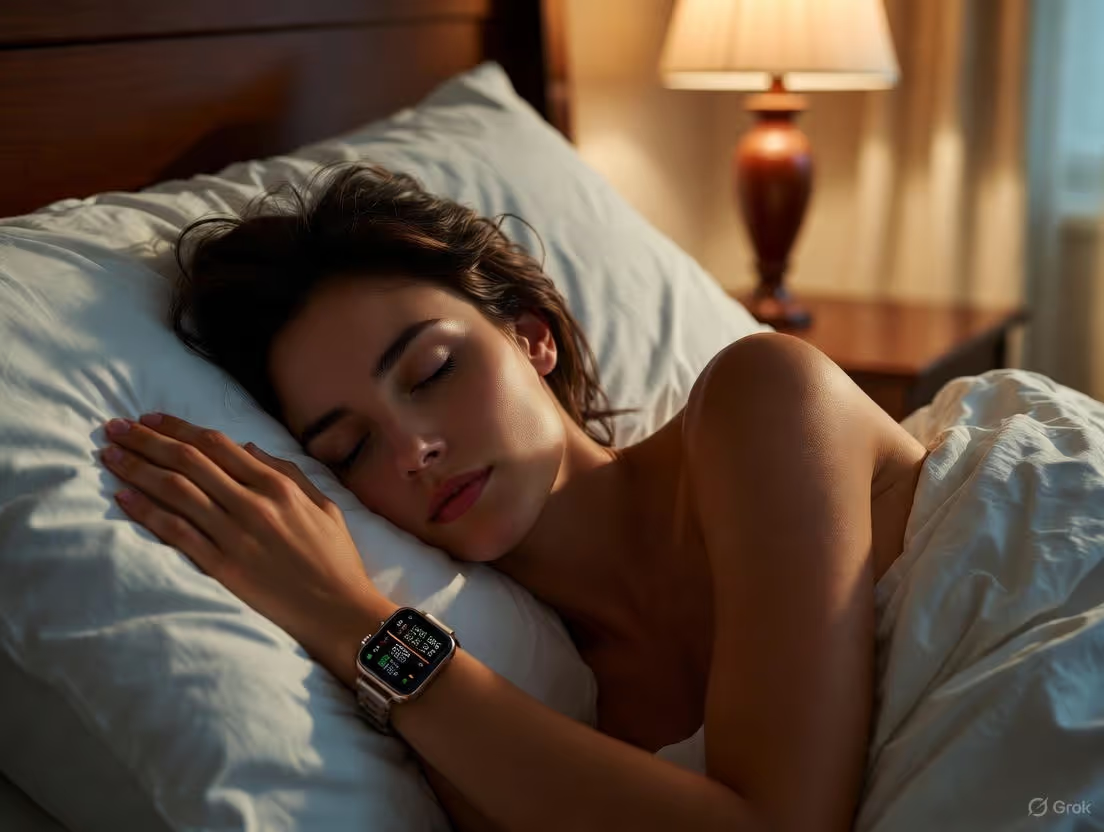
We’ve all been there. Facing a looming, sleep-critical night, we reach for the promise of an instant solution. This impulse is deeply rooted in human psychology and amplified by our modern environment. Understanding this pull is the first step in moving beyond it.
Neurologically, we are reward-seeking creatures. The brain’s limbic system, particularly the amygdala, processes threats and desires, pushing us toward immediate relief from discomfort (like the anxiety of sleeplessness). The promise of a “sleep in 30 minutes” gummy or a fast-acting spray offers a potent psychological reward: the immediate reduction of that anxiety. We trade the uncertain, long-term work of behavioral change for the certain, immediate relief of taking a pill or trying a new technique. This is a classic case of what behavioral economists call “hyperbolic discounting”—we dramatically undervalue future benefits in favor of smaller, immediate ones.
Furthermore, sleep deprivation itself impairs the prefrontal cortex, the brain region responsible for executive function, decision-making, and long-term planning. When you’re tired, you are literally less capable of choosing the patient, strategic path. The quick fix becomes the only path your fatigued brain can see.

The market expertly exploits this vulnerability. Walk down any pharmacy aisle, and you’re met with a wall of options: “Non-Habit Forming!” “Fall Asleep Fast!” “Stay Asleep Longer!” These marketing messages are designed to bypass logic and speak directly to our desperation. The supplement industry, often loosely regulated, thrives on anecdotal evidence and potent branding.
Beyond pills, there’s an entire ecosystem of gadgets and apps promising rapid results: headbands that “induce” sleep with electrical pulses, pillows that cool your brain, and countless apps with proprietary sound algorithms. While some of these tools have merit as part of a broader strategy, they are frequently sold as standalone solutions. The danger lies in creating a dependency on an external device, rather than building your own internal capacity for sleep. For a deeper look at separating hype from help in sleep tech, our FAQ section addresses common questions on what technology can and cannot do.
It’s crucial to acknowledge that quick fixes can “work”—in the very short term. The placebo effect is a powerful force. Believing that a melatonin gummy will knock you out can reduce sleep-onset anxiety, which in itself may help you drift off faster. An over-the-counter antihistamine sleep aid will indeed cause drowsiness.
However, these are short-term victories with long-term costs. The placebo effect wanes as belief fades. Sedating antihistamines can lead to next-day grogginess (a “sleep hangover”), disrupt sleep architecture by reducing precious REM sleep, and lose effectiveness over time. They treat the symptom (sleeplessness) without addressing any of the underlying causes (stress, schedule, light exposure, poor sleep hygiene). It’s like using a strong perfume to cover up a mold problem; eventually, the scent fades, and the underlying issue remains, often having grown worse.

In a world that feels chaotic, a quick fix provides a tangible sense of agency. “If I take this, I will sleep.” It’s a clear cause-and-effect equation that comforts the anxious mind. The gradual approach, by contrast, requires sitting with uncertainty and trusting a process. It exchanges the illusion of immediate control for the reality of gradual, sustainable influence—a trade-off our stressed minds are often reluctant to make.
By recognizing the powerful psychological, commercial, and neurological forces pulling us toward the quick fix, we can observe these impulses with compassion rather than judgment. This awareness creates the mental space to choose differently—to invest in a approach that doesn’t just create a single night of sleep, but builds a lifelong foundation for rest.
Choosing a quick fix for sleep is rarely a neutral act. While it might provide temporary relief, it often sets in motion a chain of consequences that can deepen sleep issues, create new problems, and erode your confidence in your body’s natural ability to rest. Let’s examine the hidden liabilities of the shortcut mentality.
The most significant danger of quick fixes is that they act as a bandage, allowing root causes to fester untreated. Chronic sleep issues are rarely random; they are typically signals.
This is a classic and brutal cycle associated with many pharmacological and even some supplemental sleep aids. The body is a master of homeostasis. When you regularly introduce an external sedative (like a benzodiazepine, “Z-drug,” or even high-dose melatonin), your neurochemistry adapts to counteract it. Over time, you need more of the substance to achieve the same effect (tolerance). If you then try to stop, your brain, now out of balance, rebounds in the opposite direction, leading to insomnia that is often worse than your original problem. This creates a powerful dependency, both physiological and psychological.
Not all sleep is created equal. We cycle through light sleep (stages N1 & N2), deep sleep (N3, or slow-wave sleep), and REM (rapid eye movement) sleep. Each stage is critical for different functions: physical repair and immune function in deep sleep, memory consolidation and emotional processing in REM.
Many common sleep aids, particularly alcohol and sedating medications, are blunt instruments. They may knock you out, but they profoundly suppress REM and deep sleep. You might log 8 hours of “sleep” but wake feeling unrefreshed because you missed the most restorative stages. This creates a paradox: you’re “sleeping” longer but recovering less.
“Sleeping pill hangover” is a real phenomenon characterized by morning grogginess, brain fog, and impaired coordination and judgment. This residual sedation can be as dangerous as being sleep-deprived. It affects your work performance, mood, and safety (e.g., driving). To combat this daytime drag, you might reach for more caffeine, which then lingers in your system and interferes with sleep the next night, prompting you to reach for the pill again. Thus, the vicious cycle spins.
Perhaps the most insidious cost is psychological. Every time you outsource your sleep to an external substance, you implicitly send yourself a message: “My body cannot do this on its own. I need this crutch.” This erodes your sense of sleep self-efficacy—the belief that you have the personal power to influence your sleep. This loss of confidence is a major predictor of chronic insomnia. The gradual approach, in contrast, is fundamentally about rebuilding that trust. As noted in many real customer reviews, the empowerment that comes from understanding your own data and making successful tweaks can be transformative.
The quick fix offers a tempting exit from the prison of a sleepless night, but it often leads to a more complex labyrinth. The gradual approach asks for more effort upfront—to investigate, to experiment, to be patient—but its reward is a genuine escape into the open air of self-sustaining, natural sleep.
If quick fixes are akin to emergency surgery, the gradual approach is preventive medicine coupled with physical therapy. It’s a paradigm shift from viewing sleep as a problem to be solved to understanding it as a skill to be cultivated and a state to be nurtured. This philosophy is rooted in several core principles that reframe our entire relationship with rest.

We don’t expect to play a concerto without practice or run a marathon without training. Yet, we expect to command perfect sleep on demand, despite days or weeks of poor sleep habits. The gradual approach posits that falling and staying asleep is a skill influenced by behaviors, thoughts, and environment. You can get better at it with consistent practice. This removes the moral judgment (“I’m bad at sleeping”) and replaces it with a growth mindset (“I can improve my sleep skills”).
Inspired by the Japanese concept of Kaizen (continuous improvement), this principle focuses on tiny, sustainable 1% improvements. Instead of overhauling your entire life overnight—a daunting task that usually leads to failure—you make one small, manageable change. Maybe it’s dimming the lights 30 minutes earlier, or setting a consistent wake-up time, or moving your caffeine cutoff earlier by 15 minutes.
Individually, these changes seem insignificant. But like financial compound interest, their benefits multiply over time. One positive change makes the next one easier. A slightly earlier wake time builds slightly more sleep pressure for the next night. Less evening blue light supports a slightly stronger melatonin release. These micro-gains build momentum and resilience, creating a robust system less vulnerable to disruption.
Modern sleep science understands that rest is not a purely biological phenomenon. It’s an intricate dance between:
Our society is obsessed with outcomes: “I need 8 hours of sleep tonight.” This fixation is a prime driver of performance anxiety, which is catastrophically bad for sleep. The gradual approach shifts focus to the process. Your goal is not “8 hours,” but “I will follow my wind-down routine,” or “I will get morning sunlight,” or “I will practice gratitude before bed.”
When you commit to the process, the outcome (better sleep) becomes a natural byproduct. This liberates you from the tyranny of the clock and the stress of nightly sleep audits. You learn to trust that by tending to the garden of your habits consistently, the flowers of restful sleep will bloom in their own time.
At the heart of the modern gradual approach is biofeedback. Tools like the Oxyzen smart ring move you from subjective guessing (“I think I slept poorly”) to objective knowing (“My deep sleep was 30% lower than my baseline, and my nighttime heart rate was elevated”). This data isn’t meant to be another source of anxiety, but a source of empowerment. It turns sleep from a black box into a transparent process. You can run experiments: “If I stop eating 3 hours before bed this week, what happens to my HRV?” This fosters a curious, scientific relationship with your own body, replacing frustration with fascination. For those interested in this journey, learning more about smart ring technology is an excellent starting point.
This philosophical foundation transforms the sleep improvement journey from a grim chore into a meaningful practice of self-care and discovery. It’s not about achieving perfection, but about progressing toward a more harmonious relationship with the one-third of your life spent in rest.
To navigate the gradual improvement journey effectively, you need a basic map of the territory. Two primary biological systems govern your sleep-wake cycle: the circadian rhythm and the sleep-wake homeostat. Understanding their mechanics is like learning the rules of a game—it allows you to play strategically instead of randomly.
This is your body’s approximate 24-hour internal clock, orchestrated by a tiny region in the brain called the suprachiasmatic nucleus (SCN). Think of it as the conductor of your daily physiological orchestra, cueing the rise and fall of hormones, body temperature, appetite, and alertness.
This system is simpler: the longer you are awake, the stronger your desire to sleep becomes. This “sleep pressure” is believed to be driven by the accumulation of a chemical called adenosine in the brain. Caffeine works by blocking adenosine receptors, temporarily masking this pressure without actually reducing it.
The beautiful interplay between these two systems is often depicted as a two-process model. Imagine your circadian rhythm as a wave of alertness that peaks in the late afternoon and dips in the early hours of the morning. Your homeostatic sleep drive is a line that climbs steadily from wake-up time. The ideal window for sleep occurs when the high tide of sleep pressure meets the low tide of the circadian alertness wave.
Once you fall asleep, you don’t enter a monolithic state. You cycle through 90-120 minute periods of distinct stages:
A full night’s sleep involves 4-6 of these cycles, with deep sleep dominating the first half of the night and REM sleep periods lengthening in the second half. Both are critical, and a “good night’s sleep” means cycling through these stages adequately.
This is where advanced tracking becomes invaluable. Your autonomic nervous system (ANS)—with its “gas pedal” (sympathetic, for stress) and “brake pedal” (parasympathetic, for rest)—directly governs your ability to transition into and maintain sleep. High sympathetic activity at night means a racing mind and a body ready for action, not restoration.
Heart Rate Variability (HRV) is the subtle variation in time between heartbeats and is the single best non-invasive measure of ANS balance. A higher HRV (more variability) generally indicates strong parasympathetic tone and resilience—your body can smoothly shift into recovery mode at night. A low or erratic HRV suggests your system is stressed, overloaded, or inflamed, which will fragment sleep and reduce its quality. Monitoring HRV provides a direct readout of your nervous system’s readiness for sleep, guiding you on when to push or when to prioritize recovery. You can discover how Oxyzen works to provide these crucial insights.
Armed with this knowledge, you can see why quick fixes fail. A sleeping pill might knock you unconscious, but it doesn’t properly align your circadian rhythm, clear adenosine effectively, or balance your nervous system. The gradual approach, however, uses this scientific map to make deliberate, informed tweaks that work with your biology, not against it.
Sleep hygiene is often presented as a simplistic checklist: a cool, dark room and no screens before bed. While these are important, a true foundational practice for gradual improvement is more nuanced and systemic. It’s about creating an ecosystem—both external and internal—that invites sleep. Let’s explore these non-negotiables in depth.
Managing light is the single most powerful lever you have for circadian alignment.
A drop in core body temperature is a key signal for sleep onset. You can facilitate this.
Your brain loves predictability. A consistent wind-down routine acts as a series of behavioral cues that tell your nervous system, “Safety. It’s time to shift into rest mode.”
Perhaps the most critical psychological hygiene practice is to strengthen the association between your bed and sleep. If you use your bed for work, scrolling, watching movies, or worrying, it becomes a cue for cognitive arousal.
What you consume acts as direct instructions to your biology.
Implementing these foundations is not an overnight event. Start with one—perhaps morning light or a consistent wake time. Use a tracker to observe the effects. These are the stable pillars upon which all other gradual improvements are built. For more detailed strategies and personal experiences, our community often shares their routines on our blog.
Even with perfect sleep hygiene, a racing mind can keep you wide awake. The psychological dimension of sleep is where many quick fixes utterly fail and where gradual cognitive-behavioral strategies shine. These techniques are designed to dismantle the anxiety, rumination, and conditioned arousal that form the bedrock of chronic insomnia.
Our thoughts about sleep directly impact our ability to achieve it. Catastrophic thinking (“If I don’t sleep tonight, my whole life will fall apart”) creates performance anxiety, activating the fight-or-flight response. Cognitive restructuring involves identifying and gently challenging these unhelpful beliefs.
This practice reduces the “fear of not sleeping,” which is often a bigger barrier than the sleeplessness itself.
As mentioned in the foundations, this is a formal behavioral technique to break the link between the bed and wakefulness. The rules are simple but powerful:
This method requires commitment but is extraordinarily effective for treating conditioned insomnia. It teaches your brain that the bed is a reliable cue for sleep, not for anxiety.
This sounds counterintuitive but is clinically proven. If you’re spending 9 hours in bed but only sleeping 6, your sleep efficiency is poor, and you’re building a strong association with wakefulness. Sleep restriction temporarily reduces your time in bed to match your actual sleep time (e.g., 6 hours). This builds intense, consolidated sleep pressure, leading to faster sleep onset and less night-waking. As sleep efficiency improves, you gradually increase your time in bed. Important: This should be done under guidance, as it can be challenging and is not suitable for everyone. Data from a device like Oxyzen is invaluable here to accurately assess your true average sleep time.
For sleep performance anxiety, this can be a mental magic trick. Instead of trying desperately to fall asleep, give yourself the instruction to try to stay awake (with your eyes closed in the dark). By removing the pressure to perform, you often short-circuit the anxiety that was preventing sleep in the first place.
Fighting against wakefulness is a battle you will always lose. Mindfulness offers a different path: non-judgmental awareness and acceptance.
“Downloading” your worries onto paper 30-60 minutes before bed can prevent them from looping in your mind. Try a “brain dump” list or a structured practice:
These strategies are not quick fixes; they are mental muscles that require training. But their effect is cumulative and permanent. They address the root of the problem—your relationship with wakefulness and sleep—rather than just plastering over it. They are a core component of the philosophy shared in our story and vision, which emphasizes sustainable, internal mastery over wellness.
In the gradual sleep improvement journey, awareness is everything. For decades, our understanding of our own sleep was limited to subjective, often inaccurate, impressions of duration and a vague sense of “restfulness.” The advent of consumer biometric trackers, particularly the smart ring, has revolutionized this landscape. It provides the objective, personalized feedback loop that makes the gradual approach not just philosophical, but precise, measurable, and deeply motivating.
You may feel you slept poorly, but why? Was it delayed sleep onset, frequent awakenings, insufficient deep sleep, or a dysregulated nervous system? A smart ring like Oxyzen tracks a suite of physiological signals throughout the night, turning vague fatigue into a specific dataset:
This data creates a powerful scientific method for self-improvement.
The human mind is terrible at spotting long-term patterns. Your Oxyzen app does this effortlessly. It can show you:
Gradual change can feel slow and invisible. Data provides the proof of progress that keeps you motivated. Seeing your “Sleep Score” or “Readiness Score” climb over weeks, observing your average resting heart rate decline, or noting that your deep sleep has increased by 12%—these are tangible validations that your efforts are paying off. They reinforce the positive behaviors, creating a virtuous cycle.
A ring tracks your body’s signals continuously, not just at night. This provides critical context.
This holistic view is what makes a device like this so powerful for the gradual approach. It doesn’t just give you a sleep score; it explains the why behind it, connecting the dots between your daily choices and your nightly restoration. It’s the ultimate tool for anyone committed to the long-term journey of understanding and optimizing their health, aligning perfectly with resources you can find to learn more about smart ring technology.
Knowledge without a plan is merely trivia. Here is a practical, phased 12-week framework to implement the gradual sleep improvement approach. This roadmap is designed to be sustainable, allowing you to integrate changes without overwhelm. Remember, consistency beats intensity.
Goal: Establish non-negotiable basics and collect baseline data.
Goal: Strengthen the bed-sleep connection and begin targeted experiments.
Goal: Address mental habits and fine-tune based on personalized data insights.
This framework is not rigid but adaptive. Your data is your guide. If you see that evening light is your biggest issue, you might spend more time there. The roadmap provides structure, but your unique biology provides the directions. For continued inspiration and to see how others have navigated their journey, the testimonials page is filled with real-world accounts of gradual transformation.
In any journey of gradual improvement, plateaus and setbacks are not just possible—they are guaranteed. The quick-fix mentality interprets these as proof of failure, leading to abandonment. The gradual approach, however, sees them as integral, informative parts of the process. How you navigate these moments determines your long-term success.
First, reframe the terminology. A “setback” implies you’ve been thrown back to your starting point. This is almost never true. Instead, think of them as disruption phases or learning data points. You have built a foundation; a bad night or week does not erase that foundation. It tests it, and often reveals its weak points so you can reinforce them.
When sleep deteriorates, the old, anxious narrative can rush back: “I’ve lost it. I’ll never sleep well again.” This is where practicing self-compassion is a practical skill, not just a nice idea. Talk to yourself as you would a friend:
“This is really hard right now. It’s understandable that my sleep is off with everything going on. It won’t always be like this. I have the tools to find my way back.”
This gentle inner dialogue lowers cortisol and sympathetic arousal, creating the very conditions needed for sleep to return.
When lost, return to your Phase 1 non-negotiables: consistent wake-up time, morning light, and a dark, cool room. These are your home base. You don’t need to figure everything out; just return to the basics and trust them to do their work over a few days.
Navigating setbacks with this mindset builds something more valuable than perfect sleep: it builds resilience. You learn that a bad night is not a catastrophe, but a temporary weather system passing through. You develop confidence that you have a navigational system (your habits and your data) that will always guide you back to calm waters. This unshakable confidence is the ultimate goal, and it can only be earned through the gradual journey, never purchased in a quick fix.
A perfect sleep protocol is useless if it exists in a vacuum, constantly shattered by the realities of career, parenting, and social connection. The art of the gradual approach is not in creating a fragile, lab-conditions routine, but in building a resilient, adaptive sleep practice that bends without breaking, integrating seamlessly with a full and meaningful life.
Rigidly chasing an 8 PM - 5 AM schedule is unrealistic for most adults. The goal is not perfection, but consistency within a flexible framework. Your anchor—your wake-up time—should be as fixed as possible. Your bedtime can have a 90-minute window (e.g., between 10:00 and 11:30 PM) based on your social events, family needs, or natural sleepiness cues. This provides structure without brittleness.
Improving your sleep often requires setting gentle boundaries. This isn’t about being antisocial; it’s about valuing your health.
Think of your sleep resilience like a financial budget. You make consistent weekly “deposits” through your good habits.
These are extreme challenges that require bespoke strategies, but the principles still apply.
Sleep improvement doesn’t have to be a solitary pursuit. Involve your partner in comparing Oxyzen data, making it a shared curiosity. Create family wind-down routines for children. When your entire household respects the rhythm of rest, it becomes easier for everyone.
The ultimate sign that your gradual approach has succeeded is when it ceases to feel like a separate “program” and simply becomes the intelligent, health-supporting backdrop to your vibrant life. It’s the quiet confidence that you can travel, work hard, celebrate, and still know how to guide your nervous system back to its home base of rest. This integration is the true mark of sustainable change, a philosophy deeply connected to our vision & values of holistic, adaptable wellness.
Committing to the gradual path does more than optimize your nights. It initiates a cascade of positive changes that radiate into every corner of your waking life. The patience, awareness, and self-trust you cultivate in pursuit of better sleep become foundational skills for overall well-being. This is the profound, often unexpected, payoff of forsaking the quick fix.
Sleep is the bedrock of emotional health. Deep sleep and REM sleep are crucial for processing emotional experiences and consolidating memories. As your sleep architecture improves through gradual habits, you’ll likely notice:
Your brain performs essential maintenance and reorganization during sleep.
The benefits extend far beyond feeling less tired.
This is the transformative core. The gradual sleep journey is a master class in:
Using a tool like Oxyzen reframes technology from a source of distraction and sleep disruption into a source of self-knowledge and empowerment. You learn to use tech as a mirror, not a master. This mindful relationship with devices can improve your digital well-being overall.
You begin to see health not as a static state or a destination, but as a dynamic, daily practice. Sleep becomes your primary metric, the foundational input that makes all other healthy outputs possible. This holistic view aligns with a proactive, preventive approach to medicine, where you are the primary steward of your vitality.
In essence, the journey to improve your sleep gradually becomes a journey of personal growth. The bed becomes a laboratory for learning patience, the night a canvas for practicing self-trust, and the morning data a report card on your alignment with your own nature. You stop chasing sleep and start cultivating an entire life that is conducive to it. This is the ultimate reward—a life not just of more sleep, but of more presence, resilience, and vitality. It’s a journey we are deeply committed to supporting, as reflected in our company’s mission to empower individuals with the knowledge and tools for lasting wellness.
We have traversed the landscape of sleep from the seductive, barren cliffs of quick fixes to the fertile, sustainable valleys of gradual improvement. We’ve dissected the science, outlined the foundational habits, explored the cognitive tools, and demonstrated how modern technology can be your compass, not a crutch.
The core message is this: Your sleep is not broken; it is asking for different conditions. It is a reflection of your daily life, a conversation with your biology. To improve it, you must engage in that conversation with curiosity and patience, not with demands and panic.
The quick fix offers a fantasy of control—a single lever to pull for instant silence. The gradual approach offers the reality of influence—a thousand tiny dials you can adjust, learning as you go, to create a symphony of rest. One leaves you dependent and often worse off; the other makes you skilled, resilient, and empowered.
Your first step is not to change everything. It is to choose curiosity over desperation.
The path of gradual improvement is not a straight line upward. It is a spiral, where you circle back to lessons with deeper understanding, where setbacks become integration points, and where progress is measured in trends, not single nights. It is a path walked by countless individuals who have traded the exhausting struggle for sleep for the peaceful practice of sleep.
Your journey to reclaiming your rest—and in doing so, enhancing every facet of your waking life—begins with a single, gentle decision to turn away from the false promise of the quick fix and take that first, mindful step onto the gradual path. We are here to support that journey every step of the way. To continue building your knowledge, a wealth of detailed guides and scientific insights awaits on our blog.
The journey to exceptional sleep is not linear. Once you’ve moved past the foundational habits and broken free from the quick-fix cycle, you enter a new phase: optimization. This is where the gradual approach evolves from a repair manual into a tuning guide for high performance. It’s about moving from simply getting enough sleep to achieving maximally restorative sleep that fuels your ambitions, creativity, and resilience.
This next stage leverages the data you’ve been collecting to make hyper-personalized adjustments. It delves into the nuanced interplay between sleep and other pillars of health—nutrition, targeted exercise, and advanced stress modulation. Here, your smart ring transitions from a sleep tracker to a 24/7 wellness dashboard, revealing how every choice ripples through your nervous system and ultimately, your sleep architecture.
Forget one-size-fits-all advice. This is about becoming the world’s leading expert on your own biology. It’s where you discover your personal chronotype’s sweet spot, learn how your microbiome whispers to your brain at night, and use cold exposure or breathwork not as trendy hacks, but as precise tools to modulate your sleep physiology. The goal is no longer just to avoid fatigue, but to unlock a state of daily vitality you may have forgotten was possible.
Let’s dive into the advanced toolkit for the committed sleeper.
You’ve mastered a consistent wake time and light hygiene. Now, it’s time to refine that schedule to match your innate, genetic wiring. Not everyone is meant to be a “5 AM miracle” person. Fighting your chronotype is like swimming against a current; you can do it, but it’s exhausting and inefficient. Aligning with it is the ultimate form of working with your biology.
The popular dichotomy is overly simplistic. Dr. Michael Breus’s model, based on sleep drive, alertness, and core body temperature rhythms, provides a more useful framework:
While quizzes can point you in a direction, your own data is the ultimate arbiter. Analyze your Oxyzen trends over a month of relaxed, obligation-free days (like a vacation).
Once you know your type, you can orchestrate your day for maximum effectiveness and minimal sleep cost.
This is the chronic misalignment between your social clock (work, family, social life) and your biological clock. A Wolf on a Bear schedule experiences social jetlag every single weekday. The cost is immense: increased risk of metabolic disorders, depression, and accidents.
The Gradual Solution: Minimize the gap. A Wolf might negotiate a 10-6 work schedule instead of 9-5. Everyone can advocate for meeting times during their peak hours when possible. The data from your ring can be a powerful, objective tool to explain your needs to an employer: “My biometric data shows my peak cognitive readiness occurs between 11 AM and 4 PM. Can we schedule critical brainstorming sessions in that window?”
Honoring your chronotype is the pinnacle of personalized sleep health. It transforms sleep from a forced shutdown into a natural, harmonious transition. It’s a profound acceptance that your best self operates on a unique timetable. This philosophy of personalized wellness is central to our mission at Oxyzen, which is to move beyond averages and reveal your individual biological truth.
Food is more than fuel; it’s information that directly programs your circadian system, neurotransmitter production, and inflammation levels—all of which dictate sleep quality. Advanced sleep nutrition moves beyond “don’t eat late” to strategically using food to support sleep architecture and nervous system balance.
Your digestive system has its own clock. Enzymatic activity, gut motility, and nutrient absorption are primed during your active phase. Eating late at night misaligns these peripheral clocks, forcing your digestive organs to work during their biological “night,” raising core body temperature and disrupting sleep.
Each macronutrient sends different signals that can be timed for effect.
Micronutrient status is critical. Deficiencies can be a hidden root cause of poor sleep.
Approximately 90% of your body’s serotonin, a precursor to melatonin, is produced in the gut. Your gut microbiome directly communicates with your brain via the vagus nerve and through inflammatory cytokines.
Using nutrition as a sleep modulator requires seeing food as part of your daily rhythm. It’s not about restriction, but about strategic inclusion and timing to send your body the clearest possible signal that the time for restoration is near. Tracking how different meals affect your nighttime heart rate and HRV recovery provides immediate, personal feedback, turning nutrition from a guessing game into a precise science.
Exercise is a double-edged sword for sleep. Done correctly, it is one of the most powerful deep sleep enhancers and stress buffers available. Done incorrectly—particularly in timing, intensity, or volume—it can become a significant sleep disruptor, flooding your system with stimulatory stress hormones when you need calm. The advanced approach uses biometric feedback to find your personal “Goldilocks Zone” for movement.
When you exercise is often more important than what you do, regarding sleep.
This is where generic advice fails. You must become a detective.
This is a critical advanced concept. More exercise is not always better. Overtraining syndrome is characterized by a persistent drop in HRV, elevated resting heart rate, insomnia, irritability, and increased illness—all signs of a sympathetic-dominant, overwhelmed nervous system.
Non-exercise activity thermogenesis (NEAT) is also crucial. Sedentary days can lead to poorer sleep. Incorporate movement “snacks” throughout the day: a 5-minute walk every hour, taking the stairs, light stretching. This maintains healthy circulation and metabolic flux without the systemic stress of a formal workout, supporting a smoother transition to sleep.
The ultimate goal is to view exercise not as an isolated performance metric, but as an input to your sleep and recovery system. Your biometric feedback provides the closed loop: did today’s movement enhance or detract from last night’s rest, and will last night’s rest support tomorrow’s movement? This holistic, data-informed approach ensures your fitness regimen is truly building you up, not breaking you down. For those navigating this balance, our community’s real customer reviews often highlight how data changed their approach to training and recovery.
At the most advanced level, sleep optimization is nervous system optimization. You can have perfect light hygiene and a textbook diet, but if your autonomic nervous system (ANS) is stuck in a sympathetic (“fight-or-flight”) dominant state, sleep will remain elusive and shallow. This stage moves beyond bubble baths and chamomile tea to targeted, potent practices that directly hack your ANS and build physiological resilience.
Heart Rate Variability is your quantitative window into the ANS balance. A higher, less erratic HRV indicates a system with good “vagal tone”—the ability of your parasympathetic (“rest-and-digest”) system to efficiently apply the brakes after stress.
These are active skills to strengthen your nervous system’s resilience, making it less reactive to daily stressors and quicker to return to calm.
Your Trusted Sleep Advocate: Sleep Foundation — https://www.sleepfoundation.org
Discover a digital archive of scholarly articles: NIH — https://www.ncbi.nlm.nih.gov/
39 million citations for biomedical literature :PubMed — https://pubmed.ncbi.nlm.nih.gov/
Experts at Harvard Health Publishing covering a variety of health topics — https://www.health.harvard.edu/blog/
Every life deserves world class care :Cleveland Clinic - https://my.clevelandclinic.org/health
Wearable technology and the future of predictive health monitoring :MIT Technology Review — https://www.technologyreview.com/
Dedicated to the well-being of all people and guided by science :World Health Organization — https://www.who.int/news-room/
Psychological science and knowledge to benefit society and improve lives. :APA — https://www.apa.org/monitor/
Cutting-edge insights on human longevity and peak performance:
Lifespan Research — https://www.lifespan.io/
Global authority on exercise physiology, sports performance, and human recovery:
American College of Sports Medicine — https://www.acsm.org/
Neuroscience-driven guidance for better focus, sleep, and mental clarity:
Stanford Human Performance Lab — https://humanperformance.stanford.edu/
Evidence-based psychology and mind–body wellness resources:
Mayo Clinic — https://www.mayoclinic.org/healthy-lifestyle/
Data-backed research on emotional wellbeing, stress biology, and resilience:
American Institute of Stress — https://www.stress.org/


