


Nightly Recovery Basics: What Every Beginner Should Know
Beginners should focus on consistent sleep schedules and a dark, cool, quiet bedroom to start improving nightly recovery.
Beginners should focus on consistent sleep schedules and a dark, cool, quiet bedroom to start improving nightly recovery.
%402x.svg)
You’ve heard it a million times: “Get your eight hours.” But what if the secret to feeling amazing isn't just the quantity of your sleep, but the quality of your recovery? For years, we’ve treated sleep as a passive, mysterious void—a biological off-switch we endure. We crash into bed, hoping for the best, and judge our night solely by the clock. Yet, two people can clock identical hours and wake up worlds apart: one rejuvenated and sharp, the other foggy and drained.
The difference lies in Nightly Recovery. This is the critical, complex, and measurable process your body and mind undergo from the moment your head hits the pillow until you open your eyes. It’s not just sleep; it’s a sophisticated, multi-system renovation project that repairs muscle, consolidates memory, balances hormones, and cleanses your brain. For the beginner, understanding this process is the first, most transformative step toward taking control of your energy, health, and performance.
The old metrics are failing us. Counting sheep (or hours) is no longer enough. In our always-on, high-stress world, we need a granular, data-informed understanding of how we truly recharge. This is where modern technology, like advanced wellness wearables, steps in, transforming guesswork into insight. By tracking the pillars of recovery—from heart rate variability and deep sleep phases to resting heart rate and temperature trends—we can finally move from wondering “Did I sleep well?” to knowing exactly how well we recovered and, more importantly, why.
This guide is your foundational manual. We’re not just going to tell you to sleep more. We’re going to dismantle the black box of the night and illuminate the essential, actionable basics. Whether you’re an exhausted parent, a striving athlete, a busy professional, or simply someone who wants to feel human again in the morning, mastering these fundamentals is your non-negotiable first step. This knowledge, paired with the right tools, empowers you to optimize your habits, environment, and routines to support your body’s innate healing intelligence. The journey to becoming your best, most energized self doesn’t start at sunrise—it starts the night before. Let’s begin.

Sleep is the vehicle, but recovery is the destination. To grasp this distinction, imagine your body as a high-performance city. During the day, you’re in full operation: construction (muscle breakdown), traffic (stress responses), commerce (cognitive processing), and waste production (metabolic byproducts). When night falls, the day-shift leaves, and the night-crew arrives. This isn't a time of mere inactivity; it’s a period of intense, targeted activity of a different kind. Nightly recovery is the sum of all this essential maintenance work.
Scientifically, recovery is a physiological and psychological state where your body works to return to homeostasis—its balanced, baseline setting—and, ideally, adapt to become stronger (a concept known as supercompensation). This happens through intricate processes like protein synthesis for muscle repair, the release of human growth hormone, the flushing of neurotoxins via the glymphatic system (the brain’s "sewer system"), and the strengthening of neural connections for memory. Sleep, particularly its deeper stages, is the primary catalyst for these processes, but it is not the process itself. You can have fragmented, inefficient sleep that provides little recovery, or you can have shorter, highly efficient sleep that delivers profound recovery.
The consequences of poor recovery are cumulative and insidious. It’s not just about yawning. Chronically inadequate recovery impairs glucose metabolism, weakens immune response, elevates cortisol (the stress hormone), hampers decision-making, and increases inflammation—a root cause of numerous chronic diseases. It sabotages your fitness goals, your work productivity, and your emotional resilience.
Conversely, prioritizing recovery is the ultimate force multiplier. It enhances your mood, sharpens focus, boosts metabolic health, improves physical performance, and strengthens your body's defense systems. It makes every other healthy habit more effective. In the modern wellness landscape, tracking this recovery is no longer a luxury for elite athletes; it's a fundamental tool for anyone seeking to thrive. This is why a holistic view, supported by data from devices like the Oxyzen smart ring, is so revolutionary. It shifts the focus from a single number (hours in bed) to a comprehensive dashboard of your body’s overnight restoration, giving you a true measure of your readiness to face the day. As you’ll see in our complete guide to wellness tracking, this data-driven approach is the key to personalized health.
To measure and improve your recovery, you need to know what to measure. Think of your body’s recovery state as a building supported by four critical pillars. If one is weak, the entire structure is compromised. These pillars are the core biometrics that, when tracked together, provide a holistic picture of your overnight restoration.
1. Sleep Stages & Architecture: Not all sleep is created equal. Your night cycles through light sleep (NREM Stage 1 & 2), deep sleep (NREM Stage 3), and REM (Rapid Eye Movement) sleep. Each plays a unique role:
2. Heart Rate Variability (HRV): This is arguably the most insightful metric for recovery status. HRV measures the subtle variations in time between each heartbeat. Contrary to what you might think, a higher HRV is generally better. It indicates a robust, resilient autonomic nervous system—meaning your body can easily switch between stress (sympathetic) and rest (parasympathetic) modes. A low HRV suggests your nervous system is stuck in a stressed state, signaling that you are not fully recovered and may need more rest. It’s your body’s most honest feedback signal.
3. Resting Heart Rate (RHR): Your heart rate at complete rest is a fundamental health indicator. A well-recovered body typically shows a lower, stable RHR. An elevated RHR overnight or a creeping trend of higher morning RHR can be a clear sign of systemic stress, insufficient recovery, impending illness, or overtraining.
4. Body Temperature & Respiratory Rate: Minor, often imperceptible, changes in your core temperature and breathing patterns are powerful signals. A gradual drop in skin temperature helps initiate sleep, and deviations can indicate sleep disturbances. Similarly, a steady, low respiratory rate during sleep is a sign of autonomic nervous system balance, while irregularities can point to disrupted sleep cycles or stress.
For the beginner, these metrics can seem complex, but their power lies in their objectivity. They move you beyond subjective feelings of being "tired" or "rested" and provide a concrete language your body uses to communicate its needs. By observing these pillars through a consistent, wearable device, you begin to see patterns and correlations that are invisible to the naked eye. As many users share in their real-world experiences, unlocking this data is often a "lightbulb moment" that finally explains years of unexplained fatigue or stalled progress. It transforms your relationship with rest from one of hope to one of strategy.

Your recovery begins long before you fall asleep. The final 60-90 minutes of your day—your pre-sleep routine—are a critical wind-down period where you consciously transition your body and mind from a state of alertness to one of receptiveness to sleep. This isn't about rigid rules; it's about creating a series of consistent, calming cues that signal to your nervous system, "The workday is over. It's time to restore."
The Wind-Down Philosophy: Modern life, with its blue light, endless notifications, and mental clutter, is a constant barrage of sympathetic ("fight-or-flight") nervous system activation. A purposeful wind-down routine activates the parasympathetic ("rest-and-digest") system. This physiological shift doesn’t happen instantly; it requires a buffer zone.
Essential Elements of an Effective Routine:
Creating your personalized routine is an experiment. The key is to start small, be consistent, and observe the effects. For example, track what happens to your deep sleep and HRV on nights you read a book versus nights you watch an action movie. This process of self-discovery is at the heart of a data-informed wellness journey. For more ideas on crafting the perfect evening ritual, our blog offers a wealth of actionable tips. Remember, you are not just ending your day; you are architecting the foundation of your tomorrow.
You can have the best routine, but if your sleep environment is working against you, recovery will be an uphill battle. Your bedroom should be a sanctuary engineered for one purpose: to support uninterrupted, high-quality sleep. Think of it as crafting a primitive "cave"—cool, dark, quiet, and comfortable.
The Core Principles of Sleep Sanctuary Design:
Advanced Environment Tweaks:
By methodically optimizing these environmental factors, you remove external obstacles to recovery, allowing your body’s natural processes to run smoothly. It’s one of the most direct and impactful investments you can make in your health. As we often discuss in our mission to democratize health data, empowerment comes from understanding and then optimizing the fundamentals of your human environment.
What you eat and drink, and when you do it, acts as either fuel or interference for your overnight repair crews. Nutrition for nightly recovery isn’t about a single "sleep food"; it’s about strategic choices throughout the evening that support, rather than disrupt, your body's hormonal and physiological sleep signals.
The Evening Meal Strategy:
Key Nutrients & Compounds:
The Hydration Balance:
The Data Connection: How do you know if your dinner is helping or hurting? Your recovery metrics tell the story. You might notice a spike in your overnight resting heart rate or a dip in your HRV after a late, heavy meal or a glass of wine. This objective feedback removes the guesswork, allowing you to make personalized, evidence-based choices about your evening nutrition. It’s a powerful example of how tracking transforms abstract advice into personal truth, a principle central to how Oxyzen works.

Your recovery is not a separate event confined to the night; it's the culmination of your entire day. The choices you make from morning until evening set the hormonal, neurological, and physiological stage for how effectively your body will restore itself. Think of it as earning your sleep quality.
Morning Light Exposure: This is your most powerful tool for regulating your circadian rhythm. Viewing bright, natural light (preferably sunlight) within 30-60 minutes of waking up suppresses melatonin, boosts cortisol (in a healthy, alerting way), and resets your internal clock. This simple act strengthens the signal that "day is for alertness," making the "night is for sleep" signal stronger later on.
Physical Activity & Timing: Regular exercise is one of the best evidence-based ways to improve sleep quality and duration. It reduces stress, tires the body physically, and can help deepen sleep. However, timing matters. Intense, high-heart-rate exercise too close to bedtime (within 1-2 hours) can be overly stimulating for some people, raising core temperature and adrenaline. Gentle movement like walking or stretching in the evening is fine, but save vigorous workouts for earlier in the day.
Stress Management Throughout the Day: Chronic, unmanaged daytime stress leads to elevated cortisol levels that can persist into the night, interfering with the quiet nervous system state required for deep sleep. Integrating micro-practices of stress reduction—like mindful breathing, short walks, or moments of gratitude—prevents stress from accumulating. You cannot expect to "dump" a day's worth of stress in a 5-minute pre-bed meditation if you've been in fight-or-flight mode for 16 hours.
Consistency in Wake-Up Time: Perhaps even more important than a consistent bedtime is a consistent wake-up time—even on weekends. This is the anchor of your circadian rhythm. Waking at the same time every day trains your body to expect sleep at a consistent time each night, making both falling asleep and the architecture of your sleep more stable and predictable.
Napping Wisely: If you need to nap, do it strategically. Keep naps short (20-30 minutes) and before 3 PM. Long or late naps can reduce your sleep drive, making it harder to fall asleep at night and potentially disrupting the following night's recovery cycle.
By viewing your day as preparation for recovery, you adopt a proactive, holistic mindset. Every hour of daylight is an opportunity to invest in the quality of your night. The synergy between these daytime habits and your nighttime data is profound. For instance, you might see a direct correlation on your wellness tracker between days with a morning walk in the sun and higher HRV scores that night. This creates a positive feedback loop, motivating healthier choices. To explore more about the symbiotic relationship between daily activity and rest, further reading is available on our blog.
You wake up. Do you feel "good" or "bad"? That subjective feeling is important, but it’s only part of the story. The true, objective report card of your recovery is found in the biometric data captured overnight. Learning to interpret your morning readiness score—a composite of the pillars we discussed—is like learning to read a vital weather forecast for your body. It tells you not just how you think you feel, but what state your physiology is actually in.
The Composite Readiness Score: Most advanced wellness wearables synthesize your key metrics (HRV, RHR, sleep stages, temperature) into a single, easy-to-understand score or status (e.g., "Recovered," "Balanced," "Strained"). This is your starting point. A high score suggests your body has successfully repaired and adapted, and you are physiologically prepared for stress, challenge, and performance. A low score is a clear signal from your body that resources are depleted, stress is high, and you may need to prioritize rest, lighter activity, or stress management.
Going Beyond the Score: The Individual Metrics:
How to Use This Information (The Art of Listening):
This practice turns recovery from a passive event into an active dialogue. You are no longer guessing; you are responding. As users often discover when they share their journey, this ability to "listen" to their bodies through data is the most transformative aspect of the entire process, preventing burnout and guiding sustainable progress.
Embarking on a journey to optimize recovery is exciting, but it’s easy to get tripped up by common pitfalls. Awareness is your first defense. Here are the mistakes beginners often make and how to navigate them wisely.
1. Obsessing Over a Single Night's Data: You had a terrible night. Your readiness score is in the tank. The beginner's mistake is to panic or make drastic changes based on this one data point. The Solution: Look at trends, not absolutes. Recovery data is noisy. One bad night is just a blip. Look at your 7-day and 30-day averages. Is there a genuine downward trend, or is this an outlier caused by a one-off event (a late flight, a sick child, a celebration)? Context is everything.
2. Chasing Perfect "Scores" Instead of Trends: The goal is not a perfect 100/100 every morning—that's neither realistic nor desirable (some stress is needed for adaptation). The mistake is becoming a "score zombie," where your self-worth is tied to a number. The Solution: Focus on the direction and understanding. Are your lifestyle choices moving your trends in a positive direction over weeks and months? Use the scores as a guide, not a judgment.
3. Ignoring Subjective Feelings ("Feel" vs. "Real"): The opposite mistake is dismissing how you feel because "the data looks good." You might feel exhausted despite a high readiness score. The Solution: Your subjective feeling is a crucial data point. The data gives you the "what," but your feelings can point to the "why." A discrepancy invites curiosity, not dismissal. Are you mentally drained? Emotionally exhausted? These states aren't always fully captured by physiological metrics. Use both objective data and subjective sense for a complete picture.
4. Making Too Many Changes at Once: You read this guide and decide to simultaneously change your bedtime, diet, exercise routine, and bedroom setup. The Solution: This makes it impossible to know what's working. Take the scientific method approach: implement one change at a time (e.g., establish a consistent wake-up time), observe its effect on your data for 1-2 weeks, then introduce the next change (e.g., a digital sunset). This builds sustainable habits and provides clear cause-and-effect learning.
5. Neglecting Consistency for Perfection: Waiting for the "perfect" conditions to start—the perfect mattress, the perfectly quiet week—is a trap. The Solution: Start with what you have, tonight. Be 80% consistent with your routine 80% of the time. That’s far more powerful than being 100% perfect for three days and then quitting. Recovery is a lifelong practice, not a sprint.
6. Isolating Sleep from Overall Lifestyle: Thinking that a perfect pre-sleep routine can offset a day of terrible stress, poor nutrition, and zero movement. The Solution: Internalize the lesson from the previous section: your day is your recovery preparation. Holistic habits create a foundation that makes nightly recovery effortless.
By sidestepping these common errors, you set yourself up for a sustainable, insightful, and frustration-free journey. Remember, this is a process of self-discovery, not a performance test. For answers to other frequent questions on starting this journey, our comprehensive FAQ is an invaluable resource.
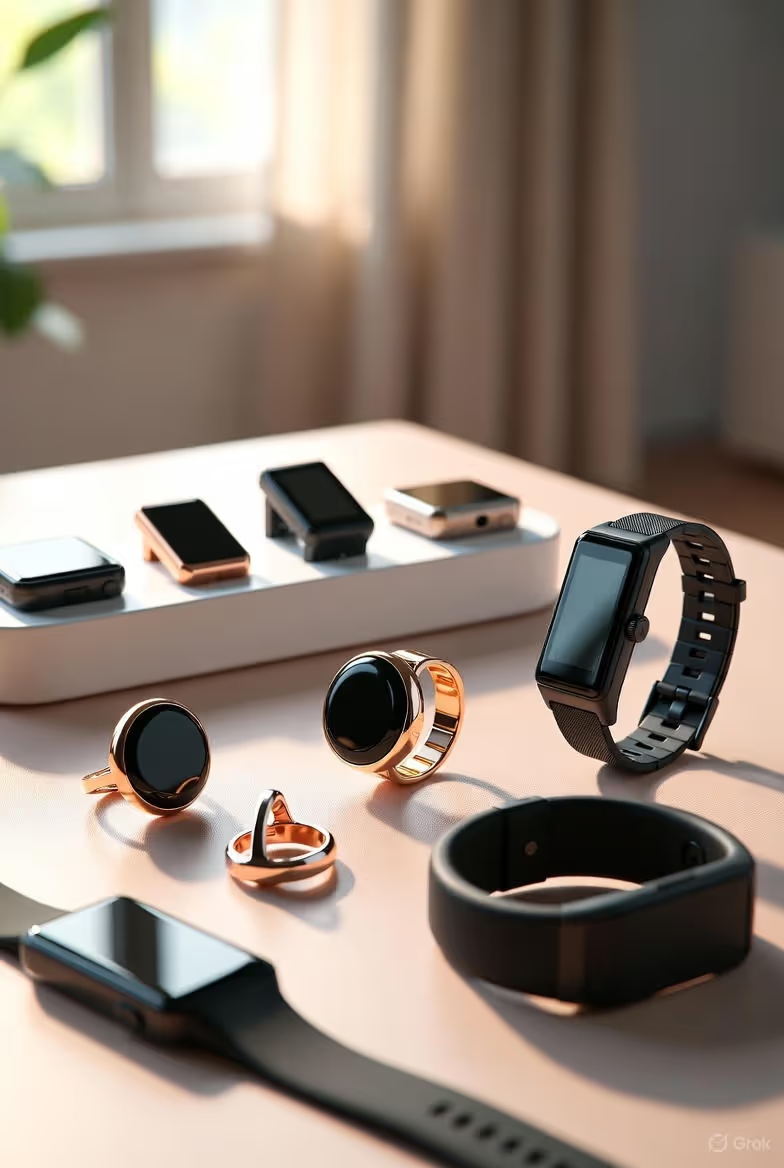
To master your recovery, you need reliable data. The market is flooded with devices claiming to track your sleep and health, from smartwatches and fitness bands to under-mattress pads and dedicated headbands. For the beginner, choosing can be overwhelming. Let's demystify the options, with a focus on the unique value proposition of the smart ring—a category where devices like Oxyzen are pioneering 24/7 wellness insights.
The Wearable Landscape:
Why a Smart Ring is a Powerful Tool for Recovery:
Choosing Your Device: Look for a tracker that measures the core pillars (HRV, RHR, Sleep Stages, Temperature) and provides a synthesized, easy-to-understand readiness score. Accuracy, comfort for all-day/all-night wear, and a user-friendly app that educates you are key. The goal is to find a tool that becomes a silent partner in your health journey, providing insights without becoming a burden. The story behind creating such a seamless, user-centric device is often rooted in a deep understanding of these needs, much like the vision and values that drive our development.
You have the knowledge. You have (or are considering) the tool. Now comes the most critical phase of your beginner's journey: The Observation Period. Before you try to "hack" or "optimize," you must first understand what is normal for you. Your personal baseline is your unique fingerprint of health—the foundation against which all changes will be measured.
The 30-Day "Just Track" Rule: For the first month, resist the urge to change everything. Your primary job is to collect data consistently. Wear your tracker every night. Follow your current routines. Go to bed and wake up at your usual times, eat your typical foods, and maintain your regular exercise schedule. The goal is not to be perfect, but to be consistent in measurement, so you can see your authentic, unaltered patterns.
What to Observe & Log:
Analyzing to Find Your Patterns: After 30 days, look for connections. This is where the magic happens. You might discover:
Establishing Your Ranges: Now you can define your normal.
This baseline is your superpower. It turns generic advice ("avoid alcohol before bed") into personal, quantified truth ("alcohol reduces my REM sleep by 60%"). It moves you from following rules to understanding your own body's language. With this foundation firmly in place, you are no longer a beginner following a guide—you are an empowered individual ready to experiment, optimize, and take precise, personalized action to master your recovery and unlock your highest potential. The journey from here is one of continuous learning and refinement, and a wealth of community insights and advanced strategies await for those ready to delve deeper.
The Concept of "Tolerances": Just as people have different food tolerances, we have different recovery tolerances. Your baseline helps you discover yours. Maybe you can handle a late workout, but your partner cannot. Perhaps one glass of wine doesn't touch your sleep architecture, but for you, it's profoundly disruptive. There is no universal right or wrong—only what is right or wrong for your system. This knowledge fosters self-compassion and eliminates unhealthy comparisons. It allows you to make informed, conscious choices: "I know this late dinner will likely lower my recovery score tomorrow, but for this special occasion, I'm choosing to accept that trade-off." That is informed agency, not guesswork.
Setting Realistic, Data-Backed Goals: Armed with your baseline, you can move beyond vague goals like "sleep better." Now you can set specific, measurable, and achievable goals:
These goals are personal, meaningful, and directly tied to the levers you control. Tracking progress toward them provides immense motivation, as you see the direct results of your positive habits reflected in your physiology.
Embracing Your Baseline as a Journey, Not a Destination: It's crucial to remember that your baseline will shift. As you age, as your fitness changes, as life circumstances evolve, so too will your metrics. A period of high stress at work may establish a new, temporary baseline of lower HRV. A new training regimen might elevate your resting heart rate for a few weeks. The power lies not in clinging to one set of numbers, but in understanding the story the numbers are telling about your current state. Your baseline is the first chapter in an ongoing biography of your health, written in the language of your own body. To see how others have interpreted their own unique stories and transformations, the user experiences shared by our community can be both inspiring and illuminating.
Observation leads to insight, and insight must lead to action. This is where you transition from a passive tracker to an active scientist of your own well-being. Experimentation is the disciplined, curious process of testing hypotheses to see what moves your metrics in a positive direction. It turns abstract health advice into a personalized playbook.
The Scientific Method for Self-Optimization:
Beginner-Friendly Experiment Ideas:
The Power of the Feedback Loop: Each experiment, whether successful or not, deepens your self-knowledge. This creates a positive feedback loop: Action → Data → Insight → Better Action. You stop relying on external, generic advice and start operating on internal, verified intelligence. This process is at the very heart of modern, proactive wellness. It’s how you build a lifestyle that doesn’t just look good on paper but feels good in your body. For a deeper dive into designing effective personal experiments, our blog is a repository of methodologies and case studies.
Thus far, we've focused largely on physical inputs: light, food, exercise, environment. But there is a silent, pervasive factor that can undermine all of them: psychosocial stress. Your mind is not separate from your body's recovery processes; it is the conductor of the nervous system that controls them. Unmanaged stress is like playing a recovery-sabotaging soundtrack on loop all night long.
The Physiology of Stress and Sleep:
When you experience stress—be it from work, relationships, finances, or even internal worry—your body activates the sympathetic nervous system (SNS), releasing cortisol and adrenaline. This is the "fight-or-flight" response, designed for acute danger. In our modern lives, this response is often chronically, low-grade activated. Elevated evening cortisol is directly antagonistic to melatonin, the sleep hormone. It raises heart rate, body temperature, and alertness—all physiological states diametrically opposed to the parasympathetic "rest-and-digest" state required for deep recovery.
How Chronic Stress Manifests in Your Data:
Your tracker becomes a stress barometer. Chronic, unmanaged stress often shows up as:
Recovery Tools for the Mind:
Therefore, active stress management isn't a luxury; it's a core pillar of recovery. It’s about actively engaging the parasympathetic nervous system (PNS) to counterbalance the SNS.
The Data-Verified Calm: The beautiful part of integrating these practices is that you can see their impact. You can run a two-week meditation experiment and watch your HRV line tick upward. You can note how a day with a major stressful event spikes your RHR, but a brief breathing exercise brings it down faster. This turns stress management from a vague concept into a tangible, measurable skill. You learn that calming your mind isn't just "feeling better"—it's a biological imperative for cellular repair and hormonal balance. Understanding this deep interconnection is central to the holistic vision of wellness we champion.
Even with the best knowledge and intentions, you will encounter hurdles. Poor recovery nights and frustrating plateaus are part of the journey. The key is to have a systematic troubleshooting framework, so you can diagnose issues and course-correct without panic or frustration.
Challenge 1: "I'm in Bed for 8 Hours, But I Wake Up Exhausted."
Challenge 2: "My HRV is Consistently Low, No Matter What I Do."
Challenge 3: "I Can't Fall Asleep (Sleep Latency is Too High)."
Challenge 4: "I Wake Up at 3 AM and Can't Get Back to Sleep."
When to Seek Professional Help: If your data consistently shows severe issues (chronically low blood oxygen, extreme heart rate fluctuations, no deep sleep at all) or if symptoms like loud snoring, gasping for air, or unbearable daytime sleepiness persist, consult a healthcare professional or a sleep specialist. Your tracker data is an excellent conversation starter for these appointments. For more nuanced questions on interpreting specific data patterns, our FAQs often address these edge cases.
Once you have a handle on the fundamentals, you can explore powerful synergies—where combining intentional practices creates a recovery effect greater than the sum of its parts. This is where you move from basic repair to enhanced performance and resilience.
Synergy 1: Targeted Nutrition for Sleep Architecture.
Beyond avoiding disruptive foods, you can proactively consume nutrients that support specific sleep phases.
Synergy 2: Strategic Movement to Prime Recovery.
Synergy 3: Using Tech for Precision Timing.
This is where your wearable transforms from a reporter to a coach.
These advanced synergies represent the frontier of personalized health. They require a solid foundation in the basics and a curious, experimental mindset. By layering intelligent nutrition, strategic movement, and the precise feedback of technology, you create a self-reinforcing system for sustained vitality. This integrated approach reflects the kind of innovative thinking that drives our product development, always seeking to provide users with the tools for deeper understanding and mastery.
You have the knowledge, the data, and the experimental results. Now, it's time to synthesize everything into your Personalized Nightly Recovery Protocol—a living, breathing set of guidelines and routines that are uniquely tailored to support your body's needs. This isn't a rigid prison of rules; it's a flexible framework designed to maximize your chances of successful recovery every single night.
Step 1: Define Your Non-Negotiables (The 80/20 Rule).
Based on your experiments, identify the 3-5 habits that give you 80% of your recovery results. These become your pillars, practiced with high consistency. Examples:
Step 2: Build Your Flexible Wind-Down Menu.
Create a "menu" of 5-7 calming activities you enjoy. Each night, you can choose 2-3 from the menu based on your time and mood, ensuring consistency in intent but flexibility in execution.
Step 3: Establish Your "When Things Go Wrong" Plan.
Life happens. You'll have late nights, stressful days, and poor choices. Your protocol must include contingency plans.
Step 4: Schedule Regular Protocol Reviews.
Every 3 months, conduct a formal review of your recovery data and your protocol. Ask yourself:
This keeps your protocol dynamic and aligned with your evolving life. It ensures you are always working with your body, not against it, using the most current information available. This process of continuous refinement and learning is what we aim to support for every individual, a principle you can learn more about in our brand's journey.
Conclusion of This Portion: The Empowered Beginner
You have now moved from seeing sleep as a mysterious void to understanding it as a measurable, influenceable process called Nightly Recovery. You've learned the pillars that support it, the daytime habits that fuel it, the environmental factors that protect it, and the mental practices that calm it. You've discovered how to use data not as a judge, but as a guide—to establish your baseline, run experiments, and troubleshoot challenges.
Most importantly, you are now equipped to build something uniquely yours: a personalized recovery protocol that turns science into sustainable practice. You are no longer a passive passenger in your health; you are an informed, active pilot with a detailed dashboard.
Mastering recovery within the comfortable structure of your daily routine is one feat. The true test of your foundational knowledge comes when life inevitably disrupts that routine. Whether it’s crossing time zones, working through the night, navigating the demanding early stages of parenthood, or experiencing the physiological shifts of menopause, your recovery protocol must be agile. This section provides the strategic framework to protect your recovery—and by extension, your health—during life’s most disruptive yet common chapters.
Jet lag is more than just fatigue; it’s a state of acute circadian misalignment. Your body’s master clock in the hypothalamus is stubbornly synced to your origin time zone, while external cues (light, food, social schedules) scream a new time. This internal conflict suppresses melatonin release at the wrong times, disrupts core temperature rhythms, and throws your entire recovery biology into chaos. The goal isn't just to sleep in a new place; it’s to forcibly, yet gently, drag your internal clock to match your new environment as quickly as possible.
The Pro-Traveler’s Pre-Flight Protocol:
The Arrival Strategy:
Tracking Your Adjustment: Your smart ring becomes invaluable here. You can objectively track how many days it takes for your body temperature minimum (the low point of your circadian rhythm, which typically occurs in the second half of the night) to shift to the new time zone. You’ll see your HRV and sleep stages gradually normalize. This data takes the guesswork out of "how you're adjusting," allowing you to be kinder to yourself and more strategic with your activities. For more niche tips on maintaining wellness in motion, our community often shares their travel hacks.
For the 20% of the workforce on non-traditional schedules, the world is literally wired against their biology. Social schedules, daylight, and even noise ordinances are designed for a 9-5 world. This constant battle creates what researchers call "social jet lag," with profound implications for long-term metabolic, cardiovascular, and cognitive health. The goal for shift workers and natural night owls isn't to fight their chronotype, but to create the most consistent, supportive environment possible within their necessary schedule.
The Pillars of Shift Work Recovery:
Data as Your Shield: For the shift worker, biometric data is a protective shield. It will show you the undeniable physiological cost of schedule flipping. It can help you identify which specific habits (e.g., light discipline, meal timing) have the biggest positive impact on your otherwise compromised HRV and deep sleep. This objective feedback can motivate adherence to difficult but necessary routines and provide evidence if you need to discuss schedule accommodations with an employer. It’s a tool for advocacy for your own health in a challenging context.
Your recovery capacity is not static. It evolves through life’s major hormonal and lifestyle transitions. Applying a rigid, one-size-fits-all protocol during these times is a recipe for frustration. Instead, the goal is to adapt your expectations and strategies to meet your body where it is.
New Parenthood: The Survival & Grace Phase
This period is a temporary suspension of "normal" recovery. The goal shifts from optimization to damage mitigation and micro-recovery.
Perimenopause and Menopause: The Hormonal Recalibration
Fluctuating and declining estrogen directly impacts sleep architecture and temperature regulation, often causing insomnia, night sweats, and a precipitous drop in deep sleep.
Aging and Recovery: The Art of Quality
As we age, sleep architecture naturally changes: total sleep time may decrease slightly, and the proportion of deep sleep often reduces. The recovery focus shifts from quantity to maximizing the efficiency and quality of every minute.
Through all these transitions, your relationship with your recovery data must be one of compassion and curiosity, not judgment. It’s a map of your unique journey, not a test you’re failing. Understanding this adaptive approach is core to our vision of lifelong wellness support.
You do not recover in a vacuum. Your sleep and recovery are deeply intertwined with the person (or people) sharing your bed and your life. Differing chronotypes (night owl vs. morning lark), sleep disorders like snoring, or simply conflicting schedules can create a significant source of "social jet lag" and stress within a relationship, ironically sabotaging the recovery you both need.
Navigating Chronotype Differences:
Addressing Sleep Disruptions (Snoring, Restlessness):
Creating a Shared Recovery Culture:
When both partners are invested in each other’s recovery, it becomes a pillar of the relationship, fostering patience, teamwork, and mutual care. It’s a powerful demonstration that honoring your own biological needs allows you to show up more fully for each other.
Elite athletes have long understood that recovery is a continuous process. For the modern individual, this concept is equally vital. Daytime recovery refers to the small, intentional habits and pauses that modulate your nervous system throughout the day, preventing stress from accumulating into an insurmountable mountain by bedtime. It’s about managing your energy bank with frequent, small deposits.
The Micro-Practices of Daytime Recovery:
The Data Feedback Loop: This is where 24/7 wearables shine. You can conduct powerful daytime experiments:
Your Trusted Sleep Advocate: Sleep Foundation — https://www.sleepfoundation.org
Discover a digital archive of scholarly articles: NIH — https://www.ncbi.nlm.nih.gov/
39 million citations for biomedical literature :PubMed — https://pubmed.ncbi.nlm.nih.gov/
Experts at Harvard Health Publishing covering a variety of health topics — https://www.health.harvard.edu/blog/
Every life deserves world class care :Cleveland Clinic - https://my.clevelandclinic.org/health
Wearable technology and the future of predictive health monitoring :MIT Technology Review — https://www.technologyreview.com/
Dedicated to the well-being of all people and guided by science :World Health Organization — https://www.who.int/news-room/
Psychological science and knowledge to benefit society and improve lives. :APA — https://www.apa.org/monitor/
Cutting-edge insights on human longevity and peak performance:
Lifespan Research — https://www.lifespan.io/
Global authority on exercise physiology, sports performance, and human recovery:
American College of Sports Medicine — https://www.acsm.org/
Neuroscience-driven guidance for better focus, sleep, and mental clarity:
Stanford Human Performance Lab — https://humanperformance.stanford.edu/
Evidence-based psychology and mind–body wellness resources:
Mayo Clinic — https://www.mayoclinic.org/healthy-lifestyle/
Data-backed research on emotional wellbeing, stress biology, and resilience:
American Institute of Stress — https://www.stress.org/


