Nighttime Routine Essentials: What You Really Need
You really need a dark, cool, quiet environment and a consistent wind-down activity—not a long list of products.
Nighttime Routine Essentials: What You Really Need
In the hushed, blue-lit glow of another late night, you scroll through a feed of impossibly perfect bedrooms: weighted blankets neatly draped, steam curling from ceramic mugs, journals filled with elegant script beside a single sprig of eucalyptus. The message is clear—this is the secret to perfect sleep, boundless energy, and a calmer mind. You’ve tried the scented sprays, the apps, the expensive pajamas. Yet, as you lie there, mind racing from today’s stressors to tomorrow’s to-dos, you can’t help but wonder: What am I missing? What do I really need?
The truth is, the modern "sleep industry" has turned winding down into a convoluted, consumerist puzzle. We’re sold a dozen products for every problem, often leaving us more anxious about optimizing our rest than actually achieving it. But authentic, restorative sleep isn’t found in a Pinterest board. It’s a biological imperative, a complex physiological process that our modern world has systematically disrupted. The right nighttime routine isn’t about aesthetics; it’s about creating the precise conditions—both external and internal—for your nervous system to shift from "go" to "grow," from stress to restoration.
This guide cuts through the noise. We’re moving beyond the superficial checklists to explore the foundational, science-backed essentials that truly dictate sleep quality and next-day vitality. We’ll explore not just what to do, but why it works, from the macro-level philosophy of circadian rhythms down to the micro-level data on your personal sleep architecture. It’s time to build a routine that doesn’t just look good, but that fundamentally changes how you recover, every single night.
The Non-Negotiable Philosophy: Why Your Night Starts at Sunrise
We often compartmentalize our sleep routine into the 60 minutes before bed. A little reading, some tea, lights out. But this view is tragically narrow. Elite sleep researchers and neurologists agree: a successful night is engineered long before your head hits the pillow. It’s built on the cornerstone of your body’s internal clock—your circadian rhythm.
Think of your circadian rhythm not as a simple sleep-wake cycle, but as a master conductor orchestrating every biological process in your body: hormone release, digestion, cellular repair, brain wave activity, and body temperature. This conductor takes its primary cue from light. When sunlight, rich in blue-spectrum waves, hits specialized cells in your eyes in the morning, it signals the suprachiasmatic nucleus (SCN) in your brain to halt melatonin production (the sleep hormone), boost cortisol (for alertness), raise core body temperature, and set a precise timer for when melatonin will be released roughly 14-16 hours later.
Therefore, the single most important habit for your nighttime routine is morning light exposure. A 2022 study in Sleep Health demonstrated that individuals who got at least 30 minutes of outdoor light before noon fell asleep 15 minutes faster and had 20% more restorative deep sleep than those who didn’t. This isn’t about a sunny day; even on an overcast morning, outdoor light intensity is exponentially higher than indoor lighting. This robust morning signal creates a steep, healthy decline into sleepiness at night.
The converse is equally critical: managing light at night. The blue light emitted from phones, laptops, and LEDs is interpreted by your SCN as a miniature sunrise, scrambling the melatonin timer and telling your body it’s time to be awake. The damage isn’t just subjective sleepiness; it’s a dysregulation of the entire system. Your nighttime routine must, at its philosophical core, be about honoring this light-dark cycle. It means seeking bright light early and defending against it late. This foundational rhythm is what all other routines are built upon. Without it, you are effectively trying to row a boat upstream with a broken oar. For a deeper dive into how technology can help you track these fundamental biological signals, the team at Oxyzen.ai explores the intersection of circadian science and personal data.
The Digital Sunset: Reclaiming Your Pre-Sleep Mindspace
In our always-connected world, the most invasive disruptor of natural sleep isn't caffeine or noise—it’s the device in your hand. The concept of a "digital sunset" isn't just a wellness buzzword; it's a necessary boundary for your neurological well-being. This essential practice involves systematically disengaging from stimulating digital content and screens for a significant period before bed.
The harm is threefold: First, as mentioned, there’s the blue light directly suppressing melatonin. Second, there’s the cognitive and emotional arousal. Scrolling through work emails activates stress pathways. Social media can trigger comparison, anxiety, or FOMO. Even "relaxing" TV shows or video games keep your brain in a state of narrative processing and sensory input, preventing the mental drift necessary for sleep onset. Third, there’s the effect of endless accessibility. The smartphone represents the world being constantly "on," which subconsciously trains your brain that your bedroom is still a place of potential work, conflict, or social obligation.
Implementing a true digital sunset requires more than a blue-light filter (which helps, but doesn't solve the arousal problem). It requires a ritual of disconnection:
Set a Firm Shutdown Time: Aim for 60-90 minutes before your target bedtime. This is non-negotiable. Use a calming alarm to signal this time.
Charge Outside the Bedroom: This is the single most effective physical change you can make. The bedroom becomes a sanctuary for sleep and intimacy only.
Replace the Ritual: The void left by your phone must be filled with a positively reinforcing, low-stimulation activity. This could be reading a physical book (fiction is ideal, as it engages a different part of the brain than processing daily life), gentle stretching, or conversation.
Use Technology, Intentionally: If you must use a device, make it serve your wind-down. A dedicated e-reader with front-lighting (not a tablet) or a smart speaker for playing a sleep story or soundscape can be tools for sleep, not against it.
The goal is to transition your brain from a state of external processing (taking in new information, reacting, deciding) to a state of internal processing (reflecting, consolidating memories, unwinding). This shift is the bedrock of psychological preparation for sleep. For more ideas on creating a tech-positive yet sleep-smart environment, our resource hub at Oxyzen.ai/blog offers a range of practical guides.
The Temperature Tango: Mastering Your Body's Thermal Rhythm for Sleep
You might choose your pajamas for comfort, but your body has a far more precise requirement for sleep: a significant drop in core temperature. This isn't a minor detail; it's a primary driver of sleep initiation. As evening approaches and melatonin begins to rise, blood vessels in your skin dilate (a process called vasodilation). This moves heat from your core to your extremities, releasing it into the environment and lowering your core temperature by about 1-2 degrees Fahrenheit. This drop is a direct signal to your brain that it's time for sleep.
A failed nighttime routine often ignores this critical thermal dance. Here’s how to optimize it:
Cool the Cave: The ideal bedroom temperature for most people is between 60-67°F (15.5-19.5°C). A cool room facilitates that essential heat dissipation.
Warm the Surface, Not the Core: The paradox is that to cool your core, you sometimes need to warm your skin. Cold feet constrict blood vessels, hindering heat release. Warm socks or a foot bath before bed can paradoxically speed up core cooling by promoting vasodilation in the extremities.
Rethink Your Bedding: Heavy, insulating blankets can trap heat. Opt for breathable, natural fabrics like cotton, linen, or moisture-wicking bamboo. Layering allows for easy adjustment throughout the night.
The Pre-Sleep Shower Secret: A warm bath or shower 60-90 minutes before bed is a powerful tool. The warm water brings blood to the skin's surface. When you step out, the rapid evaporation and contrast with the cooler room air accelerates heat loss, triggering a steeper temperature drop that mimics the natural sleep signal.
Beware of Nighttime Overheating: Your body temperature naturally rises slightly in the early morning hours (part of preparing to wake). Overly warm pajamas or a hot room can turn this natural rise into a full awakening.
Modern sleep-tracking technology, like advanced smart rings, has made this invisible process visible. By monitoring subtle changes in peripheral body temperature throughout the night, you can gain unprecedented insight into your personal thermal rhythm and how it correlates with your sleep stages. This data empowers you to adjust your environment and routine with precision, not guesswork. It’s a perfect example of how understanding a core biological principle transforms a routine from a series of chores into a targeted performance strategy.
The Chemistry of Calm: Nutrition, Hydration, and Supplementation
What you consume in the evening acts as direct biochemical input for your sleep system. This isn't just about avoiding caffeine; it's about strategically providing the raw materials for sleep hormones and neurotransmitters.
The Enemies of Sleep Initiation:
Caffeine: With a half-life of 5-6 hours, that 4 PM coffee means 50% of its caffeine is still in your system at 9-10 PM. It blocks adenosine (the sleep-pressure chemical) receptors.
Alcohol: It's a sedative, not a sleep aid. It fragments sleep, suppresses REM (the crucial dream stage for memory and emotion processing), and causes rebound arousal as it metabolizes in the early morning hours.
Heavy, Spicy, or High-Fat Meals: Digestion is work. A large meal within 3 hours of bed raises core body temperature and keeps your digestive system active when it should be powering down. It can also cause discomfort and acid reflux.
Excessive Fluids: Waking for a bathroom break fragments sleep architecture, often making it difficult to return to deep or REM stages.
The Allies of Sleep:
Timed Hydration: Hydrate well earlier in the day and taper off 2 hours before bed. A small sip if thirsty is fine, but avoid large glasses.
Sleep-Supportive Snacks (If Needed): A small combo of complex carbs and protein/healthy fat about 60-90 minutes before bed can stabilize blood sugar and provide tryptophan. Think: a few almonds and a half-banana, or a small bowl of oatmeal.
Strategic Supplementation (With Caution):
Magnesium Glycinate or L-Threonate: Magnesium is a cofactor for hundreds of enzymatic reactions, including those involved in GABA (a calming neurotransmitter) function. Glycinate is particularly noted for its calming effects.
L-Theanine: An amino acid found in green tea that promotes relaxation and alpha-wave brain activity without sedation.
Adaptogens like Ashwagandha: May help moderate cortisol response to daily stress, supporting the wind-down process.
Crucially, the most powerful "supplement" for sleep is consistency in meal timing. Eating at wildly different times each day sends confusing signals to your circadian clock, which also regulates metabolic processes. A regular dinner time is a zeitgeber (time-giver) for your entire system.
The Ritual of Release: Journaling, Gratitude, and Mental Decluttering
The brain doesn't have a "delete" button. The worries, ideas, and unfinished tasks of the day don't magically disappear when you turn off the light. Instead, they often swirl in the cognitive space meant for quiet, growing louder in the absence of daytime distraction. This is where an intentional mental routine becomes as critical as any physical one. The goal is to create a "brain dump"—a transfer of mentally held items into an external, trusted system.
The Worry Journal: Keep a notebook specifically for pre-sleep. Set a timer for 10-15 minutes and write down everything on your mind. Don't edit or judge; just download. This act externalizes loops, making them less urgent. A powerful technique is to write down tomorrow's top 1-3 priorities. This tells your brain, "It's noted. There's a plan. We can rest now."
The Gratitude Practice: Neuroscience shows that consciously focusing on positive aspects of your life can activate the parasympathetic nervous system (the "rest and digest" counterpart to stress). Listing 3-5 specific things you're grateful for from the day shifts your mental state from scarcity or anxiety to abundance and safety—a state far more conducive to sleep.
The "Incomplete" List: If you're a chronic problem-solver, make a dedicated list of "open loops" or incomplete tasks. The simple act of recording them on paper or in a digital note-taking app (done earlier in your digital sunset) frees your mind from the job of remembering them.
This ritual is a signal of closure. It’s the mental equivalent of shutting down your computer properly instead of just forcing a hard shut-off. It allows the conscious, executive part of your brain to stand down, knowing that the information is safely stored and can be retrieved tomorrow. This practice directly reduces sleep-onset latency (the time it takes to fall asleep) and minimizes those frustrating 3 AM awakenings fueled by anxious thoughts. For many, discovering the data behind this mental wind-down—like seeing how a consistent journaling practice correlates with improved sleep efficiency scores on a tracker—is the motivation needed to make it a non-negotiable habit. You can read our complete guide on integrating mindfulness and data for better sleep.
The Sensory Sanctuary: Crafting Your Sleep Environment
Your bedroom should be a sensory cocoon engineered for one purpose: supporting unconsciousness. Every sense offers a potential pathway to disruption or a tool for deeper calm. This goes far beyond a comfortable mattress.
Sight (The Absence of Light): Total darkness is ideal. Even small amounts of light from LEDs, streetlights, or electronics can pass through closed eyelids and disrupt melatonin production. Invest in blackout curtains or a high-quality sleep mask. Use smart plugs or tape to cover any persistent electronic LEDs.
Sound (The Presence of Consistency): Silence is golden, but inconsistent noise is the enemy. A sudden car alarm, a creaking house, or a partner's snoring can jar you from deep sleep. The solution is not necessarily silence, but a consistent, masking sound. White noise, pink noise (softer, like steady rain), or brown noise (even deeper, like a waterfall) creates an auditory blanket that drowns out disruptive spikes. Studies in Frontiers in Neurology suggest pink noise may even enhance deep sleep by stabilizing brain waves.
Touch (Texture and Pressure): This encompasses everything from your mattress firmness and pillow loft (aligned to your sleep position) to the fabric of your sheets. Breathable, natural fabrics aid thermoregulation. The growing popularity of weighted blankets (typically 7-12% of body weight) leverages Deep Touch Pressure (DTP) therapy, which can increase serotonin and melatonin while decreasing cortisol, promoting a feeling of grounded calm.
Smell (Associative Calm): The olfactory system has a direct pathway to the brain's limbic system, which governs emotion and memory. Using a consistent, calming scent like lavender, chamomile, or sandalwood via a diffuser (with safety timers) or a linen spray can create a powerful Pavlovian response. Over time, that scent alone becomes a signal that it's time to sleep.
Creating this sanctuary is an act of respect for the complexity of sleep. It announces, "This time and this space are sacred." It removes the need for your brain to be "on guard" against environmental disturbances, allowing it to fully surrender to rest.
The Body's Unwind: Gentle Movement vs. Evening Exercise
The relationship between movement and sleep is profound, yet timing is everything. While regular daily exercise is one of the most reliable ways to improve sleep quality and duration, vigorous activity too close to bedtime can be counterproductive for many.
The Science of the Spike: Intense exercise (HIIT, heavy weightlifting, competitive sports) raises core body temperature, floods the system with stimulating hormones like adrenaline and cortisol, and increases heart rate—all states directly opposed to the physiological wind-down process. For most people, finishing such exercise at least 3-4 hours before bedtime allows these systems to return to baseline.
The Power of the Parasympathetic: In contrast, gentle, deliberate movement in the 60-90 minutes before bed can be a potent sleep aid. The goal here is not to achieve fitness, but to down-regulate the nervous system. These practices stimulate the vagus nerve, the main component of the parasympathetic nervous system, switching the body from "fight-or-flight" to "rest-and-digest."
Yoga Nidra ("Yogic Sleep"): A guided meditation practiced lying down, systematically bringing awareness to different parts of the body. It's been shown to reduce anxiety and improve sleep quality significantly.
Restorative or Yin Yoga: Uses props to support the body in passive stretches held for several minutes, releasing deep connective tissue and calming the mind.
Simple, Slow Stretching: Focus on areas that hold daytime tension—hips, hamstrings, shoulders, neck. Pair each stretch with deep, diaphragmatic breathing.
Foam Rolling (Gentle): Light myofascial release can ease muscular tightness without provoking a strong stress response.
The key differentiator is intention. Evening movement should be about feeling, not forcing; about release, not achievement. It's a physical metaphor for letting go of the day's tensions. Listening to your body's data can clarify this relationship—discover how Oxyzen works to show you how different types and timings of evening activity directly impact your sleep metrics, allowing you to personalize this essential component.
The Consistency Anchor: Why Your Sleep Schedule is Your Superpower
Of all the strategies discussed, this is arguably the most potent and the most underrated: going to bed and waking up at the same time every day, even on weekends. This isn't about rigidity for its own sake; it's about giving your circadian rhythm the most powerful reinforcement signal it can receive.
When you wake at 6:30 AM on weekdays but sleep in until 9:00 AM on Saturday, you aren't just "catching up." You are giving your internal clock jet lag—a condition socially accepted as "social jet lag." This misalignment between your social and biological clocks is associated with increased risk for metabolic disorders, mood disturbances, and, ironically, worse overall sleep quality.
How Consistency Works:
It Strengthens the Zeitgeber: Your wake-up time, especially when paired with morning light, is the primary anchor for your 24-hour cycle. A fixed time sets a reliable countdown for melatonin release that evening.
It Optimizes Sleep Drive: Your sleep pressure, driven by adenosine buildup, aligns predictably with your schedule. You begin to feel sleepy at roughly the same time each night, making sleep onset easier.
It Improves Sleep Efficiency: Your brain learns when it's time to be awake and when it's time to be asleep in this specific environment, reducing time spent tossing and turning.
Implementing this requires treating your sleep schedule with the same respect as an important morning meeting. The payoff is immense: more reliable energy, easier waking, and a biological system that runs like a finely tuned clock. It turns sleep from a variable reaction to your day into a stable, predictable foundation for it.
The Data-Driven Wind-Down: Introducing the Smart Ring Revolution
For decades, optimizing sleep was an exercise in guesswork and subjective feeling ("I think I slept better last night..."). The rise of consumer sleep trackers changed the game, but many wrist-based devices have limitations—they can be bulky, their heart rate readings can be less accurate during sleep due to wrist position, and their lights can be bothersome to a partner.
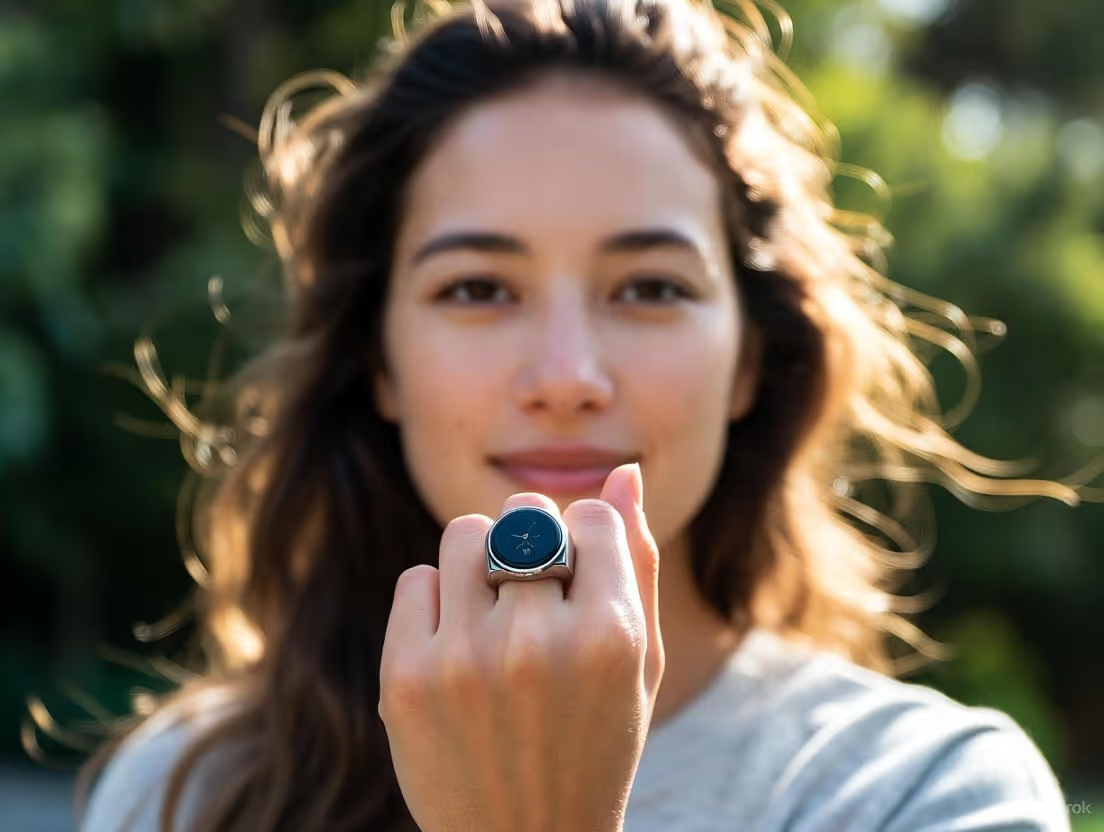
Enter the next generation: the smart ring. Worn on your finger, this minimalist device represents a paradigm shift in personal sleep analytics. Its position allows for medical-grade, continuous peripheral temperature monitoring and highly accurate photoplethysmography (PPG) for heart rate and heart rate variability (HRV) due to the dense vascular network in the finger. It tracks your sleep stages (awake, light, deep, REM), timing, and disruptions—all from a device you barely feel.
Why this is a Game-Changer for Your Nighttime Routine:
Objective Feedback: Instead of wondering if that new supplement or earlier bedtime helped, you see the direct impact on your deep sleep duration, sleep latency, and overall score.
Discover Personal Patterns: You might learn that drinking water within 2 hours of bed does fragment your sleep, or that your optimal room temperature is 65°F, not 68°F. You can see the tangible effect of your digital sunset or gratitude journal.
Track Readiness, Not Just Sleep: Advanced algorithms use your sleep data, HRV, temperature, and activity to provide a "readiness" or "recovery" score each morning. This tells you not just how you slept, but how well your body recovered, guiding the intensity of your next day.
Seamless Integration: A ring is unobtrusive. You wear it 24/7, so it captures your entire circadian rhythm, not just your night. It becomes a true lifestyle companion.
This isn't about obsession over numbers; it's about informed empowerment. It transforms your nighttime routine from a static list of tips into a dynamic, personalized experiment in biohacking your own recovery. You move from generic advice to knowing precisely what your body needs. For those curious about the intersection of elegant design and cutting-edge biometrics, the journey behind such devices is often a story of passion for human performance, much like the one you can explore in our story.
Beyond the Self: The Impact of Relationships and Shared Rhythms
Sleep is often portrayed as a solitary pursuit, but for most adults sharing a bed, it is a deeply relational one. A partner's habits, rhythms, and sleep hygiene directly impact your own. A successful nighttime routine, therefore, must consider the ecosystem of the shared bed.
The Challenge of Mismatched Chronotypes: The "night owl" married to the "early bird" is a classic source of tension. The first step is acknowledgment and empathy—neither is "right." Solutions include compromising on a middle-ground bedtime, using separate blankets to accommodate different thermal preferences, and the early bird using a gentle wake-up light instead of an alarm that jolts the owl.
Co-Creating a Shared Sanctuary: Discuss and agree on the non-negotiables for your shared sleep environment. Is the room cool enough? Should you use white noise? Can phones be banned from the bedroom? Making these decisions together turns the routine into a shared value, not a personal imposition.
The Power of a Connected Wind-Down: Spending the last 30-60 minutes before bed in a connected, low-stimulus activity can be profoundly bonding and calming for both nervous systems. This could be talking (not about stressful topics), reading aloud, or simply enjoying a caffeine-free tea in quiet companionship. It synchronizes your relaxation.
Addressing Sleep Disruptions Compassionately: Snoring, restlessness, or different sleep schedules need to be addressed with problem-solving, not blame. Solutions range from professional sleep studies (for suspected sleep apnea) to high-quality earplugs, white noise machines, or even the occasional use of a comfortable guest bed during periods of illness or extreme schedule mismatch.
A harmonious sleep partnership recognizes that both individuals' rest is valuable. It requires communication, flexibility, and sometimes creativity. The reward, however, is immense: a shared foundation of restoration that strengthens the relationship during waking hours. Seeing the mutual benefit in data—like both partners' sleep scores improving after implementing a joint digital sunset—can be powerful motivation. For real-world examples of how couples have transformed their shared sleep, the testimonials from our community often highlight this relational aspect.
The Nap Calculus: Strategic Daytime Recovery Without Stealing Nighttime Sleep
Napping occupies a paradoxical space in sleep hygiene. Done correctly, it’s a potent tool for cognitive reboot, mood enhancement, and physical recovery. Done haphazardly, it can unravel your nighttime sleep drive, leading to a frustrating cycle of daytime fatigue and nighttime alertness. The key lies in understanding the precise, science-backed rules of what sleep experts call "the nap calculus."
The Two Golden Rules of Napping:
Timing is Everything: The ideal nap window is during the natural dip in circadian alertness that occurs for most people in the early to mid-afternoon, typically between 1:00 PM and 3:00 PM. Napping too late in the day (after 4:00 PM for most) borrows adenosine from your sleep pressure bank, reducing the drive to fall asleep at night.
Length Determines Effect: Naps are categorized by their sleep stage entry, each with distinct benefits and pitfalls:
The Power Nap (10-20 minutes): This short nap keeps you primarily in Stage 1 and Stage 2 (light) sleep. It provides a boost in alertness, cognitive performance, and motor skills without sleep inertia—that groggy, disoriented feeling upon waking. It’s the most versatile and least risky nap.
The Full Cycle Nap (90 minutes): This allows you to complete a full sleep cycle, passing through light sleep, deep sleep, and REM sleep. It enhances creativity, emotional memory processing, and can recover some lost deep sleep from a poor night. The major risk is significant sleep inertia upon waking from deep or REM sleep. It requires a guaranteed 90-minute commitment and a forgiving schedule post-nap.
The Danger Zone (30-60 minutes): This is the most problematic length. You are likely to be awakened from deep sleep (Stage 3), resulting in intense sleep inertia that can leave you feeling worse than before you napped. It’s often called “sleep drunkenness.”
Who Should (and Shouldn’t) Nap:
Ideal Candidates: Those with consistently good nighttime sleep but high afternoon demands, shift workers, athletes in heavy training, and individuals recovering from a short-term sleep deficit.
Caution Advised: Those with chronic insomnia or significant difficulty falling asleep at night should generally avoid napping, as it can perpetuate the cycle by reducing the crucial homeostatic sleep drive.
Creating a Nap Ritual: Treat a nap like a mini version of your nighttime routine. Find a dark, cool, quiet space. Use an eye mask and earplugs if needed. Set a firm alarm. Even a brief period of horizontal rest without sleep (sometimes called “non-sleep deep rest” or NSDR) can be restorative. The goal is intentional recovery, not accidental, couch-bound dozing that drifts into the danger zone.
Tracking your sleep data can provide fascinating insights here. By monitoring your nighttime sleep on days you nap versus days you don’t, you can see your personal tolerance. Does a 20-minute power nap at 2 PM leave your nighttime deep sleep unaffected or even improved? Or does it push your sleep onset back? This personalized feedback, accessible through devices that monitor 24/7 readiness, turns nap strategy from a guessing game into a precise tool. For more nuanced discussions on optimizing all forms of rest, our resource library at Oxyzen.ai/blog is continually updated.
When Life Disrupts: Mastering Sleep Through Travel, Shift Work, and Stress
The perfect, consistent routine is an ideal. Reality brings business trips across time zones, demanding project deadlines, new babies, and periods of intense stress. The goal isn’t perfection during chaos; it’s damage control and strategic adaptation. Resilient sleep hygiene means having a toolkit for when the foundations are shaken.
Conquering Jet Lag: A Proactive Protocol
Jet lag is a brutal clash between your internal circadian clock and the external light-dark cycle of your destination. You can’t avoid it entirely, but you can minimize its duration and severity by manipulating light exposure with military precision.
Eastbound Travel (Losing Time): This is harder, as you need to advance your clock (fall asleep earlier). Strategy: Upon arrival, seek bright morning light and avoid afternoon/evening light. If you arrive in the evening, wear blue-light blocking glasses after sunset.
Westbound Travel (Gaining Time): This is easier, as you need to delay your clock (stay up later). Strategy: Seek bright afternoon and evening light. Get sunlight exposure as late as possible to push your rhythm back.
The Pre-Travel Shift: For trips over 3 time zones, start shifting your bedtime and wake time 60 minutes per day toward your destination schedule for 2-3 days before departure. Adjust meal times accordingly.
Strategic Melatonin Use: For eastbound travel, taking 0.5-3 mg of melatonin at what would be destination bedtime (starting a day or two before travel) can help advance your clock. Consult a healthcare provider first.
Surviving Shift Work:
Shift work, especially night shifts, is an inherent attack on human biology. The goal becomes creating the most supportive artificial environment possible.
Light is Your Lever: During night shifts, expose yourself to bright, blue-enriched light (using light therapy boxes if necessary) to promote alertness. Crucially, on your drive home at sunrise, wear high-quality amber blue-light blocking glasses to prevent the morning sun from signaling "wake time" to your brain. Create pitch-black darkness in your bedroom for daytime sleep using blackout curtains, tape over LEDs, and a sleep mask.
Anchor Sleep: Try to maintain a consistent "anchor" sleep period of at least 4-5 hours at the same time each day, even on days off, to give your rhythm some stability.
Nap Strategically: A short 20-minute nap before a night shift can improve alertness.
Navigating Periods of High Stress:
Stress activates the sympathetic nervous system, the nemesis of sleep. When life is overwhelming, your routine must become more non-negotiable, not less.
Double Down on the Basics: This is when light management, a cool room, and a digital sunset are most critical. They act as external regulators when your internal state is dysregulated.
Incorporate Direct Nervous System Down-Regulation: Practices like diaphragmatic breathing (the 4-7-8 technique: inhale 4, hold 7, exhale 8), yoga nidra, or a brief body scan meditation before bed can directly lower heart rate and cortisol.
Practice Sleep Restriction (Cautiously): If you’re lying awake for hours, paradoxically, spending less time in bed can help. Calculate your average actual sleep time (e.g., 5.5 hours) and only allow yourself that time in bed (e.g., 1:00 AM to 6:30 AM). As sleep efficiency improves, gradually expand the window. This is best done with guidance, but it’s a powerful tool for breaking the anxiety-beds association.
Embrace "Good Enough" Sleep: During crises, release the pressure for perfect 8-hour sleep. Focus on creating the conditions for whatever restorative sleep is possible. Often, removing the performance anxiety around sleep allows it to return more easily.
These adaptive strategies acknowledge that life is not a sleep lab. The philosophy is to control what you can, use science to guide your interventions, and give yourself grace during the turbulence. It’s a testament to the strength of the foundational routine you’ve built that you have a baseline to return to when the storm passes.
Red Flags and Disorders: When Your Routine Isn't Enough
A meticulously crafted nighttime routine is powerful, but it is not a panacea for underlying medical sleep disorders. It's crucial to recognize when your symptoms point to a condition that requires professional diagnosis and treatment. Persisting through a disorder with just lifestyle changes can lead to worsening health, accidents, and diminished quality of life.
Know the Signs: When to Consult a Sleep Specialist
Chronic, Loud Snoring & Witnessed Breathing Pauses: This is the hallmark of Obstructive Sleep Apnea (OSA), where the airway repeatedly collapses during sleep. The brain briefly wakes you to restart breathing, fragmenting sleep hundreds of times a night. Consequences include severe daytime fatigue, high blood pressure, and increased cardiovascular risk. A routine can't fix a mechanical airway issue.
An Overwhelming Urge to Move Your Legs at Rest: Often accompanied by uncomfortable "creepy-crawly" sensations in the legs, relieved only by movement. This is Restless Legs Syndrome (RLS), which peaks in the evening and can make falling asleep agony.
Persistent Difficulty Falling or Staying Asleep, 3+ Nights a Week for 3+ Months: This may be Chronic Insomnia. While routine is the first-line treatment (as Cognitive Behavioral Therapy for Insomnia, CBT-I), professional guidance is often needed to implement it effectively and address the accompanying cognitive patterns (e.g., "I'll never sleep").
Falling Asleep at Inappropriate Times: Nodding off during conversations, meals, or while driving could indicate Narcolepsy or another disorder of excessive daytime sleepiness.
Acting Out Dreams: Physically punching, kicking, or yelling out during vivid dreams may be REM Sleep Behavior Disorder, which requires neurological evaluation.
The Role of Tracking Data: A smart ring or other tracker can provide compelling evidence to take to a doctor. Showing a timeline of your night with frequent awakenings, elevated nighttime heart rate, or low blood oxygen saturation (a feature of some advanced devices) can move the conversation from "I'm tired" to "Here is data showing 45 arousals per hour." It empowers you to be an informed advocate for your health. If you have questions about how biometric data can inform a health discussion, our FAQ section addresses common topics on data accuracy and health insights.
Seeking help is not a failure of your routine; it’s the logical next step when a biological condition is the root cause. A proper diagnosis can lead to life-changing treatments like CPAP machines for apnea or specific medications for RLS, which, when combined with your stellar sleep hygiene, can finally deliver the rest you’ve been seeking.
The Long Game: How Sleep Tracking Informs Lifelong Health
Viewing your nighttime routine solely through the lens of tomorrow's energy is a short-sighted approach. The sleep you get tonight is a long-term investment in your cognitive resilience, metabolic health, emotional stability, and cellular repair. Modern biometric tracking elevates this understanding from a theoretical concept to a visible, long-term narrative of your health.
Beyond Sleep Scores: Key Longitudinal Metrics
Resting Heart Rate (RHR) Trends: A gradual, unexplained increase in your overnight RHR can be an early indicator of overtraining, impending illness, or chronic stress. Conversely, a lowering trend can show improved cardiovascular fitness and recovery.
Heart Rate Variability (HRV): This measure of the subtle variation in time between heartbeats is a direct window into your autonomic nervous system balance. A higher HRV generally indicates greater parasympathetic (rest-and-digest) tone and resilience to stress. Tracking HRV over months reveals how your lifestyle, training, and routine impact your body's fundamental capacity to recover and adapt.
Temperature Trends: For women, tracking basal body temperature can help identify ovulation and phases of the menstrual cycle, revealing how sleep quality fluctuates hormonally. For anyone, a persistent deviation from your personal temperature norm can signal metabolic changes or the onset of illness.
Sleep Stage Consistency: It’s not just about total deep sleep, but the stability of your sleep architecture over time. High night-to-night variability can be more telling of stress or inconsistency than the average itself.
Creating Your Personal Health Baseline: This is the most powerful aspect. After 30-60 days of consistent wear, your device establishes your normal ranges for HRV, RHR, and temperature. You are no longer compared to a generic population. You are compared to yourself. This allows you to spot meaningful deviations. Did that week of poor sleep during a work project correspond with a 15% dip in your average HRV? Did a committed month of your nighttime routine bring it to a new personal best?
This longitudinal view transforms sleep from a daily chore into a cornerstone of preventative health. It provides motivation that transcends feeling tired—it connects today’s choices to the long-term integrity of your biological systems. It’s the ultimate feedback loop, proving that the quiet discipline of your nighttime routine is one of the most potent acts of self-care you can perform. For those interested in the technology and mission behind creating such comprehensive personal health insights, you can learn more about our philosophy at Oxyzen.ai/about-us.
Synthesizing Your Signature Routine: A Personalized, Sustainable Blueprint
After this deep exploration of the science, tools, and strategies, we arrive at the final, essential step: distillation. A routine that is too long, too complex, or feels like a burden will be abandoned. The goal is to synthesize these ten essentials into a streamlined, personalized, and enjoyable Signature Routine that you can maintain for life.
The Four-Phase Framework for Your Night:
To avoid overwhelm, structure your wind-down into four clear phases, each with a specific intention. The timing is flexible, but the sequence is powerful.
Phase 1: The Evening Transition (90-120 minutes before bed)
Intention: Signal the end of the "doing" day.
Possible Actions: Digital sunset begins. Last call for food and significant fluids. Engage in a "closing ritual" for work or household tasks (shut the laptop, tidy the kitchen). Start dimming overhead lights.
Phase 2: The Sensory & Mental Unwind (60 minutes before bed)
Intention: Activate the parasympathetic nervous system.
Possible Actions: Warm bath or shower. Gentle stretching, yoga nidra, or meditation. Journaling (worry dump & gratitude). Enjoy a calming scent. Prepare the sleep environment (cool, dark, quiet).
Phase 3: The Final Descent (30 minutes before bed)
Intention: Associate the bed with sleepiness only.
Possible Actions: Read a physical book in dim light (using a warm-toned reading lamp if necessary). Enjoy quiet connection with a partner. Listen to a calming podcast or sleep story. Get into bed.
Phase 4: The Anchor & Release (In Bed)
Intention: Let go of wakefulness.
Possible Actions: Practice a simple breathing technique (4-7-8). Do a quick body scan, consciously releasing tension from toes to head. If thoughts intrude, gently note "not now" and return to the breath or the feeling of the sheets. Trust the process.
Personalization is Key: Your routine should reflect your needs and preferences.
Are you a night owl who needs more vigorous light management in the evening? Prioritize blue-light glasses and an early digital sunset.
Do you have an anxious mind? Make journaling and a guided meditation non-negotiable.
Do you overheat? Make the cool shower and bedding choices your focus.
Are you data-motivated? Use your smart ring to run 2-week experiments, adding or subtracting one element to see its true impact on your scores.
Start Small, Build Consistency: Don't implement all ten essentials at once. Start with the one that feels most impactful or easiest: perhaps enforcing a digital sunset or cooling your bedroom. Master it for a week. Then add the next. Sustainability beats intensity every time.
Your Signature Routine is a living system. It will evolve with travel, stress, age, and new insights from your tracking data. The ultimate goal is not rigid perfection, but cultivated awareness and a set of tools that allow you to shepherd your nervous system into rest, night after night, building a foundation of health that powers every aspect of your waking life.
The Athlete's Edge: Sleep as the Ultimate Performance Enhancer
For the athlete, whether elite or dedicated amateur, sleep isn't recovery—it's the main training session. While coaches meticulously plan workouts and nutrition, the most potent anabolic, neuro-muscular, and cognitive recovery process happens unguided in the dark. Building a nighttime routine tailored for physical performance transforms sleep from passive rest into active, physiological optimization.
The Performance Trinity: How Sleep Builds the Athletic Body
Human Growth Hormone (HGH) Release: The majority of HGH, essential for tissue repair, muscle growth, and bone building, is secreted during slow-wave (deep) sleep. Disrupted or shortened sleep directly curtails this secretion, impairing recovery from the micro-tears of training.
Glycogen Restoration: Muscles store carbohydrates as glycogen for fuel. Sleep, particularly deep sleep, is a prime time for replenishing these energy stores. Poor sleep leaves an athlete with suboptimal fuel tanks for the next bout of training.
Motor Learning and Memory Consolidation: The skills, patterns, and techniques practiced during the day are solidified in the brain during sleep, especially during REM sleep. A tennis player’s serve, a golfer’s swing, a dancer’s sequence—all are neurologically “cemented” overnight.
The Nighttime Routine for Peak Recovery:
Precision Timing: Align sleep with your training schedule. The 48-hour period following a high-intensity or high-volume session is when sleep quality is most critical for adaptation. Prioritize consistency and extra time in bed on these nights.
Thermal Management 2.0: Post-exercise, core temperature can remain elevated for hours. An athlete’s routine must include a longer cool-down period and may benefit from a contrast shower (warm to cool) to accelerate core temperature drop. The bedroom should be at the cooler end of the ideal range.
Strategic Nutrition Support: The evening meal should support both glycogen resynthesis and protein synthesis. A mix of complex carbohydrates and quality protein is key. Casein protein (found in cottage cheese or a slow-release supplement) before bed can provide a steady amino acid stream through the night, mitigating muscle breakdown.
Pain and Inflammation Monitoring: Sore muscles can disrupt sleep. Gentle foam rolling or mobility work in the early evening (not right before bed) can ease tension. Tracking HRV and resting heart rate is especially valuable here; a suppressed HRV or elevated RHR is a clear sign the body is still under stress and may need more sleep or an easier next day.
The Mental Replay: Engaging in “mental imagery” or watching positive performance footage during the wind-down can leverage sleep-dependent memory consolidation to reinforce technique.
For the serious athlete, data is not optional. Seeing the direct correlation between a hard training block and a dip in deep sleep, followed by a rebound as adaptation occurs, provides unparalleled insight. It turns “listen to your body” into a quantifiable strategy. This is where the 24/7 nature of a smart ring shines, capturing not just sleep, but the daily strain and overnight recovery that dictates readiness to perform again. Discover how Oxyzen works to provide athletes with this continuous feedback loop.
The Wisdom of Years: Adapting Your Routine as You Age
The need for sleep does not diminish with age, but its architecture undeniably changes. Understanding these shifts allows you to adapt your routine with wisdom, not frustration, ensuring quality rest throughout your life. Fighting these changes leads to anxiety; flowing with them leads to sustainable sleep health.
Normal Age-Related Changes:
Advanced Sleep Phase: The circadian rhythm naturally shifts earlier. Older adults often feel sleepy by 8 or 9 PM and wake spontaneously at 4 or 5 AM. This isn't insomnia; it's a realignment.
Fragmented Sleep: Sleep becomes lighter and more easily disrupted by noise, pain, or bathroom needs. Time in deep sleep decreases, which can affect memory consolidation and physical repair.
Reduced Sleep Efficiency: The percentage of time in bed actually spent sleeping may decline. More time is spent in light Stage 1 and 2 sleep.
The Adapted Nighttime Routine for Aging Well:
Embrace the Shift, Then Protect It: If you wake early and feel rested, that’s fine. The danger is lying in bed frustrated. Get up, engage in a quiet, low-light activity, and resist the urge to nap too early in the day, which can reinforce the cycle. Conversely, use bright light therapy in the late afternoon to help delay the evening crash if desired.
Become a Master of Comfort: Invest even more heavily in the sensory sanctuary. A supportive mattress topper, perfect pillow loft, and temperature regulation become non-negotiable. Address pain proactively with gentle evening stretching or physiotherapy.
Optimize the "Hydration Curve": Hydrate vigorously in the morning and early afternoon, but taper off sharply 3-4 hours before bed to minimize nocturnal bathroom trips. Limit or eliminate diuretics like alcohol and caffeine.
Prioritize Daytime Vigor: The strength of your nighttime sleep signal is directly tied to daytime activity. Regular, gentle movement—walking, swimming, tai chi—is crucial for maintaining sleep drive and overall health. Exposure to morning sunlight remains essential to anchor the rhythm.
Mind the Medication Effect: Many common medications can disrupt sleep (e.g., some blood pressure drugs, steroids, decongestants). Review all medications and supplements with a doctor or pharmacist to understand their impact on sleep architecture and timing.
Aging with grace means working with your biology. A wearable device can provide reassuring objectivity here. Seeing that your sleep stages, while different from a 25-year-old’s, are stable and consistent for you can alleviate worry. Tracking can also help identify new issues, like an increase in nighttime awakenings that might correlate with a new medication or a health concern worth discussing with a doctor. For many in our community, this longitudinal view has been empowering; you can read our complete guide on aging and sleep technology for more insights.
The Foundation of a Family: Cultivating Sleep-Positive Habits for All Ages
A household’s collective sleep health is a powerful determinant of its daily harmony. A parent’s routine is inextricably linked to a child’s, and vice versa. Building a family culture that respects and prioritizes sleep creates a ripple effect of better mood, resilience, and health for everyone.
For Children and Teens: Building the Bedrock
Consistency is King (and Queen): A predictable, calming sequence—bath, book, bed—is the most powerful sleep tool for a child. It provides security and cues the nervous system to downshift.
Early Bedtimes are Biological: Melatonin rises earlier in young children. Fighting this with late activities creates an overtired, wired state that makes sleep harder. Protect age-appropriate bedtimes fiercely.
Model and Teach Digital Boundaries: Implement a family-wide digital sunset. Charge all devices in a common area overnight. Explain why this is important for their growing brains, mood, and next-day performance.
Create a Sleep-Inducing Environment: Cool, dark, and quiet is as important for kids. Use blackout shades, white noise machines to mask household sounds, and ensure the mattress and bedding are comfortable.
For Parents: Protecting Your Sleep Amidst the Chaos
The Oxygen Mask Principle: You cannot pour from an empty cup. Protecting your own sleep routine, even in shortened form, is not selfish; it’s essential for being a patient, present parent.
Tag-Team Nights: If possible, alternate who handles nighttime wake-ups with a partner to ensure each adult gets blocks of consolidated sleep.
Simplify Your Routine: When time is scarce, focus on the non-negotiables: light management (get morning sun, avoid screens before bed), a cool room, and a 5-minute mental download (journal or talk to your partner) instead of a 30-minute wind-down.
Release Perfectionism: There will be nights of illness, nightmares, and regression. The goal is not a perfect score every night, but a resilient framework to return to. Your tracking data during these phases can show the impact, helping you prioritize recovery when possible.
For the Whole Family: Shared Rhythms
Weekend Alignment: Avoid wildly different sleep schedules on weekends. While some flexibility is fine, maintaining a rhythm within 60-90 minutes of weekday times prevents "family jet lag" on Monday mornings.
Morning Light as a Ritual: Make getting morning sunlight, even for 10 minutes, a shared activity—a walk, breakfast near a window. This synchronizes everyone’s clocks.
Communicate the Value: Talk about sleep as a pillar of health, not a punishment. Celebrate when everyone feels rested. Make the connection between a good night’s sleep and a good day explicit.
Building a sleep-positive family is a long-term investment. It teaches children self-regulation and body awareness, reduces household stress, and models healthy living. The story of a family’s journey toward better rest is often one of collective improvement, something reflected in many of the shared experiences you can find in our community testimonials.
Beyond the Plate: Advanced Nutritional Strategies for Sleep Optimization
While we covered the basics of evening nutrition, diving deeper reveals how specific nutrients and timing can fine-tune sleep architecture and address specific challenges. This is where nutrition becomes targeted supplementation for sleep system support.
Targeted Nutrients for Sleep Challenges:
For Sleep Onset Difficulty (Falling Asleep):
Glycine: An amino acid shown to lower core body temperature and improve subjective sleep quality. Found in collagen or as a supplement (3g before bed).
Apigenin: A flavonoid found in chamomile. It acts as a mild GABA-A receptor modulator, promoting calm. A strong cup of chamomile tea is a perfect evening ritual.
For Sleep Maintenance Difficulty (Staying Asleep):
Phosphatidylserine: A phospholipid that can help blunt the cortisol awakening response and may support deeper, less fragmented sleep, particularly under stress.
Gamma-Aminobutyric Acid (GABA): The brain’s primary inhibitory neurotransmitter. While oral supplementation’s effectiveness is debated due to blood-brain barrier passage, some find it calming. Sublingual forms may be more effective.
For Overall Sleep Quality & REM Support:
Omega-3 Fatty Acids (DHA/EPA): Adequate levels are associated with higher melatonin production and longer, more consolidated sleep. They are foundational for brain health, which governs sleep.
Vitamin D: Deficiency is linked to sleep disorders and daytime sleepiness. Optimizing levels (through sensible sun exposure and/or supplementation based on blood tests) supports overall circadian function.
The Art of Nutrient Timing:
Carbohydrate Controversy: A small serving of complex carbs (like oatmeal) 60-90 minutes before bed can facilitate tryptophan transport into the brain. However, a large, high-glycemic load can spike and crash blood sugar, causing awakenings. Personal experimentation is key.
The Protein Paradox: While protein provides tryptophan, a large protein-only meal can be stimulating due to the thermic effect of digestion and tyrosine content. Balance is essential.
The "Last Call" Framework: Establish a "last call" for food (2-3 hours before bed) and caffeine (at least 8-10 hours before bed). This gives your digestive and nervous systems a clear runway to prepare for sleep.
The Gut-Sleep Axis: Emerging research highlights the microbiome’s role in producing sleep-regulating neurotransmitters like serotonin and GABA. Supporting gut health through a diverse, fiber-rich diet and fermented foods may have indirect but profound benefits for sleep stability.
Using a biometric tracker can turn this experimentation from guesswork into science. Try a new supplement or meal timing strategy for two weeks while monitoring your deep sleep, REM sleep, and HRV. The data will tell you if it’s working for your unique physiology. This personalized, data-driven approach to nutrition is the future of sleep optimization, moving beyond one-size-fits-all advice. To explore more about the synergy between advanced nutrition and biometric feedback, our resource hub at Oxyzen.ai/blog offers ongoing analysis.
The Horizon of Rest: Emerging Technologies and the Future of Sleep
The field of sleep science and technology is moving at a breathtaking pace. The smart ring is just the beginning. The future nighttime routine will be deeply integrated with our environments and powered by predictive, personalized AI. Understanding this horizon helps us appreciate the tools of today and anticipate the transformative possibilities of tomorrow.
The Next Wave of Sleep Tech:
Advanced Sleep Environments: Imagine a bed that dynamically adjusts firmness and temperature throughout the night based on your real-time sleep stage, or a room whose lighting and soundscape subtly shift to guide you through your cycles and gently wake you at the optimal moment in your sleep.
Non-Contact Sensing: Radar-based sensors (like those in some smart home devices) will passively monitor respiration, heart rate, and movement without any wearable, building a seamless picture of household sleep.
Neurostimulation & CES: Consumer-friendly Cranial Electrotherapy Stimulation (CES) devices, which deliver tiny electrical currents to the brain, are being studied for their ability to increase slow-wave sleep and reduce anxiety. While still emerging, they represent a move from passive tracking to active enhancement.
Circadian LED Lighting: Smart lighting systems that automatically adjust their color temperature and intensity throughout the day to perfectly mimic the solar spectrum, supporting your natural rhythm from sunrise to sunset.
The Role of Artificial Intelligence:
Predictive Personalization: AI will analyze your sleep, activity, stress, and biometric data to not just report on last night, but predict your sleep quality for tonight based on your day. It will offer hyper-personalized recommendations: “Based on your high-stress day and elevated resting heart rate, your algorithm suggests a 20-minute yoga nidra session and a 65°F room temperature tonight.”
Integrated Health Forecasting: By correlating sleep data with other health metrics, AI may provide early insights into potential health issues, positioning sleep as a primary diagnostic frontier.
Automated Environment Integration: Your AI sleep coach will communicate with your smart thermostat, lights, and shades to automatically create your perfect sleep environment at your scheduled bedtime.
The Philosophical Shift: From Recovery to Optimization
The ultimate future is a shift in cultural mindset. Sleep will cease to be viewed as lost time or a necessary evil. It will be recognized as the most critical period of biological optimization—a time for cognitive defragmentation, emotional processing, metabolic reset, and cellular repair. The nighttime routine will evolve from a simple wind-down to a curated, tech-enhanced “performance session” for recovery and growth.
Companies at the forefront of this shift, like Oxyzen, are not just selling devices; they are building ecosystems for human potential. Their mission is rooted in the belief that understanding our foundational rhythms is the key to unlocking better health, a story you can explore in depth by visiting our story. The future of sleep is proactive, personalized, and profoundly empowering.
The Holistic Tapestry: Weaving Sleep into Your Overall Lifestyle Design
Ultimately, a perfect nighttime routine cannot exist in a vacuum. It is the final, crucial piece of a holistic lifestyle designed for sustained energy and health. Sleep both influences and is influenced by every other pillar of well-being. To make your routine truly resilient, you must view it as part of a broader tapestry.
The Synergistic Pillars:
Daytime Movement: Regular exercise, particularly outdoors, strengthens the sleep drive, improves sleep quality, and helps regulate circadian rhythms. They are a feedback loop: good sleep enables better performance, and better performance promotes better sleep.
Stress Management: Chronic, unmanaged daytime stress ensures a hyper-aroused nervous system at night. Integrating mindfulness, leisure, and真正的休息 into your day—not just cramming relaxation into the 30 minutes before bed—is essential.
Social Connection: Meaningful, positive social interaction is a buffer against stress and a source of emotional regulation, both of which support sleep. Loneliness and social isolation are significant risk factors for poor sleep.
Purpose and Engagement: A day spent engaged in meaningful, rewarding work (paid or unpaid) creates a healthy fatigue—a sense of productive tiredness that welcomes sleep, as opposed to the exhausted yet wired feeling of unproductive stress.
Designing a Sleep-Centric Life:
This means making choices throughout the day with your night in mind.
Do you schedule late-night work calls knowing they will trigger anxiety and delay your wind-down?
Do you plan your workout timing to support, not sabotage, your thermal rhythm?
Do you build in moments of true mental break during the day to prevent cognitive overload by evening?
Your biometric data becomes the thread that ties this tapestry together. It shows you the direct line from a stressful meeting at 4 PM to a elevated nighttime heart rate. It reveals how a morning hike correlates with a higher HRV that night. This holistic view fosters a profound sense of body literacy and agency.
Conclusion: Your Night, Your Foundation
We began this journey questioning the glossy, consumerist ideal of a nighttime routine. We end it with something far more substantial: a deep, science-backed understanding of sleep as a complex physiological process, and a comprehensive toolkit of essentials to support it.
The truth is, you don’t need a dozen products. You need clarity, consistency, and a connection to your own data. You need to honor your biology by managing light and temperature. You need to protect your mind through digital boundaries and mental rituals. You need to nourish your body with strategic timing and nutrients. And when needed, you need the insight of technology to move from guessing to knowing.
Your Signature Routine is your personal ceremony of restoration. It is a daily affirmation that your health is worth prioritizing, that recovery is not laziness but the source of all your waking potential. In a world that glorifies burnout, choosing to master your night is a radical act of self-respect.
Start tonight. Not with everything, but with one thing. Feel the difference. Track the change. Build from there. Let your improved sleep be the foundation upon which you build more energetic days, clearer thinking, resilient health, and a life lived fully awake.
Ready to transform your nights from guesswork to greatness? The journey begins with understanding your own unique patterns. Explore the tools that can make your nighttime routine not just a habit, but a precise science. Visit Oxyzen.ai to learn how to begin.



%402x.svg)