


Nighttime Routine for Athletes: Maximizing Recovery While You Rest
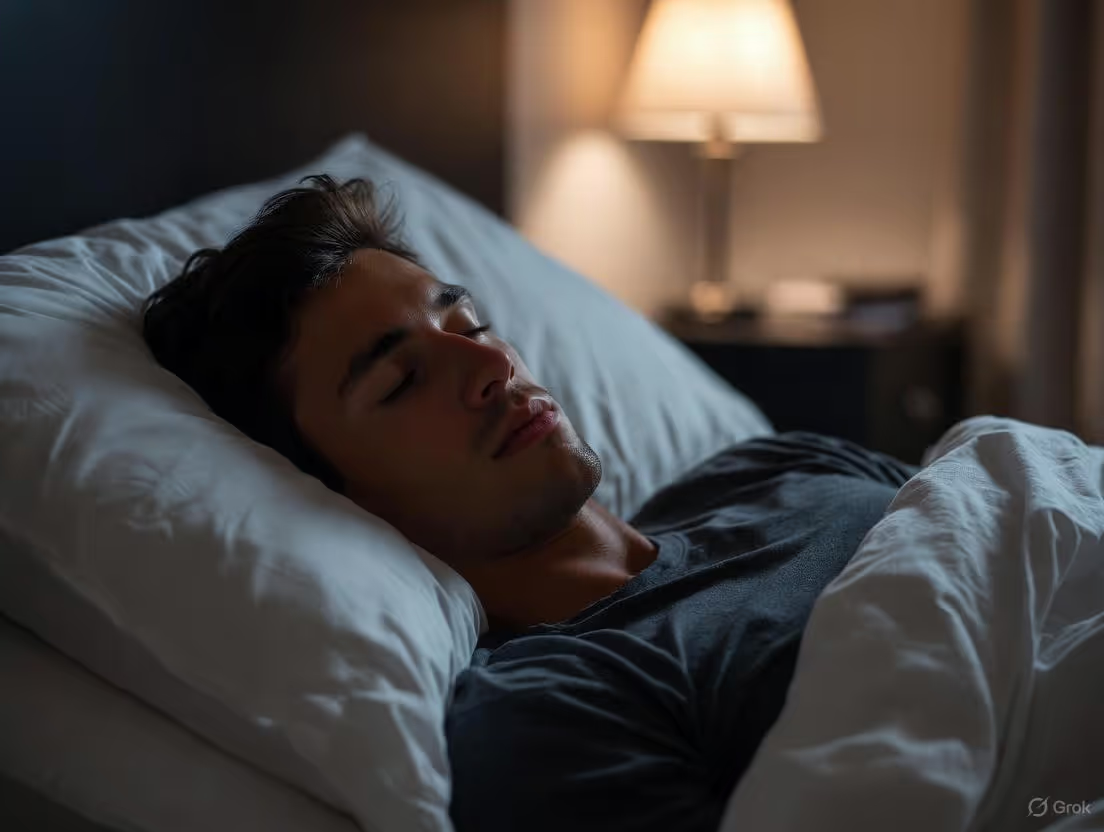
Athletes might include gentle mobility work, foam rolling, hydration, and protein intake as part of their nighttime ritual.
Athletes might include gentle mobility work, foam rolling, hydration, and protein intake as part of their nighttime ritual.
%402x.svg)
For the elite performer, the finish line isn't the end of the race—it’s the starting line for the next one. In the high-stakes world of athletic performance, victory is not just forged in the gym, on the track, or in the pool; it is meticulously sculpted in the quiet, unseen hours of the night. While daytime effort builds capacity, it is nighttime recovery that rebuilds the athlete. This is the critical period where the body, stressed to its limits, undergoes its most profound adaptations: repairing microscopic muscle tears, consolidating motor memory, rebalancing hormones, and replenishing energy stores. To neglect this window is to leave performance gains on the table and invite the relentless specters of overtraining, injury, and burnout.
Yet, "recovery" is often a vague directive—get more sleep, take an ice bath, eat some protein. The modern athlete requires a more sophisticated, data-informed, and personalized approach. Recovery is not a passive state but an active process that begins the moment your daytime training ends and culminates in the quality of your rest. This guide delves deep into the science and art of constructing the ultimate athlete’s nighttime routine. We will move beyond generic advice into a systematic, phased protocol designed to transition your nervous system from sympathetic dominance (fight-or-flight) to parasympathetic supremacy (rest-and-digest), thereby unlocking your body’s full regenerative potential. By harnessing both timeless principles and cutting-edge technology—like the continuous biometric insights provided by a smart ring from Oxyzen—you can transform your sleep from a period of unconsciousness into a targeted, measurable, and optimized performance tool.
The journey to peak performance happens while you rest. Let’s begin.

We often glorify the grind, the pre-dawn wake-ups, and the sweat-drenched sessions. But physiologically, the true magic happens when the lights go out. Sleep is not mere downtime; it is an intensely active biological state essential for athletic success. Understanding this science is the foundation upon which every effective nighttime routine is built.
Sleep Architecture and Physical Repair
Sleep unfolds in cyclical patterns of approximately 90 minutes, each comprising distinct stages: light sleep (N1 & N2), deep sleep (N3, or slow-wave sleep), and REM (rapid eye movement) sleep. For the athlete, deep sleep is the cornerstone of physical restoration. During this stage, the body enters a state of anabolic overdrive. The pituitary gland releases a pulse of growth hormone, a potent stimulant for tissue growth and repair. This hormone facilitates the repair of the micro-tears in muscle fibers caused by intense training, literally rebuilding them stronger. Simultaneously, blood flow to muscles increases, delivering oxygen and nutrients while flushing out metabolic waste products like lactic acid. Bone remodeling and immune system strengthening are also prioritized in this critical phase. Without sufficient deep sleep, the body struggles to complete these reparative processes, leading to stagnation, persistent soreness, and a weakened defense against illness.
Cognitive Consolidation and Motor Learning
While deep sleep handles the physical, REM sleep is the master of the mental. This stage is characterized by heightened brain activity and is crucial for memory consolidation and learning. For an athlete, this is where "muscle memory" is solidified. The complex motor patterns, strategic plays, and technical skills practiced during the day are rehearsed and encoded into long-term memory in the brain's neural pathways. A study on basketball free-throw shooting famously demonstrated that mental rehearsal combined with sleep improved performance almost as much as physical practice. Furthermore, REM sleep is vital for emotional regulation and stress resilience, helping an athlete maintain the mental fortitude needed for competition.
The Hormonal Balancing Act
Sleep is the grand conductor of your endocrine system. The circadian rhythm—your body's internal 24-hour clock—orchestrates the ebb and flow of key performance hormones. Cortisol, the primary stress hormone that provides energy and alertness during the day, should naturally decline in the evening. Conversely, melatonin, the sleep-inducing hormone, rises as darkness falls. This hormonal seesaw is delicate. Insufficient or poor-quality sleep disrupts this rhythm: cortisol levels remain elevated at night, impairing recovery and suppressing melatonin. Meanwhile, levels of leptin (the satiety hormone) fall, and ghrelin (the hunger hormone) rises, driving poor nutritional choices. Insulin sensitivity can also decrease, hindering glycogen replenishment. The result is a physiological state primed for fat storage, inflammation, and energy depletion—the exact opposite of an athlete's goals.
Quantifying the Impact: The Performance Cost of Poor Sleep
The data is unequivocal. Research shows that extending sleep in athletes leads to measurable improvements: faster sprint times, improved accuracy, better reaction times, and increased endurance. Conversely, sleep restriction—even just a single night of only 4-5 hours—impairs glucose metabolism, reduces maximal muscle strength, saps motivation, and increases perceived exertion. It effectively makes every workout feel harder while yielding fewer results. In essence, sacrificing sleep is akin to voluntarily imposing a performance handicap.
This complex interplay of architecture, cognition, and hormones underscores that sleep is non-negotiable. It is as vital as your training plan or your nutrition. But knowing why sleep matters is only the first step. The next is learning how to measure it accurately, moving from guesswork to precision. For a deeper dive into how technology is revolutionizing our understanding of rest, you can explore our blog for articles on sleep science and biometric tracking.
For decades, athletes have tracked daytime metrics with obsessive detail: heart rate during intervals, power output on the bike, pace per mile. Yet, when it came to the arguably more important recovery phase, we were left with subjective impressions: "I slept okay," or "I feel drained." This is the critical gap that modern wearable technology, specifically the advanced smart ring, has bridged. Moving from guesswork to precision in your nighttime routine begins with objective, continuous, and actionable data.
Why a Ring? The Unobtrusive Advantage
While wrist-worn devices are common, the finger offers a superior physiological vantage point for key recovery metrics. The vasculature in the finger is rich and closer to the skin’s surface, allowing for highly accurate and consistent readings of heart rate, heart rate variability (HRV), and blood oxygen saturation (SpO2) throughout the night. Unlike a bulky watch, a sleek ring like the one offered by Oxyzen is comfortable to wear 24/7, including during contact sports or strength training where a wrist device can be obstructive or unsafe. It doesn’t interfere with sleep posture, making it the ideal form factor for capturing uninterrupted, high-fidelity data while you rest. This seamless integration into your life is central to its design philosophy, a principle rooted in our story of creating technology that adapts to you, not the other way around.
Core Biometrics of Nighttime Recovery
A sophisticated smart ring tracks a suite of metrics that form the pillars of recovery assessment:
Turning Data into Action: The Morning Readiness Score
The true power of this technology is synthesis. A platform like Oxyzen doesn't just present raw data; it integrates these metrics into an intuitive "Readiness" or "Recovery" score. This single, easy-to-understand number, delivered each morning, answers the critical question: "Is my body prepared for today's demands?" This score empowers you to make day-by-day decisions. A high score might mean it’s time to push hard in a scheduled intense session. A low score is a clear signal to prioritize active recovery, adjust your training, double down on your nighttime routine, or investigate other stressors.
This objective feedback loop transforms your approach. You learn how specific elements of your evening routine—like the timing of your last meal, a mindfulness session, or even an argument—directly impact your physiological readiness. You stop guessing and start optimizing. For those curious about the specifics of how this technology works, our FAQ page provides detailed explanations of our sensors and algorithms. To see how this translates to real-world results, the experiences of other performance-driven individuals are documented in our testimonials.
You cannot expect to sprint full-speed into a brick wall and come to an immediate, peaceful stop. Yet, this is precisely what many athletes do with their nervous systems: high-intensity training, stimulating screen time, and hectic evening schedules right up until they expect to fall instantly into deep, restorative sleep. The transition from the sympathetic "go" state to the parasympathetic "grow" state is not a light switch; it's a gradual slope. The cornerstone of an elite nighttime routine is instituting a deliberate, 90-minute wind-down protocol. This sacred period is your physiological and psychological runway for takeoff into quality sleep.
The Physiology of the Transition
After a day of training and stress, your body is flooded with cortisol, adrenaline, and neurotransmitters associated with alertness. Core body temperature is elevated. The blue light from screens suppresses melatonin production. The wind-down ritual works to reverse these states. The goal is to actively stimulate the parasympathetic nervous system, trigger the natural release of melatonin, and initiate the nocturnal drop in core body temperature—a key signal for sleep onset.
Phasing the Wind-Down: A Three-Act Structure
Structure this 90 minutes into three distinct, progressive phases to guide your system downward.
By adhering to this structured wind-down, you are not just "hoping" to sleep well; you are actively engineering the optimal internal conditions for it. The data from your smart ring will soon validate this practice, showing improvements in sleep latency (time to fall asleep) and increased deep sleep percentages. This ritual becomes your non-negotiable pre-sleep practice, signaling to your entire organism that it is now safe, and imperative, to shift into recovery mode.
What you eat—and crucially, when you eat—in the hours before bed plays a monumental role in directing your nighttime recovery processes. This isn't about "nighttime eating" but strategic fueling to support the 8-hour fasting and repair window ahead. The goal is to provide the raw materials for repair without digestive processes disrupting sleep architecture.
The Macronutrient Blueprint for Sleep Support
Each macronutrient serves a specific purpose in the evening recovery matrix.
Timing and The Last Meal
The ideal last substantial meal should be consumed 2-3 hours before bedtime. This allows for significant digestion to occur before you lie down, reducing the risk of acid reflux and allowing your body to focus on systemic repair rather than active digestion. The pre-sleep snack (like casein yogurt) can come 60 minutes before bed, as it is designed to be digested slowly.
Key Nutrients and Compounds
What to Avoid: The Sleep Saboteurs
By viewing your evening nutrition as a targeted recovery intervention, you directly fuel the physiological processes that occur while you sleep. Pairing this strategic approach with the biometric feedback from your Oxyzen ring allows you to experiment and observe: does a specific pre-sleep snack correlate with a higher HRV or more deep sleep the following morning? This creates a powerful, personalized nutrition-for-recovery feedback loop. For more personalized guidance, our team’s expertise is detailed in our about-us section, highlighting our commitment to holistic performance.

You can perfect your wind-down and nutrition, but if your sleep environment is working against you, your recovery will be compromised. Your bedroom should be a purpose-built cave designed for one function only: supreme sleep. Every sensory input—light, sound, temperature, and touch—must be meticulously managed to support, not sabotage, your biology.
The Holy Trinity: Cool, Dark, and Quiet
The Bed and Bedding: Your Recovery Platform
Your mattress and pillow are not furniture; they are performance equipment. There is no one-size-fits-all, but key principles apply:
Scent and Air Quality
The Primitive Brain: Safety and Routine
Your sleep environment should also feel psychologically safe and consistent. This means keeping work materials, laptops, and clutter out of the bedroom. The brain should associate the room with rest and intimacy, not stress and productivity. The consistent use of your wind-down routine in this optimized space creates powerful classical conditioning. Over time, simply entering your cool, dark, scent-infused sanctuary and getting into bed will trigger a physiological relaxation response.
By treating your sleep environment with the same seriousness as a coach treats a training facility, you remove all unnecessary obstacles to recovery. This allows the natural, powerful processes of sleep to operate at their peak efficiency. It’s a foundational investment that pays dividends every single night. For insights into how the founders of Oxyzen designed their own lives around such optimal environments, you can read our story of innovation focused on human potential.
For the athletic mind—often wired for analysis, competition, and relentless forward thinking—the "monkey mind" at bedtime can be a formidable opponent. Replaying a missed play, planning tomorrow's session, or worrying about an ache can keep the sympathetic nervous system engaged, locking the door to sleep. This is where deliberate mental practices move from "nice-to-have" to essential recovery tools. Mindfulness and breathwork are direct levers you can pull to quiet mental chatter and induce a state of somatic calm conducive to sleep.
The Neuroscience of Calm
When you engage in mindfulness or controlled breathing, you actively stimulate the prefrontal cortex (associated with focus) and the parasympathetic nervous system via the vagus nerve. This directly counters the amygdala-driven stress response. These practices lower cortisol, reduce heart rate and blood pressure, and increase heart rate variability (HRV)—all biomarkers of a state ideal for sleep initiation and quality. In essence, you are using your mind to train your body into a recovery state.
Practical Mindfulness Techniques for Athletes
Therapeutic Breathwork Protocols
Conscious breathing is a direct pathway to the autonomic nervous system. Two simple techniques are exceptionally powerful:
Integration into Your Routine
These practices are most potent during the final 20-30 minutes of your wind-down, either seated comfortably or already in bed. Consistency is paramount. The benefits are cumulative; over time, your mind and body will learn to associate these practices with the imminent onset of sleep. Furthermore, by tracking your nighttime HRV and sleep latency with a device like the Oxyzen ring, you can receive objective confirmation of their efficacy. Seeing a correlation between a 10-minute body scan and a higher recovery score the next morning provides powerful reinforcement to maintain the practice, turning it from a chore into a non-negotiable part of your performance toolkit.
While foundation—environment, routine, nutrition—is paramount, strategic supplementation can serve as a valuable adjunct to fill nutritional gaps and support specific sleep-related pathways for athletes under high physical stress. It's critical to approach this area with the precision of a scientist, not the desperation of an insomniac. Supplements are "supplemental," not replacements for good habits. Always consult with a healthcare professional before beginning any new supplement regimen.
Tier 1: Foundational Sleep Support (Evidence-Based & Generally Safe)
These have substantial research backing for safety and efficacy in improving sleep quality and onset.
Tier 2: Targeted Support for Specific Issues
Tier 3: Proceed with Caution & Professional Guidance
The "Do Not Disturb" List: What to Avoid
The Personalization Imperative
The key is personalization and data. Start with one Tier-1 supplement (like magnesium glycinate) for two weeks. Use your smart ring's biometric data—specifically sleep latency, deep/REM sleep percentages, and morning HRV—to assess its impact on you. Did your sleep scores improve? Did you notice a subjective difference? This biofeedback loop turns supplementation from guesswork into a targeted experiment. For more discussions on evidence-based wellness strategies, our blog is a continually updated resource.

In the modern world, one of the greatest adversaries to an athlete's recovery is not an opponent on the field, but the device in their hand. Our evenings are bathed in artificial light, predominantly from LEDs in screens, which emit a high concentration of blue wavelength light. This particular frequency is biologically interpreted by your retina as "daytime." Managing this exposure is not a wellness fad; it is a non-negotiable physiological requirement for any serious athlete seeking to optimize recovery.
The Biological Mechanism of Disruption
Light information travels from the retina directly to the suprachiasmatic nucleus (SCN), the master circadian clock in your brain. When blue light hits the SCN in the evening, it sends a powerful "STOP" signal to the pineal gland, halting the production of melatonin. Melatonin is not just a "sleep hormone"; it's the chemical expression of darkness, triggering a cascade of recovery processes. Without its timely rise, your core body temperature doesn't drop appropriately, cortisol doesn't decline fully, and the signal to begin deep, restorative sleep is delayed or weakened. The result is prolonged sleep latency, reduced sleep quality, and impaired next-day recovery.
Implementing a Digital Sunset Protocol
A "Digital Sunset" means setting a firm time each evening when you cease using all bright screens. For most athletes, 90 minutes before bedtime is the gold standard. This allows melatonin levels to begin their natural rise unimpeded. The protocol includes:
Leveraging Technology to Mitigate Its Harm
If absolute avoidance is impossible, use technology to filter the problematic light:
The Broader Light Environment
Screen management is only one part. Your home lighting matters too.
The Data Connection
The impact of a disciplined digital detox is vividly quantifiable. By comparing nights with strict blue light management to nights of late-screen use, your Oxyzen ring data will likely show:
If light is the primary signal for sleep, temperature is the primary mechanism. The relationship between your body's core temperature and sleep is a finely tuned dance. Mastering this dance—both internally and externally—is a potent lever for enhancing sleep depth and continuity, directly translating to superior physical recovery for athletes.
The Core Temperature Dip: Your Sleep Ignition Key
To initiate sleep, your body must lower its core temperature by about 1-2°F (0.5-1°C). This drop signals the brain that it's time to transition into rest mode. It is driven by increased blood flow to the extremities (hands and feet), which acts as a radiator to dissipate heat. A cool sleeping environment is essential because it facilitates this heat loss. If the room is too warm, the body struggles to shed heat, leading to restlessness, lighter sleep, and more frequent awakenings.
Optimizing the External Environment
Internal Temperature Regulation Strategies
Your pre-sleep routine can actively promote the core temperature drop.
The Athletic Consideration: Inflammation and Thermoregulation
Intense training causes inflammation and increases metabolic rate, both of which can elevate baseline body temperature. This is one reason athletes often report feeling "hot" at night after hard training days. Strategic use of anti-inflammatory nutrition (like tart cherry juice, omega-3s), cool showers, and a deliberately cold sleep environment become even more critical during periods of high training load.
Tracking the Impact
Your smart ring is an invaluable tool here. It tracks your overnight skin temperature trends. By experimenting with the above strategies, you can observe their direct effect. You might see that a warm shower protocol leads to a faster, more pronounced temperature drop at the beginning of the night, correlated with faster sleep onset in your sleep staging data. Or, you might notice that on nights your room was slightly warmer, your deep sleep percentage suffered. This personalized thermal biofeedback allows you to fine-tune your environment and habits for optimal thermal conditions for sleep, night after night.
Even with a perfect routine, athletes face unique challenges that can shatter sleep: musculoskeletal pain from the day's exertion, performance anxiety, or a schedule that demands late-night training or competition. Proactively managing these disruptors is essential for maintaining recovery integrity.
1. Managing Musculoskeletal Pain for Sleep
Pain and sleep have a vicious bidirectional relationship: pain disrupts sleep, and poor sleep lowers pain tolerance. Breaking this cycle is key.
2. Quieting the Performance Mind (Anxiety & Stress)
The athlete's mind doesn't always clock out at 9 PM.
3. Navigating Late Training or Competition
Games end at 10 PM; you can't just go home and sleep.
By anticipating these common disruptors and having a plan for each, you maintain agency over your recovery. You acknowledge the challenge but equip yourself with tools to mitigate its impact. This resilience in the face of real-world obstacles is what separates a good routine from a great one. Seeing how other high-performers navigate these challenges can be inspiring; you can find shared experiences and solutions in our collection of user testimonials.
In the relentless pursuit of performance, sleep is often viewed in monolithic terms: one consolidated 8-hour block per day. Yet, for the athlete managing two-a-day sessions, travel across time zones, or the sheer metabolic debt of intense training, this model can be insufficient and impractical. Enter the strategic nap: a powerful, deliberate tool to augment nighttime recovery, enhance daytime alertness, and boost cognitive and physical performance. When executed with precision, napping is not a sign of laziness, but a hallmark of a sophisticated, data-driven approach to total recovery.
The Performance Benefits: More Than Just Closing Your Eyes
A well-timed nap provides a potent cocktail of restorative benefits:
The Golden Rules of the Performance Nap
To avoid the dreaded "sleep inertia"—that groggy, disoriented feeling post-nap—and to ensure naps support rather than sabotage nighttime sleep, follow these protocols:
1. Timing is Everything: The Circadian Sweet Spot
The ideal window for most people is between 1:00 PM and 3:00 PM. This aligns with the natural post-lunch dip in alertness (the "circadian nadir") and occurs far enough from evening bedtime to avoid interference. Napping after 4:00 PM is generally discouraged as it can delay sleep onset at night.
2. Duration Dictates Benefit: Choose Your Nap Type
Crucially, avoid the 30–60 minute nap. This duration often ends during deep sleep, resulting in maximum sleep inertia—you may feel worse than before the nap.
3. Environment Matters: Recreate the Sanctuary
Don't just slump on the couch with the TV on. For a nap to be truly restorative, replicate your nighttime sleep environment as much as possible:
4. The Caffeine Nap (A Pro-Tip):
For an extra edge, consider the "caffeine nap." Drink a small cup of coffee (approx. 100mg caffeine) immediately before your 20-minute nap. Caffeine takes about 20-30 minutes to bind to adenosine receptors in the brain. You'll get the rejuvenating benefits of the nap just as the caffeine kicks in, resulting in a synergistic surge of alertness upon waking.
Integrating Naps into a Training Schedule
Listening to Data, Not Just Drowsiness
This is where a smart ring like Oxyzen becomes indispensable. Your biometric data provides objective evidence on whether napping is helping or hindering your overall recovery.
Napping, therefore, shifts from a reactive crash to a proactive strategy. It is a calculated intervention to top off your recovery tank, ensuring you can bring maximum intensity and clarity to every waking moment of your athletic pursuit.
You’ve executed a flawless nighttime routine. You wake up. Now what? For the traditional athlete, the answer is a subjective, often flawed, self-assessment: "How do I feel?" The modern athlete has a more powerful compass: objective, personalized biometric data. The true value of a device like the Oxyzen ring is not just in collecting nighttime numbers, but in the actionable wisdom it provides each morning. Learning to interpret this data—specifically your Readiness Score and Heart Rate Variability (HRV)—is the skill that closes the recovery loop, turning rest into intelligent action.
Deconstructing the Morning Readiness Score
This composite score (often out of 100) is the North Star of your daily planning. It synthesizes multiple data streams from the previous night and recent trends into a single, digestible metric. While algorithms vary, they typically weigh:
Interpreting the Message: A Decision-Making Framework
The Deeper Dive: Understanding HRV Trends
The Readiness Score is the headline; HRV is the lead story. HRV is your most sensitive metric for ANS balance.
Correlation is Key: The Detective Work
Your morning data review is a brief investigative session. Ask:
This process builds profound self-awareness. You move from vague feelings ("I'm tired") to specific, linked understandings ("My HRV is down 15% this week, which correlates with increasing my running mileage and that work deadline. I need to add a recovery day.").
Creating Your Personal Baseline
"Normal" is irrelevant; your normal is everything. The first 2-4 weeks of using a biometric tracker is a baseline establishment period. During this time, aim for consistent sleep and moderate training. The averages you establish in sleep, HRV, and RHR become your unique benchmarks. All future data is interpreted in the context of this personal baseline.
By making this 2-minute morning review a ritual, you empower yourself to train smarter, not just harder. You develop a partnership with your own physiology, respecting its signals and optimizing your inputs for the desired output: sustained, peak performance. For a more comprehensive look at the principles behind this data-driven philosophy, you can learn more about the Oxyzen approach on our about-us page.
The concept of periodization—systematically varying training stress over time to maximize adaptation and prevent plateaus—is fundamental to athletic development. Yet, few athletes apply this same strategic lens to their most potent recovery tool: sleep. Just as you wouldn’t train at peak intensity year-round, your approach to sleep and recovery should ebb and flow in sync with your training cycles. Long-term recovery periodization is the master framework that ensures your nighttime routine and daily habits align with your overarching performance goals, season after season.
Aligning Recovery with Training Phases
Periodizing Nutrition for Recovery
Your evening nutrition strategy should also periodize. In high-volume phases, carbohydrate intake for glycogen replenishment is paramount. During taper or off-season, you might adjust macro ratios. Protein intake remains a constant priority for muscle repair across all phases.
Travel as a Periodized Challenge
Competition travel isn't an anomaly; it's a scheduled stressor that must be periodized into your plan. In the week before travel, prioritize exceptional sleep to build resilience. Have a clear, written protocol for the travel day (hydration, movement, light management on the plane) and for adjusting to the new time zone (using light exposure and meals strategically).
Using Data to Guide the Macro Cycle
Your long-term biometric data is the ultimate validation of your periodization plan. At the end of a season, review your monthly trends. Did your HRV successfully climb during the taper? Did your deep sleep hold steady during the intense pre-season block? This retrospective analysis informs your plan for the next cycle. Perhaps you need a longer off-season sleep focus, or maybe you discover that your in-season sleep consistency is the key variable for maintaining performance.
By periodizing recovery, you acknowledge that it is a dynamic, trainable system, not a static habit. You strategically invest in recovery capacity when you can, and you wisely spend that capacity when you must. This holistic, long-view approach is what separates a seasonal performer from a career athlete. It’s a philosophy woven into the fabric of companies dedicated to longevity in performance, a core part of the vision you can explore in our story.
For the athlete who has mastered the foundations—environment, routine, nutrition, and basic supplementation—the frontier of recovery expands into the realm of advanced biohacking. These are evidence-informed techniques that target specific physiological pathways to enhance the depth, quality, or efficiency of recovery. They are not for beginners, but for those seeking marginal gains and who understand their own physiology through consistent data tracking. Approach these with the mindset of a scientist: one variable at a time, measured against your biometrics.
1. Targeted Photobiomodulation (PBM / Red Light Therapy)
The Science: Exposure to specific wavelengths of red and near-infrared (NIR) light (typically 660nm and 850nm) is believed to enhance cellular function by stimulating mitochondria (the cell's power plants) to produce more ATP (cellular energy). This can reduce inflammation, improve circulation, and accelerate tissue repair.
Application for Sleep & Recovery:
2. Controlled Hypoxic Training (Intermittent Hypoxia)
The Science: Exposing the body to short, controlled bursts of reduced oxygen (simulating high altitude) can stimulate the production of erythropoietin (EPO) for increased red blood cell count, improve mitochondrial efficiency, and enhance the body's resilience to stress.
Application for Sleep & Recovery:
3. Vagus Nerve Stimulation (VNS) Techniques
The Science: The vagus nerve is the main highway of the parasympathetic nervous system. "Toning" it can improve HRV, accelerate the shift into recovery mode, and improve stress resilience.
Advanced Applications:
4. Cryotherapy & Strategic Thermal Cycling
Beyond a simple ice bath, advanced thermal protocols involve precise timing.
The Golden Rule of Biohacking: Measure, Don’t Assume
These techniques can be expensive and time-consuming. Their value is entirely individual. The athlete equipped with a smart ring is at a tremendous advantage. You can implement one new technique for 2-3 weeks while holding all other variables constant. Did your readiness score improve? Did your HRV trend upward? Did your subjective recovery feel enhanced? If the data shows no change, the technique may not be worth the resource investment for you.
Advanced biohacking is about personalized optimization. It’s moving from "this works for champions" to "this works for me, and here is the data to prove it." It represents the pinnacle of taking active, intelligent control over your own biology to extract every ounce of performance potential. For ongoing discussions on the frontier of performance technology and techniques, our blog serves as a resource for the curious athlete.
The most scientifically-optimized nighttime protocol is worthless without adherence. In the real world of travel, social commitments, fatigue, and plain old lack of motivation, perfection is impossible. The goal, therefore, is not a flawless routine, but a resilient one. The key to resilience lies in behavioral psychology, specifically in the principles of habit formation and the practice of "good enough" consistency. This final section is about engineering your environment and mindset to make the recovery-focused routine the default, easy path.
The Power of Habit Stacking
Habit stacking, a concept popularized by James Clear, involves anchoring a new habit to an existing one. You don't need more willpower; you need a better recipe. Build your wind-down routine as a sequential stack of small, obvious actions.
Environmental Design: Make the Right Choice the Easy Choice
The 80/20 Rule and the "Non-Negotiable Core"
Identify the 20% of your routine that delivers 80% of the benefits. This is your Non-Negotiable Core. On a perfect day, you do the full 90-minute wind-down. On a chaotic travel day or after a late event, what are the 2-3 things you must do to signal recovery? For many, this is: 1) Digital Sunset (10 mins), 2) 5-Minute Breathing Exercise, 3) Get into a Dark, Cool Room. If you accomplish only this core, you have succeeded. This prevents the "all-or-nothing" mentality that causes total abandonment of the routine when perfection isn't possible.
Tracking and Accountability: The Role of Data
Your biometric tracker is the ultimate accountability partner. It provides non-judgmental, objective feedback. Seeing a streak of high readiness scores can be powerfully motivating. More importantly, seeing the immediate impact of a "bad" night—a low score, a plummeting HRV—reinforces the value of the routine faster than any long-term consequence. Review your data weekly. Celebrate the wins (e.g., "I had 5 nights with over 2 hours of deep sleep this week!") and analyze the setbacks without self-criticism.
Mindset: From Chore to Ritual
Reframe your routine. It is not a tedious list of chores to complete before you can "get to" sleep. It is a sacred ritual of recovery—a daily ceremony where you honor the work you've done and actively prepare your body for its most important work. It is the time you invest in your future self. This shift in perspective, from obligation to self-care, is profoundly sustaining.
Social Support and Communication
Communicate the importance of your routine to coaches, teammates, family, and partners. Explain why you need to leave the social gathering by 9 PM, or why the bedroom needs to be cool and dark. When your support system understands the "why," they become allies, not obstacles.
Embrace Iteration, Not Perfection
Your routine is a living document. As you age, as your training changes, as your life evolves, so too should your recovery practices. Use your data as a guide. What worked in the off-season may need tweaking in-season. The goal is lifelong adaptation, not a rigid set of rules.
Building an unshakeable routine is the final, master skill. It synthesizes all the science, data, and strategies into a daily practice that withstands the chaos of an athletic life. It is the disciplined, loving commitment to the process that ultimately unlocks the pinnacle of performance, night after night, year after year. For those ready to begin this journey with the right tools, discovering how Oxyzen works can provide the foundational data layer to make it all possible.
Your Trusted Sleep Advocate: Sleep Foundation — https://www.sleepfoundation.org
Discover a digital archive of scholarly articles: NIH — https://www.ncbi.nlm.nih.gov/
39 million citations for biomedical literature :PubMed — https://pubmed.ncbi.nlm.nih.gov/
Experts at Harvard Health Publishing covering a variety of health topics — https://www.health.harvard.edu/blog/
Every life deserves world class care :Cleveland Clinic - https://my.clevelandclinic.org/health
Wearable technology and the future of predictive health monitoring :MIT Technology Review — https://www.technologyreview.com/
Dedicated to the well-being of all people and guided by science :World Health Organization — https://www.who.int/news-room/
Psychological science and knowledge to benefit society and improve lives. :APA — https://www.apa.org/monitor/
Cutting-edge insights on human longevity and peak performance:
Lifespan Research — https://www.lifespan.io/
Global authority on exercise physiology, sports performance, and human recovery:
American College of Sports Medicine — https://www.acsm.org/
Neuroscience-driven guidance for better focus, sleep, and mental clarity:
Stanford Human Performance Lab — https://humanperformance.stanford.edu/
Evidence-based psychology and mind–body wellness resources:
Mayo Clinic — https://www.mayoclinic.org/healthy-lifestyle/
Data-backed research on emotional wellbeing, stress biology, and resilience:
American Institute of Stress — https://www.stress.org/


