


Nighttime Routine Progression: Beginner to Advanced
Start with a basic 3-step routine and gradually add elements like journaling or meditation as the habit solidifies.
Start with a basic 3-step routine and gradually add elements like journaling or meditation as the habit solidifies.
%402x.svg)
In the quiet hum of the modern world, where days blur into endless notifications and the glow of screens outlasts the sunset, a silent revolution is taking place. It’s not happening in boardrooms or on social media feeds, but in the sacred, dimly lit hours before sleep. The pursuit of a perfect night’s rest has evolved from a simple wish into a sophisticated science of recovery, optimization, and profound self-care.
For generations, a nighttime routine meant brushing your teeth and perhaps reading a book. Today, it represents the most critical frontier of personal wellness—a leveraged ritual where one hour of intentional practice can transform the quality of the next sixteen hours of wakefulness. Yet, for most, this ritual remains untapped potential, a confusing landscape of conflicting advice, from ancient Ayurvedic practices to cutting-edge biohacking protocols.
This guide is not just another list of sleep tips. It is a comprehensive, progressive roadmap designed to meet you exactly where you are—whether you’re struggling to turn off your brain at night or you’re a seasoned wellness enthusiast looking to optimize deep sleep cycles and morning readiness. We will journey together from foundational, non-negotiable habits that establish the bedrock of sleep hygiene, through to advanced, data-driven interventions that tune your body’s recovery like a precision instrument.
Why progression? Because sustainable change is built in layers. Attempting an "advanced" routine without mastering the basics is like building a skyscraper on sand—it may look impressive, but it will inevitably crumble. By progressing logically, you’ll build resilience, deepen your self-knowledge, and create a ritual that is uniquely yours, supported by both timeless wisdom and modern technology.
Speaking of technology, this journey is illuminated by a powerful tool: the smart ring. Devices like the Oxyzen ring move beyond simple step counting, offering an unobtrusive, 24/7 window into your autonomic nervous system, sleep stages, heart rate variability (HRV), and recovery metrics. This objective data transforms guesswork into strategy, allowing you to see precisely how your evening habits—from your last sip of coffee to your meditation practice—ripple through your physiology. As we explore each stage of the nighttime routine progression, we’ll highlight how leveraging this kind of granular feedback can accelerate your results and personalize your path. For those new to this technology, you can learn more about smart ring technology and Oxyzen’s approach here.
Prepare to redefine your relationship with the night. What begins as a quest for better sleep will unfold into a masterclass in energy management, cognitive performance, and holistic well-being. Let’s begin at the beginning.
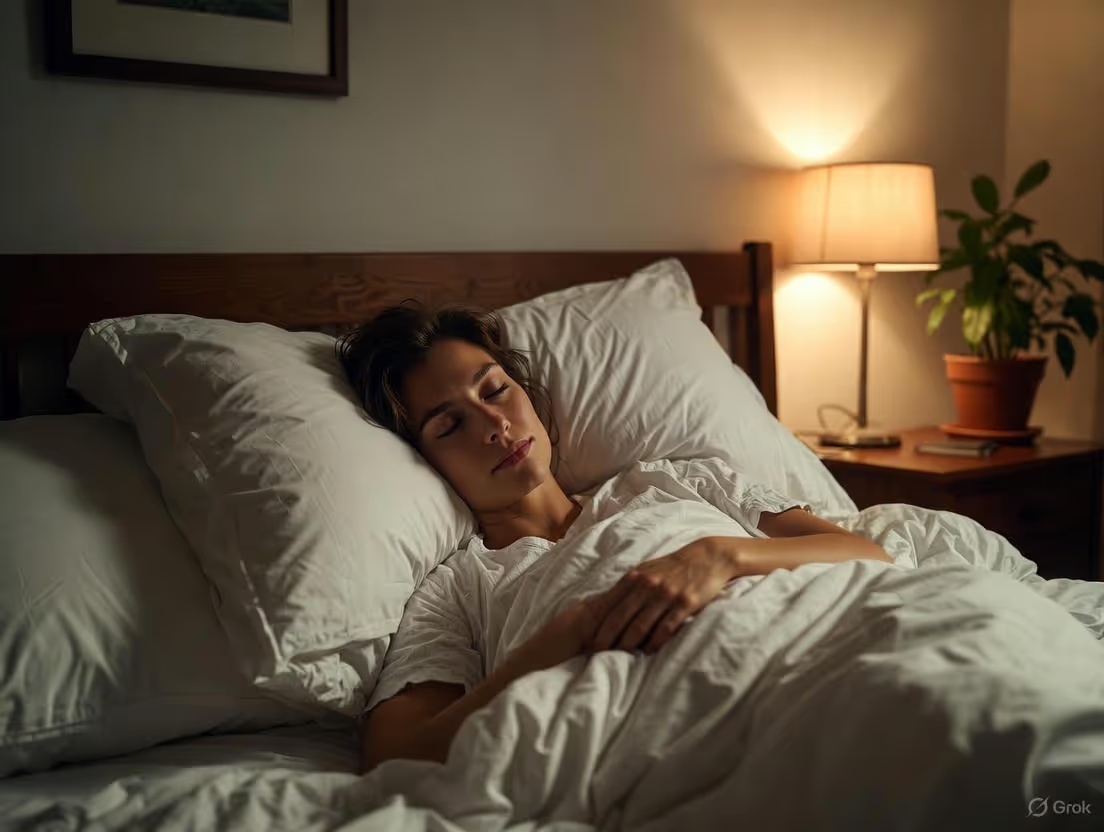
Before we can build a palace of restorative sleep, we must first ensure the ground is stable. This initial stage is less about exciting biohacks and more about mastering the fundamentals—the "blocking and tackling" of sleep that, when ignored, undermine every other effort. Think of these as the universal laws of sleep physics; you cannot circumvent them.
At its core, sleep hygiene is the collection of behaviors and environmental tweaks that signal to your primal brain: "It is safe to rest now." In our modern context, we are constantly bombarding that primal brain with opposite signals—blue light mimicking noon sun, caffeine blocking adenosine receptors, and stressful news cycles activating the sympathetic nervous system. The beginner’s mission is to clear this noise.
The environment is your first point of control. Your bedroom must become a sanctuary for sleep, and that begins with darkness. True darkness. Even small amounts of ambient light from a streetlamp or charging LED can suppress melatonin production and fragment sleep. Invest in blackout curtains or a quality sleep mask. Temperature is equally crucial. The body’s core temperature needs to drop to initiate and maintain sleep. The science-backed sweet spot is a cool 60-67°F (15.5-19.5°C). This cool environment facilitates the natural thermoregulatory process essential for entering deep sleep stages.
Then, there’s the ritual of digital sunset. The blue light emitted by phones, tablets, and laptops is the single greatest modern disruptor of circadian rhythm. It tricks your pineal gland into believing it’s daytime, halting the melatonin faucet right when you need it to flow. A beginner’s imperative is to institute a mandatory screen curfew 60-90 minutes before your target bedtime. This isn’t a suggestion—it’s a hard rule. Replace scrolling with a "dumb" activity: read a physical book, journal, or listen to an audiobook or calming podcast.
Finally, we must address consistency. Your circadian rhythm thrives on predictability. Going to bed and waking up at wildly different times each day is like giving yourself perpetual jet lag—a state known as "social jet lag." Set a fixed wake-up time, even on weekends, and let your bedtime naturally fall into place. This one habit alone can dramatically improve sleep quality and daytime energy levels.
The power of mastering these basics cannot be overstated. Users of the Oxyzen ring often report the most significant leaps in their sleep scores not from exotic interventions, but from diligently applying these fundamentals for just one week. The data doesn’t lie: when you create a cool, dark, quiet, and screen-free zone and inhabit it consistently, your nervous system responds with gratitude, measurable in longer deep sleep phases and more stable heart rates throughout the night. For more foundational tips and the science behind them, our resource hub offers a wealth of information—you can explore our blog for more wellness tips and beginner guides.
Mastering this foundation is like learning to breathe properly before running a marathon. It’s not glamorous, but it is absolutely essential. Once these non-negotiables are automatic, you are ready to start constructing a more intentional and personalized evening ritual.
With a sleep-conducive environment established, the next critical layer is the process of transitioning your mind and body from the high-rev state of the day into the low-gear state required for sleep. This is your "wind-down"—a deliberate, gradual deceleration period that acts as a bridge between doing and being. For the developing practitioner, this is where the nighttime routine truly begins to take shape.
The human nervous system is not designed for an on/off switch. You cannot sprint through your day until 10:55 PM and expect to be asleep by 11:00. The wind-down is the gentle slope that allows your physiology to downshift. A common mistake is to fill this time with stimulating or mentally engaging tasks—planning the next day, having intense conversations, or watching thrilling TV. These activities, while perhaps relaxing in spirit, keep your cognitive and emotional engines running.
So, what constitutes an effective wind-down? It is a sequence of calming, sensory-based activities performed in low light. Begin by dimming the overhead lights in your home an hour or two before bed. Use lamps with warm-toned bulbs. This mimics the natural progression of sunset and supports your body’s melatonin production.
The content of your wind-down should be personally soothing and slightly monotonous. The goal is boredom in the best sense—a state where the mind is allowed to wander without a target. Here are potent beginner-to-intermediate wind-down practices:
This is also the time to incorporate personal hygiene into your ritual mindfully. A warm (not hot) bath or shower 60-90 minutes before bed can be incredibly soporific. As your body cools down afterward, it mimics the natural pre-sleep temperature drop, sending a strong cue to your circadian system.
The key is consistency and order. Experiment to find a 30-45 minute sequence that works for you—perhaps dim lights, gentle tidying, a warm shower, followed by 10 minutes of journaling in bed. Stick to this sequence nightly. It becomes a conditioned response: performing these actions tells your brain, in no uncertain terms, that sleep is next.
Wearing a device like the Oxyzen ring during this phase can provide fascinating feedback. You might see your resting heart rate begin its downward trend 20 minutes into your wind-down, or notice a rise in your heart rate variability (HRV)—a key marker of relaxation—as you journal. This tangible data reinforces the value of your ritual, turning abstract "should-dos" into concrete, rewarding "did-thats." To see how real people have transformed their evenings, you can read authentic user experiences and testimonials here.
You’ve optimized your cave and built a bridge to sleep. Now, it’s time to ensure you’re crossing that bridge at the right time for you. This brings us to one of the most pivotal, yet overlooked, concepts in sleep optimization: chronotype. In simple terms, your chronotype is your body’s natural predisposition for sleep and wake times. It’s the reason why some people are vibrant, energetic "morning larks" at 5 AM, while others are foggy until 10 AM but hit their creative peak at 10 PM—the classic "night owls."
Fighting your chronotype is a losing battle for sleep quality and overall health. A night owl forced onto a 5 AM wake schedule will consistently suffer from social jet lag, even with adequate time in bed. The advanced beginner or early intermediate practitioner must move beyond a generic "bed by 10 PM" rule and discover their unique biological rhythm.
Chronotypes are broadly influenced by genetics (the PER3 gene, among others) and change across the lifespan (teenagers are naturally delayed, shifting earlier as we age). The most common model categorizes people as:
How do you find yours? Beyond self-observation ("When do I feel most alert naturally?"), you can use tools like the Munich Chronotype Questionnaire or, more precisely, track your data. By consistently wearing a smart ring and noting your natural sleep tendencies on free days (without alarms), patterns emerge. You’ll see when your body naturally wants to fall asleep and wake up, and crucially, when you experience the highest quality, most restorative sleep.
Aligning your nighttime routine with your chronotype is transformative. A Wolf’s ideal routine might start much later, with a vigorous workout at 8 PM and a wind-down beginning at 11 PM for a 1 AM bedtime. A Lion’s routine would be the opposite, with an early dinner, wind-down by 8:30 PM, and lights out by 9:30 PM. Your wind-down activities, meal timing, and even your exposure to light should be scheduled relative to your natural rhythm, not an arbitrary clock.
This alignment reduces sleep onset latency (the time it takes to fall asleep), improves sleep efficiency (percentage of time in bed actually asleep), and leads to waking up feeling refreshed instead of drained. It’s the difference between rowing with the current versus against it.
Understanding your chronotype also informs your daytime habits—like when to schedule demanding work, when to consume caffeine (always at least 8-10 hours before your target bedtime, regardless of chronotype), and when to seek light exposure. This holistic view of your 24-hour cycle is a cornerstone of intermediate sleep mastery. For a deeper dive into the biology of sleep cycles and personal rhythms, our blog features detailed explorations of these topics.
The adage "you are what you eat" extends powerfully into the night. Your evening nutrition—what you consume, how much, and when—plays a starring role in how quickly you fall asleep, the architecture of your sleep cycles, and how you feel upon waking. Moving from a beginner's awareness to an intermediate practice requires a strategic approach to food and drink as a sleep tool.
Let’s start with the most impactful lever: timing. The golden rule is to finish your last large meal at least 2-3 hours before bedtime. Digestion is an active, energy-consuming process. Lying down with a full stomach can lead to discomfort, acid reflux, and a core body temperature that remains elevated, hindering sleep onset. Your body should be focused on repair and restoration, not breaking down a heavy dinner.
For the intermediate practitioner, meal composition becomes key. An ideal evening meal is balanced but leans toward sleep-supportive nutrients:
Conversely, be mindful of sleep disruptors:
Now, let’s talk about the world’s most popular psychoactive drug: caffeine. The beginner’s rule is a simple curfew—no coffee after 2 PM. The intermediate approach is more nuanced. Caffeine has a half-life of about 5-6 hours, meaning half of it is still in your system after that time. For those sensitive or aiming for optimal sleep, pushing that curfew to at least 8-10 hours before bedtime is wise. This includes hidden sources like dark chocolate, certain teas, and some medications.
Alcohol, often mistaken for a sleep aid, is a profound sleep wrecker. While it may induce initial drowsiness, it metabolizes into aldehydes that disrupt the second half of the night, obliterating crucial REM sleep (the stage vital for memory consolidation and emotional processing). An intermediate practice involves a strict "two-drink maximum" rule and ensuring your last drink is at least 3 hours before bed.
Finally, consider a small, strategic pre-sleep snack if needed. A combination of a complex carb and a tiny bit of protein about 60 minutes before bed can stabilize blood sugar and prevent a wake-up from hunger. Think a small bowl of oatmeal, a banana with a spoonful of almond butter, or a glass of tart cherry juice (a natural source of melatonin).
Tracking the impact of these nutritional tweaks is where technology shines. With a device like Oxyzen, you can log your last meal time and caffeine intake and observe the direct correlation with your sleep latency, deep sleep duration, and overnight resting heart rate. You might discover that your "harmless" 4 PM latte shaves 30 minutes off your deep sleep, or that finishing dinner by 7 PM leads to a 10-point higher HRV score. This level of personalization moves you from following general rules to crafting your own nutritional sleep protocol. For common questions on how lifestyle factors impact ring data, our FAQ section provides clear, detailed answers.

For many, the body is tired, the environment is perfect, but the mind refuses to power down. Racing thoughts, replaying the day’s events, or worrying about tomorrow’s tasks can create a frustrating chasm between being in bed and being asleep. This stage of progression addresses that chasm directly with cognitive and behavioral tools designed to quiet the "monkey mind."
The first, and perhaps most powerful, technique is stimulus control. This behavioral method, rooted in Cognitive Behavioral Therapy for Insomnia (CBT-I), aims to reassociate the bed with only sleep (and intimacy). The rule is simple yet strict: if you are in bed and unable to fall asleep after about 20 minutes, get up. Go to another dimly lit room and engage in a quiet, non-stimulating activity (like reading a dull book—no screens!) until you feel drowsy. Then return to bed. The goal is to break the cycle of anxiety and frustration that forms when you lie awake for hours. The bed must become a trigger for sleepiness, not for wakeful worry.
Complementing this is paradoxical intention. Instead of trying hard to fall asleep (which creates performance anxiety), try to stay awake. In a comfortable position with lights off, simply instruct yourself to keep your eyes open and stay awake as long as possible. This removes the pressure, and often, sleep sneaks in unexpectedly.
For the cognitive side, we employ thought blocking and distraction. A racing mind often follows well-worn neural pathways. You can disrupt this by giving it a different, less engaging task. Two highly effective methods are:
A more advanced cognitive technique is body scanning for sleep. Unlike a meditative body scan for awareness, the sleep version is about inducing heaviness and release. Starting at your toes, mentally tell them, "My toes are heavy, warm, and deeply relaxed." Feel them sink into the mattress. Slowly move up through each body part—feet, ankles, calves, knees—issuing the same command. The combination of focused attention and autosuggestion is profoundly relaxing for many.
These techniques require practice. They are skills to be developed. Initially, they may feel awkward or ineffective, but with consistency, they become powerful tools in your sleep toolkit. The key is to have a plan. When you notice your mind racing, you don’t engage in a futile battle; you calmly deploy your chosen technique—be it getting up, starting a boring narrative, or beginning a body scan.
Data from a wellness tracker can be a non-judgmental coach here. You can see how practicing stimulus control for a week reduces your "time to fall asleep" metric. It provides objective proof that these psychological techniques have a direct, measurable impact on your physiology, reinforcing your commitment to the practice. Understanding the philosophy behind such holistic, data-informed wellness is at the heart of our mission; you can learn more about our vision and values here.
In our journey, we’ve often positioned technology as the antagonist—the source of blue light and endless distraction. Now, we flip the script. When used intentionally, technology becomes a powerful ally in the quest for perfect sleep. This stage is about moving from defensively blocking tech’s negative effects to proactively leveraging its positive potential.
The first layer is environmental control tech. Beyond basic blackout curtains, consider:
The second, and most transformative layer, is biometric feedback technology. This is where devices like the Oxyzen smart ring graduate from being passive trackers to active guides. For the intermediate-to-advanced practitioner, the data is the roadmap.
This intelligent use of technology creates a feedback loop: You implement a change (e.g., a new magnesium supplement), observe the result on your sleep and recovery data over 7-14 days, and then adjust. This is evidence-based self-care. It removes dogma and guesswork, replacing them with personalized, iterative experimentation.
Of course, the principle of a digital sunset still applies. The key is intentionality. Using a device to guide a meditation or track biometrics is a purposeful, endpoint-limited activity. It is fundamentally different from the infinite, reactive scroll of social media. To see how this philosophy of intentional technology is built into our products from the ground up, you can discover the story and journey behind Oxyzen here.
Having established behavioral and environmental frameworks, we now delve into the subtle art of direct physiological control. The advanced practitioner understands that sleep is not just something that happens to the body, but a state that can be actively invited and encouraged through mastery of the autonomic nervous system (ANS). This stage focuses on practices that shift the ANS from the sympathetic "fight-or-flight" mode to the parasympathetic "rest-and-digest" state with precision and efficacy.
The gateway to this control is the breath. Breathing is unique—it is an automatic function that we can also consciously direct, making it a direct remote control for the nervous system. Advanced breathwork for sleep goes beyond simple deep breathing.
Meditation for sleep also evolves at this stage. Instead of generic mindfulness, we employ guided sleep meditations or Yoga Nidra ("yogic sleep"). Yoga Nidra is a state of conscious deep sleep where you are systematically guided into profound relaxation while maintaining a trace of awareness. A 20-30 minute Yoga Nidra session can be as restorative as hours of conventional sleep, and it trains the brain and body to enter the hypnagogic state (the threshold of sleep) on command.
Progressive Muscle Relaxation (PMR) can be taken to a deeper level. After tensing and releasing each muscle group, you practice "autogenic training." This involves silently repeating phrases that suggest feelings of heaviness and warmth in the limbs ("My arms are heavy and warm..."), further promoting vasodilation and a state of passive, somatic awareness that is incompatible with anxiety.
For the truly advanced, binaural beats or isochronic tones can be incorporated. These audio technologies use specific sound frequencies (often in the delta or theta brainwave range, associated with deep sleep and drowsiness) to encourage the brain to "entrain" or match those frequencies. Used with headphones during the wind-down or initial sleep onset phase, they can act as a powerful catalyst for state shifting.
The magic of pairing these protocols with a biometric device like Oxyzen is the ability to witness their immediate physiological impact in real-time. You can do a 10-minute 4-7-8 breathing session and see your heart rate dip and your HRV climb on the app’s graph. You can compare a night with Yoga Nidra to one without and observe a tangible difference in your deep sleep percentage. This biofeedback turns an abstract relaxation practice into a tangible skill you can refine and trust. For a broader exploration of these and other advanced wellness techniques, our blog is continually updated with the latest research and methods.
The relationship between physical exertion and sleep is a nuanced curve, not a straight line. While intense exercise too close to bedtime can be stimulating due to cortisol and epinephrine release, strategic physical activity is a cornerstone of advanced sleep optimization. This stage focuses on using movement not to exhaust, but to prepare the physical vessel for impeccable restoration.
The timing principle is key: Finish vigorous, heart-pumping exercise (HIIT, heavy weightlifting, competitive sports) at least 3-4 hours before bedtime. This allows core body temperature, heart rate, and sympathetic nervous system activity to return to baseline. However, this leaves a powerful window for intentional, parasympathetic-focused movement.
Evening Mobility and Myofascial Release: This is the practice of systematically undoing the physical patterning of the day. Sitting at a desk, commuting, or even standing can create stiffness and "sticky" fascia (the connective tissue surrounding muscles). A 15-20 minute routine using a foam roller, lacrosse ball, or mobility tools like resistance bands can release these tensions. Focus on areas that chronically hold stress: hips, glutes, thoracic spine, neck, and feet. This physical release sends a cascade of safety signals to the brain.
Restorative Yoga or Yin Yoga: These practices are the antithesis of a vinyasa flow. Poses are held for 3-5 minutes each, often supported by props like bolsters and blankets, with the sole purpose of allowing gravity to gently open the body and the mind to settle. Poses like Supported Child’s Pose, Legs-Up-The-Wall (Viparita Karani), and Supported Reclining Bound Angle are profound passive resets for the nervous system.
Non-Sleep Deep Rest (NSDR) Protocols: Pioneered by experts like Dr. Andrew Huberman, NSDR is a form of guided, conscious relaxation that doesn't require you to fall asleep. A 10-20 minute NSDR session in the early evening can significantly lower resting heart rate and anxiety levels, creating a deeper "calm valley" from which to initiate your sleep later on. It’s a potent tool for recovering from a high-stress day.
Thermoregulation via Sauna or Warm Bath: As mentioned earlier, raising core body temperature passively through external heat, followed by a cool-down period, mimics the natural sleep-onset temperature drop and can enhance deep sleep. An advanced protocol might involve a 20-minute infrared sauna session or a warm bath with Epsom salts (magnesium sulfate) about 90 minutes before bed, followed by a period of normal ambient cooling.
The data from a smart ring becomes invaluable for personalizing this pillar. You might discover that a gentle evening foam rolling session improves your sleep continuity, while a late Yin yoga class actually delays your sleep onset. Or you might see that sauna use on Tuesday and Thursday nights reliably boosts your deep sleep on those nights. This allows you to build an ideal weekly movement schedule that supports, rather than disrupts, your recovery goals.
This holistic approach to the physical body—seeing it not just as a machine to be tired out, but as a system to be harmonized and prepared—marks a significant leap in sleep mastery. It acknowledges that physical tension is neurological tension, and by releasing one, you quiet the other.
Nutrition provides the building blocks, but for the advanced practitioner looking to fine-tune recovery or address specific gaps, targeted supplementation can be a powerful adjunct. This is a domain that demands respect for the science, an understanding of individual biochemistry, and a "start low, go slow" philosophy. It is not about swallowing a cocktail of pills, but about strategic, evidence-based support.
Tier 1: Foundational Nutrients (Often Deficient)
These are supplements to consider if dietary intake is insufficient or if bloodwork indicates a deficiency.
Tier 2: Direct Sleep-Promoting Compounds
These have more direct, short-acting effects on sleep physiology.
Tier 3: Advanced & Hormonal Support
These require more caution and are best approached with research or professional guidance.
Critical Philosophy: Supplements are not a replacement for the foundational habits covered in earlier sections. They are the fine-tuning knobs, not the power switch. The most advanced approach is to use a device like Oxyzen to run single-variable experiments: introduce one new supplement at a low dose for 7-10 nights, observe its impact on your sleep stages, HRV, and resting heart rate, and then decide if it’s beneficial for you. This prevents a costly and pointless "shotgun" approach. For specific questions on how lifestyle and supplementation might interact with wellness tracking, our FAQ is an excellent resource for detailed support.
Sleep is often portrayed as a solitary pursuit, but for most adults, it is a shared experience. The snore of a partner, the different chronotype of a spouse, or the wake-up calls of a child can turn an individual's carefully crafted routine into a fragile negotiation. Advanced sleep mastery, therefore, must encompass the social dimension. It’s about moving from "my sleep" to "our rest," creating harmony that benefits everyone’s recovery.
The first step is open, non-judgmental communication. Frame the conversation around shared goals: "I want us both to feel more energized and happy during the day. I’ve been learning about how we can improve our sleep together." Avoid blame ("Your snoring keeps me up!").
Addressing Divergent Chronotypes: If one partner is a Lion and the other a Wolf, strict synchronization may be impossible and counterproductive. The solution is a staggered routine with overlapping connection. The Lion might have a wind-down starting at 8:30 PM, but can spend the hour before that (8-9 PM) connecting with the Wolf—talking, light cuddling, planning the next day. Then the Lion goes to bed, and the Wolf has their own wind-down time until a later bedtime. The key is protecting that intentional connection time before the first person's sleep sequence begins.
Managing Environmental Disruptions:
Creating a Shared Wind-Down Ritual: This is a powerful bonding and synchronization tool. It could be 20 minutes of shared tea (caffeine-free, like chamomile) and conversation on the couch, a short, gentle partnered stretching session, or listening to an audiobook together. This shared buffer zone helps both nervous systems down-regulate in tandem.
For Families with Children: The goal is to model and gradually teach healthy sleep habits, creating a household rhythm.
Having navigated the intricate layers of personal sleep optimization—from foundational hygiene and cognitive techniques to advanced supplementation and social synchronization—we now ascend to a broader perspective. True mastery is not a siloed achievement but a harmonized integration of your sleep ritual with the overarching rhythms of your life. This next phase of our progression explores how your nighttime routine becomes the keystone habit that supports and enhances every other domain of your existence: productivity, creativity, longevity, and even your connection to something greater than yourself. This is where the science of sleep meets the art of living.
For the advanced practitioner, sleep is not merely recovery from the day; it is strategic preparation for the next one. This stage involves moving beyond a static, one-size-fits-all routine and learning to modulate your sleep practices in alignment with specific performance goals and the natural seasons of your life and the year.
Goal-Oriented Sleep Modulation: Your sleep needs can vary based on your daytime demands.
Cyclical and Seasonal Adaptation: Your chronotype is your baseline, but your needs fluctuate.
This dynamic approach turns your nighttime routine into a flexible toolkit. You are no longer just "doing your routine." You are curating your recovery based on the specific demands placed upon your system, using data as your guide. This is the pinnacle of personal sleep optimization: a responsive, intelligent system that serves your highest goals.
We now zoom out from weekly performance to a lifetime scale. The most compelling reason to master your sleep is perhaps its unparalleled impact on healthspan—the number of years you live in good health. Every night’s rest is not just about tomorrow’s energy; it’s a deposit into your long-term biological resilience. Advanced routines incorporate practices with proven longevity benefits.
The Cellular Clean-Up Crew: Sleep and Autophagy
During deep sleep, the brain’s glymphatic system becomes highly active, clearing out metabolic waste products like beta-amyloid proteins, which are associated with neurodegenerative diseases. This is essentially the brain’s nightly deep-clean. Practices that enhance deep sleep—cool temperature, consistency, prior physical activity—directly support this critical maintenance function, potentially safeguarding cognitive health for decades.
Hormonal Harmony: Sleep is the regulator of your endocrine system.
Advanced Practices for Longevity:
Monitoring long-term trends is where the true power of a device like Oxyzen reveals itself. Over months and years, you can track your resting heart rate (RHR) trend—a lower RHR is associated with better cardiovascular health. You can watch your HRV baseline, hoping to see it gently increase over time as a sign of growing autonomic resilience. This long-view data transforms your nightly routine from a daily chore into a quantifiable investment in your future self. It connects the dots between tonight’s practices and the quality of your life decades from now. To understand the philosophy behind creating technology that supports this lifelong journey, you can discover our brand’s story and long-term vision here.
As we integrate performance and longevity, we must not lose the essence of the ritual itself: its capacity to cultivate a mindful, reflective inner life. The quiet of the evening is a unique portal for introspection, away from the day’s demands. This stage elevates the routine from a physiological protocol to a practice in consciousness.
From Journaling to Contemplation: Earlier, we introduced gratitude and "brain dump" journaling. The advanced practice deepens this.
Sensory Mindfulness: Turn every action of your wind-down into an exercise in presence.
The Practice of Savasana (Corpse Pose) Awake: Before sleep, lie in your bed in savasana—legs slightly apart, arms away from the body, palms up. Instead of trying to sleep, simply practice surrendering the weight of your body completely to the mattress. With each exhale, release a little more. This is the yoga of sleep: conscious, total release.
This mindful layer transforms the routine from something you do to a state you inhabit. It cultivates a quality of peace that permeates the sleep itself and often leads to waking with greater clarity and calm. The data from your biometric tracker reflects this inner shift: you may see a smoother, quicker descent into sleep onset and fewer periods of nighttime wakefulness (often caused by subconscious stress).
No map can account for every individual’s unique terrain. The hallmark of an advanced practitioner is the ability to diagnose obstacles and personalize solutions through self-experimentation. This stage is about embracing the role of a "sleep scientist" in the single-subject study of you.
Common Advanced-Stage Hurdles & Solutions:
The Single-Variable Experiment Framework:
This is your most powerful tool.
This framework, powered by the objective feedback from a tool like Oxyzen, removes all guesswork. It empowers you to confidently identify what works for your unique biology, creating a routine that is genuinely personal and effective. For further guidance on interpreting data and conducting personal experiments, our community and FAQ section are invaluable resources.
As we stand at the current peak of personal sleep optimization, it’s exciting to look toward the horizon. The frontier of sleep science and technology is rapidly advancing, offering glimpses of future practices that may one day become mainstream. For the visionary practitioner, staying informed about these trends is part of the journey.
Neurotechnology & Sleep Optimization:
Advanced Recovery Metrics:
The Integration of AI and Personal Coaches:
While these frontiers are fascinating, it’s crucial to remember that they will always build upon the fundamental, human-centric principles we’ve established: consistency, a dark and cool environment, mindful transition, and a calm mind. Technology is a powerful amplifier, but it cannot create a ritual of meaning for you. That must come from within.
As we look to this future, our commitment is to responsibly integrate validated science into accessible tools. We believe in empowering individuals with knowledge and feedback, not replacing their own intuition and agency. To see how we are working to bring these principles to life, you can learn more about our approach and technology at Oxyzen.
This concludes the first third of our comprehensive guide, "Nighttime Routine Progression: Beginner to Advanced." We have journeyed from the absolute essentials of sleep hygiene, through the construction of a mindful wind-down, into the depths of personal chronobiology, strategic nutrition, cognitive techniques, and the intelligent use of technology. We’ve explored how to adapt your routine for performance and longevity, cultivate mindfulness, troubleshoot personal hurdles, and even glimpsed the future of sleep optimization.
You now possess a robust, layered framework—a true progression—that can take you from restless nights to a state of optimized, intentional restoration. The foundational layers are non-negotiable for everyone; the advanced layers invite you to experiment and personalize.
Remember, this is a practice, not a perfection. Some nights will be better than others. The goal is not a perfect sleep score every single night, but a deepening understanding of your own rhythms and a compassionate commitment to giving your body and mind the best possible conditions for restoration. The journey itself—the quiet moments of your wind-down, the insights from your data, the feeling of waking up truly refreshed—is the reward.
In the next portion of this guide, we will delve even deeper. We will explore the symbiotic relationship between sleep and other critical pillars of wellness: daytime habits, stress management ecosystems, the role of community, and how to build a truly resilient, 24-hour rhythm that turns your advanced nighttime routine into the cornerstone of an unstoppable life.
We have masterfully architectured our evenings, transforming them into a sanctuary of restoration. Yet, a profound truth remains: the quality of your night is irrevocably shaped by the conduct of your day. An advanced sleep routine exists not in isolation, but as the culminating chapter of a 24-hour circadian novel. To ignore the preceding pages is to misunderstand the story entirely. This stage of progression moves beyond the nighttime ritual to master the symbiotic daytime habits that prime your biology for effortless, profound sleep.
The Primacy of Morning Light: Resetting Your Master Clock
The single most powerful signal for your circadian rhythm is not darkness, but light. Specifically, bright, blue-rich morning sunlight. Viewing sunlight within 30-60 minutes of waking—even on cloudy days—does several critical things:
The advanced practice involves intentionality and consistency. Don’t just hope for light; seek it. Step outside for 5-10 minutes without sunglasses. Look toward (not directly at) the sun. This isn't a passive suggestion; it's an active, non-negotiable circadian anchor. On dark winter mornings, a high-quality 10,000-lux light therapy lamp used for 20-30 minutes during your morning routine can serve as an effective substitute.
Daytime Movement Patterns: Building Sleep Pressure
Sleep pressure, driven by the buildup of adenosine, is the physiological urge to sleep. A sedentary day produces weak sleep pressure, leading to shallow, unsatisfying rest. The goal is to accumulate robust, healthy adenosine through strategic activity.
The Caffeine & Fuel Timeline: Daytime decisions have evening echoes.
The Afternoon Dip and the Strategic Reset
The post-lunch dip in alertness is a natural part of the circadian rhythm. Instead of fighting it with caffeine, the advanced practitioner leverages it.
Managing the Mental Load: Cognitive Closure
A major source of nighttime rumination is "open loops"—unfinished tasks and unresolved decisions from the day. An advanced practice is to institute a daily "shutdown ritual" in the late afternoon.
By orchestrating your day with this level of circadian awareness, you arrive at your meticulously crafted evening routine with a biology that is perfectly prepared to receive it. Your sleep pressure is high, your master clock is set, your mind is clear, and your nervous system is ready to descend. This is holistic sleep mastery. To explore more on building a circadian-centric lifestyle, our blog features numerous guides on syncing your daily habits.
Sleep is the ultimate expression of a relaxed nervous system. Therefore, the most advanced sleep optimization protocol is, at its core, a comprehensive stress resilience strategy. You cannot "out-routine" chronic stress. This stage focuses on building an ecosystem of practices that manage stress throughout the entire 24-hour cycle, ensuring that when you begin your wind-down, you are not carrying the full weight of the day's tensions.
Reframing Stress: Eustress vs. Distress
The advanced practitioner learns to differentiate between eustress (the positive, challenging stress of a workout or a demanding project) and distress (the chronic, uncontrollable stress that leads to burnout). The goal is not to eliminate all stress, but to cycle between stress and recovery effectively. Sleep is the pinnacle of the recovery phase.
Real-Time Stress Interceptors
These are micro-practices deployed throughout the day to prevent stress from accumulating.
The Parasympathetic Portfolio
Build a diverse portfolio of activities that actively stimulate the vagus nerve and promote the "rest-and-digest" state.
Evening Stress Decoupling
This is the critical transition where you actively decouple from the day's stressors before entering your wind-down.
Using a device like Oxyzen provides the critical feedback loop for your stress ecosystem. You can directly see the impact of a stressful meeting on your daytime heart rate and HRV. More importantly, you can observe how your stress-interception practices (like an afternoon walk or a few minutes of breathwork) help your metrics return to baseline. Over time, you can watch your stress resilience increase, evidenced by a faster recovery from stressors and a higher, more stable overnight HRV. This data turns the abstract concept of "stress management" into a tangible, improvable skill. For user stories on how data has helped people transform their relationship with stress, visit our testimonials page.
Human beings are social creatures, and our behaviors are deeply influenced by those around us. The final, often missing, layer in a personal sleep journey is the social dimension. Moving from a private pursuit to a shared value can provide unparalleled motivation, support, and enrichment to your practice.
The Power of a Sleep-Conscious Community
Joining a community—whether online or in-person—that values sleep and recovery shifts your social norms. When your peers discuss their wind-down routines, their HRV trends, and the benefits of prioritizing rest, it reinforces your own commitment. It transforms sleep from a solitary chore into a shared interest, a topic of conversation and mutual learning. Sharing insights from your Oxyzen data with a knowledgeable community can lead to personalized advice and discovery of new optimization strategies you hadn't considered.
Accountability Partnerships
Pairing up with a friend, partner, or colleague on a similar journey creates powerful accountability.
Cultivating a Household Sleep Culture
This is the most intimate and impactful social sphere. Aligning your immediate household around the value of sleep benefits everyone.
The Ripple Effect: Modeling Behavior
By prioritizing your sleep, you become a role model. Colleagues may notice your consistent energy and ask your secret. Friends may be inspired to examine their own late-night scrolling habits. Your commitment creates a ripple effect, subtly advocating for a cultural shift that values restoration over relentless hustle. This aligns deeply with our core belief that wellness is a collective journey. You can read more about our vision for a more rested world in our story.
Integrating this social layer completes the progression. Your sleep is no longer just a biomechanical process you optimize in a lab of one. It is a valued practice supported by your environment and community, a source of connection, and a contribution to a broader culture of health. This makes the routine sustainable and meaningful for the long term.
We have now journeyed through a comprehensive landscape, building a nighttime routine progression from the ground up. Let's briefly synthesize the integrated picture that an advanced practitioner holds:
This is not a checklist to complete, but a symphony to conduct. Each element plays its part, and the whole is far greater than the sum of its parts. The result is more than just better sleep. It is improved energy, sharper cognition, stabilized mood, enhanced physical recovery, and a profound sense of agency over your own well-being.
The journey continues. In the next and final portion of this definitive guide, we will address the ultimate integration: maintenance, adaptation, and transcendence. We will explore how to sustain these practices through life's inevitable changes, how to handle setbacks with grace, and how the ultimate goal of this entire progression may not just be perfect sleep, but a more mindful, resilient, and vibrant way of living every single day.
Your Trusted Sleep Advocate: Sleep Foundation — https://www.sleepfoundation.org
Discover a digital archive of scholarly articles: NIH — https://www.ncbi.nlm.nih.gov/
39 million citations for biomedical literature :PubMed — https://pubmed.ncbi.nlm.nih.gov/
Experts at Harvard Health Publishing covering a variety of health topics — https://www.health.harvard.edu/blog/
Every life deserves world class care :Cleveland Clinic - https://my.clevelandclinic.org/health
Wearable technology and the future of predictive health monitoring :MIT Technology Review — https://www.technologyreview.com/
Dedicated to the well-being of all people and guided by science :World Health Organization — https://www.who.int/news-room/
Psychological science and knowledge to benefit society and improve lives. :APA — https://www.apa.org/monitor/
Cutting-edge insights on human longevity and peak performance:
Lifespan Research — https://www.lifespan.io/
Global authority on exercise physiology, sports performance, and human recovery:
American College of Sports Medicine — https://www.acsm.org/
Neuroscience-driven guidance for better focus, sleep, and mental clarity:
Stanford Human Performance Lab — https://humanperformance.stanford.edu/
Evidence-based psychology and mind–body wellness resources:
Mayo Clinic — https://www.mayoclinic.org/healthy-lifestyle/
Data-backed research on emotional wellbeing, stress biology, and resilience:
American Institute of Stress — https://www.stress.org/


