


Nighttime Wellness Routine for Solo Travelers
Solo travelers can maintain calm by sticking to their core routine elements (like a specific podcast or breathing exercise) anywhere.
Solo travelers can maintain calm by sticking to their core routine elements (like a specific podcast or breathing exercise) anywhere.
%402x.svg)
You’ve spent the day navigating a maze of unfamiliar streets, conquering a language barrier with sheer pantomime, and absorbing the beautiful, overwhelming sensory overload of a new place. As a solo traveler, these moments of pure, unscripted adventure are the lifeblood of the journey. Yet, as dusk falls and you return to a quiet hotel room or a bustling hostel dorm, a different reality often sets in. The adrenaline fades, and in its place can come a wave of exhaustion that sleep doesn’t seem to fix, a low-grade anxiety humming in the background, or a disorienting feeling of being untethered. You’re not just tired; you’re dysregulated.
Conventional travel advice focuses on the doing—the itineraries, the sights, the must-eat foods. But what about the being? The true art of sustainable, enriching solo travel lies not in how many miles you cover between sunrise and sunset, but in how you transition from the external exploration to the internal restoration each night. A purposeful nighttime wellness routine is the silent, non-negotiable foundation that transforms a trip from a series of checkmarks into a deeply replenishing experience. It’s the anchor that keeps you grounded, resilient, and truly present, ensuring you wake up not just rested, but restored and ready to embrace the solitude and freedom with vibrant energy.
This is more than just “getting a good night’s sleep.” It’s a holistic ritual designed for the unique physical, mental, and emotional demands of traveling alone. In this comprehensive guide, we’ll build your personalized, science-backed nighttime sanctuary from the ground up—one that fits in your carry-on and adapts to any time zone, any accommodation, any vibe. We’ll move from the foundational principles of travel circadian biology, through environmental hacks for hostile sleep spaces, into somatic practices to down-regulate a stimulated nervous system, and finally, explore how cutting-edge, portable technology like the Oxyzen smart ring can provide the objective data and gentle guidance to make your routine truly intelligent and effective. This is your blueprint for making every place you lay your head feel like home.

We often wear jet lag and travel fatigue as badges of honor, but understanding the "why" behind that weariness is the first step to defeating it. When you travel solo, you are not just a tourist; you are a self-contained biological system operating in a novel and demanding environment. Your nighttime recovery is the single most critical process for maintaining that system.
At the core of this is your circadian rhythm—your body’s master 24-hour clock, housed in the suprachiasmatic nucleus of your brain. This clock dictates not just sleepiness and wakefulness, but also core body temperature, hormone release (like cortisol and melatonin), digestion, and immune function. It’s calibrated primarily by light exposure. When you cross time zones, your clock is still operating on "home time," while the new light-dark cycle sends conflicting signals. The result is the familiar fog of jet lag: alertness when you should be sleepy, hunger at odd hours, and a general sense of being out of sync.
For the solo traveler, the challenge is compounded. "Social jet lag"—the disruption from irregular schedules—is constant. You eat when you can, not when you’re necessarily hungry. The stress of navigating alone, however exciting, elevates cortisol. Unfamiliar noises, temperatures, and bedding disrupt sleep architecture, reducing precious deep (NREM) and REM sleep, the phases critical for physical repair and emotional processing. A 2022 study in the Journal of Sleep Research found that travelers in unfamiliar environments showed significantly more fragmented sleep and reduced sleep efficiency, even without time zone changes, simply due to the "first-night effect" magnified by environmental novelty.
This isn’t merely about feeling groggy. Inefficient sleep and circadian misalignment directly impair the prefrontal cortex, the brain region responsible for decision-making, risk assessment, and impulse control—arguably the most important tools in a solo traveler’s kit. It also weakens immune response, leaving you more susceptible to bugs, and increases systemic inflammation. Your nighttime routine, therefore, is not a luxury; it’s essential maintenance. It’s the deliberate process of synchronizing your internal clock with your new external environment, lowering your stress load, and signaling to your primal brain that despite the unfamiliarity, you are safe and can enter a state of restorative rest. It’s the deliberate closing of the adventure chapter so your body can write the recovery one. As we explore the specific pillars of your routine, remember this foundational goal: to create a bubble of predictable safety for your biology, no matter where you are in the world. For a deeper dive into the biology of recovery and how technology interprets these signals, our blog features an extensive primer on understanding your sleep architecture.
You cannot control the size of your hotel room or the thinness of the hostel walls, but you have immense power to transform that space into a sleep-conducive sanctuary in under 15 minutes. This environmental reset is the physical manifestation of your intention to rest and is especially potent for solo travelers who lack the shared responsibility of a companion.
Begin with light, your circadian rhythm’s commander-in-chief. As the sun sets, your goal is to mimic nature’s progression. If your room has harsh overhead lighting, turn it off. Use a small, portable warm-light travel lamp or even the flashlight on your phone (with the brightness turned way down and covered by a piece of clothing to diffuse it) as your sole light source for the last 60-90 minutes before bed. This drastic reduction in blue and white light wavelengths is crucial for triggering your brain’s natural melatonin production. Consider investing in blue-light-blocking glasses if you must use a screen.
Next, attack sound. Silence is golden but often impossible. Instead of fighting unpredictable noise, mask it with predictable, soothing sound. A white noise app on your phone or a tiny portable white noise machine is a solo traveler’s best friend. It drowns out chatter, hallway doors, and street noise with a consistent, non-stimulating auditory blanket. For some, brown noise (deeper) or pink noise (more balanced) is even more effective. Earplugs are a non-negotiable backup. Combine them with a white noise track for an almost impenetrable sound barrier.
Then, master temperature. The body needs to drop its core temperature by about 1-2 degrees Fahrenheit to initiate sleep. Stuffy, warm rooms are the enemy. Crank the AC if you have it. If not, use the age-old trick of placing a damp towel near a fan, or take a cool shower (not cold) about an hour before bed to kickstart the cooling process. Wear lightweight, breathable sleepwear. This simple act of thermal regulation is one of the most powerful sleep signals you can send.
Finally, address smell and space. Our olfactory system is directly wired to the brain’s limbic system, which governs emotion and memory. A familiar, calming scent can instantly make a foreign space feel personal and safe. Pack a small vial of lavender, chamomile, or sandalwood essential oil. Dab a drop on your wrists, temples, or a corner of your pillowcase. Perform a quick "clear and claim" ritual: tidy your belongings, put your luggage in a closet or corner (out of sight, out of mind), and place one or two personal, small items—a photo, a crystal, a journal—on the nightstand. This visual cue tells your brain, "This is my space for now."
This environmental reset isn’t just about comfort; it’s a series of deliberate, sensory commands that override the novelty of your surroundings and create a predictable, safe cave for sleep. It’s the first and most tangible step in your nighttime wellness practice. For travelers curious about how their body truly adapts to these new environments, tracking core body temperature and heart rate variability—metrics easily monitored by a device like the Oxyzen ring—can provide fascinating, real-time feedback on your environmental tweaks, a topic we explore in our FAQ on biometric tracking.

In the solitude of travel, our devices often morph from tools into lifelines—maps, translators, cameras, entertainment, and connections to home. Yet, this constant digital engagement is the arch-nemesis of nervous system down-regulation. The "Digital Sunset" is the intentional, gradual winding down of your digital world to make space for your internal one. For the solo traveler, this practice is doubly important, as it creates a clear boundary between the externally-focused day and the internally-focused night.
The science is unequivocal. The blue light emitted by screens suppresses melatonin production by up to 50%, directly tricking your brain into thinking it’s daytime. But the harm goes deeper. The content itself—scrolling through social media feeds filled with curated lives, checking work emails, or even reading stressful news—activates the brain’s threat and reward centers, spiking cortisol and dopamine. This creates a state of "high-alert relaxation," an oxymoron that is the very opposite of the parasympathetic "rest and digest" state you need. A study from the University of Pennsylvania found that limiting social media use to 30 minutes per day significantly reduced levels of loneliness and depression—common companions for solo travelers during quiet evenings.
Your Digital Sunset should begin 60-90 minutes before your target bedtime. Start with a clear, kind notification to yourself: "My digital day is now ending." Then, execute a phased shutdown:
What fills this newfound digital silence? This is where your solo travel wellness routine comes alive. The space you’ve created is for you. It’s for journaling, for sipping herbal tea while gazing out the window, for gentle stretching, or simply for sitting in quiet awareness of the sounds of your new, temporary home. This deliberate unplugging is not about deprivation; it’s about reclaiming your attention—your most precious resource—and redirecting it inward. It’s in this quiet space that the magic of solo reflection happens, and the memories of the day settle into meaning. To see how others have transformed their travel experiences through intentional tech habits, you can read some powerful user testimonials on creating digital boundaries.
After a day of walking, carrying, and navigating, your body holds physical tension. After a day of processing new stimuli and making endless micro-decisions alone, your nervous system holds psychological tension. Talking to a travel partner can discharge some of this, but as a solo traveler, you must find another release valve. This is where somatic practices—working directly with the body to influence the mind—become your most powerful tool. You don’t need a yoga mat; you just need a few square feet of floor and 10-15 minutes.
The goal is to transition from a sympathetic-dominant state ("fight, flight, or freeze") to a parasympathetic-dominant state ("rest and digest"). Breath is the most direct remote control for this switch.
Start with Coherent Breathing: inhale slowly for a count of 5, and exhale slowly for a count of 5. Aim for just 5-10 minutes. This specific rhythm has been shown to maximize Heart Rate Variability (HRV), a key metric of nervous system resilience and recovery. A high HRV indicates your body can adapt efficiently to stress—exactly what you need while traveling. For those tracking their wellness, a device like the Oxyzen ring can provide real-time HRV biofeedback, allowing you to see the direct impact of your breathing practice—a feature many users find transformative, as noted in our story of developing personalized recovery tech.
Follow this with gentle, intentional movement to release physical holdings:
This mini-sequence isn’t about fitness; it’s about interoception—turning your awareness inward to scan for and release pockets of tension. It’s a conversation with your body, acknowledging the work it did today and giving it permission to let go. In the solitude of your room, this practice becomes a profound act of self-care and self-communication, grounding you firmly in the physical present moment and away from the mental replay of the day or anxiety about tomorrow.

Solo travel dining is a joy, but it can also be a minefield for sleep when approached without strategy. A late, heavy, or spicy meal, a celebratory nightcap, or even dehydration can sabotage your best environmental and digital efforts. Your evening nutrition strategy should focus on two goals: supporting stable blood sugar through the night and providing the raw materials for sleep hormones.
First, timing. Aim to finish your last substantial meal at least 2-3 hours before bedtime. This allows your body to complete the bulk of digestion (which raises core temperature and requires energy) before it tries to shift into sleep mode. If you arrive home late and hungry, opt for a very small, easily digestible snack if needed.
Second, composition. Focus on foods that contain tryptophan (an amino acid precursor to melatonin and serotonin), magnesium (the "relaxation mineral"), and complex carbohydrates to help tryptophan cross the blood-brain barrier.
Third, the alcohol and caffeine conundrum. Alcohol may help you fall asleep initially, but it fragments the second half of your sleep cycle, drastically reducing restorative REM sleep. View it as a sleep loan with very high interest. Caffeine has a half-life of 5-6 hours; a 3 PM coffee means 1.5 doses are still in your system at 9 PM. Establish a "caffeine curfew" of noon to 2 PM at the latest.
For the solo traveler, this also involves mindful planning. When choosing a restaurant, consider not just the menu, but the dining pace. A long, leisurely meal that finishes early is better than a quick, late feast. Learning a few key phrases to request modifications ("less spicy, please," "can I order a smaller portion?") empowers you to align your culinary adventures with your wellness goals. This isn’t about restriction; it’s about strategic enjoyment that serves your larger goal of waking up feeling fantastic. For more on how nutrition interacts with biometrics like heart rate and sleep stages, our blog has several detailed explorations.
The solo travel experience is rich with unshared moments. Without a companion to debrief with, thoughts, impressions, and emotions can swirl in a loop, preventing mental closure. The practice of evening reflection through journaling and gratitude is the cognitive equivalent of tidying your room. It processes the day’s data, files away memories, and clears the mental cache for the day to come.
Don’t aim for a literary masterpiece. Use a simple, structured approach to capture the essence without it becoming a chore.
This 10-15 minute ritual serves multiple critical functions for wellness. It reduces ruminative thinking, a key driver of anxiety and insomnia. It boosts positive affect by forcing a focus on highlights and gratitude, which studies show improves sleep quality. Most importantly for the solo traveler, it provides a sense of narrative and purpose to the journey. You are not just a passive tourist; you are an active author, compiling the story of your adventure and your growth, one night at a time. This practice of intentional reflection aligns deeply with our core mission at Oxyzen: to empower deeper self-knowledge through insight.
It’s one thing to be physically comfortable and quite another to quiet a mind that’s racing with logistics ("Did I book that train ticket?"), safety checks ("Did I lock the door?"), or simply the existential buzz of being alone in a new place. Meditation can seem daunting, but for the solo traveler, a short, guided pre-sleep practice is a lifeline to calm. It’s less about emptying the mind and more about training it to let go of its grip on the day.
If you’re new to meditation, abandon all preconceptions. Your goal is not perfection; it is simply a gentler, kinder mental state.
The beauty of these practices is their portability. They require nothing but your mind and a few minutes. They teach you that your sense of safety and calm is an internal condition you can cultivate, not an external circumstance you must find. Over time, this becomes the solo traveler’s ultimate superpower: the ability to find home within yourself, anywhere on Earth.
For the long-haul solo traveler, conquering jet lag systematically is the difference between losing three days to fog and hitting the ground running. The standard advice of "just stay awake until local bedtime" is brutal and often ineffective. A smarter, phased approach works with your biology, not against it.
Before You Travel (The Proactive Phase):
On Travel Day (The Management Phase):
Upon Arrival (The Anchoring Phase):
This disciplined approach requires effort but pays exponential dividends in your enjoyment and energy. Your pre-travel routine and post-arrival evening rituals become the essential bookends that lock this new schedule into place. If you're a frequent traveler interested in quantifying your jet lag recovery, tracking your sleep stages and resting heart rate with a wearable can provide objective data on how quickly your body is adjusting—insights we’ve built the Oxyzen ring to deliver with clarity.
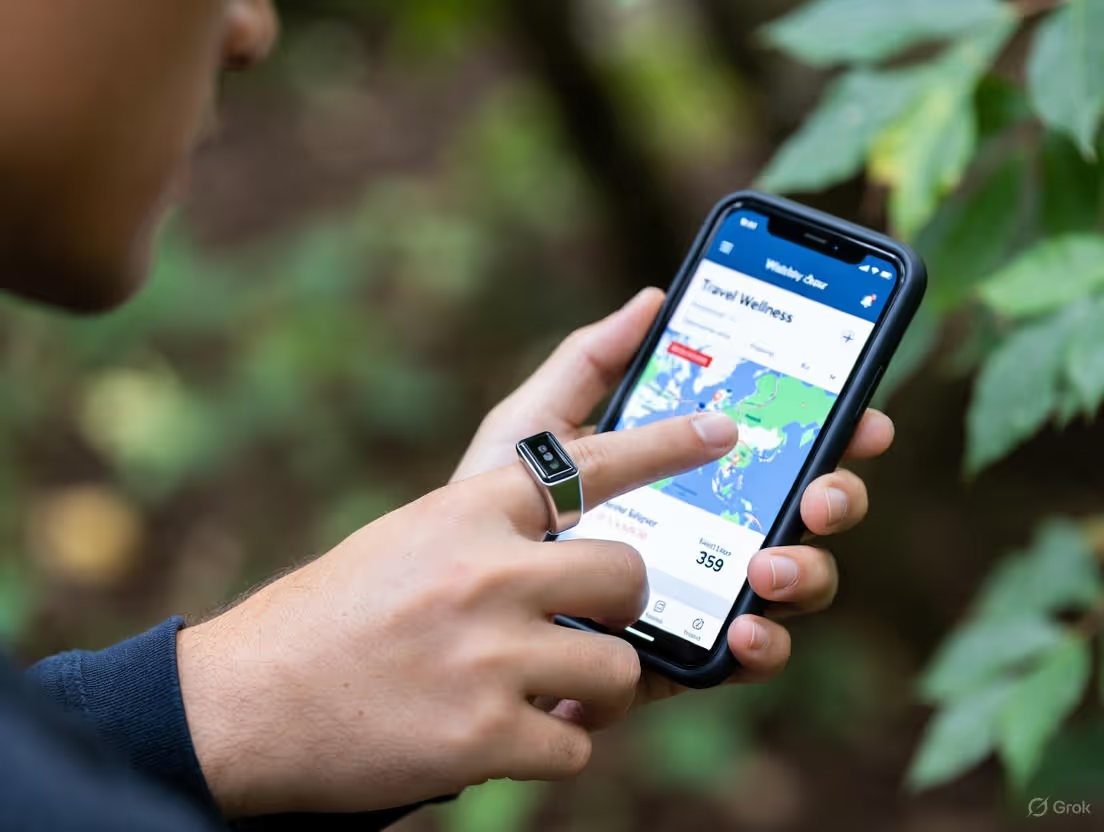
In the quest for better sleep and recovery, guesswork is your enemy. You might feel like you slept well, but was it truly restorative? Did that meditation actually lower your stress? This is where objective, personalized data transforms your routine from a generic checklist into a finely-tuned personal protocol. For the solo traveler, a discreet, comfortable, and powerful wearable like a smart ring becomes the ultimate wellness companion, providing insights no companion could.
Unlike wrist-worn devices, a ring like Oxyzen offers continuous, medical-grade sensing in a form factor you can forget you’re wearing. It works through the night, tracking the biomarkers that matter most for recovery:
For the solo traveler, this data empowers you to make intelligent, real-time decisions. Did your HRV plummet after two nights of poor sleep? Maybe today is a museum day, not a hiking day. Did your deep sleep increase after you started using your white noise app? Double down on that habit. The ring provides a private, objective feedback loop, helping you understand your body’s unique responses to travel stress, time zones, and your own routine. It turns introspection into actionable insight. To understand the full scope of what’s possible with this technology, learn more about Oxyzen’s comprehensive sensing capabilities.
Even with the perfect routine, reality intrudes. Your ability to adapt is key. Here’s how to handle the most common sleep saboteurs:
The mark of a resilient solo traveler isn’t perfect sleep every night; it’s the toolkit and the flexibility to navigate the imperfect nights without letting them derail your entire journey or wellbeing.

Your routine is only as good as your ability to execute it anywhere. Here is the minimalist, high-impact packing list for your nighttime wellness toolkit. Every item should earn its space by serving multiple purposes or being irreplaceable.
The Non-Negotiables:
The Performance Enhancers:
The Mindset: The most important tool isn’t physical. It’s the commitment to yourself—the understanding that this 60-90 minute ritual is the investment that pays dividends in every moment of your waking adventure. It’s the discipline to unplug, the self-compassion to wind down, and the curiosity to listen to what your body needs.
A rigid schedule is the enemy of adventurous travel. Your routine should be a flexible, modular framework, not a prison. Here, we adapt the core pillars into realistic, time-bound flows for three archetypal solo travelers. Use these as templates and adjust them to your own rhythm.
Context: Dorm rooms, shared spaces, minimal privacy, unpredictable noise and light, emphasis on social potential.
Core Challenge: Creating a private, calm bubble in a public, stimulating environment.
The Adaptive Routine:
Key Backpacker Hack: Your routine starts with the social disengagement. That is the first and most critical step in transitioning from "hostel mode" to "rest mode."
Context: Your own apartment or quiet rental, a blend of work and exploration, need to separate "work time" from "personal time."
Core Challenge: Creating a firm boundary between the productive/explorative day and the restorative night, especially when your "office" is your "home."
The Adaptive Routine:
Key Nomad Hack: The physical shutdown of work tools is your most important trigger. Without it, work anxiety can bleed into your entire evening.
Context: High-comfort accommodations, solitude, intention for deep rest and rejuvenation.
Core Challenge: Maximizing the premium environment for profound physical and mental recovery, avoiding the temptation to "squeeze in" one more thing.
The Adaptive Routine:
Key Luxury Hack: Total digital disconnection is the ultimate luxury. By removing devices entirely, you remove the final tether to external demands, allowing for true immersion in the restorative experience.
Owning a smart ring like Oxyzen provides a wealth of data. The real magic, however, lies in intelligent interpretation and calm, curious action—not anxiety-driven obsession. Here’s how to read your body’s story each morning and adjust your travel day accordingly.
Morning Check-In Protocol (5 Minutes):
Travel-Specific Insights:
Remember, the data is a compassionate guide, not a judge. Its purpose is to foster a deeper dialogue with your body, empowering you to make informed choices that enhance your travel experience. For specific questions on interpreting data from your device, our support FAQ is an excellent resource.
The benefits of your nighttime ritual shouldn't vanish at sunrise. The mindfulness, self-awareness, and intentionality you cultivate can—and should—infuse your entire day, creating a holistic 24-hour wellness cycle.
By extending the ethos of your nighttime routine—intentionality, self-care, presence—into daylight hours, you transform your entire trip from a series of locations into a continuous state of mindful, resilient wellbeing. This holistic approach is at the heart of our vision for integrating wellness technology seamlessly into life's adventures.
The final, and perhaps most overlooked, challenge for the solo traveler is the return home. You've spent weeks or months cultivating exquisite self-care rituals, listening to your body's signals, and prioritizing restoration. Then you land back into the "real world" of routines, responsibilities, and social commitments. It’s heartbreakingly easy to let the entire practice evaporate within a week, dismissing it as a "travel thing."
Don't let that happen. The person who developed that routine on the road is a more resilient, self-aware, and grounded version of you. That person deserves to stay. Here’s how to integrate your travel wellness into your home life.
The First 72 Hours (The Jet Lag Bridge):
Treat your homecoming like another time zone adjustment. Be disciplined with light exposure (morning light is critical to re-anchor) and meal times. Maintain your evening digital sunset and journaling practice to process the reverse culture shock and integrate your travel experiences. Protect this time fiercely; it’s your bridge between realities.
Adapting the Ritual for Home:
The Long-Term Integration:
The ultimate goal is for these practices to become your automatic, default setting—not a "travel mode." You have proven to yourself that you can prioritize your wellbeing under challenging, unfamiliar conditions. That is a profound personal truth. Applying that same priority in your familiar environment is the final step in the journey. It ensures that the peace, self-knowledge, and resilience you gained on the road aren't souvenirs you leave in your suitcase, but permanent upgrades to your operating system. For inspiration on how others have made this lasting change, the testimonials from our community are filled with stories of transformation that began with a single, consistent ritual.
We have journeyed through the complete architecture of a solo traveler's nighttime wellness routine—from the foundational biology of circadian rhythms and the crafting of a portable sanctuary, through the digital, somatic, and nutritional pillars of unwinding, into the reflective and meditative practices that quiet the mind. We've personalized it for different travel styles, leveraged technology for intelligent feedback, and laid out a plan to bring this profound self-care practice home.
This is more than a list of tips. It is a philosophy of travel and a practice of self-relationship. It acknowledges that the deepest adventures are not only those that happen on mountaintops or in ancient alleyways, but also those that occur within the quiet solitude of your own being at the end of the day. It recognizes that to truly embrace the vibrant chaos of solo exploration, you need a solid center of calm.
Your first step is not to implement everything at once. It is to choose one pillar. Perhaps tonight, in your accommodation, you commit to a 60-minute Digital Sunset. Or tomorrow, you buy earplugs and a sleep mask. Or you simply spend 5 minutes before bed writing down three specific things you were grateful for that day.
Start small, with curiosity and compassion. Observe the difference it makes. Let that positive reinforcement guide you to the next step. Your body and mind, equipped with their innate wisdom and perhaps guided by a little intelligent technology, will show you the way.
The world is vast and endlessly inviting. But the most important journey you will ever take as a solo traveler is the one that leads you back to a rested, resilient, and deeply present version of yourself, night after night. That is the foundation upon which unforgettable journeys are built. Begin there.
For the digital nomad, consultant, or anyone who treats airplanes as a second home, standard jet lag advice is merely table stakes. Advanced circadian biohacking involves precise, proactive manipulation of your environment and biology to minimize downtime and optimize performance. This is the executive class of travel recovery.
1. Light Timing with Surgical Precision:
Forget just "get morning light." The timing, intensity, and wavelength matter critically. The goal is to provide the strongest possible signal to your suprachiasmatic nucleus (SCN) at the precise time that will shift your clock in the desired direction.
2. Strategic Supplementation:
This should be done with research and, ideally, consultation with a healthcare provider, but the data on certain compounds is compelling for frequent travelers.
3. The Flight as a Recovery Pod:
Reframe the airplane cabin from a stressful ordeal to a controlled recovery environment.
4. Data-Driven Iteration:
This is where a continuous wearable like the Oxyzen ring becomes indispensable. Track every intervention. Did the 0.5mg melatonin at 5 PM pre-flight improve your first night's deep sleep by 15%? Did using the light therapy lamp at 7 AM local time accelerate your HRV recovery by a full day? Your personal dataset over multiple trips becomes a powerful optimization engine, allowing you to refine a protocol that is uniquely effective for your physiology. The insights gleaned go far beyond sleep, touching on how holistic wellness tracking empowers personalized adaptation.
A nighttime routine addresses the symptoms of travel solitude, but a deeper practice transforms the very nature of being alone from a state of lack to one of profound richness. This is the art of cultivating mindful solitude.
Reframing the Narrative:
The first step is cognitive. The feeling of "loneliness" is often a story we tell ourselves: "I am alone, therefore I am missing out, therefore something is wrong." Mindful solitude asks you to question that story. What if being alone is not an absence of connection, but a different kind of connection—a connection to your own senses, thoughts, and to the environment, unfiltered by another's perception?
Practices for Deepening Solitude:
The Alchemy of Solo Dining: This classic pain point for solo travelers can become the pinnacle of mindful practice. Request a table, put your phone away, and order deliberately. Eat slowly, savoring each bite. Observe the restaurant's life as a theater of humanity. The goal is not to distract yourself from being alone, but to fully immerse yourself in the experience of nourishing yourself in a new context. The anxiety melts away when met with full attention.
This cultivated mindful solitude does more than just pass the time; it builds an inner resilience and a capacity for rich, uninterrupted experience that becomes a treasured aspect of solo travel. It ensures that your inner world remains as vibrant and interesting as the outer one you're exploring. This journey inward is a core part of our mission to foster deeper self-knowledge through mindful technology.
Your wellness routine must be fluid, respecting and adapting to the cultural context you're in. Imposing a rigid, Western-centric protocol can sometimes isolate you from meaningful local experiences or even be culturally insensitive. The savvy traveler learns to blend their non-negotiables with local customs.
Embracing Local Wind-Down Traditions:
Adapting Your Toolkit:
The principle is integration, not isolation. Your routine allows you to participate fully in local life without burning out, because you have a conscious, reliable way to recover. It makes you a more respectful and resilient guest.
While the Digital Sunset is sacred, technology used intentionally before that cutoff can be a powerful ally. Here’s a curated toolkit of digital resources to support, not hinder, your wellness journey.
For Sleep and Sound:
For Planning and Circadian Management:
For Connection and Safety (Used Pre-Sunset):
The unifying principle for all tech is proactive downloading and intentional use. Your phone should be a curated toolkit, not a portal to infinite distraction. By setting it up this way, you make the final act of the Digital Sunset—placing it out of reach—effortless and natural. For a broader discussion on curating a digital environment for wellbeing, our blog explores this in depth.
Solo travel doesn't have to mean a hermetic existence. Sharing your wellness journey, even from afar, can deepen your practice and create unexpected connections.
The Shared Digital Journal:
Consider a private blog, a shared note with a close friend, or even a visually-focused Instagram account (with a very private, curated following) where you post not just sights, but snippets of your practice: a photo of your journal and tea, the view from your meditation spot, your neatly laid-out sleep kit. This isn't boasting; it's documenting a process. It invites a different kind of conversation—one about inner experience rather than just external itinerary—and can inspire others.
Connecting with Local Wellness Communities:
Use your evening research time to look for morning activities that align with your wellness values.
The Ripple Effect:
By prioritizing your wellbeing, you become a more centered, pleasant, and present person. This energy is palpable. You're more likely to have positive, genuine interactions with hosts, shopkeepers, and fellow travelers. Your routine, rather than isolating you, can become the stable core from which you engage with the world more openly and kindly. The community you build might be fleeting—a conversation after a yoga class, a shared smile with a cafe owner who sees you journaling each night—but these micro-connections are the fabric of meaningful travel. This philosophy of connected, conscious travel is part of the story we're building at Oxyzen.
Even with the best-laid plans, you may hit a wall: multiple nights of poor sleep data, rising anxiety, or sheer ritual fatigue. Here’s how to troubleshoot like a pro.
1. Diagnose with Data and Honesty:
Look at your biometrics. Is your HRV chronically low and RHR high? This suggests systemic overload. Solution: A true rest day. Cancel plans. Spend the day reading in a park, have a slow meal, take a nap. Revert to the most basic version of your routine. You may need 2-3 days of this to reset.
Is your sleep fragmented but your daytime data okay? This suggests acute environmental or behavioral factors. Re-audit your sleep sanctuary. Has a new noise appeared? Is the room warmer? Did you introduce a new supplement or food?
2. Break the Ritual to Save It (The Strategic Break):
Sometimes, the routine itself can become a source of pressure. "I have to journal, I have to meditate." This defeats the purpose. Grant yourself permission for a routine holiday. One night, deliberately break it. Watch a movie in bed. Scroll social media. Order late room service. Often, this release of pressure, done consciously, is exactly what your rebellious mind needs. The next night, you’ll likely return to your routine with renewed appreciation, not obligation.
3. Address the Underlying Solo Travel Stressors:
4. Know When to Seek Help:
If anxiety is severe, sleep is consistently non-existent for nights on end, or you experience signs of depression, your travel wellness routine is first aid, not a cure. Use technology to connect with a telehealth therapist from back home. There is zero shame in this; it is the ultimate act of self-care. Your wellness is the priority, full stop.
We are on the cusp of a revolution in personalized travel wellness, moving from reactive tracking to predictive and prescriptive guidance. Imagine a not-too-distant future:
This future is about contextual intelligence—technology that understands not just your body, but your body in the specific, dynamic context of travel. It turns data into empathetic, actionable wisdom, allowing you to be fully immersed in the experience while an intelligent layer works silently in the background to protect your foundational wellbeing. This is the horizon we are looking toward, where technology truly serves human flourishing in the most adventurous chapters of life. To follow the development of these kinds of integrated wellness solutions, staying connected to our story is key.
This portion of our guide has ventured beyond the establishment of a routine into its mastery, its integration, and its future. We've explored how to biohack your biology for frequent travel, transform solitude from a challenge into a sanctuary, and adapt your practices with cultural intelligence. We've looked at building a digital toolkit that serves you, finding community in unexpected places, and troubleshooting with wisdom.
The thread that runs through all of this is a shift in perspective. The solo traveler’s nighttime wellness routine is not a chore to be completed, but a practice to be lived. It is the daily ceremony where you, the explorer, integrate the external wonders with your internal landscape. It is where you convert the sensory input of the day into lasting memory, resilience, and self-knowledge.
This practice teaches you that home is not a place, but a state of being—a state of regulated calm, mindful presence, and self-compassion that you can assemble anywhere on Earth, from a hostel bunk to a luxury suite. It proves that you are capable of being your own best companion: attentive to your needs, respectful of your limits, and celebratory of your experiences.
As you move forward, carry this framework not as a rigid prescription, but as a palette of possibilities. Some nights will call for a full 90-minute luxury restoration; others, a pared-back 20-minute emergency reset. Both are perfect. The act of consciously choosing what you need tonight is the core of the practice.
Your travels will end, but the self-awareness you cultivate will not. The ability to listen to your body, to create sanctuary, to find depth in quiet moments—these are the true souvenirs, the permanent upgrades you bring home.
So as you pack your bag for your next solo adventure, remember to pack your most important tool: the intention to care for yourself as well as you intend to explore the world. Begin with the night. Let the rest follow.


