


Nighttime Wellness Routine: Setting Up Your Bedroom
Set up your bedroom each evening as part of the routine—tidying, setting the temperature, and preparing bedding.
Set up your bedroom each evening as part of the routine—tidying, setting the temperature, and preparing bedding.
%402x.svg)
For decades, we’ve treated sleep as a passive event—something that simply happens when we close our eyes. We invest in ergonomic chairs for productivity, high-performance gear for workouts, and gourmet tools for cooking, yet we often relegate our sleep environment to an afterthought. This ends tonight. The modern science of sleep hygiene reveals a powerful truth: your bedroom is not just a place to fall unconscious. It is a precision wellness sanctuary, a biological charging station where your body repairs DNA, your brain consolidates memories, and your hormonal system resets. Getting this space right isn't about luxury; it's a non-negotiable foundation for cognitive function, emotional resilience, metabolic health, and longevity.
Think of your pre-sleep routine and bedroom setup as the "launch sequence" for your most critical biological processes. A misaligned environment—too warm, too bright, too chaotic—is like trying to launch a rocket during a hurricane. The results are fragmented sleep, shallow restoration, and waking up feeling like you never truly powered down. This is where technology and intentional design converge. With tools like the Oxyzen smart ring, you move from guessing about your sleep quality to knowing it. You can track how subtle changes—a drop in room temperature, a new sound frequency, a shift in your wind-down timing—directly impact your heart rate variability (HRV), sleep stages, and readiness scores. This data-driven approach transforms your bedroom from a static room into a dynamic, responsive partner in your wellness.
This guide is your master blueprint. We will deconstruct every element of the perfect nighttime wellness sanctuary, merging ancient wisdom with cutting-edge technology. We'll go far beyond "keep it dark and quiet" to explore the physiology of temperature regulation, the psychology of color and clutter, and the quantified impact of each adjustment. By the end, you will have a deeply personalized, evidence-based protocol to engineer your sleep environment, turning your bedroom into the most effective wellness tool you own.

Your bedroom's design directly dictates your nervous system's state. From the moment you cross the threshold, your environment should send a unambiguous signal to your brain and body: It is safe to rest. This signal—mediated through your senses and measured by biomarkers—triggers the parasympathetic "rest-and-digest" response, slowing your heart rate, lowering cortisol, and initiating the release of sleep-promoting melatonin. A poorly designed bedroom, conversely, keeps you in a low-grade state of sympathetic alert ("fight-or-flight"), sabotaging sleep before your head even hits the pillow.
The consequences of a misaligned sleep environment are quantifiable and severe. Chronic poor sleep is linked to a 40% increased risk of developing depression, a 30% higher likelihood of weight gain and obesity due to disrupted hunger hormones (ghrelin and leptin), and a significantly impaired immune response. On a night-to-night basis, you might experience the foggy brain, irritability, and low energy you know all too well. The reverse, however, is profoundly empowering. Optimizing your sleep sanctuary can improve sleep efficiency (the percentage of time in bed actually spent sleeping) by 20% or more, deepen slow-wave sleep (the most physically restorative phase), and boost daytime cognitive performance as if you'd gained an extra IQ point or hour of focused time.
This is the era of personalized wellness, and your sleep is no exception. This is where a device like the Oxyzen smart ring becomes your indispensable sleep architect. Unlike noisy, cumbersome wristwear, a smart ring silently collects precise physiological data—including skin temperature, blood oxygen saturation (SpO2), and detailed heart rate metrics—all night long. This data provides the objective feedback loop you need. You're no longer asking, "Did I sleep well?" You're analyzing: "My sleep latency dropped by 15 minutes after I started using blackout curtains. My HRV increased by 8% when I lowered my bedroom temperature to 65°F. My deep sleep duration correlates strongly with my pre-bed digital cutoff time." This transforms setup from a guessing game into a precise science. For a deeper dive into how this technology personalizes your health insights, our blog features detailed case studies and research.
The goal of this first, critical section is to shift your mindset. Your bedroom is not a passive backdrop but the primary interface for your body's most vital software update. Every choice we make from here—light, sound, temperature, texture—is a line of code in that program. Let's start writing the code for unparalleled restoration.
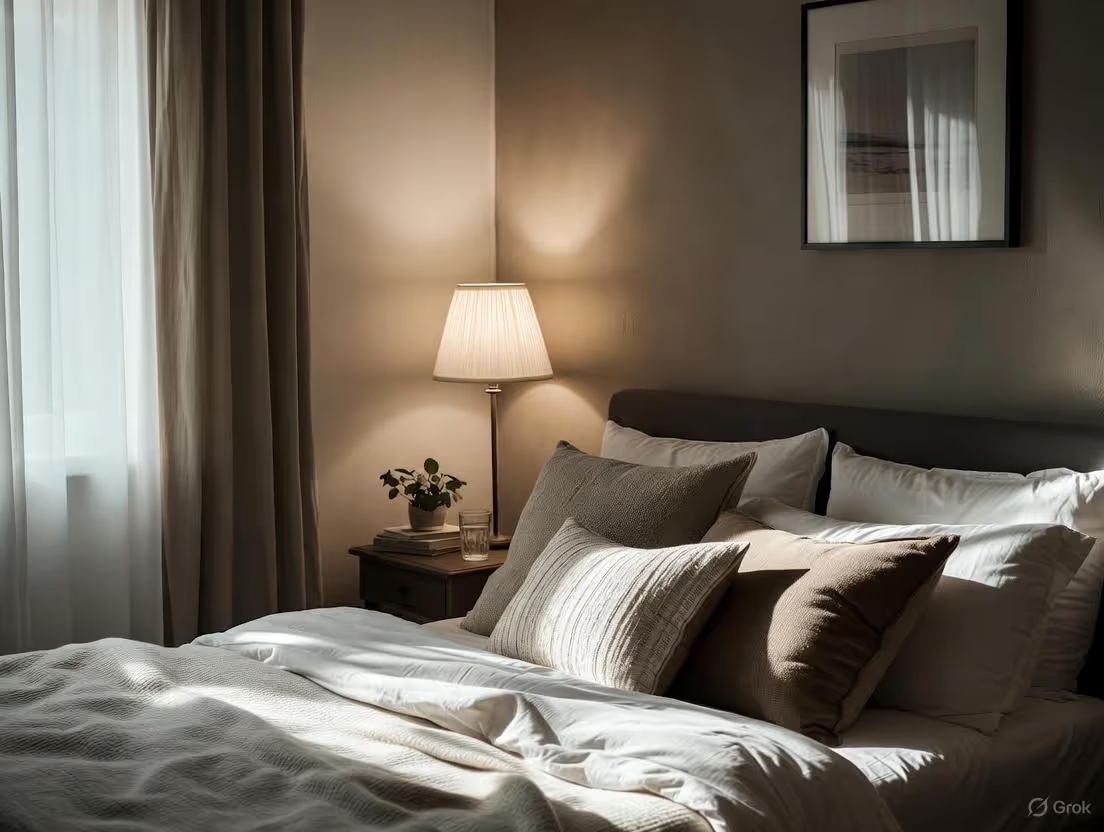
Light is the single most potent environmental cue for your circadian rhythm, your internal 24-hour master clock. This rhythm, governed by the suprachiasmatic nucleus (SCN) in your brain, regulates not only sleep-wake cycles but also hormone release, digestion, and cellular repair. It uses light information, specifically through specialized cells in your eyes called intrinsically photosensitive retinal ganglion cells (ipRGCs), to synchronize with the external world. These cells are exceptionally sensitive to blue wavelength light, which is abundant in sunlight and, problematically, in the LEDs of our screens and indoor lighting.
When blue light hits these receptors in the evening, it signals "daytime" to your SCN. This suppresses the production of melatonin, the key hormone that makes you feel drowsy and lowers your core body temperature to initiate sleep. A 2018 study from Harvard Medical School demonstrated that blue light exposure in the evening suppressed melatonin for twice as long as green light and shifted circadian rhythms by up to 3 hours. The result? You feel alert when you should be sleepy, you take longer to fall asleep, and you miss out on crucial early-night deep sleep.
Crafting Your Light Hygiene Protocol:
Monitoring the impact of these changes is where wearable data shines. By wearing your Oxyzen ring, you can track changes in your "time to fall asleep" (sleep latency) and observe if your body temperature drops more predictably at night—a key indicator of a well-timed circadian rhythm. Seeing this data confirms your efforts are working, providing the motivation to stick with your light hygiene protocol. For common questions on how wearables track these metrics, our FAQ section offers clear explanations.
Sound is a constant, often intrusive, companion. While our brains can learn to filter out some consistent noise during wakefulness, during sleep, sudden or variable sounds trigger micro-arousals—brief awakenings that fracture sleep continuity and prevent you from reaching and maintaining deep, restorative stages. The goal of acoustic engineering for sleep is not always utter silence (which can feel unnerving for some) but the creation of a consistent, predictable, and masking sonic environment.
Understanding Sleep Disruptors: Intermittent sounds are the enemy. A dog barking, a car alarm, a partner's snore, or a creaking house creates a "startle" response, activating the amygdala (the brain's fear center) and prompting a stress hormone release, even if you don't fully wake. This is why city dwellers or light sleepers often feel exhausted despite spending 8 hours in bed—their sleep architecture has been shredded by noise pollution.
Curating Your Sleep Soundscape:
Your Oxyzen ring provides the ultimate feedback on your sonic environment. By reviewing your sleep stage graph alongside a log of your soundscape experiments, you can see if nights with pink noise correlate with longer periods of deep sleep (shown as slow-wave sleep) and fewer wakeful episodes. This objective data moves you from subjective feeling ("I think I slept better") to objective knowledge ("My deep sleep increased by 12%"). Reading about real user experiences can provide further insight into how others have optimized their sleep sound.
If light is the conductor of your circadian orchestra, temperature is the rhythm section. Your core body temperature follows a clear circadian rhythm, peaking in the late afternoon and hitting its lowest point about two hours before your natural wake-up time. The initiation of sleep is intimately tied to a drop in core temperature. As you prepare for sleep, your body redirects blood flow from the core to the extremities (hands and feet), releasing heat. A cool room environment facilitates this critical heat dissipation. A room that's too warm inhibits it, leaving you tossing and turning.
The science is precise: The optimal temperature for sleep for most adults is between 60-67°F (15.5-19.5°C). This range supports the natural thermoregulatory processes necessary for falling asleep quickly and cycling properly through sleep stages, particularly deep sleep (which is highly temperature-sensitive).
Engineering Your Thermal Environment:
This is another area where a smart ring's continuous skin temperature sensor is invaluable. The Oxyzen ring tracks your distal body temperature trends throughout the night. You can see if your temperature follows a smooth, declining curve (ideal) or is jagged and elevated (indicating thermal discomfort or disruption). By correlating this with your room temperature log, you can pinpoint your personal ideal sleeping temperature, which may be a degree or two off the general recommendation. This level of personalization is the future of sleep optimization, a core part of our vision at Oxyzen.

Your visual field is a direct input to your subconscious mind. A cluttered, chaotic bedroom creates a cluttered, chaotic mental state—a phenomenon neuroscientists call "visual noise." Every unfinished task, pile of laundry, or stack of papers acts as a tiny, unresolved cognitive demand, subconsciously reminding your brain of work left undone. This can elevate anxiety and make it difficult for your mind to disengage from "doing" mode and enter the "being" mode required for sleep. Your bedroom must be a psychological sanctuary, a space dedicated solely to rest and intimacy.
The Neurological Impact of Clutter: Studies using fMRI scans show that clutter overloads the visual cortex, reducing the brain's ability to focus and process information. It triggers low-grade, chronic stress by constantly signaling "there's work to do." For sleep, this translates to rumination, racing thoughts, and prolonged sleep latency as your mind struggles to find "off."
Implementing the Sanctuary Protocol:
Creating this serene environment supports the data your wellness tracker provides. When you minimize cognitive stressors, you may see improvements in metrics like Heart Rate Variability (HRV) during sleep—a direct measure of your nervous system's resilience and relaxation. A calm space fosters a calm physiology, which the Oxyzen ring quantifies. This holistic approach—merging environmental psychology with biometric feedback—is what defines modern wellness. For more on our holistic philosophy, you can learn about our mission and values.
You will spend approximately one-third of your life in bed. The surface you lie on is the primary physical interface for your sleeping body, influencing spinal alignment, pressure point relief, temperature regulation, and motion transfer. An ill-suited mattress or pillow is a constant source of micro-discomfort, leading to frequent positional shifts (tossing and turning), superficial sleep, and waking with aches and pains. Investing here is investing in the quality of every single day of your life.
The Mattress: Your Foundational Support Layer
The "best" mattress is intensely personal, dictated by your sleep position, body weight, and preference for feel (plush vs. firm).
The Pillow: The Critical Alignment Tool
Your pillow's job is to keep your cervical spine (neck) in a neutral alignment with the rest of your spine.
Bedding: The Climate and Comfort Interface
As discussed in the temperature section, breathable, natural fibers (cotton, linen, bamboo) are paramount. Thread count is less important than material and weave. A percale cotton weave, for instance, is crisp and cool.
The proof of your sleep surface optimization is in your biometric data and how you feel. With your Oxyzen ring, observe your "restlessness" metric—the number of major movements during the night. A significant drop after a new mattress or pillow purchase is a clear sign of success. You may also find you spend less time in light sleep and more in restorative deep and REM sleep when your body is fully supported and pain-free.
You breathe approximately 22,000 times each night. The quality of that air—its purity and moisture content—directly impacts sinus health, respiratory function, and sleep continuity. Poor air quality can exacerbate allergies, trigger asthma, cause dry mouth and throat, and lead to fragmented sleep from congestion or coughing.
The Humidity Sweet Spot: The Environmental Protection Agency (EPA) recommends maintaining indoor relative humidity between 30% and 50%. Below 30%, air is too dry, irritating mucous membranes, drying out your skin and nasal passages, and making you more susceptible to airborne viruses. Above 50%, you risk encouraging the growth of dust mites, mold, and mildew—powerful allergens for many people.
Engineering Your Bedroom's Atmosphere:
The impact of air quality can sometimes be seen in your SpO2 (blood oxygen saturation) readings from your smart ring. While typically stable for healthy individuals, nights with poor air quality or severe congestion might show slight, temporary dips. More noticeably, you might see an elevated resting heart rate as your body works harder if breathing is slightly labored. Optimizing your air is about creating the most effortless environment for your body's most automatic function. To see how others have integrated environmental monitoring into their holistic health picture, our community testimonials often share these details.
The bedroom is the final frontier in the battle for our attention. Smartphones, tablets, and laptops are portals to the world of work, social comparison, news anxiety, and endless entertainment. Their presence in the bedroom is arguably the most damaging modern habit for sleep. The harm is threefold: 1) the blue light emitted, 2) the cognitive and emotional stimulation from content (doomscrolling, work emails, social media), and 3) the conditioned response that turns your bed into another multipurpose workstation.
The Neuroscience of the Pre-Sleep Scrolling Habit: Social media and email activate the brain's reward centers (dopamine) and threat centers (amygdala) in quick, unpredictable succession—a state of "high alert engagement" that is the polar opposite of the calm, introspective state needed for sleep. This conditions your brain to associate your bed with arousal, not rest.
Implementing a Hard Digital Boundary:
Your Oxyzen ring data will validate this boundary. You will likely see a decrease in sleep latency (time to fall asleep) and an increase in HRV as your nervous system recovers from the constant digital stimulation of the evening. The pre-sleep period becomes a time for your mind to process the day, not ingest new information. This commitment to true disconnection is a core tenet of our philosophy at Oxyzen, which you can read more about in our story.
Your body does not have an "off" switch; it has a gradual dimmer. The wind-down ritual is the deliberate, conscious process of turning that dimmer from the bright light of daily life to the soft glow of readiness for sleep. This 60-90 minute buffer is a non-negotiable transitional period where you systematically lower physiological and psychological arousal. It's a series of cues that tell your ancient brainstem, "The hunt is over. The tribe is safe. It is time to restore."
The Physiology of a Ritual: Consistent, repetitive actions at the same time each night create powerful neural pathways and conditioned responses. Over time, simply beginning your ritual triggers a cascade of relaxation biochemistry.
Building Your Personalized Wind-Down Sequence (Choose 3-4):
The power of this ritual is reflected in your biometrics. A consistent wind-down routine often leads to a more stable, lower resting heart rate as you enter bed and a smoother descent into sleep, as shown in your Oxyzen sleep stage data. It’s the behavioral cornerstone that makes all the environmental optimizations effective. For more ideas on crafting effective wellness rituals, our blog is a continually updated resource.
All the advice in the world is generic until it is applied to you. Your ideal sleep temperature might be 64°F, not 67°F. Pink noise might deepen your sleep, while white noise does nothing. A 10 PM bedtime might suit your chronotype, while forcing a 9 PM bedtime creates frustration. This is the revolutionary power of accessible biometric tracking: it closes the feedback loop, turning wellness from a set of best guesses into a precise, personal science.
The Quantified Sleep Feedback Loop:
Creating Personal Experiments:
This data-driven approach eliminates the placebo effect and confirms what truly works for your unique biology. It turns you into the expert on your own sleep. The Oxyzen platform is designed specifically to make these insights clear, actionable, and empowering, moving you beyond generic scores to understand the "why" behind your sleep quality.
This may feel like an overwhelming amount of information. The key is to start not with everything, but with the one element you suspect is most damaging your sleep. For most people in the modern world, that is either Light (blue light from screens) or Digital Boundaries (the phone in the room).
Your 7-Night Implementation Plan:
Throughout this week, wear your Oxyzen ring and observe the trends. You are not aiming for perfection on Night 1. You are building a cumulative, layered effect. Each positive change compounds with the others.
Remember, the goal is not to create a sterile, obsessive environment. It is to create a sanctuary that feels intuitively peaceful, safe, and restorative to you. The data from your smart ring is your guide, not your judge. It confirms what feels good and reveals what you might not feel but is impacting you on a biological level. This marriage of sensory pleasure and scientific insight is the heart of the modern nighttime wellness routine.
You have engineered the perfect sanctuary—a cool, dark, quiet, and serene chamber designed for sleep. This is the stage. Now, the performer—your own physiology—must be prepared to step onto it. Falling asleep is not a voluntary act you can force; it is a physiological state you must allow and gently invite. Preparing your body for sleep involves systematically lowering core arousal across multiple systems: digestive, muscular, thermal, and nervous. It’s about shifting from sympathetic dominance (fight-or-flight) to parasympathetic dominance (rest-and-digest) through deliberate, conscious action.
The hour before bed is a critical transitional period. What you do—or don’t do—in this window has a more significant impact on your sleep quality than any other single factor besides the environment itself. It’s the time to replace external stimulation with internal awareness, high-intensity activity with gentle restoration, and cognitive processing with sensory presence. This preparation is what turns a beautifully designed bedroom from a passive space into an active, effective tool for health.
The Four Pillars of Physiological Wind-Down:
Ignoring this preparatory phase is like revving a car's engine to redline and then expecting it to shut off instantly when you turn the key. It will sputter, ping, and take a long time to cool down. A proper wind-down is the equivalent of easing off the gas, cruising gently, and then turning off the ignition, allowing for a smooth and immediate silence.
Your Oxyzen ring is the diagnostic tool for this process. By monitoring metrics like your resting heart rate (RHR) and heart rate variability (HRV) during your wind-down period and the first hour of sleep, you get a clear readout of how effectively you're downshifting. A gradual decline in RHR and a rise in HRV during your ritual are objective signs of success. Let's build your personalized, physiological preparation protocol.
What you consume in the evening acts as a set of biochemical instructions for your body during the night. The wrong instructions—heavy digestion, blood sugar spikes and crashes, stimulant activity—can override even the most perfect sleep environment. The goal of evening nutrition is to provide steady, non-disruptive fuel that supports—not sabotages—sleep architecture and overnight repair.
The Digestive Timeline: A general rule is to finish your last large meal at least 3 hours before bedtime. This allows the complex process of digestion (especially of proteins and fats) to move out of its most active phase, so your body isn't doing heavy metabolic work when it should be focusing on cellular repair and memory consolidation. A small, sleep-supportive snack 60-90 minutes before bed is acceptable and can be beneficial if it prevents hunger pangs from waking you.
Nutrients to Embrace in the Evening:
Nutrients and Substances to Avoid (Post 4 PM as a general guideline):
Tracking the impact of dietary changes is a powerful use of your biometric data. Notice if nights after a late, heavy meal correlate with elevated resting heart rate, more restless sleep, or lower HRV in your Oxyzen app. Conversely, you might see improvements in sleep stability after implementing a consistent, light-evening-meal policy. This turns nutrition from a guessing game into a data-informed strategy for better sleep. For more on how lifestyle factors interconnect with biometric data, our blog offers deeper explorations.
Physical tension is the body's manifestation of mental and emotional stress. Holding that tension in your shoulders, jaw, or back when you climb into bed means you're bringing the day's burdens with you. Gentle, intentional movement and breathwork are the most direct tools to release this stored tension and signal safety to the nervous system. This is not about exercise or burning calories; it's about somatically downshifting.
Restorative Yoga and Gentle Stretching (10-15 Minutes):
The focus is on passive, supported poses held for 1-5 minutes each, allowing gravity and deep breathing to release tension.
The Power of Breathwork: Direct Access to the Autonomic Nervous System
Your breath is the remote control for your nervous system. Slow, deep, diaphragmatic breathing stimulates the vagus nerve, the main component of the parasympathetic nervous system, triggering a "relaxation response."
Progressive Muscle Relaxation (PMR):
This technique involves systematically tensing and then relaxing different muscle groups in the body. By consciously creating and releasing tension, you become more aware of physical sensations and can achieve a deeper state of relaxation. Start from your toes and work up to your forehead.
When you practice these techniques consistently as part of your wind-down, your Oxyzen data will often show the direct line between practice and physiology. You may see your live heart rate drop during a breathwork session, or observe that nights with a 10-minute stretching routine correlate with a lower average sleeping heart rate and fewer wake-ups. This feedback is incredibly motivating, proving that these ancient practices have a measurable, modern impact. If you have questions about how wearables track these physiological states, our FAQ provides detailed answers.
For many, the body is ready for sleep, but the mind refuses to power down. Racing thoughts, replaying conversations, worrying about tomorrow's to-do list—this "cognitive hyperactivity" is one of the most common barriers to sleep onset. The mind needs its own specific wind-down ritual, a process to transition from external problem-solving to internal quiet.
The "Brain Dump" Journaling Method:
This is not a diary or a creative writing exercise. It's a functional dumping ground for the contents of your working memory.
Gratitude Practice:
Focusing on positive experiences actively counteracts the brain's inherent negativity bias (its tendency to dwell on threats). Listing 3-5 specific things you are grateful for from the day—"the warm sun on my face during my walk," "the helpful call with my colleague," "the delicious taste of my dinner"—shifts your mental state from one of lack or anxiety to one of abundance and safety, a state far more conducive to sleep.
Guided Imagery and Visualization:
Instead of trying to force your mind to be empty (which is nearly impossible), give it a single, peaceful, and monotonous task. Imagine walking slowly through a serene forest, feeling the soft moss underfoot, hearing distant birds. Visualize yourself lying on a warm, peaceful beach, counting gentle waves. The key is to engage multiple senses in the visualization to fully occupy the mind's narrative capacity.
The "5-4-3-2-1" Grounding Technique (for acute anxiety):
If you're in bed and feel a surge of anxious thoughts, use this sensory exercise to pull you into the present moment:
The success of these cognitive techniques can be seen in a key metric: Sleep Latency. This is the time it takes you to fall asleep after turning out the lights. By using your Oxyzen ring to track this over time, you can see if implementing a journaling practice, for instance, shortens your average sleep latency from 25 minutes to 10 minutes. That's 15 more minutes of actual sleep, every single night, gained simply by quieting your mind. Reading about how others have used data to solve similar challenges can provide relatable inspiration.
While lifestyle and environment are foundational, certain natural compounds can serve as effective, short-term aids to support sleep, especially during periods of stress or transition. It is crucial to approach supplementation informed by science and, when in doubt, in consultation with a healthcare provider. Think of these as "scaffolding" to support your sleep structure while you build the permanent habits, not as a permanent crutch.
Key Players with Robust Evidence:
What to Approach with Caution:
The Smart Ring as a Supplement Co-Pilot:
This is where personalization becomes paramount. Let's say you decide to try Magnesium Glycinate. By using your Oxyzen ring, you can track objective data over a 2-week period with the supplement and a 2-week period without (a personal "n-of-1" trial). Look for changes in:
This data-driven approach prevents the placebo effect from clouding your judgment and tells you unequivocally if a supplement is providing a measurable benefit for you. It elevates your health choices from the realm of anecdote to the realm of personal evidence. For a deeper understanding of how we view holistic, data-informed wellness, you can explore our company's mission and philosophy.
If you share your bed, your sleep is a partnership. One person's snoring, different temperature preferences, opposing schedules, or restless limbs can undo all your careful environmental optimization. Addressing this dynamic with empathy and strategy is essential for both parties to achieve restorative sleep. The goal is not just co-existence, but synchronized restoration.
Strategies for Harmonious Sleep:
Using Shared Data for Objective Conversations:
Biometric data can depersonalize sensitive sleep conversations. Instead of "Your snoring kept me up all night," which can feel like an attack, you can approach it as a shared wellness project. "Hey, I noticed on my Oxyzen app that my restlessness and heart rate spiked at these times last night. I wonder if we're disturbing each other? Should we try the white noise machine again, or maybe look into those separate comforters?" This frames the issue as a shared problem to be solved with data, not a personal fault.
Creating a shared sanctuary requires compromise and communication, but the reward—two well-rested, healthier, and happier partners—is immeasurable. It turns the bedroom into a true partnership in wellness. The journey to create such harmonious, health-focused products is part of the story behind Oxyzen.
Sleep is not an isolated event. It is the mirror that reflects your day. The quality of your wakefulness determines the quality of your sleep, and vice-versa, in a continuous feedback loop. High stress, inadequate sunlight, poor nutrition, and sedentary behavior during the day will degrade your sleep, no matter how perfect your evening ritual. Therefore, engineering great sleep truly is a 24-hour endeavor.
Daytime Pillars for Nighttime Sleep:
The Daytime Data Connection:
Your Oxyzen ring isn't just for sleep. Daytime metrics like stress scores (often derived from HRV and heart rate patterns) and activity levels provide crucial context for your sleep data. You can start to see clear patterns: a day with a high-strain workout and high stress score might lead to a longer sleep latency but also a deeper, more recovery-focused sleep if your body needs it. Or, a completely sedentary, stressful day might lead to fragmented, unrefreshing sleep. This holistic, 24/7 view is what turns a sleep tracker into a true wellness companion, helping you connect the dots between how you live and how you recover. For a comprehensive look at all the metrics and insights available, the main Oxyzen site details the full platform.
Even with the perfect routine and environment, sleep disruptions happen. The key is not to panic but to diagnose and adjust. Using your biometric data as a guide, you can move from frustrated speculation ("Why did I wake up at 3 AM again?") to informed hypothesis and solution.
Problem: Waking Up in the Middle of the Night (Sleep Maintenance Insomnia)
Problem: Waking Up Too Early and Can't Fall Back Asleep
Problem: Feeling Unrefreshed Despite "Adequate" Hours
Having a detailed data log from your Oxyzen ring turns troubleshooting from guesswork into a structured investigation. You become a sleep detective, using objective clues to solve the mystery of your rest. For more community-sourced tips and shared experiences on overcoming these hurdles, our blog is a valuable resource.
By now, you possess a deep understanding of both the external sanctuary and the internal preparation required for perfect sleep. This final section is about synthesis—creating a streamlined, personalized, and sustainable protocol that works for your unique life and biology.
Step 1: Conduct a One-Week Audit.
Step 2: Implement Your "Non-Negotiables."
Choose the 2-3 changes you believe will have the biggest impact. For most, this is:
Step 3: Build Your 60-Minute Wind-Down Ritual.
Craft a sequence from the techniques above. Example:
Step 4: Observe, Refine, and Personalize with Data.
After two weeks of consistent implementation, review your Oxyzen data. Compare it to your baseline.
Remember, consistency is more powerful than perfection. A 70% consistent good routine will yield better results than a perfect routine you can only follow 30% of the time. Your bedroom is now a bio-hacked sanctuary, and you are its informed, data-empowered steward. You have moved from being a passive victim of poor sleep to an active architect of your own restoration.
This concludes the core methodology of the Nighttime Wellness Routine. In the final portion of this comprehensive guide, we will bridge the night and day, exploring the science of the perfect morning awakening and how to craft a sunrise routine that builds upon your magnificent night's sleep to create unstoppable momentum for your day. We will cover light exposure, movement, hydration, and mindset practices that lock in the gains from your sleep and set you up for a vibrant, productive, and balanced day.
Your Trusted Sleep Advocate: Sleep Foundation — https://www.sleepfoundation.org
Discover a digital archive of scholarly articles: NIH — https://www.ncbi.nlm.nih.gov/
39 million citations for biomedical literature :PubMed — https://pubmed.ncbi.nlm.nih.gov/
Experts at Harvard Health Publishing covering a variety of health topics — https://www.health.harvard.edu/blog/
Every life deserves world class care :Cleveland Clinic - https://my.clevelandclinic.org/health
Wearable technology and the future of predictive health monitoring :MIT Technology Review — https://www.technologyreview.com/
Dedicated to the well-being of all people and guided by science :World Health Organization — https://www.who.int/news-room/
Psychological science and knowledge to benefit society and improve lives. :APA — https://www.apa.org/monitor/
Cutting-edge insights on human longevity and peak performance:
Lifespan Research — https://www.lifespan.io/
Global authority on exercise physiology, sports performance, and human recovery:
American College of Sports Medicine — https://www.acsm.org/
Neuroscience-driven guidance for better focus, sleep, and mental clarity:
Stanford Human Performance Lab — https://humanperformance.stanford.edu/
Evidence-based psychology and mind–body wellness resources:
Mayo Clinic — https://www.mayoclinic.org/healthy-lifestyle/
Data-backed research on emotional wellbeing, stress biology, and resilience:
American Institute of Stress — https://www.stress.org/


