


Peaceful Living and Community: Finding Your Peace-Oriented Tribe
Finding and connecting with a community that values peace.
Finding and connecting with a community that values peace.
%402x.svg)
In a world that glorifies burnout, measures success in notifications, and equates busyness with worth, a quiet revolution is taking root. It’s not found in a loud protest or a viral trend, but in a gentle, collective exhale. It’s the conscious pursuit of peaceful living, and it is fundamentally reshaping our understanding of personal well-being and community. We are beginning to understand, en masse, that peace is not a solitary retreat into a soundproofed bubble, but a resonant frequency that amplifies when shared with the right people.
For decades, wellness was sold to us as a solo journey: your yoga mat, your green smoothie, your meditation app. While these tools are powerful, this hyper-individualistic model missed a profound truth—human beings are wired for connection. Our nervous systems co-regulate; our moods are contagious; our sustainable habits are often woven into the fabric of our relationships. True, enduring peace is not just an internal state to be achieved, but an external environment to be cultivated and inhabited with others. It’s about finding your peace-oriented tribe—a community of individuals aligned not by profession or hobby alone, but by a shared value of intentional, mindful, and harmonious living.
Yet, "finding your tribe" in the digital age can feel paradoxically isolating. Endless scrolling through curated lives often leads to comparison, not connection. This is where modern technology, when applied with intention, can bridge the gap between our inner world and our outer circle. Imagine having a tool that not only tracks your sleep and stress but provides objective, personalized insights into your physiological state of calm or anxiety. This data becomes more than self-knowledge; it becomes a shared language for your tribe—a way to communicate needs, celebrate progress, and build accountability rooted in empathy, not pressure. At Oxyzen.ai, we believe technology should serve human connection, not replace it. Our smart ring is designed to be that silent, supportive partner in your journey, helping you understand your own unique path to peace so you can walk it more authentically with others.
This article is a deep exploration into the symbiotic relationship between peaceful living and community. We will dismantle the myth of the lone wellness warrior and illuminate why your social ecosystem is the most critical wellness tool you will ever cultivate. We’ll guide you through identifying your own peace profile, recognizing the signs of aligned and misaligned connections, and taking practical steps to both find and nurture a tribe that doesn’t just support your peace, but collectively generates it. The journey begins with a single, crucial realization: your peace is not meant to be hoarded. It’s meant to resonate, connect, and grow.
We are the most connected generation in human history, and yet, we are drowning in a sea of loneliness. The data is stark and unsettling. According to a 2023 report by the U.S. Surgeon General, loneliness and social isolation present a profound public health crisis, carrying an equivalent mortality risk to smoking 15 cigarettes a day. We have thousands of "friends" and "followers," but often lack a single person we feel we can call at 2 a.m. with a trembling voice. This epidemic is the dark underbelly of our digital progress, and it directly sabotages any sincere attempt at peaceful living.
Why? Because the human nervous system interprets chronic isolation as a persistent threat. When we lack secure, attuned connections, our bodies remain in a low-grade state of fight-or-flight. Cortisol levels creep up, sleep becomes fragmented, and our baseline anxiety elevates. In this state, peace is physiologically inaccessible. It’s like trying to relax in a bath while your brain is convinced there’s a predator outside the door. The modern wellness industry, however, has largely responded to this crisis by selling us more solitude: more apps for solo meditation, more gadgets for personal biohacking, more protocols to optimize the self in isolation.
This creates what we might call The Wellness Paradox: the harder we pursue peace alone, the more we may reinforce the very isolation that undermines it. We turn inward with such intensity that we neglect the relational field where our nervous systems are designed to settle. We track our sleep scores while ignoring the quality of our conversations. We optimize our nutrition while starving for meaningful touch. This isn't to say that personal practices are worthless—they are the essential foundation. But a foundation without a house is just a slab of concrete in an empty field.
The shift we must make is from self-optimization to co-regulation. Co-regulation is the biological process by which one person’s calm, present nervous system helps calm another’s. It’s a mother soothing her crying infant. It’s the feeling of deep relief when you share a burden with a friend who listens without judgment. It’s the unspoken peace that settles over a group sitting quietly around a campfire. Peace, in its most stable form, is a relational condition. It’s contagious.
To build this relational peace, we first need radical self-awareness. We must understand our own triggers, our stress patterns, and our unique "peace signatures." This is where intentional technology steps in as a powerful mirror. A device like the Oxyzen smart ring moves beyond generic step counts to provide insights into your heart rate variability (HRV)—a key indicator of your nervous system's resilience and capacity for calm. By tracking your physiological data across different social contexts, you can start to see tangible patterns: Does my body truly relax during that weekly book club, or does my HRV dip? Do I sleep better after an evening with a certain friend? This data becomes the first step in breaking the loneliness cycle, guiding you toward connections that genuinely nourish you, as echoed in the real-world experiences shared in our user testimonials. It turns the vague feeling of "I feel better around them" into an informed understanding of why, empowering you to seek out your tribe with clarity and purpose.
Before you can find a tribe that resonates with your frequency, you must first tune into your own station. "Peace" is not a monolithic concept. For a new parent, peace might be two consecutive hours of silent, deep sleep. For a CEO, it might be an uninterrupted morning hike. For an artist, it could be the flow state of uninterrupted creation. For an empath, it might simply be a day without absorbing the emotional turbulence of others. Your Peace Profile is the unique constellation of conditions, activities, and states that genuinely restore and center you.
Creating this profile requires moving beyond clichés and societal expectations. It’s an excavation project into your own being. Start by asking not just "What do I enjoy?" but "After what activity or in what environment do I feel a tangible, physical release? A softening in my shoulders, a fuller breath, a quiet mind?" This is where mindful tracking, both analog and digital, becomes invaluable.
Begin with a "Peace Audit":
Technology can accelerate this self-discovery by providing objective benchmarks. For instance, using a device that tracks physiological markers can reveal surprising truths. You might think that watching three hours of Netflix is relaxing, but your HRV data might show your nervous system is still in a state of low-grade arousal from the screen’s stimulus and the narrative tension. Conversely, you might dread your weekly volunteer work, but find your stress metrics significantly improve during it, revealing a deep-seated need for purposeful contribution. The Oxyzen.ai blog is a great resource for learning how to interpret these kinds of data points to better understand your personal wellness landscape.
Your Peace Profile will likely include:
Understanding this profile is your compass. It prevents you from joining a hyper-social hiking tribe when your peace is found in quiet, small-group birdwatching. It stops you from forcing yourself into a high-energy accountability mastermind when you need a gentle, reflective writing circle. Your tribe should be a reflection and extension of your authentic Peace Profile, not a group you contort yourself to fit into. This foundational self-knowledge, supported by both introspection and insightful tools, is what allows you to attract and recognize your people in a crowded, noisy world.
So, what exactly distinguishes a peace-oriented tribe from any other pleasant social group? It’s more than a collection of individuals who are all "into wellness." A book club is a social group. A running team is an activity group. A peace-oriented tribe is a conscious community built on a shared ethos that prioritizes collective and individual well-being as its core operating principle. It's an ecosystem designed for mutual growth and calm.
Let’s dissect the key characteristics that define such a tribe:
1. Shared Values Over Shared Interests: While interests (yoga, minimalism, farming) can be a wonderful entry point, the glue is deeper values: compassion, authenticity, respect for boundaries, non-judgment, and a commitment to personal growth. You can have a knitting circle that gossips and breeds anxiety, or a knitting circle that fosters mindful presence and supportive conversation. The latter is tribe material.
2. Permission for Authentic Expression: In a peace-oriented tribe, you can show up as you are—tired, anxious, joyful, confused—without fear of being met with toxic positivity ("just think happy thoughts!") or dismissive advice. The response is more likely to be empathetic listening and perhaps a simple, "That sounds really hard. I'm here with you." This safety to be real is the bedrock of relational peace.
3. Conscious Communication: Members practice respectful, non-violent communication. They listen to understand, not to reply. They offer feedback with care and own their own feelings ("I felt hurt when..." vs. "You hurt me..."). Conflict, when it arises, is viewed as an opportunity for deeper understanding and repair, not something to be avoided or weaponized.
4. Respect for Boundaries and Rhythms: There is no pressure for constant connection or uniform participation. The tribe understands that peace requires different things at different times. It’s okay to decline an invitation, to need space, or to participate silently. This fluid respect for individual energy cycles prevents the group itself from becoming a source of obligation and stress.
5. A Focus on Co-Regulation and Collective Uplift: Activities are often designed with mutual nourishment in mind. This could be a silent walk in nature together, a group meditation, a shared gratitude practice, or simply a potluck where the intention is to connect deeply over a meal. The goal is for everyone to leave feeling more resourced than when they arrived.
6. Gentle Accountability: While not performance-driven, the tribe offers a supportive container for growth. If you share a goal to establish a better sleep routine, your tribe might check in with encouragement, not criticism. They become allies in your intention, celebrating your progress without shaming your setbacks. This supportive dynamic is something we strive to foster in our own community, which you can learn more about in our story.
A peace-oriented tribe is a sanctuary. It’s a place where you don’t have to explain why you’re turning off your phone for the weekend, because they get it. It’s a group that celebrates your quiet joy over a personal milestone with as much enthusiasm as others might celebrate a promotion. It is, in essence, a chosen family dedicated to practicing the art of living well, together. In the next section, we’ll explore how to identify the communities and connections already in your life that may have the seeds of this potential, and how to nurture them.

You may not need to look far to begin building your peace-oriented tribe. In fact, starting with a scorched-earth search for a brand-new community can be overwhelming and counterproductive. Often, the roots of your tribe are already present in your life, waiting to be recognized, watered, and grown. This process begins with a compassionate and clear-eyed audit of your current social ecosystem.
Think of your social world as a garden. It contains a variety of plants (relationships): some are perennial flowers that consistently nourish you (your peace allies), some are vibrant but require a lot of maintenance (high-energy friends), some might be weeds that drain nutrients from the soil (toxic connections), and some are simply different plants that thrive in a different part of the garden (pleasant acquaintances). Your task is not to rip everything out, but to become the discerning gardener of your own peace.
Categorize Your Connections:
Conducting this audit requires honesty. A helpful tool is to keep a simple journal or even use notes in your phone. After social interactions, jot a quick note: "Lunch with Sam. Felt competitive conversation. Slight stomach knot after." or "Evening call with Kai. Talked about fears. Felt safe, heard. Slept really well." Over time, patterns will emerge.
Technology can again serve as a neutral validator. Notice if wearables or apps show any trends. Do your sleep scores consistently drop after dinners with a certain group? Does your stress metric stay elevated for hours after a weekly meeting with a particular person? This biofeedback, like that provided by tools from Oxyzen.ai, removes the guesswork and emotional bias, confirming what your gut may already know.
The goal of this audit is not to purge your life of everyone in the "Energy Drain" category (though setting firm boundaries is essential), but to strategically reallocate your most precious resources—time and emotional energy—toward the "Peace Allies" and "Joyful Companions." It is from this fertile soil that your intentional tribe will begin to consciously grow. Start by deepening one or two of those "Peace Ally" connections with more intentionality and see what blossoms.
Our search for community is increasingly mediated by screens. From global Facebook groups to hyper-specific subreddits and curated Instagram communities, the digital world offers unprecedented access to people who share our most niche interests and values. This is a double-edged sword. The internet can be a powerful catalyst for finding your tribe across geographical boundaries, but it also presents unique challenges to fostering the deep, co-regulating connections that define a peace-oriented community.
The primary pitfall of digital-first connection is the Illusion of Intimacy. We can feel deeply connected to someone through their thoughtful tweets or heartfelt Instagram captions, yet this parasocial relationship lacks the biological exchange of true intimacy—the tone of voice, the body language, the shared silence, the spontaneous laughter. Our nervous systems do not fully calm through text alone; they need the full spectrum of human presence to achieve co-regulation. Furthermore, digital spaces can inadvertently breed comparison, performance anxiety ("I must post about my peaceful morning routine!"), and the pressure of constant, low-value interaction.
So, how do we navigate the digital landscape to genuinely serve our quest for peaceful community?
Strategies for Intentional Digital Connection:
The key principle is conscious use. The digital world should be a tool to facilitate real-world resonance. It’s the modern-day town square where you might first spot a kindred spirit, but the true relationship is built in the quieter, more personal spaces you create together, both online and off. By mastering this balance, you can harness the connective power of the internet without letting it dilute the quality of connection essential for a peace-oriented tribe.
Making the leap from digital interaction to in-real-life (IRL) connection is the critical pivot where a potential tribe member becomes a genuine part of your peace ecosystem. This step can feel vulnerable. Our digital personas are often curated, and meeting face-to-face requires a different kind of courage—the courage to be fully seen, in real time, without an edit button. Yet, this is where the magic of co-regulation and deep bonding truly happens.
How to Gracefully Initiate an IRL Connection:
Creating Nurturing Offline Gatherings:
Once you begin connecting IRL, the focus should be on designing interactions that foster the characteristics of a peace-oriented tribe.
Navigating the Early Stages:
Not every connection will blossom into a deep tribe bond, and that’s perfectly okay. The goal is to create a network of peaceful connections, not force every acquaintance into a soulmate role. Pay attention to how you feel during and after these IRL meetings. Do you feel energized or depleted? Do you feel accepted or judged? Does the conversation flow naturally toward meaningful topics, or does it stay superficial? Trust these feelings. They are your internal compass, a tool as vital as any smart technology you might use to track your wellness, guiding you toward the people who are truly aligned.
The transition from online to offline is about transforming pixels into presence. It’s about allowing the shared values you discovered digitally to be expressed, tested, and deepened in the beautifully messy, unpredictable, and ultimately rewarding realm of physical, shared experience.
Shared interests bring people together, but shared rituals and practices are what weave them into a tribe. A ritual is a repeated, meaningful action performed with intention. It creates a container of predictability and safety in an unpredictable world. For a peace-oriented tribe, consciously created rituals become the heartbeat of the community—the regular rhythms that members can rely on for nourishment, connection, and co-regulation.
Rituals move a group from "people who hang out" to "people who belong together." They provide a non-verbal language of care and a tangible way to cultivate collective peace.
Examples of Peace-Oriented Tribal Rituals:
Why Rituals Work Neurologically:
Rituals reduce anxiety by creating predictability. When your nervous system knows what to expect in a social context, it can relax more deeply. Participating in a familiar, positive ritual with others releases oxytocin (the bonding hormone) and can synchronize brain waves and heart rhythms among participants—a phenomenon known as physiological synchrony. This is the science behind the profound feeling of unity you might feel singing in a choir, praying in congregation, or even cheering in unison at a sports game. A peace-oriented tribe harnesses this power for calm and connection.
Creating Your Own Rituals:
The most powerful rituals are those co-created by the tribe. Start small. Propose one simple practice at your next gathering and see how it feels. Ask for input: "What’s one small thing we could do regularly that would make our time together feel more restorative?" The ritual should feel like a gift, not an obligation. Its purpose is always to serve the peace and connection of the group, a principle that guides everything we do at Oxyzen, as detailed in our mission.
When a tribe has its rituals, it gains a stable core. Members know that every Thursday evening, they will be heard. They know that at the full moon, they will gather to reflect. This consistency becomes a sanctuary in time—a reliable wellspring of peace that each member can draw from and contribute to, strengthening the bonds with every shared, intentional repetition.

If rituals are the heartbeat of a peace-oriented tribe, then boundaries are its immune system. A community without clear, respectful boundaries will inevitably become a source of drama, resentment, and exhaustion—the very antithesis of peace. Many people, especially those drawn to nurturing communities, struggle with boundary-setting, fearing it will seem rude, unkind, or will lead to rejection. In truth, clear boundaries are the highest form of respect—for yourself, for others, and for the health of the tribe itself.
Boundaries are not walls to keep people out; they are the gates and fences that define a sacred space, allowing you to control what enters and what remains. In a tribe context, they prevent the energetic bleed that can poison the group dynamic.
Key Boundary Areas for a Peace-Oriented Tribe:
How to Set and Maintain Boundaries with Kindness:
A tribe with strong boundaries is a low-drama, high-trust environment. It sends a clear message: "We care about you, and we also care about the collective peace we are building. Your well-being matters, and so does mine." This allows every member to relax fully into the connection, knowing their limits will be honored. It transforms the group from a potential source of obligation into a guaranteed source of refuge.
A common, yet dangerous, misconception about a peace-oriented tribe is that it will be a conflict-free zone—a perpetual bubble of harmony where disagreements never arise and moods are always aligned. This is not only unrealistic, but it would also be a sign of stagnation. True peace is not the absence of conflict; it is the ability to navigate conflict with grace, respect, and a commitment to the relationship's integrity. Friction, when handled consciously, is the grit that polishes the bonds of a tribe, making them stronger and more resilient.
If your tribe is a space where people feel safe enough to be their authentic selves, then differences in opinion, unmet needs, and occasional hurt feelings are inevitable. Someone may inadvertently speak over another. A planned event may consistently exclude a member due to scheduling. A joke may land poorly. The goal is not to avoid these moments, but to develop a shared, pre-agreed-upon conflict navigation protocol. This transforms potential fractures into opportunities for deeper understanding.
Principles for Peace-Fueled Conflict Resolution:
The Role of the Group in Conflict:
Sometimes, conflict involves the whole group's dynamic—a sense of cliquishness, a dominant voice, or a collective decision that left some members feeling sidelined. In these cases, a facilitated "circle practice" can be invaluable. With a designated, neutral facilitator (this role can rotate), the tribe gathers with the sole intention of restoring harmony. Each person speaks in turn, perhaps holding a "talking piece," sharing their perspective without cross-talk. The goal is not to "solve" the issue immediately, but to ensure every voice is heard and every feeling is acknowledged. Often, the simple act of being heard is the solution.
Navigating conflict well requires emotional maturity and practice. It's the advanced coursework of peaceful community living. A tribe that masters this does not fear disagreement; it sees it as a sign of health—proof that individuals feel secure enough to express their full selves, trusting the collective bond is strong enough to hold the tension. This process builds a profound and durable trust that fair-weather friendships can never achieve. It is the ultimate test and triumph of your peace-oriented tribe's resilience.
A peace-oriented tribe is a living organism, not a static institution. Just as individuals grow and change, so too must the community. The person you were—and the tribe you needed—five years ago during a career crisis is likely different from who you are and what you need today as a new parent, an empty nester, or someone embarking on a sabbatical. Clinging to a group's original form out of loyalty or fear of loss can create a new kind of constraint, stifling the very growth the tribe was meant to support.
Embracing the Natural Lifecycle of Connections:
It is healthy and normal for the composition and intensity of your tribe to evolve. Some members may drift toward the periphery as their life circumstances change; they become beloved alumni of your heart, connections you cherish but see less frequently. New members may be drawn in as your interests expand. The group's activities may shift from late-night conversations to family-friendly picnics, or from activist meetings to contemplative retreats.
Signs your tribe may need to consciously evolve:
How to Navigate Evolution Gracefully:
The philosophy behind tools like the Oxyzen smart ring embraces this principle of evolution. As your body and lifestyle change, your wellness data provides new insights, prompting you to adapt your routines. Similarly, your social wellness requires you to stay attuned to what currently nourishes you, as discussed in resources on our blog. A peace-oriented tribe is successful not when it remains forever unchanged, but when it provides a safe container for the authentic, changing selves of its members. It is a river, not a pond—constantly flowing, refreshing, and carving new paths together.

Cultivating a peace-oriented tribe is often viewed as a personal or communal act of self-care. While this is true, its impact extends far beyond the boundaries of the group itself. Like a stone dropped in a still pond, the calm, compassion, and conscious practices nurtured within your tribe create ripples that spread into your family, workplace, and wider community. This ripple effect is perhaps the most powerful, yet understated, outcome of building such a community.
When you are consistently co-regulated, heard, and supported, your nervous system develops a new baseline of calm. You begin to carry this regulated state with you out into the world. This changes how you show up in every interaction.
The Micro-Ripples:
The Macro-Ripples:
A collective of individuals practicing peaceful living becomes a subtle but potent force in the cultural landscape. Your tribe might:
This outward focus is deeply connected to the vision of holistic wellness. Just as the data from a wellness tracker isn't meant to be hoarded but used to inform better daily choices, the peace cultivated in your tribe isn't an end in itself. It's fuel for positive engagement with the world. It’s about moving from peaceful escape to peaceful engagement. The ultimate goal is not to create an isolated utopia, but to nurture individuals who are so resourced and grounded that they can navigate the world's chaos with compassion and stability, becoming agents of calm wherever they go. This aligns with the broader vision we hold at Oxyzen, which you can read about in our story.
Your peace-oriented tribe, therefore, becomes a regenerative system. It takes in the weary, frazzled individuals of the modern world and helps them restore. In turn, those restored individuals go out and interact with the world in a way that reduces friction, uplifts others, and sows seeds of peace in ever-widening circles. The tribe’s work, then, is both deeply personal and profoundly global.
The journey to a peace-oriented tribe begins with a paradox: you must cultivate a measure of internal peace before you can truly attract and sustain the community you seek. This is not about achieving some state of perfect enlightenment. Rather, it's about establishing a stable enough foundation within yourself so that you approach community from a place of wholeness and discernment, not lack and desperation. When you seek a tribe to "fix" you or to be your sole source of calm, you risk forming codependent bonds or attracting dynamics that mirror your inner chaos. When you seek a tribe from a grounded center, you attract connections that amplify the peace you are already building.
Think of it as building your own inner sanctuary. A tribe should be a collection of neighboring sanctuaries that create a beautiful village, not a group of people huddling together in a single, flimsy shelter because none have a home of their own.
Core Pillars of Your Personal Peace Foundation:
Why This Foundation is Critical for Tribe-Building:
Building this foundation is the most important work you will do on the path to peaceful community. It is the quiet, sometimes lonely, work of becoming your own best ally. The tools you use—whether they are mindfulness apps, journals, or advanced wearables that provide biofeedback like those from Oxyzen.ai—are there to support this sovereign self-development. From this place of inner fortitude, you step into the world not as a hungry seeker, but as a whole person ready to connect, share, and co-create a peace that is both deeply personal and beautifully shared.
With a growing personal foundation of peace, you are now equipped with the most crucial tool for finding your tribe: discernment. Discernment is the refined ability to feel the difference between a connection that is merely pleasant and one that is genuinely resonant and aligned with your peace profile. It's listening to the subtle language of your body and intuition, rather than just the convincing words of someone's persona or the allure of a popular group.
In a world filled with endless social options—from networking events to hobby clubs to online communities—discerning your true tribe requires you to become a sensitive instrument, tuning into frequencies of compatibility that go far beyond surface-level interests.
Signals of a Potential Tribe Member or Group (The Green Flags):
Signals of a Misalignment (The Subtle Red Flags):
Practical Discernment Practices:
Discernment is not about being judgmental or hyper-critical; it's about being exquisitely selective with your most precious resources—your time, your attention, and your emotional energy. It is the process of carefully choosing who gets to inhabit the sacred space near your newly built inner sanctuary. By honing this art, you move from passively hoping to find your tribe to actively recognizing and welcoming them when they appear, knowing with both your heart and your body that the fit is right.
You've done the inner work. You've practiced discernment and perhaps even spotted a few potential kindred spirits—in your yoga class, in a thoughtful online comment thread, at a local lecture. Now comes the moment that halts many seekers: the initiation. Extending the first invitation to move from acquaintance to potential tribe member can feel incredibly vulnerable. The fear of rejection, of seeming awkward or "needy," can be paralyzing. Yet, this simple, courageous act is the bridge between seeing your tribe and actually building it.
It's essential to reframe initiation not as a high-stakes performance, but as a low-stakes experiment in connection. You are not asking someone to be your best friend; you are simply proposing a shared experience to explore a possible alignment.
Strategies for Graceful, Low-Pressure Initiation:
Managing the Mindset of Initiation:
Taking the first step requires vulnerability, but it is the only way to transform potential into reality. Every profound connection in your life began with someone, at some point, having the courage to say, "Hello, shall we?" By becoming that person, you actively co-author the story of your community. For more insights on building intentional habits and connections, our FAQ section offers practical guidance that can support this journey.
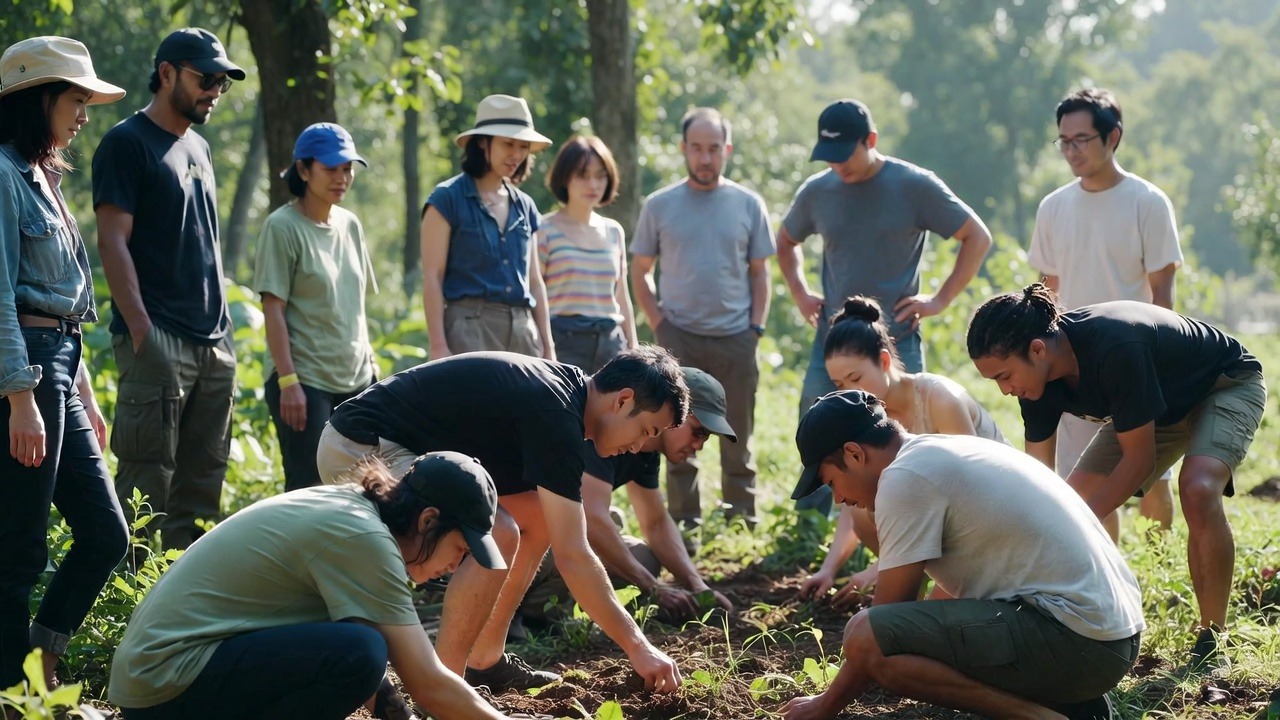
The first intentional gathering—be it a one-on-one coffee or a small group hike—is where the seeds of your tribe are planted. This is not the time for grand declarations or intense vulnerability dumps. Its purpose is more subtle and essential: to cultivate the soil. You are creating the conditions—the safety, the rapport, the shared experience—that will allow trust and deeper connection to take root naturally over time. A forced connection is like a seed planted in dry, compacted earth; it may sprout briefly but will struggle to thrive. A connection nurtured in fertile soil grows strong and resilient.
Designing a First Gathering for Fertile Soil:
Reading the Soil After Planting:
After the gathering, revisit your discernment practices.
A successful first gathering doesn't guarantee a lifelong friendship, but it does mean the soil is fertile. It means there's enough warmth, moisture (easy rapport), and good composition (shared values/vibes) to warrant planting another seed—a second invitation.
Remember, you are not just evaluating them; they are evaluating the dynamic with you. By creating a warm, respectful, and curious container for your first meetings, you are not only assessing a potential tribe member, you are demonstrating what it would be like to be in a tribe with you. You are modeling the very peace-oriented connection you seek to build. This approach to intentional living and connection is at the heart of what we believe at Oxyzen, a philosophy you can learn more about in our about us section.
The first few gatherings after an initial spark are the most delicate phase. You've planted seeds in fertile soil, and now tiny green shoots of connection have emerged. This is not the time to stomp around the garden demanding rapid growth or heavy fruit. It is the time for gentle, attentive nurturing—providing consistent care without overwhelming the fledgling relationship. Many potential tribe connections fade here, not from dislike, but from neglect or mismatched expectations about the pace of intimacy.
Deepening a connection is an art that respects the natural, organic rhythm of trust-building. It cannot be rushed, but it can be thoughtfully encouraged.
Principles for Nurturing New Tribe Connections:
What to Avoid During the Nurturing Phase:
Nurturing these connections requires patience and presence. It's about showing up, time and again, with warmth and authenticity, and allowing the bond to thicken at its own natural pace. As these individual connections deepen and potentially begin to intertwine, you will slowly feel the first, fragile architecture of your tribe taking shape—a network of mutual care and understanding that promises, with continued gentle nurture, to become a enduring sanctuary of peace. For stories of how others have built such supportive networks, you can read through our collection of testimonials.
A tribe is not just for special occasions or scheduled "friend dates." The ultimate sign of a mature, healthy peace-oriented tribe is its seamless integration into the fabric of your daily life. It becomes less of a destination you visit and more of a background atmosphere you inhabit—a reliable, supportive presence that influences your everyday choices, comforts your minor struggles, and celebrates your small joys. This integration is what transforms a social circle from a pleasant addition into a fundamental pillar of your well-being.
Integration means the tribe's values and support become operational in your real world, not confined to a weekly meeting.
What Integrated Tribal Support Looks Like in Practice:
How to Facilitate Integration:
When your tribe is integrated, peace is no longer a solo practice you report on, but a lived experience you are constantly co-creating. The boundary between "my peace" and "our peace" softens. Your tribe's support becomes like the air—not always consciously noted, but essential and always present. This is the stage where the community truly becomes a peace ecosystem, a self-sustaining network of mutual nourishment that makes peaceful living not just an aspiration, but your default, daily reality. To see how our community fosters this kind of integrated support, feel free to explore our story for deeper insights.
Your Trusted Sleep Advocate (Sleep Foundation — https://www.sleepfoundation.org/)
Discover a digital archive of scholarly articles (NIH — https://www.ncbi.nlm.nih.gov/
39 million citations for biomedical literature (PubMed — https://pubmed.ncbi.nlm.nih.gov/)
experts at Harvard Health Publishing covering a variety of health topics — https://www.health.harvard.edu/blog/)
Every life deserves world class care (Cleveland Clinic -
https://my.clevelandclinic.org/health)
Wearable technology and the future of predictive health monitoring. (MIT Technology Review — https://www.technologyreview.com/)
Dedicated to the well-being of all people and guided by science (World Health Organization — https://www.who.int/news-room/)
Psychological science and knowledge to benefit society and improve lives. (APA — https://www.apa.org/monitor/)
Cutting-edge insights on human longevity and peak performance
(Lifespan Research — https://www.lifespan.io/)
Global authority on exercise physiology, sports performance, and human recovery
(American College of Sports Medicine — https://www.acsm.org/)
Neuroscience-driven guidance for better focus, sleep, and mental clarity
(Stanford Human Performance Lab — https://humanperformance.stanford.edu/)
Evidence-based psychology and mind–body wellness resources
(Mayo Clinic — https://www.mayoclinic.org/healthy-lifestyle/)
Data-backed research on emotional wellbeing, stress biology, and resilience
(American Institute of Stress — https://www.stress.org/)


