


The Personal Health Insights That Guide Lifestyle Changes
Personal insights that guide long-term lifestyle changes.
Personal insights that guide long-term lifestyle changes.
%402x.svg)
For decades, the pursuit of better health has been shrouded in a fog of generalities. We’re told to “eat better,” “sleep more,” “stress less,” and “exercise regularly.” While the intentions are good, this advice is fundamentally flawed. It’s impersonal, often demotivating, and fails to account for the unique, complex biological symphony that is you. What if "sleep more" for you specifically means prioritizing deep sleep over total hours? What if "stress less" for your body means managing a specific pattern of nighttime cortisol spikes you didn’t even know you had?
We stand at the precipice of a new era in personal wellness, moving from generic prescriptions to precise, personal health insights. This transformation is powered not by willpower alone, but by data—specifically, the kind of continuous, intimate biometric data that was once confined to clinical labs. Now, this power rests quietly on your finger. Advanced wearable technology, like the smart ring, has become the key that unlocks a deeply personalized understanding of how you live, sleep, and recover. It translates the silent language of your physiology—your heart’s subtle rhythms, your body’s temperature waves, your nervous system’s quiet whispers—into a clear, actionable narrative.
This article is your guide to navigating this new landscape. We will explore the ten most powerful personal health insights that modern technology can reveal, and more importantly, how these insights can rationally and effectively guide lasting lifestyle changes. This is not about chasing arbitrary metrics; it’s about listening to your body’s unique story and finally having the context to write a better next chapter. For those ready to begin this journey, the story starts with understanding the tools that make it possible, which you can learn more about smart ring technology at Oxyzen.ai.

We’ve all been there. You wake up feeling drained after eight hours in bed. You push through a workout feeling sluggish, assuming you’re just "off." You feel anxious for no apparent reason. Our traditional method for diagnosing these states? Guessing. We blame the coffee, the cheese, the long day, or a lack of willpower. This guessing game is exhausting and ineffective because it operates on correlation, not causation. You think you slept poorly, but you don’t know which stage was disrupted. You feel stressed, but you can’t quantify its physiological footprint on your body.
The shift to a data-driven understanding of the self marks the end of the guesswork era. It replaces "I feel tired" with "my resting heart rate is 8 bpm higher than my baseline and my heart rate variability (HRV) dropped significantly last night, indicating my nervous system is strained." This is a profound upgrade in personal awareness. It’s the difference between looking at a blurry photograph and examining a high-resolution MRI of your daily habits.
This data becomes meaningful through the process of biometric benchmarking. First, you establish your personal baseline across key metrics—your average resting heart rate, your typical HRV, your normal sleep architecture. Once this baseline is known, deviations become powerful signals. That elevated resting heart rate might signal impending illness, dehydration, or incomplete recovery. That dip in HRV could pinpoint a specific stressor your conscious mind had overlooked. The insight lies not in a single data point, but in the trends and patterns that emerge over time, painting a picture of your body’s response to your lifestyle.
The catalyst for this revolution is wearable technology that can gather clinical-grade data in a passive, unobtrusive way. While wrist-worn devices have been pioneers, the smart ring represents a significant evolution. Worn on the finger—a vascular-rich part of the body—it can provide remarkably accurate, continuous readings of heart rate, HRV, skin temperature, and blood oxygen saturation during both day and night. Its form factor also makes it the ideal device for 24/7 wear, especially during sleep, offering an unparalleled window into the critical recovery period. To see how real users have translated this data into life changes, the experiences shared in our user testimonials are telling.
The ultimate goal is not to become obsessed with numbers, but to cultivate informed intuition. Data provides the objective feedback your subjective feelings lack. Over time, you begin to trust the data, and the data helps you better trust and interpret your own body’s signals. You move from guessing to knowing, and from knowing, you can begin to make truly informed, impactful change.
If you were to describe your sleep as a building, its quality wouldn’t be determined by its length alone, but by its architecture. A quick, shoddy shack built in eight hours is not the same as a well-structured, resilient cathedral built in the same time. Sleep architecture refers to the cyclical pattern of sleep stages we move through each night: light sleep (N1 & N2), deep sleep (N3, or Slow-Wave Sleep), and REM (Rapid Eye Movement) sleep. Each stage serves a distinct, non-negotiable purpose. Deep sleep is physical restoration—tissue repair, immune strengthening, and cellular cleanup. REM sleep is mental and emotional restoration—memory consolidation, learning integration, and emotional processing.
A personal health insight of monumental importance is understanding your own unique sleep architecture. A smart ring doesn’t just tell you you slept for 7.5 hours; it reveals how those hours were apportioned. This is where life-changing insights emerge. You may discover:
With this architectural blueprint in hand, you can move beyond “sleep more” to targeted interventions. If deep sleep is your issue, strategies might include:
If REM sleep is fragmented, focus might shift to:
This insight transforms sleep from a black box of rest into a managed, optimized process for physical and mental renewal. It empowers you to tailor your evening routine and daily habits to build the specific type of sleep your body needs most. For a deeper exploration of sleep optimization techniques, our blog offers a wealth of related articles and research.

If you had to choose one metric as the single most telling indicator of your overall physiological resilience and readiness, Heart Rate Variability (HRV) would be a prime candidate. Despite its name, HRV has nothing to do with how fast your heart beats. Instead, it measures the subtle, millisecond variations in the time intervals between each heartbeat. A higher HRV generally indicates a healthy, responsive autonomic nervous system (ANS)—your body can efficiently switch between sympathetic (stress, "fight or flight") and parasympathetic (recovery, "rest and digest") states. A low or dropping HRV suggests your system is under strain, struggling to recover, or potentially fighting off illness.
For the wellness-seeker, HRV is a game-changing insight because it is your body’s unfiltered, honest communication channel. Your mind can rationalize stress or ignore fatigue, but your ANS cannot lie. Tracking your HRV—particularly your nighttime average, which is the cleanest measure—provides a daily readiness score.
The actionable insight comes from observing trends and connecting them to lifestyle inputs:
Guiding lifestyle changes with HRV is a practice in respectful listening. On a morning when your HRV is significantly lower than your baseline, it’s a clear signal from your body to prioritize recovery. This might mean:
Conversely, a strong HRV score gives you the green light to push intensity in a workout or tackle demanding cognitive tasks. Using HRV in this way prevents the common pitfall of blindly following a pre-written training plan on a day your body is screaming for rest, thereby reducing injury risk and burnout. It cultivates a dynamic, responsive relationship with your own capacity. If the science behind this fascinates you, we invite you to discover how Oxyzen works to capture this critical metric.
Your Resting Heart Rate (RHR)—the number of times your heart beats per minute while you are completely at rest—is a deceptively simple metric with profound implications. For a healthy adult, a typical RHR ranges from 60 to 100 bpm, but fit individuals often see rates in the 50s or even 40s. A lower RHR generally indicates more efficient heart function and better cardiovascular fitness. But the true power of RHR as a personal health insight lies not in its static value, but in its trends and deviations.
Think of your RHR as a silent sentinel, standing watch over your systemic health. It reacts to almost everything: fitness, hydration, stress, illness, hormones, and sleep quality. By tracking it over time, you can spot meaningful patterns:
This insight allows for incredibly proactive lifestyle management. Noticing a sustained elevation in your RHR, you might:
Furthermore, observing how your RHR responds to specific lifestyle changes provides direct feedback. Did starting a meditation practice nudge your RHR down a few points? Did a week of poor diet choices push it up? This turns RHR from a mere number into a conversation with your cardiovascular system, guiding you toward habits that keep your sentinel calm and steady. Understanding these physiological nuances is part of the vision and values behind our technology.

Most of us only think about body temperature when we suspect a fever. However, your core body temperature is not a static number; it is a dynamic, circadian wave that plays a fundamental role in regulating sleep, metabolism, and even hormonal health. A healthy body temperature follows a predictable rhythm: it is lowest in the early morning hours (around 4-5 AM), begins to rise upon waking to promote alertness, peaks in the late afternoon or early evening, and then declines in the hours before bedtime to initiate sleep. This cooling-off period is a crucial signal for the release of melatonin, the sleep hormone.
Advanced wearables can track this subtle circadian rhythm through skin temperature sensors. The insight gained here is twofold:
Guiding lifestyle changes with temperature data involves syncing your habits with your biological rhythm:
This insight moves temperature from a sign of sickness to a master guide for daily energy management and hormonal harmony. For more on harnessing data for women’s health, our blog features dedicated resources.
Of the four primary vital signs—heart rate, blood pressure, temperature, and respiratory rate—the last is most often overlooked in daily health tracking. Yet, your respiratory rate (the number of breaths you take per minute) is a profoundly informative metric, especially when tracked continuously. A typical resting respiratory rate for an adult is 12-20 breaths per minute. Like RHR and HRV, deviations from your personal norm can be highly revealing.
Your breathing is a direct bridge between your voluntary nervous system and your involuntary (autonomic) state. During the day, a consistently elevated respiratory rate can be a subtle sign of anxiety, stress, or physical exertion. But it is during sleep that respiratory rate offers its most crucial insights:
Lifestyle changes guided by respiratory rate awareness often center on breathwork and stress management. If you notice your daytime rate is chronically high, it’s a tangible cue to integrate practices like:
By paying attention to this overlooked vital sign, you gain a direct lever to influence your nervous system state, improving both daytime calm and nighttime restoration. If you have questions about how wearables track this metric, our FAQ section provides detailed support.
In the pursuit of fitness, more is not always better. The true secret to progress lies in the balance between stress (activity/strain) and recovery. Without data, this balance is a blind guess. Personal health technology solves this by quantifying your daily activity and physiological strain, allowing you to intelligently modulate your output.
Activity is the simple measure of movement—steps, calories burned, active minutes. Physiological Strain (sometimes called a "strain" or "stress" score) is a more sophisticated metric. It calculates the cumulative impact of your day’s activities on your body by analyzing how much and for how long your heart rate deviates from your resting baseline. A gentle walk and a high-intensity interval training (HIIT) session might burn similar calories, but their strain scores will be vastly different.
The insight comes from correlating this daily strain with your recovery metrics (HRV, RHR, sleep quality). This creates a feedback loop:
Guiding your lifestyle with this insight means moving from a fixed schedule (e.g., "I must work out 6 days a week") to a flexible, responsive one. You learn to:
This data-driven approach fosters sustainable progress, prevents burnout, and teaches you to respect the delicate dance between effort and ease that underpins all lasting health gains. The journey to this kind of balanced awareness is at the heart of our company's mission.
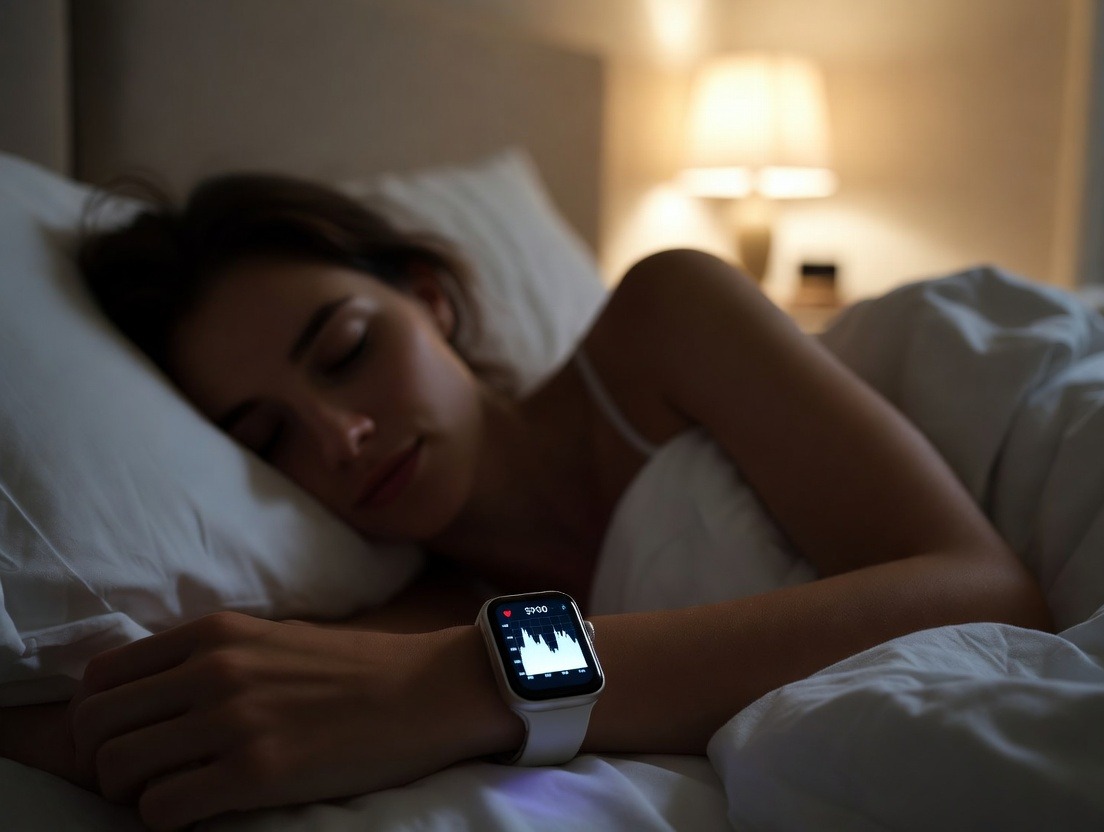
Blood oxygen saturation (SpO2) measures the percentage of hemoglobin in your blood that is carrying oxygen. A healthy individual typically maintains a level between 95% and 100% while awake. During sleep, it’s normal for SpO2 to dip slightly, but significant or frequent drops can be a critical indicator of compromised breathing and poor sleep quality.
For the individual focused on wellness, monitoring SpO2 during sleep is like having a nightly quality-assurance check on your respiratory system. The key insight isn't a single reading, but the identification of patterns of desaturation.
The lifestyle guidance from this insight is powerful and potentially life-saving. While a wearable cannot diagnose sleep apnea, it can provide the objective evidence needed to seek a professional sleep study. Beyond that, if you see mild, irregular dips, you can experiment with lifestyle adjustments:
This insight transforms your understanding of sleep from "time spent unconscious" to "oxygenation and restoration quality." It empowers you to protect not just the quantity of your sleep, but the fundamental physiological process that makes it restorative. For those curious about the technology enabling this, you can explore the capabilities of the Oxyzen smart ring.
Armed with a dashboard of personal biometrics, you graduate from a passive observer of your health to an active scientist of your own life. The most profound insights often come not from tracking alone, but from conducting deliberate n=1 lifestyle experiments. This is where you move from noticing correlations ("my sleep was bad") to establishing personal causation ("the glass of wine I had two hours before bed caused a 60% reduction in my deep sleep and a 5 bpm increase in my resting heart rate").
The process is simple yet powerful:
Examples of transformative experiments:
This framework turns wellness from a set of rigid, external rules into a personalized, curious exploration. It builds self-trust and eliminates dogma. You are no longer following a guru’s protocol; you are building your own evidence-based operating manual for your unique biology. This experimental mindset is a core principle we champion, detailed further in our blog's approach to personalized health.
Data points in isolation are interesting, but their true power is symphonic. The ultimate personal health insight is the integrated narrative that emerges when you view all these metrics together. A single night of poor sleep might be a fluke. But a night of poor sleep combined with a high resting heart rate, low HRV, and elevated respiratory rate tells a compelling story of a body under significant strain—perhaps fighting an illness. Conversely, a moderate sleep score with superb deep sleep, a strong HRV, and a low RHR tells a story of excellent recovery, even if total hours were less than ideal.
Learning to read this integrated dashboard is the final step in moving from data collection to wisdom. It involves asking holistic questions:
This integrated view allows you to make nuanced decisions. Perhaps you didn’t sleep long enough, but your HRV is superb. Maybe you can still have a productive, active day. Perhaps your sleep was long, but your SpO2 showed dips and your RHR is up. That’s a day for caution and recovery, not intensity.
Building this personal health narrative fosters a profound sense of agency. You are no longer at the mercy of mysterious energy swings or unexplained fatigue. You have a diagnostic framework. You understand the levers—sleep, nutrition, stress, activity—and you have a feedback system to know which ones to pull and when. This is the foundation of truly personalized, sustainable, and empowered wellness. It’s a journey of continuous discovery, and we are here to support it every step of the way—from our founding story to helping you find answers to your specific questions.
Data without action is merely trivia. The true value of personal health insights lies in their ability to catalyze meaningful, sustainable change. Yet, this is precisely where most people falter. Overwhelmed by data or motivated by short-term zeal, they attempt radical overhauls that are impossible to maintain. The bridge from insight to lasting action is built not on willpower, but on a strategic framework that respects human psychology and leverages the unique feedback loop your biometrics provide.
The first step is reframing the goal. Instead of "I will sleep 8 hours every night" (an outcome often outside your direct control), the goal becomes "I will start my wind-down routine at 9:30 PM and be in bed with lights out by 10:30 PM" (behaviors you can control). Your sleep data then provides the feedback on how well those behaviors are working. This shifts your identity from someone who "tries to sleep better" to someone who "prioritizes evening ritual."
This is where the concept of micro-habits converges powerfully with biometric feedback. A micro-habit is a behavior so small it requires minimal motivation to complete. For example:
Your personal health metrics become the objective scorecard for your habits, removing emotional judgment. You’re not "failing" at sleep; you're experimenting, and the data tells you what works. This process naturally leads to habit stacking—anchoring a new micro-habit to an existing one. "After I finish my evening breathwork (new), I will read a physical book for 15 minutes (existing)." Over time, these stacks build into robust, automatic routines that directly move your biometrics in the desired direction.
Perhaps the most powerful psychological tool here is compassionate curiosity. When the data shows a "bad" night—low HRV, high RHR—instead of self-criticism, you ask, "What can I learn?" You review the previous day: Was the workout too intense? Was there a difficult conversation? Did you eat too late? This inquiry, guided by data, turns setbacks into the most valuable learning experiences. It’s through these "failures" that you discover your true, non-negotiable boundaries for well-being. For more on building these supportive routines, our blog offers practical guides on habit formation.
We often treat the mind and body as separate entities, but personal biometrics offer irrefutable proof of their deep interconnection. Psychological states manifest physiologically, and physiological states directly influence psychology. This creates a powerful—and manageable—feedback loop.
Stress is not an abstract feeling; it is a measurable physiological event. When you experience anxiety, a work deadline, or social tension, your sympathetic nervous system activates. Your biometrics reflect this in real-time: your heart rate rises, your HRV drops, your respiratory rate may increase, and your skin temperature can fluctuate. The insight comes from seeing the duration and intensity of this physiological stress signature. Does your body calm down within an hour of the stressor? Or do your metrics remain dysregulated into the evening, sabotaging your sleep?
Conversely, recovery is also measurable. The state of your body directly shapes your mind. You can observe this clearly:
This insight allows you to manage your mental health through the body, and vice versa. For instance:
By tracking this mind-body loop, you learn to respect the physical underpinnings of mental performance. You stop blaming your "lack of discipline" on low-energy days and start supporting your biology to create the conditions for a clear, calm, and resilient mind. This holistic approach is central to the mission behind our technology at Oxyzen.
No area of wellness is more fraught with dogma and contradictory advice than nutrition. Paleo, Keto, Vegan, Mediterranean—each has ardent followers claiming universal truth. Personal biometrics cut through the noise by allowing you to conduct definitive *n=1* experiments. The question shifts from "What is the best diet?" to "What is the best diet for me,* as evidenced by my own body's response?"
The key metrics for nutritional experimentation are primarily nocturnal: Resting Heart Rate (RHR), Heart Rate Variability (HRV), Sleep Quality Score, and the balance of Sleep Stages. What you eat, and when you eat it, has a profound impact on your body's overnight repair processes.
Here’s how to run a clean experiment:
Common insights users discover:
This data-driven approach liberates you from dietary religion. It transforms nutrition from a set of restrictive rules into a curious exploration of nourishment. You become the expert on your own digestive and metabolic health, making choices based on internal evidence rather than external trends. Real user stories of these discoveries can be found in our collection of testimonials.
The traditional fitness model is based on generalized, pre-written programs: 12 weeks to build muscle, 8 weeks to cut fat, train 5 days a week. This one-size-fits-all approach ignores your body's daily readiness and unique recovery capacity. Biometric data enables a shift from rigid periodization to dynamic, daily personalization. Your training plan becomes a living document that adapts to you.
The cornerstone of this approach is the Daily Readiness Score. This is a composite metric (often provided by advanced algorithms) that synthesizes your overnight HRV, RHR, sleep quality, and temperature data into a single score or qualitative indicator (e.g., "Peak," "Good," "Recover," "Strain"). This score becomes your primary decision-making tool for daily activity.
A Personalized Fitness Decision Matrix:
Beyond daily decisions, trend data guides macro-cycles. If you see a gradual decline in your baseline HRV over several weeks despite maintaining "Recover" days, it may indicate you are in a state of cumulative fatigue and need a true deload week—a planned reduction in volume and intensity by 40-60%.
This methodology also helps identify your ideal workout timing. By reviewing your sleep data after morning versus evening workouts, you can determine which timing leads to better recovery for you. For some, evening exercise disrupts sleep; for others, it has no effect. The data provides your personal answer.
The result is a fitness practice that is both more effective and more sustainable. You train smarter, reduce injury risk, and achieve better results by aligning effort with your body’s actual capacity, not a calendar date. To dive deeper into training personalization, you can explore our blog's fitness resources.
Your body isn't designed to operate at the same capacity 24 hours a day. It runs on a finely tuned internal timetable—your circadian rhythm—that governs the ebb and flow of hormones, metabolism, cognitive function, and repair processes. Fighting this rhythm is a losing battle for health. Personal health insights, particularly body temperature and heart rate rhythms, allow you to identify your personal chronotype and align your life with your biology for effortless energy.
Your core body temperature rhythm is your primary circadian biomarker. As discussed, it peaks in the late afternoon and reaches its nadir in the early morning. The steepness and timing of this curve are personal. Are you a "lark" with an early temperature peak and drop? Or an "owl" with a later, more gradual rhythm?
By syncing your activities to your rhythm, you work with your biology:
Guiding lifestyle changes with chronobiology:
Living in sync with your chronotype reduces the friction in your day. Tasks feel easier because your biology is supporting them. This alignment is a powerful, yet often overlooked, pillar of sustained energy and health, a principle woven into the fabric of our product's design philosophy.
Your body is in constant conversation with its environment. The temperature of your bedroom, the light in your office, the noise level in your home—all these environmental inputs are translated into physiological signals. By pairing biometric feedback with environmental adjustments, you can engineer your personal biosphere for optimal health.
Sleep Environment as the Primary Lab:
Your sleep data provides direct feedback on your bedroom setup.
Daytime Environment for Performance:
The process is one of continuous refinement. You change one environmental variable, observe the biometric outcome, and adapt. This turns your home and workspace into a supportive ecosystem tailored to your unique physiological needs. For common questions on setting up an optimal environment, our FAQ section provides helpful guidance.
While daily and weekly data is crucial for immediate adjustments, the true testament to lifestyle change is visible in long-term trends. Zooming out to view 3, 6, or 12 months of data reveals the macro-story of your health journey, providing motivation and critical insight into what is—and isn’t—working over the long haul.
Key long-term trends to analyze:
This long-term view is the ultimate antidote to short-term frustration. A "bad" week disappears into the context of an upward-trending quarter. It provides objective proof of progress that the scale or the mirror might not show. Seeing your own baseline HRV graph climb over a year is a more powerful motivator than any external compliment.
Furthermore, this historical data becomes an invaluable health record. Sharing these long-term trends with a healthcare provider gives them a quantitative, continuous view of your physiology that is far more informative than a snapshot from an annual check-up. It can help identify patterns that precede migraines, predict cycles of energy, or highlight the efficacy of a new supplement or medication. This is the pinnacle of proactive, personalized health management. Sharing these longitudinal insights is a key part of the user experiences we see.
No health journey is a linear upward climb. Setbacks, plateaus, and periods of regression are inevitable. Without data, these phases can trigger discouragement and abandonment of healthy habits. With data, they become navigable terrain—part of the map, not a reason to quit.
Using Data to Decode a Setback:
When your metrics take a sudden turn for the worse (a period of consistently low HRV, poor sleep, high RHR), the data prompts a structured inquiry instead of panic.
The insight allows you to respond rationally: you grant yourself permission for extra recovery, you dial back other stressors, and you wait for the metrics to return to baseline before resuming intense activity. The data provides the reassurance that this is a temporary state, not a new normal.
Breaking Through Plateaus with Experimentation:
A plateau—a long period of stagnant metrics despite consistent habits—is a signal that your body has adapted to your current routine. It’s an invitation to innovate.
In both cases, the data provides the before-and-after comparison. You become a skilled navigator, using the compass of your biometrics to steer through calm and stormy periods alike, always moving toward your true north of sustainable well-being.
As we embrace this powerful world of self-quantification, a crucial final insight must be addressed: the ethical and balanced use of personal data. The goal is insight, not obsession. The data should serve you, not the other way around. Healthy engagement with your biometrics requires mindful boundaries.
Principles for Balanced Bio-Tracking:
When used wisely, personal health data is a lens that brings the blurry picture of your health into sharp focus. It is a tool for empowerment, self-knowledge, and compassionate self-management. It marks the end of flying blind and the beginning of flying with a detailed, personalized navigational chart for the journey of your life.
We’ve explored individual insights—sleep, HRV, RHR, temperature, activity. But wisdom emerges when these streams converge into a single, flowing river of understanding. The final, and most advanced, personal health insight is the ability to see yourself as an integrated system, where a change in one input creates a cascade of effects across all outputs. Building your own mental model of this system—your Personal Health Dashboard—is the key to masterful self-management.
Think of it as the cockpit of your life. You don’t stare at a single gauge; you scan the entire instrument panel to make a safe flight decision. Your integrated dashboard includes:
The power lies in the interconnections. A hard workout (high Strain) should, in a healthy system, be followed by increased Deep Sleep that night and a corresponding rise in HRV over the following days—a positive adaptive response. If instead, that hard workout is followed by poor sleep and a plummeting HRV, the system is telling you the stress was too great for your current recovery capacity. You then know to adjust the input (reduce workout intensity) until the system responds positively.
Guiding your lifestyle with this systemic view means you stop optimizing for single metrics. You’re not just “chasing a higher HRV” by being sedentary; you’re seeking the dynamic balance where appropriate stress leads to supercompensation. You learn the lag times in your system—how long it takes for a dietary change to reflect in your skin temperature, or for a new meditation habit to show in your HRV trend.
This holistic awareness fosters true body literacy. A headache is no longer an isolated event; you can check your dashboard and see it occurred on a day following poor hydration (elevated RHR), broken sleep (low deep sleep), and high work stress (high strain score). You address the system, not just the symptom. For those building their own dashboard, our blog offers integrative frameworks and case studies.
Human beings are not islands; we are wired for connection. Emerging research and data from wearables reveal a fascinating phenomenon: physiological synchrony. Close couples, parents and infants, even team members in flow states can experience aligned heart rates, respiration, and HRV patterns. This points to a profound insight: our social interactions are not just psychological events; they are measurable biological exchanges that directly impact our personal health metrics.
Your biometrics can become a sensitive barometer for the quality of your connections:
Lifestyle guidance from social biometrics:
Recognizing that social health is inextricably linked to physiological health elevates the importance of community, love, and belonging from "soft" life factors to core, non-negotiable pillars of a healthy lifestyle. It guides you to invest in relationships that are truly restorative, creating a virtuous cycle where good connections promote good health, which in turn enables you to be a better partner, friend, and community member. This human-centric focus is a cornerstone of our company's story and vision.
Today, we use personal health data primarily for reflection and real-time adjustment. But the horizon holds an even more transformative possibility: predictive and preventative insights. By applying machine learning to long-term, multimodal biometric data, the future of these tools lies in alerting us to deviations before we feel symptoms, guiding us toward true preventative health.
The concept is based on detecting subtle, subclinical patterns that precede larger health events:
This shifts the paradigm from reactive healthcare ("I feel sick, I go to the doctor") to proactive health stewardship ("My data shows a risk pattern, I will adjust my lifestyle to avert it"). The lifestyle guidance becomes pre-emptive and hyper-personalized.
To prepare for this future, the most important action is consistent tracking now. Building a rich, long-term biometric history is the training data for these future algorithms. The more high-quality data you have—through devices like a smart ring that captures continuous, clinical-grade signals—the more accurate and personalized the predictive models for you will become. This isn't about surveillance; it's about building a detailed map of your unique biological terrain so you can navigate it safely for decades to come. We are committed to being at the forefront of this ethical, user-centric future, which you can learn more about at Oxyzen.ai.
A smart ring or any wearable is a powerful tool, but it is not the totality of wellness. The ultimate goal is to internalize the insights so deeply that they inform a holistic, intuitive way of living. The device becomes a periodic check-in, like a compass, while you learn to navigate by the stars of your own heightened awareness.
This integration happens in layers:
Lifestyle changes guided by wisdom look less like rigid protocols and more like a flowing, responsive dance. It means:
In this stage, the technology has served its highest purpose: it has educated your intuition. You have become the expert on you. For ongoing support and community as you navigate this journey, resources and shared experiences are always available on our blog and support channels.
We began this exploration confronting the frustration of generic health advice. We end it with a radically different proposition: that you possess, or can readily access, the keys to understanding your body's unique language. The journey from vague guessing to precise knowing is paved with personal health insights—the subtle, continuous story told by your heart, your breath, your temperature, and your sleep.
These insights—from the architecture of your sleep to the rhythm of your heart, from the impact of your meals to the echo of your conversations—are not mere data points. They are the chapters of a deeply personal narrative. A narrative that explains why you feel invincible on some days and drained on others. A narrative that reveals the hidden costs of habits and the tangible benefits of positive change. Most importantly, it is a narrative that empowers you to become the author of the next chapter.
This is not about achieving perfect numbers. It is about progress, understanding, and agency. It is about replacing anxiety with curiosity, and judgment with compassion. It is about making lifestyle changes that are not based on fleeting trends or external pressures, but on the incontrovertible, personal evidence of what makes you feel and function at your best.
The tools exist. The science is robust. The path is now clear. It begins with listening. It progresses with experimenting. It culminates in the confidence that comes from truly knowing yourself, guided by the most reliable source imaginable: your own body, finally able to speak to you in a language you can understand. Your transformation awaits, not in a preset plan, but in the personal health insights you are now equipped to discover and honor.
Your Trusted Sleep Advocate: Sleep Foundation — https://www.sleepfoundation.org
Discover a digital archive of scholarly articles: NIH — https://www.ncbi.nlm.nih.gov/
39 million citations for biomedical literature :PubMed — https://pubmed.ncbi.nlm.nih.gov/
Experts at Harvard Health Publishing covering a variety of health topics — https://www.health.harvard.edu/blog/
Every life deserves world class care :Cleveland Clinic - https://my.clevelandclinic.org/health
Wearable technology and the future of predictive health monitoring :MIT Technology Review — https://www.technologyreview.com/
Dedicated to the well-being of all people and guided by science :World Health Organization — https://www.who.int/news-room/
Psychological science and knowledge to benefit society and improve lives. :APA — https://www.apa.org/monitor/
Cutting-edge insights on human longevity and peak performance:
Lifespan Research — https://www.lifespan.io/
Global authority on exercise physiology, sports performance, and human recovery:
American College of Sports Medicine — https://www.acsm.org/
Neuroscience-driven guidance for better focus, sleep, and mental clarity:
Stanford Human Performance Lab — https://humanperformance.stanford.edu/
Evidence-based psychology and mind–body wellness resources:
Mayo Clinic — https://www.mayoclinic.org/healthy-lifestyle/
Data-backed research on emotional wellbeing, stress biology, and resilience:
American Institute of Stress — https://www.stress.org/


