


Quick Sleep Improvement Strategies You Can Start Tonight
Quick wins include ensuring a cool, dark bedroom, implementing a digital curfew, and practicing a brief breathing exercise before bed.
Quick wins include ensuring a cool, dark bedroom, implementing a digital curfew, and practicing a brief breathing exercise before bed.
%402x.svg)
You’re exhausted. The day was a marathon of deadlines, notifications, and mental load. Now, it’s finally time for the reward you’ve been craving all day: sleep. You climb into bed, close your eyes, and… nothing. Your mind switches from a calm stream to a raging torrent of tomorrow’s to-do list, that awkward thing you said in 2017, and a sudden, urgent analysis of global geopolitics. The clock ticks. The precious hours of potential rest slip away, replaced by a familiar, frustrating anxiety about the very act of sleeping itself.
This isn’t just an inconvenience. Poor sleep is a silent tax on every aspect of your life. It dulls your focus, saps your energy, weakens your immune system, and hijacks your mood. We’ve been conditioned to believe that chronic sleeplessness is the inevitable cost of modern life—a badge of honor for the busy. But what if that’s a myth? What if you could engineer your environment, your habits, and your physiology to fall asleep faster and sleep more deeply, starting literally tonight?
The science of sleep has exploded in recent years, moving far beyond vague advice like “count sheep.” We now understand sleep as a complex, biological process governed by circadian rhythms, sleep pressure, and the intricate dance of hormones like melatonin and cortisol. This isn’t about willpower; it’s about creating the right conditions for a biological certainty.
This guide is your blueprint. We’re going to move beyond theory and into immediate, actionable strategy. Each section that follows is a pillar of sleep hygiene, rooted in neuroscience and behavioral psychology, designed to be implemented without spending a fortune or upending your life. From mastering your light environment to hacking your body’s temperature for sleep, from dietary tweaks you can make at dinner to a 10-minute breathwork sequence—these are the tools.
And in our modern world, knowledge isn’t just power; it’s personal. This is where technology like the Oxyzen smart ring transforms the game. It’s one thing to try a new sleep strategy; it’s another to see its direct, quantifiable impact on your heart rate variability, blood oxygen saturation, and sleep stages. It turns guesswork into a guided, personalized experiment in your own well-being. Think of this article as your playbook, and a device like Oxyzen as your personal sleep coach, providing the feedback loop to know what’s truly working for you.
Ready to reclaim your nights and revolutionize your days? Let’s begin.
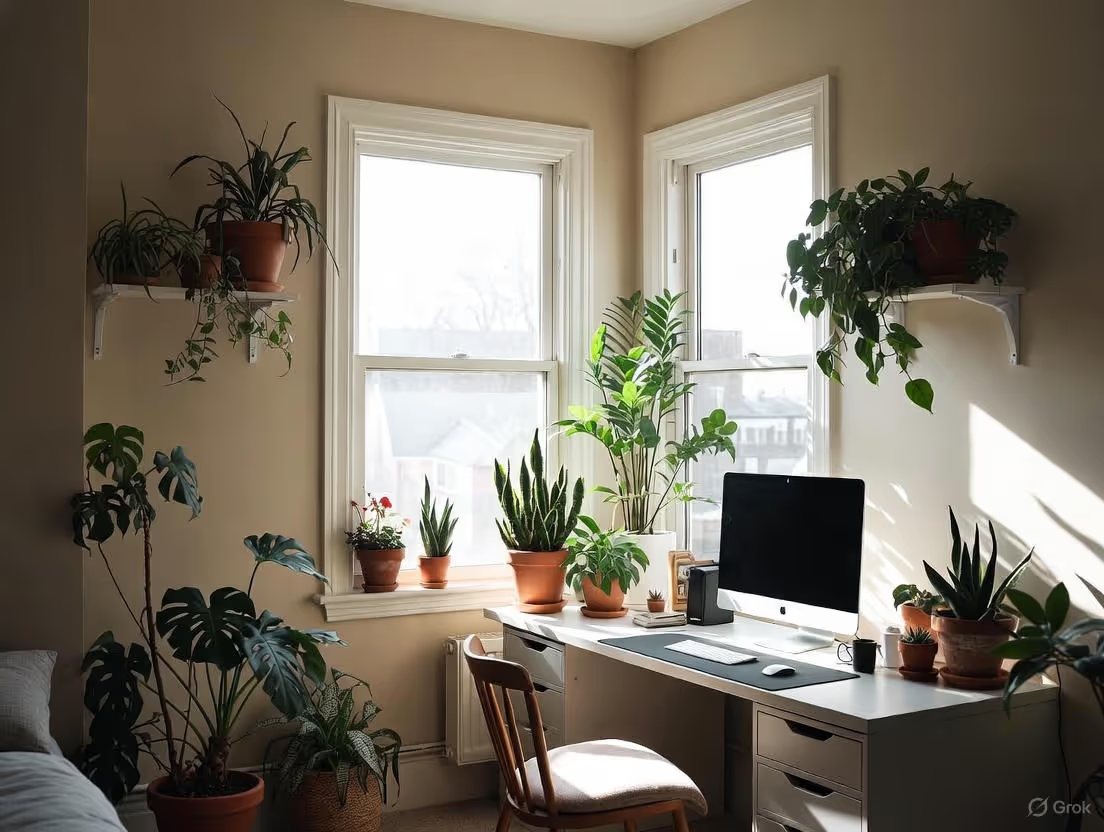
Light is not just for vision; it’s the primary conductor of your body’s internal orchestra—your circadian rhythm. This 24-hour biological clock, housed in a tiny region of your brain called the suprachiasmatic nucleus, uses light cues to synchronize everything from hormone release to body temperature. Get the light wrong, and the entire symphony falls out of tune, with sleep as the first casualty.
When specific wavelengths of light (particularly blue light) hit photoreceptors in your eyes, they send a direct signal to your brain’s master clock: “It’s daytime.” This signal suppresses the production of melatonin, the hormone that whispers to your body, “It’s time to wind down.” Conversely, darkness allows melatonin levels to rise naturally, promoting drowsiness and preparing your systems for rest.
The problem? Our world is flooded with artificial light long after the sun sets. The glow from laptops, smartphones, tablets, and LEDs acts as a perpetual fake sunrise, tricking your brain into a state of alertness. A seminal study from Harvard researchers found that blue light exposure in the evening suppressed melatonin for twice as long as green light and shifted circadian rhythms by a full three hours.

The goal is not to live in darkness, but to create a gradual, intentional “light sunset” that mimics the natural transition from day to night.
From 90 Minutes Before Bed:
The Amber Glass Advantage: For the truly dedicated, consider amber-tinted glasses that block 100% of blue and green light. Worn for the last 90 minutes of your evening, they are a powerful, physical barrier against light pollution, allowing your natural melatonin production to proceed unimpeded.
Just as avoiding evening light is crucial, seeking bright morning light is equally important. Exposure to natural sunlight within 30-60 minutes of waking anchors your circadian rhythm, reinforcing a powerful “daytime” signal that will pay dividends with a stronger “nighttime” signal 16 hours later.
Action Step: Tomorrow morning, have your coffee by a sunny window, take a 10-minute walk outside, or at the very least, open your blinds wide immediately upon waking. This simple habit boosts daytime alertness and builds sleep pressure more effectively for the night ahead.
Understanding and controlling your light environment is the single most effective lever you can pull for sleep improvement. It requires no special equipment, just intentionality. For a deeper dive into how different environmental factors impact your physiology, explore our blog for more wellness tips that connect the dots between your habits and your health data.
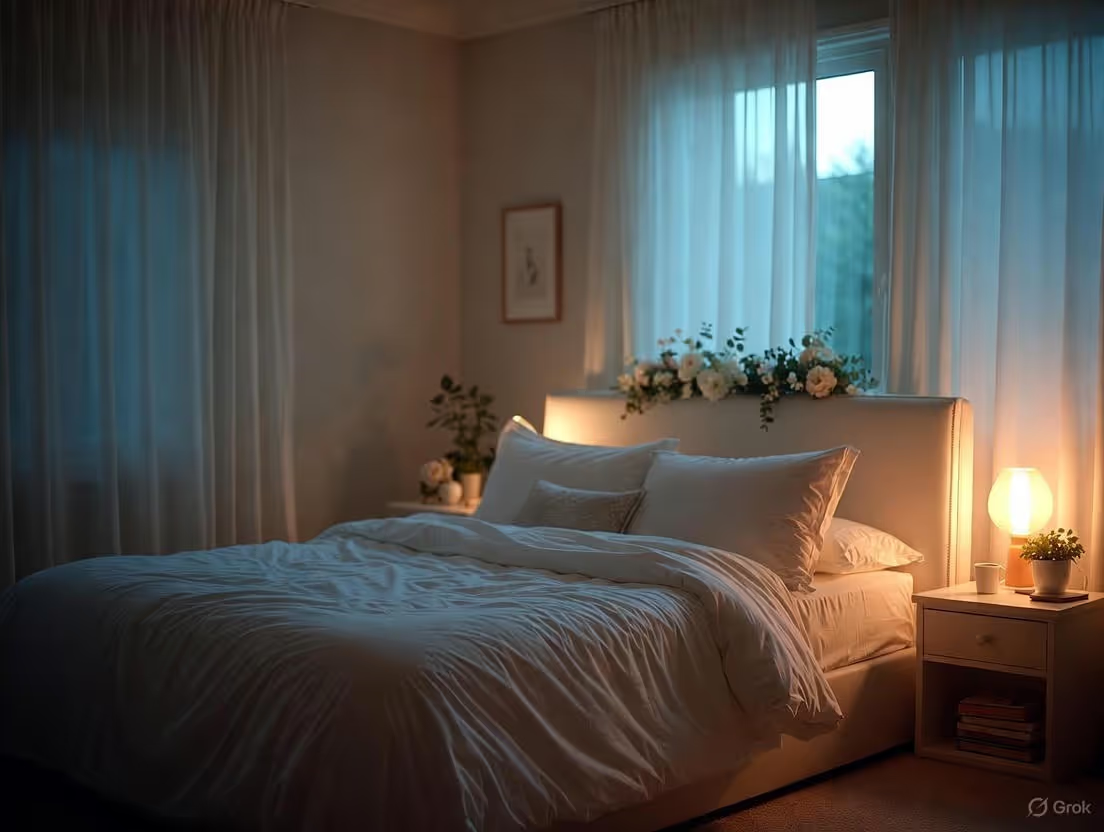
If light is the conductor of your sleep orchestra, then temperature is the stage manager, silently setting the scene for the performance to begin. Your body’s core temperature isn’t static; it follows a circadian rhythm of its own. To initiate sleep, your body needs to drop its core temperature by about 1-2 degrees Fahrenheit (0.5-1 degree Celsius). This drop is a signal, not a side effect. It’s a biological requirement for sleep onset and progression into the deep, restorative stages.
As evening approaches and melatonin begins to rise, blood flow is directed away from your core and towards your extremities (hands and feet). This acts as a heat-dumping mechanism, releasing inner heat to cool the core. This is why you might have cold feet before bed—it’s actually a sign your body is preparing for sleep. If your core temperature remains too high, your brain receives conflicting signals, leading to restlessness, prolonged sleep latency (time to fall asleep), and fragmented sleep.
You can actively facilitate this cooling process. Think of it as helping your body hit its temperature target.
1. Optimize Your Bedroom Climate: The sweet spot for ambient bedroom temperature is between 60-67°F (15.5-19.5°C). This range is cool enough to facilitate core cooling without being so cold it causes shivering (which is thermogenic and wakes you up). A programmable thermostat is an invaluable sleep tool.
2. The Pre-Sleep Warm-Up to Cool-Down Paradox: A warm bath or shower 60-90 minutes before bed is a powerful hack. It might seem counterintuitive, but warming your skin’s surface through immersion draws blood to the surface. When you step out, the rapid heat loss through evaporation significantly accelerates the drop in core temperature, sending a strong “sleep now” signal to your brain.
3. Bedding and Apparel Strategy: Ditch the heavy flannel pajamas and thick comforters if you struggle with sleep. Opt for breathable, moisture-wicking fabrics like cotton, bamboo, or technical performance fabrics for sleepwear. Your bedding should be layers you can adjust. Consider a mattress pad or bedding specifically designed for temperature regulation.
The Ice Pack Hack: For a quick, localized intervention, try placing a cold pack or a damp washcloth cooled in the fridge on pulse points like your wrists, neck, or the soles of your feet for 10-15 minutes before bed. This can help jump-start the cooling process.
This isn’t just about feeling subjectively cooler. The real-time data from a wearable like the Oxyzen smart ring can vividly illustrate the connection. You might observe that on nights you took a warm bath, your device recorded a faster reduction in nighttime heart rate and an earlier onset of deep sleep. This tangible feedback turns an abstract tip into a validated personal strategy. To see how users leverage this data to optimize their routines, you can read real customer reviews and user experiences on our site.
By intentionally managing your thermal environment, you are working with your biology, not against it. A cool body is a sleeping body.

In our always-on culture, we often attempt a jarring, impossible transition: from high-stimulus activity (scrolling news, answering work emails, watching an intense thriller) directly into the quiet vulnerability of sleep. It’s like slamming on the brakes at 70 miles per hour and expecting the car to stop instantly. Your mind and nervous system need a runway—a deliberate “buffer zone” to decelerate from the arousal of the day into the calm required for sleep.
A consistent wind-down ritual serves two critical neurological functions:
Your ritual should be a drop in stimulation, not an addition to it. It should be enjoyable, not a chore. Here is a sample framework you can customize:
Minutes 1-15: The Digital Sunset & Physical Tidy
Minutes 16-30: Gentle Physical Deactivation
Minutes 31-45: Mental & Sensory Calming
The specific activities matter less than the consistency. Performing the same sequence, in the same order, at roughly the same time each night builds a robust neurological pathway to sleep. This ritual is your bridge. For more ideas on creating holistic wellness routines that stick, discover our complete guide and other resources dedicated to building sustainable habits.
Stop trying to jump the canyon between wakefulness and sleep. Build the bridge, and walk calmly across it every night.
When anxiety spirals or a racing mind keeps you awake, telling yourself to “just relax” is often futile. The conscious mind is a poor manager of an overstimulated nervous system. But you can bypass the mind and speak directly to your body’s primal control centers through one thing you always have with you: your breath.
Breathing is unique—it’s an automatic function that we can also consciously control. By deliberately changing our breathing pattern, we send direct signals via the vagus nerve to the brainstem, instructing it to downshift from a state of high alert (sympathetic) to a state of calm and restoration (parasympathetic). This isn’t spiritual speculation; it’s hard-wired physiology called “cardiorespiratory coherence.”
Popularized by Dr. Andrew Weil, this technique is remarkably simple and effective for inducing sleepiness. It acts as a natural tranquilizer for the nervous system.
How to Do It:
Why It Works: The extended exhale (twice as long as the inhale) is key. It stimulates the vagus nerve, which controls the relaxation response, slowing heart rate and promoting a sense of calm. The specific counts force your mind to focus on the numbers, crowding out anxious thoughts.
If 4-7-8 feels too complex at first, Box Breathing (or Square Breathing) is a superb, simple alternative to equalize your nervous system.
How to Do It:
Don’t wait until you’re in a panic at 2 a.m. to try this. Integrate breathwork into your wind-down ritual. Dedicate the last 5-10 minutes in bed, after lights out, to practicing one of these techniques. It gives your mind a single, simple point of focus and actively lowers your physiological arousal.
Seeing the Impact: This is another area where a smart wearable shines. Practicing 4-7-8 breathing and then watching in real-time as your heart rate visibly drops and your Heart Rate Variability (HRV) increases on an app connected to your Oxyzen ring provides incredible positive reinforcement. It transforms an internal feeling into an external, validated result. If you have questions about how wearables track these physiological markers, our FAQ and support page offers detailed explanations.
Your breath is a remote control for your nervous system. Learn the buttons, and you can switch your state from “alert” to “asleep” on command.
You are not just what you eat; you sleep how you eat. The timing, composition, and quantity of your evening meal and subsequent snacks play a dramatic role in your ability to fall and stay asleep. Food influences sleep through multiple pathways: digestive load, blood sugar stability, and the availability of key sleep-promoting amino acids.
1. The Timing Rule: Finish Your Last Major Meal 3+ Hours Before Bed.
Digestion is an active, energy-consuming process. Lying down with a full stomach can lead to discomfort, acid reflux, and a core body temperature that remains elevated from metabolic heat production. Giving your body a 3-hour window allows for significant digestion to occur while you’re still upright, clearing the way for undisturbed sleep.
2. The Composition Rule: Balance Macronutrients and Choose Sleep-Promoting Foods.
3. The Substance Rule: Limit Sleep Disruptors.
If you find yourself genuinely hungry close to bed, a small, purposeful snack is better than lying awake with a growling stomach. The ideal snack combines a little complex carbohydrate with a little protein or healthy fat.
Examples:
Dietary impact is highly individual. You might find that a specific food touted as “sleep-promoting” doesn’t work for you, or that your sensitivity to caffeine is greater than average. By tracking your food timing and comparing it to objective sleep metrics from a device like Oxyzen, you move from following general rules to establishing your personal nutrition-for-sleep blueprint. This journey of self-discovery is part of our broader vision and values around personalized, data-informed wellness.
Treat your evening meal not just as sustenance, but as a strategic input for the night’s restoration process.
Your bedroom should have one primary function: sleep (and intimacy). It should be a sanctuary designed for restoration, not a multi-purpose entertainment center, home office, or dining room. Every sensory element in the room—sight, sound, touch, and smell—should be curated to promote calm and signal safety to your primal brain.
1. Sight (Beyond Light): The Psychology of Visual Calm
2. Sound: Mastering the Soundscape
Total silence can be unnerving for some, as the brain becomes hyper-attuned to any random noise (a creak, a car outside). The solution is not silence, but consistent, masking sound.
3. Touch: The Tactile Foundation of Comfort
Your mattress, pillow, and bedding are the physical foundation of sleep. There is no one-size-fits-all, but there are principles.
4. Smell: The Direct Line to the Limbic System
As mentioned, scent is a powerful, underutilized tool. A light, calming scent in the room can become a powerful sleep cue.
A critical cognitive behavioral strategy is strengthening the mental association between your bed and sleep. This means:
If you cannot fall asleep within 20-25 minutes, get out of bed. Go to another room and do something quiet and boring in dim light (like reading a physical book) until you feel sleepy. Then return to bed. This preserves the powerful psychological link: Bed = Sleep. Breaking this association is a common reason for chronic insomnia, and rebuilding it is foundational. For more on the behavioral science behind habits like this, learn more about our approach to holistic wellness tracking and the principles that guide our product development.
Your bedroom environment is your sleep ecosystem. Engineer it with purpose, and it will work for you all night long.
It’s 11 p.m. Your body is in bed, but your mind is in the boardroom, rehashing a tense conversation, or in the future, rehearsing tomorrow’s presentation. Mental hyperactivity is arguably the most common thief of sleep. You cannot force your brain to stop thinking, but you can give it a structured, alternative task that promotes closure and calm.
This is not a traditional diary. It’s a utilitarian exercise in cognitive offloading. The goal is to transfer the swirling thoughts from your mind onto paper, where they feel contained and manageable.
How to Do It (10-15 Minutes During Your Wind-Down):
Immediately after or as part of your brain dump, write down 3 specific things you are grateful for from the day. They can be small: “the warm sun on my face at lunch,” “my dog’s excitement when I got home,” “a funny text from a friend.”
Why this works: Anxiety and gratitude are neurologically incompatible states. Actively practicing gratitude forces a subtle but powerful shift in neural activity from the fear-centric amygdala to the prefrontal cortex. It doesn’t deny your worries but balances the mental ledger.
If anxiety is a major sleep disruptor, try this cognitive behavioral therapy (CBT) technique:
This technique contains anxiety to a specific time, preventing it from invading the entire evening.
Once in bed with lights out, give your mind a positive, monotonous task. Visualize a serene, detailed scene where you feel utterly safe and peaceful. It could be:
The key is immersion in sensory detail and a slow, repetitive pace. This acts as a mental circuit breaker from anxious thought loops.
Mastering your mental environment is the final, internal piece of the sleep puzzle. It’s the practice of being the author of your pre-sleep narrative, not a passive victim of your brain’s random noise. For stories on how others have navigated the challenge of a busy mind, you can find inspiration in our brand journey and founding story, which often touches on the importance of mental well-being.
This may be the most potent, yet most overlooked, strategy of all: go to bed and wake up at the same time every day—yes, even on weekends. Your circadian rhythm thrives on predictability. It’s a rhythm, and like any rhythm, it strengthens with consistent repetition. Inconsistent sleep times are the equivalent of trying to dance to a song with a constantly changing tempo; your body never finds its groove.
You cannot truly “catch up” on sleep in one or two nights. While you may pay off a short-term “sleep debt” by sleeping longer, the metabolic and cognitive disruptions caused by chronic irregularity are not so easily reversed. Consistency is preventive medicine for your brain and body.
Technology as an Accountability Partner: Using a smart ring like Oxyzen with silent, vibrating alarms can help reinforce this schedule gently. More importantly, reviewing your weekly sleep consistency score in the app provides objective, sometimes humbling, feedback. Seeing the direct correlation between a disciplined schedule and higher sleep scores (more deep sleep, better efficiency) is powerful motivation. To understand how this technology supports habit formation, you can discover how Oxyzen works in detail.
Your sleep schedule is the backbone of your entire sleep architecture. Make it strong and steady, and everything else becomes easier.
Physical activity is a cornerstone of health, and its relationship with sleep is profound and bidirectional. Good sleep improves athletic performance and recovery, and appropriate exercise dramatically enhances sleep quality and duration. However, timing and intensity are everything. Used correctly, exercise is a powerful sleep-promoting tool; used incorrectly, it can be a potent stimulant that keeps you awake.
The general rule is: Finish moderate-to-vigorous exercise at least 3 hours before bedtime.
Not all evening movement is off-limits. In fact, gentle, mindful movement can be a perfect part of your wind-down ritual.
How do you know if your 7 p.m. spin class is helping or hurting? Objective data bridges the gap. By comparing nights after evening workouts to nights without, you can see the impact on your:
This personalized feedback allows you to fine-tune the type, intensity, and timing of your exercise for maximal sleep benefit. It turns a one-size-fits-all rule into your personal movement-for-sleep prescription. This commitment to personalized insight is core to our company’s mission and values.
Move your body with intention and timing, and you will gift yourself deeper, more recuperative sleep.
At its core, insomnia is often a disorder of hyperarousal—a mind and body that cannot power down. Mindfulness and meditation are formal practices for training your attention and reducing this arousal. They are not about “clearing your mind,” but about changing your relationship with the thoughts and sensations that arise, allowing them to pass without triggering a stress response.
1. The Body Scan for Sleep:
Lie in bed with lights out. Starting at your toes, bring your full attention to that part of the body. Notice any sensations (tingling, warmth, pressure) without judgment. Consciously release any tension you find there. Slowly move your attention up through your feet, ankles, calves, knees, thighs, and so on, all the way to the top of your head. If your mind wanders, gently bring it back to the body part you were on. This practice anchors you in physical sensation and away from mental chatter.
2. Mindfulness of Breath (In Bed):
Simply focus your attention on the natural rhythm of your breath. Feel the cool air entering your nostrils, the rise of your chest or abdomen, the warm air leaving. Don’t try to change it; just observe. When a thought arises (and it will), acknowledge it softly (“thinking”), and gently return your attention to the breath. This is a repetition of one rep in the gym for your “attention muscle.”
The impact of mindfulness is subtle but profound. Over time, you may notice on your wellness tracker that your pre-sleep heart rate is lower on days you meditated, or that your sleep graph shows fewer periods of nighttime wakefulness (improved sleep efficiency). This data validates the invisible internal work, showing you that the practice is creating measurable physiological change. For support on integrating these practices with technology, our FAQ page often addresses how to correlate different wellness activities with your ring’s data.
Mindfulness is not a quick fix, but a long-term training program for your brain. It equips you with the tools to meet nighttime wakefulness with calm instead of panic, creating the internal conditions for sleep to naturally arise.
We’ve spent considerable time focusing on what to do near and at bedtime. But the truth is, your sleep is largely programmed during the day. The choices you make from the moment you wake up—how you handle stress, what you consume, how you schedule your day—create a cascading effect that culminates in the quality of your night. Think of it as sleep capital: you make deposits (or withdrawals) all day long, and you withdraw the balance at night.
Chronic, unmanaged daytime stress leads to elevated levels of cortisol, a hormone that should follow a distinct rhythm: high in the morning to help you wake, and tapering to its lowest point at midnight. If stress keeps cortisol elevated into the evening, it directly opposes melatonin, leaving you feeling “tired but wired.”
Proactive Stress-Reduction Techniques:
Your morning light exposure is the single strongest cue to set your circadian clock for the day. As discussed, it suppresses melatonin and signals a strong “day start,” which in turn programs a stronger “night start” approximately 14-16 hours later. Make a non-negotiable habit of getting bright light, preferably sunlight, within 30 minutes of waking.
Building Your Sleep-Positive Day:
By viewing your entire 24-hour cycle as an interconnected system, you stop fighting against your biology at night and start working with it all day. The Oxyzen smart ring can be a fascinating tool for this, as reviewing your daily readiness score alongside your nightly sleep score shows you the direct feedback loop between how you lived your day and how well you slept. This holistic view is central to our story and vision for integrated health tracking.
Your sleep tonight is being determined right now. Make your day work for it.
Up to this point, the strategies have been universal, foundational principles that work for the vast majority of people. But we are not all the same. Individual differences in genetics, lifestyle, age, and underlying health conditions mean the “perfect” sleep formula requires personalization. This is where you move from applying general rules to becoming a scientist of your own sleep.
Popularized by sleep researcher Dr. Michael Breus, chronotypes are a useful model for understanding your natural predisposition for sleep and wake times. They are more nuanced than just “morning lark” or “night owl.”
Action Step: Identify your chronotype (take an online quiz). Then, gently nudge your schedule towards your ideal, even by 15-30 minutes. Fighting your natural rhythm is a losing battle; working with it is liberating.
This is the frontier of modern sleep optimization. Foundational hygiene gets you 80% of the way. The final 20%—the fine-tuning—requires data.
This process of self-experimentation, guided by objective data, is transformative. It removes dogma and replaces it with personal truth. You’re not following a blog guru’s advice; you’re following the advice of your own physiology. To see how others have used this approach, you can read real customer reviews and user experiences that often highlight these “aha!” moments of discovery.
Your sleep is as unique as your fingerprint. Embrace the journey of discovering what your body needs to truly rest and restore.
While the foundation of sleep is built on behavior and environment, targeted nutritional supplementation can act as powerful scaffolding. It’s crucial to approach this not as a magic pill, but as a way to address specific deficiencies or provide targeted support for sleep-related biochemistry. Think of supplements as a precision tool, not a sledgehammer. Always consult with a healthcare professional before starting any new supplement regimen.
1. Magnesium: The Master Mineral for Relaxation
2. Melatonin: The Sleep Hormone Regulator
3. L-Theanine: The Alpha-Wave Promoter
4. Apigenin: A flavonoid found in chamomile, parsley, and celery. It acts as a mild sedative by binding to GABA receptors similarly to benzodiazepines, but without the dependency risk. Chamomile tea is a delightful, traditional delivery method.
5. Glycine: An amino acid that slightly lowers core body temperature. Studies show 3 grams before bed can improve subjective sleep quality, reduce daytime sleepiness, and improve sleep efficiency metrics.
The Power of Synergy: Many people find that combinations work best. A common and well-tolerated stack for occasional use might include: Magnesium Glycinate + L-Theanine + a low-dose (0.5mg) Melatonin. This supports muscular relaxation, mental calm, and circadian signaling simultaneously.
This is where a wellness tracker becomes invaluable. If you decide to trial a magnesium supplement, don’t just go by “feel.” Compare your objective data from the week before to the week after. Look for:
This objective feedback tells you if the supplement is actually benefiting your physiology, not just your perception. It moves you from anecdote to evidence. For a deeper understanding of how to interpret this data in the context of overall wellness, discover our complete guide and resources on our blog.
Supplements are a powerful adjunct, but they work best on a solid foundation of sleep hygiene. They are the fine-tuning knobs, not the power switch.
A revolution in neuroscience and microbiology over the last decade has revealed a powerful, bidirectional communication network called the gut-brain axis. Your gastrointestinal tract, home to trillions of bacteria known as the gut microbiome, produces a vast array of neurotransmitters and communicates directly with your brain via the vagus nerve. This has profound implications for sleep.
You can actively cultivate a microbiome that supports, rather than sabotages, your sleep.
1. Feed the Good Bacteria (Prebiotics):
Prebiotics are specific types of fiber that you cannot digest, but your beneficial gut bacteria can. They are their preferred food.
2. Consume Beneficial Bacteria (Probiotics):
Probiotics are the live bacteria themselves, found in fermented foods.
3. Avoid Gut Disruptors:
The gut-sleep axis adds another layer of importance to the earlier rule about finishing eating 3+ hours before bed. A heavy meal too close to bedtime forces your digestive system to work overnight, which can not only cause discomfort but also shift energy and blood flow away from the processes of cellular repair and memory consolidation that should be happening during sleep. A lighter, earlier dinner allows your gut to complete its major work before you wind down.
The "Leaky Gut" & Sleep Connection: Chronic stress, poor diet, and certain medications can compromise the intestinal lining, leading to a condition often called "leaky gut." This allows inflammatory particles to enter the bloodstream. The resulting low-grade inflammation is a common, yet often overlooked, contributor to unrefreshing sleep and daytime fatigue, even if you log 8 hours. For individuals with stubborn sleep issues, investigating gut health with a functional medicine practitioner can be a game-changer.
Observing the Connection: While we don't yet have wearables that directly measure gut bacteria, you can observe correlations. After a period of eating a diet rich in prebiotics and probiotics while avoiding processed foods, note any changes in your Oxyzen data: Do you see an improvement in your sleep stability? A decrease in nighttime awakenings? An increase in your morning readiness score? This biofeedback helps connect the dots between diet, gut health, and sleep quality—a connection central to a truly holistic view of wellness that you can learn more about in our company's mission.
Your gut is not just a digestive organ; it’s a key endocrine and neurological hub. Nourishing it is a direct investment in your sleep architecture.
In the section on wind-down rituals, we addressed the physical act of putting devices away. Now, we need to address the content those devices deliver. Your brain’s consumption of information directly impacts its ability to shut down. An “information diet” is as critical for sleep as a nutritional diet.
Endlessly scrolling through news feeds, social media, or work emails in the evening is neurologically akin to inviting a riot into your living room and then expecting to fall peacefully asleep in the next room.
Your “digital sunset” should include a “content sunset.”
1. The 60-Minute Pre-Bed Information Ban:
2. Create "Sacred" Zones:
Make your bedroom a content-free zone. The bed is for sleep, intimacy, and perhaps a physical book. The mere presence of a smartphone on the nightstand has been shown to reduce cognitive capacity—a phenomenon known as “brain drain.”
3. The Morning Alternative:
Instead of grabbing your phone first thing, try a 15-30 minute period of no screens. Hydrate, get sunlight, move your body, or journal. This prevents starting your day in a reactive, stressed state and sets a calmer tone that carries through to the evening.
Modern humans have become terrified of boredom. We fill every spare second with stimulus. Yet, boredom is a fertile ground for creativity and a necessary precursor to sleep. Allow yourself to be bored in the evening. Sit quietly. Look out the window. Engage in a low-stimulus, analog activity like knitting, sketching, or listening to ambient music without a screen. This allows your brain’s default mode network—the “background” processing associated with introspection and memory consolidation—to activate, which is a natural step towards sleep.
Quantifying the Mental Load: While hard to measure directly, the impact of a digital detox often shows up clearly in physiological data. After implementing a strict content curfew, users often report—and can see in their Oxyzen data—a decrease in pre-sleep heart rate and an improvement in sleep onset latency. The reduction in cognitive and emotional stimulation allows the body’s relaxation systems to engage unimpeded. For support on building these digital boundaries, our FAQ and support page often addresses balancing technology use with wellness.
Your mind needs time to digest the information of the day, just as your gut needs time to digest food. A deliberate information diet gives it the space to do so.
You’ve implemented strategies. You’re tracking your sleep with a device like the Oxyzen ring. Now, you’re presented with a wealth of data every morning: a sleep score, graphs, and numbers. The crucial step is learning to interpret this data wisely—to use it as a guide, not a gospel, and to avoid the trap of “orthosomnia” (an unhealthy preoccupation with perfect sleep data).
1. Sleep Stages (Light, Deep, REM):
2. Resting Heart Rate (RHR):
3. Heart Rate Variability (HRV):
4. Blood Oxygen (SpO2) & Respiratory Rate:
This is the superpower of having objective data. Follow this simple framework:
An over-reliance on sleep data can backfire, creating performance anxiety around sleep. If you find yourself obsessing over a low score, feeling angry at your device, or losing sleep over your sleep data, it’s time for a reset.
Used wisely, sleep tracking is like having a coach and a mirror. It provides feedback and reveals patterns invisible to our conscious mind. It’s a cornerstone of the personalized insight we aim to provide, as detailed in our story and vision. Let it guide you, not rule you.
You now have a comprehensive toolkit. The final, and perhaps most difficult, challenge is making these behaviors stick. Willpower is a finite resource. The goal is to move these strategies from conscious effort to automatic habit—to make good sleep hygiene as ingrained as brushing your teeth.
Every habit has a neurological loop. Understanding this allows you to engineer new ones.
1. Habit Stacking:
This is the most powerful technique. Attach a new sleep habit to an existing, solid habit in your routine.
2. Start Inconceivably Small (The Two-Minute Rule):
Want to build a journaling habit? Don’t commit to three pages. Commit to writing one sentence. Want to start meditating? Commit to two mindful breaths once in bed. A habit must be established before it can be expanded. The act of doing the tiny version reinforces the identity (“I am someone who journals/meditates”) and maintains the chain of consistency. You can almost always do the two-minute version, and often you’ll do more.
3. Design Your Environment for Success (Choice Architecture):
Make the good habit the path of least resistance and the bad habit difficult.
4. Track & Celebrate (But Differently):
Instead of only tracking sleep data, track your habit adherence. Use a simple calendar. Put an “X” on each day you completed your wind-down ritual or your 10 p.m. phone curfew. The visual chain of X’s is powerfully motivating—your job is to “not break the chain.” Celebrate the consistency, not just the outcome.
5. The 80/20 Rule & Grace:
Aim for adherence 80% of the time. Perfection is the enemy of consistency. If you have a late night out or a stressful period where habits slip, that’s life. The key is the reset. The very next night, return to your routine without guilt or self-criticism. One off-night doesn’t ruin your progress; giving up does.
Leveraging Your Community: Share your goals with a partner or friend. Use the Oxyzen app’s sharing features if appropriate for friendly accountability. Seeing others on a similar journey can be motivating. To connect with a community that values this data-informed approach, you can read real customer reviews and user experiences to see how they’ve integrated these habits into their lives.
Building lasting sleep hygiene is a marathon, not a sprint. It’s the compound interest of daily, small choices that eventually yields the enormous dividend of sustained energy, health, and vitality. This journey of sustainable habit formation is what we ultimately support, a principle you can learn more about on our about page.
Your Trusted Sleep Advocate: Sleep Foundation — https://www.sleepfoundation.org
Discover a digital archive of scholarly articles: NIH — https://www.ncbi.nlm.nih.gov/
39 million citations for biomedical literature :PubMed — https://pubmed.ncbi.nlm.nih.gov/
Experts at Harvard Health Publishing covering a variety of health topics — https://www.health.harvard.edu/blog/
Every life deserves world class care :Cleveland Clinic - https://my.clevelandclinic.org/health
Wearable technology and the future of predictive health monitoring :MIT Technology Review — https://www.technologyreview.com/
Dedicated to the well-being of all people and guided by science :World Health Organization — https://www.who.int/news-room/
Psychological science and knowledge to benefit society and improve lives. :APA — https://www.apa.org/monitor/
Cutting-edge insights on human longevity and peak performance:
Lifespan Research — https://www.lifespan.io/
Global authority on exercise physiology, sports performance, and human recovery:
American College of Sports Medicine — https://www.acsm.org/
Neuroscience-driven guidance for better focus, sleep, and mental clarity:
Stanford Human Performance Lab — https://humanperformance.stanford.edu/
Evidence-based psychology and mind–body wellness resources:
Mayo Clinic — https://www.mayoclinic.org/healthy-lifestyle/
Data-backed research on emotional wellbeing, stress biology, and resilience:
American Institute of Stress — https://www.stress.org/


