


Restful Living Mistakes That Keep You Wired and Tired
Common mistakes include glorifying busyness, feeling guilty for resting, and failing to schedule downtime.
Common mistakes include glorifying busyness, feeling guilty for resting, and failing to schedule downtime.
%402x.svg)
You’ve meticulously tracked your sleep, banned screens from the bedroom, and maybe even invested in blackout curtains and a white noise machine. You’re doing “all the right things.” So why, when the alarm sounds, do you still feel like you’ve been run over by a truck? Why does your mind buzz with static fatigue even as your body begs for rest?
Welcome to the paradox of modern sleep. We’re more informed about sleep hygiene than any generation before us, yet chronic fatigue, restlessness, and non-restorative sleep are at epidemic levels. The problem often isn’t a lack of effort—it’s that we’re expertly, diligently making the wrong efforts. We’re targeting symptoms, not root causes, and applying industrial-age logic to a biological system that doesn’t operate on a simple input-output model. The result? A state of being perpetually “wired and tired”: your nervous system is stuck in a low-grade alarm, depleting your energy reserves, while your exhausted body can’t muster the resources to truly reset.
This isn’t just about feeling groggy. This chronic state undermines your immune resilience, cognitive sharpness, emotional equilibrium, and long-term health. It’s the silent saboteur of your potential.
But what if the key to unlocking deep, restorative rest isn’t in adding another gadget or protocol to your nightly routine? What if it’s in identifying and dismantling the subtle, pervasive mistakes that keep your biology in a state of high alert? This exploration goes beyond surface-level sleep tips. We’re diving into the foundational errors in how we approach energy, environment, and our own physiology that perpetuate the cycle of exhaustion. By understanding these core mistakes, you can begin to recalibrate your life for genuine restoration. For those seeking data-driven clarity on their personal patterns, tools like the Oxyzen smart ring offer a window into your unique physiology, moving you from guesswork to actionable insight. You can discover how Oxyzen works to track your sleep and readiness scores.
Let’s begin by unraveling the most common, and most critical, restful living mistakes.
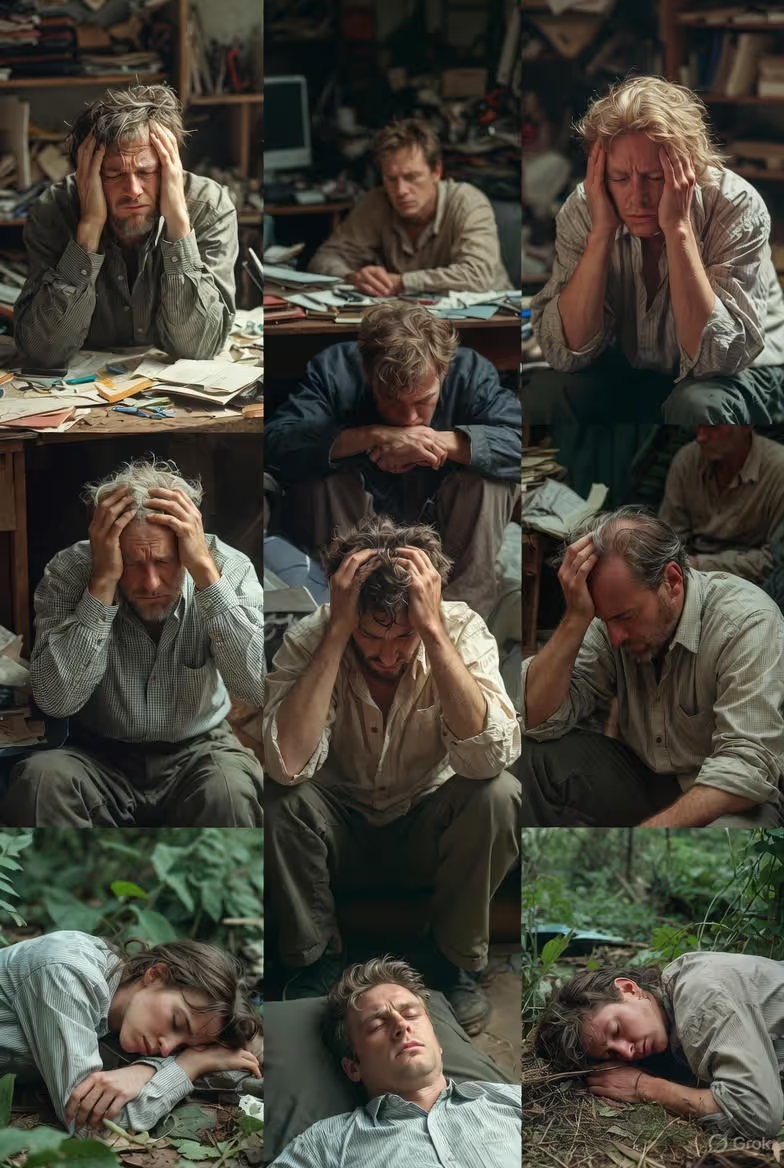
We live in a culture that glorifies burnout. The unspoken badge of honor is being so busy that you “crash” at the end of the day, falling onto the couch in a heap, too spent to move. We mistake this state of physical collapse—the point where your body simply refuses to go on—for genuine, restorative rest. It’s not. It’s a biological emergency brake.
True rest is a state of nervous system regulation, not exhaustion. It’s characterized by a feeling of calm, safe, conscious relaxation where your body can shift into “rest and digest” mode (the parasympathetic state). Collapse, on the other hand, is what happens when you’ve spent 16 hours in “fight or flight” (sympathetic dominance) and your resources are bankrupt. You’re not resting; you’re recovering from acute stress. The quality of repair that happens in these two states is vastly different.
Think of it like a smartphone. True rest is like plugging in your phone at 20% battery and letting it charge efficiently. Collapse is like running the battery down to 0%, where it shuts off completely. That dead phone now requires a longer, more strenuous charging period just to turn back on, and repeatedly doing this degrades the battery’s long-term health. Your body’s “battery”—your adrenal and cellular energy systems—operates on a similar principle.
The Telltale Signs You’re Collapsing, Not Resting:
The Science of the Drain: When you operate on sympathetic overdrive all day, your body is flooded with cortisol and adrenaline. This elevates your heart rate, blood pressure, and blood sugar. Crashing into bed with this physiological profile still active means your sleep architecture is corrupted. You may get fewer cycles of deep (stage 3) and REM sleep—the phases critical for physical repair, memory consolidation, and emotional processing. Instead, you linger in light, fragmented sleep, easily disturbed.
The Path to True Rest: The fix isn’t to rest more, but to rest differently, and to prevent the collapse in the first place.
Remember, the goal is to spend more of your waking hours in a regulated state, so that sleep can be the pinnacle of restoration, not crisis management. For more on building a sustainable daily rhythm, explore our blog for more wellness tips on energy management.
The weekend sleep-in. The promise that “I’ll sleep when I’m dead” or “I’ll catch up later.” This belief—that sleep debt is like a financial loan you can repay in a lump sum—is one of the most pervasive and damaging myths in modern wellness. Your brain and body do not have an accounting system that allows for simple credit and debit. They operate in a circadian rhythm, a 24-hour cycle that governs every hormone, neurotransmitter, and metabolic process.
Sleep debt is a biological reality with compound interest. When you short yourself on sleep, you accumulate a deficit that impairs cognitive function, emotional regulation, and metabolic health immediately. While a longer sleep period can help alleviate some of the acute fatigue, it does not reverse all the neurological and hormonal disruptions that occurred during the debt period. Studies show that chronic sleep restriction leads to deficits in attention, working memory, and glucose metabolism that persist for days, even after “recovery” sleep.
The Vicious Cycle of Social Jet Lag: The typical pattern of sleeping 5-6 hours during the week and then sleeping 10-12 hours on Saturday creates a condition researchers call “social jet lag.” It’s the equivalent of flying across multiple time zones every weekend. By Monday morning, your body’s internal clock is utterly confused. This misalignment between your social clock and biological clock is linked to increased risk for obesity, heart disease, and depression. You feel disoriented, sluggish, and set yourself up for another week of poor sleep as your body struggles to readjust to an early wake time on Monday.
Why You Can’t Bank Sleep: Similarly, the idea of “sleeping in advance” for an upcoming late night or early morning doesn’t work. Your sleep drive—the pressure to sleep that builds the longer you’re awake—is a homeostatic process. You can’t preemptively satisfy it. A long sleep on Thursday does not grant you immunity to the effects of an all-nighter on Friday.
Data Over Guesswork: This is where moving from intuition to data is revolutionary. Relying on how you “feel” is notoriously unreliable when you’re chronically tired; you become acclimated to a subpar baseline. Objective tracking helps you see the real cost of that late night. For instance, by reviewing your trends, you might see that a night of 5 hours of sleep doesn’t just make you tired the next day, but it lowers your Heart Rate Variability (HRV)—a key metric of nervous system recovery—for the next 48 hours, impacting your resilience and performance. Seeing this data makes the abstract concept of “sleep debt” tangibly real. You can learn more about smart ring technology and how it tracks HRV and sleep consistency.
Building a Sustainable Sleep Schedule:

You’ve likely heard the warnings about blue light from screens disrupting melatonin. This is important, but it’s just one chapter in a much larger story. Our relationship with light throughout the entire 24-hour cycle is fundamental to regulating our energy, sleep, and overall hormonal health. The mistake is focusing solely on blocking bad light at night, while ignoring our critical need for good light during the day.
Your Circadian Rhythm Runs on Light Cues. Your brain’s master clock, the suprachiasmatic nucleus (SCN), uses light (and darkness) as its primary timekeeper. Bright, blue-rich light in the morning signals “daytime,” suppressing melatonin, boosting cortisol (for healthy morning alertness), and setting in motion a cascade of processes that govern your energy, mood, and metabolism. Dim, red-rich light at night signals “nighttime,” triggering melatonin release and preparing the body for sleep.
The Modern Light Famine and Feast: We suffer from a dangerous mismatch. We spend our days indoors under relatively dim, artificial lighting (a light famine), and then bombard our eyes with bright, blue-heavy light from LEDs and screens well into the night (a light feast). This confuses the SCN, leading to a weak, poorly aligned circadian rhythm. The result is daytime sleepiness, nighttime alertness, and a general feeling of being “off.”
Morning Light: The Non-Negotiable Foundation. Getting bright, outdoor light within 30-60 minutes of waking is arguably more important than any other sleep hack. It:
A study published in Sleep Health found that participants who increased their morning light exposure significantly improved their sleep quality and reduced depressive symptoms. Aim for at least 10-15 minutes of morning sunlight (without sunglasses if safe). On overcast days, a SAD lamp or bright indoor light can be a substitute.
The Full Spectrum of Light Hygiene:
Managing this light dance is a foundational pillar of restful living. To understand how technology can help you align with your natural rhythms, you can read our complete guide on circadian health.
We often think of stress as a psychological event—a tight deadline, an argument, a financial worry. While these are potent stressors, the physiological definition of stress is far broader: anything that requires your body to deviate from homeostasis to produce an adaptive response. This includes your intense evening workout, that third cup of coffee, the inflammatory food you ate for dinner, the noisy environment you’re trying to sleep in, and even core body temperature.
The mistake is believing that because you’ve “unwound” mentally before bed, your body is no longer stressed. Chronic, low-grade physiological stressors keep your nervous system in a vigilant state, directly corrupting the structure and quality of your sleep, known as your sleep architecture.
The Four Pillars of Sleep Architecture & How Stress Attacks Them:
The Data-Driven Insight: Without tracking, you might only know you slept “poorly.” But data can show you the specific fracture points. You might see that on nights you have alcohol, your deep sleep graph is nearly flat. Or that on high-workload days, your sleep latency (time to fall asleep) is 45 minutes instead of your usual 15. Or that your 5:00 AM wake-up correlates with a spike in cortisol and a drop in room temperature. This moves you from a vague feeling of unrest to a precise understanding of your personal stressors. For real-world examples of how others have used this insight, check out real customer reviews and user experiences.
Building Stress-Resilient Sleep:

We compartmentalize. “Sleep” happens in the bedroom, between 10 PM and 6 AM. Everything else is “waking life.” This is a catastrophic error in thinking. Sleep is not an isolated event; it is the final expression of your entire day. The quality of your wakefulness determines the quality of your sleep. If you spend 16 hours destabilizing your physiology—through poor movement, chaotic eating, and mental overload—no 8-hour sleep “fix” can fully compensate.
Your body needs clear, coherent signals throughout the day to know when it’s time to be alert and when it’s time to rest. Neglecting these daytime cues creates a weak, confused signal for sleep.
The Daytime Pillars That Build Nighttime Rest:
1. Movement & Static:
2. Nutritional Rhythm:
3. Cognitive & Emotional Hygiene:
The Role of Consistent Cues: Every consistent action—waking at the same time, eating at regular intervals, moving your body, getting morning light—is a “zeitgeber” (German for “time-giver”) that strengthens your circadian rhythm. A strong rhythm produces a powerful, clean wave of energy in the day and a deep, predictable trough of rest at night. To learn about the company dedicated to helping you understand these rhythms, you can find out more about our brand journey and vision.
Actionable Daytime Protocol:
Here lies the cruelest irony of all: the more desperately you try to sleep, the more elusive it becomes. Sleep is a passive, involuntary process. You cannot will it into existence. Yet, when we experience a few bad nights, we often respond by pouring immense effort into “fixing” our sleep. We become hyper-vigilant, turning the bedroom into a high-pressure performance zone. This is known as sleep effort, and it’s the fast track to chronic insomnia.
How Sleep Effort Backfires: The moment you lie down and think, “I must fall asleep within 15 minutes to get my 8 hours, or tomorrow will be ruined,” you have activated your sympathetic nervous system. This state of performance anxiety releases cortisol and adrenaline—the very hormones that promote alertness. Your heart rate increases, your mind races, and sleep retreats. The bed, which should be a cue for relaxation, becomes a cue for anxiety and struggle.
The Signs of Sleep Performance Anxiety:
Breaking the Cycle: Relearning Sleep Confidence
The solution is counterintuitive: you must give up the effort to sleep and reclaim the bed as a place for rest, not sleep performance.
1. Adopt the 15-Minute Rule: If you are awake in bed for more than 15-20 minutes (without clock-watching, estimate), get up. Go to another dimly lit room and engage in a boring, relaxing activity: read a dull book (no screens), listen to a calm podcast, do some light stretching. Do not eat, work, or watch engaging TV. Return to bed only when you feel drowsy. Repeat as needed. This breaks the association of bed = frustration.
2. Reframe Your Goal: The goal is not to sleep. The goal is to rest. Tell yourself, “I’m just going to lie here and enjoy being comfortable and still. If sleep comes, great. If not, I’m still resting.” This removes the pressure.
3. Limit Time in Bed (Sleep Restriction): This clinically proven technique, best done with guidance, involves slightly restricting your time in bed to match your actual sleep time. This builds sleep pressure (making you sleepier) and consolidates sleep, creating a stronger association between bed and sleep. It sounds extreme, but for those with fragmented sleep, it can be highly effective in breaking the anxiety cycle.
4. Practice Mindfulness, Not Monitoring: Instead of lying there monitoring your bodily sensations for signs of sleepiness, practice a body scan or mindfulness meditation. Observe your thoughts and sensations without judgment, letting them come and go. This cultivates the mental “letting go” that is the essence of sleep onset.
Remember, sleep is like a shy animal. If you chase it, it runs. If you create a safe, calm, pressure-free environment and look the other way, it often comes to you. For support and answers to common questions about managing sleep anxiety, our FAQ and support page is a valuable resource.
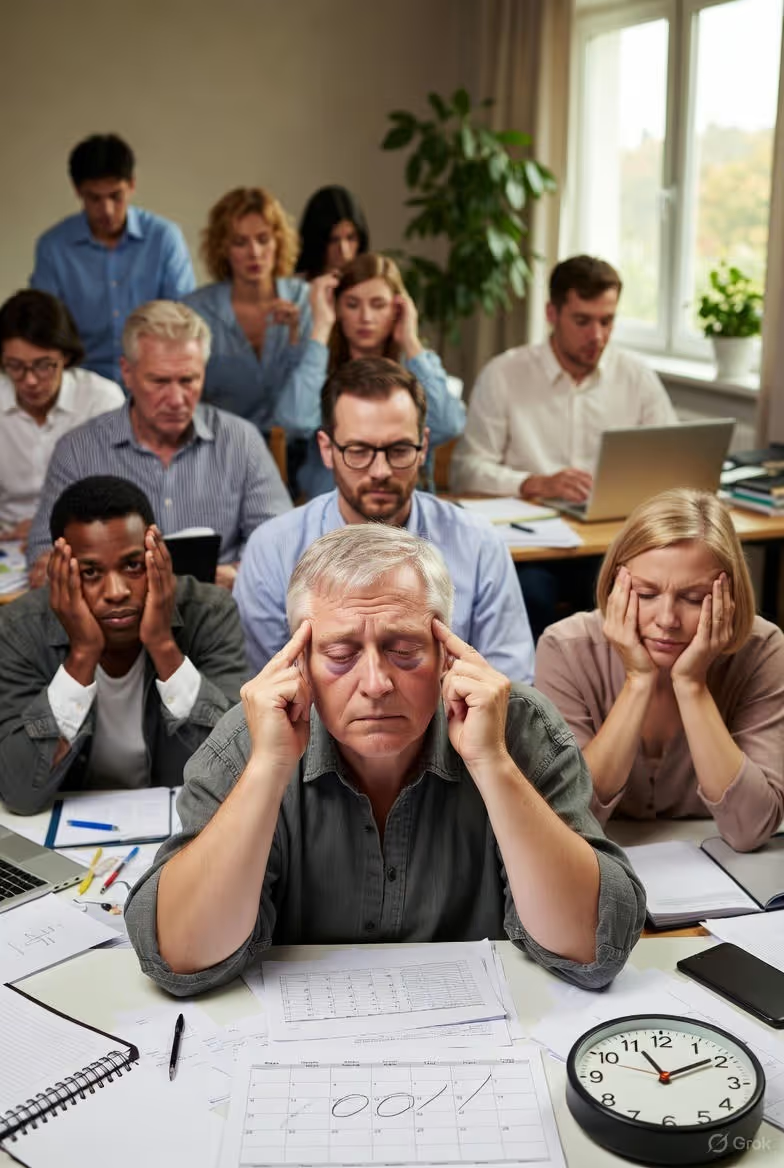
We’ve been told the universal ideal: early to bed, early to rise. But what if you’re biologically wired to rise—and shine—later? Your chronotype is your genetically predisposed natural inclination for sleep and wake times. It’s the reason some people are vibrant “larks” at 5 AM and others are creative “owls” who hit their stride at 10 PM. The mistake is forcing yourself into a societal schedule that violently conflicts with your innate biology. This chronic misalignment is a primary source of being wired at the wrong times and perpetually tired.
Chronotype Isn’t a Preference; It’s Biology. Your chronotype is influenced by the length of your intrinsic circadian period (slightly longer than 24 hours for many owls), the timing of your melatonin onset, and your sensitivity to morning light. Fighting it is like fighting your height. You can adjust within a range, but you cannot fundamentally change your type.
The Three Broad Chronotypes:
The Cost of Chronotype Misalignment: A Wolf on a 6 AM schedule is in a state of permanent social jet lag. They accumulate massive sleep debt during the week, suffer from daytime sleepiness and brain fog, and may rely on stimulants to wake and sedatives to sleep. This dysregulation increases the risk for metabolic disorders, mental health issues, and, of course, chronic fatigue.
How to Discover and Honor Your Chronotype:
Strategies for Each Type:
Syncing your life with your chronotype, rather than fighting it, is one of the most profound ways to resolve the wired-and-tired feeling. You stop wasting energy on biological resistance. For a deeper dive into personalizing your wellness approach, explore our blog for more wellness tips on bio-individuality.
We focus on the blue light from our devices, and rightly so. But the digital environment’s assault on rest is multidimensional, subtle, and operates 24/7. It’s not just the screen you look at before bed; it’s the entire architecture of your digital life that keeps your nervous system in a state of low-grade threat and fragmentation.
The Hidden Stressors of Hyper-Connectivity:
1. The Alert Anxiety: Every ping, buzz, and notification is a micro-interruption that triggers a dopamine hit (anticipation/novelty) and often a cortisol response (what requires my attention?). This conditions your brain to be in a perpetual state of alert scanning. Even when your phone is on silent, the mere presence of the device can reduce cognitive capacity—a phenomenon called “brain drain”—as part of your attention is always allocated to not checking it.
2. Information Overload & Cognitive Clutter: The infinite scroll of news, social media, and emails creates a sense of “cognitive surplus.” Your working memory is flooded with fragmented, often emotionally charged information that has no resolution. This clutter doesn’t just disappear when you put the phone down; it lingers, making it difficult for your mind to settle into the quiet, unfocused state necessary for sleep onset and deep rest.
3. The Erosion of Temporal Boundaries: The smartphone has dissolved the boundaries between work and home, day and night, social and private. Checking email at 10 PM isn’t just about light; it’s about reactivating work-related cognitive frameworks and anxieties just as your brain should be disengaging. It signals to your psyche that rest is not a sacred, protected space.
Creating a Digital Sanctuary for Your Mind:
This isn’t about Luddism; it’s about intentionality. You must design a digital environment that serves you, not hijacks you.
By detoxifying your digital environment, you reduce the constant “static” in your nervous system, making space for the deep, quiet frequencies of true rest. For insights into how we designed our technology with intentional wellness in mind, learn about our company information and mission.
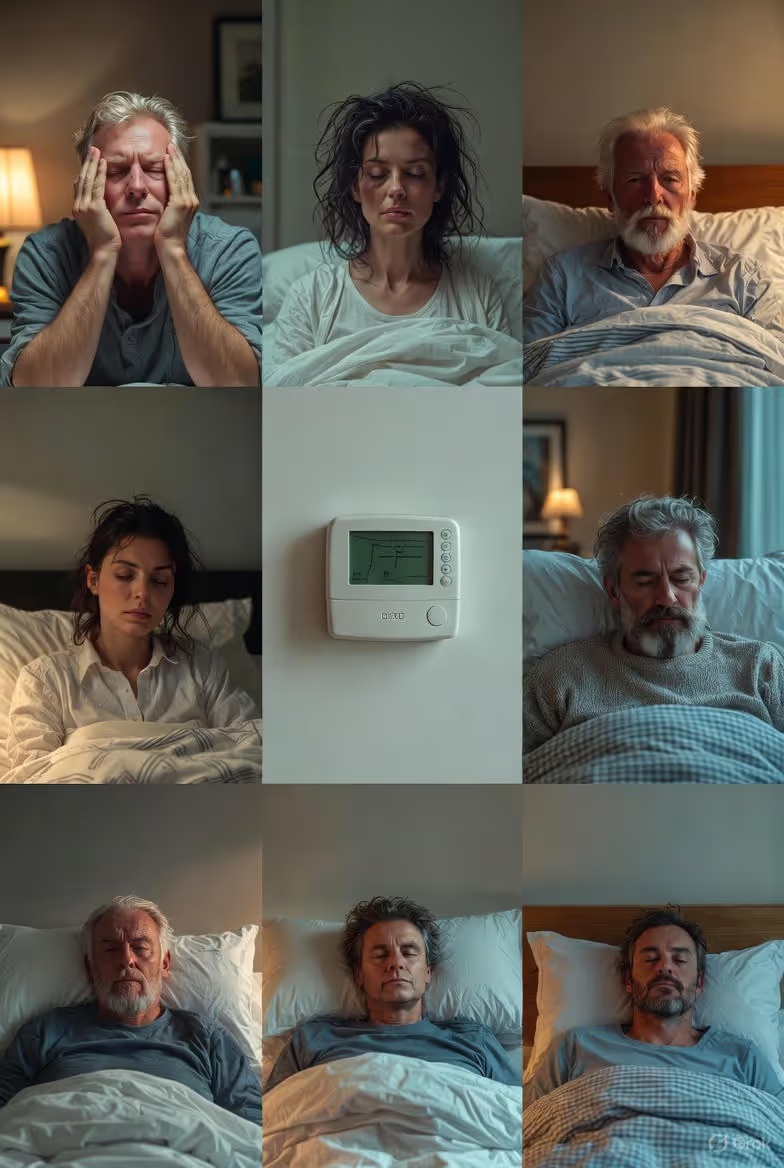
You’ve optimized light and sound, but if you’re overlooking temperature, you’re missing one of the most potent levers for deep sleep. Human sleep is inextricably linked to the body’s thermoregulation cycle. The circadian rhythm dictates a drop in core body temperature of about 1-2°F (0.5-1°C) in the evening, which serves as a critical signal for sleep onset and maintenance. The mistake is sleeping in an environment that fights this natural drop.
The Science of the Thermal Pathway: As evening approaches, your body begins to shunt heat from its core to its extremities (hands and feet). This is why you might have cold feet before bed—it’s a sign your body is preparing for sleep. A cooler external environment facilitates this heat dissipation. A warm room traps heat, confusing the signal and leading to restlessness, lighter sleep, and more awakenings. Most studies point to an optimal bedroom temperature between 60-67°F (15.5-19.5°C).
Common Temperature Pitfalls:
Personalization is Key: The “ideal” range is a starting point. Your personal preference, age, health status, and even the sleep phase you’re in matter. For example, you may need a slightly warmer environment to fall asleep but benefit from cooling as the night progresses.
How to Hack Your Thermal Environment for Sleep:
Mastering your thermal environment works in concert with light and stress management. It’s a fundamental, often overlooked, piece of the rest puzzle that can mean the difference between a fitful night and one of profound, restorative depth. As we continue to explore the interconnected system of rest, remember that understanding these principles is at the heart of our vision and values at Oxyzen.
Water is the medium of life. Every single cellular process, from energy production in your mitochondria to the detoxification pathways in your liver, depends on adequate hydration. Yet, in the quest for better sleep and energy, we overwhelmingly focus on what we put into our bodies (caffeine, supplements, food) rather than the fundamental solvent that makes all of it possible: water. Chronic, low-grade dehydration is a primary, and often invisible, driver of the “wired and tired” state.
Why Dehydration Feels Like Fatigue and Anxiety: When you’re even mildly dehydrated, your blood volume drops. Your heart must work harder to pump oxygen and nutrients to your cells, including your brain. This can manifest as:
The Caffeine Conundrum: Many people reach for coffee or tea to combat the fatigue caused by… dehydration. Caffeine is a mild diuretic. While it doesn’t cause dehydration in habitual users under normal conditions, it certainly doesn’t hydrate you. Replacing water with caffeinated beverages throughout the day creates a vicious cycle: you use a stimulant to address energy deficits partly created by lack of water, while doing nothing to solve the underlying fluid deficit.
Hydration for Sleep, Not Just Wakefulness: The goal isn’t just to drink water during the day, but to strategize it for optimal sleep. Drinking a large volume of water right before bed guarantees disruptive nighttime trips to the bathroom. The key is front-loading your hydration.
A Strategic Hydration Protocol:
Beyond Water: Electrolytes Are Key. Pure water without electrolytes can, in excess, dilute your body’s electrolyte balance. This is especially true if you sweat, exercise, or consume a low-mineral diet. Including electrolyte-rich foods (leafy greens, avocado, nuts, bananas) or adding a sugar-free electrolyte supplement to your water can enhance cellular hydration far more effectively than water alone. This balanced approach supports stable energy all day and a more settled, cramp-free sleep at night.
Tracking can reveal subtle correlations here as well. You might notice that on days your hydration is poor (observable via lower bioimpedance or other metrics on some advanced devices), your sleep quality score or next-day readiness takes a hit. For practical tips and answers on integrating hydration with other wellness practices, you can always visit our FAQ for support.
Food is information. Every meal sends instructions to your hormones, your immune system, and your cellular machinery about what to do next: store energy, burn energy, repair, or inflame. The standard modern eating pattern—skipping breakfast, relying on high-carb/sugar snacks, eating a large dinner late—is perfectly engineered to create rollercoaster energy and sabotage sleep. We mistake the stimulating effects of sugar and the sedating effects of a heavy meal for “energy” and “relaxation,” when in fact they are forms of metabolic stress.
The Blood Sugar Rollercoaster and Your Nerves: When you eat a meal high in refined carbohydrates and sugar (e.g., pastry for breakfast, sandwich and chips for lunch), your blood glucose spikes rapidly. Your pancreas releases a large amount of insulin to shuttle that glucose into cells. This often leads to a reactive blood sugar crash (hypoglycemia) 1-3 hours later. This crash is a crisis signal to your body. Your adrenal glands release cortisol and adrenaline to mobilize stored glucose, pulling you out of the crash. This is the “3 PM slump” that you fix with more caffeine and sugar, restarting the cycle.
The Heavy, Late-Night Meal Mistake: Consuming your largest meal close to bedtime forces your digestive system to work hard when it should be powering down. Digestion raises core body temperature and requires significant energy and blood flow, diverting resources from the restorative processes of sleep. It can cause acid reflux, which is worse when lying down. Furthermore, a high-carb dinner can lead to a blood sugar crash in the middle of the night, triggering a cortisol release that can wake you up at 2 or 3 AM, heart racing, unable to fall back asleep.
Eating for Sustained Energy and Sleep-Promoting Rest:
The Sleep-Supportive Nutrients: Certain nutrients directly support sleep physiology.
By eating to stabilize your blood sugar and provide the raw materials for sleep hormones, you turn your diet into a powerful tool for energy regulation, not a source of constant physiological stress. For more in-depth resources on crafting a wellness-supportive diet, explore our blog for related articles.
The wellness industry is a multi-billion-dollar ecosystem, and a significant portion is built on the promise of better sleep. Melatonin supplements, sleep gummies, prescription hypnotics, expensive mattresses, and a plethora of gadgets offer a seductive quick fix. The mistake is starting with the aid, rather than the foundation. External aids should be the temporary scaffolding, not the permanent structure, of your sleep health. Over-reliance can mask underlying issues, create dependencies, and in some cases, worsen the problem long-term.
The Melatonin Misunderstanding: Melatonin is a hormone, not a sedative. Its primary job is to signal timing to your brain—that it’s dark and time to prepare for sleep. It does not knock you out. For issues like shift work or jet lag, it can be a helpful reset for your circadian clock. However, for chronic insomnia driven by anxiety, poor sleep hygiene, or an erratic schedule, popping a melatonin gummy is like yelling “quiet!” in a noisy room without turning off the source of the noise. Furthermore, dosage is critical; most over-the-counter supplements are 3-10mg, while studies show physiological doses (0.3-1mg) are often more effective. Megadoses can lead to next-day grogginess and, over time, may downregulate your body’s own production.
The Sedative Spiral: Prescription sleep medications (Z-drugs like zolpidem) and even many antihistamines used for sleep (e.g., diphenhydramine) work by broadly suppressing central nervous system activity. They often impair sleep architecture, reducing valuable deep and REM sleep. They can cause next-day grogginess, memory issues, and tolerance (requiring higher doses). Perhaps most dangerously, they teach you that sleep comes from a pill, not from your own relaxed state, eroding sleep confidence.
Gadgets as a Crutch, Not a Cure: While tracking devices like the Oxyzen ring are powerful for diagnosis and awareness, they can become a source of performance anxiety if misused (as discussed in Mistake #6). The goal of a tracker is to provide feedback so you can adjust your behavior and eventually internalize the rhythms. It should not become an oracle whose daily score dictates your mood. The same applies to white noise machines, weighted blankets, and other tools: they are excellent supports for a solid foundation, but they cannot compensate for a life lived in circadian chaos.
A Principled Approach to Sleep Aids:
True restful living is an internal skill you cultivate, not a product you purchase. The most powerful “aid” is your own consistent behavior. To see how others have used data to build this self-knowledge rather than dependency, you can read real customer reviews and user experiences.
Your body does not distinguish between a physical threat and an emotional one. An unresolved argument with a partner, anxiety about a work presentation, or simmering resentment triggers the same cascade of stress hormones as facing a physical danger. The mistake is believing that because you’ve stopped “thinking” about something consciously, it’s no longer affecting you. Unprocessed emotions and unresolved mental loops create a background hum of physiological arousal that directly inhibits the nervous system’s ability to drop into deep rest.
The Brain’s Need for Closure: Your prefrontal cortex, the executive center, is designed to solve problems and complete loops. When you end your day with an inbox full of unanswered emails, a difficult conversation hanging in the air, or a creative project half-finished, you leave dozens of “open loops.” These unresolved tasks and emotions consume attentional resources, creating what psychologist Bluma Zeigarnik termed the Zeigarnik Effect—the tendency to remember uncompleted tasks better than completed ones. At night, with fewer external distractions, these open loops buzz loudly.
Rumination vs. Processing: Lying in bed replaying a stressful event is rumination. It’s an unconscious, circular, and powerless form of thought that increases anxiety and alertness. Processing, in contrast, is a deliberate, constructive effort to achieve closure or perspective. The transition from wakefulness to sleep requires a mental “download”—a clearing of the day’s cache.
Creating a Conscious Evening Download Ritual:
This ritual signals to your executive function that it can stand down. The work is captured, the plan is made, and the emotional charge is acknowledged. This is perhaps the most profound personal work for achieving restful sleep—making peace with the day so you can truly leave it behind. Our company mission is deeply tied to this holistic view of wellness, where data and self-awareness work together.
Humans are social creatures wired for connection. Our nervous systems co-regulate—they calm in the presence of safe, connected others and become dysregulated in states of isolation or conflict. The hyper-individualistic, productivity-obsessed culture often frames rest as a solitary act: my sleep, my recovery, my routine. This overlooks a fundamental truth: the quality of our relationships is a primary determinant of our ability to rest deeply. Chronic relational stress or loneliness is one of the most potent, yet hidden, sources of being wired and tired.
Co-regulation and the Vagus Nerve: Your vagus nerve, the main component of the parasympathetic “rest and digest” system, is activated by cues of safety and connection. Warm, supportive touch (a hug, holding hands), eye contact, attuned conversation, and shared laughter all stimulate the vagus nerve, lowering heart rate, blood pressure, and cortisol. Conversely, conflict, criticism, or coldness trigger defensive states (fight/flight/freeze). If your primary relationships are sources of chronic tension, you are living with a low-grade, ever-present biological stressor.
Loneliness as a Biological Alarm: Research shows that perceived social isolation is associated with increased inflammation, elevated cortisol, fragmented sleep, and reduced heart rate variability. Your brain interprets loneliness as a threat to survival—in our evolutionary past, being alone meant vulnerability. This puts the body in a vigilant, guarded state, antithetical to rest.
The Myth of “Quality Time” vs. Ritualized Connection: We often try to cram connection into scheduled “quality time,” which can feel pressured. Restorative connection is often found in small, consistent, low-pressure rituals: making coffee together in the morning, walking the dog side-by-side, cooking a meal without the TV on. These micro-moments of synchronized activity provide powerful co-regulation.
Auditing Your Social-Emotional Environment for Rest:
Rest is not a solo sport. Cultivating a “restful” social ecosystem—one that values presence over productivity, empathy over efficiency, and safety over stimulation—is a critical pillar of sustainable energy. It’s about creating a life, not just a bedtime, that feels genuinely supportive and safe. This philosophy of integrated, human-centric wellness is central to our story and vision.
“I don’t have time to sleep.” “I’ll rest when this project is over.” “There just aren’t enough hours in the day.” These are the mantras of time scarcity, a cognitive and emotional state where you perpetually feel behind, rushed, and unable to fit everything in. This mindset isn’t just stressful; it’s a direct, physiological antagonist to rest. When your brain is locked in a narrative of “not enough,” it perpetually inhabits a future-oriented, anxious state. The present moment—the only place where true rest can occur—becomes inaccessible.
The Physiology of Hurry: The feeling of time pressure triggers a low-grade but chronic sympathetic nervous system response. Cortisol remains elevated, keeping you in a mobilized state, ready to fight the clock. This constant background urgency inhibits the vagal “brake” needed to transition into rest and digest mode. You may collapse at night, but your system is still primed for action, leading to shallow, unrefreshing sleep.
Time Scarcity vs. Time Affluence: Researchers contrast “time scarcity” with “time affluence”—the feeling that you have sufficient time to pursue activities that are personally meaningful, including rest. Studies show that time affluence is a stronger predictor of well-being than material affluence. People who feel time-rich report greater happiness, less anxiety, and better health, independent of their actual schedules or income.
The Rest Paradox: Here lies the cruel paradox of time scarcity: by stealing time from rest to “get more done,” you degrade the quality of your attention, decision-making, and creativity, ensuring that the work takes longer and is of lower quality. You enter a cycle of diminishing returns, where busyness masquerades as productivity, and exhaustion becomes a badge of honor. In reality, you are inefficiently burning through your most valuable resource: your focused energy.
Cultivating Time Affluence for Deeper Rest:
When you cultivate time affluence, you approach your day from a place of agency and sufficiency. This psychological state is the precursor to physiological calm. You give yourself permission to rest, not as a reward for exhaustion, but as the intelligent fuel for a meaningful life. For practical frameworks on restructuring your time for wellness, explore our blog for more resources.
We’ve discussed the 24-hour circadian rhythm, but human biology is nested within larger, ancient rhythms: the ultradian rhythm (90-120 minute cycles of focus and rest within the day), the infradian rhythm (the monthly cycle, particularly impactful for those who menstruate), and the seasonal rhythms. The modern mistake is living a linear, 24/7/365 life that bulldozes these natural ebbs and flows. We attempt to operate at a flat, constant output, ignoring our body’s inherent need for cyclical renewal. This fight against our own biology is a profound source of chronic depletion.
The Ultradian Rhythm & The 90-Minute Work Sprint: Your brain does not operate optimally in 8-hour marathons. It naturally moves in roughly 90-minute cycles of higher alertness (peak) followed by a 20-minute period of lower alertness (trough). This is the Basic Rest-Activity Cycle (BRAC). Ignoring these troughs—powering through with caffeine and willpower—leads to mental fatigue, errors, and irritability. The trough is when your brain needs a micro-rest to consolidate information and restore focus.
Honoring the Ultradian Rhythm:
The Infradian Rhythm & Hormonal Intelligence: For roughly half the population, a powerful 28-35 day hormonal cycle governs energy, cognition, metabolism, and emotional landscape. The cultural expectation is to perform at the same capacity every single day, which is a biological impossibility across the cycle. The follicular phase (post-period) often brings rising energy and外向性. Ovulation brings a peak of social and verbal fluency. The luteal phase sees a natural inward turn, with greater capacity for detail-oriented work and a heightened need for rest as progesterone rises. Premenstrually, energy drops further as the body prepares to renew. Fighting this rhythm—pushing for high-energy, social output in the luteal phase, for instance—is like swimming against a powerful current. It leads to extreme fatigue and resentment.
Syncing with Your Infradian Rhythm:
Seasonal Living in a 24/7 World: Our ancestors’ lives were dictated by light, temperature, and food availability. Winter meant more sleep, richer foods, and inward reflection. Summer meant longer days, activity, and lighter fare. Now, with artificial light and global food chains, we live in perpetual summer. This disconnect may contribute to seasonal affective disorder and a year-round feeling of being out of sync.
Simple Seasonal Adjustments:
By realigning with these nested rhythms, you stop fighting your biology and start flowing with it. This reduces internal friction, conserves energy, and allows for periods of deep restoration that make periods of high output sustainable. This philosophy of harmonious, data-informed living is core to how Oxyzen works to help you understand your personal cycles.
“I slept terribly last night, my whole day is ruined.” “I missed my wind-down ritual, I might as well just scroll on my phone.” “If I can’t get a perfect 8 hours, what’s the point?” This is the voice of rest perfectionism. It transforms the gentle, forgiving practice of self-care into a rigid, high-stakes performance. When your approach to rest is fragile—collapsing at the first deviation—it creates more anxiety than the original poor rest ever could.
Why Perfectionism is the Enemy of Consistency: The pursuit of the “perfect” sleep routine or the “ideal” day sets an impossible standard. Life is messy. There will be late flights, sick children, urgent deadlines, and unexpected social events. If your mindset is “all or nothing,” a single disruption becomes a license to abandon all healthy practices, leading to a crash that takes days to recover from. Consistency, not perfection, is the engine of lasting change. Consistency is about direction, not daily perfection.
The Cognitive Distortions of Rest Perfectionism:
Building a Resilient, Flexible Practice: The goal is to develop a “good enough” framework that is robust enough to withstand life’s interruptions.
Restful living is not a destination you reach and then maintain perfectly. It is a dynamic, ongoing relationship with yourself—one that requires flexibility, compassion, and the willingness to begin again, daily. Letting go of perfection is how you build a practice that lasts a lifetime, not just a week. For stories of real people navigating this journey, including setbacks and comebacks, browse our collection of real customer reviews and experiences.
This is the meta-mistake. We chase “better sleep” and “more energy” without ever stopping to define what those states truly feel like in our own body, or what a rested life would actually look like. We adopt generic advice (“get 8 hours!”) without personalizing it. Without a clear, felt-sense vision of our destination, we wander aimlessly, trying tactics that may not address our unique needs. Rest is not a universal monolith; it’s a personal experience.
The Four Types of Rest (Beyond Sleep): Dr. Saundra Dalton-Smith’s work identifies seven types of rest, but four are critical to dismantling the wired-and-tired state:
You can be physically asleep but mentally and emotionally frantic. You can be on a quiet vacation but emotionally drained by family dynamics. True rest requires addressing deficits across multiple domains.
Conducting Your Personal Rest Audit:
Ask yourself these questions:
Crafting Your Personal Rest Definition: Finish this sentence: “A truly rested version of me feels ______ in my body, my mind is generally ______, and I have the energy to ______.” Get specific. “A truly rested me feels light and loose in my shoulders, my mind is calm and curious, and I have the energy to play with my kids after work and work on my creative project twice a week.”
Creating a Bespoke Rest Protocol: Based on your audit and definition, build a plan.
This personalized approach moves you from being a passive consumer of sleep tips to an active author of your own restoration. It makes the journey meaningful because it’s aligned with your unique experience of being alive. This commitment to personalized understanding is at the heart of our brand journey and vision.
Your Trusted Sleep Advocate: Sleep Foundation — https://www.sleepfoundation.org
Discover a digital archive of scholarly articles: NIH — https://www.ncbi.nlm.nih.gov/
39 million citations for biomedical literature :PubMed — https://pubmed.ncbi.nlm.nih.gov/
Experts at Harvard Health Publishing covering a variety of health topics — https://www.health.harvard.edu/blog/
Every life deserves world class care :Cleveland Clinic - https://my.clevelandclinic.org/health
Wearable technology and the future of predictive health monitoring :MIT Technology Review — https://www.technologyreview.com/
Dedicated to the well-being of all people and guided by science :World Health Organization — https://www.who.int/news-room/
Psychological science and knowledge to benefit society and improve lives. :APA — https://www.apa.org/monitor/
Cutting-edge insights on human longevity and peak performance:
Lifespan Research — https://www.lifespan.io/
Global authority on exercise physiology, sports performance, and human recovery:
American College of Sports Medicine — https://www.acsm.org/
Neuroscience-driven guidance for better focus, sleep, and mental clarity:
Stanford Human Performance Lab — https://humanperformance.stanford.edu/
Evidence-based psychology and mind–body wellness resources:
Mayo Clinic — https://www.mayoclinic.org/healthy-lifestyle/
Data-backed research on emotional wellbeing, stress biology, and resilience:
American Institute of Stress — https://www.stress.org/


