


The Ring vs Watch Battery Life Comparison (And the Winner Is...)
Comparing battery life between rings and watches.
Comparing battery life between rings and watches.
%402x.svg)
We live in an age of quantified selves. Our steps, our heartbeats, our sleep cycles—all monitored, analyzed, and fed back to us in colorful charts on a screen. The devices we choose to wear are no longer just accessories; they are gatekeepers to our personal health data, silent guardians of our wellness goals. For years, the smartwatch has reigned supreme on the wrist, a mini-computer offering a dizzying array of features. But a sleek, silent challenger has emerged from the finger: the smart ring.
As you stand at this wearable crossroads, a critical question emerges, one that goes beyond features and delves into the very rhythm of your daily life: which device can truly keep up? Not just in functionality, but in endurance? The battle for your body’s data is fiercely contested, but perhaps the most decisive, practical factor is one of the simplest: battery life.
This isn't just about avoiding another charger in your life. It’s about continuity. It’s about a device that doesn’t die in the middle of a pivotal sleep-tracking night because you forgot to plug it in after a long day. It’s about a wellness companion that works on your schedule, not its own battery cycle. The smartwatch boasts a brilliant display and instant notifications. The smart ring promises unobtrusive, 24/7 monitoring. But which one delivers on the fundamental promise of being always on, always ready?
The answer is more nuanced than a simple spec sheet comparison. It’s a story of engineering constraints, design philosophy, and how power is allocated between dazzling screens and silent sensors. It’s about understanding that battery life isn't just a number; it's the defining experience of your wearable.
In this comprehensive exploration, we’ll dissect the very soul of wearable battery performance. We’ll move beyond marketing claims to understand the "why" behind the numbers. We’ll pit the technological marvel on your wrist against the minimalist powerhouse on your finger. We’ll examine real-world usage, charging rituals, and the hidden impact on data accuracy. And by the end, a clear winner will emerge—not just in longevity, but in delivering a seamless, uninterrupted flow of insight into your well-being. The journey to uncover the true champion of wearable endurance begins now.

At the heart of the battery life battle between smart rings and smartwatches lies a fundamental design choice: the screen. This single component creates a power dichotomy that defines the entire user experience and engineering challenge of each device.
A smartwatch is, by nature, a visual interactive platform. Its vibrant OLED or LCD display is its primary interface—a window for telling time, displaying notifications, showing workout metrics, and interacting with apps. This screen is a notorious energy hog. Every pixel illuminated, every touch interaction, and the constant need to wake the display for even a quick time check draws significant power from a relatively small battery. The more sophisticated the watch (with features like an always-on display), the greater the drain. The watch's battery is in a constant state of negotiation: powering advanced health sensors, maintaining a Bluetooth connection to your phone, and illuminating that captivating screen.
Contrast this with the philosophy behind a smart ring. Here, the design mandate is silence and subtlety. A smart ring foregoes a screen almost entirely. Its purpose is not to be a second smartphone on your body, but a passive, persistent sensor hub. By eliminating the largest power drain in a wearable, the ring’s engineers can focus its entire energy budget on one thing: continuous data collection. The ring’s form factor is a limitation, but also a liberation. It forces a minimalist approach where every milliampere-hour (mAh) of battery capacity is dedicated to running sophisticated sensors like photoplethysmography (PPG) for heart rate, 3D accelerometers for movement, and skin temperature monitors—all while communicating data efficiently to your phone.
This creates two different energy profiles. A smartwatch battery life is often measured in hours of active use or at best, a day or two of mixed use. Its usage is "spiky"—periods of high drain during screen interaction followed by lower drain in sleep mode. A smart ring battery life, however, is measured in days, often a week or more, of continuous operation. Its power draw is a steady, low hum, optimized for always-on sensing.
The dichotomy is clear: one device trades battery longevity for rich, interactive immediacy. The other trades that immediacy for unwavering, background endurance. As you learn more about smart ring technology, you begin to see this isn't a compromise, but a deliberate reimagining of what a wearable should be. It asks: do you want a device you look at, or a device that works for you without you ever having to look at it? The answer to that question is written in the days of battery life each device can provide.
To understand why your wearable dies when it does, we need to perform a metaphorical autopsy on its battery life. The power drain in both smart rings and smartwatches comes from a combination of components, but their proportion and management tell the story of their differing endurance.
The Prime Suspects in a Smartwatch:
The Lean Machine of a Smart Ring:
The difference is one of active consumption versus efficient stewardship. A smartwatch is built to deliver power to features that demand it in real-time. A smart ring is built to hoard its power, doling it out in meticulously measured increments to a few critical tasks over a much longer period. This fundamental "anatomy" is why you’ll find yourself charging your watch as part of your nightly ritual, while charging your ring becomes a brief, weekly afterthought. For a deeper look at how these efficient systems are built, the Oxyzen.ai approach to wearable design provides a clear example of this philosophy in action.

If you've ever bought a tech product, you know the drill: the "up to" battery life on the box is a hopeful dream, while the reality is often a more sobering affair. This gap between advertised specs and real-world performance is a critical arena in our ring vs. watch showdown.
Manufacturers test battery life under highly controlled, optimal conditions that rarely mirror how we actually use our devices. A smartwatch claim of "18 hours" or "2 days" might be based on a specific, limited usage profile—perhaps with the always-on display disabled, minimal workout tracking, and only sporadic notifications. The moment you start using it like a real person—checking notifications, tracking a 45-minute GPS-run, using it for contactless payments—that number plummets. It's not uncommon for power users of advanced smartwatches to need a charge before the day is done.
Smart rings, with their simpler function set, often see a smaller gap between claim and reality. A claim of "7 days" of battery life is typically based on standard 24/7 wear with regular heart rate, sleep, and activity monitoring, plus daily syncs. Since there's no interactive screen to tempt you into power-draining activities, your usage pattern aligns much more closely with the manufacturer's testing scenario. The ring is doing its job whether you think about it or not, and its power draw is consistent.
The Real-World Week: A Comparative Snapshot
The real "numbers game" winner isn't just about who has the bigger number on the spec sheet. It's about which device's number you can actually trust and rely upon to integrate seamlessly into your life. The smartwatch's battery life is a variable, dependent on your interaction. The smart ring's battery life is a predictable constant, dependent only on the passage of time. This reliability is a cornerstone of the positive user experiences shared on pages like our testimonials, where consistent performance is a key driver of satisfaction.
Battery life isn't just about how long a device lasts; it's intrinsically tied to the ritual of replenishment. The frequency and nature of charging can either make a wearable feel like a seamless part of you or a high-maintenance gadget. This is where the philosophical differences between rings and watches become tangible in your daily routine.
The Smartwatch: The Daily Ritual
For most smartwatch owners, charging is a non-negotiable part of the daily cycle, typically sandwiched between bedtime and wake-up time. This ritual creates several subtle friction points:
The watch's charging ritual is often a chore, a small but persistent daily task that reminds you of the device's limitations.
The Smart Ring: The Weekly Refresh
The smart ring flips this script entirely. With multi-day battery life, charging becomes an infrequent, planned event.
This ritual shifts from a daily chore to a convenient, brief maintenance task. It respects your continuity of data and doesn't hold your sleep tracking hostage. The ring’s design acknowledges that the best wearable is the one you forget you're wearing—and that includes forgetting to charge it constantly. For those curious about how this user-centric philosophy extends to other aspects of the product, our FAQ addresses many common questions about charging and daily use.
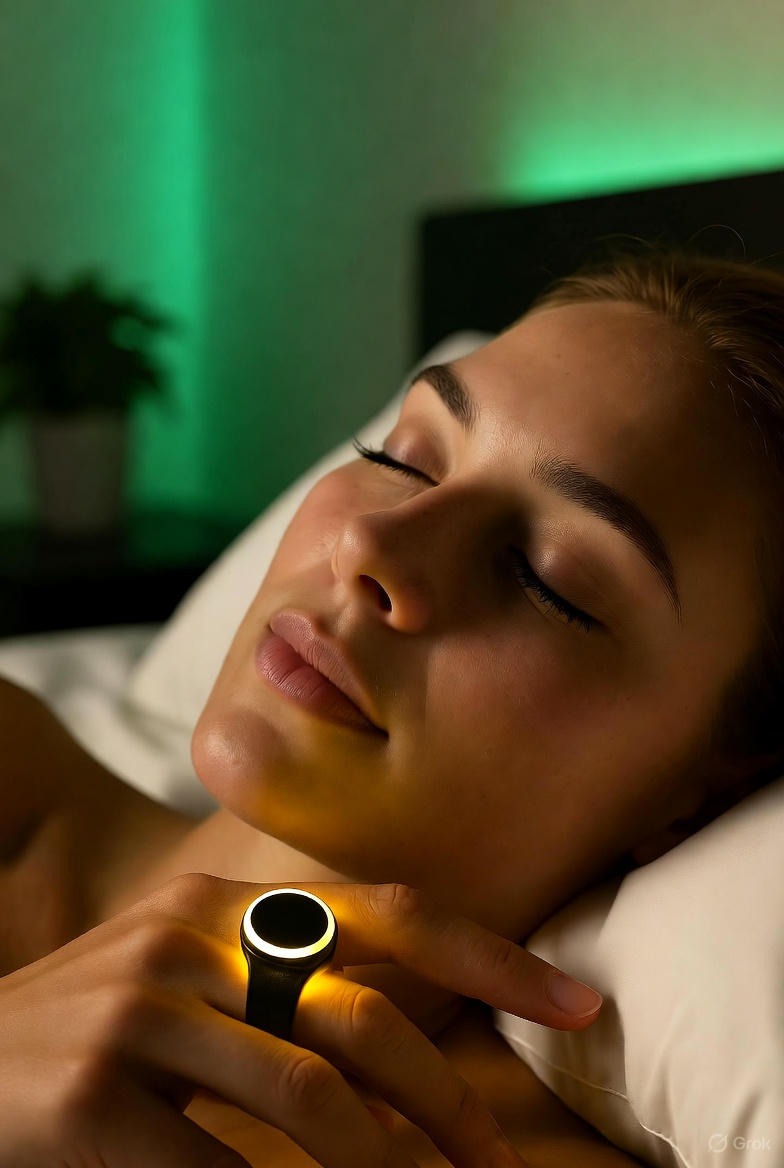
In the wellness world, sleep is the foundational metric. Understanding your sleep cycles, restfulness, and nightly biometrics is crucial for managing energy, mood, and long-term health. Here, the battery life and design clash between rings and watches reaches its peak, and a clear victor emerges.
A device can only track your sleep if it is on your body. Full stop. This simple truth is the kryptonite for the smartwatch's daily-charge model. As mentioned, if you charge your watch at night, you create a data gap. Some users try to charge during a shower or a short desk session, but this is often insufficient to fully top up a depleted battery and is easily forgotten.
The smart ring, with its week-long battery, obliterates this problem. You wear it to bed, every night, without exception. There is no scheduling conflict. This guarantees uninterrupted sleep data, which is far more valuable than sporadic data. Consistent tracking allows algorithms to establish a true baseline, recognize patterns, and provide meaningful insights about trends over time—not just isolated nightly scores.
Furthermore, the ring's form factor offers a secondary advantage for sleep tracking: comfort. A large watch can be cumbersome in bed, potentially snagging on sheets or feeling uncomfortable on the wrist during side-sleeping. A ring is virtually imperceptible. This comfort factor ensures you actually keep the device on, which is the first prerequisite for accurate data.
The result is a fundamental difference in sleep insight quality. With a watch, you might get 4-5 nights of data per week. With a ring, you get 7 out of 7. This completeness transforms your sleep dashboard from a collection of dots into a clear, continuous line—a true story of your rest. For anyone serious about sleep hygiene and recovery, this uninterrupted data stream is not a nice-to-have; it's the entire point. It's a key reason users report such transformative insights when they share their real customer reviews on their wellness journeys.
Battery life isn't just about longevity; it's intrinsically linked to the quality and consistency of the data your wearable collects. A sensor can only be accurate if it has enough power to operate correctly, and its algorithms are only reliable if they are fed a continuous stream of data.
Smartwatches, when their batteries are low, often enter a "power reserve" or "battery saver" mode. In this state, non-essential functions are shut down. This almost always includes the constant heart rate monitor, SpO2 measurements, and other background health sensors. The device becomes a simple watch. During this time, which could be hours at the end of every day for a heavy user, you have a data blackout. Gaps in data are the enemy of trend analysis and actionable insight.
Smart rings are designed to avoid this cliff. Their entire system is a "battery saver mode." They manage power so efficiently that sensors can run consistently at their intended sampling rates from 100% battery down to 5%. There is no degraded mode for health tracking. You get the same fidelity of data on day one as you do on day six. This consistency is paramount.
Consider heart rate variability (HRV), a critical metric for stress and recovery. HRV requires clean, consistent pulse waveform data. A device that frequently turns its sensors off or operates them intermittently due to power constraints cannot measure HRV reliably. The ring’s steady power allocation ensures sensors like the PPG have the stable energy they need to capture the fine-grained data required for advanced metrics.
In essence, the smartwatch's approach can lead to a feast-or-famine data scenario: rich data when charged, nothing when depleted. The smart ring provides a steady, dependable drip of high-fidelity biometric information. This reliable data stream is what allows for truly personalized insights and long-term trend analysis, forming the backbone of a meaningful wellness partnership with your device.
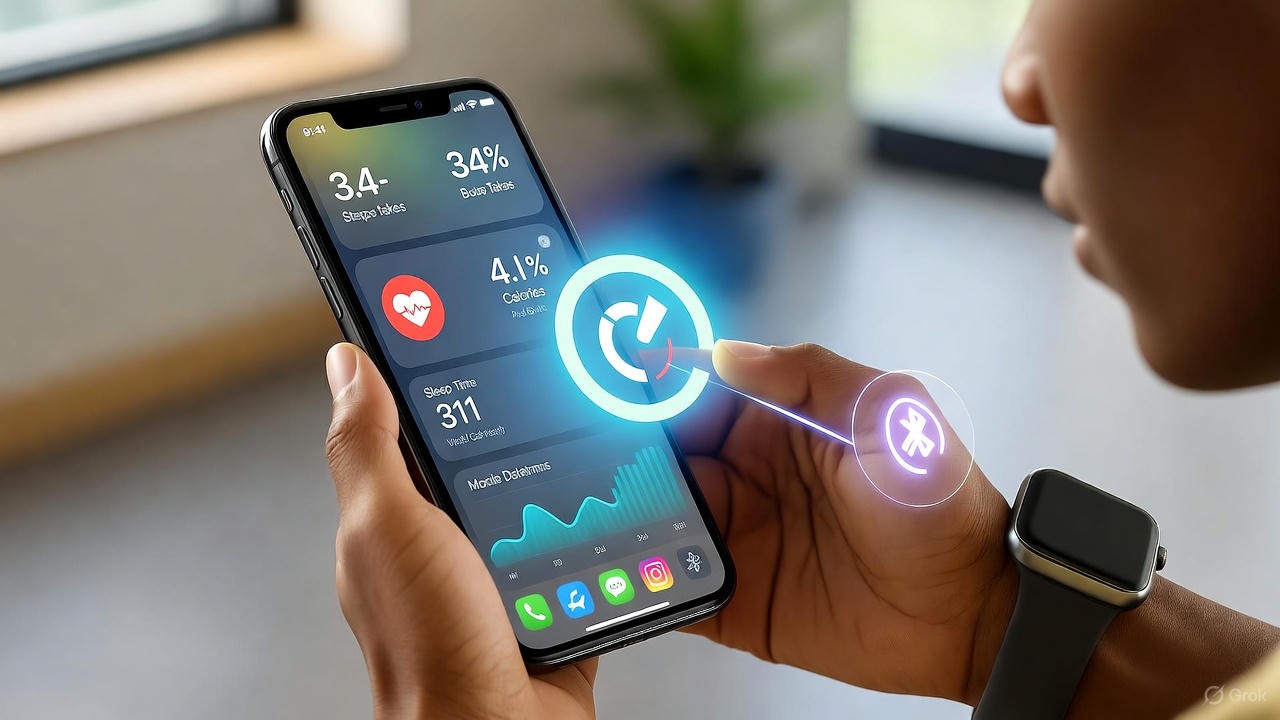
For the fitness-focused user, the battery life equation changes dramatically during workouts. This is the "stress test" for any wearable's power management, and it's where the devices' strategies diverge most sharply.
The Smartwatch: The All-in-One Power Gulper
Many smartwatches have a key feature: built-in GPS. This allows you to leave your phone behind and accurately map your run, cycle, or hike. It's incredibly convenient. However, activating the GPS receiver is one of the most power-intensive things a wearable can do. Couple that with the optical heart rate sensor running at its highest frequency (e.g., every second), and the screen potentially staying on to show your pace, and you have a perfect storm of battery drain. A 60-minute GPS workout can easily consume 15-25% of a smartwatch's total battery. For athletes training for long events like marathons or triathlons, battery life during activity is a genuine concern.
The Smart Ring: The Efficient Team Player
Smart rings typically do not have built-in GPS. This isn't an oversight; it's a power-conscious design choice. Instead, they act as a sensor hub that pairs with your smartphone. You bring your phone (which has a large battery and a powerful GPS chip), and the ring provides the complementary biometric data: continuous heart rate, effort, and recovery metrics. The ring's power draw during a workout increases only marginally, as it's mainly increasing the sampling rate of sensors it's already running efficiently.
This symbiotic relationship is key. It leverages the device each is best at: the phone handles navigation and mapping, the ring handles intimate biometrics. The ring’s battery life remains measured in days, even with daily workouts, because it avoids the massive GPS drain.
The Verdict for Athletes:
Ultimately, technology should serve us, not the other way around. The best wearable is the one that integrates so seamlessly it feels like a natural extension of yourself, not a piece of tech you must manage. Battery life is the single biggest factor in achieving this invisibility.
A device you have to charge every day is, by definition, top of mind. You feel its presence when you take it off at night and put it on the charger. You are aware of its limitations. A low battery warning is a minor but real interruption to your day, forcing a decision: find a charger now or risk it dying.
A device that lasts for a week disappears. You put it on and simply forget about it. It doesn't ask for anything. It doesn't create anxiety. It works continuously in the background, gathering the data that matters. The infrequent charging becomes akin to trimming your nails or watering a plant—a minor, periodic maintenance task for something that is just a part of you.
This is the profound lifestyle win of the smart ring's battery philosophy. It enables true 24/7 wearability. You can wear it sleeping, swimming, working, and playing without ever thinking about its charge state. This constant wear is what unlocks the most profound wellness insights, as it captures your body's signals across all states of being: stressed, relaxed, active, and asleep.
The smartwatch, for all its interactive brilliance, remains a device. The smart ring, through its enduring battery and minimalist design, aspires to become a habit. This distinction is at the core of the vision behind brands focused on seamless wellness, a principle you can explore in-depth by reading about our vision & values.
Lithium-ion batteries, the power source in all modern wearables, have a finite lifespan. Their capacity to hold a charge diminishes over time due to chemical aging, influenced by three main factors: time, temperature, and charge cycles. This is where charging frequency becomes a long-term durability issue.
A charge cycle is defined as using 100% of a battery's capacity, not necessarily from a single charge. Using 50% one day and recharging, then using 50% the next day, completes one full cycle. Therefore, a device charged daily will complete roughly 365 charge cycles per year. A device charged weekly completes only about 52 cycles per year.
The Math of Longevity:
The implication is clear: the smart ring's less frequent charging not only improves your daily experience but dramatically extends the functional lifespan of the device itself. It's a product built to last for years without suffering from "battery anxiety" as it ages. This sustainability and longevity aspect is a crucial, often overlooked part of the value proposition, reflecting a commitment to creating lasting products as highlighted on our about-us page.
As we've journeyed through the layers of this comparison—from power-hungry screens to sleep tracking supremacy, from daily chores to weekly rituals—a consistent, undeniable pattern has emerged. When the contest is defined purely by endurance, reliability, and seamless integration, the winner is clear.
The smart ring claims the battery life crown.
Its victory is not a narrow one. It is a decisive win built on a foundation of purposeful design. By forsaking the power-hungry display and embracing a singular focus on passive, persistent sensing, the smart ring achieves what the smartwatch cannot: multi-day, worry-free battery life that supports true 24/7 health monitoring.
The smartwatch remains the undisputed champion of interactivity and immediacy. It is a fantastic wrist-bound computer, a notification center, and a fitness tool with standalone GPS. But these features come at the steep, non-negotiable cost of daily charging, which inherently breaks the continuity of health data collection—especially during sleep.
The ring wins because it aligns its engineering with the core promise of a wellness wearable: to be an unobtrusive, always-on guardian of your biometrics. Its battery life isn't just a bigger number; it's the key that unlocks uninterrupted sleep tracking, consistent sensor accuracy, and a lifestyle free from charging anxiety. It transforms the device from a gadget you manage into a silent partner in your health.
This is more than a technical comparison; it's a philosophical choice. Do you prioritize interaction or insight? Immediate data on a screen, or long-term trends gathered silently in the background? For the modern wellness seeker who values holistic, continuous understanding over fragmented snapshots, the ring's endurance is not just an advantage—it's the entire game.
But the story doesn't end here. Endurance is paramount, but it's one part of a larger ecosystem. How do these devices actually use all the data they collect? What about the software experience, the depth of analysis, and the actionable guidance provided? The battery ensures the data stream is continuous, but the true value lies in what that stream reveals about your readiness, stress, and recovery.
In the next portion of our exploration, we will dive deep into the smart ecosystems that turn this relentless stream of biometric data into meaningful, personalized health intelligence. We'll examine the apps, the algorithms, and the insights that separate simple tracking from true understanding. The journey to optimize your well-being is just beginning. To continue exploring the future of personalized health technology, discover how Oxyzen works to bridge the gap between data and daily life.
Winning the battery life battle is a monumental achievement for the smart ring, but it raises the next critical question: to what end? Endurance is a means, not a goal. The ultimate purpose of a wearable is to translate raw biometric data—the relentless stream of heartbeats, movements, and temperature fluctuations it so faithfully collects—into actionable, personalized intelligence that improves your life. This is where the software, the algorithms, and the companion apps enter the arena. The device on your body is merely a sensor; the true magic happens in the smart ecosystem that interprets its signals.
A long-lasting battery provides a continuous, unbroken data feed. But if that feed pours into a poorly designed app with shallow insights or confusing metrics, the value plummets. Conversely, a device with shorter battery life might feed data into a brilliantly intuitive platform that offers genuine "aha!" moments. The hardware and software are two halves of a whole; one is useless without the other.
For the smartwatch, the ecosystem is often an extension of its brand's philosophy. Apple Health, Google Fit, and Samsung Health are vast, sprawling platforms that aggregate data from multiple sources—your watch, your phone, third-party apps—and attempt to present a unified picture. Their strength is breadth and integration with a wider device universe. For the smart ring, the ecosystem is typically more focused, built from the ground up to decode the specific, nuanced data that 24/7 wear provides, with a laser focus on holistic wellness, recovery, and readiness.
In this section, we move beyond the hardware's stamina and into the cerebral world of software. We will dissect how these competing ecosystems transform volts and bytes into wisdom about your body. We'll explore which platform turns your wearable from a simple tracker into a true health advisor.
The companion app is your primary portal into your biometric world. It’s where you go to understand your sleep score, your stress levels, your activity. The user experience (UX) and user interface (UI) design of these apps are crucial; they can either illuminate your path to better health or bury you in a confusing avalanche of graphs.
The Smartwatch App: The Everything Hub
Smartwatch companion apps (like Apple’s Fitness/Health apps or Samsung Health) are designed as comprehensive health dashboards. They are information-dense, often displaying dozens of metrics on the main screen: steps, heart rate, exercise minutes, standing hours, ECG readings, blood oxygen, sleep stages, and more. This can be empowering for data enthusiasts who love to drill down into every detail.
However, this approach risks data overload. For the average user seeking clear guidance, the sheer volume of information can be paralyzing. What does it mean if your resting heart rate is 58 but your HRV is low? Should you prioritize sleep or activity today? The app presents the facts but often leaves the synthesis and prioritization to you. It's a powerful toolkit, but it requires you to be your own mechanic.
The Smart Ring App: The Curated Narrative
Smart ring apps (like those from Oura, Circular, and the platform for Oxyzen) tend to follow a different, more curated philosophy. They prioritize clarity and narrative over raw data density. Upon opening the app, you are often greeted with a single, holistic score or a few key metrics—like a Readiness Score, a Sleep Score, and an Activity Target.
These scores are algorithmic syntheses of multiple underlying data points (sleep, HRV, resting heart rate, temperature, activity balance). The app does the heavy lifting of interpretation for you. Instead of showing you ten graphs and asking you to connect the dots, it says, "Based on your body's signals, you are 85% ready for today. Consider focusing on steady-state cardio rather than high-intensity training." This approach provides immediate, actionable context.
Key UX Differences:
The ring’s app philosophy aligns perfectly with its hardware design: minimalist, focused, and aimed at reducing cognitive load to provide clear wellness guidance. It’s designed not for the data scientist, but for the individual seeking a clearer, simpler path to feeling their best. For a deeper look at how this guided approach can transform your daily routine, our blog offers a wealth of resources on interpreting wellness data.
The true brain of any wearable ecosystem isn't the app's pretty interface; it's the complex algorithms running in the cloud that transform sensor readings into meaningful biomarkers and scores. This is the proprietary "secret sauce" of each company, and where the focus of rings and watches often diverges significantly.
Smartwatch Algorithms: The Jack-of-All-Trades
Smartwatch algorithms are engineered for breadth and real-time detection. They excel at:
Their weakness often lies in holistic synthesis. While they collect a mountain of data, the algorithms are typically built in silos: a sleep algorithm, a workout algorithm, a heart health algorithm. They are less adept at answering the integrative question: "What does my workout yesterday, combined with my poor sleep last night, mean for my body's ability to handle stress today?"
Smart Ring Algorithms: The Synthesis Specialists
Smart ring algorithms have a different core mission: to understand your body's physiological state and readiness. They are built for synthesis from the ground up. Their strengths include:
The ring’s algorithm is like a dedicated personal coach who observes you 24/7, noticing not just your explicit workouts but how your body is responding to all of life's stressors—work, travel, social events, diet. The watch’s algorithms are more like a team of specialized referees, each excellent at calling a specific play but not coaching the whole game.
This depth of algorithmic intelligence is what turns the ring's continuous data stream into genuine wisdom. It's the reason users often report the ring "knowing" they were getting sick before they did. This sophisticated backend is a core part of how Oxyzen works, translating silent signals from your finger into a clear picture of your well-being.
Perhaps the most significant conceptual contribution of the modern smart ring ecosystem is the popularization of the Readiness Score or Body Battery concept. This is the ultimate expression of algorithmic synthesis—a single, easy-to-understand number or percentage that answers the most important daily question: "What kind of day can my body handle?"
This metric is a direct response to the limitations of simple activity tracking. Counting steps or active minutes only measures output, not your body's capacity for that output. The Readiness Score measures input—your body's recovered resources.
How It's Calculated:
A readiness score is a complex algorithm that typically weights three key pillars:
A high score (e.g., 85-100) suggests your body is resilient, primed for physical or mental challenge. A low score (e.g., < 70) is a clear signal from your body that resources are depleted, and you should prioritize rest, recovery, and lower-stress activities.
The Watch's Approach:
Some high-end smartwatches have adopted similar concepts (Garmin's "Body Battery," Whoop's "Strain & Recovery"—though Whoop is a strap, not a watch). Apple's Health app offers "trends" but not a unified readiness score. For many watches, this holistic view is an add-on, not the central thesis.
The Ring's Domain:
For smart rings, the Readiness Score is often the centerpiece of the entire experience. It's the first thing you see in the morning. The entire ecosystem—the sensor fusion, the 24/7 data, the algorithms—is orchestrated to produce this one, powerful piece of guidance.
Why This Matters:
The readiness revolution changes your relationship with exercise and wellness. It moves you from a rigid, calendar-based schedule ("I must run 5 miles today") to a body-informed, adaptive approach. It teaches you to listen to your body's signals, helping you avoid overtraining, burnout, and injury. It empowers you to push hard on days you are truly capable and to rest guilt-free on days you need it. This paradigm shift from "how much did I do?" to "how ready am I?" is a fundamental advancement in personal health technology.
Closely tied to the readiness concept is the ability to monitor your autonomic nervous system (ANS) in real-time. The ANS has two main branches: the sympathetic ("fight or flight") and the parasympathetic ("rest and digest"). Modern life often keeps us in a chronic, low-grade sympathetic state, which is detrimental to long-term health. The best wearable ecosystems now aim to quantify this.
The Gold Standard Metric: Heart Rate Variability (HRV)
HRV is the slight variation in time between each heartbeat. Higher HRV generally indicates a strong, resilient parasympathetic system and good recovery. Lower HRV suggests dominant sympathetic activity (stress, fatigue, or illness). It is an incredibly sensitive and personal metric.
Smartwatch HRV:
Most advanced smartwatches can measure HRV, often through a nightly snapshot or an on-demand breathing session. However, the usefulness can be limited by:
Smart Ring HRV & Stress Monitoring:
This is a zone where the ring's persistent wear shines. By taking frequent, passive HRV measurements throughout the day and night, the ring can:
Furthermore, some ring ecosystems are introducing continuous stress monitors that use HRV, RHR, and activity to assign a real-time stress level throughout the day. This isn't about emotional stress per se, but physiological strain on your nervous system.
This deep dive into your ANS provides a level of self-awareness previously available only in a lab. It allows you to not just feel stressed, but to see it quantified and understand its physiological footprint. More importantly, it allows you to test the efficacy of recovery techniques: does that 10-minute meditation actually lower your physiological stress score? The ring and its ecosystem provide the data to answer that question definitively. For practical tips on managing stress informed by this kind of data, explore the resources on our blog.
Sleep tracking is a standard feature, but all sleep data is not created equal. The depth of analysis and the insights derived from your nighttime data vary dramatically between ecosystems, largely dependent on the quality and type of sensors used.
Smartwatch Sleep Tracking:
Modern smartwatches use movement (accelerometer) and heart rate to estimate sleep stages (awake, light, deep, REM). The latest models have become quite accurate at this basic staging. Some add blood oxygen (SpO2) sensing to detect potential sleep apnea events and skin temperature for broader trends.
Smart Ring Sleep Tracking: The Laboratory on Your Finger
The smart ring turns your finger into a powerful sleep lab. It uses the same core sensors but from a location with key advantages:
This superior data fuels more advanced insights:
The ring's ecosystem doesn't just tell you how long you slept; it strives to tell you how well you slept and what physiological processes were—or weren't—taking place during that time. It provides a causal link between your daytime activities and your nighttime recovery, creating a closed feedback loop for better sleep hygiene.
Activity tracking is another area where the underlying philosophy of the ecosystem dictates the experience. Is the goal to encourage more movement, or to understand the impact of movement on your body? The approaches differ.
The Smartwatch: The Active Coach
The watch ecosystem is built for performance and motivation. It excels at:
Its framework is often prescriptive: "You need to burn X calories or exercise for Y minutes today." It's about achieving targets.
The Smart Ring: The Impact Analyst
The ring ecosystem approaches activity with a different lens: strain and recovery balance. Its focus is on:
The ring's philosophy is less about beating personal records every day and more about sustainable, intelligent movement that supports long-term health without leading to burnout. It’s the ecosystem for the athlete who understands that rest is part of training, and for the wellness seeker who wants to stay active without overdoing it.
A static wearable is a limited one. The most powerful ecosystems are those that learn and adapt to you over time, becoming more personalized and accurate the longer you wear the device.
Smartwatch Personalization:
Watches personalize mainly through manual user input and basic learning. You set your health details (age, weight, sex), your fitness goals, and maybe your workout schedule. The watch learns your walking/running gait for improved distance calibration. Some can even create a personalized cardio fitness (VO2 Max) estimate. However, the depth of adaptation to your daily physiological rhythms is often limited.
Smart Ring Personalization: The Evolving Baseline
This is where the ring's 24/7 data collection enables a deeper level of machine learning. From day one, the system is building a dynamic, multi-faceted baseline for you:
This adaptive personalization transforms the device from a generic tracker into a true companion that understands your normal, so it can better identify what's abnormal. It provides context that is meaningful to you alone. This journey of co-discovery with your own body is a fascinating process, and many users share their stories of learning on our testimonials page.
No wearable is an island. The most valuable health data is that which can be shared securely with other apps and professionals to create a complete picture. The openness or "walled garden" nature of an ecosystem is a critical consideration.
The Smartwatch Walled Gardens (and Exits):
Apple Health and Google Fit are designed as central hubs. Apple Health, in particular, is excellent at aggregating data from many sources (watches, scales, blood pressure cuffs, third-party apps) into one place. However, getting data out of these ecosystems to share with a third-party service or a doctor can sometimes be cumbersome. They are powerful silos.
Smart Ring Ecosystems:
Ring platforms vary in openness. Some, like Oura, have opened their API, allowing data to be exported to platforms like Apple Health, Google Fit, Strava, and even some electronic health record systems. This is crucial. It means the rich recovery and readiness data from your ring can be combined with your workout data from Strava and your nutrition data from MyFitnessPal inside Apple Health, giving you or your health coach a unified dashboard.
The Future: Integration with Healthcare
The most forward-looking ecosystems are exploring pathways to legitimate healthcare integration. This includes:
The ecosystem that prioritizes secure, user-controlled data portability positions itself not just as a consumer gadget, but as a component of a future-forward, integrated health management system. Understanding a company's philosophy on data ownership and sharing is key, a topic often addressed in their foundational principles, like those you can find on our about-us page.
Human beings are social creatures, and motivation often comes from community. Wearable ecosystems have tapped into this with varying approaches that reflect their core philosophies.
Smartwatch Communities: The Gamified Leaderboard
Watch ecosystems are masters of social motivation through competition. Features like:
This approach leverages positive peer pressure and gamification to drive consistent activity. It’s highly effective for extroverts and those motivated by external validation and friendly rivalry.
Smart Ring Communities: The Mindful Collective
Ring communities tend to be less about competition and more about shared learning and support. You won't typically find leaderboards comparing readiness scores. Instead, you might find:
This fosters a community centered on mindfulness and self-improvement rather than outright competition. It aligns with the ring's internal focus: listening to your body and optimizing your personal well-being, not beating someone else.
Neither approach is inherently better; they serve different psychological profiles. One fuels you by looking outward at others' achievements; the other fuels you by looking inward and sharing the journey of self-discovery with like-minded individuals. This sense of shared purpose and discovery is part of the brand journey for many wellness-focused companies.
Having dissected the app experiences, algorithms, and philosophies, we can now crown a winner in the ecosystem battle. But as with hardware, the victory is defined by the goal.
For the Data Power User Who Wants Control: If you love raw data, enjoy exploring dozens of metrics, use multiple fitness apps, and want a device deeply integrated into your smartphone's broader ecosystem (notifications, payments, apps), the smartwatch platform is your domain. It offers unparalleled breadth and customizability.
For the Wellness Seeker Who Wants Guidance: If your primary goal is to understand your body's signals, optimize recovery, manage stress, and receive clear, synthesized daily guidance without data overload, the smart ring ecosystem is the undisputed champion.
The ring's ecosystem wins because it is purpose-built to solve the problem its hardware enables: making sense of continuous, intimate biometrics. Its algorithms are specialists in synthesis, its app is designed for clarity, and its core metrics (Readiness, Recovery) are transformative for daily decision-making.
It turns the ring's superior battery life from a mere convenience into a strategic advantage. The continuous data feed allows its algorithms to learn, adapt, and provide insights of a depth and personalization that sporadic data simply cannot support. The watch ecosystem is a brilliant generalist; the ring ecosystem is a masterful specialist in the art of holistic wellness.
The fusion of the ring's enduring hardware with its intelligent, intuitive software creates a seamless feedback loop: wear it forgetfully, check in briefly, receive wise guidance, act, and repeat. This harmonious integration marks the pinnacle of the modern wellness wearable experience, moving far beyond tracking and into the realm of true partnership in health. For those ready to explore this integrated approach to well-being, a great next step is to read our complete guide on building a data-informed wellness routine.
We’ve established the smart ring as the victor in battery endurance and the champion of intelligent, synthesized wellness ecosystems. But a device can have the longest battery and the smartest algorithms and still fail at the most fundamental level: being something you actually want to wear, always. The final, and perhaps most personal, frontier in this comparison is design and wearability. This is where engineering meets ergonomics, and technology meets personal expression. It's the doctrine that determines whether a device becomes a natural extension of your body or an awkward gadget you tolerate.
Wearability isn't just about comfort; it’s a multi-faceted concept encompassing aesthetics, physical feel, social acceptability, and situational appropriateness. A device that feels bulky during sleep, clashes with your professional attire, or requires constant removal for daily activities has created a friction that undermines its purpose of continuous, passive monitoring. The goal of the perfect wellness wearable is to achieve invisibility—not in function, but in presence.
This is the ultimate test of form following function. The smartwatch, born from the tradition of timepieces, carries certain expectations and physical constraints. The smart ring, a newer category, has the freedom—and the challenge—to redefine what a wearable can be. We will now explore how each contender fares in the silent battle for a permanent place on your person.
The physical canvas each device occupies dictates its entire design language, limitations, and potential.
The Smartwatch: The Wrist Computer
The smartwatch inherits its form from centuries of wristwatch design: a circular or rectangular face (or "case") connected to a band, sitting on the dorsal side of the wrist. This offers significant real estate for:
This form factor is inherently prominent. It is a visible piece of technology. Design differentiation happens in the materials (aluminum, stainless steel, titanium), the band options (silicone, leather, metal), and the digital watch faces. While efforts are made to make watches slimmer, the fundamental architecture—a screen-powered computer on a strap—places hard limits on miniaturization. It will always have a certain thickness and weight.
The Smart Ring: The Band of Intelligence
The smart ring is constrained by a much smaller, cylindrical canvas: the finger. This radical limitation forces extreme engineering but unlocks unique advantages:
The ring's form factor shifts the design paradigm from "worn computer" to "digital jewelry." The aspiration is to create an object that feels less like a tech gadget and more like a refined accessory—something you might choose to wear even if it had no "smart" features. Its success is measured in millimeters of thickness and grams of weight. The goal is not to be noticed for its technology, but for its subtlety. This philosophy of minimal, elegant design is core to the identity of modern smart ring brands, a principle evident when you discover how Oxyzen works to integrate technology seamlessly into daily life.
A device tracking your 24/7 life must be comfortable 24/7. This is a non-negotiable requirement for data continuity, and it's where many wearables reveal their flaws. Comfort is tested across a spectrum of activities: typing, sleeping, exercising, and simply existing.
The Smartwatch: The Occasional Irritant
For most, a modern smartwatch is comfortable for daytime wear. However, its comfort is situational and can break down:
The Smart Ring: The Forgotten Sentinel
The ring, when properly sized, aims for a state of sensory habituation—you forget it's there.
The ultimate comfort test is this: do you ever feel the need to take it off just to get relief? For many smartwatch wearers, the answer is yes, especially at night. For ring wearers, the answer is typically no, outside of charging. This allows the ring to pass the "unconscious wear test" and fulfill the promise of truly continuous, unobtrusive monitoring. This seamless experience is a common theme in positive user experiences shared by long-term wearers.
A wearable sits at the intersection of technology and personal style. It is a visible accessory that sends a message about the wearer. The aesthetic appeal of rings and watches diverges sharply, catering to different sensibilities.
The Smartwatch: The Conspicuous Tech Statement
A smartwatch is, by its nature, a statement piece. It says, "I am tech-forward, connected, and data-driven." Its design language is often futuristic, sporty, or a modern take on classic watch aesthetics (like the Apple Watch Hermès collaboration).
The Smart Ring: The Understated Companion
The smart ring embraces minimalism and subtlety. Its design statement is one of discretion and sophistication.
The choice is between active expression and quiet integration. Do you want a device that is a part of your style and a visible tool? Or do you want a device that disappears into your personal aesthetic, working silently in the background? The ring’s aesthetic is its ultimate camouflage, allowing it to be worn in situations where a smartwatch would be a distracting anachronism.
A perfect fit is critical for both accuracy and comfort, but the processes and implications of sizing differ dramatically between wrists and fingers.
Smartwatch Sizing: The Adjustable Band
Watch sizing is generally straightforward and adjustable. You choose a case size (e.g., 41mm vs. 45mm) based on wrist size and preference, and the band is either adjustable via pins/links (metal) or a buckle/loop (silicone, leather). You can achieve a precise fit that can be loosened or tightened slightly throughout the day if needed. The fit doesn't need to be exact to the millimeter for the sensors to work, though a snug fit improves heart rate accuracy.
Smart Ring Sizing: The Precision Mandate
Ring sizing is an exact science with zero room for error. A difference of half a size can mean the ring is too loose (spinning, risking loss, poor sensor contact) or too tight (uncomfortable, restricting circulation).
The ring demands a higher commitment upfront to the sizing process. This barrier, however, ensures that once perfected, the fit is seamless and permanent. The sensor maintains perfect, consistent contact with the skin on the underside of the finger, which is crucial for the quality of its PPG and temperature data. Getting this right is so important that companies dedicate significant support to it, as you'll find addressed in our comprehensive FAQ.
A device worn every single day will face the gauntlet of real life: bumps against doorframes, exposure to water and soap, temperature extremes, and the general wear and tear of existence. Durability isn't a luxury; it's a requirement for a true 24/7 companion.
Smartwatch Durability: The Glass Frontier
Modern smartwatches are built to be tough, but they have clear vulnerabilities:
Smart Ring Durability: The Solid State Advantage
The ring's form factor, when made from the right materials, offers inherent durability:
The ring is built like a tank in a tiny package. Its durability supports its mission: to be worn without caution or concern, in every element of your life. This resilience ensures the device itself won't become a point of failure in your long-term wellness journey, a testament to the engineering focus you can learn about in our brand journey.
Our devices exist within social and professional norms. There are times when the conspicuous use of technology is considered rude, distracting, or unprofessional. This is a hidden but powerful dimension of wearability.
The Smartwatch Social Friction:
The smartwatch, by design, seeks your attention. This can create friction:
The Smart Ring Social Stealth:
The ring operates in complete social silence. It creates zero friction because:
This allows the ring to be a true constant. You never have to take it off to be polite or professional. This uncovers a profound benefit: it can collect data during your most socially and mentally demanding moments—high-stakes negotiations, public speaking, intense social gatherings—providing unique insight into how these experiences affect your physiology. It is the only wearable that can ethically and unobtrusively monitor you through your entire social life.
We've touched on this concept throughout, but it deserves its own spotlight. The highest compliment you can pay a wearable is to forget you're wearing it. This "forgetting factor" is the pinnacle of design and wearability, and it is the ultimate enabler of the device's core purpose.
Why Forgetting Matters:
The Smartwatch: Hard to Forget
The watch constantly reminds you of its presence. The vibration for notifications, the need to charge it daily, the feeling of the band, the act of raising your wrist to see the time—all are conscious interactions. It is an active partner that requires engagement.
The Smart Ring: Designed to Disappear
The ring is engineered from the ground up to achieve this state of being forgotten. Its lightweight, contoured fit, lack of notifications, week-long battery, and durable, always-on design all conspire to make it fade into the background of your somatic awareness. It becomes like a wedding band—a part of you that you only notice by its absence.
This is its masterstroke. By achieving invisibility on your hand, it achieves hyper-visibility into your health. It collects the most honest, continuous dataset possible because it doesn't ask for your attention or your compliance. It just works. This seamless integration is the final, critical piece that makes the smart ring not just a better tracker, but a better habit. For those seeking a wellness tool that works with their life, not as an added task, exploring the philosophy behind such design is enlightening, as detailed on our about-us page.
After evaluating form, comfort, style, fit, durability, and social integration, the verdict in the design and wearability category is decisive.
The Smartwatch remains a powerful, expressive, and customizable piece of wrist-based tech. It wins for users who want their wearable to be a visible, interactive tool—a source of notifications, a fitness coach on the wrist, and a statement of personal tech style. Its adjustability and familiar form are major assets.
The Smart Ring is the undisputed champion of unobtrusive, continuous wearability. It wins for anyone whose priority is zero-friction, 24/7 health monitoring that never gets in the way of life, sleep, work, or style. Its comfort is superior, its social stealth is unmatched, and its durability supports a "wear it and forget it" mentality.
The ring's design doctrine is perfectly aligned with its battery and ecosystem advantages. Its form enables its week-long battery. Its comfort enables the continuous wear that feeds its intelligent algorithms. Its subtlety allows it to be worn everywhere, gathering the complete picture of your life. In the quest for a wearable that truly becomes a part of you—not just physically, but habitually—the smart ring stands alone.
It proves that the most advanced technology isn't the one that shouts for your attention, but the one that quietly, reliably, and elegantly does its job in the background, empowering you to live your life fully while it guards your well-being. This holistic approach to design, where every element serves the goal of seamless integration, is what sets the modern smart ring apart as the next evolutionary step in personal health technology. To see how this philosophy translates into a real-world product experience, you can learn more about smart ring technology and its user-centric design.
Your Trusted Sleep Advocate: Sleep Foundation — https://www.sleepfoundation.org
Discover a digital archive of scholarly articles: NIH — https://www.ncbi.nlm.nih.gov/
39 million citations for biomedical literature :PubMed — https://pubmed.ncbi.nlm.nih.gov/
Experts at Harvard Health Publishing covering a variety of health topics — https://www.health.harvard.edu/blog/
Every life deserves world class care :Cleveland Clinic - https://my.clevelandclinic.org/health
Wearable technology and the future of predictive health monitoring :MIT Technology Review — https://www.technologyreview.com/
Dedicated to the well-being of all people and guided by science :World Health Organization — https://www.who.int/news-room/
Psychological science and knowledge to benefit society and improve lives. :APA — https://www.apa.org/monitor/
Cutting-edge insights on human longevity and peak performance:
Lifespan Research — https://www.lifespan.io/
Global authority on exercise physiology, sports performance, and human recovery:
American College of Sports Medicine — https://www.acsm.org/
Neuroscience-driven guidance for better focus, sleep, and mental clarity:
Stanford Human Performance Lab — https://humanperformance.stanford.edu/
Evidence-based psychology and mind–body wellness resources:
Mayo Clinic — https://www.mayoclinic.org/healthy-lifestyle/
Data-backed research on emotional wellbeing, stress biology, and resilience:
American Institute of Stress — https://www.stress.org/


