


Ring vs Watch: The Comfort Factor in 24/7 Health Monitoring
Comparing the comfort of rings and watches for all-day, everyday wear.
Comparing the comfort of rings and watches for all-day, everyday wear.
%402x.svg)
In the relentless pursuit of optimal health, we’ve entered the era of the quantified self. No longer satisfied with annual check-ups, we demand real-time insights into our heart rhythms, sleep architecture, stress levels, and recovery status. This hunger for continuous data has birthed a wearable war, with two primary contenders vying for dominance on our bodies: the smartwatch and the smart ring.
On the surface, the choice seems trivial—a matter of style or screen preference. But dig deeper, and you uncover a fundamental battleground that dictates the very quality and utility of the data we seek: comfort. Not the fleeting comfort of a plush sofa, but the profound, non-negotiable comfort required for 24/7, 365-day wear. This is where the narrative shifts from features on a spec sheet to the human experience of living with technology.
Can a device you notice truly capture what happens when you’re not noticing—during deep sleep, moments of unconscious stress, or peak physical exertion? The smartwatch, a marvel of functionality worn on the wrist, faces inherent challenges in its quest for constant contact. The smart ring, a minimalist band on a finger, presents a radically different proposition centered on ergonomic forgettability.
This deep dive isn't about declaring a simple winner. It's an exploration of biomechanics, sensory perception, behavioral science, and material innovation. We'll dissect why comfort isn't a luxury feature but the foundational pillar of effective, longitudinal health monitoring. By examining the intimate relationship between device and body, we can understand which form factor truly unlocks the promise of seamless, lifelong health intelligence. The journey to understanding your body begins with a simple question: What are you willing to wear, and forget you're wearing, every single moment of your life?

The dream of personalized health is predicated on one irreducible principle: continuity. Sporadic data points are like reading random pages from a novel—you might catch a thrilling scene or a poignant dialogue, but you’ll completely miss the plot, the character development, and the underlying themes. Our bodies are not static machines; they are dynamic, circadian systems that tell their story across full days and nights.
Consider sleep, arguably the most critical pillar of health. A wearable that you charge overnight or remove because it’s cumbersome provides a catastrophic data gap. It cannot capture your sleep latency (how long it takes to fall asleep), the architecture of your sleep cycles (light, deep, REM), or disruptive events like apnea or nocturnal heart rate spikes. This is akin to a finance app that only tracks your spending from 9 AM to 5 PM. You’re missing the most significant transactions.
Beyond sleep, our bodies operate on rhythms—ultradian, circadian, and infradian. Stress hormones like cortisol follow a precise diurnal pattern. Heart Rate Variability (HRV), a key metric for nervous system resilience and recovery, fluctuates throughout the day and is most informatively measured during sleep, free from conscious activity. A device worn only during waking hours cannot map these rhythms. It offers a portrait, not a time-lapse.
Furthermore, actionable health insights often come from detecting subtle deviations from your personal baseline. An elevated resting heart rate or depressed HRV for a few consecutive nights can be the earliest sign of impending illness, overtraining, or chronic stress. Without 24/7 wear, establishing that true, sleep-based baseline is impossible, and these early warnings are lost. As we explore on our blog in articles about longitudinal health tracking, the power is in the trend line, not the snapshot.
The 24/7 mandate also exposes the fallacy of the "feature checklist." A smartwatch may have an ECG app, but if you’re not wearing it during the random moment you feel an atrial fibrillation episode, the feature is useless. Continuous wear ensures the device is always on duty, ready to capture the anomalies that matter most. The goal is not to look at your health data; it’s to have your health data looking out for you, silently and constantly. This relentless guardianship is only possible when the device becomes a seamless extension of yourself, not a gadget you manage. For a device dedicated to this philosophy of unobtrusive, constant monitoring, you can learn more about the Oxyzen smart ring’s approach on our homepage.
The wrist is a logical, traditional home for timekeeping. It’s visible, accessible, and socially accepted. For smartwatches, it’s a platform for powerful micro-computers with vibrant touchscreens, speakers, and a suite of sensors. Yet, this very form factor creates a series of inherent compromises for the goal of 24/7 health monitoring.
From a pure comfort perspective, the wrist is a complex joint. Its circumference changes with hand position (flexion, extension, pronation). A watch band must be tight enough for optical heart rate sensors to maintain contact, yet loose enough not to constrict during these movements. This often leads to a frustrating "goldilocks" scenario: too loose for accurate sleep data, too tight for comfort, and almost never just right all the time. The bulk of the watch case itself can dig into the dorsal side of the wrist during extreme flexion, such as when doing push-ups, typing, or sleeping with your wrist bent.
Practically, the wrist is a high-impact zone. It constantly bumps against desks, doors, and other surfaces. A large smartwatch face is prone to scratches and cracks, creating a cognitive burden of constant awareness to "protect" your device. This is the antithesis of forgettability.
There are also situational incompatibilities. Any activity involving wrist wraps (weightlifting), gloves (cold weather sports, mechanics), or simply the desire for unimpeded movement (yoga, piano playing) makes a smartwatch intrusive. It can get caught on clothing, blankets, or equipment. For professionals in healthcare, food service, or any field requiring strict hygiene, a grooved watch band can harbor bacteria and is often prohibited.
Perhaps the most significant comfort challenge is sensory salience. A smartwatch is, by design, a notification center. Every buzz, beep, and flash draws your conscious attention to the device on your wrist. This constant feedback loop reinforces its presence as an external distraction, not an integrated part of you. The goal of health monitoring is to reduce cognitive load about your health, not increase your overall digital interruptions. You can’t forget you’re wearing a device that’s constantly reminding you it’s there.
While smartwatches are phenomenal tools for fitness tracking, communication, and daytime metrics, their form factor imposes a ceiling on true, uninterrupted 24/7 wear. They are, for many, an active device for an active part of the day. The quest for continuous, passive insight requires a different paradigm—one that addresses these fundamental ergonomic and psychological friction points.

If the wrist is a bustling town square, the finger is a quiet, secluded lane. This shift in location is not merely incremental; it’s transformative for the wearability equation. The finger, particularly the base of the finger, offers a unique anatomical advantage for constant, low-profile wear.
First, the cross-section of a finger is more consistent than that of a wrist. While fingers do swell slightly with heat or exercise, the bony structure provides a stable foundation. A ring sized correctly rotates freely but doesn’t experience the drastic diameter changes of a wrist. This allows for a secure, consistent fit that maintains sensor contact without needing a tight, tourniquet-like grip. The sensors sit against the soft palmar side, where vasculature is rich and close to the surface—an ideal spot for photoplethysmography (PPG) heart rate monitoring.
The psychological and sensory impact is even more profound. We are culturally and neurologically accustomed to the presence of a ring. A wedding band or a simple signet ring becomes a part of our somatic map—the brain’s internal model of our body. After a short adaptation period, we filter it out. This phenomenon, called habituation, is the holy grail of wearable design. A smart ring leverages this existing neural pathway for adornment, slipping into a category the brain is already programmed to ignore.
Furthermore, the finger is largely exempt from the high-impact clashes of daily life. While we instinctively use our hands to protect ourselves, the base of the finger is rarely the primary point of contact. A well-designed ring with a smooth, rounded profile presents a minimal snag hazard. It lives in the space between knuckles, shielded during most activities.
This discreetness enables a form of monitoring that is truly ambient. There is no screen lighting up in a dark bedroom. No vibration on your wrist disturbing a moment of focus or deep sleep. The ring collects data in the background, with a physical presence so subtle it bypasses conscious awareness. It doesn’t ask for your attention; it earns your trust through its silence. This is the core of the smart ring value proposition: it is a sensing device first, not a notification device. For those curious about the design philosophy behind such a discreet health tool, our story delves into the journey of creating a device meant to be felt on the body, not on the mind.
Sleep is the ultimate stress test for a wearable’s comfort and, by extension, its data legitimacy. It is a state of vulnerability, unconsciousness, and often unpredictable movement. The bedroom is a sacred space for recovery, where even the slightest irritant can fragment sleep architecture and negate the very recovery we’re trying to measure. This makes sleep the most critical, and revealing, arena in the ring vs. watch debate.
Imagine trying to fall asleep with a smartphone strapped to your wrist. Even a sleek, lightweight smartwatch presents a notable mass. As you shift from back to side, that mass presses against the wrist bone (ulnar styloid) or digs into the mattress. For side sleepers—the majority of adults—this can cause pressure points, discomfort, and conscious repositioning. The act of trying not to feel the device directly interferes with the process of letting go into sleep.
Watch bands introduce another variable. Silicone can cause sweating and skin irritation. Metal bands can be cold and pinch hairs. Leather bands aren’t suited for prolonged moisture from nighttime sweating. Any discomfort, however minor during the day, is magnified in the quiet, sensory-heightened state of trying to sleep. The result? Users often resort to removing the watch for sleep, creating the data gap we’ve established as catastrophic, or they endure it, potentially compromising sleep quality.
A well-designed smart ring, in contrast, faces no such battle. The hand is typically outside the direct pressure zone of the body during sleep. Fingers do not bear weight. A smooth, rounded ring profile presents no pressure points. There are no straps to adjust or buckles to press against the skin. For the vast majority of users, once the initial day or two of adaptation passes, the ring becomes imperceptible during sleep.
This isn’t just about subjective comfort; it’s about objective data integrity. A device that causes micro-awakenings or prevents natural movement will skew its own data. It might record "restlessness" that it caused, or fail to capture true deep sleep because the wearer couldn’t achieve a comfortable position. The ring, by virtue of its minimal interference, is more likely to record your actual sleep, not a sleep distorted by its own presence.
Passing the sleep test is the first and most important hurdle for any device claiming to provide holistic health insights. If a wearable fails here, its data is incomplete at best and misleading at worst. The comfort required for seamless sleep wear is not an add-on; it is a prerequisite for validity.
Achieving the "forgotten" feeling is not an accident; it is a deliberate triumph of material science and ergonomic design. While a smartwatch designer battles the constraints of packing components behind a screen, a smart ring engineer must solve a more intimate puzzle: how to house advanced electronics in a shape that conforms to a living, moving, feeling part of the human body.
The choice of material is the first layer. Titanium has emerged as a gold standard for high-end smart rings, and for good reason. It offers an exceptional strength-to-weight ratio, meaning a ring can be incredibly durable yet remarkably light. It is also hypoallergenic and highly biocompatible, resisting corrosion from sweat and skin acids. This contrasts with some watch case materials or alloy bands that can cause dermatitis in those with sensitive skin.
The interior profile is where true ergonomic magic happens. A flat interior surface is uncomfortable, as it creates pressure points along the edges. Premium smart rings feature a domed interior—a gently curved inner surface that mirrors the natural contour of the finger. This distributes pressure evenly across the entire contact area, eliminating hot spots. The edges are always radiused and polished to a smooth finish to prevent any digging or chafing.
Size and proportion are meticulously calculated. The ring must contain a battery, multiple sensors (PPG, temperature, accelerometer), a microcontroller, and wireless charging components—all while maintaining a wearable cross-section. The engineering challenge is to make this package as thin and rounded as possible. The goal is a profile that is low and smooth, so it slides easily under gloves and doesn’t catch on pockets or fabrics.
Surface texture also plays a role. A high-polish finish might look elegant but can feel slippery. A light brushed or bead-blasted finish can provide a subtle sense of grip without being abrasive. The exterior shape is also considered; a tapered design that is slightly narrower at the bottom (palm-side) can enhance the visual sleekness and feel more natural alongside other rings.
This obsessive focus on ergonomics serves one purpose: to reduce the sensory signal the ring sends to the brain. Every sharp edge, pressure point, or heavy spot is a data point saying "I am here." By smoothing out these signals through intelligent design, the device crosses the threshold from a worn object to a perceived part of the self. This is the engineering behind the comfort that enables 24/7 wear. For detailed specifications and design choices, our FAQ section addresses common questions about materials, sizing, and wearability.
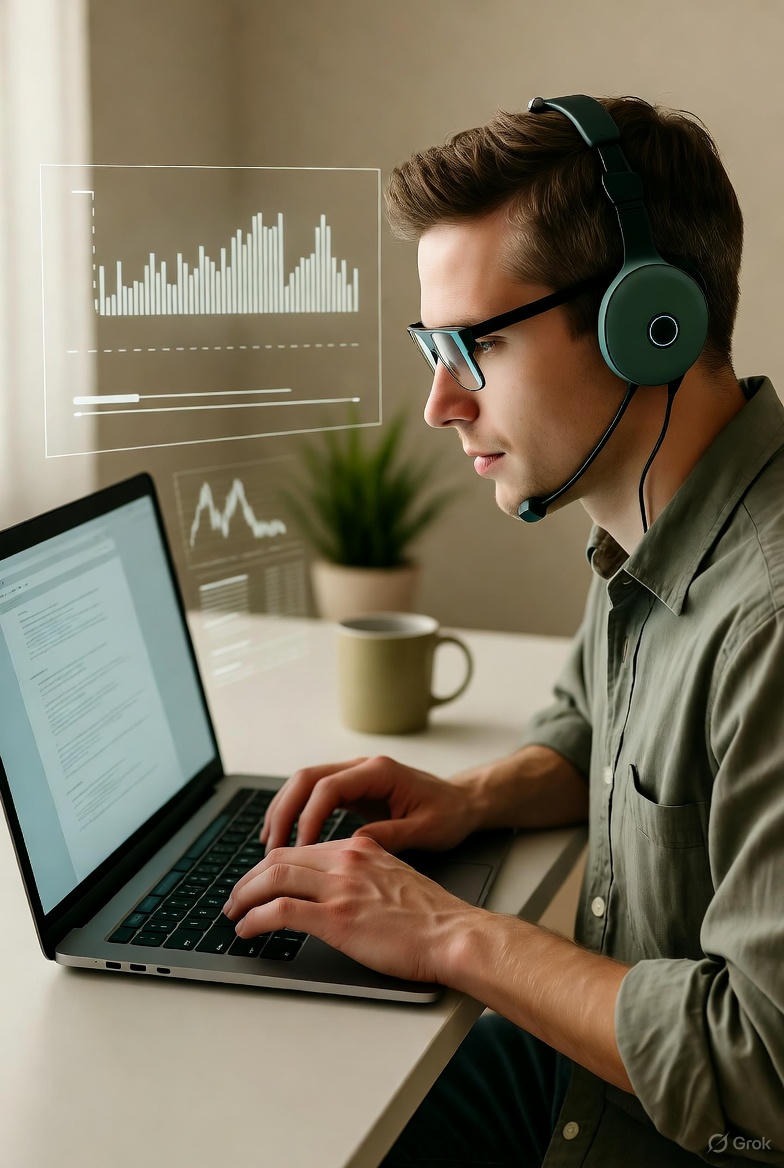
Comfort is more than a physical sensation; it is a psychological state. The ultimate goal for a health wearable is to achieve cognitive invisibility—a state where the user no longer allocates any mental bandwidth to the fact that they are wearing a device. This process is governed by habituation, a form of non-associative learning where the response to a constant or repetitive stimulus decreases over time.
Think of the feeling of your clothes on your skin. You notice them when you first get dressed, but within minutes, your nervous system filters out that constant tactile input. Your brain deems it non-threatening and non-essential, allowing you to focus cognitive resources elsewhere. A smart ring strategically exploits this neurological pathway. The finger already has a "category" for ring-shaped stimuli. The brain is pre-wired to habituate to it, much faster than it would to a novel object on the wrist, which has historically been a location for tools we interact with (watches we check).
A smartwatch fights an uphill battle against habituation. Its primary interface is a screen designed to capture attention. Every notification—a text, a calendar alert, a stand reminder—is a deliberate, salient interruption that re-sensitizes you to the device's presence. It actively prevents full habituation by design. You are conditioned to associate the wrist with incoming information and interaction, not with passive, unconscious sensing.
A smart ring, devoid of a screen and notifications (in its purest form), makes no such demands. It doesn’t ping, buzz, or light up. Its only job is to listen. This allows the habituation process to proceed fully. After the initial novelty period, the ring transitions from "new tech gadget" to "personal artifact." It joins the category of a wedding band or a cherished keepsake—something you feel for its absence, not its presence.
This psychological integration is critical for long-term adherence. Health monitoring is a marathon, not a sprint. Devices that cause cognitive fatigue, through either physical discomfort or digital interruption, see high rates of abandonment after the novelty wears off—a phenomenon well-documented in fitness tracker studies. The ring’s model of silent, background operation aligns with sustainable behavior. It doesn’t ask you to change your life; it seamlessly integrates into the life you already have, collecting data without drawing energy from your conscious mind. For real-world accounts of this integration, our testimonials page shares stories from users who have experienced this shift from device to habit.
True 24/7 wear means the device must be appropriate and comfortable in every context of a modern life. This is where the situational versatility of a form factor is tested. Let’s walk through a day in the life and examine how the ring and watch navigate different environments.
The Gym & Sports: For weightlifting, a smartwatch can interfere with wrist wraps and can be scratched by barbells. During activities like kettlebell swings or clean and presses, a hard watch case on the wrist can be dangerous or uncomfortable. A ring, while generally safe, must be designed to withstand impact and have a smooth profile to prevent catching. For sports like basketball or rock climbing, a ring may need to be removed, but so would any jewelry. The ring’s advantage is its lower profile and lack of interference with wrist-based equipment or movement.
The Workplace: In an office setting, typing with a large smartwatch can be annoying, with the case clicking against the desk. A ring presents no such issue. For professionals in client-facing roles, formal settings, or industries with strict dress codes, a minimalist titanium ring is often indistinguishable from classic jewelry and is far more discreet than a glowing tech watch. It projects a sense of professionalism where a smartwatch might seem casual or distracting.
Sleep & Intimacy: As discussed, the ring dominates here. It’s unobtrusive for sleep and doesn’t carry the "digital distraction" connotation into the bedroom, making it more appropriate for moments of connection and relaxation.
Formal & Social Events: This is a significant differentiator. A tuxedo or an elegant evening gown is traditionally paired with fine jewelry, not a sporty smartwatch. A sleek, metallic smart ring complements formal attire perfectly. It doesn’t force a choice between collecting health data and adhering to dress code or personal style. It embodies the principle that health tech should conform to your life, not the other way around.
Travel & Daily Chores: A ring is less likely to get caught on luggage straps, backpack buckles, or cleaning equipment. It’s safer when washing dishes or working with hands. It’s also one less device to charge during a busy day, as ring battery life often exceeds that of a full-featured smartwatch.
The smart ring’s strength is its chameleon-like ability to fit in. It doesn’t shout "tech." It can be a fitness device during a morning run, a professional accessory in a boardroom, and a piece of minimalist jewelry at a wedding—all while collecting a continuous, unbroken stream of health data. This situational fluency is a direct function of its comfort and discreet design, removing the friction points that cause other wearables to be left on the nightstand.
All the comfort in the world is meaningless if the device fails at its core function: capturing accurate physiological data. Here, comfort and accuracy are not trade-offs; they are two sides of the same coin. A device that is uncomfortable will be worn inconsistently or incorrectly, leading to poor sensor contact and garbage data. But even when worn, the form factor itself dictates the quality of the sensor-to-skin interface.
The primary health sensors in both rings and watches are optical PPG (photoplethysmography) sensors. They work by shining light (typically green and/or red LEDs) into the skin and measuring the amount of light reflected back. Blood volume changes with each heartbeat alter light absorption, allowing the device to calculate heart rate and, through advanced algorithms, heart rate variability (HRV) and blood oxygen saturation (SpO2).
For this to work, the sensor must maintain consistent, firm contact with the skin, and external light must be blocked (a process called optical sealing). The wrist is a challenging location for this. It has tendons, bones, and less consistent vasculature compared to the finger. As the hand moves, the wrist's shape changes, potentially breaking sensor contact. This is why you often see "flat" readings during intense workouts with some wrist-based trackers—a phenomenon known as cadence lock, where the device locks onto motion artifacts instead of heart rate.
The finger, particularly the palmar side base, is a vascular richhouse. The digital arteries are prominent and close to the surface. The tissue is more uniform. A properly sized ring naturally maintains excellent contact and optical seal because the finger is more cylindrical and less deformable than the wrist. The ring’s position is also more stable during arm movement. This leads to a inherently stronger, cleaner PPG signal, which is the raw material for all downstream health metrics.
Furthermore, the finger is an ideal site for skin temperature sensing, a valuable metric for tracking circadian rhythm, ovulation cycles, and illness onset. The temperature of the fingers and toes (peripheral temperature) is more dynamic and sensitive to internal changes than core body temperature, making it a fantastic proxy for tracking physiological shifts.
A comfortable, consistent fit is paramount. A ring that is too loose will shift, breaking sensor contact and letting in ambient light. A ring that is too tight will be uncomfortable and could even restrict blood flow, ironically distorting the very signals it’s trying to measure. This underscores the importance of precise sizing kits offered by ring companies. The payoff for that perfect fit is a high-fidelity data stream that forms the trustworthy foundation for all health insights. Understanding how this data translates into actionable wellness advice is a topic we frequently cover; you can explore our blog for deep dives on interpreting HRV, sleep stages, and recovery metrics.
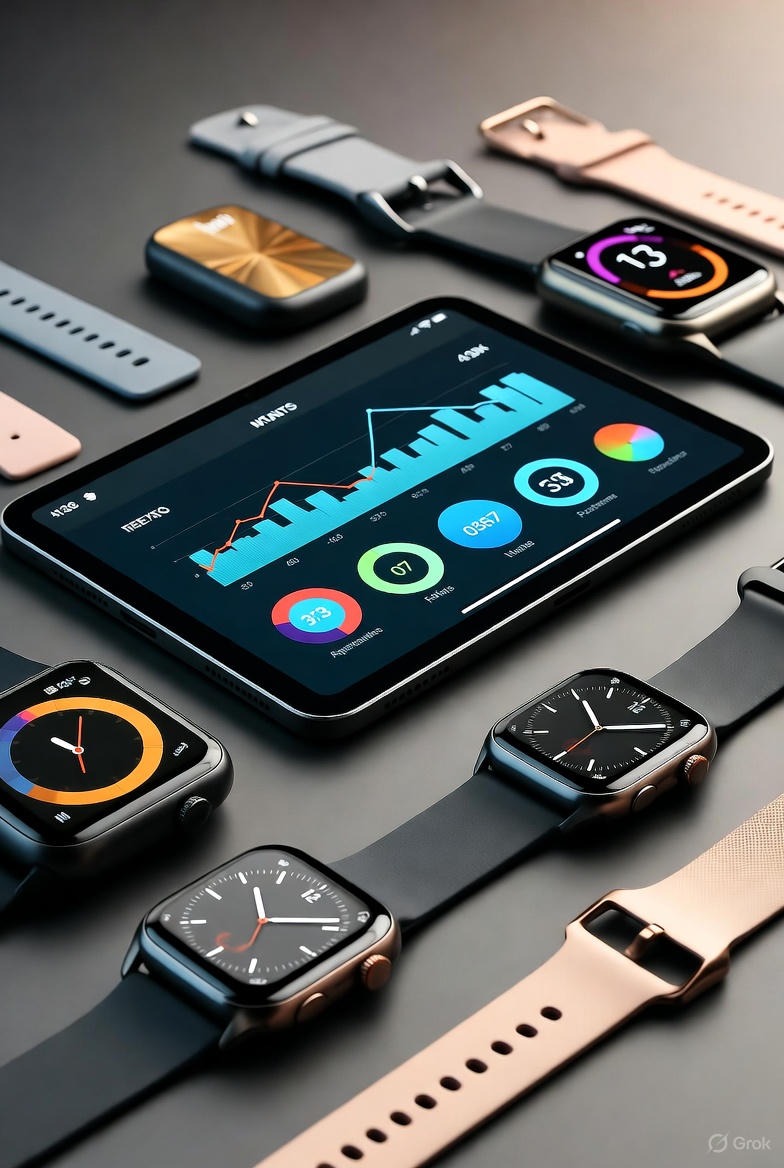
If physical comfort enables 24/7 wear, then battery life dictates its practical feasibility. The most ergonomic device in the world becomes a source of friction if it requires daily charging rituals that interrupt data collection. Charging is the Achilles' heel of continuous monitoring, and here, the design priorities of rings and watches lead to vastly different user experiences.
Smartwatches, especially full-featured models with bright always-on displays, cellular connectivity, and GPS, are power-hungry. Battery life is measured in hours or, at best, a day or two. This necessitates a daily charging routine, almost always done overnight. This directly creates the data gap we identified as unacceptable. Even if you charge it during a morning shower, you’re missing data. The need to manage the watch’s battery adds a logistical task to your day.
Smart rings, by contrast, are designed with a singular, low-power focus: sensing. Without a power-draining screen, speaker, or cellular radio, their energy budget is allocated almost entirely to sensors, the microcontroller, and Bluetooth Low Energy (BLE) syncing. This allows premium smart rings to achieve battery life measured in days, not hours—typically ranging from 4 to 7 days on a single charge.
This extended battery life transforms the user experience. Charging becomes a brief, weekly activity rather than a daily chore. You can sync and charge the ring while you shower and get ready in the morning, and it’s back on your finger within an hour, having missed only a trivial amount of data. Some users even purchase a simple, inexpensive backup ring to wear during the charging window for truly 100% uninterrupted data.
The charging mechanism itself is part of the comfort equation. Watch chargers are often proprietary pucks with precise alignment needs. Ring chargers are typically small, portable cases or stands where you simply place the ring. It’s a frictionless process.
This logistical comfort is profound. It removes the anxiety of a device dying in the middle of the day. It ensures that sleep data is never sacrificed for the sake of battery management. It reinforces the ring’s role as a passive, always-present guardian rather than an active device needing constant maintenance. In the marathon of lifelong health tracking, the device that requires the least management is the one most likely to stay the course. For specifics on battery performance and charging tips, our FAQ provides clear guidance to users.
For technology to be adopted for a lifetime, it must appeal not just to our logical brain but to our sense of identity and aesthetics. We are emotional beings who make choices based on how things make us feel and how they reflect who we are. A health device that is clunky, techy, or stylistically limiting will face subconscious resistance, no matter its feature set. This is the style imperative: for 24/7 wear, the device must be either invisible or an object of beauty.
The smartwatch industry has made strides here, offering various bands and finishes. However, the core form—a small screen on a strap—remains intrinsically recognizable as an electronic device. It makes a statement: "I am into tech," or "I am tracking my fitness." While that’s fine for many, it can clash with personal style in formal, professional, or minimalist contexts. You are always "wearing a computer."
A smart ring approaches style from a different angle: stealth integration. In its most basic form, a matte titanium band can be virtually invisible to others. It doesn’t draw the eye. For those who prefer adornment, the ring form factor is ancient and versatile. High-end smart rings are being crafted from ceramic, brushed gold-colored titanium, and even with embedded diamonds or wood inlays. They are designed to be confused with, or even replace, traditional jewelry.
This matters because when a device aligns with your personal style, you don’t tolerate it; you embrace it. It becomes a part of your curated self-presentation. There is no conflict between looking your best and monitoring your health. The ring doesn’t ask you to compromise. For many, this removes the last psychological barrier to permanent wear.
Moreover, the ring’s simplicity sidesteps the rapid obsolescence cycle of tech fashion. A classic ring design doesn’t look "out of date" in two years the way a specific smartwatch model might. This supports the long-term, sustainable relationship with the device that health monitoring requires.
Ultimately, the style imperative is about respect for the user’s whole self. It acknowledges that we are not just data points, but individuals with tastes, social contexts, and a desire for elegance. The most effective health tech is that which honors both the body’s needs and the soul’s desires. To see how this philosophy is embodied in a range of designs, you can view the collection and learn about our design ethos on our main site.
As we stand at this crossroads between wrist and finger, the lessons learned about comfort are already shaping the next frontier of health technology. The success of the smart ring form factor validates a core thesis: the future of personal health sensing is unobtrusive, multimodal, and context-aware.
The ring itself will evolve. We can expect even more miniaturization, allowing for slimmer profiles without sacrificing battery life. New sensor types will integrate seamlessly—think of continuous, non-invasive glucose monitoring, advanced hydration levels, or even electrodermal activity for stress response tracking—all from the finger. The materials will become smarter, perhaps with antimicrobial coatings or self-cleaning surfaces.
But the larger trend points toward a distributed sensor network on the body. The ring may become the primary hub, but it will communicate with other tiny, invisible sensors: patches behind the ear for core temperature, fabric-embedded ECG threads in clothing, or even ingestible sensors. The goal will be to create a comprehensive health data field around the individual with zero conscious effort required.
This ecosystem will be powered by sophisticated AI that doesn’t just report numbers, but provides true health context. It will understand that an elevated heart rate during a workout is different from the same elevation during a stressful work meeting. It will correlate sleep data with daytime activity, nutrition logs (potentially auto-tracked), and environmental factors like altitude or air quality.
In this future, the concept of "wearing a device" may fade altogether. Health monitoring will be ambient, woven into the very fabric of our lives and belongings. The current debate between ring and watch is a stepping stone to that reality. It teaches us that for technology to be truly helpful, it must first learn to be humble, to retreat into the background, and to serve without demanding.
The journey to this future starts with a simple, yet profound, commitment to comfort. It starts with choosing the platform that lets you live your life fully, while it quietly does its job of helping you understand it. For those ready to begin that journey with a device built on these principles, we invite you to discover how Oxyzen works and join a community focused on seamless wellness.
The true test of any health device isn't measured in days or weeks, but in months and years. Most wearables, especially smartwatches, face a sobering reality: a massive drop-off in regular usage after the initial excitement fades—a phenomenon we can term the "Wearability Cliff." Studies suggest that over half of all wearable owners abandon their devices within six months. This attrition isn't about a lack of interest in health; it's a direct result of cumulative friction.
The friction is multi-faceted. It’s the nightly struggle to remember to charge a watch, leading to missed sleep data and a broken chain of insights. It’s the discomfort during a specific activity that makes you leave it on the nightstand "just for today," which becomes a week. It’s the digital fatigue from constant notifications that turns a health tool into a source of stress. It’s the style clash that makes you choose a different timepiece for an important event. Each minor inconvenience is a small step back from the 24/7 ideal, and over time, these steps lead to the cliff's edge.
The smart ring, by systematically addressing these friction points, is architecturally designed for long-term adherence. Its foundational promise is sustainability. When you don’t have to think about charging but once a week, when you never feel the need to remove it for comfort, when it doesn’t intrude on your mental space with pings, the habit of wearing it becomes as automatic as putting on your wedding band. It transitions from a "health device you use" to a "part of you that collects health data."
This adherence is the unsung hero of meaningful health insights. The most advanced algorithm is useless without consistent, high-fidelity data input. Long-term wear enables the device to learn your unique, personal baselines across seasons, stress cycles, and lifestyle changes. It can distinguish between your "normal" and a statistically significant deviation that warrants attention. This depth of personalization is impossible with sporadic use. By surviving the honeymoon period and integrating into the user’s somatic map, the ring becomes the first wearable truly positioned for a decade-long health journey, not just a quarterly fitness kick. For stories of users who have successfully integrated this technology long-term, our testimonials page offers powerful real-world evidence.
A mountain of continuous data is only as valuable as your ability to understand it. This is the next frontier in the comfort equation: cognitive comfort. A device can be physically imperceptible, but if its data output is confusing, overwhelming, or creates anxiety, it has failed. The interface—the app and the insights—must be as elegantly designed and intuitive as the hardware.
Smartwatches often fall into a data-dumping trap. Their rich screens enable a firehose of metrics: steps, calories, stand hours, exercise minutes, heart rate, ECG, blood oxygen, and more. For the average user, this can lead to analysis paralysis or metric fatigue. What does a slightly lower HRV mean? Is my sleep score of 78 good or bad? Without context and expert guidance, numbers can become noise, or worse, a source of undue stress (sometimes called "orthosomnia" – an unhealthy preoccupation with perfect sleep data).
The smart ring ecosystem, by virtue of its focused mission, often pioneers a more curated, interpretation-first approach. The goal is not to show you every data point, but to synthesize them into a simple, actionable narrative about your readiness or recovery. Instead of presenting ten discrete metrics, a leading ring app might provide one overarching score (like a Readiness or Recovery Score) that synthesizes sleep, HRV, resting heart rate, temperature, and activity data.
This synthesis is the key to cognitive comfort. It answers the user’s fundamental question: "How should I approach my day?" A high score suggests you’re primed for a hard workout or a demanding workday. A low score is a nudge to prioritize recovery, take it easy, and maybe get to bed early. This guidance is personalized and contextual, turning complex autonomic nervous system data into a simple, practical recommendation. It’s health intelligence, not just health data.
The best platforms complement this with educational content directly within the app—short explanations of why your temperature trend matters, what HRV indicates about your nervous system resilience, and how to act on the insights. This turns the user experience from one of confusion to one of empowerment and learning. The device comforts the body by being unobtrusive, and its software comforts the mind by providing clarity instead of clutter. We are committed to this philosophy of clarity; you can explore our blog for articles designed to help you understand and use your health data effectively.
Human beings are not solitary data processors; we are social creatures motivated by support, shared experience, and expert guidance. The ultimate comfort in a health journey often comes not from a device, but from the sense that you’re not alone. The next evolution of wearable ecosystems is integrating community and human coaching to create a holistic support system that transcends the hardware.
A ring on your finger is a personal sensor, but its true power is amplified when its data becomes a conversation starter—with a coach, a community, or even your doctor. Imagine sharing your longitudinal sleep and recovery trends with a nutritionist who can then tailor dietary advice. Or having a fitness coach adjust your training load based on objective recovery metrics rather than just your subjective feeling. This is data-informed care, and it bridges the gap between self-tracking and professional health guidance.
Some advanced platforms are beginning to offer integrated coaching services. A user might grant their coach access to their trend dashboard. After a period of declining HRV and rising resting heart rate, the coach doesn’t just see "poor recovery"; they see a pattern. They can reach out and ask, "I notice your stress metrics have been elevated for two weeks. What’s going on at work? Should we dial back the high-intensity training and focus on meditation and sleep hygiene for a bit?" This transforms raw data into a dialogue and a personalized action plan.
Furthermore, anonymous, opt-in community features can provide immense psychological comfort. Seeing that others experience similar dips in sleep scores during stressful life events normalizes the experience. Community challenges focused on consistent sleep or stress management, backed by objective ring data, foster accountability and shared purpose. This social layer combats the isolation that can sometimes accompany solo health optimization efforts.
The ring, as the always-present data gatherer, becomes the objective foundation for these human connections. It provides the unbiased, continuous record that makes coaching more precise and community support more relevant. The comfort here is emotional and motivational—the comfort of being seen, guided, and supported on your journey. To understand our vision for a supported wellness journey, you can learn more about our mission and values on our about page.
The future of personal health is not a single device operating in a vacuum. It is an interconnected web of data from our bodies, our homes, and our environments. The smart ring, as a persistent, personal biometric hub, is uniquely positioned to be the central node in this personalized health ecosystem, creating a new dimension of ambient comfort through automation and context.
Consider the possibilities of integration:
This level of integration represents the pinnacle of "comfort." It’s a world where your environment proactively adapts to support your physiological state, reducing the cognitive and physical burden of manually optimizing every aspect of your well-being. The ring, silent and unseen, facilitates this by being the most intimate and constant source of truth about your body’s needs. It acts not just as a monitor, but as a discreet conductor for a symphony of wellness-oriented technology in your life.
The journey through the comfort factor in 24/7 health monitoring leads us to a fundamental conclusion: the form factor we choose is not merely a stylistic preference, but a declaration about the kind of relationship we want with our technology.
The smartwatch represents a paradigm of engagement. It is an active, interactive partner. It sits on a prominent, articulate part of the body, demanding attention, offering control, and connecting us visibly to the digital world. Its value is in its multifunctionality and immediacy. It is a tool for the active day.
The smart ring represents a paradigm of ambience. It is a passive, insightful guardian. It resides on a discreet, stable part of the body, designed to be forgotten, collecting data in the background without seeking interaction. Its value is in its continuity, its focus, and its deep integration into the unspoken rhythms of life. It is a tool for the whole life—waking and sleeping, working and recovering, dressing up and working out.
In the critical pursuit of true, longitudinal health intelligence—the kind that can predict, prevent, and personalize—comfort is the non-negotiable currency. It is the gatekeeper for 24/7 wear, the guardian of data fidelity, and the foundation for long-term adherence. The ring’s fundamental advantage lies in its architectural alignment with this principle. It minimizes physical, psychological, and logistical friction at every turn.
As we look to a future of ever more sophisticated health sensing, the lesson is clear: the most powerful health technologies will be those that respect the human experience first. They will be designed not to dazzle us with features, but to dissolve into our lives. They will prioritize the silence of accurate, continuous data over the noise of constant notifications. They will understand that to truly serve our health, they must first be comfortable enough for us to forget they are there at all.
This exploration sets the stage for a deeper dive into the specific health metrics, the science behind the sensors, comparative analyses of leading devices, and the tangible impact this silent monitoring can have on chronic conditions, athletic performance, and everyday vitality. The conversation continues, grounded in the principle that to know ourselves better, we must start by wearing something that allows us to simply be ourselves. For those ready to explore this new relationship with health technology, the journey begins with understanding the full story behind a device built for this purpose. Discover the vision and journey that led to creating such a seamlessly integrated health tool by visiting our story.
The profound promise of 24/7 health monitoring extends far beyond counting steps or tracking sleep stages. Its most transformative potential lies in its ability to act as a silent guardian, identifying subtle, preclinical deviations that are imperceptible to our conscious awareness. This capability transforms the wearable from a fitness tool into a genuine health sentinel, and its effectiveness is wholly dependent on the comfort-driven, continuous wear we've established.
Consider the human body's early warning systems. Before a full-blown illness like a viral infection manifests with a fever or cough, the body undergoes a series of physiological shifts. The autonomic nervous system, the master regulator of our "rest and digest" versus "fight or flight" states, begins to mobilize resources. This often shows up in biometric data days before symptoms arise:
In isolation, any one of these data points might be noise—a bad night's sleep due to late-night coffee. But in continuous, correlated context, they form a pattern. A smart ring, worn through the night and day, is positioned to detect this pattern. It might flag a "potential illness" or "high stress load" alert, giving the user a 24-48 hour head start to hydrate, rest, prioritize sleep, and perhaps avoid the full impact of the sickness. This is predictive health in action.
This extends beyond illness. For those managing conditions like atrial fibrillation (Afib), a device that is comfortable enough to wear during the random, unpredictable episode is the only device that matters. The comfort of a ring means it's present for that crucial moment, potentially capturing data that leads to a life-saving diagnosis. Similarly, for women, the continuous temperature sensing of a ring provides a far more convenient and comfortable method for tracking ovulation and menstrual cycles than manual, wake-time measurements.
The "silent guardian" role is only credible if the guardian is always present. A device left on the charger, or removed because it's irritating, is asleep on duty during the very moments it's needed most. The comfort of the ring—its forgettability—is what makes this silent, constant vigilance possible. It ensures the baseline is accurate and that deviations from it are true biological signals, not artifacts of inconsistent wear.
For athletes and serious fitness enthusiasts, the paradigm has decisively shifted. Performance is no longer just about how hard you train; it's about how well you recover. Overtraining syndrome is a very real danger, leading to plateaus, injuries, and systemic burnout. Here, the comfort and continuous data of a smart ring provide an unparalleled edge, moving training from guesswork to guided science.
The cornerstone of this approach is the objective measurement of readiness. Instead of asking an athlete, "How do you feel today?"—a subjective question prone to bias and misinterpretation—a coach can look at concrete data:
A ring comfortably worn all night provides this data suite every single morning. An athlete can wake up and receive a quantified recovery score that dictates the day's training intensity. A high score means it's time to push hard. A low score is an imperative to switch to active recovery, mobility work, or complete rest. This is data-driven periodization at its most personal and responsive.
The comfort factor is critical in the athletic context. Athletes push their bodies to extremes, and any extraneous gear can become a source of distraction or chafing. A bulky smartwatch can interfere with Olympic lifts, gymnastics grips, or swimming technique. A sleek ring presents minimal interference. It can be worn under weightlifting straps, inside swim gloves, or during contact sports where a wrist device could be a hazard. It survives the sweat, dirt, and rigors of training because it's designed for constant contact.
Furthermore, the ring's continuous wear helps map the full stress-recovery cycle. It captures not just the stress of the 90-minute workout, but how the body responds for the next 22.5 hours. It shows when homeostasis is restored. This holistic view prevents the common pitfall of only measuring the "work" and ignoring the "repair." For athletes seeking to optimize performance and longevity, the ring becomes an essential part of their toolkit—not as a flashy gadget, but as a quiet, trusted advisor on their finger. For more insights on using biometrics for peak performance, our blog features dedicated content from athletes and coaches.
The principles of comfortable, continuous monitoring are now scaling beyond the individual consumer into the enterprise. Forward-thinking companies are investing in corporate wellness programs that leverage smart rings, recognizing that a healthy, recovered, and less-stressed workforce is a more productive, engaged, and innovative one. This represents a seismic shift from step-count challenges to a science-based approach to organizational well-being.
Traditional corporate wellness often relied on self-reported surveys or sporadic health screenings—data that was subjective, infrequent, and often inaccurate. The introduction of comfortable, wearable biometrics changes the game. Employers can offer rings as a benefit, providing employees with a personal dashboard while receiving aggregated, anonymized insights into workforce-wide trends.
Imagine a company dashboard that reveals:
For this to work at scale, the device must be comfortable. Employee adoption is voluntary. A device that is cumbersome, requires daily charging, or feels like corporate surveillance will be rejected. The ring’s advantages—its discretion (it doesn’t look like a corporate tracking device), its week-long battery life, and its jewelry-like acceptability in all professional settings—make it a viable and attractive offering.
The focus shifts from policing behavior to empowering individuals with knowledge about their own bodies, while giving the organization the insights to create a healthier work ecosystem. It’s a move from wellness as a perk to well-being as a strategic pillar, all enabled by technology comfortable enough to be worn by humans in their complex, real lives. To understand how organizations are implementing these solutions, you can learn more about our approach and partnerships.
Collecting a continuous, intimate stream of biometric data—your heart rhythms, your sleep, your temperature—requires a level of trust that transcends hardware or software. It is the ultimate form of comfort: psychological security. Users must be unequivocally confident that their most personal data is secure, private, and owned by them. The architecture of this trust is as important as the ergonomics of the device itself.
Leading smart ring companies understand that their business depends on this trust. They typically adopt a privacy-by-design philosophy, which includes several key principles:
This approach stands in contrast to the data models of some larger tech companies, whose primary revenue may be advertising. A dedicated health device company's product is the hardware and the insights; the user's data is not its product to sell. This alignment of interests is crucial.
For the user, trust is built through transparency. Clear privacy policies, easy-to-use data controls within the app, and straightforward communication about how data is used are all essential. When a user feels in control, the comfort of wearing the device is complete. They can benefit from deep health insights without the nagging fear of surveillance or exploitation. This trust turns a piece of technology into a true partner in health.
In an age of planned obsolescence and yearly upgrade cycles, the environmental impact of technology is a growing concern. The comfort of a device isn't just about the present wearer; it's about its long-term footprint on the planet. Here, the smart ring's design philosophy naturally aligns with more sustainable principles, offering a compelling alternative to the disposable tech trend.
Durability as a Feature: A high-quality smart ring is built to last. Titanium cases, scratch-resistant coatings, and sealed sensors are designed to withstand years of continuous wear through showers, workouts, and daily life. Unlike a smartwatch with a crackable glass face, a ring's ruggedness is core to its function. This longevity means the device doesn't need to be replaced every 2-3 years due to physical degradation.
Battery Longevity and Repairability: The longer battery life (4-7 days) not only improves user experience but also reduces charge cycles. Lithium-ion batteries have a finite number of cycles before capacity degrades. A device charged weekly will take years longer to reach significant battery wear than one charged daily. Furthermore, forward-thinking companies are exploring modular designs or service programs where a depleted battery can be replaced, extending the ring's life for a decade or more, rather than consigning the entire electronic package to a landfill.
Timeless Design: Because the ring's form is not dictated by screen trends or digital watch faces, its aesthetic is classic. A simple titanium band looks as appropriate in 2030 as it does today. This counters the "fashion obsolescence" that drives many consumer electronics upgrades. Users are less likely to upgrade simply because a new model looks different.
Focused Functionality: Rings are health sensors first. They aren't trying to be miniature smartphones, which require constant hardware upgrades to support faster processors and new wireless standards. Their core function—collecting PPG, temperature, and motion data—is stable. Software updates can deliver new insights and algorithm improvements for years on the same hardware.
This sustainable approach provides a different kind of comfort: the comfort of making a responsible choice. It allows users to invest in a health tool with the expectation of a long-term relationship, reducing electronic waste and aligning personal wellness with planetary well-being. It’s a quiet but powerful statement that the best health tech should heal our relationship with the environment, not exacerbate its problems.
The most exciting frontier for comfortable, continuous monitoring is its potential to bridge the chasm between consumer wellness and clinical medicine. The data from a device worn 24/7 can provide clinicians with a richness of context utterly impossible to capture in a 15-minute annual physical or even a 24-hour Holter monitor. This is the path toward true participatory and preventive medicine.
Today, a doctor diagnoses hypertension based on a few readings in a stressful clinical setting ("white coat syndrome"). Imagine if a patient could share a year-long trend of their nightly resting heart rate and blood pressure (measured via future ring technologies), showing true baselines and variances. The diagnostic picture becomes profoundly clearer.
The applications are vast:
For this bridge to be built, two things are essential: clinical validation and data presentation. The algorithms determining sleep stages, HRV, and respiratory rate must be validated against gold-standard medical equipment. Leading ring companies are investing in these peer-reviewed studies. Secondly, the data must be presented to clinicians in a standardized, digestible format—a "clinician's dashboard" that highlights trends and anomalies, not raw data streams.
The comfortable, always-worn ring is the key data gatherer for this future. It provides the longitudinal, real-world evidence that medicine desperately needs to move from reactive to proactive. When a patient can hand their doctor a report on how their body has been functioning for the past six months, the conversation changes from "How are you feeling today?" to "I can see what's been happening, and here's how we can address it." This collaborative model, powered by comfortable technology, represents the next great leap in healthcare. For those interested in the broader mission of connecting personal data to better health outcomes, our story details our vision for this future.
With a deep understanding of the comfort imperative and its wide-ranging implications, how does an individual make the right choice between a ring and a watch? The decision is personal and should be guided by your lifestyle, goals, and psychology. Here is a framework to help you decide.
Choose a SMARTWATCH if your priorities are:
Choose a SMART RING if your priorities are:
The Hybrid Approach: It's also perfectly valid to use both. A smartwatch for daytime fitness, notifications, and style, and a smart ring for continuous, overnight health and recovery metrics. This combination leverages the strengths of each form factor, though it comes with the cost and management of two devices.
Ultimately, ask yourself the core question: "What am I most likely to wear consistently, without friction, for years to come?" The answer to that question will point you to the device that will truly become a valuable part of your health journey, because its data will be the story of your whole life, not just the chapters where it was convenient to wear.
As we conclude this exploration of the comfort factor, we arrive at a broader, more philosophical understanding. The rise of the smart ring and the evolution of continuous monitoring signify a fundamental shift in our relationship with technology and with our own physiology. We are moving from a paradigm of interrogation to one of dialogue.
For decades, we've interrogated our bodies with sporadic tests: stepping on a scale, getting a blood pressure cuff squeeze, having blood drawn at a lab. These are snapshots, often out of context. The data they provide is limited and reactionary.
Comfortable, continuous wearables like the smart ring enable a gentle, ongoing dialogue. Our bodies are constantly speaking in the language of heartbeats, temperature shifts, and movement. The ring is the patient, perpetual listener. It doesn't shout questions; it quietly records the narrative. The accompanying app and insights are the translation, helping us understand the story our body is telling about stress, recovery, resilience, and health.
This dialogue fosters a new kind of body literacy. We learn the specific conditions under which we thrive. We see the direct impact of a late meal on our sleep quality, of a stressful meeting on our HRV, of a consistent bedtime on our morning readiness. This isn't about biohacking for optimization's sake; it's about cultivating awareness and compassion for the complex, dynamic system that carries us through life.
The ring, comfortable and forgotten, facilitates this awareness without becoming a source of obsession. It sits at the intersection of technology and humanity, proving that the most advanced tools can be the most humble, and that the deepest insights often come from learning to listen, silently and continuously, to the wisdom that has been within us all along.
This journey is just beginning. As sensor technology miniaturizes further, as AI interpretation grows more nuanced, and as integration with our healthcare systems deepens, the potential for this silent dialogue to improve and extend lives is boundless. It starts with a simple choice: to wear something that cares for your health by first respecting your need to simply live, unimpeded and in comfort.
Your Trusted Sleep Advocate: Sleep Foundation — https://www.sleepfoundation.org
Discover a digital archive of scholarly articles: NIH — https://www.ncbi.nlm.nih.gov/
39 million citations for biomedical literature :PubMed — https://pubmed.ncbi.nlm.nih.gov/
Experts at Harvard Health Publishing covering a variety of health topics — https://www.health.harvard.edu/blog/
Every life deserves world class care :Cleveland Clinic - https://my.clevelandclinic.org/health
Wearable technology and the future of predictive health monitoring :MIT Technology Review — https://www.technologyreview.com/
Dedicated to the well-being of all people and guided by science :World Health Organization — https://www.who.int/news-room/
Psychological science and knowledge to benefit society and improve lives. :APA — https://www.apa.org/monitor/
Cutting-edge insights on human longevity and peak performance:
Lifespan Research — https://www.lifespan.io/
Global authority on exercise physiology, sports performance, and human recovery:
American College of Sports Medicine — https://www.acsm.org/
Neuroscience-driven guidance for better focus, sleep, and mental clarity:
Stanford Human Performance Lab — https://humanperformance.stanford.edu/
Evidence-based psychology and mind–body wellness resources:
Mayo Clinic — https://www.mayoclinic.org/healthy-lifestyle/
Data-backed research on emotional wellbeing, stress biology, and resilience:
American Institute of Stress — https://www.stress.org/


