


Ring vs Watch Comparison: Subscription Costs and Hidden Fees
Comparing ongoing subscription costs and any hidden fees.
Comparing ongoing subscription costs and any hidden fees.
%402x.svg)
In the quest for optimal health and performance, we’ve strapped technology to our wrists for over a decade. The smartwatch became a cultural icon—a tiny computer telling us not just the time, but how to live. But a sleeper contender has emerged from the shadows of the finger: the smart ring. Sleek, minimalist, and packed with biometric prowess, it promises a less intrusive, more insightful path to wellness. As consumers, we’re presented with a compelling choice. But in our focus on design, battery life, and sensor accuracy, we’re overlooking the most critical, long-term differentiator: the business model.
This isn’t just a one-time purchase decision between a circular screen and a band of titanium. It’s a choice between two fundamentally different approaches to accessing your own health data. The upfront price tag is merely the admission fee. The real cost—often hidden in fine print, recurring charges, and fragmented features—unfolds month after month, year after year, in the form of subscriptions.
A watch might dominate your wrist, but a subscription can dominate your wallet. A ring might seem like a simple piece of jewelry, but unlocking its full potential could require a monthly key. This deep-dive investigation goes beyond specs and reviews. We’re pulling back the curtain on the total cost of ownership in the ring vs. watch debate. We’ll dissect the subscription models of industry giants and innovative newcomers, expose the hidden fees that quietly drain your finances, and analyze what you actually get for your recurring investment. Is it enhanced analytics, or just access to data you already own? Is it a genuine partnership in your wellness, or a digital tollbooth on your personal information?
By the end of this exploration, you will possess a clear, comprehensive financial framework. You’ll be equipped to choose not just a device, but a sustainable relationship with the technology that measures your very being. The goal is simple: to ensure your journey to better health doesn’t come with a surprise, perpetual tax.

The journey of the wearable device is a fascinating tale of convergence. It began with pure functionality—the pocket watch evolved into the wristwatch for practicality in war, which then blossomed into a symbol of personal style. The digital watch of the 70s and 80s added calculators and games, a novelty. But the true shift toward "smart" began with fitness trackers. Simple pedometers clipped to belts evolved into wristbands like the Fitbit, dedicated to counting steps and estimating calories burned. This was the genesis of the quantified self-movement for the masses.
The smartphone era acted as a catalyst. With a powerful computer in every pocket, wearables could offload processing and connectivity, shrinking in size while growing in capability. The smartwatch, pioneered by companies like Pebble and then explosively popularized by Apple, Samsung, and Garmin, became the natural evolution. It wasn't just a tracker anymore; it was a notification center, a music controller, a contactless wallet, and a health dashboard. It absorbed the wristwatch's cultural real estate and claimed it for the digital age.
Concurrently, sensor technology underwent a miniaturization revolution. Photoplethysmography (PPG) sensors for heart rate, accelerometers for movement, and gyroscopes for orientation became tiny and power-efficient enough to fit into new form factors. This paved the way for the smart ring. Early prototypes and niche products like the Oura Ring demonstrated a crucial insight: the finger is a superior location for certain biometrics, like core body temperature and arterial blood flow, due to its vascular density. The ring offered something the watch couldn't: continuous, unobtrusive wearability, especially during sleep and strenuous activity where a watch is cumbersome.
Today, we stand at an inflection point. The smartwatch is a jack-of-all-trades—a communications hub and fitness coach. The smart ring is a dedicated wellness sleuth—focused on deep biometric analysis and recovery. Both are vying to be your primary wellness partner. But this partnership is increasingly defined not by hardware alone, but by the software and services that surround it. The device is the vessel; the insights are the valuable cargo. And many companies have decided that cargo requires a monthly fee to unload. Understanding this evolution from hardware seller to service provider is key to decoding the modern cost of wearables.
For a deeper look at how this technology is shaping personalized health, you can explore our blog for more insights on the future of biometric tracking.
When you buy a traditional watch, the transaction is simple. You exchange money for an object. Its value is in its materials, craftsmanship, brand, and function. The cost of ownership is essentially zero after purchase (minus occasional battery changes or servicing). The wearable economy has shattered this model. The price you see online or in a store is now often a hybrid figure: part physical product, part software license, part promise of future updates.
Let's break down what you're actually paying for:
The Hardware Sunk Cost: This covers the materials (medical-grade titanium, zirconia ceramic, sapphire glass), the advanced sensors (PPG, temperature, accelerometer), the battery, the chipset, and the assembly. For a high-end smartwatch like an Apple Watch Ultra or a Samsung Galaxy Watch, this cost is significant, reflecting miniaturized computing power and a brilliant display. For a smart ring like Oura or Circular, the cost is in the sophisticated sensor array packed into a tiny, durable package. This is a one-time, upfront expense.
The Software & Service Subscription: This is the new frontier of cost. Companies argue that the purchase price covers the device, but the continuous development of algorithms, the cloud storage for your lifelong health data, the personalized insights, and the new features delivered via updates require a recurring revenue stream. This is where the models diverge dramatically.
The critical question for consumers is: What portion of the device's inherent value is gated after purchase? Is the subscription delivering new, ongoing value (like fresh workout videos or coaching), or is it simply renting you access to the analysis of data your device already collected? The latter can feel like a toll, especially when the hardware is not subsidized. As we'll see, this fundamental difference in philosophy creates a vast disparity in long-term costs, making it essential to calculate the 2-year, 5-year, and even 10-year total outlay before choosing your wellness companion.
To understand how one company approaches this balance of hardware and service, you can learn more about Oxyzen's philosophy and mission on our about page.
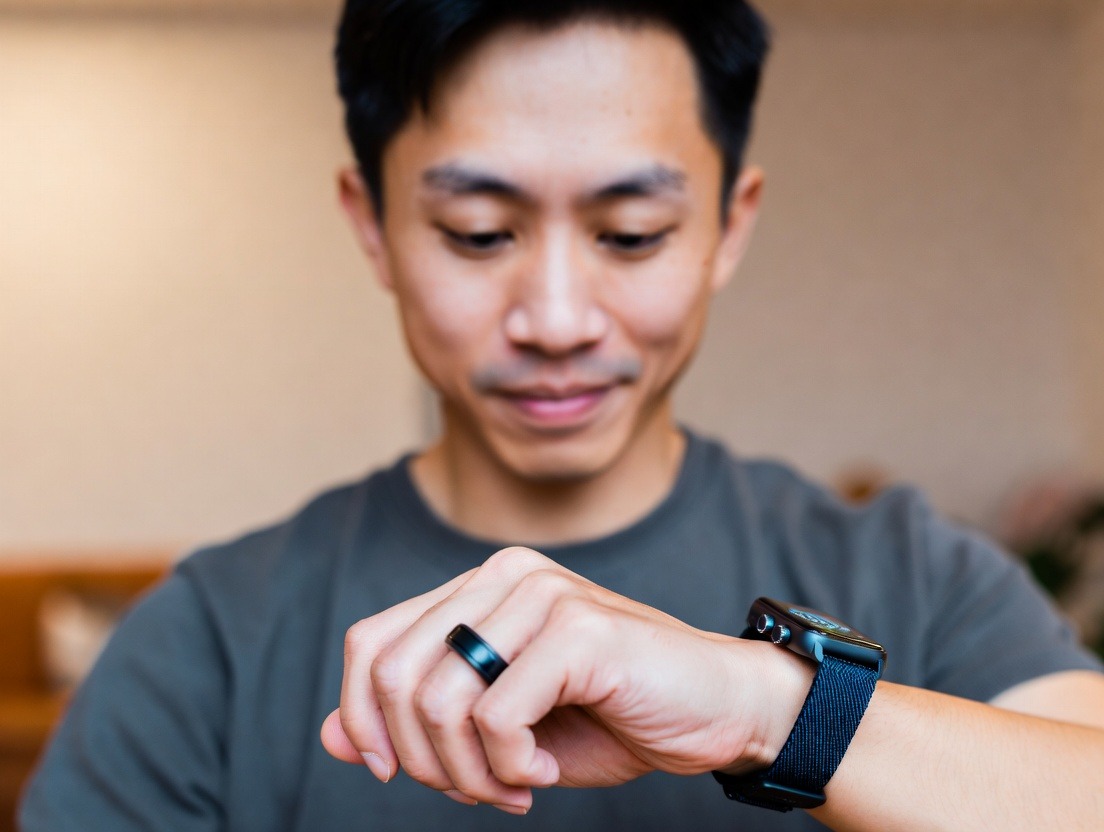
The smartwatch landscape is dominated by a few key players, each with a distinct approach to monetizing your data and engagement.
Apple Watch: Apple’s model is elegant and powerful. Purchasing the watch grants you a stunning array of core health features: ECG, blood oxygen monitoring, high and low heart rate notifications, sleep tracking, workout detection, and the comprehensive Health app. There is no monthly fee to view this data or for watchOS updates. The subscription play is Apple Fitness+. For $9.99/month or $79.99/year, you get a library of trainer-led workouts (yoga, HIIT, cycling) that integrate seamlessly with your watch metrics on-screen. The subscription here is for content and coaching, not for accessing your basic health data. It’s an additive service, making the ecosystem stickier.
Garmin: Garmin operates on a largely subscription-free model for individual users. Your substantial upfront investment (for a Fenix or Epix series) buys you unparalleled fitness and outdoor metrics, mapping, and performance analytics that are fully accessible forever. Garmin’s optional subscription, Garmin Connect™ Club, is a niche offering focused on advanced planning tools for coaches. For the vast majority of users, Garmin’s value proposition is “pay once, own everything.” Your data is yours, stored in the Connect app/cloud at no extra charge.
Fitbit (by Google): Fitbit represents the most stark shift to a subscription model. After acquisition by Google, Fitbit aggressively pushed Fitbit Premium. While basic stats like steps, heart rate, and sleep duration are free, the insights that made Fitbit famous—detailed sleep score breakdown, wellness reports, readiness score (Daily Readiness Score), and even historical trends beyond 7-10 days—are now locked behind Premium ($9.99/month or $79.99/year). This move frustrated a loyal user base, feeling they were being charged to interpret the data their device already collected. It’s a classic “freemium” model turned restrictive.
Samsung Galaxy Watch: Samsung’s approach is similar to Apple’s in structure. The watch provides robust health tracking (body composition, ECG, sleep coaching) without a mandatory fee. Their subscription, Samsung Health Plus, is a recent addition offering personalized workout and wellness plans, much like Fitness+. Core data access remains free. However, Samsung’s ecosystem is more fragmented, with some advanced features requiring specific Samsung phones.
The Hidden Cost of "Free": For watch platforms, the "hidden fee" is often compatibility. To use an Apple Watch to its fullest, you need an iPhone. A Galaxy Watch works best with a Galaxy phone. This ecosystem lock-in is a soft subscription—a recurring investment in a specific brand’s universe. The financial exit cost is changing your entire phone platform.
The smart ring market, being newer and built in the era of software-as-a-service (SaaS), has largely embraced the subscription model from the outset. The value proposition is different: less about real-time notifications and apps, more about deep, algorithmic analysis of biometrics to guide your daily habits.
Oura Ring: Oura is the market leader and the standard-bearer for the subscription-locked model. The ring itself is sold at a premium price ($299-$549). However, without an Oura Membership ($5.99/month), the device offers only three basic metrics: steps, heart rate, and bedtime. The crown jewels—the Oura Scores (Readiness, Sleep, Activity), detailed sleep analysis, temperature trends, and all historical data—vanish. The membership is mandatory for new users after a free trial. This model has been controversial, but Oura defends it as necessary for continuous R&D and personalized insights. The total cost of ownership skyrockets over time.
Circular Ring: Circular’s approach is similar in outcome but different in structure. They often sell the ring at a lower upfront cost (frequently via discounts), making the hardware seem more accessible. Their Circular+ Subscription (€7.90/month) is required to access almost all meaningful features beyond basic step and heart rate tracking. This includes sleep stages, energy levels, and the “Kira” AI assistant. Like Oura, the subscription is the gatekeeper to the ring’s core intelligence.
Ultrahuman Ring & Evie Ring: Newer entrants are experimenting with models. Ultrahuman currently offers its advanced metabolic and sleep insights platform without an additional subscription fee—the cost is bundled into the hardware price. Evie Ring (focused on women’s health) has also announced a no-subscription model for core health metrics. These players are directly challenging the subscription orthodoxy, betting that consumers prefer a single, transparent purchase price.
The Ring Subscription Justification: Ring companies argue that their value is not in the hardware sensor readings (raw heart rate data), but in the proprietary algorithms that synthesize this data into actionable scores and trends. They view this algorithm as a living, improving software product that requires a team of scientists and engineers to maintain and enhance. The subscription, in their view, pays for this ongoing service of interpretation and discovery, not just data storage. Whether consumers accept this premise is the central tension in the ring market.
For a firsthand look at how users experience these different models, browse real customer reviews and experiences with wearable technology.
Why has the subscription model become so pervasive? Beyond the obvious appeal of recurring revenue for businesses, it taps into powerful psychological levers that create "sticky" ecosystems—environments users find difficult to leave.
1. The Sunk Cost Fallacy & Effort Investment: Once you've spent months or years building a health data history—seeing your sleep scores improve, tracking your heart rate variability trends, logging hundreds of workouts—that data becomes a personal asset. Abandoning the subscription means not just losing future insights, but potentially losing access to your own historical record. This feels like a profound loss. Companies know that the longer you subscribe, the more invested you become, making cancellation psychologically painful. Your effort in building that data profile is a sunk cost that keeps you paying.
2. The Fear of Missing Out (FOMO) on Insights: Wearable subscriptions are masterfully designed to create daily rituals. You wake up and check your Readiness Score (Oura) or Sleep Report (Fitbit Premium). This ritual becomes a part of your wellness routine. The subscription model monetizes this habit. Cancelling means breaking that ritual and missing out on the daily feedback loop that makes you feel informed and in control. The messaging is subtle: "Without this score, you're flying blind today."
3. The Illusion of Personalization & Progress: Subscriptions often gate features that feel deeply personal: "Your sleep was 12% less efficient than your baseline," or "Your recovery suggests a moderate workout today." These aren't just data points; they are personalized recommendations. Cancelling the subscription can feel like firing your personal health coach, reverting to a generic, less useful device. This personalized layer, even if algorithmically generated, creates a powerful sense of partnership that users are reluctant to sever.
4. Community and Social Proof: Platforms like Strava (which integrates with most wearables) or brand-specific communities thrive on shared activity and competition. Your wearable is your passport to this community. A subscription can enhance this by offering advanced community features or comparative analytics. Leaving the service can feel like social exclusion, disconnecting you from your peer group's shared fitness journey.
5. The "Deal" Mentality and Free Trials: The standard playbook is a 1-6 month "free trial" with a new device. This period is designed to get you hooked on the insights and integrate them into your daily life. When the trial ends, you're not evaluating a new purchase; you're facing the loss of a service you've come to rely on. The pain of loss is a stronger motivator than the prospect of gain, leading many to convert reluctantly.
Understanding these psychological tactics is crucial. It allows you to separate the perceived value of a subscription from its actual utility. Ask yourself: "If this daily score vanished, would my behavior truly change? Is this insight fundamentally improving my health, or just satisfying my curiosity?" The answers can help you determine if you're paying for a vital tool or a cleverly engineered habit.
The monthly subscription fee is the most visible ongoing cost, but the true total cost of ownership (TCO) of a wearable includes several often-overlooked expenses that can add hundreds of dollars over the device's lifespan.
1. The Compatibility Tax: This is a major, upfront hidden fee. As mentioned, an Apple Watch requires an iPhone. A premium Android watch often has limited features on iOS. If you decide to switch phone ecosystems (from Android to iOS or vice versa), your wearable may become a paperweight. This locks you into a phone brand, potentially forcing you to choose phones based on your watch, not your preference. The cost here is the loss of choice and the potential extra expense of staying with a more expensive phone platform.
2. The Cloud Data Hostage Fee: What happens to your data if you cancel your subscription? Policies vary. Oura, for instance, allows you to view only three basic metrics; all your historical trend data and scores are inaccessible. Fitbit Premium locks historical trends. While you can often export raw data files (CSV/JSON), they are useless to most people without the platform's visualization and analysis. Your data, the record of your health journey, is held hostage. To regain access, you must resume payment. There is rarely an option to pay a one-time fee for lifelong access to your own historical data.
3. The Battery Degradation & Replacement Cost: Wearables have small, non-user-replaceable batteries. Over 2-3 years, battery life inevitably degrades. For a smartwatch, this might mean charging twice a day instead of once. For a smart ring with a 4-7 day battery, it might drop to 2-3 days. Official battery replacement services are expensive and often not cost-effective. For watches, it can be $80-$150. For rings, it's frequently impossible; you must buy a new ring. This is a predictable, cyclical hidden fee that arrives every few years.
4. The Band/Accessory Ecosystem: This is more pronounced with watches. The proprietary bands from Apple, Garmin, or Samsung are a lucrative market. A comfortable sports band, a formal leather band, or a specialty band for diving can cost $50-$200 each. While third-party options exist, the ecosystem is designed to encourage additional spending. Rings have less of this, though some offer different finishes or sizing kits for a fee.
5. The Insurance/Protection Plan: These sleek devices are prone to damage—scratched screens, cracked casings, water intrusion. Manufacturers offer monthly protection plans (like AppleCare+ at ~$4/month) or one-time extended warranties. While optional, for a device worn 24/7, they are a rational consideration and add to the annual cost.
6. The "Premium Feature" Creep: Even within subscriptions, tiers are emerging. A company might introduce a new, groundbreaking biomarker analysis (e.g., glucose trend monitoring) and offer it only as a "Premium Plus" add-on for an extra $3/month. This à la carte fragmentation of your health data is a future hidden fee in the making.
Calculating TCO requires looking at a 3-5 year horizon: [Device Price] + ([Monthly Subscription] x 36-60) + [Replacement Battery/Device Cost] + [Protection Plan] + [Accessories]. This sum often dwarfs the initial sticker shock and reveals which device offers genuine long-term value.
For common questions about device longevity, data policies, and costs, our FAQ page provides detailed support and answers.

With all this talk of costs, we must fairly assess what these subscriptions deliver. Is it just a clever tax, or is there tangible, ongoing value that justifies the model? The answer depends heavily on the company and how you, as a user, engage with the service.
For Content-Driven Subscriptions (Apple Fitness+, Samsung Health+):
For Insight-Driven Subscriptions (Oura, Fitbit Premium, Whoop):
For Ecosystem/Access Subscriptions (Basic Data Hosting & App Updates):
The "Bundle" Alternative (Garmin, Ultrahuman):
Ultimately, you must perform a personal audit: "In the last month, did this subscription provide a piece of information or guidance that I acted upon, and that had a measurable positive impact on my well-being?" If the answer is consistently yes, the subscription may be worth its weight in gold. If the answer is no, you may be funding a company's R&D with little personal return.
Let's move from theory to hard numbers. We'll model the Total Cost of Ownership (TCO) over a 5-year period for two representative, high-end options: a subscription-locked smart ring and a premium smartwatch with an optional content subscription. We'll assume the user replaces the device once due to battery degradation/wear (at the 2.5-year mark for this model).
Scenario A: The High-End Subscription Smart Ring (e.g., Oura Ring)
Scenario B: Premium Smartwatch with Content Subscription (e.g., Apple Watch Ultra + Fitness+)
Scenario C: Premium "No-Sub" Smartwatch (e.g., High-End Garmin Fenix)
Analysis & Takeaways:
This exercise reveals there is no universally "cheaper" option. The most cost-effective device depends entirely on your usage pattern: whether you want/need a content service, how long the hardware lasts, and how much you value the certainty of a one-time purchase versus the flexibility (and perpetual obligation) of a monthly fee. The key is to project these costs over the long term, not just at the checkout page.
This financial discussion inevitably leads to a deeper, more philosophical question: who owns the data generated by your body? When you pay for a wearable and a subscription, you are not just a customer; you are a data generator. The ethical implications of this are profound and often buried in lengthy Terms of Service agreements.
The Data Ownership Gray Area: In most cases, you retain "ownership" of your personal data in a legal sense. However, by using the service, you grant the company a very broad license to use, aggregate, and anonymize your data. This aggregated, anonymized data is incredibly valuable. It can be used to:
You are not directly paid for this contribution, even though it is the fuel that makes the service smarter and more valuable. Your subscription fee and hardware purchase, in a way, pay for the privilege of contributing to their dataset.
Privacy vs. Personalization: There is a constant tension. To provide personalized insights ("your temperature is elevated compared to your baseline"), the system must collect and store highly sensitive, continuous biometric data. This data could reveal illnesses, sleep disorders, or lifestyle habits. Companies invest heavily in security, but the risk of a data breach exists. The ethical burden is on them to implement best-in-class encryption and transparent data policies. Users must decide if the benefit of personalization outweighs the privacy risk of storing such intimate data in the cloud.
The "Paying for Your Own Data" Paradox: This is the core ethical complaint against models like Fitbit Premium and Oura. Critics argue it's unethical to sell a device that collects data and then charge a recurring fee for the user to see the analysis of that data. It's seen as holding your own information hostage. Proponents argue the fee isn't for the data, but for the ongoing interpretation service—the scientists and algorithms making sense of it. The line is exceedingly fine.
Informed Consent: The ethical standard hinges on transparency. Are companies absolutely clear at the point of sale about what features require a subscription? Is the long-term TCO presented fairly? Is the data usage policy explained in plain language? Too often, this information is obscured, leading to consumer frustration and a sense of being tricked.
As a consumer, your most powerful ethical stance is informed choice. Seek out companies that are transparent about their business model, have clear and respectful data policies, and align with your personal values regarding data ownership. The story behind a brand can often illuminate its values; for example, you can read about Oxyzen's journey and its foundational vision and values. Your purchase is a vote for the kind of digital health future you want to live in.
In a market where subscriptions are proliferating across every aspect of our digital lives—from entertainment to software to fitness—"subscription fatigue" is real. The last thing you want is for your wellness device to become another source of financial drain and resentment. Here’s a strategic approach to choosing a wearable that remains a satisfying tool, not a burdensome obligation.
1. Apply the "3-Year Rule" Before Buying: Before clicking "purchase," do the 3-year and 5-year Total Cost of Ownership calculation, as we did above. Write it down. If the long-term number gives you pause, it might not be the right model for you. Prioritize devices where the majority of value is in the upfront hardware cost.
2. Scrutinize the "Free Trial" Period: A long free trial (3-6 months) is a double-edged sword. Use it ruthlessly to decide if the paid features are indispensable. Set a calendar reminder for one week before the trial ends to evaluate. Ask: "If these features disappeared tomorrow, would I pay to get them back?" If the answer isn't a clear yes, cancel.
3. Prioritize Data Portability & Export Options: Before buying, research the company's data policy. Can you export ALL your raw data (heart rate, movement, temperature) in a standard format (CSV/JSON) at any time, even after canceling a subscription? This ensures you are never a true hostage. A company confident in its value won't fear giving you your raw data.
4. Consider the "No-Subscription" Contenders: Actively support companies like Garmin (for watches) or Ultrahuman/Evie (for rings) that are betting on a no-subscription model for core features. Your purchasing power sends a market signal about consumer preference. The more successful these models are, the more pressure it puts on others to justify their fees.
5. Embrace the "Dumb Watch/Ring" Test: Honestly assess your needs. Do you need a daily readiness score, or would consistent sleep tracking and heart rate monitoring suffice? Sometimes, a simpler device like a Withings ScanWatch (minimal subscription) or a ring focused on core metrics without a fee can deliver 80% of the value for 0% of the ongoing headache.
6. Beware of Ecosystem Traps: Be very cautious about buying a wearable that only works fully within one brand's phone ecosystem unless you are certain you will never switch. This is a hidden long-term cost that limits your freedom.
7. Plan for the End of Life: Have an exit strategy. When the battery degrades or you want to stop paying, what happens? Can you still use the device in a basic mode? Can you get your data out? Choosing a device with a clear, respectful end-of-life policy is part of future-proofing.
Making a smart choice today requires looking years down the road. By prioritizing transparency, data ownership, and long-term cost certainty, you can select a wellness partner that empowers you without endlessly taxing you.
Armed with knowledge, your final step is a disciplined pre-purchase audit. Use this checklist as a shield against marketing hype and hidden costs. Do not buy until you have clear answers to these questions.
Regarding Subscriptions & Costs:
Regarding Data & Privacy:
6. What is your data anonymization and aggregation policy? How is my anonymized data used?
7. Can I download a complete copy of all my raw sensor data in a standard, usable format? Is this available after subscription cancellation?
8. Where is my personal data stored, and what security certifications do you hold? (e.g., SOC 2, ISO 27001)
9. Do you sell or share personalized data with third parties (employers, insurers)? Under what conditions?
Regarding Hardware & Longevity:
10. What is the expected battery lifespan before significant degradation, and what is the replacement policy/cost?
11. What is the warranty period, and what does it cover? (Accidental damage? Water resistance failure?)
12. What is the estimated software support lifespan for this model? Will it receive updates for 3 years? 5 years?
13. What are my options if I change smartphone ecosystems (iOS to Android or vice-versa)?
Regarding Value & Utility:
14. Beyond curiosity, what actionable health or fitness outcomes is this device proven to help users achieve? (Look for clinical studies or validated research, not just testimonials.)
15. Does this device solve a specific problem I have (e.g., poor sleep, overtraining, stress management), or is it a general "nice-to-have"?
Print this list. Use it. Any reputable company should have clear answers readily available on its website or through customer support. If they are evasive, consider it a major red flag. Your health and your finances are too important to leave to chance.
The journey toward selecting the right wearable is a balance of technology, finance, and personal values. In the next portion of our comprehensive guide, we will move from economics to application, examining how to truly integrate these devices into a sustainable wellness practice, ensuring the data they provide leads to meaningful, lasting life improvement. We'll delve into the science behind the key metrics, how to avoid "analysis paralysis," and build a healthy relationship with the technology on your wrist—or finger.
Continue reading to master the art of applying wearable data for real-world results.
Choosing your device and understanding its cost is just the beginning. The real challenge—and the ultimate return on your investment—lies in translating the flood of data into meaningful, sustainable behavior change. Without this step, even the most sophisticated device is little more than an expensive, anxiety-inducing gadget. This section is your masterclass in moving from passive tracking to active transformation.
You open your app. You’re greeted by a readiness score of 72, a sleep score of 85, a resting heart rate of 58 bpm, a heart rate variability (HRV) of 42 ms, a respiratory rate of 14.2, and a temperature deviation of +0.3°C. What does it all mean? And more importantly, what should you do about it?
The first rule of wearable data is: You are your own best baseline. Comparing your sleep score to your friend's or your HRV to an online "ideal" chart is not only useless, it's counterproductive. These numbers are meaningful only in the context of your own personal trends.
Start with the Macro, Then Zoom In:
Beware of "Analysis Paralysis": It's easy to become obsessed with optimizing every metric. This can lead to orthosomnia—an unhealthy preoccupation with perfect sleep data that ironically causes more sleep anxiety. Set boundaries. Check your data once in the morning to set your day's intention, and perhaps once in the evening to reflect. Do not refresh the app constantly. Remember, the goal is to live your life, not to curate a perfect biometric profile.
The data is a tool for self-awareness, not a report card. Its greatest power is in revealing patterns you can't feel, like the impact of late-night alcohol on your HRV or the positive effect of a consistent bedtime. To explore these patterns further, you can discover more about interpreting biometric signals on our blog.
A wearable should integrate seamlessly into your existing life, not become a tyrannical boss that dictates it. The most successful users are those who use the data to make informed adjustments to their habits, not those who slavishly obey a score.
Anchor Your Data to Real-World Events: Your app shows a graph. Your job is to add the annotations. Did you have two glasses of wine last night? Log it (mentally or in the app's journal feature). Did you have a high-stress meeting at work? A poor night's sleep before travel? An exceptionally great workout? By consciously connecting lifestyle events to their biometric signatures, you build a powerful personal cause-and-effect model. Over time, you'll know that alcohol disrupts your sleep, even if you don't "feel" hungover, or that meditation before bed tangibly improves your sleep depth.
Create Simple "If-Then" Rules: Based on your pattern recognition, establish personal guidelines.
Respect the Lagging Indicators: Some of the most valuable metrics, like HRV and body temperature trends, are lagging indicators. They reflect how your body has responded to stress (exercise, illness, psychological strain) over the past 24-48 hours. You can't "hack" a good HRV score in the morning; it's the result of your behavior from the days prior. This teaches patience and a long-term view of health.
Sync with Your Natural Rhythms, Not Against Them: Use your device to discover your chronotype. Do you see better sleep scores and higher readiness when you workout in the afternoon versus the morning? Does your data suggest you naturally wake up earlier? The wearable can provide objective evidence to help you design a schedule that works with your biology, not against societal expectations.
The ultimate sign of successful integration is when the wearable becomes a quiet background guide. You intuitively know when to push and when to rest, and you only check the data for confirmation or to investigate a persistent anomaly. It augments your body's own signals, rather than replacing them.

For the truly data-obsessed or the athlete seeking comprehensive insight, a question arises: Is there an advantage to wearing both a smart ring and a smartwatch? The answer is a nuanced "yes," but with significant caveats about cost, complexity, and redundancy.
The Potential Synergies:
The Glaring Drawbacks:
A More Practical Alternative: Instead of two full-fledged devices, consider a hybrid approach. Pair a comprehensive smartwatch (like a Garmin) that doesn't require a subscription for core data with a simple, no-subscription smart ring that focuses on core overnight metrics. Or, use a ring as your primary 24/7 wellness monitor and a simpler, non-smart sports watch for timing workouts. This can capture most of the synergy without the overwhelming cost and data duplication.
Before going down the dual-wearable path, ask: What specific, unanswered question do I have that my current device cannot address? If you cannot articulate a clear, data-driven need, one device is almost certainly enough. For those navigating this decision, our FAQ page has answers on device compatibility and use cases.
Wearable technology, for all its benefits, carries a psychological shadow. The constant quantification of life's most intimate functions—sleep, stress, recovery—can tip from empowering to pathological. Recognizing and mitigating this risk is crucial for a healthy relationship with your device.
Recognizing the Warning Signs:
Strategies for a Healthier Mindset:
The wearable should be a lens to see yourself more clearly, not a judge presiding over your every choice. Its purpose is to increase your agency and self-compassion, not to breed a new form of digital perfectionism. If you find it's causing more stress than it alleviates, it may be time to step back and reevaluate its role in your life. Hearing from others who have found balance can be helpful; consider reading real user testimonials about their journeys with wellness tech.
The line between consumer wellness and clinical healthcare is blurring. Several wearable devices have now received FDA clearances or CE marks as medical devices for specific applications. This represents a massive shift in potential, moving from "general awareness" to "actionable diagnostic information."
Current Examples of Medical-Grade Features:
What This Means for You:
The Future: Rings in the Clinical Realm: Smart rings, with their superior vascular access for temperature and blood flow, are prime candidates for future medical clearances. Continuous, accurate core temperature monitoring could be invaluable for fertility tracking or early illness detection. Robust overnight SpO2 and pulse oximetry from the finger could rival clinical devices for sleep apnea screening.
As these features evolve, the value proposition of subscriptions may also shift. Paying a monthly fee for a wellness score is one thing; paying for access to FDA-cleared health monitoring and professional-grade reports is another, potentially more justifiable, proposition. This frontier will force a reevaluation of cost, value, and the very definition of a "wellness" device.
To protect your financial investment and reduce electronic waste, proactive care of your wearable is essential. These devices live a hard life—exposed to sweat, impacts, UV light, and constant charging cycles.
For Smart Rings:
For Smartwatches:
Universal Tips:
By adopting these habits, you extend the functional life of your device, delaying that costly replacement and getting more value from your initial purchase. This practical care is the final, often overlooked, component of the total cost equation. For more detailed care instructions and support, you can always reach out via our support channels.
Data can be motivating, but human connection is transformative. Many wearable platforms have tapped into this by building social features and coaching services, often layered onto their subscription offerings. This represents the evolution from a tracking tool to a support system.
The Power of Social Accountability:
Integrated Coaching Services:
This is a growing value-add for subscriptions.
The Verdict on Social & Coaching Value:
When evaluating a subscription, critically assess these community and coaching elements. Are they active and engaging? Do the coaching plans seem high-quality and evidence-based? For some, this human (or human-like) layer of support is the key differentiator that justifies a monthly fee, transforming a piece of technology into a true wellness partnership.
In our focus on personal health, we must not neglect planetary health. The wearable industry, with its rapid innovation cycles and built-in obsolescence (via battery degradation), contributes to the global crisis of electronic waste (e-waste).
The Scale of the Problem:
How to Make a More Sustainable Choice:
The most sustainable wearable is the one you already own. By maximizing its lifespan through careful maintenance and resisting unnecessary upgrades, you make a choice that benefits both your health and the environment. This holistic view of responsibility completes the picture of a truly conscious consumer. To understand how one company approaches its role in this ecosystem, you can learn about our commitment and story.
The wearable landscape is evolving at breakneck speed. Based on current trends in sensor tech, AI, and market forces, we can anticipate several key developments that will reshape the ring vs. watch debate and the very nature of health tracking.
Technological Frontiers:
Evolving Business Models:
The Form Factor War: The ring will continue to gain market share, especially among those prioritizing sleep and discreet 24/7 wear. Watches will deepen their integration with smartphones and evolve into more autonomous health hubs. The line between them may blur as watches incorporate more ring-like sensors (temperature) and rings add subtle notification systems.
The next five years will be defined by a move from fitness to full-spectrum health, from optional to integrated, and from a consumer novelty to a core component of proactive healthcare. Your choices today should be made with this dynamic future in mind, favoring platforms with a clear vision, ethical data practices, and a commitment to longevity—both of their devices and their relationship with you.
Your Trusted Sleep Advocate: Sleep Foundation — https://www.sleepfoundation.org
Discover a digital archive of scholarly articles: NIH — https://www.ncbi.nlm.nih.gov/
39 million citations for biomedical literature :PubMed — https://pubmed.ncbi.nlm.nih.gov/
Experts at Harvard Health Publishing covering a variety of health topics — https://www.health.harvard.edu/blog/
Every life deserves world class care :Cleveland Clinic - https://my.clevelandclinic.org/health
Wearable technology and the future of predictive health monitoring :MIT Technology Review — https://www.technologyreview.com/
Dedicated to the well-being of all people and guided by science :World Health Organization — https://www.who.int/news-room/
Psychological science and knowledge to benefit society and improve lives. :APA — https://www.apa.org/monitor/
Cutting-edge insights on human longevity and peak performance:
Lifespan Research — https://www.lifespan.io/
Global authority on exercise physiology, sports performance, and human recovery:
American College of Sports Medicine — https://www.acsm.org/
Neuroscience-driven guidance for better focus, sleep, and mental clarity:
Stanford Human Performance Lab — https://humanperformance.stanford.edu/
Evidence-based psychology and mind–body wellness resources:
Mayo Clinic — https://www.mayoclinic.org/healthy-lifestyle/
Data-backed research on emotional wellbeing, stress biology, and resilience:
American Institute of Stress — https://www.stress.org/


