


Ring vs Watch Comparison: Water Resistance and Sports Performance
Comparing water resistance and performance during sports.
Comparing water resistance and performance during sports.
%402x.svg)
In the evolving landscape of personal wellness technology, two devices have emerged as frontrunners in the race to become our primary health companions: the smart ring and the smartwatch. For the active individual, the athlete, the swimmer, and the everyday wellness enthusiast, the choice between wearing your tech on your finger versus your wrist is more than a matter of fashion. It’s a critical decision that hinges on two pivotal, performance-driven factors: water resistance and sports tracking accuracy.
This isn’t just about counting steps or receiving notifications. It’s about which device can truly withstand the rigors of your lifestyle, whether that’s logging laps in a chlorinated pool, tracking heart rate variability during a high-intensity interval training session, or simply surviving an unexpected downpour on a long run. The smartwatch, with its established dominance and screen-centric design, promises a suite of features. The smart ring, a sleeper hit of discreet biometric tracking, offers a minimalist, always-on alternative. But beneath their surfaces lies a complex world of sensor technology, waterproof engineering, and algorithmic interpretation.
As you dive into this comprehensive analysis, we’ll peel back the layers of marketing claims and technical specifications. We’ll explore how a device worn on a highly vascular finger differs fundamentally from one on a boney wrist. We’ll examine what an "ATM" or "IP" rating really means for your next ocean swim or sweaty workout. And we’ll reveal how the form factor itself—a ring’s constant contact versus a watch’s occasional wobble—can dramatically alter the reliability of your most crucial health and performance data.
Whether you’re a triathlete seeking the perfect multi-sport partner, a wellness devotee monitoring recovery, or someone simply tired of charging a bulky watch every night, this deep dive will equip you with the knowledge to invest in the technology that best fits—and survives—your life. Let’s begin by understanding the fundamental battleground: the anatomy of the devices themselves.

Before we can fairly judge their performance in water and sport, we must understand the inherent physical and technological constraints of each form factor. A smartwatch and a smart ring are not just differently shaped versions of the same device; their design philosophies lead to distinct engineering challenges and opportunities that ripple through every feature, especially those we are about to explore.
The Smartwatch: A Mini-Computer on Your Wrist
The modern smartwatch is a marvel of miniaturization. It houses a processor, memory, a (often bright) display, a speaker, a microphone, a sizable battery, and a complex array of sensors—all within a case typically measuring 40-46mm in diameter. Its primary sensor cluster, including the optical heart rate monitor and electrical heart sensors, is located on the underside, pressed against the skin of your wrist. This location is both a strength and a weakness.
The top and sides of the wrist are prime real estate, allowing for large displays and physical interfaces like crowns and buttons. However, the underside—the sensor bed—sits atop the radial artery and a network of tendons and bones. This area is not optimally vascular, and the watch must be worn snugly to maintain consistent sensor contact, a fit that can become uncomfortable during swelling or high-impact activity. Furthermore, the watch's size necessitates a larger battery, but that battery also powers a power-hungry screen, leading to the ubiquitous nightly or bi-nightly charge cycle.
The Smart Ring: Biometrics at the Source
In stark contrast, a smart ring like those pioneered by Oura and now refined by new entrants condenses its technology into a package with a footprint smaller than a watch’s charging puck. With no screen to power, the device’s entire energy budget is dedicated to sensors and wireless communication, enabling multi-day battery life from a tiny cell.
The ring’s secret weapon is its location. Your finger, particularly the palmar digital arteries, is exceptionally rich in blood vessels close to the skin's surface. This allows photoplethysmography (PPG) sensors—which use light to measure blood flow—to capture stronger, cleaner signals with less "noise" from movement and ambient light interference. The ring form factor also encourages constant wear; it’s unobtrusive during sleep, unlike a bulky watch. However, this miniaturization demands extreme engineering. Every component, from the battery to the LED sensors, must be microscopic. Waterproofing this dense package without compromising antenna signal strength or sensor clarity is a monumental task. You can delve deeper into the pioneering technology behind this form factor on our dedicated about-us page, which details the journey of creating such precise, wearable biometrics.
The implications of these anatomical differences are profound. A watch’s size allows for more robust water-sealing techniques but creates a larger "sail" that can catch and shift during movement. A ring’s intimate fit provides superior physiological data but must achieve water resistance in a constantly flexing, impacting environment. This foundational understanding sets the stage for our first major battleground: the complex, critical world of water resistance.
"Water-resistant." "Swim-proof." "5 ATM." "IP68." These terms are splashed across product pages and spec sheets, often creating a false sense of uniform security. In reality, water resistance ratings are highly specific, frequently misunderstood, and the leading cause of device failure in wearables. Understanding this lexicon is not academic—it’s essential for protecting your investment and ensuring your device matches your aquatic activities.
The Two Languages: ATM/IP
The fitness and wearable world primarily uses two rating systems, each measuring different things.
Interpreting Ratings for Real Life
Here’s a practical translation for the active user:
The Hidden Enemies: Soaps, Heat, and Time
Water resistance is not permanent. It is maintained by delicate gaskets and seals made of rubber or polymer. These materials degrade over time due to:
A device rated for swimming today may not be a year from now without proper care. This is why understanding the manufacturer's guidelines for rinsing with fresh water after exposure and having seals periodically checked (for watches) is critical. For a deeper exploration of how to maintain your device and its certifications, our comprehensive faq addresses common care questions and longevity tips.
With this knowledge in hand, we can now scrutinize how the ring and the watch, with their vastly different anatomies, approach the Herculean task of staying dry inside while you’re wet outside.
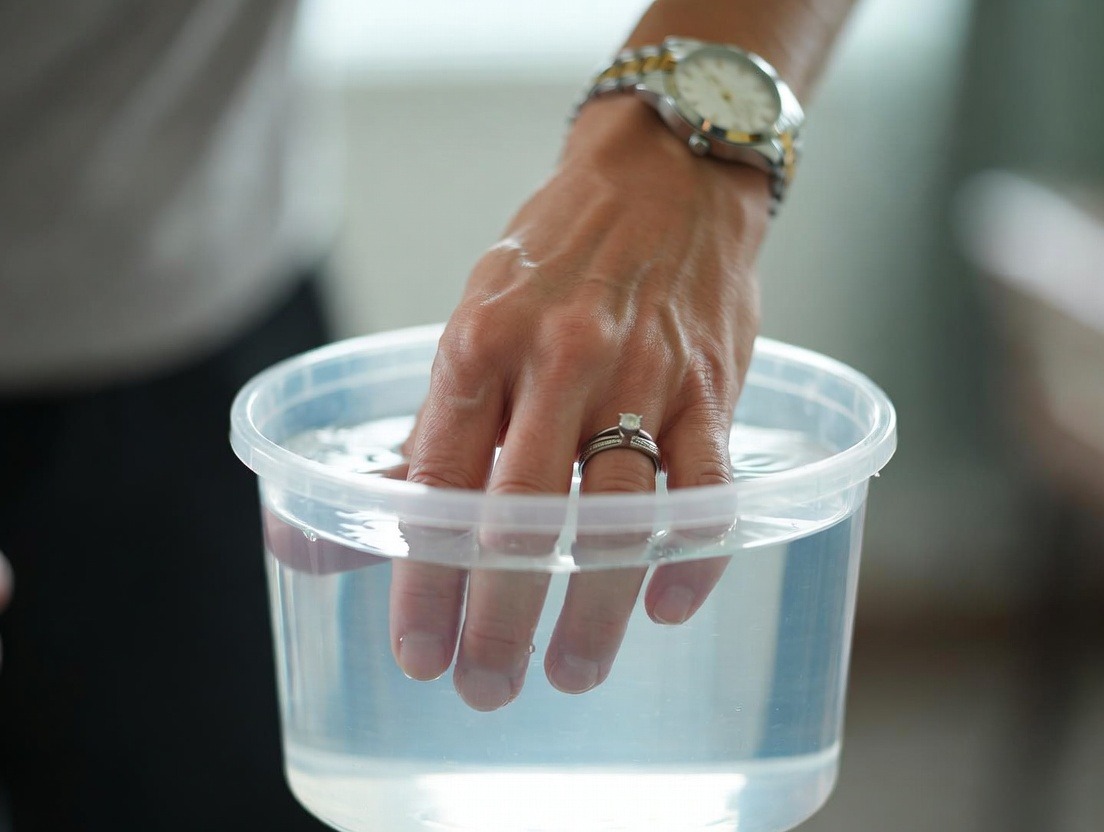
Building a device that can survive a marathon swim or a torrential downpour is an exercise in defensive engineering. For smartwatches and smart rings, the strategies diverge dramatically due to their size, user interface needs, and points of vulnerability. Let’s open the proverbial hood and see how each type of device wages its war against moisture.
The Smartwatch Fortress: Gaskets, Screws, and Acoustic Membranes
A smartwatch’s larger chassis provides more room for traditional, robust sealing techniques. Its primary points of failure are the crown, buttons, speaker/mic grilles, the display attachment, and the charging port.
The watch’s strategy is largely about barricading its many openings. It’s effective but complex, with multiple points of potential failure that require regular maintenance.
The Smart Ring Puzzle: Monobloc Designs and Potting
A smart ring faces a unique paradox: it must be sealed utterly, yet it has no room for thick gaskets or complex screw-down systems. Its entire interior is packed with sensors and batteries, leaving millimeter-thick walls. Its points of failure are the seam (if any), the sensor window, and the battery compartment.
The ring’s strategy is one of minimalism and encapsulation. By having fewer openings and filling internal voids, it reduces attack vectors for moisture. However, this also means a ring is generally non-serviceable; if the battery fails, the entire unit must be replaced. This trade-off between ultimate durability and repairability is a key consideration.
The effectiveness of these engineering philosophies is put to the ultimate test not in a lab, but in the chaotic, dynamic environment of actual athletic performance—starting with the most demanding of all: swimming.

For a wearable, swimming represents a perfect storm of hostile conditions: constant immersion, dynamic pressure changes, chemical exposure, and repetitive, high-amplitude motion. It’s here that the theoretical ratings meet reality, and the differences between a ring and a watch become starkly apparent. Let’s dive into the metrics that matter for the aquatic athlete.
Tracking Accuracy: The Stroke-by-Stroke Challenge
Accurately tracking a swim is a computational nightmare. GPS is useless underwater. The device must rely solely on its inertial measurement unit (IMU)—the accelerometer and gyroscope—to detect stroke patterns, count laps, and estimate distance.
Heart Rate Monitoring: The Optical Illusion Underwater
Optical heart rate (OHR) monitoring is notoriously difficult in water. Water itself can act as a light conduit, scattering the LED light before it reaches the capillaries. Furthermore, water pressure can slightly reduce blood flow to the extremities.
Durability in the Chlorine and Salt
This is where engineering pays off. Both devices with 5+ ATM or IPx8 ratings should survive pool and open-water swimming. However:
For the dedicated swimmer who wants detailed lap data and stroke analysis, a purpose-built sports watch remains the undisputed champion. But for the multi-sport athlete or wellness-focused individual who swims as part of a broader regimen and values holistic recovery data, the ring offers a compelling, low-profile alternative. The story changes, however, when we move from the pool to the track, the gym, and the trail.
On terra firma, the tracking paradigm shifts. GPS becomes the cornerstone for pace and distance, while the accelerometer refines the data and powers the wrist-based step count. Heart rate remains king for measuring effort. In these dynamic, high-motion environments, the placement of the sensor—wrist versus finger—creates fascinating divergences in data quality.
GPS and Distance: The External Anchor
For running and cycling, GPS is the primary tool for mapping routes and calculating distance and pace. This fundamentally advantages the smartwatch, as nearly all GPS chipsets are integrated into watches, not rings.
Heart Rate: Wrist Wobble vs. Vascular Fidelity
This is where the ring’s anatomical advantage begins to shine in land-based sports.
Cadence and Running Dynamics
Advanced running watches now offer metrics like vertical oscillation, ground contact time, and stride length. These are derived from the precise accelerometer and gyroscope data from the wrist. A ring on the finger, moving in a different plane and arc, cannot replicate these specific biomechanical insights. It can, however, accurately detect cadence (steps per minute) from the rhythmic motion of the hand.
The Bottom Line for Runners and Cyclists:
If you demand precise, watch-free route tracking, instant pace data, and advanced running dynamics, a GPS-enabled smartwatch is your essential tool. If you run with your phone anyway, prioritize highly accurate, motion-artifact-free heart rate and exhaustive recovery metrics, and value an unobtrusive device, a smart ring paired with your phone’s GPS presents a powerful alternative. The choice hinges on whether you see your wearable as a sports computer or a biometric health monitor that also tracks activity. For those leaning toward the latter philosophy, explore our blog for articles on optimizing recovery and interpreting biometric data from wearables.
From the steady rhythms of running, we move to the chaotic, explosive world of gym-based training, where impact and interference create a whole new set of challenges.
The gym is a jungle for wearables. It’s a world of sharp metal, magnetic fields, sudden impacts, and isometric contractions that confound basic motion tracking. Here, the traditional step-count and heart-rate models break down, and the utility of a ring versus a watch takes on new dimensions.
The Limitations of Rep Counting
Both devices struggle with automatic rep counting for weightlifting. While some watches have dedicated "strength training" modes that use the gyroscope to detect repetitive motion patterns, they are often error-prone. Distinguishing between a set of bicep curls and simply walking with your arms bent is tricky. A ring faces the same algorithmic challenge. For serious lifters, manually logging sets and reps in a companion app is still the gold standard. The wearable’s value shifts from counting to sensing the physiological impact.
Heart Rate During Lifting: A Critical Divergence
This is a critical test for optical sensors. During heavy compound lifts like deadlifts or bench presses, you perform a Valsalva maneuver—holding your breath and bearing down to stabilize your core. This causes a dramatic, momentary spike in blood pressure that can temporarily dampen peripheral blood flow to your wrists and fingers.
Impact Resistance: The Knock Factor
This is a practical durability concern. Clanging a watch against a kettlebell or the rack of a barbell is a common, heart-stopping occurrence. While sports watches are built with hardened glass (like Gorilla Glass or sapphire), a direct impact can still crack the screen or damage the casing. A smart ring, by its nature, is more exposed to impacts. It can be scraped against weights, equipment, and the floor during exercises like push-ups or burpees. However, being a smaller, smoother object with no glass top, it is less likely to suffer a catastrophic "screen shatter." Its vulnerability is to deep scratches on the body or sensor window, which are cosmetic or performance-affecting, rather than functionally disabling.
Interference from Equipment
The magnets in some gym equipment (like cable machine adjustments) or the electromagnetic fields from powerful motors (on treadmills or bikes) can theoretically interfere with the electronics of any wearable. A ring’s compact, potted design may offer slightly more inherent shielding, but this is generally a negligible concern for both well-made devices.
For the gym enthusiast, the choice may come down to lifestyle. Do you want to be glancing at your wrist for heart rate zones or timer intervals between sets? A watch’s display is invaluable. Or are you focused on the lift itself, wanting only to capture the full physiological toll—heart rate strain, recovery needs, and overall activity load—discreetly? The ring excels in the background, gathering data without demanding interaction. The feedback from real users in these scenarios is telling; you can read firsthand how different athletes integrate these devices into their routines in our collection of testimonials.
As we move from deliberate training to all-day wear, the cumulative impact of lifestyle on the device—and the device on your lifestyle—becomes the defining question.

The promise of modern wellness wearables is continuous, longitudinal health insight. This requires the device to be worn not just during workouts, but during work, rest, and most importantly, sleep. It’s in these 16+ hours of non-exercise time that the form factor imposes its will on your habit of wearability, directly impacting data quality.
Sleep: The Nighttime Gold Standard
Sleep staging—differentiating between light, deep, REM sleep, and awakenings—is one of the most demanding biometric tasks. It relies on a symphony of data: movement (actigraphy), heart rate, heart rate variability (HRV), and respiratory rate.
All-Day Comfort and Social Acceptability
A smartwatch is a statement. It’s a tech gadget on display. A smart ring is discreet, often passing for a simple piece of jewelry. This has implications:
The Data Continuum
The real power of 24/7 wear is the creation of a personalized baseline. By constantly monitoring resting heart rate, HRV, temperature, and activity, the device learns what "normal" looks like for you. It can then detect meaningful deviations. Did that hard workout delay your temperature rhythm? Is your resting HRV depressed, suggesting you’re fighting off an illness? This holistic picture is where the ring, as a constant companion, shines. It’s not just about tracking workouts; it’s about tracking you. To understand how this continuous data stream translates into actionable wellness insights, discover how Oxyzen works to turn biometrics into a daily guide.
The culmination of all this tracking—through water, sport, and daily life—is a mountain of data. But data is useless without insight. This brings us to the crucial, final stage of the journey: understanding what the numbers mean and how they can guide your health and performance.
The most significant evolution in wearable technology is the shift from simple activity logging to physiological interpretation. The modern device is not just a historian; it aspires to be a coach. This is the domain of metrics like Heart Rate Variability (HRV), Sleep Score, Body Temperature, and "Readiness" or "Recovery" scores. Here, the quality and consistency of the underlying biometric signals are paramount, and the ring’s 24/7 vantage point gives it a compelling edge.
Heart Rate Variability (HRV): The Nervous System Whisperer
HRV measures the subtle variations in time between each heartbeat. A higher HRV (in context) generally indicates a more resilient, recovery-ready nervous system, while a lower HRV can signal stress, fatigue, or illness. This metric is exquisitely sensitive and must be measured under consistent conditions—ideally during sleep or a short, morning reading.
Respiratory Rate & Temperature Trends
Two of the most powerful predictors of overall health and immune response are respiratory rate (breaths per minute) and core body temperature deviation.
The "Readiness" Score Synthesis
This is where platforms like Oura and Whoop (for watches) have made their mark. They ingest last night’s sleep data, recovery metrics (HRV, RHR), and recent activity load to produce a single, digestible "Readiness" or "Recovery" score. The goal is to answer: "How hard should I train today?"
For the individual focused on optimizing health, preventing burnout, and timing training for peak performance, these holistic metrics are more valuable than any single workout stat. They represent the move from fitness tracking to true wellness intelligence. The story of why this holistic approach matters is rooted in a deeper vision, which you can explore in our our-story section, detailing the mission to put comprehensive health insight on your finger.
But technology does not exist in a vacuum. The real-world experience of wearing, maintaining, and living with these devices day in and day out is what ultimately determines their value. This leads us to the practical, often overlooked considerations of lifestyle integration.
Choosing between a ring and a watch extends far beyond specs and into the realm of personal habit, profession, and aesthetic preference. This is where the theoretical "best" device meets the messy reality of your life. Let’s weigh the intangible but critical factors that will determine which device you’ll actually wear—and enjoy wearing—every single day.
Aesthetics and Fashion Integration
Battery Life and Charging Rituals
This is a major practical differentiator.
Durability in Non-Athletic Contexts
Fit and Sizing Nuances
The "Forgetting" Factor
The ultimate compliment for a wearable is that you forget it’s there until you need its insights. For many, a lightweight ring achieves this more consistently than a watch, which you feel with every wrist movement. This psychological comfort directly influences long-term adoption.
As we approach the final stretch of our analysis, having dissected performance, durability, and lifestyle fit, we must turn our attention to the horizon. The technologies in both rings and watches are advancing at a breakneck pace. What does the future hold for water resistance and sports tracking? The next section peers into the coming wave of innovation.
The current state of the ring vs. watch debate is a snapshot in time. The underlying technologies in sensors, materials science, and artificial intelligence are evolving rapidly, promising to blur the lines between form factors and redefine what’s possible. Let’s explore the emerging trends that will shape the next generation of water-resistant, performance-tracking wearables.
Sensor Fusion and New Modalities
The future lies not in a single sensor, but in a fused data stream from multiple sources.
Advanced Water Resistance and New Materials
AI-Powered Personalization and Proactive Insights
The algorithms are getting smarter. Future devices won’t just tell you what happened (e.g., "your HRV was low"); they will tell you why it might have happened and what to do about it.
The Convergence of Form Factors
We may see a future where the distinction blurs. A "ring" could contain a flexible display that projects onto your skin. A "watch" could become a thin, flexible band with no traditional screen. The core differentiator will be the quality of the biometric pipeline and the intelligence of the software platform.
For the consumer, this means the decision today is not just about current features, but about investing in an ecosystem and a data history. Choosing a platform that continuously updates its software, refines its algorithms, and respects the longitudinal health data you provide is as important as the hardware you strap on today. To stay abreast of these rapid developments and understand how they translate into real-world wellness, we invite you to read our complete guide on the future of wearable health technology.
This brings us to our final, synthesizing perspective. After thousands of words dissecting ratings, seals, signals, and algorithms, we must step back and answer the core question for you, the individual. How do you make the choice that fits your unique body, goals, and life?
The ring versus watch debate has no universal winner. There is only the right tool for the right person at the right point in their wellness journey. This final section is not a verdict, but a decision-making framework. By asking yourself a series of targeted questions, you can cut through the noise and identify the wearable that will become a truly valuable partner in your active life.
Question 1: What is Your Primary "North Star" Metric?
Question 2: What is Your Dominant Athletic Environment?
Question 3: How Do You Tolerate Technology on Your Body?
Question 4: What is Your Long-Term Data Vision?
The Hybrid Approach: Is Two an Option?
For some, the answer is not either/or. A compelling case can be made for a hybrid setup: wearing a dedicated sports watch (like a Garmin or Coros) for high-performance training and GPS-based activities, and a smart ring for 24/7 health monitoring, sleep tracking, and recovery guidance. This provides the best of both worlds, though at a higher financial cost and requiring management of two data streams.
Ultimately, the best device is the one you will wear consistently, whose data you trust, and whose insights you act upon. Whether it rests on your wrist or your finger, the goal is the same: to harness technology to know yourself better, perform at your best, and live a healthier, more balanced life.
As you ponder this decision, remember that the landscape is always changing. The commitment of a company to innovate, update, and support its users is a critical, often overlooked factor. We believe in a future where advanced biometrics are accessible, unobtrusive, and profoundly personal. To see this philosophy in action and understand the journey behind creating a device designed for this holistic purpose, we welcome you to learn more about Oxyzen, where our story continues to unfold.
Performance is not just about the work you put in; it’s about how you adapt and rebuild afterward. The most sophisticated training plan is useless without adequate recovery. Modern wearables have moved to the forefront of this science, attempting to quantify the invisible process of repair and supercompensation. But not all recovery metrics are created equal. The device’s position on your body and its data consistency play a decisive role in the accuracy of these critical insights.
Understanding the Stress-Recovery-Adaptation Cycle
Every workout creates microscopic damage and stress on your body—a positive stimulus. During recovery, your body repairs this damage, becoming slightly stronger and more resilient. This is adaptation. Wearables aim to measure your readiness for the next stressor by assessing your recovery status. They track three key inputs:
Heart Rate Variability (HRV): The Gold Standard, Re-examined
We touched on HRV earlier, but its application in recovery tracking warrants a deeper look. HRV is your body’s "autonomic nervous system dashboard." A higher HRV (relative to your baseline) suggests parasympathetic dominance—the "rest and digest" state ideal for recovery. A lower HRV indicates sympathetic dominance—the "fight or flight" stress state.
Resting Heart Rate (RHR) and Temperature Trends
Recovery Scores: Synthesizing the Data
Platforms like Oura (Ring), Whoop (Watch-strap), and Garmin’s Body Battery compile these metrics into a single score.
The Verdict for Recovery Tracking:
If your primary goal is to optimize recovery, prevent overtraining, and tune into your body’s subtle signals of stress and readiness, the smart ring’s design for constant, unobtrusive wear and superior nocturnal data capture gives it a tangible edge. It is built for the rest side of the equation. For a deeper library of content on interpreting these recovery signals and building better habits, our blog is a dedicated resource for evidence-based wellness strategies.
However, the reliability of any recovery metric hinges entirely on the quality of the sensors gathering the raw data. It’s time to look under the hood.
At the heart of every heart rate reading, every sleep stage guess, and every calorie estimate is a suite of tiny sensors interpreting analog biological signals into digital data. The type, quality, and configuration of these sensors—and how their data is fused by algorithms—ultimately determines the truthfulness of your wearable’s story. Let’s demystify the core technologies.
Photoplethysmography (PPG): The Light in the Dark
This is the foundational sensor for heart rate, HRV, and blood oxygen (SpO2). It works by shining LED light (typically green, and sometimes red/infrared) into the skin and measuring the amount of light reflected back. Blood absorbs light, so each heartbeat causes a slight increase in absorption, which the sensor detects.
The Inertial Measurement Unit (IMU): Accelerometer and Gyroscope
This trio of sensors measures movement (acceleration) and rotation. They are crucial for activity recognition, step counting, swim stroke detection, and running dynamics.
The Temperature Sensor
Most wearables use a simple skin temperature thermistor. It’s not measuring core temperature, but the change in skin temperature is the valuable metric.
Electrodermal Activity (EDA) and ECG
Sensor Fusion: The Algorithmic Brain
Raw sensor data is chaotic. The magic happens in sensor fusion algorithms that combine PPG, IMU, and temperature data in real-time. For example, when the accelerometer detects running motion, the algorithm applies a specific filter to the PPG data to ignore "wrist wobble" artifact. A ring’s algorithm might be tuned differently, focusing less on filtering violent motion and more on extracting clean signals from a relatively stable platform.
The takeaway is that sensor hardware provides the potential ceiling for accuracy, but the software algorithms determine the daily reality. A device with a superior sensor in an optimal location (like a ring on the finger) gives its algorithms a head start in the race for truth. To see how this technology is implemented with a focus on user-centric design, you can learn more about our approach.
With a clear understanding of the sensors, we must now consider one of the most demanding scenarios for any wearable: the multi-sport transition, where conditions, motion, and physiological demands change in an instant.
For the triathlete, adventure racer, or functional fitness enthusiast, a wearable isn’t just tracking a single activity—it must seamlessly survive and accurately capture a rapid-fire series of different disciplines, often in punishing environmental conditions. This is the ultimate stress test for both hardware durability and software intelligence. How do rings and watches handle the chaos of transition?
The Triathlon: Swim → Bike → Run
This is the classic multi-sport use case. The device must be waterproof for the swim, have reliable GPS/HR for the bike and run, and ideally, offer quick transition modes.
Adventure Racing and Hybrid Workouts
This includes activities like a hike followed by a climb, a trail run with scrambling, or a gym session mixing cardio and weights. The challenge is automatic activity detection and mode switching.
The Durability Marathon: Mud, Sand, and Impact
The Practical Reality:
If your athletic life is defined by structured, sequential disciplines where performance metrics (pace, power, split times) are critical, a multisport watch is your essential tool. If your active life is more fluid—a day of hiking, some bodyweight exercises, followed by a swim—and you’re more interested in the aggregate physical strain and recovery demand than the split details, a smart ring can provide profound insight without the need to micromanage your device through transitions.
This fluidity of use brings us to a subtle but physically tangible factor: the impact of the device’s own mass and profile on your athletic performance.
We obsess over the weight of our shoes, our bikes, and our running gear, shaving grams for marginal gains. Yet, we often overlook the mass and aerodynamic profile of the device tracking those very efforts. While the effect is small, for the elite athlete or the deeply detail-oriented, the impact of a wearable on the body’s mechanics is a valid consideration.
The Physics of a Wrist-Worn Load
Adding mass to the distal end of a limb (like the wrist) increases the moment of inertia. This means it requires more energy to start and stop the swing of that limb during repetitive motion like running or cycling.
The Discreet Alternative of the Ring
A smart ring, weighing typically 3-6 grams, presents a virtually negligible physical burden.
The Psychological Factor
Beyond pure physics, there’s a psychological comfort in forgetting your wearable. The absence of a bouncing, sometimes sweaty, watch band can be one less distraction during a hard effort or a long session. The ring’s "invisibility" can contribute to a more focused, embodied athletic experience, where you’re tuned into your body’s signals, not your device’s screen.
The Trade-Off: Data Accessibility
The watch’s weight and presence come with a benefit: at-a-glance data. Seeing your pace, heart rate zone, or power output in real-time is a powerful tool for pacing and effort management. The ring offers no such live feedback during the activity (unless you check your phone). This is the classic trade-off: the watch is an active cockpit, while the ring is a passive black box recorder.
For the vast majority of athletes, the performance impact of a watch’s weight is psychologically greater than physiologically significant. But for those seeking absolute minimalism and an unadulterated feel for their sport, the ring’s featherweight profile is a genuine advantage. This pursuit of seamless integration is at the core of our vision, which you can explore in our our-story page.
Having scrutinized performance from every angle, we must now address the final, practical step: how do you, as a consumer, cut through the marketing and validate the claims of water resistance and tracking accuracy before you buy?
Manufacturer specifications are a starting point, not a guarantee. Real-world performance can vary due to manufacturing variances, fit, and individual physiology. Before you fully trust your new device in open water or rely on its data for training decisions, conducting your own simple, safe validation tests can save you from disappointment and device failure.
Safely Testing Water Resistance (The "Trust but Verify" Approach)
Important: Never intentionally submerge a device beyond its rated depth. These tests are for peace of mind within stated limits.
Assessing Heart Rate Accuracy
Optical heart rate accuracy is highly individual. The only way to know if a device works for you is to compare it against a trusted benchmark.
Evaluating GPS and Distance Accuracy
For watches, test on a known, measured course (a certified road race course, a track, or a trail with a professionally surveyed map on a platform like Strava).
Stress-Testing Activity Auto-Detection
Go about a week of normal activity without manually starting workouts. See what the device automatically detects and logs. Does it correctly identify your lunchtime walk? Does it confuse driving with cycling? Does it miss your gym session entirely? This reveals the intelligence of its background algorithms.
Understanding Your Role: The Fit Factor
No test matters if the device isn’t worn correctly. For a watch, it should be snug but not constricting, worn 1-2 finger widths above the wrist bone. For a ring, it must be sized correctly—snug enough not to spin, but loose enough for the knuckle. A poor fit is the #1 cause of bad data.
By taking the time to validate, you move from being a passive consumer to an informed user. You learn the quirks of your device and can interpret its data with appropriate confidence. For ongoing support and answers to common questions about device performance, our faq is continually updated with user insights and technical guidance.
As we approach the conclusion of our in-depth analysis, it’s time to step back from the microscopic details and reflect on the broader narrative. What does this entire journey through sensors, seals, and sports tell us about the evolving relationship between technology and the human pursuit of performance and wellness?
In our exhaustive comparison of specifications, ratings, and accuracies, we risk missing the forest for the trees. The ultimate purpose of a wearable—whether a ring or a watch—is not to win a technical shootout, but to serve as a catalyst for a healthier, more aware, and more empowered life. The best device is the one that seamlessly integrates into your humanity, enhancing your intuition rather than overriding it.
From External Validation to Internal Awareness
The first generation of fitness trackers were primarily about external validation: hitting 10,000 steps, closing three rings, earning a badge. The new generation, especially those focused on recovery and readiness, aims to cultivate internal awareness. They encourage you to listen to your body’s signals—fatigue, stress, hunger for rest—and provide data to support those intuitions. A readiness score isn’t a command; it’s a conversation starter with yourself: "The device says I’m run down. Do I feel run down? What choices led to this?"
The Danger of Data Obsession
Both rings and watches can feed a pathological relationship with numbers—orthosomnia (an unhealthy preoccupation with perfect sleep scores) or exercise addiction fueled by daily activity goals. The technology is a mirror; it reflects back what you prioritize. It’s crucial to use these tools with flexibility and self-compassion, understanding that trends matter more than any single day’s score, and that the device doesn’t know everything (emotional stress, life context, joy).
The Unquantifiable: Joy, Flow, and Experience
No wearable can measure the joy of a spontaneous trail run, the flow state achieved in a perfect swim, or the camaraderie of a team sport. Sometimes, the most performance-enhancing thing you can do is to leave the device at home. The data should serve the experience, not the other way around. The ring, by virtue of its discretion, can sometimes make this easier. You’re less tempted to glance at it constantly, allowing you to stay present in the moment.
Building a Long-Term Health Partnership
The most profound value of a 24/7 wearable may reveal itself over years, not weeks. Longitudinal data can show how your resting heart rate trends with age, how your sleep architecture changes, how your recovery needs evolve. This becomes a powerful health diary, potentially highlighting positive lifestyle changes or providing early context for medical discussions. The choice between a ring and a watch, therefore, is also a choice about which device you are more likely to wear consistently for years to come to build that invaluable personal dataset.
The Ethical Dimension: Data Privacy and Ownership
As these devices collect our most intimate biological data, questions of privacy, ownership, and use become paramount. Who owns your heart rate variability history? How is it stored and secured? Could it be used by insurers or employers? When choosing a platform, investigating the company’s data governance policies is as important as evaluating its hardware. We believe in transparent and user-centric data practices, a principle you can learn more about on our about-us page.
In the end, the ring versus watch debate transcends gadgets. It’s about how we choose to relate to technology in our quest for well-being. Do we want a coach on our wrist, directing our daily performance? Or a mindful advisor on our finger, helping us tune into our body’s natural rhythms? The answer is uniquely personal, and it may change over time.
Your Trusted Sleep Advocate: Sleep Foundation — https://www.sleepfoundation.org
Discover a digital archive of scholarly articles: NIH — https://www.ncbi.nlm.nih.gov/
39 million citations for biomedical literature :PubMed — https://pubmed.ncbi.nlm.nih.gov/
Experts at Harvard Health Publishing covering a variety of health topics — https://www.health.harvard.edu/blog/
Every life deserves world class care :Cleveland Clinic - https://my.clevelandclinic.org/health
Wearable technology and the future of predictive health monitoring :MIT Technology Review — https://www.technologyreview.com/
Dedicated to the well-being of all people and guided by science :World Health Organization — https://www.who.int/news-room/
Psychological science and knowledge to benefit society and improve lives. :APA — https://www.apa.org/monitor/
Cutting-edge insights on human longevity and peak performance:
Lifespan Research — https://www.lifespan.io/
Global authority on exercise physiology, sports performance, and human recovery:
American College of Sports Medicine — https://www.acsm.org/
Neuroscience-driven guidance for better focus, sleep, and mental clarity:
Stanford Human Performance Lab — https://humanperformance.stanford.edu/
Evidence-based psychology and mind–body wellness resources:
Mayo Clinic — https://www.mayoclinic.org/healthy-lifestyle/
Data-backed research on emotional wellbeing, stress biology, and resilience:
American Institute of Stress — https://www.stress.org/


