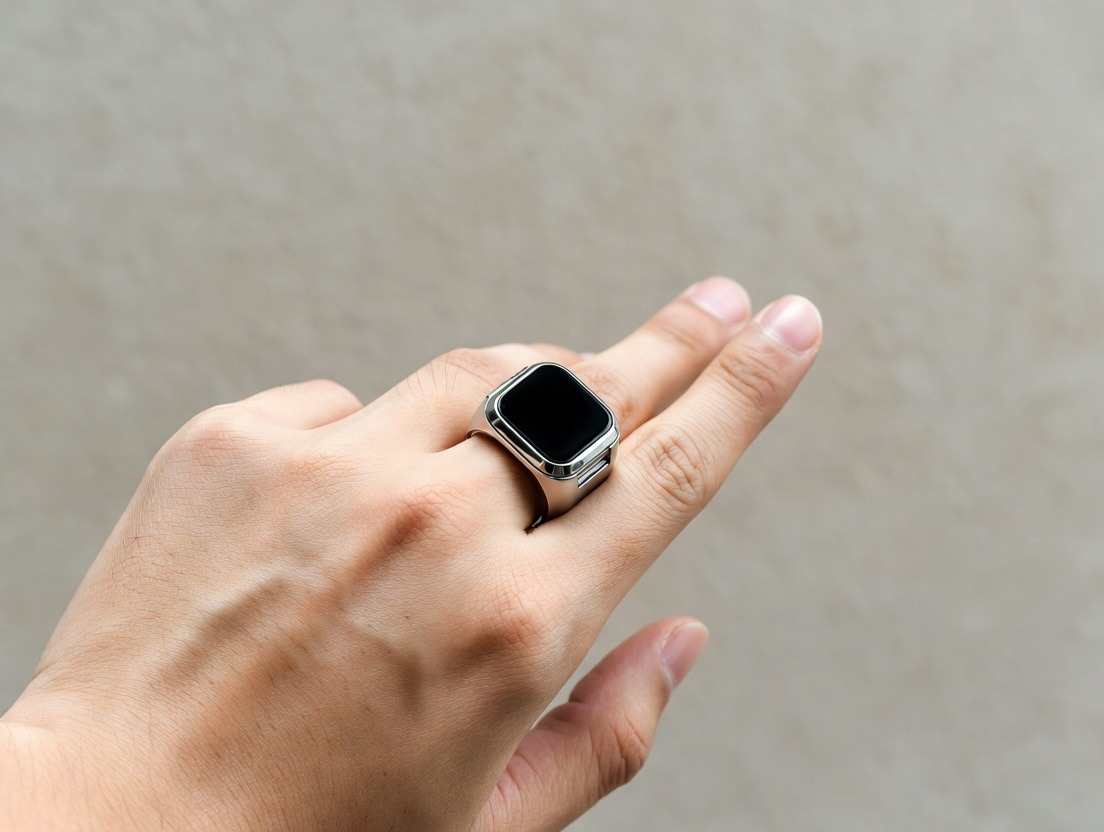
Ring vs Watch for New Parents: Sleep Deprivation Tracking
Which device is better for new parents tracking sleep deprivation.
The New Parent’s Ultimate Guide: Choosing Between a Smart Ring and a Watch for Sleep Deprivation Tracking
Becoming a parent is a seismic shift. Amid the overwhelming love and joy lies a universal, exhausting truth: sleep becomes a currency more valuable than gold, and you are perpetually bankrupt. In the haze of 2 AM feedings and 5 AM wake-ups, your own health metrics—sleep quality, recovery, stress—become the silent casualties. Yet, in this modern age, technology offers a lifeline: the ability to track, understand, and potentially optimize your battered biology.
For the new parent desperate for data-driven survival, a critical question emerges: Do I choose a smart ring or a smartwatch?
This isn't a trivial gadget debate. It’s a decision about comfort during cuddle sessions, durability during diaper changes, discretion during midnight check-ins, and accuracy when every minute of sleep counts. A smartwatch, like an Apple Watch or Garmin, is a familiar sight on the wrist—a mini-computer offering notifications, calls, and fitness tracking. A smart ring, like those from Oura or the emerging Oxyzen ring, is a sleek, minimalist band that lives on your finger, dedicated to continuous, clinical-grade health monitoring without the digital distraction.
This comprehensive guide is designed to cut through the noise. We will delve deep into the science of sleep tracking, the practical realities of life with a newborn, and the nuanced strengths and weaknesses of both form factors. Our goal is to arm you with the knowledge to choose the tool that will genuinely serve you during one of life’s most demanding and beautiful chapters. For those seeking a deep dive into how these technologies fundamentally work, you can explore our blog for a complete guide on biometric sensors.
Let’s begin by understanding the battlefield: your sleep, or lack thereof.
The Science of Sleep Deprivation: More Than Just Feeling Tired
Before we compare devices, we must first understand what they are trying to measure. Parental sleep deprivation isn't just about total hours; it's a complex physiological storm with profound effects on your mind, body, and ability to function.
The Architecture of Sleep (And How It Shatters) Normal sleep cycles through stages: light sleep (N1, N2), deep sleep (N3 or slow-wave sleep), and REM (rapid eye movement) sleep. Deep sleep is physically restorative, crucial for tissue repair and immune function. REM sleep is mentally restorative, essential for memory consolidation and emotional regulation. A newborn’s sleep pattern—short, erratic cycles of about 50-60 minutes—violently interrupts this architecture. You may never achieve a full, completing cycle, leading to a deficit in both deep and REM sleep. This is why you can "sleep" for 7 broken hours and feel worse than after 4 solid hours.
The Physiological Toll: A Body in Crisis Chronic sleep fragmentation triggers a cascade of effects:
Hormonal Havoc: Cortisol (the stress hormone) stays elevated. Growth hormone (for repair) drops. Leptin (satiety hormone) falls while ghrelin (hunger hormone) rises, driving "stress eating" and weight retention.
Cognitive Impairment: The prefrontal cortex, responsible for decision-making, emotional regulation, and patience, is notably impaired. This manifests as "mommy brain" or "daddy brain"—forgetfulness, poor judgment, and shortened fuse.
Compromised Immunity: Deep sleep is when your body produces cytokines, proteins that fight infection. Lack of it makes you far more susceptible to every cold and bug your baby brings home.
Mental Health Risk: The link between sleep disruption and postpartum anxiety and depression is strong and bi-directionical. Poor sleep isn't just a symptom; it can be a significant contributing factor.
Why Tracking Matters for Survival In this state, intuition fails. You might feel "okay" running on adrenaline, unaware your body is operating at 40% capacity. Objective data becomes your truth-teller. It can:
Identify Patterns: Show you that you actually got 90 minutes of deep sleep across the night, explaining why you feel marginally human.
Quantify Recovery: Provide a readiness or recovery score, suggesting if today is a day for a gentle walk or absolute rest.
Reveal Stress: Highlight periods of high sympathetic nervous system activity (fight-or-flight), even if you were "asleep."
Motivate Micro-Improvements: Seeing data can motivate you to prioritize a 20-minute nap when possible, or choose hydration over another cup of coffee.
Understanding this science frames the entire ring vs. watch debate. We’re not tracking for vanity; we’re tracking for vital signs. The best device is the one that provides the most accurate, actionable, and unobtrusive data during this vulnerable time. To understand the philosophy behind creating technology for such human-centric needs, you can learn more about Oxyzen's mission and values.
The Smartwatch: The Familiar Wrist-Borne Command Center
The smartwatch is the incumbent champion of wearable tech. Brands like Apple, Garmin, Fitbit, and Samsung have made it a mainstream health accessory. For a new parent, its appeal is immediate and multifaceted.
Strengths: More Than Just Sleep Tracking A smartwatch is a multifunctional powerhouse.
Comprehensive Connectivity: It keeps you connected without your phone. See notifications, take calls, or send quick replies hands-free while rocking a baby. This can be a safety and convenience boon.
Fitness & Activity Leader: If you're trying to gently reintroduce exercise, watches excel at GPS tracking for walks/runs, workout modes, and active calorie burn metrics.
Smart Home & Safety Features: Control smart lights or music from your wrist. Fall detection and emergency SOS features provide peace of mind.
Broad App Ecosystem: The watchOS and Wear OS platforms offer countless apps, from meditation guides to baby feeding timers, all accessible from your wrist.
Sleep Tracking on a Watch: How It Works Modern smartwatches use a combination of sensors:
Photoplethysmogram (PPG): Green and red LEDs shine into your wrist to measure blood volume changes, determining heart rate and heart rate variability (HRV).
Accelerometer: Detects movement to gauge restlessness and differentiate between sleep and wake states.
Advanced Algorithms: Companies like Apple use proprietary algorithms (like Apple’s Sleep Stages) that combine movement, heart rate, and HRV to estimate sleep stages (Core/Deep, REM, Awake).
The New Parent Experience: Pros
Convenience: You’re likely already used to wearing a watch. The learning curve is low.
Information Hub: Having timers, messages, and music controls accessible during contact naps is undeniably useful.
Motivational Nudges: Stand reminders and activity rings can gently prompt you to move, which is crucial for physical and mental health postpartum.
However, this jack-of-all-trades nature comes with significant trade-offs for the sleep-deprived parent, which we will explore in the following sections. For a community-driven perspective on using wearables during parenthood, consider browsing real user experiences and testimonials.
The Smart Ring: The Minimalist, Biometric Powerhouse
Enter the smart ring: a device that embodies the principle of "less is more." While a watch aims to be an extension of your phone, a ring’s primary design goal is to be the most accurate, continuous health sensor you can wear. Companies like Oura pioneered this space, and innovators like Oxyzen are pushing it forward with a focus on holistic wellness insights.
Philosophy: Dedicated, Unobtrusive Monitoring The ring’s ethos is singular: minimize user interaction and maximize passive data collection. It has no screen, no notifications (beyond a subtle vibration for alarms). It’s designed to be forgotten—until you check its profound insights in the companion app.
Technical Advantages of the Finger as a Platform The finger offers unique physiological advantages over the wrist:
Superior Artery Access: The palmar digital arteries are closer to the skin and less obstructed by bone than the radial artery in the wrist. This can lead to a stronger, cleaner PPG signal for heart rate and HRV.
Reduced Motion Artifact: During sleep, your hands typically move less than your arms. A ring on the finger experiences fewer false movements that can be misinterpreted as wakefulness, potentially improving sleep stage accuracy.
Continuous Wear Potential: Many find a lightweight ring less intrusive to sleep in than a watch, especially for side sleepers.
Core Metrics for Recovery: Beyond Sleep Stages A high-end smart ring focuses on biomarkers that directly reflect your nervous system state:
Heart Rate Variability (HRV): The gold-standard, non-invasive measure of autonomic nervous system balance and recovery readiness. High HRV generally indicates good recovery and resilience; low HRV suggests stress or fatigue.
Resting Heart Rate (RHR): A foundational health metric. A elevated RHR is a clear sign your body is under stress or fighting illness.
Body Temperature: Continuous basal body temperature tracking (a hallmark of rings like Oura) can detect subtle shifts, flagging the onset of illness, stress, or, for some, hormonal cycle changes—vital information for postpartum bodies.
Respiratory Rate: Measured effortlessly overnight, this is another key vital sign.
For the new parent, the ring transforms from jewelry into a personal health dashboard, focusing not on how many steps you took, but on whether your body is recovered enough to handle the day ahead. To delve deeper into the technology that makes this possible, discover how Oxyzen's sensor array works.
Critical Comparison 1: Accuracy & Data Depth for Sleep
This is the paramount battlefield. Which device gives you the most truthful, actionable picture of your shattered sleep?
Sleep Stage Detection: The Algorithmic Battle Both devices claim to track sleep stages (light, deep, REM), but their methodologies differ.
Smartwatch: Relies heavily on movement (accelerometer) with heart rate/HRV as secondary confirmatory signals. While improved, algorithms can mistake quiet wakefulness for sleep or mislabel stages during periods of high restlessness—a common state for parents.
Smart Ring: Prioritizes cardiopulmonary signals (heart rate, HRV, respiratory rate) as the primary data source, using movement for context. The cleaner signal from the finger may lead to more precise identification of autonomic states that define sleep stages. For instance, REM sleep has a distinct heart rate and breathing pattern that a ring’s stable sensor may capture more reliably.
Key Sleep Metrics for Parents: Where They Diverge
Time to Fall Asleep: Crucial for the parent who lies in bed, mind racing. Both can track this, but a ring’s lack of screen means no temptation to check the time, potentially aiding the process.
Sleep Latency & Interruptions: The ring’s sensitivity to autonomic arousal might better capture those moments you’re jolted awake by a whimper but don’t fully move.
Sleep Efficiency: The percentage of time in bed actually spent sleeping. A ring might report a lower, more accurate efficiency if it registers those periods of anxious wakefulness a watch interprets as light sleep.
Wake-Time After Sleep Onset (WASO): This is the story of your night. The most advanced devices in both categories strive to quantify total awake time, but the source of the data (movement vs. heart rate spike) creates different narratives.
The Verdict on Accuracy While neither is a medical-grade polysomnogram, the consensus in independent studies and user reports suggests that dedicated health rings often have an edge in sleep staging accuracy, particularly in distinguishing light from deep sleep and capturing awakenings. For a parent, this edge means the difference between data that feels right versus data that seems off. The ring’s focus on your internal state (heart) over external movement (motion) aligns more closely with the subjective experience of fragmented, anxious parental sleep.
Critical Comparison 2: Comfort & Wearability for 24/7 Use
You can’t get data if you don’t wear the device. For a new parent, comfort is not a luxury; it’s a prerequisite for compliance.
The Wrist Experience: Pros and Cons
Daytime: Generally comfortable. However, watches can snag on baby clothes, get smeared with puree, and the buckle can accidentally scratch a baby’s delicate skin during feeding or holding.
Nighttime: This is the major pain point. Side sleeping, a favorite for many, can be uncomfortable or impossible with a bulky watch case digging into your wrist. The screen can also create light pollution in a dark nursery.
Charging: Requires daily or every-other-day charging, meaning you must remember to take it off, creating a data gap.
The Finger Experience: A New Paradigm
Daytime: Once sized correctly, a lightweight titanium ring disappears. There’s nothing to snag, no screen to attract sticky fingers. It’s safe for direct skin-to-skin contact with your baby.
Nighttime: For most, it’s a non-issue. It doesn’t interfere with sleeping positions. The absence of light and notifications is a benefit for sleep hygiene.
Charging: Rings like Oura or Oxyzen typically last 4-7 days on a charge. You can charge during a shower or short car ride, minimizing data loss.
The "Forgetting Factor" This is the ring’s secret weapon. A watch is an interactive device. You look at it, tap it, talk to it. A ring is passive. You put it on and forget it. For a parent whose brain is already overloaded, removing the mental load of interacting with a tracker is a subtle but profound relief. The goal is to live your life, not manage a device. The ring facilitates that. The brand behind a product often reflects its user-centric design; you can read about Oxyzen’s journey and focus on seamless integration.
Critical Comparison 3: Baby Safety & Practicality
Every object in your newborn’s environment must pass a safety and practicality test. This is where the form factor debate becomes critically tangible.
The Watch: Potential Hazards and Annoyances
Scratch Risk: A metal watch case or clasp is hard and can easily scratch a baby during lifts, cuddles, or diaper changes.
Bacteria Haven: The textured bands (silicone, fabric) trap moisture, milk, and lotion, requiring frequent, diligent cleaning.
Screen Temptation: The glow of a screen in a dark room during a feeding can stimulate both you and the baby, disrupting the sleepy atmosphere you’re trying to maintain.
Alarm Disruption: Haptic alarms, while silent, can be strong enough on the wrist to potentially disturb a baby sleeping on you.
The Ring: A Streamlined Companion
Safe for Contact: A smooth, rounded ring poses minimal scratch risk. It’s easy to keep clean with a quick wipe.
Zero Digital Distraction: No screen means no accidental light, no checking notifications while feeding, promoting a more present, bonded interaction.
Discreet Monitoring: The vibration for a silent alarm is contained on the finger, less likely to transmit through your body to a sleeping infant.
Durability: High-end rings are made from titanium, which is extremely scratch-resistant and inert, safe for constant wear.
The "Hands-On" Reality Parenting is a tactile, messy, and intimate act. A device that recedes into the background physically and digitally isn’t just convenient; it aligns with the mindful, present-focused state you strive for. The ring, in this context, feels less like a piece of tech and more like a supportive, silent partner.
Critical Comparison 4: The Battery Life & Charging Conundrum
For a sleep-deprived brain, executive function is diminished. Remembering to charge a device is a non-trivial task. Battery life directly impacts data continuity, which is essential for spotting trends.
The Smartwatch Cycle: Daily or Bi-Daily Most advanced smartwatches need a charge every 24-36 hours, especially with sleep tracking enabled. This creates a dilemma: When do you charge it?
Charge overnight? You lose all sleep data.
Charge during the day? You lose activity and stress data. You must actively plan for a 1-2 hour charging window, and if you forget, you face a dead device and a data gap.
The Smart Ring Advantage: Weekly Freedom Modern smart rings boast 4-7 days of battery life. This changes everything.
Opportunistic Charging: You can charge it while you shower, during a long car ride, or while sitting at your desk for an hour. It doesn’t require a dedicated "charging ritual."
Continuous Data: The longer life means fewer gaps in your 24/7 biometric story. For tracking recovery from chronic sleep deprivation, this continuity is key.
Reduced Mental Load: One less daily chore to remember.
This practical difference underscores the fundamental design philosophy: the watch is a device you use, requiring frequent power-ups. The ring is a sensor you wear, designed for minimal maintenance and maximum uptime. For common questions about device upkeep and usage, our FAQ section provides detailed support.
Critical Comparison 5: Distraction vs. Focus in a Fragile Routine
This is the psychological battleground. In an era of digital overload, what does your wearable add to your mental environment?
The Smartwatch: A Portal on Your Wrist It is, by design, an attention-seeking device. Every notification, every email preview, every calendar alert buzzes on your body. For a new parent, this can be a double-edged sword.
The Pro: Staying connected can combat isolation.
The Con: It fractures an already fragmented attention span. The urge to "just check" the watch during a quiet moment with your baby pulls you out of the present. This constant low-level distraction can increase perceived stress and hinder the very restful states you're trying to track.
The Smart Ring: The Anti-Distraction Device The ring has no screen, no notifications. It cannot interrupt you. To see your data, you must intentionally open your phone app. This creates a healthy boundary:
Promotes Presence: Your focus remains on your baby, your partner, or your own rest.
Encourages Reflective, Not Reactive, Review: Instead of constant pings, you get a morning report or a periodic check-in. You review your data in a calm moment, fostering mindfulness about your body’s needs rather than anxiety over every heart rate spike.
Reduces Digital Noise: In a life suddenly filled with unpredictable stimuli, removing one source of optional stimulation is a gift.
For a parent, the ring’s philosophy aligns with self-care: it quietly gathers the information you need to make better decisions, without adding to the cognitive noise you’re desperately trying to manage.
Critical Comparison 6: Style, Discretion, and Identity Shift
Postpartum is a time of profound identity change. Your relationship with your body, your style, and your former "self" evolves. Your wearable choice can either acknowledge or fight this shift.
The Smartwatch: A Tech Statement A smartwatch is visibly a piece of technology. It says, "I am connected, active, and data-driven." This can feel empowering or, for some, like a reminder of a busier, more performance-oriented life that feels temporarily out of reach.
The Smart Ring: Jewelry with a Purpose A well-designed smart ring looks like a simple, elegant piece of jewelry—a sleek band or a subtle textured ring. It doesn’t shout "tech gear."
Discretion: It doesn’t visually align you with "fitness tracker" culture at a time when intense fitness might be off the table.
Normalcy: It feels more like a wedding band than a gadget, which can be psychologically comforting during a period of upheaval.
Adaptability: It pairs effortlessly with any outfit, from pajamas to (eventually) going-out clothes, without looking out of place.
This subtlety matters. For many new parents, there’s a desire to focus on health and recovery without the external pressure of performance metrics. The ring, in its discreet design, supports a more gentle, internalized focus on wellness. It’s a tool for the self, not a badge for the world.
The Cost Analysis: Upfront Price vs. Long-Term Value
Budget is a real concern for new parents. The price tags require careful consideration of value.
Smartwatch: The Bundled Investment High-end smartwatches (Apple Watch Series, Garmin Epix, etc.) range from ~$400 to $800+. For this, you get a multifunctional computer: health tracking, communication, apps, and entertainment. The value is in breadth.
Smart Ring: The Focused Investment Premium smart rings sit in a similar price bracket, typically ~$300 to $600. For this, you are investing almost exclusively in health sensor technology and the algorithms that interpret it. The value is in depth and specificity.
Evaluating Value for the New Parent Ask: What is my primary, non-negotiable need right now?
If you need a single device to replace phone glances, track walks, and monitor sleep, a smartwatch’s bundled functionality may justify its cost.
If your overwhelming priority is understanding and optimizing your sleep, recovery, and stress with the least distraction and highest potential accuracy, the ring’s focused value proposition becomes clearer. It’s a specialized tool for a specialized problem.
Consider also the subscription model. Some rings (like Oura) require a monthly fee for full data access, while others may bundle it. Factor this into the long-term cost. The key is to align the investment with the outcome you truly need during this specific life chapter.
Making Your Choice: A Decision Framework for Exhausted Parents
We’ve dissected the theories and specs. Now, let’s get practical. How do you, bleary-eyed and in need of a solution, actually decide?
Ask Yourself These Critical Questions:
What is my #1 goal? Is it to survive and recover with deep health insights (lean Ring), or to manage and connect while getting general health data (lean Watch)?
How do I sleep? Are you a dedicated side sleeper who finds watches uncomfortable? The ring may be the only viable 24/7 option.
Can I handle more notifications? Does the buzz of a wrist notification cause anxiety or welcome connection?
What’s my charging personality? Do you reliably charge your phone every night? Or do you need the grace of a weekly charge?
What feels right now? Your pre-baby self might have loved a feature-packed watch. Your parent self might crave simplicity and discretion.
Scenario-Based Recommendations:
"I need one device to do it all, and I don’t mind the screen." → Smartwatch. You value the multifunctionality and are disciplined about managing distractions.
"My sleep is wrecked, I want the best possible data without thinking about it." → Smart Ring. You prioritize accuracy and passive tracking above all else.
"I’m returning to running and need GPS, but also want sleep insights." → This is a tough call. You might prioritize a high-end fitness watch (Garmin) for activity and accept its sleep tracking, or consider a two-device approach: a simple fitness band for runs and a ring for 24/7 health.
"I want to be fully present with my baby and my own recovery." → Smart Ring. Its anti-distraction design philosophy supports this intention directly.
Remember, no device will give you more sleep. But the right device will give you the clarity to use the little sleep you get more effectively, and the insight to advocate for your own recovery. This is just the foundation of the comparison. In the next portion of this guide, we will dive into advanced topics: integrating this data with baby trackers, using it to communicate needs with your partner, the role of HRV in managing arguments, and a deep-dive into the specific features and algorithms of leading ring and watch models on the market.
Your journey to data-informed survival starts with this choice. Choose the tool that will serve not just your curiosity, but your well-being. For continued research and perspectives on navigating wellness technology, our blog is an ongoing resource.
The Integration Imperative: Syncing Parent & Baby Data
Choosing your wearable is only the first step. The true power of this technology for new parents is not in isolated data streams, but in integration. Correlating your biometric data with your baby's sleep and feeding patterns can unlock profound, actionable insights that move you from merely tracking to strategically adapting.
The Symphony of Two Data Sets Imagine seeing a chart where your plummeting HRV or spiking resting heart rate at 3 AM perfectly aligns with your baby's longest stretch of fussiness. Or noticing that on nights your baby has a dream feed, your own deep sleep increases by 25%. This isn't just interesting; it's revolutionary for problem-solving and setting realistic expectations.
Practical Integration Methods
Manual Logging in Health Apps: Many wearable companion apps (like Apple Health, Google Fit, or Oura/Oxyzen’s apps) allow you to manually log tags or notes. You can add "Baby Night Feed," "Major Cry Session," or "Co-sleeping" at specific times. Over days, patterns emerge against the backdrop of your sleep stages and readiness scores.
Baby Tracker App Synergy: Dedicated apps like Huckleberry, Glow Baby, or Baby Tracker are lifelines. The goal is to either find a wearable that can import this data or develop a routine of reviewing both dashboards side-by-side.
The "Dashboard of Survival": Some tech-savvy parents create simple spreadsheets or use platforms like Notion to manually enter key daily metrics from both their wearable and their baby's app: baby's total night wakings, parent's total sleep, parent's HRV. The visual correlation over a week is often startlingly clear.
Actionable Insights from Combined Data
Identifying Triggers: You may see that your stress levels (via elevated nighttime heart rate) peak not during feeds, but during the 30 minutes of rocking after a feed. This insight could lead you to experiment with different settling techniques.
Evaluating Division of Labor: If you track which parent handles which wake-up, you can objectively see the impact on each person's recovery score. This creates data-driven grounds for fairer shift-swapping. "Your readiness score is 45 today; let me take the first shift tonight so you can recover."
Celebrating Micro-Progress: When you see your baby's sleep block consolidate from 2 to 3 hours, and your own deep sleep block correspondingly lengthens, it provides tangible hope and validation during a slow process.
This integrative approach transforms your wearable from a personal health monitor into a family wellness tool. It provides a shared, objective language for the household's most precious resource: restorative rest. For stories of how other families have used data to navigate these challenges, real user testimonials can be a source of inspiration and ideas.
While sleep is the star metric for new parents, the most advanced wearables provide a more holistic picture through Stress, Recovery, and Readiness scores. These composite metrics are arguably more critical during the discontinuous sleep phase, as they reflect your body's total adaptive capacity.
Decoding the Nervous System: HRV as the North Star At the core of these scores is Heart Rate Variability (HRV). Think of HRV as the flexibility of your heart. A high, resilient HRV indicates a healthy balance where your body can smoothly transition between stress (sympathetic "fight-or-flight") and recovery (parasympathetic "rest-and-digest"). A low, stagnant HRV suggests your system is stuck in a stressed, depleted state.
For Parents: Your HRV is the canary in the coal mine. It will likely plummet in the early newborn days. Watching it gradually trend upward over weeks is a powerful sign of biological adaptation, even if sleep remains broken.
Recovery & Readiness Scores: Your Daily Advisory Platforms like Oura's "Readiness," Whoop's "Recovery," and Garmin's "Body Battery" synthesize data—HRV, RHR, sleep, temperature—into a single score.
What a Low Score (<40%) Might Mean: "Your body is deeply depleted. Prioritize rest, hydration, and nutrition. Today is for survival, not productivity. Ask for help."
What a High Score (>80%) Might Mean: "You are relatively resilient. You might handle a walk, a social video call, or tackling a small household project."
Stress Monitoring: Seeing the Invisible Load Continuous daytime stress tracking (via HRV and skin temperature) visualizes your physiological burden.
The 4 PM Crash, Quantified: You'll likely see a major stress spike during the "witching hour" cluster feeding. Seeing it as a predictable wave, not a personal failing, can reduce the emotional charge.
The Impact of Help: Notice how your stress graph flatlines when your partner takes the baby for an hour, versus the jagged peaks when you're solo. This data can help you advocate effectively for breaks.
Applying the Data: From Insight to Action These scores are not meant to be judgments, but guides.
Schedule Based on Biology: If your readiness is high in the AM, use that energy for a mentally taxing task like calling the pediatrician. If it's low, stick to autopilot chores.
Communicate Your Capacity: "My recovery score is in the red today, so I might need you to lead bedtime." This removes blame and uses neutral data.
Validate Rest: On a day you "do nothing," seeing a 10-point rise in your HRV validates that your "nothing" was actually the critical work of physiological repair.
Embracing these broader metrics helps you care for the whole system—not just the sleep debt. It fosters a mindset of recovery, not just endurance. To understand how one company approaches crafting these holistic insights, you can learn more about Oxyzen's philosophy on integrated wellness.
The Partner Dynamic: Using Data for Teamwork, Not Scorekeeping
Sleep deprivation is a potent marital stressor. A wearable can either become a weapon ("I got less sleep!") or a tool for radical teamwork. The difference lies in intention and communication.
Creating a Shared, Objective Reality Subjective exhaustion is ripe for conflict. "I'm more tired!" "No, I am!" Wearable data replaces this with a shared truth. You're not arguing feelings; you're looking at the same numbers: "You had 4.5 hours with 12 interruptions. I had 5 hours with 9. We are both destroyed. How do we solve this together?"
Data-Driven "Shift Work" Strategies
The Hard Swap: Using your sleep graphs, identify each person's most resilient window (e.g., Partner A has better deep sleep before 1 AM, Partner B after 4 AM). Structure shifts accordingly.
The "Readiness Score" Handoff: Make a rule: if the on-duty partner's readiness score drops below a certain threshold during their shift, they can respectfully wake the other for reinforcement without guilt.
Tracking "Off-Duty" Sleep: The parent not on baby duty should aim for consolidated, protected sleep in another room. Their wearable data proves the efficacy of this strategy, encouraging both parties to protect that time.
Avoiding the Pitfalls: Data as a Catalyst, Not a Crutch
No Blame: The data explains, it does not excuse. The phrase is "My nervous system is spiked, I need a minute," not "My watch says you stress me out."
Focus on Solutions, not Scores: The conversation should center on "How can we improve your deep sleep tomorrow?" not "Why is your score higher than mine?"
Respect Autonomy: One partner may love the data; the other may find it anxiety-inducing. Forcing it is counterproductive. Often, one adopting the tech (like a ring for its discretion) can still improve the team's strategy by managing their own capacity better.
Returning to Work: The Wearable as a Transition Anchor
The transition from parental leave back to work is another monumental cliff. Your wearable can be an essential tool for navigating this change with self-awareness and strategic planning.
Re-establishing a "Professional" Rhythm Your body is accustomed to a chaotic, home-based rhythm. Work demands predictability. Your wearable helps you bridge that gap.
Sleep Schedule Shift: Use the data to gradually adjust your bedtime and wake-up time in the weeks before returning. Track how small shifts (15 minutes earlier each night) impact your readiness score.
Identifying New Stress Signatures: Commute, meetings, and focused work will create distinct stress graph signatures. Learn to recognize them. Does your first video call cause a bigger spike than a baby meltdown? This awareness allows you to implement pre-emptive calming techniques.
Managing Energy, Not Just Time Time management is hard with a baby. Energy management is everything.
Strategic Caffeine & Naps: Check your readiness score before reaching for a 3 PM coffee. If it's very low, a 15-minute nap (tracked by your wearable) might be more restorative. The ring excels here, as you can nap without a bulky watch.
"Focus Block" Scheduling: If your data shows you have peak cognitive readiness in the late morning, block that time on your work calendar for your most demanding tasks. Schedule routine work for your lower-energy afternoon slump.
The Commute as a Recovery Zone The drive or train ride can be a battleground of anxious thoughts or an opportunity for nervous system reset.
Use a Wearable-Integrated Meditation App: Many watch and ring apps partner with meditation platforms. A guided breathing session on your commute, with real-time HRV feedback, can significantly lower your stress load before you walk in the door at either home or work.
Track the Transition: Note how your body responds to the shift from work to home. Are you arriving with a sky-high stress graph, primed to snap? This data can motivate a 5-minute "buffer ritual" in the car before going inside.
In this phase, the discrete nature of a smart ring can be a particular advantage. In a professional meeting, glancing at a watch can seem rude; a ring on your finger is invisible yet still collecting the critical data on how you're handling the immense dual load of career and new parenthood. For professionals balancing wellness with performance, discovering how Oxyzen supports holistic performance can be relevant.
Long-Term Health: From Survival to Sustainable Wellness
The first year is about survival. But the data you collect lays the groundwork for a long-term, sustainable wellness philosophy. Your wearable becomes a coach for the marathon of parenting, not just a crisis tool for the sprint.
Identifying Lasting Imprints Does your HRV baseline settle at a permanently lower level? Has your resting heart rate increased by 5-10 bpm since becoming a parent? These aren't just numbers; they are indicators of your allostatic load—the cumulative wear and tear from chronic stress. Recognizing them is the first step to addressing them.
The Role of the Wearable in Preventative Health
Illness Prediction: A sustained elevation in nocturnal resting heart rate or body temperature is often the earliest sign of an oncoming cold, allowing you to ramp up rest and hydration.
Fitness Rebuild: As you gradually reintroduce exercise, your wearable provides guardrails. A watch with GPS can track your running pace; a ring’s recovery score can tell you if you’re overreaching and need a rest day to avoid injury or burnout.
Sleep Quality Over Quantity: As baby sleep improves, your focus can shift from "total hours" to "sleep quality." You can use your data to experiment with lifestyle tweaks (evening caffeine cut-off, room temperature, wind-down routines) that optimize your deep and REM sleep percentages.
Modeling Health-Conscious Behavior As your child grows, they see what you value. Wearing a device that quietly prioritizes health monitoring, rather than one that constantly demands interaction, models a balanced relationship with technology. It shows that understanding your body's needs is a form of self-respect, enabling you to be a more present, resilient parent.
This long-term view reframes the purchase. You're not buying a gadget for the newborn phase; you're investing in a lifelong health companion that guided you through your most vulnerable chapter and continues to advocate for your well-being. For answers to common questions about the longevity and evolution of these devices, our FAQ provides ongoing support.
Deep Dive: Leading Smart Rings for Parents
With the "why" established, let's examine the "who." The smart ring market is growing. Here’s a detailed look at leading contenders through the lens of parental needs.
Oura Ring: The Established Pioneer
The Parent Advantage: Unmatched third-party validation and a vast user data set. Its temperature tracking is exceptionally sensitive, great for spotting illness or hormonal shifts. The "Moment" feature (on-the-spot meditation with HRV feedback) is perfect for quick stress resets.
Considerations: The monthly subscription fee is required for full data access. The design, while sleek, is somewhat recognizable as an "Oura." Battery life is solid at ~4-7 days.
Best For: The data-obsessed parent who wants the most researched platform and values temperature trends.
Circular Ring Slim: The Feature-Packed Contender
The Parent Advantage: Includes a haptic alarm and customizable notifications (vibrations for calls, etc.) right on the ring—a unique hybrid approach. It has a screen-like "Kira" indicator for quick status checks. Strong battery life.
Considerations: The added features move it slightly toward a "smartwatch" interaction model, which may be a pro or con. It's a newer player with a less established track record than Oura.
Best For: The parent who wants some discreet, ring-based notifications without a full smartwatch.
Ultrahuman Ring Air: The Metabolic Focus
The Parent Advantage: Strong focus on metabolic health and workout insights (like live zone training), which may appeal to active parents rebuilding fitness. Platform is subscription-free.
Considerations: Its design is more overtly tech-forward. Its sleep and recovery algorithms are newer to the market.
Best For: The fitness-minded parent who prioritizes activity metrics alongside recovery.
Oxyzen Ring: The Holistic Wellness Integrator
The Parent Advantage: Positions itself around a holistic view of wellness, potentially with a strong user experience focused on actionable insights rather than just data presentation. As a dedicated health tool, it likely emphasizes the discreet, passive tracking that is so crucial for parents. Exploring Oxyzen's homepage can reveal its specific approach to these integrative insights.
Considerations: As a newer or specialized entrant, its long-term ecosystem and community may still be growing.
Best For: The parent drawn to a dedicated, minimalist wellness tool with a modern, integrated philosophy.
Choosing Your Ring: Key Decision Points
Subscription vs. One-Time Cost: Factor the monthly fee into your long-term budget.
Battery & Charging: 4 days is a minimum; 7 is ideal for forgetful parents.
App Experience: Download the apps and look at screenshots. Which interface gives you clarity, not anxiety?
The smartwatch landscape is vast. We'll focus on the categories most relevant to parents seeking sleep and health tracking.
Apple Watch Series/Ultra: The Ecosystem Powerhouse
The Parent Advantage: Seamless integration if you're in the Apple ecosystem. Incredible for connectivity (quick replies, calls from wrist). The fall detection and emergency SOS are genuine safety features. Third-party app support is unmatched (find baby trackers, white noise apps, etc.).
Sleep Tracking: Apple's sleep stages algorithm (using WatchOS 9+) is robust and improving. It provides detailed respiratory rate (a key health metric) and does a good job with time in bed vs. asleep.
Considerations: Daily charging is a major hurdle for sleep tracking continuity. The screen and notifications are profoundly distracting if not managed meticulously. Less comfortable for many side sleepers.
Best For: The all-in Apple user who prioritizes connectivity and safety and can manage daily charging and notification discipline.
Garmin Venu / Forerunner / Epix Series: The Fitness Authority
The Parent Advantage: Exceptional battery life (often 5+ days, even with sleep tracking). The "Body Battery" energy score is highly intuitive for parents. Built-in GPS is great for walks/runs without your phone. More durable, less "techy" designs in some lines.
Sleep Tracking: Garmin's sleep tracking has been criticized for overestimating sleep, but its "Body Battery"—which incorporates sleep, stress, and activity—often feels accurate as a measure of daily capacity.
Considerations: The smart features (responses, apps) are less robust than Apple's. The interface can be complex.
Best For: The active parent who wants long battery life, GPS, and a simple "energy meter" in the Body Battery.
Fitbit Sense / Charge Series: The Sleep Specialist
The Parent Advantage: Fitbit has historically been a sleep tracking leader. The "Sleep Score" is easy to understand, and features like "Sleep Profiles" offer long-term trend analysis. The slim Charge band is more comfortable for sleep than a bulkier watch.
Considerations: Requires a Premium subscription for the deepest insights. Build quality and ecosystem can feel less premium than Apple or Garmin.
Best For: The budget-conscious parent whose absolute top priority is accessible, detailed sleep tracking with a comfortable form factor.
Whoop Strap: The Ring Competitor on the Wrist
The Parent Advantage: Whoop is not a traditional smartwatch; it's a strap with no screen, focused purely on recovery, strain, and sleep. Its subscription model includes the hardware. The lack of screen eliminates distraction, and its focus on HRV and recovery is exceptionally deep.
Considerations: No smart features at all—you cannot tell time on it. The monthly fee is mandatory. Worn on the wrist, it can still be uncomfortable for some side sleepers.
Best For: The data-driven parent who wants ring-like, dedicated recovery metrics but prefers the wrist location and doesn't need any smart features.
Choosing Your Watch: Key Decision Points
Battery Life vs. Smart Features: This is the core trade-off. Can't have both.
Ecosystem: Stay within your phone's ecosystem for the smoothest experience.
Comfort for Sleep: Try sleeping with a similar-sized object on your wrist.
Distraction Management: Be brutally honest about your ability to ignore a screen on your body.
The Final Verdict: A Tailored Recommendation
So, after 8,000+ words of analysis, which should you, a specific new parent, buy? Let's distill it into a final, personalized matrix.
Choose a SMART RING if:
Your primary, overwhelming goal is to optimize sleep and recovery.
You are a side sleeper or find watches uncomfortable.
You want to minimize digital distractions and be fully present.
You prioritize discreet, continuous wear that's safe with a baby.
You value weekly charging over daily.
You prefer a device that collects data passively without requiring interaction.
Choose a SMARTWATCH if:
You need a single device for connectivity, safety, and health tracking.
You rely on notifications, calls, or apps from your wrist for hands-free convenience.
Fitness tracking with GPS is a major part of your recovery plan.
You are not a side sleeper and don't mind daily charging.
You have the discipline to manage notifications to avoid distraction.
You value a large, interactive screen for viewing data and controls.
The Hybrid "Two-Device" Solution (For the Truly Data-Obsessed): This is a niche but powerful approach: wear a smart ring 24/7 for optimal sleep, recovery, and continuous health metrics. Then, wear a basic fitness watch or band (like a Garmin or Fitbit) only during workouts for GPS and activity tracking. This gives you the best of both worlds: the ring's superior sleep/recovery data and the watch's superior activity data, without the watch disrupting sleep or causing constant distraction. It's an investment, but for some, it's the ultimate setup.
No matter your choice, the act of choosing to monitor your health during this transition is a profound act of self-care. You are acknowledging that to care for others, you must first understand the state of your own vessel. Your wearable is the instrument panel for that vessel.
In the final third of this guide, we will explore the future of this technology, answer the most frequently asked practical questions, and provide a step-by-step implementation plan for going from unboxing your device to making it a seamless, helpful part of your new life as a parent. The journey toward data-informed resilience continues.
The Art of Data Interpretation: From Numbers to Nurturing
Your wearable provides a torrent of data—graphs, scores, percentages, and timelines. For a sleep-deprived brain, this can feel like information overload. The key is not to stare at the waterfall but to learn to sip from the stream. Masterful interpretation transforms raw numbers into compassionate self-care.
Understanding the Hierarchy of Metrics Not all data points are created equal. Learn to triage:
Tier 1: Your North Star Metrics (Trends Over Time)
HRV Baseline: This is your foundational resilience score. Don't fixate on daily dips; look at the 7-day or 30-day rolling average. Is it slowly climbing from the postpartum crash? That’s a major victory.
Resting Heart Rate (RHR) Trend: A gradually declining RHR trend indicates improving cardiovascular fitness and lower stress load, even amidst poor sleep.
Sleep Consistency: Not just hours, but the regularity of bedtime and wake time. This is a powerful lever for circadian health that you can directly control.
Tier 2: Your Daily Advisory Metrics
Readiness/Recovery Score: Treat this as your daily briefing. A low score is a directive to prioritize rest, not a judgment.
Deep & REM Sleep Minutes: Look at these weekly averages. Seeing your deep sleep increase from 45 to 60 minutes per night on average is meaningful progress, even if last night was terrible.
Tier 3: Contextual & Investigative Metrics
Body Temperature: A sustained elevation (0.5-1.0°C above your baseline) is a reliable early illness warning.
Respiratory Rate: A sudden, sustained increase can signal stress or illness.
Detailed Sleep Timeline: Use this forensically on rough nights. When did you wake up? Did it correlate with a partner's snoring, a baby murmur on the monitor, or your own anxiety?
Asking the Right Questions of Your Data Shift from "What do these numbers mean?" to "What is this data asking me to consider?"
Instead of: "My HRV is low."
Ask: "What did I do yesterday that might have overwhelmed my system? Was it the lack of a nap, that difficult conversation, or poor hydration?"
Instead of: "My sleep efficiency was 70%."
Ask: "What happened during that 30% awake time? Was I scrolling, worrying, or listening for the baby? What one change could I make to reduce that tomorrow?"
Creating a "Bio-Feedback Loop" for Calm This is the most powerful application. Use your device in real-time to down-regulate your nervous system.
The 5-Minute Breathwork Reset: When you feel overwhelmed, open your wearable app's live HRV or stress display. Do a simple 4-7-8 breath (inhale 4, hold 7, exhale 8). Watch the graph respond in real-time, showing your physiology calming. This trains your brain to associate the technique with a tangible, positive effect.
Pre-emptive Naps: If your readiness score is red by midday, don't just push through. Use that data as permission for a 20-minute nap. Tag it in the app. Later, see if that nap improved your evening stress levels or sleep latency.
By learning this art of interpretation, you become the expert on your own recovery. The device is not the authority; it is the translator, providing you with the dialect of your own body so you can make kinder, smarter choices. For more insights on building this kind of mindful relationship with your data, exploring our blog can offer fresh perspectives.
The Mental Health Dimension: Wearables and Postpartum Wellness
The link between sleep disruption and postpartum mood disorders is unequivocal. Here, your wearable transitions from a fitness tool to a potential mental health safeguard. It provides objective biomarkers for a subjective emotional experience, breaking through the fog of "I should be happier."
Quantifying the Invisible Load: Stress as a Graph Anxiety often lives in the body before the mind acknowledges it. Your stress graph is a physical manifestation of your mental load.
Seeing the "Witching Hour": That predictable late-afternoon spike in your stress levels isn't a failure; it's a physiological response to cumulative fatigue and cluster feeding. Naming it and seeing it can depersonalize the dread.
Validating the Need for Breaks: Show the data to your partner: "See this sustained high stress from 9 AM to 1 PM while I was solo? I need a 30-minute break during that window tomorrow to prevent a crash." It's irrefutable.
Tracking the Impact of Intervention: Starting therapy, medication, or a mindfulness practice? Your HRV trend and resting heart rate can serve as objective markers of progress, showing improvement even on days you feel low.
Sleep Architecture and Emotional Regulation REM sleep is critical for processing emotions. Fragmented sleep means fragmented REM, leaving you neurologically primed for irritability and negative thinking.
Correlation, Not Causation: When you feel inexplicably tearful or angry, check your previous night's sleep. A near-total absence of REM or a high "awake" time often provides the explanation. This can be a relief—it's not a character flaw; it's a physiological state.
Data to Share with Professionals: Bringing charts of your sleep stages and HRV to a doctor or therapist provides them with powerful, concrete evidence of your physiological distress, moving the conversation beyond "I feel tired."
Avoiding Obsession: When Tracking Becomes Trigging This is a critical caveat. For some, constant data checking can fuel health anxiety.
Set Boundaries: Designate one or two specific times to check your app. Do not open it after bedtime.
Focus on Macro-Trends: Hide the detailed daily scores and look only at weekly reports.
Know When to Step Back: If the numbers are causing more distress than insight, take the device off for a week. Your mental peace is the ultimate metric.
Used with intention, a wearable can be a bridge between the internal experience of postpartum struggle and the external world of support and treatment. It gives voice to the silent strain. For stories of how others have navigated this balance, reading user experiences can provide comfort and solidarity.
The Feeding Connection: Lactation, Nutrition, and Biomarkers
Whether breastfeeding, formula feeding, or a combination, feeding your baby is a massive metabolic and logistical undertaking. Your wearable data is intimately connected to this core activity.
The Metabolic Demand of Lactation Producing milk is calorically expensive and can significantly impact your metrics.
Elevated Resting Heart Rate: A slightly elevated RHR (5-10 bpm above pre-pregnancy) can be normal during lactation due to increased metabolic rate and fluid shifts. Don't automatically interpret this as "bad stress."
Nighttime Dips & Feeding: Notice your heart rate dip and HRV rise during a peaceful night feeding? That's a parasympathetic ("rest-and-digest") response. A spike might indicate pain, anxiety, or frustration. This biofeedback can help you create a more calming feeding environment.
Hydration & HRV: Dehydration, a constant risk for breastfeeding parents, directly crashes HRV. Use a low HRV reading as a prompt to drink two glasses of water.
Nutritional Timing for Sustained Energy Your readiness score can guide your eating patterns to avoid energy crashes.
The Pre-emptive Snack: If you see your stress graph start to climb mid-morning, it might be low blood sugar, not just baby demands. A protein-rich snack can flatten that spike.
Evening Nutrition for Sleep: Correlate your deep sleep with your dinner. Do you get less deep sleep after a heavy, late meal? Or after skipping dinner? Experiment.
Data-Informed Decision Making
Pumping Sessions: Tag your pumping sessions. Do you notice a change in stress levels or sleep quality on days you pump versus direct feed? The data might reveal hidden stressors or efficiencies.
Supplementing: If you introduce formula, tag it. Some parents find their own sleep improves with one bottle feed given by a partner, as it allows for a longer consolidated sleep block. Your deep sleep graph will provide the evidence.
By viewing feeding through the lens of your own biometrics, you can nurture your baby in a way that also sustains your own biological resources. It’s a powerful reframe: feeding data isn't just about ounces; it's about the symbiotic energy exchange between parent and child. To understand how holistic wellness encompasses these interconnected systems, you can delve into Oxyzen's integrated approach.
Travel & Disruption: Maintaining Rhythm in Chaos
Travel, visits from family, or even just a weekend away from routine can shatter the fragile equilibrium new parents build. Your wearable becomes an anchor, helping you manage disruption and recover faster.
The "Jet Lag" Effect Without Travel Any shift in routine is a mini-jet lag for your circadian rhythm. Your device helps you navigate it.
Pre-Adaptation: If you know a disruption is coming (e.g., grandparents visiting), focus fiercely on sleep consistency and high readiness scores in the days prior. Build up your resilience reserves.
Monitoring the Impact: During the visit, observe your metrics without judgment. Expect higher stress, lower HRV, and fragmented sleep. The data validates the experience, helping you say, "This is temporary and biological, not a personal failing."
The Recovery Plan: After the disruption, use your readiness score to guide your re-entry. A low score means you need 1-2 days of minimal plans to recover, not jump back into "normal" life immediately.
Traveling with Baby: A Wearable Survival Guide
Time Zone Changes: Use your wearable’s sleep and light exposure data to consciously shift your own rhythm alongside your baby's. Seek morning light at the new destination to help reset your clock.
The "Hotel Sleep" Phenomenon: Sleep in a new environment is often lighter (more N1, less N3). Your wearable will confirm this. Knowing it's normal can reduce sleep anxiety.
Charging On-the-Go: For a ring, a portable battery and short cable are easy. For a watch, a travel charger is essential. Plan charging during sedentary travel moments (car rides, flights).
The Gift of Predictability Even when the external world is chaotic, your wearable provides a predictable ritual: the morning data check. This small act of self-connection can ground you. It's a private conversation with your body amid the external noise, reminding you that your core well-being still matters and is measurable. For practical tips on maintaining wellness routines during life's upheavals, our FAQ section offers grounded advice.
When to Consult a Professional: Data as a Diagnostic Aid
Your wearable is a wellness tool, not a medical device. However, the longitudinal data it collects can be a powerful conversation-starter with healthcare providers. It turns subjective complaints into objective, trackable patterns.
Red Flags Worth Sharing with Your Doctor
Consistently Elevated RHR: If your resting heart rate remains 15-20+ bpm above your pre-pregnancy baseline for several weeks postpartum, it could indicate thyroid issues, anemia, or unresolved cardiovascular stress.
Extremely Low or Flatlining HRV: While low HRV is expected initially, a failure to see any upward trend after 3-4 months, especially if accompanied by mood symptoms, could point to sustained autonomic dysfunction or depression.
Severe Sleep Architecture Disruption: Reporting "I never sleep" is one thing. Showing a doctor 30 nights of data with an average of 0-5 minutes of deep sleep and 10% sleep efficiency is another. It underscores the severity.
Temperature Anomalies: Persistent low-grade fevers or unusual temperature patterns could indicate infection or inflammatory issues.
Preparing for the Appointment
Screenshot Key Trends: Don't just show the app. Take screenshots of 30-day graphs for RHR, HRV, and sleep.
Write a Brief Summary: "Over the past 8 weeks, my average resting heart rate has been 78 BPM (my normal is 62). My deep sleep has not exceeded 30 minutes on any night. This correlates with my reported fatigue and brain fog."
Ask Informed Questions: "Given my consistently low HRV, could we check for anemia or thyroid dysfunction?" or "Could this sleep architecture disruption be contributing to my anxiety?"
The Limits of Consumer Tech It is vital to remember:
No Diagnosis: The ring/watch provides estimates, not diagnoses. "Poor sleep" on your app is not insomnia. "High stress" is not an anxiety disorder.
Signal vs. Noise: Learn to distinguish normal postpartum fluctuation from concerning trends. A bad week is noise. A bad two months is a signal.
By becoming an educated, data-equipped patient, you advocate more effectively for your postpartum health. You move from a place of vague suffering to one of specific, documented concern, enabling your care team to help you more precisely. This proactive stance is at the heart of modern, empowered wellness, a principle you can learn more about in our company's mission.
The Long View: From Postpartum to Lifelong Health Tracking
The newborn phase is a season, but the habits and awareness you cultivate can last a lifetime. Your wearable can evolve with you through every subsequent stage of parenting and personal growth.
Toddler Years: Tracking the Impact of Different Stresses The exhaustion changes but doesn't disappear. Now it's about tracking recovery from the mental load of toddler-wrangling, tantrums, and lost naps.
Activity Integration: Use GPS watches or rings with activity modes to track your steps on playground adventures, correlating active days with better sleep.
Stress of Discipline: You might see a stress spike after a major boundary-setting moment. This data can help you develop and refine your calm-down routines post-conflict.
Return to Personal Goals: Fitness, Career, and Beyond As your capacity returns, your wearable shifts from a survival monitor to a performance and balance coach.
Fitness Optimization: Use HRV and readiness scores to implement true periodized training, preventing overtraining as you rebuild strength.
Work-Life Integration: Continue to use stress tracking to identify unsustainable work patterns. Set boundaries based on data: "My average nighttime stress is 30% higher on weeks I work past 7 PM."
Modeling Health Awareness for Your Children As your kids grow, they see you checking in with your "health ring" or making choices based on how you feel. You are implicitly teaching them body awareness, the importance of rest, and a balanced relationship with technology—one where it serves well-being, not distraction.
Aging and Healthspan The ultimate value proposition of continuous biometric tracking is the creation of your own personal health baseline. A decade from now, a deviation from your normal will be far more meaningful than a deviation from a population average. You become your own control subject, enabling earlier detection of age-related changes or health issues.
The device you chose for the newborn nights can become the companion that helps you navigate perimenopause, career peaks, empty nesting, and graceful aging. It’s the start of a lifelong practice of listening to the most important machine you’ll ever operate: your own body.
Final Synthesis: Crafting Your Personalized Parenting Tech Stack
We’ve traversed the landscape from granular sensor comparisons to the philosophical long view. Let’s synthesize everything into a final, actionable blueprint. Your ideal setup is not just a ring or a watch; it’s an integrated system—a Personal Parenting Tech Stack.
Layer 1: The Core Biometric Sensor This is your non-negotiable, 24/7 health monitor. Based on our deep analysis:
Choose a Smart Ring if: Your paramount need is recovery intelligence, sleep comfort, and mental tranquility. It is the specialized tool for the core problem of parental depletion. Brands to consider: Oura (for established ecosystem), Oxyzen (for holistic integration), Ultrahuman (for metabolic focus).
Choose a Smartwatch if: Your life requires wrist-based connectivity and safety features, and you can manage its interactive nature. Brands to consider: Apple Watch (for ecosystem seamless), Garmin (for battery & fitness), Whoop Strap (for recovery-only focus on wrist).
Layer 2: The Logistics & Logging Layer This is the software that manages family operations.
A Shared Baby Tracker App: Huckleberry, Glow Baby, or Baby Connect for feeding, sleep, diapers, and medicine. This is the data you will correlate with your own.
A Shared Family Calendar: Google Calendar or Apple Calendar, color-coded for shifts, appointments, and personal time.
Layer 3: The Environmental & Support Layer These tools shape your physical and mental space.
Sound/Light Environment: A white noise machine (Hatch) and smart lighting for circadian routines.
Mindfulness & Education: A meditation app (Calm, Headspace) and trusted parenting resources (like evidence-based blogs or podcasts).
The Synergy Principle The magic happens when these layers talk to each other.
Example Flow: Your Ring shows a low readiness score. You check the Family Calendar and proactively shift a non-essential task. You use your Meditation App for a 10-minute session, using the ring’s live HRV as biofeedback. That night, you ensure the White Noise is on and log a difficult feeding in the Baby Tracker. Next morning, you see how that feeding correlated with a sleep interruption in your ring data.
Your stack is unique. It might be a Oura Ring + Huckleberry + Google Calendar + Hatch. Or an Apple Watch + Baby Connect + Apple Home + Headspace. The principle is intentional integration, not random accumulation.
Epilogue: The Unmeasured Metric
In our quest to quantify sleep, optimize recovery, and track every heartbeat, we must pause at the edge of the measurable. The most important metric of parenthood exists beyond the reach of any PPG sensor or accelerometer.
It is the warmth of your cheek against your sleeping baby’s head in the silent dark. It is the inexplicable surge of energy you find for one more story, one more kiss, after a day your wearable declared a total loss. It is the quiet pride in your partner’s exhausted face as you trade shifts at 3 AM, a wordless understanding no app can capture.
Your smart ring or watch is a brilliant tool. It can guard your health, inform your choices, and give language to your fatigue. It can help you survive. But it cannot teach you how to love, nor can it measure the depth of the resilience you are building moment by moment.
Use your device to protect the vessel—your body, your mind—so that you can fully inhabit the journey. Let the data give you permission to rest, so you can be more present when you are awake. Let it help you share the load, so you have more joy to share with your child.
Then, when the sun rises on a new day, colored by the insights from your silent digital companion, take a breath. Look at the unquantifiable love beside you. And step forward, not just as a data-informed parent, but as a human, beautifully imperfect, enduring, and whole.
This concludes our comprehensive guide. May your path through parenthood be guided by both wisdom and wonder, data and devotion. For continued exploration of living well at the intersection of technology and humanity, we invite you to join the conversation on our blog.



%402x.svg)