


The Ring vs Watch Sleep Tracking Accuracy Showdown
A head-to-head test of sleep tracking accuracy.
A head-to-head test of sleep tracking accuracy.
%402x.svg)
Every morning, millions of people wake up and perform a new kind of ritual. They don’t just stretch and yawn—they glance at their wrists, scrolling through data on how long they slept, how restful it was, and what their bodies did overnight. This quest for perfect sleep, quantified and optimized, has become a cornerstone of modern wellness. But what if the device we’ve come to trust—the sleek smartwatch humming on our wrist—is fundamentally flawed for this very purpose?
The premise seems solid: wear a device to bed, and let science give you a report card on your sleep. Yet, a quiet revolution is brewing on the other hand. Literally. A new generation of health tech is abandoning the wrist for the base of the finger. Sleek, ring-shaped sensors promise not just convenience, but a radical leap in accuracy, especially where it matters most: the mysterious, restorative hours we spend asleep.
This isn’t a minor skirmish over design preferences. This is a fundamental showdown over biology, physics, and data fidelity. The wrist versus the finger. The established titan versus the agile challenger. The question at the heart of it is simple yet profound: Which device can truly tell the story of your night?
For anyone serious about using data to improve their health, the answer is critical. Inaccurate sleep data isn’t just a harmless glitch; it’s a misleading map that can lead you down the wrong path, prompting you to change habits based on flawed information. Can you optimize what you can’t accurately measure?
This deep dive is your definitive guide to the great sleep tracking accuracy debate. We’ll move beyond marketing claims and dive into the anatomy of measurement, exploring why location is everything, how medical-grade validation separates truth from trend, and what the data from your night truly means for your day. We’ll examine the contenders in their entirety, from the smartwatch’s broad utility to the smart ring’s specialized focus, helping you decide which tool deserves a place in your wellness journey. The goal is not just to declare a winner, but to empower you with the knowledge to become an expert in your own health data.
As we explore the cutting edge of this technology, companies like Oxyzen are pushing the boundaries of what’s possible from a ring form factor, demonstrating that the future of personalized health insights may well be at your fingertips. To understand the philosophy behind this focused approach, you can explore Oxyzen’s mission and vision.
Now, let’s step into the ring. The bell is about to sound.
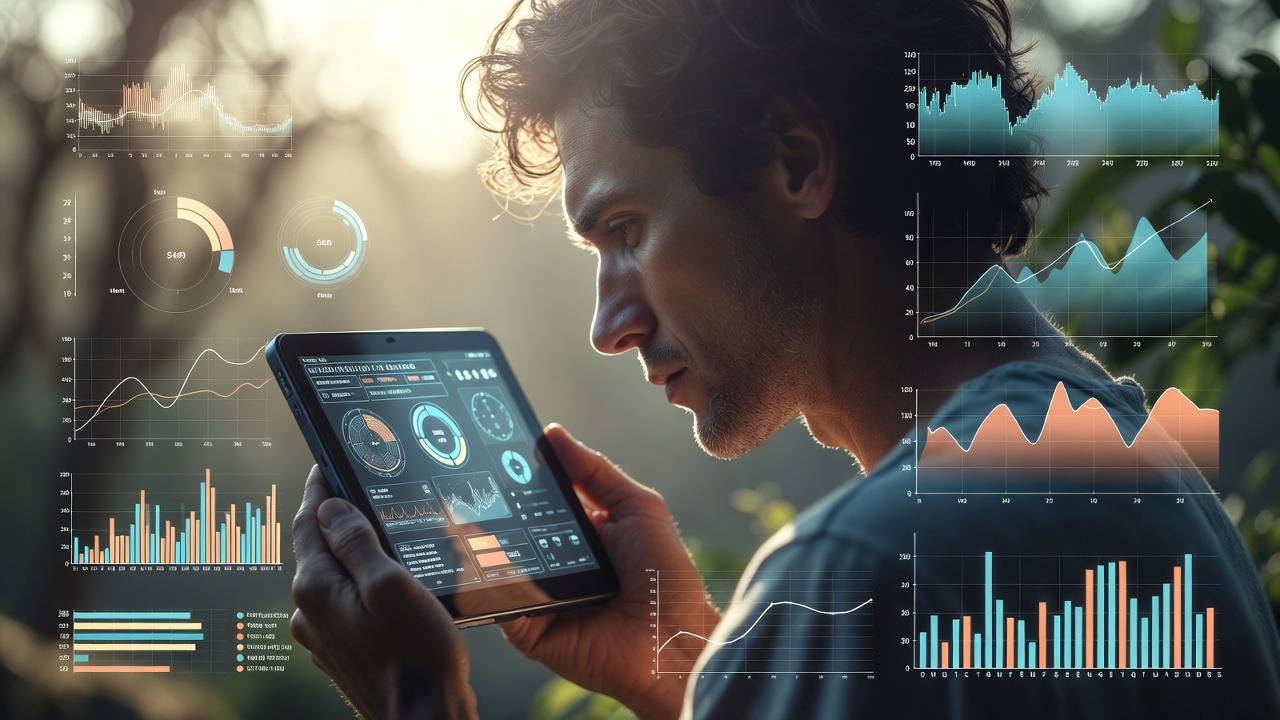
We live in an age of quantification. We count steps, monitor heart rates, and log calories. But of all the metrics we chase, sleep is arguably the most intimate, complex, and consequential. It’s the foundation upon which mental clarity, emotional resilience, physical recovery, and long-term health are built. Poor or insufficient sleep is directly linked to a staggering array of issues: impaired cognitive function, weakened immune response, heightened stress, increased risk for chronic conditions like hypertension and diabetes, and even weight gain.
This understanding has fueled our obsession. No longer is "I slept fine" a sufficient answer. We want the breakdown: How many minutes of deep sleep? How many restless awakenings? What was my heart rate variability (HRV) overnight? This granular data promises a path to control—a way to hack our biology for better performance and well-being.
But herein lies the critical paradox: The value of this data is entirely dependent on its truth. Acting on inaccurate sleep data is like using a broken compass to navigate a wilderness. If your watch consistently underreports your deep sleep, you might unnecessarily stress over a "deficit," introducing anxiety that further ruins your sleep. If it misses frequent micro-awakenings, you might blame daytime fatigue on diet or stress, missing the true culprit of a fragmented sleep architecture.
The stakes are personal and profound. Consider:
Accuracy, therefore, is not a nice-to-have spec on a product sheet. It is the very currency of trust. It transforms a device from a fancy gadget producing entertainment-level graphs into a legitimate wellness tool. Without it, the entire endeavor of sleep tracking is, at best, an interesting diversion and, at worst, a source of misinformation that can actively undermine your health goals. The quest for the perfect night’s sleep must begin with the quest for the perfect measure of it.
For those seeking to delve deeper into the science of sleep and recovery, our resource hub offers a wealth of information. You can explore our blog for more wellness insights that complement this deep dive.
Before we dissect their performance, let’s formally introduce our two competitors. They represent two distinct philosophies in wearable technology.
The Smartwatch: The Versatile Generalist
The smartwatch is the undisputed king of the wearable world. It’s a technological marvel worn on the wrist, combining the functions of a timepiece, a fitness tracker, a communication hub, and a health sensor suite. Its strengths are breadth and connectivity.
The Smart Ring: The Focused Specialist
The smart ring is a minimalist device worn on a finger (typically the index, middle, or ring finger). It pares down functionality to focus intensely on continuous, 24/7 health and wellness metrics, with sleep as its crown jewel.
The comparison is classic generalist versus specialist. One aims to do many things well enough for the mainstream user. The other aims to do one critical thing with exceptional precision for the devoted wellness enthusiast. As we peel back the layers of sleep science, the implications of this design choice will become starkly clear. To see how this specialized philosophy is put into practice, you can learn more about Oxyzen’s approach.

To judge the contenders, we must first understand the exam. What does a perfect sleep tracker need to capture? It’s far more complex than just knowing when your eyes are closed.
In a clinical sleep lab, the gold-standard test is polysomnography (PSG). This involves being wired with electrodes to measure:
From this rich data, a sleep technician scores your night in 30-second epochs, creating a detailed hypnogram—the ultimate truth of your sleep architecture.
Consumer wearables, of course, cannot replicate a full PSG. They must act as clever detectives, using proxy signals to infer what the brain and body are doing. The primary clues they use are:
The challenge for any wearable is to collect these proxy signals—especially heart rate and HRV—with such high fidelity and minimal noise that its algorithms can make a high-probability guess about your sleep stage at any given moment. The quality of the guess is directly tied to the quality of the raw signal. Garbage in, garbage out.
This is the battlefield: a war of signal acquisition. And as we’ll see next, the location of the sensor determines who wins that war before the algorithms even begin their work.
The smartwatch is an engineering triumph, but for sleep tracking, it fights with one hand tied behind its back. Its weaknesses are not necessarily failures of effort, but rather inherent constraints of its chosen form factor and location.
1. The Noisy Signal Problem:
The wrist is a biomechanical hub. Tendons flex, bones rotate, and the watch itself shifts with every movement of the hand and arm. During sleep, this isn't just about tossing and turning. Subtle hand positions—tucking them under a pillow, resting them on your chest, or curling them by your face—can cause what’s known as "motion artifact." This is noise that corrupts the clean optical signal needed to read blood flow and determine heart rate. A corrupted signal leads to missed beats or false readings, which in turn scrambles the calculation of HRV, a critical metric for sleep depth and recovery. Essentially, the watch is trying to listen to your heart’s whisper in a windy room.
2. The Anatomical Disadvantage:
The blood vessels on the top side of the wrist (where the watch sits) are smaller and farther from the skin’s surface compared to those on the finger. The optical sensor must shine its light deeper and through more tissue, battling a weaker return signal. At night, when blood pressure and peripheral circulation naturally drop, this signal can become even more tenuous, especially for individuals with cooler extremities.
3. The "Forgetting to Wear It" Problem:
Smartwatches are often charged daily, frequently at night. This creates a usage gap. If you plug in your watch while getting ready for bed, you lose the critical wind-down period when your body begins its physiological descent into sleep. This period, marked by a gradual lowering of heart rate and body temperature, is rich with data about sleep onset and circadian rhythm. Missing it means your tracker is guessing when you actually fell asleep.
4. Comfort & Interference:
While many adapt to it, a watch can be bulky and distracting in bed. It can press against the mattress or your partner. More critically, its very presence as a communication device—with lights, haptics, and a screen—can subconsciously reinforce the idea of the bedroom as a connected space, counter to optimal sleep hygiene principles.
In summary, the wrist is a dynamically excellent place for a device meant to interact with the world, but it is a physiologically suboptimal place for a device meant to passively listen to the body’s quiet, internal rhythms during the vulnerable state of sleep. It's trying to do two fundamentally different jobs from the same inconvenient spot.

In contrast to the wrist, the finger presents a uniquely advantageous location for biosensing, particularly during sleep. This isn’t a marketing claim; it’s a matter of basic human physiology and physics.
1. Superior Vascular Access:
The pads of your fingers are packed with dense, superficial capillary beds. This is why medical professionals use pulse oximeters on the fingertip—it’s one of the most reliable peripheral sites to get a strong, clean blood flow signal. A smart ring’s sensors sit against this vascular rich area, allowing it to capture a stronger photoplethysmogram (PPG) signal with less light penetration depth and less power. A stronger raw signal means more accurate beat-to-beat heart rate detection and, consequently, a far more reliable calculation of Heart Rate Variability (HRV), the gold-standard proxy for nervous system state and sleep quality.
2. Reduced Motion Noise:
While fingers do move in sleep, the gross, tendon-driven movements of the wrist are absent. The finger is a relatively stable platform. Furthermore, because the ring is often worn on a non-dominant finger and is a closed loop, it experiences less positional shift and "roll" than a watch on the tapered wrist. This inherent stability drastically reduces motion artifact, giving the sensor a cleaner, quieter signal to work with throughout the night.
3. 24/7 Wearability & Uninterrupted Data:
A well-designed smart ring is lightweight, unobtrusive, and safe for all activities, including sleep and water exposure. There is no need to ever take it off except for a brief monthly charge. This creates a continuous data stream, capturing your body’s transitions throughout the entire day-night cycle. This continuity is priceless. It allows the device to understand your personal baselines—how your heart rate drops in the hour before you typically sleep, what your resting temperature curve looks like—and detect deviations with greater context and precision. It sees the full story, not just a chapter.
4. The Passive Temperature Advantage:
Many advanced smart rings include a precision skin temperature sensor. The finger is an excellent site for this, as it reflects core temperature trends with good sensitivity. Nighttime body temperature is a powerful biomarker for circadian rhythm phase, menstrual cycle tracking, and the onset of illness. A watch on the dorsal wrist, exposed to ambient air and shifting positions, struggles to get a stable, meaningful temperature reading.
In essence, the finger is a dedicated biological data port. The smart ring, by choosing this location, commits fully to the role of a health sensor first. It trades the interactive screen and constant notifications for a profound, uninterrupted connection to your autonomic nervous system. For a detailed look at how this commitment shapes user results, you can read real customer testimonials and experiences.
Most sleep tracking discussions begin and end with "How much deep sleep did I get?" But the frontier of recovery science has moved far beyond simple stage breakdown. The most insightful wearables are those that capture the nuanced biomarkers that paint a fuller picture of your systemic health overnight. Here, the gap between wrist and finger can widen significantly.
1. Heart Rate Variability (HRV): The Nervous System Whisperer
HRV is not your heart rate; it’s the subtle, millisecond variation in the time intervals between heartbeats. A higher HRV (more variability) generally indicates a resilient, adaptable autonomic nervous system that can switch smoothly between stress (sympathetic) and rest (parasympathetic) modes. During deep sleep, you want strong parasympathetic dominance, which often correlates with lower, steadier HRV patterns.
2. Skin Temperature & Circadian Rhythm:
Your core body temperature follows a distinct 24-hour rhythm, dipping to its lowest point during late sleep and rising to help you wake. Shifts in this rhythm can signal circadian misalignment (like jet lag), the onset of illness, or hormonal changes.
3. Respiratory Rate:
The number of breaths you take per minute is a vital sign that changes with sleep stage and can be an early indicator of sleep apnea or other respiratory issues.
4. Blood Oxygen (SpO2) Nocturnal Drops:
Monitoring for significant drops in blood oxygen saturation overnight is crucial for screening potential sleep-disordered breathing.
A device that only gives you sleep stages is like a weather report that only tells you the temperature. You’re missing the humidity, barometric pressure, and wind direction—the data you need to understand why it feels the way it does and what might be coming next. The promise of the modern smart ring is this holistic, biomarker-rich analysis of your night. For answers to common technical questions about how these metrics are captured, our FAQ section provides clear explanations.

The wearable market is awash with bold claims: "Clinically validated," "Medical-grade accuracy," "Lab-tested." It’s crucial to cut through this jargon. What does validation actually mean, and which devices have undergone the rigorous scrutiny of independent science?
What True Validation Looks Like:
A proper validation study involves testing the consumer device against the gold standard in a controlled setting. For sleep, this means participants wear the wearable while simultaneously undergoing a full polysomnography (PSG) in a sleep lab. The data from both are then compared epoch-by-epoch (those 30-second windows) to see how often they agree. Key metrics reported are:
The Current Landscape:
Why This Matters to You:
A device without strong, independent validation is operating on proprietary algorithms that may be more guesswork than science. When you see a claim of "validated," always ask: Validated against what, by whom, and with what results? Look for links to peer-reviewed journals, not just in-house white papers.
The validation gap is where marketing meets reality. For the informed consumer, it’s the single most important factor in determining whether a device is a legitimate health tool or a sophisticated peddler of potentially misleading information. Our commitment to transparency and science is part of our core values, which you can learn more about on our about page.
Technology specs and study abstracts only tell half the story. The ultimate test of a sleep tracker happens in the dim light of a bedroom, night after night. User experience—comfort, convenience, and the resulting behavior change—is what turns data into insight and insight into improved health.
The Smartwatch Experience:
The Smart Ring Experience:
The Habit-Forming Difference:
A device you must consciously remember to wear for sleep is a habit that can break. A device you simply never remove is a habit that sustains itself. This fundamental difference in user behavior is why ring users often report having years of continuous data, while watch users may have sporadic datasets full of holes. For building a true, long-term understanding of your personal physiology, consistency isn't just king—it's the entire kingdom.
Raw sensor data—light signals, motion vectors, temperature points—is meaningless noise. The true magic (or mystery) lies in the algorithms: the complex software that transforms trillions of data points into a simple sleep stage graph or a single "Readiness" score. This is the proprietary black box where companies differentiate themselves, and it's where the raw signal quality from the finger or wrist truly pays dividends.
The Algorithm's Job: It's a pattern recognition engine. It’s been trained on massive datasets (hopefully including PSG-validated data) to recognize the unique signatures of different physiological states.
Why Signal Quality is Algorithmic Fuel:
An algorithm fed a clean, high-fidelity heart rate signal from a stable finger can confidently identify the subtle dips and variations that signify stage transitions. An algorithm struggling with a noisy, gap-ridden wrist signal must make "best guesses," smoothing over uncertainties, which frequently leads to misclassification—like labeling a quiet awake period as light sleep, or missing a brief REM episode.
Personalization Over Time:
The best algorithms don't just use a generic model; they learn you. By observing your continuous data over weeks and months, they establish your personal baselines. Is your resting heart rate naturally 48 or 68? Does your temperature dip sharply at 3 AM or gradually? This personalization allows the device to flag meaningful deviations from your norm, which is more insightful than comparing you to a population average. The 24/7 wearability of a ring accelerates and deepens this personalization process.
The "Score" Explained:
When a device gives you an 85 Sleep Score or a 72 Readiness Score, it’s a weighted composite of many factors: total sleep, sleep efficiency, sleep stage balance, resting heart rate, HRV, temperature deviation, and more. The exact formula is secret, but the goal is to synthesize complexity into a simple, actionable number. The key is to trust that the underlying data feeding that score is valid.
In the end, the most advanced algorithm in the world cannot compensate for poor input. It’s a classic computing principle: Garbage In, Garbage Out. The finger’s superior signal provides premium fuel for the algorithmic brain, enabling it to generate insights with a higher degree of confidence and personal relevance.
The true power of accurate sleep tracking isn’t in the nightly report card—it’s in the actionable intelligence it provides for your waking hours. This is where the concept of “readiness” or “recovery” transforms from a buzzword into a practical, daily guide. By understanding how your body truly recovered overnight, you can make informed decisions about your training, workload, and self-care with a precision that was once the domain of elite athletes and their teams of physiologists.
This day-night connection hinges on the accurate capture of two primary systems: your sleep architecture (the structure of your sleep) and your autonomic nervous system (ANS) balance (primarily measured via HRV). Let’s explore how accurate data in these areas directly informs your day.
1. The Physical Recovery Signal (Deep Sleep & HRV):
Deep sleep (slow-wave sleep) is your body’s primary repair and regeneration shop. Growth hormone is released, tissues are mended, and energy stores are replenished. A device that accurately quantifies your deep sleep duration and quality gives you a direct readout of your physical recovery battery.
2. The Cognitive & Emotional Recovery Signal (REM Sleep):
REM sleep is the curator of your mind. It’s crucial for memory consolidation, learning, emotional processing, and creativity. Deprive yourself of REM, and you may feel foggy, emotionally reactive, and struggle to learn new skills.
3. The Systemic Stress Signal (Temperature & Nighttime HR):
A persistently elevated nighttime heart rate or a significant deviation from your personal baseline skin temperature (higher or lower) can be an early warning system. It can indicate the body fighting off an oncoming illness, processing significant stress, dealing with hormonal fluctuations, or experiencing circadian misalignment from jet lag or late nights.
The smart ring, by virtue of its 24/7 wearability and focus on these core biomarkers, is uniquely positioned to close this feedback loop. It doesn’t just tell you what happened last night; it suggests what to do today. It turns recovery from a passive state into an active, manageable variable. For a deeper exploration of how to apply these insights to daily wellness routines, our blog offers a library of practical guides. You can discover more actionable strategies on our blog.
The consequence of inaccurate sleep tracking is not merely a harmless graphical error. In the modern context of biohacking and data-driven wellness, flawed data can actively undermine health, performance, and peace of mind. Let’s examine the tangible costs of trusting a misleading map.
1. The Overtraining Spiral (For Athletes & Fitness Enthusiasts):
Imagine your watch, due to low specificity, consistently mistakes quiet wakefulness for light sleep. Your “sleep time” is inflated by 45 minutes, and your “recovery score” looks artificially positive. Feeling “recovered” by the data, you push through a brutal workout. In reality, your body was under-recovered, with high systemic stress (evidenced by a low HRV your device failed to capture accurately). This leads to excessive strain, impaired performance, and increased injury risk. Repeated over days, this pattern can lead to full-blown overtraining syndrome, requiring weeks or months to recover from—all initiated by a data lie.
2. Sleep Anxiety and Orthosomnia:
A documented phenomenon in sleep medicine, “orthosomnia” is an unhealthy preoccupation with achieving perfect sleep data. If your device inaccurately shows poor deep sleep night after night, it can create a vicious cycle of performance anxiety around sleep itself. You go to bed stressed about “failing” at sleep, which guarantees the very poor sleep you fear. You become a slave to a number that may not even be real, trading the natural process of rest for a state of monitored tension. Accurate data provides reassurance and focus; chronic inaccuracy breeds neurosis.
3. Misdiagnosing Daytime Fatigue:
You feel exhausted by 3 PM. Your watch says you slept 8 hours with “good” sleep stages. You blame your fatigue on diet, hydration, or workload, never suspecting your primary issue. In reality, the watch missed 30 brief awakenings (arousals) due to mild sleep apnea or restless legs, fragmenting your sleep architecture and destroying its restorative quality. With accurate data showing high sleep fragmentation and potentially correlated oxygen dips, you’d be directed to investigate the true root cause with a sleep specialist, leading to a life-changing diagnosis.
4. Wasted Time and Resources:
You invest in expensive sleep supplements, blackout curtains, and cooling pads based on trends from inaccurate data. The problem is, you’re treating the wrong thing. If the core issue is stress (visible in HRV) but your device doesn’t track it reliably, you’ll never see improvement from your interventions, leading to frustration and wasted money. Accurate data allows you to target your interventions like a precision tool, saving time, money, and effort.
The ultimate price of inaccuracy is a loss of agency. It disconnects you from your body’s true signals, replacing your innate sense of tiredness or refreshment with a faulty external metric you’re conditioned to trust. In a world overflowing with wellness advice, your personal data should be your most trusted advisor. Ensuring its accuracy is the first and most critical step in any self-optimization journey. If you have questions about how to interpret your data accurately, our FAQ section is a great place to start.
The showdown between ring and watch is not static; it’s a snapshot in a rapidly evolving field. As sensor technology miniaturizes and machine learning advances, the future of sleep tracking points toward deeper integration, greater personalization, and a shift from retrospective reporting to proactive guidance. Here’s what’s on the horizon, and which form factor is best poised to lead the charge.
1. Multi-Sensor Fusion & "Digital Biomarkers":
The future lies not in a single sensor, but in the sophisticated fusion of multiple data streams. Imagine combining:
2. Proactive, Personalized Coaching:
Today’s devices tell you what happened. Tomorrow’s will tell you what to do about it, before it happens. Predictive algorithms will analyze your continuous data stream and say: *“Based on your elevated evening heart rate and low HRV today, you have a 70% chance of fragmented sleep tonight. Consider a 20-minute breathing exercise and avoiding screens after 9 PM.”* Or: “Your temperature rhythm suggests your circadian clock is drifting later. Try 15 minutes of morning sunlight viewing for the next three days.” This moves the platform from a dashboard to a true AI health coach. The accuracy and consistency of the foundational data are paramount for this to work effectively.
3. Deeper Health Integration & Medical Screening:
The line between wellness and healthcare will continue to blur. Wearables with validated accuracy will play a larger role in remote patient monitoring and early screening. Consistent tracking of nocturnal HR, SpO2, and breathing patterns is ideal for flagging potential atrial fibrillation (Afib) or obstructive sleep apnea (OSA) for further investigation. The comfort and compliance of a ring make it a strong candidate for these long-term monitoring roles, where watch batteries and bulk can be impediments.
4. The Form Factor Evolution:
The ring itself will evolve. We’ll see more materials, customizable designs, and even deeper sensor integration (like EDA for stress). The watch will also advance, with new sensor placements (e.g., under the watch face) and improved algorithms. However, the fundamental anatomical and behavioral advantages of the finger—its vascular access, stability, and 24/7 wearability—are not something a wrist-based device can engineer away. The ring starts with a structural advantage for passive, continuous health sensing.
In this future, the winner isn’t necessarily a specific brand, but the philosophy of dedicated, unobtrusive, and accurate biosensing. The device that wins your trust will be the one that most seamlessly integrates into your life to provide the clearest, most actionable window into your health, night and day. To see how one company is building toward this future with a clear vision, you can explore Oxyzen’s story and roadmap.
If you were to isolate a single biomarker that best reflects your body's readiness to perform, adapt, and recover, it would be Heart Rate Variability (HRV). This metric has moved from the realm of clinical physiology and elite sports labs into the mainstream, becoming a cornerstone of modern recovery tracking. However, its complexity and sensitivity make it notoriously difficult to measure accurately with consumer devices. Understanding HRV is key to understanding why sensor location is so critical in the ring vs. watch debate.
What HRV Actually Is (And Isn’t):
Contrary to intuition, a healthy heart does not beat with the metronomic regularity of a drum machine. The time interval between successive heartbeats fluctuates by milliseconds. This variation is HRV. It is governed by the continuous, push-pull interplay between the two branches of your autonomic nervous system:
A higher HRV (more variability) generally indicates a strong, resilient PNS and a system that can easily adapt to stress and recover from it. A lower HRV suggests SNS dominance—your body is under strain, whether from exercise, emotional stress, illness, or poor sleep.
Why Nighttime HRV is Gold:
While HRV can be measured throughout the day, the most valuable reading is taken during deep sleep. This is when external stimuli are minimized, and your body's true baseline recovery state is revealed. Daytime HRV is volatile, influenced by posture, activity, caffeine, and conversations. Nocturnal HRV provides a clean, comparable benchmark from night to night. This is why the accuracy of sleep tracking is inextricably linked to HRV accuracy.
The Measurement Minefield:
Calculating HRV is not about measuring heart rate (beats per minute), but about precisely timing the spaces between beats (R-R intervals in milliseconds). This requires a flawless heart rate signal.
How to Use HRV Data (When It’s Accurate):
With a trusted HRV reading, you move from guesswork to guidance.
In the accuracy showdown, HRV is a prime example of a metric where the ring’s anatomical advantage translates into a tangible, functional benefit for the user seeking genuine recovery insight. You can learn more about interpreting key biomarkers like HRV in our support resources.
While heart rate gets most of the attention, your body’s temperature rhythm is a silent, powerful narrator of your internal state. Core body temperature follows a precise circadian cycle, orchestrated by your brain’s suprachiasmatic nucleus (SCN). It peaks in the late afternoon, begins to drop in the evening to initiate sleepiness, reaches its nadir in the second half of the night, and then rises to help you wake. Deviations from this personal rhythm are rich with meaning, but capturing them requires a sensor that can listen closely and consistently.
Why Temperature Matters for Sleep & Health:
The Tracking Challenge: Stability is Everything
To track these subtle, meaningful trends—changes of mere tenths of a degree—you need two things: a sensitive sensor and, most critically, consistent placement.
From Data to Action:
Accurate temperature data transforms your wearable from a sleep reporter into a health sentinel.
This metric alone exemplifies the specialist's advantage. It’s a parameter that most smartwatches either ignore, implement poorly, or relegate to a novelty feature. For a dedicated health ring, it’s a cornerstone of its holistic health assessment, providing context for sleep quality, readiness, and overall physiological balance. For real-world examples of how users leverage this data, you can read stories from our community.
The simple, colorful hypnogram—showing blocks of light, deep, and REM sleep—is the most recognizable output of any sleep tracker. But how close does this consumer-grade graph come to the complex reality of a clinical sleep study? The truth is nuanced, and the gap between ring and watch often lies not in declaring you “asleep,” but in correctly classifying what kind of sleep you’re in.
The Limits of Inference:
No wearable can measure brain waves (EEG). They must infer stages from proxies (movement, heart rate, HRV, breathing). This inference has inherent error rates, even for the best devices. The goal is to minimize that error.
Common Failure Points for Wearables:
Where Form Factor Makes a Difference:
The accuracy of stage detection relies overwhelmingly on the quality of the heart rate and HRV data fed into the algorithm.
What This Means For You:
It’s crucial to view consumer sleep stage data as an estimate of trends, not a clinical diagnosis. Look at your data over weeks, not nights.
By understanding the limitations and strengths of stage tracking, you can use the data wisely, prioritizing the more concrete metrics (HRV, temperature, resting HR) that feed into the stage algorithm itself. For deeper dives into understanding your sleep data, our blog features comprehensive guides.
Your sleep data doesn’t exist in a vacuum. Every line on your hypnogram is the final product of a day’s worth of inputs: what you consumed, how you moved, the light you saw, and the stress you carried. The most advanced wearables are now beginning to contextualize your sleep with your lifestyle, helping you connect cause and effect. This is where 24/7 tracking becomes indispensable.
Key Lifestyle Factors That Sculpt Your Sleep Data:
1. Exercise & Timing:
2. Nutrition & Alcohol:
3. Caffeine & Its Long Shadow:
4. Light Exposure:
5. Stress & Mental Load:
The Power of Correlation:
The ultimate goal is to move from observation to experimentation. Your wearable becomes a personal science lab.
This iterative process of action, measurement, and learning is the core of biofeedback. It empowers you to become the expert on your own body. The device that provides the most accurate, consistent, and holistic dataset—spanning both day and night—enables the most reliable and transformative self-experimentation. To understand how we designed our technology to support this holistic view, you can learn more about our company's approach.
With a clear understanding of the strengths, weaknesses, and science behind both platforms, the final question is personal: Which device is right for you? The answer depends less on which is "objectively better" and more on your specific goals, lifestyle, and how you intend to engage with the data. Let's create a decision framework.
Choose a HIGH-END SMARTWATCH if your priorities are:
Choose a DEDICATED SMART RING if your priorities are:
The Hybrid Approach & The Compromise:
A not-uncommon path is to use both. Wear a smartwatch during the day for its interactive features and workout tracking, and a smart ring at night (and through the day) for superior sleep and continuous recovery metrics. Some apps even allow for data integration, though this often requires manual work. This is the ultimate setup for the data-obsessed, but it's also the most expensive.
Key Questions to Ask Yourself:
Your choice is a declaration of intent. The smartwatch says, "I want to be connected and informed about my general activity." The smart ring says, "I want an intimate, accurate dialogue with my own physiology." For those who have chosen the path of deep physiological insight, the journey often leads to a more profound understanding of wellness, a story we see reflected in the experiences shared on our testimonials page.
As sleep tracking has exploded in popularity, so have misconceptions. These myths can lead to poor purchasing decisions, frustration with devices, and incorrect interpretations of data. Let’s separate fact from fiction.
Myth 1: "More Sensors Always Equal Better Accuracy."
Myth 2: "My Device Says I Got 8 Hours of Sleep, So I Should Feel Rested."
Myth 3: "All Sleep Stage Data is Created Equal."
Myth 4: "A Higher 'Sleep Score' Means I Had Perfect Sleep."
Myth 5: "Sleep Trackers Can Diagnose Sleep Disorders."
Myth 6: "You Need to See the Data on a Screen Immediately."
By dispelling these myths, you become a smarter consumer and a more sophisticated user of your own data. You learn to demand transparency about validation, to look beyond the shiny score, and to use the technology as a guide rather than a gospel. For ongoing learning and myth-busting in the wellness tech space, we encourage you to explore our blog for updated research and insights.
Your Trusted Sleep Advocate: Sleep Foundation — https://www.sleepfoundation.org
Discover a digital archive of scholarly articles: NIH — https://www.ncbi.nlm.nih.gov/
39 million citations for biomedical literature :PubMed — https://pubmed.ncbi.nlm.nih.gov/
Experts at Harvard Health Publishing covering a variety of health topics — https://www.health.harvard.edu/blog/
Every life deserves world class care :Cleveland Clinic - https://my.clevelandclinic.org/health
Wearable technology and the future of predictive health monitoring :MIT Technology Review — https://www.technologyreview.com/
Dedicated to the well-being of all people and guided by science :World Health Organization — https://www.who.int/news-room/
Psychological science and knowledge to benefit society and improve lives. :APA — https://www.apa.org/monitor/
Cutting-edge insights on human longevity and peak performance:
Lifespan Research — https://www.lifespan.io/
Global authority on exercise physiology, sports performance, and human recovery:
American College of Sports Medicine — https://www.acsm.org/
Neuroscience-driven guidance for better focus, sleep, and mental clarity:
Stanford Human Performance Lab — https://humanperformance.stanford.edu/
Evidence-based psychology and mind–body wellness resources:
Mayo Clinic — https://www.mayoclinic.org/healthy-lifestyle/
Data-backed research on emotional wellbeing, stress biology, and resilience:
American Institute of Stress — https://www.stress.org/


