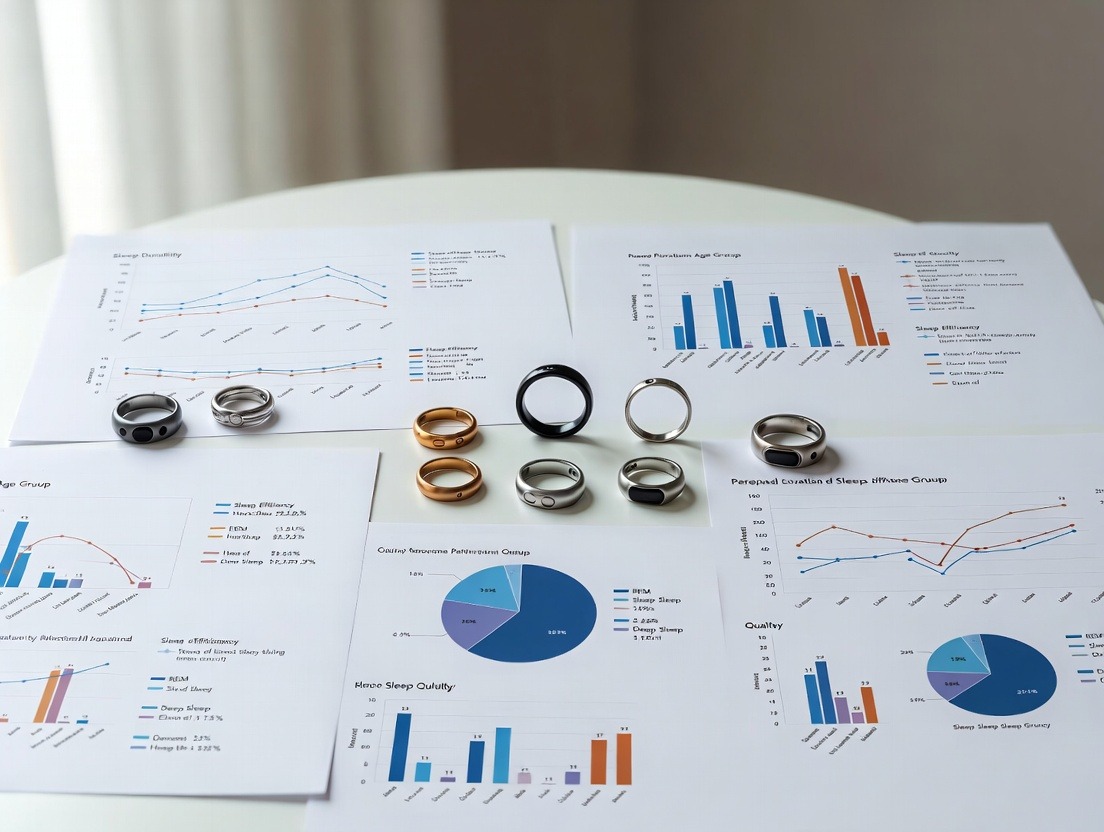
Ring vs Watch for Students: Budget and Feature Analysis
Analysis for students considering budget and features.
Ring vs Watch for Students: Budget and Feature Analysis
The modern student’s quest for optimization is real. Between lectures, study sessions, extracurriculars, and a semblance of a social life, every minute and ounce of energy counts. In this high-stakes environment, a new class of personal tech has emerged, promising not just to connect us, but to understand us. It aims to decode our sleep, stress, fitness, and focus—turning the chaotic data of student life into actionable insights. Two devices lead this charge: the familiar smartwatch and the rising challenger, the smart ring. Both promise to be your 24/7 wellness companion, but which one truly earns a place in a student’s life?
This isn't a simple question of style or trend. For students, the decision is a complex equation balancing budget, features, campus lifestyle, and academic goals. A smartwatch screams functionality from your wrist, with notifications and apps at a glance. A smart ring whispers insights from your finger, prioritizing subtlety and deep physiological tracking. Choosing between them means choosing what kind of data you value, how you want to interact with it, and how much you're willing to invest in your personal well-being engine.
In this comprehensive analysis, we’ll dissect every layer of this debate. We’ll move beyond marketing specs to examine real-world campus utility, break down the true cost of ownership, and explore which device genuinely enhances—rather than disrupts—the student experience. From the lecture hall to the library to the dorm room, we’ll provide the clarity you need to make an informed investment in your health and productivity. Whether you're a budget-conscious undergrad or a grad student seeking a performance edge, this guide will navigate you to the right choice. Let's begin by understanding the core identity of each device.
The Core Identity: Understanding the Smart Ring vs. Smartwatch Paradigm
Before diving into features or prices, we must understand the fundamental philosophical difference between these two wearables. They are not direct competitors in the traditional sense; rather, they represent two distinct approaches to personal technology and wellness.
The Smartwatch: Your Wrist-Worn Command Center
The smartwatch is an extension of your smartphone. Its primary identity is one of connection and convenience. Born from the fusion of traditional watches and notification systems, its value proposition is immediacy. It’s designed for quick interactions: reading a text without pulling out your phone, skipping a song, checking your calendar for your next class, or tapping to pay for coffee. The wellness features—step counting, heart rate monitoring, workout tracking—are often prominent, but they are layers added to a communication-first device.
For a student, a smartwatch acts as a digital secretary and a mild fitness coach. It helps manage the flood of daily inputs. Its presence is active and interactive, requiring you to look at it, tap it, and speak to it. The screen is both its greatest asset and its most significant compromise, enabling a wide range of functions but demanding attention and battery life.
The Smart Ring: Your Silent Biometric Guardian
In contrast, the smart ring operates on a principle of passive, deep sensing. Its core identity is one of insight and restoration. By design, it is meant to be forgotten on your finger, working silently in the background to collect high-fidelity physiological data. Without a screen to interrupt you, its mission is singular: to understand your body’s rhythms—sleep quality, recovery readiness, stress levels (via heart rate variability), and core body temperature trends.
The value here is not in managing external notifications but in understanding internal states. For a student, this translates to actionable insights: “You slept poorly; prioritize lighter review today.”“Your recovery score is high; it’s a good day for that tough workout or intense study session.”“Your stress levels are elevated; consider a breathing exercise before your presentation.” The ring doesn’t help you reply to a message from a classmate; it helps you understand if you’re in the optimal state to work on a group project effectively. Companies like Oxyzen, for instance, focus on this deep biometric analytics to provide a clear picture of your readiness, a concept you can explore further in their detailed FAQ.
The Analogy: Conductor vs. Composer
Think of it this way: The smartwatch is the conductor of your daily symphony. It keeps time, cues different sections (notifications, timers, apps), and ensures everything starts and stops together. It’s active, visible, and in charge of the flow.
The smart ring is the composer and acoustician. It doesn’t conduct the performance but works behind the scenes. It analyzes the hall’s acoustics (your body’s environment), writes the music based on the musicians' capabilities (your physiological readiness), and ensures the foundational conditions are perfect for a beautiful performance (your peak cognitive and physical state).
For the student, the question becomes: Do you need a device primarily to manage the external noise of student life, or one to optimize the internal system that navigates it? The following sections will break down how this core identity plays out in every practical aspect of campus living.
Campus Life Compatibility: From Lecture Halls to Dorm Rooms
A device can have all the features in the world, but if it clashes with the rhythm of student life, it will end up in a drawer. Let’s evaluate how rings and watches integrate into the daily grind of classes, studying, socializing, and sleeping.
The Classroom & Study Environment: Discretion vs. Distraction
This is perhaps the most critical battleground. In a lecture hall or library, focus is the ultimate currency.
Smartwatch: Here, the watch’s greatest strength becomes a liability. Every email, group chat ping, or social media notification creates a tiny, wrist-borne distraction. Even with "Do Not Disturb" enabled, the mere presence of a screen can tempt you to check the time (and then quickly glance at your stats). Some professors also have policies against visible electronic devices during exams or certain lectures. The constant visual and haptic interruptions can fragment attention, directly counterproductive to learning.
Smart Ring: The ring is invisible in this context. It creates zero distraction, as it has no screen or notification capability. It simply collects data on your stress or focus levels during a two-hour lecture or a late-night study session. This data can later be revelatory—showing you which study environments or times of day your body was most settled and focused. It’s the ultimate tool for observing your academic habits without disrupting them.
Sleep Tracking: The Unfiltered Truth About Your Rest
Sleep is the superpower of the successful student. Tracking it accurately is non-negotiable.
Smartwatch: Sleeping with a watch can be uncomfortable for many. Even slim models are bulky on the wrist, which can interfere with natural sleep posture. The need to charge it daily often means you take it off at night, precisely when you need its tracking the most, creating data gaps. While advanced watches offer detailed sleep staging, the wrist is a less ideal location for measuring heart rate and movement during sleep compared to the finger.
Smart Ring: This is where the smart ring excels. Wearing a ring to bed is natural and unobtrusive for most people. The finger provides a superior vascular signal for heart rate and heart rate variability (HRV), key metrics for sleep quality and recovery. Because you never need to take it off to charge (thanks to 5-7 day battery life), it provides continuous, unbroken sleep data. This gives you a flawless record of how your all-nighter, that late-night coffee, or Friday night socializing truly impacted your rest. For a deep dive into the science behind this kind of recovery-focused tracking, you can read about Oxyzen’s approach on their blog.
Social & Extracurricular Scenarios: Fashion or Function?
Student life isn’t all work. How does the device fit into the gym, a party, or a casual club meeting?
Smartwatch: It’s a visible tech statement. For workouts, it’s excellent, providing real-time metrics and GPS. For social settings, it can be functional (changing music, discreetly checking the time) but also socially awkward if you’re constantly interacting with your wrist. It may not match every outfit, and some higher-end models can be a target for theft in shared living situations.
Smart Ring: It’s subtle jewelry. Most smart rings are designed to look like modern, minimalist bands. They track your gym session and daily activity just as accurately but without a screen to glance at mid-rep. In social settings, it’s invisible, allowing you to be present. You won’t be checking your stress levels at a party, but the ring will be logging the physiological impact of your social interactions, which you can review later.
Dorm Life & Practicality: In cramped dorm rooms with shared chargers, the ring’s weekly charging via a compact case is far less hassle than the watch’s daily hunt for a proprietary charger. Its durability and lack of a vulnerable screen also make it more resilient to the accidental knocks and spills of shared living.
In essence, the smartwatch is an active participant in your campus day, for better or worse. The smart ring is a background analyst, gathering intelligence without ever stepping into the spotlight. For students seeking to minimize digital distraction and maximize holistic self-understanding, the ring holds a distinct compatibility advantage.
Feature Deep Dive: Notifications, Health Metrics, and Academic Tools
Moving from philosophy to specifics, let’s dissect the actual capabilities of each device. What can they do for you, and how do those functions align with student needs?
Communication & Notifications: The Attention Economy
Smartwatch: This is its domain. Call, text, email, and app notifications are delivered to your wrist. You can often read full messages, send quick replies (via voice, preset texts, or tiny keyboards), and even take calls on models with cellular connectivity. For a student juggling multiple group projects, campus organization chats, and family updates, this constant connectivity can feel empowering. However, as previously discussed, it’s a major vector for distraction. The question is whether this feature is a true productivity booster or a fragmenter of deep work.
Smart Ring: It offers zero notification functionality. It will not buzz with a reminder about a deadline or a message from a friend. This is a deliberate, defining exclusion. The ring’s purpose is to help you disconnect from digital noise to focus on your physical and mental state. To manage notifications, you must still use your phone—but perhaps with more intention, checking it in batches rather than in a constant stream.
Health & Wellness Tracking: Surface-Level vs. Deep Biomarkers
Both track steps, calories, and heart rate. But the depth and purpose diverge sharply.
Smartwatch: Focuses on activity and workout metrics. It excels at tracking specific exercises (running, swimming, weights) with GPS, pace, reps, and heart rate zones. It encourages you to “close your rings” or hit step goals. Its health features are often broad, including ECG and blood oxygen, useful for general awareness. Sleep tracking is present but can be inconsistent.
Smart Ring: Focuses on recovery and readiness. Its crown jewels are Heart Rate Variability (HRV)—the gold standard for measuring nervous system stress and recovery—core body temperature trends (for illness prediction and menstrual cycle insights), and detailed sleep architecture (light, deep, REM, awakenings). It uses these to generate a daily “Readiness” or “Recovery” score. For a student, this is transformative: Should you push hard today or prioritize rest? Is that nagging feeling the start of a cold, or just fatigue? The ring provides data-driven answers. This nuanced approach to wellness is at the heart of what modern smart ring companies do, a mission you can learn more about on Oxyzen’s about page.
Academic & Productivity Tools: Direct Aid vs. Indirect Optimization
Smartwatch: Offers direct tools: timers for Pomodoro study sessions, calendar alerts for class times, voice memos for quick lecture notes, and reminders for assignments. It can be a helpful, if basic, productivity adjunct.
Smart Ring: Offers no direct academic tools. Its contribution is foundational and indirect. By optimizing your sleep, managing your stress load, and identifying your peak readiness times, it enables you to be more productive and focused when you sit down to use your traditional tools (planner, apps, study methods). It doesn’t remind you to study; it tells you when you are most biologically primed to study effectively.
Battery Life & Charging: The Forgotten Feature
This is a practical hurdle with real-world impact.
Smartwatch: Daily charging is the norm. This means you will inevitably face dead batteries during crucial moments, and sleep tracking is often sacrificed on charge nights.
Smart Ring: 5-7 day battery life is standard. You charge it briefly while you shower or once a week. This reliability means continuous data, which is critical for accurate trend analysis in readiness and sleep scores.
The feature conclusion is clear: Choose a smartwatch for external management (notifications, workouts, quick tools). Choose a smart ring for internal optimization (recovery, sleep, stress, and long-term readiness trends). One helps you handle your to-do list; the other helps you ensure you have the energy and focus to tackle it.
The Budget Reality: Upfront Cost, Hidden Fees, and Total Value
For students, budget isn’t just a consideration—it’s often the deciding factor. The price tag is only the beginning; we must consider the total cost of ownership and the value derived per dollar.
Upfront Price Spectrum: A Wide Range
Smartwatches: The range is vast.
*Budget Tier ($100-$250):* Basic fitness trackers with smart notifications (e.g., Xiaomi, older Fitbit models). They offer core activity tracking and phone mirroring but lack advanced health sensors and build quality.
*Mid-Tier ($250-$500):* The sweet spot for most (e.g., Apple Watch SE, Galaxy Watch). Robust feature sets, good integration with respective phone ecosystems, and reliable health tracking.
*Premium Tier ($500+):* Flagship models (Apple Watch Ultra, Garmin Epix). Top-tier materials, advanced fitness and navigation features, and the best durability. For most students, this is overkill.
Smart Rings: The market is newer and more condensed.
*Entry-Mid Tier ($250-$400):* This is where most reputable rings, like those from Oxyzen, live. For this price, you get the full suite of advanced sensors (HRV, temperature, pulse oximetry) in a durable package. There is no "budget" ring segment with reliable accuracy yet.
*Premium Tier ($400+):* Rings with exotic materials (titanium, carbon fiber) or specific brand premiums.
At first glance, a budget smartwatch seems cheaper. However, the true cost analysis requires a longer view.
The Hidden Costs: Subscriptions and Ecosystem Lock-In
Smartwatch Subscriptions: Many brands now gate their most advanced health insights and long-term data trends behind monthly subscriptions (e.g., Fitbit Premium, WHOOP membership). Over a 4-year college career, a $10/month fee adds $480 to the total cost. This is a critical, often overlooked, line item.
Smart Ring Subscriptions: The leading rings (Oura, Circular, Oxyzen) typically do not have mandatory subscriptions. The purchase price includes all analytics, insights, and historical data access. The advanced algorithms that power your readiness score are part of the product, not a recurring fee. This makes the total long-term cost predictable and often lower.
Ecosystem Cost: A premium smartwatch often requires a premium smartphone from the same brand for full functionality (e.g., Apple Watch with iPhone). This can be a major lock-in factor.
Durability & Replacement: The "Dorm Life" Test
Smartwatch: Has a large, vulnerable glass screen susceptible to cracks from drops, knocks against desks, or in a crowded backpack. Repair is expensive and often totals the device. Bands also break and need replacement.
Smart Ring: Made of tough materials like titanium or ceramic, with no screen to shatter. They are water-resistant and designed for 24/7 wear. While not indestructible, they are inherently more resilient to the physical demands of an active student life.
Value Per Dollar: The Long-Term Wellness Investment
The final calculation is about what you’re truly buying.
A $300 Smartwatch buys you a connected remote for your phone, a fitness tracker, and a timepiece. Its value is in daily utility and convenience.
A $300 Smart Ring buys you a dedicated, clinical-grade biometric sensor suite focused on your long-term health trends. Its value is in personalized, actionable health intelligence.
For the student who views their device as a tool for academic and personal optimization, the ring’s subscription-free, durable model and focus on foundational health metrics often provide a higher return on investment over a multi-year period. The lack of recurring fees is a major financial advantage, a point of pride for customer-focused brands which you can see reflected in Oxyzen’s user testimonials.
Accuracy & Science: Which Device Can You Trust?
Data is only as good as its accuracy. Wearing a device that gives you misleading readings is worse than wearing none at all. Let’s examine the scientific credibility behind the numbers.
The Sensor Advantage: Finger vs. Wrist
This is the fundamental technical difference. The finger is a superior location for measuring key physiological signals compared to the wrist.
Vascular Access: The finger has richer capillary beds and arteries closer to the skin's surface (like the palmar digital arteries). This provides a stronger, less noisy photoplethysmogram (PPG) signal—the optical measurement of heart rate and blood volume changes.
Reduced Motion Artifact: While both locations can suffer from motion, a ring on your finger generally experiences less random movement during sleep and daily activities than a watch on a more mobile wrist. This leads to cleaner data for heart rate variability (HRV) and resting heart rate (RHR), the cornerstones of recovery metrics.
Core Body Temperature: Measuring temperature from the finger (especially the underside) is a proven proxy for core temperature trends, useful for ovulation tracking and illness prediction. This is nearly impossible to do accurately from the wrist due to greater distance from the body’s core and greater environmental exposure.
Validation and Third-Party Studies
Smartwatches: Major brands conduct internal validation, and some independent studies show good accuracy for heart rate during steady-state cardio. However, accuracy can drop during high-intensity interval training or exercises with wrist flexion. HRV and sleep stage accuracy are more variable and less consistently validated against medical-grade equipment (like ECG and polysomnography).
Smart Rings: The leading ring manufacturers often design their products in collaboration with university research labs and pursue clinical validation. The form factor itself is inherently better suited for medical-grade measurement. For example, the form factor allows for more consistent sensor contact and placement. Many peer-reviewed studies have used finger-worn PPG devices for research on sleep, stress, and vascular health because of their reliability.
What This Means for Student Insights:
An inaccurate step count is a minor annoyance. An inaccurate readiness score or sleep stage analysis can lead to poor decisions.
If your watch overestimates your deep sleep, you might push through a day when you actually need recovery.
If your ring accurately detects a dip in HRV and a rising temperature trend, it can alert you to potential burnout or illness days before symptoms appear—allowing you to rest, hydrate, and possibly avoid missing a crucial class or exam.
For students relying on data to manage their limited energy reserves across academic, social, and athletic pursuits, accuracy is paramount. The smart ring’s anatomical and scientific edge makes it a more trustworthy advisor for the high-stakes game of energy management. The commitment to this level of precise, actionable data is often rooted in a company's core vision, something you can discover in Oxyzen’s founding story.
Battery Life and Charging: The Uninterrupted Data Stream
In the world of continuous health monitoring, a dead battery doesn’t just mean a dead device—it means a gap in your personal data narrative. These gaps render trend analysis useless and break the habit of relying on your device. For the student, charging logistics are a real part of dorm life.
The Daily Grind vs. The Weekly Refuel
Smartwatch: The Daily Chore. Most last 18-36 hours on a single charge. This creates a predictable and frustrating routine: you must remember to charge it every single day, usually at night. This directly conflicts with one of its key features: sleep tracking. To track sleep, you must charge at another time—during a lecture, while studying at your desk, or in the morning. This leads to inconsistent data and the constant anxiety of a dying battery before a long day of classes or a night out.
Smart Ring: The Set-and-Forget Model. With a typical lifespan of 5-7 days, charging is an infrequent event. The rings usually charge in a small, portable case that holds multiple charges. You can pop the ring in the case while you shower, during a one-hour study session once a week, or overnight. It never needs to be plugged into a wall during your busy day. This ensures continuous, uninterrupted data collection, which is absolutely critical for algorithms that track sleep consistency, recovery trends, and menstrual cycles.
Real-World Campus Scenarios:
"The All-Nighter": You’re pulling a late one in the library for finals. Your smartwatch dies at 11 PM. You lose tracking for the most critical sleep deprivation event of your semester. Your smart ring, charged three days ago, tracks your entire sleep (or lack thereof) and the subsequent recovery crash.
"The Weekend Trip": You’re heading out of town for a weekend. Forget your smartwatch charger, and you’re functionally without it by Saturday afternoon. Forget your ring’s charging case? The ring itself still has days of battery left, and the case itself can often hold multiple charges, acting as a power bank.
"The Shared Dorm Room": Outlet space is sacred. Having one less device that needs a proprietary cable hogging an outlet every night is a small but genuine quality-of-life improvement.
The Impact on Data Integrity
Health insights are based on trends. A missed night of sleep data creates a hole in your weekly sleep average. A missed day of activity skews your readiness calculation. The smart ring’s superior battery life isn’t just a convenience feature; it’s a core component of its data reliability. It ensures the biometric story of your semester—your periods of high stress during midterms, your recovery over break, the impact of your new gym routine—is recorded in full, without chapters missing due to a dead battery.
This logistical simplicity allows you to focus on what the data tells you, not on managing the device itself. It becomes a true companion, not another piece of tech to babysit.
Design, Discretion, and Social Perception
On a campus, what you wear is part of your personal expression. A wearable tech device sends a signal, whether intentional or not. How do these devices fit into a student’s personal style and social world?
The Wrist Statement: The Smartwatch as Tech Jewelry
A smartwatch is a highly visible gadget. Its design language ranges from sporty and functional to sleek and luxury.
Expression: It says, “I am connected, data-driven, and tech-savvy.” It can be customized with interchangeable bands to match your outfit or activity.
Social Interruption: In conversations, glancing at your watch is a classic signal of disinterest or impatience. With a smartwatch, this gesture becomes ambiguous—are you checking the time, or are you being distracted by a notification? It can create a subtle barrier to presence.
Practical Drawbacks: In certain academic settings (labs, exams), it may be prohibited. During typing or writing notes, a bulky watch can dig into your wrist. It can also be uncomfortably conspicuous in situations where you might prefer to be low-profile.
The Subtle Signal: The Smart Ring as Modern Minimalism
A smart ring is designed to be indistinguishable from contemporary jewelry. Most models are sleek, matte-finish bands in titanium, ceramic, or black coated finishes.
Expression: It whispers rather than shouts. It signals an interest in wellness and self-optimization, but in a private, personal way. It’s for the user’s benefit, not for public display. It pairs effortlessly with any style, from gym clothes to formal wear, without looking out of place.
Social Neutrality: It creates zero social friction. There is no screen to glance at, no notifications to react to. It allows for complete engagement in the moment—during a seminar discussion, a coffee with a friend, or a club meeting. Your data is collected invisibly.
Practical Benefits: It’s allowed everywhere a regular ring would be. It doesn’t interfere with writing, typing, or any physical activity. Its low profile makes it less likely to catch on things or get damaged.
The "Fit" Factor and Comfort
Smartwatch: You are always aware of it on your wrist. It can feel heavy, get sweaty during workouts, and leave a tan line. Finding the right band tightness for both accurate heart rate reading and comfort is a constant balance.
Smart Ring: Once properly sized (which is crucial), you truly forget you’re wearing it. It becomes part of you. There’s no pressure point or weight. The 24/7 wear required for optimal data collection is physically effortless.
Security in Shared Spaces
This is a practical, if unfortunate, campus consideration. A high-end smartwatch left charging in a shared dorm bathroom or visible on a nightstand is a more tempting target for theft than what looks like a simple metal ring.
For the student who values discretion, minimalism, and uninterrupted social and academic engagement, the smart ring’s design philosophy is inherently more compatible. It serves the individual without inserting itself into their external interactions. This focus on empowering the individual quietly is a principle that guides many in this space, a value evident when you learn more about Oxyzen’s mission.
Focus and Digital Minimalism: The Anti-Distraction Argument
In an age of fractured attention, the ability to focus deeply is a student’s most potent academic weapon. Digital minimalism—the intentional reduction of tech distractions—is no longer a lifestyle trend but a cognitive necessity. How do these devices align with this crucial goal?
The Smartwatch: A Conduit for Interruption
Despite having "Do Not Disturb" modes, the smartwatch is, by its nature, an interruption device. Its raison d'être is to surface information from your phone to a more accessible location.
The Vibration Trap: Every buzz on your wrist, even if you don’t look, creates a micro-interruption. Your cognitive focus is briefly severed as your brain processes the alert. Research shows it can take several minutes to re-engage deeply with a complex task like reading a textbook or writing a paper.
The Screen Temptation: The always-on or lift-to-wake display is a siren call. Checking the time can easily turn into checking your notifications, your activity rings, or the weather. This context-switching is the enemy of the "flow state" needed for high-level learning and creativity.
The Illusion of Efficiency: While quickly dismissing a notification from your wrist feels efficient, it still breaks your concentration. The cumulative effect over a 6-hour study day is a significant dilution of mental performance.
The Smart Ring: A Tool for Intentionality
The smart ring embodies the principle of digital minimalism in hardware form. It is a tool for self-awareness, not external awareness.
Zero Incoming Alerts: It provides a clean separation. Your phone can be silenced and placed in your bag across the room (a proven focus-boosting technique). Your ring will not pull you out of your work. It creates a protected cognitive space.
Promoting Proactive Checks, Not Reactive Alerts: Instead of being pinged by your device, you check its companion app intentionally, perhaps once in the morning to review your readiness and sleep, and once in the evening to reflect. This turns data consumption into a mindful ritual, not a distracted reflex.
Focus as a Metric: By tracking your stress (via HRV) throughout the day, the ring can actually show you when you were most physiologically settled—providing objective feedback on which study environments, times of day, or pre-study routines (meditation, a walk) actually worked to calm your nervous system.
The Academic Performance Link
The outcome is clear. A device that fragments your attention harms your academic potential. A device that helps you understand and cultivate your focus and energy reserves enhances it. The smart ring doesn’t just avoid being a distraction; it actively functions as a tool to diagnose and improve the conditions necessary for deep work.
For students battling the endless ping of group chats, social media, and email, choosing a ring over a watch can be a deliberate step toward reclaiming their attention span and cognitive clarity. It’s a choice to prioritize the quality of your mind over the quantity of your notifications. For more strategies on harnessing technology for wellness without distraction, our blog offers a wealth of related resources.
The Long-Term Play: Investment in Healthspan vs. Tech Cycles
Students operate on a multi-year timeline—the duration of a degree. A wearable purchase should be evaluated not just for today’s utility, but for its relevance and value across the entire academic journey and beyond. This is a decision about investing in a fleeting gadget or in foundational health intelligence.
The Tech Upgrade Treadmill: Smartwatches
The smartwatch market moves at smartphone speed. New models with slightly faster processors, brighter screens, and marginally new sensors are released annually. The pressure to upgrade is both cultural (new features, new design) and practical (slowing performance, battery degradation, discontinued software support after ~3-4 years). For a student, buying a smartwatch in freshman year often means it will be nearing obsolescence by senior year.
The Steady Biometric Companion: Smart Rings
The smart ring’s value proposition is not in processing power or apps, but in the accuracy and continuity of its biometric data. The hardware sensors for heart rate, temperature, and movement are mature technologies. While rings will improve, the core data they provide today—accurate sleep stages, HRV, temperature trends—will remain relevant and valuable in five years. The device isn’t a portal to apps that will become outdated; it’s a specialized health sensor.
Apples-to-Apples Comparison Over 4 Years:
Let’s model a realistic 4-year college scenario:
Smartwatch Path:
Year 1: Purchase mid-tier watch: $350
Optional Year 2/3: Subscription service ($10/month x 36 months): $360
Year 3/4: Battery severely degraded or software outdated. Potential replacement or major repair: $150+
Estimated 4-Year Total: $860+
Smart Ring Path:
Year 1: Purchase ring: $330
Years 1-4: No subscription fee. No required upgrades due to durable, focused design.
Estimated 4-Year Total: $330
The Data Asset Appreciates
This is the most critical differentiator. The smartwatch’s data is often activity-focused and locked in siloed apps that may not be accessible if you switch ecosystems. The smart ring’s data is a longitudinal health record.
Over four years of college, your ring will have compiled an incredible dataset:
Your sleep patterns across thousands of nights.
Your stress response through every exam period, presentation, and life event.
Your fitness improvements and recovery needs.
Your body’s unique rhythms and cycles.
This isn’t just data; it’s self-knowledge. It teaches you what your personal burnout signals are, how much sleep you truly need to perform, and how your body responds to different stressors. This is an education in yourself that pays dividends in mental resilience, physical health, and effective self-management long after you graduate. It’s an investment in your healthspan—the period of life spent in good health.
Choosing the ring is a vote for lasting value over planned obsolescence, for self-understanding over digital novelty. It aligns perfectly with the student’s journey of growth and learning, providing a constant, objective mirror to their physical and mental state throughout one of life’s most transformative periods.
Making Your Choice: A Student-Centric Decision Framework
By now, the distinct profiles of the smartwatch and smart ring are clear. But how does an individual student make the final call? It’s not about which device is objectively “better,” but about which one is better for you, given your unique priorities, lifestyle, and goals. Use this framework to guide your decision.
Ask Yourself These Key Questions:
What is my PRIMARY goal?
If it’s: “To stay connected without constantly checking my phone, and to track my workouts with GPS.” → Lean Smartwatch.
If it’s: “To understand my sleep, manage my stress, and optimize my energy for studying and exams.” → Lean Smart Ring.
How do I handle distractions?
If you: Have strong discipline and will aggressively use “Do Not Disturb” modes, or you need certain notifications for campus emergencies/work. → Smartwatch can be managed.
If you: Know you are easily pulled off-task and want to eliminate all possible digital interruptions during study. → Smart Ring is the definitive choice.
What’s my true budget over 2-4 years?
Calculate: Upfront cost + likely subscription fees. If a total cost over $500 gives you pause, the subscription-free ring model is likely more financially sustainable.
What is my campus lifestyle like?
Are you: A varsity athlete who needs detailed workout metrics and GPS? → Smartwatch has an edge.
Are you: A pre-med student pulling long library hours, a resident assistant with a hectic schedule, or someone deeply interested in the science of their own body? → Smart Ring’s recovery and readiness insights are invaluable.
The Hybrid Approach: A Powerful but Costly Option
For some, the ideal is not an “or” but an “and.” Wearing a simple, non-smart watch for timekeeping and style, and a smart ring for biometrics, is a powerful combination that gives you the benefits of the ring while still having a classic timepiece. However, this requires buying and wearing two items, which doubles the initial investment.
Final Verdict by Student Profile:
The Budget-Conscious, Focus-Seeking Scholar: Smart Ring. Maximizes value per dollar, eliminates distractions, and provides the data most relevant to academic performance (sleep, stress, readiness).
The Connected Campus Organizer & Athlete: Smartwatch. If you’re managing multiple club calendars, need quick communication, and live for quantified workout data, the watch’s multifaceted utility wins.
The Health-Science & Pre-Med Student: Smart Ring. The depth, accuracy, and clinical relevance of the biometric data (HRV, temperature, sleep architecture) are not just useful—they’re educational.
The Graduate Student or Researcher: Smart Ring. The need for deep focus over long periods, self-management during high-stress projects, and understanding the impact of irregular hours makes the ring an essential performance tool.
Ultimately, the smartwatch is a tool for managing your time and connections. The smart ring is a tool for managing your energy and biology. In the marathon of a university education, energy management often proves to be the more decisive factor for long-term success and well-being.
Product Ecosystem & Integration: Beyond the Device
A wearable doesn’t exist in a vacuum. Its true power is unlocked by its companion software and how seamlessly it integrates into your existing digital life. For students, whose workflow revolves around specific platforms (Google Workspace, Apple Notes, Notion, etc.), this ecosystem factor can be a deal-breaker.
The Walled Garden vs. The Open Platform
Smartwatch (The Integrated Garden): Smartwatches, especially from Apple, Samsung, and Google, are designed as extensions of their parent operating systems. An Apple Watch delivers a flawless, effortless experience with an iPhone: iMessage replies, Apple Pay, Calendar alerts, and Apple Fitness+ integration. This deep integration is its greatest strength, creating a unified and convenient user experience. However, it’s also its greatest limitation. The experience is often mediocre or broken if you use a different brand of phone (e.g., an Apple Watch with an Android phone is impossible). You are buying into a closed ecosystem.
Smart Ring (The Connected Specialist): Smart rings are generally platform-agnostic. A ring from Oura, Circular, or Oxyzen will work with equal functionality on both iOS and Android. Their companion apps are their own dedicated hubs for health data. They may offer some integrations (like syncing sleep data with Apple Health or Google Fit), but they don’t try to replicate your phone’s OS on your finger. This is a benefit for students who value device flexibility or who may switch phone brands during their college years. The ring’s job is to feed high-quality data into the health platforms you choose.
Companion App Experience: Dashboards for Life
The app is where you live with a smart ring. It’s the cockpit for your biometrics.
Smartwatch Apps: Tend to be activity-centric. The home screen often highlights your daily movement goals (steps, active minutes, calories), workout history, and maybe a sleep summary. Notifications and quick settings are also front and center. The health data is present but can feel like one widget among many.
Smart Ring Apps: Are readiness-centric. Opening the app, you are immediately presented with your core biometric scores: Sleep, Readiness/Recovery, and Activity. The interface is designed for morning review and daily planning. You dive into detailed sleep graphs, HRV trends, body temperature changes, and personalized insights like “Your elevated resting heart rate suggests your body is working hard; consider a lighter day.” For a student, this morning check-in can be more valuable than checking email—it sets the biological context for your entire day.
Third-Party App Synergy: Building Your Productivity Stack
Can your wearable data talk to your other tools?
Smartwatches can often trigger automations via apps like IFTTT or Apple Shortcuts. For example, starting a “Focus” mode on your watch could automatically silence your phone and launch your study playlist.
Smart Rings are beginning to explore this frontier in more profound ways. Imagine if your ring’s low “Readiness” score could automatically block your most distracting social media apps for the day or suggest a lighter workload in your digital planner. Or if its detection of an optimal recovery state could prompt your fitness app to recommend a more challenging workout. This level of biometric-driven automation is the future of personal productivity, and rings, as the prime source of this physiological data, are poised to be the trigger. The potential for students to create a study and wellness system that responds to their body is immense.
For the student invested in a single-brand ecosystem (fully Apple or fully Samsung), a smartwatch offers seamless convenience. For the student who prioritizes cross-platform flexibility and wants a dedicated, profound health dashboard that could one day automate their productivity, the smart ring’s ecosystem is more focused and future-facing. This vision of integrated, intelligent wellness is a driving force behind many in the space, a vision you can explore in Oxyzen’s story.
Hands-On Campus Testing: A Week in the Life
Let’s translate features into real moments. Follow “Alex,” a fictional sophomore, through a typical demanding week wearing each device. See how the experience differs.
Scenario: Midterm Week
Sunday Night (Preparation):
With Smartwatch: Alex sets a study schedule in the Calendar app, which sends reminders to his wrist. He uses the watch to time 50-minute Pomodoro study blocks. He gets distracted by a buzz from a group chat debating a problem set and engages, breaking his flow for 15 minutes.
With Smart Ring: Alex reviews his ring’s app. His “Sleep Score” from the weekend is high, and his “Readiness” is 92—excellent. The app suggests he’s primed for intense cognitive work. He silences his phone, places it in his bag, and begins studying, uninterrupted. The ring records his low-stress HRV during this focused period.
Tuesday (Exam Day):
With Smartwatch: During the exam, Alex’s watch is on “Theater Mode.” He instinctively checks it for the time every 20 minutes. The professor notices and gives a slight frown. The action, though brief, pulls his mind from the essay he’s writing.
With Smart Ring: Alex wears only his ring. He checks the wall clock. There is no digital device on his person to draw his or the professor’s attention. He remains in a state of deep focus throughout the exam period.
Wednesday Night (Recovery & Social):
With Smartwatch: After two days of exams, Alex goes to a club meeting. His watch buzzes with a notification about a grade posting. He feels a spike of anxiety and checks it discreetly under the table, disengaging from the speaker.
With Smart Ring: Alex attends the meeting. His ring passively logs the elevated heart rate and lower HRV associated with social stimulation and the residual stress from exams. He is fully present. Later that night, the ring’s data will show the clear physiological impact of his stressful week.
Friday Morning (The Aftermath):
With Smartwatch: Alex’s watch shows he met his move goal every day this week due to nervous pacing. It suggests he “close his exercise ring” today. He feels exhausted but pushes himself for a workout anyway.
With Smart Ring: Alex opens the app. His “Readiness” score is a low 45. His sleep has been poor, and his HRV has tanked. The insight reads: “Your body is signaling a need for recovery. Prioritize rest today.” He listens, opts for a walk in nature instead of the gym, and takes a nap. This data-driven rest prevents a weekend crash.
This scenario highlights the divergent experiences. The smartwatch participated in the week, offering tools but also creating distractions. The smart ring observed the week, providing a powerful, objective post-mortem that guides smarter recovery decisions—a crucial skill for sustaining performance across a semester.
The Science of Sleep & Studying: How Data Fuels Academic Performance
We’ve mentioned sleep often, but it deserves its own deep dive. For students, sleep isn’t a luxury; it’s the period when memory consolidation, cognitive repair, and emotional processing occur. It is the single most significant factor in academic performance that is under your direct control.
Beyond Hours: The Architecture of Learning
A smartwatch might tell you you slept 7 hours. A smart ring tells you how you slept.
Deep Sleep (Slow-Wave Sleep): Critical for physical recovery and declarative memory consolidation—the process of moving facts, figures, and concepts from short-term to long-term memory. After a day of learning new material in lectures, deep sleep is what helps cement it.
REM Sleep: Essential for procedural memory (learning “how” to do something), creative problem-solving, and emotional regulation. It’s crucial after practicing a skill like a lab technique, working on a creative project, or navigating social stressors.
A student who gets 8 hours of fragmented sleep with little deep or REM sleep will be far less cognitively sharp than one who gets 6 hours of high-quality, architecturally sound sleep.
How a Smart Ring Turns Sleep Science into Strategy:
Identifies Sleep Disruptors: The ring’s detailed timeline can show you exactly when you woke up. Was it right after your late-night pizza? (Digestive disruption). Was it when your roommate came in? (Environmental disruption). Was it consistent, early-morning awakenings? (Possible sign of elevated stress hormones). This turns guesswork into diagnosis.
Tracks Sleep Consistency: Going to bed and waking up at wildly different times on weekends versus weekdays creates “social jet lag,” impairing Monday morning focus. The ring graphically shows this inconsistency, motivating you to stabilize your schedule.
Links Sleep to Next-Day Readiness: The app doesn’t just show a sleep score in isolation. It directly correlates it with your next-day “Readiness” score and your resting heart rate. You see the tangible, biological cost of that late-night study session or party.
Practical Academic Applications:
Exam Planning: By reviewing your trends, you learn if you perform better after a night of slightly longer sleep or one with more REM. You can adjust your pre-exam schedule accordingly.
Study Schedule Optimization: If your ring shows you consistently have high focus (low stress HRV) in the late morning, you protect that time for your most challenging subjects. You schedule lighter review for your lower-energy periods.
Project Management: Starting a major paper or project? Use the ring’s data to ensure you protect your sleep in the weeks leading up to it, ensuring your brain has the nightly maintenance it needs to think clearly and creatively.
This granular understanding of your personal sleep biology is a superpower that a basic sleep tracker cannot provide. It transforms sleep from a passive state into an active tool for academic enhancement. For more on leveraging biometrics for peak performance, our blog features ongoing research and tips.
Stress & Readiness: Navigating Academic Pressure with Data
University is a prolonged stress test. Eustress (positive stress) drives growth, but chronic, unmanaged distress leads to burnout, anxiety, and poor performance. The key is not to eliminate stress, but to manage its dose and balance it with recovery. This is where the smart ring’s core metric—Heart Rate Variability (HRV)—becomes your most important datapoint.
HRV: Your Internal Stress Barometer
HRV is the subtle variation in time between your heartbeats. A higher HRV generally indicates a more resilient, adaptable nervous system (parasympathetic “rest-and-digest” dominance). A lower HRV indicates your body is under stress (sympathetic “fight-or-flight” dominance).
Unlike heart rate, which reacts to immediate stimuli, HRV is a trailing indicator of your systemic stress load. It reflects the cumulative impact of everything: academic pressure, emotional conflicts, poor sleep, intense exercise, and even diet.
From Vague Feeling to Concrete Metric:
A student might feel “run down.” A smart ring user can open their app and see:
“Your HRV has dropped 15% over the past three days, and your resting heart rate is elevated by 8 BPM. Your body is showing signs of cumulative stress.”
“Despite sleeping 8 hours, your deep sleep was low and your HRV didn’t recover. Consider a rest day.”
This transforms a subjective, easy-to-ignore feeling into an objective, actionable alert.
Building a “Readiness-Based” Student Lifestyle:
This is the revolutionary approach for students. Instead of pushing through a rigid schedule based solely on the calendar, you let your physiological readiness guide your intensity.
High Readiness Score (75+): This is a green light day. Schedule your most demanding tasks: tackle the hardest problem sets, write the introduction to your paper, give a presentation, or have that important meeting with your professor. Your body and mind are primed for peak output.
Moderate Readiness Score (50-74): This is a steady-state day. Focus on maintenance tasks: attending lectures, reviewing notes, completing routine assignments, lighter studying. It’s not a day to force a breakthrough.
Low Readiness Score (<50): This is a recovery day. The data is telling you to prioritize restoration. This means: lighter activity (a walk, gentle yoga), catching up on sleep, eating nourishing foods, and engaging in relaxing activities. Pushing hard on a low-readiness day is how you dig a deeper hole, leading to burnout or illness.
For a student, adopting this model means respecting your body’s limits and working with your biology, not against it. It leads to more sustainable productivity, fewer sick days, and better mental health. It’s the antithesis of the chaotic, reactive “cram and crash” cycle. Learning to interpret these signals is a skill, and you can find support and common questions answered in Oxyzen’s FAQ.
Fitness & Activity: Beyond the Step Count
Physical activity is a cornerstone of student wellness, combating stress, improving sleep, and boosting cognitive function. Both devices track movement, but their philosophies and utility for the student athlete or casual gym-goer differ significantly.
Smartwatch: The Workout Coach
For dedicated fitness, the smartwatch is a powerful tool.
GPS Tracking: Essential for runners, cyclists, or hikers to map routes, track pace, and measure distance accurately.
Real-Time Metrics: Seeing your heart rate zone, pace, or reps on your wrist during a workout allows for immediate adjustment and motivation.
Workout Libraries: Many watches offer guided workouts for everything from HIIT to mindfulness sessions.
For the Student Athlete or Serious Gym-Goer: This functionality is invaluable. It turns your watch into a personal coach on your wrist.
Smart Ring: The Recovery-Oriented Activity Partner
The ring takes a different, more holistic view.
Automatic Activity Detection: It will correctly identify walks, runs, cycling, and other activities without you needing to start a “workout” mode. It logs duration, heart rate, and estimated calorie burn.
Focus on Strain vs. Recovery: The ring’s genius is in how it contextualizes activity. It doesn’t just count your steps; it calculates an “Activity Score” or “Strain” that factors in the intensity and duration of your movement. This score is then weighed directly against your “Readiness Score.”
The Critical Insight: The app will explicitly tell you: “Your readiness is high. You can afford a more strenuous workout today.” or “Your readiness is low. Your body would benefit more from rest or very light activity.” This prevents you from mindlessly following a generic step goal when your body needs to recover.
The “All-Day” Movement Picture: For the non-athlete student, the ring excels at capturing NEAT (Non-Exercise Activity Thermogenesis)—the calories burned from walking to class, fidgeting, taking the stairs. This often constitutes the majority of a student’s daily movement and is crucial for metabolic health. The ring captures this seamlessly.
The Best Fit:
Choose a smartwatch if your fitness routine is centered around specific, timed workouts where real-time data and GPS are crucial (e.g., training for a 10k, tracking swim laps, following a CrossFit-style program).
Choose a smart ring if your activity is more integrated into daily life (walking campus, casual gym sessions, intramural sports) and you want your activity decisions to be informed by your overall recovery state. It’s the smarter, more sustainable approach for the general student population.
The ring promotes a harmonious balance between movement and recovery, ensuring your fitness regimen supports your academic goals instead of conflicting with them by driving you into the ground. This balanced philosophy is a core tenet of modern wellness tech, as echoed in the experiences shared by Oxyzen users.
Privacy and Data Ownership: Who Controls Your Biometric Story?
In an era of data breaches and digital commodification, privacy is a paramount concern. The data collected by these devices is among the most personal possible: your heartbeat patterns, sleep behaviors, location (for watches), and physiological stress responses. For students, understanding the privacy policy is as important as understanding the feature list.
The Business Model & Data Incentives
Smartwatch Manufacturers (Apple, Google, Samsung): Their primary business is selling hardware and ecosystem services. Apple, in particular, has staked its reputation on privacy, with a strong stance on on-device processing and anonymization. Data is often used to improve services but is not typically the core revenue stream. However, with other brands, especially those offering “free” services subsidized by data, the lines can be blurrier.
Smart Ring Companies: Their business model is typically hardware-first. You pay for the ring, and the analytics are included. Since most do not rely on subscription fees, their incentive to monetize user data directly is lower. Their reputation depends on being trusted custodians of extremely sensitive health data. Breach of that trust would be catastrophic.
Key Questions to Ask:
Where is data processed? Is it processed on the device/your phone, or is it sent to the cloud? Local processing is more private.
Is data anonymized and aggregated? Companies often use aggregated, anonymized data for research and product improvement. This is standard, but you should be able to opt out.
Can you delete your data? A clear, straightforward path to delete all your personal data from the company’s servers is a sign of respect for user autonomy.
What is the data sharing policy? Does the company sell or share your personal biometric data with third parties (advertisers, data brokers)? The answer should be a clear “No.”
A Student-Specific Concern: Institutional Pressure
Could this data ever be used against a student? While far-fetched, it’s a question worth considering. For example, could an insurance provider one day seek access to sleep data? Or could a university, in a extreme disciplinary case, request wearable data? While currently unlikely and legally complex, the principle stands: you should own and control your data.
Recommendations for the Privacy-Conscious Student:
Read the Privacy Policy: Before buying any device, skim the privacy policy of the manufacturer. Look for the words “sell,” “share,” “third-party,” and “delete.”
Use Strong Authentication: Ensure your account for the companion app uses a unique, strong password and two-factor authentication.
Review App Permissions: Only grant the app permissions it absolutely needs (e.g., Bluetooth, notifications). Be cautious of granting location access if it’s not essential for core functionality.
Both device types can be secure, but the smart ring industry’s hardware-centric model often aligns better with a clear, transparent value exchange: you pay for the device, you own your data. This alignment of values is something that resonates with informed consumers, a point of principle you can discern when you learn about a company’s foundational values.
The Verdict for Different Student Majors & Lifestyles
A one-size-fits-all answer doesn’t exist. Your academic discipline and daily routines heavily influence which device will serve you best. Let’s tailor the recommendation.
For the STEM, Pre-Med, or Research Student:
Priority: Deep data, accuracy, understanding biological systems, maintaining intense focus for long periods.
Winner: Smart Ring. The clinical-grade biometrics (HRV, temperature, sleep architecture) are not just useful; they’re fascinating and educational. The anti-distraction design is essential for long lab sessions or complex problem-solving. The ability to correlate study marathons with physiological stress is a powerful self-research tool.
For the Business, Communications, or Student Government Leader:
Winner: Smartwatch. The ability to discreetly see a calendar alert during a meeting, quickly reply to a message from a club member, or use tap-to-pay at campus events aligns perfectly with a fast-paced, connection-oriented lifestyle.
For the Arts & Humanities Student:
Priority: Deep work for reading and writing, creative flow states, emotional and stress awareness.
Winner: Smart Ring. The preservation of uninterrupted focus is critical for engaging with dense texts or creative projects. The ring’s insights into stress and sleep can help manage the emotional depth and sometimes solitary nature of this work, preventing burnout and fostering a sustainable creative practice.
Winner: Smartwatch (with a caveat). For sport-specific training, a dedicated sports watch or smartwatch is superior. However, a smart ring is a perfect complement for tracking 24/7 recovery, sleep, and overall strain to ensure training adaptations are occurring without overtraining.
For the “Typical” Busy Undergraduate:
Priority: Balancing everything—grades, social life, budget, health.
Winner: Smart Ring. It provides the most direct tool for managing the core currency of this balancing act: energy. Its focus on recovery, sleep, and stress management helps prevent the classic undergraduate crash. Its lower long-term cost and distraction-free design make it the superior foundation for a healthy, productive college experience.
This major-specific analysis underscores that the smartwatch is often a tool for external orchestration of a busy life, while the smart ring is a tool for internal management of the self that navigates that life. For most academic pursuits, which are inherently internal cognitive processes, the ring’s value proposition is more directly supportive.
The Ultimate Buying Guide: A Step-by-Step Checklist for Students
Decision paralysis ends here. Follow this sequential checklist to systematically arrive at your perfect wearable match. This process factors in budget, needs, and campus life.
Step 1: The "Why" Interrogation. Before looking at a single product, answer with brutal honesty:
"Am I seeking to better manage my external world (time, notifications, schedules) or to better understand my internal world (energy, focus, recovery)?"
"What is one problem I absolutely need this device to solve?" (e.g., "Stop missing messages from my project group," or "Figure out why I'm always tired by 3 PM.")
Step 2: The Budget Reality Check.
Calculate your maximum all-in budget for 4 years. Remember to include:
Upfront device cost.
Potential mandatory subscription fees (look beyond the first "free" year).
Replacement band/ring size costs.
Potential repair/damage buffer ($50-$100).
If your 4-year total must be under $400, a subscription-free smart ring or a budget smartwatch (with no subscription) are your only viable paths. The subscription model of many watches often doubles the long-term cost.
Step 3: The Compatibility Audit.
Smartwatch: Are you deeply entrenched in one ecosystem (Apple or Samsung)? Will you be for the next 3-4 years? If you're an Android user considering an iPhone switch (or vice versa), a smartwatch locks you in.
Smart Ring: Verify compatibility with your current phone's OS. Most work on both, but check. Consider if you plan to switch phone brands.
Step 4: The Lifestyle Fit Test. Run through these daily scenarios. Which column has more checks?
Scenario
Smartwatch Advantage
Smart Ring Advantage
During a 2-hour lecture
Get discreet time alerts.
Zero distractions, tracks focus levels.
In the library studying
Quick timers, see notifications.
Deep, uninterrupted focus.
During a workout
GPS, real-time heart rate zones, rep counting.
Automatic detection, measures strain vs. recovery.
At a social event
Control music, see texts.
Unobtrusive, fully present.
While sleeping
Tracks sleep (if you charge it).
Superior accuracy, continuous data, comfortable.
In exams/labs
Often prohibited.
Allowed (looks like jewelry).
Battery Management
Charge daily, often miss sleep data.
Charge weekly, continuous tracking.
Step 5: The "Try Before You Buy" Simulation.
For a watch: Turn on your phone's notification sounds/vibrations for a week. Every time it buzzes, ask: "Would I need/want that on my wrist right now?"
For a ring: For a week, do a morning and evening check-in: How do I feel? Rested or drained? Write it down. This simulates the ring's app ritual and highlights your current lack of data.
Step 6: Research & Selection.
If leaning SMARTWATCH: Decide your tier. For most students, the mid-tier (Apple Watch SE, Galaxy Watch) offers the best balance. Avoid budget models with poor battery and sensors.
If leaning SMART RING: Focus on sensor accuracy, comfort, and app design. Look for reviews that test HRV and sleep accuracy. Proper sizing is critical—most companies send a sizing kit. A brand like Oxyzen represents the modern approach, focusing on core biometrics without recurring fees, which you can explore directly to understand their product.
Final Purchase Tip: Always buy with a credit card that offers extended warranty protection or purchase security. Dorm life is tough on tech.
Advanced Life-Hacking: Integrating Your Wearable into a Holistic Student System
Owning the device is step one. Weaving its data into your daily routines is where the magic happens. Here’s how to build a "Quantified Self" system for academic success.
The Morning Ritual: Set Your Biological Context.
Action: Before checking social media or email, open your wearable's app. (For ring users, this is essential; for watch users, check the health dashboard).
Analyze: Don't just look at scores. Ask:
Sleep: What was my deep/REM sleep? Did I wake up often? (Ring) / How many hours did I get? (Watch)
Readiness/Recovery: What is my body's capacity today? (Ring)
Resting Heart Rate: Is it elevated >5 BPM from my baseline? This signals stress or impending illness.
Plan: Let this data dictate your day’s structure.
High Readiness/Great Sleep: Slot your most cognitively demanding task (e.g., writing, complex problem sets) for your peak focus time (usually late morning).
Low Readiness/Poor Sleep: Schedule lighter, administrative tasks (e.g., reviewing notes, organizing files, errands). Prioritize a proper lunch, hydration, and an early bedtime.
The Study Session Optimization.
Leverage Focus Modes: Use your smartphone's Focus/Do Not Disturb modes in tandem with your wearable. When you start a study block, activate a "Study" focus that silences all but critical alerts. Your smartwatch will respect this. Your ring needs no setting.
Biometric Breaks: Use your wearable’s data to time breaks proactively, not just when you burn out. If you see your stress levels (via elevated heart rate on watch or dipping HRV trend on ring) climbing after 45 minutes of work, take a 10-minute walk. This resets your nervous system more effectively than pushing through.
The Evening Wind-Down: Data-Driven Recovery.
Activity Review: Did you move enough? (Both devices). Was your activity aligned with your readiness? (Ring).
Prepare for Sleep: Use the consistent bedtime reminder (a feature on both). If your ring shows a high body temperature or your watch shows a high resting heart rate, it’s a signal to double down on calming pre-sleep routines: no screens, reading, light stretching, meditation.
Reflect: Spend 2 minutes journaling in the wearable’s app or your own notebook. Note: "Felt great today—matched my high readiness score." or "Felt sluggish—my sleep data shows I woke up 3 times." This builds self-awareness.
Linking Data to Academic Tools:
Calendar Blocking: Color-code your digital calendar based on your energy. Use insights from your wearable to defend "Green Light" focus blocks for deep work.
Grade Correlation: This is advanced but powerful. After a semester, you might notice a trend: exam scores are higher when your average sleep score in the preceding 3 nights is above 85. This turns a wellness device into a direct academic performance tool.
The Future of Wearables in Education: A Glimpse Ahead
The current functionality is just the foundation. The near future holds transformative potential for the student-wearable relationship, moving from passive tracking to active, AI-driven partnership.
1. Proactive Academic Support Systems. Imagine your wearable integrated with your university’s learning management system (Canvas, Blackboard). With your permission, it could provide biometric context.
Scenario: Your smart ring detects a week of declining sleep and rising stress (dropping HRV). It could prompt: "Your biometrics indicate high stress. Would you like to review time management resources with Academic Counseling?" or automatically extend a deadline request (based on school policy) before you hit crisis mode.
2. Enhanced Learning Personalization.
Optimal Learning Windows: AI could analyze your historical data to pinpoint your daily and weekly peaks in cognitive readiness and focus. Your calendar or study app could then automatically suggest scheduling demanding learning tasks during these personalized "brain prime times."
Content Delivery Based on Focus: In online learning, the system could detect (via wearables) when a student's focus wanes during a video lecture and pause, suggesting a micro-break or offering the same content in a different format (e.g., a short text summary).
3. Mental Health and Wellbeing Intervention. This is the most significant frontier. Wearables could become first-line tools for student mental health.
Early Anonymized Alerts: Universities could offer optional programs where aggregated, anonymized wearable data (showing campus-wide trends of sleep deprivation and stress spikes during midterms) triggers proactive well-being initiatives: pop-up therapy dogs, mindfulness sessions, or extended library/recreation hours.
Personalized Resilience Training: The wearable app could offer guided breathing, meditation, or cognitive behavioral therapy (CBT) modules precisely when it detects physiological signs of anxiety or rumination, creating a just-in-time mental fitness coach.
4. The Evolving Form Factor: Beyond Rings and Watches.
Smart Jewelry & Patches: Rings are just the beginning. Smart earrings, necklaces, or discreet skin patches could offer even more seamless monitoring.
"Invisible" Sensing: Dorm rooms or study carrels equipped with ambient sensors (with strict privacy controls) could measure environmental factors like light, noise, and air quality, correlating them with your wearable data to prescribe the perfect study environment.
The student of the future may have a wellness AI that doesn't just track, but orchestrates their academic life, ensuring they learn at their peak while safeguarding their health. This isn't science fiction; it's the logical endpoint of the data-driven personalization already underway. Companies building today’s devices are laying this groundwork, a future-focused mission detailed in narratives like Oxyzen’s vision for intelligent wellness.
Final Recommendations: Curated Picks for Every Student Profile
Based on exhaustive analysis, here are specific, principled recommendations.
The "Best Overall for Most Students" Award: Smart Ring.
Why: It addresses the universal student pain points: poor sleep, unmanaged stress, distraction, and budget concerns over time. It provides the highest-value, most actionable data for academic performance with the least interference.
Ideal User: The undergraduate seeking a sustainable, healthy, and focused college experience.
What to Look For: A ring with proven HRV and sleep staging accuracy, no mandatory subscription, a comfortable design, and a 5+ day battery. Prioritize the quality of the biometric analysis over gimmicky features.
The "Best for the Hyper-Connected Athlete" Award: Smartwatch.
Why: If your student identity is equally split between demanding athletics and a calendar packed with leadership meetings, the smartwatch’s blend of fitness coaching and communication management is unmatched.
Ideal User: The student-athlete, club sports president, or campus tour guide.
What to Look For: A sports-focused model (Garmin, Apple Watch Ultra for durability) with excellent GPS and workout tracking, and good integration with your phone.
The "Best Budget-Conscious Pick" (Under $300 Total Cost of Ownership): Smart Ring.
Why: A one-time purchase of ~$300 for a quality ring that lasts 4 years beats a $250 watch + a $360+ subscription. The long-term value is objectively higher.
Ideal User: The financially savvy student who makes investments based on total cost and long-term utility.
The "Best for the Deeply Embedded Ecosystem User" Award: Smartwatch.
Why: If you live entirely within Apple’s or Samsung’s world, the seamless convenience is worth the premium and the distractions. The experience is polished and effortless.
Ideal User: The student who uses all brand-specific apps (Notes, Reminders, Apple Pay, iMessage) and values a unified tech experience.
Conclusion: The Empowered Student
The choice between a smart ring and a smartwatch for students is a microcosm of a larger decision about how we wish to engage with technology. Do we want tools that make the busyness of life more efficient, or tools that help us understand the being at the center of that life?
For the vast majority of students, the smart ring emerges as the more profound, supportive, and ultimately more academically beneficial choice. It is an investment not in a gadget, but in self-literacy. It teaches you the language of your own body: the signals of stress, the patterns of recovery, the non-negotiable requirements of sleep. In the high-pressure environment of higher education, this self-knowledge is a form of armor against burnout and a catalyst for sustainable excellence.
The smartwatch, powerful and convenient, excels at keeping you on schedule and connected. But the smart ring excels at ensuring you have the energy, focus, and resilience to make that schedule meaningful. It shifts the paradigm from time management to energy management, which is the true foundation of student success.
As you move forward, remember that the best device is the one you use consistently and whose insights you trust and act upon. Whether you choose the silent guidance of the ring or the connected assistance of the watch, do so intentionally. Use it not as another source of notifications or anxiety, but as a lens to bring your best, healthiest, and most focused self to the incredible journey of learning that lies ahead.
Your education is about expanding your mind. Choose the tool that helps protect and optimize the vessel that contains it.



%402x.svg)