The Science Behind Sleep Tracking: How Sensors Read Your Sleep
The science behind sleep tracking involves multiple sensor technologies working together. This educational guide explains how optical sensors detect heart rate, accelerometers measure movement, algorithms classify sleep stages, and devices synthesize data into comprehensive assessments of your rest quality.
The Science Behind Sleep Tracking: How Sensors Read Your Sleep
You wake up feeling groggy. Your alarm feels like an assault, and the fog in your brain refuses to lift. "I got eight hours," you think, "so why do I feel like this?" For centuries, sleep was a mysterious black box—a state we entered and exited with only a vague sense of its quality. We relied on subjective feelings, oblivious to the intricate ballet of brainwaves, heart rhythms, and physiological shifts occurring within us each night.
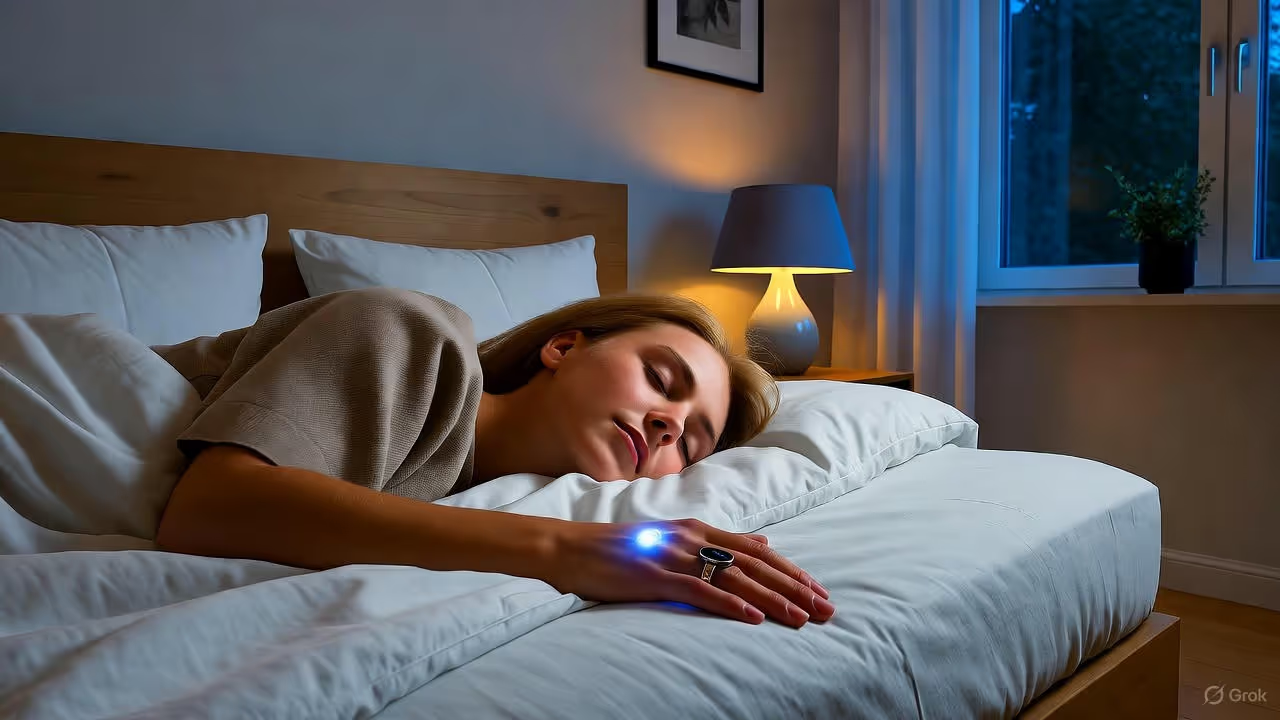
Today, that black box has been illuminated. The emergence of consumer sleep technology, particularly in the form of sleek, unobtrusive smart rings, has democratized access to data that was once confined to sterile sleep laboratories. Millions now quantify their slumber, seeking answers to that morning fatigue. But have you ever stopped to wonder: how does a device on your finger actually know if you’re in deep sleep or REM? What silent conversation is happening between your body and those tiny sensors?
The science behind sleep tracking is a fascinating convergence of physiology, signal processing, and machine learning. It’s not magic; it’s a sophisticated interpretation of your body’s nighttime language. This article will pull back the curtain on that process. We’ll journey from the foundational biology of sleep itself to the raw data captured by photodiodes and accelerometers, and finally to the algorithms that transform blips of light and motion into a coherent story of your sleep stages, readiness, and recovery.
Understanding this science is more than technical curiosity; it’s the key to becoming an informed user of your own data. It empowers you to move beyond simply reading a "sleep score" to truly interpreting what your body is telling you. As we explore, we’ll also see how companies committed to genuine wellness, like Oxyzen, leverage this science not to generate anxiety-inducing metrics, but to provide actionable, personalized insights grounded in rigorous research. The journey into your sleep starts not when you close your eyes, but with the first beam of light a sensor sends into your skin.
The Architecture of Sleep: Understanding What We're Tracking
Before we can understand how sensors track sleep, we must first understand what sleep actually is. Sleep is not a uniform state of unconsciousness. It is a dynamic, highly structured process composed of distinct stages that cycle throughout the night in a pattern as unique as a fingerprint. The modern framework for understanding these stages is called polysomnography, and it divides sleep into two broad categories: Non-Rapid Eye Movement (NREM) sleep and Rapid Eye Movement (REM) sleep.
NREM sleep is further broken down into three stages, each progressively deeper:
N1 (Light Sleep): This is the transition from wakefulness to sleep, lasting several minutes. Your heartbeat, breathing, and eye movements slow. Muscles may twitch. You are easily awakened.
N2 (Baseline Sleep): You are now unequivocally asleep, but not deeply. Your body temperature drops, and eye movements stop. Brain waves show characteristic "sleep spindles" and "K-complexes"—bursts of activity believed to play a role in memory consolidation and sensory processing. This stage typically constitutes the largest portion of an adult's sleep.
N3 (Deep Sleep or Slow-Wave Sleep): This is the most restorative phase. Breathing and heart rate reach their lowest levels. Brain waves become slow and synchronized (delta waves). It is very difficult to wake someone from deep sleep. This stage is crucial for physical recovery, immune function, and growth hormone release.
Following NREM sleep, we enter the fascinating stage of REM sleep. Here, the brain becomes highly active, almost to waking levels, and dreams are most vivid. As the name suggests, your eyes dart rapidly behind closed eyelids. Paradoxically, your voluntary muscles become temporarily paralyzed (a state called atonia), preventing you from acting out your dreams. REM sleep is essential for emotional processing, memory integration, and cognitive function.
A full sleep cycle—progressing from N1 to N2 to N3, then back to N2 before entering REM—lasts about 90 to 110 minutes. As the night progresses, the architecture changes: deep sleep (N3) dominates the first half of the night, while REM sleep periods become longer and more prominent in the second half. This cyclical architecture is the map that every sleep tracker is trying to reconstruct. Disruptions to this pattern—whether from stress, lifestyle, environment, or disorders—directly impact how we feel upon waking. For a deeper dive into how these stages affect your daytime energy, you can always explore related research on our blog.
This biological blueprint sets the stage for tracking. In a clinical sleep lab, this map is drawn with extreme precision using an array of sensors: electroencephalogram (EEG) electrodes on the scalp to measure brain waves, electrooculogram (EOG) to track eye movements, and electromyogram (EMG) to monitor muscle tone. The challenge—and triumph—of wearable technology is to approximate this detailed map using only the subtle physiological signals accessible from the wrist or finger.
From Lab to Limb: The Core Sensors in Your Wearable
The gold-standard sleep lab setup is impossible to replicate at home. You wouldn’t sleep comfortably covered in wires and electrodes. The genius of modern sleep wearables lies in their ability to act as miniaturized physiological data hubs, using a suite of sensors to proxy the measurements of bulky clinical equipment. While no consumer device can yet match the neural resolution of an EEG, the combination of data streams creates a remarkably accurate picture. Let’s meet the core components inside devices like the Oxyzen smart ring.
1. The Photoplethysmogram (PPG) Sensor: The Heart of the Matter This is arguably the most critical sensor for sleep tracking. A PPG sensor works by shining light (typically green and red LEDs) into the skin and measuring the amount of light reflected back using a photodetector. Why does this tell us anything? Because blood absorbs light. With each heartbeat, a pulse of blood surges through your capillaries, temporarily increasing absorption and reducing the amount of light reflected back to the sensor. Between beats, less blood is present, so more light is reflected.
This creates a waveform—the PPG signal—that directly corresponds to your heart’s activity. From this raw signal, the device can derive your heart rate and, more importantly for sleep, your heart rate variability (HRV)—the tiny, millisecond variations in the time intervals between heartbeats. HRV is a powerful indicator of autonomic nervous system balance and is profoundly influenced by sleep stages.
2. The Accelerometer: Measuring the Body’s Nighttime Narrative This tiny motion detector measures acceleration forces. Its primary role in sleep is simple: to detect movement. During wakefulness and light sleep, we shift position frequently. In deep sleep, movement is minimal. During REM sleep, while major muscles are paralyzed, minor twitches can still occur. The accelerometer creates an actigraphy graph—a visual representation of movement over time. This data is crucial for identifying periods of wakefulness after sleep onset and for generally characterizing restlessness. It’s also the primary tool for older, less advanced trackers that simply guessed "sleep" based on prolonged inactivity.
3. The Thermistor/Blood Oxygen Sensor: The Context Provider Many advanced wearables, including rings worn on the finger (a prime location for this measurement), incorporate sensors to track peripheral temperature and blood oxygen saturation (SpO2). Body temperature follows a circadian rhythm, dropping to initiate sleep and rising toward morning. Monitoring this trend provides context for your sleep-wake cycle. SpO2 sensing, using red and infrared light, measures the percentage of oxygen-carrying hemoglobin in your blood. Significant drops in SpO2 during sleep can be indicative of sleep apnea events, where breathing is interrupted. This transforms a sleep tracker from a simple stage estimator into a potential health screening tool.
These sensors work in concert, creating a multi-layered data stream. While an EEG listens directly to the brain’s "conversation," a smart wearable listens to the body’s "physiological dialect"—the heart’s rhythm, the body’s motion, and the blood’s flow—and uses that to infer what the brain is doing. For those curious about the exact sensor specifications and how they are calibrated, detailed technical information is available in our FAQ.
Decoding the Night: How Algorithms Transform Data into Sleep Stages
Raw sensor data is just noise—a river of numbers, light values, and acceleration vectors—until it is interpreted. This is where the secret sauce of any sleep tracker resides: its proprietary algorithms. These sophisticated pieces of software are the translators that convert the physiological dialect of PPG and accelerometer data into the recognized language of sleep stages (N1, N2, N3, REM).
The process typically follows a multi-step pipeline:
1. Signal Acquisition & Cleaning: The first job is to clean the "noise" from the "signal." The algorithm must identify and filter out artifacts caused by sudden movements, the ring shifting slightly on the finger, or ambient light leaks. This ensures the core physiological data (like the heartbeat waveform) is as pure as possible.
2. Feature Extraction: Next, the algorithm scans the cleaned data for specific, meaningful features. This is where the science gets detailed. From the PPG signal, it extracts:
Heart Rate (HR): The average beats per minute over a short epoch (usually 30 seconds).
Heart Rate Variability (HRV): Analyzed in multiple ways, often by looking at the root mean square of successive differences (RMSSD), which is a key indicator of parasympathetic ("rest and digest") nervous system activity.
Pulse Rate Variability: Similar to HRV but derived from the pulse wave, offering additional insights.
From the accelerometer, it extracts movement magnitude and periodicity.
3. Pattern Recognition & Classification: This is the core of the translation. The algorithm, trained on massive datasets where both sensor data and concurrent clinical EEG sleep stages were recorded, looks for patterns. It knows that:
Deep Sleep (N3) is typically characterized by a lower, stable heart rate and very high HRV, coupled with minimal to no movement.
REM Sleep shows a more variable, often elevated heart rate (similar to wakefulness), but with very low HRV and the presence of rapid, small-magnitude movements (like finger twitches) despite overall body paralysis.
Light Sleep (N1/N2) falls in between, with moderate heart rates and HRV, and occasional body movements.
Wakefulness is marked by higher, variable heart rates, low HRV, and frequent, purposeful movement.
By weighing these features against its trained model every epoch (30-second window), the algorithm makes a probabilistic decision: "Given this heart rate of X, HRV of Y, and movement of Z, there is an 85% probability the user is in N3 sleep at this moment."
4. Contextual Smoothing & Cycle Mapping: Finally, the algorithm applies rules of sleep biology. It knows that you cannot go directly from wakefulness to REM sleep, or from deep sleep back to wakefulness without passing through lighter stages. It smoothes the classification based on these rules and maps the sequence into the recognizable 90-minute cycles, providing the clean, stage-by-stage graph you see in your app the next morning.
The accuracy of this entire process hinges on the quality and size of the training dataset and the algorithmic ingenuity. This is a key area of focus for dedicated wellness companies; you can learn more about Oxyzen's research and development approach here. The result is a consumer-friendly approximation that, while not a medical diagnosis, provides an unprecedented window into personal sleep architecture.
Heart Rate Variability (HRV): The Silent Narrator of Your Sleep Quality
While heart rate gets most of the popular attention, for sleep scientists and advanced algorithms, Heart Rate Variability (HRV) is the true star of the show. If your heart rate is the drumbeat, HRV is the subtle, complex rhythm within it—and it tells a profound story about your nervous system and recovery.
Technically, HRV measures the variation in the time interval between consecutive heartbeats, measured in milliseconds. Contrary to intuition, a healthy heart is not a perfect metronome. Under the influence of the two branches of your autonomic nervous system (ANS), it constantly speeds up and slows down.
The sympathetic nervous system (SNS, "fight or flight") prepares the body for action, causing the heart to beat faster and reducing variability between beats (lower HRV).
The parasympathetic nervous system (PNS, "rest and digest") promotes relaxation, recovery, and digestion, slowing the heart and increasing the variability between beats (higher HRV).
During sleep, especially high-quality sleep, the balance should shift powerfully toward parasympathetic dominance. This is why HRV is such a powerful proxy for sleep depth and overall recovery:
Deep Sleep Correlation: The transition into and maintenance of deep N3 sleep is strongly associated with a significant spike in HRV. The body is in its peak state of physical restoration, driven by strong parasympathetic activity.
REM Sleep Identification: During REM sleep, the brain is active and dreams occur, which can introduce sympathetic bursts. This often causes HRV to drop, helping algorithms distinguish REM (active brain, lower HRV) from wakefulness (active brain and body, low HRV with movement).
Overall Recovery Metric: Your nightly average or peak HRV is considered a key biomarker of resilience. Consistently higher HRV during sleep suggests good autonomic flexibility and strong recovery capacity. Conversely, a trend of suppressed nocturnal HRV can be an early warning sign of overtraining, chronic stress, or impending illness.
For the user, tracking HRV transforms sleep data from a simple duration score into a quality metric. Waking up after 8 hours of sleep with a low HRV score is a clear signal that while you were in bed, your body was not achieving deep, restorative rest—perhaps due to stress, alcohol, or an underlying issue. This nuanced insight is what moves sleep tracking from a novelty to a genuine wellness tool. By monitoring trends over time, you can see how lifestyle choices directly impact your nervous system's ability to recharge at night. To see how real users interpret and act on their HRV data, you can read about their experiences in our testimonials.
Beyond Stages: How Trackers Measure Sleep Duration, Efficiency, and Latency
The colorful hypnogram of sleep stages is visually compelling, but the practical insights for most users often come from three fundamental, algorithm-derived metrics: Sleep Latency, Sleep Efficiency, and Total Sleep Time. These are the pillars of quantitative sleep assessment, and they are calculated primarily from the fusion of accelerometer and heart rate data.
Sleep Latency: The Time to Disconnect This is the measure of how long it takes you to fall asleep after turning off the lights with the intention to sleep. Clinically, a latency of under 20-30 minutes is considered normal. Trackers determine this by pinpointing the transition from "awake" to "sleep." They look for the convergence of two signals: a significant reduction in gross body movement (from the accelerometer) and a discernible drop and stabilization in heart rate (from the PPG). The algorithm marks the beginning of sleep not at the first sign of quiet, but at the sustained onset of these sleep-like physiological patterns. Poor sleep latency can be a marker of anxiety, poor sleep hygiene, or circadian misalignment.
Sleep Efficiency: The Metric of Quality Time in Bed This is arguably more important than raw hours logged. Sleep Efficiency is the percentage of time you were actually asleep while in bed. It’s calculated as: (Total Sleep Time / Time in Bed) x 100. A score above 85% is generally considered good, while a score below 75% often indicates fragmented, restless sleep.
The tracker calculates this by identifying all periods of wakefulness after sleep onset and before final awakening. Every time you roll over, get up to use the bathroom, or lie awake staring at the ceiling, the accelerometer (and often an elevated heart rate) detects it. These wakeful epochs are subtracted from your total time in bed. Low efficiency points to issues like environmental disturbances, pain, or sleep disorders.
Total Sleep Time: The Straightforward Benchmark This is the sum of all sleep epochs (N1+N2+N3+REM) across the night. While it seems simple, accurate measurement relies on correctly distinguishing light sleep from quiet wakefulness—a task where advanced PPG-based algorithms vastly outperform old motion-only trackers. The device's ability to sense the subtle cardiovascular shift into even light sleep allows it to start and stop the "sleep clock" more accurately.
Together, these three metrics provide a high-level report card on your night. They answer the basic questions: How quickly did I fall asleep? How much of that time in bed was actually used for sleep? And how many total hours did I accumulate? They are the foundational insights upon which more advanced analysis—like the impact of deep and REM sleep—is built. For users seeking to improve these numbers, our blog offers a wealth of actionable sleep hygiene strategies.
The Readiness Score: Synthesizing Night Data into a Morning Insight
In the quest to make data actionable, the most innovative aspect of modern sleep wearables is not the tracking itself, but the synthesis: the Readiness or Recovery Score. This is where the device moves from reporting history to offering a prescription for the day ahead. It’s an algorithmically generated number that attempts to answer the ultimate morning question: "Based on how I slept, how prepared is my body to handle physical, mental, and emotional stress today?"
This score is not derived from sleep alone. It is a holistic integration of your night with other key biometrics, creating a comprehensive picture of your systemic recovery. A typical readiness algorithm weighs inputs from several channels:
Sleep Quality & Quantity: This is the core input. The algorithm considers not just total hours, but the balance of sleep stages (sufficient deep and REM), sleep efficiency, and any disruptions. A night rich in deep sleep will contribute positively, while frequent awakenings will pull the score down.
Cardiovascular Recovery: Nocturnal HRV is the flagship metric here. A high overnight HRV is the single strongest physiological signal of strong parasympathetic recovery and adaptive capacity, and it heavily boosts a readiness score. Resting heart rate (RHR) is also factored in; a morning RHR that is elevated by 5-10 bpm above your personal baseline can indicate residual stress or fatigue.
Thermoregulation & Activity Context: Your body temperature rhythm is a master circadian signal. A normal nocturnal temperature drop followed by a steady rise toward morning supports a good score. Furthermore, advanced systems consider your previous day's activity strain. The algorithm understands that a massive workout requires a more robust recovery response; if your sleep data doesn't show that expected supercompensation, your readiness score may be moderated accordingly.
The genius of a well-designed readiness score lies in its personalization. It doesn't compare you to population averages; it compares you to yourself. It learns your individual baselines for HRV, RHR, and sleep over weeks of data. A score of 85/100 means your body is showing signals of being 85% of your own observed best, not anyone else's.
This transforms data from information into wisdom. A low readiness score isn't a judgment; it's a recommendation. It might suggest prioritizing a lighter workout, practicing stress-management techniques, or being mindful of cognitive load that day. It empowers you to align your daily demands with your body's actual capacity, a principle deeply embedded in the mission of holistic wellness technology.
The Finger vs. The Wrist: Why Sensor Placement Matters for Accuracy
Not all wearables are created equal, and a major factor in their performance is sensor placement. The two dominant form factors are the wrist-worn smartwatch/fitness band and the finger-worn smart ring. While both use similar PPG and accelerometer technology, the location of these sensors creates significant differences in data quality, particularly for sleep and continuous HR/HRV monitoring.
The Wrist: Convenient but Noisy The wrist is a fantastic location for daytime activity tracking and notifications. However, for sleep and physiological monitoring, it presents challenges:
Motion Artifacts: The wrist and hand are highly mobile, even during sleep. Tossing, turning, and adjusting pillows can cause the device to shift, temporarily breaking the optical contact of the PPG sensor. This creates "noise" and data gaps.
Bony Anatomy & Blood Flow: The wrist has less consistent capillary density and is bonier than a finger. The PPG sensor must shine light through this more complex tissue to find a reliable blood flow signal, which can be weaker and more susceptible to interruption.
User Compliance: Some people find watches uncomfortable to sleep in and may not wear them consistently, creating data gaps.
The Finger: The Physiological Sweet Spot The finger, specifically the base of the finger, offers several inherent advantages for biometric sensing:
Superior Vascular Access: The fingertip and finger base are rich in capillaries, providing a strong, consistent blood flow signal for PPG sensors. This allows for a cleaner, more reliable waveform from which to derive heart rate and, critically, HRV.
Reduced Motion Interference: During sleep, while our arms and hands move, individual finger movement is relatively minimal, especially at the base. This results in fewer motion artifacts and a more stable optical reading throughout the night.
Consistent Wear: A well-designed ring is often described as "unnoticeable" during sleep, promoting higher compliance for all-night, every-night tracking. Its form factor is dedicated to sensing, not displaying information, which allows for optimized sensor placement and battery life focused purely on biometrics.
This difference in signal quality isn't just theoretical. Studies comparing wearables to polysomnography have indicated that devices worn on the finger can provide more accurate sleep staging, particularly in distinguishing the subtle cardiovascular signatures of light, deep, and REM sleep, due to the higher-fidelity PPG data. For the user, this means the insights into sleep architecture, HRV trends, and overall recovery are built on a more solid foundational measurement. It’s a core reason why form factors like the Oxyzen ring are designed specifically for those who prioritize data accuracy for recovery. If you're deciding which device is right for you, our FAQ compares different tracking methods in detail.
Limitations and Considerations: What Sleep Trackers Can't (Yet) Do
With all their sophisticated technology, it’s crucial to maintain a realistic perspective. Consumer sleep trackers are powerful wellness tools, but they are not medical devices. Understanding their limitations is key to using them effectively and avoiding "orthosomnia"—the unhealthy preoccupation with perfect sleep data.
1. The EEG Gap: Inferring vs. Measuring Brain States This is the fundamental limitation. Wearables infer sleep stages from the heart, body, and breath. They do not measure brain waves directly. While the correlation is strong, inference is not measurement. The algorithm can mistake quiet wakefulness for light sleep (N1) or confuse REM sleep with a wakeful period of low movement. The staging accuracy, while impressive (often in the 80-90% range for NREM/REM classification against PSG), is not 100%. The hypnogram should be viewed as an educated estimate, not a clinical record.
2. Individual Variability: One Algorithm Doesn't Fit All Algorithms are trained on large, diverse datasets, but human physiology is incredibly variable. Factors like age, fitness level, medication use (e.g., beta-blockers affect HRV), and even unique cardiovascular physiology can influence how your body's signals map to sleep stages. A tracker may be slightly less accurate for you than for the "average" person in its training set.
3. Environmental and Behavioral Confounders The sensors cannot distinguish the cause of a signal. An elevated heart rate and low HRV could mean you're in light sleep—or it could mean the room is too hot, you had alcohol before bed, you're dehydrated, or you're experiencing a stress dream. The device reports the physiological outcome, not its root cause. The user must be the detective, using context (like the readiness score and lifestyle logging) to interpret the "why."
4. The Focus on "Optimal" Can Be Misleading Many apps provide feedback against a generic "optimal" target (e.g., 25% deep sleep). These targets are broad population guidelines. Your personal optimal amount may differ. The true value lies in tracking your trends and personal baselines. A steady decline in your own deep sleep percentage is more meaningful than a single night below a generic target.
Embracing these limitations allows you to use the technology wisely. The goal is not to achieve a perfect 99 sleep score every night—that’s an unrealistic and stressful target. The goal is to observe patterns, understand how your lifestyle choices move your personal metrics, and use those insights to make incremental, positive changes. This balanced, informed approach to wellness data is central to the philosophy behind thoughtful product design.
The Future of Sleep Sensing: Emerging Technologies and Deeper Insights
The field of biometric sensing is advancing at a breathtaking pace. The sleep trackers of tomorrow will move beyond inference to more direct measurement and integrate seamlessly into our lives and healthcare systems. Here’s a glimpse at what’s on the horizon.
1. Advanced Biometric Sensors
Electrodermal Activity (EDA): Already appearing in some wearables, EDA measures subtle changes in skin sweat, a direct indicator of sympathetic nervous system arousal. This could help better identify stress-induced micro-awakenings and improve the granularity of sleep disruption analysis.
Continuous Core Temperature: Moving beyond skin temperature, new non-invasive methods aim to estimate core body temperature trends more accurately, providing a gold-standard signal for circadian rhythm phase and fertility tracking.
Advanced Blood Biomarker Proxies: Research is exploring whether optical sensors could one day non-invasively track proxies for key sleep-related biomarkers like cortisol, melatonin metabolites, or inflammatory markers, offering a direct window into the hormonal chemistry of sleep.
2. Environmental Integration and Contextual Awareness Future sleep systems won't just monitor the body; they’ll respond to it. Imagine a tracker that communicates with your smart home:
It detects you are in light sleep and a noise disturbance occurs; your smart speaker plays subtle pink noise to prevent an awakening.
It senses your body temperature dropping as you enter deep sleep and signals your thermostat to adjust slightly.
It analyzes your sleep cycle and wakes you with a smart light at the optimal point in a light sleep phase, not during deep sleep.
3. The Path to Clinical Utility and Personalized Medicine The line between wellness and medical-grade monitoring will continue to blur. We are already seeing this with validated SpO2 tracking for sleep apnea screening. The future points toward:
Population-Scale Sleep Research: Aggregated, anonymized data from millions of users could uncover new patterns linking sleep architecture to long-term health outcomes.
Remote Patient Monitoring (RPM): Physicians could prescribe wearables to monitor patients with insomnia, sleep apnea, or circadian disorders remotely, adjusting treatments based on real-world data.
Closed-Loop Personalization: The ultimate goal: an AI coach that doesn’t just report data, but learns your unique responses. It could suggest an optimal bedtime, recommend a wind-down routine, or adjust a workout plan based on a predictive analysis of your recovery trajectory.
This exciting future is built upon the solid scientific foundation of today's sensor and algorithm technology. It promises a shift from reactive tracking to proactive, holistic sleep health management. To stay updated on how these innovations are being integrated into consumer technology, you can follow the latest developments from leading brands.
Interpreting Your Data: From Numbers to Actionable Health Insights
You now possess a wealth of data: sleep stages color-coded on a hypnogram, a readiness score, graphs of your heart rate variability, and nightly efficiency percentages. This is where the real work—and the real value—begins. Data alone is inert; it is the interpreted story that holds the power to transform your health. Learning to read your sleep data correctly moves you from being a passive observer to an active participant in your own well-being.
The first and most important principle is to focus on trends, not single nights. Human physiology is noisy. A single night of poor sleep can be caused by a late meal, an intense movie, or simply random variance. It is the pattern over weeks and months that reveals the truth. Look for directional shifts:
Is your average resting heart rate creeping up over four weeks?
Is your deep sleep percentage on a consistent decline?
Is your sleep latency longer on Sunday nights versus Wednesday nights?
These trends tell a story about your lifestyle, stress load, and recovery capacity. For example, a sustained dip in both HRV and deep sleep, coupled with a higher resting heart rate, is a classic signature of accumulating stress or overtraining. It’s your body’s way of flashing a yellow light.
Next, learn to correlate data with context. Your wearable measures the effect, but you hold the key to the cause. This is where lifestyle logging (manual or automatic) becomes crucial. Most advanced apps allow you to tag behaviors. Did your readiness score plummet? Check your log: did you have alcohol within three hours of bed? Did you do a high-intensity workout after 8 PM? Did you have a high-stress workday? Over time, you’ll build a personalized map of what truly affects your sleep. You may discover that your proclaimed "unwinding glass of wine" reliably fragments your deep sleep, or that a 10-minute meditation before bed consistently boosts your HRV.
Finally, use the data to formulate and test hypotheses. Think like a scientist of your own life.
Hypothesis: "The blue light from my evening scrolling is hurting my sleep latency."
Experiment: For two weeks, implement a strict "no screens one hour before bed" rule. Use blue-light blocking glasses if necessary.
Data Analysis: Compare the average sleep latency and sleep efficiency scores from the experimental period to the two weeks prior.
Conclusion: Did the numbers improve? If yes, you’ve found a potent, personalized sleep hygiene lever. If not, the experiment continues—perhaps the issue is work anxiety, not light.
This iterative process of observation, experimentation, and adjustment is the core of biohacking. It transforms abstract numbers into a feedback loop for personal optimization. For those seeking to start this journey with a supportive framework, our blog is filled with guides on interpreting specific data patterns. Remember, the goal is not to become a slave to the score, but to use it as a compass, guiding you toward habits that help you feel your best, both asleep and awake.
Sleep Tracking for Specific Populations: Athletes, Shift Workers, and Parents
The standard "8 hours with balanced cycles" model is an ideal that doesn't reflect the complex realities of many lives. The true test of sleep science's utility is its adaptability to non-standard schedules and high-demand situations. For athletes, shift workers, and new parents, sleep tracking isn't a luxury; it can be a critical tool for performance, health, and survival.
For the Athlete: Tracking as a Recovery Essential For athletes, sleep is the primary driver of physical adaptation. It’s when muscle is repaired, human growth hormone is released, and motor skills are consolidated. Their tracking focus shifts intensely toward biomarkers of recovery:
HRV as the North Star: Overnight HRV is meticulously monitored. A sudden drop can be the earliest sign of overreaching, prompting an immediate adjustment in training load to prevent overtraining syndrome. Coaches and sports scientists use this data to personalize training plans in real-time.
Deep Sleep Quantification: The amount of N3 (slow-wave) sleep is directly correlated with physical restoration. Athletes track this metric to ensure they are getting enough of this reparative stage, especially after heavy training days or competitions.
Readiness for Performance: The morning readiness score dictates the day's intensity. A high score might mean it's time for a peak performance session. A low score mandates a rest day or light active recovery, regardless of the planned workout. This data-driven approach prevents injury and maximizes training efficiency.
For the Shift Worker: Navigating Circadian Disruption For nurses, pilots, factory workers, and others on rotating shifts, sleep tracking is about damage mitigation and strategic management. Their circadian rhythm is in constant conflict with their schedule. Key insights include:
Identifying Chronotype Alignment: Trackers can help a shift worker understand their innate chronotype (e.g., morning lark vs. night owl) and see how different shift schedules disrupt it most severely.
Optimizing Sleep Timing & Environment: Data can reveal that sleep after a night shift is most efficient when it begins immediately upon returning home in a pitch-black, cool room, even if that means sleeping from 8 AM to 4 PM. The focus shifts from "total hours" to "sleep quality within the constrained window."
Monitoring Long-Term Health Markers: Chronic shift work is linked to higher risks of metabolic and cardiovascular disease. Consistently tracking metrics like resting heart rate, HRV, and sleep efficiency provides an early-warning system for declining health, prompting proactive interventions.
For Parents (Especially of Newborns): Managing Sleep Debt The early stages of parenthood represent a unique physiological challenge: extreme, prolonged sleep fragmentation. Tracking here is less about achieving perfect sleep and more about intelligent management of severe deprivation.
Measuring "Sleep Opportunity": Rather than tracking continuous sleep, parents can use the data to identify and maximize every possible window. The tracker can show that while total sleep is only 5 hours, it’s composed of several 90-minute cycles if naps are taken strategically.
Using Data for Tag-Teaming: Partners can use objective data to make fair decisions. If one parent's data shows they had multiple long stretches of deep sleep while the other was up repeatedly, it informs who should take the next night shift.
Monitoring Parental Well-being: A sustained, critically low HRV and high resting heart rate in a parent are red flags for burnout and postpartum health issues, signaling the urgent need for support and medical consultation.
For all these groups, the technology provides a lifeline of objective insight amidst chaotic schedules, allowing for smarter, more personalized decisions that protect health and performance when sleep cannot be ideal. The story of our company's founding was inspired by the need for such adaptable, personal health technology in demanding modern lives.
The Intersection of Sleep, Stress, and Daytime Activity: The Full Circle of Wellness
Sleep does not exist in a vacuum. It is one vertex of a critical triangle, intimately connected to stress and daytime activity. A modern wellness tracker, especially one worn 24/7 like a smart ring, is uniquely positioned to illuminate these connections, creating a holistic feedback loop. Understanding this interplay is the key to breaking cycles of poor sleep and chronic stress.
The Stress-Sleep Vicious Cycle Stress, both acute and chronic, is the arch-nemesis of good sleep. It activates the sympathetic nervous system ("fight or flight"), releasing cortisol and adrenaline, which elevate heart rate, suppress HRV, and keep the brain in a state of hyper-vigilance. Physiologically, this is the polar opposite of the state required to initiate and maintain deep sleep.
What the Tracker Shows: A stressful day will manifest in your sleep data as prolonged sleep latency (a racing mind), reduced deep sleep, more frequent awakenings, and a suppressed overnight HRV. The tracker quantifies the direct cost of that stressful meeting or family argument on your recovery.
The Feedback Loop: Poor sleep, in turn, degrades your emotional regulation and resilience the next day. Your brain's amygdala (the fear center) becomes more reactive, and your prefrontal cortex (the rational decision-maker) functions less effectively. This makes you more susceptible to stress, creating a self-perpetuating cycle. Your readiness score will likely be low, flagging your reduced capacity to handle new stressors.
Activity as the Modulator Daytime physical activity is the powerful moderator that can break this cycle—but its timing and intensity matter profoundly.
The Beneficial Effect: Regular, moderate exercise is one of the most reliable ways to improve sleep quality and depth. It helps regulate circadian rhythms, reduces anxiety, and increases sleep pressure (the physiological urge to sleep). A good day of activity often leads to a night with higher deep sleep percentages and a stronger HRV rebound.
The Caveat of Timing & Overtraining: However, intense exercise too close to bedtime can be counterproductive, as it can raise core body temperature and stimulate the sympathetic system, delaying sleep onset. Furthermore, overtraining without adequate recovery is a massive physiological stressor. Your tracker will clearly show this: despite extreme fatigue, your sleep may be fragmented, your HRV chronically low, and your resting heart rate elevated. This is a critical signal to deload.
Creating Your Own Positive Feedback Loop The 24/7 wearable allows you to see this full circle in real-time. You can observe how a day of balanced activity and managed stress leads to a night of restorative sleep, which then leads to a high readiness score, empowering you to have a productive, resilient next day. This holistic view encourages integrated habits:
Using daytime activity data to ensure you're getting enough movement to build sleep pressure, but not so much that you overtrain.
Noticing a rising daytime stress signal (via elevated resting heart rate) and proactively employing a wind-down routine to prevent it from sabotaging your night.
Seeing a low readiness score and choosing a gentle yoga session instead of a high-intensity interval training workout.
This comprehensive perspective is what transforms a sleep tracker into a true wellness platform. It’s the difference between looking at a single frame and watching the entire movie of your health. To see how this integrated approach works in practice, you can explore real-world user testimonials and case studies.
Privacy, Data Security, and the Ethics of Biometric Monitoring
As we willingly strap sensors to our bodies that record our most intimate physiological rhythms—our heart's quiet whisper at 3 AM, our moments of stress, our patterns of rest—we must confront critical questions of privacy, data ownership, and ethical use. The data generated by a sleep tracker is not just numbers; it is a deeply personal biometric fingerprint. How this data is handled separates companies that commoditize your health from those that are true stewards of your wellness.
The Sensitivity of Sleep Data Consider what your sleep data can reveal:
Health Conditions: Patterns can suggest sleep apnea, insomnia, or circadian rhythm disorders.
Lifestyle & Behavior: It can infer alcohol consumption, sexual activity, and general daily routines.
Mental State: Consistently poor sleep metrics can be a proxy for anxiety, depression, or high chronic stress.
Vulnerability: The data shows when you are predictably asleep and most vulnerable in your home.
This information, in the wrong hands or used with the wrong incentives, could be used for discrimination, targeted advertising, or even social manipulation. The recent Oura ring lawsuit, where police sought a user's data for a criminal investigation, highlights the real-world stakes.
Key Principles for Ethical Biometric Data Handling Responsible companies in this space should adhere to transparent, user-centric principles:
Explicit, Informed Consent: Users must clearly understand what data is being collected, how it will be used, and who it might be shared with—not buried in a lengthy Terms of Service document. Consent should be granular, allowing users to opt-in or out of specific data uses (e.g., research, third-party integrations).
Data Anonymization & Aggregation for Research: When data is used to improve algorithms or conduct population health research, it must be rigorously anonymized—stripped of all personally identifiable information (PII) and aggregated so that no individual can be identified.
User Ownership and Portability: You should own your raw biometric data. Ethical platforms provide easy ways for you to download all your data in a standard format (like CSV or JSON) and, if you choose, to delete it permanently from their servers. This empowers you to share it with your doctor or move it to another service.
Transparency on Third-Party Sharing: The policy on selling or sharing data with third parties (like insurers, employers, or advertisers) must be crystal clear. The gold standard is to never sell individual user data. Any sharing for research or integration (e.g., with Apple Health or Google Fit) should be opt-in and transparent.
Bank-Level Security: Biometric data must be encrypted both in transit (from your device to the cloud) and at rest (on servers). Security protocols should be as robust as those used by financial institutions.
As a user, it is your right to investigate these policies before trusting a company with your data. Look for companies that are proactive and proud of their privacy standards. At Oxyzen, we believe that trust is the foundation of wellness technology, and we are committed to these principles; you can read our detailed approach in our privacy policy and about our mission. Choosing a wearable is not just a purchase; it is entering a partnership with a guardian of your most personal information.
Integrating Sleep Data with the Broader Health Ecosystem: Apple Health, Google Fit, and More
Your sleep data reaches its maximum potential when it is not trapped in a single app but can converse with the rest of your digital health ecosystem. Integration with platforms like Apple Health (iOS) and Google Fit (Android) transforms your sleep tracker from an island of insight into a central node in a comprehensive health network. This interoperability is a critical feature for the modern health-conscious individual.
The Power of a Centralized Health Hub Platforms like Apple Health and Google Fit act as secure repositories, aggregating data from multiple sources: your wearable, your smart scale, your nutrition app, your menstrual cycle tracker, and even electronic health records from some healthcare providers. This creates a unified, holistic view of your health that is greater than the sum of its parts.
For sleep data, this integration enables powerful correlations that are impossible in a siloed app. For example:
Sleep & Nutrition: Your sleep app writes last night's deep sleep duration to Apple Health. Your food logging app writes your daily caffeine and sugar intake. A third-party analysis app can then cross-reference this data to show you, definitively, that caffeine after 2 PM correlates with a 15% reduction in your deep sleep.
Sleep & Fitness: Your sleep tracker records your resting heart rate and HRV. Your workout app records your exercise type, duration, and intensity. The integrated data can reveal that while running boosts your deep sleep, high-intensity weight training after 7 PM increases your sleep latency.
Sleep & Women's Health: For those tracking menstrual cycles, integrating sleep data can illuminate how sleep architecture and quality change dramatically across follicular, ovulatory, and luteal phases, providing validation and predictive insights for energy management.
The Technical Flow: How It Works This is facilitated by standardized data types. When you grant permission, your sleep tracking app writes specific data points to your health hub using agreed-upon codes. For sleep, this includes:
Sleep Analysis: In-bed time, asleep time, and often sleep stages (Asleep (Core), Asleep (Deep), Asleep (REM), Awake).
Heart Rate and Heart Rate Variability (SDNN).
Respiratory Rate and Blood Oxygen Saturation (SpO2). Other apps with permission can then read this data to perform their own analysis, visualizations, and insights.
Choosing a Tracker That Plays Well with Others When selecting a wearable, its integration capabilities are a major consideration. The best devices offer robust, bi-directional sync:
Writing Data: They should write rich, granular sleep data (not just "time asleep") to your chosen health platform.
Reading Data: They should also read data from the hub. For instance, your smart ring's readiness algorithm could be improved if it can ingest your logged workouts from Strava or your weight trends from Withings, creating a more accurate picture of your recovery needs.
This open ecosystem approach empowers you, the user. You are no longer locked into a single brand's walled garden. You can mix and match the best devices and apps for each aspect of your health, knowing they can all contribute to a centralized, personalized understanding of your well-being. For support on how to set up these powerful integrations, our FAQ provides step-by-step guides.
The Evolution of Sleep Tracking: A Brief History from Diaries to AI
To fully appreciate the sophistication of today's sensors, it is instructive to look back at how humanity has attempted to understand and quantify sleep. The journey from subjective guesswork to objective, algorithm-driven insight is a story of relentless scientific curiosity and technological innovation.
The Era of Subjectivity: Sleep Diaries and Observation For most of history, tracking sleep meant remembering—or writing down—impressions. Did you sleep well? Did you wake often? These subjective reports, while valuable for noting patterns, were plagued by what sleep scientists call "paradoxical insomnia": the common experience of underestimating how much you actually slept. The sleep diary, still used as a clinical tool today, was the first attempt to systematize this self-reporting, but it remained an imperfect narrative, not a measurement.
The Dawn of Objective Measurement: Actigraphy The first major technological leap was the actigraph. Originally developed in the early 1970s, these wrist-worn devices contained simple accelerometers to detect movement. The core assumption was elegant in its simplicity: when you are still for a prolonged period, you are probably asleep; when you move, you are probably awake. Actigraphy provided the first objective, long-term data on sleep/wake patterns and was revolutionary for studying circadian rhythms and disorders like insomnia. However, it had a critical flaw: it couldn't distinguish quiet wakefulness (lying still in bed, anxious) from actual sleep. It measured rest, not sleep physiology.
The Clinical Gold Standard: Polysomnography (PSG) Developing in parallel was the clinical gold standard: the polysomnogram (PSG). Since the 1950s, scientists in sleep labs have used a battery of sensors—EEG for brain waves, EOG for eye movements, EMG for muscle tone, ECG for heart rhythm, and belts for breathing effort—to paint a complete picture of sleep. PSG defined the stages (N1, N2, N3, REM) we still use today. It was—and is—incredibly accurate, but it is also expensive, intrusive, and confined to a single night in an unnatural lab environment. It is a diagnostic snapshot, not a tool for understanding sleep in the context of daily life.
The Consumer Revolution: The Rise of HR-based Wearables The 2010s saw the explosion of consumer wearables, first with fitness bands and later with smartwatches. The game-changer was the integration of optical PPG heart rate sensors with accelerometers. This moved tracking beyond just motion. By adding heart rate and, later, heart rate variability (HRV) to the equation, algorithms could begin to infer sleep stages by correlating cardiovascular patterns with known PSG data. This was the birth of the consumer sleep stage hypnogram. Accuracy improved dramatically over actigraphy, though it remained an inference, not a direct measurement.
The Present and Future: Multi-Sensor Fusion and AI Today, we are in the era of multi-sensor fusion and artificial intelligence. Devices like advanced smart rings combine PPG (often with multiple wavelengths), high-fidelity accelerometers, thermometers, and SpO2 sensors. The raw data from these streams is fed into complex machine learning models—often neural networks—trained on massive datasets of simultaneous PSG and wearable recordings. These AI algorithms don't just follow simple rules; they learn intricate, non-linear patterns that map physiology to sleep stages with ever-increasing accuracy. They also synthesize this data into higher-order insights like readiness and recovery scores.
This evolution—from diary to actigraphy, from PSG snapshot to continuous AI-driven life tracking—represents a fundamental shift. We have moved from asking "How do you feel you slept?" to being able to observe and understand the objective, physiological truth of our rest, night after night. This historical context reminds us that we are living at the frontier of a personal health revolution, one where knowledge that was once the exclusive domain of specialists is now accessible to all. The story of this technological journey is part of the larger narrative of human-centric innovation.
Addressing Sleep Disorders: How Tracking Can Identify Apnea, Insomnia, and More
For millions, poor sleep isn't a choice or a bad habit; it's a medical condition. Consumer sleep technology is increasingly playing a pivotal role in the early identification and management of common sleep disorders. While it's crucial to state unequivocally that wearables are not diagnostic medical devices, they can act as powerful screening tools and provide objective data that empowers individuals to seek appropriate professional care. Let's explore how the sensors we've discussed can flag potential disorders like sleep apnea and insomnia.
Spotting the Signs of Sleep Apnea Obstructive Sleep Apnea (OSA) is characterized by repeated pauses in breathing during sleep, leading to oxygen desaturations and fragmented sleep. Traditional diagnosis requires an in-lab PSG or a home sleep test. However, wearables with specific sensor capabilities can reveal strong indicators:
Blood Oxygen (SpO2) Tracking: This is the most direct signal. A healthy individual's overnight SpO2 is a relatively stable line, typically above 94%. In OSA, the breathing pauses cause periodic drops in blood oxygen. A wearable with a capable SpO2 sensor (like those on the finger, a prime vascular location) will show a "sawtooth" pattern—repeated dips and recoveries throughout the night. Many apps will even provide a "blood oxygen variation" graph or flag significant events.
Restless Movement & Heart Rate Spikes: Each apnea event ends with a micro-arousal as the brain forces a gasp for air. This is often accompanied by a brief movement (caught by the accelerometer) and a sharp spike in heart rate (seen in the PPG data). The combination of frequent movement bursts and a heart rate graph that looks choppy, rather than smooth and descending, can be a secondary clue.
Snore Detection (via microphone): Some devices use an onboard microphone to detect snoring, a primary symptom of OSA. The correlation of snore events with SpO2 dips strengthens the screening signal.
Illuminating the Patterns of Insomnia Insomnia is more than "trouble sleeping"; it's a disorder of hyperarousal and dysfunctional sleep-wake cycles. Trackers provide the objective data that separates perception from physiology, which is critical because individuals with insomnia often misperceive their sleep.
Sleep Latency & Efficiency: For those with sleep-onset insomnia, the data quantifies the long, agonizing period of lying awake. For sleep-maintenance insomnia, the hypnogram vividly shows the frequent, prolonged awakenings that shatter sleep continuity, resulting in very low sleep efficiency scores (<75%).
The Hyperarousal Signature: The biometric data often tells a clear story. Even during perceived "sleep," individuals with insomnia may show elevated resting heart rates and suppressed HRV compared to their healthy baselines, indicating a nervous system that never fully powers down into restorative rest. This objective proof can be validating for patients and informative for therapists.
Stimulus Control Therapy Aid: A core cognitive-behavioral therapy (CBT-I) technique is to get out of bed if not asleep in 20 minutes. A tracker provides an objective timer, removing the anxiety of clock-watching and guessing.
Circadian Rhythm Disorders & Irregular Schedules For disorders like Delayed Sleep Phase Syndrome (DSPS—night owls who can't fall asleep until very late) or shift work disorder, actigraphy has long been a clinical tool. Modern wearables perform this function seamlessly. They provide an irrefutable, multi-week record of sleep onset and wake times, graphically illustrating a sleep schedule that is misaligned with societal demands. This data is invaluable for a sleep specialist trying to diagnose a circadian disorder and craft a tailored treatment plan involving light therapy and chronotherapy.
The Critical Next Step: From Data to Doctor The appropriate pathway is clear: Data for awareness, a professional for diagnosis. If your wearable consistently shows severe SpO2 dips, extreme sleep fragmentation, or a chronically misaligned rhythm, the next step is not self-diagnosis. It is to download your trend reports, take screenshots of key graphs, and schedule an appointment with a primary care physician or a sleep specialist. You become an empowered, data-literate patient, providing your doctor with weeks of real-world evidence rather than a vague description. This collaborative approach can dramatically shorten the path to effective treatment. For those beginning this journey, our FAQ offers guidance on preparing for a doctor's visit with your wearable data.
The Culinary & Chemical Impact: How Diet, Alcohol, and Caffeine Show Up in Your Data
"You are what you eat" is a maxim that holds profound truth for your sleep. The substances you consume are potent biochemical signals that directly interfere with or support the complex hormonal and neurological processes of sleep. One of the most powerful uses of a sleep tracker is to conduct personal experiments that move these effects from the realm of anecdote to quantifiable reality. Let's see how common dietary factors leave their fingerprints on your nightly biometrics.
Alcohol: The Deceptive Depressant Perhaps no substance is more misunderstood in its relationship to sleep than alcohol. While it is a sedative that can hasten sleep onset, its impact on sleep architecture is overwhelmingly negative, and a tracker lays this bare.
The Deep Sleep Robbery: Alcohol suppresses REM sleep in the first half of the night. As the body metabolizes the alcohol, a "REM rebound" effect occurs in the second half, leading to vivid, often disruptive dreaming. More critically, it severely fragments deep N3 sleep. Your hypnogram will show little to no deep sleep in the hours following consumption. The body is preoccupied with metabolizing a toxin, not performing physical restoration.
Increased Wakefulness & Poor Efficiency: Later in the night, as alcohol levels drop, withdrawal signals can cause multiple awakenings (seen as red "awake" bars on your graph) and lead to early morning waking. Your sleep efficiency score will take a hit.
Autonomic Chaos: Alcohol disrupts autonomic nervous system balance. You'll often see an elevated resting heart rate throughout the night and a notably suppressed HRV—your body is under metabolic stress, not in a state of recovery.
Caffeine: The Long Shadow of a Stimulant Caffeine's half-life is 5-6 hours, meaning 5-6 hours after consumption, half of it is still circulating in your system. Its adenosine-blocking effects can linger much longer, especially in slow metabolizers.
Prolonged Sleep Latency: The most direct correlation. Consuming caffeine even 6 hours before bed can significantly increase the time it takes you to fall asleep, as shown by your sleep latency metric.
Fragmented Light Sleep: Caffeine can increase sleep fragmentation, causing more micro-awakenings you might not remember, but which reduce sleep quality. You may see more frequent shifts between sleep stages and less consolidated deep sleep blocks.
Impact on Chronotype: Habitual afternoon caffeine use can perpetuate a delayed sleep phase, training your body to be alert later into the evening.
Late or Heavy Meals: The Digestive Tax Eating a large, rich, or spicy meal close to bedtime forces your digestive system into high gear when it should be winding down.
Elevated Nighttime Heart Rate & Core Temperature: The process of digestion (thermogenesis) raises metabolic rate, core temperature, and heart rate—all signals that oppose sleep initiation and depth. Your tracker will show a less pronounced nighttime dip in heart rate.
Fragmented Sleep: Acid reflux or general discomfort can lead to more tosses and turns, visible as increased movement and wake periods on your hypnogram.
The Power of N=1 Experimentation This is where personal tracking shines. General advice says "avoid alcohol and caffeine before bed." But what does "before bed" mean for you? With a tracker, you can find your personal thresholds.
Experiment: For one week, cut off caffeine at 2 PM. The next week, cut it off at noon. Compare your average deep sleep minutes and sleep latency.
Observe: Have two glasses of wine with dinner and note the data. Try a week without. The objective numbers often provide a more compelling motivation to change habits than subjective feeling alone.
By correlating your consumption logs with your biometric data, you build a personalized guide to "sleep-friendly fueling." It transforms nutrition from a daytime-only concern into a 24-hour recovery strategy. For more on crafting a sleep-supportive lifestyle, our blog features numerous articles on diet and sleep synergy.
Engineering the Ideal Sleep Sanctuary: Data-Driven Optimizations for Light, Temperature, and Sound
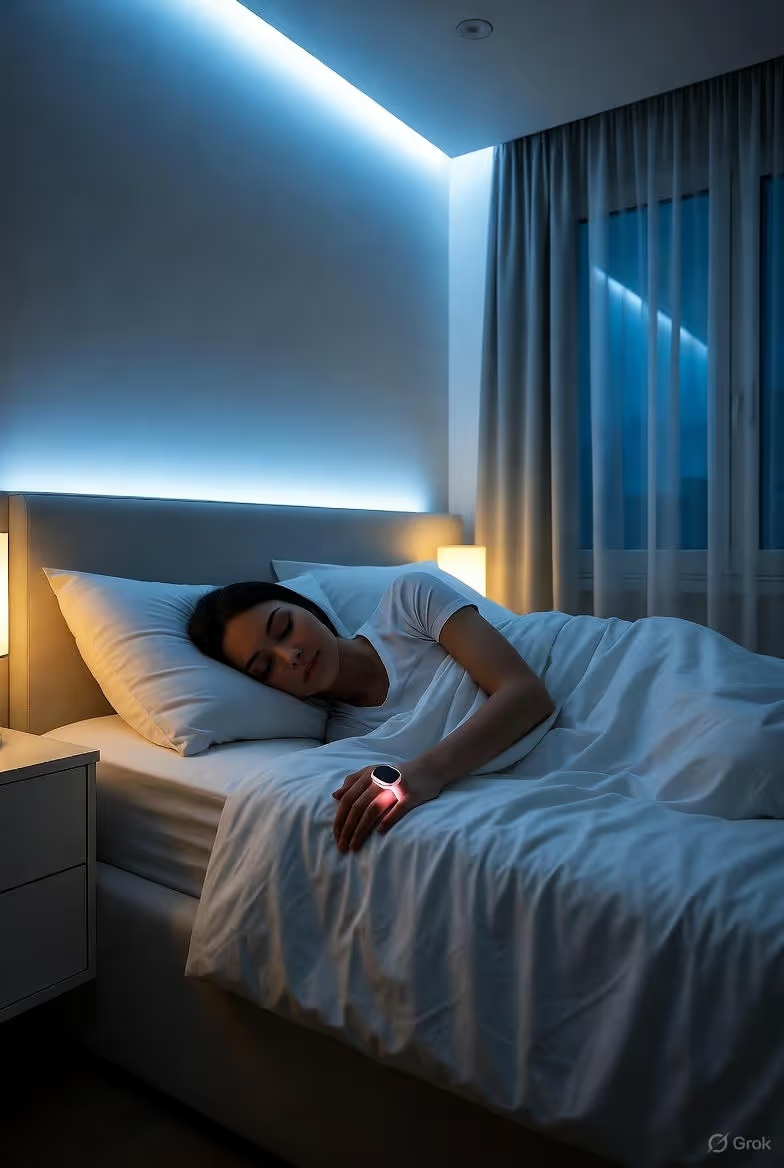
Your bedroom is not just a room; it's a sleep laboratory you control. The environment is a constant, silent dialogue with your physiology. While trackers measure your body's response, they also empower you to become the architect of an environment that elicits the best possible response. Let's break down how you can use your data to scientifically optimize the three key pillars of your sleep sanctuary: light, temperature, and sound.
1. Light: Resetting Your Master Clock Light is the primary zeitgeber (time-giver) for your circadian rhythm. Even small amounts of inappropriate light can suppress melatonin and shift your internal clock.
The Data Connection: If your sleep tracker shows a consistently delayed sleep onset or a low readiness score, investigate evening light exposure. Are you getting bright light too late? Conversely, if you struggle with early waking, is morning light (or lack of darkness) a factor?
Actionable Optimizations:
Embrace Darkness: Aim for near-total blackout. Use blackout curtains and cover or remove all LED indicators (chargers, electronics). Even the tiny glow from a smoke detector can have an effect. Your goal is a room so dark you cannot see your hand in front of your face.
Sunset Simulation Inside: In the 60-90 minutes before bed, dim overhead lights and use warm, low-color-temperature lamps (under 2700K). Consider blue-light blocking glasses if screen use is unavoidable.
Sunrise Initiation: If your device has a smart alarm that wakes you during light sleep, pair it with a dawn-simulating light that gradually increases in intensity 30 minutes before your alarm. This helps suppress melatonin naturally and can lead to less groggy awakenings.
2. Temperature: The Thermoregulatory Sweet Spot Core body temperature must drop by about 1-2 degrees Fahrenheit to initiate and maintain sleep. Your bedroom environment must facilitate this drop.
The Data Connection: A night of restless sleep with frequent awakenings can often be linked to temperature. Your wearable may show a less pronounced nighttime dip in your peripheral temperature reading, or simply record more movement.
Actionable Optimizations:
Find Your Cool Zone: The science is clear: a cool room, generally between 60-67°F (15.5-19.5°C), is optimal for most people. Use your tracker to experiment within this range.
Leverage Bedding: Use breathable, moisture-wicking sheets (like cotton, linen, or advanced performance fabrics) and layer blankets so you can adjust without changing the room's ambient temperature.
The Pre-Sleep Drop: Taking a warm bath or shower 1-2 hours before bed seems counterintuitive, but it works. It draws blood to the skin's surface, then as you cool, it enhances the core-to-shell heat dissipation that signals sleep readiness.
3. Sound: Managing the Auditory Landscape Unexpected noises are a prime cause of sleep fragmentation, pulling you from deeper stages into lighter sleep or wakefulness, even if you don't remember it.
The Data Connection: Look for nights with inexplicably low deep sleep or high movement. Could it be a partner's snoring, street noise, or a creaky house? Some advanced wearables even provide an "environmental noise" log.
Actionable Optimizations:
Consistent White or Pink Noise: This is the gold standard. A constant, masking sound (from a dedicated machine or app) drowns out inconsistent disruptive noises (sirens, doors slamming). It doesn't create silence but a predictable auditory blanket that the brain can tune out. Pink noise, with its deeper tone, has even been linked in studies to potentially increasing deep sleep stability.
Address the Source: If snoring is an issue (yours or a partner's), the data from your tracker can be the catalyst to seek solutions, from positional therapy to professional evaluation for apnea.
By methodically adjusting one environmental variable at a time—say, lowering the thermostat by 2 degrees for a week—and observing the changes in your sleep efficiency, deep sleep, and readiness scores, you turn your bedroom into a personalized bio-hack. The mission of true wellness technology is to provide these insights; you can learn more about our holistic approach to environmental wellness here.



%402x.svg)