


The Science Behind Wearable Stress Tracking Technology
Wearable tech uses sensors like optical heart rate monitors and accelerometers to estimate stress through HRV, heart rate, and movement patterns.
Wearable tech uses sensors like optical heart rate monitors and accelerometers to estimate stress through HRV, heart rate, and movement patterns.
%402x.svg)
You’re sitting at your desk, coffee cooling beside you. Your to-do list is managed, your calendar is full, and on the surface, everything is under control. Yet, your chest feels tight, your mind is foggy, and a low hum of unease has been your constant companion for weeks. You’re not “stressed” in the classic, deadline-panic sense—you’re navigating the modern reality of chronic, low-grade stress. It’s the silent soundtrack to 21st-century life, so pervasive we often fail to recognize its toll until it manifests as burnout, insomnia, or illness.
For decades, understanding our stress was a guessing game. We relied on subjective feelings—“I’m frazzled”—or waited for our bodies to break down with clear signals. But what if you could see your stress in real-time, as clearly as tracking your daily steps? What if your body’s silent whispers of strain could be translated into actionable data before they become screams?
This is the revolutionary promise of wearable stress tracking technology. No longer the realm of sci-fi, a new generation of devices—led by sophisticated, unobtrusive tools like the Oxyzen smart ring—is bringing laboratory-grade physiological monitoring to our fingertips. They move beyond the simplistic heartbeat of early fitness trackers, diving deep into the autonomic nervous system to quantify our body’s most primal responses to pressure.
This article is your definitive guide to the profound science powering this wellness revolution. We will dissect the exact physiological signals these devices measure, explore the cutting-edge algorithms that translate raw data into insight, and examine how this knowledge is empowering a new era of personalized mental and physical resilience. The journey from a subtle change in your heart rhythm to a dashboard notification suggesting a breathing exercise is a marvel of modern biophysics, data science, and human-centric design. It begins with understanding the ancient language of stress written in our own flesh and blood.

To comprehend how a device can measure something as intangible as stress, we must first journey inward to the master regulatory network operating beneath our conscious awareness: the autonomic nervous system (ANS). Imagine the ANS as the chief operating officer of your body, tirelessly managing all the background processes that keep you alive and adapted to your environment—heart rate, digestion, respiration, pupillary response, and more. It operates 24/7, and its state is the ultimate biomarker of your physiological stress or calm.
The ANS is divided into two primary branches that work in a dynamic, seesaw-like balance:
The Sympathetic Nervous System (SNS): Your "Fight-or-Flight" Accelerator.
This is your body’s rapid-response unit. When your brain perceives a threat—be it a looming deadline, a difficult conversation, or a sudden loud noise—it triggers the SNS. This system floods your body with catecholamines like adrenaline and noradrenaline. In milliseconds, your heart rate and blood pressure spike to send more blood to muscles, your pupils dilate to improve vision, non-essential functions like digestion are suppressed, and your palms might sweat. It’s an exquisite survival system designed for short, intense bursts of action.
The Parasympathetic Nervous System (PNS): Your "Rest-and-Digest" Brake.
Often called the "feed and breed" or "rest and digest" system, the PNS is responsible for conservation, restoration, and relaxation. Spearheaded by the vagus nerve—the longest cranial nerve in the body—the PNS slows the heart rate, stimulates digestion, promotes cellular repair, and fosters a state of calm. It is the physiological foundation of recovery, sleep, and social connection.
The Critical Balance: Allostasis and Strain.
Health is not the absence of stress; it is the ability to navigate it successfully—a concept known as allostasis. A healthy ANS nimbly shifts between sympathetic activation for challenge and parasympathetic recovery for restoration. Modern chronic stress, however, disrupts this dance. We face persistent, non-life-threatening psychological stressors (emails, financial worries, social pressures) that repeatedly trigger the SNS without allowing for sufficient PNS recovery. This leads to allostatic load—the cumulative wear and tear on the body from constant adaptation. It's like revving a car engine all day without ever letting it idle.
Wearable stress technology exists primarily to monitor this ANS balance in real-time. It doesn't measure your emotions directly; it measures the physiological echo of your emotions and thoughts as they ripple through the ANS. By quantifying the tug-of-war between your sympathetic accelerator and parasympathetic brake, these devices provide an objective, moment-to-moment readout of your nervous system state, revealing the hidden strain you may have learned to ignore. For a deeper look at how one company is translating this science into elegant design, you can explore the mission behind Oxyzen.
If the Autonomic Nervous System is the orchestra, then Heart Rate Variability (HRV) is its complex, rhythmic masterpiece. This metric is the cornerstone of almost all advanced wearable stress tracking, and understanding it is key to unlocking the data on your wrist or finger.
Contrary to popular belief, a healthy heart does not beat with the monotonous regularity of a metronome. There are subtle, millisecond variations in the time interval between each heartbeat. If your heart rate is 60 beats per minute, it doesn’t mean your heart beats exactly once every second. The intervals might be 1.1 seconds, then 0.9 seconds, then 1.05 seconds. This variability is not only normal—it’s a critical sign of health and resilience.
The Physiology of Variability:
These fluctuations are directly orchestrated by the continuous push-and-pull between the sympathetic and parasympathetic branches of your ANS. The sympathetic nervous system acts to speed up the heart and reduce variability (preparing for consistent, vigorous action). The parasympathetic nervous system, via the vagus nerve, applies subtle, rapid brakes with each breath, increasing variability. Therefore, high HRV generally indicates strong vagal tone and a nervous system that is flexible, adaptable, and resilient to stress. It can respond vigorously when needed and recover quickly afterward. Low HRV, on the other hand, suggests a nervous system that is stuck in a state of sympathetic dominance—overworked, inflexible, and at higher risk for burnout and cardiovascular issues.
How Wearables Measure HRV:
Devices like the Oxyzen smart ring use optical sensors (photoplethysmography or PPG) to detect blood volume changes in the capillaries with each heartbeat. Advanced algorithms then identify the peak of each pulse wave and calculate the time difference between them, resulting in a series of inter-beat intervals (IBIs). From this raw data, several mathematical methods can derive an HRV score, with RMSSD (Root Mean Square of Successive Differences) and SDNN (Standard Deviation of NN intervals) being among the most common for short-term readings. The device does this continuously, often aggregating data into a nightly "HRV baseline" that serves as your personal benchmark for recovery.
Beyond a Single Number: HRV as a Dynamic Story.
The true power of HRV lies in its trends and context. A single low reading might mean you’re actively stressed, fighting an illness, or had a hard workout. Consistently depressed HRV over days or weeks, however, is a glaring red flag from your body, indicating accumulated allostatic load. Modern wearables track these trends, often prompting you when your "readiness" or "recovery" score is low. They can also show how specific activities—a morning meditation, a stressful meeting, a late night—directly impact this core biomarker. By making the invisible visible, HRV empowers you to connect lifestyle choices to physiological outcomes, turning abstract concepts of "self-care" into data-driven decisions. For those curious about the practical applications and user experiences with this technology, our community shares their stories at Oxyzen Testimonials.
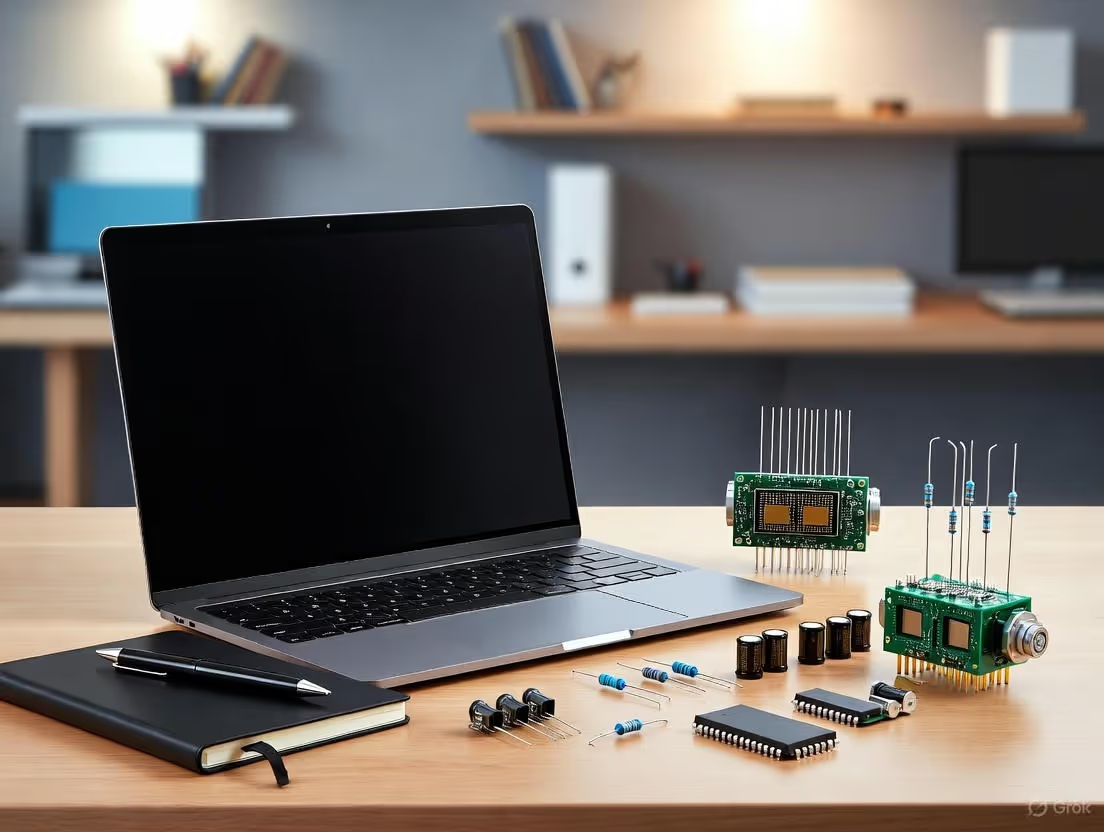
While HRV is a powerhouse metric, it doesn’t tell the whole story alone. Relying on a single data stream is like trying to understand a symphony by listening to only the violins. The latest generation of wearable stress trackers employs a strategy known as sensor fusion—the sophisticated integration of multiple biometric sensors to create a far more accurate, nuanced, and contextual picture of your physiological state.
The Multi-Sensor Toolkit:
The Power of Contextual Layering:
Sensor fusion is where raw data becomes meaningful insight. The algorithm doesn't just see a dip in HRV; it sees a dip in HRV while you are motionless (suggesting mental stress), combined with a slight elevation in skin temperature and restless motion at night. This layered picture strongly points to psychological strain impacting sleep quality, rather than, say, physical fatigue from exercise.
For example, a wearable might observe:
This multi-dimensional analysis drastically reduces false positives and provides actionable direction. It transforms the device from a simple reporter of events into an intelligent interpreter of your body's complex language. This commitment to deep, multi-faceted understanding is at the heart of our philosophy, and you can read our complete guide on how we integrate these technologies for holistic wellness.
Sensors collect the dots; algorithms connect them into a coherent, personal picture. This is the most proprietary and sophisticated layer of wearable stress technology. After sensor fusion aggregates the raw biometric streams, machine learning models and heuristic algorithms go to work, performing several critical functions:
1. Noise Reduction and Signal Integrity.
First, the algorithm must be an exceptional cleaner. Motion artifact is the nemesis of optical biometrics. The algorithms use data from the accelerometer to identify and filter out periods of high movement that corrupt PPG signals. They distinguish between a valid heart pulse and noise caused by you gesturing while talking or adjusting your device.
2. Baseline Establishment and Dynamic Personalization.
This is where the science moves from general to profoundly personal. Your healthy HRV is unique to you and can be vastly different from another person's. Algorithms analyze your data over weeks—typically focusing on your deepest sleep period, when external influences are minimal—to establish your personal baselines for HRV, resting heart rate, temperature, and more. All future readings are interpreted relative to your normal, not a population average. This is crucial, as a "low" score for one person might be another's "high."
3. State Detection and Classification.
Using the contextual, multi-sensor data, the algorithm classifies your physiological state into categories. Common classifications include:
4. Predictive Insights and Trend Analysis.
The most advanced systems don't just report the past; they hint at the future. By analyzing long-term trends against your baselines, algorithms can identify subtle downward drifts in recovery metrics that often precede overt illness, overtraining, or burnout. They can learn the impact specific activities have on you—for instance, how drinking alcohol after 8 PM reliably crushes your deep sleep, or how a 20-minute afternoon walk improves your next-morning HRV.
This algorithmic brain is what separates a $30 basic fitness tracker from a true wellness device. It’s the silent, digital coach learning the unique patterns of your biology to provide feedback that is genuinely relevant to your life. For answers to common questions about how this process works in practice, our FAQ page provides detailed support.
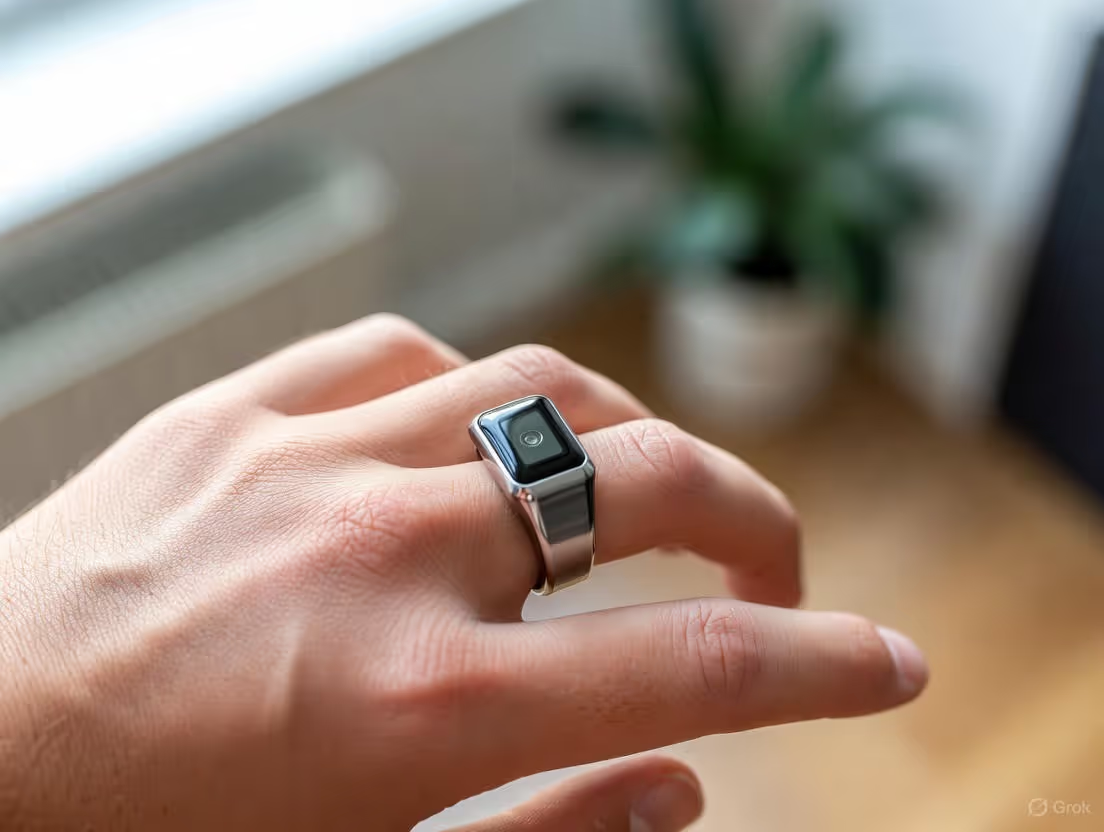
The wearable market has been dominated by wrist-worn devices for over a decade. However, for continuous, medical-grade physiological monitoring—especially for stress—the finger presents a superior vantage point. The emergence of the smart ring, like Oxyzen, isn't just an aesthetic choice; it's a biomechanical advantage.
1. Superior Signal Quality and Consistency.
The arteries in the finger (particularly the palmar digital arteries) are closer to the skin's surface and are less obstructed by bone and tendon than the radial artery in the wrist. This allows the optical PPG sensor to get a stronger, cleaner blood flow signal with less power. Furthermore, the ring form factor naturally maintains consistent skin contact and pressure, which is critical for reliable readings. A watch can shift and slide on the wrist, especially during sleep, leading to data gaps or motion noise. A properly fitted ring stays in place.
2. The Ideal Location for Nighttime Monitoring.
Stress recovery is deeply tied to sleep quality, and the night is the most important window for collecting baseline physiological data. During sleep, we are relatively still, and our nervous system, if given the chance, enters its deepest states of recovery. The wrist is a highly mobile joint, even in sleep. Tucking hands under pillows or changing position can easily block a watch's sensors. The finger, however, is far less prone to these obstructions, leading to more complete, uninterrupted sleep data—which directly translates to more accurate daily readiness and recovery scores.
3. Reducing the "Observer Effect."
In physics, the "observer effect" notes that the act of observation can alter the phenomenon being observed. In wearables, a conspicuous device can itself be a source of distraction or social stress. A smart ring is discreet, often indistinguishable from ordinary jewelry. This allows for truly continuous, 24/7 monitoring without the device itself influencing your behavior or comfort, leading to more natural and authentic biometric data.
4. All-Day Wearability and Focus.
By moving from the wrist to the finger, the device also makes a philosophical shift. It is not designed for constant screen interaction. It is a passive data-gathering tool focused purely on your body's output, freeing you from the notification-driven anxiety that can be associated with smartwatches. It works in the background, empowering you to live your life without digital distraction, while it faithfully records the story your body is telling. This focus on elegant, unobtrusive technology is central to our story and vision.
With the hardware and software working in concert, what does the output actually look like in daily life? Modern wearables paint a dynamic, living map of your nervous system throughout the 24-hour cycle. Understanding these signatures turns abstract data into a narrative of your day.
The Daily Rhythm: A Healthy Signature.
In a well-regulated system, you should see a clear circadian wave in your data:
Recognizing Patterns of Dysregulation.
When chronic stress or poor habits take hold, this smooth wave becomes jagged or flattened:
By visualizing these patterns on a timeline, you gain unprecedented self-awareness. You can literally see the physiological cost of a stressful meeting, the restorative power of a lunchtime walk, or the impact of a late coffee. This biofeedback loop is transformative, moving you from being a passenger in your body to an informed pilot. To see how this data integration looks in a seamless user experience, visit the Oxyzen homepage.

Sleep is not merely a break from wakefulness; it is the non-negotiable maintenance window for your brain and body, and the most potent antidote to stress. Wearable technology has made the intricate physiology of sleep accessible, revealing why poor sleep is both a cause and a consequence of stress in a vicious, self-reinforcing cycle.
How Stress Sabotages Sleep Architecture:
When you go to bed with a sympathetically dominant nervous system (high stress), you disrupt the natural progression through sleep stages:
How Wearables Quantify Sleep Quality:
Devices track the biomarkers of this disruption:
The Vicious Cycle and the Path Out.
Here lies the nexus: Stress → Poor Sleep → Lower HRV & Higher Resting HR → Reduced Resilience to Next Day's Stress → More Stress. It's a downward spiral.
Wearables break this cycle by providing an objective audit. You no longer have to guess with "I slept poorly." You can see that despite 8 hours in bed, you only garnered 45 minutes of deep sleep and your heart rate never dropped below 65. This data provides the "why" behind daytime fatigue and irritability. More importantly, it empowers you to test solutions: a cooler room, a consistent bedtime, a digital curfew, or a mindfulness practice—and see their direct, quantitative impact on your sleep architecture the very next night. This turns sleep hygiene from a list of generic tips into a personalized, iterative science experiment on yourself.
Data is inert without translation into action. The ultimate goal of wearable stress tracking is not to create a generation of people obsessed with their metrics, but to forge a powerful biofeedback loop that drives positive, sustainable behavioral change. This is where the technology transitions from a diagnostic tool to a therapeutic partner.
Closing the Loop: The Biofeedback Mechanism.
Traditional biofeedback requires hooked-up sessions in a clinic. Wearables democratize this. The process is simple yet profound:
Personalized, Contextualized Recommendations.
Advanced platforms use your historical data to offer tailored nudges:
These aren't generic wellness platitudes; they are hyper-contextual suggestions based on your body's current and historical state. You begin to build a personalized library of what works for you: Is it box breathing or a nature soundscape? A brisk walk or gentle stretching?
Building Self-Efficacy and Resilience.
Over time, this process builds something more valuable than perfect data: self-efficacy. You move from feeling at the mercy of your stress to understanding its triggers and your toolbox for managing it. You start to pre-emptively engage calming practices because you know their value. The wearable becomes less of a crutch as the learned behaviors become ingrained habits. This journey from data-dependence to embodied wisdom is the true endpoint of the technology. For a wealth of resources on implementing these actionable strategies, our blog offers continuous guidance and deep dives.
As with any powerful technology, a clear-eyed view demands an understanding of its limitations and the ethical landscape it inhabits. Wearable stress tracking is a tool, not a truth, and its responsible use requires nuance.
Technical and Physiological Limitations:
Ethical and Privacy Imperatives:
Acknowledging these boundaries is not a critique of the technology, but a blueprint for its mature and empowering use. The goal is informed, balanced engagement—using data as a compassionate guide, not a punitive judge. We believe in this principled approach, which is why we are open about our practices and values, details of which you can find on our About Us page.
The science behind wearable stress tracking is not static; it is accelerating toward a future where the technology becomes predictive, preventative, and seamlessly integrated into holistic healthcare. We are on the cusp of moving from describing the present to forecasting the future of our health.
From Descriptive to Predictive and Prescriptive.
The next evolution lies in leveraging longer data timelines (months and years) and more sophisticated AI to identify precursory patterns:
Integration with the Digital and Clinical Healthcare Ecosystem.
The true potential unlocks when this rich, continuous biometric stream flows (with user consent) into a larger health picture:
The Holistic Dashboard for Human Optimization.
Ultimately, the future points toward a unified, AI-powered dashboard that synthesizes data from your ring, your nutrition app, your workout logs, and even your calendar. It wouldn't just tell you you're stressed; it would cross-reference and suggest: "Your stress spiked today. You have a critical meeting tomorrow at 10 AM. Based on your historical data, a 20-minute meditation tonight at 9 PM and a 7-minute morning gratitude journaling session will optimize your readiness score for that event by 22%."
This is the promise: technology that doesn't just quantify our lives, but actively helps us design a healthier, more resilient life, grounded in the deep, personal science of our own bodies.
We stand at a remarkable inflection point in human history, where the age-old quest for self-knowledge has merged with cutting-edge biosensing and artificial intelligence. Wearable stress tracking technology, as we’ve explored, is far more than a digital nanny scolding us for poor sleep. It is a portal into the deepest, most automatic functions of our being—a real-time dialogue with our own physiology. From the elegant dance of the autonomic nervous system to the subtle poetry of heart rate variability, these devices translate the silent language of strain and recovery into a visual, actionable narrative.
This first portion of our exploration has laid the foundational science: the why and how these devices work. We've seen how sensor fusion creates a multi-dimensional portrait of our state, how algorithms personalize the data into wisdom, and how the discreet form of a smart ring like Oxyzen offers a uniquely powerful vantage point. We've acknowledged the critical biofeedback loop that turns awareness into agency and confronted the ethical imperatives that must guide this field.
But the story doesn't end with understanding our present state. The true revolution lies in using this knowledge to proactively shape our future resilience. The final chapters of this exploration will delve into the practical application of this science—transforming data into a living, breathing blueprint for a healthier life. We will move from theory to practice, from sensor to lifestyle.
We will investigate how to establish your personal biometric baselines and interpret the daily fluctuations not as judgments, but as feedback. We’ll build a modern toolkit for nervous system regulation, exploring evidence-based techniques for stress resilience that go far beyond generic advice. We will examine the symbiotic relationship between physical exertion and mental recovery, and provide a framework for designing your day according to your body’s unique rhythms.
Furthermore, we will explore the cutting-edge frontier where this data integrates with professional healthcare, nutrition, and cognitive training. We’ll tackle the long-term journey of building stress resilience, ensuring the technology serves as a scaffold for permanent habit change, not a permanent crutch. Finally, we will gaze into the near future, where this technology becomes predictive, prescriptive, and seamlessly woven into the fabric of proactive health management.
The journey from stressed to resilient is not a straight line, but a map is now available. The following sections are your guide to reading it.
Before you can navigate, you need to know your starting coordinates. In the world of physiological monitoring, this is your personal baseline—the unique, dynamic set of norms against which all daily and weekly data is compared. Your baseline is not a fixed number; it’s a living range established during your body’s most reliable state of recovery: deep sleep. Understanding how to establish and interpret this baseline is the first critical step in moving from confused data consumer to empowered self-scientist.
The "Why" of Baselines: Abolishing Comparison.
The single most important concept is this: Your data is only meaningful in relation to you. A resting heart rate of 58 might be excellent for one person and a sign of fatigue for another whose normal is 52. An HRV of 40 ms might be a lifetime high for someone and a concerning low for another. Population averages are irrelevant. Your baseline personalizes the science, transforming generalized biomarkers into your personal vital signs.
How Your Device Establishes Your Baseline.
Sophisticated wearables automatically calculate this for you, typically following this process:
Your Role in Baseline Integrity: The Trusted Data Pact.
Your device needs clean data to establish an accurate baseline. You are a partner in this process. Key responsibilities include:
Interpreting Daily Scores: Readiness, Recovery, and Stress.
With a baseline established, your daily scores gain profound meaning:
By respecting and understanding your baseline, you stop chasing arbitrary scores and start listening to your body’s unique language. This foundational knowledge turns the flood of data into a coherent story about you. For practical guidance on getting the most accurate baseline data with your device, our comprehensive FAQ page offers detailed support and tips.
Armed with your personalized data, the next step is action. The market is saturated with wellness advice, but what actually works to shift those physiological metrics? The modern resilience toolkit is grounded in practices proven to directly influence the autonomic nervous system, increasing parasympathetic (rest-and-digest) tone and improving nervous system flexibility. Here, we move beyond generic "reduce stress" advice to targeted interventions you can test and validate with your own biometrics.
1. Resonance Frequency Breathing (Coherent Breathing).
This is arguably the most potent, direct, and rapid tool for HRV biofeedback. Unlike generic deep breathing, Resonance Frequency Breathing involves breathing at a very specific, slow pace—typically 5 to 6 breaths per minute (an inhale of 5 seconds, exhale of 5 seconds). This rhythm naturally synchronizes your heart rate, blood pressure, and respiratory cycles, a state known as cardiorespiratory coherence. This maximizes parasympathetic influence and creates a dramatic, immediate spike in HRV.
2. Physiological Sighs: The Two-Minute Reset.
Popularized by neuroscientist Dr. Andrew Huberman, the physiological sigh is a hardwired mechanism to rapidly reduce stress. It involves a double inhale through the nose (filling the lungs completely), followed by a long, slow exhale through the mouth. This pattern is exceptionally efficient at reinflating alveoli (tiny air sacs) in the lungs and offloading carbon dioxide, which directly signals the brain to reduce anxiety.
3. Non-Sleep Deep Rest (NSDR) & Yoga Nidra.
NSDR protocols, including guided Yoga Nidra ("yogic sleep"), are systematic practices that induce a state of profound relaxation while remaining conscious. They involve a body scan and conscious intention that actively dials down the sympathetic nervous system.
4. Cold Exposure & Controlled Thermoregulation.
Short, controlled exposure to cold (a 60-second cold shower at the end of your normal shower, or cold plunges) is a potent hormetic stressor. It forces a massive, acute sympathetic response followed by a powerful, overshooting parasympathetic rebound. Over time, this "trains" your ANS to be more adaptive and resilient.
5. Nature Immersion & "Awe" Walks.
This isn't just a leisurely stroll. Purposeful immersion in natural environments, especially those that evoke a sense of awe (a vast forest, a mountain vista, a coastline), has been shown to lower cortisol, reduce inflammatory markers, and increase parasympathetic activity more effectively than urban walks.
The Toolkit Mentality: Test, Validate, Personalize.
The key is to adopt a scientist's mindset. Don't just do a technique because it's trendy. Introduce one practice at a time for a week. Use your wearable to answer: Does my afternoon HRV improve after a week of resonance breathing? Does my sleep latency decrease with a nightly Yoga Nidra practice? Your body will give you the definitive answer, allowing you to build a toolkit that is genuinely effective for your unique physiology. For a continuously updated repository of research and techniques that impact these biomarkers, we invite you to explore our blog.
Physical activity is a double-edged sword for stress. It is both a potent stressor and the most powerful stimulus for adaptation and resilience. The difference lies in the dose, timing, and—most critically—the balance with recovery. Wearable data provides the precision to navigate this balance, transforming exercise from a generic "should do" into a finely tuned component of your stress resilience protocol.
Exercise as a Hormetic Stressor: The Dose-Response Curve.
Exercise is a deliberate, acute application of stress that, when followed by adequate recovery, makes your system stronger—a concept known as hormesis. It improves mitochondrial function, increases heart rate variability (long-term), enhances neuroplasticity, and builds physiological capacity. However, the relationship follows a curve: too little provides no benefit; the right dose provides maximum adaptation; too much leads to injury, burnout, and suppressed immunity (overtraining).
How Your Wearable Informs Your Movement Strategy:
The Critical Role of Low-Intensity "Recovery" Movement.
Not all movement is training. Low-intensity steady-state (LISS) activity—walking, easy cycling, gentle swimming—is arguably more important for stress management than intense workouts. It promotes blood flow, lymphatic drainage, and metabolic clearance without imposing a significant sympathetic load. It actively stimulates the parasympathetic nervous system during the activity.
The Non-Negotiable: Prioritizing Sleep After Exertion.
The adaptation from exercise occurs during sleep, particularly deep sleep. A hard workout followed by poor sleep is a net negative for stress and health. Your wearable makes this trade-off explicit. You can see if your intense evening gym session, while burning calories, is disrupting your sleep architecture and suppressing your next-day readiness. This insight might lead you to shift intense workouts to mornings or ensure a longer, more deliberate wind-down routine after evening exercise.
By using your biometrics to listen to your body’s response to movement, you move from a fixed, rigid schedule to a dynamic, responsive fitness strategy. This ensures exercise remains your ally in building stress resilience, not an unseen contributor to your allostatic load. The journey to this kind of personalized synergy is at the core of what we do at Oxyzen, and you can discover how our technology supports this balance.
Your physiology doesn't operate on a flat line; it follows powerful, predictable circadian rhythms governed by an internal master clock in your brain and peripheral clocks in every organ. Chronic stress and modern life (artificial light, erratic eating) disrupt these rhythms, leading to dysregulated cortisol, poor sleep, and metabolic dysfunction. Wearable data reveals your personal rhythm landscape, allowing you to design a day that works with your biology, not against it.
Mapping Your Personal Circadian Signature.
Your wearable tracks several outputs of your circadian system:
Designing Your "Biocompatible" Day:
Using this data, you can structure key activities to align with your natural peaks and troughs.
Morning (Leveraging the Cortisol Peak):
Afternoon (Navigating the Post-Lunch Dip):
Evening (The Sacred Wind-Down):
The Power of Consistency.
The single most effective circadian intervention is consistency—waking, eating, and sleeping at roughly the same times every day, even on weekends. Your wearable will reward this consistency with more stable, predictable, and resilient biometrics. It turns the abstract concept of a "routine" into a visually reinforced, bio-compatible lifestyle design. For more on building sustainable daily structures that honor your biology, our community shares their real-world successes and challenges at Oxyzen Testimonials.
Food is not just fuel; it is information that directly modulates inflammation, gut-brain communication, hormone production, and autonomic nervous system balance. While wearables don't (yet) measure blood glucose or micronutrients directly, they provide powerful proxy data on how your dietary choices impact your stress physiology and recovery. This allows you to move from dogmatic diets to a personalized "n=1" nutritional strategy.
The Stress-Nutrition Feedback Loop:
Chronic stress dysregulates digestion (via the SNS suppressing gut function) and can increase cravings for hyper-palatable, high-sugar/fat foods. Conversely, a diet high in processed foods and sugar promotes systemic inflammation and oxidative stress, which further activates the sympathetic nervous system and burdens recovery. It’s another vicious cycle your wearable can help you break.
Key Nutritional Levers Revealed Through Biometrics:
1. Meal Timing and Circadian Rhythm:
Your body metabolizes food differently across the 24-hour cycle. Eating late at night, especially large or heavy meals, conflicts with your body's evening priority of repair and detoxification.
2. The Inflammatory Response:
Certain foods can trigger low-grade, transient inflammation in sensitive individuals, which acts as a physiological stressor.
3. Blood Sugar Stability:
While continuous glucose monitors (CGMs) are the gold standard, your wearable can infer glucose-related stress through heart rate and HRV. Rapid spikes and crashes in blood glucose trigger sympathetic arousal and cortisol release.
4. Hydration Status:
Even mild dehydration increases heart rate as your body works harder to maintain blood pressure and circulation.
Implementing a Data-Informed Nutritional Audit:
The ultimate validation and application of personal biometrics lie in their integration with the broader healthcare ecosystem. We are transitioning from a reactive, symptom-based medical model to a proactive, data-informed model focused on prevention and optimization. Wearable stress and recovery data is poised to become a vital sign in this new paradigm, bridging the gap between the clinic and daily life.
From Episodic Snapshots to Continuous Streams.
Traditional medicine relies on episodic data: a blood pressure reading in a doctor's office (which can be elevated due to "white coat syndrome"), an annual cholesterol test, or a patient's subjective recall of their sleep and stress. Wearables provide continuous, real-world data that captures what happens in a patient's actual life, offering context that a single point in time cannot.
Practical Applications in Clinical Settings:
1. Cardiology and Hypertension Management:
2. Mental Health and Psychiatry:
3. Sleep Medicine:
4. Chronic Fatigue and Long COVID Management:
The Path Forward: Challenges and Opportunities.
For this integration to become mainstream, challenges remain: data standardization, clinician education, privacy-preserving data sharing platforms, and clear regulatory frameworks. However, the trajectory is clear. The future patient will arrive at appointments with a rich report of their life data, enabling truly collaborative, personalized care plans. The wearable becomes not just a wellness tool, but a node in a connected health network, empowering both the individual and the healthcare provider with unprecedented insight. To understand how one company is approaching this responsible integration, you can learn more about our mission and values.
The allure of quantified self can be intoxicating. The danger lies in swapping one source of anxiety (ignorance about our stress) for another (obsession with perfect scores). The ultimate goal of this technology is instrumental use: to leverage it as a temporary scaffold to build lasting, embodied habits and intuitive self-awareness, and then to set it aside or use it only for periodic check-ins. This is the long game of building sustainable resilience.
The Phases of the Wearable Journey:
Phase 1: Discovery and Awareness (Months 1-3).
This is the "aha!" phase. You see the direct impact of your lifestyle on your body for the first time. You learn your baselines, identify major stressors, and test initial interventions. Engagement is high, and dependency is natural as you build literacy.
Phase 2: Habit Formation and Experimentation (Months 3-12).
Using the biofeedback loop, you systematically build new routines. You solidify a wind-down ritual because you see it improves your deep sleep. You practice breathing because it reliably lowers your stress graph. The wearable provides positive reinforcement, wiring in the new habits. This is where most of the transformation occurs.
Phase 3: Integration and Embodiment (Year 1+).
The habits become automatic. You no longer need the graph to tell you you're stressed; you feel the early signs in your body and deploy your toolkit instinctively. Your relationship with the device changes. You might:
Avoiding the Pitfalls:
The End Goal: Sovereign Self-Awareness.
The wearable's greatest gift is not the data itself, but the education it provides. It teaches you the somatic vocabulary of your stress and calm. Over time, you internalize the dashboard. You become your own best sensor. The technology, in its ideal use case, works to make itself progressively less necessary for daily decision-making, having equipped you with an unshakable foundation of self-knowledge and self-regulation. For ongoing support and discussions on cultivating this healthy relationship with wellness technology, our community and blog resources are always available.
Your Trusted Sleep Advocate: Sleep Foundation — https://www.sleepfoundation.org
Discover a digital archive of scholarly articles: NIH — https://www.ncbi.nlm.nih.gov/
39 million citations for biomedical literature :PubMed — https://pubmed.ncbi.nlm.nih.gov/
Experts at Harvard Health Publishing covering a variety of health topics — https://www.health.harvard.edu/blog/
Every life deserves world class care :Cleveland Clinic - https://my.clevelandclinic.org/health
Wearable technology and the future of predictive health monitoring :MIT Technology Review — https://www.technologyreview.com/
Dedicated to the well-being of all people and guided by science :World Health Organization — https://www.who.int/news-room/
Psychological science and knowledge to benefit society and improve lives. :APA — https://www.apa.org/monitor/
Cutting-edge insights on human longevity and peak performance:
Lifespan Research — https://www.lifespan.io/
Global authority on exercise physiology, sports performance, and human recovery:
American College of Sports Medicine — https://www.acsm.org/
Neuroscience-driven guidance for better focus, sleep, and mental clarity:
Stanford Human Performance Lab — https://humanperformance.stanford.edu/
Evidence-based psychology and mind–body wellness resources:
Mayo Clinic — https://www.mayoclinic.org/healthy-lifestyle/
Data-backed research on emotional wellbeing, stress biology, and resilience:
American Institute of Stress — https://www.stress.org/


