


The Science of Mantra Meditation for Mental Calmness
Mantra meditation uses repetition of a word or phrase to focus the mind, which can reduce activity in the brain's default mode network (associated with worry).
Mantra meditation uses repetition of a word or phrase to focus the mind, which can reduce activity in the brain's default mode network (associated with worry).
%402x.svg)
In a world of endless notifications, relentless deadlines, and constant digital chatter, the pursuit of mental calmness feels less like a luxury and more like a survival skill. Our minds, evolutionarily primed to scan for threats, are now drowning in a sea of low-grade, chronic stress. The quest for a pause button—a way to steady the inner storm—has led millions to the ancient practice of meditation. Yet, for many, the instruction to "just sit and empty your mind" becomes an exercise in frustration, a silent battle with a thought cascade that refuses to cease.
This is where the power of the mantra emerges. Not as a mystical incantation, but as a precise, neurological tool. Mantra meditation offers a distinct, accessible pathway by giving the restless mind a single point of focus—a resonant sound, word, or phrase to return to, again and again. It transforms meditation from a passive state of trying to be blank into an active process of gentle, rhythmic anchoring.
But what is truly happening beneath the surface? Is the profound calm reported by practitioners from Tokyo to Toledo merely a placebo, a psychological trick? Or is there measurable, biological alchemy at work when we repeat a simple sound in silence?
Modern science, armed with fMRI scanners, EEG caps, and hormone assays, is now validating what contemplative traditions have known for millennia. The repetition of a mantra is not just a spiritual practice; it’s a direct intervention into the autonomic nervous system, a re-wiring of default brain networks, and a recalibration of our stress response. It’s a workout for the vagus nerve and a soothing balm for the amygdala.
This deep dive explores the compelling intersection of neuroscience, physiology, and ancient wisdom. We will dissect the mechanisms by which a whispered or silently repeated phrase can lower blood pressure, thicken the prefrontal cortex, and dissolve the neural loops of anxiety. This is not just theory; it’s a practical guide to understanding how you can harness this science to cultivate an unshakable core of mental calmness. And as we navigate this journey, we’ll also explore how modern technology, like the advanced sensors in a smart ring from Oxyzen, can provide real-time, objective feedback on your progress, moving meditation from a subjective feeling to a quantifiable science of self-improvement.

To understand the science, we must first appreciate the context. The practice of mantra is not a New Age fad but a cornerstone of human contemplative history, with roots sunk deep into the soil of multiple ancient cultures. The word "mantra" itself derives from Sanskrit, combining "manas" (mind) and "tra" (tool or instrument). Quite literally, it is an "instrument of the mind."
The earliest recorded use of mantras comes from the Vedic traditions of India, dating back over 3,500 years. The Rigveda, a collection of ancient hymns, is comprised of metrical mantras used in ritual and meditation. These were not arbitrary sounds; they were considered shabda (sacred sound), vibrations that held the very essence of cosmic reality. The primordial sound "Om" (or Aum) was understood as the vibrational source of all creation, the "unstruck sound" of the universe itself. Repeating it was a way to tune one’s individual consciousness back to its source.
This concept of sound as a fundamental creative force is a global phenomenon. In the Christian tradition, the "Logos" (the Word) is with God and is God. The practice of the Jesus Prayer ("Lord Jesus Christ, Son of God, have mercy on me") in Eastern Orthodoxy is a classic Christian mantra, designed to induce constant remembrance and inner stillness. In Islam, the 99 Names of Allah and the practice of Dhikr (remembrance through repetition) serve a similar purpose, focusing the heart and mind on the divine.
Tibetan Buddhism employs complex mantras, the most famous being "Om Mani Padme Hum," each syllable believed to purify a different realm of existence and negative emotion. In Transcendental Meditation (TM), popularized in the West by Maharishi Mahesh Yogi in the mid-20th century, practitioners are given a personalized, meaningless sound (a bija, or seed, mantra) to use as a vehicle to transcend thought.
What unites these diverse traditions is a shared, experiential understanding: the rhythmic, focused repetition of sound structures consciousness. It creates a container for the mind, preventing it from scattering. As the great yogi Paramahansa Yogananda described, "A mantra is a psychic vibration which tunes you in with a certain consciousness."
For thousands of years, the proof was in the personal, subjective experience of peace, insight, and connection. Today, we no longer have to rely solely on anecdote. We can peer inside the brain and body of a meditator and watch the mantra work its quiet magic, providing empirical evidence for this ancient instrument of calm. To see how modern practitioners are integrating this ancient wisdom with cutting-edge biofeedback, you can read about user experiences on our testimonials page.
Close your eyes for a moment, trying not to think. What happens? A grocery list appears. A replay of an awkward conversation from five years ago. A worry about a future meeting. This incessant, self-referential chatter is the hallmark of your brain’s Default Mode Network (DMN).
Discovered by neuroscientist Marcus Raichle in 2001, the DMN is a interconnected web of brain regions—including the medial prefrontal cortex, posterior cingulate cortex, and angular gyrus—that becomes most active when we are not focused on the outside world. It’s the brain’s "idle" or "background" setting. While it’s crucial for introspection, memory consolidation, and envisioning the future, its hyperactivity is strongly linked to anxiety, depression, and rumination. An overactive DMN is like a browser with too many tabs open, each telling a story about "me, my life, my problems."
This is where the mantra acts as a precise neurological intervention. Functional MRI (fMRI) studies on mantra-based meditation, including TM and others, show a consistent pattern: mantra repetition directly downregulates the activity of the Default Mode Network.
How does this work? The process involves two key cognitive actions:
Neurologically, you are strengthening the "top-down" regulatory circuits of the prefrontal cortex while weakening the "bottom-up" noise of the DMN. The mantra provides a neutral, non-emotional alternative anchor. Unlike focusing on the breath (which can be affected by anxiety), or a visual image (which can be complex), a simple sound or phrase offers a clean, repetitive stimulus that gives the mind just enough to do, so it can stop doing everything else.
Over time, this practice doesn’t just quiet the DMN during meditation. Studies suggest it leads to a trait change—a lasting reduction in baseline DMN activity. This means the background mental noise of your everyday life becomes quieter. The "me-monster" is tamed. You spend less time lost in anxious, repetitive thought loops and more time present in the actual moment. This foundational shift is the core of the mental calmness that mantra practice promises and that science is now able to map in vivid, neural detail.
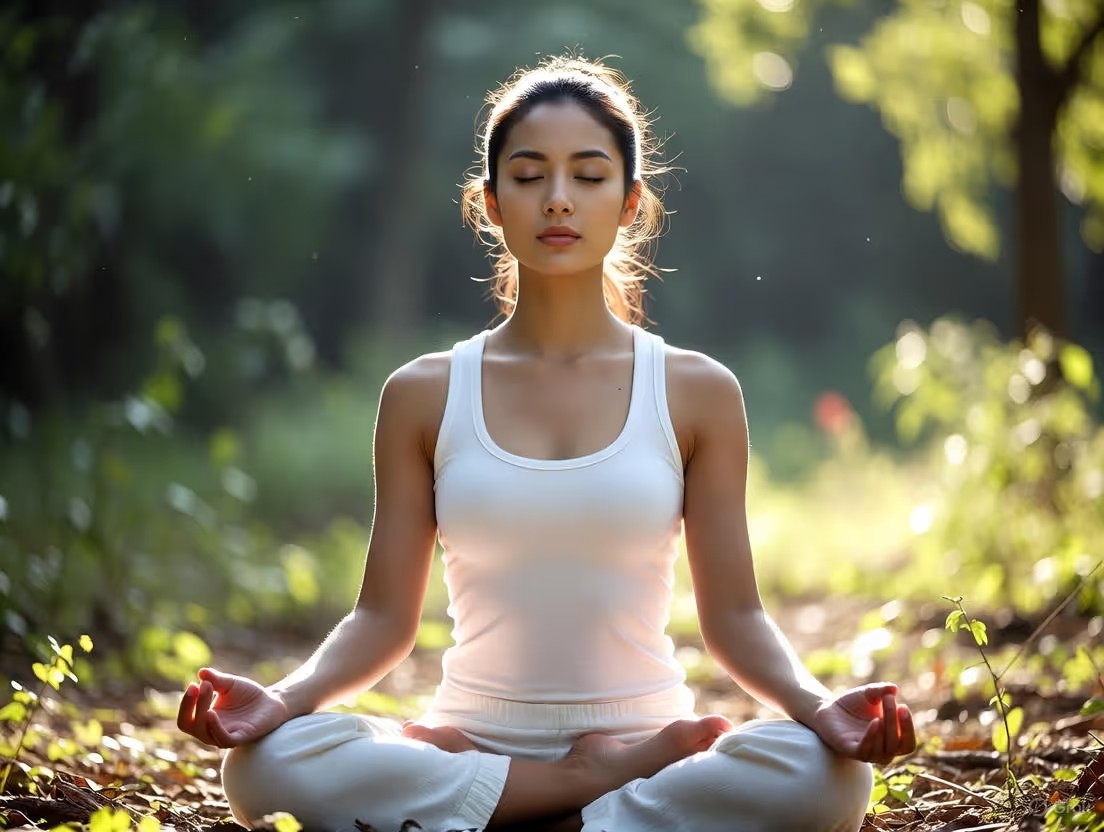
The calm you feel during mantra meditation isn't just "in your head" in the colloquial sense. It manifests as a palpable, physical sensation: a slowing heartbeat, deepening breath, and a release of muscular tension. This is the work of the autonomic nervous system (ANS) transitioning from sympathetic dominance ("fight-or-flight") to parasympathetic dominance ("rest-and-digest"). The master conductor of this transition is the vagus nerve.
The vagus nerve (cranial nerve X) is the longest and most complex of the cranial nerves, a meandering superhighway connecting your brainstem to your heart, lungs, gut, and other major organs. It is the primary component of the parasympathetic nervous system. Vagal tone refers to the activity of this nerve; high vagal tone is associated with better emotional regulation, lower inflammation, and greater resilience to stress.
Here’s the fascinating connection: the act of vocalizing or sub-vocalizing a mantra directly stimulates the vagus nerve. The nerve has branches that interface with the larynx, pharynx, and vocal cords. The gentle vibrations created in the throat and chest during mantra repetition—especially with elongated sounds like "Om," "Ah," or "Hu"—send steady, rhythmic signals up the vagus nerve to the brain.
This is a biological feedback loop of calm. The brain interprets these steady signals as a state of safety, which further promotes parasympathetic activity. The result is a cascade of physiological changes:
In essence, chanting or silently repeating a mantra is like giving your vagus nerve a gentle, rhythmic massage. It’s a form of "toning" the nerve, strengthening its ability to act as a brake on the stress response. This explains why, after a session of mantra meditation, you don’t just feel psychologically quieter; you feel physically settled, as if your entire body has been signed out of a state of high alert. For those tracking their physiological journey to calm, devices that monitor HRV, like the Oxyzen smart ring, can provide invaluable, objective data on how your mantra practice is directly improving your body's stress resilience over time.
While vocalized chanting has clear vibrational benefits, a significant portion of modern mantra practice, particularly in traditions like Transcendental Meditation, is conducted in silence. The mantra becomes a faint, sub-vocalized thought-stream. Does this silent repetition still hold power? Neuroscience confirms that it does, perhaps even more profoundly in certain aspects.
When you repeat a mantra mentally, you engage in a precise form of inner speech. This activates the brain’s auditory cortex (you "hear" the sound in your mind) and Broca’s area (associated with speech production), even though your vocal cords are still. It’s a full-brain rehearsal of sound without the physical output.
This silent, internal focus has several unique advantages for cultivating mental calmness:
Research using electroencephalography (EEG) to study silent mantra meditation shows a distinct brainwave pattern: an increase in alpha waves (associated with relaxed, wakeful awareness) and, in experienced practitioners, theta waves (associated with deep meditation, creativity, and the hypnagogic state between wakefulness and sleep). This alpha-theta state is a neuro-signature of the deeply relaxed, yet alert, calm that is the hallmark of effective meditation.
The silent mantra thus becomes a supremely efficient tool. It uses the brain’s own machinery of inner speech to create a self-contained, self-reinforcing loop of focus that directly antagonizes the chaotic inner dialogue of the Default Mode Network, all while signaling the body to enter a profound state of rest. It proves that the power of the mantra lies not just in its sound, but in the intentional, rhythmic structure it imposes on the flow of consciousness itself.
With the science established, a practical question arises: what mantra should I use? The choice can feel overwhelming, shrouded in mystery or commercialized by various schools. From a scientific and pragmatic standpoint, we can demystify this and identify what makes an effective mantra for generating mental calmness.
First, let's categorize the main types:
From a neurological perspective, the ideal mantra for calmness has specific characteristics:
1. Phonetic Quality: The Power of "M" and Vowel Sounds
Linguists and spiritual traditions have long noted the calming effect of certain phonemes. The nasal consonant "M" (as in Om, Om Namah Shivaya, Amen, Ameen) creates a humming vibration when vocalized that strongly stimulates the vagus nerve via the sinus cavities and upper palate. Long vowel sounds ("Ah," "Oh," "Eee") also promote extended exhalation and smooth, resonant vibration. A mantra that naturally elongates the breath is inherently calming.
2. Meaning vs. Meaninglessness
This is a key consideration.
3. Rhythm and Length
A good mantra has a natural, rhythmic cadence that syncs with the breath. "So" on the inhalation, "Hum" on the exhalation. "Om" stretched across a full breath. It should be long enough to occupy the mind's phonological loop but short enough to be effortlessly remembered and repeated.
Recommendation for Beginners: Start simple. The universal "So Hum" ("I am That") is excellent—it’s phonetically resonant, aligns beautifully with the breath, and is used across traditions. Alternatively, a simple "Om" repeated with a long, vibratory exhalation is profoundly effective. The most important factor is not the "secret power" of a specific mantra, but the consistency and intention with which you use it. The neural and physiological benefits are generated by the process of focused, repetitive attention, not by a magical syllable. For a deeper exploration of different techniques and their impacts, you can always explore our blog for related resources.
Knowing the theory is one thing; applying it is another. Let’s translate the science into a practical, step-by-step protocol. Think of this not as a spiritual exercise, but as a systematic training regimen for your nervous system.
Step 1: Posture & Preliminary Settling (Priming the System)
Sit comfortably, spine relatively upright to allow for easy diaphragmatic breathing. Close your eyes. Take 5-10 deep, slow breaths. This initial volitional act signals the brain that a state change is imminent. Feel the body settling into the chair or cushion. This step begins the shift from sympathetic to parasympathetic arousal.
Step 2: Initiate the Mantra (Engaging the Prefrontal Cortex)
Begin to repeat your chosen mantra. You can start by whispering it aloud for a minute to feel its vibration, then transition to silent, mental repetition. This act of choosing to place attention on the mantra is executed by the dorsolateral prefrontal cortex (dlPFC). You have now set your neurological anchor.
Step 3: The Cycle of Attention/Wandering/Return (The Core Training)
Within 10-20 seconds, your mind will wander. You’ll start planning dinner, reliving an argument, or wondering if you’re doing it right. This is not failure; this is the critical moment of exercise.
Step 4: Deepening (The Vagal Shift)
As you continue this cycle, the repetitive, rhythmic nature of the mantra starts to dominate. The psychological space between "wandering" and "noticing" shortens. The body follows the mind’s lead: the breath slows and deepens, heart rate steadies. This is the vagus nerve taking over, entrained by the rhythm of the practice. You may feel a wave of physical relaxation.
Step 5: Conclusion & Integration (Consolidating the State)
After your allotted time (start with 10-15 minutes), consciously stop repeating the mantra. Sit for another minute in the silence you’ve cultivated. Notice the quality of your mind and body. Then, slowly open your eyes and gently re-engage with the room. This integration phase helps the brain associate the calm state with your normal waking environment, promoting neuroplasticity that extends beyond the meditation session.
The key is to understand that the "goal" is not to stop thoughts, but to faithfully engage in this neurological cycle of focus-wander-return. It is in this faithful returning that the muscle of attention is built and the calm is forged.

For the scientifically-minded or data-driven individual, a common question persists: "How do I know it's working?" While the subjective feeling of calm is a valid metric, the 21st century offers something our ancient predecessors did not have: quantifiable, personal biometric data. This transforms mantra meditation from a purely introspective art into an observable science of self-optimization.
Wearable technology, particularly advanced devices worn on the finger like the Oxyzen smart ring, provides real-time, clinical-grade insights into your physiological state before, during, and after your mantra practice. Three key metrics are paramount:
1. Heart Rate Variability (HRV): The Gold Standard of Calm
As mentioned, HRV is the most direct non-invasive measure of autonomic nervous system balance and vagal tone. What to look for: During an effective mantra session, you should see a clear, gradual increase in your HRV. The chart will show less erratic variation and a smoother, elevated pattern, indicating strong parasympathetic (rest-and-digest) activation. Over weeks and months of consistent practice, your baseline HRV (measured during sleep or deep rest) should trend upward, indicating a fundamental improvement in your nervous system's resilience.
2. Resting Heart Rate (RHR): The Body's Idle Speed
A lower resting heart rate generally indicates better cardiovascular fitness and efficient autonomic regulation. What to look for: During your meditation, you should observe a noticeable drop in your real-time heart rate—a dip of 5-15 beats per minute is common as you relax. Tracking your nightly RHR over time can show a long-term decrease, a tangible sign of your body existing in a less stressed state.
3. Respiratory Rate (RR): The Breath of Calm
The breath is the bridge between the voluntary and autonomic nervous systems. What to look for: Your device should show a slowing of respiratory rate from a typical 12-20 breaths per minute down to 6-10 breaths per minute during deep meditation. More importantly, it can show the breath becoming more regular and sinusoidal, losing the jagged peaks of anxious breathing.
The Feedback Loop: This data creates a powerful biofeedback loop. After a session, you can review the graphs and concretely see: "When I focused on my mantra at the 5-minute mark, my HRV spiked and my heart rate dropped." This reinforces the practice, motivates consistency, and can even help you refine your technique. You learn what mental approach—perhaps a softer focus versus a rigid concentration—yields the best physiological results for you.
It dispels doubt with data. On a day you feel distracted and think the session was "bad," the biometrics might reveal you still achieved a significant physiological relaxation response. Conversely, it can highlight when external factors like poor sleep or caffeine are undermining your practice. This objective mirror is at the heart of modern, personalized wellness, blending ancient wisdom with cutting-edge technology to guide you toward measurable calm. For questions on how this technology integrates with practices like meditation, our FAQ page offers detailed support.
The true test of any practice is its impact on the messy, demanding reality of daily life. The scientific literature on mantra-based meditation extends far beyond lab measurements, documenting profound benefits in clinical and real-world settings. This isn't just for ascetics on mountain tops; it's a proven toolkit for modern psychological challenges.
1. Anxiety & Stress Reduction: Turning Down the Volume on Worry
Randomized controlled trials have consistently shown that practices like Transcendental Meditation (TM) significantly reduce symptoms of anxiety, often outperforming other relaxation techniques. The mechanism is clear: by downregulating the amygdala (the brain's fear center) and strengthening prefrontal regulation, mantras interrupt the catastrophic thought loops that fuel anxiety. It doesn't eliminate stress, but it dramatically increases the "space" between a stressor and your reaction, allowing for a calmer, more chosen response.
2. Enhanced Focus and Cognitive Function: Strengthening the Mental Muscle
The repeated cycle of attention-wandering-return is a core workout for the brain's attention networks. Studies show that mantra meditators exhibit improved performance on tasks requiring sustained attention (vigilance) and cognitive flexibility (the ability to switch between tasks). By regularly practicing disengagement from the distracting DMN, you are better able to disengage from distractions at work or while studying, maintaining a "laser focus" for longer periods.
3. Emotional Regulation and Resilience: The Buffer Against Reactivity
Research links mantra practice to increased thickness in the prefrontal cortex and greater connectivity between the PFC and the amygdala. This translates to improved emotional regulation. You become less likely to be hijacked by sudden anger, frustration, or sadness. Instead of being the emotion, you become the observer of the emotion, allowing it to pass through without commanding your behavior. This builds psychological resilience, the ability to bounce back from setbacks.
4. Improved Sleep: Quieting the Mind for Rest
Insomnia is often fueled by a hyperactive DMN—the "monkey mind" that won't stop swinging at night. The mental discipline of a mantra provides a perfect alternative. Silently repeating a calming mantra in bed pushes out anxious, ruminative thoughts. It also activates the parasympathetic nervous system, creating the physiological state conducive to sleep. Clinical studies have found mantra-based practices effective in reducing sleep latency (time to fall asleep) and improving sleep quality.
5. Physiological Health Markers: The Body Keeps the Score
The benefits cascade into tangible physical health:
For the modern professional, parent, or student, this evidence paints a compelling picture. Mantra meditation is a scalable, efficient intervention that directly targets the core dysfunctions of our high-stress era: distraction, emotional volatility, and physiological wear-and-tear. It builds the inner infrastructure for not just surviving modern life, but thriving within it with a steady, unwavering calm.
Even with the best intentions and understanding, the path of consistent practice is rarely linear. Understanding the neurological and psychological hurdles can help you normalize the struggles and develop strategies to overcome them.
Challenge 1: "I Can't Stop Thinking!"
Challenge 2: Falling Asleep
Challenge 3: Impatience & Boredom
Challenge 4: Doubt & Questioning Efficacy
Challenge 5: Finding Time
Remember, the challenges are part of the process. Each time you sit down despite resistance, you are strengthening the neural circuits for discipline and self-regulation. The journey itself—with all its stumbles and returns—is the transformative work.
While the universal goal is calm, our needs can vary. The fascinating field of "intonation therapy" and neurolinguistics suggests that different sound frequencies and phonetic structures can subtly bias the mind-body system toward specific states. You can tailor your mantra practice like a precision tool.
For Acute Anxiety & Panic: The Grounding Mantra
For Anger & Frustration: The Cooling Mantra
For Grief & Sadness: The Heart-Opening Mantra
For Mental Fog & Lack of Focus: The Clarifying Mantra
For Cultivating Loving-Kindness (Metta): The Phrase Mantra
How to Use This: Your primary daily practice can use your core, neutral mantra (e.g., So Hum). Then, keep these specialized tools in your mental toolkit for specific moments. Notice how shifting the sound changes the felt sense in your body and mind. This personalization makes the practice deeply responsive to your lived experience. For more personalized guidance on integrating such practices with technology, learning more about Oxyzen's approach can be insightful.

As we stand at the confluence of ancient wisdom and exponential technology, the future of cultivating mental calmness is moving toward hyper-personalized, bio-digital feedback loops. The mantra is not being replaced; it is being enhanced and understood with unprecedented depth.
1. Real-Time Neurofeedback:
Imagine wearing a lightweight EEG headband during your mantra meditation. An app shows your brainwave activity in real-time. You can see the exact moment your alpha waves (calm focus) spike as you settle into the mantra, and see theta waves emerge as you deepen. You can even train yourself to increase these waves through the mantra, turning meditation into an interactive brain-training game with direct visual reinforcement.
2. AI-Powered Mantra Suggestions:
Future wellness platforms may analyze your biometric data (sleep stress, HRV trends, activity levels) alongside your journal entries about mood. An AI could then suggest: "Your data indicates high cognitive fatigue. A grounding mantra like 'Lam' for 12 minutes this evening is recommended to shift your nervous system into recovery mode." The mantra becomes a prescribed, data-informed intervention.
3. Haptic Feedback Integration:
Your smart ring or other wearable could use gentle vibrations as a tactile anchor. When it detects stress (via elevated heart rate and low HRV), it could pulse rhythmically, prompting you to synchronize your silent mantra with its beat, guiding you back to calm through a multi-sensory channel.
4. Validating Traditional Knowledge:
Advanced research will continue to map the specific neurological and physiological effects of different traditional mantras. Why does "Om" have such a universal effect? Which phonetic structures are most effective for vagus nerve stimulation? Science will provide the "how" behind the traditional "why," creating a validated lexicon of sound-as-medicine.
In this future, your practice is no longer guesswork. It's a collaborative dance between your intention, the ancient tool of the mantra, and a suite of technologies that act as mirrors and guides. The core remains the same: the human capacity for focused attention and self-regulation. But the path to mastering that capacity is becoming illuminated with data, making the profound calmness once reserved for dedicated monks accessible, understandable, and achievable for anyone committed to the journey of inner peace. This vision of integrated well-being is at the heart of our company's story and mission.
The profound sense of peace that follows a deep mantra meditation session is not just a psychological state; it is a specific biochemical signature in the body. When we engage in this focused repetition, we are essentially conducting a sophisticated orchestra of hormones and neurotransmitters, shifting our internal chemistry from stress to serenity. Understanding this molecular dance demystifies the "feel-good" effect and underscores mantra practice as a direct intervention in our body's pharmacy.
The Stress Chemistry: Cortisol and Norepinephrine
The modern stress response floods our system with cortisol (the long-acting stress hormone) and norepinephrine (an adrenaline-like neurotransmitter). Chronically elevated cortisol is linked to anxiety, weight gain, immune suppression, and cognitive impairment. It keeps the body in a catabolic (breakdown) state.
Mantra meditation acts as a potent cortisol regulator. Multiple studies, including research published in Health Psychology, show that regular practitioners of techniques like Transcendental Meditation exhibit significantly lower baseline cortisol levels and a more adaptive cortisol awakening response. The rhythmic, parasympathetic activation induced by mantra repetition signals the hypothalamic-pituitary-adrenal (HPA) axis to stand down, halting the flood of stress chemicals at the source. You are literally teaching your glands to produce less of the anxiety molecule.
The Calm Chemistry: GABA and Serotonin
As cortisol recedes, the neurotransmitters of calm take center stage.
The Reward and Connection Chemistry: Endorphins and Oxytocin
The benefits extend beyond mere stress reduction to active pleasure and connection.
The Neuromodulator of Focus: Dopamine
Dopamine is not just about pleasure; it's crucial for motivation, focus, and reward-based learning. The cycle of attention-wandering-return in mantra practice engages dopamine systems. Successfully noticing your mind has wandered (a moment of meta-awareness) and gently returning to the mantra can create a small, internal reward signal. Over time, this trains the brain to find the act of focused attention itself rewarding, not just the external outcomes. This recalibration is key to overcoming the addiction to digital distraction and building sustainable concentration.
In essence, a mantra meditation session is a biochemical recalibration ritual. You are moving your internal environment from a catabolic, stress-dominated state (high cortisol/norepinephrine) to an anabolic, restorative, and growth-oriented state (balanced GABA/serotonin, with boosts of endorphins/oxytocin). This is the molecular foundation of the mental calmness, emotional resilience, and physical vitality that practitioners experience. It proves that the peace you feel is real, measurable, and manufactured by your own biology, activated by the simple, intentional repetition of sound.
The ultimate goal of mantra practice is not to create a separate, peaceful experience for 20 minutes a day, but to let that calm infiltrate and transform your entire waking life. This integration is where practice becomes wisdom and technique becomes trait. The mantra evolves from a formal exercise into a portable anchor of awareness, a thread of mindfulness woven through the fabric of your day.
The Micro-Mantra: The One-Breath Reset
You don’t need 20 minutes to access the nervous system benefits. The one-breath mantra is your secret weapon against daily stressors.
The Walking Mantra: Dynamic Meditation
Transform mundane walks—to your car, during a lunch break, walking the dog—into moving meditation.
The Listening Mantra: Cultivating Deep Presence
Use the mantra to become a better listener, a superpower in both personal and professional life.
The Sleep Transition Mantra: From Doing to Being
The space between waking and sleep is prime territory for anxious rumination. A mantra is the perfect bridge.
Creating Contextual Cues: Habit Stacking for Integration
Link your mantra to existing daily habits to build consistency.
Integration is the art of making the calm contagious. It ensures the peace cultivated in solitude doesn't evaporate at the first sign of external chaos but instead becomes the stable ground from which you operate. By weaving the mantra into these daily interludes, you are conducting continuous, low-dose nervous system tuning, maintaining a baseline of regulated calm that makes the formal sitting practice even deeper and more effective. For more ideas on building sustainable wellness routines, our blog offers a wealth of practical resources.
The meditation landscape can be confusing, with various techniques promising similar benefits. How does mantra meditation specifically compare to other popular forms, particularly mindfulness (vipassana)? Understanding the differences helps you choose the right tool for your goal, and often reveals that they are complementary sides of the same coin.
Mantra Meditation (The Path of Focused Attention)
Mindfulness (Vipassana) Meditation (The Path of Open Monitoring)
A Synergistic Relationship:
In practice, these paths are not mutually exclusive but are deeply intertwined, especially in advanced practice.
Comparison with Other Techniques:
The most effective personal practice is often a hybrid. You might start with 10 minutes of mantra to settle and focus the mind, then transition to 10 minutes of open mindfulness. Or, you might use a mantra as your primary practice but bring mindful awareness to the gaps between repetitions. The key is to understand that mantra meditation is a powerful, specific tool on the broader contemplative spectrum—one that is particularly efficacious for rapidly inducing physiological calm and training a scattered mind to become one-pointed. This journey of finding the right practice is part of our founding story and vision for personalized well-being.
We've established that mantras work, but could some sounds be more effective than others? Delving into phonetics, the science of speech sounds, and the physics of vibration reveals that the structure of a mantra is not arbitrary. Certain sounds have inherent, physiological effects that can enhance the meditative experience, moving us from abstract repetition to conscious resonance.
The Anatomy of a Calming Sound: Nasals and Sonorants
Linguists classify sounds by how they are produced in the vocal tract. Two categories are particularly relevant:
The Primacy of "Om": A Case Study in Phonetic Power
"Om" (AUM) is considered the supreme bija mantra for a reason that transcends tradition. Let's break it down phonetically:
When chanted, "Om" systematically vibrates the entire vocal apparatus from the navel to the crown of the head. It is a full-spectrum sound bath for your body. Scientific studies measuring the sound waves of "Om" chanting show it produces a consistent, harmonic frequency pattern that can entrain brainwaves toward alpha states.
The Frequency Hypothesis: Entrainment and Resonance
The principle of entrainment states that powerful, rhythmic oscillations can cause less powerful ones to synchronize. A steady drumbeat can entrain heart rhythms; a calming, low-frequency sound can entrain brainwaves.
Practical Application: Crafting Your Sonic Experience
You don't need to be a linguist to benefit. Simply bring a curious awareness to the felt sense of your mantra.
Understanding this layer transforms mantra from a mental concept into a somatic experience. You are not just thinking a word; you are orchestrating a symphony of internal vibration designed to massage your nervous system into harmony. It is the science of using your own voice and mind as a tuning fork for calm. To understand how external vibrations and frequencies are studied in wellness tech, you can learn more about Oxyzen's research approach.
Mantra meditation is not a static skill you learn once; it is a lifelong journey with distinct phases of depth and understanding. Recognizing these stages can help you navigate plateaus, understand shifts in your experience, and maintain motivation as your practice evolves from a technique to a transformative way of being.
Phase 1: The Technique Phase (Weeks 1-3)
Phase 2: The Stabilization Phase (Months 1-6)
Phase 3: The Absorption Phase (6 Months - 2+ Years)
Phase 4: The Integration Phase (Ongoing)
Navigating Plateaus & Deepening Cues:
This journey is non-linear. You will cycle through these phases. The key is consistent, intentioned practice without attachment to results. Over a lifetime, the mantra becomes less of a tool and more of a trusted friend, a home you can return to no matter the external weather, revealing that the profound mental calmness you sought was not something to create, but your own fundamental nature to uncover. Hearing how others have navigated their own journeys can be inspiring, as shared in real user testimonials.
The benefits of mantra meditation need not be confined to the individual. Introducing these practices into a family or shared living environment can transform the collective emotional climate, teaching emotional regulation from a young age and creating shared rituals of calm. This is about co-regulation—using individual nervous systems to positively influence one another.
For Young Children (Ages 3-7): The Playful Sound
For Pre-Teens & Teens (Ages 8-18): The Empowerment Tool
The Family Mantra Ritual: Creating Shared Sanctuary
For Couples: Syncing and Connecting
Addressing Challenges:
Introducing mantras into family life plants seeds of lifelong resilience. It moves emotional health from a reactive concept ("dealing with a meltdown") to a proactive, shared skill. It teaches that calm is not the absence of noise, but a quality we can cultivate individually and together, building a home environment that is truly a sanctuary from the chaos of the world. For families navigating the integration of wellness tech and practice, our FAQ section offers supportive guidance.
While mantra meditation is overwhelmingly associated with calm and bliss, the journey inward is not always smooth. As layers of the mind settle, previously submerged material—repressed emotions, unresolved memories, or sheer existential anxiety—can sometimes surface. In contemplative traditions, this is sometimes called a "dark night of the soul" or, more modernly, "meditation-related adverse effects." Understanding this possibility demystifies it and provides a roadmap for navigating it with wisdom and safety.
What Can Arise?
These are not signs you are "doing it wrong," but often indicators of deep release. They can include:
The Neurological and Psychological Why:
How to Navigate Wisely:
The Role of Technology:
Your biometric data can be a crucial objective guide. If you're navigating a difficult period, check your data. Is your sleep HRV crashing? Is your resting heart rate elevated? This could indicate you need to pull back on intensity and focus on gentler self-care. Conversely, seeing that your physiology is still regulating during practice can reassure you that you are safe, even if the mind is turbulent.
The "dark night" is not a goal, but a potential passage. For most, it passes, leading to greater integration, resilience, and authenticity. The key is to approach your practice not as a relentless pursuit of peak experiences, but as a respectful, compassionate dialogue with your entire being—light and shadow. This balanced, informed approach is central to our philosophy and mission at Oxyzen.
The modern workplace is a prime incubator for stress, burnout, and distraction. Forward-thinking organizations are now looking beyond ping-pong tables to evidence-based tools that build resilience from the inside out. Mantra meditation, stripped of any religious connotation and presented as a cognitive and emotional fitness protocol, is finding a powerful place in corporate wellness programs, driven by a compelling ROI on human capital.
The Business Case for Calm:
Chronic employee stress leads to astronomical costs through absenteeism, presenteeism, healthcare expenses, and attrition. The science we've detailed translates directly to business outcomes:
Implementation Models for Organizations:
The Secular, Scientific Language:
Success in the corporate environment requires careful framing. Avoid terms like "spiritual" or "enlightenment." Use instead:
Measuring Impact:
Companies can track the ROI of such initiatives through:
The corporate adoption of mantra-based practices signifies a maturation in workplace wellness—from treating symptoms (like back pain from poor ergonomics) to building the fundamental cognitive and emotional infrastructure for sustained high performance and well-being. It recognizes that a calm employee is not a passive employee, but a clear-headed, creative, and resilient asset. For organizations looking to build a science-backed culture of well-being, learning about our company's approach can be a first step.
Your Trusted Sleep Advocate: Sleep Foundation — https://www.sleepfoundation.org
Discover a digital archive of scholarly articles: NIH — https://www.ncbi.nlm.nih.gov/
39 million citations for biomedical literature :PubMed — https://pubmed.ncbi.nlm.nih.gov/
Experts at Harvard Health Publishing covering a variety of health topics — https://www.health.harvard.edu/blog/
Every life deserves world class care :Cleveland Clinic - https://my.clevelandclinic.org/health
Wearable technology and the future of predictive health monitoring :MIT Technology Review — https://www.technologyreview.com/
Dedicated to the well-being of all people and guided by science :World Health Organization — https://www.who.int/news-room/
Psychological science and knowledge to benefit society and improve lives. :APA — https://www.apa.org/monitor/
Cutting-edge insights on human longevity and peak performance:
Lifespan Research — https://www.lifespan.io/
Global authority on exercise physiology, sports performance, and human recovery:
American College of Sports Medicine — https://www.acsm.org/
Neuroscience-driven guidance for better focus, sleep, and mental clarity:
Stanford Human Performance Lab — https://humanperformance.stanford.edu/
Evidence-based psychology and mind–body wellness resources:
Mayo Clinic — https://www.mayoclinic.org/healthy-lifestyle/
Data-backed research on emotional wellbeing, stress biology, and resilience:
American Institute of Stress — https://www.stress.org/


