


The Seasonal Patterns of Mental Wellness: Managing Yearly Cycles
Many people experience shifts in mood and energy with seasons; management involves light therapy, activity adjustment, and expectation management.
Many people experience shifts in mood and energy with seasons; management involves light therapy, activity adjustment, and expectation management.
%402x.svg)
It arrives with the subtlety of a shifting breeze or the creeping change in light. For some, it’s a palpable dread as summer’s zenith passes; for others, a restless energy blooms with the first spring thaw. Our moods, energy, focus, and even our fundamental sense of well-being are not static. They ebb and flow in a profound, often overlooked dialogue with the Earth’s journey around the sun. We meticulously track financial quarters, academic semesters, and fitness cycles, yet we often ignore the most fundamental rhythm of all: the seasonal patterns of our mental wellness.
This is not merely about "winter blues" or "spring fever." It’s a complex, biocultural symphony conducted by light, temperature, social calendars, biological programming, and personal memory. Understanding this yearly cadence isn't about surrendering to it helplessly; it’s about moving from being a passive passenger to a skilled navigator. By charting these patterns, we can anticipate challenges, harness latent energies, and craft a life that works with our natural cycles, not against them.
In this deep exploration, we will dissect the science and soul of seasonal influence. We’ll journey through the reset of autumn, the introspection of winter, the renewal of spring, and the expansion of summer, examining the unique mental wellness profile of each. We’ll move beyond clichés to understand the hormonal, neurological, and psychological mechanisms at play. Crucially, we will equip you with a proactive, personalized strategy for management, introducing how modern technology, like the advanced biometric tracking of a smart ring from Oxyzen, can provide the objective data and insights needed to master your yearly cycles. This is the beginning of a new relationship with time itself—one where you are no longer subject to the seasons, but in harmonious conversation with them.

We like to think of our modern selves as liberated from nature. Climate-controlled environments, artificial light, and global food supply chains create a buffer against the raw elements. Yet, beneath the surface of this technological insulation, our biology beats to an ancient, planetary drum. The human organism evolved over millennia in direct, unmediated response to seasonal changes in light, temperature, and food availability. This history is encoded within us, influencing everything from sleep-wake cycles and hormone production to neurotransmitter activity and immune function.
The primary conductor of this internal orchestra is light. Photoreceptors in our eyes, distinct from those used for vision, detect ambient light levels and relay this information directly to the suprachiasmatic nucleus (SCN) in the brain—our master circadian clock. The SCN uses this light data to synchronize countless bodily processes on a 24-hour cycle. But it also responds to the length of the day, or photoperiod. As days shorten in autumn and lengthen in spring, the SCN triggers cascading changes in the production of key neurotransmitters and hormones.
Melatonin, the "darkness hormone" that regulates sleep, is produced for longer durations in the winter, potentially leading to increased fatigue and a desire for hibernation. Serotonin, a crucial neurotransmitter for mood, appetite, and cognition, is directly stimulated by sunlight. Less exposure can lead to depleted levels, a well-established factor in mood disorders. Dopamine, linked to motivation and reward, also shows seasonal fluctuations. Furthermore, the stress hormone cortisol follows a seasonal pattern, often peaking in the morning hours more sharply in winter, which can set a tense tone for the day.
But it’s not just biology. Seasons carry profound psychological and cultural narratives. Autumn is synonymous with back-to-school and new beginnings, winter with holidays and introspection, spring with cleaning and growth, summer with freedom and adventure. These narratives create societal expectations that can amplify or conflict with our internal states. The pressure to be joyful during the winter holidays, for instance, can create immense stress if one’s biological inclination is toward rest and solitude.
This interplay creates what we can call our "Seasonal Set Point"—a unique baseline of mood, energy, and cognition that shifts predictably throughout the year. For some, the variance is minimal. For others, it can be the difference between thriving and struggling. Recognizing that these shifts are a normal, wired-in part of the human experience—not a personal failing—is the first and most critical step toward managing them. It depathologizes natural ebbs and allows for compassionate, proactive adjustment.
To move from theory to empowered practice, we need more than just general knowledge. We need personal data. This is where the fusion of ancient wisdom and modern technology becomes powerful. By tracking biometrics like sleep stages, heart rate variability (HRV), body temperature, and activity levels across seasons, we can move from guessing to knowing. A device like the Oxyzen smart ring operates silently in the background, gathering this precise, personalized data, helping you identify your own unique seasonal patterns. You can explore the technology behind this on the Oxyzen website to understand how continuous, effortless tracking illuminates the hidden rhythms of your well-being.
As the fierce, expansive energy of summer wanes, autumn introduces a new lexicon: crispness, change, release. The leaves don’t simply fall; they perform a final, spectacular display before returning to the earth. This season, spanning roughly September through November in the Northern Hemisphere, presents a critical mental wellness transition. It is not a decline, but a necessary neurological and psychological reset that prepares us for the introspection of winter.
Biologically, the most significant shift is the rapidly decreasing photoperiod. The loss of daylight sends a clear signal to the SCN: prepare for conservation. Melatonin production begins earlier and lasts longer, which can manifest as a noticeable drop in evening energy and a stronger pull toward sleep. For many, this is a welcome change from summer’s late nights, but if the shift is too abrupt or unmanaged, it can lead to a dragging fatigue that colors the whole day. Simultaneously, with less sunlight stimulating its production, serotonin levels start their gradual seasonal descent, making us potentially more vulnerable to low mood and carbohydrate cravings—the body’s attempt to spur a quick serotonin boost.
Psychologically, autumn is the season of external-to-internal transition. The social whirl of summer recedes. The cultural narrative shifts sharply toward work, study, and "getting serious." This can create a cognitive dissonance. Our biology whispers "slow down, draw in," while society shouts "accelerate, produce!" This conflict is a primary source of autumn stress, often experienced as anxiety, irritability, or a feeling of being overwhelmed before the year has even ended.
Yet, within this tension lies autumn’s profound gift: the power of intentional release. Just as the trees release their leaves, we are offered a psychological opportunity to let go. What habits, projects, or mental burdens from the summer (or the entire past year) no longer serve you? Autumn is the time for a conscious audit. This isn’t about forced productivity; it’s about creating space. It’s the season for:
The key to thriving in autumn is leaning into the transition, not fighting it. Embrace the earlier evenings by creating cozy, screen-free rituals. Swap a late-night social event for an evening of reading or gentle stretching. Use the "back-to-school" energy not just for work projects, but for launching a personal wellness practice. Pay close attention to your body’s signals. Are you needing more rest? Don’t pathologize it as laziness; honor it as biological wisdom.
Tracking biometrics during this transition is invaluable. Noticing a gradual drop in your HRV (a key marker of nervous system resilience) or a disruption in sleep continuity can be an early, objective warning that your system is struggling with the shift. This data, gleaned from a wearable like the Oxyzen ring, allows you to intervene with targeted lifestyle adjustments before mood or energy crashes occur. It turns the vague feeling of "something's off" into a clear, actionable insight. For those curious about how others have navigated similar transitions, real-world experiences and insights can be found in our Oxyzen testimonials.
Winter is the zenith of the inward cycle. The world contracts. Daylight is a precious, fleeting commodity. In many climates, cold drives us indoors. The biological mandate is unmistakable: conserve, restore, and survive. Modern life, with its constant demand for peak performance year-round, directly opposes this ancient imperative. Consequently, winter becomes the season where the gap between our nature and our culture yawns widest, often at the expense of our mental wellness.
Scientifically, winter’s impact is profound. With the shortest photoperiod, melatonin production is at its annual peak and duration, leading to the common experience of "wanting to hibernate." Sunlight exposure—the primary engine for serotonin—is minimal for many, correlating with higher rates of clinically significant low mood and Seasonal Affective Disorder (SAD). Vitamin D production plummets, a concern given its role in immune function and neurotransmitter synthesis. Furthermore, the body’s core temperature regulation requires more energy, which can contribute to a pervasive fatigue. The brain, in an energy-conservation state, may favor maintenance over innovation, making focused, creative, or novel thinking feel more effortful.
The psychological challenge of winter is often one of misinterpretation. The low energy, diminished motivation, and desire for solitude are frequently labeled as depression, lethargy, or social withdrawal. We judge ourselves for not being as productive or as cheerful as we are in July. But what if we reframed these traits not as deficits, but as the season’s requirements—or even its offerings?
Winter’s invitation is introspection and deep restoration. It is the time to tend to the roots, not the blossoms. When the external world is less stimulating, the internal world becomes more vivid. This is the season for:
The strategic use of technology is vital here. Light therapy lamps that mimic sunrise or provide bright white light can help mitigate the serotonin deficit, especially if used consistently in the morning. Even more powerful is the use of biometric tracking to navigate winter with grace. A device that monitors sleep stages, resting heart rate, and body temperature can provide undeniable proof of your body’s increased need for recovery. Seeing the data can give you the permission you might not grant yourself to truly rest. It can also alert you if your wellness metrics are dipping into concerning territory, prompting you to seek additional support, consult our comprehensive FAQ for guidance, or adjust your strategies. Winter asks for acceptance. By understanding and honoring its demands, we can emerge in spring not depleted, but profoundly replenished.
After the deep stillness of winter, spring arrives not as a gentle nudge, but often as a visceral, almost disorienting surge. The increasing light, warmer temperatures, and rebirth in nature trigger a powerful biological awakening. Melatonin production recedes, serotonin begins its climb, and hormones like testosterone and estrogen often see a natural boost. The result is a palpable, sometimes overwhelming, influx of physical energy, mental agility, and motivation.
This "spring fever" is real. The brain, flush with more neurotransmitters and better oxygenated from increased outdoor activity, buzzes with new ideas. The body feels lighter, more capable. Yet, this sudden shift is not without its mental wellness pitfalls. The primary challenge of spring is dysregulation—a difficulty in harnessing and channeling this newfound energy effectively. It can manifest as anxiety, restlessness, insomnia, or a scattered, frenetic productivity that leads to burnout by May.
The psychological narrative of spring is one of pressure: to reinvent, to clean, to achieve, to transform. Social calendars explode. The collective energy is outward and upward. For someone whose internal rhythm is still calibrated to winter’s pace, this can feel like being thrown into a sprint without warning. Furthermore, for some, spring can paradoxically trigger a form of anxiety or depression. The contrast between the external world’s jubilant renewal and one’s internal state, which may not have "bloomed" in sync, can heighten feelings of inadequacy or being left behind.
To navigate spring skillfully, we must think of ourselves as gardener of our own energy. The goal is not to let every shoot grow wildly, but to prune, guide, and support sustainable growth. Key strategies include:
Spring is the ideal time to establish the tracking habits that will serve you all year. Observing how your resting heart rate drops and your HRV improves with increased activity and daylight provides positive reinforcement. Noticing the link between an evening spent outdoors and a better sleep score makes the connection between behavior and biology tangible. This data-driven feedback loop is at the heart of modern wellness management, transforming intuition into insight. For a deeper look at the philosophy behind this data-informed approach to well-being, you can explore Oxyzen's story and vision.

Summer represents the peak of the external, expansive cycle. Long days, abundant light, warmth, and a cultural pause (in the form of vacations) create conditions ripe for joy, connection, and vitality. Sunlight maximizes serotonin and vitamin D production, exercise feels easier, and social interaction is often effortless. For many, this is their mental wellness zenith—a season of confidence, optimism, and robust health.
Biologically, we are primed for activity. Cortisol rhythms are often healthier, energy levels are high, and the barrier to engaging with the world is low. The psychological narrative is one of freedom, adventure, and abundance. However, within this peak lies its own set of subtle challenges. The "paradox of abundance" can strain mental wellness in unexpected ways.
The first pitfall is overextension. The temptation to pack every sunlit hour with activity—travel, social events, projects deferred from spring—can lead to a different kind of exhaustion: not the deep fatigue of winter, but a frazzled, adrenalized burnout. The season meant for recharging can end up depleting us if we treat it as a productivity sprint in a different setting.
The second is comparison and dysmorphia. Summer’s culture of revealed bodies and curated social media highlights can exacerbate body image issues and social anxiety. The pressure to have "the best summer ever" can create a performative layer to relaxation, stripping it of its restorative quality.
The third is routine disintegration. Sleep schedules become erratic, diets may shift toward more indulgence, and consistent wellness practices (meditation, structured exercise) can fall by the wayside. While flexibility is a summer joy, a complete loss of rhythm can make the transition to autumn jarringly difficult.
The art of summer wellness is balancing expansion with sustainability. It’s about soaking in the season’s gifts without being gluttonous. Strategies include:
Summer is a powerful season to track the positive. A smart ring can capture your peak HRV readings, excellent sleep scores after a day in nature, and the positive impact of sunlight and activity on your physiology. This creates a "wellness baseline"—a record of your body and mind at their best. This data is invaluable; it’s a personalized blueprint for optimal living that you can reference during darker, lower-energy seasons. It proves what’s possible for you. Understanding how to gather and interpret this data is part of a larger journey, and you can learn more about building a data-informed wellness practice on our blog.
The four-season model is a robust framework, but our lived experience is often one of micro-seasons and liminal transitions. The week between Christmas and New Year’s. The "false spring" of February thaw followed by a bitter March freeze. The oppressive heat of late August, distinct from the jubilant early June sun. These shorter periods carry their own distinct psychological signatures and are often where people feel most unmoored, precisely because they don’t fit the broad narrative.
For instance, late autumn (November) can be a darker, more solemn cousin to September’s vibrant reset. The holidays loom, bringing a mix of anticipation and dread. Late winter (February/March) is a notorious slog—the novelty of winter’s coziness has worn off, spring feels tantalizingly close yet unreliable, and resilience is at a low ebb. This period sees some of the highest rates of reported low mood and fatigue. Conversely, Indian Summer—a period of warm, summery weather in autumn—can create a disorienting but beautiful psychological echo of a past season.
Navigating these micro-seasons requires heightened awareness and tactical flexibility. It’s about listening even more closely to your internal state and abandoning a rigid, seasonal rulebook. Key approaches include:
This is where continuous biometric tracking demonstrates its true value. While you might know you generally struggle in February, a smart ring can show you the exact physiological story: perhaps your deep sleep percentage dips, or your nighttime heart rate elevates for a three-week period. This transforms a vague "hard time" into a defined, trackable pattern. You can then test interventions—like using a dawn simulator lamp or increasing your morning light exposure—and see in near real-time if your HRV improves or your sleep stabilizes. It turns navigation into a precise science. For questions on how to best utilize your device during these subtle shifts, our support and FAQ page is an excellent resource.
We have explored the theory of seasonal influence, but mastery lies in the personal, empirical evidence. Your unique "Seasonal Set Point" is a fingerprint—no one else’s annual rhythm is exactly like yours. Discovering this pattern is the cornerstone of proactive mental wellness management, and this is where biometric technology ceases to be a gadget and becomes a essential lens for self-understanding.
Key biomarkers act as faithful reporters on your body’s seasonal dialogue:
By observing the trends in these data streams over months and years, a vivid, personal Seasonal Biomarker Map emerges. You might learn that your optimal sleep duration is 7.5 hours in summer but 8.5 in winter. You might see that your HRV predictably dips for two weeks in late October, giving you a heads-up to prioritize stress management then. This map transforms you from a subject of the seasons to an informed participant. You no longer have to wonder why you feel a certain way; you have a dashboard showing the physiological "why," allowing for pre-emptive, compassionate action. To see how this technology integrates into a holistic system, you can discover more about the Oxyzen ecosystem on our main site.
Armed with an understanding of seasonal theory and the personalized data from your biometrics, you can now construct a dynamic, living Seasonal Wellness Protocol. This is not a static to-do list, but a flexible set of tools and intentions tailored to the forecast of your own biology and the external season. The goal is to create harmony, minimizing the troughs and optimizing the peaks of your yearly cycle.
Your protocol should have Core Pillars that are adjusted seasonally:
1. Light & Environment:
2. Nutrition & Hydration:
3. Movement & Activity:
4. Social & Cognitive Rhythm:
5. Rest & Recovery:
The pivotal element is using your biometric data to validate and adjust this protocol. Did adding a light therapy lamp in December improve your HRV trend? Did a week of intense summer socializing crash your sleep scores, telling you to dial it back? Your data is the feedback loop that makes your protocol intelligent and responsive. It’s the difference between following generic advice and practicing personalized, precision wellness.
Human beings are not meant to navigate their cycles in isolation. While the inward pull of winter may favor solitude, and the expansive energy of summer may drive us toward large groups, meaningful connection remains a non-negotiable pillar of mental wellness across all seasons. However, the nature of that connection can and should seasonally flex to support, rather than drain, our shifting energies.
Community provides a mirror and a container for our experiences. Sharing the collective sigh of autumn, the quiet solidarity of a winter walk with a friend, the exuberant joy of a summer festival—these shared experiences validate our feelings and amplify positive emotions. Conversely, community can provide a lifeline when our personal rhythm is out of sync with the season, reminding us we are not alone in our struggles.
Strategies for seasonal community engagement:
Technology can surprisingly foster this seasonal connection. Sharing non-sensitive wellness trends with a trusted friend or partner ("My data shows I really crash in February, can we plan some cozy check-ins then?") creates a shared language for support. Online communities, like those that form around wellness tracking, can provide a sense of shared journey, especially during isolating seasons. Learning about how others use technology to enhance their well-being can be inspiring, and you can read about user experiences and community insights in our testimonials section.
A "pre-mortem" is a strategic planning technique where you imagine a project has failed and work backward to determine what could cause that failure. Applying this to seasonal mental wellness is a game-changing exercise in proactive empowerment. Instead of being blindsided by the February slump or autumn anxiety, you anticipate it and build your defenses in advance.
For each upcoming season, spend 30 minutes conducting a Seasonal Wellness Pre-Mortem. Ask yourself:
This written plan, reviewed at the start of each seasonal transition (around the solstices and equinoxes), shifts your mindset from reactive to architect. It turns vague worry into clear strategy. It also makes you an active researcher in your own life, using tools like a smart ring not just for tracking, but for executing and validating a conscious life design. For those interested in the broader mission of empowering this kind of proactive self-care, you can learn about the vision and values that drive our work.
We have embarked on a deep exploration of the seasonal patterns of mental wellness, traversing from the biological underpinnings to the practical frameworks for management. The core revelation is this: our wellness is not a linear path to a fixed destination, but a cyclical journey through ever-changing internal and external landscapes. To fight these rhythms is to create suffering; to understand and cooperate with them is to unlock a profound source of resilience, self-compassion, and vitality.
The four seasons are not just meteorological phenomena; they are mirrors of the human condition—growth, harvest, release, rest, and rebirth. By attuning ourselves to this macro-cycle and its micro-seasons, we reclaim a wisdom that is both ancient and urgently modern. We learn that there is a time for pushing and a time for yielding, a time for the crowd and a time for the self, a time for brilliance and a time for dormancy. All are valid. All are necessary.
In the next portion of this comprehensive guide, we will delve into the advanced applications of this knowledge. We will explore how chronotype interacts with seasonality, how to manage significant life events (like having a child or changing careers) within these yearly cycles, and how to build a multi-year perspective on your wellness journey. We will also provide deep dives into specific, evidence-based interventions for each season, from nutraceuticals and light therapy protocols to advanced breathing and thermal techniques. Furthermore, we will examine how to integrate seasonal awareness into professional life and team management, creating cultures that honor human rhythm.
You’ve likely heard of "larks" and "owls"—the early risers and the night owls. This predisposition is your chronotype, a genetically influenced personal circadian rhythm dictating your optimal times for sleep, wakefulness, and peak cognitive performance. But what happens when this fixed internal clock meets the moving target of seasonal daylight? The interaction between chronotype and seasonality is a critical, often overlooked layer of mental wellness complexity.
A "lark" (morning chronotype) finds their natural inclination reinforced in the bright, early mornings of late spring and summer but can feel profoundly misaligned in the deep dark of winter mornings. Their body is ready to go at 5 AM, but the world is still pitch black, which can lead to frustration and a sense of wasted energy. Conversely, an "owl" (evening chronotype) may struggle acutely during autumn and winter. As darkness falls early, their already-delayed melatonin onset can be pushed even later by artificial evening light, making it harder to wake up for standard work or school schedules in the morning dark. This "social jetlag"—the mismatch between social and biological time—is often most severe for owls in winter, contributing to fatigue, poor mood, and underperformance.
Understanding this interaction is key to self-compassion and strategic adjustment. Your seasonal protocol must be filtered through your chronotype:
Biometric tracking is invaluable for navigating this interplay. An Oxyzen smart ring can clearly show how your sleep midpoint (the center point of your sleep) shifts with the seasons. An owl might see their midpoint move from 4:30 AM in summer to 5:30 AM in winter, quantifying the exact degree of their seasonal drift. Tracking this allows for micro-adjustments to light and behavior to minimize the disconnect. It provides objective proof that your struggles are not a character flaw, but a biological reality, guiding you toward smarter, more personalized solutions. For those seeking to understand the technology that makes such precise tracking possible, you can discover how Oxyzen works in detail.
Life’s major events—the joyful, the stressful, and the tragic—do not occur in a vacuum. They land within the context of a season, and the season, in turn, colors our experience of the event. A career change initiated in vibrant, optimistic spring will feel fundamentally different than one begun in the contracting energy of autumn. Grief experienced in the darkness of winter carries a different weight than grief in the blooming world of spring. Recognizing this interaction allows us to navigate life transitions with greater foresight and self-care.
Expansive Events in Contracting Seasons (e.g., a Wedding in Autumn, Starting a New Business in Winter):
Here, the internal seasonal impulse (to draw inward, simplify) conflicts with the external demand of the event (to expand, socialize, project energy). This can lead to exhaustion and a feeling of being split in two. Strategy: Build in massive buffers for rest and solitude before and after the event. Delegate aggressively. Frame the event as a "harvest" or a "spark in the darkness" to align it symbolically with the season. Your biometric data will be crucial for enforcing recovery; a dropping HRV will be a non-negotiable signal to cancel optional commitments and prioritize sleep.
Contracting Events in Expansive Seasons (e.g., a Layoff in Summer, a Loss in Spring):
This mismatch can feel particularly cruel and isolating. When the world expects you to be joyful and social, your personal world is contracting. The pressure to "cheer up" and join the fun can compound sadness. Strategy: Give yourself radical permission to opt out of the season’s narrative. It’s okay to not go to the barbecue. Seek connection in small, intimate settings rather than large gatherings. Use the season’s natural energy for gentle, restorative motion—quiet walks in nature rather than vigorous exercise. Let the beauty of the season be a comfort, not a rebuke.
Synergistic Alignment (e.g., a Sabbatical in Winter, a Graduation in Spring):
When the event’s energy aligns with the season’s, it can feel profoundly supportive and meaningful. A winter retreat for introspection, a spring launch for a new project. Strategy: Lean into the synergy. Use the seasonal momentum to amplify and deepen the experience. A winter sabbatical can be structured with explicit reflective practices; a spring graduation can be a true launching pad, using the season’s renewal energy to propel you forward.
The key takeaway is to consciously consider timing when you have agency. If you’re planning a major life change, ask: "In which season will the initial, most demanding phase of this transition likely occur?" Sometimes we have no choice, but when we do, aligning with our natural rhythms can provide a hidden foundation of support. During these times, your wellness tracker becomes an essential check-in tool, not for optimization, but for compassionate monitoring. It helps ensure that the stresses of a life event, layered on top of seasonal stress, don’t push your system into chronic dysregulation. You can learn more about building resilience through such monitoring by exploring related topics on our blog.

Beyond foundational habits like sleep, diet, and exercise, a set of advanced, evidence-based interventions can be strategically deployed to fine-tune your seasonal adaptation. Think of these as precision tools for your seasonal protocol.
1. Light Manipulation Beyond the Basics:
2. Thermal Therapy & Circadian Regulation:
Body temperature is a primary driver of the sleep-wake cycle. We fall asleep as our core temperature drops and wake as it rises. We can use this deliberately.
3. Strategic Nutraceutical Support:
Crucially, the use of a smart ring to track metrics like sleep, HRV, and body temperature allows you to test the efficacy of these interventions personally. Did adding a hot bath improve your deep sleep percentage? Did morning cold exposure boost your daytime HRV? This biofeedback turns guesswork into a personalized science experiment, ensuring you invest time and resources only in what truly works for your unique system. For specific questions on integrating technology with such protocols, our FAQ section offers detailed support.
Seasonal patterns repeat, but they are not identical copies. They are overlaid on the longer arc of our lives: aging, changing health, shifting responsibilities, and evolving psychological maturity. Your winter at age 25, likely with different social and physical demands, is not your winter at 45 or 65. Therefore, a sophisticated approach to seasonal wellness requires a multi-year perspective.
This is where longitudinal biometric data transitions from a wellness tool to a priceless health journal. By maintaining data across years, you can observe:
Building this long-term view also helps you gracefully adjust your expectations and protocols with each life stage. The high-intensity summer adventures of your 30s may give way to more leisurely summer travels in your 50s, both perfectly aligned with the season’s expansive energy but tailored to your body’s current capacities. Your winter protocol in your 20s might focus on social connection to combat isolation, while in your 40s it might focus on deep, uninterrupted creative work.
The Oxyzen ecosystem, with its long-term data storage and trend analysis, is designed to support this journey. It helps you see not just the trees of daily scores, but the forest of your life’s wellness landscape. Understanding that this is part of a broader mission to empower long-term health is part of the story and vision behind our work.
The demand for constant, peak professional output is one of the greatest modern disruptors of natural seasonal rhythm. Yet, integrating seasonal awareness into work life is not about decreased productivity; it’s about sustainable, intelligent productivity that respects human biology. This applies to both individual contributors and leaders shaping team culture.
For the Individual:
For Leaders and Teams:
A seasonally intelligent leader recognizes that a team is a collection of individual rhythmic ecosystems.
For the knowledge worker, using a smart ring can help guard against professional burnout within seasons. A consistently elevated nighttime resting heart rate or poor sleep efficiency during a busy season at work is a critical early warning sign. It provides the objective evidence you need to advocate for yourself: to delegate, to renegotiate a deadline, or to insist on a proper vacation. It turns the subjective feeling of being overwhelmed into a discussable data point, fostering a more sustainable work-life integration. For more insights on balancing performance and well-being, our blog features articles on modern productivity and wellness.
Our discussion has largely assumed a Northern Hemisphere temperate climate with four distinct seasons. But seasonal mental wellness is profoundly shaped by geography and culture. A person in equatorial Singapore, with minimal variation in day length and consistently warm temperatures, experiences seasons through monsoons and cultural calendars rather than light and cold. Someone in Scandinavia contends with extremes of midnight sun and polar night. These variations demand a customized framework.
High-Latitude Climates (Extreme Light Variation):
Equatorial and Tropical Climates (Minimal Light, Marked Wet/Dry Seasons):
Urban vs. Rural Environments:
The lesson is universal: Identify the dominant seasonal forces in your specific location. Is it light? Temperature? Precipitation? Cultural festivals? Your seasonal protocol should be built on answering that question. Your biometrics become even more critical in non-standard climates, as you can’t rely on generalized advice. Your data will show you how your body specifically responds to the rainy season or the midnight sun, allowing you to craft a hyper-localized strategy for well-being.
We’ve discussed tracking extensively, but the frontier of wearable technology is moving from descriptive analytics (showing what happened) to predictive and prescriptive insights. This is where managing seasonal patterns becomes truly proactive.
Predictive Insights: Advanced algorithms can analyze your historical biometric data (sleep, HRV, RHR, activity) alongside seasonal markers (local sunrise/sunset times, weather data). Over time, the system could learn your personal patterns and send you alerts: "Based on your data from previous years, your sleep scores typically decline over the next two weeks as we move into late autumn. Consider prioritizing your sleep hygiene routine." Or: "The upcoming week of gray weather correlates with a 15% average drop in your HRV. You might want to schedule your light therapy sessions."
Prescriptive Integration: Imagine your wellness app, powered by your Oxyzen data, suggesting micro-adjustments to your protocol. "Your body temperature drop is slower tonight. Try moving your evening sauna 30 minutes earlier to improve sleep onset." Or, syncing with your smart home: *"Sunrise is getting later. Your wake-up light will now start 10 minutes later each morning this week to align with the natural photoperiod shift."*
This turns your wearable from a passive recorder into an active, intelligent seasonal coach. It externalizes the memory of your cyclical patterns and provides timely, data-driven nudges to keep you in harmony. The goal is to offload the cognitive work of remembering your vulnerabilities and free you to simply experience the season with greater resilience and joy. This vision of seamless, anticipatory support is at the core of the evolving Oxyzen experience, which you can learn more about on our main site.
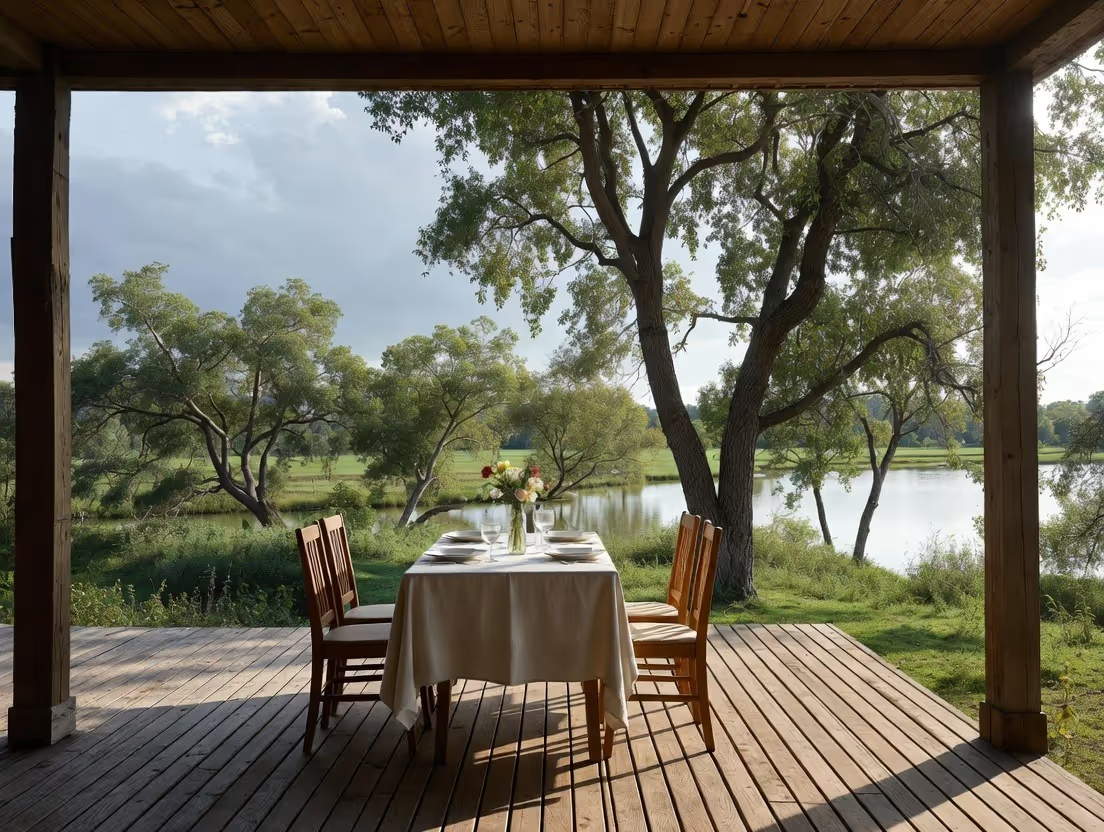
Our physical environments are not neutral backdrops; they are active participants in our seasonal well-being. Creating a "Seasonal Sanctuary"—a home environment that adapts to support your shifting needs—is a powerful, tangible practice. This goes beyond decor; it’s about functional design for mental health.
Your environment should serve your protocol. If morning light is your winter medicine, your breakfast nook should be positioned to catch it. If evening digital detox is your autumn goal, create a charging station outside the bedroom. This intentional design removes friction from your healthy seasonal habits, making them the default, easy choice.
We have journeyed from the internal mechanics of chronotypes to the external forces of geography, from navigating life’s storms to designing our sanctuaries. The path to mastering seasonal mental wellness is revealed not as a rigid calendar of prescriptions, but as a dynamic practice of awareness, adaptation, and compassionate self-experimentation.
It requires honoring your unique biological fingerprint while respecting the timeless, planetary rhythms that shape all life. It leverages the precision of modern technology not to override our nature, but to understand it more deeply, creating a partnership between human intuition and empirical data. This is the essence of modern, holistic well-being: using every tool at our disposal to live in more intelligent harmony with ourselves.
In the final portion of this comprehensive guide, we will bring it all together into a single, actionable system. We will provide a step-by-step "Seasonal Wellness Audit" to assess your current state and past patterns. We will then guide you through creating your first personalized, 12-month Seasonal Wellness Blueprint, integrating all the elements we’ve covered: biometrics, chronotype, life context, advanced interventions, and environmental design. We’ll also address troubleshooting—what to do when your plan goes off track—and explore the deeper philosophical and spiritual dimensions of embracing a cyclical life. This final synthesis will equip you not just with knowledge, but with a living, breathing practice for a lifetime of resilient flourishing.
Before you can build a new structure, you must understand the existing landscape. The Seasonal Wellness Audit is a structured, compassionate self-assessment designed to uncover your unique seasonal patterns, strengths, and vulnerabilities. It combines retrospective reflection with current biometric data to create a clear starting point. Set aside dedicated time for this audit, ideally as you approach a seasonal transition (like the autumn equinox).
Part 1: The Retrospective Reflection (Looking Back)
Grab a journal and answer these questions for each of the past four seasons:
Part 2: The Current Biometric Baseline (Looking Now)
If you have a wearable like an Oxyzen ring, analyze the last 90 days of key metrics:
Part 3: The Environmental & Lifestyle Scan
The product of this audit is not judgment, but clarity. You might identify a clear pattern: "My HRV drops and my sleep fragments every February, coinciding with a low mood and desire to isolate." This precise insight is the foundation for effective change. For those beginning this journey, our FAQ page offers guidance on starting with biometric tracking to build this essential baseline.
With your audit complete, you can now construct your personalized blueprint. This is a living document—a plan, a tracker, and a journal all in one. Create a digital document or dedicated notebook with a section for each season. For each, include the following:
1. Seasonal Intention & Metaphor:
Start with a guiding phrase and image. For example:
2. Non-Negotiable Anchor Habits:
List 3-4 core habits you will protect at all costs. These should address your known vulnerabilities.
3. Protocol Adjustments:
Detail the specific shifts you will make in each pillar.
4. Advanced Intervention Schedule:
Plan and schedule your precision tools.
5. Biometric Success Markers:
Define what successful adaptation looks like in your data. This makes progress objective.
6. Seasonal Pre-Mortem & Contingency Plans:
Revisit the pre-mortem concept. For each season, write: "My plan will fail if..." and list 2-3 likely derailers. Then, write your "If-Then" contingency.
Your blueprint is your contract with yourself. It turns vague aspirations ("have a better winter") into a concrete operational plan. It acknowledges that what works in July will not work in January, and that’s not only okay—it’s intelligent. To see how the philosophy of personalized, adaptive planning is woven into our products, you can explore our story and mission.
Even the most beautifully crafted blueprint will face storms. A work crisis, an illness, a personal loss, or simply the unpredictability of life can throw you off your seasonal rhythm. The goal is not perfect adherence, but resilient navigation. When you go off-track, follow this troubleshooting sequence:
1. Diagnose with Data, Not Drama.
Instead of spiraling into self-criticism ("I’ve failed at winter"), check your biometrics. Is your sleep data showing disruption? Has your HRV crashed? The data depersonalizes the issue. It’s not you failing; it’s your system being taxed. This objective view is the first step back to center. The Oxyzen platform is designed to provide this calm, factual feedback during turbulent times.
2. Execute a "Minimum Viable Day" (MVD).
When in overwhelm, abandon the full protocol. Ask: "What are the absolute bare minimum actions that will support my core well-being right now?" This is often just three things:
3. Apply the "One-Rung" Rule.
You don’t need to climb back to the top of the ladder in one leap. Just find the next single rung. If your winter walking habit broke due to a cold, don’t plan a 5-mile hike. The next rung is: "Put on my shoes and walk to the mailbox." Small, successful actions rebuild momentum and confidence.
4. Revisit Your Contingency Plans.
This is why they exist. If you’re sick, activate your sick-day protocol. If you’re emotionally drained, activate your digital detox plan. Your blueprint should have these escape hatches built in.
5. Practice Radical Season-Specific Self-Compassion.
A setback in winter requires different self-talk than one in summer. In winter, it might be: "It’s dark and cold, and my body is under more stress. It’s understandable that this feels harder. I will be gentle." In summer, it might be: "The pressure to be constantly 'on' is high. It’s okay that I need to cancel and rest." Align your compassion with the season’s inherent challenges.
Remember, the measure of mastery is not an unbroken streak of perfect days, but the speed and grace with which you return to your center after being thrown off. Your seasonal blueprint is not a prison; it’s a home base you can always return to. For additional support and community insights on navigating setbacks, our testimonials page often features stories of resilience and adaptation.
Beyond the protocols and data lies a deeper invitation: to adopt a cyclical philosophy of life. Our dominant cultural narrative is linear—progress, growth, accumulation, constant ascent. This narrative pathologizes natural cycles of rest, release, and introspection, labeling them as stagnation or failure. Embracing seasonal wellness is, at its heart, a rebellious act of realigning with a cyclical worldview.
This philosophy offers profound spiritual and psychological benefits:
Ritual as the Bridge: To embody this philosophy, create personal seasonal rituals that mark the transitions. These need not be elaborate:
These rituals consciously bookmark the turning of the year, integrating the cyclical model into your lived experience. They are the soulful counterpart to the scientific protocol.
Your seasonal blueprint does not exist in a vacuum. It must integrate with other aspects of your health and any existing conditions.
Think of seasonal wellness as the overarching operating system upon which all other health "applications" run. It provides the context that makes other interventions more effective and sustainable. For a broader look at how this integrative approach fits into modern wellness technology, our blog delves into the future of holistic health tracking.
We have traversed a vast landscape, from the microscopic interplay of photons and neurotransmitters to the macroscopic turn of the planet, and into the intimate territory of our own daily lives. The journey through the seasonal patterns of mental wellness reveals a fundamental truth: well-being is not a destination to be reached, but a rhythm to be joined.
Mastering this rhythm is an art form—the Art of Cyclical Living. It requires the curiosity of a scientist, the compassion of a healer, and the creativity of an artist. It uses the precision of a smart ring to track a heartbeat and the wisdom of an ancient ritual to honor the solstice. It knows that sometimes the most productive thing you can do in February is nothing at all, and that the most connected thing you can do in July is to be fully present in your own skin.
This art yields a life not of flat-line consistency, but of dynamic, purposeful variation. It offers a profound antidote to burnout and alienation, reconnecting us to our own biology and to the living world. It transforms the passage of time from an enemy that depletes us into a companion that teaches and renews us.
Your invitation is to begin. Start with the audit. Gather your data, your memories, your intentions. Craft your first, imperfect blueprint. Observe, adjust, and learn. Let your Oxyzen ring be your silent partner, providing the objective feedback that deepens your self-knowledge. Share the journey with others; you can connect with a community exploring similar paths through our platform.
Your Trusted Sleep Advocate: Sleep Foundation — https://www.sleepfoundation.org
Discover a digital archive of scholarly articles: NIH — https://www.ncbi.nlm.nih.gov/
39 million citations for biomedical literature :PubMed — https://pubmed.ncbi.nlm.nih.gov/
Experts at Harvard Health Publishing covering a variety of health topics — https://www.health.harvard.edu/blog/
Every life deserves world class care :Cleveland Clinic - https://my.clevelandclinic.org/health
Wearable technology and the future of predictive health monitoring :MIT Technology Review — https://www.technologyreview.com/
Dedicated to the well-being of all people and guided by science :World Health Organization — https://www.who.int/news-room/
Psychological science and knowledge to benefit society and improve lives. :APA — https://www.apa.org/monitor/
Cutting-edge insights on human longevity and peak performance:
Lifespan Research — https://www.lifespan.io/
Global authority on exercise physiology, sports performance, and human recovery:
American College of Sports Medicine — https://www.acsm.org/
Neuroscience-driven guidance for better focus, sleep, and mental clarity:
Stanford Human Performance Lab — https://humanperformance.stanford.edu/
Evidence-based psychology and mind–body wellness resources:
Mayo Clinic — https://www.mayoclinic.org/healthy-lifestyle/
Data-backed research on emotional wellbeing, stress biology, and resilience:
American Institute of Stress — https://www.stress.org/


