


Seated Meditation vs Movement Practices: Finding Your Calm Path
Choose between seated stillness and mindful movement (yoga, walking) based on what helps your unique mind settle most effectively.
Choose between seated stillness and mindful movement (yoga, walking) based on what helps your unique mind settle most effectively.
%402x.svg)
In a world that never stops moving, the quest for inner stillness has become a modern imperative. We scroll through curated lives on glowing screens, juggle notifications like a high-stakes performance, and wear busyness as a badge of honor. Yet, beneath this surface of constant activity, a profound and universal hunger persists: the need for calm, for presence, for a mind that isn’t perpetually ricocheting between the past and the future.
Enter the ancient solutions with modern relevance: meditation and mindful movement. For generations, the iconic image of meditation has been one of absolute stillness—a serene figure seated in lotus position, eyes closed, seemingly detached from the world. This is seated meditation, the disciplined practice of training attention and awareness to achieve a mentally clear and emotionally calm state. It is the direct route to observing the mind's chaos from a place of unwavering stillness.
But what if stillness feels like a cage? What if the very act of sitting quietly amplifies your anxiety, making you more aware of your restless thoughts and fidgeting body? This is where the other path emerges from the shadows of the traditional. Movement practices—from the flowing grace of Tai Chi and Qigong to the purposeful strides of walking meditation and even the mindful alignment of yoga—offer a different gateway to the same destination. They propose that calm isn’t found by wrestling the body into submission, but by channeling its innate energy into a moving meditation, finding peace in motion rather than in opposition to it.
This isn’t a debate about which practice is “better.” That’s a false dichotomy, akin to arguing whether breathing in is superior to breathing out. Both are essential, life-sustaining acts that belong to the same system. The real inquiry, and the purpose of this exploration, is far more personal and transformative: Which path, or what combination of both, is the right key for unlocking your unique mind, body, and lifestyle?
This journey is about self-discovery. It’s about understanding your neurotype, your stress signatures, your learning style, and your personal history with stillness and activity. It’s about moving beyond prescriptive wellness trends and into the realm of personalized practice. The ultimate goal is not to become a perfect meditator or a flawless mover, but to cultivate a sustainable, integrated approach to inner peace that resonates with the truth of who you are.
And in this modern quest, we are no longer limited to intuition alone. Technology, when applied with intention, can be a powerful guide. Imagine having a compassionate, data-informed companion on your journey—a device that doesn’t judge your progress but illuminates it. The Oxyzen smart ring serves as exactly that: a subtle, always-on wearable that provides objective feedback on your nervous system’s state. By tracking key biomarkers like heart rate variability (HRV), sleep quality, and activity levels, it helps you move from guessing to knowing. Does seated meditation actually lower your physiological stress, or does your mind wander while your body remains tense? Does a mindful walk in nature create a more coherent heart rhythm than a high-intensity workout? The insights from a tool like Oxyzen can help you tailor your practice, making the ancient art of finding calm a precise, personal science. For those beginning this journey, our FAQ page answers common questions about how such technology integrates seamlessly into a wellness practice.
The path to calm is not one-size-fits-all. It is a personal topography to be mapped. Let’s begin the exploration.
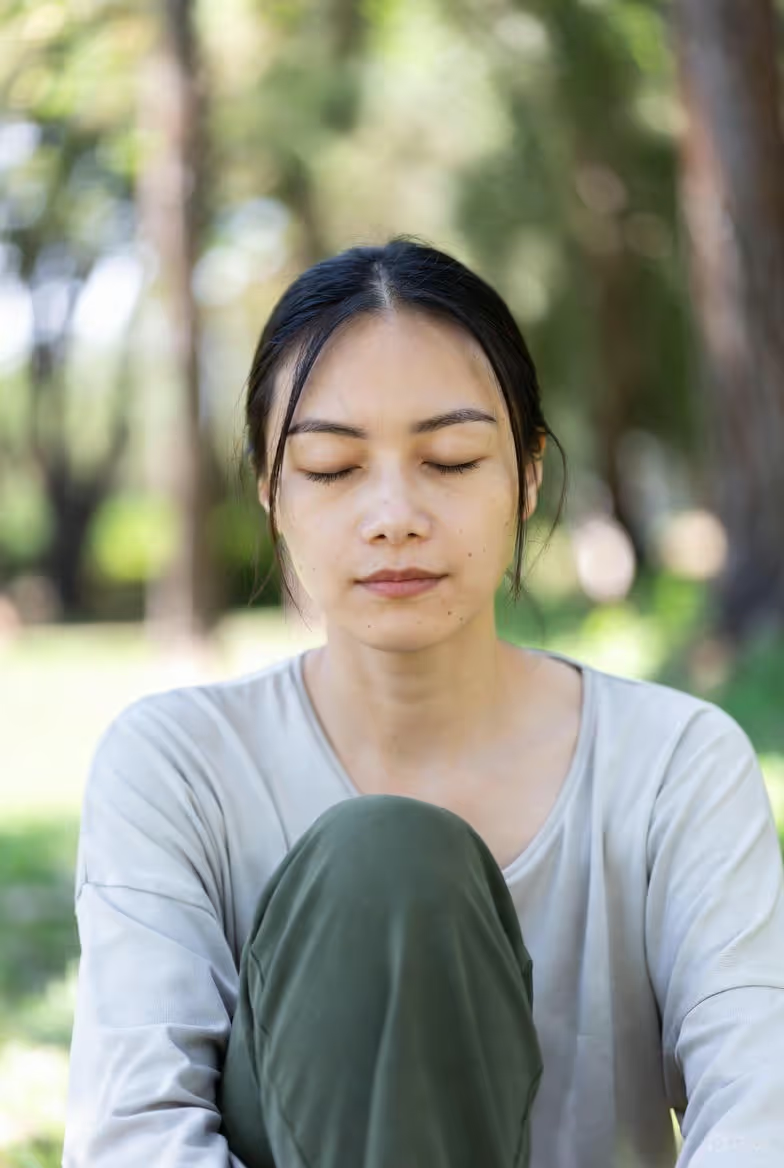
Seated meditation is often considered the cornerstone of contemplative practice. It is the disciplined art of turning inward while the body is held in a posture of alert repose. To understand its power, we must look beyond the simplified apps and corporate wellness buzzwords to its core mechanics and profound neurological implications.
At its essence, seated meditation is a training ground for the mind’s most fundamental skill: attention. The practitioner typically adopts a comfortable, dignified seated position—whether on a cushion, bench, or chair—with the spine erect but not rigid. The instruction is deceptively simple: bring your attention to a single “anchor,” such as the physical sensations of the breath entering and leaving the nostrils, the rise and fall of the abdomen, or a repeated phrase (a mantra). The moment you notice your mind has wandered—which it will, incessantly, hundreds of times—you gently, without judgment, return it to the anchor. This act of noticing and returning is not a failure; it is the repetition of this act that is the very muscle-building of mindfulness.
The Neuroscience of Sitting Still
Modern science has illuminated what ancient traditions have long professed. Regular seated meditation induces tangible, structural changes in the brain, a concept known as neuroplasticity. MRI studies show that practices like focused-attention meditation can thicken the prefrontal cortex, the brain’s executive center responsible for decision-making, focus, and emotional regulation. Simultaneously, meditation appears to shrink the amygdala, our primal fear and stress alarm center. This is the neuroanatomical blueprint of emotional resilience: a stronger CEO and a less reactive security guard.
Furthermore, meditation shifts our brainwave states. It encourages alpha waves (associated with relaxed alertness) and theta waves (linked to deep relaxation, creativity, and the threshold of the subconscious). It also teaches us to uncouple physiological arousal from emotional reactivity. You learn to feel the flush of anger or the clench of anxiety as a series of passing sensations in the body, rather than as commands you must obey. This “space between stimulus and response” is where your freedom lies.
Common Misconceptions and Barriers
The idealized image of meditation creates significant barriers. The first is the myth of “clearing the mind.” The goal is not to stop thoughts, which is impossible, but to change your relationship to them—to see them as clouds passing in the sky of your awareness, rather than as storms you are lost inside.
The second major barrier is physical restlessness and discomfort. For many, especially those with active or anxious temperaments, the directive to “sit with your thoughts” can feel like being locked in a room with a chaotic, critical stranger. The body rebels with itches, aches, and an irresistible urge to move. This isn’t a sign that you’re “bad at meditation”; it’s crucial information. It may indicate a nervous system that is chronically on high alert, one that interprets stillness itself as a threat. This discomfort is the first important clue in your self-inquiry: does your system need the gentle discipline of sitting to learn it is safe to be still, or is this approach currently too direct, potentially reinforcing stress? For individuals grappling with this very challenge, the stories and experiences shared by our community in Oxyzen testimonials can offer relatable insights and encouragement.
Seated meditation is a profound and direct path. It is the equivalent of diving into the deep end to learn to swim. For some, it’s transformative. For others, it feels like drowning. Recognizing where you fall on this spectrum is the first step in finding your calm path.
If seated meditation is diving into the deep end, mindful movement is learning to swim by first wading in the shallows, feeling the water support you as you move. This path encompasses any physical activity where the primary intention is to cultivate present-moment awareness, using the body and its motion as the anchor for attention.
Mindful movement is a broad and rich spectrum. It includes:
The Philosophy of Kinetic Calm
The core philosophy separating mindful movement from exercise is intention. In a workout, the goal is often external: to burn calories, build muscle, or improve performance. The body is an instrument to be pushed. In mindful movement, the goal is internal: to cultivate awareness, harmony, and inner stillness. The body is a partner and a guide. The movement itself is not a distraction from presence; it is the very vehicle for arriving there.
This is critically important for individuals who are “kinesthetic learners” or who experience the world primarily through physical sensation. For them, thought is not an abstract process but is deeply tied to somatic experience. Asking them to sit still and watch their breath can feel like being asked to understand a symphony by reading the sheet music. Mindful movement allows them to hear the music—to process emotions, stress, and awareness through the medium they understand best: their own physical form.
The Bridge Between Body and Mind
Movement practices powerfully address one of the key limitations some face with seated meditation: the feeling of a disconnect between a “quiet” mind and a tense, ignored body. Trauma and chronic stress live in our tissues—a phenomenon known as somatic memory. A body forced into rigid stillness can sometimes become a prison for this unresolved tension.
Mindful movement provides a gentle, rhythmic way to discharge this sympathetic nervous system energy. The rhythmic motion of walking, the flowing forms of Tai Chi, or the held stretches of yoga can facilitate what psychologist Peter Levine calls “completion of the stress cycle.” The body, given safe and regulated motion, can literally shake off or move through the trapped energy of stress, creating a genuine, embodied sense of calm that a purely cognitive practice might not reach. It teaches the nervous system that it can be both active and safe, engaged and peaceful.
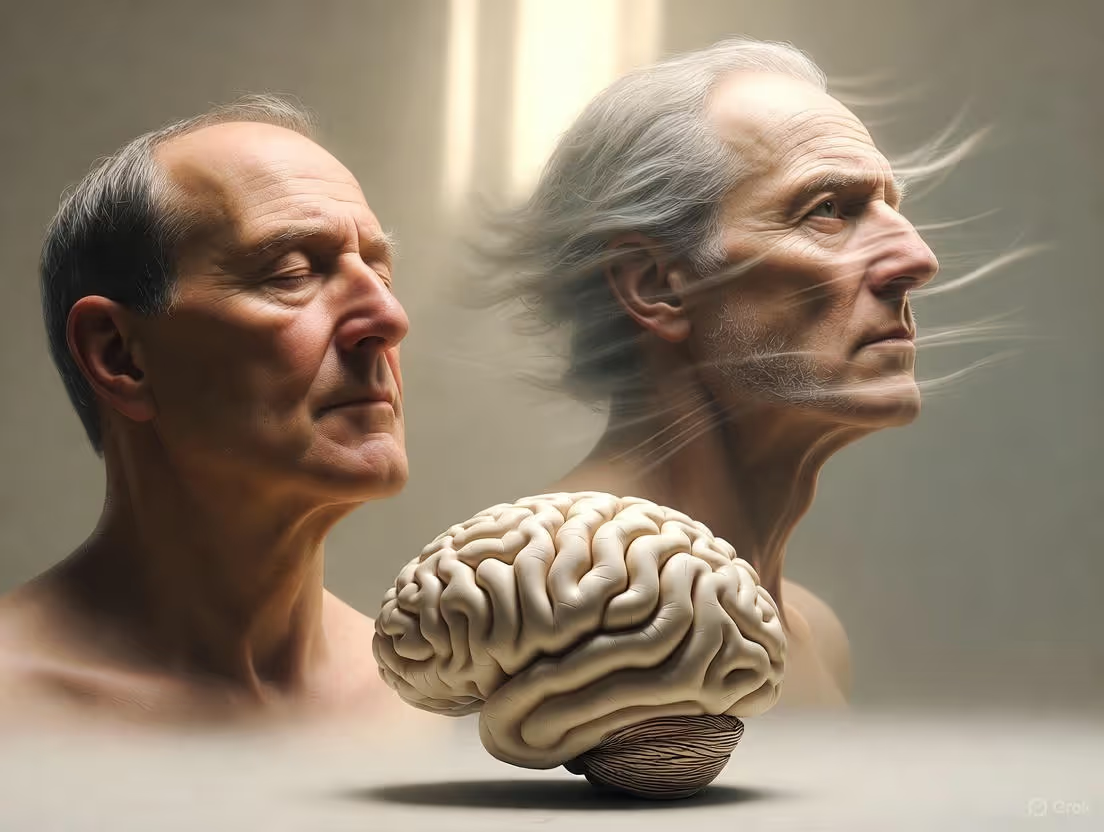
To choose a path wisely, we must understand how each one interacts with our fundamental biology. Seated meditation and mindful movement engage the brain and nervous system in distinct, though complementary, ways. Think of them as different therapies for the same system: one is a targeted cognitive-behavioral therapy for the mind, while the other is a somatic therapy for the body’s stress response.
Seated Meditation: The Prefrontal Cortex Workout
When you sit in stillness and focus on your breath, you are primarily engaging the brain’s top-down regulatory systems. The anterior cingulate cortex (ACC) and the dorsolateral prefrontal cortex (dlPFC) go to work. The ACC acts as a conflict monitor, noticing when your attention has strayed from the breath to a thought. The dlPFC is the executive that then calmly redirects focus back. This repeated exercise strengthens the neural pathways for cognitive control.
On a physiological level, skilled practitioners of focused meditation can trigger the “relaxation response,” a term coined by Dr. Herbert Benson. This is the antidote to the stress (fight-or-flight) response. It leads to decreased metabolism, slower heart rate, lower blood pressure, and slower brain wave patterns. The body enters a state of deep restorative calm. However, for beginners or the highly stressed, achieving this state can be elusive, as the initial act of focusing can itself create performance anxiety, subtly keeping the sympathetic nervous system online.
Mindful Movement: The Somatic-Regulatory Pathway
Movement practices take a different route to calm. They often begin with bottom-up regulation. By engaging in slow, rhythmic, and predictable movement, you directly influence the autonomic nervous system via the vagus nerve, the main conduit of the parasympathetic (rest-and-digest) system. This type of movement provides proprioceptive and vestibular input—signals about body position and movement—that the brain interprets as safe, rhythmic, and organized. This input has a naturally calming effect on the brainstem and limbic system, the emotional core of the brain.
Furthermore, activities like Tai Chi or mindful yoga require a degree of coordinated attention. You must remember sequences, balance, and coordinate breath. This engages the brain in a focused yet fluid way, preventing it from falling into rumination (the repetitive, negative thought loops characteristic of anxiety) without the harsh directive to “stop thinking.” The brain is given a gentle, absorbing task that crowds out worry. Studies show that these practices significantly increase Heart Rate Variability (HRV), a key metric of nervous system resilience and adaptability. A higher HRV indicates a system that can respond flexibly to stress and then recover efficiently.
The Hormonal Story: Cortisol and Endorphins
Seated meditation, when practiced consistently, is associated with a reduction in baseline cortisol levels, our primary stress hormone. It teaches the hypothalamic-pituitary-adrenal (HPA) axis to downregulate.
Mindful movement offers a more nuanced hormonal profile. While it also can lower chronic cortisol, it may involve a brief, healthy elevation followed by a robust recovery—teaching the body how to handle and release stress in a cycle. Additionally, gentle movement stimulates the release of endorphins (natural mood elevators) and endocannabinoids (associated with the “runner’s high”), creating a mild euphoria and sense of well-being that can make the practice itself feel rewarding and sustainable.
This is where biofeedback technology becomes invaluable. A tool like the Oxyzen smart ring can measure your personal HRV and sleep patterns, showing you in concrete terms whether a 20-minute seated session or a 30-minute Qigong flow has a more profound and lasting impact on your nervous system’s balance. It transforms subjective feeling into objective data, guiding your personal experiment in calm.
With the science in mind, we turn to the most practical question: which path is suited for whom? Your temperament, your daily life, and even your past experiences are the most important factors in designing a practice that will stick, rather than become another source of guilt.
The Ideal Candidate for Seated Meditation
This path often resonates deeply with individuals who are:
The Ideal Candidate for Mindful Movement
This path is often a lifeline for those who are:
The Role of Lifestyle and Environment
Your daily context is crucial. A parent with young children may find a 10-minute walking meditation while pushing a stroller infinitely more feasible than finding a silent, undisturbed room to sit. An office worker in a high-rise might use a five-minute Tai Chi sequence at their standing desk to reset between meetings. A person with chronic pain might find Yin Yoga, where poses are held for several minutes, to be a way to meditate through the sensations of their body.
It’s also about energy management. Are you typically over-stimulated and “wired”? Seated meditation might be the necessary counterbalance. Are you lethargic, foggy, or under-stimulated? A mindful movement practice might provide the gentle energizing focus you need. To explore how different routines impact your personal energy and recovery metrics, our blog offers continuous research and user experiences on integrating mindfulness with daily life.
The key is honest self-assessment without judgment. There is no virtue in forcing yourself into a lotus position if it only makes you despise the practice. The goal is calm, not conformity.
For a significant portion of the population, the traditional advice to “just sit and breathe” is not just difficult—it can be counterproductive, even distressing. Understanding why this happens is essential to breaking down barriers to practice and preventing people from concluding they are “failing” at wellness.
Why Sitting Can Exacerbate Anxiety
For someone with a nervous system primed for hypervigilance—common in those with anxiety disorders, PTSD, or a history of chronic stress—stillness can be misperceived as danger. In nature, an animal freezes when it is threatened. The body may subconsciously equate the directive to “be still” with this freeze response, triggering a low-level alarm. Furthermore, when external stimuli are removed, internal stimuli (heartbeat, breath, rushing thoughts) become magnified. A slightly elevated heart rate, normal when sitting, can be interpreted by an anxious mind as the beginning of a panic attack, thus creating a vicious cycle.
Mindful movement provides an elegant solution. It offers a “container” for attention that is just absorbing enough. The mind is given a gentle task—coordinating movement with breath, feeling the footfall—that requires focus but is not cognitively demanding. This focus acts as a “surrogate vagal brake,” gently engaging the parasympathetic nervous system through action rather than through the more abstract goal of mental stillness. The individual is not left alone with their thoughts; they are accompanied by the rhythm and sensation of their body in motion.
Building Tolerance for Stillness
This is a powerful concept: movement can be the training wheels for meditation. By first establishing a sense of safety, regulation, and present-moment awareness through motion, one can gradually build the capacity to be still.
Consider a progression:
In this model, movement isn’t the alternative to meditation; it is the on-ramp. It builds the somatic and neurological foundation that makes seated practice accessible and beneficial, rather than intimidating. This integrative approach is at the heart of modern, accessible wellness strategies, much like the integrated design philosophy behind our technology. You can learn more about our story and mission to make personalized wellness accessible.

To fully appreciate the power of these paths, we must briefly honor their origins. They are not modern hacks but time-tested technologies of consciousness, born from deep observation of the human condition.
Seated Meditation: From Forest Monasteries to Global Science
The most systematized forms of seated meditation in the West largely stem from Buddhist traditions, particularly Vipassana (insight) and Samatha (calm-abiding) meditation from the Theravada school, and later, Zen (Zazen) from the Chan and Japanese traditions. In these contexts, meditation was never just a stress-relief tool; it was part of an entire philosophical and ethical path aimed at understanding the nature of suffering and the mind, and achieving liberation (nirvana or satori).
The Buddha himself achieved enlightenment seated under the Bodhi tree. The posture—stable, dignified, and grounded—was seen as an expression of the inner work: an unwavering commitment to awakening. These practices were preserved and refined over 2,500 years in monastic communities, where life was structured entirely around deepening this inward journey. The secular, science-backed meditation we see today is a distillation of these profound techniques, extracting the universal mental training mechanisms from their specific religious contexts.
Mindful Movement: The Harmony of Energy and Form
The history of mindful movement is equally rich and diverse. In China, the development of Qigong (energy work) dates back thousands of years, intertwined with Taoist philosophy and Chinese medicine. Its goal was to cultivate and balance Qi, the vital life force, to promote health, longevity, and spiritual alignment. Tai Chi evolved from this as a martial art that emphasized softness, yielding, and internal energy (neijia) over brute force, becoming a moving meditation on the principles of Yin and Yang.
In India, the roots of yoga in the Vedas and the Yoga Sutras of Patanjali reveal that physical postures (asanas) were originally just one limb of an eight-fold path aimed at quieting the mind for spiritual realization. The physical practice was meant to prepare the body for long periods of seated meditation by promoting health, flexibility, and pranic flow.
Across cultures, from Sufi whirling to Native American ceremonial dances, humans have used rhythmic, intentional movement to alter consciousness, connect with the divine, and heal. These traditions understood holistically what science now confirms: mind and body are one system, and we can enter states of profound peace through the portal of the physical self.
The most evolved personal practice is rarely dogmatic. It is adaptive, intuitive, and synergistic. The most resilient calm often comes from a toolkit that contains both stillness and motion, allowing you to choose the right tool for the moment’s need. This is the modern hybrid approach.
Creating a Complementary Routine
A blended practice leverages the unique strengths of each modality. Consider a weekly schedule that might include:
In this model, seated practice provides the cognitive clarity and metacognitive awareness, while movement practices manage somatic stress and embodied awareness. They work in concert, like alternating current, to keep your system in balance.
The Concept of “Micro-Practices”
Wellness isn’t only about designated 30-minute sessions. It’s about weaving threads of mindfulness throughout the fabric of your day. This is where micro-practices shine, and they can be drawn from both traditions:
These micro-moments act as circuit breakers for automatic pilot, constantly re-anchoring you in the present. They make mindfulness a lifestyle, not just an appointment on your calendar.
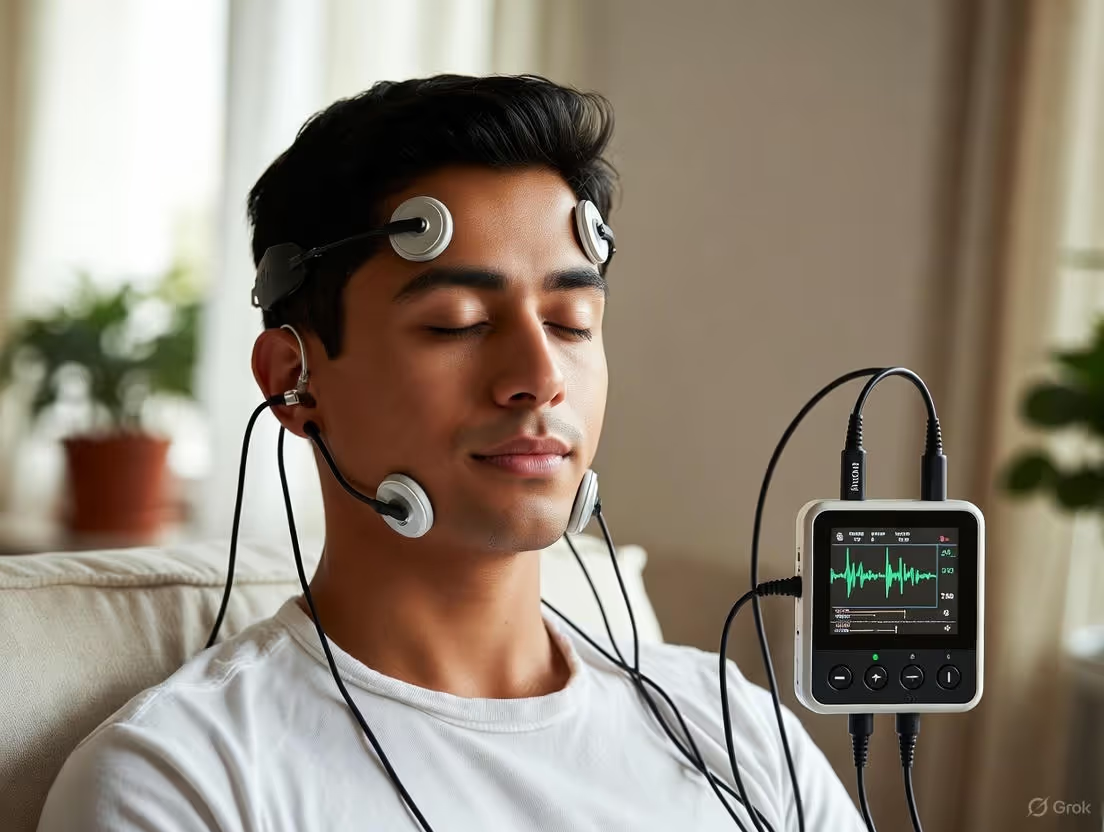
In the past, the benefits of meditation or mindful movement were purely subjective. You felt calmer, or you didn’t. Today, we can move beyond guesswork. Biofeedback technology allows us to see the invisible—to quantify the state of our nervous system and measure the true impact of our practices.
Heart Rate Variability (HRV): The Ultimate Metric
HRV is not your heart rate; it is the subtle variation in the time interval between heartbeats. A higher, more complex HRV indicates a healthy, resilient, and adaptable autonomic nervous system. It means your body can respond robustly to a challenge (sympathetic activation) and then recover gracefully to baseline (parasympathetic restoration). A low HRV is a key indicator of chronic stress, burnout, or poor recovery.
Both seated meditation and mindful movement aim to improve HRV, but they may do so through different pathways and may show different results for different people. The only way to know what works for you is to measure it.
The Smart Ring as a Mindfulness Companion
This is where a device like the Oxyzen smart ring transforms personal practice. Worn continuously, it provides objective, passive tracking of your physiological state.
Imagine these scenarios:
This turns mindfulness from a faith-based practice into an evidence-based personal science. It removes the spiritual bypassing and connects effort directly to a physiological outcome. For a deeper dive into the science behind these measurements and how to interpret them, our comprehensive resource library on the blog is an excellent place to continue your education.
The wellness world is rife with dogma, and the space around meditation is particularly prone to purity tests and elitism. To find your true path, you must clear away these conceptual weeds.
Myth 1: “Real Meditation is Only Done Sitting Still.”
This is the most pervasive and damaging myth. It privileges one form (seated) over all others. If the definition of meditation is “the training of attention and awareness,” then any activity that does this systematically is meditation. The Dalai Lama himself has said that for some people, mindful sweeping of a floor can be a more profound meditation than sitting. The form is the vehicle; the aware mind is the destination.
Myth 2: “If You’re Thinking, You’re Doing It Wrong.”
As discussed, thoughts are not the enemy. They are the weather patterns of the mind. The practice is in building the spacious sky that can hold all weather without being destroyed by it. Noticing you are thinking is the pivotal moment of awareness—it is the practice itself.
Myth 3: “Movement Practices are Just Exercise-Lite; They Lack Depth.”
This view fundamentally misunderstands the intention. A runner focused on their pace and mileage is exercising. A runner focused on the sensation of wind, the rhythm of breath, the feeling of feet meeting earth, and observing the passing landscape without judgment is engaging in a potent moving meditation. The depth comes from the quality of attention, not the intensity of the physical effort.
Myth 4: “You Need Hours a Day to See Benefits.”
The dose-response curve for mindfulness is non-linear. Neuroscientist Dr. Amishi Jha’s research on mindfulness-based cognitive training shows that even short, consistent practices (12 minutes a day) can protect and improve focus and emotional regulation, especially under high stress. Consistency trumps duration. A daily 10-minute practice is infinitely more powerful than a 2-hour session once a month.
Letting go of these myths is liberating. It returns agency to you, the practitioner, to define what works based on your experience and your data, not on external, idealized standards. If you have questions about how to apply these principles with modern tools, our dedicated support and FAQ section is designed to help.
Theory is essential, but practice is where transformation occurs. Here are concrete, actionable first steps for beginning with either primary path, designed to minimize friction and maximize the chance of success.
First Steps into Seated Meditation:
First Steps into Mindful Movement:
The critical rule for both: Suspend judgment. The first week, maybe even the first month, is simply about building the habit. You are laying neural and behavioral track. The scenery (profound insights, deep calm) will come later as the train gets moving.
As we near the end of this portion of our exploration, a crucial synthesis emerges. The initial question of “seated vs. movement” often gives way to a more mature inquiry: “How do seated and movement practices serve different needs within my system, and how can I intelligently rotate them?”
Your needs are not static. They change with your stress levels, hormonal cycles, energy, and the seasons of your life.
An advanced practice is one of self-dialogue. It asks: What do I need today? Some days, the answer is clear stillness. Other days, it’s a flowing walk in nature. The most powerful practice is the one that is responsive, not rigid.
This fluid, integrated approach mirrors a holistic view of human well-being. It acknowledges that we are thinking creatures, feeling creatures, and moving creatures all at once. To nurture only one aspect is to leave the others untended. Our vision at Oxyzen has always been to support this complete picture of the individual. You can read more about our mission to unite body, mind, and data for holistic well-being.
The journey to finding your calm path is just that—a journey. It requires curiosity, self-compassion, and a willingness to experiment. You are not choosing a team for life; you are learning the language of your own nervous system so you can become its most skilled and caring attendant.
In the next portion of this guide, we will delve even deeper. We will explore advanced techniques for deepening your chosen practice, examine how to work with specific challenges like pain, trauma, and intense emotion on the path, and investigate how to build a lifelong, sustainable mindfulness habit that evolves with you. We will also look at the future of personalized mindfulness, where AI and biometrics like those from your Oxyzen ring create a truly bespoke roadmap to your inner peace.
Having established the foundational landscapes of both seated meditation and mindful movement, we now venture into the terrain of personalization and mastery. This phase of the journey moves beyond choosing a path and into the art of walking it skillfully, adapting to its curves, and navigating the inevitable obstacles. Here, we transition from theory and first steps to the nuanced work of integration, resilience, and lifelong growth.
The initial thrill of a new practice often meets a sobering reality: the mind's relentless habit patterns, the body's resistance, and life's constant interruptions. This is where most journeys stall. But it is also precisely where transformation is forged—not in the easy, inspired beginnings, but in the committed, sometimes mundane middle. The work now is to build a practice that is not an add-on to your life, but a fundamental way of being in your life. It's about making calm not just a destination you visit, but the very ground you walk upon.
Before advancing techniques, we must develop a more granular understanding of our starting point. Not all "busy minds" are the same; not all "restless bodies" share the same root cause. Creating a personal mind-body profile is like getting a detailed map before a long hike—it shows you the terrain so you can choose the best route.
Identifying Your Dominant Stress Signature
Stress manifests uniquely in each individual. Broadly, we can observe several common "signatures":
The Role of Enneagram, Ayurveda, and Other Typologies
While not scientific frameworks, ancient systems of knowledge like Ayurveda (the Indian "science of life") or modern personality systems like the Enneagram can offer valuable metaphorical language for self-understanding.
These are not prescriptions but prompts for self-inquiry. The question becomes: does my practice balance my natural tendencies, or exaggerate them? A hyperactive person forcing themselves into stillness might need balance, but so might a lethargic person choosing only the gentlest yoga. For more on integrating these holistic concepts with data-driven insights, our blog features discussions on bridging ancient wisdom and modern technology.
Once a consistent sitting practice is established, the landscape of meditation deepens and diversifies. The breath anchor is the training wheel; these techniques are the different roads you can explore once you’ve found your balance.
1. Open Monitoring (Vipassana)
This shifts from a single-pointed focus (the breath) to a panoramic, non-reactive awareness of everything arising in the present moment. You sit and simply notice: sounds, bodily sensations, thoughts, emotions. The instruction is to observe them all with equanimity, labeling them gently ("hearing," "itching," "planning," "sadness") and letting them pass without attachment or aversion. This cultivates profound insight (vipassana) into the impermanent, impersonal nature of all experience. It is the practice of becoming the silent witness to your own life.
2. Loving-Kindness (Metta) Meditation
This is a heart-centered practice that directly cultivates compassion. It involves silently repeating phrases of goodwill, first for yourself, then for a benefactor, a neutral person, a difficult person, and finally all beings. A common sequence is: "May I be safe. May I be healthy. May I be happy. May I live with ease." This practice actively rewires emotional pathways, reducing anger and social anxiety while increasing feelings of connection and empathy. For those whose seated practice feels dry or intellectual, Metta brings warmth and emotional resonance.
3. Body Scan Meditation
A powerful bridge between seated and somatic practices, the body scan involves systematically moving your attention through different parts of the body, from the toes to the crown of the head. The goal is not to change or relax the body, but to feel each area with precise, non-judgmental awareness. This practice dissolves the "head-centric" illusion, grounding you firmly in your physical being. It is exceptionally effective for managing pain, releasing held tension, and falling asleep.
4. Mantra and Sound (Nada) Meditation
Here, the anchor is a repeated sound or phrase. This can be a traditional Sanskrit mantra (like "Om"), a secular word ("peace," "calm"), or even the subtle internal sound (nada) that can be heard in deep silence. The vibration and rhythmic repetition occupy the cognitive mind, allowing awareness to sink into deeper, quieter layers of consciousness. It’s particularly useful for people who find the breath too subtle or whose minds are exceptionally discursive.
Each of these techniques trains a different "muscle" of awareness. The master practitioner often has a repertoire, choosing the technique that best suits their inner weather that day. Tracking the physiological impact of these different techniques can be revelatory. Does a 20-minute Metta practice produce a different HRV signature than a 20-minute Vipassana session? Using a tool like the Oxyzen smart ring allows you to move from preference to evidence, discovering which form of inner work creates the most coherence in your unique system.
Just as seated meditation has layers, mindful movement evolves from learning external forms to embodying an internal state of flow. The practice deepens when the focus shifts from "doing the movement correctly" to "being present within the movement."
1. Internal Awareness in Tai Chi & Qigong
The beginner learns the choreography of the "Wave Hands like Clouds" or "Parting the Wild Horse's Mane." The advanced practitioner internalizes the principles: the sinking of weight (chen), the coordination of every movement from the center (dan tien), the conscious guiding of energy (yi dao, qi dao — "where mind leads, energy flows"). The external form becomes a vehicle for cultivating an internal sensation of connected, flowing power. The practice becomes a meditation on the balance of Yin (receiving, yielding) and Yang (active, expanding) in every motion.
2. Yoga as Moving Inquiry
Beyond holding a pose (asana), advanced practice asks: What am I holding within the pose? Where is my breath restricted? Where is my mind clinging or resisting? A pose like Pigeon (Eka Pada Rajakapotasana) becomes not just a hip opener, but a laboratory for observing your relationship with intensity, surrender, and patience. The pranayama (breath control) becomes more sophisticated—alternate nostril breathing (Nadi Shodhana) to balance the hemispheres of the brain, or breath retention (Kumbhaka) to explore the edges of stillness within the body. Yoga becomes a conversation between flesh, breath, and awareness.
3. Walking Meditation as Deep Embodiment
A deepening walking practice moves beyond noting "left, right" to experiencing the miracle of locomotion in high definition. You feel the play of dozens of muscles, the subtle shifts of balance, the transfer of energy from the earth through your body. You can experiment with different paces: a slow, deliberate pace for grounding, a brisk pace for clarity, a meandering pace for openness. You can integrate it with the environment, synchronizing your steps with the rustle of leaves or the rhythm of waves, dissolving the boundary between inner motion and outer world.
The State of "Flow" or "Moving Zen"
The pinnacle of deepening movement practice is the spontaneous entry into a flow state. Time distorts, self-consciousness vanishes, and action and awareness merge. The runner becomes the run. The dancer becomes the dance. This is not reserved for athletes; it is accessible to anyone fully immersed in a mindful movement practice. It’s where the practice ceases to be a practice and becomes an expression of your essential nature—dynamic, aware, and unified. This state is profoundly regulating for the nervous system, producing a signature of high coherence that wearable technology can capture, offering tangible proof of these ephemeral, peak experiences of calm-in-action.
Inevitably, your practice will meet resistance. This is not a sign of failure; it is the raw material for growth. The obstacle is the path. Here’s how to work skillfully with common challenges.
Physical Pain in Sitting
Pain is a complex signal. It can be:
Mental Resistance: Boredom, Doubt, and Avoidance
Dealing with Emotional Floodgates
Sometimes, stillness or mindful movement opens a floodgate of pent-up emotion. This can be frightening.
Willpower is a finite resource. Relying on it to maintain a daily practice is a recipe for burnout. The solution is to use the neuroscience of habit formation to make your practice as automatic as brushing your teeth.
The Habit Loop (Cue → Routine → Reward)
Environment Design
Make the desired behavior easy and the competing behaviors hard.
Identity-Based Change
This is the most powerful level. Instead of "I should meditate," you cultivate the identity "I am someone who values and cultivates inner peace." Your actions then flow from this self-concept. After each practice, affirm this identity: "This is what a person like me does." Over time, the practice is no longer a task; it is an expression of who you are. This philosophical shift—from obligation to identity—is central to our mission and vision at Oxyzen, which is to empower individuals to become the stewards of their own well-being.
The true measure of a practice is not what happens on the cushion or the mat, but how it transforms the moments between them. The ultimate goal is to live mindfully—to bring that quality of open, non-reactive awareness to your entire life.
Informal Practice: Finding Meditation in the Mundane
This is where practice becomes life. Any routine activity can become a mindfulness anchor:
The "STOP" Practice for Stressful Moments
This is a powerful micro-practice for moments of rising stress:
This creates a crucial pause, disrupting automatic reactivity and allowing for a more conscious choice.
Mindful Communication
This is perhaps the most transformative application. It involves listening deeply, speaking truthfully and kindly, and noticing your own defensive or aggressive impulses without immediately acting on them. It turns relationships into a shared mindfulness practice. For more resources on bringing mindfulness into communication and other life domains, our blog is a continually updated library of practical guides.
When mindfulness infuses your day, the formal practice is no longer the sole source of your calm; it becomes the training ground that heightens your sensitivity so you can find calm anywhere, anytime. The boundary between practice and life dissolves.
While the inner journey is personal, it need not be solitary. Community (sangha) and skilled guidance have been pillars of contemplative traditions for millennia for good reason.
The Power of Sangha (Community)
Practicing with others, whether in person or virtually, provides:
Finding a Teacher or Guide
A good teacher is not a guru to be idolized, but a skilled coach and a mirror. They can:
Digital Communities and Apps
In the modern world, community and guidance are more accessible than ever. From local meditation centers and yoga studios to global online communities and app-based groups, you can find your tribe. The key is to ensure the community's values align with yours—prioritizing authenticity over dogmatism, and support over spiritual competition. Many users of our technology find that sharing their data-informed insights within such communities leads to rich discussions. If you're looking for a starting point to connect, you can always reach out to our team for suggestions on finding reputable groups and teachers.
A rigid practice will break. A flexible one will bend and evolve with you. Your needs at 25, 45, and 65 are different. Your practice must honor these seasons.
Practice for Different Life Stages
Navigating Major Transitions
The Wisdom of Letting Go and Starting Anew
There will be periods where formal practice falls away—during a crisis, a major project, or a bout of depression. This is not a failure. The practice during these times is self-compassion. When you return, you do not start from scratch, but from experience. You begin again, gently, with the wisdom of having fallen off the path and found your way back. This cyclical process of commitment, lapse, and recommitment is the very heart of a long-term, humane practice. It mirrors the journey of any meaningful endeavor, much like the iterative process behind creating tools for well-being, which you can learn about in our story.
As we stand at the confluence of ancient wisdom and cutting-edge technology, the future of finding calm is moving towards unprecedented personalization. We are transitioning from generalized advice to precise, individual prescriptions for well-being.
The Data-Informed Practitioner
Imagine a future where your daily practice is informed by a dashboard of your personal biometrics:
This turns mindfulness from a universal suggestion into a precision tool. You're no longer guessing what "balance" looks like for you; you have a real-time readout.
AI as a Personalized Guide
Beyond tracking, AI could analyze long-term trends in your biometric, journaling, and practice data to offer insights: "Your most consistent period of high HRV last quarter correlated with three weekly Tai Chi sessions and a 10 p.m. digital curfew. Consider reinstating this protocol." It could tailor guided meditations in real-time based on your heart rate, or suggest the optimal length and time of day for your sitting practice.
Ethical Considerations and the Human Touch
This powerful future requires careful navigation. The data must serve the human, not the other way around. The goal is enhanced self-knowledge and agency, not outsourcing your intuition to an algorithm. The technology, like the Oxyzen smart ring, is a compass, not the map. You are still the explorer, the one who feels the rain and sees the view. The data informs, but the wisdom to choose, to feel, and to connect with the ineffable quality of calm itself remains irreducibly human.
We have now journeyed from the foundational definitions of stillness and motion, through the neurobiology and personal profiling, into the deepening of techniques and the integration of practice into the fabric of life. We have seen how community supports us and how our practice must fluidly adapt through time. Finally, we have glimpsed a future where technology becomes a seamless partner in this most human of endeavors.
In the final portion of this guide, we will bring it all together. We will explore creating your unique, hybrid "Calm Path Blueprint," address specific use cases (managing anxiety, enhancing creativity, improving sleep), and provide resources for continuing this journey as a lifelong learner. The path to calm is not a straight line, but with understanding, tools, and compassion, it is a path anyone can walk—and find themselves along the way.
Your Trusted Sleep Advocate: Sleep Foundation — https://www.sleepfoundation.org
Discover a digital archive of scholarly articles: NIH — https://www.ncbi.nlm.nih.gov/
39 million citations for biomedical literature :PubMed — https://pubmed.ncbi.nlm.nih.gov/
Experts at Harvard Health Publishing covering a variety of health topics — https://www.health.harvard.edu/blog/
Every life deserves world class care :Cleveland Clinic - https://my.clevelandclinic.org/health
Wearable technology and the future of predictive health monitoring :MIT Technology Review — https://www.technologyreview.com/
Dedicated to the well-being of all people and guided by science :World Health Organization — https://www.who.int/news-room/
Psychological science and knowledge to benefit society and improve lives. :APA — https://www.apa.org/monitor/
Cutting-edge insights on human longevity and peak performance:
Lifespan Research — https://www.lifespan.io/
Global authority on exercise physiology, sports performance, and human recovery:
American College of Sports Medicine — https://www.acsm.org/
Neuroscience-driven guidance for better focus, sleep, and mental clarity:
Stanford Human Performance Lab — https://humanperformance.stanford.edu/
Evidence-based psychology and mind–body wellness resources:
Mayo Clinic — https://www.mayoclinic.org/healthy-lifestyle/
Data-backed research on emotional wellbeing, stress biology, and resilience:
American Institute of Stress — https://www.stress.org/


