


Sleep Health Goals for Beginners: Start Small, Win Big
Start with small, achievable goals like being in bed 15 minutes earlier or turning off screens 30 minutes before bed.
Start with small, achievable goals like being in bed 15 minutes earlier or turning off screens 30 minutes before bed.
%402x.svg)
You know that heavy, groggy feeling when you wake up, as if you’ve run a marathon in your sleep? Or the afternoon slump that hits so hard your desk starts to look like a very comfortable pillow? You’re not alone. In our always-on, hyper-connected world, sleep has become a forgotten pillar of health, often sacrificed at the altars of productivity and busyness. We chase complex wellness trends, from elaborate diets to punishing workout regimens, while neglecting the most fundamental, restorative process our bodies require.
But what if the secret to more energy, sharper focus, better mood, and even improved physical health wasn’t another costly supplement or grueling habit? What if it was simply sleeping better?
The challenge, of course, is where to begin. The world of sleep science can feel overwhelming, filled with talk of circadian rhythms, sleep architecture, and sleep hygiene protocols that seem to require a complete life overhaul. This is where the "Start Small, Win Big" philosophy transforms the journey. You don’t need to rebuild your life overnight. Lasting change is built on a series of small, sustainable victories that compound over time, creating a ripple effect of improved well-being.
This guide is your blueprint. We’ll move from understanding why sleep is your superpower to implementing tiny, non-negotiable habits that yield outsized results. Along the way, we’ll explore how modern tools, like the advanced sensors in a Oxyzen smart ring, can provide the personalized feedback needed to turn guesswork into actionable insight. By starting small, you’re not just aiming for more sleep—you’re engineering better sleep, setting the stage for wins that extend far beyond the bedroom.
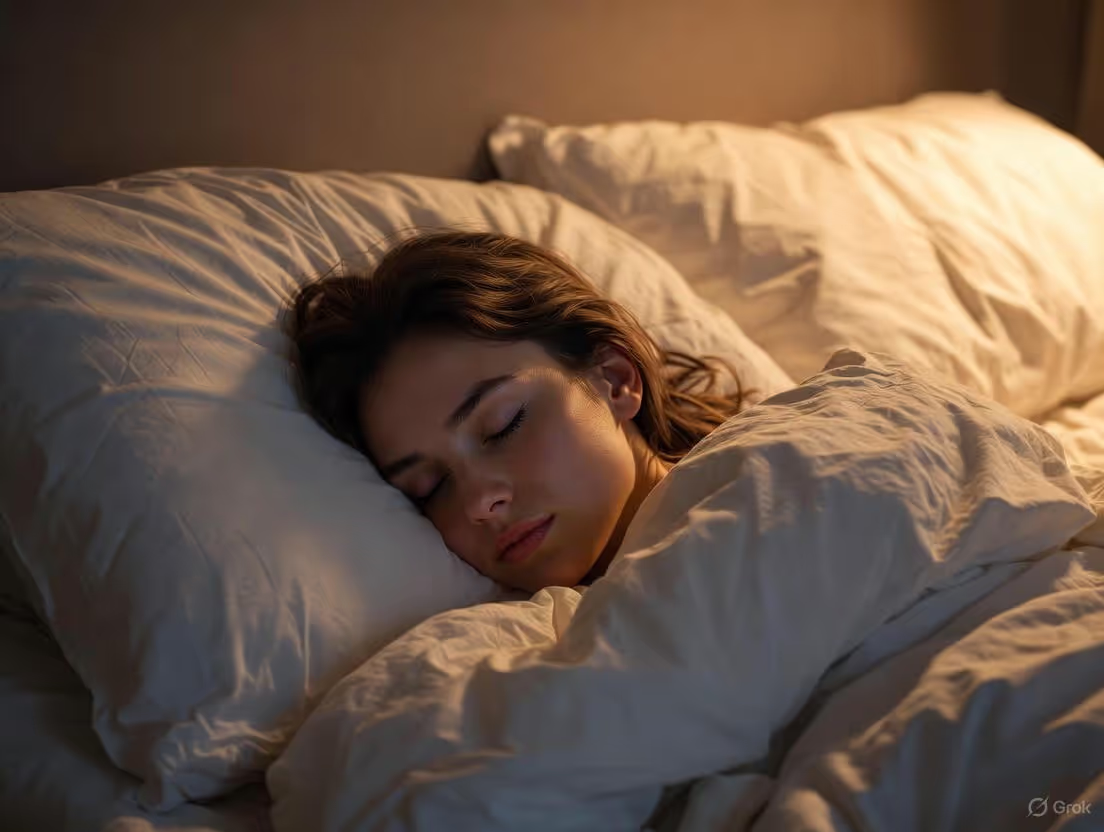
We often think of sleep as a passive state, a mere pause button on our waking lives. Nothing could be further from the truth. Sleep is an intensely active period of critical biological maintenance, a nightly renovation project for your brain and body. Understanding its profound impact is the first step in prioritizing it.
During sleep, your brain isn’t offline; it’s in the data center, performing essential IT work. It consolidates memories, transferring short-term impressions from the hippocampus to the long-term storage of the neocortex, solidifying what you learned that day. It also engages in a literal cleansing process, where the glymphatic system flushes out metabolic waste products, including toxins like beta-amyloid, which is associated with Alzheimer’s disease. Skimp on sleep, and you’re essentially halting both the filing and the janitorial services of your mind.
The physical repairs are just as vital. This is when growth hormone secretion peaks, facilitating tissue repair, muscle growth, and cell regeneration. Your immune system releases cytokines, proteins that help fight infection and inflammation. Chronic sleep deprivation weakens this response, leaving you more susceptible to illness. Furthermore, sleep is a master regulator of your metabolic health. It balances hormones like ghrelin (which signals hunger) and leptin (which signals fullness). When you’re sleep-deprived, ghrelin spikes and leptin drops, a hormonal one-two punch that drives cravings for high-calorie, sugary foods.
The "secret weapon" aspect lies in this foundational role. You can follow the perfect nutrition plan, but without sleep, your hormonal profile will sabotage your efforts. You can commit to a rigorous exercise routine, but without sleep, your muscles cannot repair and strengthen effectively. You can practice mindfulness, but on a tired brain, emotional regulation is like trying to calm a storm with a teaspoon. Quality sleep is the bedrock upon which all other wellness goals are built. It amplifies your efforts in every other domain of your life. For a deeper dive into the science of recovery and daily readiness, our blog features numerous articles on these interconnected topics.
Consider this analogy: If your body is a sophisticated smartphone, sleep is not just the time you plug it in to charge. It’s when all the essential software updates are installed, background processes are optimized, cached junk files are cleared, and the battery is calibrated for peak performance. Starting your day without completing this cycle means you’re running on outdated, glitchy software with a battery that drains too fast. Prioritizing sleep is the ultimate biohack, and it’s freely available to everyone who chooses to claim it.
For decades, the universal prescription for sleep has been a rigid eight hours per night. While this is a useful average, treating it as an inflexible rule can create unnecessary anxiety and obscure what truly matters: sleep quality and consistency. The goal isn’t to hit a magical number, but to achieve restorative, efficient sleep that leaves you feeling refreshed.
The eight-hour standard stems from population-wide averages. Some individuals are genetically predisposed to be "short sleepers" (functioning optimally on 6 hours or less) or "long sleepers" (needing 9+ hours). More important than the clock is your sleep architecture—the cyclical journey through different stages of sleep each night.
A full cycle lasts about 90 minutes and includes:
"Good sleep" means cycling through these stages smoothly, 4-6 times per night, with minimal disruptions. You can be in bed for 8 hours but have poor sleep quality due to frequent awakenings (from noise, light, or an uncomfortable environment) or a lack of deep/REM sleep caused by factors like alcohol, stress, or sleep disorders.
Therefore, a better set of goals for a beginner might be:
Tools that provide detailed breakdowns of your sleep stages, like the Oxyzen smart ring, move you beyond guesswork. Instead of wondering, "Did I get enough?" you can see data: "I had 1.5 hours of deep sleep and my REM was fragmented." This transforms the goal from chasing an arbitrary duration to optimizing the architecture of your sleep. For answers to common questions on how such technology tracks these stages, you can always visit our comprehensive FAQ.
When we decide to improve our sleep, the temptation is to go all in: a 9:30 PM bedtime, blackout curtains, a cold room, no screens, meditation, and a weighted blanket—all starting tonight. This "shock and awe" approach relies on massive willpower, which is a finite resource. When life inevitably intervenes (a late work email, a social event), the entire rigid structure often collapses, leading to the "what the hell" effect and abandonment of the goal.
The far more effective strategy is rooted in behavioral psychology and the science of tiny habits, championed by experts like BJ Fogg and James Clear. The core principle is to make new habits so small and easy that they require minimal motivation, thereby reducing friction and increasing the likelihood of consistency.
The formula is simple: Anchor + Tiny Behavior = Automatic Habit.
You take a behavior you already do reliably (the anchor) and attach a new, microscopic sleep-positive behavior to it. The new behavior should take less than 60 seconds and feel almost effortless.
Examples for Sleep:
These actions are not the end goal. They are the "on-ramp" to the larger habit. The victory is in the consistency of the ritual, not the scale. Each time you complete your tiny habit, you reinforce your identity as "someone who prioritizes sleep." The brain receives a dopamine hit from the sense of accomplishment, wiring in the positive behavior. Over time, you can gradually expand "phone across the room" into a full 30-minute screen curfew, or "three deep breaths" into a 5-minute meditation.
This method bypasses the resistance that comes from daunting goals. It’s about winning the day by executing a trivial act that keeps you on track. The compounding effect of these tiny wins builds an unshakeable routine far more effectively than sporadic bursts of perfectionism. As you build this new identity, seeing tangible data from a wearable can reinforce progress; reading about others' journeys, like those shared in our customer testimonials, can provide powerful social proof and motivation.

Your first small, powerful win is to work with your biology, not against it. Not everyone is wired for a "10 PM to 6 AM" schedule. Your chronotype is your body’s natural predisposition for sleep and wake times, influenced by genetics. Forcing a night owl into an early bird schedule is a recipe for chronic sleep deprivation and misery, even if they are in bed for 8 hours.
Popularized by sleep scientist Dr. Michael Breus, chronotypes are often categorized beyond just "morning lark" and "night owl" using animal analogies:
Your Small Win: Discover your chronotype. You can take Dr. Breus’s quiz or simply observe your natural tendencies on a free day (no alarms, no caffeine). When do you naturally feel sleepy? When do you wake without an alarm? When is your mental focus sharpest?
Once you have a clue, respect it with one tiny adjustment. If you're a Wolf forced to start work at 8 AM, don't try to go to bed at 9 PM. It won't work. Instead, focus on protecting your wake-up time first. Use your tiny habits to build a consistent morning routine, and let your bedtime gradually shift earlier as your body adjusts. The goal is to make your sleep schedule as regular as possible, even if its placement on the clock is unique to you.
Aligning your life with your chronotype reduces "social jet lag"—the strain of living out of sync with your internal clock. It can lead to profound improvements in energy, productivity, and mood. This philosophy of personalized harmony, rather than a one-size-fits-all mandate, is core to our approach at Oxyzen. We believe effective wellness starts with understanding your unique biological blueprint.
The most potent signal for your circadian rhythm is not when you wake up, but when you get light exposure. However, the second most powerful regulator is the consistency of your sleep schedule. A fluctuating bedtime confuses your internal clock, making it harder to fall asleep and wake up refreshed. Think of it like changing time zones every few days—your body is in a constant state of jet lag.
Trying to hit the same exact minute each night is unrealistic and stressful. The "15-Minute Rule" provides a flexible yet effective framework.
Your Small Win: Establish a 30-minute "bedtime window" and stick to it every single day, even on weekends.
Why does this work?
Implement this with a tiny habit. Your anchor could be a specific TV show ending or a nightly alarm on your phone labeled "Begin Wind-Down." The action is to start your pre-sleep routine (like brushing your teeth) immediately when that anchor occurs. This rule is the cornerstone of sleep hygiene. All other optimizations—darkness, temperature, relaxation—become more effective when built upon a predictable schedule. For more tips on building sustainable wellness routines, our blog is a dedicated resource.
Your brain and body need a transition period from the alert, stimulated state of daytime to the calm, restful state required for sleep. You cannot sprint at full speed and then instantly slam on the brakes and expect to stop smoothly. The "wind-down" is that essential deceleration lane.
A ritual is not a rigid list of tasks; it’s a curated series of calming, enjoyable cues that signal to your nervous system, "The day is over. It is safe to rest now."
Your Small Win: Dedicate the 30 minutes before your bedtime window to a screen-free, stress-free ritual. Start with just one or two elements and build from there.
Elements of an Effective Wind-Down Ritual:
The key is consistency and sensory pleasure. The ritual should feel like a gift, not a chore. Over time, simply starting the first step (like brewing a cup of herbal tea) will trigger a psychological shift toward sleepiness. This practice of intentional transition reflects a deeper philosophy of mindful living, a value that is central to our story and mission of reconnecting people with their innate biological wisdom.
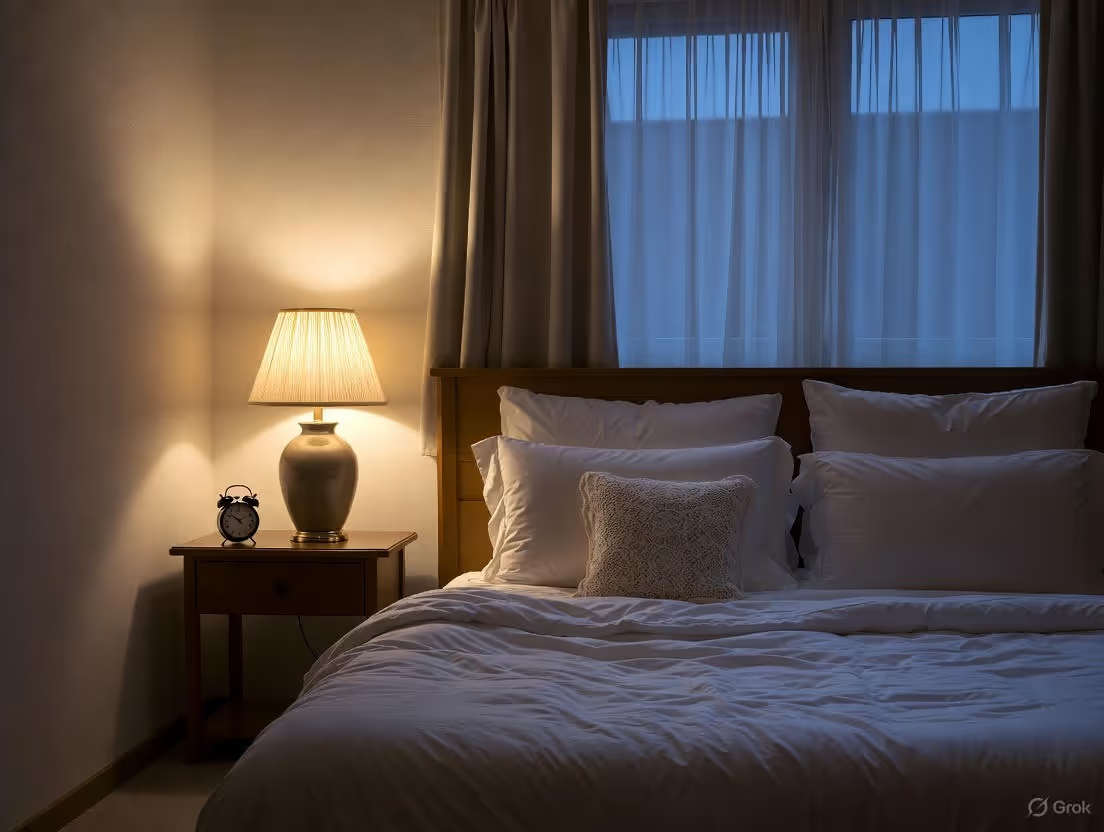
Your sleep environment should be a cave: cool, dark, and quiet. This isn't just about comfort; it’s about removing barriers that prevent your brain from entering and maintaining deep sleep. Each disruption—a passing car's headlights, a stuffy room, a partner’s snore—can cause a micro-arousal, pulling you out of restorative sleep stages even if you don’t consciously remember waking.
Your Small Win: Tackle one environmental factor per week. Don't overhaul your room in a day.
By methodically engineering your environment, you remove the need for willpower. The cave does the work for you. It’s the ultimate passive sleep aid. As you optimize, tracking the changes with a device like the Oxyzen ring can show you the direct impact—perhaps a measurable increase in deep sleep after achieving true darkness. Seeing this data turns an abstract tip into a proven personal strategy, and any questions on optimizing your setup can be explored in our support-focused FAQ.

Sleep quality isn't determined solely in the hours before bed. Your daily choices lay the groundwork for how well you’ll sleep that night. Three of the biggest daytime saboteurs are caffeine timing, light exposure, and unmanaged stress.
Your Small Win: Implement one "daytime defense" against each saboteur.
1. Caffeine: Respect the Half-Life.
Caffeine has a half-life of about 5-6 hours. If you have 200 mg of caffeine at 4 PM, about 100 mg is still active in your system at 10 PM, potentially blocking sleep-inducing adenosine receptors.
2. Light: Harness Your Master Clock.
Morning light is your circadian rhythm's most important cue. It suppresses melatonin, boosts cortisol (in a healthy, alerting way), and sets your internal clock for the day.
3. Stress: Contain the Spillover.
The anxious thoughts and physiological tension of the day don't magically disappear at bedtime. They follow you into the dark.
By managing these factors proactively, you prevent the need for drastic corrective action at night. You’re not just "preparing for sleep"; you’re living your day in a way that makes good sleep a natural outcome. This holistic view of wellness, where daily habits and nighttime rest are inextricably linked, is a theme we explore extensively in our educational blog content.
Here lies one of the most beautiful paradoxes of human physiology: to rest deeply at night, you must move adequately during the day. Regular physical activity is one of the most evidence-backed promoters of sleep quality and duration. It helps you fall asleep faster, spend more time in deep sleep, and reduces nighttime awakenings. However, the relationship between exercise and sleep is nuanced, especially regarding timing and intensity.
The benefits are multifaceted. Exercise helps regulate your circadian rhythm by raising your core body temperature during the activity. The subsequent drop in temperature hours later acts as a powerful sleep signal. It also reduces stress and anxiety by metabolizing stress hormones like cortisol and adrenaline and stimulating the release of endorphins. Furthermore, physical fatigue (the good kind) creates a genuine, healthy need for recovery, which sleep provides.
Your Small Win: Focus on consistency, not optimization. Aim to add movement to your day, with a strong emphasis on morning or afternoon timing.
The goal is to build the identity of "someone who moves daily." This regularity, more than the specific workout, yields the most significant sleep benefits over time. As you become more consistent, you can explore how different types and timings of exercise affect your personal sleep metrics. Many users of the Oxyzen smart ring find that on days they record a workout, their sleep data shows improved deep sleep and higher sleep scores, creating a positive feedback loop that motivates both habits.
Remember, the opposite of rest is not activity; it's stress. Purposeful, enjoyable movement relieves stress and primes the body for restoration. Sedentary behavior, on the other hand, often coexists with mental stagnation and anxiety, which are the true enemies of sleep.
Napping is a double-edged sword in the quest for better nightly sleep. When done correctly—strategically—it can boost afternoon alertness, improve mood, and enhance cognitive performance without stealing from your nighttime sleep drive. When done incorrectly—randomly—it can leave you with grogginess and insomnia at bedtime. For beginners, understanding the rules of the nap is a small win that can transform your relationship with daytime fatigue.
The golden rules of strategic napping are the Three S's: Short, Smart, and Scheduled.
Your Small Win: If you feel an irresistible afternoon slump, instead of reaching for a sugary snack or third coffee, commit to a 15-Minute Power Rest. Set a timer for 20 minutes (giving yourself 5 minutes to drift off). Lie down or recline in a quiet, dim place. You don't even need to fall fully asleep. The act of closing your eyes, disconnecting, and practicing deep breathing for 15 minutes can lower cortisol and reset your nervous system.
This practice reframes rest as a tool, not a sign of laziness. It’s a strategic pause that respects your body's natural rhythms. For those tracking their data, you might notice that a well-timed nap doesn’t negatively impact your nighttime sleep score, while an ill-timed one might show increased sleep latency (time to fall asleep). This kind of insight helps you personalize the rule, a principle we value deeply in our approach at Oxyzen.
What you eat and drink—and when—plays a substantial role in your sleep architecture. The goal isn't to follow a restrictive "sleep diet," but to understand the key principles that allow your digestive system to rest at night, not work overtime.
Your Small Win: Implement one dietary timing rule and consider one sleep-supportive nutrient.
The Timing Rule: The 3-Hour Buffer. Aim to finish your last large meal at least 3 hours before your bedtime window. Digestion increases core body temperature and requires metabolic activity, both of which are at odds with the cooling, quieting state needed for sleep. If you need a small snack closer to bed due to hunger (which can also keep you awake), keep it small, bland, and balanced. Think a banana, a small handful of almonds, or a piece of whole-grain toast with a thin spread of nut butter.
Nutrients to Consider (Naturally in Foods):
The Hydration Balance: Staying hydrated is crucial, but timing matters. Avoid drinking large quantities of fluids in the 1-2 hours before bed to minimize disruptive nighttime trips to the bathroom. Front-load your hydration earlier in the day.
The Alcohol Illusion: This is critical. Alcohol is a sedative; it may help you fall asleep faster, but it severely fragments sleep. It suppresses REM sleep in the first half of the night and can cause rebounds of lighter sleep and awakenings in the second half. Relying on alcohol for sleep is a guaranteed way to sabotage sleep quality. A small win here is to establish a "one-drink minimum" rule—if you drink, have your last one at least 3 hours before bed, and never use it as a sleep aid.
Observing how different foods and meal timings affect your sleep can be revelatory. Many find that a late, heavy, or spicy meal correlates with a lower resting heart rate variability (HRV) and more restless sleep, data points clearly visible with advanced wearables. For more insights on how daily habits translate into nightly data, our community's testimonials often share these personal discoveries.
One of the biggest challenges for sleep beginners is the subjectivity of "feeling." You might "feel" you slept terribly but actually cycled through decent sleep stages. Conversely, you might "feel" okay after a night of fragmented, alcohol-influenced sleep, not realizing your cognitive performance and emotional resilience are severely impaired. This disconnect between perception and reality is where objective data becomes a game-changer.
Moving from guesswork to knowledge empowers you to make precise, effective adjustments. This is the realm of sleep trackers, and not all data is created equal. While smartphone apps and bedside devices can offer estimates, tracking sleep from the wrist or finger provides more physiological signals.
Key metrics to understand:
Your Small Win: Don't start by buying expensive gear. Start by correlating habit with feeling. Keep a simple sleep log for one week. Note:
Even this basic log will reveal patterns. Once you've mastered the tiny habits, if you choose to explore deeper, a device like the Oxyzen ring can automate this tracking with clinical-grade sensors, showing you the direct impact of your new habits. For instance, you might see your HRV trend upward after a week of consistent bedtimes, or your deep sleep increase after you started your 3-hour meal buffer. This turns wellness from a vague concept into a tangible, optimized practice. For technical questions on how such data is gathered and interpreted, our FAQ provides detailed answers.
Perhaps the most important, yet most overlooked, goal for a beginner is the cultivation of the right mindset. Sleep is not a performance metric to be hacked and conquered. It is a natural biological process. Approaching it with anxiety and impatience—"I MUST sleep 8 hours tonight!"—activates the very stress response (fight-or-flight) that is the antithesis of sleep.
The small wins philosophy inherently battles this by focusing on process, not outcome. You are not failing if you don't sleep perfectly. You are experimenting.
Your Small Win: Adopt two mantras:
This mindset of compassionate curiosity reduces sleep effort, which is a major cause of insomnia. When you let go of the need to control the outcome and simply trust the process of good habits, sleep often comes more easily. This journey of self-discovery and gentle optimization is at the heart of our brand's story. We believe in empowering individuals with knowledge and tools, not pressure, to foster a healthier relationship with their own well-being.
After exploring these foundational areas, your final small win is to synthesize them into a Personal Sleep Protocol (PSP). This is not a rigid military schedule, but a flexible, one-page guide that encapsulates what works for you. It’s your sleep playbook, built from the small wins you've already achieved.
Your PSP should include:
Daily Anchors (Non-Negotiables):
Evening Wind-Down Ritual (The 30-Minute Sequence):
Sleep Sanctuary Standards:
Weekly Check-In:
The power of the PSP is that it externalizes the system. You don't have to remember everything; you just follow your own pre-designed plan. It reduces decision fatigue and makes good sleep habitual. As you learn more about your body—perhaps through deeper tracking with a device from Oxyzen—you can update your PSP. It becomes a living document of your health journey.
You’ve started tracking. Now, what do the numbers actually mean? Understanding sleep architecture through data is like learning to read the vital signs of your recovery. It moves you beyond "I slept 7 hours" to "I got 1.5 hours of deep sleep, but my REM was fragmented, likely due to late-day stress." This level of insight is empowering.
Let’s break down the key metrics and their personal implications:
1. Deep Sleep (NREM Stage 3): Your Physical Restoration Dashboard.
2. REM Sleep: Your Mental and Emotional Processing Center.
3. Resting Heart Rate (RHR) & Heart Rate Variability (HRV): Your Nervous System Barometers.
Your Small Win: For one week, don’t just glance at your sleep score. Each morning, look at one specific metric. Ask, "What might have influenced my deep sleep last night?" or "Why is my HRV trending up this week?" This practice builds data literacy and connects cause to effect, turning abstract numbers into a personalized guide. For a deeper exploration of these biomarkers and their meaning, our blog features dedicated articles on recovery science.
Waking up in the middle of the night and struggling to return to sleep is one of the most common and frustrating sleep challenges. It’s often called "sleep maintenance insomnia." Before anxiety takes over, understand this: Brief awakenings are normal. We cycle through lighter sleep stages multiple times a night. The problem isn’t the awakening; it’s the reaction to it.
Your goal is not to never wake up, but to master the art of the effortless return to sleep.
Phase 1: The Immediate "Do Not Engage" Protocol (The First 10 Minutes)
When you first wake, your mission is to preserve the sleepy, drowsy state.
Phase 2: The "Break the Cycle" Tactic (After 15-20 Minutes)
If you’re still wide awake after 15-20 minutes, the worst thing you can do is lie there trying to "force" sleep. This associates your bed with frustration.
Your Small Win: Prepare your "Sleep Rescue Kit" in advance. This includes a dim nightlight (amber or red) in the hallway or bathroom, a boring book on your nightstand, and perhaps a notepad for a "worry dump" if your mind is racing. Knowing your kit is there reduces the panic of waking up. This proactive approach is a hallmark of taking control of your sleep health, a philosophy shared by many who have documented their journey in our testimonials section.
Beyond darkness and quiet, three other environmental levers can significantly elevate sleep quality: precision temperature management, curated soundscapes, and air quality.
1. The Temperature Gradient Hack: Your body needs to dump heat to initiate sleep. The most advanced hack is to think in layers.
2. Soundscaping Beyond White Noise: While white noise (a consistent sound across all frequencies) is excellent, other colors of sound may be more effective for different people.
3. The Overlooked Factor: Air Quality & Humidity.
Optimizing these factors creates a biomechanically perfect sleep capsule, removing every possible physical barrier to uninterrupted rest. It’s the logical extension of the "sleep sanctuary" concept, informed by a deeper understanding of human physiology.
We touched on a digital sunset. Now, let's deepen the why and how. The blue light emitted by screens is only part of the problem. The cognitive and emotional stimulation is equally disruptive. Scrolling through social media, reading stressful news, or answering work emails activates your brain’s alertness and emotional centers, directly opposing the wind-down process.
Advanced Strategies for the Connected Life:
Your Small Win: Enable Night Shift/Dark Mode and Grayscale Mode on your phone tonight. Set them to activate automatically 1 hour before your target bedtime. This small, automated change reduces the addictive pull of your device as sleep time approaches, making your digital sunset habit easier to maintain.
Stress and poor sleep are locked in a vicious, self-perpetuating cycle. Stress (mental, emotional, physical) activates the sympathetic nervous system, releasing cortisol and adrenaline, which delay sleep onset and promote lighter, more fragmented sleep. Poor sleep, in turn, lowers your threshold for stress the next day, impairing emotional regulation and making you more reactive. Breaking this cycle requires daytime deactivation techniques.
Beyond Journaling: The "Physiological Sigh" and Body Scan.
The "Transition Ritual" After Work: Create a clear psychological boundary between your professional/daytime identity and your personal/evening self. This could be a 10-minute walk when you get home, changing out of work clothes, or a specific playlist that signifies "work is done." This ritual helps contain work-related stress, preventing it from spilling into your sleep.
Your Small Win: Practice the Physiological Sigh twice today: once in the afternoon and once when you get into bed. Notice the immediate shift in your body. This tool, backed by neuroscience, gives you active control over your stress response in real-time. Learning to manage this cycle is a profound step in personal wellness, a journey we are passionate about supporting, as detailed in our company's mission.
Life happens. Time zone changes, shift work, or social events will disrupt your perfect schedule. The goal isn't perfection, but resilience—the ability to recover quickly. Your small wins have built a robust system; now you need strategies to protect it during chaos.
For Jet Lag & Time Zone Travel:
For Shift Work:
The "One-Night Recovery" Protocol: After a single late night (e.g., a wedding, deadline), your instinct might be to sleep in. This can delay your circadian rhythm.
Your Small Win: Create a "Sleep Resilience Kit" for travel. Include a high-quality sleep mask, travel-sized white noise machine or earplugs, and blue-blocking glasses. Having these tools on hand puts you back in control of your environment, no matter where you are. This proactive preparedness is a theme echoed by users who share how consistent tracking with a device like the Oxyzen smart ring helps them navigate life's disruptions without losing sight of their health goals.
While this guide focuses on lifestyle optimization, it’s crucial to recognize when poor sleep might signal an underlying medical condition. No amount of perfect sleep hygiene can cure a sleep disorder. Knowing the red flags empowers you to seek appropriate help.
1. Insomnia: Difficulty falling or staying asleep, despite adequate opportunity, occurring at least 3 nights per week for 3 months, and causing daytime impairment. Key Differentiator: Chronic insomnia is persistent. A bad week due to stress is not a disorder.
2. Sleep Apnea: Characterized by repeated pauses in breathing during sleep, often accompanied by loud snoring and gasping. Major Red Flags: Excessive daytime sleepiness (falling asleep in meetings, while driving), morning headaches, witnessed apneas (a partner sees you stop breathing), and high blood pressure. Trackers that measure blood oxygen saturation (SpO2) can sometimes show repeated dips, which can be a prompt for further investigation.
3. Restless Legs Syndrome (RLS): An irresistible urge to move the legs, usually accompanied by uncomfortable sensations, that begins or worsens during periods of rest or inactivity in the evening.
4. Circadian Rhythm Disorders: When your internal clock is permanently misaligned with the demands of society (e.g., Delayed Sleep Phase Disorder—naturally falling asleep after 2 AM and waking after 10 AM, making a 9-5 job torturous).
When to See a Doctor:
Your Small Win: If you suspect a disorder, start a Symptom Log for two weeks. Detail sleep times, wake-ups, partner observations, and daytime fatigue levels. This objective log is invaluable for a sleep specialist. Remember, seeking help is a sign of prioritizing your health, not a failure of your self-care efforts. For those using advanced trackers, sharing anonymized trend data with a healthcare provider can offer additional context.
Sleep isn't just for recovery; it's for integration and innovation. This is where your investment in sleep pays exponential cognitive dividends.
The Sleep-Learning Link:
Sleep and Creativity (The "Eureka!" Phase):
Sleep and Emotional Intelligence:
By framing sleep as an active partner in your cognitive and creative pursuits, you elevate it from a maintenance chore to a performance-enhancing strategy. It becomes the ultimate cognitive enhancer, with no side effects. This perspective on holistic human potential is what drives our commitment at Oxyzen, a journey you can read more about here.
As you become adept at sleep optimization, the final piece of mastery is zooming out. Daily scores fluctuate; life has rhythms. The true measure of success is in the long-term trends.
What to Look For in Your Monthly/Quarterly Data:
These macro-trends confirm that your habits are sustainable and effective. They are the real "win."
Avoiding Sleep Obsession & Burnout: Paradoxically, an over-focus on sleep data can create performance anxiety ("orthosomnia"), where the quest for perfect sleep ruins sleep.
Your Small Win: At the end of each month, take 10 minutes to review your long-term trends. Note one positive trend and one area of curiosity. Set one gentle intention for the next month (e.g., "I notice my HRV drops on weekends I drink alcohol. I'll experiment with having just one."). This mindful, big-picture review turns your journey into a sustainable practice for life.
This portion has taken you from a beginner with small goals to a knowledgeable practitioner capable of deep optimization, troubleshooting, and leveraging sleep for peak human performance. You are now equipped not just to sleep better, but to use sleep as the foundational tool for a healthier, more resilient, and more creative life. In the final third of this guide, we will integrate all these concepts into a holistic 360-degree view of wellness, exploring the symbiotic relationship between sleep, nutrition, fitness, and mental health, and providing a definitive roadmap for lifelong sleep health.
Life happens. Time zone changes, shift work, or social events will disrupt your perfect schedule. The goal isn't perfection, but resilience—the ability to recover quickly. Your small wins have built a robust system; now you need strategies to protect it during chaos.
For Jet Lag & Time Zone Travel:
For Shift Work:
The "One-Night Recovery" Protocol: After a single late night (e.g., a wedding, deadline), your instinct might be to sleep in. This can delay your circadian rhythm.
Your Small Win: Create a "Sleep Resilience Kit" for travel. Include a high-quality sleep mask, travel-sized white noise machine or earplugs, and blue-blocking glasses. Having these tools on hand puts you back in control of your environment, no matter where you are. This proactive preparedness is a theme echoed by users who share how consistent tracking with a device like the Oxyzen smart ring helps them navigate life's disruptions without losing sight of their health goals.
While this guide focuses on lifestyle optimization, it’s crucial to recognize when poor sleep might signal an underlying medical condition. No amount of perfect sleep hygiene can cure a sleep disorder. Knowing the red flags empowers you to seek appropriate help.
1. Insomnia: Difficulty falling or staying asleep, despite adequate opportunity, occurring at least 3 nights per week for 3 months, and causing daytime impairment. Key Differentiator: Chronic insomnia is persistent. A bad week due to stress is not a disorder.
2. Sleep Apnea: Characterized by repeated pauses in breathing during sleep, often accompanied by loud snoring and gasping. Major Red Flags: Excessive daytime sleepiness (falling asleep in meetings, while driving), morning headaches, witnessed apneas (a partner sees you stop breathing), and high blood pressure. Trackers that measure blood oxygen saturation (SpO2) can sometimes show repeated dips, which can be a prompt for further investigation.
3. Restless Legs Syndrome (RLS): An irresistible urge to move the legs, usually accompanied by uncomfortable sensations, that begins or worsens during periods of rest or inactivity in the evening.
4. Circadian Rhythm Disorders: When your internal clock is permanently misaligned with the demands of society (e.g., Delayed Sleep Phase Disorder—naturally falling asleep after 2 AM and waking after 10 AM, making a 9-5 job torturous).
When to See a Doctor:
Your Small Win: If you suspect a disorder, start a Symptom Log for two weeks. Detail sleep times, wake-ups, partner observations, and daytime fatigue levels. This objective log is invaluable for a sleep specialist. Remember, seeking help is a sign of prioritizing your health, not a failure of your self-care efforts. For those using advanced trackers, sharing anonymized trend data with a healthcare provider can offer additional context.
Sleep isn't just for recovery; it's for integration and innovation. This is where your investment in sleep pays exponential cognitive dividends.
The Sleep-Learning Link:
Sleep and Creativity (The "Eureka!" Phase):
Sleep and Emotional Intelligence:
By framing sleep as an active partner in your cognitive and creative pursuits, you elevate it from a maintenance chore to a performance-enhancing strategy. It becomes the ultimate cognitive enhancer, with no side effects. This perspective on holistic human potential is what drives our commitment at Oxyzen, a journey you can read more about here.
Your Trusted Sleep Advocate: Sleep Foundation — https://www.sleepfoundation.org
Discover a digital archive of scholarly articles: NIH — https://www.ncbi.nlm.nih.gov/
39 million citations for biomedical literature :PubMed — https://pubmed.ncbi.nlm.nih.gov/
Experts at Harvard Health Publishing covering a variety of health topics — https://www.health.harvard.edu/blog/
Every life deserves world class care :Cleveland Clinic - https://my.clevelandclinic.org/health
Wearable technology and the future of predictive health monitoring :MIT Technology Review — https://www.technologyreview.com/
Dedicated to the well-being of all people and guided by science :World Health Organization — https://www.who.int/news-room/
Psychological science and knowledge to benefit society and improve lives. :APA — https://www.apa.org/monitor/
Cutting-edge insights on human longevity and peak performance:
Lifespan Research — https://www.lifespan.io/
Global authority on exercise physiology, sports performance, and human recovery:
American College of Sports Medicine — https://www.acsm.org/
Neuroscience-driven guidance for better focus, sleep, and mental clarity:
Stanford Human Performance Lab — https://humanperformance.stanford.edu/
Evidence-based psychology and mind–body wellness resources:
Mayo Clinic — https://www.mayoclinic.org/healthy-lifestyle/
Data-backed research on emotional wellbeing, stress biology, and resilience:
American Institute of Stress — https://www.stress.org/


