


Sleep Health Quick Wins: Easy Changes With Big Impact
Quick wins include getting morning sunlight, avoiding caffeine after noon, and establishing a fixed wake time.
Quick wins include getting morning sunlight, avoiding caffeine after noon, and establishing a fixed wake time.
%402x.svg)
It’s 2:37 AM. You’ve been watching the ceiling fan complete another thousand rotations, your mind replaying the day’s conversations and tomorrow’s to-do list on a frantic, unforgiving loop. The alarm will blare in just a few hours, launching you into a new day of responsibilities while you’re operating on a cognitive deficit. You’re not alone. In our always-on, hyper-connected world, chronic sleep deprivation has become a silent epidemic, undermining our health, happiness, and performance. We chase complex biohacks and expensive solutions, often overlooking a profound truth: the most significant transformations begin with the simplest, most accessible steps.
Welcome to a pragmatic guide designed not for the sleep elite, but for the exhausted realist. This is not about achieving a perfect, unattainable “sleep score” or rigidly adhering to a monastic bedtime ritual. It’s about identifying the high-leverage, low-friction adjustments that deliver outsized returns on your investment in rest. Think of it as sleep hygiene decluttered—removing the noise to focus on the signals that truly matter.
Forget the overwhelm. We’re bypassing the theory and diving straight into actionable, evidence-based “quick wins.” These are the changes you can implement tonight or this week that don’t require a complete lifestyle overhaul but can dramatically improve how you fall asleep, stay asleep, and wake up feeling restored. And in our quest for personalized insight, technology like the Oxyzen smart ring becomes not a crutch, but a compass, offering objective data to see what’s actually working for your unique physiology. The journey to reclaiming your rest—and by extension, your energy, focus, and vitality—starts with a single, simple shift. Let’s begin.
You might think sleep begins when your head hits the pillow, but in reality, it starts the moment light hits your eyes in the morning. Your sleep-wake cycle, or circadian rhythm, is a 24-hour internal clock governed by a master conductor in your brain: the suprachiasmatic nucleus. This conductor doesn’t take its cues from your planner or your phone’s bedtime reminder. It takes its primary marching orders from light, specifically blue-wavelength light. Understanding and manipulating this light-dark signal is perhaps the most powerful, and most overlooked, quick win in sleep optimization.
Within the first hour of waking, exposure to bright, natural light is a non-negotiable signal to your brain that the day has begun. It suppresses the sleep hormone melatonin and starts a timer for its release roughly 12-14 hours later. A study published in Sleep Health found that individuals who got significant morning sunlight exposure fell asleep faster and reported better sleep quality than those who remained in dim indoor environments.
The Quick Win: Make it a non-negotiable habit to get 10-15 minutes of outdoor light within 30-60 minutes of waking. No sunglasses. Just step outside with your coffee, walk the dog, or simply sit by a window. On overcast days, the light intensity is still far greater than indoor lighting. This simple, zero-cost practice strengthens your circadian rhythm, boosting daytime alertness and setting the stage for melatonin production later.
While morning light is your ally, artificial light—especially the blue light emitted by LEDs, smartphones, tablets, and computers—is your circadian rhythm’s nemesis after sunset. This light tricks your brain into thinking it’s still daytime, delaying melatonin release and pushing back your body’s readiness for sleep.
The solution isn’t to abandon technology at 6 PM (for most, that’s unrealistic), but to manage it strategically.
Actionable Quick Wins for Evening Light:
Light management isn’t just about what you add; it’s about what you remove. True darkness during sleep is critical. Even small amounts of light from a charging LED, a streetlamp, or a crack in the door can fragment sleep and reduce sleep quality by disrupting melatonin production.
The Quick Win Audit: Lie in your bed at your usual sleep time. What lights can you see? Cover or remove them. Invest in blackout curtains or a high-quality sleep mask. Make your bedroom a light-proof cave. As you’ll see when you explore our blog for more wellness tips, this single environmental tweak is consistently rated as a game-changer by individuals tracking their sleep data.
By taking conscious control of your light exposure—flooding your system with brightness in the morning and fiercely protecting your darkness at night—you align with your biology’s most fundamental rhythm. This isn’t just a sleep tip; it’s a foundational practice for holistic health. To understand the technology that can help you track the impact of these changes on your physiological state, you can learn more about smart ring technology and its application in daily wellness.

If light is the conductor of your sleep orchestra, temperature is the metronome, setting the precise rhythm for your descent into and progression through the sleep stages. Your core body temperature isn’t static; it follows a circadian rhythm of its own. A deliberate drop in core temperature is one of the strongest signals your body receives to initiate sleep. By optimizing your thermal environment, you work with this natural process, rather than against it.
In the evening, as part of your wind-down, blood vessels in your skin dilate (a process called vasodilation). This increases blood flow to your extremities, radiating heat away from your core and causing your body temperature to fall by about 1-2 degrees Fahrenheit (0.5-1 degree Celsius). This drop is a prerequisite for the onset of sleep. If your environment is too warm, this process is hindered, leading to restlessness and difficulty falling asleep.
Research points to a sweet spot for ambient bedroom temperature: between 60-67°F (15.5-19.5°C) for most people. This range facilitates the body’s natural cooling process. A room that’s too cold can be disruptive, but the more common enemy is a room that’s too warm.
Quick Win Temperature Adjustments:
The market has responded to this science with a range of solutions:
The “ideal” temperature is subjective. Your metabolism, age, gender, and even the sleep stage you’re in affect your needs. This is where personalized data becomes invaluable. A device like the Oxyzen smart ring can track subtle changes in your skin temperature throughout the night, correlating them with your sleep phases and restlessness. You might discover, for instance, that your temperature spikes during late-night wake-ups, indicating your room is too warm. This objective feedback allows you to move beyond generic advice and fine-tune your environment for your body. For a deeper look at how personalized data transforms sleep strategy, discover how Oxyzen works beyond simple step counting.
Mastering your thermal environment is a profound quick win because it addresses a primal, non-negotiable biological requirement for sleep. By becoming the curator of your own sleep climate, you unlock deeper, more uninterrupted rest.
We often reach for beverages to modulate our energy and mood, but their long-term effects on sleep architecture are routinely underestimated. Two of the biggest culprits in modern sleep sabotage are also two of our most beloved social lubricants: caffeine and alcohol. Managing their intake isn’t about total abstinence for most people, but about strategic timing based on their half-lives and physiological impacts.
Caffeine is a potent adenosine receptor antagonist. Adenosine is a neurotransmitter that builds up in your brain throughout the day, creating “sleep pressure.” Caffeine blocks the receptors that sense this buildup, making you feel alert. The problem? Caffeine has a half-life of about 5-6 hours. This means if you consume 200 mg of caffeine at 3 PM, about 100 mg is still active in your system at 8-9 PM, interfering with the natural rise of sleep pressure.
The Quick Win – The 1 PM Rule: For the majority of adults, establishing a firm caffeine cutoff time of no later than 1:00 PM is a transformative practice. This allows sufficient time for most of the caffeine to clear your system before your target bedtime. If you’re highly sensitive, you may need to move this to late morning.
Alcohol is deceptive. It’s a central nervous system depressant, so it can indeed help you fall asleep faster. However, it absolutely devastates the quality of your sleep. As alcohol is metabolized, it causes:
The Quick Win – The 3-Hour Buffer: If you choose to drink, finish your last alcoholic beverage at least 3 hours before bedtime. This gives your liver a head start on metabolism, reducing the amount of active alcohol in your system when you try to enter crucial later sleep cycles. Even better, practice having several alcohol-free days per week and observe the difference in your sleep data and morning energy. Reading real customer reviews and user experiences often highlights this as one of the most common “aha moments” for people who start tracking their sleep objectively.
By respecting the pharmacology of these substances, you stop fighting your own biology. The caffeine cutoff preserves your natural sleep drive, while the alcohol buffer protects the integrity of your sleep architecture. These are not deprivation tactics; they are precision timing strategies to ensure the rest you get is genuinely restorative.
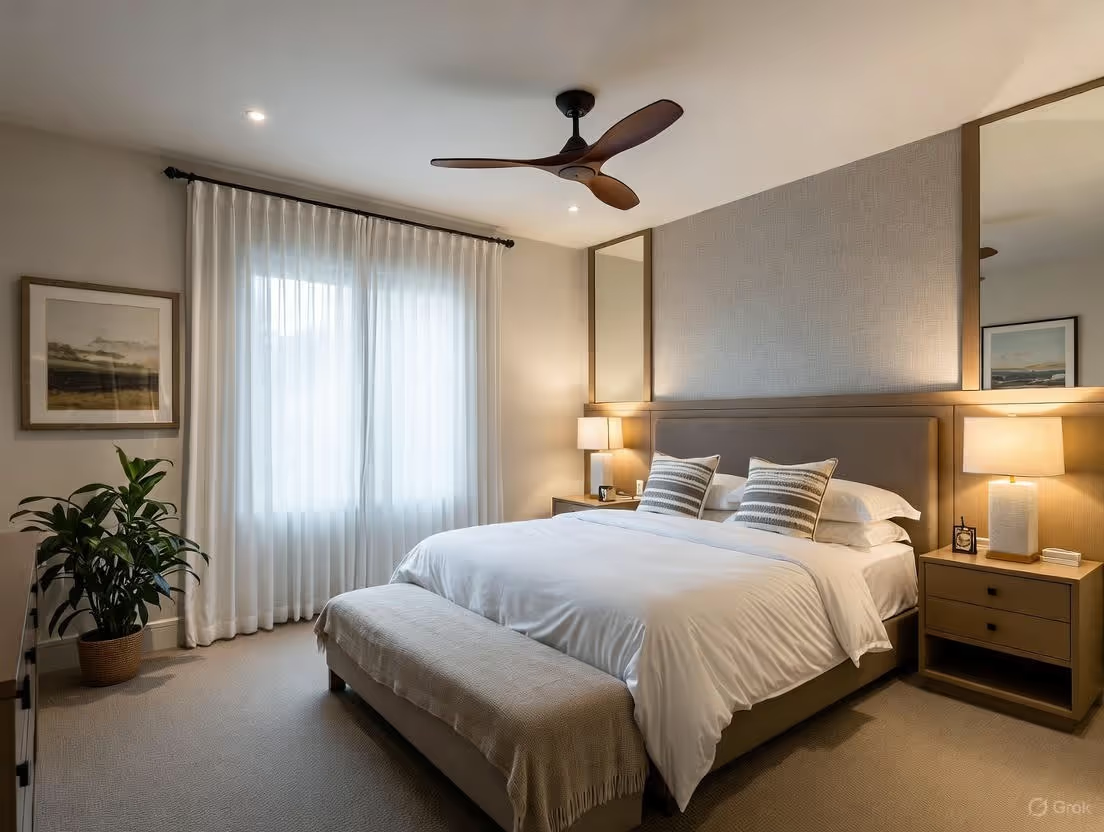
Your bedroom environment should be a Pavlovian cue for sleep and relaxation. For many, however, it has become a multi-purpose hub: a home office, a dining room, an entertainment center, and a worry chamber. This cognitive association is deadly for sleep. The principle of stimulus control, a core tenet of Cognitive Behavioral Therapy for Insomnia (CBT-I), states that the bed and bedroom should be strongly associated with sleep (and intimacy) only. When other activities invade this space, the association weakens, and arousal (the cognitive kind) increases.
The most disruptive intruder isn’t your TV; it’s your racing mind. Seeing work papers, a laptop, or a pile of laundry directly activates stress networks and problem-solving modes in the brain when you need them to be quiet.
Quick Win Sanctuary Strategies:
Screens are portals to the waking world, filled with stimulating content and social friction. Their presence in the bedroom is antithetical to sanctuary.
Your sanctuary should appeal to calm senses.
By deliberately designing your bedroom as a sanctuary, you create a powerful environmental cue. Walking into the room should trigger a physiological sigh of relief, a subconscious signal that it’s time to downshift. This process of intentional design reflects a deeper vision and values of honoring rest as a pillar of health, something we explore in our brand journey and founding story. When your environment consistently whispers “rest,” your nervous system learns to listen.

In our productivity-obsessed culture, we often try to jump directly from “high-speed” to “sleep mode”—an impossible task for the human nervous system. Sleep is not an on/off switch; it’s a gentle slope we must descend. A consistent, predictable wind-down ritual acts as a buffer zone, a dedicated period of “non-doing” that guides your mind and body from the sympathetic (fight-or-flight) state towards the parasympathetic (rest-and-digest) state necessary for sleep.
A ritual is a series of deliberate, calming actions performed in the same order each night. Its power lies in predictability. It conditions your brain to recognize the sequence as a precursor to sleep, initiating the release of calming neurotransmitters like GABA and beginning the physiological processes (like temperature drop) you’ve already optimized.
Constructing Your Personalized Wind-Down:
Your ritual should last 60 minutes and consist of activities that are calming, enjoyable, and not performance-based. Avoid anything that feels like a chore.
Sample Quick Win Wind-Down Blueprint (Choose & Adapt):
The magic is in the repetition. Performing this sequence consistently, even on weekends, strengthens the neural pathway linking these actions to sleep onset. You are essentially building a “sleep reflex.”
Tracking the impact of a wind-down ritual can be incredibly motivating. Using a device that measures Heart Rate Variability (HRV)—a key metric of nervous system recovery—you can see how your pre-bed routine directly influences your body’s readiness for sleep. Observing your HRV rise as you master your wind-down is concrete proof that your nervous system is learning to relax on cue. For those curious about the metrics behind the calm, our FAQ section offers support and answers on how these measurements work.
Your wind-down ritual is a gift of transition you give yourself each night. It’s the acknowledgment that you are a human being, not a human doing, and that the state of rest is worthy of its own dedicated, sacred time.
The relationship between movement and sleep is symbiotic and profound: good sleep enables better exercise performance, and consistent physical activity is one of the most reliable promoters of sound sleep. However, it’s not just about “working out.” The type, intensity, and timing of your movement are critical variables in this equation. Used strategically, daytime activity is a powerful, cumulative sleep supplement.
Regular moderate-to-vigorous exercise contributes to better sleep through multiple mechanisms:
This is where the “quick win” strategy becomes precise.
The Quick Win Movement Prescription:
Combining movement with morning or afternoon light exposure is a double-barreled sleep win. A lunchtime walk outside, for example, simultaneously boosts physical activity, exposes you to circadian-aligning light, and reduces stress.
By reframing exercise not as a separate performance task but as an integral component of your sleep hygiene, you create a virtuous cycle. You move better because you’re rested, and you rest deeper because you’ve moved. It’s a foundational practice that supports the company information and mission of holistic, data-informed wellness, allowing you to see the tangible connections between your daily actions and nightly recovery.

You are not just what you eat; you are how and when you eat in relation to your sleep. The timing, composition, and size of your meals act as powerful zeitgebers (time-givers) for your circadian system, particularly for peripheral clocks in your digestive organs. Strategic nutritional choices can either support a smooth transition into rest or create a digestive and metabolic distraction that keeps you awake.
A heavy meal too close to bedtime forces your digestive system to work overtime when it should be winding down. This can cause discomfort, acid reflux, and a rise in core body temperature from the thermic effect of food—all sleep disruptors.
The Quick Win – The 3-Hour Rule: Aim to finish your last large meal at least 3 hours before bedtime. This allows for significant digestion to occur before you lie down. For a small, easily digestible snack, a 60-90 minute buffer may be sufficient.
The composition of your evening meal and any pre-bed snack matters.
If hunger pangs are keeping you awake, a small, purposeful snack can be beneficial. Opt for a combination of a complex carb and a little protein or healthy fat.
Quick Win Snack Ideas:
Proper hydration is crucial for every bodily function, including sleep regulation. However, front-loading your hydration is key. Aim to drink the majority of your water earlier in the day and start tapering off 2 hours before bed to minimize nocturia.
Reiterating from our earlier section: caffeine and alcohol are potent nutritional factors. Their strategic management (the 1 PM cutoff and the 3-hour buffer, respectively) is non-negotiable for sleep quality and should be considered the first line of defense in nutritional sleep hygiene.
By viewing your evening nutrition through the lens of “what will support my body’s descent into rest?” you turn eating from a potential sleep disruptor into a sleep-promoting ritual. It’s not about a restrictive diet; it’s about intelligent timing and combination, giving your body the right fuel at the right time to power down effectively. For more insights on how daily habits intersect with biometric feedback, you can read our complete guide to holistic tracking.
The body may be tired, but the mind is a universe of its own—often one that refuses to shut off at bedtime. Anxiety, rumination, and a relentless “to-do” list are the arch-nemeses of sleep onset. While we can’t stop thoughts from arising, we can change our relationship to them using simple, evidence-based cognitive techniques. These are mental quick wins designed to create space between you and your racing thoughts.
The core principle is to stop fighting or engaging with intrusive thoughts. Struggle creates more arousal. Instead, the goal is to observe them with neutrality and let them pass.
Directing your mind toward a neutral or pleasant focus can crowd out anxious thoughts.
Anxiety and gratitude cannot occupy the same mental space with full intensity. Shifting focus from what’s wrong to what’s right can lower physiological arousal.
The Quick Win Practice: As you lie in bed, name (silently or aloud) three specific things you are grateful for from the day. They can be profound or simple: “I’m grateful for that delicious cup of coffee,” “I’m grateful my coworker thanked me,” “I’m grateful for this comfortable bed.” Feel the genuine emotion of gratitude for each one.
If your mind is a browser with 50 tabs open, writing is the act of bookmarking them all so you can safely close the window. Keep a notebook specifically for this purpose.
These cognitive tools are skills. They feel clumsy at first but become more effective with consistent practice. The goal isn’t to achieve a blank mind—that’s impossible—but to cultivate a mind that is less sticky, less reactive, and more able to settle into the quiet that sleep requires. Learning to master your mental landscape is a crucial part of the modern wellness journey, a topic we delve into further in our about-us section on holistic health.
Of all the quick wins, this is the heavyweight champion, the one that amplifies the effectiveness of all others. Your sleep-wake schedule is the backbone of your circadian rhythm. Variability is the enemy. Going to bed and waking up at drastically different times on weekends versus weekdays is known as “social jet lag,” and it has metabolic and cognitive consequences similar to traveling across time zones. Consistency anchors your biology.
Research, including studies from Harvard and the University of Pittsburgh, has shown that maintaining a regular sleep schedule is strongly correlated with better sleep quality, improved mood, sharper cognitive function, and even better cardiovascular health. Irregularity confuses your internal clock, weakening the signals for melatonin release and cortisol wake-up.
The Quick Win Commitment: Set a fixed wake-up time and a target bedtime, and stick to them seven days a week. Yes, even on Saturdays and Sundays.
This is the most important lever. Your wake-up time is the primary anchor for your circadian clock.
Your bedtime may have a little more natural variance (by 30-60 minutes) based on your evening schedule and sleepiness cues, but it should orbit a central target.
A perfectly rigid schedule can feel punishing. The compromise: Keep your wake-up time fixed, and allow your bedtime to vary by no more than 60 minutes. If you normally wake at 6:30 AM during the week, don’t sleep past 7:30 AM on weekends. You can stay up an hour later on Friday or Saturday night, but you still get up at (or very close to) your regular time. This preserves your rhythm while allowing for social flexibility.
The power of this consistency is that it makes sleep more automatic. Your body will begin to feel sleepy and alert at predictable times. You’ll spend less time trying to fall asleep and less time fighting morning grogginess. It is the ultimate foundation upon which all other sleep hygiene practices are built, turning individual quick wins into a sustained, resilient system of rest.
In our quest for better sleep, technology is a double-edged sword. The same devices that disrupt our circadian rhythms with blue light can also provide unparalleled insight into our personal sleep biology. The key is intentionality: using technology as a guided missile for self-discovery, not as a passive source of entertainment or anxiety. When used correctly, a data-driven approach can transform vague advice into a personalized sleep optimization plan.
Subjective sleep perception (“I slept terribly”) is often inaccurate. You might underestimate total sleep time or be unaware of frequent micro-awakenings. Objective data provides a baseline reality.
Key Sleep Metrics to Understand:
For continuous, comfortable sleep tracking, smart rings like Oxyzen offer a significant advantage over wrist-worn devices. Worn on the finger, they can often provide more accurate heart rate and heart rate variability data during sleep due to better contact with vascular pathways and less movement interference. They are also unobtrusive, making them easier to wear consistently—and consistency in tracking is everything.
How to Use Data as a Quick Win Tool:
The goal is empowerment, not obsession. Set boundaries:
By leveraging technology as a personal science lab, you move beyond generic advice. You discover your personal sleep formula—the unique combination of light, temperature, timing, and nutrition that allows you to thrive. This journey of personalized discovery is at the heart of our story and vision, using cutting-edge technology not as an end in itself, but as a means to deeper self-knowledge and sustainable wellness.
Theory is essential, but action is transformative. Overwhelm is the killer of new habits, so we’re going to close this portion of our guide with a simple, phased action plan for your first week. You will not implement all eleven sections at once. Instead, you will strategically layer in foundational changes that build upon each other, creating immediate wins to fuel your motivation.
Nights 1 & 2: The Foundation of Light & Time
Nights 3 & 4: Optimize Your Environment
Nights 5 & 6: Refine Fuel & Timing
Night 7: Reflect and Plan
This launch plan is your runway. You are not aiming for perfection; you are practicing consistency and observing the effects. Each small victory—falling asleep a few minutes faster, waking up once instead of three times, feeling a hint of morning alertness—is a data point proving you are on the right path.
Remember, the journey to exceptional sleep is a series of intelligent adjustments, not a single dramatic overhaul. You have begun that journey with the most impactful, evidence-based steps available. Trust the process, listen to your body, and use the tools at your disposal—from blackout curtains to biometric feedback—to become the architect of your own recovery. Your future, well-rested self is already thanking you.
While often overlooked, how you breathe during sleep is arguably the single most critical factor for sleep quality and long-term health. Breathing is the interface between your autonomic nervous system and your environment, and dysfunctional breathing—particularly mouth breathing and sleep-disordered breathing like apnea—shatters sleep architecture, floods your system with stress hormones, and deprives your brain and body of oxygen. The quick wins here are preventive, foundational, and transformative.
Nasal breathing is our biological design. The nose filters, humidifies, and warms air, and produces nitric oxide—a potent vasodilator that improves oxygen uptake in the lungs by up to 20%. Mouth breathing bypasses this system, leading to dry mouth, increased snoring, and a higher likelihood of sleep apnea. It shifts the body into a sympathetic-dominant state, even during sleep.
Quick Win Assessment: Do you wake with a dry mouth or sore throat? Does your partner note loud snoring or gasping? Do you often feel congested at night? If yes, nasal breathing is a priority.
Conscious breathing exercises are a direct lever on your nervous system. They are the fastest way to shift from stress (sympathetic) to calm (parasympathetic).
The Quick Win 5-Minute Routine (in bed):
This simple practice lowers heart rate, reduces blood pressure, and quiets mental chatter, acting as a potent physiological bridge into sleep.
Loud, chronic snoring, witnessed pauses in breathing (apnea), and excessive daytime sleepiness are red flags for Obstructive Sleep Apnea (OSA). This is a serious medical condition requiring professional diagnosis, often with a sleep study. Addressing breathing is a foundational health intervention, and the data from a 24/7 wellness tracker that measures blood oxygen (SpO2) variations can provide the initial clues that prompt a conversation with your doctor. Observing frequent, unexplained dips in your nightly SpO2 is valuable information, not to self-diagnose, but to advocate for your health. For those curious about the role of such tracking in overall wellness, discover how Oxyzen works to monitor these vital signals seamlessly.
By prioritizing nasal breathing and conscious breathwork, you aren’t just improving sleep; you are enhancing your body’s oxygenation, reducing systemic inflammation, and strengthening your nervous system’s resilience. It’s a quick win that pays dividends in every aspect of health.
When foundational lifestyle changes are in place but sleep still proves elusive, or during periods of acute stress or transition, natural supplements can serve as valuable, short-term tactical tools. However, the supplement aisle is a minefield of hype and variable quality. The key is to think of supplements not as magic bullets, but as supportive actors that address specific deficiencies or modulate specific pathways in your neurochemistry. They work best on a stage already set by good sleep hygiene.
Melatonin is not a “sleeping pill.” It is the hormone that signals darkness to your body, initiating the cascade toward sleep. It’s most effective for specific scenarios, not nightly use for most people.
Effective Uses:
Crucial Quick Win Guidelines:
Supplements are the finishing touch, not the foundation. By focusing first on light, timing, and environment, and then strategically layering in a high-quality magnesium or glycine, you support your biology without overriding it. Finding the right combination is a personal journey, and hearing from others can provide context; you can read about real customer reviews and user experiences with integrating data and natural supports in their routines. Remember, the goal is to use these tools to reinforce your natural sleep drive, not to replace the profound work of your own circadian rhythm.
What if you could tap into a state that delivers 50-70% of the mental and physical restoration of deep sleep… while fully awake? This is the promise of Non-Sleep Deep Rest (NSDR), a category of practices that actively shift your nervous system into a deep recovery state. For nights of poor sleep or days of high stress, NSDR is the ultimate quick win to mitigate deficits, reduce sleep anxiety, and boost overall resilience. It reframes “rest” as an active skill, not just a passive outcome.
NSDR practices, primarily yoga nidra (“yogic sleep”) and certain guided visualizations, induce a brainwave state similar to the twilight zone between wakefulness and sleep (Stage 1 and 2). This is marked by theta waves, associated with deep relaxation and creativity. During this state:
You don’t need special equipment or training. A simple audio-guided session is profoundly effective.
How to Practice:
By integrating NSDR into your toolkit, you decouple “restoration” from “sleep.” This is psychologically liberating. A bad night of sleep becomes a manageable inconvenience, not a catastrophe, because you know you have a tool to recover some of that deficit during the day. This reduces performance anxiety around sleep, which in turn makes sleep easier to achieve. It’s a meta-quick win that changes your entire relationship with rest and recovery. Exploring different modalities of recovery is a key part of a modern wellness strategy, a topic we often expand upon for those looking to explore our blog for more wellness tips.
Sleep is often portrayed as a solitary pursuit, but for the vast majority of adults, it’s a partnered activity. The quality of our close relationships and the logistics of sharing a sleep space have a direct, measurable impact on our rest. From mismatched schedules and temperatures to snoring and blanket-hogging, the “social” aspect of sleep is a critical frontier for optimization. Addressing it with empathy and strategy can improve both sleep and relationship satisfaction.
Humans have a natural, though weak, tendency towards sleep-wake synchrony with close partners. When schedules are wildly mismatched (e.g., a night owl and an early bird), it creates friction.
Quick Win Compromises:
Different people have different thermal needs and sensitivity to light and sound.
Snoring is not just a nuisance; it’s a sleep disruptor for both parties and a potential health signifier. Addressing it must be a team effort focused on health, not blame.
Even with separate schedules or spaces, creating a small, consistent pre-sleep connection ritual strengthens bonds. This could be a 5-minute cuddle, sharing one thing you’re grateful for about each other, or simply a goodnight kiss. This positive emotional closure reduces stress and promotes feelings of safety, which are conducive to sleep.
Optimizing social sleep requires viewing the bedroom as a shared biome that must meet two sets of biological needs. It’s an exercise in creativity, communication, and compromise. The payoff is immense: better individual health and a stronger, more empathetic partnership. This holistic view of wellness, encompassing both individual data and relational harmony, is central to the vision and values we hold in creating tools for better health.
Sleep is not an isolated event; it’s the final act of a daily play. The scenes that unfold from the moment you wake—your exposure to stress, your activity patterns, even your posture—directly script the quality of your night. By embedding specific, proactive “tune-ups” into your daytime routine, you accumulate sleep pressure and calm your nervous system in a way that makes the descent into sleep feel inevitable, not like a struggle.
Chronic, low-grade stress keeps cortisol levels subtly elevated, which can blunt the evening melatonin rise. The goal isn’t to eliminate stress, but to punctuate it with recovery.
Quick Win Practices:
How you hold your body during the day affects your ability to relax it at night. Chronic tension in the neck, shoulders, and hips can lead to discomfort and restlessness.
The commute from work brain to home brain is critical. If you work from home, this is even more essential.
By viewing your day as a series of opportunities to invest in your night, you build “sleep capital.” Each breathing break, each stretch, each mindful transition is a deposit. Come bedtime, your account is rich with relaxation, making the withdrawal into sleep effortless. These daytime micro-habits are the subtle art of sleep hygiene, turning it from a nighttime chore into a all-day lifestyle. For those interested in tracking how these subtle changes affect physiological markers of recovery like HRV, you can learn more about smart ring technology and its application in daily life.
Physical pain—whether chronic (like arthritis or back pain) or acute (from injury or poor ergonomics)—is one of the most direct and brutal thieves of sleep. It fragments sleep architecture, reduces time in deep and REM stages, and creates a vicious cycle where pain disrupts sleep, and poor sleep lowers pain tolerance, amplifying perceived pain the next day. Breaking this cycle requires a proactive, multi-faceted approach that extends far beyond the bedroom.
Your evening routine should include specific practices to down-regulate the nervous system’s pain signaling.
Long-term pain management for sleep requires addressing the root cause during the day.
Pain perception is modulated by stress and attention. Techniques that calm the nervous system also reduce the subjective experience of pain.
Managing pain for sleep is an ongoing dialogue with your body. It requires experimentation with heat, cold, support, and position. Tracking your sleep can be particularly revealing here; you might see a clear correlation between days with physical therapy and longer stretches of undisturbed sleep, providing powerful motivation to stick with your daytime regimen. For support on integrating wellness technology into a pain management strategy, our FAQ section offers detailed guidance. By taking a proactive, holistic approach, you can reclaim your nights from the grip of discomfort and restore the healing power of uninterrupted sleep.
We’ve touched on digital sunsets and removing devices from the bedroom. Now, let’s examine the deeper psychological impact of our digital diets and how a strategic, intentional relationship with technology—a true “detox” in the sense of removing poison, not just reducing use—can liberate your mind for deeper relaxation and more creative, restorative sleep. This is about cognitive hygiene.
Our devices are engineered to capture and fragment our attention. Endless scrolling, notification pings, and the “fear of missing out” (FOMO) keep our brains in a state of high-alert, shallow processing. This has two major sleep consequences:
Go beyond a simple nightly rule. Think in terms of zones and durations.
1. The Spatial Detox:
2. The Temporal Detox:
3. The Content Detox:
Allow yourself to be bored. Boredom is the fertile ground from which creativity, self-reflection, and mental relaxation grow. When you’re waiting in line or have a few spare minutes, resist the urge to pull out your phone. Look around. Observe. Let your mind wander. This mental state is a close cousin to the relaxed, pre-sleep mind.
How do you know it’s working? Subjectively, you’ll feel a decrease in “brain static” and an increased capacity for patience. Objectively, if you use a wellness tracker, you might observe:
A true digital detox isn’t about Luddism; it’s about intentionality. It’s about making technology a tool you use with purpose, rather than a environment you live within unconsciously. By reclaiming your cognitive space, you create the mental quiet necessary for sleep to flourish. This philosophy of intentional living and tech-enabled awareness, rather than tech-dependence, is woven into the our story and vision of creating tools that empower disconnect and recovery.
Quick wins provide momentum, but lasting sleep health requires embedding these principles into the fabric of your identity and daily life. It moves from doing sleep hygiene to being a person who prioritizes rest. This final section focuses on the mindsets, systems, and reviews that transform a collection of tips into a sustainable, sleep-resilient lifestyle capable of weathering life’s inevitable disruptions—stress, travel, illness, and changing seasons.
Abandon the pursuit of a “perfect” sleep score every night. Variability is normal. A sleep-resilient person doesn’t panic after one bad night; they trust their systems and know they have the tools to course-correct.
A “sleep policy” is a pre-commitment—a rule you set for your future self based on your hard-earned self-knowledge.
Every 3-4 months, conduct a personal sleep audit.
The ultimate goal is for these practices to become second nature—part of who you are. You are not someone “trying to sleep better.” You are someone who values restoration, who honors their circadian rhythm, who knows how to calm their nervous system. This identity shift is what makes the lifestyle stick.
By building a sleep-resilient lifestyle, you equip yourself for life’s challenges. You have a deep well of energy, emotional regulation, and cognitive clarity to draw from. The journey that began with simple quick wins evolves into a profound commitment to your own vitality. It’s a journey of self-knowledge, and for many, tools that provide objective feedback are invaluable companions. To see how others have navigated this path, you can read about real customer reviews and user experiences that highlight the long-term transformation possible when data meets dedicated practice.
This portion of our guide has taken you from the internal mechanics of breathing and supplementation to the social, psychological, and identity-based layers of lasting sleep health. You now possess a comprehensive toolkit—from tactical nighttime fixes to strategic daytime habits and a resilient mindset. The final third of this master guide will address specialized situations, advanced optimization, and synthesizing it all into your personalized, lifelong sleep protocol.
Your Trusted Sleep Advocate: Sleep Foundation — https://www.sleepfoundation.org
Discover a digital archive of scholarly articles: NIH — https://www.ncbi.nlm.nih.gov/
39 million citations for biomedical literature :PubMed — https://pubmed.ncbi.nlm.nih.gov/
Experts at Harvard Health Publishing covering a variety of health topics — https://www.health.harvard.edu/blog/
Every life deserves world class care :Cleveland Clinic - https://my.clevelandclinic.org/health
Wearable technology and the future of predictive health monitoring :MIT Technology Review — https://www.technologyreview.com/
Dedicated to the well-being of all people and guided by science :World Health Organization — https://www.who.int/news-room/
Psychological science and knowledge to benefit society and improve lives. :APA — https://www.apa.org/monitor/
Cutting-edge insights on human longevity and peak performance:
Lifespan Research — https://www.lifespan.io/
Global authority on exercise physiology, sports performance, and human recovery:
American College of Sports Medicine — https://www.acsm.org/
Neuroscience-driven guidance for better focus, sleep, and mental clarity:
Stanford Human Performance Lab — https://humanperformance.stanford.edu/
Evidence-based psychology and mind–body wellness resources:
Mayo Clinic — https://www.mayoclinic.org/healthy-lifestyle/
Data-backed research on emotional wellbeing, stress biology, and resilience:
American Institute of Stress — https://www.stress.org/


