


Sleep Health Red Flags Beginners Should Watch For
Red flags include chronic snoring, long-term insomnia, excessive daytime sleepiness, and relying on sleep aids.
Red flags include chronic snoring, long-term insomnia, excessive daytime sleepiness, and relying on sleep aids.
%402x.svg)
For years, I thought "good sleep" was simply a matter of clocking in seven hours and waking up without an alarm. My measure of success was blunt: could I function? The answer, I told myself, was a resounding yes. I powered through workdays, met social obligations, and maintained a busy life. Yet, beneath the surface of this functional existence was a persistent undercurrent of fog—a reliance on caffeine that felt less like a choice and more like a fuel line, a creeping forgetfulness I blamed on "being busy," and a mood that was perpetually balanced on a knife's edge. It wasn't until a routine health checkup, where my doctor glanced at my self-reported "good" sleep and asked a few probing questions, that the facade cracked. We weren't talking about sleep quantity; we were talking about sleep quality. That conversation was the first step in recognizing that my body had been sending me distress signals for months, maybe years. I just didn't speak the language.
Welcome to the silent epidemic of poor sleep health. In our hustle-centric culture, sleep is often the first sacrifice on the altar of productivity, seen as a passive state rather than an active, vital pillar of health. But what if the real issue isn't just about getting more sleep, but about understanding the quality of the sleep you're already getting? Beginners in the wellness journey often overlook the subtle, and sometimes not-so-subtle, red flags that indicate a deeper dysfunction in their sleep architecture. These aren't just whispers of tiredness; they are systemic alerts from your nervous system, your hormones, and your cognitive machinery.
This guide is your decoder ring. We're going to move beyond the simplistic metric of hours in bed and dive into the specific, actionable red flags that signal your sleep health needs attention. From the mysterious bruises you can't explain to the craving for salty snacks at midnight, your body communicates in a language of symptoms. By learning to identify these signals early, you can shift from reactive coping to proactive optimization, transforming your sleep from a state of unconsciousness into a foundational tool for peak performance, emotional resilience, and long-term health. Think of this not as a diagnosis, but as an empowerment—a way to become the expert on your own rest and recovery. Let’s begin by understanding why these red flags matter so profoundly in the first place.

We've all heard the golden rule: aim for 7-9 hours of sleep per night. This benchmark has become so ubiquitous that it often serves as the sole metric for millions assessing their sleep health. If you hit the number, you check the box. Mission accomplished. But this focus on duration alone is like judging a symphony solely by its length, paying no mind to its harmony, rhythm, or the skill of the musicians. You could have an eight-hour recording of an orchestra tuning their instruments; it meets the time requirement but fails utterly in its purpose.
Sleep is not a monolithic state. It is a complex, cyclical journey through distinct stages—light sleep (N1 & N2), deep sleep (N3, or slow-wave sleep), and REM (Rapid Eye Movement) sleep. Each stage plays a non-negotiable, specialized role in your biology.
The magic—and the vulnerability—lies in the cycle. A healthy sleeper will progress through these stages in 90-120 minute cycles, repeating them 4-6 times per night. The proportion of deep sleep is typically higher in the first half of the night, while REM periods lengthen in the second half. Disrupt this delicate architecture, and even eight hours in bed can leave you functionally impaired.
This is where red flags emerge. When you consistently fail to reach or maintain deep sleep, you might wake with body aches, get sick more often, or see a decline in physical performance. When REM sleep is fragmented, you may struggle with emotional volatility, brain fog, and memory lapses. The symptom is daytime fatigue; the cause is a specific deficit in your sleep architecture.
Modern technology, like advanced wellness wearables, has begun to peel back the curtain on this hidden world. For instance, a smart ring that tracks physiological signals overnight can show you not just how long you slept, but how well you cycled through these crucial stages. This data transforms sleep from a black box into a readable report, highlighting potential disruptions you'd never sense consciously. Companies at the forefront of this personalized health movement, like Oxyzen, are built on the principle that understanding these nuanced biometrics is the key to true wellness. You can learn more about how this technology translates raw data into actionable insights on their blog, where they break down complex sleep science into practical knowledge.
The takeaway is foundational: before you can identify the red flags, you must shift your mindset from sleep as a duration to sleep as a quality. The following sections detail the specific warning signs that this quality is under threat. They are your body's way of telling you that the symphony of your sleep is out of tune.
We often dismiss the afternoon slump as a normal consequence of modern life—a predictable lull after lunch, a sign of a busy morning. But when this daily crash feels less like a gentle wave of tiredness and more like a concrete wall, it’s a primary red flag for poor sleep health. This isn't just about feeling a little sleepy; it's about a profound dip in cognitive and physical energy so severe it impacts your focus, productivity, and mood.
A robust sleep cycle fortifies your body's internal clock, or circadian rhythm, and regulates the hormones that govern energy. Cortisol, your "alertness" hormone, should follow a natural curve: peaking in the morning to help you wake up, gradually declining through the day, and reaching its lowest point at night. Conversely, melatonin rises in the evening to promote sleep. When your sleep architecture is compromised—specifically when you get insufficient deep sleep—this cortisol rhythm can become dysregulated. You might not get a proper morning surge, relying on caffeine to jump-start your system, and then experience an aberrant, sharper crash in the afternoon as your body struggles to maintain equilibrium.
Furthermore, the brain relies on the glycogen stores replenished during deep sleep to fuel its operations throughout the day. Poor sleep quality means these cerebral gas tanks aren't filled to capacity. By mid-afternoon, you're running on fumes. The result? An irresistible urge to close your eyes, a brain that feels like it's buffering, irritability, and a significant drop in willpower (often leading to poor dietary choices, another red flag we'll cover).
Storytelling Example: Consider Maya, a graphic designer. She sleeps a solid 7.5 hours each night but constantly battles the 3 PM "void." Her screen becomes blurry, creative ideas evaporate, and she snaps at colleagues over minor feedback. She blamed her heavy lunch. However, when she began tracking her sleep with a focus on quality, she discovered she was getting less than 10% deep sleep, far below the optimal 15-25% for her age. Her body was never entering the truly restorative phase needed to fuel a full, stable day. Addressing her sleep quality, not just her lunch choices, was the key to dismantling that afternoon wall.
This crash is a direct signal from your physiology: the energy system recharge from last night was incomplete. It's one of the most common and debilitating red flags, and it often goes unquestioned. If your day requires a chemical intervention (multiple coffees, sugary snacks) to simply make it to 5 PM, your sleep is speaking to you. Listen.

This is the paradox that baffles and frustrates millions: you diligently go to bed early, you don't wake up during the night (or so you think), you get a full 8 or even 9 hours of shut-eye, and yet... the alarm feels like a betrayal. You drag yourself out of bed feeling as if you haven't slept at all. Your body is heavy, your mind is muffled, and the very idea of starting the day seems Herculean. This "non-restorative sleep" is a glaring, cardinal red flag.
If sleep duration were the only factor, this phenomenon wouldn't exist. Its persistence points directly to severe disruptions in sleep quality and architecture. There are several potential culprits:
The feeling of waking up exhausted is your body's most direct report card. It's saying, "The process failed. The required restoration did not occur." Ignoring this flag means starting every day with a profound energy debt, forcing your systems to run on a deficit. This chronic state is unsustainable and is a direct pipeline to burnout, compromised immunity, and mood disorders.
For those seeking to understand this disconnect between time in bed and feeling restored, exploring objective data can be revolutionary. Many users of detailed wellness trackers find that seeing their sleep stage breakdown provides the "aha" moment that explains years of morning fatigue. Reading about real user experiences and how they decoded similar issues can often provide the relatable insight needed to take the next step toward investigation. Your morning feeling is a data point. A brutally honest one. Trust it.
Let's be clear: enjoying a morning coffee is a ritual, not necessarily a red flag. The warning sign is dependence—when you need caffeine to achieve baseline alertness or when you find yourself on a afternoon rollercoaster of sugar crashes and caffeine top-ups just to mimic normal human function. This is not a personality quirk ("I'm just not a morning person"); it's a physiological compensation for a system running on empty.
Caffeine works by blocking adenosine receptors in your brain. Adenosine is a neuromodulator that accumulates in your brain throughout your waking hours, creating "sleep pressure"—the growing urge to sleep. Deep, quality sleep clears this adenosine away. When your sleep is poor, you wake up with abnormally high levels of adenosine still in your system. Your cup of coffee isn't giving you a "boost"; it's artificially blocking the signals of a deep sleep debt that was never paid. You're not adding credit; you're masking an overdraft.
Similarly, reaching for sugary snacks or refined carbohydrates in the afternoon is often a desperate bid for quick glucose to feed a fatigued brain that didn't get its proper overnight refueling. This creates a vicious cycle: the sugar spike leads to an insulin surge, which can lead to a subsequent crash, prompting more fatigue and more cravings, further destabilizing your energy and, ultimately, your sleep that night.
This reliance creates a deceptive facade of normalcy. You believe you're operating fine because the chemical crutches are holding you up. But underneath, the core issue—inadequate restorative sleep—remains unaddressed and often worsens, as caffeine and sugar can themselves impair sleep quality later on. It becomes a exhausting 24-hour cycle of borrowing energy from tomorrow to pay for today's deficit.
Ask yourself these diagnostic questions:
If you answer "yes" to any of these, your substance use is a symptom, not a solution. It is a loud, behavioral red flag waving from your nervous system, indicating that your natural energy production systems are underpowered due to poor sleep recovery. Addressing the sleep at the source is the only way to step off the stimulant-sedative rollercoaster and regain true, stable energy autonomy.
When we think of sleep's benefits, we often jump to the brain: memory, mood, focus. But one of the most profound impacts of deep, restorative sleep is on the physical body. Consequently, when sleep quality plummets, your body sends physical invoices in the form of increased pain perception and a weakened immune defense. You might find yourself with unexplained lower back pain, general muscle soreness that feels like you worked out (but didn't), nagging headaches, or a sense of overall physical inflammation. Concurrently, you seem to catch every cold that goes around the office, and recovery from even minor illnesses takes weeks.
The link is physiological, not coincidental.
Therefore, if you are someone who is perpetually "achy and sniffly," chronically fighting off minor ailments, your sleep quality deserves prime suspicion. You are living in a body that is not being given its scheduled maintenance time. It's trying to fight battles and repair infrastructure while operating at a energy deficit, and it's starting to show wear and tear. This red flag moves the conversation from "I'm tired" to "my body's fundamental repair systems are compromised." It’s a serious signal that should not be dismissed as just "getting older" or "bad luck." For those interested in the deep science of how sleep impacts every cellular system, the Oxyzen blog features ongoing research breakdowns that connect these physiological dots in clear, compelling ways.

Have you ever snapped at a loved one over a trivial misplacement of the remote? Felt tears well up from a slightly critical email? Or experienced a general sense of gloom or anxiety that seems to descend for no clear reason? While we quickly blame stress or circumstance, a primary and often overlooked culprit is poor sleep quality, specifically the disruption of REM sleep.
REM sleep is your brain's emotional sanitation department. During this stage, your brain processes emotional experiences from the day, filing memories but, crucially, stripping away the sharp, visceral emotional charge from them. The amygdala—the brain's emotional and fear center—is highly active during REM, but it's being processed and integrated with the prefrontal cortex, the rational, decision-making part of your brain. This nighttime therapy session allows you to wake up with the memory of yesterday's argument, but not the white-hot anger that accompanied it.
When REM sleep is cut short or fragmented, this emotional processing is left incomplete. You wake up with the "emotional residue" of the previous day still clinging to your neural pathways. The amygdala becomes hyper-reactive, and the connection to the calming prefrontal cortex weakens. The result is a state of emotional dysregulation:
This isn't a character flaw; it's a neurological state induced by sleep deprivation. Studies using fMRI scans show that a sleep-deprived brain's amygdala shows 60% greater emotional reactivity than a well-rested one. You are, quite literally, not yourself.
If you find your emotional landscape has become more volatile, unpredictable, or negatively skewed, scrutinizing your sleep is a critical first step. Improving sleep quality, particularly by protecting REM cycles (by avoiding alcohol before bed, maintaining a consistent schedule, and allowing for sufficient total sleep), can be more effective for mood stabilization than many realize. It’s a foundational piece of mental and emotional hygiene that is woefully under-prioritized. Understanding this mind-sleep connection is core to the holistic wellness approach championed by innovators in the space; you can read more about the philosophy behind integrating sleep into total wellbeing on their about page.
"Brain fog" is the colloquial term for a deeply frustrating experience: your thoughts feel slow, murky, and disconnected. You walk into a room and forget why. You struggle to follow a complex conversation or a plot in a movie. Reading a paragraph requires re-reading it three times. Your working memory—the mental notepad you use to hold information temporarily—seems to have shrunk to a Post-It note. This cognitive impairment is a classic and debilitating red flag for poor sleep health, and it ties directly to the architectural pillars of deep and REM sleep.
When you shortchange your sleep, you are essentially running your brain's most critical maintenance and filing operations on a limited schedule. The cognitive consequences are immediate and tangible. You are less sharp, less creative, more error-prone, and slower. In a knowledge economy, this isn't just an inconvenience; it's a direct threat to your performance and potential. If you feel like your mental processor has been downgraded, look to your sleep logs before you question your intelligence. The story of Oxyzen itself is rooted in a passion for unlocking human potential through this kind of precise biometric understanding; you can discover their journey and mission here.

The midnight raid on the pantry or the 4 PM vending machine pilgrimage isn't always a simple lack of willpower. Often, it's a powerful neurohormonal signal triggered by sleep deprivation. Poor sleep quality directly hijacks the hormones that regulate your appetite, creating intense, specific cravings that feel nearly impossible to resist.
Two key hormones are at play:
A single night of poor sleep has been shown to decrease leptin levels and increase ghrelin levels. This one-two punch sends a clear message to your brain: "You are low on energy. Seek food. Now." But it doesn't stop there. Sleep deprivation doesn't just make you hungrier; it specifically alters your brain's reward centers to crave high-calorie, high-carbohydrate, and high-fat foods.
Furthermore, when you are fatigued, the effort of preparing a healthy meal feels monumental. The path of least resistance is the highly rewarding, calorie-dense snack. This creates a vicious cycle: poor sleep leads to poor dietary choices, which can further disrupt sleep (due to indigestion, blood sugar spikes/crashes, etc.), leading to more cravings the next day.
If you notice a pattern of intense, almost compulsive cravings that align with periods of fatigue or follow a poor night's sleep, recognize this as a hormonal red flag, not a moral failing. Your body is biochemically begging for energy it didn't get from rest. Stabilizing your sleep is one of the most effective, yet overlooked, strategies for regulating appetite and achieving dietary goals. For many, getting detailed insight into their sleep patterns is the first step to breaking this cycle, and frequently asked questions about how to start are a great resource.
For athletes, fitness enthusiasts, or anyone who values physical vitality, sleep is the ultimate performance-enhancing drug—and the lack of it, the ultimate performance blocker. A decline in your workouts isn't always about needing a new program or better shoes; it can be a direct, quantifiable readout of poor sleep quality. This manifests in several ways:
The physiological reasons are rooted in the disruption of deep sleep:
Your training log and your body's feedback are powerful biometric tools. If you see a persistent, unexplained downturn in performance metrics or a drawn-out recovery curve, your sleep data is the next log you should be examining. The best training plan in the world cannot overcome a consistent deficit in restorative sleep. It is the non-negotiable foundation upon which all physical adaptation is built.
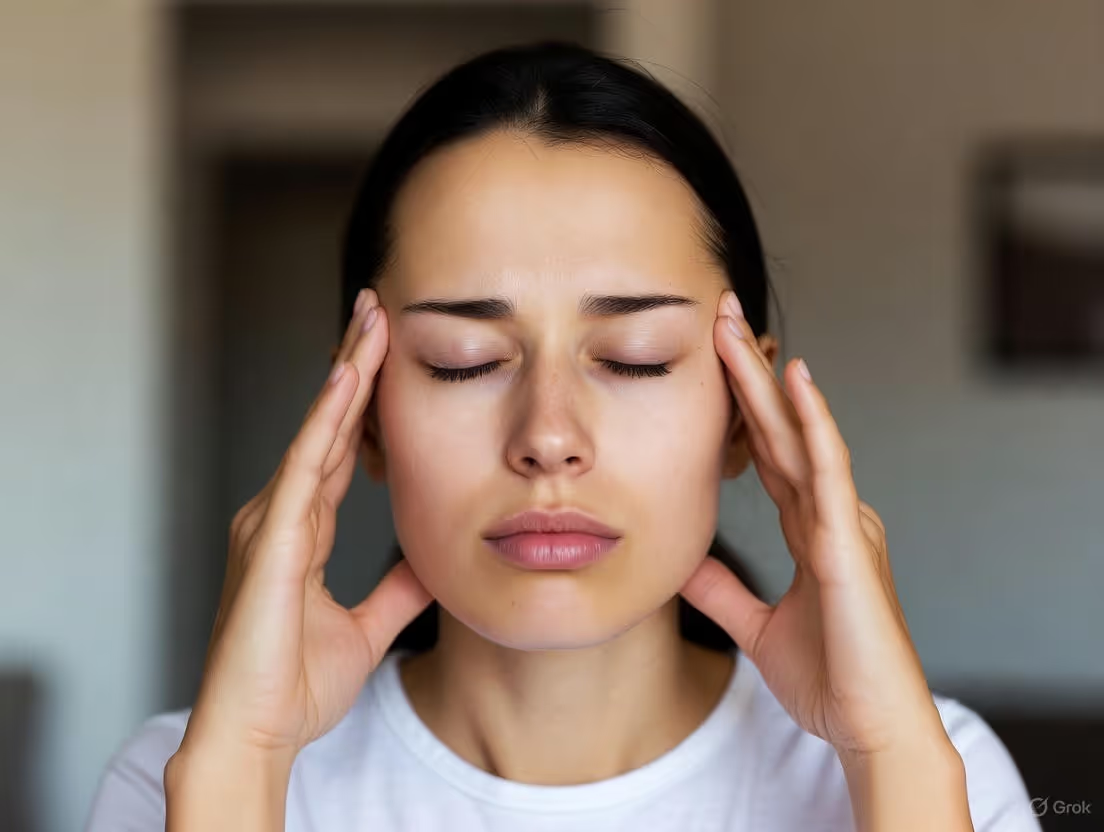
Starting the day with a pounding headache or a sore, tight jaw is a miserable experience. While there are many causes (dehydration, sinus issues), these morning-specific pains are significant red flags for sleep-related disorders, most notably sleep bruxism (teeth grinding and clenching) and sleep apnea.
Both bruxism and sleep apnea are major disruptors of sleep architecture, preventing you from reaching and maintaining deep, restorative sleep. They keep your nervous system in a state of heightened arousal throughout the night. The morning headache or jaw pain is the physical evidence of that nocturnal struggle.
If you consistently wake with these symptoms, especially if accompanied by snoring, witnessed breathing pauses, or unrefreshing sleep, it is crucial to speak with a healthcare professional. A dentist can assess for bruxism, and a sleep physician can evaluate for sleep apnea. Ignoring these flags can lead to long-term dental damage, cardiovascular strain from untreated apnea, and perpetually poor sleep quality. It’s a tangible, physical signal that your sleep is under attack, and it demands investigation.
For many, bedtime ceases to be a haven of relaxation and becomes a trigger for a cognitive spiral. As soon as your head hits the pillow, your mind, which may have been relatively quiet all day, suddenly shifts into overdrive. You replay awkward social interactions, mentally compose work emails, worry about tomorrow's to-do list, or grapple with existential anxieties. This "racing mind" phenomenon is a vicious cycle and a major red flag for sleep-related anxiety and poor "sleep hygiene" of the mind.
This isn't just stress; it's a conditioned response and a neurological state. Two key factors are at play:
Furthermore, the lack of a proper wind-down routine means you are bringing the cognitive speed and emotional charge of the day directly into bed. Your brain hasn't been given the transitional period it needs to downshift from "doing" mode to "being" mode.
This red flag highlights the critical importance of cognitive and behavioral sleep hygiene. It signals that your pre-sleep routine and your relationship with your bed need an overhaul. Techniques like establishing a consistent "worry period" earlier in the evening, practicing mindfulness or gentle yoga, and creating a strict, screen-free buffer zone before bed are not just "nice-to-haves"; they are essential interventions to break this cycle. Your mind needs a clear signal that it is safe to power down. The racing thoughts are its way of saying it hasn't received that signal.
Sometimes, the most critical red flags are the ones you cannot perceive yourself. You are unconscious, after all. This makes the observations of a bed partner, family member, or even a roommate invaluable—and often the first line of detection for serious sleep disorders.
These partner-reported signs are often met with deflection ("I've always snored") or embarrassment. However, they are objective data pointing to physical processes that are destroying sleep quality and posing health risks. Sleep apnea, left untreated, is linked to hypertension, heart disease, stroke, and type 2 diabetes.
If a trusted person has expressed concern about how you breathe or move during sleep, take it seriously. It is not a commentary on your character; it is a potentially life-saving observation. The next step is a conversation with your doctor, who may recommend a sleep study. Addressing these issues can be transformative, leading to dramatically improved sleep quality, daytime energy, and long-term health outcomes. For individuals navigating this discovery phase, having a resource to understand the broader context of sleep health and available tracking technologies can be comforting. You can find support and answers to common questions in our comprehensive FAQ.
Having identified the pervasive and often subtle red flags of poor sleep health, the journey shifts from awareness to action. Recognizing the signs is the critical first step, but it can also feel overwhelming. Is your 3 PM crash due to poor sleep, diet, or both? Is your partner's observation of snoring a harmless quirk or a medical alert? The path forward is not about panic, but about systematic, curious investigation. Think of yourself as a sleep detective, gathering clues about your own biology to build a personalized blueprint for better rest.
This phase is about empowerment through information. In our modern age, we have access to tools and knowledge that previous generations could only dream of. We can move beyond the frustrating guesswork of "I should sleep more" and into the precise realm of "I need to increase my deep sleep duration and reduce my sleep latency." This section of our guide provides the framework for that investigation. We'll explore how to effectively track your sleep, interpret the data in the context of your life, understand when it's time to bring in a professional, and begin implementing foundational changes. The goal is to transform those alarming red flags into actionable insights, paving the way for the restorative sleep your body is pleading for.
Before you can fix a problem, you must define it. Blanket statements like "I sleep badly" are not actionable. You need data. The good news is that tracking your sleep has moved far beyond just noting the time you went to bed. A multi-pronged approach will give you the clearest picture.
1. The Subjective Log: The Power of the Pen and Paper
Start with a simple sleep journal. This captures the qualitative data that devices cannot. Each morning, note:
This log creates patterns. You may see that on days you have wine after 8 PM, your sleep quality rating plummets, or that high-stress days lead to longer sleep latency.
2. The Objective Data: Leveraging Technology
This is where modern wellness technology becomes invaluable. While not medical-grade, consumer devices provide a wealth of objective biometrics.
The Synergy: The true power lies in correlating your subjective journal with your objective data. For example, your journal might say, "Woke up exhausted (2/10)." Your Oxyzen data might show: "Total Sleep: 7h 30m. Deep Sleep: 8%. REM Sleep: 10%. Awake 22 times." Suddenly, "exhausted" has a clear, quantifiable explanation: severe sleep fragmentation and a deep sleep deficit. This evidence file removes the mystery and guides your interventions. For a deeper dive into how to interpret these specific biometrics and what they mean for your daily life, explore the educational resources on our blog.
Raw data in a vacuum is just numbers. Its true value is unlocked when you weave it into the narrative of your daily life. This is the detective work that reveals root causes, not just symptoms. Your goal is to find the consistent "if X, then Y" relationships between your daily behaviors and your sleep metrics.
The Process of Correlation:
Storytelling Example: David, a project manager, was frustrated that his deep sleep was stuck around 10%. His data seemed random until he correlated it with his workout schedule. He discovered that high-intensity weight training sessions after 8 PM were followed by nights with his lowest deep sleep and highest resting heart rate. His body was too amped up, too flooded with cortisol and adrenaline, to descend into deep restoration. By shifting his tough workouts to the morning or early evening, his deep sleep average climbed to 18% within a week, and his morning muscle soreness dramatically decreased.
This correlative work turns abstract health advice into personal, irrefutable truth. "Don't exercise late" becomes "When I exercise late, my deep sleep suffers." This personalized knowledge is infinitely more motivating and actionable. It's the core of what modern, data-informed wellness is all about—moving from generic best practices to a custom-built operating manual for your own body. Many users find that this phase of discovery is where they truly connect with their wellness journey; reading about others who have had similar 'aha' moments can provide both inspiration and validation.
While self-tracking and lifestyle modification can resolve many sleep issues, some red flags are clear indicators that it's time to seek professional medical guidance. A sleep professional—such as a board-certified sleep physician—can provide diagnoses, rule out serious conditions, and offer treatments beyond the scope of home optimization.
Urgent Signs to Consult a Doctor:
What to Expect: A sleep specialist will start with a detailed history and may recommend an at-home sleep test or an in-lab polysomnogram (PSG). The PSG is the gold standard, monitoring brain waves, eye movements, muscle activity, heart rhythm, and breathing throughout the night. It can definitively diagnose apnea, narcolepsy, parasomnias, and other disorders.
Seeking help is not a failure of self-care; it is the ultimate act of self-care. It means you are taking your body's signals with the seriousness they deserve. Professional diagnosis can lead to life-changing treatments like CPAP therapy for apnea, which doesn't just improve sleep—it can lower blood pressure, reduce cardiovascular risk, and dramatically enhance quality of life. If you're unsure about your symptoms, a great first step is to consult our FAQ for guidance on common concerns and next steps.
While you investigate the root causes of your red flags, you must simultaneously fortify the foundation. Sleep hygiene is the set of behavioral and environmental practices that are conducive to sleeping well. Think of these as the universal rules of "Sleep Physics"—they apply to almost everyone, regardless of their specific issues.
The Core Pillars:
These fundamentals are not glamorous, but they are profoundly effective. They address the most common environmental and behavioral disruptors. You cannot out-supplement a poor sleep environment or a chaotic schedule. Start here, master these, and you will have already eliminated a massive portion of what holds most people back from good sleep. This commitment to foundational health is at the core of the philosophy behind holistic wellness tools; you can read more about the values that drive this approach on our about page.
What you eat, and when you eat it, acts as a direct modulator of your sleep physiology. It’s not just about avoiding caffeine; it’s about understanding how food influences inflammation, blood sugar stability, and the production of sleep-critical neurotransmitters.
The Key Principles:
Practical Application: Keep a food log alongside your sleep journal for a week. Note not just what you ate, but when. Do you see a pattern of poor sleep following late, heavy, or sugary meals? Does a modest, balanced dinner at 7 PM correlate with better deep sleep scores? Your body will give you the answer. For many, simply stabilizing evening nutrition by having a light, protein-focused snack if needed (e.g., Greek yogurt, a small handful of nuts) instead of a carb-heavy one can make a noticeable difference in sleep continuity.
The relationship between exercise and sleep is a powerful, bi-directional positive feedback loop. Good sleep enhances athletic performance and recovery, and appropriate exercise promotes more robust, deeper sleep. However, the details—timing, intensity, and type—matter immensely.
The Benefits:
The Crucial Caveat: Timing and Intensity
Actionable Advice: Use your tracker. Correlate your workout type, intensity, and timing with your sleep latency and deep sleep scores. You may find that a 7 AM run leads to fantastic sleep, while a 8 PM CrossFit session leads to a high resting heart rate and fragmented deep sleep. Let your data guide you. If you must exercise late, opt for lower-intensity, mobility-focused, or relaxation-oriented sessions. The story of Oxyzen is intertwined with optimizing human performance, and understanding the nuanced relationship between daily activity and nightly recovery is a central theme. You can discover more about this integrated approach in our story.
In our modern world, stress is often chronic and low-grade, a constant hum in the background. This state of "always on" keeps the hypothalamic-pituitary-adrenal (HPA) axis activated, leading to a dysregulated cortisol rhythm. Instead of peaking sharply in the morning and declining smoothly to its nadir at night, cortisol can remain elevated in the evening, acting as a powerful sleep blocker. It's the biological embodiment of a racing mind.
Strategies for Cortisol Management:
The Data Connection: This is where tracking HRV (Heart Rate Variability) becomes especially insightful. HRV is a marker of your autonomic nervous system balance. A higher HRV indicates a healthy, responsive system with strong parasympathetic (rest-and-digest) tone. Chronic stress and poor sleep lower HRV. By implementing the above stress-management techniques, you can actually watch your HRV trend upward over weeks and months, providing objective proof that your nervous system is becoming more resilient. This creates a positive cycle: better stress management leads to better sleep, which leads to higher HRV and even better stress resilience. For ongoing support and new techniques to manage daily stress for better sleep, our blog is continually updated with research-backed strategies.
Now, we synthesize investigation, foundation, and targeted intervention into a coherent, personalized plan. The goal is to move from scattered efforts to a focused protocol. Do not try to change everything at once. That leads to overwhelm and abandonment.
The Step-by-Step Framework:
Week 1-2: The Baseline & Foundation Phase
Week 3: The First Intervention
Week 4: Assess and Iterate
Week 5 Onward: The Progressive Refinement
The Role of Technology: A device like a smart ring becomes your coach and accountability partner in this process. It provides the objective feedback to know if your changes are working. Seeing a graph where your deep sleep block visibly lengthens after you stop evening workouts is incredibly reinforcing. It turns an abstract health goal into a tangible, visual achievement.
This methodical, data-informed approach prevents burnout and fosters self-efficacy. You are not blindly following generic advice; you are conducting a personal science experiment where you are both the researcher and the subject. Each small win builds momentum and deepens your understanding of your own physiology. It’s a journey that never truly ends, as life and your body change, but it equips you with the tools to adapt and thrive.
Your Trusted Sleep Advocate: Sleep Foundation — https://www.sleepfoundation.org
Discover a digital archive of scholarly articles: NIH — https://www.ncbi.nlm.nih.gov/
39 million citations for biomedical literature :PubMed — https://pubmed.ncbi.nlm.nih.gov/
Experts at Harvard Health Publishing covering a variety of health topics — https://www.health.harvard.edu/blog/
Every life deserves world class care :Cleveland Clinic - https://my.clevelandclinic.org/health
Wearable technology and the future of predictive health monitoring :MIT Technology Review — https://www.technologyreview.com/
Dedicated to the well-being of all people and guided by science :World Health Organization — https://www.who.int/news-room/
Psychological science and knowledge to benefit society and improve lives. :APA — https://www.apa.org/monitor/
Cutting-edge insights on human longevity and peak performance:
Lifespan Research — https://www.lifespan.io/
Global authority on exercise physiology, sports performance, and human recovery:
American College of Sports Medicine — https://www.acsm.org/
Neuroscience-driven guidance for better focus, sleep, and mental clarity:
Stanford Human Performance Lab — https://humanperformance.stanford.edu/
Evidence-based psychology and mind–body wellness resources:
Mayo Clinic — https://www.mayoclinic.org/healthy-lifestyle/
Data-backed research on emotional wellbeing, stress biology, and resilience:
American Institute of Stress — https://www.stress.org/


