


Sleep Health Standards: What's Normal and What's Not
Normal is getting sufficient sleep to feel refreshed and function well without daytime impairment; significant deviation suggests a problem.
Normal is getting sufficient sleep to feel refreshed and function well without daytime impairment; significant deviation suggests a problem.
%402x.svg)
You've hit snooze three times. The fog in your brain feels thick enough to wade through. You guzzle coffee, vowing to get to bed early tonight, only to find yourself scrolling mindlessly into the wee hours again. Sound familiar? You're not alone. In our relentless, always-on culture, sleep has become a casualty, worn as a badge of honor by some and a source of silent frustration for millions more. But what if this cycle of exhaustion is quietly undermining everything from your heart health and immune function to your memory and mood?
For generations, sleep was a mysterious black box. We knew we needed it, but understanding its intricate architecture—and what happens when it crumbles—was out of reach. Today, we stand at a revolution. Cutting-edge research is decoding the very fabric of our slumber, while personal technology, like advanced wellness wearables, is pulling back the curtain on our individual sleep patterns. No longer must we rely on vague feelings of being "rested." We can now measure, analyze, and truly understand our sleep health with unprecedented precision.
This article is your definitive guide through that new frontier. We will move beyond old wives' tales and generic advice to explore the evidence-based standards of healthy sleep. We'll dissect what "normal" really looks like across different ages and lifestyles, and identify the clear red flags that signal something is amiss. More importantly, we'll empower you with the knowledge to not just track your sleep, but to transform it, using the latest insights and tools. Whether you're a frustrated insomniac, a curious biohacker, or simply someone who wants to wake up feeling truly revitalized, understanding these standards is your first step toward reclaiming your nights and supercharging your days. Welcome to the new science of sleep.
We live in a world that glorifies burnout. The phrase "I'll sleep when I'm dead" is uttered with a perverse sense of pride in boardrooms, startups, and homes worldwide. But this cultural mantra isn't just flawed; it's profoundly dangerous. The modern sleep crisis is a silent epidemic, one that the World Health Organization has labeled a public health issue, linked to a staggering rise in chronic diseases, mental health disorders, and accidents.
Consider the data: The Centers for Disease Control and Prevention (CDC) states that more than one-third of American adults regularly get less than the recommended minimum of 7 hours of sleep per night. This isn't mere tiredness; it's chronic sleep deprivation with a body count. The economic toll is equally breathtaking, with studies estimating sleep deprivation costs the U.S. economy over $411 billion annually in lost productivity and healthcare expenses. From the blue light of our devices suppressing melatonin to the 24/7 demands of globalized work, the pillars of good sleep—consistency, darkness, and calm—are under constant assault.
The consequences cascade through every system in your body. Skimping on sleep isn't like skipping a meal; it's more like systematically removing the maintenance crew from a complex, bustling city. Garbage (metabolic waste) piles up in the brain, increasing the risk for Alzheimer's. The cardiovascular system never gets its nightly reprieve, keeping blood pressure elevated. Hormones that regulate hunger (ghrelin and leptin) go haywire, driving cravings for high-calorie foods. Your immune system's T-cells, which hunt down infected cells, become less effective with just a few nights of poor sleep. This isn't about yawning through a meeting; it's about fundamentally compromising your body's ability to repair, defend, and thrive.
Yet, there is a powerful counter-movement rising. Armed with data and a deeper understanding of sleep science, people are beginning to treat sleep not as wasted time, but as the ultimate performance enhancer. This shift from guesswork to knowledge is being fueled by personal technology. By moving beyond simple step-counters to devices that offer genuine physiological insights, we can now see the direct impact of that late-night dinner, stressful day, or evening workout on our sleep architecture. This data-driven awareness is the first, crucial step out of the crisis and toward a sustainable, health-first lifestyle. It's the reason companies like ours at Oxyzen exist—to translate complex biometrics into actionable wisdom. Our mission, which you can read more about here, is rooted in empowering this precise shift from burnout to balance.
When someone asks, "Did you sleep well?" we usually measure our answer in duration. "I got 8 hours" is synonymous with success. But sleep science reveals a much richer, more nuanced picture. "Normal" and "healthy" sleep is a multidimensional construct, defined by several interlocking pillars: duration, continuity, timing, and architecture. Failing on any one dimension can leave you feeling unrefreshed, even if you spent enough time in bed.
First, let's tackle the most famous metric: duration. The National Sleep Foundation's updated guidelines provide age-specific recommendations, but for most adults aged 18-65, the sweet spot is 7 to 9 hours per night. It's crucial to understand this isn't an average; consistently hitting this target is key. Regularly dipping below 7 hours initiates the cascade of health risks we discussed. Interestingly, consistently sleeping more than 9-10 hours for an adult can also be associated with poor health outcomes, often signaling an underlying issue.
But duration is meaningless without continuity. This is the unsung hero of sleep quality. A "normal" sleep cycle involves progressing smoothly through various stages with minimal interruption. Waking up multiple times a night, even if you fall back asleep quickly, fragments this process and steals away the deep, restorative stages. Continuity is where many sleep troubles first manifest, often unnoticed unless you're tracking it.
Next is timing, or chronotype. Are you a lark, an owl, or somewhere in between? Your circadian rhythm—an internal, 24-hour biological clock—dictates this. A normal sleep pattern is one that is relatively consistent and aligned with your innate chronotype. Going to bed and waking up at wildly different times on weekends versus weekdays creates "social jet lag," confusing your internal clock and degrading sleep quality.
Finally, the most complex pillar: sleep architecture. This refers to the cyclical pattern of sleep stages we navigate each night: Light Sleep (N1 & N2), Deep Sleep (N3, or Slow-Wave Sleep), and REM (Rapid Eye Movement) Sleep. A healthy architecture features a balanced, rhythmic progression through these stages every 90-120 minutes. Deep sleep, predominant in the first half of the night, is critical for physical restoration and memory consolidation. REM sleep, more abundant later on, is essential for emotional processing, learning, and creativity. Disruptions to this delicate architecture are at the core of many sleep disorders.
Understanding your personal baseline across all these dimensions is the foundation of sleep health. This is where intuitive guesswork fails and objective data becomes indispensable. By tracking these metrics over time, you can move from asking "Was that normal?" to knowing exactly how your sleep patterns align with established health standards. For a deeper dive into how modern technology makes this possible, our blog features several articles on interpreting your own sleep data.
To truly appreciate what "normal" sleep entails, we need to take a journey through an average night. Imagine sleep not as a state of unconsciousness, but as a highly active, meticulously choreographed series of stages, each with a distinct purpose. This cycle repeats four to six times per night, and each loop is vital for a different aspect of your wellbeing.
Stage 1 (N1): The Gateway. Lasting just several minutes, this is the lightest stage of sleep, the drift between wakefulness and sleep. Your muscles begin to relax, your brain waves start to slow from their daytime wakefulness patterns (beta waves) into alpha and theta waves. It's easy to be awakened from this stage, and you might experience sudden muscle jerks or the sensation of falling.
Stage 2 (N2): The Foundation. You spend nearly half of your total sleep time in this stage. Your heart rate slows, body temperature drops, and brain waves show distinctive sleep spindles and K-complexes—bursts of activity believed to be crucial for memory consolidation and protecting the brain from waking from external stimuli. This stage solidifies your transition into stable sleep.
Stage 3 (N3): Deep Sleep (Slow-Wave Sleep). This is the most physically restorative phase. It's hardest to wake from; if you are roused, you'll likely feel disoriented and groggy. During deep sleep, tissue growth and repair occur, energy is restored, and critical hormones for growth and development are released. The brain clears out metabolic waste through the glymphatic system, a process increasingly linked to long-term brain health. This stage is predominant in the first half of the night.
REM Sleep: The Mental Theater. Approximately 90 minutes after falling asleep, you enter the first REM period. Your brain becomes highly active, almost to wakeful levels (hence the name "paradoxical sleep"). Your eyes dart rapidly behind closed lids, and most dreaming occurs. To protect you from acting out your dreams, your body enters a state of temporary muscle paralysis (atonia). REM sleep is essential for processing emotions, solidifying memories, and fostering learning and creativity. Each REM period lengthens as the night progresses, with the final one potentially lasting an hour.
A healthy sleep cycle seamlessly rotates through these stages: N1 → N2 → N3 → N2 → REM. The proportion of each stage changes with age (infants spend about 50% of sleep in REM, while adults settle around 20-25%), but the cyclical nature is constant. Disruptions to this cycle—like waking up constantly and restarting at N1, or failing to reach sufficient deep or REM sleep—are what lead to non-restorative sleep, even with adequate time in bed. This complex biochemistry is what advanced wellness wearables are now designed to monitor, giving you a window into the quality of your nightly journey. For answers to common questions on how this tracking works, you can always visit our FAQ page.
There is no single, universal "normal" for sleep. Our sleep architecture and needs evolve dramatically from the cradle to our later years. Recognizing these changes is critical to setting realistic expectations and identifying genuine problems versus age-appropriate shifts.
Infants & Children: Newborns sleep a fragmented 14-17 hours a day, with nearly 50% in REM sleep, which is thought to be crucial for their explosive brain development. As they grow, sleep consolidates into longer nocturnal periods with naps. School-aged children (6-13 years) typically need 9-11 hours. Deep sleep is very abundant during childhood, supporting physical growth and learning. The consistency of a bedtime routine is paramount for establishing healthy sleep-wake cycles.
Teenagers: Biology throws a curveball during adolescence. A natural shift in circadian rhythm makes teens prone to becoming "night owls," with melatonin secretion starting later in the evening. Coupled with early school start times, this creates a chronic state of sleep deprivation for many. They still need 8-10 hours, but their biology fights against societal demands.
Adults (18-64): As discussed, the 7-9 hour range is the standard. The proportion of deep sleep begins a very gradual decline from early adulthood. Lifestyle factors—career stress, parenting, social obligations—become the primary disruptors of sleep continuity and timing. Establishing and protecting a consistent sleep schedule is the adult's greatest challenge and most powerful tool.
Older Adults (65+): Changes in sleep are a normal part of healthy aging, but they are often mistaken for insomnia. Total sleep time may decrease slightly, and sleep becomes more fragmented with more frequent nighttime awakenings. The architecture shifts: deep sleep (N3) decreases significantly, and sleep is lighter overall. The circadian rhythm also tends to advance, leading to earlier bedtimes and wake times. It's vital to distinguish these normal changes from sleep disorders, which are not an inevitable part of aging. Poor sleep in older adults is often linked to medication side effects, underlying health conditions, or reduced daytime activity and light exposure.
Understanding your life stage’s sleep blueprint helps remove unnecessary anxiety. A 70-year-old shouldn't expect the same solid, uninterrupted 8-hour block they had at 25, and a teenager sleeping until noon on weekends isn't being lazy—they're following their biological imperative. The goal at every age is to optimize sleep quality within the framework of your current biology. Hearing how others have navigated these life-stage challenges can be incredibly reassuring; you can find such real-world stories in our testimonials.
In the noisy world of wellness advice, it's essential to ground your understanding in evidence-based guidelines from trusted global institutions. These organizations synthesize thousands of research studies to create clear, actionable standards for sleep health.
The National Sleep Foundation (NSF): A leading voice in public sleep education, the NSF convened a multi-disciplinary expert panel to publish updated sleep duration recommendations in 2015. Their age-by-age breakdown is considered a primary reference:
The Centers for Disease Control and Prevention (CDC): The CDC treats sleep deprivation as a serious public health issue. They endorse the NSF's duration guidelines and classify less than 7 hours per night for adults as "short sleep," a behavior linked to obesity, diabetes, heart disease, and mental distress in their surveillance studies. They emphasize sleep consistency as a pillar of health equivalent to diet and exercise.
The American Academy of Sleep Medicine (AASM): As the leading professional society for sleep clinicians and researchers, the AASM sets the clinical standards for diagnosing and treating sleep disorders. They strongly support the 7-hour minimum for adults and have published consensus statements on the critical role of sleep in brain health, cardiovascular health, and metabolic function. Their guidelines form the basis for what sleep physicians use to assess "normal" versus "disordered" sleep.
World Health Organization (WHO): The WHO has identified shift work, which disrupts circadian sleep-wake cycles, as a probable carcinogen. They highlight sleep's role in sustainable development and mental health, framing access to healthy sleep as a societal and economic imperative.
These guidelines provide the solid "North Star" for your sleep journey. They tell us what to aim for. But the real-world application—the how—is deeply personal. This is where quantitative self-tracking bridges the gap between population-level guidelines and your individual biology. Knowing you need 7-9 hours is one thing; seeing how your own body responds to 7 versus 8.5 hours, and how your sleep continuity fluctuates with your habits, turns a general guideline into a personalized prescription. To explore the technology designed for this precise purpose, you can learn more about Oxyzen's approach here.
For decades, the only way to get a detailed picture of your sleep was to spend a night in a sleep laboratory hooked up to a polysomnogram (PSG). This clinical gold standard uses electrodes to measure brain waves (EEG), eye movements (EOG), muscle activity (EMG), heart rate, and breathing. While invaluable for diagnosing disorders like sleep apnea, it's expensive, inaccessible, and hardly representative of a typical night's sleep.
The rise of consumer wearables has democratized sleep tracking. Initially, accelerometer-based devices (like early fitness bands) could only guess at sleep based on movement. They were reasonably good at identifying when you were asleep versus awake but poor at distinguishing sleep stages.
Today, we are in the era of advanced physiological tracking. Modern devices, like smart rings, use a combination of photoplethysmography (PPG) to measure heart rate and heart rate variability (HRV), accelerometers for movement, and sophisticated algorithms trained on massive datasets. This allows for a much more nuanced estimation of sleep stages, continuity, and overall quality outside a lab setting. They can track your resting heart rate overnight, observe the autonomic nervous system shifts between sleep stages via HRV, and even estimate blood oxygen saturation—a key metric for spotting breathing disturbances.
The value of this data isn't in achieving clinical-grade precision (which consumer devices do not claim), but in capturing trends and personal baselines. It answers questions like: Does my deep sleep decrease when I drink alcohol? Does my sleep latency (time to fall asleep) increase after high-stress days? Do I get more restorative sleep on nights after I exercise in the morning versus the evening?
This shift from subjective feeling ("I slept okay") to objective data ("My deep sleep was 15% lower than my baseline and my nighttime HRV was depressed") is revolutionary. It empowers you to run personal experiments, make informed adjustments, and see the direct correlation between your daytime behaviors and nighttime recovery. It transforms sleep from a passive state into an active component of your health you can measure and optimize. For those curious about the journey behind creating such purpose-driven technology, our story delves into the vision and development process.
To effectively manage your sleep health, you need to speak the language. Here are the key metrics that define your sleep, what they mean, and what the standards are.
Sleep Duration: The total time spent asleep from lights out to morning wake-up. Standard: 7-9 hours for adults, with consistency being as important as the total.
Sleep Latency: The time it takes you to fall asleep after turning off the lights. Standard: Between 10 and 20 minutes is considered ideal. A latency of less than 5 minutes may indicate significant sleep deprivation, while consistently taking longer than 30 minutes may suggest insomnia or poor sleep hygiene.
Wake After Sleep Onset (WASO): The total time you are awake after initially falling asleep. This metric quantifies sleep fragmentation. Standard: In healthy sleep, WASO is typically less than 20-30 minutes total for the entire night. Frequent or prolonged awakenings disrupt the sleep cycle.
Sleep Efficiency: The percentage of time spent actually asleep while in bed. Calculated as (Total Sleep Time / Time in Bed) x 100. Standard: 85% or higher is considered good sleep efficiency. A low percentage suggests you're spending too much time awake in bed.
Sleep Stages (Architecture): The breakdown of your night into Light, Deep, and REM sleep. Standard: While highly individual, a typical adult night might look like: 45-55% Light Sleep (N1+N2), 13-23% Deep Sleep (N3), and 20-25% REM Sleep. The pattern and progression are more important than any single night's percentages.
Resting Heart Rate (RHR) During Sleep: Your heart rate should drop significantly during sleep, reaching its lowest point typically during deep sleep. Standard: A noticeable dip from your daytime average is a sign of healthy autonomic recovery. A flat or elevated nighttime RHR can indicate stress, illness, or poor recovery.
Heart Rate Variability (HRV) During Sleep: HRV—the variation in time between heartbeats—is a powerful indicator of your nervous system state. High HRV during sleep generally indicates strong recovery capacity and parasympathetic ("rest and digest") dominance. Standard: HRV should generally rise during the night, peaking towards the morning. Tracking your personal baseline trend is more valuable than comparing to others.
Monitoring these metrics gives you a comprehensive dashboard of your sleep health. Rather than fixating on one number (like duration), you can see the interrelationship. Maybe you're getting 8 hours but have high WASO and low deep sleep, explaining your fatigue. This holistic view is where true insight and improvement begin. To see how real users interpret and act on these metrics, browse through their shared experiences.
When occasional trouble falling asleep hardens into a nightly struggle, it crosses into the territory of insomnia—the most common sleep disorder. It's defined not just by short sleep, but by persistent difficulty with sleep initiation, maintenance, or early morning awakening, despite having adequate opportunity for sleep, leading to daytime impairment.
What's Normal? Everyone has an occasional "off" night due to excitement, stress, or an irregular schedule. Taking 20-30 minutes to fall asleep is common.
What's Not? Clinical insomnia is characterized by frequency and duration. The standard diagnostic criteria (from ICSD-3) involve difficulty sleeping at least three nights per week for at least three months. This chronicity is key. The sufferer often develops intense anxiety around sleep itself ("sleep performance anxiety"), creating a vicious cycle of dread and arousal as bedtime approaches. They may spend excessive time in bed trying to "catch up," which further degrades sleep efficiency.
The causes are multifaceted, often a combination of:
Insomnia is a 24-hour disorder of hyperarousal, not just an 8-hour problem. Sufferers often have elevated cortisol and metabolic rates even during the day. The treatment gold standard is not medication-first, but Cognitive Behavioral Therapy for Insomnia (CBT-I). CBT-I works by systematically addressing the behaviors and thoughts that perpetuate insomnia, using techniques like stimulus control (associating bed only with sleep), sleep restriction (temporarily limiting time in bed to increase sleep drive), and cognitive restructuring.
For those using wearables, data can be a double-edged sword. Obsessively checking sleep scores can worsen anxiety. However, used wisely, it can help validate the effectiveness of CBT-I techniques by showing objective improvements in sleep latency and efficiency over weeks, providing crucial positive reinforcement. If you're struggling with persistent sleep onset issues, gathering data can be a powerful first step before seeking further resources or professional help.
"You slept for 8 hours, but why do you feel like you ran a marathon?" This is the hallmark of non-restorative sleep, and its most common cause is frequent, often brief, nighttime awakenings that fragment the sleep cycle. Unlike insomnia, where you can't initiate sleep, here you can't sustain it.
What's Normal? It's normal to have brief arousals a handful of times per night, often at the end of a sleep cycle. You typically don't remember them and fall back asleep immediately.
What's Not? Waking up multiple times per night for prolonged periods, or waking up and having significant difficulty returning to sleep. If your WASO (Wake After Sleep Onset) is consistently high (e.g., 45+ minutes), or you can clearly recall multiple awakenings, it's a problem. The consequence is a severe reduction in deep and REM sleep, as the brain struggles to complete full cycles. You wake up feeling exhausted, unrefreshed, and foggy.
Common culprits include:
Addressing this red flag often requires detective work. A wellness wearable can be invaluable here, as it can often detect increased restlessness and elevated nighttime heart rate associated with frequent disruptions. If you see a pattern of high fragmentation without an obvious environmental cause (like noise), it is a strong signal to investigate further, potentially with a healthcare professional, to rule out conditions like sleep apnea. Tracking can also help you test solutions—does a cooler room temperature or a new pillow reduce your measured awakenings? For support on interpreting such patterns, our FAQ section offers guidance.
Feeling a bit sluggish in the mid-afternoon dip (around 2-3 PM) is a normal circadian rhythm phenomenon. However, feeling an overwhelming, persistent urge to sleep during the day, especially during active situations, is a serious red flag. This is Excessive Daytime Sleepiness (EDS), and it's a sign that your night is failing to provide the restorative power your brain demands.
What's Normal? A temporary feeling of tiredness after poor sleep or during the post-lunch dip. Being able to stay alert during passive activities like reading or watching a lecture.
What's Not? Falling asleep unintentionally or fighting sleep during active situations: while driving, in meetings, during conversations, or while eating. This is profoundly dangerous. "Microsleeps" are brief, involuntary episodes of sleep lasting a few seconds, where the brain disengages from the environment. The person may not even be aware it's happening, but their reaction time goes to zero. EDS is the primary symptom of disorders like sleep apnea and narcolepsy but is also endemic in chronic sleep deprivation.
The Epworth Sleepiness Scale is a simple, validated clinical tool that asks how likely you are to doze off in eight common situations (e.g., sitting and reading, as a passenger in a car). A score above 10 suggests problematic sleepiness.
The causes are typically:
Ignoring EDS is not an option. It's a major risk factor for workplace and automotive accidents. It impairs cognitive function equivalent to alcohol intoxication. Addressing it starts with scrutinizing your nighttime sleep data for the root cause—are you short on total time? Is your efficiency low? Is your SpO2 dipping? If lifestyle interventions don't resolve crippling daytime sleepiness, a professional sleep evaluation is imperative. The journey to solving such a deep-rooted issue often starts with awareness, a story we know well at Oxyzen, as our own story was born from a passion for solving real health puzzles.
The sounds of the night can be telling. While light snoring is common and often benign, certain auditory signatures are glaring red flags for Obstructive Sleep Apnea (OSA), a serious medical condition where the airway repeatedly collapses during sleep, halting breathing.
What's Normal? Occasional, gentle snoring, especially when sleeping on your back or during allergy season, may not be a concern. It often indicates a partially restricted airway but without significant oxygen desaturation or sleep fragmentation.
What's Not? The triad of abnormal breathing sounds includes:
Each apnea event triggers a micro-arousal (often unremembered) to restart breathing, fragmenting sleep and preventing entry into deep, restorative stages. Crucially, it leads to intermittent hypoxemia—drops in blood oxygen saturation. Chronic nightly hypoxia stresses the cardiovascular system, increasing blood pressure, straining the heart, and elevating the risk for stroke, atrial fibrillation, and heart failure.
OSA is notoriously underdiagnosed because the sufferer is often unaware of their own snoring and awakenings. Daytime symptoms like crushing fatigue, morning headaches, dry mouth, and impaired concentration are common but often attributed to other causes. Risk factors include obesity, a thick neck circumference, retrognathia (a recessed jaw), and family history.
Modern wellness technology is becoming a powerful screening tool here. Some advanced wearables now include nocturnal pulse oximetry—tracking blood oxygen levels (SpO2) throughout the night. While not a diagnostic medical device, a wearable that shows frequent, significant dips in your nighttime SpO2 can be the crucial piece of data that prompts you to seek a formal sleep study (polysomnography). If your data shows repeated oxygen desaturations coupled with a partner's reports of snoring and pauses, it's time to consult a sleep specialist. For more information on how tracking can reveal such patterns, our blog covers this in detail.
An irresistible urge to move your legs when at rest, often accompanied by uncomfortable sensations, is the hallmark of Restless Legs Syndrome (RLS). Its nighttime cousin, Periodic Limb Movement Disorder (PLMD), involves involuntary, repetitive jerking movements of the legs (and sometimes arms) during sleep. Both can be major thieves of sleep continuity.
What's Normal? Occasional leg cramps or the common "sleep start" jerk as you fall asleep.
What's Not? RLS sensations are typically described as crawling, throbbing, pulling, or aching deep within the legs, creating an overwhelming need to move them for relief. It follows a distinct circadian pattern, worsening in the evening and at rest, making it agonizingly difficult to fall asleep. PLMD involves stereotypical movements: a rhythmic extension of the big toe, often with flexion of the ankle, knee, and hip, occurring every 20-40 seconds in episodes that can last for hours. These movements cause micro-arousals or full awakenings, leading to fragmented, non-restorative sleep and daytime fatigue, though the sleeper is usually unaware of the movements themselves.
RLS is a neurological sensorimotor disorder. It can be primary (often familial) or secondary, linked to iron deficiency (ferritin levels below 50-75 µg/L), kidney failure, pregnancy, or certain medications (like some antidepressants and antihistamines). Dopamine dysfunction in the brain is believed to play a central role.
The impact on a bed partner can also be significant, as the kicking or jerking can disrupt their sleep. Diagnosis often relies on clinical history for RLS and a sleep study (PSG) to confirm PLMD.
For those tracking their sleep, PLMD may manifest as consistent, unexplained spikes in movement or restlessness throughout the night, often in a periodic pattern, coupled with poor sleep efficiency and elevated nighttime heart rate. While a wearable cannot diagnose RLS or PLMD, it can objectively demonstrate the severe sleep fragmentation they cause, moving the complaint beyond "I feel tired" to "My data shows I'm moving constantly and my sleep is severely disrupted." This evidence can be powerful when discussing symptoms with a healthcare provider.
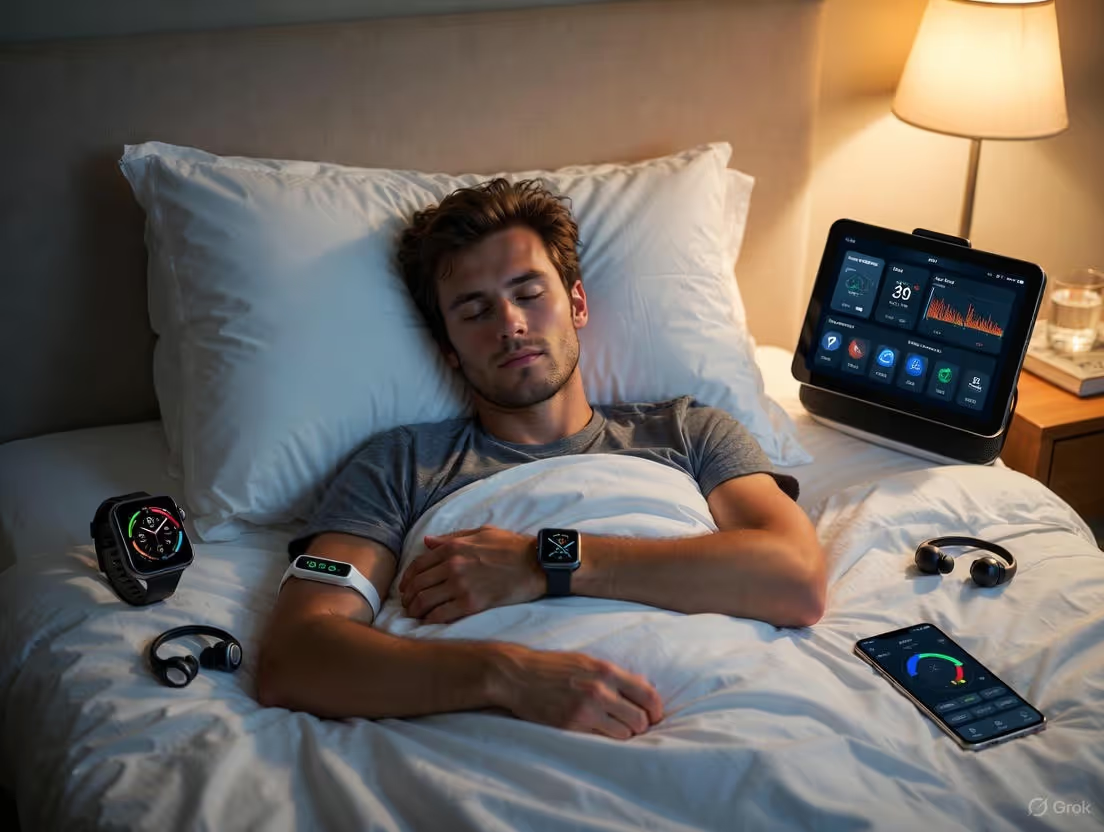
Sleep should be a sanctuary, but for some, it becomes a theater for disturbing or bizarre experiences. Parasomnias are a category of sleep disorders involving undesirable physical events or experiences that occur during sleep entry, within sleep, or during arousals. While some are benign, others can be violent or indicative of underlying neurological issues.
What's Normal? Occasional, vague nightmares or mumbling in sleep, especially in children or during periods of high stress.
What's Not? Recurrent, Vivid Nightmares that cause significant distress and daytime anxiety, potentially meeting criteria for Nightmare Disorder. Sleep Terrors (different from nightmares) involve episodes of screaming, intense fear, and autonomic arousal (racing heart, sweating) during deep N3 sleep. The person is hard to awaken, has no memory of a dream, and is confused if woken. REM Sleep Behavior Disorder (RBD) is a particularly serious parasomnia. Normally during REM sleep, muscles are paralyzed (atonia). In RBD, this paralysis fails, allowing individuals to physically act out vivid, often violent dreams—punching, kicking, jumping from bed. RBD is strongly associated with the future development of neurodegenerative diseases like Parkinson's and dementia with Lewy bodies, making its identification crucial.
Other behaviors include sleepwalking (somnambulism), sleep eating, and sleep sex. These typically occur during non-REM sleep arousals.
The causes of parasomnias range from stress, trauma, and sleep deprivation to medication side effects, other sleep disorders (like sleep apnea triggering confusional arousals), and, in the case of RBD, specific neurological pathology. A sleep study with extended EEG and EMG montage is often necessary to diagnose complex parasomnias and distinguish, for example, RBD from sleep terrors.
From a tracking perspective, episodes like RBD or sleep terrors can create dramatic, unmistakable spikes in movement and heart rate data. Seeing a pattern of these intense, isolated nocturnal events can help individuals and their partners provide a more accurate history to a sleep specialist. The data transforms a subjective story ("I had a bad dream") into an objective record of a physiological storm occurring at a specific time of night.
The repercussions of a troubled night don't stay tucked under the covers. They echo loudly throughout your waking hours, affecting your mind, body, and emotions. Often, we treat these daytime symptoms in isolation without connecting them to their source: poor sleep.
Cognitive & Performance Deficits: Sleep deprivation is cognitive impairment. It directly attacks the prefrontal cortex, the brain's executive center. This leads to:
Emotional & Mood Dysregulation: The amygdala, the brain's emotional alarm center, becomes hyperreactive on poor sleep, while its connection to the rational prefrontal cortex weakens. This leads to:
Physical & Metabolic Symptoms:
Recognizing these daytime signs as potential sleep debt is the first step toward a solution. It reframes the problem. You're not "bad at focusing," your sleep architecture might be compromised. You're not "irritable," your nervous system is fighting a battle it didn't choose. By correlating poor daytime metrics—like low energy, bad mood, or high cravings—with the previous night's sleep data from your wellness tracker, you build an undeniable case for change. This cause-and-effect insight is transformative, as many of our users have shared when they discuss their personal health journeys.
You can't control every factor that affects your sleep, but you have immense power over your behaviors and environment. Sleep hygiene is the collection of daily habits and practices that are conducive to sleeping well on a regular basis. It's the non-negotiable foundation upon which all other sleep improvements are built. Here are the evidence-based pillars:
1. Light: Master Your Circadian Rhythm
Light is the primary driver of your internal clock. Seek bright, preferably natural, light in the morning to signal "wake up" and suppress melatonin. Conversely, dim lights in the evening. Most critically, minimize blue-wavelength light exposure from screens (phones, tablets, computers) for at least 60-90 minutes before bed. Use night mode settings, blue-light blocking glasses, or consider amber reading lights.
2. Consistency: Lock In Your Schedule
Go to bed and wake up at the same time every day, even on weekends. This regularity reinforces your circadian rhythm and improves sleep efficiency. A varying schedule is like giving yourself weekly jet lag.
3. The Bedroom Sanctuary: Optimize Your Environment
4. The Wind-Down Routine: Signal "Sleep Time" to Your Brain
Create a 30-60 minute buffer zone before bed. This is for calming activities: reading a physical book (not a thriller), gentle stretching, meditation, listening to calm music, or taking a warm bath (the subsequent drop in body temperature aids sleep).
5. Mindful Consumption:
6. Daytime Behaviors That Fuel Nighttime Sleep:
Sleep hygiene isn't a quick fix; it's a lifestyle commitment. The power of a smart wellness device is in testing and validating these principles. Does keeping a strict schedule for a week improve your sleep efficiency score? Does a 9 PM screen curfew lower your sleep latency? Data turns generic advice into personalized, proven strategy. For a continual stream of science-backed tips and habit ideas, our blog is a dedicated resource.
Sleep does not exist in a vacuum. It is part of a powerful, bidirectional feedback loop with nutrition and physical activity. Optimizing this triad creates a virtuous cycle of health where each component amplifies the others.
How Nutrition Influences Sleep:
How Exercise Influences Sleep:
How Sleep Influences Diet and Exercise:
Tracking this triad is where holistic wellness technology shines. You can observe the direct correlation: On days I exercise for 45 minutes, my deep sleep increases by 12%. On nights I sleep less than 6 hours, my resting heart rate is 8 bpm higher the next day and my workout performance drops. This systems-level view stops you from optimizing in silos and allows you to manage your energy as an integrated whole. Understanding these connections is central to our philosophy at Oxyzen; you can learn more about our integrated approach here.
If sleep hygiene is the "how" of sleep, then stress management is the "whether." You can have a perfect sleep environment and routine, but if your nervous system is stuck in "fight-or-flight" (sympathetic) mode, sleep will remain elusive. Chronic stress and anxiety create a state of 24-hour physiological hyperarousal that is the arch-nemesis of restorative sleep.
The Physiology of the Sleep-Stress Cycle:
When stressed, your body releases cortisol and adrenaline. Cortisol, your primary stress hormone, naturally follows a circadian rhythm—high in the morning to help you wake, and low at night to allow for sleep. Chronic stress flattens this rhythm, leading to elevated nighttime cortisol, which directly opposes the sleep-promoting hormone melatonin. Furthermore, anxiety triggers repetitive, intrusive thoughts (the "racing mind"), which increase cognitive arousal just when you need mental quiet.
This creates a vicious, self-perpetuating cycle: Stress → Poor Sleep → Reduced Emotional Resilience & Increased Fatigue → More Stress → Worse Sleep. The bed itself can become a conditioned cue for anxiety, a phenomenon called "conditioned arousal."
Breaking the Cycle: Evidence-Based Techniques
Wearable data provides critical feedback here. Heart Rate Variability (HRV) is a key metric. A low or declining HRV trend is a strong indicator of sympathetic nervous system dominance and high allostatic load (the cumulative burden of stress). Seeing your HRV improve as you consistently practice meditation or breathwork provides positive reinforcement. Similarly, observing how a stressful day leads to elevated nighttime heart rate and lower sleep scores makes the mind-body connection undeniable, motivating you to prioritize stress management. For support on using your data to manage stress, our FAQ section offers helpful guidance.
Our relationship with technology at night is deeply paradoxical. It is both the primary disruptor of modern sleep and the source of our most powerful tools for understanding and improving it. Navigating this duality is essential.
The Disruptors:
The Enablers:
Creating a Healthy Tech Protocol for Sleep:
The most profound impact of wearable technology is its ability to make the invisible visible. It shows you the direct cost of that late-night scrolling session on your sleep latency and REM sleep. It proves the benefit of your new wind-down routine. This feedback loop is transformative, turning abstract health advice into a personalized, data-driven journey. At Oxyzen, we believe technology should serve your wellness, not undermine it—a principle you can explore further in our story.
In the quest for accurate, user-friendly sleep data, the form factor of the tracking device matters immensely. This is where the smart ring has emerged as a game-changer, particularly for sleep monitoring. Unlike wrist-worn devices or chest straps, a ring offers unique advantages that align perfectly with the goal of capturing natural, undisturbed sleep.
1. The Anatomical Advantage for Physiological Signals:
The finger, specifically the base, is an ideal location for photoplethysmography (PPG). It typically has strong blood perfusion and relatively less motion artifact compared to the wrist during sleep. This can lead to more reliable and consistent heart rate and HRV readings throughout the night, which are critical for sleep stage estimation. Some rings also use sensors on the palm side of the finger, which can be even more stable.
2. Unobtrusive Comfort for Sleep:
For many people, a lightweight, form-fitting ring is far less noticeable and intrusive than a watch or bracelet. There's no bulky face to dig into your wrist if you sleep on your side. This minimizes the "Hawthorne effect"—where the act of being observed changes behavior. You're more likely to forget you're wearing it, leading to more natural sleep patterns and higher compliance over the long term.
3. Continuous Wear and Comprehensive Data:
Because it's so comfortable, a smart ring is designed for 24/7 wear. This continuity is invaluable. It allows for the capture of not just sleep, but also daytime activity, resting heart rate trends, and—most importantly—readiness or recovery scores. These scores often combine sleep data, HRV trends, resting heart rate, and activity to provide a holistic picture of your body's stress and recovery status each morning. This context is crucial: a night of poor sleep after a hard workout may indicate needed recovery, while the same poor sleep after a sedentary day may indicate illness or stress.
4. Long Battery Life and Simplicity:
Many smart rings boast multi-day battery life, reducing the friction of daily charging. You can often charge it during a quick shower, avoiding the common problem of a dead device at bedtime.
The smart ring, therefore, isn't just another tracker; it's a purpose-built tool for understanding your circadian rhythm and recovery. It sits silently at the crossroads of your autonomic nervous system (measured through HRV) and your daily behaviors, providing a continuous stream of objective data about how your lifestyle choices impact your physiology. It empowers you to make not just sleep adjustments, but holistic lifestyle tweaks based on your body's true signals. To see how this seamless integration works in practice, explore how Oxyzen approaches this technology.
Collecting sleep data is only the first step. The real value lies in interpretation—turning a dashboard of numbers into a personalized narrative about your health and a clear action plan. Here’s how to think about your key metrics over time.
1. Focus on Trends, Not Single Nights.
A single night of poor sleep is meaningless data. It could be due to spicy food, a late flight, or a one-off stressful event. What matters is the pattern over weeks and months. Is your deep sleep percentage on a slow decline? Is your sleep latency creeping up? Is your weekly average HRV trending downward? Trends reveal the true story of your health trajectory and the impact of your habits.
2. Establish Your Personal Baseline.
Forget comparing your numbers to online averages or friends. "Normal" is a range, and your optimal zone is unique. Wear your device consistently for at least two weeks during a period of relatively stable, healthy habits to establish your personal baseline for sleep duration, efficiency, HRV, etc. This baseline becomes your reference point for all future experiments.
3. Look for Correlations, Not Just Scores.
This is the most powerful analytical step. Cross-reference your sleep data with your daily log (most apps allow you to tag behaviors). Ask:
4. Run Personal Experiments.
Use your baseline to test changes. For one week, impose a strict 10 PM digital curfew. For another, add a 10-minute meditation before bed. For a third, eliminate caffeine after noon. Observe which intervention moves your metrics in the desired direction. This is the essence of data-driven self-optimization.
5. Understand the "Readiness" or "Recovery" Score.
Most advanced platforms synthesize multiple data points (last night's sleep, HRV trend, resting heart rate, activity load) into a single morning score. Do not ignore this. If you slept 8 hours but your readiness score is low because your HRV plummeted, your body is telling you it's under-recovered. This is a signal to prioritize rest, not push through a hard workout. Conversely, a high score after 7 hours of sleep is a green light for peak performance.
Interpreting data is a skill, and it requires curiosity and patience. The goal isn't to chase perfect scores every night—that's impossible and stressful—but to understand your body's language so you can support it better. For ongoing support and deeper dives into data interpretation, our blog is a continually updated resource.
While personal wellness technology is a revolutionary tool for awareness and lifestyle optimization, it has critical limits. It is not a medical device, and it cannot diagnose medical conditions. Recognizing when to transition from self-tracking to professional evaluation is a vital aspect of responsible health management.
Clear Indicators for Professional Consultation:
How to Prepare for a Sleep Specialist Visit:
Your self-tracking data can be an incredibly powerful asset in this clinical setting. Come prepared with:
This preparation transforms you from a passive patient into an informed partner in your care. The doctor can use your data as a starting point for ordering appropriate diagnostics, like a polysomnogram (in-lab sleep study) or a home sleep apnea test.
Remember, the role of your smart ring or tracker is to empower you with awareness and provide clues. It is the canary in the coal mine, not the miner. Its greatest gift may be the confidence and evidence you need to say, "This isn't normal for me, and I need help." Taking that step is the ultimate act of self-care. If you have questions about how your data might be used in a clinical context, our FAQ can provide some general guidance.
Once you’ve mastered the fundamentals of sleep hygiene and understand your baseline data, a world of advanced optimization opens up. "Sleep biohacking" involves using specific tools, technologies, and protocols to push your sleep quality and recovery beyond average, targeting peak cognitive and physical performance. It’s about fine-tuning the system.
Temperature Regulation:
The drop in core body temperature is a primary signal for sleep onset. Advanced strategies take this beyond a cool room.
Light Manipulation Beyond Blue Blockers:
Nutritional Supplements & Nootropics (Used with Caution):
This area requires careful research and ideally, guidance from a healthcare professional.
Sleep Sound & Brainwave Entrainment:
The Critical Caveat: Data-Driven Experimentation
The golden rule of biohacking is measure, don’t guess. Never implement an advanced protocol without a clear baseline. Use your wearable to test one intervention at a time for at least a week. Did the cooling mattress pad increase your deep sleep? Did 300mg of magnesium glycinate lower your sleep latency? Did red light evening lighting improve your morning HRV? The data provides the objective answer, separating effective tools from placebo or hype. This rigorous approach ensures your "hacks" are genuinely serving your biology. For those interested in the frontier of performance optimization, our blog often explores the intersection of data and advanced wellness practices.
Sleep is not merely a biological process; it is a social and cultural artifact. Our sleep patterns are profoundly shaped by the society we live in—its work schedules, its technology, its values, and even its architecture. Understanding these dimensions helps explain why the sleep crisis is so pervasive and points to necessary collective changes.
The Tyranny of the 9-to-5 (and Shift Work):
The standard work schedule is a cultural construct that clashes with biological diversity in chronotypes. It privileges "morning larks" and punishes "night owls," forcing the latter into a state of permanent social jet lag. For shift workers—nurses, factory workers, first responders—the misalignment is catastrophic, with proven links to higher rates of metabolic disease, cancer, and mental health issues. Advocating for chronotype-friendly scheduling and greater workplace flexibility is a public health imperative.
The Commodification of Wakefulness:
In a hyper-capitalist, productivity-obsessed culture, sleep is often framed as wasted time—time that could be spent working, consuming, or self-optimizing. This mindset fuels the "hustle culture" that wears sleep deprivation as a badge of honor. Countering this requires a cultural reframing of sleep as the ultimate productivity tool, a non-negotiable foundation for creativity, decision-making, and long-term success.
Technology and the Erosion of Boundaries:
Smartphones have dissolved the boundary between work and home, public and private, day and night. The expectation of constant availability creates psychological pressure that inhibits the mental disengagement necessary for sleep. Creating social norms around "digital sunset" for teams and respecting off-hours communication are small but powerful steps.
Inequity and Sleep Disparities:
Sleep health is not distributed equally. Socioeconomic status, race, and neighborhood environment are strong predictors of sleep quality. Factors like financial stress, job insecurity, noise pollution, light pollution, unsafe neighborhoods, and poorer-quality housing all contribute to sleep disparity. Addressing the sleep crisis therefore requires addressing these broader social determinants of health.
The Future: Sleep-Centric Design:
A sleep-positive culture would be reflected in our built environment and policies: darker, quieter streets; buildings designed with sleep in mind; school and work start times aligned with adolescent and adult biology; and healthcare systems that prioritize sleep disorder diagnosis and treatment.
As individuals, we can start by having open conversations about sleep, destigmatizing the need for rest, and modeling healthy boundaries with technology and work. By treating our own sleep with respect, we contribute to a cultural shift. At Oxyzen, we believe this shift is essential, and it's a core part of the vision and values that drive our mission.
While the core principles of sleep science apply to everyone, specific life circumstances present unique, intense challenges that require tailored strategies. Understanding these specialized scenarios can help you navigate them with more grace and less health cost.
1. The Athlete & High-Performance Individual:
For athletes, sleep is not just recovery; it is a critical part of training. It’s when human growth hormone is released, muscles repair, and motor skills are consolidated.
2. New Parents & Caregivers:
This group faces perhaps the most severe and involuntary sleep deprivation, characterized by extreme fragmentation.
3. Frequent Travelers & Shift Workers (Managing Circadian Disruption):
This is a direct attack on the circadian rhythm, requiring proactive intervention.
For all these groups, a wearable provides crucial objective feedback. The athlete can see the impact of a hard training block. The parent can see that their 5 hours of fragmented sleep still included some precious deep sleep. The traveler can monitor how their body adapts to a new timezone. This data provides reassurance, guides strategy, and proves that your efforts to cope are making a measurable difference. Hearing how others in similar situations have managed can be a source of great solidarity, as seen in some of the shared experiences from our community.
In the fog of fatigue and the noise of wellness advice, sleep myths persist with remarkable tenacity. Let’s shine a light on some of the most pervasive falsehoods and replace them with evidence-based truth.
Myth 1: “You can ‘catch up’ on sleep over the weekend.”
Myth 2: “Watching TV in bed helps me relax and fall asleep.”
Myth 3: “If I can’t sleep, I should just stay in bed and try harder.”
Myth 4: “Older adults need less sleep.”
Myth 5: “A nightcap helps you sleep better.”
Myth 6: “Snoring is always harmless.”
Myth 7: “More sleep is always better.”
Debunking these myths is empowering. It clears away counterproductive advice and allows you to focus on what truly works. A smart ring or tracker is the ultimate myth-buster for your personal life. It can show you that your "restful" TV sleep is actually low in deep sleep, or that your weekend catch-up isn't resetting your HRV baseline. Data provides personal, undeniable truth. For more myth-busting and science-backed clarifications, our FAQ section is a great resource.
We are on the cusp of a revolution in how we understand and treat sleep. The convergence of big data, artificial intelligence, wearable technology, and genomics is moving us from a one-size-fits-all model to truly personalized sleep medicine. Here’s a glimpse of what’s coming.
1. Hyper-Personalized Sleep Recommendations via AI:
Current apps provide generic tips. The next generation will use AI to analyze your unique, longitudinal dataset—sleep stages, HRV, activity, diet logs, menstrual cycle, stress markers—and generate bespoke recommendations. It might learn that you need 8.25 hours, that your deep sleep is optimized when you finish exercise before 4 PM, and that magnesium threonate works for you while glycinate does not. The algorithm becomes your personal sleep coach.
2. Wearable-Driven Diagnostics and Remote Monitoring:
The line between consumer wearables and medical devices will blur. Already, some rings and watches have received FDA clearance for specific features like atrial fibrillation detection. The future will see validated, prescription-grade wearables for screening sleep apnea, insomnia, and circadian rhythm disorders from home over multiple nights, providing richer data than a single night in an unfamiliar lab. This will democratize access to diagnosis and allow for remote monitoring of treatment efficacy for CPAP therapy or cognitive behavioral therapy for insomnia (CBT-I).
3. Circadian Profiling and Chronotherapy:
Beyond "morning person/evening person," we’ll be able to map our unique circadian rhythm for dozens of physiological processes—hormone release, metabolism, cognitive alertness—through continuous biomarker tracking. This will enable chronotherapy: timing medications, meals, exercise, and even chemotherapy to align with your personal circadian peaks and troughs for maximum efficacy and minimal side effects.
4. Genetic and Microbiome Insights:
Research is identifying genes associated with circadian rhythm regulation, sleep duration needs, and vulnerability to disorders like RLS. In the future, a saliva test could reveal your genetic propensity for being a short sleeper or your risk for OSA. Similarly, understanding your gut microbiome’s role in producing sleep-regulating neurotransmitters could lead to personalized probiotic or dietary interventions for sleep.
5. Closed-Loop Sleep Environments:
Imagine a bedroom that responds to you in real-time. Smart beds that adjust firmness and temperature based on your sleep stage; lighting that dynamically shifts color temperature to support your circadian rhythm; sound environments that use noise cancellation or generate pink noise synchronized to your breathing. The environment becomes an active participant in optimizing your sleep architecture.
This future is not about technology for its own sake, but about deepening our partnership with our own biology. It’s about moving from treating sleep disorders to optimizing sleep health as a pillar of preventative medicine. At Oxyzen, we are passionately engaged in this future, working to ensure that these advancements are accessible and actionable for everyone, a commitment you can learn more about in our vision.
Knowledge is only power when applied. Now that we’ve explored the standards, the red flags, the science, and the tools, it’s time to synthesize everything into a actionable, personal plan. This is not about a rigid, overnight overhaul, but a thoughtful, iterative process of self-discovery and improvement.
Step 1: Assess and Benchmark (Weeks 1-2)
Step 2: Master the Fundamentals (Weeks 3-4)
Choose ONE or TWO foundational sleep hygiene habits to implement with absolute consistency. Do not try to change everything at once.
Step 3: Experiment and Refine (Ongoing)
Step 4: Integrate and Holisticize (Long-Term)
Step 5: Know When to Seek a Guide
If, after 1-2 months of diligent self-management, your data shows no improvement and your daytime impairment remains, it’s time to consult a professional. Bring your data and diary. You’ve done the groundwork; now get expert help to interpret it and explore medical solutions.
This plan is a cycle, not a linear path. You will have setbacks—stressful periods, travel, illness. The goal is resilience, the ability to return to your healthy baseline quickly. Your wearable and your data are your compass, always guiding you back. For continued support and new ideas on this journey, remember that our blog is here as a constant resource.
We began this exploration in the fog of modern exhaustion, chasing the snooze button and wondering why rest feels so elusive. We’ve journeyed through the intricate architecture of the sleep cycle, the stark red flags of disorder, the profound daytime consequences of neglect, and the empowering tools of modern tracking. We’ve demystified “normal” and laid out a path from confusion to clarity.
The central thesis is this: Sleep is not a passive state of inactivity. It is an active, vital, and complex physiological process that forms the bedrock of your physical health, cognitive sharpness, and emotional resilience. To disregard it is to build your life on sand. To understand and nurture it is to build on solid rock.
The era of guessing is over. We no longer have to rely on vague notions of being “a good sleeper” or not. The convergence of sleep science and personal technology has given us a lens into the black box. With a smart ring or thoughtful self-tracking, we can now see the direct impact of our choices on our recovery. We can move from feeling helpless about our fatigue to becoming active architects of our rest.
This knowledge carries a responsibility—to ourselves, and to our culture. It asks us to defy the toxic glorification of burnout, to set boundaries with technology and work, and to prioritize this non-negotiable pillar of health with the same vigor we apply to diet and exercise. It invites us to become curious students of our own biology.
Reclaiming your night is the most profound act of self-care you can perform. It is the foundation upon which every other aspiration—professional success, athletic achievement, creative expression, joyful relationships—is built. When you sleep well, you don’t just show up; you show up as the best, most resilient, and most capable version of yourself.
Your journey starts tonight. Not with a drastic overhaul, but with a single, conscious choice. Perhaps it’s charging your phone outside the bedroom. Perhaps it’s simply committing to a consistent wake time tomorrow. Small, consistent actions, informed by knowledge and guided by your own data, compound into a transformation.
You have the standards. You have the tools. You now have the understanding. The power to transform your sleep, and by extension, your life, is in your hands. Close the loop between your days and your nights, and step into the vibrant, well-rested life you deserve. If you’re ready to begin that journey of discovery, we invite you to explore how Oxyzen can be your partner in this essential pursuit.
Your Trusted Sleep Advocate: Sleep Foundation — https://www.sleepfoundation.org
Discover a digital archive of scholarly articles: NIH — https://www.ncbi.nlm.nih.gov/
39 million citations for biomedical literature :PubMed — https://pubmed.ncbi.nlm.nih.gov/
Experts at Harvard Health Publishing covering a variety of health topics — https://www.health.harvard.edu/blog/
Every life deserves world class care :Cleveland Clinic - https://my.clevelandclinic.org/health
Wearable technology and the future of predictive health monitoring :MIT Technology Review — https://www.technologyreview.com/
Dedicated to the well-being of all people and guided by science :World Health Organization — https://www.who.int/news-room/
Psychological science and knowledge to benefit society and improve lives. :APA — https://www.apa.org/monitor/
Cutting-edge insights on human longevity and peak performance:
Lifespan Research — https://www.lifespan.io/
Global authority on exercise physiology, sports performance, and human recovery:
American College of Sports Medicine — https://www.acsm.org/
Neuroscience-driven guidance for better focus, sleep, and mental clarity:
Stanford Human Performance Lab — https://humanperformance.stanford.edu/
Evidence-based psychology and mind–body wellness resources:
Mayo Clinic — https://www.mayoclinic.org/healthy-lifestyle/
Data-backed research on emotional wellbeing, stress biology, and resilience:
American Institute of Stress — https://www.stress.org/


