


Sleep Health Tracking for Beginners: Start Here
Start by simply noting your bed/wake times and how you feel each morning in a notebook or basic app.
Start by simply noting your bed/wake times and how you feel each morning in a notebook or basic app.
%402x.svg)
You know that feeling. The groggy, heavy-headed stumble to the coffee machine. The mid-afternoon slump that feels like wading through mental fog. The creeping anxiety as you watch the clock tick past midnight, willing sleep to come. For years, you’ve accepted this as your normal. You’ve tried everything—stricter bedtimes, cutting caffeine, expensive mattresses, meditation apps—but you’re still guessing. Is it stress? Your diet? A hidden sleep disorder? You’re tired of feeling tired.
What if the secret to transforming your energy, mood, and health isn’t another generic tip, but personalized knowledge? What if you could move beyond guessing about your sleep and start understanding it with the precision of a sleep lab—from the comfort of your own bed? This is no longer science fiction. The era of accessible, advanced sleep health tracking is here, and it’s designed not for scientists, but for you.
Welcome to your definitive starting line. This guide is for the curious beginner ready to trade sleep frustration for sleep mastery. We’re not just talking about counting hours. We’re diving deep into the why and how of your sleep architecture—your light, deep, and REM cycles, your nightly heart rate patterns, your oxygen levels, and your restless movements. This data is the missing link between wanting better sleep and actually achieving it.
Gone are the days of passive sleeping. Today, you can become an active participant in your rest, armed with insights that lead to actionable change. Whether you’re an athlete seeking recovery edges, a professional battling burnout, a parent craving sustainable energy, or anyone who simply wants to wake up feeling restored, understanding your sleep is the first and most critical step.
This journey begins with demystifying the fundamentals. We’ll explore what modern sleep tracking truly measures, why each metric matters for your waking life, and how to choose the right tool for your journey—like a smart ring, which offers an unobtrusive, continuous window into your nocturnal physiology. By the end of this guide, you’ll have a foundational map to navigate the world of sleep data, turning abstract numbers into a clear path toward your most restful nights and energized days.
Let’s begin.

For most of human history, sleep was a mystery—a passive state of unconsciousness we entered at night and (hopefully) emerged from refreshed. Today, we know sleep is a dynamic, complex, and biologically active process. Sleep health is a holistic measure of how well this process is functioning. It’s not merely the absence of sleepiness; it’s the presence of restorative, high-quality sleep that supports your physical repair, cognitive function, emotional resilience, and long-term health.
Think of your body as a city. Your waking hours are the bustling daytime: construction, commerce, and activity generate wear, tear, and waste. Sleep is the night shift. This is when the repair crews come out, roads are repaved, trash is collected, memories are archived, and the power grid is recalibrated. Poor sleep health means the night shift is understaffed, inefficient, or constantly interrupted. The city starts the next day already behind, accumulating deficits that eventually lead to systemic breakdowns.
Quantifying sleep health means moving from a vague sense of “I slept okay” to a clear, objective understanding. It answers critical questions:
When you start to measure, you stop assuming. You might discover you’re getting 8 hours in bed but only 6.5 hours of actual sleep due to frequent, brief awakenings you don’t recall. You might see that your deep sleep—critical for physical recovery and immune function—is consistently low. Or you might learn that your resting heart rate is unusually high at night, a potential sign of unresolved stress or poor recovery.
This quantification is the cornerstone of biohacking your rest. It provides the baseline from which all intelligent experimentation flows. Before you try a new supplement, adjust your room temperature, or change your exercise timing, you need data to measure its effect. Otherwise, you’re changing variables in the dark.
Companies like Oxyzen are pioneering this personalized approach, creating tools designed to make this deep physiological insight accessible and actionable. By quantifying the invisible processes of the night, you empower yourself to make visible improvements to your day.
We often wear sleep deprivation as a badge of honor—a sign of productivity or dedication. But the science paints a starkly different picture: chronic poor sleep is a slow-acting toxin that infiltrates every system in your body. It’s not an inconvenience; it’s a critical health risk.
The Cognitive & Emotional Toll:
Your brain is perhaps the most sleep-dependent organ. During sleep, particularly REM sleep, it processes emotions, consolidates memories, and clears out metabolic waste like beta-amyloid (associated with Alzheimer’s disease). Disrupt this process, and the consequences are immediate:
The Physical Health Avalanche:
The body’s repair work happens during deep sleep (N3 sleep). This is when human growth hormone is released (for tissue repair and muscle growth), cells are regenerated, and the immune system releases cytokines to fight infection and inflammation.
The Life-Impact:
This isn’t just about health statistics; it’s about your lived experience. Poor sleep erodes your patience with your family, dims your joy in hobbies, and turns daily tasks into arduous chores. It undermines your performance at work, your safety on the road, and your ability to be present for the people and moments that matter.
The frightening part? You adapt. You become accustomed to the brain fog, the low-grade anxiety, and the persistent fatigue. You forget what it feels like to be truly rested, sharp, and emotionally steady. This is why tracking is so revolutionary—it provides an objective mirror, showing you the gap between your current state and your potential. It’s the first, essential step in reclaiming not just your sleep, but your vitality. For a deeper look at how individuals have transformed this understanding into action, the real-world experiences shared in Oxyzen testimonials can be profoundly illuminating.
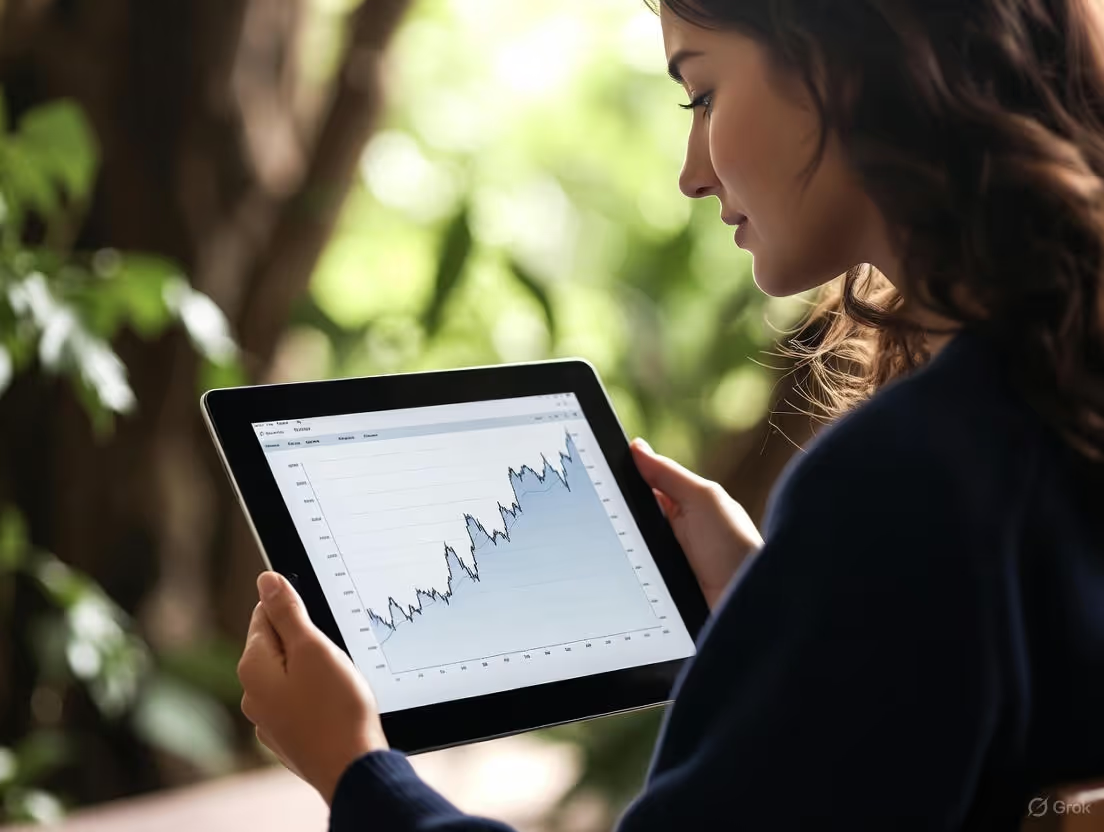
If you think sleep tracking is just a fancy pedometer for your night, prepare to be amazed. Today’s advanced devices, like smart rings and next-gen wearables, monitor a symphony of physiological signals to paint a comprehensive picture of your sleep health. Let’s decode the seven key metrics that move you far beyond simple sleep duration.
1. Sleep Stages (Architecture): This is the core breakdown of your night.
2. Sleep Efficiency: This is your “value for time” score. It’s the percentage of time you were actually asleep while in bed. For example, if you spend 8 hours in bed but are awake for 45 minutes due to tossing, turning, or getting up, your sleep efficiency is roughly 91% (7.25/8). A score above 85% is generally considered good. Low efficiency points to issues with sleep onset or fragmentation.
3. Total Sleep Time vs. Time in Bed: A critical distinction. Your device should show you both. Time in Bed is your intent. Total Sleep Time is the reality. This gap alone can be an eye-opener for beginners.
4. Resting Heart Rate (RHR) & Heart Rate Variability (HRV): Your heart tells a powerful story about your recovery at night.
5. Respiratory Rate: The number of breaths you take per minute during sleep. It’s a fundamental vital sign. Significant deviations from your personal baseline can be an early indicator of illness, stress, or sleep-disordered breathing.
6. Blood Oxygen Saturation (SpO2): This measures the percentage of oxygen carried by your red blood cells. While you sleep, it’s normal for SpO2 to dip slightly. However, frequent or significant drops (a condition known as nocturnal hypoxemia) can be a red flag for issues like sleep apnea, a serious disorder where breathing repeatedly stops and starts.
7. Sleep Latency & Awakenings:
Modern devices synthesize these metrics into easy-to-understand scores (like a Sleep Score or Readiness Score), but the true power lies in digging into the individual data streams. Each metric is a clue, and together, they form the evidence you need to diagnose your sleep challenges and test solutions. To understand how these metrics come together in a user-friendly device, you can learn more about how Oxyzen works.
You’ve worn your tracker for a night. You open the app, and you’re greeted with a wealth of graphs, percentages, and a prominent Sleep Score—an 82, perhaps. What does it all mean? Don’t let data paralysis set in. Here’s a beginner-friendly framework for interpreting your first reports.
First, Embrace the "Trend is Your Friend" Mantra.
A single night’s data is a snapshot—often a blurry one. It can be influenced by a late meal, a stressful conversation, a single glass of wine, or a change in routine. Do not over-interpret one night. The real magic happens over weeks and months. You’re looking for patterns, not perfection. Is your deep sleep consistently low on work nights? Does your HRV crash every time you have an intense evening workout? Trends reveal your personal biology’s response to your lifestyle.
Deconstructing the Composite Sleep Score.
Most apps boil your night down to a single number (e.g., 0-100). This is useful for a quick glance, but it’s a composite. Tap into it. Your score is typically built from several components:
Your overall 82 might be dragged down by a low "Architecture" score of 60, even if your duration was perfect. This tells you exactly where to focus: improving your sleep quality, not just its length.
Start with One "North Star" Metric.
As a beginner, instead of trying to optimize seven things at once, choose one metric to observe closely for two weeks. A great starting point is Sleep Efficiency. It’s simple to understand and directly impacted by your pre-bed behavior and sleep environment. Aim to nudge it gently upward. Once you feel comfortable with that, you might move on to Deep Sleep Duration or Sleep Latency.
Look for the Story, Not Just the Numbers.
Correlate your data with your lifestyle log (most apps allow you to add notes). That terrible Sleep Score of 65? It was the night after you ate pizza at 10 PM. That fantastic 90 with record-high HRV? It followed a relaxing day off and an early dinner. These connections are your most powerful insights. They transform data from abstract numbers into cause-and-effect learning.
Normalize Variability.
Your sleep will not be perfect every night, and that’s okay. A healthy sleep pattern has natural ebbs and flows. The goal is to keep the averages within a healthy range and minimize extreme outliers. If you see a night of poor data, practice curiosity, not criticism. Ask, “What can I learn from this?” instead of “Why am I bad at sleeping?”
Remember, the goal of tracking is awareness leading to empowerment, not perfection leading to anxiety. The data is a neutral guide. It’s not judging you; it’s informing you. For common questions on interpreting data or device usage, a great resource is the Oxyzen FAQ page, designed to support users on this exact journey.
When you think of wearables, you likely picture a smartwatch. But for 24/7 health and, specifically, sleep tracking, a new form factor is rising in popularity for compelling reasons: the smart ring. Let’s explore why this discreet device is becoming the tool of choice for serious sleep and recovery enthusiasts.
The Unobtrusive Advantage:
Sleep is a state of vulnerability and sensitivity. A bulky watch on your wrist can be uncomfortable, press into your skin when you sleep on your side, and can even restrict blood flow. A ring, by contrast, is designed to be forgotten. It’s lightweight, smooth, and doesn’t get caught on sheets or pajamas. This minimizes the "observer effect"—where the act of measuring something changes the outcome. With a ring, you’re more likely to sleep naturally, leading to more accurate, representative data.
Superior Sensor Placement for Key Metrics.
The arteries in your finger (the palmar digital arteries) are rich with physiological data. This location provides a strong, consistent signal for:
Continuous, All-Day Readiness Tracking.
Sleep doesn’t exist in a vacuum. Your daytime stress, activity, and recovery directly impact your night. A smart ring, due to its comfort and long battery life (often 5-7 days), is designed to be worn 24/7. This allows it to build a continuous picture of your circadian rhythm and overall readiness. It can tell you not just how you slept, but how well you recovered from that sleep, suggesting if you’re primed for an intense workout or in need of a gentler day. This holistic view is the future of personalized wellness.
Durability and Battery Life.
Without a screen to power, smart rings are incredibly energy-efficient, leading to multi-day battery life that reduces charging hassle. Their sealed, often titanium or ceramic bodies are also more water- and scratch-resistant than a watch face, making them suitable for all aspects of life.
Aesthetics and Simplicity.
For many, a smart ring is a minimalist piece of tech jewelry. It doesn’t scream "tracking device" or bombard you with notifications (a major sleep disruptor if worn on the wrist). It focuses silently on its core mission: gathering your body’s data to help you understand your health. This philosophy of focused, elegant design is at the heart of brands like Oxyzen, which you can discover more about here.
Choosing a smart ring is a commitment to a seamless, continuous, and deeply personal health-tracking experience. It’s a tool for those who want the insights without the bulk or distraction, making it a particularly elegant solution for the sleep-focused beginner.
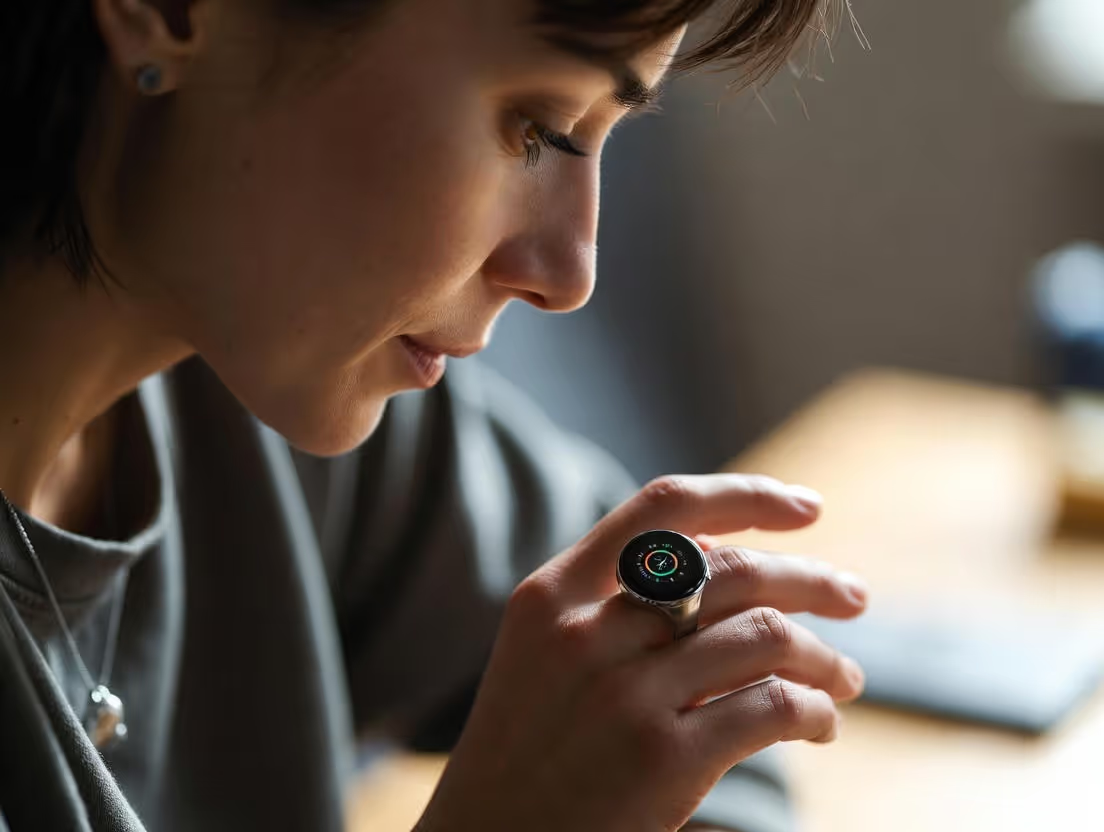
Before you even put on a tracker, the right preparation can mean the difference between fruitful insight and frustrating noise. Think of this as laying the foundation for a house—you want it solid before you start building. Here’s your essential pre-launch checklist.
1. Define Your "Why" – Get Specific.
“I want to sleep better” is a vague goal. Get crystal clear:
2. Establish a Baseline – The "Do Nothing" Week.
When you first get your tracker, resist the urge to immediately change your habits. Wear it for 5-7 nights and follow your normal routine, even if it’s imperfect. This gives you your honest, no-judgment baseline. This data is your truth. It’s the “before” picture against which all future experiments will be measured.
3. Sync Your Lifestyle Logging.
Data in a vacuum is meaningless. Commit to brief, consistent note-taking in your app’s journal feature for at least the first two weeks. Key things to log:
4. Optimize Your Environment (The Low-Hanging Fruit).
While taking baseline readings, you can set the stage by addressing the fundamentals you know matter:
5. Adopt the Scientist’s Mindset.
You are not a subject being judged by your tracker. You are the lead scientist in your personal sleep lab. The tracker is your measurement tool. The data are your results. Your lifestyle changes are your experiments. Approach this with curiosity and objectivity. A “bad” score is not a failure; it’s a data point that teaches you something about your body’s responses.
With this checklist complete, you’ll start from a position of clarity and control. You’ll be ready to collect meaningful data from night one, turning the process into a journey of self-discovery rather than a performance review. For more resources on building a holistic wellness routine that complements your sleep tracking, our blog is regularly updated with expert insights.
The first night with your new sleep tracker is exciting—it’s like getting the key to a hidden part of your life. It can also be a bit anticlimactic or confusing if you’re not prepared. Let’s walk through a realistic first-night experience and sidestep the typical beginner pitfalls.
The Realistic First-Night Experience:
Top 5 Beginner Mistakes to Avoid:
1. Obsessive Morning Data Checking.
Don’t: Wake up and immediately grab your phone, analyzing every graph before you’ve even gotten out of bed. This ties your first waking moments to performance anxiety.
Do: Give yourself a tech-free buffer of 15-30 minutes after waking. Hydrate, stretch, let natural light hit your eyes. Then, later, review your data with a calm, curious mind.
2. Chasing a Perfect Score.
Don’t: See an 85 Sleep Score and think, “I must get a 90 tonight!” This turns rest into a sport and creates pressure that is inherently anti-sleep.
Do: Use the score as a general indicator. Look at the contributing factors. Celebrate consistency in the 80s over a volatile mix of 70s and 95s.
3. Misinterpreting Normal Awakenings.
Don’t: Panic because your data shows 10-15 “awakenings.” Most of these are micro-arousals, lasting only a few seconds, that are a normal part of sleep cycle transitions. You do not remember them.
Do: Look at the duration of awakenings. If you see long, consolidated blocks of “awake” time (e.g., 15+ minutes), that’s meaningful fragmentation worth investigating.
4. Ignoring Device Placement & Fit.
Don’t: Wear a ring on a finger that is too loose (causing poor sensor contact) or too tight. Wear a watch loosely on the wrist where it can slide around.
Do: Follow the manufacturer’s fit guide precisely. For rings, a little resistance is needed when removing it. The sensor should sit against the underside of your finger. Proper fit is 90% of accuracy.
5. Making Too Many Changes at Once.
Don’t: After one bad night, you implement a cold room, a new supplement, a earlier bedtime, and a meditation routine all at once. If your sleep improves, you’ll have no idea which variable helped.
Do: The golden rule of biohacking: Change only one significant variable at a time, and test it for at least 3-4 nights to see a trend. Be a methodical scientist of your own sleep.
Your first week is about acclimation and establishing a reliable data-collection routine, not optimization. Trust the process, be patient with the technology and yourself, and let the patterns emerge over time. For any technical questions that arise, the Oxyzen support FAQ is designed to help users navigate these initial steps smoothly.

Your tracker will measure the output—your body’s response during sleep. But a major part of the equation is the input: the environment you ask your body to sleep in. Optimizing your bedroom is one of the most powerful, direct actions you can take to improve your sleep health metrics. Let’s engineer the perfect sleep cave.
1. Darkness: The Non-Negotiable Signal.
Light is the primary regulator of your circadian rhythm. Even small amounts of ambient light from streetlights, electronics, or a crack under the door can suppress melatonin and fragment sleep.
2. Temperature: The Goldilocks Zone.
Your core body temperature must drop to initiate and maintain sleep. A room that’s too warm prevents this drop; one that’s too cold causes discomfort and awakenings.
3. Sound: Consistency Over Silence.
Sudden, intermittent noises (a door slam, a dog barking) are more disruptive than a consistent hum. Your brain can tune out predictable sound.
4. Air Quality & Allergens.
Poor air quality and allergens can cause inflammation in your airways, leading to snoring, congestion, and restless sleep.
5. The Bed Itself: Your Sleep Platform.
Your mattress and pillow are the foundations of physical comfort and spinal alignment.
6. The "Brain Cave" Association.
Your brain should associate your bed with two things only: sleep and intimacy. Working, watching thrilling TV, or scrolling social media in bed weakens this association, making it harder for your brain to “switch off” when you lie down.
By taking control of your sleep environment, you remove external barriers to good sleep. This allows your tracker to measure your true physiological potential, free from the noise of a suboptimal “cave.” It’s the most effective first experiment you can run on your journey. The story of how companies focus on creating tools for this holistic health approach can be inspiring; you can read about Oxyzen’s story and vision here.
You can’t expect your brain and body to slam from “high alert” to “deep rest” like switching off a light. The transition into sleep is a gradual descent, a process called sleep onset. A consistent, calming wind-down ritual is the on-ramp to this descent, and it’s perhaps the single most impactful habit you can build for improving your Sleep Latency and Sleep Efficiency scores.
Why 60 Minutes? It takes time for cortisol (the stress/alertness hormone) to decrease and melatonin to rise. A rushed 10-minute routine is largely ineffective. An hour allows for a true physiological and psychological shift.
Craft Your Personalized Ritual: A Sample Framework
Minutes 60-40 Before Bed: The Digital Detox & Transition (The MOST Important)
Minutes 40-25: The Physical & Sensory Wind-Down
Minutes 25-10: The Mental & Emotional Release
Minutes 10-0: The Final Cues & In-Bed Practice
Key to Success: Consistency.
Perform this ritual in the same order, at roughly the same time, every night—even on weekends. This powerful consistency trains your nervous system to recognize the sequence as a precursor to sleep, triggering a conditioned relaxation response. Your tracker will likely show the payoff in faster sleep onset, fewer early-night awakenings, and a higher Sleep Efficiency score. For more ideas and science-backed tips on perfecting your evening routine, exploring a dedicated wellness blog can provide a steady stream of fresh inspiration.
You’ve made it through your first seven nights of tracked sleep. Congratulations! This is a significant milestone. Now, it’s time to move from night-by-night reactions to a broader, wiser perspective. The goal of your first week review is to identify initial patterns and baselines, not to declare victory or defeat.
How to Conduct Your First Weekly Review:
1. Gather Your Data Visually.
Open your app’s weekly or monthly view. Look at the trends of your key metrics across the 7-day span:
2. Correlate with Your Lifestyle Log.
This is where the detective work begins. Lay your sleep data next to the notes you took.
3. Establish Your Personal Baselines.
Based on this week, write down your current averages. For example:
4. Identify ONE Insight and ONE Gentle Experiment.
Based on your pattern spotting, choose one clear insight and one small, manageable change to test in Week 2.
5. Practice Compassionate Analysis.
Look at your week with the kindness of a researcher observing a fascinating subject. There are no “bad” nights, only informative ones. If you stayed up late watching a movie with family and got a 72 Sleep Score, that’s a choice, not a failure. The data simply shows the physiological cost of that choice, allowing you to make it more consciously in the future.
This first review sets the tone for a healthy, long-term relationship with your sleep data. It’s about building self-awareness, not achieving a perfect report card. The patterns you spot now are the compass that will guide your entire journey toward better sleep health. To see how others have interpreted their data and made transformative changes, the customer experiences at Oxyzen offer powerful real-world examples.
Your sleep tracker reveals the story of your night, but the plot is written during the day. Every choice—from your morning light exposure to your evening thoughts—sends a cascade of signals that either harmonize with or disrupt your nocturnal biology. Understanding this day-night connection is the key to moving from passive tracking to active sleep creation.
Morning (5 AM - 9 AM): Setting Your Circadian Clock
The first hour after waking is the most powerful time to anchor your body’s master clock, the suprachiasmatic nucleus (SCN).
Daytime (9 AM - 5 PM): Fueling Alertness & Recovery
Evening (5 PM - Wind-Down): Initiating the Descent
This is the transition phase where you begin shifting from sympathetic (fight-or-flight) to parasympathetic (rest-and-digest) dominance.
The Takeaway: Synchronicity
Your goal is circadian synchronicity—aligning your external behaviors with your internal biological rhythms. When your day supports your night, your sleep tracker will reflect it in cohesive, positive scores. When there's conflict, the data shows the friction. Your daily choices are the levers; your nightly data is the feedback. Learning to connect a poor sleep score to a specific daytime action (e.g., "That low HRV was from that stressful 4 PM meeting I didn't decompress from") is where true empowerment begins. For a deeper understanding of how technology is built to reveal these connections, you can explore the science behind Oxyzen.
It’s inevitable. You’ll have nights where your Sleep Score plummets, your deep sleep graph looks anemic, or your resting heart rate is inexplicably high. In the beginning, this can feel like a personal failure. But in the framework of scientific self-discovery, a "bad" score is not a setback—it’s a high-value data point. Here’s your action plan for navigating low scores with intelligence and equanimity.
Step 1: Pause the Panic, Activate Curiosity.
Your first job is to disconnect your self-worth from your sleep data. Do not internalize it. Instead, put on your lab coat and ask the foundational question: "What is this data trying to tell me?" A low score is a signal, an alert from your physiology. Your job is to decode it.
Step 2: Diagnose the "Why" with Detective Work.
Go beyond the composite score and drill into the specific component that dragged it down. Then, cross-reference with your lifestyle log.
Step 3: Rule Out the Obvious & Forgive the Outliers.
Before delving deep, check the simple stuff:
Sometimes, a bad score is just an outlier—a noisy blip in your long-term trend. One terrible night does not define your sleep health. Look at your 7-day and 30-day averages for context.
Step 4: Form a Hypothesis and Plan a Gentle Intervention.
Based on your detective work, form a simple, testable hypothesis.
Step 5: Observe and Iterate.
Run your intervention and watch the trend over the next 3-5 nights. Did the relevant metric improve? If yes, you’ve found a meaningful lever. If not, refine your hypothesis and test again.
The Wisdom in the "Bad" Nights:
These nights teach you about your unique sensitivities. One person can drink tea at 8 PM and sleep fine; another sees their latency double. Your data reveals your biology. Embracing the low scores as learning opportunities transforms tracking from a source of anxiety into a robust system for personalized optimization. For support and answers to common questions during this investigative phase, the Oxyzen FAQ is a valuable resource.
While sleep stages get most of the attention, Heart Rate Variability (HRV) is arguably the most insightful single metric for overall wellness and readiness. It’s not a sleep metric per se, but it’s profoundly revealed during sleep, and understanding it elevates your entire tracking journey.
What HRV Actually Is:
Contrary to what the name implies, HRV is not about how much your heart rate varies from, say, 60 to 120 BPM during exercise. Instead, it measures the tiny, millisecond variations in the time intervals between each consecutive heartbeat. If your heart beats like a monotonous metronome: beat...beat...beat... that is low HRV, a sign of a stressed or fatigued system. If the intervals are slightly irregular: beat..beat...beat....beat.. that is higher HRV, indicating a resilient, adaptable, and well-recovered nervous system.
Think of it as your body’s "readiness to respond." A high HRV means your parasympathetic ("rest-and-digest") and sympathetic ("fight-or-flight") branches are in balance, and your body can efficiently adapt to stress—whether it's a hard workout, a mental challenge, or fighting a virus. A low HRV suggests one system is dominating (usually sympathetic, due to stress), and your capacity to handle new demands is low.
Why Sleep is the Best Time to Measure HRV:
During deep, undisturbed sleep, external distractions are minimized. Your body is in its most natural restorative state. Therefore, your nightly average HRV or your HRV during deep sleep is considered the cleanest, most consistent reading of your baseline recovery status. It filters out the noise of daily movement and mental activity.
How to Interpret Your HRV Data:
Using HRV to Guide Your Day:
This is where tracking becomes truly actionable. Your morning HRV reading (or your sleep-based HRV) can be used to modulate your day:
HRV turns your tracker from a sleep historian into a daily advisor. It empowers you to work with your body’s rhythms, not against them. By honoring the signals of strain and granting permission for recovery, you build sustainable health and prevent the downward spiral of chronic stress and fatigue. Understanding metrics like HRV is central to the mission of holistic devices, a philosophy you can learn more about from Oxyzen’s story.
Many believe a "nightcap" helps them relax and fall asleep faster. While alcohol is a sedative and may indeed shorten sleep latency, its overall impact on sleep architecture is profoundly negative. Seeing this destruction in your own data can be the most convincing reason to rethink evening habits.
The Seductive Onset vs. The Destructive Aftermath:
Alcohol increases the activity of GABA, a calming neurotransmitter, which can induce feelings of relaxation and drowsiness. However, as your liver metabolizes the alcohol, a rebound effect occurs later in the night.
What Your Tracker Will Show After Alcohol Consumption:
1. Decimated Deep Sleep.
This is the most dramatic and consistent effect. Alcohol suppresses REM sleep in the first half of the night, but it absolutely sabotages deep sleep (N3 or Slow-Wave Sleep). Your body prioritizes metabolizing the toxin over engaging in physical repair and restoration. You’ll see a stark reduction in both the percentage and total minutes of deep sleep on your hypnogram (sleep stage graph).
2. Increased Sleep Fragmentation & Awakenings.
As the alcohol wears off, there is a rebound activation of the sympathetic nervous system and lighter sleep. This leads to frequent awakenings, especially in the second half of the night. You may not fully remember them, but your tracker will log them, resulting in a low sleep efficiency score. This is why you often wake up after drinking feeling unrefreshed, even with 8 hours in bed.
3. Elevated Resting Heart Rate (RHR).
Alcohol is a stressor on the body. It causes dehydration and forces your cardiovascular system to work harder. Your nightly average RHR will often be elevated by 5-10 beats per minute or more above your baseline. This is a clear sign your body is under stress, not in recovery mode.
4. Disrupted Heart Rate Variability (HRV).
Due to the systemic stress and nervous system disruption, your HRV will typically plummet on nights with alcohol consumption. This is a direct metric showing your body’s recovery capacity has been severely compromised.
5. Suppressed REM Sleep (Early in the Night).
While REM rebounds later, the initial suppression disrupts the natural cycling of sleep stages. Since REM is crucial for emotional processing and memory, this disruption can contribute to next-day anxiety, moodiness, and brain fog.
Running Your Own Experiment:
The data is clear in studies, but seeing it on your own graph is transformative.
The Takeaway:
Alcohol doesn't provide restful sleep; it provides sedation that actively blocks restoration. For true sleep health, the goal is to minimize or eliminate alcohol consumption, especially within 3-4 hours of bedtime. If you do choose to drink, your tracker gives you the objective cost, allowing you to make an informed choice. You might decide a social evening is worth a next-day recovery day, or you might decide the data isn’t worth the trade-off. This is informed, personalized wellness in action. For more insights on how lifestyle choices impact biometrics, our wellness blog covers topics like this in depth.
Your sleep isn't just a nighttime event; it's the culmination of a day's worth of biological rhythms. Three of the most powerful levers you control are caffeine, exercise, and meal timing. Finding your personal "sweet spots" for each is a cornerstone of sleep optimization. Let's explore how to use your tracker to find them.
1. Caffeine: The Double-Edged Sword.
Caffeine works by blocking adenosine receptors. Adenosine is a neurotransmitter that builds up throughout the day, creating "sleep pressure." By blocking it, caffeine masks fatigue.
2. Exercise: The Timing Dilemma.
Exercise is unequivocally good for sleep—it increases sleep drive, reduces anxiety, and regulates circadian rhythms. But timing can influence its immediate impact.
3. The Last Meal: Digestion vs. Rest.
Eating a large meal too close to bedtime forces your digestive system to work overnight. This can cause discomfort, acid reflux, and an elevated metabolic rate, all fragmenting sleep.
The Process of N=1 Discovery:
You are a research cohort of one (N=1). Your friend might thrive on post-dinner workouts and late meals; your data might show you don't. The process is simple:
This systematic approach moves you from generic advice to a personalized sleep protocol, uniquely tailored to your physiology. It’s the essence of what modern wellness technology enables. To see how others have navigated this discovery process, the real-world journeys shared in Oxyzen testimonials can be both relatable and motivating.
While self-tracking is empowering, it is not a substitute for professional medical diagnosis. Your sleep tracker is a superb tool for identifying patterns and potential issues, but it is not a medical device. Certain consistent red flags in your data should prompt a conversation with your doctor or a sleep specialist.
1. Persistent, Severe Snoring + Frequent Oxygen Drops (SpO2).
2. Chronically Elevated Nightly Resting Heart Rate (RHR).
3. Consistently Low or Rapidly Dropping Heart Rate Variability (HRV).
4. Inability to Fall Asleep or Stay Asleep Despite Excellent Hygiene.
5. Extreme Daytime Sleepiness Despite "Adequate" Tracked Sleep.
How to Talk to Your Doctor with Data:
Your tracker equips you with powerful, objective observations about your health patterns. Used responsibly, it makes you a more informed, proactive partner in your healthcare, helping you articulate symptoms with clarity and context that can lead to faster, more accurate diagnoses. For any questions about the capabilities and limitations of consumer tracking technology, the Oxyzen FAQ provides clear guidance.
Your Trusted Sleep Advocate: Sleep Foundation — https://www.sleepfoundation.org
Discover a digital archive of scholarly articles: NIH — https://www.ncbi.nlm.nih.gov/
39 million citations for biomedical literature :PubMed — https://pubmed.ncbi.nlm.nih.gov/
Experts at Harvard Health Publishing covering a variety of health topics — https://www.health.harvard.edu/blog/
Every life deserves world class care :Cleveland Clinic - https://my.clevelandclinic.org/health
Wearable technology and the future of predictive health monitoring :MIT Technology Review — https://www.technologyreview.com/
Dedicated to the well-being of all people and guided by science :World Health Organization — https://www.who.int/news-room/
Psychological science and knowledge to benefit society and improve lives. :APA — https://www.apa.org/monitor/
Cutting-edge insights on human longevity and peak performance:
Lifespan Research — https://www.lifespan.io/
Global authority on exercise physiology, sports performance, and human recovery:
American College of Sports Medicine — https://www.acsm.org/
Neuroscience-driven guidance for better focus, sleep, and mental clarity:
Stanford Human Performance Lab — https://humanperformance.stanford.edu/
Evidence-based psychology and mind–body wellness resources:
Mayo Clinic — https://www.mayoclinic.org/healthy-lifestyle/
Data-backed research on emotional wellbeing, stress biology, and resilience:
American Institute of Stress — https://www.stress.org/


