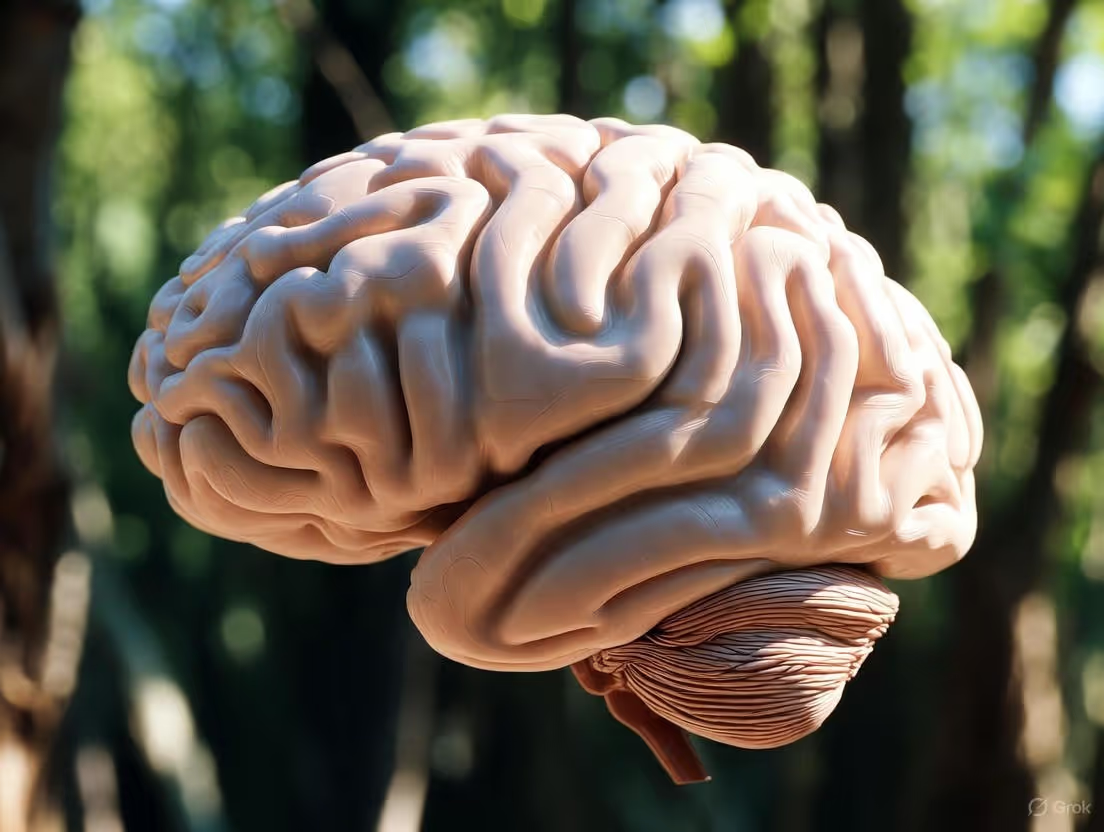
The Sleep Improvement Experiment: Testing What Works for You
Conduct a personal experiment by changing one variable at a time (e.g., caffeine cutoff time) and tracking the impact on your sleep and next-day energy.
The Sleep Improvement Experiment: Testing What Works for You
That restless mind at 2 AM, the groggy morning that feels like wading through syrup, the afternoon slump that demands a third coffee—these are not personal failings. They are the symptoms of a life lived in discord with the most fundamental biological rhythm you possess. Sleep, once considered a passive void, is now understood to be an active, complex, and astonishingly fragile state of nightly renewal. It’s a symphony of brainwaves, hormones, and bodily repairs, and for many of us, the conductor has left the building.
We’ve all been sold a dream of perfect sleep: the magic mattress, the perfect pillow, the “sleepy girl” mocktail, the meditation app with millions of downloads. The wellness industry hums with solutions, creating a paradoxical anxiety: with so much advice, why are we still so tired? The truth is that sleep is not a monolithic problem with a one-size-fits-all cure. It is a deeply personal equation, influenced by your unique genetics, lifestyle, neurochemistry, and environment.
This is where the old model of “sleep tips” fails. Following generic advice is like taking someone else’s prescription medication. What works wonders for your friend—a cold room, an early dinner, weighted blankets—might leave you staring at the ceiling or feeling unrested. The journey to better sleep isn’t about finding the answer. It’s about discovering your answers.
Welcome to The Sleep Improvement Experiment. This is not another list of life-hacks. This is a structured, personalized, and data-informed framework for becoming the lead scientist of your own rest. We are moving from passive consumer to active investigator. Over the course of this deep exploration, we will deconstruct sleep into its core components, examine the evidence behind popular interventions, and build a methodology for testing them in the context of your own life.
The most crucial tool in this experiment? Objective, personal data. This is where modern technology, specifically the advanced biometric tracking of devices like the Oura Ring or the insights from Oxyzen.ai’s holistic platform, becomes revolutionary. Guessing how you slept based on how you “feel” is notoriously unreliable. Precision tracking gives you a baseline—your personal sleep architecture of deep, light, and REM sleep, your resting heart rate, your heart rate variability (HRV), and your sleep latency. It turns subjective fog into objective metrics, allowing you to see the direct impact of your experiments.
Are you ready to trade frustration for curiosity? To replace “I’m a bad sleeper” with “Let’s see what happens if I try this”? Then let’s begin the experiment. The first step is to understand what we’re actually trying to fix.
The Anatomy of a Perfect Night: What Are We Actually Measuring?
Before we can improve something, we must first understand what it is. Sleep is not a uniform state of unconsciousness. It’s a dynamic, cyclical journey through distinct stages, each with a critical physiological purpose. Modern sleep science, aided by polysomnography (the gold-standard sleep study) and now accessible through advanced wearable technology, breaks this nightly voyage into clear phases.
The Four-Stage Sleep Cycle
A full sleep cycle lasts about 90 to 110 minutes, and a well-rested individual will complete four to six of these cycles per night.
Stage 1 (N1 - Light Sleep): The doorway to sleep. This lasts only a few minutes. Your muscles relax, your brain waves begin to slow from their waking patterns (alpha waves) into theta waves, and you can be easily awakened. This is that fleeting, drifting feeling.
Stage 2 (N2 - Light Sleep): The foundation of your night. You spend approximately 50% of your total sleep time here. Your heart rate slows, body temperature drops, and brain activity is marked by sleep spindles and K-complexes—bursts of activity believed to be crucial for memory consolidation and sensory processing. This stage is about stabilization and preparation for deep sleep.
Stage 3 (N3 - Deep Sleep or Slow-Wave Sleep): The physical restoration phase. This is the hardest stage from which to be awakened. Your brain emits slow, powerful delta waves. Blood flow is directed to your muscles, tissue growth and repair occur, and energy is restored. This is when the body releases human growth hormone, crucial for recovery. Lack of deep sleep leaves you feeling physically drained and achy.
Stage 4 (REM Sleep): The mental and emotional processing phase. REM stands for Rapid Eye Movement. Your brain becomes highly active, nearly as active as when you’re awake (which is why this is the primary stage for vivid dreams). Your body, however, experiences temporary muscle paralysis (atonia) to prevent you from acting out your dreams. REM sleep is essential for memory consolidation, learning, emotional regulation, and creativity. It dominates the later cycles of the night.
A “good night’s sleep” isn’t just about total hours. It’s about the successful, uninterrupted progression through these stages in balanced proportions. Disruption—whether from stress, alcohol, blue light, or sleep apnea—fragments this architecture, robbing you of the specific benefits of each phase.
The Key Biometrics of Recovery
Beyond sleep stages, several other nighttime metrics are vital signposts of your nervous system’s state and your body’s recovery capacity:
Resting Heart Rate (RHR): Your heart rate at its lowest point during sleep. A lower RHR generally indicates better cardiovascular fitness and efficient autonomic nervous system function. An unexplained elevated nightly RHR can be an early sign of illness, stress, or overtraining.
Heart Rate Variability (HRV): The measure of the variation in time between each heartbeat. It is the single most powerful non-invasive metric for tracking your autonomic nervous system balance. A higher HRV typically indicates a resilient, adaptable system (more parasympathetic, or “rest-and-digest,” activity). A lower HRV suggests your body is under strain (dominated by the sympathetic, or “fight-or-flight,” system). Tracking HRV trends over time is invaluable for understanding your overall stress load and recovery status.
Sleep Latency: The time it takes you to fall asleep. Ideally, this is between 10 and 20 minutes. Consistently taking less than 5 minutes may indicate significant sleep deprivation, while taking longer than 30 minutes may point to insomnia or poor sleep hygiene.
Sleep Efficiency: The percentage of time in bed you are actually asleep. An efficiency of 85% or higher is considered good. Low efficiency points to frequent awakenings or excessive tossing and turning.
Armed with this knowledge, the goal of our experiment shifts. We are no longer just “trying to sleep more.” We are engineering our environment and behavior to: 1) protect the duration of our sleep, 2) preserve the continuity of our sleep cycles, and 3) optimize the biometric markers (RHR, HRV) that signal true recovery.
This requires a baseline. You cannot run an experiment without initial data. If you’re using a smart ring or a dedicated sleep tracker, your baseline is already being recorded. Platforms like Oxyzen.ai specialize in synthesizing this raw data into actionable insights, helping you see your personal patterns clearly. If you’re not tracking yet, even a week of journaling your bedtime, wake time, and subjective feelings can be a start. But remember: the data is your compass. The more precise it is, the more accurately you can navigate.
Now, with our map of sleep anatomy in hand, we must confront the invisible architect of it all: our circadian rhythm.
The Body’s Silent Conductor: Demystifying Your Circadian Rhythm
If sleep stages are the musicians, your circadian rhythm is the conductor. This 24-hour internal clock, seated in the suprachiasmatic nucleus (SCN) of your brain, governs not just your sleep-wake cycle, but virtually every physiological process in your body—from hormone release and body temperature to digestion and cognitive performance. It is the master rhythm to which your biology dances.
Your circadian rhythm is endogenously generated (it runs even in total darkness) but is exquisitely tuned by external cues, the most powerful of which is light. The process works like this:
Morning Light Exposure: As sunlight, particularly its high concentration of blue light wavelengths, hits specialized cells in your retina, it signals your SCN that it is morning.
The Cortisol Awakening Response: The SCN instructs your adrenal glands to release cortisol. This is a healthy, gentle spike that promotes alertness, focus, and energy. It’s your body’s natural “wake-up call.”
The Daytime Signal: Throughout the day, cortisol and other alertness-promoting neurotransmitters help maintain energy. Body temperature rises.
The Evening Transition: As daylight fades, the reduced light signal allows your pineal gland to begin secreting melatonin, the “hormone of darkness.” Melatonin gently lowers body temperature and promotes drowsiness, preparing the body for sleep.
The Deep Sleep Phase: Melatonin peaks in the middle of the night, supporting sleep maintenance.
The Prelude to Dawn: In the early morning hours, melatonin production ceases, and the cycle prepares to begin anew.
This elegant system evolved under a consistent pattern: bright, blue-rich days and dark nights. Modern life has hacked this system with artificial light, constant connectivity, and irregular schedules, leading to what scientists call “circadian misalignment.”
The Enemies of Rhythm: What Throws Your Conductor Off Beat?
Blue Light at Night: The light from phones, tablets, computers, and LED bulbs is rich in blue wavelengths. After sunset, this light mimics sunrise, directly suppressing melatonin production and delaying your sleep signal. It’s like telling your brain it’s 9 AM at 9 PM.
Inconsistent Sleep Schedules: Sleeping in on weekends creates “social jet lag,” forcing your body to constantly readjust its internal clock. This inconsistency is deeply disruptive.
Poorly Timed Meals and Caffeine: Eating large, heavy meals late at night keeps your digestive system active when it should be winding down. Caffeine has a half-life of 5-6 hours; a 3 PM coffee can still have significant stimulating effects at 9 PM.
Lack of Morning Light: Failing to get bright light exposure in the first hour of waking weakens the cortisol signal and fails to properly anchor your rhythm, making the evening transition less robust.
When your circadian rhythm is misaligned, the consequences extend far beyond tiredness. Research links chronic circadian disruption to increased risks for metabolic disorders (obesity, type 2 diabetes), cardiovascular disease, mood disorders, and impaired immune function.
The First Experiment: Anchoring Your Rhythm
The most powerful intervention in our entire sleep experiment is fixing your circadian timing. It is the foundational layer upon which all other sleep hygiene practices are built. Here is your first formal experiment protocol:
Hypothesis: If I consistently get bright light exposure within 30 minutes of waking and eliminate blue light after sunset, my sleep latency will decrease, my sleep efficiency will increase, and my subjective morning alertness will improve within one week.
Intervention A (Morning): Upon waking, get 10-30 minutes of outdoor light exposure without sunglasses. If the sun isn’t up or weather is poor, use a bright light therapy lamp (10,000 lux) for the same duration.
Intervention B (Evening): Starting 2 hours before your target bedtime, activate a system-wide blue light filter. Use apps like f.lux on your computer, Night Shift on iOS, or Blue Light Filter on Android. Consider wearing amber-tinted blue light blocking glasses. Dim overhead lights and use lamps with warm-toned bulbs.
Measure: Track your sleep latency, total sleep time, and note your subjective ease of waking. A device that tracks sleep stages will also show if you’re getting more consolidated deep sleep in the first half of the night.
By prioritizing light management, you are not just “doing a sleep hack.” You are respecting and reinforcing the most fundamental biological rhythm you possess. You are giving your silent conductor a clear beat to follow. For a deeper dive into how technology can help monitor your circadian alignment through daily readiness scores, the resources at Oxyzen.ai’s blog offer valuable insights.
With our conductor back in charge, we can now examine the environment in which the nightly symphony plays out: the bedroom itself.
Engineering the Sleep Sanctuary: Your Bedroom Environment Audit
You have an internal biological environment (your circadian rhythm) and an external physical environment (your bedroom). The goal of a sleep sanctuary is to align the external with the internal, creating conditions that are maximally conducive to sleep onset and maintenance. Every sensory input—what you see, hear, feel, and even smell—should signal “safety” and “rest” to your primal brain.
Let’s conduct a thorough audit of your sleep environment. Treat this like a scientist preparing a lab for a sensitive experiment.
The Thermostat of Sleep: Temperature
This is arguably the most critical environmental factor after light. Your core body temperature needs to drop by about 1-2 degrees Fahrenheit to initiate and maintain sleep. A room that is too warm disrupts this natural drop.
The Science: The circadian rhythm also governs your core temperature. It peaks in the late afternoon and reaches its trough in the middle of the night. The initial drop in the evening, facilitated by melatonin and increased blood flow to the extremities, is a key sleep signal.
The Ideal Range: Most research points to a bedroom temperature between 60-67°F (15.5-19.5°C) as optimal. This is cooler than most people keep their homes during the day.
The Experiment: For one week, set your bedroom thermostat to 65°F (18°C). Use breathable, natural fiber bedding (cotton, linen, bamboo). If you tend to sleep hot, consider a cooling mattress pad or pillow. Track your deep sleep percentage and note if you experience fewer middle-of-the-night awakenings.
The Sound of Silence: Managing Noise
Sudden noises or a consistently noisy environment can cause micro-awakenings that fragment your sleep architecture, even if you don’t consciously remember them. This is measured as increased “sleep movement” or “awake time” on a tracker.
Solutions:
White Noise / Pink Noise: A constant, ambient sound like a fan, a white noise machine, or a pink noise app can mask disruptive, irregular noises (traffic, a partner snoring, neighbors). Pink noise, which has more low-frequency energy, has even shown in studies to increase deep sleep and improve memory recall in older adults.
Earplugs: High-fidelity musician’s earplugs or simple foam ones can be highly effective for side sleepers.
The Experiment: If your sleep tracker shows high “restlessness” or you live in a noisy area, introduce a white/pink noise source for a week. Measure changes in your sleep efficiency and subjective sleep quality.
The Absolute Imperative: Darkness
We addressed blue light for circadian alignment, but total darkness is crucial for sleep quality. Even small amounts of ambient light from a streetlamp, a charging LED, or a crack under the door can interfere with melatonin production and sleep depth.
The Audit: Lie in your bed at night with the lights off. After five minutes, what can you still see? Any pinpricks of light?
The Fixes: Blackout curtains are a top-tier investment. Cover or remove all electronic LEDs with electrical tape or dedicated light blockers. Consider a comfortable sleep mask if blackout curtains aren’t possible. The goal is a darkness so complete you cannot see your hand in front of your face.
The Often-Overlooked: Air Quality and Allergens
Poor air quality can lead to congestion, mouth breathing, and sleep disruption. Dust mites in bedding are a common allergen.
Actions: Use a HEPA air purifier in your bedroom, especially if you have allergies or pets. Wash bedding weekly in hot water. Consider hypoallergenic pillow and mattress encasements.
Creating your sanctuary is an act of respect for the sleep process. It communicates to your nervous system that this space is dedicated to one thing and one thing only: profound rest. It removes barriers and friction from the natural process of falling and staying asleep. As the founders of Oxyzen.ai often share in their story, the journey to better health often starts with mastering the fundamentals of your immediate environment.
Once your sanctuary is established, we must turn our attention to the fuel you provide your body and the timing of that fuel—because what you do during the day, and particularly in the hours before bed, directly writes the script for your night.
Fueling for Sleep: The Daytime and Evening Nutrition Protocol
You are not just what you eat; you are when you eat, especially in relation to sleep. Food and drink are potent biological signals that can either harmonize with or sabotage your circadian rhythm and sleep architecture. This section moves beyond simplistic “avoid caffeine” advice into a nuanced protocol for timing your nutrition to support, not fight, your sleep.
The Circadian Rhythm of Digestion
Your digestive system has its own circadian rhythm. Enzymatic activity, gut motility, and metabolic processes are primed to be most efficient during your active, daytime phase. As evening approaches, your body expects to wind down and shift its energy toward repair, not digestion. Eating late forces your core temperature to rise (to process food) at the very time it should be falling to initiate sleep.
The Three-Phase Nutrition Protocol for Sleep
Phase 1: The Daytime Foundation (Upon Waking to Late Afternoon)
Hydrate First: Rehydrate after 7-8 hours of sleep deprivation. Start with a large glass of water.
Prioritize Protein & Healthy Fats for Breakfast: A breakfast with adequate protein (eggs, Greek yogurt, protein smoothie) helps stabilize blood sugar and provides sustained energy, preventing the mid-morning crash that leads to poor food choices and caffeine over-reliance.
The Caffeine Cutoff: Establish a firm caffeine cutoff time. Given its 5-6 hour half-life, a good rule is no caffeine after 2 PM for a 10 PM bedtime. This includes coffee, black/green tea, many sodas, and even dark chocolate. Experiment to find your personal tolerance threshold.
Phase 2: The Evening Wind-Down (Last Meal to 2-3 Hours Before Bed)
The Golden Rule: Stop Eating 2-3 Hours Before Bed. This is your most powerful nutritional lever for better sleep. It allows digestion to largely complete, lets core temperature drop, and can dramatically reduce nighttime acid reflux. If you must have a small snack closer to bed, make it minimal and sleep-friendly (see below).
Composition of the Last Meal: Aim for a balanced meal with complex carbohydrates, protein, and vegetables. For some, a meal higher in complex carbs (sweet potato, brown rice) can facilitate tryptophan uptake into the brain, aiding serotonin and melatonin production. Avoid heavy, greasy, or very spicy foods which are harder to digest and can cause discomfort.
Alcohol: The Deceptive Depressant: Alcohol may help you fall asleep faster, but it is a catastrophic disruptor of sleep architecture. It suppresses REM sleep in the first half of the night, often causing a rebound of intense, sometimes unsettling, REM in the second half. It also fragments sleep, leads to more awakenings (often to use the bathroom), and dehydrates you. For the purpose of this experiment, consider eliminating alcohol or strictly limiting it to early evenings and observing the dramatic positive effect on your sleep-stage balance and HRV.
Phase 3: The Sleep-Promoting Snack (If Necessary) If genuine hunger is keeping you awake, a small, specific snack 45-60 minutes before bed can help.
Principles: Combine a small amount of complex carbohydrate with a source of tryptophan or magnesium.
Examples: A small banana; a handful of almonds (magnesium); a few cherries (natural melatonin); a small bowl of oatmeal; or a classic: a small slice of whole-grain toast with a thin layer of almond butter.
The Hydration Balance Dehydration can cause nighttime leg cramps and dry mouth, disrupting sleep. Overhydration right before bed guarantees disruptive bathroom trips. The solution is front-loading hydration. Drink the majority of your water during the day and slow down 1-2 hours before bed.
The Experiment: The 3-Hour Fast
Hypothesis: If I finish all food and caloric beverages at least 3 hours before my bedtime, my sleep latency will decrease, my deep sleep percentage will increase, and I will experience fewer nighttime awakenings.
Protocol: For one week, set a firm “kitchen closed” time. Drink only water or herbal non-caffeinated tea after this point. Track your sleep efficiency, deep/REM sleep, and note any changes in heartburn or nighttime restlessness.
What you put in your body is data. By aligning your nutritional data with your circadian data, you create a powerful synergy for sleep. For individuals tracking their biometrics closely, platforms like Oxyzen.ai can help correlate dietary logs with sleep scores, turning this experiment from guesswork into precise science.
Nutrition fuels the body, but stress hijacks the mind. To complete our pre-sleep preparation, we must address the most common barrier to sleep onset in the modern world: the racing mind.
Quieting the Monkey Mind: Pre-Sleep Rituals and Cognitive Shutdown
You’ve engineered the perfect cave: it’s dark, cool, and quiet. You’ve fueled your body appropriately. Yet, you lie in bed, and your mind is a browser with 47 tabs open, and one of them is playing loud music. This is “cognitive hyperarousal”—the state of mental alertness that is the antithesis of sleep. Stress, anxiety, and the constant processing of the day’s events activate the sympathetic nervous system, directly blocking the transition into the parasympathetic state required for sleep.
A pre-sleep ritual is not a luxury; it is a necessary cognitive shutdown sequence. It is a buffer zone between the demands of the day and the vulnerability of the night. Its purpose is to consciously lower physiological and psychological arousal.
The Science of the Wind-Down: From Sympathetic to Parasympathetic
The goal is to stimulate the vagus nerve, the main component of the parasympathetic nervous system. Activities that promote a sense of safety, calm, and present-moment awareness help accomplish this.
Building Your Personalized Cognitive Shutdown Ritual (60-90 minutes before bed)
A ritual is only effective if you value it and it resonates with you. Mix and match from these evidence-based components:
1. The Digital Sunset (Non-Negotiable): This is the single most effective cognitive shutdown tool. At a set time—ideally 60 minutes before bed—all screens (phones, laptops, TVs) go off and away. Place your phone in another room to charge. This accomplishes three things: it removes blue light, stops the endless stream of incoming information (emails, news, social media), and breaks the associative link between your bed and mental stimulation.
2. The Transition Activity (Choose 1-2): This activity should be enjoyable, low-stimulation, and done in dim, warm light.
Reading Fiction: Physical books or e-ink readers (without backlight) are ideal. Fiction transports your mind away from your own life and worries.
Gentle, Restorative Stretching or Yoga: Focus on slow, held stretches like child’s pose, seated forward folds, or gentle spinal twists. The goal is to release physical tension, not to exercise.
Listening to Calm Audio: An audiobook, a relaxing podcast, or ambient music. Avoid stimulating or anxiety-inducing content.
A Gratitude or “Brain Dump” Journal: This is powerfully effective for the ruminative mind. Spend 5-10 minutes writing down three things you’re grateful for from the day. Alternatively, do a “brain dump”: write down every thought, worry, or to-do list item swirling in your head. The act of externalizing these thoughts onto paper signals to your brain that they have been captured and can be dealt with tomorrow.
3. The Sensory Anchors (Incorporating Calm):
Aromatherapy: Scents like lavender, chamomile, and sandalwood have research supporting their mild sedative and anxiety-reducing effects. Use a diffuser with essential oils or a linen spray.
A Warm Bath or Shower: The science here is brilliant. The warm water raises your body temperature slightly. When you get out, the rapid cooldown mimics the natural evening drop in core temperature, sending a strong physiological signal that it’s time for sleep.
Herbal Tea: A cup of caffeine-free tea like chamomile, valerian root, or passionflower can be a comforting, ritualistic signal that the day is ending.
The “If You Can’t Sleep” Protocol Despite your best efforts, you may still find yourself awake. What you do next is critical. The cardinal rule: If you are awake in bed for more than 20 minutes, get out of bed.
Why: This protects the psychological association between your bed and sleep. You must prevent your brain from linking bed with frustration and wakefulness.
What to Do: Go to another dimly lit room. Do a boring, non-screen activity: read a dull book, listen to a calm podcast, or do a simple puzzle. Do not check the time. Only return to bed when you feel drowsy. Repeat as necessary.
The Experiment: The 60-Minute Digital Sunset
Hypothesis: If I institute a strict 60-minute screen-free buffer before bed, my sleep latency will significantly decrease, and I will experience less pre-sleep anxiety.
Protocol: For one week, all screens off at T-60 minutes. Use the time for a combination of reading and journaling. Track your sleep latency and also note your subjective sense of calm before bed versus previous nights.
This ritual is your nightly gift to your nervous system. It is the deliberate, gentle closing of the cognitive shop. For more ideas on crafting a personalized wind-down routine, the community stories and tips shared on Oxyzen.ai’s testimonials page can be a great source of inspiration, showing how real people have solved this universal challenge.
We’ve addressed the pre-sleep environment and mind. But what about the body itself? Can we use physical activity not just for fitness, but as a precise tool for engineering better sleep?
Moving to Rest: How Exercise Timing and Type Influence Sleep Architecture
Exercise is a potent stressor on the body—a beneficial one when applied correctly. It profoundly affects core body temperature, hormone regulation, mood, and anxiety levels, all of which are key levers for sleep. The relationship between exercise and sleep is symbiotic: good sleep improves exercise performance and recovery, and the right kind of exercise improves sleep quality. But as with everything in this experiment, timing and type are everything.
The Broad Benefits: Why Exercisers Sleep Better
Regular, moderate-to-vigorous exercise is consistently linked with:
Increased Slow-Wave (Deep) Sleep: The physical exertion and muscle breakdown create a greater need for physical restoration, which manifests as more time spent in deep sleep.
Reduced Sleep Latency: The temperature-raising effect of exercise, followed by the subsequent cooldown, can reinforce the circadian temperature drop.
Improved Sleep Efficiency: Fewer awakenings and more consolidated sleep.
Reduction in Anxiety and Depressive Symptoms: Exercise is a powerful modulator of neurotransmitters like serotonin and norepinephrine and helps regulate the stress-response system (HPA axis).
The Critical Variable: Timing
This is where the “it depends” of personal experimentation comes in.
Morning/Midday Exercise (The Sweet Spot for Most): Exercising in the morning or afternoon provides the perfect circadian stimulus. It raises body temperature, cortisol, and alertness at the right time, strengthening the overall rhythm. The subsequent temperature drop hours later synergizes with the evening decline. For most people, this is unambiguously positive for sleep.
Evening Exercise (The Zone of Contention): The old dogma was that evening exercise was detrimental due to overstimulation and elevated core temperature. Modern research is more nuanced. It appears to depend heavily on exercise intensity and individual chronotype (whether you’re a natural night owl or morning lark).
High-Intensity Evening Exercise (HIIT, Heavy Weightlifting): This can be overly stimulating for many, elevating heart rate, core temperature, and excitatory neurotransmitters (epinephrine, norepinephrine) too close to bedtime, delaying sleep onset. It’s generally not recommended within 2-3 hours of bed.
Moderate, Steady-State Evening Exercise (Brisk walking, light jogging, gentle cycling): Finishing 60-90 minutes before bed may not be problematic for many, and some studies even show benefits. The key is the cooldown period.
Gentle, Mind-Body Evening Exercise (Yoga, Tai Chi, Stretching): This is actively sleep-promoting. It reduces muscular and mental tension, stimulates the parasympathetic nervous system, and can be a perfect part of a pre-sleep ritual.
The Experiment: Finding Your Exercise-Sleep Window
Step 1 – Baseline: For 3-4 days, note your exercise type, duration, intensity (Rate of Perceived Exertion 1-10), and finish time. Track your corresponding sleep latency and deep sleep percentage.
Step 2 – Intervention – The Morning Switch: If you typically exercise after 6 PM, try switching the same workout to the morning or early afternoon for one week. Keep intensity similar. Observe changes in your sleep data, particularly how quickly you fall asleep and your deep sleep.
Step 3 – Intervention – The Evening De-escalation: If morning workouts aren’t feasible, try de-escalating intensity in the evening. Swap a high-intensity session for a moderate 30-minute bike ride or a brisk walk, finishing 90 minutes before bed. Alternatively, try a 20-minute gentle yoga flow as part of your wind-down. Track the results.
Listen to Your Biomarkers: This is where a device that measures Heart Rate Variability (HRV) and Resting Heart Rate (RHR) becomes a game-changer. If your evening workout is truly hindering recovery, you will likely see a suppressed HRV and/or an elevated RHR the following morning, indicating your body is still under stress. This is objective feedback that your timing may need adjustment.
The goal is to use movement as a tool to promote sleep pressure and recovery, not to impede it. It’s a beautiful feedback loop: use your sleep data to optimize your exercise, and use your exercise to optimize your sleep. For athletes and active individuals, understanding this loop is central to performance, and exploring the in-depth analyses available through platforms like Oxyzen.ai can provide a competitive edge in recovery.
We’ve mastered the external environment and our daily behaviors. But what about the internal chemical environment? A host of supplements promise the elusive “perfect sleep.” Which ones are supported by science, and how do we test them safely?
The Supplement Lab: Navigating Melatonin, Magnesium, and the Sleep Aid Aisle
Walk into any wellness store, and the sleep aid section is vast and confusing. From melatonin to magnesium, valerian root to CBD, the promise is simple: swallow better sleep. The reality is far more complex. Supplements are not magic bullets; they are exogenous compounds that interact with your unique biochemistry. They should be approached not as first-line solutions, but as potential adjuncts to a solid foundation of sleep hygiene, and always with caution and preferably under medical guidance.
Let’s examine the evidence for the most common players, framing them as potential “experimental variables” to test only after you’ve stabilized your rhythm, sanctuary, nutrition, and ritual.
1. Melatonin: The Timing Hormone, Not the Knock-Out Pill
What it is: A hormone naturally produced by your pineal gland in response to darkness.
What it does: It doesn’t force sleep. It provides a timing signal to your brain that it is nighttime, thereby promoting sleep readiness. It helps regulate your circadian phase.
When it’s useful: For circadian rhythm disorders (jet lag, shift work, Delayed Sleep Phase Syndrome). It can help advance your sleep window if taken 2-3 hours before your desired bedtime.
The Critical Detail – Dosage: Less is more. Over-the-counter doses in the US (3mg, 5mg, 10mg) are often 10 times higher than what studies show is effective for phase-shifting (0.3mg – 1mg). Megadoses can cause morning grogginess, vivid dreams, and may downregulate your own natural production. The goal is to provide a subtle nudge, not a sledgehammer.
The Experiment (if applicable): If you struggle with falling asleep at a socially desired time (e.g., can’t sleep before 1 AM but need to be up at 7 AM), try a microdose of 0.5mg – 1mg taken 2-3 hours before your target bedtime for one week. Track sleep latency and morning alertness.
2. Magnesium: The Mineral of Relaxation
What it is: An essential mineral involved in over 300 enzymatic reactions, including those regulating the nervous system.
What it does: Magnesium acts as a gatekeeper for NMDA receptors in the brain and helps regulate the neurotransmitter GABA, which has calming effects. It also supports muscle relaxation. Many people are marginally deficient, especially if stressed, as stress depletes magnesium.
Forms Matter:
Magnesium Glycinate/Bisglycinate: Highly bioavailable and bonded to glycine (an inhibitory neurotransmitter that promotes sleep). This is the gold standard for sleep and anxiety support with minimal digestive side effects.
Magnesium Citrate: More commonly used for constipation; can cause loose stools.
Magnesium L-Threonate: Newer form that may have better penetration of the blood-brain barrier, studied for cognitive benefits.
The Experiment: If you experience muscle tension, restless legs, or general “tension” at night, try 200-400mg of Magnesium Glycinate 60-90 minutes before bed for two weeks. Subjectively note changes in physical relaxation and track any improvements in sleep efficiency.
3. Other Common Contenders (Briefly):
L-Theanine (from green tea): Promotes alpha brain waves (associated with relaxed alertness) and may reduce anxiety. Can be helpful for quieting a racing mind. Dose: 100-400mg before bed.
Glycine: The amino acid itself. Studies show 3g before bed can improve subjective sleep quality, reduce sleep latency, and lessen daytime sleepiness. It also has a slight cooling effect, aiding the temperature drop.
Valerian Root: An herbal remedy with mixed but generally positive evidence. It appears to increase GABA levels. Effects can be subtle and may take 2-4 weeks of consistent use. Can have a “dirty socks” odor.
CBD (Cannabidiol): A highly complex and individualized area. Early research suggests it may reduce anxiety and pain, two common barriers to sleep. Quality, dosage, and full-spectrum vs. isolate are critical variables. Crucial: Ensure it is third-party tested and contains no or negligible THC (the psychoactive compound) unless intended.
The Golden Rules of Supplement Experimentation:
Fix the Foundation First: Never use supplements to compensate for poor sleep hygiene. They are adjuncts, not substitutes.
One Variable at a Time: If you decide to test a supplement, introduce only ONE new compound at a time. Test it for at least 7-14 days while tracking sleep data and subjective feelings.
Consult a Professional: Especially if you have health conditions or take medications. What’s “natural” is not always “safe for everyone.”
Quality Matters: Choose reputable brands that use third-party testing (look for USP or NSF seals, or certificates of analysis).
The world of supplements requires a skeptical, scientific mindset. It’s an area where personalized data is invaluable, as the effects can be subtle and highly individual. For common questions on integrating supplements with biometric tracking, resources like the Oxyzen.ai FAQ can provide helpful guidance on correlating interventions with data.
Sometimes, despite our best efforts with environment, behavior, and supplements, sleep remains elusive due to factors outside our immediate control. It’s time to examine the hidden physiological disruptors.
The Hidden Disruptors: Sleep Apnea, Restless Legs, and When to Seek a Professional
Our experiment thus far has focused on variables within our control. But what if the root cause of poor sleep is a clinical sleep disorder? No amount of perfect sleep hygiene can overcome a physiological blockage or a neurological misfire. Recognizing the signs that point beyond lifestyle factors is a critical step in the self-experimentation process. It’s about knowing when to move from being a solo researcher to enlisting a specialized lab—a sleep clinic.
1. Sleep Apnea: The Silent Sleep Thief
Sleep apnea, particularly Obstructive Sleep Apnea (OSA), is vastly underdiagnosed. It is characterized by repeated pauses in breathing (apneas) or shallow breaths (hypopneas) during sleep, often caused by the relaxation of throat muscles blocking the airway.
Why it’s a major disruptor: Each breathing pause causes a micro-arousal (a shift to a lighter sleep stage or brief awakening) to restart breathing. This can happen hundreds of times per night, utterly fragmenting sleep architecture and preventing deep and REM sleep. It chronically deprives the brain and body of oxygen, placing immense strain on the cardiovascular system.
Key Signs (You or Your Partner May Notice):
Loud, chronic snoring with gasping or choking sounds.
Witnessed pauses in breathing during sleep.
Excessive daytime sleepiness despite adequate time in bed (e.g., falling asleep during meetings, while driving).
Waking with a dry mouth or sore throat.
Morning headaches.
High blood pressure.
Data Clues from a Smart Ring/Tracker: Consistently elevated nighttime heart rate, low HRV, and high “restlessness” scores. The oxygen saturation (SpO2) measurement on some advanced devices may show repeated dips throughout the night—a significant red flag.
The Next Step: If you suspect sleep apnea, see a doctor. Diagnosis typically involves a sleep study (either in-lab or a home test). Treatment (often with a CPAP machine) is life-changing, restoring sleep continuity and dramatically reducing health risks.
2. Restless Legs Syndrome (RLS) & Periodic Limb Movement Disorder (PLMD)
RLS: An irresistible urge to move the legs, usually accompanied by uncomfortable sensations (creeping, crawling, tingling), that begins or worsens during periods of rest or inactivity in the evening. Movement provides temporary relief. It directly interferes with sleep onset.
PLMD: Involves involuntary, repetitive leg (or sometimes arm) jerks or twitches during sleep, typically every 20-40 seconds. These movements cause micro-arousals, leading to non-restorative sleep and daytime fatigue, often without the person being aware of the movements themselves.
Data Clues: A sleep tracker might show very high movement/restlessness scores, frequent awakenings, and poor sleep efficiency despite good sleep hygiene. A bed partner may report the kicking.
Causes & Management: Can be primary (idiopathic) or secondary to iron deficiency, kidney disease, or medication side effects. Management ranges from iron supplementation to prescription medications. This requires a neurological or sleep medicine consultation.
3. Chronic Insomnia
While we’ve addressed sleep-onset difficulty, chronic insomnia is a distinct disorder characterized by persistent difficulty falling or staying asleep, occurring at least three nights per week for three months, and causing significant daytime impairment. It often involves a complex cycle of anxiety about sleep itself (“psychophysiological insomnia”). If your sleep struggles persist after 4-6 weeks of diligent experimentation with the previous protocols, it may be time to seek Cognitive Behavioral Therapy for Insomnia (CBT-I), which is considered the first-line, gold-standard treatment and is more effective long-term than sleep medications.
The Role of the Sleep Tracker in Detection
A sophisticated wearable is an excellent screening tool. It can’t diagnose, but it can provide compelling evidence to take to a professional. Patterns like:
Frequent, regular movement/awake periods throughout the night.
Repeated oxygen saturation dips. …are data points that say, “Something beyond my habits may be at play.”
Part of running a good experiment is knowing the limits of your own lab. Your body is giving you signals. Learning to distinguish between a problem you can solve with behavior and one that requires medical intervention is a form of profound self-knowledge. The team behind Oxyzen.ai often discusses this balance in their mission—empowering users with data to optimize their health while understanding when that data indicates a need for professional care.
Assuming our path is clear of clinical disorders, and we’ve built a strong foundation, we now arrive at the most advanced frontier of sleep optimization: leveraging the data we’ve collected to make iterative, intelligent adjustments. This is where the experiment truly comes alive.
Becoming a Data Detective: How to Interpret Your Sleep Metrics and Iterate
You have been running experiments: adjusting light, food, timing, and environment. You have been collecting data: sleep scores, stage breakdowns, HRV, RHR, and latency. Now, we move to the most critical phase: analysis and iteration. Without this step, you are just collecting numbers, not gaining wisdom. The goal is to transform data into actionable insight, creating a personalized feedback loop for continuous improvement.
Moving Beyond the Single Score
Most trackers provide a composite “Sleep Score.” This is a useful headline, but the real story is in the details. A score of 85 could mean vastly different things: one night it might be high due to long duration but poor efficiency; another night it might be from excellent efficiency but short duration. You must become a detective of your own metrics.
The Detective’s Framework: Asking the Right Questions
When you review your sleep data each morning, don’t just look—investigate. Ask these questions:
The Consistency Check: How does last night compare to my 7-day and 30-day averages? (Look for trends, not nightly noise).
The Latency/Length Question: Did I fall asleep quickly (<15 min)? If not, what was different in my 90-minute pre-bed ritual?
The Efficiency/Continuity Question: Was my sleep efficiency high (>85%)? If I had many awakenings or high restlessness, what were the potential culprits? (Late meal? Alcohol? Stressful day? Noisy environment?).
The Architecture/Quality Question: How was my balance of deep and REM sleep? Did one seem low?
Low Deep Sleep: Often linked to late exercise (high-intensity), alcohol consumption, sleeping in a room that’s too warm, or physical pain.
Low REM Sleep: Often suppressed by alcohol (especially in the first half of the night), certain medications (like SSRIs), or significant sleep deprivation (the body prioritizes deep sleep first in a “rebound” scenario).
The Physiological Stress Question: What do my RHR and HRV tell me?
RHR: Was my nightly RHR higher than my baseline? This could indicate illness, dehydration, intense prior-day training, or high stress.
HRV: Is my HRV trending up (good, more resilient) or down (my body is under strain)? A sharp drop in HRV is a clear signal from your body to prioritize recovery: maybe today is for a walk, not a heavy workout; maybe you need an early night.
Correlation vs. Causation: The Art of the Log
Your sleep data doesn’t exist in a vacuum. To find causation, you need context. This is where a simple daily log becomes powerful. Note down:
Stress Level: Subjective (1-10).
Exercise: Type, duration, intensity, and time finished.
Nutrition: Time of last meal/alcohol/caffeine.
Evening Routine: What you did in the wind-down period.
Subjective Feelings: “Felt anxious,” “had a tough conversation,” “exciting day.”
After 7-14 days, look for patterns. For example:
“Every night I have a glass of wine after 9 PM, my deep sleep percentage is below 10%.”
“On days I exercise before 4 PM, my sleep latency is under 10 minutes. On days I exercise after 7 PM, it’s over 25 minutes.”
“My HRV is consistently 15% higher on weekends when I don’t look at work email after 6 PM.”
The Iterative Loop: Plan → Execute → Measure → Learn → Adjust
This is the scientific method applied to your life.
Plan: Based on a hypothesis (“Late caffeine disrupts my sleep”), design a 7-day experiment (“No caffeine after 12 PM”).
Execute: Follow the protocol diligently.
Measure: Collect your sleep data and subjective notes.
Learn: Analyze the data. Did latency improve? Did deep sleep increase? Was the effect negligible?
Adjust: Integrate the successful change into your permanent routine. If it failed, form a new hypothesis (“Maybe it’s the late dinner, not the caffeine”) and begin again.
This process turns you from a passive patient into an active biohacker. You are no longer guessing; you are guided by evidence generated from your own biology. For those who love diving deep into this analytical process, exploring the blog at Oxyzen.ai can provide advanced strategies and case studies on data interpretation.
After weeks of experimentation, analysis, and adjustment, you will have a highly personalized sleep protocol. The final challenge—and perhaps the most difficult—is making it stick in the real, messy, unpredictable world.
The Protocol in the Wild: Maintaining Sleep Hygiene Through Travel, Stress, and Life
Your sleep experiment has yielded results. You’ve found your optimal temperature, your caffeine cutoff, your perfect wind-down ritual. Your data is trending in the right direction. Then, life happens: a cross-country flight, a high-stakes work project, a sick child, a social event that runs late. These are the moments that test the resilience of your new habits. The goal is not perfection—that’s a recipe for stress. The goal is resilience: having a toolkit and a flexible mindset to protect your sleep as much as possible during disruptions and to recover quickly afterward.
Challenge 1: Travel and Jet Lag Travel is the ultimate circadian disruptor. You are physically moving your body across time zones while your internal clock remains anchored at home.
Strategy – The Proactive Shift (For Important Eastward Travel): 2-3 days before departure, gradually shift your bedtime and wake time 30-60 minutes earlier each day. Seek bright morning light at your destination immediately upon arrival.
Strategy – Light as Medicine: Use light deliberately to reset your clock. For eastward travel, seek bright morning light and avoid afternoon/evening light. For westward travel, seek bright afternoon/evening light.
Strategy – The Sleep Sanctuary Kit: Pack essentials: a high-quality sleep mask, comfortable earplips or a white noise app on your phone, and maybe a portable blue-light blocker for your laptop. A small pouch of your usual bedtime tea can be a powerful ritual anchor.
Mindset: Accept that the first 1-2 nights will be imperfect. Use melatonin (0.5mg) strategically at the new destination bedtime to provide a phase-shift signal. The goal is adaptation, not perfection.
Challenge 2: Periods of High Stress Stress activates the sympathetic nervous system, releasing cortisol and adrenaline—the very chemicals you’re trying to quiet at night.
Strategy – Double Down on the Non-Negotiables: When stress is high, your wind-down ritual is not a luxury; it’s critical infrastructure. Protect your digital sunset and bedtime fiercely, even if it means leaving work unfinished.
Strategy – The 10-Minute Evening Worry Window: If anxious thoughts are overwhelming, schedule them. Give yourself 10 minutes after dinner to write down every worry and a simple next action for each. Then, close the notebook. When the worry arises at night, you can tell your brain, “It’s in the notebook, and we have a plan for tomorrow.”
Strategy – Amplify Calm: Increase your relaxation response. A 10-minute guided body scan meditation before bed can be more powerful than an hour of distracted TV. A warm bath with Epsom salts (magnesium sulfate) can help.
Mindset: Understand that sleep is part of the solution, not a casualty. Going to bed is not “avoiding the problem”; it’s ensuring your brain has the resources to solve it effectively tomorrow.
Challenge 3: Social Obligations & Late Nights Life is for living, and sometimes that means a late dinner with friends or a special event.
Strategy – The 80/20 Rule: Aim for consistency 80% of the time. This gives you 20% wiggle room for life’s spontaneity without derailing your progress. One late night will not ruin your sleep hygiene; a pattern of them will.
Strategy – Damage Control: If you know you’ll be out late, don’t also drink alcohol heavily and eat a giant meal. Choose one indulgence. The next day, try to get back on schedule immediately—wake up at your normal time (even if you’re tired) and get bright morning light to re-anchor your rhythm. Avoid the temptation to “sleep in,” as this prolongs the disruption.
Mindset: Enjoy the event fully, without sleep anxiety. Make a conscious choice to deviate from the protocol, then consciously choose to return to it. Guilt is not part of the equation.
The Concept of “Sleep Debt” and Recovery Sleep debt is real, but it’s not a precise ledger. You cannot “bank” sleep on the weekend to pay for weekday deprivation. However, you can prioritize recovery after a period of short sleep.
Recovery Nights: After a late night or poor sleep, make the next night’s sleep non-negotiable. Go to bed 60 minutes earlier if possible. Your tracker will likely show a higher deep sleep percentage as your body prioritizes physical restoration.
The Power of the Nap: A short, strategic nap (10-20 minutes) before 3 PM can improve alertness without causing sleep inertia or affecting nighttime sleep. Avoid long, late naps.
Maintaining your protocol in the wild is the final proof of its value. It shows that your sleep hygiene is not a fragile set of rules, but a robust, adaptable system for supporting your health and performance in any circumstance. It’s about making sleep a priority, not a prison. Hearing how others navigate these real-world challenges can be incredibly motivating, which is why many find value in the real user experiences shared at Oxyzen.ai testimonials.
The Future of Personalized Sleep: AI, Wearables, and Adaptive Technology
We have reached a pivotal moment in our exploration—having established a robust framework for self-experimentation, we now stand at the threshold of what comes next. The future of sleep optimization isn't about more generic advice; it's about hyper-personalized, adaptive systems that learn your unique biology and respond in real-time. This is where artificial intelligence, advanced wearables, and integrative platforms are transforming sleep from a passive state we hope for into an active domain we can engineer.
From Tracking to Prediction: The AI Revolution
Current wearables are brilliant data collectors, but the next evolution lies in predictive and prescriptive analytics. Imagine a system that doesn't just tell you how you slept, but anticipates how you will sleep and offers personalized recommendations to improve it.
Predictive Modeling: By analyzing your longitudinal data—sleep patterns, daily activity, stress markers (HRV, RHR), calendar events, and even weather—AI algorithms can identify patterns invisible to the human eye. It could alert you: *"Based on your elevated resting heart rate this morning and your high-stress work meeting scheduled for 4 PM, you're at high risk for poor sleep tonight. Consider moving your workout to the morning and scheduling a 20-minute wind-down meditation."*
Adaptive Coaching: Static sleep advice fails because our lives aren't static. AI-powered platforms can offer dynamic coaching. If your data shows a pattern of mid-sleep awakenings, the system might first suggest adjusting room temperature. If that doesn't work, it might guide you through a experiment with meal timing, then supplements, systematically testing variables based on your specific response data. This is the logical extension of our self-experimentation framework, automated and scaled with machine learning.
The Integrated Biometric Ecosystem
Sleep does not exist in isolation. It is deeply interconnected with your daytime physiological state. The future lies in devices and platforms that synthesize data from multiple streams:
Continuous Glucose Monitors (CGM) + Sleep Data: Seeing how nighttime blood sugar stability correlates with sleep depth and next-day energy.
HRV Training Readiness + Sleep Propensity: Using your morning HRV not just to suggest workout intensity, but to recommend an ideal bedtime or a need for a recovery-focused day.
Environmental Sensors + Biometrics: Smart home integrations where your bedroom lights automatically dim and temperature adjusts based on your real-time body temperature trend from your wearable.
Platforms at the forefront of this integration, like Oxyzen.ai, are moving beyond simple tracking to create a holistic dashboard of your nervous system's state, where sleep is a central—but not isolated—metric of overall health.
Personalized Sound and Stimulation
Emerging technologies are exploring direct modulation of sleep stages through sensory input.
Phased Sound Stimulation: Studies show that playing brief pulses of pink noise in sync with a person's slow brain waves (detected via EEG) can enhance deep sleep. Future consumer devices may use non-EEG proxies (like heart rate patterns) to time auditory stimuli for sleep enhancement.
Temperature Cycling Devices: Bedding systems that actively cool and warm according to optimal temperature curves for sleep onset and deep sleep maintenance are already entering the market, moving beyond a static "cool room" to a dynamic thermal environment.
The Democratization of Sleep Medicine
Perhaps the most exciting future is the accessibility of sophisticated analysis. What once required a $5,000 sleep lab study can now be approximated with a $300 wearable and a sophisticated algorithm. This empowers individuals to collect compelling data to take to medical professionals, facilitating faster diagnosis and more collaborative treatment plans for conditions like sleep apnea or insomnia. It flips the model from "doctor knows best" to "here is the data from my lived experience; let's collaborate on a solution."
Ethical Considerations and the Human Element
As we delegate more analysis to algorithms, we must guard against sleep anxiety driven by data obsession. The goal of technology should be to reduce anxiety, not create it. The most advanced system in the world is useless if it makes you feel like a failure for scoring an 82 instead of an 85. The human elements of intuition, self-compassion, and the simple enjoyment of a lazy weekend morning in bed must remain central.
The future of sleep is not about chasing a perfect score. It's about using technology as a sophisticated compass to navigate the complex terrain of your own biology, freeing up mental energy to simply live well and wake up refreshed. For those fascinated by how this future is being built today, understanding the vision and values behind companies leading this charge provides crucial context.
With a vision of this tech-enabled future, we must now address the most profound layer of all: the mind-body connection and the role of our beliefs and psychology in shaping our sleep reality.
The Psychology of Sleep: Beliefs, Anxiety, and the Placebo (and Nocebo) Effect
You can have the perfect temperature, the ideal supplement regimen, and the most advanced wearable, but if you lie down believing "I'm a terrible sleeper," you have likely already sabotaged your night. Sleep is perhaps the most psychologically vulnerable of all biological processes. We cannot force it; we must surrender to it. This makes our beliefs, expectations, and emotional state around sleep incredibly powerful mediators of its quality.
The "Good Sleeper" Identity vs. The "Insomniac" Identity
The stories we tell ourselves about our sleep become self-fulfilling prophecies. Someone who identifies as a "good sleeper" might have a night of poor sleep and dismiss it as "that weird night after too much pizza." Their anxiety remains low, and sleep quickly normalizes. Someone who identifies as an "insomniac" has the same poor night and thinks, "Here we go again, my insomnia is back." This spike in anxiety and hypervigilance about sleep creates the very conditions for a second bad night, reinforcing the identity.
The Experiment of Reframing: For one week, change your internal narrative. Instead of "I have insomnia," try "I am someone learning how to sleep well." Instead of "I tossed and turned all night," try "I got some rest, and my body did what it needed." Use your wearable data objectively: "My deep sleep was lower than average last night; I wonder if it was the late dinner?" This neutral, curious language removes the emotional charge and the identity stake.
Sleep Performance Anxiety and "Trying" to Sleep
Sleep is the one thing that gets worse the harder you try. "Trying" to sleep activates the performance-oriented, striving part of the brain (the prefrontal cortex), which is exactly the opposite of the letting-go state required. This creates a vicious cycle: effort → anxiety → alertness → poor sleep → more effort.
The Paradoxical Intention Technique: A core component of Cognitive Behavioral Therapy for Insomnia (CBT-I), this involves going to bed and trying to stay awake (with your eyes open, in the dark). By removing the pressure to sleep, you eliminate the performance anxiety. Ironically, sleep often arrives more easily when the struggle is abandoned.
The Powerful Placebo (and Dangerous Nocebo) of Sleep Aids
The placebo effect is strong in sleep. Studies show that people told they are receiving a powerful sleep aid (but are given a placebo) fall asleep faster and report better sleep quality. Conversely, the nocebo effect (where negative expectations cause negative outcomes) is also potent. If you take a supplement believing "this will probably give me weird dreams," it very well might.
Implication for Your Experiments: The efficacy of any intervention—be it a supplement, a new pillow, or a blue-light blocker—is a combination of its physiological effect and your belief in it. This isn't to say they don't work, but to acknowledge that your mindset is part of the formula. Approach each experiment with optimistic curiosity, not skeptical dread.
Addressing the Root of Nighttime Anxiety
Often, the anxiety we feel at bedtime is the overflow of unprocessed stress from the day. The mind, finally quiet, uses the opportunity to process what was ignored.
The Daytime Stress Inoculation: Practices like mindfulness meditation, even for 10 minutes during the day, train the brain to observe thoughts without becoming entangled in them. This skill is directly transferable to watching anxious thoughts float by at 2 AM without triggering a full-blown panic.
Scheduled Worry Time: As mentioned earlier, giving anxieties a dedicated time earlier in the evening can prevent them from hijacking the bedtime hour.
Cultivating Sleep Confidence
The ultimate goal is to develop sleep confidence: the deep-seated belief that your body knows how to sleep and will get what it needs. This comes from:
Building Evidence: Your experimentation creates a portfolio of things that work for you. This is tangible proof you can influence your sleep.
Decoupling from Perfection: Accepting that night-to-night variability is normal. A low sleep score is data, not a verdict.
Focusing on Restoration, Not Sleep: Shift your goal from "I must sleep 8 hours" to "I will allow my body to rest." This can include practices like yoga nidra (non-sleep deep rest) or simple breathing exercises in bed, which provide profound physiological recovery even if full sleep is elusive that night.
Mastering the psychology of sleep is often the final, liberating piece of the puzzle. It allows you to take all the technical knowledge and biometric data and apply it from a place of calm agency rather than frantic control. For many, this mental shift is the most transformative result of their entire sleep journey, a theme echoed in many personal stories from the Oxyzen.ai community.
Now, we must turn our attention to specific populations, because the "average" sleep advice often fails those with unique physiological landscapes. Let's explore how our experiment framework adapts for shift workers, new parents, and perimenopausal women.
Specialized Protocols: Adapting the Experiment for Shift Work, Parenthood, and Hormonal Shifts
The foundational principles of sleep science are universal, but their application must be tailored to life's most demanding circumstances. For shift workers, new parents, and women navigating hormonal transitions, standard sleep hygiene can feel like a cruel joke. The goal here is not to achieve "perfect" sleep, but to employ strategic adaptations to protect core restorative processes and survive—even thrive—during these challenging phases.
Protocol Adaptation 1: The Shift Worker’s Circadian Survival Guide
For the 20% of the workforce with non-traditional hours, circadian misalignment isn't a risk; it's a job description. The goal is to create the most stable rhythm possible within an inverted schedule.
Light: Your Most Powerful Tool: Reverse the paradigm. After a night shift, wear blue-light-blocking glasses for the commute home to prevent morning sunlight from signaling "wake time." Your "day" begins when you wake up in the afternoon/evening. Use bright light therapy lamps or get sunlight exposure at the start of your "waking day" (e.g., 4 PM) to anchor your new rhythm. Make your bedroom an absolutely light-proof cave for daytime sleep.
Strategic Melatonin Use: Take 0.5-1mg of melatonin at the time you want to signal "bedtime" in your new schedule (e.g., 8 AM when you get home). This helps pull your circadian phase in the desired direction.
Meal Timing Matters: Try to eat your "main meal" at the start of your wakeful period (e.g., after waking at 4 PM), not right before your daytime sleep. Keep meals light before your sleep period.
The Reality: Total adaptation is rare. The focus is on maximizing sleep quality and duration during your primary sleep block and strategically napping before a night shift to boost alertness.
Protocol Adaptation 2: The New Parent’s Sleep Survival (Not Optimization)
For parents of infants, the concept of an 8-hour block is temporarily suspended. The goal shifts from sleep consolidation to sleep opportunity and quality.
Embrace Fragmentation, Protect Your Sanctuary: You will be waking up. Make the returns to sleep as easy as possible. Keep the sleep environment optimized (dark, cool). Use a very dim red-light nightlight for feedings/changes to minimize circadian disruption.
The Power of Tag-Teaming: If possible, split the night into shifts with a partner to guarantee each of you one 4-5 hour consolidated sleep block. This is more restorative than two people getting fragmented 2-hour chunks all night.
Sleep When the Baby Sleeps (Seriously): Let go of non-essential chores. Your priority during nap times is your own rest, not a clean kitchen. Even 20 minutes of closing your eyes is restorative.
Lower the Bar: Abandon all sleep scores and tracking during the newborn phase. It will only cause distress. Your metric is simple: "Did I get some rest?" not "How much deep sleep did I get?"
Protocol Adaptation 3: Navigating Perimenopause and Menopause
Hormonal fluctuations, particularly the decline in estrogen and progesterone, directly impact sleep architecture and thermoregulation. Hot flashes and night sweats are not just annoying; they cause profound sleep fragmentation.
Temperature Regulation is Job #1: This goes beyond a cool room. Use moisture-wicking, natural fiber bedding (bamboo, Tencel). Invest in a cooling mattress pad or a BedJet system. Have a change of sleepwear and a towel by the bed.
Layer Your Bedding: Use multiple light layers that can be easily thrown off and pulled back on.
Mind the Alcohol and Spicy Food: These are common hot flash triggers. Your evening nutrition experiment should rigorously test their impact.
HRV as a Hormonal Barometer: Many women find their HRV trends correlate strongly with their hormonal cycle. Tracking can provide predictive insight into more challenging sleep nights, allowing for preemptive stress reduction and schedule lightening.
Professional Guidance: Discuss sleep issues with a healthcare provider knowledgeable in menopause. Options from hormone therapy to certain non-hormonal medications can be life-changing for sleep.
The Universal Mindset for Special Circumstances: Self-Compassion
In all these cases, rigid adherence to standard protocols is counterproductive. The experiment becomes: "Given my current unavoidable constraints, what is the ONE thing I can adjust to make sleep marginally better?" Maybe it's perfecting the blackout curtains for the shift worker. Maybe it's the new parent committing to a 20-minute nap. Maybe it's the menopausal woman finding the perfect cooling pillow.
Progress is measured in increments of well-being, not in perfect data. These adaptations are about harm reduction and resilience, proving that even in the most challenging seasons, the principles of sleep science can still be applied with intelligence and grace. For more tailored resources on navigating health during life transitions, the Oxyzen.ai blog often covers these nuanced topics.
After exploring these specialized adaptations, we come to a critical, often overlooked pillar of health that is both a product of sleep and a prerequisite for it: the health of our metabolic system. The link between blood sugar regulation and sleep is a two-way street of profound importance.
The Blood Sugar-Sleep Connection: How Glucose Regulation Dictates Your Night
While we touched on nutrition timing, the quality of our metabolic health—specifically, our body's ability to regulate blood glucose (sugar) levels—exerts a powerful and underappreciated influence over sleep architecture and stability. Understanding this connection completes the picture of how daytime physiology writes the nighttime script.
The Nightly Glucose Rollercoaster
Under normal conditions, blood glucose is tightly regulated. During sleep, the body's sensitivity to insulin (the hormone that ushers glucose into cells) is naturally lower, and energy demand is reduced. However, several factors can cause disruptive spikes and crashes throughout the night:
A High-Glycemic or Large Meal Close to Bedtime: This causes a significant blood sugar spike. The body must release a large amount of insulin to cope, which can sometimes lead to a reactive hypoglycemic (low blood sugar) dip a few hours later. This dip is a major stressor, triggering the release of cortisol and adrenaline to raise blood sugar back up. This hormonal surge can wake you up—often around 2-3 AM—feeling anxious, alert, and hungry.
Alcohol Before Bed: Alcohol initially raises blood sugar, then causes it to crash later in the night, with the same awakening effect.
Underlying Insulin Resistance: A condition where cells don't respond well to insulin, forcing the pancreas to produce more. This chronic state leads to generally higher and more volatile blood glucose levels, which disrupts sleep continuity.
How Poor Sleep Worsens Metabolic Health
The relationship is viciously reciprocal. Just as blood sugar dysregulation harms sleep, poor sleep actively worsens metabolic health:
Increased Insulin Resistance: A single night of poor or short sleep can measurably decrease insulin sensitivity the next day.
Hormonal Imbalance: Sleep deprivation increases ghrelin (the hunger hormone) and decreases leptin (the satiety hormone), driving cravings for high-carbohydrate, sugary foods.
Impaired Decision-Making: Tired brains have less activity in the prefrontal cortex, the area responsible for willpower and long-term decision-making, making you more likely to choose poor food options.
Breaking the Cycle: Experiments for Metabolic Sleep Hygiene
Experiment 1: The After-Dinner Walk. A 15-20 minute gentle walk after your last meal can significantly blunt the post-meal blood glucose spike, leading to a more stable night. Test this for a week and track sleep efficiency and nighttime awakenings.
Experiment 2: The Fiber & Fat First Meal Order. If you have a complex meal, try eating the fibrous vegetables and healthy fats/proteins first, leaving the starchy carbohydrates for last. This simple order can slow glucose absorption and reduce the spike. Note any changes in sleep depth.
Experiment 3: The CGM Insight (For the Data-Curious). Using a Continuous Glucose Monitor (CGM) for a month provides a real-time movie of your body's response to food, exercise, and stress. Correlating CGM data with your sleep tracker data can be revelatory. You might see directly that the nights following a high-glycemic dinner show a glucose dip coinciding with a spike in your nighttime heart rate and a period of wakefulness.
Macronutrient Balance at Dinner: Prioritize a dinner rich in fiber (non-starchy vegetables), adequate protein, and healthy fats. This combination promotes slow, steady digestion and stable blood sugar. Limit refined carbohydrates and added sugars.
The Long-Term View: Sleep as Metabolic Maintenance
Viewing sleep as a non-negotiable pillar of metabolic health reframes its importance. It's not just about feeling rested; it's about maintaining insulin sensitivity, healthy body composition, and reducing the risk of type 2 diabetes. A stable night of sleep is a powerful act of preventive medicine for your metabolism.
By integrating blood sugar awareness into your sleep experiment, you move into a truly holistic model of health where day and night, feeding and fasting, activity and rest are seen as interconnected parts of a single system. Platforms designed for integrated health tracking, such as Oxyzen.ai, are built on the understanding that these data streams—sleep, HRV, activity, and eventually, glucose—must be viewed together to paint a complete picture of wellness.
Having addressed the physical systems, we now arrive at the most ancient and potentially transformative practices of all: breath and meditation. These are levers of the nervous system that we can pull directly, at any time, for free.



%402x.svg)