


Sleep Improvement for Shift Workers: What Actually Works
For shift workers, strategies include strategic light exposure, melatonin use, and maintaining a very consistent sleep schedule even on days off.
For shift workers, strategies include strategic light exposure, melatonin use, and maintaining a very consistent sleep schedule even on days off.
%402x.svg)
The world doesn’t sleep when you do. For the millions of nurses, factory workers, pilots, first responders, and hospitality staff who keep our 24/7 society running, this isn’t just a poetic phrase—it’s a daily reality that wages a silent war on their health. Shift work, particularly night shifts and rotating schedules, stands in direct defiance of one of humanity’s most fundamental biological imperatives: the circadian rhythm. The result is a pervasive, grinding sleep deficit that goes far beyond simple fatigue. We’re talking about an increased risk for cardiovascular disease, metabolic disorders like diabetes, mental health struggles, and compromised immune function. The quest for quality sleep becomes a central, often frustrating, pillar of a shift worker’s life.
Yet, amidst the coffee crashes and the blackout curtain searches, there is profound hope. This isn’t about vague “sleep hygiene” tips designed for a 9-to-5 world. This is a deep, evidence-based exploration of what actually works for the unique physiology of a shifted schedule. We’re moving past folklore and into the science of chronobiology, environmental hacking, and cutting-edge personal technology. The goal is to equip you with a personalized, actionable toolkit to reclaim restorative sleep, protect your long-term health, and improve your waking hours, no matter when they occur. This journey begins with understanding the true enemy: the magnificent, stubborn, and often misunderstood human body clock.

To conquer the sleep challenges of shift work, you must first meet your opponent. It’s not just your job schedule; it’s a 20,000-year-old genetic inheritance that is brilliantly, stubbornly, working against you. This is your circadian rhythm—an internal, near-24-hour master clock that governs not just sleepiness and alertness, but virtually every physiological process in your body.
Located in the suprachiasmatic nucleus (SCN), a tiny region of the brain’s hypothalamus, this master clock is a neurological conductor. It uses light as its primary tuning fork. When light, especially the blue-wavelength light of a morning sun, hits specialized cells in your retina, a signal travels directly to the SCN. The SCN responds by suppressing the production of melatonin, the “sleep hormone,” and cues the release of cortisol to promote alertness. As daylight fades, the SCN reverses the process, allowing melatonin levels to rise, core body temperature to drop, and systems to wind down for sleep. This rhythm orchestrates hormone secretion, digestion, cell repair, and cognitive function on a precise daily schedule.
For a day worker, this system is in harmony with their environment. For you, it’s in a state of perpetual mutiny. When you force yourself to sleep at 8 AM, your SCN is receiving the strongest light cues of the day, screaming “WAKE UP!” Your cortisol is peaking, your body temperature is rising, and your digestive system is activating. You are essentially trying to sleep during your biological afternoon. Conversely, when you start a night shift at 10 PM, your SCN is initiating the sleep cascade. Your melatonin is rising, reaction times are slowing, and your body is preparing for rest. This misalignment is called circadian misalignment, and it’s the root cause of shift work sleep disorder.
The consequences are systemic. Studies consistently show that chronic circadian misalignment leads to:
Understanding this isn’t meant to discourage you, but to empower you. It explains why “just try harder to sleep” is useless advice. The goal is not to defeat your circadian rhythm—a futile endeavor—but to strategically negotiate with it, coax it, and use leverage to encourage a partial shift that better aligns with your life. The first and most powerful tool for this negotiation is the very thing that sets the clock: light.
If light is the primary conductor of your circadian orchestra, then controlling light exposure is how you become the composer of your own sleep-wake cycle. This isn’t about living in darkness; it’s about the strategic timing and management of light wavelength and intensity. For shift workers, this single behavioral intervention can have a more dramatic impact on sleep quality and daytime alertness than any supplement or medication.
The principle is simple: Seek bright light during your desired “waking” period, and strictly avoid it during your desired “sleeping” period.
During Your Night Shift (Your “Day”):
Your goal is to simulate a daytime environment to trick your SCN into suppressing melatonin and promoting alertness.
Before Your Daytime Sleep (Your “Night”):
Your goal is to create a cave-like environment that screams “nighttime” to your SCN.
For Rotating Shifts: The strategy becomes more dynamic. When transitioning to nights, you can use evening light exposure to help delay your clock. When switching back to days, use morning light to advance it. The key is consistency during each shift block. Your body craves a predictable pattern, even if that pattern is unconventional.
Mastering light is the cornerstone, but it’s only part of the environmental puzzle. The sanctuary where you attempt to sleep during the day must be engineered for success, addressing not just light, but the often-overlooked culprits of sound and temperature.

Creating a true sleep sanctuary as a shift worker is an act of deliberate environmental engineering. It’s about constructing a bubble that is impervious to the daytime world’s glaring cues of activity. While blackout conditions address the visual system, we must also commandeer the auditory and thermal environments to send an unambiguous “sleep now” signal to the brain.
The Soundscape of Silence (or Controlled Noise)
Daytime is naturally noisy: traffic, lawnmowers, garbage trucks, children playing, neighbors chatting. These intermittent, unpredictable sounds are major sleep disruptors because they can trigger micro-arousals, pulling you out of deep sleep stages without you even waking fully.
The Thermal Regulation Zone
Your circadian rhythm drives a natural dip in core body temperature of about 1-2 degrees Fahrenheit to initiate sleep. You can leverage this biology by optimizing your bedroom’s thermal environment.
The “For Sleep Only” Mental Association
This is a psychological layer of environmental engineering. Your brain should associate your bed and bedroom with two things only: sleep and intimacy. If you lie in bed watching TV, scrolling on your phone, or working, your brain starts to link the environment with wakefulness and cognitive arousal.
By mastering light, sound, and temperature, you create a fortress against the daytime world. But a fortress is only as strong as what you put into your body. The timing and content of your nutrition are inextricably linked to your shifted sleep-wake cycle, acting as either a potent synchronizer or a powerful disruptor of your fragile internal clock.
For shift workers, eating is rarely just about sustenance or pleasure—it’s a potent chronobiological signal. Your digestive system, liver, pancreas, and gut microbiota all operate on circadian rhythms of their own. Eating at the “wrong” biological time (like a large meal at 3 AM when your body expects to be fasting) sends conflicting messages, worsening metabolic health and sleep quality. The goal is to use food to support your shifted schedule, not fight it.
The Core Principle: Align Eating with Your Active Phase
Try to condense your eating window to coincide with your subjective “day,” even if that day occurs at night.
Macronutrient Strategy: What to Eat (and Avoid)
The Fasting Question
Time-restricted eating (e.g., a 16:8 schedule) has gained popularity. For a night worker, this could mean eating only between 8 PM and 4 AM. Some evidence suggests this can help realign peripheral organ clocks with your shifted schedule. However, it’s not for everyone and can be challenging to maintain. If interested, experiment cautiously and ensure you’re still meeting your caloric and nutritional needs within the eating window.
Navigating nutrition on a shifted schedule is complex, but viewing food as a tool rather than just fuel is a paradigm shift. It allows you to make conscious choices that support both your immediate energy needs and your downstream sleep quality. While food acts as a foundational signal, many shift workers look for supplemental support to nudge their physiology in the right direction. This brings us to the nuanced world of melatonin and other sleep aids, where timing and intent are everything.
In the quest for sleep, melatonin is often the first port of call. For shift workers, it can be a useful tool, but it is profoundly misunderstood. Melatonin is not a “sleeping pill” in the traditional sedative sense. It is a chronobiotic—a substance that influences the timing of your circadian rhythm. Using it correctly requires finesse and a clear understanding of your goals.
Melatonin: The Timing Hormone
Your body naturally produces melatonin in response to darkness. Taking exogenous (supplemental) melatonin provides a signal to your SCN that says, “It is nighttime now.” The effect is subtle; it facilitates sleep onset but is not a strong sedative.
Other Supplements with Evidence
The Pharmaceutical Question
Prescription medications like modafinil (Provigil) or armodafinil (Nuvigil) are sometimes prescribed for shift work sleep disorder to promote wakefulness during work hours. Hypnotics like zolpidem (Ambien) may be used for sleep. These are powerful tools with significant side-effect profiles and risks of dependency and should only be considered under the close supervision of a sleep medicine physician after all behavioral and environmental strategies have been optimized.
The supplement and medication landscape is a minefield of misinformation. The foundational rule must always be: Behavior first, substance second. No pill can compensate for a chaotic light environment or poor sleep habits. Yet, even with perfect behavior, the variability of our individual biology means we need data. This is where modern technology, specifically the rise of the smart ring, transforms from a gadget into an essential personal biofeedback device.
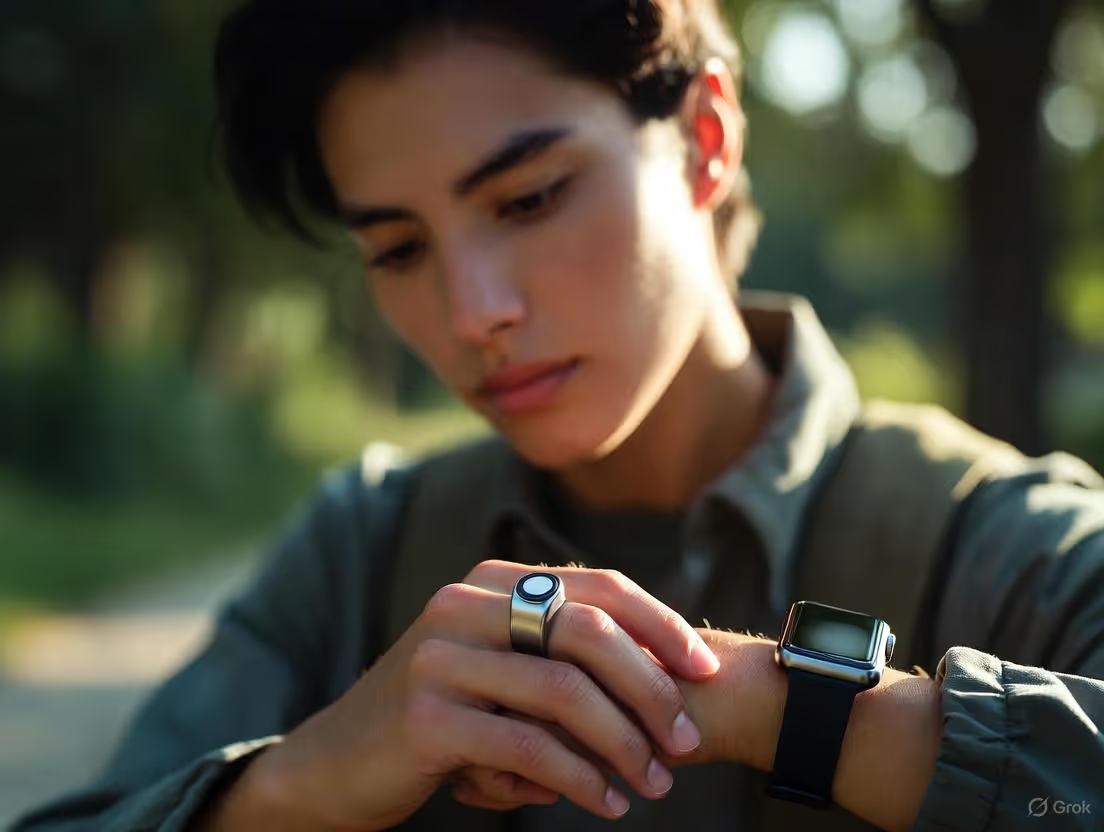
For decades, shift workers have been forced to operate on guesswork and subjective feeling. “How did I sleep?” was answered with a groggy, unreliable “Not great.” We lacked objective, personal data on what was actually happening in our bodies during sleep and throughout our shifted days. This data gap made it impossible to truly personalize sleep strategies. The emergence of accurate, wearable technology—specifically the smart ring—has changed the game entirely.
Unlike wrist-worn devices that can be bulky and interfere with work (especially in clinical or manual labor settings), a smart ring is unobtrusive, safe, and worn 24/7. It sits on a finger with a rich capillary bed, allowing for superior photoplethysmography (PPG)—the optical measurement of blood volume changes with each heartbeat. This provides a continuous, medical-grade data stream that unlocks profound insights:
For the first time, a shift worker can move beyond generic advice. You can run experiments: Does wearing blue blockers on the drive home improve my deep sleep percentage? Does a 2 AM meal spike my RHR during sleep? Does my HRV improve when I take a rest day after a rotation? This is the power of the quantified self. To see how this technology is being designed specifically with holistic health in mind, you can explore the philosophy behind devices like the Oxyzen ring on their Our Story page, which details the journey to create a tool focused on meaningful, actionable data.
Armed with this objective feedback, you can stop guessing and start optimizing. But data on its own is just information. The true power is unlocked when you use that data to inform deliberate, scheduled periods of recovery and activity. This is the art of strategic napping and managing your energy throughout your wakeful period, turning a disjointed schedule into a rhythm you can actually dance to.
For the shift worker, sleep isn’t confined to one monolithic block. Strategic napping is a legitimate, research-backed performance tool. Used correctly, it can boost alertness, improve reaction time, enhance mood, and reduce the cumulative sleep debt that plagues irregular schedules. However, a poorly timed or overly long nap can leave you with sleep inertia (that groggy, disoriented feeling) and sabotage your main sleep period.
The Two Types of Strategic Naps
The Golden Rules of the Operational Nap
Napping and Your Main Sleep
The cardinal rule: A nap should not come at the expense of your primary sleep period. If you find that a daytime nap makes it harder to fall asleep at your scheduled nighttime (or daytime) bedtime, you may need to shorten the nap or move it earlier. Your wearable data is crucial here. If your nightly sleep duration starts to drop after introducing naps, adjust your strategy.
Strategic napping turns sleep from a passive state you succumb to into an active tool you deploy. It acknowledges the reality of shift work fatigue and provides a countermeasure. But managing energy isn’t just about sleep; it’s also about how you move your body. Exercise, when timed correctly, can be one of your most powerful allies in reinforcing your desired wake-sleep cycle.

Physical activity is a potent zeitgeber—a German term meaning “time giver” or external cue that can influence your circadian rhythm. Just as light is the primary zeitgeber for the master clock in your brain, exercise acts as a key zeitgeber for peripheral clocks in your muscles and organs. For shift workers, this presents a powerful lever: you can use the timing of exercise to help pull your body clock in a desired direction.
The Phase-Response Curve of Exercise
Research shows that the effect of exercise on your circadian phase depends on when you do it:
Practical Application for Shift Workers
The Type of Exercise Matters
Exercise is a double-edged sword: timed well, it fortifies your rhythm and improves sleep quality; timed poorly, it becomes another source of stress and disruption. Listening to your body’s signals is key, and as discussed, nothing helps you “listen” more objectively than a wearable like a smart ring. Tracking how your HRV and sleep scores respond to different workout timings is the ultimate personalization tool. For more insights on using data to optimize all aspects of wellness, the Oxyzen.ai blog is a valuable resource for research-backed strategies.
Mastering the external levers—light, food, exercise—creates a strong framework. Yet, the internal landscape of stress and anxiety can dismantle even the most perfectly engineered sleep sanctuary. Learning to manage the psychological toll is the final, critical piece of the puzzle.
You can have perfect blackout conditions, an impeccable diet, and a smart ring full of optimal data, but if your mind is a storm of worry, rumination, and anxiety about sleep itself (“I have to fall asleep now or I’ll be a wreck!”), sleep will remain elusive. Psychophysiological insomnia—where anxiety about not sleeping perpetuates the very problem—is common among shift workers. The pressure to sleep becomes the enemy of sleep.
Breaking the Anxiety-Sleep Loop
The Wind-Down Ritual (The 60-Minute Buffer)
This is a non-negotiable transition period between your “on” life and your attempt to sleep. It’s a series of calming activities that signal safety to your nervous system.
Mindfulness & Acceptance
Mindfulness teaches you to observe thoughts and sensations (like “I’m still awake”) without judgment or reaction. In bed, instead of fighting wakefulness, you might practice: “I notice the thought that I should be asleep. I feel tension in my jaw. I will gently release it and return my attention to my breath.” This reduces the secondary frustration that fuels insomnia.
Professional Support
If anxiety or low mood feels unmanageable, seek help. Cognitive Behavioral Therapy for Insomnia (CBT-I) is the gold-standard, first-line treatment for chronic insomnia and is highly effective for shift work-related sleep problems. It combines cognitive therapy with behavioral techniques like sleep restriction and stimulus control. A therapist can provide structured, personalized guidance. For those curious about how technology and holistic support converge, learning more about integrated wellness approaches can be helpful, such as those discussed in the FAQ sections of leading wellness tech companies.
Managing the mind is the soft skill that hardwires all your other strategies. It turns your sleep sanctuary from a mere physical room into a psychological fortress. Once you have this comprehensive toolkit—environmental, nutritional, supplemental, data-driven, and psychological—the final challenge becomes weaving it all into the unpredictable tapestry of a real shift-working life. How do you apply these principles during a rapid rotation, on your days off, or when life throws you a curveball?
Knowledge is only potential power. The transformation happens when you synthesize all these strategies into a living, breathing, adaptable Personal Sleep Protocol. This is your customized battle plan, your non-negotiable routine that you modify based on your schedule, your body’s feedback, and life’s inevitable interruptions. Think of it as the operating manual for your shifted life.
Step 1: Define Your Schedule Type
Step 2: Build Your Core Templates
Create a checklist for each major schedule type.
Step 3: Integrate Your Data
Use your smart ring or sleep tracker religiously. Each week, review:
Step 4: Plan for the Inevitable – Days Off & Social Life
Absolute rigidity is unsustainable and can lead to social isolation. The goal is minimal deviation.
Step 5: Embrace Iteration, Not Perfection
Some days, despite your best efforts, sleep will be poor. The protocol failed. This is not a moral failing. It’s data. Analyze what went wrong (unavoidable overtime, sick child, etc.) and simply return to your protocol the next cycle. Resilience is built through consistency over weeks and months, not perfection every single day.
Mastering your sleep is the most critical first step for any shift worker, but the battle doesn’t end at the bedroom door. Chronic circadian disruption is a systemic stressor, a low-grade inflammatory condition that, over years and decades, quietly increases your risk for a host of serious medical conditions. Playing the "long game" means adopting a proactive, defensive stance to protect your cardiovascular, metabolic, and mental health. This isn't about fear; it's about empowerment. By understanding the risks, you can implement targeted, evidence-based countermeasures that build resilience from the inside out.
The data is stark but important to confront: long-term shift work is associated with a 10-40% increased risk of ischemic heart disease, a 20-50% increased risk of stroke, and a 20-50% higher incidence of metabolic syndrome and Type 2 diabetes. The mechanisms are directly linked to our enemy, circadian misalignment: dysregulated blood pressure rhythms, impaired glucose metabolism, elevated systemic inflammation, and unfavorable changes in lipid profiles. The goal here is not to accept this as an inevitable fate, but to build a formidable defense system through vigilant monitoring and lifestyle medicine.
Your first line of defense is a proactive relationship with healthcare. Standard annual physicals are designed for day workers. You need a Shift Worker-Informed Health Protocol.
Beyond monitoring, your daily choices become powerful medicine. An anti-inflammatory diet rich in omega-3s (fatty fish, flaxseeds, walnuts), antioxidants (berries, leafy greens), and fiber becomes crucial to combat the pro-inflammatory state induced by shift work. Prioritizing consistent meal timing, even on days off, helps stabilize metabolic hormones. Furthermore, integrating stress resilience practices like the mindfulness techniques discussed earlier, or regular time in nature, helps modulate the sympathetic nervous system’s constant hum of activation.
This vigilant, holistic approach transforms you from a passive patient into an active health custodian. It ensures the sleep you work so hard to achieve has a foundation of overall vitality to protect. And at the heart of this proactive strategy lies the most personal tool of all: the continuous, objective data from wearable technology, which allows you to see the direct impact of your choices on your body’s stress and recovery signals in real time.
The impact of shift work radiates far beyond the individual, touching every relationship in your life. Partners, children, parents, and friends all live on a different planetary schedule. The "social clock" runs from 9 to 5, and missing birthdays, weekly dinners, weekend activities, and even simple nighttime companionship can lead to profound feelings of isolation, guilt, and relationship strain. Successfully navigating this requires moving from a paradigm of absence to one of purposeful, quality presence. It demands explicit communication and creative scheduling that honors your biological and emotional needs.
Communication: The Non-Negotiable Foundation
You cannot assume loved ones understand your reality. They may see you sleeping all day and think you’re lazy, or resent your unavailability. You must become an educator.
Quality Time Engineering
Forget the spontaneous pop-ins of the day-world. Your social and family life must be intentionally engineered.
Managing Guilt and Resentment
You will miss things. You will be tired during planned activities. It’s vital to:
Building this supportive ecosystem is perhaps the most challenging and rewarding part of the shift work journey. When your household understands and champions your sleep, your success rate soars. For those living alone, creating this support might mean educating close friends or finding an online community of fellow shift workers who truly "get it." Sharing experiences and solutions with others on a similar path can be incredibly validating, much like reading the real-world adaptations shared in user testimonials from those using technology to navigate similar challenges.
Despite your best efforts with environmental control, perfect protocols, and family support, there may come a point where your symptoms are severe, unrelenting, and significantly impairing your work performance, health, or safety. It is crucial to recognize when you have crossed the line from manageable shift work fatigue into Shift Work Sleep Disorder (SWSD), a formal medical diagnosis that warrants professional intervention.
SWSD is more than just feeling tired. It is defined by the International Classification of Sleep Disorders as a circadian rhythm sleep-wake disorder characterized by:
Red Flags That Signal It’s Time for a Sleep Specialist:
What to Expect from a Sleep Medicine Professional:
A visit to a sleep specialist (often a pulmonologist, neurologist, or psychiatrist with specialized training) is not a sign of failure. It’s a strategic escalation.
Seeking help is a proactive, strength-based decision. It demonstrates a commitment to your health, your safety, and your ability to sustain your career. A sleep specialist becomes a key member of your support team, providing medical authority and advanced tools. For many, the combination of professional guidance and personal data tracking creates an unstoppable feedback loop for improvement, addressing common questions often explored in detailed FAQ resources about integrating professional care with personal technology.
In the modern shift worker’s arsenal, technology has evolved from a simple alarm clock to an integral partner in health management. We’ve discussed the transformative role of smart rings, but the ecosystem of useful tech extends far beyond a single device. This deep dive explores the categories of technology that can support every pillar of your sleep protocol, helping you automate, analyze, and optimize your shifted life.
1. The Wearable Core: Smart Rings & Advanced Watches
2. Environmental Control Tech
3. Specialized Apps
The Power of Integration: The Future is Connected
The most powerful setup is when these technologies talk to each other. Imagine: Your smart ring detects your sleep is over and your body temperature is rising. It signals your smart lights to begin a simulated sunrise. It notes your HRV was low and sends a notification to your calendar to suggest a lighter workout. This interconnected, responsive environment actively works with your biology. To understand how this philosophy of integrated, data-driven wellness is being pioneered, you can learn more about the vision behind platforms like Oxyzen.ai, which aim to centralize and make sense of this holistic data stream.
Embracing these tools moves you from reactive to predictive. But technology, for all its power, is not a panacea. It must be wielded wisely, as an enhancer of human intuition and discipline, not a replacement for it. The final piece of the puzzle is perhaps the most introspective: building a sustainable, long-term mindset that allows you to not just endure this lifestyle, but to find purpose and balance within it.
Shift work is a marathon, not a sprint. The physical strategies are your training plan, but the mindset is your endurance, your mental fortitude to keep putting one foot in front of the other when every biological signal screams to stop. Cultivating a resilient, adaptive, and positive mindset is not about toxic positivity; it’s about developing a realistic, strategic outlook that protects your psychological well-being and prevents burnout over years of non-traditional hours.
Embrace the "Shift Worker Identity"
The first step is reframing your self-concept. You are not a day person who is broken; you are a specialized professional operating in an extreme environment. Just as a deep-sea diver or an astronaut requires unique gear and protocols, so do you. This identity shift is empowering. It turns your sleep mask from a sign of weakness into a piece of professional equipment. It turns your meal timing into a strategic protocol. This alignment reduces internal conflict and builds pride in your ability to master a challenging lifestyle.
Practice Radical Acceptance (Without Resignation)
This is a core tenet of Dialectical Behavior Therapy (DBT) and is perfectly suited for shift work. Radical Acceptance means fully acknowledging reality as it is, without judgment or struggle against it.
Implement Strategic Micro-Recoveries
You cannot wait for a two-week vacation to recover. Resilience is built through daily and weekly micro-doses of recovery.
Build Your "Why"
Connect your work to a deeper purpose. Are you providing critical care as a nurse? Keeping the community safe as a first responder? Enabling global trade as a logistics operator? Keeping the lights on? When fatigue is high, reminding yourself of your contribution and the people who benefit from your work can provide a powerful motivational anchor. This sense of mission is often what drives the teams behind wellness innovations, a story shared on pages like About Us for companies focused on supporting those in demanding lifestyles.
Normalize the Struggle and Seek Your Tribe
Find your community. This could be coworkers who understand the grind, or online forums for shift workers (on Reddit, Facebook groups). Sharing tips, venting frustrations, and celebrating small victories with people who truly understand is incredibly validating. It normalizes your experience and provides a reservoir of shared wisdom.
This mindset of resilience is the glue that holds your entire protocol together. It’s what keeps you putting on the blue blockers after a terrible shift, preparing your healthy meal when you’re exhausted, and getting into your perfectly dark room when the sun is shining. It turns discipline from a chore into a form of self-respect. With this foundation of body and mind, we now turn to the future—exploring the cutting-edge of chronobiology and the emerging technologies that promise to further revolutionize how shift workers protect their health and thrive.
The field of chronobiology is moving at a breathtaking pace, and its applications for shift workers are transitioning from lab theory to real-world solution. We are moving beyond generalized advice into a future of personalized chronotherapy—where interventions are tailored to your unique circadian genotype, work schedule, and real-time physiological state. This future is not science fiction; it is being built today in research labs and by pioneering tech companies.
Genetic Insights: Are You a "Night Owl" Forced to be a "Lark"?
Research has identified specific clock genes (like PER, CLOCK, CRY) where variations (polymorphisms) can predispose you to being a true "evening type" or "morning type." In the future, a simple genetic test could inform career guidance or shift scheduling. An employer could, ideally, match natural evening types to night shifts, reducing the biological strain and improving safety and performance. While this raises ethical questions about genetic discrimination, it highlights a move towards personalized suitability.
Precision Light & Dark Therapy
The future of light exposure is dynamic and responsive.
Pharmacological Frontiers
Beyond melatonin and stimulants, research is exploring new classes of drugs.
AI-Powered Scheduling & Predictive Analytics
This is perhaps the most immediate and impactful frontier. Artificial intelligence can analyze vast datasets.
The Integration with Smart Environments
The "sleep sanctuary" becomes a smart, responsive cocoon. Your bed, lights, temperature, and soundscape will automatically adjust in real-time based on your sleep stage (detected by your wearable) to promote deeper, more stable sleep. If you enter light sleep during a noisy period, your white noise might subtly increase. If your skin temperature rises, the bed cooling system activates.
The trajectory is clear: the future of shift work support is predictive, personalized, and proactive. It leverages deep biological insight and seamless technology to build a bridge between our ancient physiology and the demands of the modern 24/7 world. Staying informed about these advancements is key, and resources like the Oxyzen.ai blog often explore these cutting-edge intersections of health and technology.
Your Trusted Sleep Advocate: Sleep Foundation — https://www.sleepfoundation.org
Discover a digital archive of scholarly articles: NIH — https://www.ncbi.nlm.nih.gov/
39 million citations for biomedical literature :PubMed — https://pubmed.ncbi.nlm.nih.gov/
Experts at Harvard Health Publishing covering a variety of health topics — https://www.health.harvard.edu/blog/
Every life deserves world class care :Cleveland Clinic - https://my.clevelandclinic.org/health
Wearable technology and the future of predictive health monitoring :MIT Technology Review — https://www.technologyreview.com/
Dedicated to the well-being of all people and guided by science :World Health Organization — https://www.who.int/news-room/
Psychological science and knowledge to benefit society and improve lives. :APA — https://www.apa.org/monitor/
Cutting-edge insights on human longevity and peak performance:
Lifespan Research — https://www.lifespan.io/
Global authority on exercise physiology, sports performance, and human recovery:
American College of Sports Medicine — https://www.acsm.org/
Neuroscience-driven guidance for better focus, sleep, and mental clarity:
Stanford Human Performance Lab — https://humanperformance.stanford.edu/
Evidence-based psychology and mind–body wellness resources:
Mayo Clinic — https://www.mayoclinic.org/healthy-lifestyle/
Data-backed research on emotional wellbeing, stress biology, and resilience:
American Institute of Stress — https://www.stress.org/


