
Sleep Improvement Through Behavior Change (Not Willpower)

You’re exhausted. The alarm clock’s glare is a daily indictment, a numerical proof of another failed night. You’ve tried the herbal teas, the blackout curtains, the expensive mattress. You’ve vowed, night after night, to “just turn off your brain” and sleep. You’ve exercised sheer willpower, staring at the ceiling, commanding your body to rest, only to feel more awake with each passing hour. The problem, you conclude, is you. You lack discipline. You’re not trying hard enough.

What if that entire narrative is not just unhelpful, but scientifically backwards? What if the pursuit of sleep through force of will is the very obstacle standing in your way?

Modern sleep science reveals a profound yet overlooked truth: Sleep cannot be conquered; it can only be invited. It is not a goal to be achieved through gritted teeth, but a natural biological process that unfolds when the conditions are right. Relying on willpower to sleep is like using a hammer to fix a software bug—it’s the wrong tool for the job, and it only creates more damage. Willpower is finite, stressful, and activates the very arousal systems that block sleep.

This article is not another list of sleep “hacks” or tips to white-knuckle your way to rest. This is a paradigm shift. We are moving from a model of force to a model of facilitation. From conscious effort to unconscious habit. From fighting your biology to designing for it.

The path to transformative sleep lies not in trying harder, but in changing the behavioral architecture of your day and night. It’s about creating an external environment and a sequence of automatic routines that make good sleep the default, effortless outcome. This is the core of behavior change: designing your life so the right choice is the easy choice, and the desired outcome—deep, restorative sleep—flows naturally.

The journey requires a guide, a way to move from guesswork to precision. This is where modern technology, specifically advanced wellness wearables like the Oxyzen smart ring, becomes revolutionary. By providing objective, personalized data on your sleep stages, heart rate variability, body temperature, and blood oxygen levels, a device like this shifts the conversation from “I think I slept badly” to “I know my deep sleep was reduced by 40% last night, and my data shows a correlation with late-day caffeine.” It turns abstract advice into actionable, personal insight. To understand how this technology enables a new kind of self-awareness, you can explore how Oxyzen’s detailed biometrics create a personal sleep blueprint.

We are about to dismantle the willpower myth and rebuild your relationship with sleep from the ground up. We’ll explore the neuroscience of habit, the psychology of environment, and the behavioral triggers that stealthily undermine your rest. This is a comprehensive map for redesigning your life for sleep, not through struggle, but through intelligent, data-informed behavior change.

Let’s begin by understanding why the tool you’ve been relying on is fundamentally broken.
The Neuroscience of Sleep: Why Willpower Is the Enemy of Rest

To understand why willpower fails for sleep, we must first understand what sleep is and what willpower is. They exist in opposing realms of your nervous system.

Sleep is a parasympathetic state, governed by the "rest-and-digest" branch of your autonomic nervous system. It is a process of surrender, of letting go. It requires a quieting of the prefrontal cortex—the brain's CEO responsible for decision-making, effort, and self-control. As you drift off, this command center powers down.

Willpower, in contrast, is a sympathetic and prefrontal cortex-driven activity. It is the "fight-or-flight" system applied to internal conflict. "I will stay away from the cookie." "I will force myself to focus." "I will make myself sleep." This act of conscious, effortful control releases cortisol and adrenaline, primes the body for action, and actively engages the prefrontal cortex. You are, quite literally, using the physiological tools of arousal and stress to pursue a state of deep relaxation. It’s a neurobiological contradiction.

Consider the classic example: The more you try to fall asleep, the more anxious you become about not sleeping. This anxiety spikes cortisol, raises your heart rate, and increases body temperature—all signals to your brain that it’s time to be alert, not asleep. The effort creates a feedback loop of insomnia.

The Paradoxical Law of Sleep: The direct pursuit of sleep often prevents its arrival. Sleep is a side effect.

The key, then, is to stop pursuing sleep directly. Instead, we pursue the pre-conditions for sleep. We focus not on the outcome, but on the behaviors that reliably lead to the outcome. This shifts the burden from your limited conscious willpower to your powerful, automatic habit systems.

Behavior change science shows us that lasting change occurs not through heroic self-denial, but through what Stanford behavior expert B.J. Fogg calls "designing for behaviors." You make the desired behavior easy and the competing behavior hard. For sleep, this means:

  • Making Sleep Easy: A cool, dark, quiet bedroom. A consistent pre-sleep ritual. A comfortable mattress.
  • Making Wakefulness Hard: No phones in bed. No erratic sleep schedules. No caffeine past noon.

Your brain’s habit-forming machinery, centered in the basal ganglia, thrives on consistency and cue-routine-reward loops. By engineering these loops thoughtfully, you can build a "sleep cascade"—a series of automatic behaviors that reliably guide your nervous system toward slumber, without a single moment of "trying."

In the following sections, we will design this cascade. We’ll start from the moment you wake up, because the foundation for tonight’s sleep is laid this morning. We will move through the day, identifying and reshaping the invisible behavioral architecture that ultimately determines the quality of your night.

Morning Light: Resetting Your Master Clock (The Non-Negotiable Foundation)

Your sleep tonight is being decided right now, as you read this in the morning or daytime light. The most powerful lever for behavior-driven sleep improvement is not something you do at night; it’s what you do within the first hour of waking.

At the core of your brain sits a tiny, masterful structure called the suprachiasmatic nucleus (SCN)—your body's central circadian clock. This clock regulates the 24-hour cycle of virtually every process in your body: hormone release (like cortisol and melatonin), body temperature, digestion, and, of course, sleep-wake propensity. The SCN does not run on willpower; it runs on light.

Morning sunlight is the primary zeitgeber (time-giver) that synchronizes your SCN with the external 24-hour day. When bright, blue-wavelength light hits specialized cells in your eyes at dawn, it sends a direct signal to the SCN that says, "Day has begun." This triggers a cascade: it suppresses the sleep hormone melatonin, boosts alertness hormones like cortisol (in a healthy, waking spike), and starts a roughly 12-14 hour countdown timer for when melatonin will be released again in the evening.

Without this strong, clear morning signal, your circadian rhythm becomes weak and desynchronized—a state akin to permanent, mild jet lag. Your body doesn’t know when "day" truly starts, so the countdown to "night" is blurry and delayed. The result? You don’t feel truly awake in the morning, and you don’t feel sleepy at bedtime.

The Behavioral Protocol (Not the Willpower Challenge):

  1. View Morning Light Within 30-60 Minutes of Waking: This is the habit. Go outside. Don’t look through a window—glass filters out crucial light wavelengths. Stand on your porch, walk to the curb, or simply face the open sky for 5-10 minutes on a clear day, 15-20 on an overcast day. Even on cloudy days, outdoor light intensity (measured in lux) is exponentially higher than indoor lighting.
  2. Make It Obvious and Easy: Pair it with an existing habit. Place your slippers by the door. Commit to drinking your first glass of water outside. The cue (finishing your water) triggers the routine (stepping outside). The reward is the feeling of alertness.
  3. Supplement If Necessary (But Not a Replacement): For those who wake before sunrise or in perpetually dark climates, a 10,000-lux SAD therapy light can be used. Turn it on for 20-30 minutes while you have breakfast or read. But prioritize real sunlight whenever possible.

This isn’t about "trying to get sunlight." It’s about redesigning your morning routine to guarantee exposure. The difference is profound. By anchoring your biology to the solar day, you create a powerful, automatic physiological momentum toward sleepiness 16 hours later. You are not forcing sleep; you are allowing your body to follow its natural, light-calibrated rhythm. For a deeper understanding of how circadian rhythms interact with daily habits, our blog features several articles on syncing your life with your biology.

Daytime Movement: Building Sleep Pressure (The Kinetic Engine)

If morning light sets the timing for sleep, then physical activity builds the drive for sleep. This drive is called sleep pressure, scientifically known as the homeostatic sleep drive. It’s the buildup of adenosine, a byproduct of brain activity, throughout the day. The more adenosine accumulates, the sleepier you feel. Think of it as a biological hunger for rest that grows the longer you’re awake.

Exercise is a potent amplifier of this process. It increases adenosine production, promotes deeper, more restorative slow-wave sleep, and helps regulate the stress hormones that can interfere with sleep. Yet, the relationship between movement and sleep is nuanced. It’s not simply "exercise more, sleep better." It’s about the type, timing, and consistency of movement—again, a matter of behavior design, not just effort.

The Behavioral Protocol: Integrating Movement, Not Just Exercising

The goal is to weave physical activity into the fabric of your day to steadily build healthy sleep pressure without causing nighttime over-arousal.

  1. Prioritize Consistency Over Intensity: A daily 30-minute brisk walk is more effective for sleep hygiene than an exhausting, sporadic 90-minute gym session that you dread. The habit of daily, moderate movement creates a reliable biochemical rhythm. Schedule it like a critical meeting.
  2. Leverage the "Activity Snack": Beyond a dedicated workout, break up prolonged sitting every 45-60 minutes. Stand for 5 minutes, do 10 air squats, take a 2-minute walk. These micro-bursts of movement maintain metabolic and circulatory health, prevent stiffness, and contribute to overall daily energy expenditure without systemic fatigue. Set a recurring timer as your cue.
  3. Master the Timing: This is where behavior meets precision. For most people, finishing moderate-to-vigorous exercise at least 3 hours before bedtime is ideal. This allows the core body temperature elevated by exercise—a key arousal signal—to drop significantly. The post-exercise temperature drop is one of the strongest signals for sleep onset. However, gentle movement like yoga, stretching, or a slow walk in the evening can be beneficial by promoting relaxation without a significant temperature spike.
  4. Listen with Data: How do you know if your 6 PM spin class is helping or hurting? Subjective feeling is often wrong. This is where a biometric tracker becomes invaluable. A device like the Oxyzen ring can show you the direct impact: Did your deep sleep increase on days you walked? Did your resting heart rate remain elevated all night after a late workout? This transforms guesswork into strategy. You can discover how Oxyzen tracks the impact of activity on your sleep metrics.

The behavioral shift is from "I should exercise" to "My day is structured with movement." Park farther away. Take walking meetings. Use a standing desk. The cumulative effect of this all-day kinetic engine is a robust, natural sleep pressure that makes falling asleep feel inevitable, not like a forced shutdown.

The Caffeine & Alcohol Deception: Biochemical Saboteurs in Plain Sight

Perhaps no two substances are more deeply woven into the cultural fabric of productivity and relaxation than caffeine and alcohol. And perhaps no two substances are more frequently mismanaged in the quest for good sleep, precisely because their acute effects disguise their insidious impact on sleep architecture.

This isn’t a call for absolute abstinence, but for biochemically-informed behavioral management. You can’t out-willpower a chemical. You can only adjust your behavior around it.

Caffeine: The Lingering Alarm System

Caffeine works by blocking adenosine receptors in your brain. Adenosine is the compound that builds up to make you sleepy. By blocking its receptors, caffeine masks sleep pressure; it doesn’t eliminate it. The adenosine continues to build up in the background. When caffeine finally metabolizes, you experience an "adenosine crash"—a sudden wave of fatigue.

The half-life of caffeine is 5-6 hours for the average adult. This means if you have a standard coffee (≈100mg caffeine) at 3 PM, by 9 PM, about 50mg is still active in your system. For those who are slow metabolizers (a genetic variant), this effect is even longer.

The Behavioral Protocol for Caffeine:

  • Establish a "Caffeine Curfew": This is a non-negotiable rule, not a test of will. For most, this should be at least 8-10 hours before bedtime. If you sleep at 10:30 PM, your last coffee should be before 12:30 PM. The cue is lunchtime, not a feeling.
  • Monitor Hidden Sources: Caffeine is in tea (green and black), dark chocolate, many sodas, and even some medications. Awareness is key.
  • Hydrate as a Counter-Habit: For every cup of coffee, make it a habit to drink a glass of water. This mitigates caffeine's mild dehydrating effects and creates a positive linked habit.

Alcohol: The Sedative That Fractures Sleep

Alcohol is a sedative. It can make you pass out, but it does not facilitate natural sleep. It suppresses REM (Rapid Eye Movement) sleep—the critical stage for memory consolidation, emotional processing, and creativity. As alcohol metabolizes a few hours after sleep onset, it causes a rebound arousal, leading to fragmented, shallow sleep in the second half of the night. You may fall asleep quickly but wake up at 3 AM with a racing mind, unable to drift back into deep sleep.

The Behavioral Protocol for Alcohol:

  • Create a Buffer Zone: Institute a rule of no alcohol within 3 hours of bedtime. This allows the body to begin metabolizing it before you try to sleep, reducing the rebound effect.
  • The 1:1 Water Rule: Make it a habit to follow every alcoholic drink with a full glass of water. This slows consumption, reduces total intake, and prevents dehydration.
  • Observe the Data: The impact of "just two glasses of wine" can be startling when seen objectively. Tracking shows not just reduced sleep quality, but also elevated resting heart rate and reduced heart rate variability (HRV)—a key marker of recovery. Seeing this data often provides more motivation for change than any abstract warning. For real-world examples of how lifestyle changes affect sleep data, you can read testimonials from users who tracked their habits with Oxyzen.

Managing these substances is not about white-knuckle resistance. It’s about creating simple, clear rules (behavioral boundaries) that align your consumption with your sleep biology.

The Digital Sunset: Reclaiming Your Evening Nervous System

The single greatest behavioral innovation of the 21st century—the smartphone—has become the single greatest behavioral antagonist of sleep. The issue is threefold: light, content, and context.

  1. Light: The blue-wavelength light emitted by screens directly suppresses melatonin production, telling your SCN it’s still daytime.
  2. Content: Scrolling through social media, work emails, or news triggers emotional and cognitive arousal—anxiety, excitement, envy, stress. This activates the sympathetic nervous system.
  3. Context: Using your phone in bed annihilates the psychological association between your bedroom and sleep. The bed becomes a space for entertainment, work, and anxiety, not just for rest.

Telling yourself "I’ll just be quick" or "I need to check one thing" is willpower in its most futile form. The design of these devices is engineered to defeat that willpower.

The Behavioral Protocol: Designing a Digital Sunset

This is about creating an environment where the right choice is the only easy choice.

  • Set a Firm Screen Curfew: Shut down all non-essential screens 60-90 minutes before your target bedtime. This is your "digital sunset." Use a recurring phone alarm as your cue to start the wind-down.
  • Make It Physical: Charge Your Phone Outside the Bedroom. This is the golden rule. The simple physical barrier of having to get out of bed to check your phone eliminates mindless midnight scrolling. Use a traditional alarm clock.
  • Create Replacement Rituals: Nature abhors a vacuum. The time freed up by not scrolling must be filled with positive, relaxing, low-light activities. This is where you build your pre-sleep ritual: reading a physical book (with a warm, dim reading light if needed), gentle stretching, listening to calm music or a podcast (using a device with a screen-off function), practicing gratitude journaling, or having a quiet conversation.
  • Enable System Tools: Use "Do Not Disturb" schedules and Night Shift/Dark Mode on your devices, but treat these as secondary shields, not primary solutions. They reduce the damage but don’t solve the behavioral problem of engagement.

The goal is to create a sacred, screen-free buffer zone that allows your nervous system to descend naturally from the stimulated state of day into the calm state necessary for sleep. You are not resisting temptation through willpower; you are making temptation inaccessible.

The Ritual of Unwind: Crafting a Pre-Sleep "Landing Sequence"

A pilot doesn’t simply shut off the engines at cruising altitude and hope to land safely. They follow a meticulous, step-by-step landing sequence. Your transition from wakefulness to sleep deserves the same respect. A pre-sleep ritual is not a fluffy luxury; it’s a behavioral landing sequence for your nervous system.

This ritual leverages the power of conditioning. Just as Pavlov’s dogs learned to salivate at the sound of a bell, you can condition your mind and body to initiate sleep physiology in response to a specific, repeated sequence of calming behaviors. Over time, starting the ritual itself becomes a powerful cue for drowsiness.

The Behavioral Protocol: Building Your Personal Sequence

Your ritual should be personalized, predictable, and pleasurable. It should last 20-45 minutes. The key is consistency—performing the same general sequence in the same order most nights.

Sample Ritual Architecture (Customize to Fit):

  • Minute 0-5 (The Signal): Dim the overhead lights in your living space. This is the environmental cue that "evening has begun."
  • Minute 5-15 (The Physical Release): Engage in very gentle movement. 10 minutes of light stretching, restorative yoga poses (like legs-up-the-wall), or using a foam roller. Focus on releasing physical tension, not achieving a workout.
  • Minute 15-25 (The Mental & Sensory Release): This could be:
    • A Warm Shower or Bath: The rise and subsequent drop in core body temperature post-bath is a potent sleep signal.
    • Personal Hygiene: Brushing teeth, washing face. These are classic, powerful cues for "the day is ending."
    • Aromatherapy: Using a lavender-scented lotion or a diffuser with calming scents can create a sensory anchor.
  • Minute 25-40 (The Mental Quietude): Engage in a relaxing, non-screen activity in low light.
    • Read a physical book (fiction is often better than stimulating non-fiction).
    • Listen to an audiobook or calm music.
    • Practice a short gratitude exercise (writing down 3 things you were grateful for that day).
    • Do a 5-10 minute guided meditation or deep breathing exercise (like 4-7-8 breathing).
  • Minute 40-45 (The Final Cue): Get into bed. The bed is now only for sleep and intimacy. If you read in bed, use a very dim, warm light and stop as soon as drowsiness sets in.

The power of this ritual lies in its repetitive, sensory nature. It moves you systematically from external stimulation to internal quietude, from high light to darkness, from mental engagement to disengagement. You are not trying to sleep; you are faithfully executing the sequence that tells your biology it is safe and time to sleep. For more ideas on crafting effective wellness routines, our blog is a dedicated resource for science-backed strategies.
The Sleep Sanctuary: Engineering Your Environment for Automatic Success

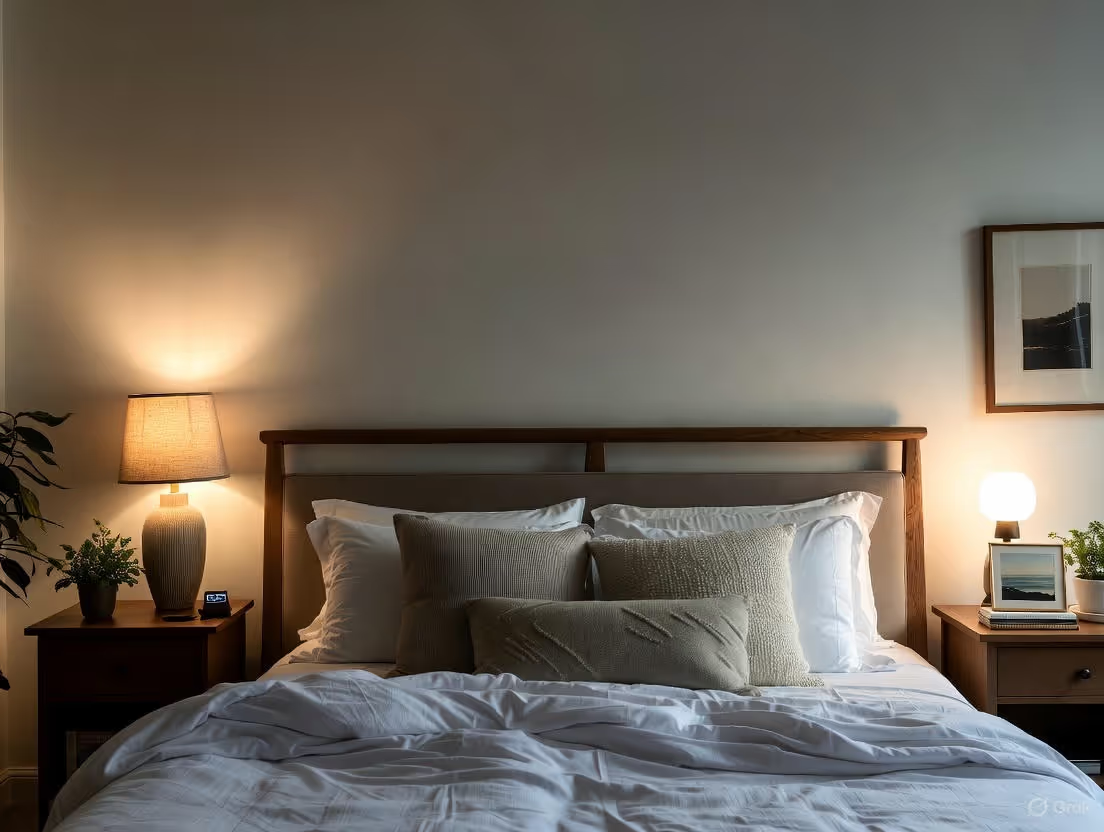
You can have perfect habits, but if your sleep environment is working against you, you will lose. The bedroom must be a sanctuary engineered for a single purpose: the effortless initiation and maintenance of sleep. This is the ultimate act of behavior change through design—changing the physical world to make the desired behavior unavoidable.

We optimize for the three core environmental pillars: Darkness, Temperature, and Quiet.

1. The Absolute Imperative of Darkness:

Even small amounts of light, especially blue/green wavelengths, can be processed by photoreceptors in your eyes and disrupt melatonin. It’s not about what you can "see"; it’s about what your biology detects.

  • Behavioral Fixes: Invest in blackout curtains or a sleep mask. A mask is the simpler, foolproof solution. Test for total darkness by turning off all lights and waiting 5 minutes for your eyes to adjust; if you can see your hand in front of your face, it’s not dark enough.
  • Eliminate All Electronic Glow: Use black electrical tape to cover every tiny LED on chargers, smoke detectors, and electronics. Remove or face away digital clocks.

2. The Critical Factor of Temperature:

Your core body temperature needs to drop by about 1-2 degrees Fahrenheit to initiate sleep. A cool room facilitates this drop. The ideal range for most people is between 60-67°F (15.5-19.5°C).

  • Behavioral Fixes: Lower your thermostat at night. Use a fan—it provides both cooling and consistent white noise. Consider moisture-wicking bedding (like Tencel or high-quality cotton) over flannel or high-thread-count synthetics that can trap heat.
  • The Bedding Strategy: Have layers you can easily remove. Being slightly cool and needing a blanket is better than being too warm.

3. The Power of Quiet and Consistency:

Unexpected noises trigger micro-arousals, pulling you out of deep sleep even if you don’t fully wake up.

  • Behavioral Fixes: White noise or pink noise machines are incredibly effective. They create a consistent, monotonous sound blanket that masks disruptive noises like traffic, plumbing, or a partner’s snoring. Earplugs are another excellent, low-tech tool.

The "Bed = Sleep" Association:

This is a psychological engineering principle. Your brain should have one dominant association with your bed: sleep. If you work, eat, watch thrilling movies, or have stressful conversations in bed, you pollute that association.

  • The Rule: If you are awake and frustrated in bed for more than 20 minutes, get up. Go to a dimly lit chair and do a quiet, boring activity (like reading a mundane book) until you feel drowsy. Then return to bed. This reinforces that bed is for sleeping, not for being anxiously awake.

By obsessively optimizing your sleep sanctuary, you remove the need for nightly adjustments or willpower. The environment itself guides you seamlessly into rest.

The Mind-Bed Connection: Cognitive Routines to Quiet the Racing Mind

The body may be in a perfect sanctuary, but if the mind is a riot of thoughts, sleep is impossible. Telling yourself "Don't think about that" is a willpower trap—it only makes the thought more prominent. Instead, we use behavioral cognitive routines to guide the mind into a state conducive to sleep. These are structured mental activities that provide an alternative to worrying.

1. The "Brain Dump" or Worry Journal:

This is a pre-bed ritual, done during your wind-down period, not in bed. Take 5-10 minutes to write down everything on your mind: tasks for tomorrow, anxieties, ideas, frustrations. The act of externalizing these thoughts onto paper (or a notes app) signals to your brain that it can let go of the job of remembering and worrying. It’s a cognitive closure ceremony for the day.

2. The Body Scan Meditation:

This is a classic, evidence-based practice for sleep onset. Lying in bed, you systematically bring your attention to different parts of your body, usually starting at the toes and moving upward. The instruction is simply to notice sensations without judgment, and often to consciously relax or "release" each area. This practice:

  • Anchors you in the present moment (away from past regrets or future worries).
  • Promotes physical relaxation.
  • Provides a gentle, monotonous mental task that occupies the "thinking mind" and crowds out ruminations.

3. Paradoxical Intention & The "I'm Just Resting" Frame:

For those with performance anxiety about sleep ("I MUST sleep now!"), a technique called paradoxical intention can be powerful. Instead of trying to fall asleep, actively try to stay awake (with your eyes closed, lying peacefully in the dark). Remove the goal. Often, the performance pressure evaporates, and sleep arrives on its own.

Similarly, reframe the goal from "I need to sleep" to "I’m just going to give my body some rest." This lower-stakes goal feels more achievable and reduces anxiety.

4. Guided Imagery or "Mental Walks":

Engage your mind in a detailed, peaceful, and repetitive fantasy. Imagine walking slowly through a familiar, calming place—a forest path, a beach at sunset. Engage all your senses: feel the imaginary ground underfoot, hear the birds, smell the pine air. The narrative should be slow, uneventful, and looping. This gives your cognitive resources a peaceful task that naturally lulls the mind.

These routines are tools. The key is to practice them consistently, not perfectly. They are behaviors you do, not willpower you exert. Over time, they become automatic pathways out of anxiety and into drowsiness.

Tracking for Insight, Not Anxiety: The Data-Driven Behavior Loop

In the realm of behavior change, what gets measured gets managed—but only if measurement is used wisely. The wrong relationship with sleep data can create a new form of performance anxiety called "orthosomnia": an unhealthy preoccupation with achieving perfect sleep scores. This is willpower in a new, digital form.

The right relationship with data transforms it from a judge into a guide for curious, iterative experimentation. This is the scientific method applied to your own life.

How to Use Data for Behavior Change (Not Self-Judgment):

  1. Observe Trends, Not Nightly Scores: A single night of poor sleep is noise. Look at weekly and monthly trends. Is your average sleep duration slowly increasing? Is your resting heart rate trending down? These macro-trends tell the true story of your behavioral changes.
  2. Form Hypotheses: "I think my afternoon coffee is affecting my deep sleep." "I suspect that my 30-minute evening walk is helping me fall asleep faster."
  3. Run Experiments: Change one variable at a time. Move your coffee curfew to 12 PM for two weeks. Add the evening walk for two weeks. Keep other factors as consistent as possible.
  4. Analyze the Data: Did the relevant metric (e.g., "Time in Deep Sleep" or "Sleep Latency") improve, worsen, or stay the same? A device that tracks comprehensive biometrics is essential here. For instance, seeing that your Heart Rate Variability (HRV)—a key marker of nervous system recovery—consistently improves on days you meditate provides profound motivation to maintain that habit.
  5. Iterate: Adopt the behaviors that yield positive results. Abandon or tweak those that don’t.

This process removes emotion and guesswork. It turns you into an expert on your own unique physiology. You’re not blindly following generic advice; you’re curating a personalized sleep protocol based on objective feedback. For those curious about the technology that enables this kind of personal science, you can learn more about the biometric sensors in the Oxyzen smart ring.

The tool is not the master; it is the compass. It helps you see if the behavioral changes you’re implementing are actually moving the needle in your biology. This creates a powerful, positive feedback loop: positive change motivates consistent behavior, which leads to more positive change.

From Fixed to Growth: Cultivating Your Sleep Mindset

Underlying all sustainable behavior change is a foundational mindset. When it comes to sleep, we must move from a Fixed Sleep Mindset ("I'm a bad sleeper." "This is just my genetics.") to a Growth Sleep Mindset ("My sleep is influenced by my daily behaviors, and I can learn to improve it.").

A fixed mindset sees poor sleep as an immutable identity. It leads to helplessness and resignation. A growth mindset sees sleep as a skill that can be developed through practice, learning, and adjustment. This shift is critical because it transforms setbacks from proof of failure ("See, I knew I couldn't sleep!") into valuable information ("My sleep was light last night; what might have contributed? Let me check my data and adjust.").

Behavioral Practices to Foster a Growth Sleep Mindset:

  • Practice Self-Compassion on Tough Nights: Instead of berating yourself, use a kind, internal dialogue: "It's okay. One night doesn't define me. My body is just having a hard time winding down. I’ll use my tools and trust the process tomorrow."
  • Celebrate Behavioral Wins, Not Just Outcome Wins: Did you stick to your digital sunset? Did you get your morning sunlight? Celebrate that. Those are the actions within your control. The sleep outcome will follow, but it’s the behavior that deserves the reinforcement.
  • Adopt a "Curious Observer" Stance: Use your data and journaling not to judge, but to be curious. "Fascinating, my HRV dips when I have late meetings. I wonder how I can manage stress better on those days?" This neutral, scientific perspective reduces emotional charge.

This mindset is the fertile soil in which the seeds of behavioral change can take root and flourish. It is what allows you to persist through imperfect nights without abandoning the entire project. The story of your sleep is not a fixed novel; it’s a living document that you edit and improve every day through your choices. To understand the philosophy behind creating tools that empower this kind of personal growth, you can explore the mission and values that drive Oxyzen.

Integrating the System: From Theory to Automatic Habit

We have laid a powerful foundation. You now understand that sleep is a biological invitation, not a conquest. You have a toolkit of behavioral protocols targeting light, movement, substance management, digital hygiene, ritual, environment, cognition, and mindset. But a collection of tools is not a system. The magic—and the final step from effort to automation—lies in integration.

This stage is about weaving these individual strands into a single, resilient rope. It’s about creating a seamless daily flow where each behavior naturally cues the next, building an irresistible momentum toward rest. The goal is to reach a point where you are not "doing sleep hygiene"; you are simply living your day in a way that makes good sleep an inevitable byproduct. This is the art of habit stacking and environmental design at its highest level.

Consider your day as a narrative with three acts: Morning Anchoring, Daytime Fueling, and Evening Descent. Each act has a primary objective that supports the finale—sleep.

Morning Anchoring (Act I): Objective – Set Circadian Rhythm.

  • Habit Stack: Wake up → Drink glass of water by the window → Step outside for 5 minutes of sunlight.
  • Environmental Design: Keep a water glass by your bed. Have slippers and a robe by the door.

Daytime Fueling (Act II): Objective – Build Robust Sleep Pressure & Manage Stimulants.

  • Habit Stack: Finish lunch → That’s the cue for your last caffeine. 3 PM energy dip → Take a 10-minute walk (activity snack) instead of a snack.
  • Environmental Design: Keep walking shoes at your office door. Have healthy snacks visible to avoid afternoon crashes that lead to poor evening choices.

Evening Descent (Act III): Objective – Facilitate the Neurological Transition to Sleep.

  • Habit Stack: 9 PM phone alarm → Start digital sunset (phones on charger outside bedroom) → Begin pre-sleep ritual (shower, read, meditate) → Into a cool, dark bedroom.
  • Environmental Design: Charging station in another room. Blackout curtains already drawn. Book on the nightstand.

The system runs on triggers, not memory. It reduces cognitive load. You’re not deciding; you’re following a well-worn path you’ve designed for yourself. When life disrupts one link (a late work night, a social event), the entire system doesn’t collapse. You have the awareness to identify which lever was pulled (missed morning light, late caffeine, shortened wind-down) and can gently correct course the next day without self-flagellation. Your data from a tool like Oxyzen becomes the feedback mechanism for this system, showing you which "acts" of your day have the greatest impact on your personal sleep quality. You can discover how continuous tracking provides feedback on your entire daily system.

When Life Intervenes: Behavior Change for Shift Work, Travel, and Stress

A perfect system in a perfect world is not a test of resilience. The true test is applying these principles when biology and society are at odds—when your internal clock must adapt to external demands. This isn’t about perfection; it’s about strategic adaptation using the same behavioral levers.

Mastering Shift Work (The Ultimate Circadian Challenge):

For night shift workers, the goal is not to perfectly mimic a day schedule, but to create the most stable, supportive alternative rhythm possible.

  1. Control Light with Military Precision: This is your most powerful tool. After a night shift, wear blue-blocking glasses on your commute home. They signal "nighttime" to your SCN. Then, prioritize absolute darkness for daytime sleep. Use blackout curtains, a sleep mask, and consider aluminum foil on windows for total blackout. Before your night shift, seek bright light. Use a bright light therapy lamp (~10,000 lux) at your "workplace" during the night to promote alertness.
  2. Anchor Your "Morning": Your "morning light" is the light exposure at the start of your waking period, whenever that is. If you wake at 3 PM for a night shift, get bright light immediately upon waking.
  3. Schedule Caffeine Strategically: Use caffeine in the first half of your shift to boost alertness, but establish a caffeine curfew relative to your sleep time. No caffeine in the last 3-4 hours of your shift.
  4. Communicate and Protect Your Sleep Time: Treat your sleep hours as sacred. Use "Do Not Disturb," inform family and friends of your schedule, and use white noise to mask daytime sounds.

Navigating Jet Lag (Resetting the Clock Quickly):

Jet lag is a battle between your internal clock and the new local time. You must aggressively signal the new time to your SCN.

  • The Prime Directive: Get daylight at the local morning. No matter how tired you are, get outside in the morning light at your destination. This is the single fastest reset button.
  • Time Meals with Local Time: Eat according to the new schedule, even if you're not hungry. Food intake is a secondary circadian cue.
  • Use Melatonin Supplements Strategically: Taking 0.5-3 mg of melatonin at local bedtime can help advance or delay your clock. For eastward travel (losing time), take it at bedtime for a few days after arrival. Consult a healthcare professional for personalized advice.
  • Hydrate Profusely: Air travel is dehydrating, which exacerbates fatigue. Drink water relentlessly.

Managing Sleep During Acute Stress:

Stress triggers the HPA axis (Hypothalamic-Pituitary-Adrenal), flooding your system with cortisol, the alertness hormone. Trying to "will" yourself to sleep against this tide is futile. The behavioral strategy is to dampen the nervous system.

  1. Double Down on the Ritual: In stressful times, your pre-sleep ritual is non-negotiable. It’s a predictable island of calm in a chaotic sea.
  2. Incorporate Direct Nervous System Techniques:
    • Physiological Sigh: Do a double inhale through the nose (filling the lungs completely), followed by a long, slow exhale through the mouth. Repeat 3-5 times. This rapidly reduces stress and increases heart rate variability.
    • Vagal Nerve Stimulation: Humming, singing, or gargling can activate the vagus nerve, promoting parasympathetic "rest-and-digest" dominance.
  3. The 15-Minute "Worry Window": If anxiety is overwhelming, schedule it. Give yourself 15 minutes in the early evening to write down all fears and potential solutions. When the time is up, close the journal. If worries arise in bed, tell yourself, "I have a place for that. I will address it in tomorrow's worry window."
  4. Radical Acceptance: Sometimes, the most productive behavior is to stop fighting. If sleep won’t come, get up and do a quiet activity in dim light. The acceptance of wakefulness paradoxically often leads to sleepiness.

In all these scenarios, the principles don’t change; their application flexes. You are still managing light, timing, arousal, and environment. You are just doing it with more intensity and strategic focus. For more on navigating specific life disruptions, our blog covers topics from travel to high-stress periods.

Beyond the Night: How Daytime Behaviors You Never Considered Impact Sleep

The web of influence on sleep extends into corners of daily life we rarely examine. These are the silent architects of your night, operating below the level of conscious sleep "effort."

Nutrition & Meal Timing:

What and when you eat sends powerful signals to your circadian system.

  • The Last Meal: A large, heavy, or spicy meal within 3 hours of bedtime forces your digestive system to work overtime, raising core temperature and potentially causing discomfort or acid reflux. Aim to finish dinner 2-3 hours before bed.
  • Macronutrient Balance: A bedtime snack isn’t inherently bad, but its composition matters. A small snack rich in tryptophan (an amino acid precursor to melatonin and serotonin) paired with complex carbohydrates can be helpful. Think: a small bowl of oatmeal, a banana with a dab of almond butter, or a handful of cherries (which contain natural melatonin).
  • Hydration: Dehydration can cause nighttime leg cramps and dry mouth, disrupting sleep. However, drinking large volumes right before bed guarantees disruptive bathroom trips. The key is consistent hydration throughout the day, tapering off 1-2 hours before bed.

Social Connections and Emotional Health:

Loneliness and unresolved social conflict are potent sources of hyper-arousal. The brain, evolutionarily wired for tribe safety, remains on high alert when social bonds feel threatened.

  • Positive Social Synchrony: Meaningful, positive social interaction during the day can lower stress hormones and increase feelings of safety, which translates to a calmer nervous system at night.
  • Conflict Resolution: Going to bed angry or amidst unresolved conflict is a classic sleep killer. If a difficult conversation can’t be resolved before bed, a simple behavioral agreement can help: "I love you, and this is important. Let’s get some rest and talk about it tomorrow when we’re both fresh." This creates a "container" for the issue, allowing the mind to temporarily let go.

Daytime Mindfulness and "Mental Decluttering":

A mind that races at night is often a mind that has been on autopilot all day, accumulating unresolved mental tabs.

  • The Practice of Mental Noticing: Briefly pause 2-3 times during the day. Just notice your breath, the feeling of your feet on the floor, the sounds around you. These 30-second "resets" prevent the accumulation of chronic, low-grade stress.
  • Single-Tasking vs. Chronic Multitasking: The constant task-switching of modern life frays attention and increases cognitive load, leaving a residue of mental fatigue that isn’t the healthy "sleep pressure" from focused work, but a jittery, scattered exhaustion. Practicing sustained focus on one task at a time creates a cleaner mental fatigue.

These "invisible" behaviors form the substrate of your nervous system’s tone. They are the background music of your day, setting the emotional and physiological stage upon which the more obvious sleep behaviors play out. Ignoring them is like tuning a piano while ignoring a crack in its soundboard.

The Long Game: Sleep Across Lifespan and Changing Circumstances

Sleep needs and challenges are not static. A behavior that works at 25 may need adjustment at 45 or 65. A growth mindset understands that sleep is a lifelong partnership that requires renegotiation at different stages.

Navigating Parenthood (The Fragmentation Years):

New parents face perhaps the most severe, biologically-driven sleep disruption. The goal here shifts from "8 hours of consolidated sleep" to "maximizing sleep quality and opportunity within fragmentation."

  • Sleep When the Baby Sleeps (Seriously): This classic advice is about behavior change, not just survival. It means letting go of the "shoulds" (I should clean, I should work) and making sleep the absolute priority during any window of opportunity. This is a radical re-prioritization of behavior.
  • Tag-Teaming is a System: With a partner, create a schedule for nighttime feedings or soothing that allows each adult a block of consolidated sleep (e.g., 4-5 hours), which is more restorative than fragmented sleep of the same total length.
  • Protect Your Wind-Down: Even if it's only 10 minutes between the baby falling asleep and you collapsing, use it for a mini-ritual—3 minutes of deep breathing, reading one page of a novel. This maintains the psychological anchor of a transition.

Adapting Through Middle Age and Menopause:

Hormonal changes, increased life stressors, and natural changes in sleep architecture (lighter sleep, earlier wake times) require tactical shifts.

  • Temperature Regulation Becomes Paramount: For women experiencing night sweats or men noticing increased heat sensitivity, environmental control is critical. Use moisture-wicking bedding (e.g., bamboo), a cooling mattress pad, and keep the room cooler. This is non-negotiable environmental redesign.
  • The Rising Importance of Consistency: As circadian rhythms naturally weaken with age, the stabilizing power of routine grows stronger. A rock-solid wake time and light exposure schedule becomes your anchor.
  • Re-evaluating Alcohol: The negative impact of alcohol on sleep quality and temperature regulation becomes more pronounced. This may be the life stage to adopt the "zero alcohol within 4 hours of bed" rule strictly.

Honoring Sleep in Later Years:

The myth that older adults need less sleep is dangerous. The need remains, but the ability to consolidate it into one nightly block often decreases.

  • Embrace the Biphasic Model: If you wake in the middle of the night and can’t return to sleep after 20 minutes, get up. Have a quiet, low-light activity for 30-60 minutes, then try again. This acceptance can reduce frustration. A daytime nap of 20-30 minutes (before 3 PM) can be incorporated to meet total sleep needs without harming nighttime drive.
  • Prioritize Strength and Balance: Daytime physical activity remains crucial, but focus should include strength training and balance to maintain health and prevent injuries that could further disrupt sleep.
  • Medication Review: Many medications common in later life can impact sleep. Have a regular review with a doctor or pharmacist to understand side effects and potential alternatives.

At every stage, the core principles hold: anchor with light, build pressure with movement, manage substances, wind down with ritual, and optimize the environment. The application simply evolves. The story of our commitment to supporting this lifelong journey is rooted in our foundational values, which you can learn more about in our story.

Troubleshooting Common Sticking Points

Even with the best system, specific obstacles can arise. Here are behavior-based solutions for common, frustrating sleep problems.

Problem: "I Fall Asleep Fine, But I Always Wake Up at 3 AM."

  • Behavioral Diagnosis: This is often a sign of rebound arousal from metabolized alcohol or caffeine, stress hormone (cortisol) spikes, or a drop in blood sugar.
  • Solutions:
    1. Audit Evening Intake: Strictly enforce the caffeine and alcohol curfews for 2 weeks. Track the result.
    2. The Pre-Emptive Snack: Try a small, balanced snack 30 minutes before bed (e.g., a few almonds and a half-slice of turkey).
    3. Stress Dumping: If you wake with anxious thoughts, keep a notebook by the bed. Write down the thought in one sentence, then tell yourself you’ll handle it in the morning. This externalizes it.
    4. Don't Watch the Clock: Turn your clock face away. Clock-watching creates performance anxiety.

Problem: "My Mind Just Won’t Shut Off When My Head Hits the Pillow."

  • Behavioral Diagnosis: This indicates an insufficient wind-down period and/or a lack of a cognitive transition ritual. You’re bringing a revved-up mind directly into bed.
  • Solutions:
    1. Lengthen Your Digital Sunset: Move it to 90+ minutes before bed.
    2. Implement the "Brain Dump": Make it a non-negotiable part of your evening ritual, done at a desk, not in bed.
    3. Use Guided Audio: As you lie in bed, listen to a boring audiobook, a sleep story, or a guided body scan meditation. This gives your "thinking brain" a gentle task to focus on other than your worries.

Problem: "I’m Just Not a Morning Person. I Can’t Get That Morning Light."

  • Behavioral Diagnosis: This is a circadian preference (chronotype) issue. Fighting it with willpower is hard. Work with it.
  • Solutions:
    1. Get Light at Your "Morning": If you naturally wake at 9 AM, get your bright light at 9 AM. Consistency relative to your wake time is key.
    2. Use a Dawn Simulator: An alarm clock that gradually increases light 30 minutes before your wake-up time can help gently signal your SCN, making waking feel more natural.
    3. Focus on Evening Light Management: "Night owls" are often extra sensitive to evening blue light. Be fanatical about your digital sunset and use blue blockers in the evening.

Problem: "I Track My Sleep and Get Anxious About My Scores."

  • Behavioral Diagnosis: This is orthosomnia—the data has become a source of performance pressure, activating the willpower-and-anxiety cycle.
  • Solutions:
    1. Hide the Scores: Use the device for trend data only. Set it to show you weekly or monthly averages, not the nightly score on your morning lock screen.
    2. Focus on Behavior Scores: Create your own "behavior scorecard." Did you do your morning light, your wind-down, your curfew? Give yourself a point for each. Those are the actions you control. Celebrate a high behavior score, regardless of the sleep outcome.
    3. Take a Data Holiday: Put the ring in a drawer for a week. Reconnect with how you feel. Data is a servant, not a master.

Building Your Personal Sleep Blueprint: A Step-by-Step Action Plan

Now, we move from understanding to doing. This is not about implementing everything at once—that’s a recipe for willpower depletion and failure. This is about strategic, sequential behavior sculpting.

Week 1-2: The Foundation (Anchor & Observe)

  • Primary Habit: Morning Light. Commit to getting 10 minutes of outdoor light within 30 minutes of waking. This is your only non-negotiable.
  • Secondary Habit: Track Consistently. Wear your biometric tracker every night. Don’t judge the data; just collect it. This is your baseline.
  • Goal: Establish circadian anchoring and gather objective baseline data.

Week 3-4: Fueling the Engine (Daytime Behaviors)

  • Primary Habit: Caffeine Curfew. Set a firm, non-negotiable time 8-10 hours before your target bedtime. Pair it with lunch as a cue.
  • Secondary Habit: Daily Movement. Integrate one 20-30 minute walk or two 10-minute "activity snacks" into your day. Schedule them.
  • Goal: Regulate adenosine and build consistent sleep pressure.

Week 5-6: Crafting the Descent (Evening Ritual)

  • Primary Habit: Digital Sunset. Shut down all screens 60 minutes before bed. Charge your phone outside the bedroom.
  • Secondary Habit: Create a 20-Minute Pre-Sleep Ritual. Choose 2-3 calming activities (e.g., shower, read, stretch).
  • Goal: Create a powerful neurological transition cue and protect the bed-sleep association.

Week 7-8: Optimizing the Sanctuary (Environment)

  • Primary Habit: Cool & Dark. Lower your bedroom thermostat to 65°F (or as low as comfortable). Install blackout curtains or commit to a sleep mask.
  • Secondary Habit: Introduce White Noise. Try a fan, a white noise machine, or a phone app (played on a device outside the bedroom).
  • Goal: Eliminate environmental barriers to sleep onset and maintenance.

Ongoing: Refinement & Integration

  • Review Data Monthly: Look at trends, not nights. What improved? What didn’t?
  • Run Experiments: Based on your data, hypothesize and test one small change at a time (e.g., "Will a 4 PM walk improve my deep sleep?").
  • Practice Self-Compassion: Forgive off-nights. Return to the system, not to willpower.

This gradual, layered approach allows each new behavior to become automatic before adding the next, reducing overwhelm. Each small success builds self-efficacy—the belief that you can influence your sleep—which is more powerful than any hack. For support and answers to common questions as you build your blueprint, our FAQ resource is always available.

The Ripple Effect: How Mastery of Sleep Transforms Every Domain of Life

When you stop fighting for sleep and start designing for it, the benefits cascade far beyond the bedroom. Mastering sleep through behavior change is the ultimate keystone habit—a single shift that automatically triggers positive changes in other areas of your life.

Cognitive & Emotional Renaissance:

  • Sharper Focus & Creativity: With restored sleep cycles, especially REM sleep, your brain consolidates memories, makes novel connections, and clears metabolic waste. Problem-solving becomes fluid, not forced.
  • Emotional Resilience: A well-rested amygdala (the brain's fear center) is less reactive. You gain space between stimulus and response, handling stress with equanimity rather than volatility.
  • Enhanced Learning: Sleep is when skills and knowledge move from short-term to long-term storage. Your capacity to acquire and retain new information expands dramatically.

Physical Health & Vitality:

  • Metabolic Harmony: Sleep regulates hormones like leptin and ghrelin that control hunger. With better sleep, cravings for sugary, high-carb foods often diminish naturally, supporting healthy weight management.
  • Immune System Fortification: Deep sleep is when your immune system releases cytokines, proteins that fight infection and inflammation. Consistent good sleep is one of the most powerful immune boosters.
  • Recovery & Longevity: Growth hormone, essential for tissue repair and muscle growth, is primarily released during deep sleep. You recover faster from workouts and daily wear-and-tear.

The Liberation of Willpower:
Perhaps the most profound meta-effect is the liberation of your finite willpower reserves. The mental energy you once spent on the exhausting, nightly battle for sleep is now freed. That cognitive bandwidth can be redirected toward your relationships, your passions, your career, and your personal growth. You are no longer a prisoner of your fatigue. You become the architect of your days and nights.

This journey from willpower to behavior change is, fundamentally, a journey back to self-trust. You are learning to listen to your biology’s subtle cues and respond with intelligent design, not brute force. You are partnering with your body, not fighting it. The story of this transformation is echoed in the experiences of many who have taken this path, as you can see in the shared journeys of our community.

Advanced Integration & The Future of Restorative Sleep

We now arrive at the synthesis and forward-looking dimension of our journey. You have the foundational knowledge, the behavioral protocols, and the integration strategy. This final section is about moving from competence to mastery, addressing the nuanced edges of sleep science, and understanding how the frontier of technology and personal data is creating a new paradigm for human rest and performance. Here, we delve into the symbiotic relationship between conscious behavior and unconscious biology, empowered by precise measurement.

The Biometric Symphony: Interpreting Your Body's Sleep Language

Your body communicates the quality of your sleep and readiness for the day through a symphony of biometric signals. Relying solely on "I feel tired" is like judging an orchestra by hearing only the double basses. To truly master sleep through behavior, you must learn to interpret the full ensemble. This is where advanced wearable technology, like a smart ring that measures key physiological metrics, becomes your conductor's score, allowing you to see which instruments are in tune.

Let's decode the core metrics and their behavioral implications:

1. Heart Rate Variability (HRV): The Maestro of Recovery

  • What It Is: The subtle variation in time between each heartbeat. It is the single best non-invasive measure of your autonomic nervous system balance. A higher HRV generally indicates a strong, resilient parasympathetic ("rest-and-digest") state and good recovery. A lower HRV suggests dominant sympathetic ("fight-or-flight") activity, stress, or inadequate recovery.
  • The Behavioral Insight: HRV is your ultimate feedback loop. It tells you if your behavior change system is working.
    • A rising trend suggests your routines (light, movement, wind-down) are effectively building resilience.
    • A sudden dip is a flag. Did you overtrain? Have a stressful day? Drink alcohol? Get poor sleep? It provides an objective reason to prioritize recovery, perhaps by opting for a gentle walk instead of a hard workout or lengthening your meditation.
  • Actionable Step: Don't obsess over daily numbers. Look at the 7-day rolling average. If your HRV is consistently low, investigate your stress management and evening rituals. It’s a direct line to your nervous system’s tone.

2. Resting Heart Rate (RHR): The Engine's Idle Speed

  • What It Is: Your heart rate at complete rest, typically during deep sleep. A well-rested, fit cardiovascular system has a lower, efficient idle speed. RHR naturally dips during the night and should be at its lowest point during your deepest sleep phases.
  • The Behavioral Insight:
    • Elevated Nighttime RHR: If your RHR remains high throughout the night or doesn’t dip significantly, it’s a sign of physiological stress. Common behavioral culprits include late exercise, alcohol consumption, excessive caffeine, dehydration, or an underlying illness.
    • Gradual Creep Upward: A trend of increasing RHR over weeks can indicate overtraining, chronic stress, or poor recovery.
  • Actionable Step: If you see elevated nightly RHR, run an experiment. Remove alcohol for three nights. Move your workout earlier. Increase hydration. Observe the direct impact on this metric.

3. Skin Temperature & Body Temperature Dynamics: The Sleep Switch

  • What It Is: Core body temperature must drop to initiate sleep. Advanced wearables track distal skin temperature, a proxy for this critical process. You should see a clear decline as you fall asleep and a rise toward morning.
  • The Behavioral Insight:
    • Blunted or Delayed Drop: This means your body is struggling to make the transition. Causes can be a room that’s too warm, exercising too late, consuming a heavy meal close to bedtime, or even using electronics that emit heat.
    • Erratic Fluctuations: These can be linked to hormonal cycles (e.g., perimenopause), alcohol (which causes an initial drop followed by a rebound rise), or an overly variable sleep environment.
  • Actionable Step: This metric makes your environmental design measurable. Lower your bedroom thermostat by 2 degrees and watch the temperature drop curve become steeper and smoother. It quantifies the benefit of your cool bedroom sanctuary.

4. Blood Oxygen (SpO2) & Respiratory Rate: The Quality Assurance Metrics

  • What It Is: The oxygen saturation in your blood and the number of breaths you take per minute during sleep. They should remain stable.
  • The Behavioral Insight: Significant, repetitive dips in blood oxygen (especially below 90%) or a very high/erratic respiratory rate can be indicators of sleep-disordered breathing, like sleep apnea. While not a diagnosis, it is a powerful prompt to seek a professional evaluation. Lifestyle factors like weight, alcohol before bed (a muscle relaxant), and sleep position can influence these metrics.
  • Actionable Step: If you see concerning patterns, use the data to start a more informed conversation with your doctor. Behaviorally, you might experiment with side-sleeping or reducing evening alcohol to see if metrics improve.

Integrating the Symphony: The power is in the correlation. You can see, for example, that on nights you had wine with dinner, your HRV dropped 20%, your RHR stayed 8 BPM higher, and your skin temperature was erratic. This creates a compelling, personalized narrative that is far more motivating than generic advice. It turns abstract concepts like "alcohol disrupts sleep" into a personal, data-driven truth: "For my body, alcohol reduces my recovery efficiency by 30%." This is the core of modern, personalized wellness, and it's the philosophy behind creating tools that provide this level of insight. You can learn more about the detailed biometrics tracked by Oxyzen.

Chronobiology in Practice: Aligning Deep Work, Creativity, and Rest with Your Rhythm

Your sleep-wake cycle is just one of dozens of circadian rhythms governing your body. Hormone levels, cognitive function, mood, and even physical performance ebb and flow in predictable waves throughout the day. Aligning your most demanding tasks with your natural biological peaks—and your rest with your troughs—is the ultimate behavior change for sustainable productivity and well-being. This is chronobiology-powered living.

Mapping Your Daily Cognitive Wave:

While individual chronotypes (morning lark vs. night owl) shift the curve, a general pattern for an average "intermediate" type looks like this:

  • The Peak (Late Morning): ~9 AM - 12 PM
    • Biology: Core body temperature rises, cortisol peaks (the healthy morning wake-up spike), neurotransmitters like dopamine are high.
    • Optimal Behaviors: Analytical, focused, deep work. Tackle your most cognitively demanding tasks: writing reports, complex problem-solving, strategic planning. This is not the time for shallow email.
  • The Trough (Post-Lunch Dip): ~1 PM - 3 PM
    • Biology: A natural circadian dip occurs, often compounded by the energy diversion of digestion.
    • Optimal Behaviors: Administrative, low-stakes, social, or restorative tasks. Process email, have meetings that don't require huge creativity, take a walking break, or, if possible, a 10-20 minute power nap (napping before 3 PM to avoid impacting night sleep).
  • The Second Wind (Late Afternoon): ~3 PM - 6 PM
    • Biology: Body temperature and alertness rise again. For many, this is a peak for creative, interactive, and physical tasks.
    • Optimal Behaviors: Brainstorming sessions, collaborative work, learning new skills, and physical exercise (especially for those who tolerate afternoon/evening workouts well).
  • The Wind-Down (Evening): ~7 PM Onward
    • Biology: Melatonin begins its secretion, core temperature starts its preparatory drop.
    • Optimal Behaviors: Relaxation, connection, and ritual. Light reading, family time, gentle stretching, your pre-sleep routine. This is the worst time for demanding cognitive work or stressful conversations, as it activates the sympathetic system.

Behavioral Application for Different Chronotypes:

  • Early Chronotypes ("Larks"): Your peak may be 7 AM - 10 AM. Protect that time fiercely. Schedule deep work immediately. Your trough may hit early afternoon; plan administrative tasks then. Your evening wind-down starts earlier.
  • Late Chronotypes ("Owls"): Your peak may shift to 11 AM - 2 PM or later. Don't force intense analytical work at 8 AM if you're foggy. Use that time for gentle ramp-up. Your creative/second wind might be 5 PM - 9 PM. Schedule demanding work then, but be hyper-vigilant about protecting your later wind-down period with a strict digital sunset.

The Role of the Smart Ring: By tracking your own daily patterns of readiness, activity, and sleep, you can move beyond generic charts to discover your personal cognitive waveform. You might find your focus peak is 90 minutes after your morning light exposure, or that your post-lunch dip is minimal on days you eat a light lunch. This allows you to personalize your schedule for maximum effectiveness and minimum strain. For more on designing your day around your biology, our blog explores chronobiology and productivity in depth.

Behavioral Psychology Deep Dive: Commitment Devices, Implementation Intentions, and Identity Shift

To lock in lifelong change, we must go beyond simple habits and tap into deeper principles of behavioral psychology. These are the "meta-behaviors" that ensure your system endures.

1. Commitment Devices: Making Bad Choices Impossible
A commitment device is a choice you make in the present that controls your actions in the future, effectively locking you into a good behavior.

  • For Sleep: Charging your phone in another room is a classic commitment device. At 10 PM, when willpower is low, the physical barrier prevents the bad behavior (mindless scrolling). Other examples: Using a website blocker to shut off social media at your digital sunset time, or scheduling a morning walking date with a friend (making it socially costly to skip and miss your light exposure).

2. Implementation Intentions: The "If-Then" Blueprint
This is the most research-backed method for habit formation. You create a specific plan that links a situational cue with a desired behavior.

  • Vague Goal: "I'll wind down earlier."
  • Implementation Intention: "If it is 9:15 PM, then I will put my phone on the charger in the kitchen and begin reading my novel on the couch." The cue (time) triggers the specific action. Write these down for your key transitions: waking, post-lunch caffeine curfew, starting your ritual.

3. Identity Shift: From "Someone Who Tries to Sleep" to "Someone Who Prioritizes Recovery"
James Clear, in Atomic Habits, posits that lasting change occurs when your habits are aligned with your identity. The goal is not to run a marathon; it is to become a runner.

  • Apply to Sleep: Stop saying "I'm trying to sleep better." Start saying, "I'm the kind of person who honors my circadian rhythm." "I prioritize my recovery." "I protect my sleep environment."
  • How it Works: Every time you choose morning light over snoozing, you are voting for this new identity. The behavior reinforces the identity, and the identity makes future behavior choices feel natural and authentic. This is the ultimate liberation from willpower.

Navigating Sleep Disorders: When Behavior Change Meets Medical Reality

While behavior change is powerful, it is not a panacea for all sleep pathologies. It is, however, a critical first line of defense and a foundational component of treatment for clinical disorders. Knowing when to escalate is crucial.

Behavior as First-Line Intervention & Adjunct Therapy:

  • For Insomnia: The gold-standard psychological treatment is Cognitive Behavioral Therapy for Insomnia (CBT-I), which is entirely built on behavior and cognitive change (stimulus control, sleep restriction, cognitive restructuring). The protocols in this article form the bedrock of CBT-I.
  • For Sleep Apnea: While CPAP is the primary treatment, behavioral changes are vital adjuncts: weight management, avoiding alcohol before bed, and side-sleeping can significantly reduce the severity of events.
  • For Restless Legs Syndrome (RLS): Behavioral strategies like moderate daily exercise, leg massages, warm baths, and avoiding caffeine can provide meaningful symptom relief alongside medical management.

Red Flags: When to Seek Professional Help
Pursue an evaluation by a sleep specialist if you experience:

  • Chronic, debilitating insomnia that doesn't respond to consistent behavioral practice over 2-3 months.
  • Loud, chronic snoring punctuated by gasps or pauses in breathing (reported by a partner).
  • Overwhelming daytime sleepiness where you fall asleep involuntarily during conversations or while driving.
  • Physical sensations in limbs (creeping, crawling, irresistible urge to move) that severely disrupt sleep.
  • Acting out dreams (punching, kicking, yelling in your sleep).

In these cases, behavior change works with professional guidance, not instead of it. Your meticulously collected biometric data from a device like Oxyzen can be an invaluable tool for your doctor, providing objective, long-term patterns that a one-night sleep study might miss. For support and guidance on next steps, our FAQ addresses common questions about when data suggests a professional consultation.

The Social Dimension: Cultivating a Sleep-Supportive Culture

Your sleep does not exist in a vacuum. It is affected by your partner's habits, your family's schedule, and your workplace culture. Creating lasting change often requires gentle, empathetic advocacy.

With a Partner:

  • Collaborate, Don't Dictate: Frame it as a shared wellness project. "I'm trying to improve my sleep to have more energy for us. Would you be willing to try [a specific, small thing] with me?" This could be charging phones outside the bedroom, using a white noise machine you both like, or agreeing on a slightly cooler thermostat setting.
  • Problem-Solve Together: If snoring is an issue, data can help. Show the correlation between alcohol and elevated resting heart rate/respiratory disturbances. Encourage a doctor's visit together.
  • Respect Differences: You may have different chronotypes. The early riser can use a dawn simulator and quiet headphones. The night owl can use blue-blocking glasses and a dim lamp.

With Family (Especially Children):

  • Model the Behavior: Children learn through observation. Let them see you valuing your wind-down time, putting screens away, and reading before bed.
  • Create Family Rituals: A calming family routine before kids' bedtimes (like reading together) benefits everyone and sets the household tone for the evening.

In the Workplace:

  • Advocate for Well-being: Normalize taking walking meetings for activity snacks. Suggest later start times for deep work meetings if possible. Champion the end of late-night email expectations.
  • Use Data to Make Your Case: If struggling with fatigue impacts your work, objective data can be a more powerful, less personal way to discuss needed adjustments than just saying "I'm tired."

Building this supportive ecosystem makes your personal behavior change infinitely more sustainable. It moves sleep from a private struggle to a shared value. The vision for a healthier, more rested society is at the heart of our mission, which you can read more about in our company story.

Citations:

Your Trusted Sleep Advocate: Sleep Foundation — https://www.sleepfoundation.org

Discover a digital archive of scholarly articles: NIH — https://www.ncbi.nlm.nih.gov/

39 million citations for biomedical literature :PubMed — https://pubmed.ncbi.nlm.nih.gov/

Experts at Harvard Health Publishing covering a variety of health topics — https://www.health.harvard.edu/blog/  

Every life deserves world class care :Cleveland Clinic - https://my.clevelandclinic.org/health

Wearable technology and the future of predictive health monitoring :MIT Technology Review — https://www.technologyreview.com/

Dedicated to the well-being of all people and guided by science :World Health Organization — https://www.who.int/news-room/

Psychological science and knowledge to benefit society and improve lives. :APA — https://www.apa.org/monitor/

Cutting-edge insights on human longevity and peak performance:

 Lifespan Research — https://www.lifespan.io/

Global authority on exercise physiology, sports performance, and human recovery:

 American College of Sports Medicine — https://www.acsm.org/

Neuroscience-driven guidance for better focus, sleep, and mental clarity:

 Stanford Human Performance Lab — https://humanperformance.stanford.edu/

Evidence-based psychology and mind–body wellness resources:

 Mayo Clinic — https://www.mayoclinic.org/healthy-lifestyle/

Data-backed research on emotional wellbeing, stress biology, and resilience:

 American Institute of Stress — https://www.stress.org/
