


Sleep Improvement Through Environment: The Bedroom Overhaul
An environment overhaul involves optimizing your bedroom for darkness, quiet, cool temperature, and reserving it only for sleep and intimacy.
An environment overhaul involves optimizing your bedroom for darkness, quiet, cool temperature, and reserving it only for sleep and intimacy.
%402x.svg)
You’ve tracked your caffeine, perfected your evening routine, and followed every sleep hygiene tip to the letter. Yet, you still find yourself staring at the ceiling, your mind buzzing while the world sleeps. What if the secret to profound, restorative sleep isn’t just in what you do, but where you do it? We obsess over diet and exercise, but often neglect the most critical wellness space of all: the bedroom.
Your bedroom is not merely a place to store a bed. It is your primary sanctuary for restoration, a biological crucible where your body repairs, your brain consolidates memories, and your nervous system resets. When this environment is out of sync with your physiology, it creates a silent, chronic friction against your sleep. The result isn't just fatigue; it's diminished cognitive function, a compromised immune system, and a heightened risk for long-term health issues.
This guide is your master blueprint for transforming that space. We will move beyond simplistic advice and delve into the environmental science of sleep. We will explore how light, sound, temperature, and even air quality orchestrate your sleep architecture at a cellular level. This isn't about aesthetics—though a calm space is a bonus—it's about bio-engineering a habitat perfectly tailored for human hibernation.
And to measure the impact of this transformation? This is where modern technology becomes your ally. A device like the Oxyzen smart ring acts as your personal sleep laboratory, providing objective feedback on how each environmental tweak affects your deep sleep, resting heart rate, and HRV. It transforms guesswork into a precise science. You can discover how Oxyzen works to track these subtle biometric shifts as you overhaul your space.
Prepare to re-imagine your bedroom from the ground up. Let’s begin the overhaul.
Human beings are creatures of context. Our brains are phenomenal pattern-recognition machines, constantly associating environments with specific behaviors and states of mind. The kitchen cues eating, the office cues work, and the living room cues relaxation. When you allow multiple, conflicting cues to invade the bedroom—work, entertainment, stress—you create what neuroscientists call “contextual interference.”
Your brain no longer receives a clean, unambiguous signal that this space is exclusively for sleep and intimacy. The mere presence of a laptop on your nightstand can subconsciously trigger work-related anxiety. The blue glow of a TV tells your suprachiasmatic nucleus (your master clock) that it’s daytime. This confusion delays the release of melatonin and activates neuro-associations that keep your mind in "active" mode.
The principle of the sleep sanctuary is simple but profound: Your bedroom’s primary and singular function must be sleep. Every change we discuss stems from this core tenet. It’s about creating a fortress against the cognitive and environmental pollution of modern life.
Think of the most peaceful places you’ve experienced: perhaps a quiet forest cabin, or a secluded beach at dawn. These environments work because they reduce sensory load and present clear, natural cues for rest. Your goal is to replicate that biological signaling within your own four walls. This isn't a luxury; it's a form of preventative medicine. By dedicating a space to sleep, you are effectively telling your autonomic nervous system, "Here, you can stand down. You are safe to restore."
Making this mental shift is the first step. The physical transformation follows. As you embark on this journey, you’ll find that the process itself is therapeutic. For inspiration on creating a holistic wellness mindset that encompasses such environmental design, you can explore our blog for more wellness tips that complement this physical overhaul.

Light is the most potent regulator of our circadian rhythm. It has nothing to do with comfort and everything to do with hard-wired biology. When specialized photoreceptor cells in your eyes, called intrinsically photosensitive retinal ganglion cells (ipRGCs), detect light—especially blue wavelength light—they send a direct signal to your brain’s master clock: "Stop melatonin production. It is time to be alert."
An overhaul of your sleep environment begins with a ruthless crusade against light.
Total Darkness is Non-Negotiable: Aim for a level of darkness where you cannot see your hand in front of your face. Even small amounts of light from a charging LED, a crack under the door, or a digital clock can fragment sleep and suppress melatonin by up to 50%. The consequences are shallow sleep and more frequent awakenings.
Your Action Plan for Perfect Darkness:
Creating this cave-like darkness is perhaps the single most effective change you can make. It’s a direct signal to your primal brain that the time for vigilance is over. To understand how technology can help you gauge the effectiveness of this change—by tracking changes in your sleep latency and deep sleep percentage—you can learn more about smart ring technology and its precise monitoring capabilities.
If light is the conductor of your circadian rhythm, sound is its unpredictable disruptor. Our hearing is a primordial sentinel system, always on guard. Even in deep sleep, your brain continues to process auditory input. Sudden noises—a door slam, a siren, a dog bark—can trigger micro-arousals, shifting you from deep or REM sleep into a lighter stage without you ever waking fully. The result is a less restorative sleep architecture.
The goal is not necessarily utter silence, which can itself feel unnatural, but a controlled, consistent soundscape.
Eliminating Intrusive Noise:
The Promise of Pink Noise: Emerging research suggests pink noise, which has more power in the lower frequencies and is often perceived as more natural (like steady rain or wind), may have particular benefits. Some studies indicate it can enhance deep sleep and improve memory consolidation by synchronizing with brain waves.
Your bedroom should be a buffer against the auditory chaos of the world. By controlling sound, you allow your brain’s threat-detection systems to truly disengage. For many, tracking the impact of a new soundscape is fascinating. Users often report seeing objective improvements in their sleep continuity scores on their wellness data. You can read about real customer reviews and user experiences to see how others have measured the benefits of similar environmental tweaks.
Your body does not sleep at a static temperature; it follows a precise thermal curve. Core temperature needs to drop by about 1-2 degrees Fahrenheit to initiate sleep. This drop signals the circadian system that it’s time for rest. A room that’s too warm impedes this crucial release of heat, leading to restlessness and more time in light sleep.
The universally agreed-upon optimal sleep temperature range is cool, between 60-67°F (15.5-19.5°C). This range facilitates your body’s natural thermoregulation.
Engineering the Perfect Sleep Climate:
Think of your bedroom as a sleep capsule. The cool, stable temperature is its life-support setting. It’s a non-negotiable parameter for triggering and maintaining the complex biochemical cascade of sleep. For a company that understands this deep connection between environmental physiology and data-driven wellness, you can explore our vision & values and founding story to see how these principles inform product design.
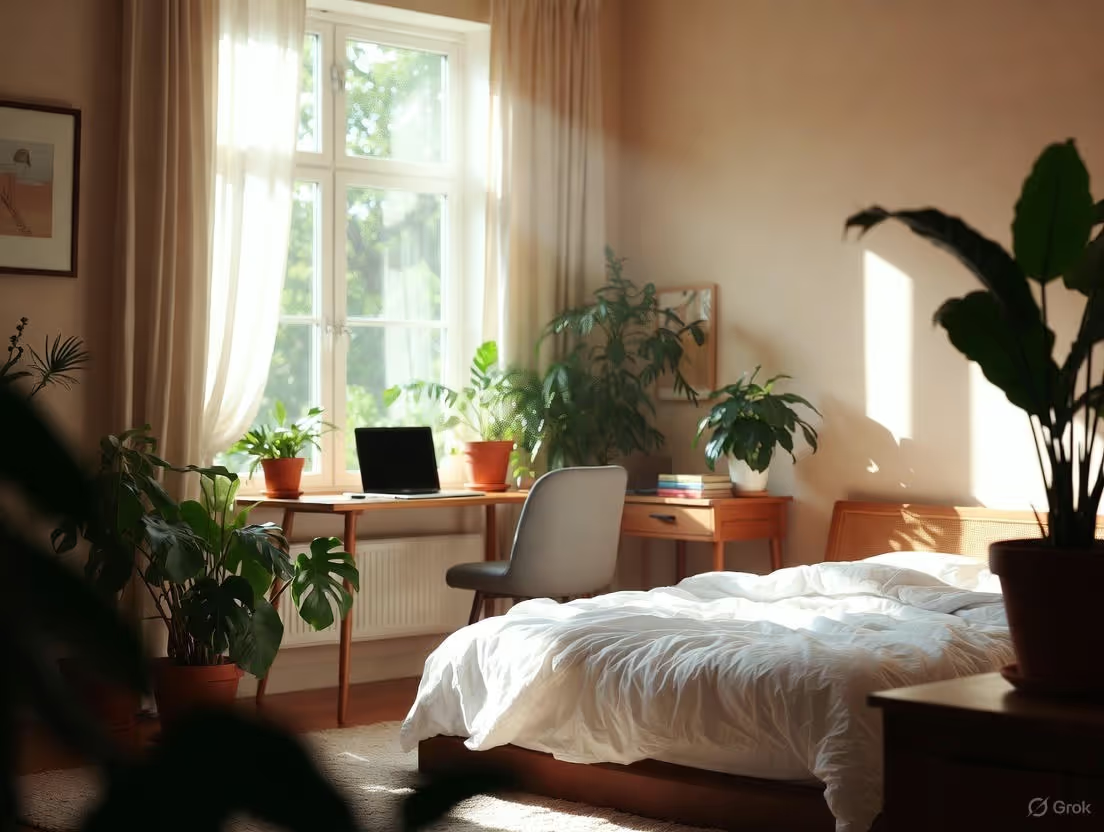
For eight hours, you are immersed in the atmosphere of your bedroom. The quality of that air—its freshness, humidity, and purity—directly impacts respiratory health, sleep apnea events, and overall recovery. Stale, dry, or polluted air can lead to sinus irritation, dry mouth, snoring, and fragmented sleep.
Key Pillars of Sleep-Optimized Air Quality:
Optimizing your bedroom’s atmosphere reduces the physiological strain on your body overnight, allowing it to focus its energy on repair, not defense. It’s the subtle background condition that makes all other improvements more effective. For common questions on how environmental factors interact with wellness tracking, our FAQ page offers support and answers to curious users.

Visual clutter is cognitive clutter. The "see-level" chaos of a messy room—piles of clothes, stacks of papers, general disarray—subconsciously signals to your brain that there is unfinished business. This can manifest as low-grade anxiety and rumination, the very enemies of sleep onset.
The act of decluttering your bedroom is a direct intervention for your mental state. It’s a physical manifestation of setting boundaries and creating order.
The Sleep-Specific Decluttering Method:
Your bedroom should feel like a serene, high-end spa or a peaceful hotel room. When you open the door, your psyche should experience an immediate sense of relief and calm. This psychological cue is a powerful sleep trigger. Creating such a intentional space aligns deeply with a holistic approach to wellness, something we are passionate about at Oxyzen. You can learn more about our mission to integrate these principles into daily life.
Your mattress and pillow are not mere furniture; they are the primary interfaces between your body and the sleep environment. An improper setup can cause misalignment, pressure points, and micro-movements that prevent deep, continuous sleep. This isn't about the most expensive option, but the most biomechanically correct one for you.
Choosing Your Mattress: A Framework, Not a Brand
The Pillow is a Critical Alignment Tool: Your pillow’s job is to keep your cervical spine (neck) neutral. The ideal height depends entirely on your sleeping position and shoulder width.
Investing time in selecting this foundation is paramount. It’s the bedrock of your sleep sanctuary. For those who love to geek out on the data behind optimal recovery, you can discover how Oxyzen works to track how changes in your sleep surface affect biometrics like restfulness and recovery score.

Your bedroom environment extends its influence beyond the night and into your morning ritual. The first light you see and the actions you take upon waking set the tone for your circadian rhythm, which will impact your sleep pressure 16 hours later.
The Dawn Simulation Advantage: Waking to a blaring alarm is a circadian shock. A dawn simulation light, which gradually increases in brightness over 30 minutes before your wake time, is a gentler, more biological signal. It mimics a natural sunrise, coaxing you out of sleep by slowly suppressing melatonin and increasing cortisol in a natural rhythm. This leads to less morning grogginess and a better-aligned clock.
The First 30 Minutes Rule: What you do upon exiting your sanctuary is crucial. Strengthen your wake-up signal:
By bookending your sleep with intentional light and routine, you reinforce the sanctuary’s purpose. You create a strong, clear daily rhythm that makes falling asleep at night feel automatic, not like a struggle. For more strategies on building these consistent, health-supporting routines, our blog offers a wealth of related articles.
The topic of electromagnetic fields (EMFs) from WiFi, cell phones, and smart devices is a growing area of concern in wellness circles. While the long-term health impacts are still debated, the sleep disruption principle is clear: these devices create a constant, low-level stimulus and data exchange. For the hyper-sensitive or simply the cautious, creating a low-EMF bedroom is the logical endpoint of the sanctuary principle.
The "Digital Detox" Bedroom Protocol:
The goal is to make your bedroom a true void of digital chatter. It’s a return to a biologically natural state of quiet—not just audibly, but electromagnetically. This commitment to a pristine sleep environment reflects a deep understanding of modern challenges, a philosophy you can explore further in our company information and mission.
Biophilia is the innate human tendency to seek connections with nature. Integrating natural elements into your bedroom isn't just decorative; it’s a powerful psychological and physiological de-stressor. Natural patterns, materials, and scents can lower cortisol, reduce heart rate, and promote feelings of safety—all precursors to sleep.
Incorporating Biophilia Into Your Sanctuary:
Biophilic design bridges the gap between our modern, constructed world and the ancestral environments our nervous systems are evolved for. It completes the sensory experience of your sanctuary, making it not just neutral, but actively restorative.
An overhaul is meaningless without feedback. Subjective feelings of "I slept better" are important, but objective data unlocks precision. This is where a wearable like a smart ring becomes the final, crucial piece of your sleep optimization toolkit.
Unlike wrist-based devices, a ring like Oxyzen offers continuous, comfortable tracking without the bulk. It measures the vital biomarkers of sleep quality:
By reviewing this data each morning, you move from guessing to knowing. You can run two-week experiments: one week with the old pillow, one week with the new. Observe the data. The ring turns your bedroom into a living lab, where you are both the scientist and the subject. To see how this data-driven approach has helped others, you can read through real customer reviews and user experiences.
You have methodically addressed each pillar of the sleep environment: darkness, sound, temperature, air, and psychology. Now, the art of integration begins. A sanctuary isn't a collection of isolated fixes; it’s a symphony where each element works in concert. The true magic happens when your cooling strategy supports your darkness protocol, and your decluttered space amplifies your biophilic design, creating a whole far greater than the sum of its parts.
Consider the cascade: You dim the warm lights at 8 PM (light hygiene), which signals your brain to begin melatonin production. At 9:30 PM, your thermostat begins its downward drift to 65°F (thermal regulation). You enter your cool, pitch-black, and clutter-free room (psychology & darkness). The gentle, consistent hum of pink noise masks the distant traffic (sound). The air is fresh and slightly humid from the purifier-humidifier combo (air quality). You lie on your perfectly supportive mattress (foundation). Each system reinforces the other, delivering an unambiguous, multi-sensory command to your nervous system: SHUT DOWN AND REPAIR.
Creating Synergy and Routine:
The goal is to make this integrated environment automatic. Use smart home technology not as a gimmick, but as a circadian scaffolding. Program a "Sleep" scene that simultaneously dims lights, lowers the thermostat, and turns on the white noise machine. Likewise, a "Wake" scene can simulate dawn and adjust the temperature. This removes daily decision fatigue and builds a powerful, consistent ritual.
Your personal data from a device like the Oxyzen smart ring is the final integrator. It doesn’t see "darkness" or "cool temperature"; it sees the physiological outcome: improved HRV, higher deep sleep percentage, and lower resting heart rate. This biofeedback confirms that your systems are harmonizing effectively. It allows you to fine-tune—perhaps discovering you sleep best at 63°F, not 67°F, or that the specific frequency of brown noise is better for you than pink noise. This journey from generic advice to personalized, data-verified protocol is the core of modern sleep optimization. For a deeper look at the technology that enables this personalization, you can learn more about smart ring technology.
Even with a meticulously crafted sanctuary, some individuals face persistent sleep challenges like insomnia, sleep apnea, or Restless Legs Syndrome (RLS). In these cases, the bedroom environment is a necessary foundation, but not always a complete cure. It’s critical to understand how your sanctuary interacts with these conditions and when to seek further help.
Insomnia and the Hyper-Aroused Brain: For those with chronic insomnia, the bedroom itself can become a cue for anxiety and wakefulness—a state called "conditioned arousal." Your sanctuary can help break this cycle, but it must be paired with behavioral strategies:
Sleep Apnea and Environmental Support: While CPAP therapy is the primary treatment for obstructive sleep apnea, your environment plays a crucial supporting role.
Restless Legs Syndrome (RLS): Environmental factors can trigger or alleviate symptoms.
Knowing When to Seek Professional Help: If you have implemented a comprehensive environmental overhaul for 4-6 weeks and are still experiencing severe daytime sleepiness, loud snoring with gasping, or chronic unrefreshing sleep, consult a healthcare provider or a sleep specialist. Your sanctuary sets the stage, but medical conditions need medical diagnosis. For those navigating these complex intersections of environment and physiology, our FAQ page offers support and answers to common questions about tracking and wellness.
Creating a sleep sanctuary becomes exponentially more challenging—and more important—when sharing the space. Divergent schedules, temperature preferences, noise sensitivity, and movement can turn the sanctuary into a battleground. The goal shifts from creating a perfect personal environment to engineering a harmonious, flexible ecosystem that respects two distinct physiologies.
Strategies for a Harmonious Dual Sanctuary:
The key principle is active empathy and problem-solving, not resentment. View sleep conflicts as a systems-engineering challenge to be solved together. The payoff—synchronized, high-quality rest for both—strengthens the relationship and doubles the health benefits. Reading about real customer reviews and user experiences can provide relatable insights into how other couples have navigated these challenges.
Your sanctuary’s effectiveness is profoundly influenced by what you do during the 16 hours you are outside of it. Daytime habits build—or deplete—your sleep drive and reinforce—or weaken—your circadian rhythm. Think of your daytime as gathering the resources for a successful night in your restored habitat.
The Non-Negotiable Daytime Pillars:
These daytime habits are the guardians of your nighttime sanctuary. They ensure you arrive at your bedroom door with a strong, natural sleep drive and a brain ready to receive the sanctuary’s calming cues. For a comprehensive collection of strategies on building these supportive daily routines, our blog offers additional resources and related articles.
A static environment in a dynamic world will fail. Your sanctuary must adapt to the seasonal shifts in light, temperature, and humidity to remain effective year-round. This proactive adjustment prevents seasonal sleep slumps.
The Winter Protocol:
The Summer Protocol:
Anticipating these changes and adjusting your systems—your lighting, your humidifier/dehumidifier, your bedding weight—keeps your sanctuary in perfect biological alignment with the outside world. This philosophy of adaptive, intelligent design is central to our approach at Oxyzen, something you can learn about in our founding story and vision.
A sanctuary is not a one-time project; it's a living space that requires maintenance and thoughtful evolution. Materials wear out, technology advances, and your own body changes. A proactive, rather than reactive, approach to upkeep ensures your sleep quality never backslides.
The Maintenance Schedule:
The Upgrade Path:
Listen to your data and your body. When you see a plateau or decline in key metrics like HRV or deep sleep, consider strategic upgrades in this order of impact:
This mindset of continuous improvement turns sleep optimization from a chore into an engaging aspect of your wellness journey. For support on how to interpret your data and decide on next steps, our FAQ page is a great resource.
The principles of a sleep sanctuary are universal, but applying them to children’s rooms requires adaptation. Instilling these habits early sets the foundation for a lifetime of healthy sleep and turns bedtime from a struggle into a soothing ritual.
Creating a Child’s Sanctuary:
By making their room a predictably calm, comfortable, and safe haven, you teach their developing nervous systems to self-soothe and associate their space with rest. This is one of the greatest wellness gifts you can give. For families looking to integrate wellness tracking in an age-appropriate way, you can learn more about our mission to support holistic family health.
We end this portion of our deep dive by zooming out to the widest lens. This bedroom overhaul is not an exercise in home decor or biohacking for its own sake. It is a profound philosophical commitment to the principle that rest is not idleness; it is an active, non-negotiable pillar of human performance and health.
Your sleep sanctuary is a tangible declaration that you value your long-term well-being. It is an acknowledgment that in a world optimized for constant output, you must fiercely protect your input—the quality of your restoration. The data you gather from this environment, perhaps using a tool like the Oxyzen ring, provides irrefutable evidence of this investment paying dividends in your resilience, focus, mood, and vitality.
This journey mirrors a broader shift in modern wellness: from reactive symptom-chasing to proactive systems-building. You are not just treating poor sleep; you are engineering a life that generates good sleep. This empowered, intentional approach is at the heart of what we believe in. You can read our complete guide and philosophy to see how this thinking shapes everything we do.
The modern sleep sanctuary is not a retreat from technology, but an intelligent collaboration with it. Smart home devices, when used strategically, can automate your environment, removing friction and ensuring perfect consistency—the bedrock of circadian health. This is about moving from manual control to ambient intelligence.
Building Your Sleep Automation Ecosystem:
The Data Feedback Loop: This is where a biometric tracker like the Oxyzen ring closes the loop. Your automation creates the perfect, consistent conditions. The ring measures the outcome: how well you slept. You can then adjust your automation settings based on objective data. Did your deep sleep improve after moving the "cool down" routine to 90 minutes before bed instead of 60? The data will tell you. This creates a self-optimizing system. For those interested in how this seamless integration of environment and biometrics works, you can discover how Oxyzen works within a smart wellness ecosystem.
There is no single "right" answer. Your sanctuary should reflect your personal comfort with technology and your specific needs. We can conceptualize two effective, yet philosophically different, approaches.
The Bio-Minimalist Sanctuary:
The Optimized Technologist Sanctuary:
Most people will find their ideal point on the spectrum between these two poles. The critical takeaway is intentionality. Choose each element because it serves a specific, sleep-promoting function, not because it's a trendy gadget or a generic decor item. Your sanctuary is a tool for health. To explore how different users have approached their own sleep optimization journey, you can read through real customer reviews and user experiences.
Your sanctuary can only do so much if you spend your evenings bombarding your system with counter-signals. The "pre-sleep zone"—the 2-3 hours before you enter the bedroom—must act as a buffer, gradually transitioning your biology from day mode to night mode. Think of it as the decompression chamber before entering the sleep habitat.
Creating a Circadian Buffer Zone:
By the time you open your sanctuary door, your nervous system should already be well on its way to a state of rest. You are simply stepping into the environment designed to carry you the rest of the way.
Travel is one of the greatest disruptors of sleep, throwing off circadian rhythms with new time zones, unfamiliar environments, and "sleep theft" due to bad hotel setups. The goal is not to replicate your home sanctuary perfectly, but to bring its core principles with you in a portable kit.
The Portable Sleep Toolkit:
By prioritizing these portable elements, you protect your sleep investment, perform better on business trips, and return home without needing a "vacation to recover from your vacation." For more tips on maintaining wellness routines in disruptive situations, our blog offers a wealth of related articles.
The frontier of sleep optimization is moving rapidly. The next decade will see our sanctuaries become even more responsive and personalized. Here’s a glimpse of what’s on the horizon:
These advances will make the sleep sanctuary not just a passive haven, but an active partner in restoration. Staying informed on these developments is key. For a company actively working at this intersection of environment, data, and wellness, you can explore our vision & values and founding story.
Overwhelm is the enemy of action. This phased 30-day checklist breaks the monumental task into manageable, weekly wins. Track your progress and note changes in how you feel each morning.
Week 1: The Foundation & Darkness
Week 2: Sound, Air & Temperature
Week 3: The Sleep Foundation & Routine
Week 4: Integration, Measurement & Refinement
For support and answers during your implementation, remember our FAQ page is a great resource.
This journey through the science and art of the sleep environment is, ultimately, a journey back to yourself. In a culture that glorifies burnout and trades on distraction, the deliberate act of crafting a sanctuary for rest is a radical declaration of self-worth. You are saying that your recovery is not an afterthought, but the central engine of your life.
The bedroom overhaul is not a home improvement project. It is a physiological upgrade. You have learned to speak the language of your own biology—using darkness as a hormone signal, temperature as a sleep trigger, and silence as a balm for the nervous system. You have moved from being a passive victim of poor sleep to an architect of your own restoration.
The data you gather—whether simply the subjective feeling of waking refreshed or the objective metrics from a sophisticated tracker—provides the feedback that turns effort into mastery. It connects the quiet, dark hours of the night to the vibrant, productive hours of the day. Improved HRV means greater resilience to stress. More deep sleep means better physical repair and immune function. Consolidated REM sleep means enhanced creativity and emotional processing.
Let this knowledge empower you. Start tonight. Pick one thing from the checklist—perhaps taping over that glaring blue LED on the power strip or finally buying the blackout curtains. Observe the difference. Then take the next step. Your sanctuary awaits, and with it, the promise of not just better sleep, but a more focused, resilient, and vibrant life.
The night is no longer a time to be endured, but a space to be curated. A place where, in the quiet dark, you are actively building the foundation for every tomorrow. For continued learning and to be part of a community focused on this holistic approach to wellness, we invite you to explore our blog for more wellness tips and resources. Your journey to mastering sleep, and in turn, mastering your day, begins now.
A sanctuary is not a one-time project; it's a living space that requires maintenance and thoughtful evolution. Materials wear out, technology advances, and your own body changes. A proactive, rather than reactive, approach to upkeep ensures your sleep quality never backslides.
The Maintenance Schedule:
The Upgrade Path:
Listen to your data and your body. When you see a plateau or decline in key metrics like HRV or deep sleep, consider strategic upgrades in this order of impact:
This mindset of continuous improvement turns sleep optimization from a chore into an engaging aspect of your wellness journey. For support on how to interpret your data and decide on next steps, our FAQ page is a great resource.
The principles of a sleep sanctuary are universal, but applying them to children’s rooms requires adaptation. Instilling these habits early sets the foundation for a lifetime of healthy sleep and turns bedtime from a struggle into a soothing ritual.
Creating a Child’s Sanctuary:
By making their room a predictably calm, comfortable, and safe haven, you teach their developing nervous systems to self-soothe and associate their space with rest. This is one of the greatest wellness gifts you can give. For families looking to integrate wellness tracking in an age-appropriate way, you can learn more about our mission to support holistic family health.
We end this portion of our deep dive by zooming out to the widest lens. This bedroom overhaul is not an exercise in home decor or biohacking for its own sake. It is a profound philosophical commitment to the principle that rest is not idleness; it is an active, non-negotiable pillar of human performance and health.
Your sleep sanctuary is a tangible declaration that you value your long-term well-being. It is an acknowledgment that in a world optimized for constant output, you must fiercely protect your input—the quality of your restoration. The data you gather from this environment, perhaps using a tool like the Oxyzen ring, provides irrefutable evidence of this investment paying dividends in your resilience, focus, mood, and vitality.
This journey mirrors a broader shift in modern wellness: from reactive symptom-chasing to proactive systems-building. You are not just treating poor sleep; you are engineering a life that generates good sleep. This empowered, intentional approach is at the heart of what we believe in. You can read our complete guide and philosophy to see how this thinking shapes everything we do.
Your Trusted Sleep Advocate: Sleep Foundation — https://www.sleepfoundation.org
Discover a digital archive of scholarly articles: NIH — https://www.ncbi.nlm.nih.gov/
39 million citations for biomedical literature :PubMed — https://pubmed.ncbi.nlm.nih.gov/
Experts at Harvard Health Publishing covering a variety of health topics — https://www.health.harvard.edu/blog/
Every life deserves world class care :Cleveland Clinic - https://my.clevelandclinic.org/health
Wearable technology and the future of predictive health monitoring :MIT Technology Review — https://www.technologyreview.com/
Dedicated to the well-being of all people and guided by science :World Health Organization — https://www.who.int/news-room/
Psychological science and knowledge to benefit society and improve lives. :APA — https://www.apa.org/monitor/
Cutting-edge insights on human longevity and peak performance:
Lifespan Research — https://www.lifespan.io/
Global authority on exercise physiology, sports performance, and human recovery:
American College of Sports Medicine — https://www.acsm.org/
Neuroscience-driven guidance for better focus, sleep, and mental clarity:
Stanford Human Performance Lab — https://humanperformance.stanford.edu/
Evidence-based psychology and mind–body wellness resources:
Mayo Clinic — https://www.mayoclinic.org/healthy-lifestyle/
Data-backed research on emotional wellbeing, stress biology, and resilience:
American Institute of Stress — https://www.stress.org/


