


The Sleep Pattern Mismatch: When Work and Biology Clash
A mismatch occurs when your job demands conflict with your biological chronotype, leading to chronic sleep debt and health strain.
A mismatch occurs when your job demands conflict with your biological chronotype, leading to chronic sleep debt and health strain.
%402x.svg)
It’s 3:17 AM. The blue glow of a laptop screen is the only light in the room, etching shadows on the face of a writer battling a deadline. Across the city, a nurse begins her third consecutive night shift, her body a confusion of cortisol and caffeine. In a high-rise apartment, a new parent paces with a crying infant, their sleep fractured into meaningless fragments. And in a quiet suburb, an executive lies wide awake, dreading the 5:30 AM alarm that will yank him from a slumber that hasn’t yet come.
These scenes are not anomalies; they are the nightly rituals of the modern world. We are a species increasingly at war with our own biology, living in a silent, grinding state of conflict between when we must be awake and when our bodies are designed to sleep. This is the Sleep Pattern Mismatch: a chronic, systemic dissonance between our innate circadian rhythms—the 24-hour internal clock governing sleep, hormone release, and cellular repair—and the rigid, often arbitrary, demands of globalized work schedules, digital overload, and social obligations.
The cost of this clash is not merely yawns and coffee runs. It is a profound, yet often invisible, tax on our physical health, mental resilience, cognitive performance, and emotional stability. From heightened risks of cardiovascular disease and metabolic disorder to crippling anxiety, diminished creativity, and strained relationships, living out of sync with our natural sleep-wake cycle is a foundational public health crisis of the 21st century.
For decades, we’ve treated sleep as a negotiable commodity, a reservoir of time we can borrow from to be more “productive.” We’ve idolized the “hustle culture” of early risers and late-night grinders, often forgetting that many of history’s great thinkers and leaders prioritized profound, regular rest. But a new revolution is underway—one powered not by stimulants, but by data. The emergence of sophisticated, personal health technology, like the advanced biometric tracking offered by smart rings from innovators like Oxyzen, is pulling back the curtain on our individual sleep architecture. For the first time, we can move beyond guessing about our sleep and start understanding it: seeing the precise impact of a late meal, a stressful day, or an early meeting on our heart rate variability, blood oxygen, and sleep stages.
This isn't about achieving a perfect "eight hours" dictated by a magazine headline. It's about aligning our lives with our unique biological blueprint. This article is a deep exploration into the heart of the sleep-work conflict. We will dissect the ancient machinery of our circadian rhythm, expose the modern forces that have hijacked it, and map the tangible consequences on every system in our body. More importantly, we will chart a path toward truce—a realistic, data-informed strategy for navigating a world that won’t slow down, while giving your biology the respect it demands. The journey to reconciliation starts with recognizing the scale of the battle. Let’s begin.
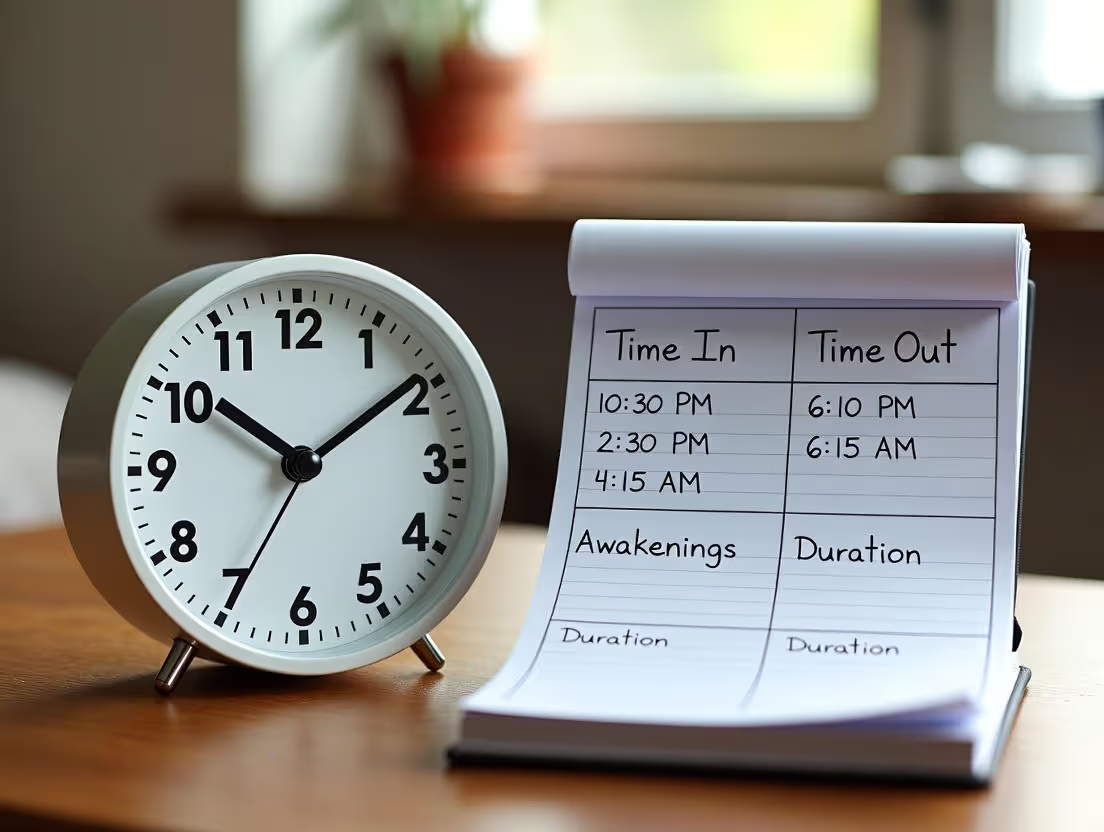
To comprehend the mismatch, we must first meet the master conductor of our physiology: the circadian rhythm. This is not a vague preference for mornings or evenings; it is a genetically hardwired, molecular timekeeping system present in nearly every tissue and organ in your body. The word "circadian" comes from the Latin circa diem, meaning "about a day," and this rhythm is an endogenous, self-sustaining cycle that runs approximately 24 hours, even in the absence of external cues.
At its core, the circadian rhythm is governed by a tiny region in the brain's hypothalamus called the suprachiasmatic nucleus (SCN). Think of the SCN as the "master clock." It receives direct input from specialized cells in your eyes that detect light, particularly the blue-wavelength light of a clear sky. When morning light hits your retina, a signal fires to the SCN, which in turn suppresses the production of the sleep hormone melatonin and triggers a cascade of awakening hormones like cortisol. As daylight fades, the SCN flips the switch: melatonin production ramps up, core body temperature drops, and your systems begin the shift into maintenance and repair mode.
But the story doesn’t end in the brain. The SCN synchronizes a network of "peripheral clocks" in your liver, pancreas, gut, heart, and muscles. Your liver clock prepares to metabolize food at expected meal times. Your cardiovascular system anticipates the increased demand of waking hours. This orchestration ensures that processes like digestion, hormone secretion, immune function, and cell regeneration occur at their optimal time for efficiency and health.
The Genetic Basis of Your Sleep Chronotype
This system isn't one-size-fits-all. Your personal expression of this rhythm is your chronotype—your inherent predisposition for sleep and wake times. This is largely determined by genetics, specifically variations in "clock genes" like PER3. Chronotypes exist on a spectrum:
Your chronotype is not a lifestyle choice or a badge of discipline (or lack thereof). It is a biological fact. A Wolf forced onto a Lion’s schedule is not lazy; they are physiologically jet-lagged every single day. Understanding this is the first step in compassionately addressing the sleep-work clash. It explains why a 9 AM meeting can be a breeze for one colleague and a cognitively impaired nightmare for another. Companies seeking to optimize human performance are beginning to grasp this, with forward-thinking organizations offering flexible core hours—a topic we will explore in depth later.
The precision of this ancient clock is breathtaking. It expects regularity. When we provide consistent cues—light, food, activity, and sleep times—the orchestra plays in harmony. But the modern world specializes in sending chaotic, contradictory signals. To understand how deeply this discord affects us, we must next turn to the primary disruptor in our era: artificial light.

For 99.9% of human history, the setting sun meant one thing: darkness. Our light sources were feeble—fire, candlelight, oil lamps—emitting a warm, reddish glow that minimally disturbed the melatonin signal. The natural 24-hour cycle of light and dark was the supreme, unchallenged Zeitgeber (German for "time-giver") for our SCN. Then, in a historical blink of an eye, everything changed.
The invention of electric lighting, and now the proliferation of LEDs and screens, has effectively created a perpetual, biologically confusing "daylight" in our homes and pockets. This is the most pervasive and potent engine of the Sleep Pattern Mismatch. The problem isn't light itself, but its timing, intensity, and spectral composition.
Blue Light and the Melatonin Deception
The key villain in this story is blue-wavelength light (in the 460-480 nm range). Daylight is rich in this blue light, which is why a clear sky feels so alerting. Your SCN has evolved over millennia to interpret this specific signal as "DAY." Unfortunately, the LED backlights of smartphones, tablets, computers, and energy-efficient bulbs are also intensely rich in this same blue spectrum.
When you scroll through social media or answer emails at 11 PM, you are bathing your retina in a signal that screams "NOON!" to your master clock. The result? A dramatic suppression of melatonin, sometimes by 50% or more, and a delay in your circadian phase. Your body is tricked into believing the day is still ongoing, pushing your biological night later and later. This makes falling sleep difficult, compresses your sleep duration, and can reduce the quality of restorative deep sleep.
Beyond the Screen: The 24/7 Lifestyle
The assault of light is compounded by a culture that no longer "shuts down." The global economy, shift work, and the "always-on" expectation enabled by technology have decoupled human activity from the solar cycle. We shop, work, socialize, and stream entertainment at all hours. This constant activity provides cognitive and social stimulation when our biology is preparing for quiescence.
Furthermore, our indoor lifestyles mean we often get insufficient bright light exposure during the day. The SCN needs a strong, clear contrast between bright daytime light and true darkness at night to stay robustly entrained. An office worker who spends all day under relatively dim indoor lighting (often less than 500 lux) and then gets bright screen light at night is sending the weakest possible "day" signal and the strongest possible "night is day" signal. Their circadian rhythm becomes weak and drift, much like a clock with a loose pendulum.
The consequences are a form of chronic, low-grade social jet lag. Just as traveling across time zones desynchronizes your internal clock from local time, misaligned light exposure creates a persistent internal desynchronization. Your liver clock might think it's 10 PM, your SCN is confused, and your work schedule says it's 8 AM. This internal discord is where the real damage begins to manifest across every system in your body. As we will see in our next section, the price of this discord is paid not just in tiredness, but in a frighteningly broad array of health disorders. For those tracking their wellness, noticing these patterns through a device like the Oxyzen smart ring can be the first step in connecting late-night screen time with measurable changes in sleep score and readiness metrics—a connection you can explore further in our detailed blog posts.
When the sleep-work mismatch becomes chronic, it’s not just your energy that falters; it’s your foundational health that begins to crumble. Circadian misalignment is a systemic stressor, disrupting the finely tuned hormonal and metabolic conversations that keep your body in equilibrium. The research here is unequivocal: living against your biological clock is a significant, independent risk factor for a host of serious diseases.
Metabolic Mayhem: Weight Gain, Diabetes, and Hormonal Chaos
Your metabolism is exquisitely timed. Insulin sensitivity, glucose tolerance, and the hormones that regulate hunger (ghrelin) and satiety (leptin) all follow robust circadian patterns.
Cardiovascular System Under Fire
Your heart and blood vessels follow a daily rhythm. Blood pressure naturally dips at night (nocturnal dipping), a crucial period of respite for the cardiovascular system. Chronic sleep disruption and misalignment blunt this dip, keeping blood pressure elevated around the clock. This constant pressure strains the arterial walls. Furthermore, misalignment promotes systemic inflammation—a key driver of atherosclerosis—and disrupts the balance of the autonomic nervous system, leaning too heavily on the sympathetic ("fight-or-flight") side. The cumulative effect is a dramatically increased risk of hypertension, coronary heart disease, heart attack, and stroke.
Compromised Immunity and Cellular Repair
Sleep, particularly deep sleep (slow-wave sleep), is when your immune system deploys its most sophisticated forces. This is when:
When you are sleep-deprived or your sleep is misaligned, this nightly maintenance shift is shortened or canceled. You become more susceptible to infections (studies show people are far more likely to catch a cold when sleep-deprived), vaccines become less effective, and the body’s ability to fight off inflammation and repair cellular damage is crippled. Long-term, this creates a pro-inflammatory, pro-aging internal environment fertile for chronic disease.
The physical toll is a silent, slow-moving crisis. Yet, the revolt is not confined to the body. As we will explore next, the brain—the very organ that needs sleep to function—is perhaps the most immediate and viscerally felt casualty of this clash. For individuals using technology to monitor these changes, seeing objective data on resting heart rate and heart rate variability—metrics tracked by devices like the Oxyzen ring—can provide an early warning sign of this systemic stress, a topic our support team often addresses in the FAQ section.

If your body protests circadian misalignment with slow-burn disease, your brain announces it with daily, in-your-face dysfunction. The cognitive consequences of the sleep-work clash are immediate, measurable, and devastating to performance, safety, and creativity. This is where the corporate world’s insistence on rigid, early schedules meets the brutal reality of neurobiology.
The Executive Function Breakdown
The prefrontal cortex (PFC)—the brain’s CEO, responsible for complex decision-making, emotional regulation, focus, and impulse control—is exquisitely sensitive to sleep loss and misalignment. When you are sleep-deprived or jet-lagged, your PFC essentially goes offline. The results are predictable:
Memory Sabotage and Lost Creativity
Sleep is not a passive state for memory; it is an active curator. The two key phases of sleep play distinct roles:
When sleep is short or misaligned, this curation process is truncated. You may study for hours, but without proper deep sleep, the information fails to "stick." You may wrestle with a complex problem, but without REM sleep, the "aha!" moment never arrives. The brain’s ability to innovate and connect dots is severely diminished.
The Productivity Paradox
Here lies the great irony of "hustle culture": the very act of sacrificing sleep to work more makes you profoundly worse at your work. Research is clear that after 16 hours of sustained wakefulness, cognitive performance is comparable to being legally drunk. A chronically misaligned worker is operating at a continuous deficit. They take longer to complete tasks, make more errors, and lack the innovative spark that drives real progress. The marginal hour gained at night is paid for with multiple hours of sub-par performance the following day. It is a catastrophic trade-off that both individuals and companies are only beginning to calculate. For knowledge workers and leaders, recognizing this cognitive tax is the first step toward advocating for schedules that respect biological reality, not just traditional office hours.
The erosion caused by the sleep-work mismatch doesn't stop at productivity; it eats away at the core of our well-being—our mental health and our connections to others. The same neurological disruptions that impair cognition also lay the groundwork for anxiety, depression, and relational conflict. This is the often-invisible, deeply personal cost of living out of sync.
The Anxious, Depressed Brain
The link between circadian disruption and mood disorders is one of the most robust in psychiatric research. The mechanisms are multifaceted:
It’s a vicious cycle: circadian misalignment worsens mood, and the resulting anxiety or depression then makes it harder to establish healthy sleep habits, deepening the misalignment. Breaking this cycle often requires targeted intervention, starting with stabilizing the sleep-wake cycle.
Relationship Friction and Social Withdrawal
When you are chronically exhausted and emotionally volatile, your closest relationships bear the brunt. The sleep-deprived brain lacks the empathy and emotional intelligence needed for nuanced social interaction.
This strain creates a "second-shift" at home, where partners and families must manage the fallout of a work schedule that disrespects biology. It’s not merely an individual health issue; it’s a social and familial one. Realigning sleep isn't just a personal wellness act; it can be a profound act of care for one’s relationships. Many users of detailed wellness trackers discover this connection firsthand, often sharing how understanding their sleep data helped them explain their mood and energy levels to loved ones, a pattern reflected in some of the personal testimonials from our community.
Our societal glorification of the "early bird" is perhaps the most culturally ingrained driver of the Sleep Pattern Mismatch. From proverbs to corporate pep talks, early rising is equated with virtue, discipline, and success. This mindset creates a profound injustice for the estimated 30-40% of the population with intermediate-to-late chronotypes—the Wolves and many Bears. Forcing them into an early schedule isn't just inconvenient; it’s a form of chronic, performance-limiting biological oppression.
The Myth of Moral Superiority
The association between early rising and moral virtue has deep historical and religious roots. Benjamin Franklin’s "Early to bed and early to rise, makes a man healthy, wealthy, and wise" cemented this in the American ethos. In a pre-industrial agricultural society, this made practical sense: work was dictated by sunlight. However, in a knowledge-based, globalized economy where work can happen at any hour, this dogma is obsolete and harmful. It confuses chronotype with character. A Wolf who does their best, most innovative work from 8 PM to 1 AM is not lazy; they are operating at peak efficiency according to their genetic blueprint. Judging them by a Lion’s schedule is as irrational as judging a fish by its ability to climb a tree.
The Performance and Economic Penalty
The insistence on standardized early start times (think the ubiquitous 8 or 9 AM meeting) imposes a massive cognitive tax on non-morning types. Studies of school start times provide a clear analogy: when high schools shift start times later, adolescents (who naturally have later chronotypes) show significant improvements in academic performance, attendance, and mental health. The same principle applies to adults in the workplace.
A Wolf forced to deliver a critical presentation at 8 AM is doing so during their biological night. Their core body temperature is still low, their cortisol is still rising, and their prefrontal cortex is functionally impaired. They are competing with Lions who are in their biological prime. This creates an uneven playing field that stifles talent and innovation. Companies that cling to rigid schedules are inadvertently sidelining a huge portion of their potential intellectual capital.
Embracing Chronodiversity
The solution lies in embracing chronodiversity—the recognition that variation in circadian timing is a natural, valuable form of human biodiversity, much like differences in personality or learning styles. A chronodiverse team, if allowed to work in sync with their rhythms, can provide coverage across a wider span of the day, foster more creative problem-solving at different times, and improve overall employee well-being and retention.
Forward-thinking organizations are moving toward flexible core hours (e.g., a required block from 10 AM to 3 PM) and asynchronous work models, where output is valued over physical presence at a specific hour. This shift from measuring "time at desk" to measuring "results delivered" is the single most effective policy change for resolving the chronotype conundrum. It acknowledges a simple truth: the best work happens when people are actually awake.

If the standard 9-to-5 schedule creates a mismatch for late chronotypes, then shift work—especially night shifts—represents the most severe, pathological form of circadian disruption. Approximately 20% of the global workforce engages in shift work, encompassing healthcare, manufacturing, transportation, hospitality, and emergency services. These workers are asked to perform a profound biological contradiction: to be alert, safe, and effective during the time their bodies are hardwired for sleep and repair.
The Permanent State of Jet Lag
Shift workers don't just have a mild misalignment; they live in a state of near-permanent internal desynchronization. Their SCN continues to respond to the dominant environmental cue—the day-night cycle—while they attempt to force sleep during daylight and peak performance during darkness. The body's peripheral clocks (in liver, gut, etc.) become utterly confused by eating and being active at night. This is why shift workers almost never fully adapt; they are in a constant battle against their own physiology.
Compounded Health Risks
The health consequences outlined earlier are magnified for shift workers. The epidemiological data is stark:
The Social and Familial Sacrifice
Beyond the physical toll, shift work extracts a heavy social price. It isolates workers from the rhythms of family life, community events, and standard social gatherings. Missing family dinners, children's school events, and weekend activities can lead to profound loneliness and strain on marriages and parent-child relationships. The worker is physically present but temporally absent, living in a parallel world out of sync with everyone they love.
Mitigating these devastating effects requires systemic solutions: strategic scheduling (e.g., faster-rotating shifts are sometimes better than slow rotations), controlled light exposure (bright light at night, darkness for sleep), and careful timing of meals. For the individual shift worker, understanding their own biometrics becomes a critical tool for survival. Technologies that track sleep quality and readiness, like those developed with shift workers' unique challenges in mind at companies such as Oxyzen, can provide personalized insights to help navigate this brutal schedule, a mission deeply connected to our company's core values of human-centric innovation.
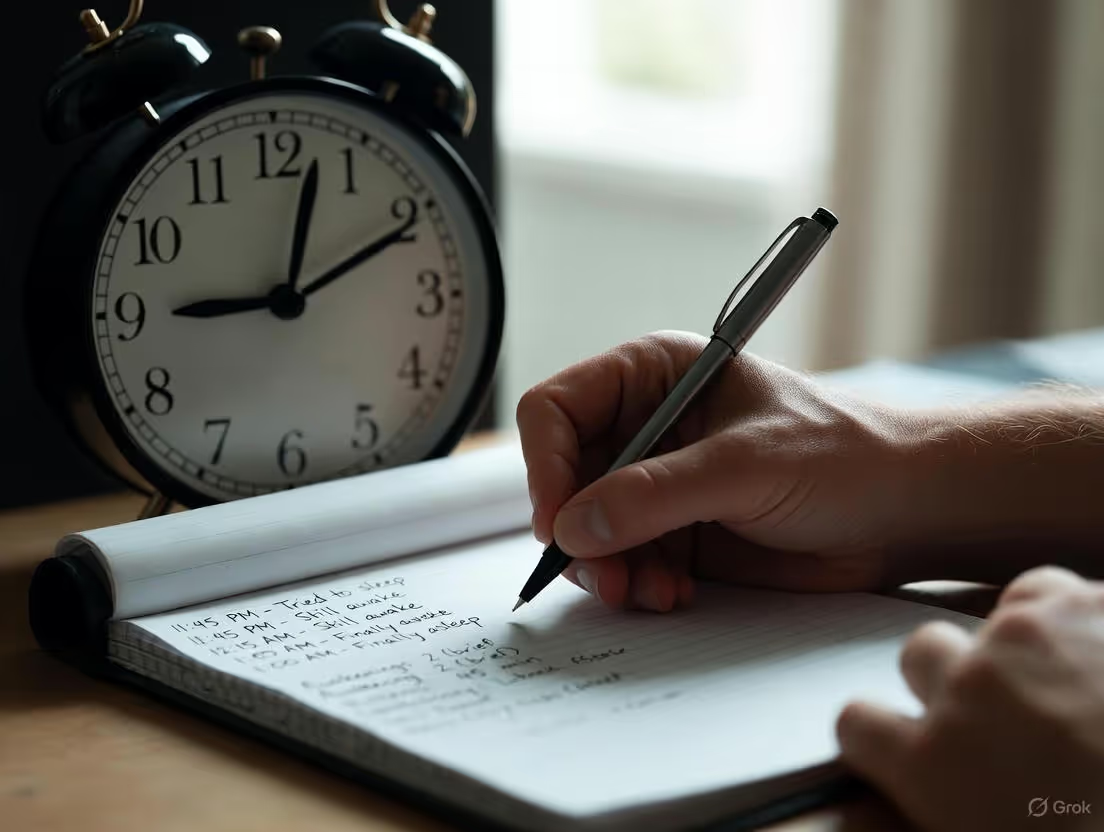
While shift work is an acute case, a more subtle and widespread form of misalignment plagues the general population: Social Jet Lag (SJL). Coined by chronobiologist Till Roenneberg, SJL is the discrepancy between your biological clock (dictated by your chronotype) and your social clock (dictated by work, school, and social obligations). It’s the weekend warrior phenomenon, but its impact is anything but recreational.
Measuring the Mismatch
You can calculate your own SJL easily: On your free days (e.g., a vacation or weekend without alarms), note the midpoint of your sleep (halfway between falling asleep and waking up). Then, do the same for your workdays. The difference, in hours, is your social jet lag. A Wolf with a natural sleep midpoint of 5 AM on free days and a forced midpoint of 3 AM on workdays has 2 hours of SJL. This is the biological equivalent of living in New York during the week and flying to California every weekend—and then back again on Monday.
The Cumulative Debt
Unlike financial debt, you cannot "pay back" sleep debt in a couple of long weekend snoozes. The "sleeping in" on weekends, while providing temporary relief, actually worsens the underlying circadian misalignment. It’s like constantly changing your time zone. By Sunday night, your body has shifted later, making the 6 AM Monday alarm an even more brutal shock. This weekly cycle of advance (forcing early) and delay (sleeping late) keeps your rhythm in a perpetual state of instability and confusion.
The Hidden Health Tax
Roenneberg’s large-scale epidemiological work has shown that SJL is a powerful predictor of health outcomes, independent of total sleep duration. Even one hour of SJL is associated with:
In essence, SJL is a measure of the chronic stress imposed by our social structures on our biology. The larger the gap, the greater the wear and tear. It explains why so many people feel persistently "off," even if they are theoretically getting enough sleep during the week. They are living in a state of low-grade, chronic internal travel fatigue. Addressing this requires more than just going to bed earlier (which is often biologically impossible for a Wolf). It requires a fundamental renegotiation of social time—a topic we will delve into when discussing solutions. For now, recognizing SJL as a real, measurable form of biological distress is crucial.
Beyond light and rigid schedules, a host of other modern lifestyle factors conspire to deepen the sleep-work mismatch. These are the daily habits and environmental factors that, often unknowingly, pull us further from our natural rhythm.
The Digital Intrusion
We’ve covered blue light, but the problem with technology is also cognitive and psychological. The constant ping of notifications, the endless scroll of news and social media, and the pressure to be digitally available keep our minds in a state of hyper-arousal. This "cognitive landfill" makes it incredibly difficult for the brain to wind down into the state of quietude necessary for sleep onset. The bedroom, once a sanctuary for sleep and intimacy, has become a multimedia center, eroding the powerful psychological association between the bed and rest.
Dietary Disruption
The Sedentary Trap and Erratic Schedules
These saboteurs are often within our control to modify, yet they are woven into the fabric of modern life. Combating them requires intentional design of our daily routines and environments, a process that can be greatly informed by objective data on how each choice affects our physiology.
You cannot manage what you do not measure. This axiom is the cornerstone of resolving the Sleep Pattern Mismatch. Moving from a vague sense of being "tired all the time" to a precise understanding of your unique sleep biology is the essential first step toward crafting a personal truce. This is where the era of wearable biometric technology moves from fitness tracking to genuine, personalized health insight.
Beyond Steps and Hours: The Biometrics That Matter
Modern sleep tracking, particularly through advanced devices like smart rings, goes far beyond just estimating "time asleep." They measure the architecture and physiological context of your sleep:
Creating Your Personal Sleep Baseline
By consistently wearing a tracker, you establish a baseline. You’re not chasing a perfect score; you’re learning your normal. With this baseline, you can begin to run experiments:
This empirical, self-experimentation approach removes the guesswork. It transforms sleep from a mysterious, frustrating process into a manageable variable. You become the scientist of your own biology. For those beginning this journey, a wealth of educational content is available to help interpret this data and its implications, which you can find by exploring our comprehensive wellness blog.
Armed with this self-knowledge, we can now turn to the practical strategies for realignment. The final portion of our discussion will focus on actionable solutions—from individual hacks and environmental design to the necessary societal shifts—that can help us bridge the gap between the world we’ve built and the bodies we inhabit. The truce is possible, but it starts with listening to the data your own body is providing.
Armed with the knowledge of your personal mismatch—its origins, its costs, and your unique biometric baseline—you can now move from diagnosis to treatment. This is the process of designing your personal chrono-truce: a sustainable, individualized plan to realign your life with your biology as much as modern constraints allow. This isn't about achieving perfection, but about strategic negotiation, minimizing harm, and maximizing recovery where you can.
Phase 1: Master Your Light Environment (The Primary Zeitgeber)
Your first and most powerful lever is light. Reset your relationship with it with military precision.
Phase 2: Regulate Your Metabolic Clock (Time-Restricted Eating)
When you eat is a powerful cue for your peripheral clocks, especially in the liver. Align your feeding window with your active phase.
Phase 3: Craft an Ironclad Sleep Routine (Behavioral Reinforcement)
Your pre-sleep routine is a series of signals that tell your brain and body, "The shift is now changing from day to night."
Phase 4: Strategic Movement and Stress Management
This reset strategy is not a quick fix but a new operating system. It requires patience and self-compassion. Start with one phase, master it, then add another. Use your biometric data—from your sleep tracker or a dedicated device like the Oxyzen ring—not to stress over nightly scores, but to observe long-term trends. Is your average HRV rising? Is your deep sleep becoming more consistent? These are the true metrics of a successful truce.
In the quest for a chrono-truce, subjective feeling is an unreliable guide. Fatigue normalizes; we become accustomed to feeling "just okay." This is where modern wellness technology transitions from a gadget to an essential interpreter—a real-time feedback loop that translates the cryptic language of your nervous system into actionable insight.
From Guesswork to Guided Experimentation
As outlined in the reset strategy, the core of the solution is personal experimentation. But how do you know if your new 4 PM caffeine curfew is actually working? Or if your new wind-down ritual is improving sleep quality, not just helping you fall asleep? Subjective reports like "I feel a bit better" are fuzzy. Objective biometrics provide clarity.
Key Metrics for Circadian Alignment
Advanced wellness wearables, particularly those worn on the finger which can capture precise vascular signals, focus on several metrics critical for diagnosing and correcting mismatch:
The Role of the Smart Ring
The form factor of a smart ring is uniquely suited to this task. It sits on a finger with rich vascularity, allowing for clinical-grade photoplethysmography (PPG) sensors to capture heart rate, HRV, and blood oxygen data continuously with minimal movement artifact. It’s unobtrusive, can be worn 24/7 (even during sleep and workouts), and doesn’t require charging every day. This provides a seamless, holistic dataset that a wrist-worn device—which can be removed for charging or interfere during typing—might miss. For individuals serious about this deep, data-driven self-knowledge, exploring the technology behind such devices is a logical step, and you can learn more about the specific approach Oxyzen takes to this challenge.
This technological bridge turns you from a passive victim of schedule demands into an active architect of your own biology. It provides the evidence needed to advocate for change, both personally and professionally. And it is this advocacy that leads us to the final, necessary frontier: changing the world of work itself.
Individual solutions have their limits when pitted against an immovable system. The ultimate resolution of the Sleep Pattern Mismatch requires a paradigm shift in how we structure work, education, and societal time. This is about moving from individual coping mechanisms to collective, systemic change that respects human biology. Forward-thinking organizations are already discovering that this isn't just about wellness—it's a strategic advantage in talent retention, productivity, and innovation.
Embracing Asynchronous and Flexible Work Models
The pandemic proved that for many knowledge workers, physical presence from 9-to-5 is not a prerequisite for output. The logical next step is to formalize this flexibility around chronobiology.
Rethinking Shift Work Design
For industries where 24/7 coverage is non-negotiable, schedule design can move from harmful to less harmful.
Institutionalizing Sleep and Chronotype Awareness
The business case is clear: reduced healthcare costs, lower absenteeism and presenteeism, decreased turnover, and a more creative, agile workforce. Companies that design for human biology will win the war for talent in the 21st century. This philosophy of human-centric design is at the heart of many modern wellness tech companies, including the vision driving the team at Oxyzen.
Beyond the office walls lies the most ambitious and difficult arena for change: our collective social time. Our clocks are a social construct, and many of their settings are actively harming public health. Advocacy in this space is long-term but crucial.
The School Start Time Revolution
The science on adolescent sleep is unequivocal. Teenagers experience a biological shift toward a later chronotype. Starting high school before 8:30 AM is tantamount to forcing an entire population into chronic social jet lag, resulting in demonstrably worse academic performance, higher rates of depression and anxiety, and increased risk-taking behavior. Successful advocacy has shifted start times later in many districts across the United States and Europe, with overwhelmingly positive outcomes. This movement must continue and expand, framed not as a convenience but as a public health imperative.
Rethinking Daylight Saving Time (DST)
The bi-annual clock change is a bizarre, semi-annual experiment in imposed social jet lag. The "spring forward" change, which robs an hour of sleep, is associated with a well-documented spike in heart attacks, strokes, and fatal car accidents in the days that follow. The permanent adoption of Standard Time (not Daylight Saving Time) is the chronobiologically correct choice, as it aligns social time more closely with solar time, providing brighter morning light—the key signal for circadian entrainment. Advocating for the end of this archaic practice is a clear sleep-health policy goal.
Cultivating a "Rest Ethic" to Counter "Hustle Culture"
We must engage in a cultural rebranding of rest. This means:
Changing societal norms is a generational project. It begins with each individual making a truce for themselves, then advocating within their family, workplace, and community. As more people experience the transformative power of being in sync—feeling healthier, thinking clearer, and relating better—the demand for a world that facilitates this will grow.
The path to a chrono-truce is not linear. Life intervenes: travel, deadlines, family emergencies, illness, and social obligations will disrupt even the most perfect routine. The goal is not brittle perfection, but resilience—the ability to be knocked off course and efficiently find your way back. This requires a compassionate mindset and a tactical playbook for recovery.
The Bounce-Back Protocol
When disruption is inevitable (e.g., an international business trip, a newborn, a period of intense project work), have a plan to minimize damage and accelerate realignment.
Overcoming the "All-or-Nothing" Trap
The biggest derailment is the belief that one bad night or a blown habit ruins everything. This is false. Your circadian rhythm is robust; it can withstand occasional shocks. The problem is chronic, repeated misalignment. Forgive the slip, and simply return to your protocol at the next opportunity. Consistency over weeks and months matters infinitely more than a perfect streak of days.
Listening to Your Body vs. the Data
While data is invaluable, it must be in dialogue with subjective feeling. If your tracker says you slept poorly but you feel refreshed, trust your feeling. The data might have been off, or your body might have had highly efficient sleep. Conversely, if the data looks good but you feel terrible, you might be fighting off an illness or under unmeasured psychological stress. Use the data as a guide, not a gospel. The ultimate metric is your sustainable sense of well-being and capability in your life. Many users find that this journey of listening to their body, supported by data, leads to profound personal insights, some of which are shared in user testimonials about their holistic wellness journeys.
We stand at an inflection point. For generations, we have tried to force our ancient, rhythmic biology into the rigid, linear boxes of industrial and digital time. The cost has been a silent epidemic of metabolic disease, mental health struggles, eroded cognition, and fractured relationships—all while feeling perpetually behind, perpetually drained.
The Sleep Pattern Mismatch is not a personal failing. It is a design flaw in modern life. But the tools to redesign that life are now in our hands. We have the science that maps our internal cosmos. We have the technology—like advanced biometric wearables—that acts as a translator, turning the silent language of our heartbeats and sleep cycles into a personal guidebook. And we have a growing movement that understands that human potential is not unlocked by defying our nature, but by collaborating with it.
Achieving your personal chrono-truce is the ultimate act of self-respect and performance optimization. It means:
The conflict between work and biology isn't confined to your commute or your desk. It permeates every daily choice, many of which you may not even recognize as circadian disruptors. These seemingly innocent habits, from your first sip of morning coffee to your weekend social plans, can either reinforce your biological rhythm or throw it into deeper disarray. Understanding this is crucial because the mismatched life isn't just about bad sleep; it's about a cascade of misaligned choices that create a self-perpetuating cycle of exhaustion.
The Caffeine See-Saw: From Crutch to Captor
For the sleep-deprived, caffeine isn't a luxury; it's a fuel. But its use often becomes a primary driver of the mismatch itself.
The Weekend Whiplash Effect
Social jet lag is fueled by what many consider a reward: sleeping in on weekends. While catching up on rest feels restorative in the moment, the physiology tells a different story.
The Exercise Equation: Timing Matters
Physical activity is a potent circadian cue, but its effects depend heavily on timing.
Recognizing these daily choice points is empowering. It means every day presents multiple opportunities to nudge your system toward alignment or away from it. The next step is to build an environment—a fortress, of sorts—that passively supports your rhythm, making the healthy choice the default choice.
Your environment is not a neutral backdrop; it's an active participant in your circadian health. From the lighting in your kitchen to the layout of your bedroom, your surroundings send constant signals to your biology. By intentionally designing these spaces, you can create a "circadian habitat" that works for you, not against you, turning willpower-dependent choices into automatic, environmental defaults.
The Layered Light Strategy (Beyond Blue Blockers)
Managing light is about more than just avoiding screens at night. It's about creating a dynamic, natural light progression throughout your home and workspace.
Temperature as a Tool
Your core body temperature's natural dip is a key sleep signal. You can manipulate your environment to encourage this.
The Soundscape of Sleep
Noise pollution is a silent sleep thief, causing micro-arousals you don't remember but that fragment sleep architecture.
Ergonomics of Energy
Even your furniture placement can support better rhythms.
By editing your environment, you reduce the daily cognitive load of making "good" choices. The right choice becomes the easy, automatic one. This foundational work is what allows you to then tackle one of the most pernicious and modern drivers of the mismatch: the psychological and digital prison of being "always on."
The Sleep Pattern Mismatch is not merely a schedule problem; it's a state-of-mind problem. The digital age has cultivated a psychology of constant availability, where work emails ping at midnight, Slack messages buzz on weekends, and the pressure to be perpetually productive seeps into every waking (and should-be-sleeping) moment. This psychological tether to work creates a form of "anticipatory stress" that directly sabotages your body's ability to transition into restorative states.
The Cortisol Leak
Your stress response system is exquisitely tuned to threat. When you check your work email at 9 PM, even if you don't respond, your brain engages with unfinished tasks, looming deadlines, or interpersonal dynamics. This can trigger a low-grade release of cortisol, the very hormone that should be at its daily low. This "cortisol leak" elevates heart rate, increases blood pressure, and puts the nervous system on alert—the exact opposite of the parasympathetic dominance required for sleep onset and digestion.
Erosion of Work-Life Boundaries
Remote and hybrid work models, while offering flexibility, have catastrophically blurred the lines between professional and personal life. The home office means work is always physically present. The psychological effect is that you are never fully "off," never fully in a recovery state. This prevents the deep psychological detachment necessary for true cognitive and emotional restoration.
Digital FOMO and Social Comparison
Beyond work, the 24/7 social media stream fuels a different kind of anxiety. Scrolling before bed exposes you to curated highlights of others' lives, news cycles of catastrophe, and endless consumption prompts. This stimulates comparison, envy, or anxiety, activating emotional centers in the brain and, again, triggering stress physiology when you should be winding down.
Cultivating a Psychology of Closure
The antidote is intentional psychological disconnection—creating definitive rituals that signal the end of the work "day" and the beginning of the personal "night."
Mastering this psychological disconnection is perhaps the most challenging part of the modern truce, as it goes against the grain of entrenched corporate and social norms. Yet, its impact on sleep quality and next-day resilience is profound. When the mind is allowed to truly rest, the body can follow. This holistic approach to wellness—integrating physical, environmental, and psychological strategies—is at the heart of the philosophy behind tools designed for holistic health tracking.
Understanding your chronotype is academic; applying it is revolutionary. Here is a practical, hour-by-hour blueprint for structuring your ideal workday based on whether you are a Lion (Morning Type), Bear (Intermediate), or Wolf (Evening Type). This is about placing your most demanding cognitive work during your biological peak and aligning low-energy tasks with your natural dips.
The Lion's (Morning Type) Schedule:
The Bear's (Intermediate Type) Schedule:
The Wolf's (Evening Type) Schedule:
The Role of Employers: Truly chronotype-friendly companies would allow Bears and Wolves to start later, and Wolves to have later "core hours." They would schedule all-hands meetings in the late morning or early afternoon to be least disruptive to the largest number. Performance would be evaluated on the quality of output during an employee's effective hours, not their visibility during traditional ones. For Wolves struggling to be seen in an early-bird world, using data to demonstrate their productive late-night output can be a powerful advocacy tool, a strategy some discuss in community forums and FAQs.
You are not just when you eat, but what you eat at different times interacts profoundly with your circadian biology. Food is a powerful Zeitgeber for your peripheral clocks, particularly in the liver and gut. Aligning your nutritional intake with your metabolic rhythm can dramatically improve energy, sleep, and body composition.
Chrononutrition Principles:
The Fasting Window Advantage:
Time-Restricted Eating (TRE), as mentioned, is a potent synchronizer. A 10-12 hour eating window (e.g., 8 AM to 6 PM) naturally aligns with daylight for most. This gives the digestive system a prolonged rest, improves insulin sensitivity, and may enhance autophagy (cellular cleanup) during the fasted state. For Wolves, a later window (e.g., 11 AM to 9 PM) may be more sustainable, though the recommendation to stop 3 hours before bed still applies.
Hormonal Harmony Through Food:
Practical Plate for a Circadian Day:
By treating food not just as fuel but as temporal information for your body's clocks, you turn every meal into an opportunity for alignment. This synergy between light, timing, and nutrition creates a powerful foundation. Yet, for all this to hold under pressure, you need one final, critical skill: the art of strategic recovery.
Your Trusted Sleep Advocate: Sleep Foundation — https://www.sleepfoundation.org
Discover a digital archive of scholarly articles: NIH — https://www.ncbi.nlm.nih.gov/
39 million citations for biomedical literature :PubMed — https://pubmed.ncbi.nlm.nih.gov/
Experts at Harvard Health Publishing covering a variety of health topics — https://www.health.harvard.edu/blog/
Every life deserves world class care :Cleveland Clinic - https://my.clevelandclinic.org/health
Wearable technology and the future of predictive health monitoring :MIT Technology Review — https://www.technologyreview.com/
Dedicated to the well-being of all people and guided by science :World Health Organization — https://www.who.int/news-room/
Psychological science and knowledge to benefit society and improve lives. :APA — https://www.apa.org/monitor/
Cutting-edge insights on human longevity and peak performance:
Lifespan Research — https://www.lifespan.io/
Global authority on exercise physiology, sports performance, and human recovery:
American College of Sports Medicine — https://www.acsm.org/
Neuroscience-driven guidance for better focus, sleep, and mental clarity:
Stanford Human Performance Lab — https://humanperformance.stanford.edu/
Evidence-based psychology and mind–body wellness resources:
Mayo Clinic — https://www.mayoclinic.org/healthy-lifestyle/
Data-backed research on emotional wellbeing, stress biology, and resilience:
American Institute of Stress — https://www.stress.org/


