


Sleep Patterns and Creativity: When Your Brain Works Best
Different chronotypes may experience peak creativity at different times; understanding your pattern helps you schedule creative work during your personal peak.
Different chronotypes may experience peak creativity at different times; understanding your pattern helps you schedule creative work during your personal peak.
%402x.svg)
Have you ever woken up from a vivid dream with a solution to a problem that plagued you for days? Or felt a sudden, inexplicable surge of innovative thought in that hazy twilight just before sleep? This is not magic, nor is it random. It is the direct, measurable result of your brain’s intricate dance through the stages of sleep—a biological symphony that orchestrates memory, emotion, and, most profoundly, creativity.
For centuries, the creative process has been shrouded in mystery, attributed to muses and moments of divine inspiration. Today, neuroscience is pulling back the curtain, revealing that our most original ideas are not born from chaos, but from a specific and trainable neurobiological process. At the very core of this process is sleep. The way we sleep—the timing, the structure, the quality of our cycles—directly shapes the landscape of our creative minds. It determines when we have our "eureka" moments, how we connect disparate ideas, and our capacity to innovate under pressure.
This exploration is not just academic; it’s profoundly personal and practical. By understanding the alliance between sleep architecture and creative cognition, we gain the ultimate toolkit for harnessing our brain's innate innovative power. We can learn to structure our days and nights not just for rest, but for revelation. We move from being passive participants in our sleep to active architects of our creativity. This journey delves into the science of sleep stages, circadian rhythms, and neural chemistry to answer a pivotal question: When does your brain work best? The answer will redefine your relationship with the night and unlock the creative potential that lies dormant within your sleep cycles.
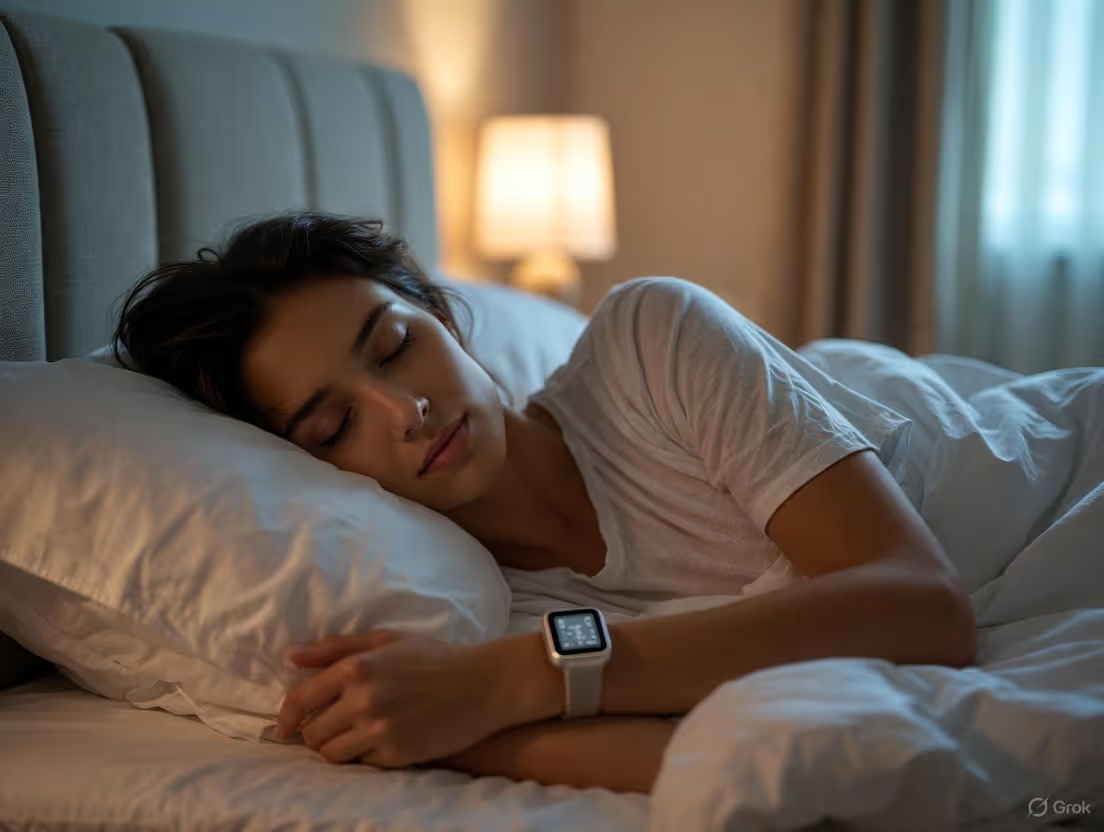
Creativity is often mischaracterized as a lightning strike—a sudden, singular event. In reality, it is more like a complex construction project, and sleep is the foreman, managing different specialized crews (sleep stages) throughout the night. Each stage of sleep—from light sleep to deep slow-wave sleep (SWS) to rapid eye movement (REM) sleep—plays a distinct and vital role in building the foundations of creative thought.
The creative process is commonly broken into four stages: preparation, incubation, illumination, and verification. Sleep is the master of incubation and illumination. During the day, in the preparation phase, we gather raw materials—facts, problems, experiences. Then, as we sleep, the unconscious work begins. In deep slow-wave sleep, the brain enters a state of remarkable synchronization. Slow, rhythmic brainwaves sweep across the cortex, acting like a file-transfer protocol for memories. This stage is crucial for memory consolidation—the process of moving recent, fragile memories from the hippocampus (the brain's temporary storage) to the long-term storage of the neocortex. But it’s not a simple copy-paste job. It’s a selective, integrative process. The brain decides what's important, strengthens those neural connections, and begins to strip memories of their specific, emotional context. This "gist extraction" is the first step toward abstract thinking, allowing the core idea to be freed from its original details.
Following this, REM sleep—the stage most associated with vivid dreaming—takes over for the illumination phase. Here, the brain becomes a chaotic, associative playground. The logical prefrontal cortex is relatively quiet, while the limbic system (emotion) and visual-association cortices light up. Neurochemically, levels of noradrenaline, a stress-related chemical that promotes focused, linear thinking, are at their lowest. This creates a state of hyper-associative thinking. The brain freely connects the abstracted concepts processed in deep sleep with distant memories, emotions, and random neural firings. It's in this neurobiological sandbox that novel connections are forged. A problem about a business strategy might unexpectedly link to a memory of watching water flow around a rock in a stream, leading to a breakthrough insight about market adaptation.
This architectural cycle repeats every 90-120 minutes throughout the night, with each cycle featuring a different proportion of deep sleep and REM. Early in the night, deep sleep dominates, doing its foundational consolidation work. As the night progresses, REM sleep periods become longer and more intense. This suggests that a full night of sleep is non-negotiable for creativity; cutting sleep short robs you of the longest, most potent REM periods where the most radical connections are made. The brain, through this staged process, is literally connecting the dots you didn't even know were related while you were awake. For those curious about how technology can track these vital stages, exploring the data from a device like the Oxyzen smart ring can provide fascinating personal insights into your own sleep architecture.
While sleep stages explain the how of nocturnal creativity, our internal biological clock—the circadian rhythm—dictates the when. This 24-hour master timer, governed by the suprachiasmatic nucleus in the hypothalamus, regulates not just sleepiness and alertness, but also body temperature, hormone secretion (like cortisol and melatonin), and cognitive performance. Your natural alignment with this rhythm defines your chronotype: your genetically predisposed propensity for sleep and activity at certain times.
The classic archetypes are the Morning Lark and the Night Owl, but most people fall on a spectrum, sometimes called the "Hummingbird." Your chronotype profoundly influences your creative peaks and valleys throughout the day.
Morning Larks experience a rapid rise in alertness upon waking. Their core body temperature rises quickly, and cortisol peaks earlier. For them, the morning hours are often peaks of focused, analytical creativity—the "verification" stage. This is an ideal time for editing, refining, and executing plans conceived earlier. Their minds are sharp, detail-oriented, and less prone to distraction.
Night Owls, in contrast, have a delayed circadian phase. Their melatonin rises later, and their body temperature warms up slowly. Their peak alertness and cognitive flexibility often arrive in the late afternoon or evening. For Owls, this later period is frequently a window of divergent, innovative creativity. The drop in frontal lobe regulation as the day wears on, combined with their natural circadian peak, can foster the kind of loose, associative thinking that generates original ideas. History is filled with creative owls, from poets who wrote by moonlight to programmers coding into the wee hours.
The critical insight is that there is no "best" time for everyone. The key is chronotype alignment. Forcing an Owl into a rigid 9-to-5 creative schedule is a recipe for frustration and underperformance, just as asking a Lark to brainstorm at 10 PM is futile. The modern world often privileges the Lark schedule, but this ignores the diverse creative strengths each chronotype possesses. Understanding your own rhythm allows you to strategically align tasks: Larks might schedule brainstorming sessions for mid-morning after they've warmed up, while Owls should protect their late-afternoon hours for open-ended, innovative work.
Disrupting this natural rhythm—through social jet lag (e.g., an Owl waking early for work all week), inconsistent sleep schedules, or excessive blue light at night—flattens these creative peaks. It creates a state of constant circadian misalignment, where your brain is never operating at its full potential. Honoring your chronotype is not self-indulgence; it is a strategic move to harness your brain's natural creative timetable. For more on aligning your lifestyle with your biology, our blog features several deep dives into circadian health and performance optimization.
At the edges of sleep lie two of the most fertile—and most overlooked—states for creative insight: the hypnagogic state (the transition from wakefulness to sleep) and the hypnopompic state (the transition from sleep to wakefulness). These twilight zones are where the gates between the conscious and unconscious mind swing open, and the brain’s filtering mechanisms are delightfully offline.
The hypnagogic state, as you drift off, is characterized by a loss of voluntary control over thoughts and the emergence of spontaneous, dreamlike imagery, sounds, or even abstract concepts. The brain’s EEG shows a mix of alpha (relaxed wakefulness) and theta (deep meditation, early sleep) waves. In this state, the rigid, linear logic of the prefrontal cortex begins to recede, allowing for loose, bizarre, and hyper-associative connections. Inventors and artists have long exploited this. Thomas Edison and Salvador Dali practiced a form of hypnagogic nap. Edison would sit in a chair holding steel balls over metal pans. As he fell asleep, his hand would relax, the balls would crash, and he’d wake up, often with an idea related to a problem he’d been pondering. He was capturing the raw, unfiltered output of the hypnagogic mind.
Conversely, the hypnopompic state, upon waking, is a period of gentle, fluid consciousness before full alertness boots up. The brain is often still steeped in the theta waves and lingering chemistry of REM sleep. This is why solutions often "come to us" in the morning shower or during a quiet moment after waking. The brain hasn't yet erected the walls of critical judgment; it’s in a state of receptive insight. Mary Shelley conceived the core idea for Frankenstein in a hypnopompic vision. Many scientists report solving equations upon waking.
The modern tragedy is that we often bulldoze these states. We fall asleep with the TV blaring or scroll on our phones until our eyes close, violently jolting ourselves awake with blaring alarms. This destroys the incubator. To harness this power, we must cultivate the transitions. Practices can include:
These states are the brain's own innovation labs, operating on the fringe of consciousness. By preserving and paying attention to them, we can capture the ethereal ideas that are often lost to the noise of a fully awake mind. It’s one of the most accessible creative tools we have, requiring nothing but a shift in habit and awareness.

In our hustle culture, sleep deprivation is sometimes worn as a badge of honor, a supposed sign of dedication. In creative circles, there’s even a romanticized myth of the tortured, sleepless genius. Neuroscience delivers a clear and brutal verdict: this is a catastrophic fallacy. While acute sleep loss might feel like a state of delirious, unconventional thinking, it systematically dismantles the very cognitive machinery required for sustained, meaningful creativity.
First, sleep deprivation strikes at the prefrontal cortex (PFC), the brain's executive CEO. The PFC is responsible for divergent thinking (generating many ideas), evaluative thinking (judging which ideas are good), and cognitive flexibility (shifting between concepts). When starved of sleep, the PFC is one of the first regions to suffer. Studies using fMRI show significantly reduced activity in the PFC in sleep-deprived individuals. The result is a brain that is less original, less flexible, and more rigid. You might generate ideas, but they are likely to be obvious, repetitive, or poorly conceived.
Second, it destroys the memory integration process described earlier. Without sufficient slow-wave sleep, the day's experiences aren't properly consolidated and abstracted. Without adequate REM sleep, those memories can't be woven into novel networks. The raw materials for creativity never get processed or connected.
Third, there's the dangerous illusion. In a state of severe fatigue, the brain's filtering systems break down. This can lead to a flood of loose, random associations, which might be mistaken for brilliant insight. However, without a functioning PFC to evaluate and refine these associations, they are typically useless—the equivalent of a conspiracy theorist connecting random news events. The brain also becomes more prone to pattern recognition where none exists, a phenomenon called apophenia.
The emotional cost is equally high. Sleep deprivation amplifies activity in the amygdala (the fear center) and weakens its connection to the rational PFC. This leads to a state of emotional reactivity, anxiety, and negative bias. Creativity thrives on psychological safety and a tolerance for ambiguity and failure. A sleep-deprived brain is inherently risk-averse, stressed, and pessimistic—the exact opposite of a creative mindset.
The "creative all-nighter" is, therefore, one of the worst strategies an innovator can employ. It may produce a volume of output, but the quality, originality, and coherence of that output are profoundly compromised. True creative work isn't about the brute force of hours logged; it's about the sophisticated, offline processing that only a well-rested brain can perform. Protecting sleep is not a compromise of your creative ambition; it is the foundation of it. If you struggle with sleep consistency, our FAQ page addresses common tracking and optimization questions that can help you build a more reliable routine.
If a full night's sleep is the major renovation project for the brain, then a nap is a strategic, targeted repair. Far from a sign of laziness, the strategic nap is a powerful tool for creative professionals, offering a way to reset cognitive function, boost learning, and specifically cultivate the sleep stages that foster insight.
Not all naps are created equal. Their creative benefit depends entirely on their duration and the sleep stages they engage:
The science behind napping is robust. A NASA study on pilots found a 34% improvement in performance and a 100% boost in alertness after a 40-minute nap. Research from the University of California, Berkeley, showed that a 90-minute nap after learning a task not only prevented performance deterioration but actually improved it, while those who didn't nap saw a decline—a demonstration of the brain's offline processing power.
Timing is critical. The ideal window for a nap is typically between 1:00 PM and 3:00 PM, aligning with the natural post-lunch dip in circadian alertness (the "siesta" zone). Napping too late can interfere with nighttime sleep, especially for those with insomnia.
To harness the creative power of napping:
By viewing the nap not as stolen time but as a scheduled cognitive enhancement session, you can strategically partition your day to include both intense, wakeful creativity and the restorative, unconscious processing that makes it possible.

At the heart of the sleep-creativity link is a profound process: memory transformation. Our waking life is a constant barrage of episodic memories—the what, where, and when of our daily experiences. Creativity, however, rarely comes from replaying a specific memory. It comes from discovering relationships between the essences of memories. Sleep is the alchemical furnace where this transformation occurs.
The process follows a elegant pathway:
This is why diverse experiences fuel creativity: they provide more raw material for nocturnal cross-pollination. It’s also why "sleeping on it" is such potent advice. You are not just delaying a decision; you are actively commissioning your unconscious to process, abstract, and interconnect the relevant information. The solution that appears in the morning feels like an insight because it is the result of a complex associative process you were not consciously aware of. Your brain, while you slept, became a master analogist, finding hidden commonalities across the landscape of your knowledge. This non-conscious cognition is the true wellspring of original thought, and it is entirely dependent on the full journey through the sleep cycle.
The shifting landscape of sleep stages is orchestrated by a precise symphony of neurotransmitters and neuromodulators. Understanding this chemical choreography reveals why specific states feel the way they do and how they directly enable or inhibit creative thinking.
Adenosine: This is the pressure valve for sleep drive. It accumulates in the brain throughout waking hours, gradually promoting sleepiness. Caffeine works by blocking adenosine receptors. High adenosine levels push the brain toward the slow, synchronous waves of deep sleep (SWS), where it can begin its restorative and consolidative work. Creativity requires this foundational reset.
Acetylcholine: This neurotransmitter is the key conductor of REM sleep. It floods the brain during REM, activating the cortex and driving the vivid, associative dream states while suppressing sensory input from the outside world. High acetylcholine, coupled with low noradrenaline, creates the perfect neurochemical environment for free association and novel idea generation. It's the brain's internal psychedelic, loosening constraints and encouraging mental exploration.
Noradrenaline (Norepinephrine): This is the chemical of focused alertness, stress, and linear thinking. Its levels are high during wakefulness, plummet during deep sleep, and are virtually absent during REM sleep. This noradrenaline shut-off in REM is critical. It removes the stress chemical that promotes rigid, goal-directed thought, allowing the brain to make wild, non-utilitarian connections without judgment or anxiety.
Serotonin: Levels of serotonin, involved in mood regulation and inhibition, also drop during REM sleep. This further contributes to the disinhibition of thoughts and imagery.
Melatonin & Cortisol: These hormones, governed by the circadian clock, set the overall stage. Melatonin, the "darkness hormone," primes the body for sleep and influences sleep architecture. Cortisol, which peaks in the morning for most, helps bring the brain back to an alert, focused state—ready to act on the insights forged during the night.
When this cocktail is balanced across a full night, the brain gets the full spectrum of chemical environments it needs: the adenosine-driven deep restoration, the acetylcholine-led REM exploration, and the cortisol-powered morning activation. Disrupting sleep—through stress, inconsistent schedules, or substances—throws this delicate balance into chaos. High nighttime cortisol, for example, can suppress REM sleep, robbing you of its associative magic. Understanding that creativity has a chemical recipe underscores that it is a biological process, one that can be nurtured or negated by how we treat our brains around the clock.

For centuries, the inner workings of the sleep-creativity connection were invisible, left to speculation and anecdote. Today, advanced wearable technology, like the Oxyzen smart ring, brings unprecedented visibility to this hidden process. By tracking the biometric signatures of sleep, these devices allow us to move from guessing to knowing, transforming sleep from a black box into a data-optimized creative tool.
Key metrics that paint your "Creative Sleep Profile" include:
By correlating this sleep data with your subjective creative output—tracking days you had breakthrough ideas, felt mentally flexible, or struggled with rigid thinking—you begin to see your personal formula. Perhaps your most insightful days consistently follow nights with above-average REM duration. Or maybe you see that late-night screen time, reflected in a delayed sleep onset, correlates with next-day creative fog.
This objective feedback loop is transformative. It turns abstract advice ("get more sleep") into personalized, actionable strategy ("protect my REM sleep by stopping caffeine after 2 PM and ensuring 8 hours in bed"). It empowers you to experiment and observe: does a 90-minute nap boost my afternoon ideation? Does winding down with meditation instead of TV improve my deep sleep metric? For a deeper look at how this data-driven approach to wellness works, you can learn more about Oxyzen's philosophy and technology here.
Knowing the science is one thing; applying it is another. The bridge between theory and transformative creative output is ritual. The hours before sleep and the first moments upon waking are not passive voids; they are active levers you can pull to set the stage for your brain's nocturnal innovation session and to capture its output.
The Pre-Sleep Creative Unwind (The 60-90 Minute Buffer):
This ritual is about transitioning the brain from the focused, stress-prone beta waves of the day to the alpha and theta waves of relaxation and early sleep.
The Wake-Up Creative Capture (The First 30 Minutes):
This ritual is designed to mine the hypnopompic state and set a positive, open tone for the day.
By deliberately designing these bookends to your sleep, you create a sacred container for the unconscious creative process. You prime the brain for effective work, and you ensure you are present to receive and act on its nocturnal gifts. This turns every night into a potential creative session and every morning into a harvest of insight. For more practical tips on building these kinds of holistic wellness habits, our community often shares their routines and successes on our testimonials and experiences page.
The sleep-creativity dynamic extends far beyond the solitary genius. It fundamentally influences the efficacy of collaborative creativity—the brainstorming session, the design sprint, the writers' room—and even the broader innovative output of teams and organizations.
A team is only as creative as the collective cognitive state of its members. Imagine a brainstorming session at 3 PM:
The session's output will be a fraction of what it could be if all members were cognitively primed. Synchronous sleep-wake schedules within a team, while challenging, can be a powerful competitive advantage. It allows for scheduling collaborative work during the group's shared peak alertness windows.
Furthermore, sleep deprivation fosters groupthink. A tired brain lacks the cognitive resources to challenge assumptions, play devil's advocate, or propose truly radical alternatives. It seeks the path of least resistance—the obvious, consensus idea. In contrast, a well-rested team brings a diversity of fully-functioning prefrontal cortices to the table, capable of constructive debate, cognitive flexibility, and building on each other's ideas in complex ways.
On a cultural scale, the "hustle" mentality that glorifies sleep deprivation is an innovation killer. Organizations that pay lip service to "creativity" while expecting 80-hour work weeks and 24/7 email responsiveness are systematically ensuring their most original ideas are never born. They are creating a workforce operating in a persistent state of cognitive impairment.
Forward-thinking companies are beginning to understand this. They are:
By fostering a culture that values restorative sleep, an organization isn't just being "nice"; it is investing directly in the cognitive capital that drives innovation, problem-solving, and resilience. The creative output of a community is a direct reflection of its collective rest. When we prioritize sleep individually and culturally, we are not stepping away from the work of creation; we are diving into its very engine room. To see how a focus on foundational wellness drives innovation, you can read about the mission and vision behind Oxyzen.
If we could peer into the brain during REM sleep, we would witness what looks like a chaotic, brilliant brainstorming session with no moderator. This stage, often remembered only for its vivid narratives, is in fact the neurobiological substrate of our most profound creative leaps. To understand creativity, we must move beyond seeing dreams as mere stories and recognize them as the brain's internal laboratory for simulating, connecting, and innovating.
During REM, the brain is in a state of hyper-associative plasticity. The hippocampus, which stores recent memories, fires rapidly, replaying and recombining fragments of the day's experiences. Simultaneously, the visual and sensory cortices are highly active, constructing the immersive dreamscape, while the prefrontal cortex—the seat of logical order, self-censorship, and reality-testing—is significantly dampened. This neurochemical environment—high acetylcholine, low serotonin, and virtually zero noradrenaline—creates a perfect storm for unconstrained thought. It’s a state where the brain’s internal critic is off duty, and anything can be connected to anything else.
This is not random noise. Research using polysomnography and brain imaging suggests dreaming serves a protoconstructive function. It allows the brain to run "what-if" scenarios on the recently consolidated information from deep sleep, testing emotional outcomes and novel associations in a safe, virtual space. A musician might dream of a symphony played by a forest of rustling leaves. A programmer might dream of a bug as a physical knot that slowly untangles itself. These are not prophecies; they are the brain exploring the essence of a problem through metaphor and analogy—the primary language of the dreaming mind.
The link between dreaming and breakthrough creativity is storied. The chemist August Kekulé discovered the ring structure of the benzene molecule after dreaming of a snake seizing its own tail. Elias Howe, struggling with the design of the sewing machine needle, dreamed of spears with holes near their tips. Paul McCartney famously heard the entire melody of "Yesterday" in a dream. These are not mere anecdotes but consistent reports from a process where the brain, freed from waking constraints, synthesizes solutions.
We can cultivate this "dream incubation" for creative problem-solving. The technique involves focusing intently on a problem or question before sleep, then priming yourself to recall and analyze your dreams. Steps include:
By engaging with our dreams not as entertainment but as data from our unconscious creative process, we open a direct line to the part of our mind that makes leaps logic cannot. It democratizes the "eureka" moment, making it a trainable skill rather than a bolt from the blue.
Modern life is an assault on continuous sleep. From the ping of a midnight notification to the partner’s snoring, from street noise to a racing mind, our sleep is constantly fragmented. This fragmentation is far more insidious than simply shortening sleep; it surgically removes the most valuable stages, turning a coherent creative process into a jarring, unproductive slideshow.
Sleep progresses in cycles. To reach the extended, lush periods of REM sleep where hyper-associative thinking occurs, we must pass undisturbed through lighter stages and deep sleep. Each time we are awakened or even brought to a lighter stage of sleep by a disruption, the brain must often start the cycle over again, or at least backtrack. It's like trying to watch a film with someone randomly hitting the rewind button every 20 minutes. You may spend the same amount of time "watching," but you’ll never see the full, coherent narrative.
The impact on creativity is catastrophic:
The daytime consequence is a mind stuck in a literal and metaphorical fragmentary state. You can't follow a train of thought to its innovative conclusion because your nocturnal thinking was itself interrupted. Your brain feels cluttered with half-processed information—the cognitive equivalent of a desktop scattered with unsorted files. You experience perseveration—repeating the same obvious solutions—because the brain lacks the integrated framework to generate novel ones.
Common culprits of sleep fragmentation include:
Combating fragmentation is therefore a primary creative imperative. It involves prioritizing sleep continuity as much as duration. Strategies like using white noise machines, ensuring complete darkness, treating underlying sleep issues, and establishing a wind-down ritual are not about luxury; they are about defending the integrity of the brain's creative incubation period. For those using technology to understand their sleep quality, metrics like "restoration score" or "sleep disturbances" on a device like the Oxyzen smart ring can provide direct insight into how fragmented your sleep truly is, offering a starting point for optimization.
Armed with knowledge of your chronotype and the science of sleep stages, you can move from simply working to strategically creating. This is applied chronobiology: designing your daily schedule to align tasks with your brain's natural cognitive rhythms, thereby maximizing creative output and minimizing friction.
Your day is not a flat line of potential. It is a waveform with predictable peaks and valleys influenced by the interplay of your circadian rhythm and sleep homeostasis (sleep pressure). The classic model, often called the Ultradian Performance Rhythm, suggests 90-120 minute cycles of alertness throughout the day, mirroring our sleep cycles. Within these, and overlaid on your broader chronotype, are optimal windows for different types of creative work.
Here’s a blueprint for a well-structured creative day, adaptable for Larks, Owls, and Hummingbirds:
The First Creative Window (Morning, Post-Wake):
The Post-Lunch Trough (Early to Mid-Afternoon):
The Second Creative Window (Late Afternoon/Early Evening):
The Pre-Sleep Wind-Down (Evening):
By respecting this rhythm, you stop fighting your biology and start leveraging it. You stop trying to brainstorm when your brain is wired for focus and stop trying to execute detailed work when your brain wants to wander. This alignment reduces creative block and burnout, turning your daily schedule into a powerful amplifier of your innate creative potential.
The engine of creativity is the brain, but its fuel comes from the gut. A burgeoning field of research reveals that the gut-brain axis—the bidirectional communication network linking the enteric nervous system to the central nervous system—plays a crucial, and often overlooked, role in regulating both sleep quality and cognitive function. What you eat, and when you eat it, directly influences the architecture of your sleep and, by extension, your creative capacity.
The mechanisms are multifaceted:
Dietary Principles for Creative Sleep:
Think of your evening meal as preparing the biochemical environment for your brain's night shift. You are not just feeding your body; you are supplying the raw materials your gut needs to signal your brain that it's safe to dive deep into the creative work of sleep. For more resources on holistic wellness strategies that support cognitive performance, our blog offers a wealth of nutritional and lifestyle insights.
Light is the primary zeitgeber (time-giver) for your circadian rhythm. It doesn't just allow us to see; it directly instructs our internal clock on when to be awake, alert, and primed for certain types of thinking, and when to wind down for restorative sleep and creative incubation. Manipulating light exposure is one of the most powerful, immediate tools we have for optimizing our creative cycle.
Blue Light: The Double-Edged Sword.
Short-wavelength blue light (emitted by the sun, LED lights, and screens) is supremely effective at suppressing melatonin production and promoting alertness. This is ideal during the day but catastrophic at night.
Harnessing Light for Creative Scheduling:
By consciously managing your light diet, you take direct control of your internal creative timetable. You can use bright light to sharpen your mind for focused work and dim, warm light to gently usher your brain into the state of loose association and incubation that precedes and permeates creative sleep. It’s a simple, no-cost intervention with profound effects on the quality of both your waking ideas and your sleeping insights.
The relationship between physical exercise and creativity is not merely about "clearing your head." It is a precise, biochemical dialogue that enhances neuroplasticity, improves sleep architecture, and directly primes the brain for innovative thought. Exercise is a potent catalyst in the sleep-creativity cycle.
The Neurobiological Mechanisms:
Timing and Type for Creative Optimization:
The timing of exercise relative to sleep and creative work can fine-tune its effects.
The best exercise for creativity is the one you will do consistently. Whether it’s running, swimming, dancing, or weight training, the goal is to engage in regular activity that elevates your heart rate and challenges your body. This creates a virtuous cycle: movement builds a more plastic, resilient brain by day, which then sleeps more deeply and associatively by night, leading to greater creative insight upon waking—insight you have more energy to execute because you are physically fit. For personalized insights into how your daily activity influences your sleep metrics and recovery, data from a wellness tracker can be invaluable; you can explore how Oxyzen integrates this data to provide a complete picture of your readiness to create.
Sound is a constant companion to our consciousness, and its impact on sleep and creativity is profound and paradoxical. It can be the most disruptive force to sleep architecture or a powerful tool to enhance it and even stimulate creative states. Understanding this allows us to curate our auditory environment for maximum creative benefit.
The Destructive Power of Noise Pollution:
Intermittent, unpredictable sounds are the arch-nemesis of continuous sleep. A siren, a barking dog, a partner's snore—these cause micro-arousals or full awakenings, fracturing the sleep cycle. As discussed, this fragmentation specifically robs us of deep and REM sleep. The creative cost is a brain that hasn't completed its offline processing, leading to next-day rigidity and lack of inspiration. Even if you don't remember waking, your sleep architecture bears the scars.
The Creative Potential of Soundscapes:
Conversely, consistent, predictable, or rhythmically engaging sounds can mask disruptive noise and even guide the brain into specific states.
Practical Applications for the Creative:
By moving from being a passive recipient of sound to an active curator of your auditory landscape, you gain a powerful lever over your attention, your emotional state, and the very structure of your sleep. You can design soundscapes that protect the fragile process of nocturnal creativity and others that actively stimulate the waking mind to make new connections.
Before an idea can be born in sleep, the mind must be prepared to receive it. Our default waking state is often one of cognitive clutter—a relentless stream of thoughts, worries, and sensory inputs that leaves little room for the subtle, associative processes that underlie creativity. Mindfulness and meditation are not just stress-reduction tools; they are training regimens for the creative mind, teaching it to enter a state of open, non-judgmental awareness that is the waking cousin of the hypnagogic and REM states.
How Mindfulness Primes Creativity:
Specific Practices for the Creative:
Integrating just 10-15 minutes of mindfulness practice into your daily routine, particularly during transition times (morning, pre-sleep, before a creative session), acts as a cognitive palate cleanser. It creates the mental space and quietude from which original thought can emerge, both in waking life and as the raw material for your brain's nocturnal creative work. For those looking to build a consistent practice, finding a supportive community or resources can be key; reading about the experiences of others on a similar journey can provide both inspiration and practical advice.
Theory is essential, but transformation requires action. This 14-day protocol is designed to systematically reset your sleep-creativity cycle. It integrates the principles discussed—chronotype alignment, light hygiene, ritual, diet, and tracking—into a step-by-step plan. Approach it not as a rigid set of rules, but as a structured experiment on your own creative potential.
Days 1-3: The Assessment & Foundation Phase
Days 4-7: The Environmental Optimization Phase
Days 8-10: The Ritual Integration Phase
Days 11-14: The Creative Alignment & Refinement Phase
The immediate benefits of a good night's sleep on next-day creativity are clear. But the true power of sleep reveals itself over months and years. Just as consistent physical training reshapes muscles, consistent sleep hygiene physically reshapes the brain to become a more efficient, resilient, and prolific creative engine. This is neuroplasticity in action, driven not by waking effort alone, but by the repeated, nightly work of sleep.
The concept of sleep-dependent brain plasticity is fundamental. During deep sleep, the brain doesn't just transfer memories; it engages in synaptic homeostasis. The theory, proposed by researchers like Dr. Giulio Tononi, suggests that while we are awake, learning strengthens synaptic connections throughout the brain, increasing overall energy consumption and informational "noise." Deep sleep then acts as a global downscaler, selectively weakening lesser-used connections (pruning) while preserving and strengthening the important pathways formed during the day. This nightly reset prevents neural overload, reduces metabolic cost, and—critically for creativity—creates "space" for new learning and new connections the following day.
Over time, this consistent pruning and strengthening leads to:
Consider the brain of a lifelong novelist or a veteran research scientist. Their decades of immersion in their craft, coupled with (ideally) consistent sleep, have likely resulted in a brain whose default networks are wired for narrative construction or hypothesis generation. Their nightly sleep has continually consolidated their vast knowledge base (semantic memory) while also pruning away irrelevant details, leaving a powerful, abstracted framework upon which new ideas can easily graft. This is the cumulative creative advantage of a sleep-optimized life: your brain becomes fundamentally structured for innovation.
The implication is profound: investing in sleep is not just about recovering from today; it is about architecting the brain you will use to create tomorrow, next year, and in a decade. It makes the creative process less effortful and more innate. The "flow state" becomes more accessible because the neural highways to get there are well-paved and maintained every night.
A cruel irony exists for the passionately creative: the very work we love can become the biggest obstacle to the sleep that fuels it. The intense states of focus (flow), emotional engagement, and cognitive arousal that characterize deep creative work can spill over into the night, creating a vicious cycle where creativity steals from the sleep it requires. Recognizing and managing this paradox is essential for sustainable innovation.
How Creative Work Disrupts Sleep:
Breaking the Cycle: Strategies for the Passionate Creator
By building these firewalls between creative immersion and sleep, you protect the very resource that makes your work possible. You move from being a slave to inspiration's unpredictable schedule to being a master of a sustainable creative practice, where work and rest exist in a synergistic, reinforcing loop. For more on balancing high-performance work with essential recovery, our blog features discussions on sustainable creative habits.
While nocturnal sleep is the cornerstone, creativity thrives within a broader ecology of rest. The 24-hour creative cycle includes deliberate phases of withdrawal from focused effort—daytime naps, deliberate rest, and intentional idleness. These are not voids of productivity but different modes of the brain's creative processing, each with its own neurological signature.
The Spectrum of Creative Rest:
Designing a Day with Creative Rhythm:
An optimized creative day alternates between periods of focused effort (synthesis, execution) and diffuse thinking (incubation, association). A model might look like:
By scheduling and respecting these different modes, you stop treating your brain like a machine that must be constantly "on." You recognize it as an organic system that requires varied states of engagement to produce its best work. The goal is not to fill every minute with productive output, but to structure time so that both conscious and unconscious cognition are given the space they need to collaborate on your behalf. Tracking your readiness and activity levels throughout the day with a device like the Oxyzen smart ring can help you identify your personal patterns for these focused and diffuse states, allowing you to schedule your creative work more intuitively.
Your Trusted Sleep Advocate: Sleep Foundation — https://www.sleepfoundation.org
Discover a digital archive of scholarly articles: NIH — https://www.ncbi.nlm.nih.gov/
39 million citations for biomedical literature :PubMed — https://pubmed.ncbi.nlm.nih.gov/
Experts at Harvard Health Publishing covering a variety of health topics — https://www.health.harvard.edu/blog/
Every life deserves world class care :Cleveland Clinic - https://my.clevelandclinic.org/health
Wearable technology and the future of predictive health monitoring :MIT Technology Review — https://www.technologyreview.com/
Dedicated to the well-being of all people and guided by science :World Health Organization — https://www.who.int/news-room/
Psychological science and knowledge to benefit society and improve lives. :APA — https://www.apa.org/monitor/
Cutting-edge insights on human longevity and peak performance:
Lifespan Research — https://www.lifespan.io/
Global authority on exercise physiology, sports performance, and human recovery:
American College of Sports Medicine — https://www.acsm.org/
Neuroscience-driven guidance for better focus, sleep, and mental clarity:
Stanford Human Performance Lab — https://humanperformance.stanford.edu/
Evidence-based psychology and mind–body wellness resources:
Mayo Clinic — https://www.mayoclinic.org/healthy-lifestyle/
Data-backed research on emotional wellbeing, stress biology, and resilience:
American Institute of Stress — https://www.stress.org/


