Sleep Quality Score Explained: What Your Number Really Means
Your sleep quality score condenses multiple metrics into one number, but what does it actually mean? This guide decodes how scores are calculated, what different ranges indicate about your rest, which factors influence your rating, and how to use this information to make targeted improvements.
Sleep Quality Score Explained: What Your Number Really Means
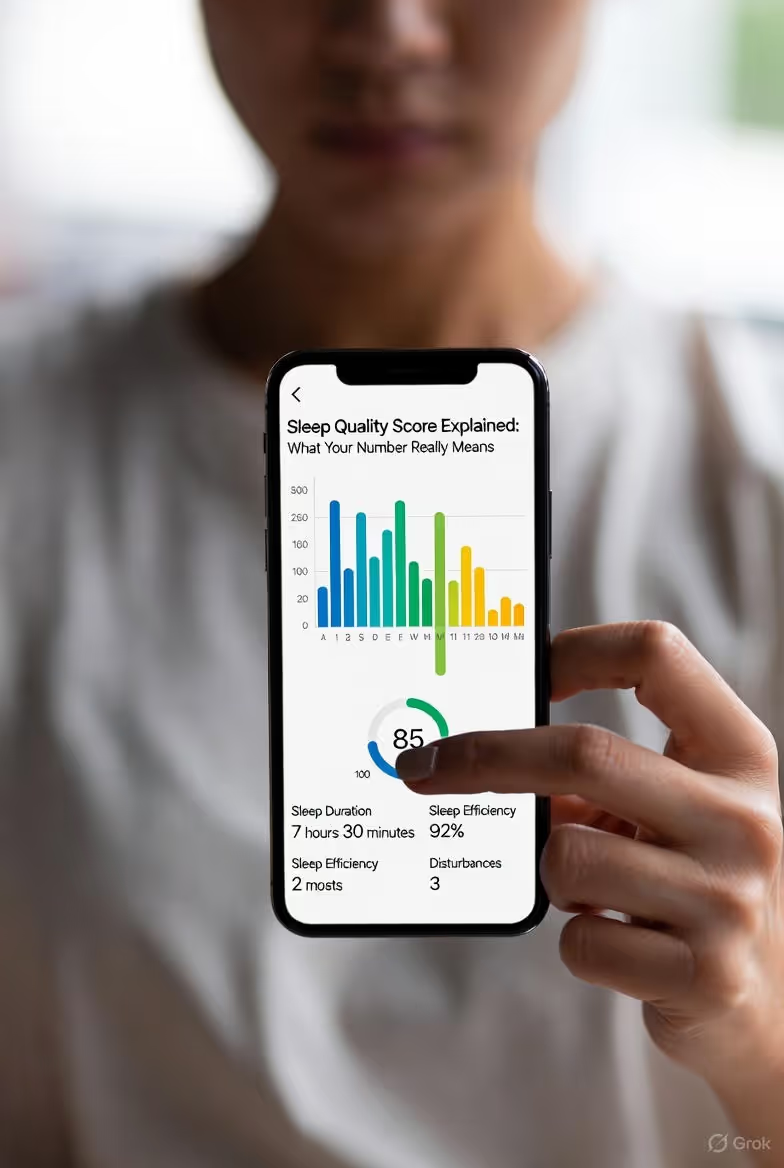
You wake up. The morning light filters in, and before you even open your eyes, a thought floats to the surface: “How did I sleep?” Was it the deep, restorative slumber of your dreams, or a fragmented, restless night spent wrestling with the sheets? For generations, the answer was pure subjective guesswork—a groggy, incoherent feeling. But now, a single number stares back at you from your smartphone screen: your Sleep Quality Score.
An 82. A 65. A 93. This digit, generated by your smart ring or sleep tracker, has become the modern verdict on your night. It feels authoritative, scientific, final. But what is it actually measuring? Is that 72 you got last night a cause for celebration or concern? How did the algorithm weigh your two trips to the bathroom against your solid three hours of deep sleep? The score simplifies the incredible complexity of your nocturnal biology into a tidy figure, and in that simplification lies both power and potential confusion.
This number isn't just a digital pat on the head or a scolding. It's a gateway to understanding the most fundamental pillar of your health. Sleep is when your brain washes away toxic waste, when memories are cemented, when your body repairs tissue, balances hormones, and fortifies your immune system. Your Sleep Quality Score is an attempt to quantify that critical biological process. But to truly harness its power—to move from passive tracking to active improvement—you need to become fluent in its language. You need to know what your number really means.
This comprehensive guide will deconstruct the Sleep Quality Score, moving beyond the surface-level digit to explore the rich, intricate data beneath it. We’ll explore the science of sleep stages, the hidden metrics of restoration, and the personal factors that make your ideal sleep unique to you. By the end, you won't just see a number; you'll understand the story it’s telling and, most importantly, how to write a better one for yourself night after night. For those beginning this journey, the team at Oxyzen.ai is dedicated to turning this data into actionable wisdom, helping you decode your nights to transform your days.
The Genesis of the Score: From Subjective Feeling to Objective Data
For most of human history, assessing sleep was an entirely internal affair. You relied on bodily feelings: grogginess upon waking, daytime sleepiness, a general sense of fatigue. The first major shift came with the science of polysomnography (PSG), the clinical gold standard for sleep studies. In a lab, wired with electrodes monitoring brain waves (EEG), eye movements (EOG), muscle activity (EMG), and heart rhythm (ECG), sleep could be objectively broken down into its architectural components. This was accurate but profoundly inaccessible—expensive, inconvenient, and a far cry from a natural night's sleep in your own bed.
The consumer wearable revolution changed everything. Devices like the Oura Ring, Fitbit, and Whoop brought sleep tracking from the lab to the wrist (and finger). Instead of EEG, they used photoplethysmography (PPG)—tiny LEDs that measure blood volume changes to derive heart rate and heart rate variability (HRV). They used accelerometers to detect movement. From these signals, sophisticated algorithms, often informed by machine learning models trained on massive datasets including PSG studies, began to infer sleep stages and quality.
The Sleep Quality Score is the culmination of this technological journey. It’s the algorithm’s attempt to synthesize multiple streams of biometric data into a single, digestible metric that correlates with how rested you feel and how effectively your body has undergone its nocturnal restoration. It’s not a direct measurement of brain waves, but a highly educated, continuous estimation. Different brands have their own proprietary algorithms, weights, and scales (often 0-100), but the core components they assess are remarkably consistent. Understanding that this score is a model—a brilliant estimation, but an estimation nonetheless—is the first step in interpreting it wisely. It’s a powerful tool for tracking trends and gaining insights, not a clinical diagnosis.
The mission to make this advanced health understanding personal and accessible is at the core of our story at Oxyzen.ai, where we believe that the path to better wellness begins with truly understanding your own body's signals.
Deconstructing the Algorithm: The 6 Pillars of Your Sleep Score
Your Sleep Quality Score isn’t plucked from thin air. It’s typically built upon several foundational pillars, each contributing a piece to the puzzle. While the exact weighting is a proprietary secret of each brand, these are the universal metrics that feed the final number.
1. Sleep Duration: This is the most straightforward input: total time spent asleep. Most algorithms have a "sweet spot" range, often centered around 7-9 hours for adults, with points deducted for significantly shorter or sometimes excessively long sleep. It’s the basic raw material of rest.
2. Sleep Stages (Architecture): Not all sleep is created equal. The algorithm identifies periods of Light, Deep (Slow-Wave), and REM (Rapid Eye Movement) sleep. Each plays a unique role. Deep sleep is crucial for physical recovery and immune function, while REM is essential for memory consolidation and emotional processing. A high-quality score requires not just total time, but a balanced, cyclical progression through these stages throughout the night.
3. Sleep Consistency / Timing: Your body’s circadian rhythm loves predictability. Going to bed and waking up at wildly different times each night (social jetlag) is disruptive. Scores often reward consistency in your sleep schedule, aligning with your body’s natural circadian biology.
4. Restoration (Deep & REM): Some scores explicitly measure the absolute time or percentage spent in the most restorative stages. You might see this broken out separately, as achieving sufficient deep and REM sleep is a critical marker of quality, even if total sleep time is adequate.
5. Sleep Latency: How long it takes you to fall asleep. Ideally, this is between 10-20 minutes. Taking too long can indicate stress, poor sleep hygiene, or circadian misalignment, while falling asleep instantly might be a sign of significant prior sleep deprivation.
6. Sleep Disturbances / Restlessness: This is measured by significant body movements, prolonged periods of wakefulness after sleep onset (WASO), or spikes in heart rate during the night. Frequent disturbances fragment the sleep architecture, preventing you from completing full, restorative cycles.
Your final score is a weighted composite of these factors. A night with optimal duration, perfect stage balance, zero disturbances, and consistent timing will land you a stellar 90+. A night where you got 8 hours in bed but were restless, missed your deep sleep window, and woke up frequently might yield a surprising 70. The score reflects the architecture and continuity of sleep, not just the clock time. For a deeper dive into how these metrics interact with other wellness data, our blog at Oxyzen.ai offers ongoing analysis and insights.
The Scale Decoded: What Does Your Number Range Indicate?
Now, let’s translate the number into actionable meaning. While scales vary, a 0-100 scale is common, and we can break it down into general performance tiers.
90-100 (Excellent / Optimal Restoration): This is the sleep summit. It indicates you achieved near-ideal duration with a robust, cyclical architecture of deep and REM sleep. Disturbances were minimal, and you likely awoke feeling refreshed and alert. Consistently hitting this range suggests your sleep hygiene, stress management, and lifestyle are well-aligned with your body’s needs. It’s a sign of high recovery and readiness.
80-89 (Good / Solid Recovery): A very good night. You met most of your sleep needs, with generally healthy stage distribution and only minor disruptions. You likely feel well-rested. This is a sustainable and healthy target range for most people on most nights. Fluctuations into this zone from the excellent range are normal and can be influenced by daily stressors, diet, or mild changes in routine.
70-79 (Fair / Moderate Disruption): Here, we see clear room for improvement. The score indicates one or more pillars were compromised. Perhaps you missed an hour of sleep, had a reduced amount of deep sleep, or experienced several noticeable awakenings. You may wake up feeling somewhat unrefreshed. This range is a signal to examine your previous day’s activities (caffeine, alcohol, screen time, stress) and evening routine.
60-69 (Poor / Insufficient Restoration): A score in this range signifies significantly disrupted or insufficient sleep. Key restorative stages were likely cut short, or sleep was highly fragmented. Daytime impairment—sleepiness, brain fog, irritability—is probable. This is a strong indicator that changes are needed, either in behavior or possibly in seeking to understand underlying issues.
Below 60 (Very Poor / Highly Disruptive): This reflects a severely compromised night. It could result from extreme shortness of sleep, illness, major stress, or environmental disruptions. Functioning the next day will be challenging. Consistent scores here warrant close attention and likely intervention.
It is crucial to remember that these ranges are population-based guidelines. Your personal baseline might be different. Someone might feel fantastic with a consistent 85, while another might need a 92 to feel their best. The trend over time is often more important than any single night’s score. For personalized interpretation and common questions about these ranges, our FAQ at Oxyzen.ai can be a helpful resource.
Beyond the Number: The Critical Role of Sleep Stages
To truly understand your score, you must look under the hood at your sleep stages. The score is the final grade, but the stages are the individual subject reports. Think of a night of sleep not as a blank period of unconsciousness, but as a series of 90-minute cycles, each containing a journey through different neural landscapes.
Light Sleep (N1 & N2): This is the gateway sleep, making up about 50-60% of your night. It begins as you drift from wakefulness (N1) into a more stable, disengaged state (N2). Your heart rate and body temperature drop. While not as intensely restorative as later stages, it is vital for memory processing and synaptic pruning. It’s also the stage you are most easily awoken from.
Deep Sleep (N3 / Slow-Wave Sleep): This is the physical restoration powerhouse. Typically occurring in longer waves in the first half of the night, deep sleep is when growth hormone is released, tissue repair occurs, and the immune system is strengthened. Your brain waves slow to a deep, rhythmic pulse. It’s very difficult to be awoken from this stage. A shortage here often manifests as physical fatigue, aches, and lowered resilience.
REM Sleep: The stage of dreams and mental renewal. Your brain activity surges to near-waking levels, but your body is temporarily paralyzed (sleep atonia) to prevent you from acting out dreams. REM is critical for emotional regulation, learning consolidation, and creativity. It dominates the later cycles of the night. Skimping on REM can lead to emotional volatility, poor memory retention, and brain fog.
A high Sleep Quality Score requires a healthy proportion of all three, distributed correctly across the night. The algorithm penalizes a night with, for instance, 8 hours of mostly light sleep and very little deep or REM. It’s looking for that classic, oscillating pattern—the signature of a brain and body efficiently completing its essential maintenance work.
The Hidden Biometrics: How HRV, HR, and Body Temperature Fill in the Gaps
While stages form the backbone, the most advanced sleep scores incorporate subtler, continuous biometrics that tell the story of your nervous system’s state throughout the night. This is where devices like smart rings, which can measure these metrics comfortably and continuously, provide a significant advantage.
Heart Rate Variability (HRV): This is not your heart rate, but the variation in time between each heartbeat. It’s a direct window into your autonomic nervous system. A higher HRV (more variability) generally indicates a strong, resilient, and relaxed nervous system with a good balance between the stress (sympathetic) and rest (parasympathetic) branches. During deep, restorative sleep, you should see your HRV rise. A suppressed nighttime HRV can be a sign of physical strain, illness, excessive stress, or poor recovery. Many algorithms use nighttime HRV as a key marker of overall restoration and recovery quality.
Resting Heart Rate (RHR): Your heart rate should dip significantly during sleep, reaching its lowest point (nadir) usually during deep sleep phases. A lower sleeping RHR is typically a sign of good cardiovascular fitness and efficient recovery. An elevated nighttime RHR, especially if it’s trending upward over time, can signal illness, dehydration, stress, or that your body is working harder than it should to recover.
Body Temperature: Your core body temperature follows a circadian rhythm, dropping to initiate sleep and reaching its lowest point in the early morning before rising to help you wake. Smart rings, worn on the finger, are uniquely positioned to track this peripheral temperature trend. Significant deviations from your personal norm can indicate metabolic changes, the onset of illness, hormonal fluctuations, or environmental sleep disruptions.
When your Sleep Quality Score integrates these factors, it becomes more than just a sleep architecture score; it becomes a physiological recovery score. A night might have "decent" stage data, but if your HRV was chronically low and your heart rate elevated, the algorithm might lower the final score, accurately reflecting that your body was under strain despite being asleep. This multi-dimensional view is what transforms a tracker into a powerful health dashboard. Understanding these interconnections is a key part of the Oxyzen.ai mission: to provide a holistic picture of your well-being.
Personal Baselines: Why Your 85 Is Not My 85
This is perhaps the most important concept in personalized sleep tracking: your score is best understood in the context of your own data, not population averages. The algorithm's 0-100 scale is a generalized framework, but your body has its own unique set points and responses.
Genetic and Physiological Factors: Some people are naturally "short sleepers" or "long sleepers." Your natural proportion of deep sleep is influenced by genetics, age, and fitness level. A 25-year-old athlete will have a different sleep architecture baseline than a 55-year-old professional. Comparing your scores to someone else’s is often meaningless.
Lifestyle and Training Load: Your optimal score is dynamic. If you are in a heavy training block, your body will crave and likely generate more deep sleep for repair. Your score on a rest day after a hard week might be lower as your body finally catches up. Stressful work periods may suppress REM sleep. Your "good" score during a calm holiday might be 10 points higher than your "good" score during a project deadline.
Establishing Your Baseline: The true power of tracking reveals itself over weeks and months. Don’t fixate on a single night’s 75. Instead, look at your 7-day and 30-day averages. What is your typical excellent score? What does a "recovery" night look like for you after a strenuous day? By establishing your personal range, you can identify meaningful deviations. A sudden, sustained drop of 10-15 points from your personal norm is a far more significant signal than consistently scoring in the "fair" range if that’s normal for you.
This personalized approach requires patience and observation. It’s about learning the language of your own body. The goal isn’t to chase a perfect 100 every night—an impossible and stressful target—but to understand what habits, routines, and conditions help you achieve your personal best recovery consistently. Reading testimonials from Oxyzen.ai users can illuminate how others have discovered and adapted to their unique physiological baselines.
The Day-Before Effect: How Your Waking Hours Create Your Night
Your Sleep Quality Score is not just a measure of what happens between 10 PM and 6 AM. It is a report card on your entire previous 24 hours. The choices you make from the moment you wake up lay the foundation for the sleep you will get that night. This is the "Day-Before Effect."
Light Exposure: Your circadian rhythm is set by light. Getting bright, natural light (especially sunlight) in the morning signals your brain that the day has started, setting in motion a cascade that will promote melatonin release about 14-16 hours later. Conversely, bright blue light from screens in the evening can blunt melatonin production, delaying sleep onset and potentially degrading sleep quality.
Nutrition and Timing: What you eat and when you eat it matters. A large, heavy, or spicy meal too close to bedtime can disrupt sleep as your body focuses on digestion. Alcohol, while sedating initially, is a known sleep wrecker—it suppresses REM sleep and leads to fragmented, restless sleep in the second half of the night. Caffeine has a long half-life; that afternoon coffee can still be influencing your nervous system at bedtime.
Exercise and Timing: Regular daily exercise is one of the most potent promoters of deep sleep. However, intense exercise too close to bedtime can elevate core body temperature and stimulate the nervous system, making it harder to wind down. Most people benefit from finishing vigorous workouts at least 2-3 hours before bed.
Stress and Mental Load: Unmanaged daytime stress and anxiety are the arch-nemeses of sleep quality. A racing mind at bedtime leads to elevated cortisol, which directly opposes melatonin. This can increase sleep latency and cause more nighttime awakenings, particularly in the lighter stages of sleep. Practices like mindfulness, journaling, or a digital curfew can help manage this load.
By analyzing your high-score and low-score nights in reverse, you can become a detective of your own habits. Did that 92 follow a day with a morning walk, no alcohol, and a calming evening routine? Did that 68 come after late-night work, a big dinner, and stressful emails in bed? The correlation is often stark and provides the most actionable insights for improvement. For more on crafting the ideal day for the ideal night, our blog is continually updated with research and user-tested strategies.
Environmental Audit: How Your Bedroom is Sabotaging or Supporting Your Score
You can have perfect habits, but if your sleep environment is working against you, your score will reflect the battle. Your bedroom should be a sanctuary engineered for sleep, and several key factors have a direct line into your tracking data.
Temperature: This is paramount. The ideal temperature for most people is around 65°F (18.3°C). A cool room aids the necessary drop in core body temperature that initiates and maintains sleep. A room that’s too warm is a common cause of restless, light sleep and reduced deep sleep. Your smart ring’s temperature data can help you find your personal goldilocks zone.
Light Pollution: Even small amounts of light can disrupt your circadian rhythm and sleep architecture. Streetlights, charging LEDs, or early morning sun can filter through your eyelids and inhibit melatonin. Blackout curtains or a quality sleep mask are non-negotiable for high scores in light-polluted areas.
Noise Pollution: Sudden or intermittent noises (traffic, a partner snoring, a dripping tap) can cause micro-arousals—brief awakenings you may not remember but that fragment your sleep cycles and degrade your score. Consistent white noise or a sound machine can mask these disruptions effectively.
Comfort and Allergens: An old mattress, uncomfortable pillows, or bedding that doesn’t suit your temperature needs can lead to constant tossing and turning, measured as high restlessness. Allergens like dust mites or pet dander can cause mild inflammation and breathing disturbances that also disrupt sleep continuity.
Your sleep tracker is an excellent auditor. A night with high "restlessness" and multiple "awake" periods, despite good habits, is a strong signal to scrutinize your environment. Making iterative changes—cooling the room, adding blackout shades, introducing a white noise machine—and observing the subsequent impact on your score is a direct, data-driven way to optimize your sleep cave. It’s a process of creating the external conditions that allow your internal biology to perform its restorative work unimpeded.
The Age & Gender Variable: How Your Biology Shapes Your Score
Your Sleep Quality Score doesn’t exist in a vacuum. It is profoundly influenced by two of the most fundamental biological variables: age and sex. Understanding these shifts is crucial to interpreting your number fairly and setting realistic, healthy expectations. Comparing your score to a partner’s of a different age or sex, or to your own from a decade ago, can lead to unnecessary frustration if you don’t account for these natural progressions.
The Aging Clock and Sleep Architecture: As we age, sleep patterns change predictably. Total sleep time often decreases slightly, but the most significant shift is in sleep architecture. Deep (Slow-Wave) Sleep declines most markedly. A young adult might spend 20-25% of the night in deep sleep, while by age 65, that percentage may drop to 5% or less. This is a normal neurological change, not necessarily a sign of poor health. Consequently, the potential for a "perfect" score, as defined by an algorithm calibrated on a younger population, diminishes. Older adults often have more frequent nighttime awakenings and spend more time in lighter stages of sleep. An algorithm might score this as "more disturbances" and "less restorative sleep," which is technically accurate from a data perspective but may represent a normal, healthy sleep pattern for that age. The key is to track your trend within your age bracket and focus on optimizing what you can control: consistency, environment, and sleep continuity.
Sex-Based Differences in Sleep: Biological sex influences sleep physiology due to hormonal cycles, brain structure, and differing vulnerability to sleep disorders. Women, on average, tend to spend slightly more time in deep sleep (especially in the first half of the menstrual cycle) and report needing more sleep to feel rested. However, they are also more prone to insomnia and have sleep that is more susceptible to disruption from life stages like pregnancy, perimenopause, and menopause—where vasomotor symptoms (hot flashes) can devastate sleep continuity scores. Men, on the other hand, are at higher risk for sleep apnea, which causes repeated breathing-related arousals, fragmenting sleep and severely impacting scores if undiagnosed. For transgender individuals undergoing hormone therapy, sleep patterns often shift toward those more typical of the affirmed gender.
Actionable Insight: The takeaway is personalized benchmarking. A 78 might be an excellent, top-tier score for a 70-year-old, reflecting great sleep hygiene and robust health for their age. That same 78 might be a "needs improvement" score for a 25-year-old. When reviewing your data, consider your biological context. Are you seeing a gradual, age-expected decline in deep sleep, or a sudden, sharp drop that could indicate a health issue? Does your score plummet during specific phases of your hormonal cycle? This nuanced understanding prevents you from chasing an unrealistic ideal and directs your efforts toward meaningful, personalized optimization. The team at Oxyzen.ai designs its insights with this personalization in mind, helping you understand your data within the context of your unique biology.
The Device Divide: Why Your Score Differs Between Wearables
If you’ve ever worn two different trackers to bed or compared notes with a friend who uses a different brand, you’ve likely encountered a confusing reality: the same night can yield significantly different Sleep Quality Scores. A night might be an 89 on your Oura Ring but a 72 on your Fitbit. This discrepancy isn’t necessarily a sign that one device is "right" and the other "wrong." It’s a reflection of differing methodologies, sensor placements, and—most importantly—algorithmic philosophies.
The PPG Conundrum: Consumer wearables don’t measure brain waves. They rely primarily on PPG (heart rate/HRV) and accelerometry (movement). This is inherently inferential. Different devices use different LED wavelengths, sensor quality, and placement. A ring on your finger often has a more stable PPG signal than a wrist-based device, which can suffer from "wrist toss" artifacts. A more stable signal can lead to more confident stage estimation.
The Algorithm's Secret Sauce: This is where the biggest differences arise. Each company’s algorithm is a proprietary model trained on its own unique dataset. One algorithm might weigh sleep consistency more heavily. Another might prioritize deep sleep duration above all else. A third might penalize resting heart rate elevation more aggressively. They all start with similar raw ingredients (HR, HRV, movement), but they have different recipes for the final dish. Some are tuned to be more "strict," rewarding only near-perfect nights, while others might have a more forgiving curve.
Stage Detection Variability: Studies comparing consumer wearables to PSG show they are generally good at detecting sleep vs. wake but have more variability in distinguishing between light and deep sleep. REM sleep is particularly challenging to estimate from heart rate alone. Two algorithms can look at the same heart rate variability pattern and label it differently—one calling it "light sleep with high autonomic fluctuation," the other calling it "REM sleep."
What This Means For You: First, choose one device and stick with it. The absolute number is less important than the trend within that device’s ecosystem. Your Oura 85 is not directly comparable to your Whoop 85 or your Garmin 85. Second, focus on the component metrics rather than fixating on the singular score. Look at what the app is telling you about your deep sleep, your disturbances, your latency. These underlying metrics are often more consistent in telling the story, even if the final composite score differs. Finally, trust your subjective feeling. If you score a 95 but feel groggy, or a 70 but feel amazing, your lived experience is a critical data point. The score is a guide, not a gospel. For an unbiased look at how different technologies interpret data, our blog at Oxyzen.ai frequently explores the science behind the sensors.
From Data to Action: Your Personal Sleep Optimization Plan
Collecting sleep data is fascinating, but it’s worthless without translation into action. This is where your Sleep Quality Score transitions from a passive metric to an active tool for behavioral change. Creating a personalized optimization plan involves playing detective with your own data, running gentle experiments, and building sustainable habits.
Step 1: The Correlation Audit (The 3-Day Journal). For the next three nights, don’t change anything. Simply record, in notes, three things: 1) Your pre-bed (7 PM-10 PM) activities: last meal, alcohol, screen time, stress, relaxation practice. 2) Your sleep environment: room temp, noise, light. 3) Your subjective feeling upon waking (1-10 scale). When you get your score, look for patterns. Does a late meal correlate with a lower score and higher resting heart rate? Does a hot room correlate with high restlessness? This baseline audit identifies your most likely levers for change.
Step 2: Targeted, Single-Variable Experiments. Based on your audit, pick ONE area to experiment with for a week. For example:
If sleep latency is high: Implement a strict 60-minute "digital sunset" with no screens.
If deep sleep is low: Experiment with finishing intense exercise 4 hours before bed instead of 2, or introduce a magnesium-rich food with dinner.
If disturbances are high: Lower your bedroom temperature by 3 degrees Fahrenheit or try a white noise machine.
If HRV is consistently low: Introduce 10 minutes of diaphragmatic breathing or gentle yoga before bed.
The key is to change only one thing at a time and observe the impact on your trend over 5-7 nights. This isolates cause and effect.
Step 3: Building Your Personalized "Sleep Protocol." As you identify what works, assemble your non-negotiable evening routine—your personal sleep protocol. This isn’t a rigid, stressful checklist, but a curated series of cues that signal to your nervous system that it’s time to wind down. A protocol might look like: *Last caffeine at 2 PM -> Dinner by 7:30 PM -> 9 PM: dim lights, herbal tea, and reading a physical book -> 9:45 PM: gratitude journaling -> 10 PM: in bed with a brief body-scan meditation.*
Step 4: The Long-Game: Stress and Circadian Alignment. The most powerful levers are often the broadest. Chronic stress management (through daily, not just bedtime, practices) is the single biggest upgrade for sleep quality. Furthermore, aligning your life with your circadian rhythm—getting morning light, eating meals at consistent times, having a consistent wake-up time—stabilizes the entire system, making your sleep more resilient to daily disruptions.
Remember, the goal is progress, not perfection. A successful plan increases your average score and your consistency over time. It makes those "Excellent" nights more frequent and buffers you against the inevitable poor night. For support in building and troubleshooting your plan, our FAQ at Oxyzen.ai addresses common challenges faced on this optimization journey.
The Red Flags: When a Low Score Signals Something More
While most fluctuations in your Sleep Quality Score are due to lifestyle and environmental factors, consistently poor or suddenly deteriorating scores can sometimes be a canary in the coal mine, pointing to underlying health conditions. Data can empower you to have more informed conversations with healthcare professionals.
Sleep Apnea and Breathing Disturbances: This is a major red flag. If your score is chronically low due to high "restlessness" and frequent "awake" periods you don’t recall, and especially if your partner reports loud snoring or gasping, it could indicate Obstructive Sleep Apnea (OSA). Some advanced wearables can even detect blood oxygen saturation (SpO2) drops during the night—repeated dips are a strong indicator of breathing disruptions. Untreated sleep apnea fragments sleep and strains the cardiovascular system.
Insomnia Disorder: If your score is perpetually dragged down by very long sleep latency (e.g., consistently >30 minutes) and you experience anxiety about sleep itself, this may be clinical insomnia. Trackers can sometimes exacerbate this anxiety ("orthosomnia"), but the data can also objectively demonstrate the pattern to a sleep specialist.
Illness and Infection: Your body prioritizes immune function over deep restoration when fighting an illness. A sudden, sustained drop in your score—particularly a rise in resting heart rate and a drop in HRV—can often signal the onset of a cold, flu, or other infection before symptoms appear. It’s a powerful tool for acknowledging your body’s need for extra rest.
Cardiovascular Strain: A trending, gradual increase in your nighttime resting heart rate over weeks, coupled with lower scores, can be a sign of overtraining, chronic dehydration, or unmanaged stress placing a strain on your cardiovascular system.
When to Seek Help: Use this framework:
Trend Over Time: A single bad night is meaningless. But a 2-3 week sustained decline of 10+ points from your personal baseline warrants attention.
Symptom Correlation: Do poor scores align with daytime symptoms like excessive fatigue, morning headaches, cognitive impairment, or mood changes?
Specific Metric Alerts: Pay special attention to trends in Resting Heart Rate, HRV, and (if available) SpO2, not just the composite score.
Your sleep data is a powerful health log. Bringing a printout of your weekly trends, not just a single number, to a doctor can provide objective evidence that moves the conversation forward. It turns "I feel tired" into "My data shows fragmented sleep with 15 average awakenings and a rising RHR over the past month." The goal of devices like those from Oxyzen.ai is to foster this kind of proactive, data-informed health awareness, a principle deeply embedded in our company's vision.
The Mindset Shift: Avoiding "Orthosomnia" and Data Anxiety
As we immerse ourselves in the quantification of sleep, a paradoxical disorder has emerged: orthosomnia. Coined by sleep researchers, it refers to the pursuit of perfect sleep data, which in itself becomes a source of anxiety and worse sleep. If you find yourself lying awake worrying about your future score, or feeling defeated by a 78, it’s time for a critical mindset reset.
Recognizing the Trap: Orthosomnia symptoms include: excessive time spent analyzing sleep data, changing behavior solely to improve a score (not how you feel), feeling anxious or frustrated at bedtime about "performing" well, and believing the tracker over your own subjective sense of rest. The tracker becomes a source of pressure, activating the very stress response (cortisol) that inhibits quality sleep.
Cultivating a Healthy Data Relationship: To harness the power of your Sleep Quality Score without falling into the trap, adopt these principles:
The 30,000-Foot View: Look at weekly and monthly averages. Ignore the nightly noise. A healthy trend is a series of rolling hills, not a flat, perfect line.
Lead with Sensation, Follow with Data: Upon waking, ask yourself "How do I feel?" and jot down a word or two before you check your score. Let your body's wisdom be the primary report.
Embrace the "Good Enough" Night: Not every night can or should be optimal. Life happens. A score in the "fair" or even "poor" range after a social event, during travel, or under stress is normal and human. It does not define your health.
Schedule Data Reviews: Don't check your sleep data compulsively throughout the day. Designate a time—perhaps twice a week—to review trends and look for insights. This contains the analysis and prevents it from becoming an obsessive loop.
Remember the "Why": The ultimate goal of tracking is not a high score. It’s to feel better, perform better, and live with more vitality. If the tracking is making you feel worse, it’s counterproductive. Take a break if needed.
The data is a servant, not a master. It’s a map, but you are the traveler who knows the terrain of your own body best. The most advanced algorithm cannot capture the serene feeling of waking up naturally, refreshed, and ready for the day. Use the number to guide you, but never let it override your innate bodily intelligence. Learning to balance data with intuition is a theme shared by many in our community of users, as reflected in Oxyzen.ai testimonials.
Syncing with Life: Travel, Shift Work, and Major Life Events
Your sleep doesn’t exist in a laboratory. It must weather the storms and disruptions of real life. A robust understanding of your Sleep Quality Score includes knowing how it behaves—and how to protect it—during life’s inevitable curveballs: jet lag, irregular schedules, and major stressors.
Conquering Jet Lag (The Travel Protocol): Travel is a perfect storm for your score: circadian misalignment, dry air, uncomfortable beds, and stress. Use your tracker strategically:
Pre-Flight: In the days before an eastward trip, try to shift bedtime 15-30 minutes earlier each night. Use morning light exposure to help reset.
In-Flight: Hydrate aggressively. Use the tracker’s data post-flight not to judge, but to understand. Your first night in a new time zone will likely show very low deep sleep and high disturbances. This is expected.
Recovery: Upon arrival, seek bright light exposure during the local morning. Use your score to gauge adaptation; you’ll see it slowly improve as your body clock resets. Be patient—it can take about one day per time zone crossed.
Navigating Shift Work: For shift workers, the goal is not a "perfect" score on a population schedule, but optimized sleep at non-standard times. Your tracker is essential for finding what works for you.
Consistency is Still King: Even on a rotating schedule, try to keep your sleep/wake times as consistent as possible for that specific shift block.
Blackout & Soundproof: Your daytime sleep environment must be pitch black and silent. This is non-negotiable for achieving any restorative sleep.
Monitor HRV Closely: Shift work is a major physiological stressor. A consistently depressed HRV is a sign you need to prioritize recovery more aggressively on your off days.
Major Life Events (Stress, New Parents, Grief): During periods of high emotional or physical demand (e.g., new parenthood, caring for a sick relative, grief, a big project), you must redefine what a "good" score means. It becomes a tool for survival and self-compassion.
The Micro-Rest Goal: For a new parent, a "good" night might be any stretch of 3+ hours of unbroken sleep. Use the tracker to identify when those precious blocks occur and protect them.
The Recovery Signal: After a period of extreme stress, a very high sleep score might indicate your body is finally crashing and catching up. View it as necessary recovery, not laziness.
Letting Go of Perfection: During these times, the goal is to use data to grab pockets of rest where you can, not to achieve an 85. Be kind to yourself. The data is a log of a challenging time, not a judgment of your performance.
In all these cases, your Sleep Quality Score becomes a barometer of your adaptation and resilience. It tells you how well your coping strategies are working and when you need to double down on recovery. It’s about working with your biology during disruption, not fighting against it.
Sleep Quality Score Explained: What Your Number Really Means (Final)
Advanced Interpretation: Correlating Your Score with Other Biomarkers
Your Sleep Quality Score doesn’t live in isolation on your wellness dashboard. Its true power is unlocked when you correlate it with other daily biomarkers. This creates a feedback loop, showing you not just that you slept well, but how that quality sleep manifests in your waking physiology. This is the cutting edge of personalized health.
The Readiness / Recovery Score Connection: Most advanced ecosystems pair a Sleep Score with a Morning Readiness or Recovery Score. This daily number often uses your previous night’s sleep data (score, HRV, RHR) combined with daytime activity and sometimes subjective inputs to advise on your capacity for strain. A high Sleep Score (90+) with a low Readiness Score (e.g., 60) is a critical dissonance to investigate. It could mean:
Latent Illness: Your body is fighting something off, elevating RHR despite good sleep architecture.
Mental/Emotional Load: High stress or anxiety is taxing your nervous system, detectable in HRV.
Poor Sleep "Efficiency": You got a long duration but it was highly fragmented, leaving you unrestored.
Conversely, a moderate Sleep Score (78) with a high Readiness Score (85) suggests your body efficiently used the rest it got and is primed for activity. This teaches you about your personal recovery efficiency.
Daytime Heart Rate Variability (HRV) & Stress Scores: Your sleep is the foundation for your next day's resilience. Observe the pattern: does a night with a high Sleep Score and high nighttime HRV lead to a day with higher average daytime HRV and a lower reported stress score? This positive correlation is the holy grail—it shows your sleep is effectively resetting your autonomic nervous system. If you see a high Sleep Score but your daytime HRV remains tanked and stress high, it suggests your waking hours are imposing a burden that even good sleep can't fully compensate for, pointing you to address daytime stressors.
Activity and Performance Metrics: This is where cause and effect become beautifully clear. Use your data to answer:
Does a high Sleep Score predict a more productive workout (higher max HR, better power output, faster pace) or a greater motivation to be active?
Does a poor Sleep Score consistently lead to a sedentary day or a failed workout?
By tracking this, you move from abstract knowledge ("sleep is good") to personal, empirical evidence ("When I score above 85, I am 15% more likely to have a strong workout and hit my daily step goal without effort"). This evidence is the most powerful motivator for protecting your sleep.
The Holistic View: The goal is to stop looking at metrics in silos. See them as an interconnected web. A week of high sleep scores, rising daytime HRV, consistent activity, and stable mood is a portrait of homeostasis. A week where sleep dips, RHR trends up, and activity motivation plummets is a coherent story of your body asking for rest. Learning to read this full story is the ultimate aim of using a holistic system like Oxyzen.ai, where the interplay of data points is designed to provide a complete picture of your well-being, not just a fragmented score.
The Future of Sleep Scoring: AI, Personalization, and Proactive Insights
The Sleep Quality Score of today is impressive, but it is merely the foundation for a more intelligent, anticipatory, and deeply personalized future. The next five years will see a transformation from descriptive tracking to prescriptive coaching, powered by artificial intelligence and richer data streams.
From Descriptive to Predictive & Prescriptive AI: Current scores tell you what happened. Future systems will tell you what will happen and what you should do about it. Imagine your app sending a notification at 4 PM: *"Based on your elevated daytime heart rate and last night's reduced deep sleep, your predicted Sleep Quality Score is 72. To boost it to an 85, we suggest: a 20-minute walk outside now, no alcohol with dinner, and starting your wind-down routine by 9:15 PM."* The algorithm will move from analyzing night-time data to modeling your entire day's activities, stress, and nutrition to forecast sleep outcomes and offer micro-interventions.
Hyper-Personalized Baselines: Instead of comparing you to a population, AI models will create a "digital twin" of your sleep physiology. They will learn how you specifically respond to caffeine (e.g., "Your deep sleep decreases by 12% when you have coffee after 3 PM"), alcohol, late exercise, or work stress. Your score will be measured against your own unique potential, not a generic 100-point scale.
Multimodal Sensor Fusion: The future of sleep tracking lies in combining data streams. Smart rings will be complemented by under-mattress sensors that track respiration and movement without wearables, ambient room sensors that monitor temperature, humidity, and light, and even low-power radar for detailed sleep staging. The score will be generated from a sensor fusion of multiple data points, dramatically increasing accuracy. Your score might factor in: "Objective deep sleep (radar) was moderate, but physiological restoration (ring HRV) was high, and the room environment (ambient sensor) was optimal. Final Adjusted Score: 88."
Integration with Health Ecosystems: Your sleep score will become a vital sign in your electronic health record. With your permission, trends could be shared with your doctor, providing objective, long-term data far more valuable than a patient's recollection. It could also integrate with smart home systems to automatically adjust thermostat settings at different sleep stages or with lighting systems to simulate sunrise at your optimal wake time within your sleep cycle.
This evolution is about moving from tracking to understanding to automating optimal sleep health. The score becomes less of a report card and more of a continuous, collaborative dialogue between you and an intelligent system designed to optimize your recovery. This visionary approach to holistic health data is central to the mission of Oxyzen.ai, which looks toward a future where technology seamlessly supports human well-being.
Creating Your Sleep Sanctuary: An Actionable Room-by-Room Guide
Optimizing your sleep extends beyond the bedroom door. Your entire home and daily routine can be engineered to support, rather than sabotage, your Sleep Quality Score. Here’s a room-by-room guide to building a pro-sleep ecosystem.
The Kitchen (Nutrition & Timing):
Caffeine Command Center: Establish a hard "caffeine curfew" based on your personal data (often 1-2 PM). Store coffee and tea out of sight after this time.
Alcohol Awareness: If you drink, note that alcohol’s impact on sleep is dose-dependent and most destructive within 3 hours of bedtime. The kitchen is where you pour the final glass—make it a conscious decision.
Evening Snack Strategy: Keep sleep-promoting snacks accessible: kiwi, tart cherries, almonds, or complex carbs like a small bowl of oatmeal. Discourage sugary or heavy foods past 8 PM.
The Living Room (Wind-Down Zone):
Lighting Layers: Install dimmer switches or use smart bulbs to lower light intensity by 8 PM. Use lamps with warm-toned bulbs (2700K or less) instead of overhead lights.
Screen Sanctuary: Designate a charging station outside the bedroom. Implement a family "digital sunset" using screen-time limits or simply storing devices in a drawer for the last 60-90 minutes of the evening.
Activity Altar: Create a cozy corner with a comfortable chair, a blanket, and a stack of physical books or magazines. This physically reinforces the shift from stimulation to relaxation.
The Bathroom (The Thermal Regulation Hub):
The Power of the Bath/Shower: A warm bath or shower 60-90 minutes before bed isn't just relaxing; it leverages a powerful thermoregulatory effect. As you exit, your core temperature drops, mimicking the natural dip that initiates sleep. This can significantly improve sleep latency scores.
Consistent Cues: Use your evening skincare or tooth-brushing routine as a non-negotiable signal that bedtime is approaching. Consistency cues your brain.
The Bedroom (The Ultimate Sleep Cave): This is your performance arena.
Temperature: A smart thermostat is a top-tier investment. Program it to drop to your ideal temperature (likely 65-68°F) 30 minutes before bedtime.
Light: Blackout curtains are essential. Eliminate every point of light: cover LED displays on electronics, use an outlet cover for bright power strips, consider a sleep mask if total darkness isn't possible.
Sound: If noise is an issue, a simple white noise machine or a smart speaker playing brown/pink noise can mask disruptive sounds. Some devices can even play sounds that correlate with enhancing deep sleep.
The Bed: Invest in the best mattress, pillows, and breathable bedding you can afford. Your tracker’s "restlessness" metric is a direct reviewer of your bed’s comfort.
By viewing your entire home as a system designed to foster restoration, you create a culture of sleep. Every room plays a supporting role in driving that nightly score—and more importantly, your feeling of vibrant wakefulness. For more practical, room-by-room tips and product insights, our blog at Oxyzen.ai serves as a continual resource.
The Long-Term Log: Using Your Score to Track Healthspan
Your Sleep Quality Score is more than a daily metric; it’s a longitudinal dataset that charts a vital component of your healthspan—the period of life spent in good health. Over years, this data becomes one of the most valuable records of your physiological resilience and aging.
Establishing Your Decadal Baseline: In your 20s and 30s, you’re establishing your adult sleep baseline. Note your average scores, your typical deep sleep percentage, and your HRV range. This is your "peak restoration" benchmark. As you enter your 40s and beyond, you can observe the natural, gradual changes discussed earlier. The key is to differentiate normal, healthy aging from precipitous declines that may indicate a problem.
Identifying Positive Deviations (The "Super-Sleep" Effect): Your long-term log will also show you what lifestyle factors lead to positive outliers. Perhaps your scores are consistently 5-10 points higher during vacations, when you’re in nature, or during periods of consistent meditation. These aren't flukes; they're clues to the conditions under which your biology thrives. They point you toward the lifestyle elements you should strive to integrate more permanently.
The Predictive Power of Trends: Research increasingly links poor sleep architecture (reduced deep sleep, fragmentation) with long-term health risks. While your consumer tracker is not a diagnostic tool, a long-term, progressive worsening of your sleep metrics—especially when coupled with elevated resting heart rate—can be an early, subjective sign to get a comprehensive health check-up. You become the expert on your own trends, able to report to a doctor: "My sleep scores and nighttime HRV have been on a steady 6-month decline, despite good sleep hygiene."
A Legacy of Self-Knowledge: Ultimately, this multi-year log is a profound exercise in self-knowledge. It teaches you how your body responds to stress, joy, travel, aging, and change. It turns sleep from a passive state into an active dialogue with your health. By committing to the long-term view, you stop being a slave to the daily number and become the curator of your own well-being narrative. This journey of deep self-understanding through data is a path many of our users embark on, and their shared stories and testimonials highlight the profound impact of this long-term perspective.
Conclusion: Living in Harmony with Your Number
We began with a simple, potent question: What does your Sleep Quality Score really mean? Our journey has taken us from the algorithms that generate it, through the biological and personal factors that shape it, to the actionable insights it can unlock and the future it points toward.
The answer, we’ve discovered, is not a single definition. Your score is:
A composite snapshot of your sleep architecture and physiological restoration.
A personalized benchmark that must be understood in the context of your age, sex, and unique baseline.
A feedback mechanism that connects your daytime choices to your nocturnal recovery.
A conversation starter with yourself about your health and habits.
A long-term log of your healthspan and resilience.
The ultimate goal is not to achieve a perfect 100 every night—an endeavor destined for anxiety and disappointment. The goal is to achieve harmony with your data. This means using the score as a compassionate guide, not a harsh judge. It means listening to the story the numbers tell while also honoring the subjective truth of your own lived experience. It means experimenting with curiosity when you see a dip and celebrating consistency when you see a positive trend.
Let your Sleep Quality Score empower you to make small, sustainable changes: to prioritize wind-down routines, to optimize your environment, to manage stress, and to respect your body’s need for consistent, restorative rest. In doing so, you invest in the foundation of all health, performance, and well-being.
Remember, the number on your screen is a tool. You are the craftsman. Use this knowledge not to become obsessed with sleep, but to become masterfully proficient at it. Let the data inform you, but let your own vitality be the final measure of success. Here’s to deeper sleep, richer recovery, and waking up each day truly understanding what your night was all about.
For those ready to begin or deepen this journey of discovery, we invite you to learn more about how Oxyzen.ai can be your partner in unlocking the full story behind your sleep and overall wellness.
The Deep Sleep Enigma: Your Body's Prime Recovery Phase
Of all the sleep stages, Deep Sleep (or Slow-Wave Sleep) holds a particular mystique and importance. It’s the most physically restorative phase, often described as the "healing" or "repair" sleep. When your Sleep Quality Score is high, it almost always means you secured a solid amount of quality deep sleep. When the score is low, a deficit here is a common culprit.
Biologically, deep sleep is a remarkable state:
Human Growth Hormone (HGH) Release: The pituitary gland pulses out HGH, which is essential for tissue repair, muscle growth, cell regeneration, and bone building.
Cellular Restoration: Energy stores in the form of adenosine triphosphate (ATP) are replenished.
"Brain Detox": The glymphatic system, the brain's waste-clearance system, becomes highly active, flushing out metabolic debris like beta-amyloid proteins, which are associated with Alzheimer's disease.
Immune System Strengthening: The production and release of immune cells and cytokines are optimized.
Memory Consolidation: While REM is key for procedural and emotional memories, deep sleep is crucial for consolidating declarative memories (facts and events).
Given its importance, how does the Sleep Quality Score assess it? The algorithm looks for:
Sufficient Quantity: Typically, adults need about 1-2 hours of deep sleep per night (13-23% of total sleep), with needs decreasing slightly with age.
Proper Timing: Deep sleep is concentrated in the first half of the night, during the first two or three sleep cycles. The algorithm expects to see most of your deep sleep occur here.
Undisturbed Quality: The score can be impacted if your deep sleep bouts are frequently interrupted, preventing you from completing full, restorative slow-wave cycles.
Factors that can sabotage deep sleep include:
Alcohol: While it may induce sleepiness, alcohol dramatically suppresses REM and deep sleep in the second half of the night.
Late-evening Exercise: Intense workouts too close to bedtime can elevate core body temperature and sympathetic nervous system activity, making it harder to descend into deep sleep.
Sleep Fragmentation: Noise, light, pain, or sleep apnea (which causes micro-arousals) can pull you out of deep sleep.
Aging: The amount of deep sleep naturally decreases, which is why the algorithm adjusts expectations based on your age profile.
A high Sleep Quality Score that correlates with feeling physically restored is a good sign you’re meeting your deep sleep needs. If you're constantly feeling physically worn down and your score is low, focusing on behaviors that promote deep sleep should be your primary target. Understanding these biological imperatives was a driving force behind the creation of Oxyzen and our focus on actionable recovery data.
REM Sleep: The Theater of the Mind and Emotions
If Deep Sleep is the body's workshop, REM (Rapid Eye Movement) sleep is the mind's immersive theater. This is the stage most associated with vivid dreams, and its role in mental and emotional health is profound. A comprehensive Sleep Quality Score places significant weight on achieving adequate, well-timed REM sleep.
During REM sleep, your brain is almost as active as when you're awake, but your body is in a state of temporary muscle paralysis (atonia), preventing you from acting out your dreams. This phase is critical for:
Emotional Processing and Regulation: The brain processes emotional experiences from the day, stripping away the raw emotional charge and integrating memories. This is why REM sleep deprivation is strongly linked to increased emotional reactivity, anxiety, and difficulty managing stress.
Memory Consolidation (Procedural & Emotional): REM sleep is essential for solidifying skill-based learning (how to play an instrument, a new sport) and emotional memories. It helps connect new information with existing knowledge networks.
Creativity and Problem-Solving: The bizarre, associative nature of dreams may foster novel connections and insights. "Sleeping on a problem" often means allowing the REM sleep process to work on it.
Brain Development: Infants spend about 50% of their sleep in REM, suggesting its crucial role in neural maturation.
Your Sleep Quality Score algorithm tracks REM with specific expectations:
Increasing Duration: REM periods lengthen with each successive sleep cycle. The longest REM bouts occur in the final third of the night. The algorithm expects to see this pattern.
Adequate Proportion: For most adults, REM should constitute 20-25% of total sleep time (about 1.5-2 hours per night).
Protection from Disruption: Because later REM periods are longer, consistently cutting your sleep short with an alarm clock can rob you of a disproportionate amount of REM sleep, negatively impacting your score and your cognitive-emotional state.
Common REM sleep robbers include:
Alcohol and Some Medications: These are potent REM suppressants.
Sleep Deprivation & Irregular Schedules: When you are sleep-deprived and finally crash, your body will prioritize deep sleep first, leading to "REM rebound" on subsequent nights—a sign of imbalance.
SSRI Antidepressants: These can significantly suppress REM sleep.
Sleep Apnea: Apneas often end with an arousal, which can terminate a REM period.
A high Sleep Quality Score that aligns with feeling emotionally balanced, mentally sharp, and creatively inspired suggests healthy REM sleep. If your score is mediocre and you struggle with mood swings or brain fog, a REM deficit could be a key factor. Tracking gives you the evidence to adjust your habits, like protecting your full sleep window to safeguard those crucial later REM cycles. For more detailed strategies on protecting your REM sleep, our blog features expert guides and tips.
The Silent Saboteurs: How HRV & Resting Heart Rate Tell the Truth About Your Night
Two of the most insightful—yet often overlooked—metrics feeding into advanced Sleep Quality Scores are your nighttime Resting Heart Rate (RHR) and Heart Rate Variability (HRV). While sleep stages tell you what happened, RHR and HRV tell you how your nervous system responded. They are the silent narrators of your recovery story.
Resting Heart Rate (RHR) During Sleep Your RHR naturally drops during sleep as your body enters a state of parasympathetic ("rest and digest") dominance. The depth and timing of this drop are informative.
A lower RHR during sleep (compared to your daytime average) indicates efficient cardiovascular function and strong parasympathetic recovery.
A higher-than-usual nighttime RHR, or a lack of the typical dip, can be a red flag. It suggests your sympathetic ("fight or flight") nervous system is still activated. This can be caused by illness, dehydration, intense late exercise, stress, or consuming stimulants too close to bedtime. Your Sleep Quality Score will often be lower on nights with an elevated RHR, as the algorithm interprets this as poor physiological relaxation.
Heart Rate Variability (HRV): The Master Metric of Recovery HRV measures the subtle variations in the time intervals between consecutive heartbeats, measured in milliseconds. Contrary to intuition, a higher HRV is better. It indicates a responsive, adaptable, and resilient autonomic nervous system. Your heart can quickly adjust to changing demands. A low HRV suggests a rigid, stressed system stuck in a sympathetic state.
Nighttime HRV: During deep, restorative sleep, HRV typically increases as the parasympathetic system takes full command. A high or rising nighttime HRV trend is one of the strongest correlates with a high Sleep Quality Score and subjective feelings of recovery.
HRV Balance: The algorithm doesn't just look at a single number. It assesses the balance between sympathetic and parasympathetic influence throughout the night. Smooth, parasympathetic-dominant patterns support higher scores.
Why are these metrics so powerful for your score?
They Are Objective: Unlike subjective feelings of "restfulness," RHR and HRV are direct, quantifiable physiological outputs.
They Are Proactive: Changes in HRV and RHR can often precede noticeable changes in sleep stages or how you feel, serving as an early warning system for overtraining, impending illness, or chronic stress.
They Validate the Stage Data: They answer the question, "Was my deep sleep truly restorative?" You could have a textbook amount of deep sleep, but if your HRV was low and RHR high, your nervous system wasn't fully recovering during it.
By integrating RHR and HRV, the Sleep Quality Score moves from being a simple sleep tracker to a holistic recovery tracker. It acknowledges that true quality is not just about brainwave patterns, but about the state of your entire system as it repairs itself. This holistic view of wellness, where sleep is the foundation of recovery, is central to everything we do. Discover how Oxyzen seamlessly integrates these metrics into your daily recovery picture.
Context is King: How Lifestyle Factors Directly Influence Your Score
Your Sleep Quality Score isn't generated in a vacuum. It's the direct outcome of the life you live during the 16-17 hours you're awake. Every choice—from your afternoon coffee to your evening scroll—sends signals to your biology that echo through the night. Understanding this cause-and-effect relationship is the key to moving from passive tracking to active sleep optimization.
Let’s map how specific daily behaviors directly impact the pillars of your score:
Nutrition & Timing:
Heavy, Late Meals: Digesting a large meal close to bedtime elevates core temperature and keeps your metabolic system active, hurting sleep latency and potentially reducing deep sleep.
Alcohol: A potent sedative that worsens sleep fragmentation (causing awakenings in the second half of the night) and suppresses both REM and deep sleep. A night with alcohol may show a decent initial score but often leads to poor recovery metrics (HRV).
Caffeine: Has a half-life of 5-6 hours. An afternoon coffee can significantly delay sleep latency and increase fragmentation, even if you fall asleep.
Exercise & Movement:
Regular, Daytime Exercise: One of the most reliable ways to improve sleep continuity, increase deep sleep, and enhance HRV. It reinforces circadian rhythms and builds sleep pressure.
Late, High-Intensity Exercise: Can be overly stimulating, raising core temperature and adrenaline for hours, hurting latency and potentially reducing deep sleep quality.
Light Exposure & Circadian Rhythm:
Morning Sunlight: The most powerful cue for your circadian clock. It helps set a consistent sleep-wake cycle, improving sleep timing and consistency scores.
Evening Blue Light (Screens): Suppresses melatonin production, delaying sleep onset (poor latency) and confusing your internal clock, leading to erratic sleep timing.
Stress & Wind-Down Routines:
Chronic Stress: Elevates cortisol, which antagonizes melatonin. This leads to difficulties with sleep latency, increased fragmentation, and suppressed HRV—a major drag on your score.
Lack of a Wind-Down: Going from high stimulation (work, exciting TV) directly to bed doesn't give your nervous system time to shift into parasympathetic mode, hurting latency and initial sleep quality.
Environment:
Room Temperature: A cool room (around 65°F/18°C) is optimal for the core temperature drop needed for sleep. A room that's too warm can prevent you from entering deep sleep.
Noise & Light Pollution: Causes micro-arousals and fragmentation, preventing sustained deep sleep cycles.
By viewing your Sleep Quality Score as a daily report card on your lifestyle choices, you gain a powerful feedback loop. Did your score plummet after that late-night work session and glass of wine? The data confirms the impact. Did it soar after a day of hiking and an early, screen-free evening? The positive reinforcement is clear. This turns abstract health advice into personal, data-driven truth. For answers to common questions on how to align your lifestyle for better scores, our FAQ section is a great place to start.



%402x.svg)