


Sleep Score and Aging: What's Realistic After 40, 50, 60+
Sleep scores naturally decrease with age as sleep becomes lighter and more fragmented; adjust expectations accordingly.
Sleep scores naturally decrease with age as sleep becomes lighter and more fragmented; adjust expectations accordingly.
%402x.svg)
Have you ever woken up after a full eight hours feeling like you barely slept? Or found yourself wide awake at 3 a.m., mentally rehearsing tomorrow’s to-do list while the world is silent? If you’re over 40, these experiences aren’t just frustrating—they can feel like a personal failure. We’re bombarded with messages that “optimal” sleep looks like a solid, unbroken eight-hour block, with a perfect Sleep Score of 90+ glowing from our wellness tracker. But what happens when that score starts to dip as the years go by? Is it an inevitable decline, or is there a more nuanced story hidden in the data?
The pursuit of perfect sleep after 40 can become a source of anxiety, especially in the age of biometric tracking. We watch our Sleep Score—that seemingly authoritative number generated by our smart rings and watches—fluctuate and often trend downward. We wonder: Is this just what aging feels like? The short, unsatisfying answer you’ll find everywhere is: “Sleep changes as you age.” But that’s not helpful. It’s like telling someone their car will eventually break down without explaining the maintenance schedule.
This article is not another lecture on sleep hygiene. This is a deep, evidence-based exploration of what is realistically achievable for your sleep after 40, 50, and 60+. We will demystify the Sleep Score, separating the marketing hype from the actionable science. We’ll explore why your sleep architecture is fundamentally remodeling itself, what a "good" score truly means for your decade, and how to strategically work with your biology, not against it. By moving beyond a one-size-fits-all number, you can learn to optimize your rest for the life you’re living now, using tools like the Oxyzen smart ring to gain personalized insights, not generic judgments. The goal isn’t to chase the sleep of your 20-year-old self; it’s to cultivate the most restorative, high-quality sleep possible for your current, vibrant chapter.
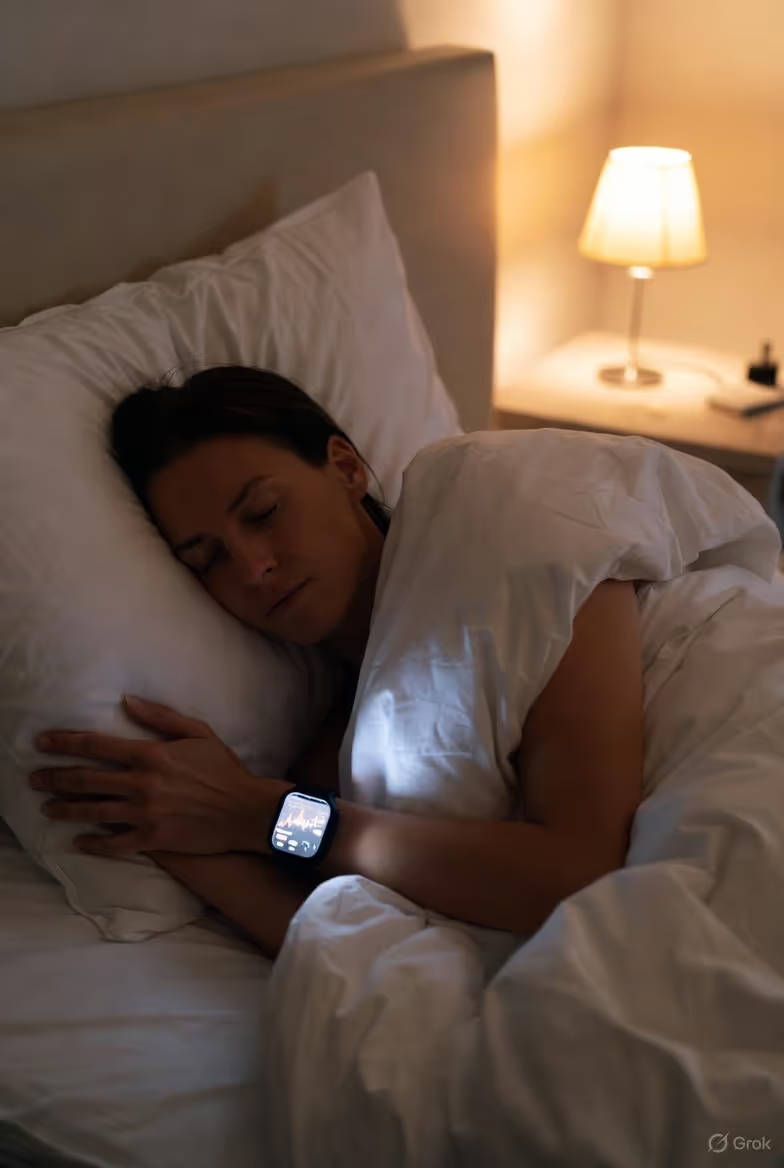
We live in a world obsessed with optimization and a single, defining metric. For sleep, that metric has become the “Sleep Score”—a tidy number, often between 0 and 100, that purports to tell you the quality of your night. After 40, seeing a score consistently below 80 or 90 can trigger a wave of concern. But before we let a number dictate our peace of mind, we must ask: What is this score actually measuring, and is its “perfect” benchmark age-appropriate?
Most sleep scores from consumer devices are composite algorithms. They typically combine:
The problem is that the “ideal” weighting for these factors is often calibrated on data from younger or broader populations. For instance, a 25-year-old and a 55-year-old have profoundly different sleep architecture. The younger person naturally gets more deep sleep, a phase critical for physical repair and growth hormone release. After 40, the proportion of deep sleep begins a gradual, natural decline. An algorithm punishing you for less deep sleep is like criticizing a maple tree for not producing coconuts—it’s applying the wrong biological standard.
“A realistic sleep score is not a static target, but a moving one that reflects healthy aging,” explains Dr. Angela Campbell, a sleep researcher specializing in mid-life and geriatric sleep. “Chasing a ‘perfect’ score based on a youthful model can lead to sleep anxiety, which is one of the most potent inhibitors of actual sleep quality. The focus should shift from the absolute number to trends and personal baselines.”
This is where intelligent tracking becomes crucial. Instead of fixating on a nightly score, look at your weekly and monthly averages from a device like the Oxyzen smart ring. Is your score stable within a 5-10 point range that feels aligned with your energy? That’s a more meaningful indicator of health than a single night’s dip. The real power of a smart ring lies not in judgment, but in illumination—showing you how your lifestyle choices directly impact your unique sleep patterns, a topic we explore in depth on our blog dedicated to sleep science.
The New Realism: After 40, a “good” sleep score might realistically land in the 75-85 range on many platforms, with higher scores still achievable but not the sole indicator of health. The key is consistency and understanding the context behind the number. Did a late, heavy dinner cause more restlessness? Did a stressful day suppress your REM sleep? This contextual understanding is what transforms data into actionable wisdom.

To understand what’s realistic, we must first understand what’s happening behind the scenes. Sleep is not a monolithic state of unconsciousness. It’s a carefully choreographed cycle of distinct stages, each with a vital function. Think of it as your brain’s nightly renovation project: deep sleep handles the heavy-duty structural repair and waste clearance, while REM sleep is responsible for interior design—memory consolidation, emotional processing, and creativity.
After 40, this renovation schedule undergoes a significant, biologically programmed shift. It’s not a breakdown; it’s a change in blueprint.
The Deep Sleep Decline: The most notable change is a reduction in slow-wave sleep (deep sleep). This begins as early as our mid-30s and continues gradually. By age 60, men may have lost 80-100% of the deep sleep they had at 20; women, about 25%. This isn’t a sign of failure—it’s a reflection of reduced physical growth needs. However, deep sleep remains critical for cellular repair, immune function, and clearing metabolic waste from the brain (like beta-amyloid, associated with Alzheimer’s risk). The body becomes more efficient with less, but its quality becomes paramount.
The Fragmentation of Sleep: Sleep continuity often decreases. You may experience more frequent, brief awakenings throughout the night (micro-arousals) that you might not even recall. This increased “sleep fragmentation” is a primary reason people feel their sleep is lighter and less satisfying. It can be influenced by hormonal changes, a naturally blunted circadian drive, increased sensitivity to noise or temperature, or underlying health conditions.
The Shift in Circadian Rhythm: The internal master clock, located in the brain’s suprachiasmatic nucleus, can advance with age. You may find yourself getting sleepier earlier in the evening and waking earlier in the morning—the classic “early bird” pattern. This phase advance is normal but can be mismatched with social and work obligations, leading to sleep deprivation if you fight to stay up late.
REM Sleep’s Resilience: Interestingly, the amount of REM sleep remains relatively stable well into older age, assuming overall sleep duration is maintained. Its timing may shift earlier in the night. This is good news, as REM is essential for cognitive and emotional health.
Practical Impact: What does this feel like? You might:
Tracking these patterns with a device that monitors sleep stages, like the Oxyzen smart ring, helps you distinguish normal architectural shifts from problematic disruptions. It answers the question: “Is this my new normal, or is something else interfering?” This knowledge is foundational to crafting a sleep strategy that works for your remodeled system, a core part of Oxyzen’s mission to provide personalized, age-aware health insights.
If sleep architecture is the blueprint, hormones are the contractors executing the work. The decades from 40 onward are marked by significant hormonal transitions for both men and women, which directly and powerfully influence sleep quality. Understanding this “hormonal tango” is key to managing expectations and targeting solutions.
For Women (Perimenopause and Menopause): This transition, often starting in the 40s, is arguably the single biggest hormonal disruptor of sleep in the human lifespan.
For Men (Andropause/Gradual Testosterone Decline): While not as abrupt as menopause, men experience a gradual decline in testosterone beginning around age 30, accelerating after 40.
The Universal Stress Hormone: Cortisol. Often dubbed the “alertness hormone,” cortisol should follow a daily rhythm—high in the morning to wake us up, gradually tapering to a low at bedtime. With age and chronic stress, this rhythm can become dysregulated.
The takeaway is clear: blaming “aging” for poor sleep is often imprecise. We must look at the specific hormonal players at work. By doing so, we can move from frustration to targeted action, whether it’s lifestyle modification, environmental cooling, or seeking medical guidance.
While brain chemistry and hormones set the stage, several common physical changes that emerge in mid-life can play the role of nightly stagehands, pulling you out of restful sleep. A realistic view of sleep after 40 must account for these bodily shifts.
Pain and Discomfort: The prevalence of chronic pain conditions like arthritis, back pain, and fibromyalgia increases with age. Pain can make it difficult to find a comfortable position, initiate sleep, and can directly cause micro-awakenings throughout the night. The relationship is also cyclical: poor sleep lowers pain tolerance, creating a vicious loop.
Bladder Changes (Nocturia): Waking up once per night to urinate becomes common after 40; twice or more is considered clinically significant nocturia. Causes are multifactorial: reduced bladder capacity, hormonal changes, increased production of urine at night (nocturnal polyuria), and medical conditions like an enlarged prostate (in men) or pelvic floor changes (in women). Each trip to the bathroom is a full awakening that can fragment sleep architecture.
Increased Risk of Sleep Disorders:
Medications: The number of prescribed medications often increases in mid-life. Many common drugs for blood pressure, asthma, depression, and even some over-the-counter cold medicines can interfere with sleep as a side effect.
The Realistic Adaptation: The goal here is not to eliminate all awakenings—which may be unrealistic—but to manage the return to sleep. This is a crucial skill. It involves:
Acknowledging these physical factors removes self-blame. It shifts the focus to practical problem-solving and partnership with healthcare providers, which is central to Oxyzen’s holistic approach to wellness.
Entering your 40s often means you’re at the peak of career and family responsibilities—a time of immense productivity that can come at the cost of self-care, especially sleep. Biologically, this is also the decade where the early whispers of change become audible. Realistic sleep in your 40s is about strategic defense against disruption and learning to listen to your body’s new signals.
The Lifestyle Landscape: You’re likely juggling demanding jobs, teenage or young children, aging parents, and complex social obligations. The pressure to “do it all” can lead to sleep being sacrificed as the flexible part of the schedule. You might become a “weekend warrior” sleeper, trying to compensate for weekday deficits—a strategy that disrupts circadian rhythm more than it helps.
Biological Early Warnings: While you may still be capable of the occasional all-nighter, the recovery cost is higher. You might notice:
The Realistic Goals for Your 40s:
The 40s are about proactive observation and habit fortification. It’s the decade to build the resilient sleep framework you will rely on for the next 30 years. By investing in understanding your patterns now, you lay the groundwork for graceful adaptation. For inspiration on building these habits, our community’s testimonials are filled with stories of people who transformed their approach to rest in this busy decade.
If the 40s are about hearing the whispers of change, the 50s are about learning to speak its language. This is often the decade of significant transition—menopause for women, continued hormonal shifts for men, evolving family roles, and a growing awareness of long-term health. Realistic sleep in your 50s is defined by skillful adaptation and targeted troubleshooting.
Navigating Major Hormonal Shifts: For many women, this is the core sleep challenge of the decade. Active menopause can bring the most intense sleep disruptions of adult life. The goal shifts from “unbroken sleep” to “effective sleep damage control.” For men, declining testosterone may now manifest more noticeably in reduced sleep depth and daytime fatigue.
The Changing Body’s Impact: Metabolism slows further, making weight management more challenging and increasing the risk of sleep-disordered breathing. Joint pain may become more consistent. Nocturia often becomes a more regular visitor.
The Realistic Goals for Your 50s:
The 50s require a spirit of experimentation and self-advocacy. It’s a time to refine what works, discard what doesn’t, and actively partner with healthcare to support your sleep. This journey of adaptation is part of the larger story of personalized health that drives innovation at Oxyzen.

By the time we reach 60 and beyond, the sleep remodeling project is largely complete. The drastic shifts have settled into a new, stable pattern. The challenge—and opportunity—is to fully embrace this new rhythm, optimize within its parameters, and reject the cultural narrative that poor sleep is an inevitable sentence of aging.
The Stabilized Architecture: While total sleep time may decrease slightly (to around 6.5-7 hours for many), the structure becomes more consistent. The dramatic hormonal fluctuations have passed. The goal is no longer fighting the architecture but ensuring its quality.
The Prevailing Challenges: Fragmentation from lighter sleep and nocturia often remains. The risk of sleep disorders like apnea and RLS is highest. Social factors also change: retirement can remove the structure of a fixed wake time, and social isolation can reduce circadian-stimulating activity.
The Realistic Goals for Your 60+:
This phase of life offers the freedom to listen deeply to the body’s needs without the tyranny of an early alarm. It’s a time to honor sleep as a pillar of longevity and cognitive health. By continuing to monitor trends with a tool like the Oxyzen smart ring, you can quickly identify if a new medication or health issue is disrupting your established baseline, allowing for prompt action. This commitment to lifelong wellness is at the heart of our company’s vision.
We often search for sleep solutions in the hour before bed, but the foundation for a good night’s sleep is laid from the moment you wake up. After 40, the connection between daytime habits and nocturnal quality becomes exponentially more important. You can’t out-supplement a poor lifestyle. Let’s build the daytime pillars of realistic sleep.
Light: Your Master Clock’s Fuel. Light is the most powerful zeitgeber (time-giver) for your circadian rhythm.
Movement: The Sleep Pressure Engine. Physical activity increases sleep drive, reduces anxiety, and can help consolidate sleep. However, timing matters.
Nutrition and Hydration: The Chemical Balance.
Stress Management: Quieting the Alert System. Chronic stress keeps your sympathetic nervous system (“fight or flight”) activated, raising cortisol when it should be low.
Tracking the impact of these pillars is where a smart wearable proves its worth. You can see on your Oxyzen dashboard how a day with a morning walk, limited coffee, and an evening meditation directly translates to a higher Sleep Score and better heart rate variability. It turns abstract advice into a personal, cause-and-effect experiment. For a deeper dive into crafting your perfect daytime routine, our blog features numerous expert guides on syncing lifestyle with biology.
If daytime habits lay the foundation, then the evening wind-down is the deliberate, gentle process of walking your nervous system upstairs to bed. After 40, this transition period cannot be rushed or skipped. The high-powered executive brain, the caregiver brain, the problem-solving brain needs a clear signal that its shift is over. A realistic sleep strategy understands that the hour before bed is a sacred space for de-escalation, not for productivity or stimulation.
Why Wind-Downs Become Non-Negotiable: Younger bodies can often crash from exhaustion. With age, the gap between physical tiredness and mental alertness can widen. You might be physically exhausted but lie in bed with a mind racing from the day’s events or tomorrow’s agenda. A consistent wind-down ritual bridges this gap by activating the parasympathetic nervous system—the "rest and digest" mode—and triggering the release of sleep-promoting hormones like melatonin.
Components of an Age-Effective Wind-Down (60-90 minutes):
Adapting the Ritual by Decade:
Using Your Tracker for Feedback: Your Oxyzen smart ring provides objective feedback on your wind-down’s effectiveness. Look at your "Sleep Latency" metric—the time it takes you to fall asleep. A consistently long latency might indicate your wind-down is insufficient or too stimulating. Conversely, you might see how a night with a proper digital sunset correlates with a quicker drop into deep sleep. This transforms your ritual from a guesswork routine into a data-optimized process, a principle we champion in our approach to personalized wellness.
You’ve worn your smart ring, you’ve committed to the rituals, and now you’re faced with a dashboard of data: a Sleep Score, graphs of sleep stages, a restoration index, heart rate, and more. For the modern, health-literate adult over 40, this data is a goldmine—but only if you know how to interpret it without spiraling into anxiety or fixation. Let’s move from passive viewing to active, intelligent interpretation.
Adopting the "Trend Detective" Mindset: Forget the nightly score in isolation. Your primary goal is to identify patterns over weeks and months. A single night with a score of 65 is meaningless. A trend showing your score slowly declining from an 82 average to a 74 average over six weeks is meaningful and warrants investigation.
Key Metrics and Their Realistic Interpretation After 40:
Asking the Right Questions of Your Data:
This investigative approach turns your Oxyzen ring from a judge into a coach. It removes emotion and guesswork, replacing them with personalized cause-and-effect understanding. For more on navigating your specific data, our comprehensive FAQ addresses common questions about interpreting sleep and readiness metrics.
Armed with knowledge of your changing biology and personalized data, you can now explore interventions with precision. The goal is not to find a magic pill, but to strategically support your body’s natural processes. After 40, the “shotgun” approach (trying everything) is less effective than the “sniper” approach (targeted support based on evidence and personal need).
Dietary Supplements: Proceed with Informed Caution.
Technology and Tools:
When and How to Seek Professional Help:
Your data can be the key that unlocks effective professional care. Seek help if you observe:
Bring Your Data: A printout or screenshot of your sleep graphs, oxygen levels, and heart rate data from your Oxyzen app is a powerful tool. It allows a sleep specialist to see beyond the subjective complaint and can accelerate diagnosis. Treatments like Cognitive Behavioral Therapy for Insomnia (CBT-I), CPAP for apnea, or medication reviews can be life-changing.
Remember, interventions are supports, not saviors. They work best when layered on top of a solid foundation of sleep hygiene and circadian rhythm support. The journey to better sleep is a collaborative one, combining self-knowledge, smart tools, and professional guidance when needed—a holistic philosophy detailed in our story of creating integrated health solutions.
Ultimately, the most powerful tool for improving sleep after 40 is not a supplement, a gadget, or a perfect routine. It is a fundamental shift in mindset. For decades, we’ve been sold a story that good sleep is a commodity we can perfect and control. After 40, that story becomes a source of suffering. The path to truly restful nights lies in letting go of rigid expectations and embracing a new relationship with rest—one based on acceptance, curiosity, and a broader definition of success.
Deconstructing Sleep Anxiety: The moment you lie in bed worrying about not sleeping, you have activated the very arousal system (fight-or-flight) that prevents sleep. This anxiety is often fueled by:
Cultivating Sleep Confidence: This is the antidote to anxiety. It’s the trust that your body knows how to sleep, even if tonight is imperfect. It involves:
Redefining "Success" as Daytime Vitality: This is the core mindset shift. Your primary metric for sleep health should not be on your phone in the morning; it should be in your lived experience by afternoon.
Embracing the New Rhythm: Accept that your sleep is lighter, more fragmented, and perhaps shorter. This isn’t a defect; it’s a different design. Many older adults in excellent health report sleeping 6-7 hours. Fighting this reality is exhausting. Embracing it allows you to work with it—perhaps by going to bed a bit later to solidify sleep drive, or by planning a quiet, restorative period in the early afternoon without the pressure of sleep.
This journey from anxiety to acceptance transforms your entire relationship with rest. It turns the bedroom from a performance arena back into a sanctuary. Your Oxyzen smart ring becomes a partner in this shift, not a prosecutor. You use its data not to judge yourself, but to understand your unique patterns, to celebrate what works, and to troubleshoot with curiosity rather than fear. This philosophy of empowered, compassionate self-care is what drives our entire mission at Oxyzen.ai.
You are not just what you eat; you sleep how you eat. After 40, the digestive system becomes less forgiving, and the metabolic impact of food choices echoes more loudly through the night. Strategic nutrition isn't about a single "sleep food"; it's about conducting a daily symphony of nutrients that harmonize with your circadian biology and support the specific sleep stage architecture you’re working to maintain.
Macronutrient Timing: The When Matters as Much as The What.
The Tryptophan Pathway: From Plate to Melatonin.
Tryptophan → 5-HTP → Serotonin → Melatonin. This is the biochemical pathway to your sleep hormone. You can support it nutritionally:
The Gut-Brain-Sleep Axis: Emerging research highlights the profound link between gut microbiome health and sleep quality. An imbalance in gut bacteria can promote inflammation and disrupt circadian rhythms.
Strategic Avoidances for the 40+ Sleeper:
A Realistic Evening Meal Template (3+ hours before bed):
A palm-sized portion of lean protein, a generous serving of non-starchy vegetables cooked with healthy fat, and a fist-sized portion of a complex carbohydrate. For example: Grilled salmon with roasted broccoli and quinoa, dressed with olive oil and lemon.
Tracking the impact of food becomes a fascinating experiment with your Oxyzen ring. Note how a high-sodium restaurant meal correlates with increased restlessness, or how a balanced, early dinner aligns with a smoother sleep stage progression. This biofeedback turns nutrition from a vague concept into a precise tool for sleep optimization, a topic we frequently explore with new recipes and insights on our wellness blog.
The desire for an afternoon nap often increases after 40. This isn't always a sign of poor nighttime sleep; it can be a natural biphasic sleep tendency re-emerging, compounded by the circadian "post-lunch dip" in alertness. A nap can be a powerful tool for rejuvenation or a thief of nighttime sleep drive. The difference lies in mastering its timing, duration, and purpose.
The Physiology of the Nap: A short nap primarily consists of Stage 2 (light) sleep, which can boost alertness, motor skills, and mood without causing sleep inertia (that groggy feeling). Longer naps that enter deep (slow-wave) sleep or REM sleep provide greater cognitive and memory benefits but come with a higher risk of inertia and potential disruption to nighttime sleep.
The Goldilocks Zone for Napping (After 40):
When Napping Becomes a Red Flag: If you require a long nap daily to function, it is a symptom, not a strategy. It indicates your nighttime sleep is insufficient in quantity or quality. Use this as a signal to investigate your nighttime sleep data on your Oxyzen app or consult a professional, rather than simply patching the problem with naps.
Nap Hygiene for Success:
For the 60+ sleeper with a phase-advanced rhythm (early to bed, early to rise), a short, early afternoon nap can be a perfect way to bridge the long waking day without pulling the evening bedtime even earlier. It’s about integrating rest into your life rhythmically and intentionally, not as an emergency measure.
For the first time in history, we can collect dense, longitudinal biometric data outside a lab. The true power of a device like the Oxyzen smart ring isn’t in yesterday’s sleep score—it’s in the trends over months and years. After 40, this shifts the focus from daily optimization to long-term health forecasting and prevention. Your sleep and recovery data become a crystal ball, revealing subtle shifts that may indicate broader health changes.
Sleep as a Vital Sign: Just as doctors track resting heart rate and blood pressure, your sleep metrics—especially consistency, depth, and oxygen levels—are non-negotiable vital signs of your systemic health.
Key Longitudinal Trends to Monitor:
From Reactive to Proactive Healthcare: Imagine walking into your doctor’s office not with a vague complaint of "tiredness," but with a report showing: "Over the past 6 months, my deep sleep has decreased by 40%, my nightly resting heart rate has increased by 8 bpm, and my HRV baseline has dropped 15%. These changes began after starting Medication X. My sleep consistency remains high." This transforms the conversation, enabling proactive, data-informed investigation.
Creating Your Personal Baseline: The first year of consistent tracking is about establishing your normal. After that, you’re watching for deviations from your baseline, not a population average. This personalized benchmark is the ultimate gift of wearable technology—the knowledge to advocate for your health with evidence, a principle embedded in our company's vision for empowered wellbeing.
Our sleep does not exist in a vacuum. It is profoundly shaped by our relationships, our responsibilities, and the physical spaces we inhabit. After 40, we often have more agency to intentionally curate these external factors to support, rather than sabotage, our rest. This is the "sleep edit"—a conscious audit and optimization of your interpersonal and environmental landscape.
The Social Dynamics of Sleep:
The Environmental Optimization Checklist:
The Digital Environment: This extends beyond blue light. The constant influx of news, work emails, and social media can create a state of "high alert" that lingers. Establish a "digital curfew" for all devices and consider charging them outside the bedroom. This small act is a powerful declaration that your rest is non-negotiable.
Editing your world for sleep is an ongoing process, not a one-time project. It requires saying "no" to late-night engagements that break your rhythm, investing in your physical space, and having courageous conversations with loved ones. The payoff is a foundation of environmental support that makes every other sleep strategy more effective. For real-world examples of how others have successfully made these edits, the testimonials from our Oxyzen community are a rich source of inspiration and practical ideas.
Even with the best data, mindset, and routines, there will be seasons of life where sleep falls apart. A health diagnosis, a major loss, a career change, a global pandemic—these events can shatter even the most robust sleep foundation. Realistic sleep after 40 includes the wisdom to know when to stick with your protocol and when to perform a complete strategic pivot. Rigidity is the enemy of resilience.
Signs It’s Time for a Pivot, Not a Tweak:
The Framework for a Healthy Pivot:
The ability to pivot is a hallmark of sleep maturity. It recognizes that life is not static, and neither is your sleep. Your Oxyzen ring serves as a neutral witness during these times, helping you track the long arc back to stability, showing you the slow, often non-linear progress that is invisible day-to-day. It provides objective proof that you are, indeed, moving forward. This journey of adaptation through life's chapters is part of the human story we aim to support.
Your Trusted Sleep Advocate: Sleep Foundation — https://www.sleepfoundation.org
Discover a digital archive of scholarly articles: NIH — https://www.ncbi.nlm.nih.gov/
39 million citations for biomedical literature :PubMed — https://pubmed.ncbi.nlm.nih.gov/
Experts at Harvard Health Publishing covering a variety of health topics — https://www.health.harvard.edu/blog/
Every life deserves world class care :Cleveland Clinic - https://my.clevelandclinic.org/health
Wearable technology and the future of predictive health monitoring :MIT Technology Review — https://www.technologyreview.com/
Dedicated to the well-being of all people and guided by science :World Health Organization — https://www.who.int/news-room/
Psychological science and knowledge to benefit society and improve lives. :APA — https://www.apa.org/monitor/
Cutting-edge insights on human longevity and peak performance:
Lifespan Research — https://www.lifespan.io/
Global authority on exercise physiology, sports performance, and human recovery:
American College of Sports Medicine — https://www.acsm.org/
Neuroscience-driven guidance for better focus, sleep, and mental clarity:
Stanford Human Performance Lab — https://humanperformance.stanford.edu/
Evidence-based psychology and mind–body wellness resources:
Mayo Clinic — https://www.mayoclinic.org/healthy-lifestyle/
Data-backed research on emotional wellbeing, stress biology, and resilience:
American Institute of Stress — https://www.stress.org/


