


Sleep Score Comparisons: How You Stack Up Against Others
Comparison is less useful than tracking your own baseline and progress, as individual needs and device algorithms differ.
Comparison is less useful than tracking your own baseline and progress, as individual needs and device algorithms differ.
%402x.svg)
You wake up, groggy and heavy, reaching for your phone. The screen glows: "Sleep Score: 72. Fair." A mix of data points stares back—REM, deep sleep, restlessness. But a single, nagging question cuts through the morning fog: Is 72 good? More importantly, how does my sleep—this fundamental, private nightly journey—measure up against everyone else’s?
For years, sleep was a mystery, a black box between sunset and sunrise. We had only our subjective feelings of fatigue or refreshment to go on. But the era of biometric tracking has changed everything. Wearables, from smart rings to watches, have illuminated the nocturnal landscape, translating our unconscious hours into scores, graphs, and percentages. Suddenly, we have a number. And with a number comes an innate human desire: to compare.
This is the double-edged sword of modern sleep science. Quantification empowers us, providing a benchmark for improvement. Yet, it can also fuel anxiety, turning rest into a competition we never signed up for. Is a "Fair" 72 a sign you’re crumbling under stress, or are you actually sleeping better than the vast majority of your peers? What does "good sleep" even look like across different ages, genders, and lifestyles?
In this deep exploration, we will move beyond the solitary digit on your app. We will demystify what your sleep score truly means, how it’s calculated by different devices, and—most crucially—how you stack up against global averages, elite performers, and people just like you. This isn't about fostering sleepless nights over your sleep data. It’s about providing context, clarity, and a science-backed roadmap. By understanding where you stand, you can make informed, personalized choices to claim the truly restorative sleep your body and mind deserve. The journey to better sleep begins not with judgment, but with insight.
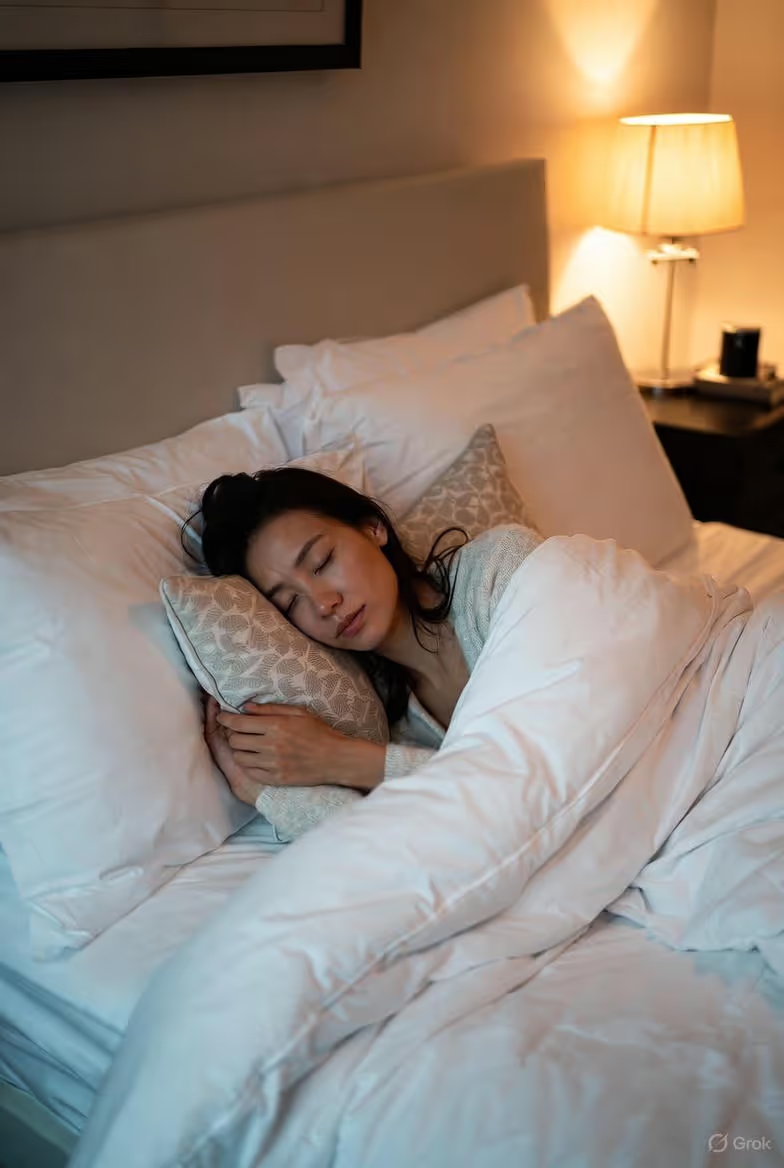
Before you can compare your sleep score to anyone else’s, you must first understand what you’re comparing. That seemingly simple two- or three-digit number is not a random grade. It is the final product of a complex algorithm, a distilled summary of a night-long symphony of biological processes. Different platforms and devices weigh these components differently, but they all draw from the same fundamental pillars of sleep science.
At its core, a comprehensive sleep score is typically built upon four foundational metrics: Duration, Quality, Architecture, and Restoration. Think of Duration as the quantity, and the other three as the layers of quality.
Duration is the most straightforward: total time spent asleep. While "8 hours" is the cultural mantra, individual needs vary. The algorithm compares your actual sleep time against your personalized target, which may be set by you or suggested by the device based on your historical data and demographics.
Quality often measures how undisturbed your sleep was. This is where data like restlessness, awakenings (both those you remember and the micro-arousals you don’t), and sleep latency (how long it takes you to fall asleep) come into play. A long duration filled with tossing and turning yields a low-quality score. Devices like the Oura Ring or those using advanced PPG (photoplethysmography) sensors are adept at tracking these subtle movements and heart rate changes that signal disrupted sleep.
Architecture delves into the structure of your sleep cycles. Healthy sleep isn’t a flatline; it’s a rhythmic dance between light sleep (stages N1 & N2), deep sleep (N3, or slow-wave sleep), and REM (Rapid Eye Movement) sleep. Each plays a distinct role. Deep sleep is critical for physical recovery and immune function, while REM is essential for memory consolidation and emotional processing. A good sleep score rewards a balanced, cyclical progression through these stages throughout the night.
Restoration is the most advanced metric and the true frontier of wearable technology. It looks at what your body did during sleep. This is measured through biomarkers like:
A device that incorporates these restorative metrics, such as those detailed in resources on the Oxyzen.ai blog, is providing a much richer picture of your sleep’s effectiveness than time alone can offer.
Therefore, when you see your score, you’re not just seeing if you slept "enough." You’re seeing an algorithmic judgment on the sufficiency, continuity, structure, and physiological impact of your night. It’s a holistic report card. With this understanding, we can now move to the logical next question: how do the major players in the wearable space calculate this score, and why might your number differ from one device to another?
Not all sleep scores are created equal. If you wore five different devices to bed, you’d likely wake up to five different numbers. This isn’t necessarily because one is "right" and the others are "wrong." It’s because each company employs a unique algorithm with different priorities, data inputs, and philosophical approaches to what constitutes "good" sleep. Understanding these differences is paramount for any meaningful comparison.
Oura Ring: The Pioneer of Recovery-Centric Sleep
Oura’s sleep score (0-100) is famously comprehensive and recovery-focused. It breaks down into four sub-scores:
Whoop: The Strain-Recovery Balancer
Whoop doesn’t call it a "sleep score" but a Sleep Performance percentage. Its genius is in personalization and context. Whoop compares your actual sleep (duration, architecture, disturbances) against your own personalized sleep need, which it continuously recalculates based on your daily strain and recovery data. If your body needed 8.5 hours for optimal recovery after a hard workout and you got 8, your performance might be 94%. If you needed 7.5 on a rest day and got 8, it could be 100%. Whoop’s score is inherently comparative—but it’s comparing you to yourself.
Apple Watch: The Accessible Baseline
Apple’s sleep tracking in the Health app provides a simpler framework. It focuses primarily on Time in Bed, Sleep Duration (with Apple-defined "Core" and "Deep" stages), and a weekly average comparison. It doesn’t give a single composite score out of 100. Instead, it offers trends and benchmarks against your own past performance. Its strength is seamless integration and broad accessibility, providing a solid entry point into sleep awareness without the complexity of a dedicated recovery device.
Garmin: The Athlete’s Holistic View
Garmin’s Sleep Score (0-100) is similar to Oura in structure but often feels geared toward athletic performance. It uses data from its Firstbeat analytics engine to generate sub-scores for duration, stress (via HRV), deep/REM sleep, and a unique "Awake" score. Garmin prominently displays your overnight Body Battery change, directly linking sleep quality to predicted daytime energy. The context here is fitness readiness: did your sleep prepare you for your next training session?
Fitbit & Others: The Mainstream Motivator
Fitbit’s Sleep Score (Fair, Good, Excellent) simplifies the categories into Duration, Deep/REM/Light Sleep, and Restoration (based on sleep stages and heart rate). It’s designed to be easy to understand and act upon, with a strong focus on consistency and time-based goals.
The Key Takeaway: When comparing your score to others, you must first ask: "On what platform?" A 85 on Oura, which heavily weights restoration, is a different achievement than an 85 on another device. The most valuable comparison is longitudinal—tracking your score on a single, consistent system over time. This device-specific context is the essential precursor to the broader, more tantalizing question: how do I compare to everyone else?

With a firm grasp on what a sleep score measures and how devices differ, we can now paint a picture of the global sleep landscape. How does the average person sleep? Spoiler alert: not great. And your age, biological sex, and even where you live create significant variations in this picture. These demographic averages provide the first true benchmark against which you can contextualize your own data.
The Age Factor: The Evolving Architecture of Sleep
Sleep architecture changes dramatically across a lifespan, and so do average scores.
Gender Divergence: The Sleep Gap
Research and aggregated wearable data consistently show a sleep gap. Women, on average, report more difficulty falling asleep and staying asleep. Biological factors like menstrual cycles, pregnancy, and menopause introduce hormonal fluctuations that directly impact sleep quality and body temperature regulation. Furthermore, women are diagnosed with insomnia and anxiety at higher rates, both of which are sleep disruptors. Men, while often falling asleep faster, tend to have higher rates of sleep apnea, which severely impacts sleep quality and restoration metrics like HRV and RHR. When comparing scores, gender is a non-negotiable context layer.
Regional Rhythms: How Culture and Latitude Shape Sleep
Where you live in the world influences how you sleep.
The "Average" is a Mirage
Pulling this all together, a hypothetical "global average sleep score" is almost meaningless. A more useful benchmark is the cohort average: the average for a 42-year-old woman in Northern Europe, or a 28-year-old man in East Asia. While large-scale aggregated data from companies like Oura or Fitbit provides glimpses of these trends, your most relevant comparison starts with your demographic peers. Yet, even within these groups, a chasm exists between the average and the optimal. What does the sleep of the top performers look like?
Who are they? The individuals who consistently post sleep scores in the 90s, who wake up with high HRV and a plummeting RHR, who move through their days with resilient energy. They are the "Elite Sleepers." They aren't necessarily genetic lottery winners (though genetics play a role). More often, they are relentless practitioners of sleep hygiene, biohackers of their own circadian biology. By dissecting their habits and biomarkers, we can extract a blueprint for excellence.
The Non-Negotiable Habits:
The Biomarker Profile:
When you look at the biometric data of an elite sleeper, certain patterns emerge:
Mindset is a Metric: Crucially, elite sleepers view sleep not as lost productivity, but as the foundation of all productivity, health, and creativity. They prioritize it without guilt. This psychological permission to rest may be the most important habit of all.
For many, this elite standard can feel daunting. But the goal isn’t perfection overnight. It’s about identifying one habit from this blueprint to adopt. As you’ll find in real-world experiences shared on the Oxyzen testimonials page, consistent, small improvements in habit often lead to significant, measurable jumps in sleep scores over time. The journey from average to excellent is a series of intentional choices.

Your sleep score is not an isolated metric; it is the nightly verdict on your daily life. The choices you make from the moment you wake up—how you move, what you consume, and how you manage your mental load—send direct signals to your sleep biology. Understanding these levers allows you to consciously engineer better sleep, rather than leaving it to chance.
Exercise: The Goldilocks Effect
Physical activity is one of the most powerful sleep promoters, but its timing and intensity are critical.
Diet: The Fuel for Sleep (or Insomnia)
What and when you eat writes a direct script for your night.
Stress & Mental Load: The Silent Score-Killer
This is perhaps the most significant factor for the modern adult. Stress activates the sympathetic nervous system ("fight-or-flight"), releasing cortisol and raising heart rate—a state utterly antagonistic to sleep.
Your lifestyle is your sleep’s daily pre-sleep routine. By aligning exercise, nutrition, and stress management with your circadian biology, you stop fighting your body’s natural rhythms and start partnering with them. This partnership is the engine of sustainable score improvement.
Here is a critical, often overlooked truth: A high sleep score does not always equal truly restorative sleep, and a mediocre score does not always mean a bad night. Blindly trusting the number can lead you astray. Your biometric data can sometimes present a facade, masking underlying issues or misrepresenting your subjective experience. It’s essential to become a discerning interpreter of your own data.
The High-Score Deceptions:
The Underrated "Low" Scores:
The Imperative of Subjective Feel:
This is the ultimate rule: Your how-did-I-feel-when-I-woke-up score is the most important one. Use your device’s objective data as a guide, a hypothesis-generator. If your score is 88 but you feel drained, ask why. Check your restoration metrics (HRV/RHR). If your score is 72 but you feel fantastic, celebrate it—your body may have gotten exactly what it needed. The goal is to align the objective data with your subjective reality over time. For a deeper dive into interpreting your biometrics beyond the headline score, exploring our blog can provide ongoing insights. This nuanced understanding prevents you from becoming a slave to a number and transforms you into the expert of your own sleep.

Armed with knowledge of averages and elite habits, it’s tempting to dive into the data pool and start swimming in comparisons. Am I in the top 20% for deep sleep for my age? Is my HRV better than the average 35-year-old? While context is valuable, the relentless pursuit of a higher percentile can become a counterproductive obsession, a phenomenon we might call "Sleep Performance Anxiety." This trap can, ironically, degrade the very sleep you're trying to improve.
The Physiology of Sleep Stress: When you anxiously check your score as soon as you wake up, or lie in bed worrying about achieving a high score, you activate the sympathetic nervous system. This state of anticipatory anxiety releases cortisol and adrenaline, raising your heart rate and body temperature—physiological conditions that are the antithesis of sleep onset. You are, quite literally, stressing about sleep, which makes quality sleep impossible. The wearable meant to aid rest becomes a source of performance pressure.
The Individuality of Biomarkers: Percentiles are based on population averages, but your body is not an average. Your absolute HRV or deep sleep percentage is influenced by a myriad of factors genetics, underlying health, training status, and even personality traits. Chasing an arbitrary 75th percentile in HRV when your genetics predispose you to a lower baseline is a futile exercise that ignores your personal physiology. Progress should be measured against your own baseline, not a stranger’s.
The Neglect of Subjective Well-Being: As discussed, a "good" score doesn't guarantee you feel good. If you achieve a 90th percentile sleep score by rigidly adhering to a restrictive routine that causes you daily anxiety or social isolation, what have you truly won? The ultimate goal of sleep is to support a vibrant, healthy, engaged waking life. If the pursuit of the score compromises that life, the means have defeated the end.
How to Use Comparison Wisely:
The mission at the heart of companies like Oxyzen, as outlined in our story, is to empower personal understanding, not fuel unhealthy competition. By stepping out of the comparison trap, you reclaim sleep as a personal practice of restoration, not a public metric of performance. This mindset shift is often the first and most significant step toward genuinely better sleep.
This brings us to the transformative purpose of all this analysis and context: action. Knowledge of averages, elite habits, and lifestyle impacts is useless if it doesn’t change your behavior for the better. The true power of your sleep score lies not in how it compares to the world, but in how it guides you to a personalized, evolving action plan. This is where you move from being a passive observer of your data to an active architect of your sleep.
Step 1: Establish Your Personal Baseline.
Forget global averages for a moment. Over a 2-4 week period of "normal" life (without making major changes), observe your data to answer:
Step 2: Identify Your Primary Lever.
Trying to change everything at once is overwhelming and unsustainable. Based on your baseline and the context from previous sections, pinpoint your single biggest opportunity. Use this diagnostic flow:
Step 3: Design a Micro-Experiment.
For your chosen lever, create a small, testable change for one week. For example:
Step 4: Observe, Tweak, and Iterate.
Did your experiment move the needle? Even a slight improvement validates the change. If not, tweak the variable (e.g., move caffeine cutoff to 12 PM) or test a new lever. This iterative, data-informed self-experimentation is the core of biohacking. It removes guesswork and builds a sleep protocol tailored exclusively to you.
Building Your Long-Term Plan: As you solidify one habit, add another lever. Perhaps after fixing caffeine, you tackle your erratic bedtime. This slow, steady stacking of habits is how elite sleepers are made—not through dramatic overhauls, but through committed, incremental optimization. For support and answers to common questions on this journey, our comprehensive FAQ is a valuable resource.
By following this process, you transform the sleep score from a report card into a compass. It no longer tells you where you rank; it shows you where to go next. This personalized, actionable intelligence is the ultimate gift of modern sleep tracking technology.
You’ve personalized your approach, run your micro-experiments, and watched your sleep score climb from the “Fair” 70s into the consistent “Good” 80s. The number on your app is gratifying, but the true reward isn’t confined to the night. It manifests in a profound ripple effect that transforms every facet of your waking hours. A high sleep score isn’t just a metric; it’s the bedrock of peak daily performance, emotional resilience, and long-term health. Understanding this transformative power reinforces why the journey of optimization is so worthwhile.
Cognitive & Professional Performance: The Sharpened Mind
Sleep is non-negotiable cognitive maintenance. When your sleep score improves, you are essentially upgrading your brain’s hardware and software.
Emotional & Mental Resilience: The Steady Heart
Your sleep score is a direct barometer of your nervous system’s balance. Improving it fortifies your emotional core.
Physical Health & Vitality: The Energized Body
The physical restoration signaled by a high score has immediate and long-term payoffs.
In essence, optimizing your sleep score doesn’t just give you better nights; it gives you better days. It amplifies your potential in your career, stabilizes your inner world, and safeguards your physical health. It is the ultimate foundational habit. This is why passionate users often share on platforms like Oxyzen testimonials that tracking and improving their sleep was the catalyst for a broader life transformation. The data provides the proof, and the lived experience provides the motivation to continue.
The pursuit of better sleep can easily become myopic, focused on the single poor score after a bad night or the triumph of a perfect 90. But the most significant insights—and the true impact on your health—are not found in the daily spikes and dips. They are revealed in the trend line. Shifting your focus from nightly judgments to long-term patterns is the final, mature stage of using sleep data wisely. It’s about playing the long game for lifelong health.
Why the Trend is the Truth:
A single night’s data is a snapshot, heavily influenced by random daily variables: an unusual meal, a stressful conversation, a change in schedule. It can be noisy and misleading. A trend over weeks and months, however, smooths out that noise and reveals the signal—the true trajectory of your sleep health and its underlying physiology.
Using Trends for Proactive Health Management:
This longitudinal view transforms your wearable from a sleep tracker into a health early-warning system.
The Seasonal and Annual Rhythm:
Zoom out even further, and you may discover your own circadian rhythms. Are your scores consistently better in summer with more daylight? Do you struggle more in the dark winter months, pointing to potential Seasonal Affective Disorder (SAD)? Annual reviews of your data can inform powerful lifestyle decisions, like investing in a light therapy lamp or planning major projects during your season of peak cognitive performance.
Avoiding Burnout and Celebrating Stability:
For the driven individual, the trend line is a guardrail against burnout. If you’re pushing hard in your fitness or career but see a multi-week decline in your restoration metrics, the data is a non-negotiable signal to pull back and prioritize recovery. Conversely, a stable, positive trend through a busy period is a sign of remarkable resilience and effective habit stacking. Stability, not perfection, is the hallmark of sustainable health.
This long-view perspective is the antidote to the comparison trap and nightly anxiety. It aligns perfectly with the mission of deeper understanding we champion at Oxyzen—using technology not for daily scrutiny, but for lifelong insight. Your sleep data becomes a personal health journal, a quantitative narrative of your life’s journey. It teaches you what your unique body needs to thrive through all its seasons.
Your sleep score is a powerful pillar of your health intelligence, but it is not the entire temple. True wellness exists at the intersection of multiple data streams and subjective experiences. To fully understand your standing and potential, you must integrate your sleep data with other key metrics and qualitative feedback. This holistic synthesis prevents you from over-optimizing one area at the expense of another and creates a truly comprehensive picture of your well-being.
The Core Integration Triad: Sleep, Activity, and Nutrition.
These three pillars are in constant conversation. Your sleep data should never be interpreted in a vacuum.
Quantitative + Qualitative: The Subjective Bridge.
The numbers are objective, but your lived experience is the ultimate validator. A holistic health picture requires bridging this gap.
Medical and Biomarker Context:
For those with access, integrating broader health data adds another layer:
The Unified Dashboard: The Future of Personal Health.
The most advanced approach to this is seeking a unified health dashboard—or creating one yourself—where sleep scores, activity rings, nutritional logs, mood scores, and key biomarkers coexist. In this view, you don’t just see a sleep score of 78. You see a 78 alongside a high-training-load day, slightly elevated RHR, a logged stressful event, and a note about feeling resilient. This tells a complete story.
This integrated practice moves you from being a sleep tracker user to a consummate health steward. It recognizes that the goal is not a perfect sleep score in isolation, but a harmonious, thriving system. For those eager to delve deeper into connecting these dots, the Oxyzen.ai blog offers continuous exploration of holistic health tracking. By weaving together all the threads of your well-being, you gain the wisdom to make choices that support not just better sleep, but a better, more balanced life.
The sleep scores we scrutinize today represent a remarkable leap from mere step-counting, but they are merely the first chapter in a story of accelerating discovery. The next generation of wearable technology and algorithmic analysis promises to move us from monitoring to true diagnostics, from generalized scores to deeply personalized, predictive, and prescriptive insights. The frontier of sleep tech is about to make our current data look like a black-and-white television compared to a 4K hologram.
From PPG to Multi-Sensor Fusion:
Current devices primarily rely on optical heart rate sensors (PPG) and accelerometers. The future lies in sensor fusion—combining multiple data streams to paint a fault-tolerant, high-resolution picture.
The AI-Powered, Predictive Sleep Coach:
Static algorithms will be replaced by adaptive artificial intelligence that learns your unique physiology and life patterns.
Longitudinal Biomarkers for Chronic Disease Risk:
The most profound impact may be in preventative health. Researchers are exploring how long-term sleep data patterns can serve as early, non-invasive biomarkers for chronic conditions.
This impending revolution, driven by companies pushing the boundaries like those behind Oxyzen, will democratize deep health insights. The future sleep score will be less of a grade and more of a dynamic, interactive health dashboard—a conversation with an AI that knows your body’s language better than you do. It will empower us to not just track our sleep, but to truly understand and optimize our circadian biology for a lifetime of health.
For millions, poor sleep isn’t a matter of bad habits or late-night caffeine—it’s a symptom of an underlying medical condition. One of the most significant utilities of consistent sleep tracking is its potential to act as a screening tool, providing the objective data needed to have an informed, urgent conversation with a healthcare professional. Your sleep score and its underlying metrics can be the red flags that prompt you to seek help for a treatable disorder.
The Signature of Sleep Apnea:
Obstructive Sleep Apnea (OSA) is notoriously underdiagnosed. Consumer wearables are not diagnostic tools, but they can show highly suggestive patterns.
Insomnia: The Data of Hyperarousal:
Chronic insomnia leaves a clear, though sometimes subtle, data signature centered on nervous system dysregulation.
Circadian Rhythm Disorders:
If your natural sleep-wake cycle is misaligned with societal demands, your data will show it with mathematical clarity.
Restless Legs Syndrome (RLS) & Periodic Limb Movement Disorder (PLMD):
These movement disorders can be vividly captured by sensitive accelerometers.
How to Proceed If You Suspect a Disorder:
By transforming your sleep score from a wellness metric into a health screening tool, you take monumental control of your well-being. It empowers you to be an advocate for your own health with data-backed clarity. For those navigating these concerning patterns, finding a community and support, such as through resources linked from Oxyzen.ai, can be a vital step in the journey to effective treatment and, ultimately, truly restorative sleep.
You can master your circadian rhythm and manage your stress, but if your sleep environment is working against you, your score will hit a permanent ceiling. Our biology is exquisitely tuned to ancestral cues: dark, quiet, cool, and safe. Transforming your bedroom into a true sleep sanctuary is about strategically manipulating these cues to send an unambiguous signal to your brain and body: It is time to shut down and restore. This is environmental engineering for optimal sleep.
The Primacy of Darkness:
Light is the most powerful regulator of your circadian rhythm. Even tiny amounts can suppress melatonin and fragment sleep.
The Goldilocks Zone of Temperature:
Your core body temperature must drop to initiate and maintain sleep. The ambient temperature of your room is a critical lever.
The Sound of Silence (or the Right Noise):
Unexpected noises cause micro-arousals, pulling you out of deep sleep stages without full awakening.
The Psychology of Your Sanctuary:
Your bedroom should be a conditioned space for sleep and intimacy only. This creates a powerful psychological association.
Investing in the Foundation: Your Mattress and Pillow.
This is where you interface with the environment for 7-9 hours. An old or unsupportive mattress can cause pain, excessive movement, and temperature dysregulation.
Optimizing your sleep sanctuary is a tangible, high-impact project. The results are often immediate and clearly reflected in improved “restfulness” and “efficiency” scores. It’s the physical manifestation of your commitment to sleep, and as shared by users who have made these changes, often documented in community stories like those on Oxyzen testimonials, it can be the single most effective change for breaking through a score plateau. Your environment works for you silently, all night long, turning your bedroom from a mere place to crash into a engineered recovery pod.
The final, and most important, stage of this journey is moving from a short-term “sleep optimization sprint” to becoming a Sustainable Sleeper. This is someone for whom excellent sleep is not a fragile achievement requiring constant vigilance, but a resilient foundation woven seamlessly into the fabric of their life. It’s about building habits so ingrained that they become identity: “I am someone who prioritizes and protects my sleep.” This shift from effortful discipline to automatic practice is the key to lifelong sleep health and the consistent high scores that reflect it.
The Pillars of Sustainable Sleep Habits:
Integrating Sleep into Your Identity:
Building Resilience for Life’s Disruptions:
Life will inevitably throw curveballs: a new baby, a period of grief, a cross-continental move. The sustainable sleeper has a toolkit for these seasons.
The Community and Continuous Learning:
Sustainability is bolstered by connection and curiosity. Engaging with a community—whether it’s friends who share similar values, or online forums dedicated to biohacking and wellness—provides support, new ideas, and normalcy. Continuing to learn about sleep science, perhaps through resources like the Oxyzen.ai blog, keeps the practice fresh and intellectually engaging, transforming it from a chore into a lifelong passion for self-understanding.
Becoming a sustainable sleeper is the ultimate goal. It means you have internalized the lessons from averages, elite performers, and your own personal data. You have moved beyond comparison and anxiety into a state of empowered, intuitive practice. Your sleep score becomes a quiet confirmation of a life well-balanced, a simple report on a system that runs smoothly, freeing you to focus not on the metric of rest, but on the vibrant life that rest makes possible.
Your Trusted Sleep Advocate: Sleep Foundation — https://www.sleepfoundation.org
Discover a digital archive of scholarly articles: NIH — https://www.ncbi.nlm.nih.gov/
39 million citations for biomedical literature :PubMed — https://pubmed.ncbi.nlm.nih.gov/
Experts at Harvard Health Publishing covering a variety of health topics — https://www.health.harvard.edu/blog/
Every life deserves world class care :Cleveland Clinic - https://my.clevelandclinic.org/health
Wearable technology and the future of predictive health monitoring :MIT Technology Review — https://www.technologyreview.com/
Dedicated to the well-being of all people and guided by science :World Health Organization — https://www.who.int/news-room/
Psychological science and knowledge to benefit society and improve lives. :APA — https://www.apa.org/monitor/
Cutting-edge insights on human longevity and peak performance:
Lifespan Research — https://www.lifespan.io/
Global authority on exercise physiology, sports performance, and human recovery:
American College of Sports Medicine — https://www.acsm.org/
Neuroscience-driven guidance for better focus, sleep, and mental clarity:
Stanford Human Performance Lab — https://humanperformance.stanford.edu/
Evidence-based psychology and mind–body wellness resources:
Mayo Clinic — https://www.mayoclinic.org/healthy-lifestyle/
Data-backed research on emotional wellbeing, stress biology, and resilience:
American Institute of Stress — https://www.stress.org/


