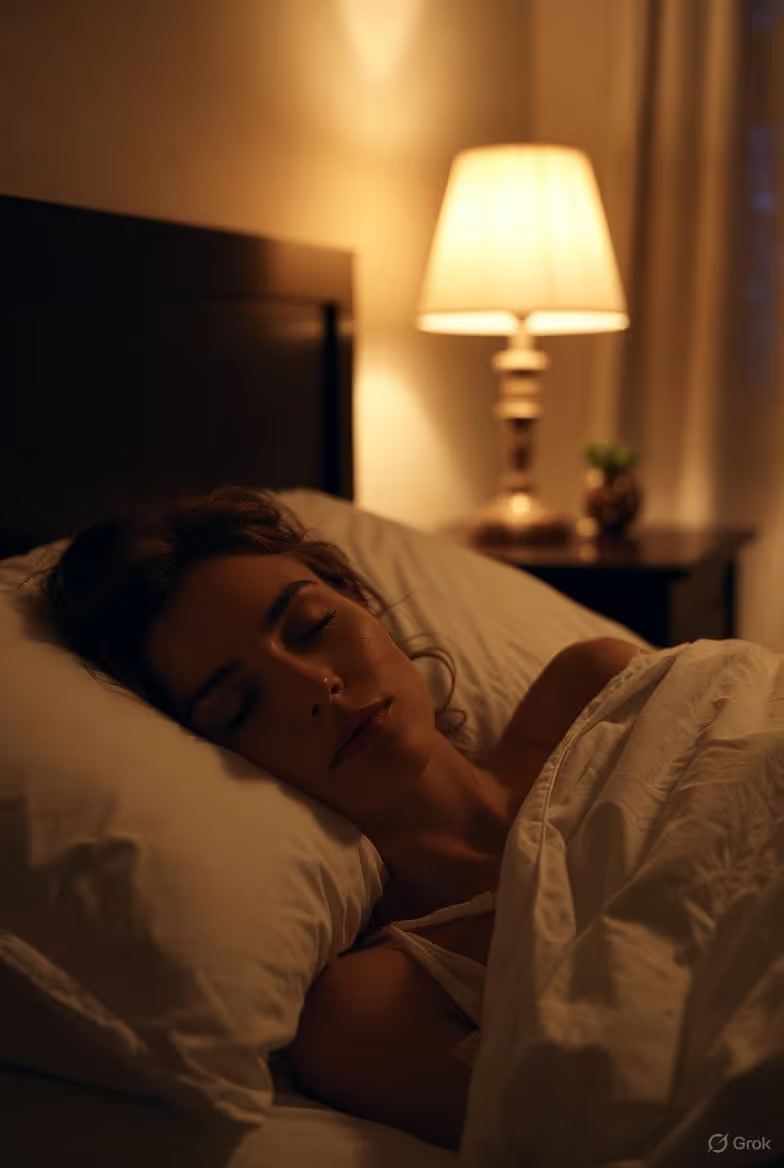
Sleep Score Explained: What Your Number Actually Means
A sleep score is a single number, often from a wearable, that summarizes the overall quality of your sleep.
Sleep Score Explained: What Your Number Actually Means
You wake up, reach for your phone, and tap open your wellness app. A number stares back at you: 78. It’s your Sleep Score. Yesterday it was 82. The day before, a dismal 65. You feel a flicker of pride, a pang of worry, or perhaps just a cloud of confusion. What does this number actually mean? Is it a grade? A verdict on your health? Or just another piece of data in our quantified lives?
In an age where we can track everything from our heart rate variability to our nightly oxygen saturation, the Sleep Score has emerged as the universal metric for nightly rest. It’s the single figure that promises to distill the complex, mysterious journey of sleep into something digestible. But behind that seemingly simple digit lies a world of physiology, algorithm science, and personal nuance. Understanding it is the key to transforming passive tracking into active, life-improving insight.
This isn’t just about whether you “slept good” or “slept bad.” Your Sleep Score is a personalized report card, a story written in the language of biometrics. It tells a tale of restorative deep sleep, memory-consolidating REM cycles, frustrating wakefulness, and the delicate balance of your autonomic nervous system. For users of advanced wearable technology, like the Oura Ring or the upcoming Oxyzen smart ring, this score is the cornerstone of a holistic wellness philosophy. It doesn’t just judge your night; it guides your day.
In this comprehensive guide, we will deconstruct the Sleep Score from every angle. We’ll explore the science behind the number, decode each contributing component, and show you how to move from simply observing your score to actively improving it. This is your deep dive into the meaning of your rest, so you can stop guessing and start truly recovering.
The Genesis of the Score: Why a Single Number for Sleep?
The quest to quantify sleep is not a product of the digital age. For centuries, physicians and philosophers have pondered its purpose and patterns. But the modern Sleep Score is a direct answer to a very contemporary problem: data overload. The first generation of sleep trackers gave users a firehose of information—hours of graphs for heart rate, movement, and sometimes indecipherable “sleep stages.” For the average person seeking better rest, this was overwhelming. What was the actionable takeaway?
Enter the Sleep Score. By the late 2010s, companies like Fitbit and Oura popularized the concept of a composite score, a weighted algorithm that synthesizes multiple sleep metrics into one easy-to-understand figure. It serves three primary psychological and practical functions:
Simplification & Motivation: A single number provides immediate, unambiguous feedback. It satisfies our brain’s desire for a clear indicator of success or failure, creating a daily feedback loop that can motivate positive behavior change. Seeing a score rise after a week of consistent bedtime feels rewarding.
Benchmarking & Trend Tracking: Your score allows you to benchmark against yourself. Is today’s 75 better or worse than your personal average? More importantly, it helps you identify long-term trends that a single night of poor data cannot reveal. This longitudinal view is critical, as sleep quality is inherently variable.
A Gateway to Deeper Understanding: A good score isn’t an end, but a beginning. It prompts the question, “Why?” This leads users to explore the sub-scores and raw data beneath it—the duration, depth, and disturbances that tell the full story. For those eager to learn, platforms like the Oxyzen blog offer deep dives into each of these underlying metrics.
But it’s crucial to understand what the score is not. It is not a medical diagnosis. A score of 90 does not guarantee perfect health, nor does a 50 confirm a sleep disorder. It is a relative indicator based on your own baseline and the parameters set by the algorithm’s creators. The real power isn’t in the number itself, but in the personalized narrative it helps you uncover about your own biology and habits. As we’ll explore, different devices weigh factors differently, but the core pillars of assessment are remarkably consistent across the wellness tech landscape.
Deconstructing the Algorithm: What Goes Into Your Sleep Score?
Peeling back the layers of your Sleep Score reveals it is not a mystical calculation, but a sophisticated synthesis of several key sleep dimensions. While the exact weighting varies by device and company philosophy, most reputable scores are built on a foundation of four to seven core components. Think of your total score as a pie chart, where each slice represents a critical aspect of your sleep architecture.
Let’s break down the most common contributors, which you’ll likely recognize from your own app’s breakdown:
Total Sleep Time (Duration): This is the most straightforward input: the total minutes you spent actually asleep between going to bed and waking up. It’s foundational. Most algorithms have a “goldilocks zone” target, typically 7-9 hours for adults, with points deducted for sleeping significantly less (or sometimes excessively more).
Sleep Efficiency: This is the ratio of time asleep to time in bed. If you spend 9 hours in bed but are awake for 90 minutes of that, your efficiency is 83% (7.5/9). A high efficiency (typically >85%) suggests you are falling asleep relatively quickly and not tossing and turning excessively. It’s a crucial metric that differentiates restful time in bed from restless time.
Sleep Stages (Depth & Balance): This is where the biometric magic happens. Using sensors like photoplethysmography (PPG) for heart rate and accelerometers for movement, algorithms estimate time spent in:
Deep Sleep (Slow-Wave Sleep): The physically restorative phase. This is when tissue repair, immune function strengthening, and energy restoration occur.
REM Sleep: The mentally restorative phase. Essential for memory consolidation, learning, and emotional processing.
Light Sleep: The transitional stage that makes up about 50% of the night. A “good” score rewards a balanced distribution appropriate for your age, with sufficient amounts of both deep and REM sleep.
Restfulness (or Disturbances): This measures how fragmented your sleep was. It accounts for prolonged wake periods after initially falling asleep, as well as the number of brief “arousals” you may not even remember. High restfulness means solid, uninterrupted blocks of sleep.
Timing (Latency & Consistency): This includes:
Sleep Latency: How long it takes you to fall asleep. An ideal is typically between 10-20 minutes. Taking too long can indicate stress or poor sleep hygiene; falling asleep instantly might signal profound sleep deprivation.
Sleep Timing: Going to bed and waking up at consistent times, aligned with your circadian rhythm, often contributes positively to the score.
Biometric Signals (HR, HRV, Temperature): Advanced wearables, especially those worn on the finger like the Oxyzen smart ring, incorporate deeper physiological markers.
Resting Heart Rate (RHR): A lower nighttime RHR generally indicates better recovery and cardiovascular fitness.
Heart Rate Variability (HRV): Perhaps the most insightful metric, a higher average nighttime HRV suggests a resilient, well-recovered nervous system.
Body Temperature: Nocturnal temperature dynamics are central to sleep regulation. A natural dip in core body temperature is necessary for sleep onset, and deviations can signal illness, hormonal changes, or a disrupted circadian rhythm.
Understanding this algorithmic recipe is the first step to mastery. You can’t improve what you don’t measure—and now you know what’s being measured. In the next sections, we’ll dive into each of these major components to explore what they reveal about your health.
Duration: The Non-Negotiable Foundation of Sleep
We begin with the most intuitive component: Total Sleep Time. It is the bedrock upon which all other sleep quality metrics are built. You cannot have a high Sleep Score with chronically insufficient duration, no matter how efficient or deep the little sleep you get might be. The relationship between duration and health is U-shaped; both short and extremely long sleep are associated with health risks, but for most adults, the danger lies squarely in the deficit.
The National Sleep Foundation and countless studies consistently pinpoint 7-9 hours per night as the optimal range for adults aged 18-64. Why is this range so critical?
Cognitive Function: During sleep, the brain’s glymphatic system activates, clearing out metabolic waste products like beta-amyloid (associated with Alzheimer's disease). Skimping on sleep impairs memory, attention, decision-making, and creativity. One study showed that being awake for 18 hours produced cognitive impairment equal to a blood alcohol content (BAC) of 0.05%.
Metabolic Health: Short sleep duration (less than 6 hours) is a robust risk factor for weight gain, obesity, and Type 2 diabetes. It disrupts the hormones leptin (which signals fullness) and ghrelin (which signals hunger), leading to increased appetite and cravings for high-calorie foods.
Immune Function: Deep sleep is when the body produces and distributes key immune cells like cytokines. Consistently sleeping less than 7 hours can literally make you more susceptible to the common cold and impair vaccine response.
Cardiovascular Health: Chronic sleep deprivation is linked to higher blood pressure, increased inflammation, and a greater risk of heart disease and stroke.
How Trackers Measure It: Your device uses a combination of lack of movement (actigraphy) and lowered heart rate to determine when you’ve transitioned from awake to asleep. The clock starts ticking from that first moment of sleep onset until your final morning awakening.
Interpreting Your Duration Score: If your Sleep Score is being dragged down by a “Duration” sub-score, the prescription is simple in theory but often challenging in practice: protect more time for sleep. This isn’t just about going to bed earlier; it’s about restructuring your evening to make that possible. It means re-evaluating your relationship with late-night work, screen time, and social engagements. For many, the journey to better sleep starts with the non-negotiable commitment to an 8-hour sleep opportunity every single night.
Efficiency & Restfulness: The Art of Unbroken Sleep
You can be in bed for 9 hours, but if you’re staring at the ceiling for two of them or waking up every 90 minutes, you won’t feel restored. This is where Sleep Efficiency and Restfulness come in. They measure not just the quantity of your sleep, but its consolidated quality.
Sleep Efficiency is the straightforward math: (Time Asleep / Time in Bed) x 100. An ideal is 90% or higher. For example:
Ideal: In bed at 11:00 p.m., asleep by 11:10 p.m., awake at 7:00 a.m. → 7h 50m asleep / 8h in bed = 98% efficiency.
Poor: In bed at 11:00 p.m., asleep by 12:30 a.m., awake at 7:00 a.m. → 6h 30m asleep / 8h in bed = 81% efficiency.
Low efficiency is often a red flag for poor sleep hygiene—the habits and environment surrounding your sleep. It asks the questions: Is your mind racing? Is your bedroom too warm? Are you scrolling in bed?
Restfulness (or Sleep Fragmentation) delves deeper. It quantifies the continuity of your sleep. Even if you fall asleep quickly, you might have a restless night filled with micro-awakenings (often caused by sleep apnea, pain, stress, or environmental noise) or longer periods of wakefulness after sleep onset (WASO).
Why Unbroken Sleep Matters: Sleep progresses in roughly 90-minute cycles, moving from light to deep to REM sleep. Each stage has a distinct purpose. Frequent disruptions prevent you from completing these cycles properly. You might be robbed of the crucial, physically restorative deep sleep in the first half of the night, or the memory-boosting REM sleep in the later cycles. Your body and brain need uninterrupted stretches to perform this essential maintenance.
Improving Your Scores:
The 20-Minute Rule: If you can’t fall asleep or wake up and can’t return to sleep within 20 minutes, get out of bed. Go to another dimly lit room and do a quiet, non-stimulating activity (like reading a physical book). Return to bed only when you feel sleepy. This strengthens the mental association between bed and sleep.
Optimize Your Environment: Ensure your bedroom is cool (around 65-68°F or 18-20°C), pitch dark (use blackout curtains or a sleep mask), and quiet (use earplugs or a white noise machine).
Mind Your Intake: Alcohol, while sedating, is a major disruptor of sleep architecture, often causing fragmentation in the second half of the night. Caffeine has a long half-life; avoid it after 2 p.m.
A high score in efficiency and restfulness is a sign of a strong sleep system and a well-prepared mind and body. It’s the difference between spending time in bed and actually getting restorative rest. For more personalized tips on crafting the perfect sleep sanctuary, our FAQ page often addresses common environmental and behavioral hurdles.
The Architecture of Restoration: Deep Sleep, REM, and Light Sleep
Beyond how long and how solidly you sleep lies the fascinating architecture of what happens while you’re asleep. Your night is not a monolithic block of unconsciousness; it’s a dynamically orchestrated sequence of distinct stages, each with a unique physiological purpose. Your Sleep Score algorithm evaluates the balance and sufficiency of these stages—particularly the “quality” stages of Deep and REM sleep.
Light Sleep (N1 & N2): Making up about 50-60% of your night, this is the gateway to sleep and the stage you drift in and out of between cycles. It’s essential for transition and relaxation but less restorative than deeper stages. Your body temperature drops, heart rate slows, and muscles begin to relax.
Deep Sleep (N3 or Slow-Wave Sleep): This is the physically restorative powerhouse. Typically concentrated in the first half of the night, deep sleep is characterized by slow brain waves (delta waves). It’s when:
Human Growth Hormone (HGH) is released, stimulating tissue repair, muscle growth, and cell regeneration.
The immune system is recharged.
Energy is restored.
Memories and learned facts may be transferred to long-term storage. Waking from deep sleep is difficult, and you’ll often feel groggy (sleep inertia) if you are roused during this phase. Adults generally need about 1.5-2 hours of deep sleep per night (20-25% of total sleep). Your tracker will reward a score that hits this target.
REM (Rapid Eye Movement) Sleep: This is the mentally and emotionally restorative phase. First occurring about 90 minutes after you fall asleep and lengthening with each cycle, REM is when your brain is almost as active as when you’re awake (but your body is paralyzed to prevent you from acting out your dreams). It’s crucial for:
Memory Consolidation: Integrating and making sense of the day’s experiences, linking new information with old.
Emotional Processing: Helping regulate mood and process emotional experiences.
Learning & Creativity: Facitating neural connections and problem-solving. Adults need about 1.5-2 hours of REM per night (20-25%). A deficit can lead to foggy thinking and emotional volatility.
How Your Tracker “Knows” Your Stages: No consumer wearable can match the precision of a clinical polysomnogram (PSG). However, they make remarkably accurate estimates using proxies:
Movement: Deep sleep involves very little movement. REM involves rapid eye movements (which some sensors can detect) and body paralysis, but occasional small twitches.
Heart Rate & Heart Rate Variability: Your heart rate drops to its lowest during deep sleep and becomes more variable and rises to near-waking levels during REM sleep. This HR/HRV pattern is the primary signal advanced algorithms use to distinguish stages.
A high Sleep Score reflects a well-structured night with ample time in both deep and REM, cycling smoothly every 90 minutes or so. If your score is low due to “Depth” or “REM,” consider factors that disproportionately affect these stages: deep sleep is highly sensitive to alcohol, late-night exercise, and sleep deprivation; REM can be suppressed by certain medications (like antidepressants) and, ironically, by “catching up” on sleep after deprivation, which prioritizes deep sleep first.
The Nightly Symphony of Your Nervous System: HRV, RHR, and Temperature
The most advanced sleep scores look beyond movement and timing to the subtle, involuntary language of your autonomic nervous system (ANS). This is the realm of Heart Rate Variability (HRV), Resting Heart Rate (RHR), and Body Temperature. For devices like the Oxyzen smart ring, which sits on the finger—a vascular-rich area ideal for capturing these signals—these metrics are central to a truly holistic assessment of recovery.
Resting Heart Rate (RHR): This is your heart’s beats per minute when you are fully at rest. During healthy, deep sleep, your RHR should drop significantly (often 10-30 bpm lower than your daytime resting rate). This “nocturnal dipping” is a sign of efficient cardiovascular function and strong parasympathetic (“rest-and-digest”) nervous system activity. A consistently elevated nighttime RHR or a lack of dipping can be a signal of stress, overtraining, illness, or inadequate recovery.
Heart Rate Variability (HRV): This is the gold standard biomarker for recovery and resilience in the wellness tracking world. HRV measures the subtle variations in time between each heartbeat. Contrary to intuition, a higher HRV is better. It indicates a flexible, responsive ANS that can smoothly shift between stress (sympathetic) and recovery (parasympathetic) modes.
During deep sleep, you typically see a high, stable HRV, reflecting profound recovery.
During REM sleep, HRV becomes more variable, mirroring the brain’s activity.
A low average nighttime HRV or a sudden drop from your baseline is a powerful indicator that your body is under strain—from physical stress (like a hard workout), psychological stress, poor nutrition, or an impending illness. Your Sleep Score often incorporates this: a high HRV trend positively influences your readiness and recovery metrics, while a low one can cap your score, signaling you need to take it easy.
Body Temperature: Your core body temperature follows a circadian rhythm, dipping by 1-2 degrees Fahrenheit to initiate sleep and rising to help you wake up. Advanced wearables track peripheral temperature (like at your finger), which is more variable but reveals critical patterns.
A failure to achieve the nocturnal temperature drop can mean difficulty falling asleep.
Elevated nighttime temperature can indicate inflammation, infection, hormonal changes (like ovulation), or a sleep environment that’s too warm.
Tracking this trend over time can reveal your personal circadian rhythm and even predict menstrual cycles or illness onset.
Why This Layer Matters: These biometrics move the Sleep Score from a simple assessment of sleep behavior to a profound insight into your physiological state. They answer the question: “How recovered am I from my life, not just from last night?” A night with decent duration and efficiency but poor HRV and elevated RHR tells a story of a body struggling beneath the surface. This is the kind of nuanced insight that empowers true lifestyle adjustments, a principle core to the mission of companies like Oxyzen that focus on comprehensive wellness intelligence.
Beyond the Night: How Daytime Behaviors Write Your Sleep Story
Your Sleep Score is not created in a vacuum between 10 p.m. and 6 a.m. It is the direct result of choices, environments, and rhythms experienced throughout the preceding 16+ hours. Think of your day as the preparation period for a nightly performance. What you eat, how you move, what you think, and when you see light all send direct signals to the sleep-wake centers of your brain.
Light Exposure: The Master Zeitgeber Light is the most powerful cue for your circadian rhythm. Bright, blue-rich light in the morning (especially natural sunlight) suppresses melatonin and tells your body it’s time to be alert, setting a timer for melatonin release roughly 14 hours later. Conversely, exposure to bright lights and screens in the evening delays melatonin production, pushing your sleep schedule later and fragmenting sleep quality. For a high score, seek brilliance in the morning and embrace dim, warm hues at night.
Nutrition & Hydration:
Timing: A large, heavy meal right before bed forces your digestive system to work overtime, potentially raising core temperature and causing discomfort. Aim to finish eating 2-3 hours before bedtime.
Content: High-sugar foods can cause blood sugar spikes and crashes, potentially triggering awakenings. Spicy foods may cause indigestion for some.
Alcohol & Caffeine: As mentioned, these are prime disruptors. Alcohol may help with sleep onset but devastates sleep architecture. Caffeine’s stimulant effects can last for many hours.
Exercise: A Double-Edged Sword Regular physical activity is one of the best predictors of sound sleep—it deepens sleep, reduces sleep latency, and can alleviate anxiety. However, timing is critical. High-intensity exercise too close to bedtime (within 1-2 hours for most people) raises core body temperature, heart rate, and adrenaline levels, which are antithetical to the wind-down process. Morning or afternoon exercise is ideal for sleep.
Stress & Mental State: Chronic stress keeps your sympathetic nervous system (“fight-or-flight”) activated, flooding your system with cortisol. High evening cortisol directly opposes melatonin. Practices like mindfulness, journaling, or a gentle evening routine are not just “nice to have”; they are physiological interventions that lower cortisol and pave the neural pathway to restful sleep. The stories of how users have integrated tracking into managing daily stress are often the most compelling, as seen in genuine user testimonials.
The Takeaway: Improving your Sleep Score is often less about what you do at night and more about what you do all day. By aligning your daily habits with your circadian biology, you stop fighting your body’s natural rhythms and start working with them, creating the perfect internal conditions for a high-scoring night.
Context is King: Personal Baselines and the Myth of the "Perfect" 100
Here is perhaps the most liberating and important concept in sleep tracking: Your Sleep Score is meaningful primarily in the context of your own personal baseline. Chasing a mythical, permanent 100 is a recipe for frustration and sleep anxiety (orthosomnia). The goal is not perfection, but optimization and understanding.
Your Personal Baseline: Your age, genetics, lifestyle, and even your gender influence your sleep architecture. A 25-year-old athlete will naturally have more deep sleep than a 65-year-old. A woman’s sleep patterns and temperature rhythms will fluctuate with her menstrual cycle. Your own “good” score might be an 85, while someone else’s might be a 75. The magic is in the trend line. What is your 7-day or 30-day average? Is today’s score significantly above or below that line? That deviation holds the story.
The Variables You Can’t Control:
Age: Deep sleep percentage naturally decreases with age.
Genetic Predisposition: Some people are naturally short sleepers; others need a full 9 hours.
Life Events & Hormones: Pregnancy, menopause, and andropause dramatically alter sleep.
Sickness: Even a mild cold or vaccine can send your HRV plummeting and your score down as your immune system works. This is a good sign—your body is prioritizing recovery!
When a “Bad” Score is a Good Sign: Imagine you had an exceptionally hard workout, pushing your body to a new limit. That night, your deep sleep might increase (as your body repairs), but your HRV might drop and your RHR might elevate. Your overall Sleep Score might be a 72, below your average. This isn’t a failure; it’s accurate feedback. Your body is under legitimate physiological stress and is dedicating resources to repair. The score is doing its job.
The most effective users of sleep tracking are those who learn to interpret their score with nuance and self-compassion. They ask: “What is my body telling me?” rather than “Why did I fail?” This philosophy of empowered self-knowledge, rather than punitive grading, is at the heart of the Oxyzen story and vision. The device isn’t a judge; it’s a guide, helping you listen to the subtle language of your own biology. In the final section of this portion, we’ll explore how to build actionable strategies from this personalized data.
From Data to Action: Building Your Personalized Sleep Optimization Plan
You now understand the pillars of your Sleep Score. You see the numbers not as arbitrary grades, but as reflections of duration, efficiency, architecture, and nervous system state. The final, most critical step is to translate this awareness into a personalized, sustainable action plan. This is where passive tracking becomes active transformation.
Step 1: Identify Your Leverage Points Don’t try to fix everything at once. For two weeks, simply observe your score and its sub-scores without judgment. Then, look for patterns.
Is your Duration consistently short? That’s your primary lever.
Is your Efficiency low, with long latency? Your wind-down routine and bedroom environment are the targets.
Is your Restfulness poor, with frequent wake-ups? Investigate potential culprits like alcohol, caffeine, stress, or sleep apnea symptoms.
Is your Deep Sleep or REM consistently low? Focus on factors that specifically impact those stages and look at your daytime stress and exercise timing.
Is your HRV trending down? This is a signal to prioritize recovery—maybe you need a deload week from training, more mindfulness, or better nutrition.
Step 2: Implement Targeted, Gradual Changes Based on your leverage point, choose one small change to implement for at least one week.
For Duration/Efficiency: Implement a consistent bedtime that allows for 8 hours in bed. Use an alarm to signal bedtime, not just wake time.
For Restfulness: Eliminate alcohol for a week, or install blackout curtains and set your bedroom thermostat to 67°F.
For Wind-Down: Create a 60-minute “digital sunset” routine—no phones, tablets, or TVs. Replace with reading, gentle stretching, or conversation.
For Circadian Rhythm: Get 10 minutes of morning sunlight in your eyes (without sunglasses) within 30 minutes of waking.
Step 3: Observe, Iterate, and Refine After a week, check your trends. Did your target metric improve? Did your overall Sleep Score rise? If yes, solidify that habit. If not, adjust. Perhaps your caffeine cut-off needs to be earlier, or your evening routine needs to be longer. Sleep optimization is a personal science experiment of one.
When to Seek Professional Help: Your tracker is a wellness tool, not a medical device. However, it can provide compelling data to take to a professional. Consistently poor scores with:
Very low efficiency and high restlessness despite good habits.
Loud, chronic snoring coupled with daytime fatigue (potential sleep apnea).
An inability to fall or stay asleep that causes significant daytime impairment. …are reasons to consult a sleep specialist or your doctor. Bring your data trends with you—they can be incredibly informative.
Your journey with your Sleep Score is a lifelong partnership with your own well-being. It’s about building a lifestyle that supports recovery, not just analyzing the night. For ongoing support, ideas, and community stories, remember that resources like our comprehensive blog are always available to help you on your path to mastering your rest. The goal is not a perfect number, but a more energized, resilient, and vibrant you, waking up each day feeling truly restored.
The Nuances of Measurement: How Different Devices Calculate Your Sleep Score
While the core components of sleep are universal, not all Sleep Scores are created equal. The number you see is the product of proprietary algorithms, sensor quality, and design philosophy. A 85 on a smart ring might represent a different physiological reality than an 85 on a wrist-based wearable or a bedside sensor. Understanding these nuances is crucial to interpreting your data accurately and avoiding the pitfall of comparing scores across different ecosystems.
The Sensor Advantage: Finger vs. Wrist vs. Bedside
The location of the sensor profoundly impacts the type and quality of data it can collect.
Finger-Based Wearables (e.g., Oura, Oxyzen): The finger is a vascular-rich area, allowing for a strong, consistent photoplethysmography (PPG) signal for heart rate and HRV. This location also experiences significant temperature flux, making it excellent for tracking circadian temperature rhythms. Furthermore, the finger is relatively immobile during sleep compared to the wrist, reducing motion artifact noise. This combination makes finger-worn devices particularly strong at measuring the autonomic nervous system components (HRV, RHR, temperature) of sleep, leading to a deeply recovery-focused score. Learn more about the technology behind this approach on the Oxyzen homepage.
Wrist-Based Wearables (e.g., Fitbit, Apple Watch, Whoop): These are the most popular form factor, prized for convenience and multi-functionality. While PPG technology has advanced dramatically, the wrist is a noisier location. Hand and arm movements during sleep can temporarily occlude the blood flow, creating artifacts in the heart rate data. Algorithms must work harder to filter this noise. Their strength often lies in activity tracking and seamless integration with broader smartphone ecosystems. Their sleep scores can be very accurate for movement-based metrics (duration, restlessness) but may have more variance on beat-to-beat metrics like HRV.
Bedside/Nearable Devices (e.g., Withings Sleep Mat, Eight Sleep Pod): These non-wearable sensors sit under your mattress or in your bed. They typically use ballistocardiography (BCG) to measure micromovements from your heartbeat and breathing. Their great advantage is zero wearability burden—you don’t have to remember to put anything on. They are excellent at detecting bed presence, sleep phases based on movement, and respiration rate. However, they cannot measure localized metrics like skin temperature or provide daytime readiness scores, as they only collect data when you're in bed.
Algorithmic Philosophy: What Does the Company Value Most?
Beyond hardware, the software's weighting philosophy matters.
Recovery-Focused Algorithms: Brands like Oura and Oxyzen weight HRV and temperature trends heavily. A night with decent sleep structure but poor physiological recovery metrics will result in a middling score, reflecting the belief that true restoration is what happens beneath the surface.
Behavior-Focused Algorithms: Many mainstream fitness trackers emphasize duration, consistency, and sleep stage goals more prominently. They are designed to motivate habit formation—rewarding you for hitting time-in-bed targets and maintaining a schedule.
Simplicity vs. Depth: Some apps provide a single score with minimal explanation; others, like the one you might find detailed in the Oxyzen blog, break down the score into multiple subscores and offer extensive educational content to explain each one.
The Key Takeaway: Consistency is Paramount. The most valuable insights come from long-term trends within a single device's ecosystem. Switching devices resets your baseline and makes trend analysis impossible. Choose a device whose form factor you'll wear consistently and whose data presentation you find actionable. Your Sleep Score is a conversation with your device's interpretation of your body's signals. Understand its "accent," and you'll understand the message.
The Dark Side of Tracking: Avoiding Sleep Anxiety and "Orthosomnia"
As we immerse ourselves in data, a paradoxical threat emerges: the quest for perfect sleep can itself become a source of sleeplessness. This phenomenon has been dubbed "orthosomnia"—a term coined by sleep researchers to describe the preoccupation with achieving perfect sleep data, leading to increased anxiety and worsened sleep.
Recognizing the Signs of Unhealthy Tracking:
Obsessive Checking: Feeling compelled to check your score multiple times a day, or feeling acute anxiety while waiting for your night's data to process.
Score-Driven Self-Worth: Allowing a "bad" score to dictate your mood, self-esteem, or decisions for the entire day.
Ignoring Subjective Feelings: Disregarding how you actually feel in favor of what the number says. You might feel great but see a 75 and suddenly convince yourself you're tired.
Compensatory Behaviors: Engaging in unhealthy habits to "game" the score, like spending excessive time in bed to boost duration, leading to more fragmented sleep.
How to Cultivate a Healthy Relationship with Your Data:
Embrace the 80/20 Rule: Focus on the big-picture trends (the 80%) over daily fluctuations (the 20%). A single low score is meaningless noise; a two-week downward trend is meaningful signal.
Lead with Subjective Feeling: Make it a practice to rate how you feel upon waking on a simple scale of 1-5 before you look at your score. Over time, correlate the data with your feelings, not the other way around. Does a score of 85 always feel like a "4" to you?
Use the Data as a Guide, Not a Grade: Reframe the score from a "grade on your night" to "clues for your day." A low HRV isn't a failure; it's a suggestion to take a rest day, hydrate well, or practice some deep breathing.
Take Data Holidays: If you find yourself becoming obsessive, schedule breaks. Put the device in a drawer for a weekend and reconnect with your body's natural cues. This can be a powerful reset.
The ultimate goal of sleep tracking is to become your own expert, not a slave to an algorithm. The data should return agency to you, not remove it. It’s a tool to enhance body literacy. Companies that prioritize user wellness, like those focused on holistic understanding as seen in Oxyzen's story, often design their educational content to promote this balanced, empowered mindset. The ring’s job is to inform; your job is to live your life, using that information wisely.
Mastering Your Chronotype: Aligning Sleep Timing with Your Biological Clock
Your Sleep Score doesn't just reflect how you sleep; it's deeply influenced by when you sleep. This "when" is governed by your chronotype—your genetically influenced, natural propensity to sleep at a certain time. Forcing a night owl into an early bird schedule is a surefire way to depress your Sleep Score, even if you're in bed for 8 hours. Optimizing your sleep timing is about syncing with your internal rhythm, not fighting it.
Understanding the Major Chronotypes:
Lions (Morning Types): Wake up early, alert, and productive. Energy peaks before noon and declines steadily. They sleep best when going to bed early.
Bears (Intermediate Types): The most common type, following the solar cycle. They wake up needing an alarm but function well on a standard 9-5 schedule. Sleep best from 11 p.m. to 7 a.m.
Wolves (Evening Types): Naturally wake up later, with energy surging in the evening. They are most creative and alert at night. Forced early mornings lead to chronic social jetlag.
Dolphins (Light Sleepers/Insomniac Tendency): Often light, fragmented sleepers who are highly intelligent and prone to anxiety. They have irregular sleep patterns and are often most alert late at night.
How Your Tracker Identifies Your Chronotype: Advanced devices don't just look at when you choose to sleep, but when your body shows it's primed for sleep based on temperature and HRV data. Your body temperature minimum (BTM), which typically occurs about 2 hours before your natural wake time, is a key marker. By tracking when your temperature starts to rise from this nadir, the algorithm can infer your ideal circadian window.
Strategies for Each Chronotype to Optimize Their Score:
For Wolves (Night Owls):
Maximize Morning Light: The single most important intervention. Get bright light exposure immediately upon waking (even if you wake later) to help shift your rhythm earlier, even slightly.
Protect Your Sleep Time: Advocate for flexible work schedules if possible. Firmly guard your later bedtime from social encroachment.
Evening Darkness: Wear blue-light blocking glasses 2-3 hours before your target bedtime to allow melatonin to rise naturally.
For Lions (Early Birds):
Embrace the Evening Wind-Down: Your energy crashes early. Honor that by creating a strong, early evening routine. Avoid stimulating activities or conversations late at night.
Seek Afternoon Light: A dose of afternoon sunlight can help gently extend your wakefulness and prevent excessively early waking.
Blackout Your Morning: Ensure your bedroom is completely dark to avoid being woken by dawn light earlier than you'd like.
For Bears & Dolphins: The key is extreme consistency. Go to bed and wake up at the exact same time every day, even on weekends. This regularity is the strongest cue you can give your brain to stabilize sleep.
Aligning your life with your chronotype, even imperfectly, can lead to dramatic improvements in sleep efficiency, depth, and, consequently, your Sleep Score. It reduces the internal friction of living against your genetic grain. This concept of personalized, biology-first scheduling is a cornerstone of modern wellness technology.
The External Saboteurs: Environmental and Lifestyle Factors That Tank Your Score
Your body prepares for sleep based on the signals it receives from its environment. Often, a depressed Sleep Score can be traced directly to invisible saboteurs in your bedroom or daily routine. Let's audit the most common culprits.
The Bedroom Environment Audit:
Temperature: The science is clear: a cool room (~65-68°F/18-20°C) is essential for initiating and maintaining sleep. Your body needs to drop its core temperature by 1-2 degrees. A room that's too warm prevents this drop, leading to restlessness and lighter sleep.
Light: Even small amounts of light, especially blue wavelengths, can suppress melatonin and fragment sleep. Sources include:
LED indicators on electronics (TV, charger, air purifier).
Streetlights or dawn light creeping around curtains.
Screens from phones or tablets.
Fix: Use blackout curtains, electrical tape over LEDs, and a sleep mask if needed.
Noise: Intermittent noise (a snoring partner, traffic, a dripping tap) is a major cause of micro-arousals you don't remember, destroying sleep continuity. Fix: Use a white noise machine, a fan, or high-fidelity earplugs. Consistent, monotonous sound masks disruptive variable noise.
Air Quality: Stale, dry, or allergen-filled air can irritate airways and disrupt breathing during sleep. Fix: Use a HEPA air purifier, especially if you have allergies, and consider a humidifier if your air is dry.
The "Hidden" Lifestyle Factors:
Late-Day Stimulants: We know about coffee, but stimulants hide in other places: dark chocolate, certain teas (green, black), soda, and even some pain relievers. Create a strict "stimulant curfew" based on your sensitivity.
Evening Emotional Charge: Engaging in intense arguments, watching thrilling/scary content, or doing stressful work right before bed activates the sympathetic nervous system. This releases cortisol and adrenaline, which are chemically opposite to the melatonin and GABA needed for sleep.
Poor Hydration Timing: Dehydration can cause nighttime leg cramps and wake you up. However, drinking a large volume of water right before bed will guarantee disruptive trips to the bathroom. Fix: Hydrate consistently throughout the day and taper off 1-2 hours before bed.
Weekend "Social Jetlag": Sleeping in 2+ hours later on weekends completely confuses your circadian rhythm. It's like flying cross-country every Friday and Sunday night. Your score on Sunday and Monday will likely suffer. Fix: Try to keep your wake time within a 60-minute window every day of the week.
The Tracking Advantage: This is where your device becomes a powerful detective. Notice a pattern of low restfulness scores? Correlate them with nights your partner was home (snoring), or when the heat was turned up. See a latency problem? Link it to days you had late meetings or watched an intense movie. Your data provides objective evidence to pinpoint your personal saboteurs, moving you from guesswork to targeted solutions. For troubleshooting common issues like these, many users find helpful tips in a company's support and FAQ section.
Sleep Score Through the Lifespan: How Age, Pregnancy, and Hormones Change the Game
A fundamental truth in sleep tracking is that there is no universal benchmark. Your "good" Sleep Score is a moving target that evolves with your biology. Expecting the same score at 50 that you had at 25 is a recipe for frustration. Understanding these life-stage shifts allows you to interpret your data with context and self-compassion.
The Aging Process:
Sleep Architecture Changes: From early adulthood onward, the percentage of time spent in deep (slow-wave) sleep decreases significantly. This is a normal, non-pathological part of aging. Your tracker may show less "deep sleep" as you get older, and your score might recalibrate to reflect this new normal.
Circadian Shift: Older adults often experience a phase advance—getting sleepier earlier in the evening and waking up earlier in the morning. Fighting this by staying up late can hurt efficiency.
Increased Fragmentation: Sleep naturally becomes more fragmented with age, with more frequent and longer nighttime awakenings. The "Restfulness" metric may be harder to max out.
Actionable Insight: The goal with aging is not to chase the scores of youth, but to optimize within your current biology. Consistency, impeccable sleep hygiene, and managing light exposure become even more critical.
The Hormonal Rollercoaster (For Women): Hormonal fluctuations have a profound, measurable impact on sleep, making monthly and life-stage trends more informative than daily scores.
The Menstrual Cycle:
Follicular Phase (Post-Period): Often the best sleep of the cycle, with higher sleep efficiency and potentially higher HRV as estrogen rises.
Luteal Phase (Post-Ovulation): Core body temperature is elevated due to progesterone. This can make it harder to fall asleep and lead to more fragmented sleep. Progesterone can also lower REM sleep. Pre-menstrual symptoms (bloating, mood swings) add further disruption.
Tracking Benefit: Seeing this monthly pattern in your temperature and score data normalizes the experience. You can anticipate tougher sleep nights in the week before your period and plan for more recovery.
Pregnancy:
First Trimester: Skyrocketing progesterone causes profound daytime sleepiness and can lead to fragmented nighttime sleep.
Third Trimester: Physical discomfort, frequent urination, and fetal movement make unbroken sleep nearly impossible. Sleep efficiency and restfulness scores will understandably drop.
The New Metric: In this phase, the score is less about achievement and more about monitoring for risks like consistently elevated RHR or unusual temperature spikes. The data becomes a log of the monumental physiological changes underway.
Perimenopause & Menopause:
The decline of estrogen leads to hot flashes and night sweats (visible as sharp spikes in peripheral temperature on your tracker), which are brutally disruptive to sleep continuity.
Sleep architecture changes further, with even less deep sleep.
Actionable Insight: Temperature-tracking wearables are exceptional tools here. They can confirm the link between temperature surges and awakenings. This data can be invaluable to share with a healthcare provider when discussing treatment options like HRT.
The Takeaway: Your life stage is not noise in your data; it is the central signal. By understanding these biological shifts, you can set realistic expectations. A score of 80 during the luteal phase or in your 60s might represent a monumental success, a sign of excellent management of your inherent biology. This level of personalized, compassionate interpretation is what separates sophisticated wellness tracking from simple data collection.
Syncing with Your Cycle: A Deep Dive into Sleep and Female Physiology
Building on the life-stage overview, the menstrual cycle deserves its own focused analysis due to its predictable, yet powerful, monthly influence. For anyone who menstruates, ignoring this cycle when analyzing Sleep Score data is like trying to understand the weather while ignoring the seasons. Let’s map the sleep journey across a typical 28-day cycle.
Phase 1: Menstruation (Days 1-5)
Hormonal Landscape: Estrogen and progesterone are at their lowest.
Sleep Impact: As the body clears the uterine lining, inflammation markers may be slightly elevated. Many report feeling fatigued. However, with the pre-menstrual temperature rise gone, sleep may actually improve in quality compared to the preceding week. You might see a bounce in your Sleep Score, with better efficiency and deeper sleep.
Actionable Tip: Honor the body's need for rest. This is a good time for gentle recovery and reflection, using your rising scores as positive reinforcement.
Phase 2: The Follicular Phase (Days 6-14)
Hormonal Landscape: Estrogen rises steadily, peaking just before ovulation. This is often called the "spring" of the cycle.
Sleep Impact: This is typically the peak window for sleep quality and recovery. Estrogen has a positive modulating effect on serotonin and other neurotransmitters involved in sleep regulation. You may find it easier to fall asleep, experience more deep sleep, and see your HRV reach its monthly highs. Your Sleep Scores are likely to be at their best and most consistent.
Actionable Tip: Leverage this high-energy, high-recovery phase. It's an ideal time for challenging workouts, important projects, and socializing. Your body is primed to handle stress and recover well.
Phase 3: The Luteal Phase (Days 15-28)
Hormonal Landscape: After ovulation, progesterone rises and dominates. Estrogen has a secondary peak mid-phase, then falls.
Sleep Impact: This is the most challenging phase for sleep. Progesterone raises core body temperature by 0.5-1.0°F. Since a temperature drop is needed for sleep onset, this creates a biological hurdle. The result can be:
Increased sleep latency (trouble falling asleep).
More frequent awakenings.
A reduction in REM sleep (progesterone has a suppressing effect).
A gradual decline in HRV as the phase progresses.
Pre-menstrual symptoms (PMS/PMDD) like anxiety or bloating add further disruption in the final days.
Actionable Tip:
Thermoregulation is Key: Sleep in a cooler room, use breathable bedding, and consider a cooling mattress pad. Your tracker's temperature graph will vividly show this rise.
Prioritize Wind-Down: Be extra diligent with sleep hygiene. Your nervous system needs more coaxing.
Adjust Expectations: Understand that a 10-15 point drop in your average Sleep Score during this phase is normal biology, not personal failure. Use the data to practice self-kindness.
Nutrient Support: Ensure adequate magnesium intake, which can help with relaxation and temperature regulation.
The Power of Cycle-Aware Tracking: By tagging your cycle phase in your wellness app, you transform confusing daily fluctuations into a clear, predictable pattern. You stop asking, "Why is my sleep bad?" and start observing, "My sleep is less efficient in my luteal phase, as expected." This knowledge is empowering. It allows for phase-based planning—scheduling important presentations during your follicular clarity, or planning cozy, low-key nights during the luteal wind-down. It turns a source of frustration into a roadmap for self-care. For more on integrating biometric data with hormonal health, resources like the Oxyzen blog often explore these intersections.
The Intersection of Sleep Score and Daytime Readiness: Your Morning Forecast
Your Sleep Score doesn't exist in a vacuum. In advanced wellness ecosystems, it is the primary—but not sole—input into a companion metric: your Daytime Readiness or Recovery Score. This is the algorithm's forecast for your capacity to handle physical, mental, and emotional stress in the coming 24 hours. Understanding the relationship between last night's sleep and today's readiness is the pinnacle of using this data proactively.
How Sleep Score Feeds Into Readiness: Think of your Sleep Score as a summary of your night's recovery opportunity. Your Readiness Score answers: "How well did my body take advantage of that opportunity, and what is my current physiological balance?" It typically synthesizes:
Sleep Data (The Past): Your Sleep Score and its components (especially HRV, RHR).
Activity Data (The Recent Past): Your strain from the last 1-3 days. A very hard workout yesterday lowers today's readiness, as the body is in repair mode.
Acute Physiological State (The Present): Your morning HRV and RHR measurements. A lower-than-baseline HRV today can lower readiness even if last night's sleep was decent, indicating your body is still under strain.
Interpreting the Combination:
High Sleep Score + High Readiness Score: The ideal scenario. You recovered well from previous stress and are primed to perform, learn, and socialize. A green light for a challenging day.
Low Sleep Score + Low Readiness Score: A clear signal. Your body did not get adequate recovery and is still in a deficit. This is a mandate for a rest day—prioritize light activity, hydration, nutrition, and stress management. Pushing hard today risks injury, illness, or burnout.
High Sleep Score + Low/Middling Readiness Score: This is a critical, nuanced insight. It means that while you slept well, your body is still dealing with residual stress from earlier days (e.g., lingering inflammation from a tough workout 48 hours ago, or emotional stress). The sleep was good, but not fully restorative for your current load. The advice: proceed with caution. Maybe do a light workout instead of a heavy one.
Low Sleep Score + High/Middling Readiness Score: This happens! Sometimes after a short night, your nervous system mounts a stress response (elevated sympathetic tone) that can make you feel alert—even jittery. Your HRV may be low, but your RHR is high, creating a mixed signal. The algorithm might give a middling readiness score as a result. Warning: This can be a false positive. You may feel "awake" but your cognitive performance, emotional resilience, and injury risk are still compromised. Don't mistake nervous energy for true readiness.
Using These Scores to Guide Your Day: This is biohacking in its most practical form.
On High Readiness Days: Tackle your most demanding cognitive work, schedule important meetings, or go for a personal record in your workout.
On Low Readiness Days: This is not a wasted day. It's a investment day. Focus on recovery modalities: gentle walking, mobility work, meditation, meal prep, administrative tasks, and early bedtime. This is how you prevent chronic fatigue and sustain long-term progress.
By reading your Sleep Score in concert with your Readiness Score, you move from retrospective analysis to predictive planning. You stop being surprised by an afternoon crash and start designing your day around your body's actual capacity. This dynamic feedback loop is the ultimate promise of wearable technology—to close the gap between how we feel and how we actually are, enabling smarter, more sustainable living. Real-world examples of how people use these scores to navigate demanding careers and parenting can be found in authentic user testimonials and stories.
The Sleep Score and Your Health: Early Warning Signs and Chronic Conditions
Your Sleep Score is more than a measure of rest; it's a non-invasive, nightly check-up on your overall health. Persistent deviations in your sleep data can serve as early, objective clues to underlying health issues, often long before overt symptoms appear. While it is never a diagnostic tool, it can be a powerful motivator to seek professional evaluation.
Sleep Score as a Sentinel for Common Conditions:
Sleep Apnea: This condition, characterized by repeated pauses in breathing during sleep, leaves a distinct signature.
Data Clues: Extremely low Restfulness scores with frequent, regular spikes in heart rate (as the body startles to resume breathing). You may see elevated nighttime RHR and lower HRV due to the constant stress response. The tracker might show you waking up dozens of times per hour, even if you don't remember.
The Takeaway: A consistently terrible restfulness score, especially when coupled with daytime fatigue and snoring (as reported by a partner), is a strong indicator to pursue a sleep study.
Insomnia (Chronic): This manifests as a persistent struggle with sleep initiation or maintenance.
Data Clues: Chronic low Sleep Efficiency (long latency) and short Total Sleep Duration. The data provides an objective log of the problem, moving it from "I feel like I don't sleep" to "I am averaging 5.2 hours of sleep with a 45-minute latency." This can be crucial for a doctor to understand severity.
The Takeaway: Tracking can help identify patterns (e.g., insomnia is worse after high-stress days) and measure the effectiveness of interventions like Cognitive Behavioral Therapy for Insomnia (CBT-I).
Cardiovascular Strain & Hypertension:
Data Clues: A lack of nocturnal heart rate dipping (your RHR stays nearly as high at night as during the day) is a known correlate of hypertension and cardiovascular risk. Consistently low HRV is also a marker of reduced autonomic flexibility and increased cardiovascular stress.
The Takeaway: Nighttime RHR and HRV trends offer a window into cardiovascular recovery. Discussing these trends with a cardiologist can provide complementary data to in-office blood pressure readings.
Inflammation & Infection:
Data Clues: Your body fights illness during deep sleep. An acute, significant spike in resting heart rate and plummeting HRV are often the very first signs of an oncoming cold, flu, or other infection—sometimes 24-48 hours before you feel symptoms. Similarly, chronic low-grade inflammation can suppress HRV and elevate RHR over time.
The Takeaway: A sudden, unexplained drop in your Sleep and Readiness scores is your body's earliest alarm bell. It's a signal to prioritize rest, hydration, and immune support, potentially heading off a full-blown illness.
Mental Health & Stress:
Data Clues: Chronic anxiety and depression are tightly linked to sleep architecture changes, particularly reduced deep sleep and disrupted REM sleep. High stress manifests as elevated nighttime cortisol, which directly opposes sleep and shows up as high RHR, low HRV, and increased restlessness.
The Takeaway: Your sleep data becomes a mirror to your mental state. Improvements in HRV and sleep continuity can objectively track your response to therapy, meditation, or other stress-management techniques.
The Responsible Path from Data to Action:
Look for Persistent Trends: A single bad night means nothing. Look for patterns over weeks.
Correlate with Symptoms: Note how you feel. Data + symptoms is a powerful combination.
Consult a Professional: Bring your data trends to your doctor. Say, "My wearable shows my resting heart rate isn't dipping at night and my sleep is fragmented. Could this be related to my fatigue?" This provides concrete evidence to guide further testing.
Do Not Self-Diagnose: The data suggests possibilities; it does not confirm diseases. Leave diagnosis to licensed medical professionals.
By viewing your Sleep Score as a holistic health dashboard, you become an active participant in your well-being, equipped with longitudinal data that a once-a-year checkup could never provide. This proactive approach aligns with the mission of advanced wellness technology to empower users with knowledge about their own bodies. For more on how data intersects with personal health journeys, the stories shared by others can be illuminating, as seen on Oxyzen's testimonial page.
Optimizing for Peak Performance: Sleep Scores for Athletes and High-Achievers
For those pushing physical or cognitive limits, sleep isn't just about health—it's the ultimate performance-enhancing drug. For athletes, executives, and creatives, the Sleep Score transitions from a wellness metric to a critical piece of biofeedback for optimizing output and accelerating recovery. The difference between good and great sleep can be the difference between a personal best and an injury, or a breakthrough idea and mental fog.
The Athletic Imperative: Sleep as Recovery
Deep Sleep & Physical Repair: This is when Human Growth Hormone (HGH) is released, driving muscle repair, bone building, and tissue healing. An athlete's need for deep sleep is paramount. A low deep sleep score after a heavy training session means the body may not have completed its repair work.
HRV: The North Star for Training Load: For athletes, HRV is arguably the most important metric. A high, stable, or rising HRV trend indicates good adaptation to training—the body is resilient. A sharp or sustained drop in HRV is a clear sign of overreaching or overtraining, suggesting the need for a deload or rest day, regardless of how the athlete "feels."
The Pre-Competition Taper: In the days leading to a major event, athletes should see their Sleep Scores and HRV climb as training volume decreases. This quantified "freshness" is a confidence booster. A failure of scores to rise during a taper might indicate unresolved stress or illness.
Cognitive Performance: Sharpening the Mind
REM Sleep & Memory Consolidation: For students, knowledge workers, and anyone learning a new skill, REM sleep is where the day's learning is integrated. A high REM sleep score correlates with better problem-solving, creativity, and memory recall.
Sleep Spindles & Skill Learning: These bursts of brain activity during Stage 2 (light) sleep are associated with solidifying motor skills (like a golf swing or a musical passage) and declarative memory. While not always explicitly shown in consumer scores, overall sleep quality supports this process.
The Executive Function Link: Prefrontal cortex function—responsible for decision-making, emotional regulation, and focus—is exquisitely sensitive to sleep deprivation. A high Sleep Score, particularly one with good efficiency and duration, is a predictor of sharper, more resilient cognitive performance the next day.
The High-Achiever's Sleep Optimization Protocol:
The Performance Baseline: Establish your personal best Sleep Score and HRV baseline during a period of light training/low stress. This is your "peak recovery" benchmark.
The Stress-Recovery Feedback Loop:
After a Stressor (Hard workout, intense workday): Expect a dip in HRV and possibly sleep score. This is normal. The goal is to provide optimal conditions (nutrition, hydration, wind-down) for it to rebound.
Monitor the Rebound: Your readiness for the next challenge is confirmed only when your HRV and Sleep Scores have returned to baseline or higher. Training or pushing cognitively before full recovery leads to diminishing returns and increased injury/error risk.
Strategic Napping: If sleep duration was short, a strategic nap of 20 minutes (for alertness) or 90 minutes (for a full sleep cycle) can help mitigate cognitive deficits. However, it will not fully restore the hormonal and immune benefits of night sleep, and late naps can disrupt the following night's score.
Travel & Schedule Disruption: For traveling athletes or professionals, using light exposure (morning light at destination, avoiding evening light) and melatonin strategically (with professional advice) can help shift circadian rhythms faster. Your tracker's temperature rhythm is the best guide to how well you're adapting.
For the performance-oriented individual, the Sleep Score is the report card on their recovery investment. It moves the focus from just tracking work output to measuring and managing recovery input. This balanced equation is the foundation of sustainable high performance. Insights into building such sustainable habits are often explored in depth on resources like the Oxyzen blog.
The Tech Horizon: The Future of Sleep Tracking and Scoring
The Sleep Score of today is impressive, but it stands on the brink of a revolution. As sensor technology, artificial intelligence, and our understanding of sleep physiology advance, the metrics of tomorrow will make today's data look rudimentary. Here’s a glimpse into the future of how we will quantify and understand our rest.
Next-Generation Sensors & Data Fidelity:
Advanced PPG & Multi-Wavelength Sensors: Future wearables will use more sophisticated PPG sensors that can measure not just pulse rate, but blood oxygen saturation (SpO2) with clinical-grade accuracy, identify respiratory rate variations hinting at apnea, and even estimate blood pressure trends through pulse wave analysis.
Core Body Temperature Estimation: Algorithms are being developed to more accurately estimate core body temperature from peripheral (finger/wrist) readings, providing a crystal-clear view of circadian rhythm and ovulation, and detecting fever with precision.
Electrodermal Activity (EDA): Already in some devices, EDA measures subtle changes in skin sweat, a direct indicator of sympathetic nervous system arousal. This will allow algorithms to detect stress-induced night awakenings that leave no heart rate or movement trace.
Non-Contact Radar & Sonar: Bedside devices using millimeter-wave radar or ultrasonic sensors will be able to map your breathing patterns, heart rate, and even sleep stages without touching you, offering a compelling alternative for those who dislike wearables.
AI-Powered Personalization & Prediction:
Hyper-Personalized Baselines: Instead of comparing you to population averages, AI will establish a deep, multi-modal baseline unique to you—your genetics, lifestyle, and history. Your "100" will be truly your own.
Predictive Insights & Proactive Coaching: Algorithms won't just tell you how you slept; they will predict how you will sleep based on your day's activities, stress, and light exposure. Your app might push a notification: "Your high stress today is likely to impact sleep latency. Start your wind-down routine 30 minutes earlier tonight." Or, "Based on your temperature rise, you're ovulating tomorrow—expect slightly more fragmented sleep."
Diagnostic Triage: Advanced AI, trained on massive datasets, may eventually be able to provide risk assessments for conditions like sleep apnea or insomnia with high accuracy, serving as a powerful pre-screening tool to direct you to the appropriate specialist faster.
Integration & the Holistic Health Dashboard:
Seamless EHR Integration: With user permission, key sleep trends (nocturnal HR, HRV, SpO2) could be shared directly with your doctor's electronic health record, providing longitudinal data between visits.
The Unified Biomarker Score: The Sleep Score will merge with other daily biomarkers (like glucose trends from CGMs, HRV from meditation) into a comprehensive "Total Load & Recovery Score." This will give an unparalleled view of your body's capacity, integrating all forms of stress (metabolic, physical, emotional) and recovery (sleep, nutrition, mindfulness).
Closed-Loop Environmental Control: Your sleep tracker will talk to your smart home. As it detects you entering light sleep, it could signal your thermostat to lower another degree. If it senses a stress spike via EDA, it might gently increase the volume of your white noise machine.
The future of sleep tracking is contextual, predictive, and integrative. It will move from telling a story about last night to writing a prescription for a better tomorrow. This relentless innovation is driven by companies at the intersection of technology and wellness, focused on a future where data seamlessly enhances human well-being, a vision you can explore further in Oxyzen's story.
Beyond the Algorithm: Cultivating Your Sleep Philosophy
After thousands of words dissecting scores, stages, and sensors, we arrive at the most important truth: Your relationship with sleep is ultimately a philosophy, not a dataset. The ultimate goal of all this tracking and analysis is not to achieve a perfect number, but to foster a deep, respectful, and intuitive partnership with your body's fundamental need for rest. Your Sleep Score is a tool in service of this philosophy, not its master.
Building a Resilient Sleep Mindset:
Sleep as a Foundation, Not a Chore: Reframe sleep from being the thing you do when everything else is finished to the non-negotiable foundation upon which your health, performance, and happiness are built. It is the most productive thing you can do for every other goal.
Embrace Natural Variability: Understand that sleep, like the weather, has seasons and storms. A poor score during a stressful project, while grieving, or during illness is not a failure; it's a biologically appropriate response. Resilience is seen in the recovery back to baseline, not in never leaving it.
Reconnect with Subjective Wisdom: Use the data to reconnect with your body's signals, not override them. Does a high score correlate with you feeling vibrant? Does a low score match a day you feel off? Use this to calibrate your internal sense of how you feel. The aim is to one day be so in tune that the tracker merely confirms what you already know.
Creating Rituals, Not Rules: Replace rigid, anxiety-inducing rules ("I must be in bed by 10:03 p.m.") with nourishing rituals. A ritual is a mindful practice that signals to your brain and body that it's time to shift states.
The Evening Anchor: A cup of herbal tea, five minutes of gratitude journaling, or a gentle stretching routine.
The Morning Sunrise: A few breaths of fresh air, a moment looking at the sky, a proper breakfast without a screen. These rituals build a structure of care around your sleep, making it a cherished part of your day.
The Long Game: Sleep Across a Lifetime: Your sleep needs and patterns will change. The philosophy that adapts is the one that lasts.
In Your 20s: Often about overcoming the illusion of invincibility and protecting sleep from social and work encroachment.
In Your 30s & 40s: Juggling career and family, where sleep becomes a scarce resource to be fiercely guarded and optimized.
In Your 50s, 60s, and Beyond: Shifting focus from "achieving" perfect sleep to curating the conditions for the best possible sleep, accepting changes with grace, and using data to maintain health and vitality.
When to Put the Tracker Away: The sign of a healthy sleep philosophy is knowing when the tool has served its purpose. If you find yourself anxious, obsessive, or constantly disappointed by your data, take a break. A month of sleeping based on feel and ritual alone can be a powerful reset. You can always return to tracking later with a fresh, balanced perspective.
In the end, the greatest value of your Sleep Score may be the journey of self-discovery it prompts. It teaches you about your rhythms, your stressors, your resilience, and your unique biology. It empowers you to have informed conversations with healthcare providers and to make daily choices that honor your need for restoration. This journey of empowerment through knowledge is a core value for those creating the next generation of wellness tools, as reflected in the vision behind Oxyzen's mission. May your Sleep Score be a compass, guiding you not to a number, but to a lifetime of truly restorative rest.



%402x.svg)