


Sleep Score for Shift Workers: What Different Looks Like
Shift workers will have different "normal" score patterns based on their sleep schedule, and should compare against their own baseline.
Shift workers will have different "normal" score patterns based on their sleep schedule, and should compare against their own baseline.
%402x.svg)
Sleep Score for Shift Workers: What Different Looks Like
It’s 3:47 AM. The world outside your window is a study in stillness, but your alarm is screaming. Your body, steeped in a deep biological expectation for sleep, recoils. As you shuffle into the uniform of your trade—nurse’s scrubs, factory coveralls, the driver’s seat of a long-haul truck—you’re not just fighting grogginess. You’re declaring war on millions of years of evolution. You are a shift worker, and in the silent, shifting hours, you hold society together while your own health quietly unravels.
For the nearly 16% of the global workforce on non-traditional schedules, sleep isn’t a simple metric of eight hours in a dark room. It’s a fractured, moving target. A "good" sleep score on a standard fitness tracker can feel like a cruel joke when your rest is carved into daytime chunks, constantly battling light, noise, and a circadian rhythm thrown into chaos. The conventional wisdom of sleep hygiene—consistent bedtimes, cool dark rooms, no screens before bed—often crumbles against the reality of a sunrise commute after a night shift.
This isn't just about feeling tired. It’s about a quantifiably higher risk for metabolic disorders, cardiovascular disease, mental health struggles, and accidents. The very tools meant to guide us to better health can inadvertently deepen the frustration by measuring us against a standard we cannot meet. What if the benchmark itself was wrong?
This article is a deep dive into the unique, complex, and misunderstood world of shift work sleep. We will dismantle the myth of the universal "sleep score" and rebuild it for those who live and work against the sun’s clock. We’ll explore the stark biological realities, decode why standard tracking fails you, and introduce a new paradigm for measurement—one that honors your different rhythm. We will then turn theory into practice, providing a comprehensive, actionable framework for not just surviving, but thriving on a shifted schedule. This is where data meets empathy, and where technology like advanced wellness wearables can finally speak your language. Your sleep score isn’t broken. The old definition of it is.
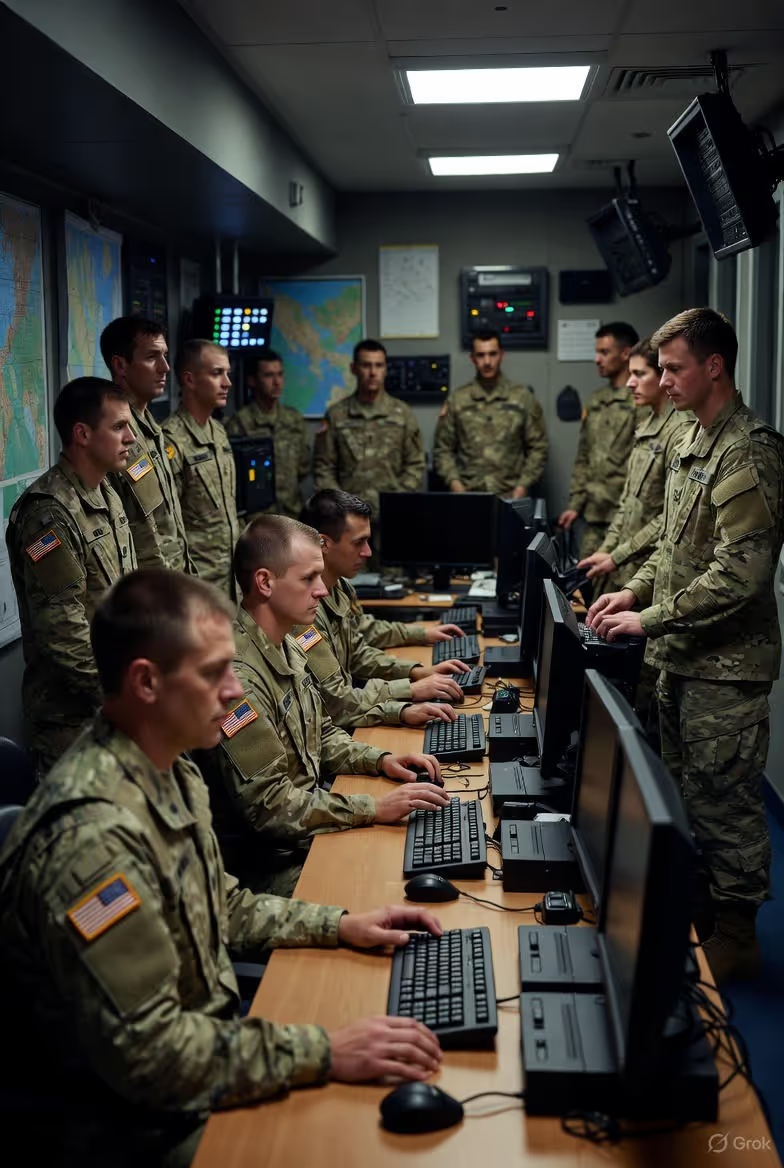
Before we can redefine the sleep score, we must first understand the landscape of those it must serve. Shift work is not a monolith; it is a vast and varied ecosystem operating in the shadow of the 9-to-5 world. It encompasses the nurse starting her rounds at 7 PM, the baker firing his ovens at 2 AM, the software engineer in Singapore coordinating with a team in San Francisco, and the emergency dispatcher whose “weekend” falls on a Tuesday and Wednesday.
This workforce is the unseen army that keeps our hospitals running, our supply chains moving, our power grids stable, and our cities safe. According to the Bureau of Labor Statistics, over 16 million Americans work evening, night, or rotating shifts, a figure that doesn’t even capture the growing gig economy and 24/7 digital operations. Globally, the number is in the hundreds of millions. Their schedules break down into distinct, challenging patterns:
The psychological and social toll is profound. Shift workers often speak of living in a parallel universe—awake when the world sleeps, sleeping when the world lives. They miss family dinners, weekend social events, and the simple, synchronizing rhythm of community life. This "social jet lag" leads to feelings of isolation and can strain relationships. The financial necessity of the job battles daily with a deep-seated biological and social longing for normalcy.
Yet, for all its challenges, shift work is not going away. Our global, always-on economy depends on it. Therefore, the goal cannot be to simply pathologize these schedules. Instead, we must innovate our approach to health and wellness within them. The first step is to move beyond applying daytime solutions to nighttime problems and to build a framework for understanding health that starts from a place of "different," not "deficient." This begins with a hard look at the body’s internal clock and why it rebels so fiercely against the graveyard shift.

To understand the shift worker’s sleep struggle is to understand chronobiology—the science of our body’s natural rhythms. At the core of this is the circadian rhythm, a roughly 24-hour internal clock housed in the suprachiasmatic nucleus (SCN) of the brain. This master clock is the conductor of a grand physiological orchestra, dictating the ebb and flow of hormones, body temperature, digestion, and cellular repair.
The SCN is set primarily by light. Specialized cells in the retina detect blue-wavelength light and send a direct signal: "It is daytime." This suppresses the production of melatonin, the sleep-promoting hormone, and cues the release of cortisol to promote alertness. As darkness falls, melatonin rises, ushering in sleepiness and a drop in core body temperature.
The night shift worker does the impossible: they demand alertness during the biological night and attempt sleep during the biological day. The result is a state of permanent internal desynchronization. Key systems fall out of alignment:
This isn't a matter of willpower. It’s a fundamental biological conflict. The body’s systems are speaking different time zones. The immune system may be priming for activity while you’re trying to sleep; your liver is preparing for a metabolic slowdown while you’re eating a meal. This chronic misalignment is classified by the World Health Organization as a probable carcinogen, linked to increased risks for breast cancer, colorectal cancer, and heart disease.
The takeaway is critical: Poor sleep for a shift worker is not a personal failing, but a predictable physiological response. Measuring their sleep with a tool calibrated for a circadian-aligned individual is like measuring distance with a scale—it’s the wrong tool for the dimension you’re assessing. To accurately gauge wellness in this context, we need metrics that account for this rebellion, not ignore it.
In the quest for better health, millions have turned to wearable technology. Devices promise insights through a nightly "sleep score"—a neat, often color-coded number summarizing sleep duration, depth, and continuity. For the day worker, this can be a useful feedback loop. For the shift worker, it can become a source of demoralization and misinformation.
Standard sleep scores are built on algorithms trained with data from predominantly daytime-sleeping populations. Their benchmarks are rooted in a single, unwavering assumption: that sleep occurs in a consolidated block during the biological night. When a shift worker’s data hits this algorithm, it’s judged against an irrelevant standard, leading to several critical failures:
1. The Timing Blind Spot: A score might penalize you for "going to bed" at 9 AM, marking it as "late" or "irregular," completely missing the point that this is your legitimate, necessary bedtime. It cannot distinguish between socially delayed sleep and occupationally mandated sleep.
2. The Daytime Sleep Penalty: Daytime sleep is, by its nature, lighter and more fragmented. It contains less deep, slow-wave sleep and is more easily disturbed by light, noise, and temperature fluctuations. An algorithm expecting the architecture of nighttime sleep will consistently rate this as "poor quality," even if it is the best possible sleep achievable under the circumstances.
3. The Nap Conunderation: Strategic napping is a cornerstone of shift work survival. A pre-shift "prophylactic nap" or a post-shift "recovery nap" can be vital for safety and well-being. Most standard trackers either ignore naps under a certain duration, mislabel them as "restful periods," or, worse, count them as nighttime sleep interruptions, further dragging down your score.
4. The Circadian Context Vacuum: The score has no context for when you are awake. It doesn’t know that your elevated resting heart rate at 2 AM is a sign of circadian stress, not just poor fitness. It can’t correlate your sleep data with the fact that you are active during your body’s biological low point.
This creates a dangerous cycle: You follow the device’s generic advice ("achieve more deep sleep," "be consistent"), fail miserably because the advice is physiologically impossible for you, and end up feeling defeated. You might dismiss the data entirely, throwing away a potential tool for insight, simply because its presentation is so profoundly wrong for your life.
The consequence is more than frustration; it’s a missed opportunity. Beneath the flawed score lies rich, raw physiological data—heart rate variability (HRV), skin temperature, movement—that, if interpreted through the correct lens, could unlock genuine understanding. What we need is not to abandon tracking, but to transform the metric. We need a sleep score that asks not "How well did you sleep compared to a day walker?" but "How well did you sleep for your schedule?" and "How effectively are you recovering given the circadian burden you are under?" This is the cornerstone of a shift-work-centric approach to wellness.
If the old sleep score is a flawed mirror, the new one must be a custom-fitted lens. A Shift-Work Optimized Sleep Score is not a single number plucked from the same algorithm with different thresholds. It is a multidimensional assessment framework built on core principles that respect the reality of non-linear schedules. It shifts the focus from rigid ideals to intelligent adaptation.
This new benchmark evaluates sleep across several interconnected pillars, each weighted to reflect the unique priorities of a shifted circadian system:
Pillar 1: Sleep Opportunity vs. Sleep Achievement (The Reality Check)
Instead of chastising you for not getting 8 hours, this metric first establishes your realistic "sleep opportunity window." How much time did you genuinely have between shifts, family obligations, and commute? If your opportunity was 6 hours and you achieved 5.5 hours of actual sleep, your efficiency is excellent (over 90%). This reframes success based on your constraints, not an abstract ideal.
Pillar 2: Circadian Alignment Quality (The Biological Cost)
This is the most innovative layer. Using proxies like the timing of your lowest heart rate and skin temperature fluctuations, it estimates the degree of strain your sleep schedule places on your circadian system. A daytime sleep after a night shift will naturally score lower on "circadian alignment" than a nighttime sleep on your days off—and that’s an informative data point, not a failure. It quantifies the physiological cost of your shift, helping you plan for higher recovery needs.
Pillar 3: Sleep Consolidation (Within the Fragment)
Since consolidated sleep is harder for shift workers, this metric assesses the quality within your main sleep block. How long did it take to fall asleep (daytime sleep latency is often longer)? How many awakenings occurred? Critically, it distinguishes between brief, natural arousals and lengthy disruptions caused by external noise or light, offering clear targets for environmental optimization.
Pillar 4: Strategic Recovery Value (Naps & Rest Periods)
Here, naps are not an afterthought but a central component. The score evaluates the timing, duration, and physiological depth of naps. A 90-minute nap that includes slow-wave sleep before a night shift is scored as a major wellness win. It credits you for intelligent, strategic rest that directly supports alertness and safety.
Pillar 5: Prevailing Over Precedent (Trend Analysis)
The most powerful insight comes from trends, not nightly snapshots. Is your sleep efficiency improving week-over-week despite a rotating schedule? Is your circadian strain lower on a fixed night schedule compared to a rotating one? This longitudinal view helps you and your healthcare provider identify which schedule patterns your body tolerates best and what interventions are truly working.
Imagine waking up after a day sleep and seeing a score that says: "Sleep Achievement: 92%. Circadian Strain: High (Expected). Nap Recovery: +Optimal. Overall Readiness: Managed." This is data that empowers. It tells you that within the difficult context of your shift, you did exceptionally well, validates your experience of strain, and credits you for proactive recovery strategies. This is the paradigm shift—from grading against a standard to coaching within a context. For a deeper look at how next-generation technology is making this possible, you can explore the science behind Oxyzen's adaptive analytics.

With a new scoring framework to guide us, we turn to the practical art of making sleep possible. For the shift worker, the bedroom isn't a sanctuary of night; it's a fortress that must be defended against the day. Mastering this environment is the single most impactful step toward better sleep. This goes far beyond "make it dark." It's a holistic engineering project.
Light: The Arch-Nemesis (and Potential Ally)
Light is your circadian rhythm's primary cue. Blocking it during sleep is non-negotiable.
Sound: The Unpredictable Intruder
Daytime is inherently noisier. Traffic, lawnmowers, children playing, garbage trucks—these are all sleep assassins.
Temperature: The Forgotten Regulator
Your core body temperature needs to drop to initiate and maintain sleep. This is harder during the day when ambient temperatures are rising.
Ritual and Association: Programming the Wind-Down
Your brain needs clear signals that sleep is coming, even if it's 9 AM.
Perfecting this environment turns your sleep space into a controlled laboratory, where the variables of day are neutralized, giving your rebellious biology its best chance to rest. For more personalized strategies and user-tested tips from others who live this reality, the Oxyzen blog is a continually updated resource.
What and when you eat is not just about energy for your shift; it's a powerful tool for circadian entrainment and metabolic protection. The notorious "shift worker 15" (or more) isn't just about convenience food; it's a direct result of eating when the body's metabolism is least prepared. We can fight back with chrononutrition—aligning food intake with internal rhythms.
The Core Principle: Feed Your Day, Not Your Night
Even though you're awake, your internal organs follow a nighttime rhythm during a night shift. Your pancreas produces less insulin, your gut slows down, and your liver expects a fast. Eating a large, carbohydrate-heavy meal at 2 AM is like forcing a sleeping digestive system into a marathon.
Strategic Meal Timing Framework:
Food as a Zeitgeber (Time-Giver):
Just like light, food intake is a secondary circadian cue. Consistent meal times—even if they are at 8 PM and 2 PM—help anchor your rhythm. The worst thing you can do is eat at wildly different times every day/night. Find your shifted schedule and stick to it as rigidly as possible, even on days off if you’re on a fixed night schedule.
Hydration with a Strategy:
Dehydration worsens fatigue. Drink plenty of water throughout your shift. However, be strategic in the 1-2 hours before your target sleep time to minimize disruptive bathroom trips during your precious sleep block. Reduce caffeine intake in the second half of your shift. A general rule: no caffeine within 6 hours of your planned bedtime.
This approach treats food as a functional tool for shift survival, not just comfort. It’s about sending the right metabolic signals at the right internal time, protecting your long-term health while providing steady energy. It’s a tangible way to take control of one of the most damaging aspects of shift work. For persistent questions on tailoring this to your specific schedule, our comprehensive FAQ offers detailed guidance.

In the vocabulary of shift work, the nap is not a sign of laziness; it is a strategic tactical tool. When used correctly, it can enhance alertness, improve reaction time, boost mood, and provide a measurable buffer against the cumulative sleep debt that plagues shift workers. The key is moving from accidental dozing to intentional, structured napping.
The Two Key Nap Types:
The Nap Sweet Spot: Timing and Duration
Creating the Nap Sanctuary:
You can’t always nap in your ideal bed. A "nap kit" can be transformative: a good eye mask, comfortable earplips or noise-cancelling headphones, a small travel pillow, and a blanket. In your car (parked safely) or a designated rest room, these tools can help you create a micro-sanctuary for rapid sleep onset.
Institutional Responsibility:
The most progressive workplaces are recognizing the value of sanctioned napping. Some hospitals, tech companies, and manufacturers are installing designated nap pods or quiet rooms. This isn't a perk; it's a safety and performance intervention with a clear ROI in reduced errors and accidents. If you are in a position to advocate for such policies, frame it in the language of risk management and productivity.
Mastering the nap transforms it from a guilty pleasure into a credentialed skill. It is an acknowledgment that in a world of fragmented sleep, you must sometimes meet your body’s need for restoration in fragments. When tracked properly—credited in your sleep score for its recovery value—it becomes a celebrated part of your wellness strategy, not a hidden secret. Reading about real user experiences can reveal how others have successfully integrated strategic napping into their demanding routines.
When your work schedule is in constant flux, the instinct is to let everything else be fluid too. This is a trap. The antidote to external chaos is internal order. For the shift worker, cultivating iron-clad routines around sleep, meals, and even social life is not about rigidity—it’s about creating islands of predictability in a turbulent sea. This is known as strengthening your social rhythm.
The Non-Negotiable: Sleep-Wake Consistency (Even When It’s Hard)
The single most powerful signal you can send your circadian clock is consistency. This is brutally difficult with rotating shifts, but the principle remains: On a given shift type, be militant.
The Power of the Wind-Down & Wake-Up Ritual:
As discussed, rituals are crucial. But their power multiplies with consistency. The same 5-minute breathing exercise before bed, the same order of actions (lock door, set alarm, put on eye mask), the same song or sound upon waking—these become Pavlovian cues that trigger sleep or alertness faster, overriding confused biological signals.
Social Rhythm Therapy: Scheduling Connection
Social jet lag—the misalignment between your schedule and your loved ones’—is a major source of stress. Combat it by scheduling your social life with the same seriousness as a work meeting.
The Days Off Dilemma: To Flip or Not to Flip?
This is the million-dollar question. For fixed night workers, maintaining the same schedule on days off is best for your body but hardest for your social life. For rotating workers, a full flip is often necessary. There is no perfect answer, but there is a guiding principle: Minimize the number of transitions. The more you flip your schedule, the greater the cumulative circadian strain. If you rotate, aim for longer stretches (e.g., 2-3 weeks) on a given shift before rotating. The science is clear: the human body never fully adapts to a rotation faster than 7-10 days, so rapid rotations are the most damaging of all.
By becoming the unshakeable anchor of your own routines, you provide your stressed physiology with the predictability it craves. You build a fortress of habit that protects your sleep, your health, and your sanity against the unpredictable tides of shift work. This disciplined approach is at the heart of our company's mission to bring structure to chaos.
While sleep is the cornerstone, true readiness for the demands of shift work is a whole-body equation. Beneath the surface of consciousness, your nervous system, cardiovascular system, and metabolism are constantly communicating your internal state. For the shift worker, learning to track these "silent metrics" is like gaining access to a real-time dashboard of your biological resilience. This moves wellness from guesswork to guided management.
Heart Rate Variability (HRV): The Golden Metric of Stress and Recovery
HRV is the subtle variation in time between successive heartbeats. Contrary to intuition, a higher HRV is generally better—it indicates a resilient, adaptable autonomic nervous system (ANS) that can smoothly toggle between stress (sympathetic) and rest (digest-and-repair, parasympathetic) modes.
For shift workers, HRV is a critical early-warning system.
Resting Heart Rate (RHR) and Its Nocturnal Dip:
Your RHR naturally dips during sleep as the parasympathetic system takes over. A blunted or absent nocturnal dip is a strong indicator of poor sleep quality and ANS imbalance. For the daytime sleeper, tracking this dip is crucial. If your smart ring or tracker shows your heart rate stays elevated throughout your "night" sleep, it confirms your sleep is not physiologically restorative, even if you were unconscious for 7 hours. This data directly validates the experience of waking unrefreshed and points squarely to environmental disruptions (light, noise, heat) or circadian misalignment as the culprit.
Skin Temperature and Readiness:
Core body temperature follows a circadian rhythm, but peripheral skin temperature provides insights into sleep onset and ANS activity. A natural rise in skin temperature at the extremities (like your finger, where a smart ring sits) signals vasodilation and the body’s preparation for sleep. If this rise is delayed or erratic during your pre-sleep wind-down, it’s a sign your body isn’t getting the "it's time to sleep" cue, likely due to late light exposure, a heavy meal, or stress.
Respiratory Rate During Sleep:
An elevated respiratory rate during sleep can be a sign of sleep disruption, underlying stress, or even the onset of sleep apnea—a condition whose risk is elevated in shift workers. A steady, low rate indicates calm, stable sleep.
Integrating the Data: The Readiness Score
The most advanced wellness platforms synthesize these metrics—HRV, RHR, temperature, sleep data—into a single Readiness Score. For a shift worker, this score answers the essential question: "Given the strain my body has been under, how capable am I of handling stress today?"
A high readiness score after two night shifts might mean your sleep environment and recovery naps are working brilliantly. A low score might tell you to be extra vigilant about fatigue, postpone demanding cognitive tasks if possible, and double down on recovery. This is personalized, adaptive intelligence. It stops you from pushing blindly through fatigue and starts a dialogue with your own physiology. The goal is to make the invisible visible, transforming vague feelings of "being rundown" into specific, actionable data. To see how this integrated approach comes to life, you can discover the Oxyzen story of innovation.
The battle for health on shift work is not only fought in the bedroom and the body; it is waged in the mind. The psychological load is immense: chronic fatigue, social isolation, and the constant friction between biological needs and work demands can lead to burnout, anxiety, and a diminished sense of control. Building psychological resilience is therefore not a soft skill, but a critical survival tool. It involves reframing your reality and employing targeted cognitive strategies.
Reframing the Narrative: From Victim to Strategist
The language we use internally shapes our reality. The narrative of "I'm ruined," "This is killing me," or "I have no life" entrenches a sense of victimhood and powerlessness. The first mental shift is to adopt the identity of a Circadian Strategist.
This reframe is empowering. It turns every successful nap, every well-blocked light source, every strategic meal into a victory in your personal campaign.
Mindfulness and Fatigue Awareness:
Fatigue impairs judgment, including the ability to perceive your own impairment. Mindfulness practices train you to become a more objective observer of your own state.
Cognitive Behavioral Therapy for Insomnia (CBT-I) Principles:
CBT-I is the gold-standard treatment for insomnia and its principles are highly adaptable for shift work sleep disorder.
Building a Support System and Advocating for Yourself:
Resilience is not built in isolation. Talk to your family about what you need. Educate them on circadian science. Show them your sleep score data. When they understand it's biology, not laziness, they become allies in guarding your sleep.
At work, advocate from a position of science and safety. Frame requests for schedule changes, nap spaces, or improved lighting not as personal complaints, but as evidence-based risk mitigation for you, your colleagues, and the public you serve. You are not just a worker; you are a human operating under extreme biological constraints.
Mastering this mental layer transforms the experience. The external schedule may not change, but your internal relationship to it can. You move from enduring to managing, from suffering to strategizing. This psychological fortitude is what allows you to sustainably implement all the physical and environmental tactics, turning them from chores into a practiced, empowering discipline.
In the quest for a shift-work-optimized life, technology is your potential force multiplier—but only if you choose the right tool and interpret its data through the correct lens. The market is flooded with wearables, from smartwatches to fitness bands to the emerging category of smart rings. For the shift worker, the choice is not aesthetic; it's functional. The right device must capture the nuanced, continuous physiological data you need and present it through a shift-aware framework.
Why the Form Factor Matters: The Case for the Smart Ring
For 24/7 biometric tracking, especially for sleep, the smart ring has distinct advantages:
Essential Features for the Shift Worker's Device:
When evaluating a wearable, look for these non-negotiable features:
How to Use Your Wearable Proactively:
Owning the tool is only step one. You must become an active interpreter.
The ultimate goal is a feedback loop where the technology provides the objective report card, and you, the informed Circadian Strategist, adjust your behaviors. This closed-loop system is where sustainable adaptation happens. For those researching which device might offer this shift-work-centric approach, learning more about Oxyzen's specific features is an excellent place to start your evaluation.
The daily grind of fatigue is urgent, but the slow, silent accumulation of health risks is the profound, long-term threat of shift work. The data is unequivocal: chronic circadian disruption is a systemic toxin, linked to a sobering list of conditions. Understanding these risks is not meant to incite fear, but to fuel informed, preventive action. The strategies we've outlined are not just about feeling better tomorrow; they are a long-term investment in disease prevention.
The Established Links:
Building Your Defense Plan:
Awareness must translate into a proactive, multi-decade health strategy.
This long-game perspective shifts the motivation. That blackout curtain isn't just for better sleep tonight; it's a tool to protect your melatonin and potentially lower cancer risk. That strategic meal timing isn't just for energy; it's a defense against diabetes. You are not just getting through your shift; you are actively writing the health story of your future self. For ongoing support and resources on building this resilient lifestyle, our blog offers continuous insights.
No shift worker is an island. Lasting success and health depend not just on individual grit, but on a supportive ecosystem. This ecosystem has three layers: the workplace, the healthcare system, and your personal life. Cultivating understanding and advocacy within each is essential.
Transforming the Workplace: From Liability to Partnership
Progressive employers are beginning to see shift worker health not as a personal problem, but as an operational, safety, and financial imperative. Fatigue is a leading cause of errors, accidents, and absenteeism. You can be an agent for change by advocating for evidence-based policies:
Educating Your Healthcare Provider:
Walking into a doctor's office as a shift worker can be frustrating. The advice to "get 8 hours of sleep at night" is not just unhelpful; it's alienating. You must become an educator and a partner in your care.
Fortifying Your Personal Life:
Your home must be your sanctuary and your family your allies.
Building this ecosystem turns a solitary struggle into a shared endeavor. It externalizes the responsibility where it belongs: not solely on your shoulders, but on the structures and support networks around you. It acknowledges that health is not created in a vacuum, but in a community that understands and accommodates difference. This spirit of community and shared mission is at the core of our story and values.
The principles we've established form the universal grammar of shift work health. Now, we must translate them into the specific dialects of your schedule. A fixed night nurse, a rotating plant operator, and an early-morning pilot face distinct challenges. Here, we develop advanced, tailored protocols for the most common shift patterns, moving from general advice to a precise battle plan.
Protocol A: The Fixed Night Shift (The Permanent Expatriate)
Strategy: Embrace the permanent shift. Minimize circadian flipping at all costs.
Protocol B: The Rapidly Rotating Shift (The Constant Jet-Lagger)
*Strategy: Damage control and rapid recovery. The goal is not adaptation (impossible in <7-10 days), but resilience through the storm.*
Protocol C: The Early Morning Shift (The Sleep Thief)
Strategy: Defend the tail-end of your sleep cycle and master the ultra-early wind-down.
Protocol D: The Irregular or On-Call Schedule (The Wild Card)
Strategy: Hyper-vigilance and opportunistic recovery. This is the most advanced level of circadian jiu-jitsu.
By adopting the specific protocol for your schedule, you move from applying generic advice to executing a custom-engineered plan. This precision dramatically increases your chances of success, turning abstract principles into daily, lived actions.
Theory and protocols come alive in the stories of those who live them. Let’s examine how the principles of shift-work-optimized health manifest in the gritty reality of different professions. These case studies illustrate the unique challenges and creative solutions that define life on a shifted schedule.
Case Study 1: Isabel, ICU Nurse (Fixed Night Shift)
Case Study 2: Marcus, Chemical Plant Operator (Rapid 2-2-3 Rotating Shift)
Case Study 3: Ava, Long-Haul Truck Driver (Irregular, Circadian Chaos)
Case Study 4: Ben, Software Engineer (Remote, Global Team)
These stories demonstrate that while the context varies wildly, the core tenets remain: control your environment, use data to guide decisions, communicate your needs, and reframe your relationship with time. They are proof that with strategy, the different sleep of the shift worker can become a managed, understood, and even optimized part of a healthy, high-performing life. For more inspiration from individuals who have transformed their relationship with non-traditional schedules, you can read their firsthand testimonials.
Despite a shift worker's best efforts with behavioral and environmental strategies, there are times when the circadian disruption is so severe, or the health consequences so pronounced, that professional medical intervention is necessary. Seeking this support is not a sign of failure; it is the logical next step in a comprehensive health strategy. Understanding the available tools empowers you to have informed conversations with healthcare providers.
Diagnosis: Shift Work Sleep Disorder (SWSD)
The first step is formal recognition. SWSD is a circadian rhythm sleep disorder characterized by:
Bringing several weeks of your wearable data to a sleep specialist can dramatically accelerate this diagnosis.
Pharmacological Aids: A Double-Edged Sword
Medications should only be considered under strict medical supervision, as part of a broader management plan.
The Power of Light Therapy: Prescription-Strength Timing
A sleep specialist can prescribe a precise light therapy regimen. This goes beyond a generic light box:
Cognitive Behavioral Therapy for Insomnia (CBT-I), Adapted:
A therapist trained in CBT-I can tailor the techniques for shift work. They can help you design a stimulus control plan for a daytime bedroom, manage anxiety about sleep, and develop cognitive restructuring specific to the frustrations of your schedule.
The Role of Chronobiology and Occupational Health Specialists:
In some major medical centers, you can find specialists who bridge sleep medicine and occupational health. They can provide comprehensive assessments, including dim-light melatonin onset (DLMO) tests to map your precise circadian phase, and offer sophisticated advice for complex schedules. They can also write formal accommodations letters for your employer, recommending specific schedule changes or environmental modifications as a medical necessity.
Knowing When to Escalate:
Seek professional help if you experience:
Partnering with a skilled professional adds a powerful layer to your strategy. They provide validation, advanced tools, and, when necessary, medical support to protect your health and career. It is the ultimate act of advocating for yourself within a system not designed for your rhythm. For any questions on how to prepare for such a consultation, our FAQ section offers guidance on data presentation.
The challenges of shift work are not static, and neither are the solutions. We stand at the cusp of a transformation driven by technological innovation, evolving workplace policies, and a long-overdue cultural shift in how we value the health of our night-time workforce. The future promises not just better tools for adaptation, but systems designed to prevent harm in the first place.
Technological Frontiers: Predictive and Integrated Intelligence
The next generation of wearables and AI will move beyond tracking to predicting and prescribing.
Policy and Workplace Design: From Accommodation to Optimization
The future workplace will be designed with circadian health as a core principle of operational safety and ethical employment.
Cultural Shift: Recognition and Respect
The most profound change will be societal. We are moving towards:
This future is not a fantasy; it is an inevitability driven by the convergence of health data, human rights awareness, and economic imperative. The technology to begin this transition, like advanced physiological tracking, is already here. It is now a matter of adoption, advocacy, and will. The companies leading this charge understand that their mission is about more than a product; it's about catalyzing a systemic shift. You can learn more about the vision driving this change.
After this deep exploration of principles, protocols, and futures, the final task is synthesis. Knowledge is only power when it is organized and actionable. It’s time to distill everything into your personal Shift Work Playbook—a living document, digital or physical, that contains your unique blueprint for health. This is your master reference as a Circadian Strategist.
Section 1: My Foundations (The Non-Negotiables)
Section 2: My Schedule-Specific Protocols
Create a subsection for each shift type you work.
Section 3: My Health Dashboard
Section 4: My Support Network & Scripts
Section 5: My Recovery Toolkit (When Things Go Wrong)
How to Use Your Playbook:
Creating this Playbook is the ultimate act of agency. It transforms you from a passenger battered by the waves of shift work into the captain, navigator, and engineer of your own ship. It declares that your health is a complex, worthy project, and you are its most dedicated manager.
Your Trusted Sleep Advocate: Sleep Foundation — https://www.sleepfoundation.org
Discover a digital archive of scholarly articles: NIH — https://www.ncbi.nlm.nih.gov/
39 million citations for biomedical literature :PubMed — https://pubmed.ncbi.nlm.nih.gov/
Experts at Harvard Health Publishing covering a variety of health topics — https://www.health.harvard.edu/blog/
Every life deserves world class care :Cleveland Clinic - https://my.clevelandclinic.org/health
Wearable technology and the future of predictive health monitoring :MIT Technology Review — https://www.technologyreview.com/
Dedicated to the well-being of all people and guided by science :World Health Organization — https://www.who.int/news-room/
Psychological science and knowledge to benefit society and improve lives. :APA — https://www.apa.org/monitor/
Cutting-edge insights on human longevity and peak performance:
Lifespan Research — https://www.lifespan.io/
Global authority on exercise physiology, sports performance, and human recovery:
American College of Sports Medicine — https://www.acsm.org/
Neuroscience-driven guidance for better focus, sleep, and mental clarity:
Stanford Human Performance Lab — https://humanperformance.stanford.edu/
Evidence-based psychology and mind–body wellness resources:
Mayo Clinic — https://www.mayoclinic.org/healthy-lifestyle/
Data-backed research on emotional wellbeing, stress biology, and resilience:
American Institute of Stress — https://www.stress.org/


