Sleep Score Goals: Setting Realistic Targets for Improvement
Set realistic goals, like improving your average score by 5 points over a month, rather than chasing a perfect 100.
Sleep Score Goals: Setting Realistic Targets for Improvement
We live in an age of quantification. We track our steps, monitor our heart rate, and analyze our calories. But for many, the most elusive and critical metric of all remains shrouded in mystery: the quality of our sleep. You wake up feeling groggy, reach for your smartphone or smart ring, and are met with a single, often-judgmental number—your Sleep Score. A dismal 62. A mediocre 78. A glorious, but rare, 92. What does it truly mean? More importantly, how do you move from where you are to where you want to be, without falling into the trap of frustration and unrealistic expectations?
Chasing an arbitrary, perfect 100 night after night is a recipe for burnout and "orthosomnia"—an unhealthy obsession with perfect sleep data. True improvement isn’t about hitting a mythical peak; it’s about understanding the symphony of biological processes that score represents and conducting them toward more harmonious, restorative nights. This journey requires moving beyond the number itself to the rich data beneath it: the stages of sleep, the heart rate variability, the restlessness, and the environmental factors your device, like an advanced smart ring from Oxyzen.ai, captures silently through the night.
Setting realistic sleep score goals is a foundational practice in modern wellness. It’s the difference between feeling empowered by your data and enslaved by it. This guide is designed to be your comprehensive manual. We will deconstruct the sleep score, establish where you are starting from, define what "realistic" truly means for your unique physiology and lifestyle, and build a progressive, adaptable framework for improvement. By the end, you will have a personalized blueprint not for chasing a score, but for cultivating genuinely better sleep, with the score simply serving as a helpful, guiding metric along the way.
The Anatomy of a Sleep Score: What Your Number Really Means
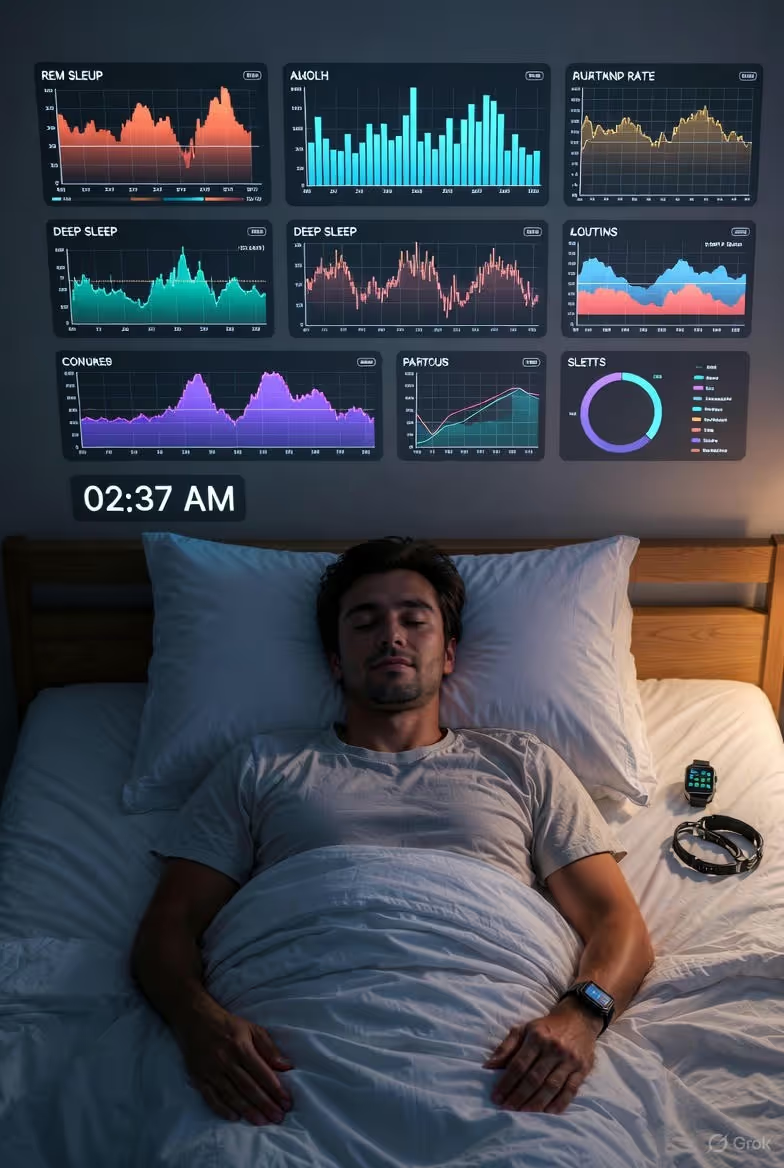
Before you can set a goal, you must understand what you are measuring. Your sleep score is not a random grade. It’s a composite algorithm, a digital story woven from multiple threads of physiological data. While every platform and device has its proprietary formula, the core components are remarkably consistent. Unpacking these is the first step to taking intelligent action.
The Pillars of Your Score Most robust sleep scores are built on four to five key pillars:
Sleep Duration: This is the most straightforward metric—total time spent asleep. It forms the bedrock of your score. Consistently hitting the recommended 7-9 hours for adults provides a strong foundation, but it’s just the beginning. As you’ll learn, how you spend that time is far more critical.
Sleep Quality (or Depth): This is where the magic happens. Quality metrics analyze the architecture of your sleep cycle. They track the proportion of time you spend in restorative Deep Sleep (crucial for physical repair and immune function) and cognitively vital REM Sleep (where dreaming, memory consolidation, and emotional processing occur). A long night of light, fragmented sleep will score lower than a shorter but more structurally sound one.
Restoration: Often measured through Heart Rate (HR) and Heart Rate Variability (HRV) during sleep. A significant dip in your average heart rate and a rise in HRV overnight are powerful indicators of your nervous system’s ability to shift into "rest-and-digest" mode. This restorative dip is a hallmark of efficient, high-quality sleep.
Restlessness & Awakenings: The enemy of sleep continuity. The algorithm detects periods of tossing, turning, and micro-awakenings you may not even remember. Frequent disruptions fracture the sleep cycle, preventing you from progressing smoothly through deep and REM stages. Consistent calm throughout the night boosts this component.
Timing (Sleep Consistency): Going to bed and waking up at consistent times, even on weekends, reinforces your body’s natural circadian rhythm. Scores often reward regularity, as a stable rhythm makes sleep more efficient and predictable.
Interpreting the Spectrum: From Poor to Excellent A score of 55 is sending a very different signal than an 85. Generally, the spectrum breaks down like this:
Poor (Under 60): This indicates significant disruption. You are likely missing duration targets, experiencing highly fragmented sleep, and getting minimal deep/REM sleep. Daytime fatigue, brain fog, and irritability are common.
Fair (60-74): You’re getting some sleep, but it’s inefficient or inconsistent. Perhaps you hit 7 hours but with lots of restlessness, or you get a solid 6 hours on a weeknight but wildly vary your schedule on weekends. There’s clear room for optimization.
Good (75-84): This is the range of solid, functional sleep for many people. You’re meeting most core needs, but one or two pillars might be lagging—perhaps your deep sleep is a bit low, or your bedtime varies by an hour.
Excellent (85-100): This reflects sleep that is both sufficient and highly efficient. Duration is on target, sleep architecture is robust with balanced stages, restoration metrics are strong, and disruptions are minimal. Waking up feeling truly refreshed is the norm here.
Your smart ring from Oxyzen.ai does the heavy lifting of collecting and synthesizing this data. To truly learn more about how this technology creates your nightly story, exploring the science behind the sensor fusion is fascinating. The key takeaway here is that your sleep score is a diagnostic dashboard, not a verdict. Each component offers a clue. The goal isn’t to perfect all at once, but to identify which levers—duration, depth, or continuity—will give you the most impactful return on investment for your efforts.
Establishing Your Personal Baseline: The 2-Week Audit
You cannot navigate to a new destination without first pinpointing your exact coordinates. In the realm of sleep improvement, this means conducting a deliberate, non-judgmental baseline audit. Jumping straight to "I must get a 90!" is like deciding to run a marathon without knowing if you can comfortably walk a mile. The baseline phase is about observation, not alteration.
Why Two Weeks? A single night is a snapshot, often distorted by a stressful day, a late workout, or an unusual meal. A week provides a better view, but a 14-day period typically captures the full cycle of your lifestyle—workdays, weekends, and any recurring weekly stressors. It smoothes out outliers and reveals your true, average starting point.
The Audit Protocol: Data & Journal
Wear Your Device Consistently: This is non-negotiable. Wear your tracking ring or device every single night for two weeks. Ensure it’s properly fitted (as you might find guidance on in the Oxyzen.ai FAQ) for accurate data collection.
Record the Core Metrics Daily: Each morning, note down your total sleep score and its key sub-scores: duration, deep sleep, REM sleep, resting heart rate, and restlessness. A simple notes app or spreadsheet works perfectly.
The Power of the Subjective Journal: Alongside the cold data, keep a brief sleep journal. Rate your subjective feeling upon waking (1-10 scale). Note anything that might have influenced your sleep: caffeine timing, alcohol consumption, evening screen use, stress level, meal size/timing, and exercise. Did you wake up with an alarm or naturally?
Analyzing Your Patterns: Finding the Story After 14 days, step back. Don’t just average the numbers; look for patterns.
Calculate Averages: What is your mean sleep score? Average sleep duration? Average deep sleep percentage?
Identify Variability: Are weekends drastically different from weekdays? Which metric is most volatile?
Correlate with Journal Entries: This is the golden insight. Did your score plummet on nights you had wine with dinner? Did you feel subjectively worse on mornings after a late-night work session, even if the score was okay? Did deep sleep increase on days you exercised?
Defining Your "Why" Your baseline audit does more than give you numbers; it clarifies your motivation. Is your "why" to have more energy for your kids in the afternoon? To improve your athletic recovery and performance? To sharpen your focus at work? To simply stop feeling like you need a coffee IV to function? A clear, personal "why" is the fuel that will keep you committed when the process gets challenging. As many users have shared on the Oxyzen.ai testimonials page, connecting data to a personal life improvement is the moment everything clicks.
This audit isn’t about judging your sleep as "bad." It’s about establishing an objective, compassionate starting line. You are gathering the essential intelligence required to build a strategy that works for you, not a generic internet list of sleep hacks. With this foundation, you are now ready to move from observation to intention.
Defining "Realistic": The Myth of Perfection vs. Sustainable Progress
In a culture obsessed with optimization and biohacking, it’s easy to fall into the trap of believing that a perfect sleep score is not just possible, but required for health. This mindset is not only counterproductive—it’s scientifically flawed. "Realistic" in sleep improvement has nothing to do with settling for less. It has everything to do with aligning your goals with biological reality, individual variability, and the messy, wonderful complexities of human life.
The Biological Ceiling: You Are Not a Machine First, acknowledge the inherent limits. Sleep architecture—the proportion of light, deep, and REM sleep—is influenced by age, genetics, and overall health. A 20-year-old athlete will naturally spend more time in deep sleep than a 70-year-old. Furthermore, night-to-night variability is normal. Your body’s needs fluctuate based on physical exertion, immune activity, and mental stress. A "realistic" goal accepts that some variation is healthy and expected; the trendline matters more than any single data point.
The Law of Diminishing Returns Imagine your sleep quality on a scale from 0 to 100. Moving from a score of 60 (poor, dysfunctional sleep) to 75 (good, functional sleep) can be life-changing. The gains in energy, mood, and cognition are massive. Moving from 85 (excellent) to 95 (near-perfect) might require Herculean efforts—extreme rigidity in schedule, obsessive control over environment and diet—for marginal, possibly imperceptible, subjective returns. A realistic goal identifies the "sweet spot" where effort sustainably meets meaningful benefit, not the point of exhaustion.
Introducing the "Minimum Viable Sleep" (MVS) and "Target" Framework To combat all-or-nothing thinking, establish two-tiered goals:
Your Minimum Viable Sleep (MVS): This is your non-negotiable baseline for health and basic functioning. It’s the score and duration you must protect at all costs, even on busy, stressful, or unusual days. For someone starting at a 65 average, an MVS might be "I will protect a 60 score and 6.5 hours of sleep, no matter what." This creates a resilient floor.
Your Target Zone: This is your realistic, optimal range for standard nights. It’s aspirational but achievable with consistent good habits. Using the same example, a Target Zone might be "Aim for a score between 75-82, with 7-7.5 hours of sleep." This provides a healthy target without the pressure of a single, rigid number.
The 80/20 Rule of Sleep Hygiene Approximately 80% of your results will come from 20% of your efforts. A realistic goal identifies that critical 20% for you. For one person, it might be strictly cutting off caffeine by noon. For another, it might be installing blackout curtains. For a third, it could be implementing a 30-minute wind-down routine. Your baseline audit is key to finding your personal high-impact levers. Trying to overhaul 15 habits at once is a shortcut to failure; mastering one or two foundational ones is the path to sustainable progress.
Embracing realistic goals is an act of self-compassion and strategic intelligence. It’s about working with your biology and lifestyle, not against them. This philosophy aligns deeply with a holistic approach to wellness, one that values long-term balance over short-term extremes—a principle that resonates with the core vision shared at Oxyzen.ai about us. Now, with a grounded mindset, we can begin to build your personalized system for improvement.
The Goal-Setting Framework: SMART Targets for Sleep
With a clear baseline and a realistic mindset, we now translate intention into action. Vague goals like "sleep better" evaporate under the first sign of fatigue or temptation. What we need is a framework for creating goals that are specific, measurable, and anchored in the science of behavior change. The classic SMART framework (Specific, Measurable, Achievable, Relevant, Time-bound) is perfectly suited for sleep optimization.
Applying SMART to Your Sleep Data
Specific: Instead of "get more deep sleep," a specific goal is "increase my average deep sleep duration from 45 minutes to 60 minutes per night." Instead of "sleep longer," try "be in bed with lights out by 10:30 PM on weeknights."
Measurable: This is where your tracking device is indispensable. Every goal must be tied to a metric you can track—a score, a duration, a timing, or a physiological marker like resting heart rate.
Achievable: This draws directly from our "realistic" chapter. Is going from 6 hours to 8.5 hours achievable in a month? Likely not. Is adding 15-20 minutes to your average sleep duration achievable? Absolutely. An achievable goal builds confidence; an impossible one guarantees discouragement.
Relevant: Does this goal matter to your "why"? If your primary complaint is daytime fatigue, a goal focused on reducing nighttime awakenings (improving continuity) is highly relevant. If your goal is athletic recovery, targeting deep sleep improvement is key.
Time-bound: Give your goal a deadline. "I will increase my average sleep score from 72 to 78 within the next 8 weeks." This creates urgency and allows for periodic review.
Process Goals vs. Outcome Goals A critical distinction in sustainable change is focusing on process goals over outcome goals.
Outcome Goal: "Achieve a sleep score of 85." (You don’t have full, direct control over this).
Process Goal: "Implement a consistent 9:30 PM digital curfew for 6 nights per week." (You have full control over this).
Your process goals are the inputs; your sleep score is the output. By faithfully executing your process goals, you create the conditions for the outcome goal to naturally follow. Your energy should be focused on the behaviors you can control.
Example SMART Sleep Goal Suite:
For Duration & Consistency: "For the next 4 weeks, I will be in bed with lights out by 10:45 PM (±15 mins) Sunday through Thursday nights, aiming for a minimum of 7 hours of sleep on those nights."
For Sleep Quality: "Over the next month, I will reduce my average ‘time awake’ metric from 25 minutes to under 15 minutes per night by reading a physical book for 20 minutes before bed instead of using my phone."
For Restoration: "I will lower my average overnight resting heart rate by 3 beats per minute within 6 weeks by introducing 10 minutes of guided diaphragmatic breathing into my pre-sleep routine."
This structured approach turns hope into a plan. It allows you to track not just whether you arrived, but how well you executed the journey. For more insights on weaving these habits into your life, the collection of resources at the Oxyzen.ai blog can be an excellent source of ongoing tips and motivation. Now, let’s prioritize which aspect of your sleep to tackle first.
Prioritizing Your Pillars: Which Sleep Metric to Improve First?
Your baseline audit likely revealed several areas for potential improvement: short duration, low deep sleep, high restlessness, or an inconsistent schedule. Trying to fix everything at once is overwhelming and ineffective. Strategic improvement requires triage—identifying which single pillar, if strengthened, will have the greatest cascading positive effect on your overall sleep and wellbeing.
The Diagnostic Flow: Finding Your Primary Lever Ask yourself these questions, guided by your two weeks of data:
Is my average total sleep duration consistently below 7 hours?
If YES: This is your Priority #1. Insufficient duration is the most fundamental deficit. No amount of sleep quality hacking can fully compensate for a chronic lack of raw sleep time. Improving duration often automatically improves other metrics, as your body gets more opportunity to cycle through deep and REM stages.
First-Step Goal: Focus exclusively on adding time to your sleep window, even if it’s just 15-20 minutes earlier to bed or later to rise. Protect this time as sacred.
Is my sleep duration adequate (7+ hours) but my score still low, with high restlessness/awakenings?
If YES: Sleep Continuity is your primary lever. You’re giving yourself the time, but it’s fragmented and inefficient. This is often tied to environment, stress, or habits.
First-Step Goal: Target reducing disruptions. This could mean addressing environmental factors (temperature, light, noise), managing evening stress, or evaluating diet (e.g., late-night snacks, alcohol).
Is my duration good and continuity fair, but my deep sleep or REM sleep percentages consistently low?
If YES: Sleep Architecture is your key focus. You’re getting enough fragmented sleep, but not the right types of restorative sleep.
First-Step Goal: Focus on behaviors that promote deep sleep (consistent heavy exercise earlier in the day, optimal sleep environment) or REM sleep (stress management, maintaining a regular sleep schedule).
The Synergy Effect: The Ripple of Improvement It’s crucial to understand that these pillars are not siloed. Improving one almost always positively influences others.
Fixing Duration → Allows for more complete sleep cycles, improving deep/REM totals.
Improving Continuity → Makes your sleep more efficient, allowing for better restoration within the same time window.
Enhancing Architecture → Leads to more restorative sleep, which can subjectively reduce sleep need slightly and improve next-day stress resilience, further improving continuity.
Start with the Foundation For the vast majority of people beginning this journey, the hierarchy is clear: Duration > Continuity > Architecture. You must build the house (allocate enough time) before you can worry about perfecting the interior design (optimizing stage percentages). Your tracking data from a device like Oxyzen’s smart ring provides the objective evidence to make this call confidently, moving you from guesswork to precision.
By selecting one primary pillar for your initial 3-4 week effort, you channel your energy effectively. This focused approach prevents the paralysis of too many choices and creates a clear win, building momentum for your next targeted intervention. Remember, this journey is a marathon of sprints—one focused improvement at a time.
Building Your Sleep Hygiene Toolkit: Actionable Strategies for Each Pillar
Once you’ve diagnosed and prioritized your target pillar, you need a toolkit of evidence-based strategies. True sleep hygiene is not a one-size-fits-all list; it’s a personalized suite of practices you can test and adapt. Here, we break down actionable interventions aligned with the core pillars of your sleep score.
For Prioritizing Duration & Consistency
If your audit flagged insufficient or erratic sleep times, these strategies are your foundation.
The Power of a Fixed Wake-Up Time: This is the single most effective habit for regulating your circadian rhythm. Set a consistent wake time every single day, weekends included (allow a maximum 60-minute deviation). Your body clock will anchor to this, making falling asleep easier over time.
The Bedtime Window: Calculate your target bedtime backward from your fixed wake time. If you need 7.5 hours and wake at 6:30 AM, lights-out should be 11:00 PM. Start your wind-down routine 45-60 minutes before this.
The "Bedtime Fade" for Night Owls: If your current bedtime is very late (e.g., 1:00 AM), don’t jump to 11:00 PM. You’ll lie awake frustrated. Instead, fade it back by 15 minutes every 3-4 days until you hit your target.
Protect Your Window: Treat your sleep window like an immovable appointment. Use calendar blocks, set reminders to start winding down, and learn to say no to late-night engagements that routinely sabotage your schedule.
For Enhancing Sleep Continuity (Reducing Restlessness)
To consolidate your sleep and minimize awakenings, focus on environment and evening behavior.
Optimize Your Environment:
Temperature: The science is clear: a cool room (~65°F/18.3°C) is ideal for initiating and maintaining sleep. Your core body temperature needs to drop. Consider a cooling mattress pad or breathable bedding.
Darkness: Absolute darkness is crucial. Use blackout shades, cover or remove LED indicators, and consider a comfortable sleep mask. Even small amounts of light can fragment sleep.
Sound: Use white noise, pink noise, or earplugs to mask disruptive environmental sounds (traffic, partners, pets).
Mind Your Intake:
Alcohol: It is a sedative but not a sleep aid. It metabolizes in the second half of the night, causing rebound awakenings and suppressing REM sleep. Limit consumption and avoid it within 3 hours of bedtime.
Food & Fluid: Avoid large, heavy, or spicy meals 2-3 hours before bed. Limit fluids in the last 90 minutes to reduce nighttime bathroom trips.
For Improving Sleep Architecture (Deep & REM Sleep)
To boost the quality and restorative power of your sleep stages, target lifestyle factors that directly influence them.
Fuel Deep Sleep:
Exercise: Regular physical activity, particularly strength training and cardio, is one of the most reliable deep sleep boosters. Finish intense workouts at least 2-3 hours before bed to allow core temperature to normalize.
Thermal Regulation: The drop in core temperature triggered by a warm bath or shower 1-2 hours before bed can signal the body to enter deep sleep more efficiently.
Fuel REM Sleep:
Stress Management: REM sleep is highly sensitive to stress. Daytime practices like mindfulness, meditation, or journaling can reduce emotional residue that disrupts REM. This connection between mind and sleep quality is a core part of holistic wellness, reflecting the integrated approach championed by brands focused on whole-person data, like the philosophy behind Oxyzen’s story and vision.
Consistency: Your circadian rhythm heavily governs REM sleep timing. A rock-solid sleep-wake schedule ensures your REM periods are long and robust, especially in the final hours of sleep before waking.
The Toolkit Mindset: View these strategies as experiments, not commandments. Introduce one at a time, observe its impact on your data for at least a week, and keep what works for you. This process of self-experimentation turns you into an expert on your own sleep.
Tracking Progress: Interpreting Data and Avoiding Obsession
As you implement your chosen strategies, you will enter a phase of active tracking. This is where the power of a detailed wearable like a smart ring shines, but it’s also where the risk of data obsession, or "orthosomnia," lurks. The art lies in using data as a guide, not a gospel. It’s about listening to the story, not fixating on a single sentence.
Establishing a Review Rhythm Daily scrutiny of every decimal point is counterproductive. It amplifies normal variability into perceived failure. Instead, establish a sane review protocol:
Daily Check-in (30 seconds): Glance at your score and note your subjective feeling. Just observe. No judgment. Did your process goal execution feel good?
Weekly Review (10-15 minutes): This is your key analysis session. At the end of each week, look at your 7-day averages for your target metric (e.g., average sleep duration, average deep sleep). Look at the trendline, not the daily ups and downs. Is the weekly average moving in the right direction? Correlate this with your adherence to your process goals.
Monthly Deep Dive: Every 4 weeks, conduct a mini-baseline audit. Compare monthly averages to your starting point. Celebrate progress, however small. Re-evaluate: Is your current goal still relevant? Should you maintain, adjust, or pivot to a new pillar?
What to Look For: Signals vs. Noise
Signal (Pay Attention): A consistent, multi-night trend in the wrong direction (e.g., 5 nights in a row of elevated resting heart rate). A sudden, drastic change that coincides with a new life event, illness, or medication.
Noise (Let It Go): A single "bad" score after an exceptional day (e.g., heavy travel, intense celebration, illness). Small (1-3 point) day-to-day fluctuations. A slightly lower deep sleep percentage on a night you got 30 minutes less total sleep—this is mathematically normal.
Balancing Objective Data with Subjective Feeling Your subjective awakening feeling is a critical data point. Sometimes, the score and the feeling align perfectly. Other times, they may diverge. You might feel great with an 81, or groggy with an 85. When this happens, trust your body over the algorithm. The algorithm is a generalized model; your lived experience is your specific truth. Use the discrepancy as a curiosity. Look at the sub-scores: maybe last night’s 85 had poor sleep stage balance, while the 81 had excellent continuity. This is how you develop sophisticated sleep literacy.
Avoiding the Pitfalls of Obsession If checking your sleep data causes more anxiety than insight, it’s time to step back. Implement a "data Sabbath"—one or two nights a week where you don’t wear the device or refuse to check the app in the morning. Reconnect with how you feel based on your habits alone. The ultimate goal is to internalize good sleep practices so deeply that the tracker becomes a periodic check-up tool, not a daily report card. For those moments when the data is confusing or concerning, referring to a trusted resource like the Oxyzen.ai FAQ can provide clarity and reassurance.
Tracking progress is the feedback loop of mastery. It closes the circuit between action and result, allowing you to iterate and refine. By adopting a rhythmic, balanced approach to your data, you ensure it remains a powerful servant in your quest for better sleep, never becoming a demanding master.
Navigating Setbacks and Plateaus: The Long-Term Mindset
No journey of improvement is a straight, unwavering line upward. You will have nights where, despite perfect execution of your habits, your score plummets due to stress, an off-hand coffee, or an unknown factor. You will hit plateaus—weeks where your average score stubbornly refuses to budge despite your consistent efforts. These are not failures; they are integral parts of the process. Your response to them determines your long-term success.
Reframing the "Bad" Night A low sleep score is not a personal failing. It is a data point. It is information. Instead of thinking "I failed," ask: "What can I learn?"
The Detective Protocol: When you see a disappointing score, put on your detective hat. Review your journal. Was there a trigger? A late work deadline? An argument? Unfamiliar food? Intense evening exercise? If you find a correlate, you’ve gained valuable intelligence about a personal sleep disruptor. If you find none, accept it as biological noise—your body had its own priorities that night (perhaps immune system activity) that temporarily overrode perfect sleep.
The 24-Hour Rule: Give yourself permission to have an off night without letting it derail your entire week. Adhere to your process goals the very next day. Resilience is about rapid recovery, not perfect avoidance.
Breaking Through Plateaus When progress stalls for 2-3 weeks, it’s a sign to intelligently change your approach, not to try harder at the same thing.
Re-audit: Conduct a new 3-5 day mini-baseline. Has something else regressed? Perhaps in focusing on duration, your sleep hygiene for continuity has slipped.
Change One Variable: If you’ve been focusing on a 10:30 PM bedtime to increase duration, but you’re plateaued at 7 hours, try a different lever. Could the plateau be due to poor sleep quality within that time? Introduce a new wind-down element, like a mindfulness app or gentle stretching, to improve efficiency.
Consider a "Deload" Week: Inspired by athletic training, sometimes your sleep system needs a break from the "training" pressure. For one week, shift your goal from "improvement" to "maintenance and enjoyment." Focus solely on the relaxing, enjoyable aspects of your routine without checking your score. This mental reset can often break the plateau.
Seek the Next Lever: You may have successfully optimized your primary pillar. A plateau at a new, higher average might simply mean it’s time to shift focus. If you’ve solidified duration, perhaps now you pivot to targeting restlessness or deep sleep percentage.
The Compound Interest of Sleep It’s vital to zoom out. View your sleep health as a long-term investment. One night of poor sleep is a tiny blip in the grand chart. Consistent, good-enough sleep, night after night, week after week, is what pays massive dividends in long-term health, cognitive function, and emotional resilience. The goal is not a flawless record, but a strong, upward-trending average over months and years.
This long-view mindset is what separates a sustainable lifestyle change from a short-lived self-improvement kick. It’s about building a resilient relationship with sleep, one that can withstand life’s inevitable disruptions. Hearing how others have navigated their own long-term journeys can be incredibly motivating, which is why platforms for shared experiences, like the Oxyzen.ai testimonials page, are so valuable. They remind us that progress is a shared human experience, full of ups and downs.
Integrating Sleep Goals into Your Holistic Wellness Plan
Sleep does not exist in a vacuum. It is the ultimate integrator, deeply interconnected with every other pillar of your health: nutrition, movement, stress, and mindset. Attempting to optimize sleep in isolation is like trying to clean one room while the rest of the house is on fire. Your most significant sleep gains will often come from addressing these broader lifestyle synergies.
The Movement-Sleep Feedback Loop Physical activity is one of the most potent sleep medications available, but timing and type matter.
Cardio & Strength Training: Regular moderate-to-vigorous exercise increases sleep drive, promotes deeper slow-wave sleep, and helps regulate circadian rhythms. The key is consistency more than single-session intensity.
Timing Nuance: While morning/afternoon exercise is ideal, evening exercise isn’t universally bad. The issue is core temperature. Finishing intense exercise at least 2-3 hours before bed allows your body to cool. Gentle movement like yoga, walking, or stretching in the evening can actually be beneficial for relaxation.
Recovery Data: Your sleep tracker provides the feedback. Did your deep sleep spike after leg day? Did late-night cardio leave you restless? Use this data to personalize your exercise schedule for optimal recovery.
Nutrition: The Fuel for Sleep What and when you eat sends direct signals to your sleep-wake systems.
Circadian Eating: Try to align eating with daylight. A consistent meal schedule, with a larger breakfast/lunch and a lighter, earlier dinner, supports a stable circadian rhythm. A heavy meal right before bed forces your digestive system to work, elevating core temperature and disrupting sleep initiation.
Key Nutrients: Deficiencies in magnesium, vitamin D, and certain B vitamins can impair sleep. A diet rich in whole foods, leafy greens, nuts, seeds, and lean proteins provides the building blocks for sleep-regulating neurotransmitters like melatonin and serotonin.
Caffeine & Alcohol Revisited: Understand their half-lives. Caffeine can linger for 6-8 hours. Alcohol’s disruptive effects last well into the second half of your sleep window. Optimizing sleep often means re-evaluating your relationship with these substances.
Stress & The Nervous System: The Ultimate Sleep Governor Your daytime psychological state is the single greatest predictor of your night’s sleep. An activated, stressed sympathetic nervous system ("fight-or-flight") is biologically incompatible with deep, restorative sleep.
Daytime Stress Management: This is preventive medicine for sleep. Incorporating daily practices like mindfulness meditation, breathwork, or time in nature lowers your overall stress load, making the transition to sleep at night far easier.
The Wind-Down Buffer: Your evening routine is not a luxury; it’s a necessary bridge from the high-stimulus day to the quiet of night. It’s a deliberate signal to your nervous system that it’s safe to power down. This could be light reading, gentle music, a gratitude practice, or time with family—all screen-free.
Cognitive Behavioral Therapy for Insomnia (CBT-I): For those with significant sleep anxiety or chronic insomnia, CBT-I is the gold-standard non-drug treatment. It directly targets the unhelpful thoughts and behaviors that perpetuate sleep problems, and its principles are useful for anyone.
By viewing your sleep score not as an isolated metric, but as the nightly report card for your overall lifestyle, you empower yourself to make holistic changes. Improving your sleep will give you more energy to exercise and make better food choices, which in turn will improve your sleep further—a powerful virtuous cycle. This integrated philosophy is at the heart of modern wellness technology and is a cornerstone of the mission behind holistic health platforms, as detailed on Oxyzen.ai about us. Your sleep journey, therefore, becomes the central pillar of a richer, more vibrant life.
Advanced Optimization: Fine-Tuning Your Environment and Routine
You've laid the foundation with prioritized goals and core habits. Now, we enter the realm of refinement. Advanced optimization is about engineering your environment and honing your routine to a degree that supports your biology with near-seamless precision. This isn't about complexity for its own sake; it's about identifying and eliminating the subtle, persistent friction points that degrade sleep quality incrementally. Think of it as moving from general housekeeping to expert-level sleep ergonomics.
Mastering Your Sleep Sanctuary: Beyond Darkness and Quiet
Your bedroom should be a sensory deprivation tank for sleep. Most people understand the basics, but true mastery lies in the nuances.
Light: The Chronobiology of Darkness Light is the primary driver of your circadian rhythm. Even small amounts of ambient light hitting your retina can suppress melatonin production and fragment sleep.
The Pre-Bed Light Diet: In the 60-90 minutes before bed, aim for dim, warm-spectrum lights (under 2700 Kelvin). Use lamp dimmers or smart bulbs that can shift color temperature automatically. Consider blue-light blocking glasses if evening screen use is unavoidable, but understand they are a backup, not a solution. The goal is to reduce total photon exposure.
Absolute Overnight Darkness: Blackout curtains are essential. But also conduct a "midnight audit." Lie in bed at night, lights off, and let your eyes adjust for 5 minutes. Look for any LEDs (power strips, smoke detectors, electronics), light leaks around doors or windows, or a bright digital clock. Cover, unplug, or move them. Even the faint glow of a standby light can have a measurable, if subconscious, effect on sleep architecture. A quality sleep mask, if you can tolerate one, is the ultimate personal blackout solution.
Temperature: The Thermodynamics of Sleep The drop in core body temperature is a key signal for sleep onset. Your bedroom environment must facilitate this.
The Goldilocks Zone: For most, the ideal ambient room temperature is between 60-67°F (15.5-19.5°C). This feels cool when you are awake but is optimal once under bedding. A room that is too warm is one of the most common culprits behind restless, light sleep and reduced deep sleep.
Personal Cooling: Your mattress and bedding are the micro-environment. Invest in breathable, moisture-wicking materials (cotton, linen, certain high-tech synthetics). Consider a mattress cooling pad or a Chilipad/Ooler system for precise temperature control—a game-changer for hot sleepers. Taking a warm bath or shower 60-90 minutes before bed works because it causes vasodilation; when you get out, your body sheds heat rapidly, mimicking the natural pre-sleep temperature drop.
Sound: Consistency Over Silence Total silence can be as disruptive as a sudden noise. The goal is a consistent, masking sound environment.
White, Pink, and Brown Noise: These constant sounds effectively mask irregular disruptions like traffic, plumbing, or a partner's snoring. Pink and brown noise have more bass and are often perceived as more soothing, like heavy rain or a waterfall. Experiment with different types via a simple app or a dedicated sound machine.
Earplugs: For some, high-fidelity musician's earplugs (which attenuate sound evenly without muffling) are the perfect solution. It's a personal choice between masking and blocking.
The "Bed = Sleep" Association This is a cornerstone of Cognitive Behavioral Therapy for Insomnia (CBT-I), and it's powerful for everyone. Strengthen the mental link between your bed and unconscious sleep.
The Rule: The bed is only for sleep and intimacy. No work, no scrolling on your phone, no watching stressful TV, no lying there awake and frustrated.
The "20-Minute Rule": If you find yourself awake in bed for more than 20 minutes (don't watch the clock, just estimate), get up. Go to a dimly lit chair and do something quiet and boring (read a physical, non-thrilling book) until you feel sleepy, then return to bed. This preserves the powerful association.
Crafting Your Ironclad Wind-Down Ritual
Your wind-down is the ceremonial shifting of gears for your nervous system. An effective ritual is sequential, sensory, and signals safety.
The 60-Minute Deceleration Protocol Structure your final hour before your target lights-out time. For example, if lights-out is 11:00 PM, begin at 10:00 PM.
Minute 0-10: The Digital Sunset. This is non-negotiable. Power down all screens—phones, tablets, TVs, laptops. Place your phone on its charger, outside the bedroom if possible. This single act removes the largest source of neurological stimulation and blue light. If you use your phone as an alarm, buy a simple alarm clock. The cost is trivial compared to the sleep benefit.
Minute 10-30: The Physical Transition. This is about preparing your body and space. Perform any personal hygiene routines (brushing teeth, skincare). Set out clothes for the next day. Prepare a glass of water for the bedside. Adjust the room temperature, close the blackout curtains, and turn on your sound machine. These are tactile, concrete actions that signal the day is ending.
Minute 30-50: The Neurological Cool-Down. Engage in a genuinely relaxing, low-stimulus activity. This is highly personal. It could be:
Reading a physical book (fiction is often better than stimulating non-fiction).
Gentle stretching or restorative yoga (no intense flows).
Listening to calm music or an audio-only meditation/podcast (using a device without a bright screen).
Journaling—specifically a "brain dump" or gratitude journal to park worries and focus on the positive.
Minute 50-60: The Final Signal. Get into bed. You might do a brief, focused breathing exercise (like the 4-7-8 technique: inhale 4, hold 7, exhale 8, for 4 cycles) or a simple body scan meditation. Then, lights out.
The Power of Consistency The specific activities matter less than the ritual's predictability. Performing the same sequence nightly creates a powerful conditioned response. Your brain begins to anticipate sleep as soon as you initiate "step one," triggering the cascade of neurochemicals that prepare you for rest. For more ideas on crafting personalized wellness rituals, the Oxyzen.ai blog often explores such integrative practices.
By refining your environment to near-perfect alignment with sleep biology and crafting a deliberate, consistent wind-down ritual, you move from hoping for good sleep to orchestrating the conditions that make it the most likely outcome. This level of control is empowering and forms the bedrock upon which all other optimizations rest.
The Role of Technology: Leveraging Your Smart Ring for Deep Insights
In this journey, your smart ring is more than a simple scorer; it is a clinical-grade biosensor on your finger, offering a continuous stream of physiological data. Moving beyond the top-line score to interpret this deeper data is where true personalized optimization begins. Let's explore how to use your device, like the advanced technology from Oxyzen.ai, as a diagnostic and feedback tool.
Understanding the Core Biometrics: HR, HRV, and Respiratory Rate
Your sleep score is the summary; these metrics are the detailed chapters.
Resting Heart Rate (RHR) During Sleep: Your heart rate should reach its lowest point during deep sleep. Tracking your sleeping RHR trend is more insightful than your daytime RHR. A gradual upward trend in your average sleeping RHR can be an early warning sign of overtraining, impending illness, or chronic stress. A lower sleeping RHR generally indicates better cardiovascular fitness and more efficient recovery.
Heart Rate Variability (HRV): The Gold Standard of Recovery: HRV measures the subtle variations in time between each heartbeat. A higher HRV indicates a resilient, adaptable autonomic nervous system—one that can smoothly transition from sympathetic (stress) to parasympathetic (rest) dominance. During sleep, your HRV should rise as you recover.
Trend is Everything: A single night's HRV is meaningless. Look at your 7-day rolling average. A sustained drop in your HRV average is a clear signal from your body that it is under strain (from training, work, emotional stress) and may need more rest or a reduction in load.
HRV and Sleep Quality: You'll often see a direct correlation. Nights with high sleep quality scores typically coincide with higher overnight HRV. If you see a night with a decent sleep score but a surprisingly low HRV, it could mean your body was fighting something (like a minor infection) even though you slept soundly.
Respiratory Rate: This is often an overlooked but vital sign. Your breathing rate during sleep should be slow and steady. Significant increases can indicate sleep-disordered breathing (like sleep apnea), but also acute stress or even a high-altitude environment. Tracking its stability is key.
Using Data for Lifestyle Experimentation (The "N=1" Study)
This is the most powerful application of wearable technology. You can become a scientist of your own body.
Form a Hypothesis: "If I stop drinking coffee after 2 PM, my sleep latency (time to fall asleep) will decrease and my deep sleep will increase."
Run the Experiment: Implement the change for a minimum of 5-7 days to account for normal variability. Keep other variables as consistent as possible.
Analyze the Results: Look at the relevant metrics over the experimental period versus your baseline. Did average deep sleep duration increase? Did the "time to fall asleep" metric improve? Did your sleeping RHR or HRV improve?
Draw a Conclusion: Based on the data, decide if the change is beneficial for you. The answer may be clear, or it may be subtle. This process turns anecdote into evidence.
Examples of Powerful N=1 Experiments:
Caffeine Timing: Test a 12 PM vs. a 3 PM cutoff.
Evening Alcohol: Compare a night with a glass of wine at dinner to a night without, looking specifically at restlessness in the second half of the night and REM sleep percentage.
Evening Exercise: Compare a night after a 6 PM intense workout to a night after a 6 PM walk or yoga session. Observe impact on sleep latency and resting heart rate.
Supplementation: If considering a supplement like magnesium glycinate, establish a 2-week baseline, then introduce it, tracking changes in sleep continuity and subjective feeling of rest.
Avoiding Data Anxiety: Setting Healthy Boundaries
The paradox of deep data is that it can fuel obsession. Implement these guardrails:
Designate Check Times: Only look at your sleep data once in the morning and during your weekly review. Disable unnecessary notifications.
Focus on Macro-Trends: Judge your progress in 4-week blocks, not daily. Print out or screenshot monthly trend graphs to visualize your progress clearly.
Remember the "Why": If your data is stable and you feel good, you are winning. The score is a tool, not the truth. If you feel great but the score is "only" 83, celebrate how you feel.
Take Breaks: If you find yourself feeling anxious or controlled by the numbers, take a week off from wearing the device. Reconnect with your innate bodily feelings.
Your smart ring is a lighthouse, not a prison. It provides objective feedback in a subjective world. By learning its language—the stories told by HRV trends and overnight heart rate—you gain an unparalleled understanding of your body's response to your life. This knowledge is power, allowing you to make informed decisions that extend far beyond sleep, into overall stress management and performance. For technical questions on interpreting specific data from your device, the Oxyzen.ai FAQ is an always-available resource.
Special Considerations: Shift Work, Parenting, and Age-Related Changes
Life is not a controlled laboratory. Realistic sleep goals must flex to accommodate unavoidable realities that disrupt the idealized 10 PM-6 AM schedule. For shift workers, new parents, and those experiencing age-related sleep shifts, the goalposts move. Success is measured not by achieving a perfect score, but by strategically maximizing sleep quality within your unique constraints.
Conquering the Night Shift: Rewiring Your Circadian Rhythm
For the 20% of the workforce with non-standard hours, sleep is a constant battle against biology. The goal is to create the strongest possible artificial circadian rhythm.
Light: Your Most Powerful Tool: Use light aggressively to signal "wake time" and darkness to signal "sleep time."
After a Night Shift: Wear blue-light-blocking glasses on your commute home if it's daylight. Once home, immediately make your bedroom a pitch-black cave. Use blackout curtains, tape over light leaks, and wear a sleep mask. You are simulating night.
Before a Night Shift: If you need to sleep during the day before your shift, again, prioritize absolute darkness. Before your shift, seek bright light—especially blue-spectrum light. Consider a light therapy lamp to jumpstart your alertness.
Strategic Napping: A 60-90 minute nap before your night shift can reduce sleep debt and improve alertness. Keep naps consistent in timing.
Consistency is Still King (Within Your Schedule): Even on your days off, try to maintain a similar sleep-wake schedule. The worst thing for a shift worker's body is constantly flipping between nocturnal and diurnal patterns. The more stable your sleep window, even if it's 9 AM to 5 PM, the better your body will adapt.
Managing Caffeine: Use caffeine strategically at the start of your shift to promote alertness, but cut it off with plenty of time (6+ hours) before your planned sleep time.
The Parenthood Paradox: Sleep Fragmentation and Survival
New parents operate in a state of severe, imposed sleep deprivation. The goal here shifts from "optimization" to "preservation and strategic recovery."
Sleep When the Baby Sleeps (Seriously): Let go of the idea of consolidated 8-hour blocks. Your new currency is total sleep in 24 hours, accumulated in chunks. Prioritize napping when you safely can.
Tag-Teaming is Essential: If you have a partner, create a shift schedule that allows each of you to get one uninterrupted 4-5 hour block of sleep. This core sleep is more restorative than fragmented sleep and can prevent psychosis-level exhaustion.
Maximizing Sleep Efficiency: When you do get to sleep, make it count. Your sleep environment and pre-sleep routine become even more critical to fall asleep rapidly and achieve whatever deep sleep is possible in a shortened window.
Radical Self-Forgiveness: Your sleep scores will be low. That's the reality of the season. The goal is to use the data not to judge, but to ensure you are catching enough core sleep to function safely. Watch for trends of extreme deprivation and call in reinforcements when needed. This challenging but beautiful season is a testament to human adaptation, a story of resilience that aligns with many personal journeys shared on platforms like Oxyzen.ai testimonials.
Navigating the Sleep Changes of Aging
As we age, sleep naturally becomes lighter, more fragmented, and shorter. Fighting this is futile; adapting to it intelligently is the key.
Accept the Shift: Total sleep time often decreases to 6.5-7.5 hours. The percentage of deep sleep decreases. This is normal. Chasing the sleep of your 20s will only cause frustration.
Protecting Sleep Quality Becomes Paramount: With less deep sleep available, the quality of the sleep you do get is critical. This makes all the hygiene practices—perfect environment, consistent schedule, wind-down ritual—even more important.
Address Underlying Factors: Age often brings more medications, pain (arthritis, etc.), and medical conditions (sleep apnea, prostate issues) that disrupt sleep. Work with a healthcare provider to manage these. A frequent need to urinate at night (nocturia) is a major sleep disruptor; manage fluid intake and discuss with a doctor.
The Power of the Afternoon Nap: A short, early afternoon nap (20-30 minutes) can be incredibly beneficial for older adults, improving alertness and mood without impacting nighttime sleep. This is a culturally normalized practice in many parts of the world for good reason.
In all these scenarios, the principles of good sleep don't disappear—they are merely applied with creativity and flexibility. The goal is to find the best sleep possible within your life's current architecture, using data not as a weapon of self-criticism, but as a compass guiding you toward your personal best.
Nutritional Supplements and Sleep: An Evidence-Based Review
The supplement aisle is filled with promises of perfect sleep. While food and lifestyle are the foundation, certain supplements can act as valuable tools in your toolkit—but only if used correctly and with realistic expectations. It is crucial to approach this area with an evidence-based mindset, understanding that supplements are adjuncts, not substitutes, for good sleep hygiene.
The First-Tier Supplements (Strong Evidence)
These have substantial research supporting their use for specific sleep issues.
Melatonin: The Timing Hormone, Not the Knock-Out Pill.
What it does: It signals "darkness" to your brain, helping to regulate the timing of your sleep-wake cycle. It is not a sedative.
Best For: Jet lag, shift work disorder, Delayed Sleep Phase Syndrome (night owls wanting to shift earlier), and general circadian rhythm resets.
Dosage & Timing: Less is more. Start with 0.3 mg to 1 mg, taken 60-90 minutes before your desired bedtime. Many commercial pills are 3-10mg, which is often excessive and can cause morning grogginess. Use the lowest effective dose.
Important: It is a hormone. Long-term daily use without a specific reason (like shift work) is not typically recommended, as it may theoretically affect your own production, though evidence is mixed.
Magnesium: The Mineral of Relaxation.
What it does: Magnesium plays a role in hundreds of enzymatic processes, including those that regulate the neurotransmitter GABA, which calms the nervous system. Deficiency is linked to insomnia and restless legs.
Best For: Those with muscle tension, anxiety at night, or restless legs. It may improve sleep quality and continuity.
Forms Matter: Magnesium Glycinate or Bisglycinate is the preferred form for sleep, as it is highly bioavailable and the glycine itself has mild sedative properties. Magnesium Citrate is better for constipation but can cause loose stools. Avoid Magnesium Oxide (poorly absorbed).
Dosage: 200-400 mg of elemental magnesium, taken 60-90 minutes before bed.
The Second-Tier Supplements (Promising Evidence)
These show promise but may have more variable effects or less robust research.
Glycine: The Amino Acid for Core Cooling.
What it does: This amino acid has been shown to lower core body temperature, promoting the natural temperature drop needed for sleep onset. Studies show it can improve subjective sleep quality and reduce daytime sleepiness.
Dosage: 3 grams taken before bedtime.
L-Theanine: The Calm Focus from Tea.
What it does: An amino acid found in green tea, it promotes relaxation and alpha brain waves (associated with wakeful relaxation) without sedation. It can reduce anxiety-related sleep disruption.
Dosage: 100-400 mg, taken 30-60 minutes before bed or during an evening wind-down.
Supplements to Approach with Caution
Valerian Root: Traditional use for centuries, but modern clinical evidence is mixed. Some studies show benefit for sleep latency and quality; others show no effect. It has a distinct odor that some find unpleasant. Consider it a trial-and-error option.
CBD (Cannabidiol): Early research is promising for anxiety and pain-related sleep issues, but the market is poorly regulated. Dosage, purity, and effects vary wildly. Consult a doctor before considering, especially if you take other medications.
The Golden Rules of Supplementation:
Lifestyle First: No pill can compensate for chronic poor sleep hygiene, a disruptive environment, or high stress.
Consult Your Doctor: Always discuss new supplements with a healthcare provider, especially if you have health conditions or take medications.
Introduce One at a Time: If you decide to experiment, add only one new supplement every 2-3 weeks. This way, you can accurately assess its effect (or lack thereof) on your sleep data and how you feel.
Quality Matters: Choose reputable brands that undergo third-party testing (look for NSF, USP, or ConsumerLab seals).
Supplements can be useful precision tools for specific challenges, but they are not magic bullets. Your foundation must always be the behavioral and environmental work. For a deeper dive into the science behind wellness tools and body monitoring, exploring resources from trusted sources like the Oxyzen.ai blog can provide balanced, research-informed perspectives.
When to Seek Professional Help: Red Flags and Sleep Disorders
Despite your best efforts with hygiene, environment, and routine, you may hit a wall. Some sleep issues are symptoms of underlying medical disorders that require professional diagnosis and treatment. Recognizing the red flags that distinguish a "sleep problem" from a potential "sleep disorder" is critical for your long-term health. Self-tracking can provide the crucial data to take to a specialist.
Red Flags That Warrant a Doctor's Visit
Consult a healthcare professional, ideally a sleep specialist, if you experience any of the following consistently:
Chronic, Debilitating Insomnia: Difficulty falling or staying asleep most nights for more than three months, despite excellent sleep hygiene, leading to significant daytime impairment.
Loud, Chronic Snoring Gasping, or Choking Sounds: Especially if reported by a bed partner. This is the hallmark symptom of Obstructive Sleep Apnea (OSA), a condition where breathing repeatedly stops and starts during sleep.
Excessive Daytime Sleepiness (EDS): Falling asleep unintentionally or struggling to stay awake in passive situations (e.g., watching TV, reading, in meetings, or—dangerously—while driving). This is not just "feeling tired."
Uncomfortable Sensations in the Legs: An irresistible urge to move the legs, often accompanied by creepy-crawly sensations, that begins or worsens at rest in the evening and is relieved by movement. This suggests Restless Legs Syndrome (RLS).
Acting Out Dreams: Physically moving, kicking, punching, or yelling out during vivid dreams. This can be a sign of REM Sleep Behavior Disorder, which requires neurological evaluation.
Consistently Non-Restorative Sleep: Waking up after 7+ hours of sleep feeling utterly unrefreshed, as if you haven't slept at all, day after day.
How Your Sleep Data Can Aid Diagnosis
Your smart ring data is a powerful pre-clinical tool. When you visit a specialist, come prepared with:
Trend Graphs: Show long-term trends in your sleep score, resting heart rate, and especially HRV. A persistently low or dropping HRV can be an objective indicator of poor sleep quality and strain.
Evidence of Elevated Nighttime Heart Rate: OSA and other sleep disruptions often cause spikes in heart rate following breathing events. While not a diagnostic tool for apnea, a consistently elevated or erratic overnight heart rate graph is a strong signal to investigate further.
Sleep/Wake Pattern Logs: Use your device's data to create precise logs of your sleep attempts, wake times, and estimated total sleep, which are more reliable than memory.
Recorded Observations: If a partner reports snoring or gasping, note it. Some apps even allow you to record sound during sleep (use ethically and with consent).
Overview of Common Sleep Disorders
Obstructive Sleep Apnea (OSA): A serious condition where the airway collapses during sleep, causing breathing pauses. It fragments sleep, deprives the body of oxygen, and drastically increases the risk of hypertension, heart disease, stroke, and diabetes. Treatment often involves CPAP (Continuous Positive Airway Pressure) therapy, which is life-changing when properly adopted.
Insomnia Disorder: The inability to initiate or maintain sleep, with associated daytime consequences, despite adequate opportunity for sleep. CBT-I is the first-line treatment and is highly effective.
Restless Legs Syndrome (RLS): A neurological sensorimotor disorder. Treatment may involve iron supplementation (if stores are low) or specific medications.
Circadian Rhythm Disorders: When your internal clock is permanently misaligned with the 24-hour day (e.g., Delayed Phase, Advanced Phase). Treatment involves chronotherapy and strict light management.
Seeking help is a sign of strength and proactive health management, not failure. A sleep disorder is a medical condition, not a personal shortcoming. The team at Oxyzen.ai about us page often emphasizes that their technology is designed to empower users to have more informed conversations with their doctors, bridging the gap between daily life and clinical insight. By combining your subjective experience with objective data from your wearable, you can partner with a specialist to find an accurate diagnosis and an effective path to truly restorative sleep.
The Mindset of Mastery: Cultivating Patience and Self-Compassion
The final, and perhaps most important, component of setting and achieving realistic sleep score goals is psychological. We began by deconstructing the myth of perfection. We end by building the mindset of mastery—a compassionate, patient, and resilient approach that sustains progress over a lifetime. This is the software that runs all the hardware of habits, environment, and data.
Embracing the Nonlinear Journey
Improvement in any complex biological system is never a straight line. Your sleep graph will look like a stock market chart: an overall upward trend punctuated by peaks, valleys, and plateaus. The valleys are not failures; they are data points. They are often where you learn the most about your triggers and limits. Celebrate consistency of effort (your process goals) as much as, if not more than, the outcome (your nightly score). Showing up for your wind-down ritual 25 nights in a month is a monumental win, regardless of what the scores were.
The Language of Self-Talk
Pay attention to how you speak to yourself about your sleep.
Unhelpful: "My sleep is terrible. I only got a 71 last night. I'll never figure this out."
Helpful: "My score was 71 last night. I see my restlessness was high. I had that late meeting, which probably spiked my cortisol. I'll focus on my breathing exercises earlier in the evening tonight."
Notice the shift from a fixed, global judgment ("my sleep is terrible") to a specific, observational, and curious stance focused on factors you can influence. This is growth mindset applied to sleep.
The Practice of Detached Observation
Borrow from mindfulness. Practice observing your sleep data and your feelings about it with a degree of detachment. "There is a score of 68. There is a feeling of frustration." This creates a small but critical space between the event and your reaction. In that space, you can choose a response—like reviewing your journal for clues—rather than spiraling into disappointment.
Redefining "Success"
Broaden your definition of success beyond the number.
Success is sticking to your digital curfew even when a show is really good.
Success is getting out of bed after 20 minutes of wakefulness instead of ruminating.
Success is noticing you feel calmer during your new wind-down routine.
Success is having a coherent set of data to discuss with your doctor.
Success is simply being more attuned to your body's needs than you were a month ago.
These are all tangible victories that contribute to the ultimate goal: a better relationship with sleep and, by extension, with yourself.
The Long Game: Sleep as a Foundation for Life
Ultimately, the goal of this entire process is to make sleep a non-negotiable pillar of your life, as automatic and essential as eating well or exercising. It's about recognizing that the quality of your wakefulness is dictated by the quality of your sleep. The energy for your passions, the patience for your relationships, the clarity for your work, and the resilience for life's challenges are all forged in the quiet furnace of the night.
By cultivating patience, you allow changes to take root at a biological level. By practicing self-compassion, you ensure that the journey is sustainable and free from the shame that sabotages so many health efforts. This holistic, kind, and data-informed approach is the essence of modern wellness—a journey of becoming the expert of your own well-being, supported by technology but guided by your own wisdom. This philosophy of integrated, compassionate self-improvement is deeply connected to the core mission behind thoughtful wellness brands, as reflected in the founding principles found at Oxyzen.ai our story.
You now have a comprehensive framework—from baseline to refinement, from biology to mindset. The path forward is clear: start where you are, use what you have, do what you can, and progress with patience. Your better sleep, and your more vibrant days, await.



%402x.svg)