


Sleep Score Improvement Plan: A 30-Day Step-by-Step Guide
A 30-day plan involves gradual changes: week 1 focuses on consistent wake time, week 2 on bedtime, week 3 on environment, week 4 on wind-down routine.
A 30-day plan involves gradual changes: week 1 focuses on consistent wake time, week 2 on bedtime, week 3 on environment, week 4 on wind-down routine.
%402x.svg)
Imagine waking up after seven hours of sleep feeling as refreshed as if you’d slept for ten. Your mind is clear, your energy is steady, and you’re ready to embrace the day, not just endure it. This isn't a fantasy—it's the achievable reality of a scientifically-optimized sleep score. Yet, for millions, quality sleep remains an elusive goal, lost in a haze of late-night screen time, caffeine mismanagement, and chronic stress. We chase productivity hacks and wellness trends, often overlooking the most powerful performance enhancer we possess: truly restorative sleep.
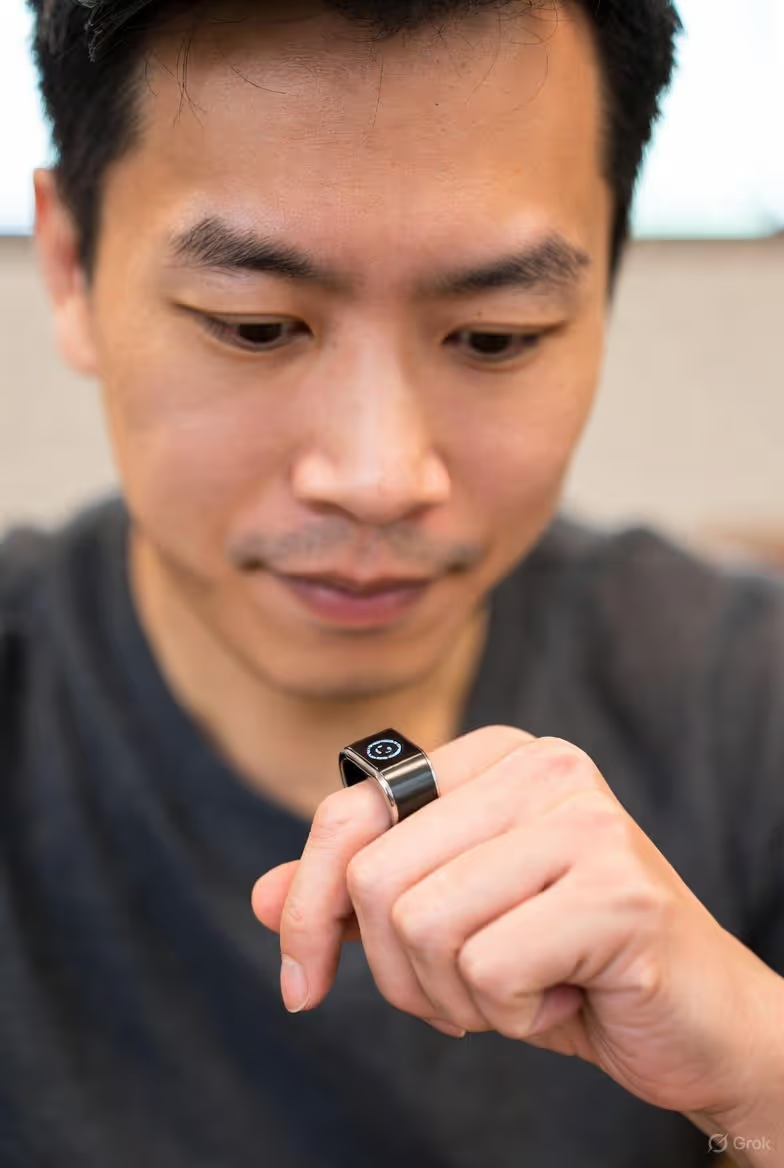
This comprehensive guide is your blueprint to reclaiming it. Over the next 30 days, we will transform your relationship with sleep from an afterthought to a cornerstone of your health. This isn't about quick fixes or rigid, unsustainable rules. It’s a progressive, evidence-based plan that builds lasting habits, layer by layer. We’ll move from understanding the "why" to mastering the "how," using a step-by-step framework that adapts to your life. And in this modern age, we have a powerful ally: precise, personal data from wearable technology like the smart ring from Oxyzen.ai, which moves us beyond guesswork into the realm of measurable, trackable improvement.
Your journey to a higher sleep score—and a more vibrant life—starts now.
We’ve all heard the mantra: "Get 7-9 hours of sleep." But this well-intentioned advice only tells half the story. Time in bed does not equal quality sleep. You could be clocking eight hours yet spending most of it in light, unproductive sleep stages, constantly disturbed by micro-awakenings you don’t even remember. This is where your sleep score—a composite metric generated by advanced sleep trackers—becomes your most valuable health indicator.
Think of your sleep score as your nightly report card. It doesn't just measure duration; it analyzes the architecture of your sleep. It evaluates your sleep stages (light, deep, REM), your restlessness, your timing, and your physiological signals like heart rate variability (HRV) and respiratory rate. A high score indicates balanced, efficient, and restorative sleep. A low score is a clear signal that your body and brain are not completing the essential maintenance they require.
The consequences of a chronically low sleep score are profound and far-reaching. Acutely, it manifests as brain fog, irritability, poor focus, and increased cravings for sugar and caffeine. Chronically, it systematically dismantles your health. Research consistently links poor sleep quality to:
Conversely, optimizing your sleep score is the ultimate leverage point for virtuous cycles in health. Better sleep leads to better stress management, which leads to better sleep. It enhances workout recovery and muscle growth. It sharpens decision-making and creativity. It stabilizes mood and improves relationships. By focusing on your sleep score, you're not just aiming to feel less tired—you're investing in the foundational system that influences every aspect of your physical, mental, and emotional well-being. As you'll see in our FAQ, understanding these metrics is the first step to mastering them.
Before we can improve something, we must be able to measure it accurately. This is where traditional methods fail. Recalling how you "feel" in the morning is subjective and unreliable. A basic fitness tracker that only uses motion can mistake lying still for being asleep. To truly understand your sleep, you need clinical-grade insights, and that’s precisely what modern smart rings deliver.
Devices like the Oxyzen smart ring employ a combination of sensors—including photoplethysmography (PPG) for heart rate, an accelerometer for movement, and a skin temperature sensor—to paint a detailed picture of your night. They don't just track when you're asleep; they analyze the quality of that sleep through several key metrics that feed into your overall sleep score. Let's break down what these terms mean and why they're critical.
Sleep Stages (Light, Deep, REM): Sleep is not a monolithic state. It's a cyclical journey through different stages, each with a unique purpose.
A good sleep score reflects a healthy balance and sufficient time in each of these stages throughout the night's cycles.
Restlessness & Awakenings: Waking up multiple times a night, even if just for a few seconds, fragments your sleep architecture and prevents you from progressing smoothly through the vital deep and REM stages. Your smart ring tracks these disturbances, helping you identify patterns—perhaps they cluster after late meals or during times of high stress.
Sleep Latency: This is the time it takes you to fall asleep. Ideally, this should be between 10-20 minutes. A latency that's too short (under 5 minutes) may indicate severe sleep deprivation, while a latency that's too long (over 30 minutes) can point to anxiety, poor sleep timing, or circadian rhythm issues.
Heart Rate Variability (HRV) During Sleep: HRV is the nuanced variation in time between your heartbeats. It's a direct window into your nervous system. A higher HRV (especially during sleep, when it should naturally peak) indicates a strong, resilient, and recovered body. A lower sleep HRV suggests your system is under stress—be it from overtraining, illness, or psychological strain. Tracking this overnight metric with a device from Oxyzen.ai provides an unparalleled look at your recovery status, far more insightful than daytime measurements.
Sleep Timing & Consistency: Your body thrives on rhythm. Going to bed and waking up at roughly the same time every day—even on weekends—strengthens your circadian clock. This consistency makes falling asleep easier and improves sleep quality. Erratic schedules confuse your internal clock, leading to lower sleep scores.
By learning to read this data, you transition from being a passive sleeper to an active architect of your rest. You can start to connect the dots between your daily choices and your nightly results, which is the core principle of the 30-day plan ahead. For a deeper dive into how this technology translates raw data into actionable insights, our blog offers a wealth of resources.

The first week of our 30-day plan is dedicated to building an unshakable foundation. We are not yet focusing on drastic behavioral changes. Instead, we are setting the stage for success by optimizing the two most controllable factors: your mental approach and your physical sleep sanctuary. This week is about observation, gentle adjustment, and creating a bedrock of good habits.
Cultivating a Sleep-Positive Mindset: For many, the bed has become a battleground—a place of anxiety, frustration, and clock-watching. Our first task is to reframe this relationship. Your bed is for only two things: sleep and intimacy. It is not your office, your dining table, or your entertainment center. Begin this week by mentally designating your bedroom as a sleep sanctuary. If you find yourself lying awake for more than 20 minutes, the golden rule is to get up. Go to another room and engage in a quiet, boring activity (like reading a physical book under soft light) until you feel sleepy again. This helps break the association between bed and wakefulness.
Engineering the Ideal Sleep Environment: Your senses are the gatekeepers of sleep. We must persuade them that it's safe to shut down.
The Power of a Digital Sunset: The single most impactful change you can make in Week 1 is to institute a "digital sunset." The blue light emitted by phones, tablets, and computers is particularly effective at suppressing melatonin. Starting tonight, commit to turning off all screens 60-90 minutes before your target bedtime. This creates a massive buffer between the hyper-stimulation of the digital world and the quiet needed for sleep. If this feels impossible, start with 30 minutes and use device features like Night Shift or blue light filters as a bridge, but aim for the full 90.
Your Week 1 Action Checklist:
With your sleep sanctuary established, we now turn to the master conductor of your sleep-wake cycle: your circadian rhythm. This 24-hour internal clock, governed by a tiny region in your brain called the suprachiasmatic nucleus, dictates not just when you feel sleepy, but also your hormone release, body temperature fluctuation, and digestion. In Week 2, we will learn to synchronize your lifestyle with this innate rhythm for effortless sleep and energized days.
Light: Your Rhythm's Primary Zeitgeber: Light is the most powerful cue for your circadian clock. Morning light, rich in blue wavelengths, signals your brain to halt melatonin production and ramp up cortisol (your "get-up-and-go" hormone) for alertness. Evening darkness triggers the reverse. Our modern, indoor lifestyles severely disrupt this natural signal. We get too little bright light in the morning and too much artificial light at night.
Your Daily Light Prescription:
Consistency is King: The second pillar of circadian health is schedule consistency. This week, choose a target bedtime and wake-up time that you can realistically maintain seven days a week—yes, including weekends. A variation of more than 30-60 minutes can induce a form of "social jetlag," confusing your internal clock. Consistency reinforces the powerful light cues you're implementing, making sleep initiation automatic.
The Caffeine & Meal Timing Audit: What you consume and when acts as a secondary cue to your clock.
Your Week 2 Action Checklist:
By Week 3, your environment is optimized, and your circadian rhythm is getting stronger. Now, we address the critical transition period from the busyness of the day to the stillness of sleep. You cannot slam on the brakes and expect to instantly drift off. A deliberate wind-down ritual acts as a bridge, telling your nervous system it's time to shift from sympathetic (fight-or-flight) dominance to parasympathetic (rest-and-digest) dominance.
This ritual should be a sequence of relaxing, enjoyable, and screen-free activities that you perform in the 60 minutes leading up to your fixed bedtime. It must be personalized to you—what relaxes one person might stimulate another. The key is consistency; performing the same sequence nightly creates a powerful conditioned response.
Decompressing the Mind: The goal is to offload the day's mental chatter.
Calming the Body: Physical tension inhibits sleep. Gentle activities can signal safety to the body.
Engaging the Senses: Incorporate elements that appeal to calm senses.
Your Week 3 Action Checklist:

You’ve mastered your environment, rhythm, and ritual. Now we turn inward, to the fuel you provide your body. What you eat and drink acts as a series of chemical instructions that can either support or sabotage your sleep architecture. This phase is not about dieting; it's about strategic nutrition to foster stable blood sugar, support sleep-inducing neurotransmitters, and avoid digestive disruptions during the night.
The Sleep-Supportive Plate: Aim for a diet rich in nutrients that are precursors to key sleep hormones and neurotransmitters.
The Evening Hydration Balance: Dehydration can lead to nighttime leg cramps and a dry mouth, disrupting sleep. However, drinking large volumes of fluid right before bed guarantees disruptive trips to the bathroom. The solution is front-loading. Consume the majority of your daily water earlier in the day. Start tapering your fluid intake about 2 hours before bed, having only small sips if needed. This allows your body to process the fluids before you retire.
Foods & Substances to Time Carefully:
The Sleep-Promoting Snack: If you need a small bite before bed, combine a tryptophan source with a complex carb. Examples include:
Your Week 4 (Part 1) Action Checklist:
Physical activity is a cornerstone of health and a powerful sleep promoter—when timed correctly. Exercise raises core body temperature, expends energy, and helps regulate stress hormones. However, the type, intensity, and timing of your movement can either be a lullaby or an alarm clock for your system. This section is about creating a movement strategy that works in synergy with your sleep goals, not against them.
The Profound Sleep Benefits of Regular Exercise: Consistent moderate-to-vigorous exercise is linked to:
The Timing Dilemma: When to Move for Maximum Rest? The effect of exercise on sleep is heavily influenced by chronotype (your natural inclination to be a morning or evening person) and the intensity of the workout.
Listen to Your Data & Your Body: This is where your smart ring becomes an indispensable coach. Pay close attention to two metrics after evening workouts:
Use this data to personalize your cutoff time for vigorous exercise. You may find that finishing intense workouts at least 3-4 hours before bed is necessary for you, while others might be unaffected.
The Critical Role of Recovery: Exercise creates beneficial stress (eustress), but without adequate recovery, it becomes chronic distress that harms sleep. Prioritize:
Remember, the goal is balance. Overtraining is a surefire way to see your sleep score plummet, as reflected in chronically low HRV and elevated resting heart rate. Your movement should leave you feeling energized, not perpetually drained. To see how others have balanced fitness and recovery for optimal sleep, the real-world stories on our testimonials page can be a great source of inspiration.
If a racing mind is your biggest barrier to sleep, you are not alone. Stress and anxiety activate the sympathetic nervous system—the very system we need to quiet for sleep. They create a vicious cycle: stress worsens sleep, and poor sleep lowers your resilience to stress, making you more anxious. Week 3's wind-down ritual begins to address this, but now we delve deeper into daytime practices that build your stress resilience reservoir, so there's less to "dump" at night.
Daytime Stress Inoculation: You cannot manage what you don't measure. Begin by simply observing your stress triggers and physical responses throughout the day (tight shoulders, shallow breathing, racing thoughts). Once aware, you can deploy "micro-doses" of calm.
Cognitive Strategies for the Pre-Sleep Mind:
Leveraging Technology for Mental Calm: While screens are generally banned from the wind-down, certain audio-based tools can be beneficial:
When to Seek Help: If chronic anxiety or persistent intrusive thoughts are severely impacting your life and sleep, this is a sign to consult a mental health professional. Cognitive Behavioral Therapy for Insomnia (CBT-I) is the gold-standard, non-drug treatment for chronic sleep issues rooted in anxiety and unhelpful thought patterns. It is highly effective and can be life-changing.
By building stress resilience throughout the day and having specific tools to manage nighttime anxiety, you break the fear-sleep connection. Your bed once again becomes associated with safety and rest, not with mental struggle. For more resources on managing wellness holistically, you can always explore our blog for deeper insights.

Even with the best-laid plans, real life intervenes. Travel, social events, illness, and inevitable bouts of poor sleep can derail your progress. The key to long-term success is not perfection, but resilience—knowing how to navigate these disruptions without spiraling and how to get back on track quickly. Consider this your sleep first-aid kit.
Managing Occasional Poor Sleep (The "Bad Night" Protocol): You will have nights where your score is low despite your best efforts. How you respond the next day is critical.
Travel & Time Zone Changes (Jet Lag Mitigation):
Social Events & Late Nights: Life involves celebrations. The goal is to minimize the damage.
Partner-Related Disruptions (Snoring, Different Schedules):
When Progress Plateaus: If you've been consistent for weeks but your sleep score stagnates:
Remember, the path to perfect sleep is not linear. These troubleshooting skills ensure that a temporary setback doesn't become a permanent reversal. For any persistent technical or data-related questions, our comprehensive FAQ is designed to provide clear, helpful support.
You’ve cooled your room and taken a warm bath, understanding the basics of thermoregulation for sleep. Now, let’s delve deeper into the sophisticated dance between your body’s temperature and your sleep architecture, and how modern technology can be harnessed not as a disruptor, but as a powerful facilitator.
The Core Temperature Drop: The Sleep Switch: The initiation of sleep is physically triggered by a drop in your core body temperature, typically about 1-2 degrees Fahrenheit (0.5-1 degree Celsius). This drop signals the suprachiasmatic nucleus (your brain’s master clock) that it’s time to release melatonin and begin the sleep cascade. Your body accomplishes this by increasing blood flow to the skin’s surface (vasodilation) to radiate heat away. This is why your hands and feet often feel warmer as you fall asleep—they are the radiators.
Strategic Temperature Manipulation:
Technology as a Thermoregulation Ally: Beyond simple climate control, new technologies are emerging:
The Morning Temperature Rise: Just as a drop initiates sleep, a natural rise in core body temperature in the early morning hours helps facilitate awakening and alertness. Exposure to morning light reinforces this rise. If you’re using heavy, insulating bedding that traps heat, it can blunt this natural signal and make waking up more difficult. Allowing yourself to experience a slight, natural coolness in the early morning can make your wake-up more alert and natural.
By moving from a static “cool room” concept to a dynamic understanding of your body’s thermal rhythm, you gain a powerful, natural lever to pull for deeper, more stable sleep. For those fascinated by the data behind these physiological processes, our blog frequently explores the science of biometric tracking.
In a culture that often views napping as a sign of laziness or poor nighttime sleep, we must reframe: a strategically deployed nap is a potent performance-enhancing tool. When used correctly, it can boost alertness, improve mood, enhance learning, and provide compensatory recovery without harming your primary sleep drive. The key lies in the how and when.
The Science of the Power Nap: A short nap of 10-20 minutes primarily boosts Stage 2 NREM sleep. This stage is crucial for memory consolidation and motor skill learning. The benefits are almost immediate upon waking, with little to no “sleep inertia” (that groggy, disoriented feeling). This is the ideal nap for a midday cognitive reset.
The Deep Recovery Nap (Proceed with Caution): A nap lasting 60-90 minutes allows you to complete a full sleep cycle, including both deep (Slow-Wave) sleep and REM sleep. This can significantly boost creativity, emotional memory processing, and physical recovery. However, it comes with significant risks: intense sleep inertia and a higher likelihood of reducing your sleep pressure for the coming night, potentially leading to insomnia. This nap should be reserved for situations of severe sleep deprivation (e.g., new parents, after a terrible night) and taken earlier in the day.
The Golden Rules of Strategic Napping:
When Not to Nap:
Using Your Data to Inform Your Nap Strategy: Your smart ring is an excellent nap coach. After a short nap, check your data:
Napping is not a substitute for poor nighttime sleep, but for many, it is a valuable supplement that can smooth out energy dips and enhance overall resilience. Understanding its nuanced role separates the savvy sleeper from the amateur. Discover how other high-performers integrate rest into their routines by exploring the real-world experiences shared by our community.
For the first 30 days, consistent tracking is essential. It provides the objective feedback that connects cause (evening habits) to effect (sleep quality). However, a common pitfall on the biohacking journey is orthosomnia—an unhealthy preoccupation with achieving perfect sleep data, which in itself becomes a source of anxiety and sleeplessness. The goal is to use data as a compassionate guide, not a punitive judge.
Adopting a Macro View: Do not fixate on the score from a single night. Sleep is inherently variable. Look at trends over a weekly or bi-weekly period. Is your average sleep score slowly climbing? Is your resting heart rate trending downward? Is your deep sleep duration becoming more consistent? These macro-trends tell the true story of your progress, smoothing out the noise of individual bad nights.
Key Metrics to Watch (And What They Mean):
The Art of the Data Detox: If you find yourself checking your score with dread first thing in the morning, or lying in bed anxious about what the ring will say, it’s time for a break. Schedule a “Data Detox Weekend.” Wear your ring (to keep the habit), but hide the app from your phone’s home screen and make a pact not to check your scores for 2-3 days. Focus solely on executing your habits: your morning light, your wind-down, your consistency. This re-centers you on the behaviors that produce good sleep, not the numbers that result from them.
Correlation Over Causation: Your data is a master of showing correlations. “On nights I had alcohol, my deep sleep was 40% lower.” “When I exercised after 8 PM, my sleep latency increased by 25 minutes.” “After a week of consistent morning light, my average sleep score rose by 12 points.” Use these correlations to run personal experiments and confirm what works for you. This turns data into empowering, personal science.
Remember, the ultimate metric is how you feel. Does your energy feel more stable? Is your mood brighter? Is your mind sharper? The data should explain and validate those subjective feelings, not contradict them. If you feel great but your score is “low,” question the algorithm, not your lived experience. The technology from Oxyzen.ai is designed to provide clarity, not anxiety, and our support resources are there to help you find that balance.
This is your tactical playbook. Each week builds upon the last, introducing new habits while solidifying previous ones. Approach this with curiosity, not rigidity. Some days you’ll nail it; others you’ll miss the mark. The goal is progressive improvement, not perfection.
Week 1 (Days 1-7): The Foundation Phase
Week 2 (Days 8-14): The Rhythm Phase
Week 3 (Days 15-21): The Ritual Phase
Week 4 (Days 22-30): The Integration & Optimization Phase
This structured yet flexible plan ensures you’re not overwhelmed. By adding one layer at a time, each habit has space to solidify, creating a compound effect that leads to transformational change by Day 30.
The 30-day plan is a catalyst, a concentrated period of learning and habit formation. But what happens on Day 31? The true objective is to transition from a structured “plan” to a sustainable sleep-positive lifestyle. This is where your new behaviors become automatic, your self-awareness is heightened, and you have the tools to adapt to life’s inevitable changes.
The 80/20 Rule for Sleep: Aim for consistency 80% of the time. This allows for 20% of life’s exceptions—the occasional late-night social event, the period of travel, the stressful work week. When you have a solid foundation, these deviations have a minimal long-term impact because you know exactly how to return to your center. Your resilience is built not from never falling, but from knowing how to get back up quickly.
Seasonal and Life-Stage Adjustments: Your sleep needs and challenges will evolve. The stress of a new job, the physical demands of training for a marathon, the hormonal shifts of menopause or andropause, the changing light of winter—all require subtle adjustments to your routine. Your foundational knowledge allows you to adapt:
Becoming Your Own Sleep Scientist: Your education doesn’t end. Continue to run gentle experiments. “What happens if I switch to herbal tea after lunch?” “How does a 10-minute meditation at my desk affect my evening HRV?” This mindset of curiosity keeps you engaged and prevents stagnation.
Community and Accountability: Share your journey with a partner or a friend. Consider joining communities, like those fostered around wellness technology, where you can learn from others’ experiences and share your own insights. Seeing how others troubleshoot their sleep can provide new strategies and motivation. The collective wisdom found in places like our community stories can be a powerful long-term resource.
The Ripple Effect: As high-quality sleep becomes your norm, observe its ripple effects into every other domain of your life. You’ll likely find your fitness improves, your dietary choices become cleaner, your patience grows, and your creativity flourishes. Sleep is the keystone habit that makes every other positive change easier to implement and sustain.
By Day 30, you will have done much more than improve a number on an app. You will have gained a deep understanding of your own biology, cultivated a set of powerful self-care rituals, and reclaimed one of life’s greatest pleasures and necessities: profound, restorative rest. This is not the end of a plan, but the beginning of a lifelong partnership with your own well-being, supported by knowledge and the insightful data from tools like your Oxyzen ring. To learn more about the philosophy behind creating technology that supports this kind of lasting change, you can read about our foundational vision and values.
The core principles of sleep hygiene are universal, but their application must be tailored. A one-size-fits-all approach fails when confronted with the unique physiological and lifestyle demands of shift workers, new parents, athletes, or menopausal women. Let’s explore evidence-based adaptations for these specific groups.
For Shift Workers and Night Owls (Non-24-Hour Schedules): This group faces the greatest circadian challenge, often working against their biological predisposition.
For New Parents and Caregivers: Here, the goal shifts from perfect sleep to survival and maximizing sleep opportunity. Perfectionism is the enemy.
For High-Performance Athletes and Active Individuals: For this group, sleep is not just recovery; it’s a primary training modality.
For Women Navigating Perimenopause and Menopause: Hormonal fluctuations can profoundly disrupt sleep, primarily through hot flashes, night sweats, and increased anxiety.
Understanding these nuanced applications transforms general advice into a powerful, personalized toolkit. It’s a testament to the core philosophy behind thoughtful wellness technology: understanding context is everything. For more insights into how data can be contextualized for different lifestyles, our blog offers targeted deep dives.
Sometimes, despite impeccable habits, sleep remains elusive. It’s crucial to recognize when you may be dealing with a clinical sleep disorder that requires professional intervention. Self-help has its limits; a correct diagnosis is the first step toward effective treatment.
Insomnia: Characterized by persistent difficulty falling asleep, staying asleep, or waking too early, despite adequate opportunity for sleep. It causes significant daytime impairment.
Sleep Apnea: A serious disorder involving repeated pauses in breathing during sleep, often due to airway obstruction (Obstructive Sleep Apnea, or OSA). It fragments sleep and deprives the body of oxygen.
Restless Legs Syndrome (RLS): An overwhelming, often uncomfortable urge to move the legs, typically in the evenings when at rest.
Circadian Rhythm Disorders: When your internal clock is permanently out of sync with the 24-hour day (e.g., Delayed Sleep-Wake Phase Disorder, common in teenagers, where the natural sleep time is very late).
When to See a Doctor:
Acknowledging a potential disorder is not a failure of your 30-day plan; it’s a sophisticated next step in self-advocacy. Your detailed sleep data from a device like an Oxyzen ring can be a valuable conversation starter with a sleep specialist, providing objective evidence of disturbances. For any preliminary questions about how wearables intersect with health monitoring, our FAQ section can provide helpful context.
We stand at the precipice of a revolution in sleep health. The convergence of advanced biometric sensing, artificial intelligence, and personalized medicine is moving us from reactive sleep care to proactive, predictive sleep optimization. The future is not just about tracking sleep; it’s about understanding its intricate dialogue with our entire physiology and using that knowledge to preemptively guide our health.
From Tracking to Predicting: The next generation of wearable technology won't just tell you how you slept; it will predict how you will sleep and suggest micro-interventions. By analyzing daytime data—stress levels (via HRV), activity, light exposure, and even vocal tone—algorithms will identify patterns that lead to poor sleep and nudge you to take a walk, do a breathing exercise, or adjust your evening schedule hours in advance.
Integrated Health Dashboards: Sleep data will cease to exist in a silo. It will be integrated with glucose monitors, continuous hormone trackers, and genetic data to reveal holistic cause-and-effect relationships. For example: “Your data shows that when your evening glucose spikes above X level, your deep sleep decreases by 30%. Consider a 10-minute post-dinner walk tomorrow.”
Advanced Sleep Stage and Quality Analysis: Future sensors may move beyond PPG to include EEG-lite capabilities, providing even more accurate sleep staging directly from a wearable. They may also better quantify “sleep quality” beyond stages—measuring brainwave coherence or the depth of sleep spindles, which are linked to memory consolidation.
Personalized Sound and Stimulation Therapies: We will see the rise of dynamic sleep environments. Smart systems will use real-time biometric feedback to adjust soundscapes (playing specific pink noise frequencies to stabilize deep sleep) or temperature (micro-cooling during a hot flash) throughout the night to stabilize sleep architecture.
The Role of AI and Machine Learning: AI will act as a personal sleep coach, learning your unique patterns over years. It will know that “for you, a stressful Tuesday meeting always impacts Wednesday night’s sleep, so here is a tailored wind-down for Wednesday evening.” It will provide hyper-personalized recommendations that a generic article or plan never could.
Ethical Considerations and Data Sovereignty: As this data becomes more intimate and powerful, questions of privacy, security, and who owns and interprets your sleep biography will become paramount. The most trusted companies will be those who are transparent, give users full control of their data, and use it explicitly for the user’s benefit—principles that are central to the vision and mission of forward-thinking wellness brands.
This future is not distant; its foundations are being laid today by companies pushing the boundaries of what’s possible with non-invasive monitoring. By engaging with this technology now, you are not just optimizing your sleep; you are participating in a citizen-science movement that is collectively building a deeper understanding of human health.
Sleep health is contagious, and its impact multiplies when fostered within a household. Creating a family culture that values and protects sleep is one of the most profound gifts you can give—and receive. It reduces conflict, improves mood, and sets children up for lifelong health.
Modeling Behavior for Children: Children learn what they live. When they see you prioritizing your wind-down ritual, respecting screen-time boundaries, and valuing a consistent schedule, they internalize these behaviors as normal and important.
The Household Sleep Charter: Have a family meeting to establish non-negotiable sleep-supportive rules for the home. This creates shared accountability.
Optimizing the Home Environment Collectively:
Addressing Partner Conflicts: Differing sleep schedules or habits (snoring, different temperature preferences) are common sources of tension.
By making sleep a family value, you create a supportive ecosystem that makes it easier for everyone to succeed. The benefits ripple outward, creating a calmer, more resilient, and more connected home—the ultimate sleep sanctuary. Sharing your family’s journey and learning from others can be inspiring, as seen in the collective wisdom of user stories and community experiences.
As we reach the conclusion of this guide, it’s vital to step back and view the path you’ve traveled. You began with a number—a sleep score—and a desire for improvement. You are ending with something far more valuable: a deep, embodied understanding of your own rhythms, a toolkit of proven strategies, and the wisdom to navigate the complexities of rest in a demanding world.
We have moved through the fundamentals of environment and circadian biology, into the art of ritual and the science of nutrition, through the challenges of specific life stages and potential disorders, and finally to the horizon of what’s possible. This journey underscores a central truth: Sleep is not a commodity to be efficiently extracted, but a process to be honored. It is a dynamic conversation between your biology and your behavior.
The 30-day plan was a structured initiation, but the real work—the joyful, curious, lifelong practice—begins now. It is the practice of listening to your body’s signals with kindness, of using data as a guidepost rather than a gospel, and of granting yourself grace when life intervenes. Some nights will be masterpieces of restorative depth; others will be fragmented and frustrating. Mastery lies not in eliminating the latter, but in knowing they are part of the landscape and trusting your ability to return to center.
Remember, the ultimate goal was never a perfect 100 on an app. The goal was the vitality that flows from true restoration: the steady energy, the clear mind, the resilient mood, and the long-term health that is the birthright of a body and brain that are given the time and conditions to heal each night. You have learned to create those conditions.
As you move forward, continue to be a student of your own sleep. Revisit sections of this guide when facing new challenges. Share your knowledge with those you love. And consider how the thoughtful integration of technology, like the insights provided by Oxyzen.ai, can serve as a faithful companion on this journey, offering clarity and reinforcing the connection between your daily choices and your nightly renewal.
Your sleep is the foundation upon which you build your life. You have now learned not just to protect that foundation, but to fortify it. May your nights be deep, your mornings bright, and your days fueled by the profound power of true rest.
This concludes the full, in-depth guide. For continued learning, support, and inspiration as you maintain and build upon your sleep-positive lifestyle, we invite you to explore the wealth of resources available on our website, from detailed blog articles to the story behind our mission to create technology that empowers this very journey.
Your Trusted Sleep Advocate: Sleep Foundation — https://www.sleepfoundation.org
Discover a digital archive of scholarly articles: NIH — https://www.ncbi.nlm.nih.gov/
39 million citations for biomedical literature :PubMed — https://pubmed.ncbi.nlm.nih.gov/
Experts at Harvard Health Publishing covering a variety of health topics — https://www.health.harvard.edu/blog/
Every life deserves world class care :Cleveland Clinic - https://my.clevelandclinic.org/health
Wearable technology and the future of predictive health monitoring :MIT Technology Review — https://www.technologyreview.com/
Dedicated to the well-being of all people and guided by science :World Health Organization — https://www.who.int/news-room/
Psychological science and knowledge to benefit society and improve lives. :APA — https://www.apa.org/monitor/
Cutting-edge insights on human longevity and peak performance:
Lifespan Research — https://www.lifespan.io/
Global authority on exercise physiology, sports performance, and human recovery:
American College of Sports Medicine — https://www.acsm.org/
Neuroscience-driven guidance for better focus, sleep, and mental clarity:
Stanford Human Performance Lab — https://humanperformance.stanford.edu/
Evidence-based psychology and mind–body wellness resources:
Mayo Clinic — https://www.mayoclinic.org/healthy-lifestyle/
Data-backed research on emotional wellbeing, stress biology, and resilience:
American Institute of Stress — https://www.stress.org/


