


Sleep Score Insights: What Patterns Over Time Reveal
Long-term patterns in your sleep score data can reveal the impact of lifestyle changes, seasons, or chronic stress.
Long-term patterns in your sleep score data can reveal the impact of lifestyle changes, seasons, or chronic stress.
%402x.svg)
We chase it, crave it, and sacrifice for it, yet true, restorative sleep remains elusive for millions. For years, our understanding of our nightly rest was limited to a binary state: we either slept "well" or "poorly," based on little more than a foggy morning feeling. But what if your sleep could tell a story? Not just about last night, but about the narrative of your health over weeks, months, and seasons? This is the revolutionary promise of the modern sleep score.
A single night’s sleep score is a snapshot—a useful, but incomplete, piece of data. It’s like judging the entire plot of a novel by reading one random page. The true power, the profound insights, lie not in the isolated data points but in the patterns over time. When you step back and observe the trends, correlations, and long-term trajectories of your sleep metrics, you move from simply tracking sleep to truly understanding the fundamental rhythms of your body and mind.
This is where advanced wellness technology, like the sophisticated sensors in a smart ring from Oxyzen, becomes an indispensable tool. By continuously and unobtrusively capturing biometric data—from heart rate variability and respiratory rate to body temperature and movement—these devices generate a rich, longitudinal dataset. This data transforms into your personal sleep story, revealing how your lifestyle, stress, environment, and choices weave together to create the tapestry of your nightly rest.
In this exploration, we will delve deep into the world of sleep score patterns. We’ll move beyond the basics of what a sleep score is and uncover what its evolution over time can reveal about your metabolic health, stress resilience, recovery capacity, and overall well-being. This isn't just about sleeping more; it's about unlocking the chronological intelligence hidden in your rest to live a more intentional, healthier life.
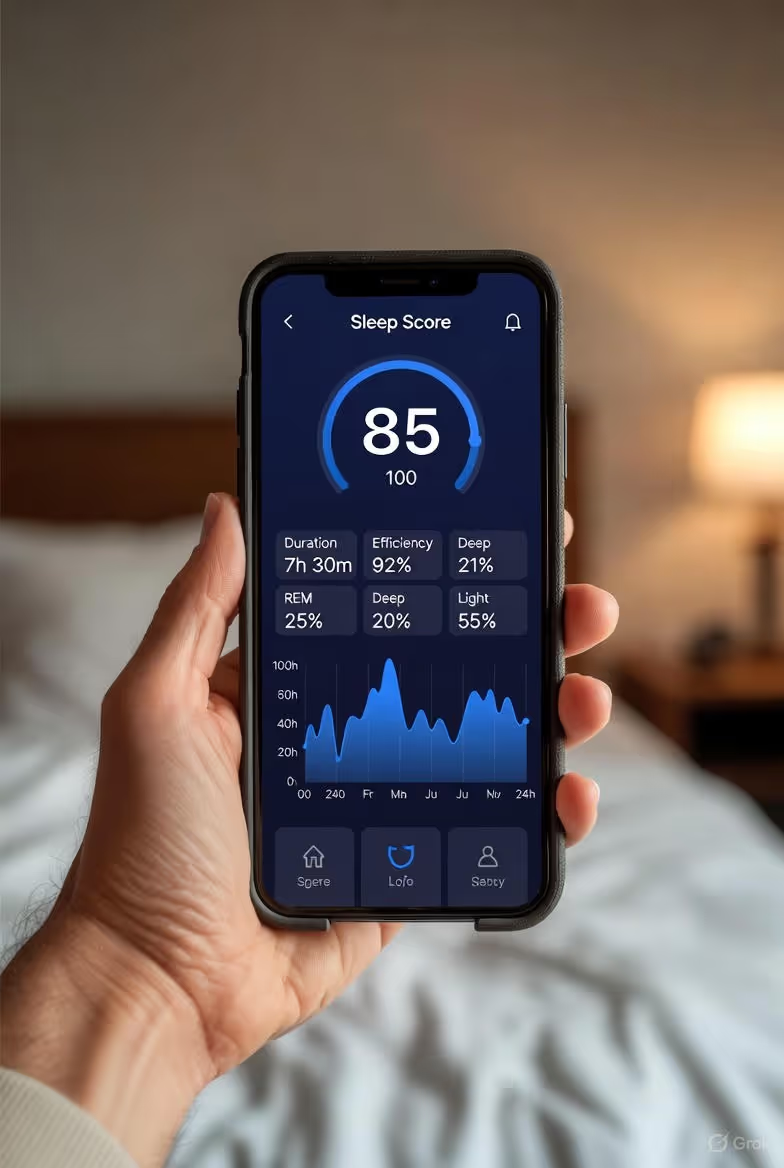
Before we can decipher the patterns, we must understand what we're measuring. A modern sleep score is not a single metric but a composite intelligence, a carefully weighted algorithm synthesizing multiple physiological signals into a digestible, actionable figure, typically out of 100.
Think of it as a master craftsman assessing a fine wooden table. He doesn't just look at its sturdiness; he evaluates the grain of the wood, the smoothness of the finish, the integrity of the joints, and the balance of the legs. Similarly, your sleep score is built upon foundational pillars, each telling a distinct part of your night's story.
Sleep Duration: The most straightforward pillar, but with critical nuance. It’s not just "did I get 8 hours?" but "did I get the right amount of sleep for my body's current needs?" The algorithm compares your actual time asleep against your personalized target range, recognizing that both significant shortfalls and excessive sleep can be detrimental.
Sleep Quality (or Sleep Structure): This is where the magic of biometric sensing shines. Quality assesses the architecture of your sleep—the cyclical journey through light, deep, and REM (Rapid Eye Movement) stages. Each stage serves a unique purpose:
A high-quality sleep score indicates you achieved sufficient, uninterrupted cycles of both deep and REM sleep, allowing for complete physical and mental recovery.
Sleep Stability: This measures fragmentation—how often you woke up or experienced micro-arousals that pulled you out of deeper sleep stages. Even if you don't remember them, these disruptions fracture the restorative process. High stability means you sailed through the night with minimal turbulence.
Sleep Timing & Latency: When you go to bed and how quickly you fall asleep are crucial indicators of circadian rhythm health. Consistently falling asleep quickly (within ~20 minutes) and aligning your sleep window with your body's natural melatonin-driven schedule (chronotype) supports a robust score.
Physiological Restoration: This is the cutting-edge dimension brought to life by devices like the Oxyzen ring. It analyzes biomarkers such as:
By synthesizing these pillars, your sleep score becomes a holistic report card for your night. It transcends simplistic trackers that only measure movement. As shared in numerous user experiences on our testimonials page, this comprehensive view is often the "aha moment" that helps people connect vague feelings of fatigue to specific, measurable sleep deficiencies. It’s the essential first step before we can begin to observe the powerful patterns that emerge over time.
Anyone who has ever used a fitness tracker knows the rollercoaster: a triumphant 92 sleep score one night, followed by a bewildering 68 the next. The instinct is to scrutinize the "bad" night—What did I eat? Was I stressed?—and to dismiss the "good" night as a fluke. This fixation on daily fluctuations is not only anxiety-inducing but also scientifically shortsighted. In the world of biometrics, the trendline is sovereign.
Human physiology is not a machine; it is a complex, adaptive system influenced by dozens of variables. A single data point is statistically noisy. It could be an outlier caused by an unusual event—a late-night work emergency, a single glass of wine, an unfamiliar hotel room, or even a particularly vivid dream. Basing decisions on this noise leads to what scientists call "reactivity," where you might abandon a helpful habit because you didn't see an immediate linear improvement.
The profound insights emerge when you zoom out. A trendline smooths out the noise and reveals the signal—the true direction of your sleep health. Observing patterns over weeks and months allows you to answer far more meaningful questions than "Why did I sleep poorly last night?"
For example, you might notice your sleep score dips predictably every Thursday night. Zooming in, you see it's linked to a late-evening weekly meeting that causes stress and delays your bedtime. The pattern, not the single Thursday, confirms the cause. Alternatively, you might see a gradual, multi-week improvement in your Sleep Stability score after committing to a consistent 10 p.m. digital curfew. The trend validates the effectiveness of your intervention.
This longitudinal approach is at the heart of proactive wellness. It shifts the paradigm from reactive problem-solving ("I feel tired today") to strategic lifestyle management ("My data shows my sleep quality declines when my average weekly work hours exceed 50"). It empowers you to become the principal investigator of your own well-being, using objective data to guide your choices. To dive deeper into the science of longitudinal health tracking, our blog features a wealth of related articles on interpreting biomarker trends.
As you accumulate weeks and months of sleep data, distinct archetypal patterns will begin to surface in your charts. These are not random; they are the graphical representations of your body's dialogue with your life. Learning to interpret these common trajectories is like learning a new language—the language of your own physiology.
The Consistent Climber: This is the ideal pattern many seek—a slow but steady upward trend in the overall sleep score, punctuated by the normal nightly fluctuations. What it typically reveals is that positive lifestyle changes are taking root. This could be due to:
The Plateau with Peaks and Valleys: Perhaps the most common pattern for balanced, healthy individuals. Your average sleep score remains stable within a reasonable range (e.g., mid-70s to mid-80s), but you see clear weekly or seasonal cycles. This pattern reveals:
The Gradual Decliner: A slow, consistent downward drift in average sleep score over several months is a critical pattern that demands attention. It’s often subtle enough to be missed without tracking but significant in its implications. This trajectory can be a early-warning signal of:
The "Rollercoaster" or Highly Volatile Pattern: This is characterized by extreme swings—from excellent scores to very poor ones—with little predictability or middle ground. High volatility itself is a meaningful insight. It often points to:
Identifying which pattern (or combination of patterns) most closely matches your data is the first step in moving from observation to understanding. Each pattern asks a different question and points toward a different set of investigative actions and potential solutions.

Of all the sleep stages, deep sleep (also known as slow-wave sleep) holds a special status as the most physically restorative. It's during these deep, dreamless waves that the body undertakes its most critical repair work: releasing human growth hormone for muscle repair and growth, strengthening the immune system, clearing metabolic waste from the brain, and consolidating energy for the day ahead. Therefore, tracking not just your overall score, but the specific trend of your deep sleep percentage over time provides a direct window into your body's capacity for physical recovery and regeneration.
A single night of low deep sleep might be inconsequential. But a sustained pattern of deficient deep sleep is a red flag waving for your attention. Let's explore what these long-term patterns can mean.
A Declining Deep Sleep Trend: If your deep sleep percentage is on a slow but steady downward slope over weeks or months, it’s time to investigate your physical and lifestyle load.
An Improving Deep Sleep Trend: Conversely, watching your deep sleep percentage climb is one of the most rewarding signs of improving health. It validates that your body is getting the profound rest it needs. This positive trend is often seen with:
By isolating and observing your deep sleep trend, you move beyond feeling "unrefreshed" to understanding a key physiological reason why. It turns a subjective complaint into an objective metric you can proactively manage. For many users of detailed tracking tools like the Oxyzen ring, observing their deep sleep patterns has been the catalyst for meaningful change. As one user noted in their review on our testimonials page, "Seeing my deep sleep consistently in the single digits was the shock I needed to finally address my late-night phone scrolling and commit to a real wind-down routine. Within a month, I watched that line climb, and I felt the difference in my energy levels."
If deep sleep is the body's workshop, REM sleep is the mind's sanctuary. This emotionally charged, cognitively active stage is where we dream, process memories, solidify learning, and regulate mood. It's essential for creativity, problem-solving, and emotional resilience. Therefore, the long-term patterns in your REM sleep percentage offer an unparalleled look into the state of your mental and emotional recovery.
Unlike deep sleep, which dominates the first half of the night, REM periods become longer and more prominent as the night progresses. This is why cutting your sleep short—waking up with an alarm during your final sleep cycle—often results in a profound sense of grogginess known as "sleep inertia" and can rob you of a significant portion of this vital mental processing time.
The Significance of REM Sleep Trends Over Time:
A Suppressed or Declining REM Pattern: A sustained lack of REM sleep is strongly linked to cognitive and emotional difficulties. A downward trend can be an indicator of:
An Abundant or Improving REM Pattern: Healthy, robust REM sleep is a hallmark of good mental recovery. An upward trend is cause for celebration and often linked to:
Tracking your REM sleep over time empowers you to connect the dots between your mental state and your sleep biology. Feeling emotionally frayed, forgetful, or creatively blocked? Your REM trend might provide the explanatory link. This kind of insight is at the core of a proactive wellness mindset. For more on the science of sleep stages and cognitive performance, you can explore related content on our blog.

If there is one biomarker that best encapsulates the concept of physiological resilience and recovery, it is Heart Rate Variability (HRV). Contrary to what one might assume, a healthy heart does not beat with the monotonous regularity of a metronome. The tiny, millisecond variations in the time interval between each heartbeat are a sign of a robust, responsive autonomic nervous system (ANS). A higher HRV (greater variability) indicates a strong parasympathetic ("rest and digest") tone and a body that is well-recovered, adaptable, and resilient to stress. A lower, less variable HRV suggests sympathetic ("fight or flight") dominance, fatigue, or inadequate recovery.
When measured during sleep—specifically, the average HRV during your longest undisturbed rest period—it becomes one of the most powerful and truthful components of your sleep score. It is a direct, objective measure of how restorative your sleep truly was for your nervous system. Observing your nocturnal HRV trend over time provides the ultimate biofeedback loop, telling you what lifestyle factors your body appreciates and what it does not.
Interpreting Your Nocturnal HRV Trends:
An Upward HRV Trajectory: This is a golden signal of improving overall health and recovery capacity. A climbing HRV trend often accompanies:
A Downward or Suppressed HRV Trajectory: A declining HRV trend is one of the clearest objective warnings your body can give you. It often precedes feelings of burnout or illness. It can be linked to:
The profound power of tracking HRV lies in its honesty and sensitivity. It doesn't care about your perceptions; it reports your physiological state. By correlating your HRV trend with your lifestyle log, you can perform precise "experiments of one." Did my HRV dip after three consecutive hard workout days? It likely means I need more rest. Did it rise steadily during a week of vacation and morning meditation? That's a combination worth keeping. This level of personalized insight is what modern wellness technology is all about. To understand more about how devices like the Oxyzen ring capture and interpret this critical biomarker, you can learn more about our technology and mission.
Your sleep score is profoundly influenced not just by how much you sleep or how well you sleep, but by when you sleep. This is the domain of your circadian rhythm—your body's internal 24-hour master clock that regulates not only sleep and wakefulness but also hormone release, core body temperature, digestion, and cellular repair. When your sleep schedule is aligned with this internal clock, you achieve what is called "circadian alignment," a state that optimizes every aspect of your sleep quality and, by extension, your overall health.
Therefore, one of the most impactful patterns you can observe over time is not just a score on a chart, but the visual consistency—or lack thereof—of your bedtime and wake-up time on your sleep timeline. This pattern is your Circadian Compass, and it points toward either stability or chaos in your foundational biology.
The Pattern of Consistency (A Strong Circadian Signal): When your sleep start and end times form two relatively straight, parallel lines on your weekly or monthly view, you are sending a powerful, consistent signal to your master clock (located in the brain's suprachiasmatic nucleus). This regularity:
The Pattern of Variability (Circadian Misalignment): A sleep schedule that looks like a scatter plot—bedtimes and wake times jumping around by hours from day to day—creates a state akin to perpetual mild jet lag. This "social jet lag," common in those with irregular work shifts or who follow a very different schedule on weekends, forces your internal systems to constantly readjust. The long-term effects visible in your data include:
Chronotype Awareness: Beyond consistency, your long-term data can also help you discover your natural chronotype—are you a morning lark, a night owl, or somewhere in between? By noting the times you naturally fall asleep and wake up without an alarm over many days (e.g., on vacation), you can identify your body's preferred window. Forcing a night owl into an extreme early schedule can be a constant source of circadian stress, reflected in lower sleep quality scores even with good consistency.
By treating your sleep schedule as a non-negotiable pillar of health—as important as what you eat or how you exercise—you use your circadian rhythm as a compass to guide you toward more stable, higher-quality sleep. This commitment to rhythm is a core part of the philosophy behind creating technology that supports holistic well-being, a principle you can read more about in our story and vision.
The most empowering aspect of long-term sleep pattern analysis is the ability to become your own sleep scientist. Your life is the experiment, and your sleep data is the objective result. By consciously observing correlations, you move from guessing to knowing what truly impacts your rest. This process of "connecting the dots" turns abstract wellness advice into personalized, actionable knowledge.
Your sleep pattern over time acts as a lagging indicator, a delayed report card on the choices you made hours or even days before. Here’s how to decode the connections:
Nutrition & Meal Timing:
Exercise & Movement:
Stress & Mental Load:
Environment & Routine:
The goal is to move from seeing your sleep score as a judgment to seeing it as feedback. It's a conversation with your body. By keeping a simple note of key daily variables and looking for patterns alongside your sleep data, you graduate from a passive tracker to an active architect of your own well-being. For common questions on how to best track and correlate this data, our comprehensive FAQ offers detailed guidance and support.
Sleep is not a static process maintained in perfect equilibrium throughout adulthood. It is a dynamic function that evolves, responding to the profound biological, psychological, and social shifts that define different chapters of our lives. Observing your sleep patterns over years, rather than just months, can reveal a fascinating narrative of these life stages. Understanding these broader transitions helps contextualize shorter-term fluctuations, separating normal developmental changes from signs of potential distress.
Early Adulthood and the "Social Jet Lag" Phase: For many in their 20s and early 30s, the sleep pattern story is often one of conflict between biological predisposition and social demands. The circadian rhythm naturally delays during adolescence, making many young adults night owls. This biological reality clashes with early work or university start times. The long-term pattern visible here is the classic "Weekend Rebound" – chronically low, fragmented sleep scores during the week, followed by prolonged, late sleep on weekends in a futile attempt to repay a mounting sleep debt. Over time, this pattern of extreme inconsistency can set a harmful precedent for circadian health and metabolic function.
Parenthood: The Great Disruption and Recalibration: Few life events reshape sleep architecture as dramatically as the arrival of a newborn. For new parents, the pattern isn't a trendline—it's a cliff. Sleep scores plummet, dominated by extreme fragmentation, severely shortened duration, and almost non-existent sleep stability. The key insight from long-term tracking here is observing the recovery trajectory. How long does it take for sleep consolidation to begin returning as the child ages? This pattern provides an objective measure of your adaptation and can validate the exhausting reality of this stage. Furthermore, it can highlight the tangible benefit of sharing night duties; one parent might see a "sawtooth" pattern of good/bad nights corresponding to their on/off schedule, proving the recovery value of uninterrupted blocks of sleep.
Perimenopause and Menopause: A Hormonal Sea Change: For women, the transition into perimenopause and menopause represents one of the most significant and under-discussed disruptors of lifelong sleep patterns. Fluctuating and then declining estrogen and progesterone levels directly impact the brain's sleep-wake regulation and thermoregulation.
The Aging Process: Gradual Evolution, Not Just Decline: With advancing age, sleep patterns undergo a well-documented evolution. Long-term tracking helps distinguish normal, healthy changes from problematic ones.
By viewing your sleep data through the lens of your life stage, you add a layer of compassion and understanding to your analysis. A period of low scores isn't always a failure; sometimes, it's the expected and normal signature of a major life transition. This knowledge can reduce anxiety and help you focus on supportive, stage-appropriate strategies rather than fighting against biological tides. For more on navigating wellness during specific life changes, a wealth of personal stories and insights can be found by exploring our blog.
Collecting data and identifying patterns is intellectually satisfying, but the true transformation happens when you translate that insight into a sustained, personalized action plan. This is where the journey shifts from observation to experimentation and, ultimately, to mastery. Your long-term sleep patterns provide the diagnostic map; now, you can chart the course for improvement. A tailored strategy is far more effective than generic advice because it’s built on the irrefutable evidence of your own body’s responses.
Step 1: Isolate Your Primary Lever. Review your pattern analysis. What is the single most consistent driver of your suboptimal scores? Is it:
Choose the one area where a positive change is likely to have the greatest cascading benefit. Don’t try to fix everything at once.
Step 2: Design a Targeted Intervention. Based on your primary lever, implement one or two specific changes for a minimum of 3-4 weeks to observe a trend.
Step 3: Observe, Correlate, and Iterate. After your intervention period, analyze the trend. Did your average sleep score nudged upward? Did your Sleep Stability line smooth out? Did your HRV baseline improve? Look for the correlation.
Step 4: Build a Sustainable Sleep Protocol. Over months of experimentation, you will assemble a unique set of practices that your data confirms work for you. This becomes your non-negotiable sleep protocol—your personal recipe for high-quality rest. It might include: "Lights dimmed by 9:30 p.m., no food after 8 p.m., 10 minutes of breathing exercises at 9:45 p.m., in bed by 10:15 p.m., blackout room at 66°F." This protocol, built on your own evidence, carries far more weight than any list of tips you read online.
This iterative, data-informed process embodies the modern, proactive approach to health. It turns you from a passenger into the pilot of your own well-being. As many users discover, this journey of self-experimentation is empowering. For inspiration from others who have used their data to make meaningful changes, you can read their personal stories and testimonials.
Your sleep score patterns are a master key, but they do not unlock the door to health in isolation. They exist in a dynamic ecosystem with other pillars of well-being: nutrition, movement, mental fitness, and social connection. The most profound insights emerge when you view your sleep data not as a siloed metric, but as the central dashboard reflecting the integrated state of your entire system. Sleep is both a cause and a consequence; it is influenced by your day and, in turn, dictates the quality of your next day.
The Nutrition-Sleep Feedback Loop: We've touched on meal timing, but the long-term pattern connection runs deeper. Chronic patterns of poor sleep (short duration, low quality) are linked to dysregulation of the hunger hormones ghrelin and leptin. This creates a pattern where low sleep scores predictably correlate with increased cravings for high-carbohydrate, sugary, and high-calorie foods the following day. Conversely, a diet consistently high in processed foods and sugar can promote inflammation and gut dysbiosis, which disrupt sleep architecture, creating a vicious cycle. Observing these coupled patterns—poor sleep followed by poor dietary choices, followed by another poor night of sleep—can be the catalyst to break the chain at both ends simultaneously.
Movement as a Dual-Phase Regulator: Exercise is perhaps sleep's most powerful partner. The pattern connection here is bidirectional and dose-dependent.
The Mental Health Mirror: The relationship between sleep and mental well-being is inextricable. Long-term patterns offer stark evidence:
Social and Environmental Harmony: Our connections and surroundings leave their imprint. You might detect a pattern where sleep scores are consistently higher after positive, connective social interactions or days spent in nature. Conversely, a pattern of loneliness or conflict at home or work can create a sustained drain on your restoration metrics. Your physical environment, too, tells a story. A pattern of better sleep at a vacation home might point to the benefits of cleaner air, less light pollution, or a more comfortable mattress.
By consciously integrating these observations, you practice true holistic wellness. You stop optimizing sleep in a vacuum and start orchestrating your lifestyle for synergistic benefits. You learn that a morning walk (light exposure + movement) supports your circadian rhythm, which improves that night's sleep, which gives you the energy to choose a healthy lunch, which reduces afternoon inflammation, leading to better sleep the next night. This virtuous cycle, visible in your evolving long-term patterns, is the ultimate goal. For those interested in the philosophy behind this integrated approach to health technology, you can learn more about our mission and vision.
The journey to better sleep, guided by data, is rarely a linear, upward trajectory. It is far more likely to be a path of two steps forward, one step back, with occasional frustrating plateaus. Interpreting these inevitable setbacks and stalls through the lens of your long-term patterns is crucial for maintaining motivation and avoiding the disillusionment that can come from over-focusing on short-term noise. Resilience in sleep health, as in life, is defined not by the absence of challenges, but by the ability to navigate and learn from them.
Understanding the "Step Back" – Acute Setbacks: A sudden dip in your scores after a period of progress can feel discouraging. However, within a long-term context, these setbacks are not failures; they are data-rich events.
Decoding the Plateau – When Progress Stalls: After initial improvements, it’s common to hit a stretch where your average sleep score seems stuck, refusing to climb higher. This plateau is a critical phase for learning.
The Mindset of the Long-Game Tracker: To navigate this realistically, adopt these principles:
Embracing this realistic, compassionate, and curious approach is what turns short-term tracking into a sustainable, lifelong practice of self-care. It’s about building a resilient system, not achieving a perfect number. For support and answers to common questions on maintaining consistency and interpreting challenging data periods, our FAQ resource is always available.
We stand at the precipice of a revolution in personal health, and sleep data is at its forefront. The current paradigm of tracking sleep scores and basic biometrics is merely the first chapter. The future lies in the advanced analysis of longitudinal datasets—yours and millions of others—powered by sophisticated algorithms and artificial intelligence. This will move us from retrospective description ("This is what happened") to proactive prediction and prescription ("This is what is likely to happen, and here's what to do about it").
Predictive Analytics and Early-Warning Systems: Imagine your wellness device not just telling you how you slept, but forecasting your sleep quality for the upcoming night based on your day's activities, stress levels, and circadian timing. More powerfully, by analyzing subtle shifts in your long-term patterns—a very gradual creep in resting heart rate, a slow decline in HRV variability, a change in respiratory rate patterns—AI could identify deviations from your personal norm that signal the earliest stages of illness, overtraining, or metabolic shifts long before you feel symptoms. Your sleep data becomes a preventive early-warning radar.
Hyper-Personalized Insights and "N=1" Research: The future is "mass personalization." Algorithms will compare your unique pattern against vast, anonymized cohorts with similar genetics, lifestyles, and health goals. The insights will become incredibly specific: "For people with your chronotype, stress profile, and exercise habits, reducing caffeine after 11 a.m. correlated with a 22% average increase in deep sleep," or "Your current pattern of declining REM sleep is similar to patterns that preceded burnout in 85% of users with similar job roles. Suggested intervention: cognitive behavioral therapy for insomnia (CBT-I) modules."
Integration with Digital Therapeutics: Your sleep pattern data will seamlessly integrate with clinically validated digital therapeutic programs. For instance, if your data shows chronic sleep onset insomnia, the platform could automatically enroll you in a tailored CBT-I program, delivering lessons and tracking your progress through the very biometrics that identified the issue. Your response to the program—visible in your improving sleep latency scores—would be measured in real-time, allowing for dynamic adjustments.
Closed-Loop Environment Optimization: The smart ring of the future will communicate with your smart home. Based on your real-time sleep stage (detected by biometrics), it could signal your thermostat to slightly lower the temperature as you enter deep sleep, or your smart lights to begin a simulated sunrise 30 minutes before your optimal, data-determined wake time during a light sleep phase, making morning awakening more natural and refreshing.
Contributing to Population Health Science: Anonymized, aggregated longitudinal sleep data from millions of consenting users will become one of the most powerful epidemiological tools ever created. Scientists could study, in real-time, how major societal events (a pandemic, an economic shift, a new policy) affect the sleep and stress of a population, or identify previously unknown environmental or social determinants of sleep health.
This future is not science fiction; it is the logical extension of the pattern-tracking journey we began in this article. It starts with the simple act of paying attention to your sleep score over time. By engaging with this technology today, you are not just improving your next night's rest; you are participating in the dawn of a more personalized, predictive, and empowered era of health ownership. To follow the development of these technologies and the philosophy driving them, you can stay connected with our ongoing story and innovations.
Our sleep does not exist in a vacuum. While we may retreat to a private room and close our eyes in solitude, the quality of our rest is woven into the very fabric of our social lives and shared environments. Long-term sleep pattern analysis often reveals a surprising truth: our scores can be a reflection not just of our own choices, but of the rhythms, habits, and health of those closest to us, and of the communities we inhabit. This interconnected view transforms sleep from a solitary pursuit into a collective cornerstone of well-being.
The Couple's Conundrum: Synchronization and Disruption. For partners sharing a bed, sleep patterns become a duet—sometimes harmonious, often discordant. The data tells a vivid story of interdependence.
Family Rhythms and the Household Hive Mind. In family homes, especially with young children, sleep patterns operate as a network. A newborn’s sleep disruption, as discussed, is the primary driver for parents. But patterns extend further. The stress of a teenager’s exam period or social difficulties can subtly elevate the household’s ambient stress levels, potentially affecting all members’ sleep architecture. Conversely, establishing a collective “wind-down” period in the home—dimmed lights, reduced screen noise—can create an environment that lifts everyone’s sleep stability scores. The home’s sleep pattern becomes a barometer of the family’s collective health.
The Community and Societal Layer: The Sleep of a City. Zooming out further, our sleep is shaped by forces beyond our front door. Long-term data aggregated from communities can reveal powerful, unsettling patterns:
Recognizing these social and environmental dimensions adds a layer of empathy and systemic understanding to our personal sleep data. It highlights that improving “sleep health” is not solely an individual responsibility but a collective opportunity—from designing better bedrooms and managing household routines, to advocating for quieter, darker, and more humane urban policies. For those looking to optimize their immediate environment, our blog offers practical guides on creating the ideal sleep sanctuary.
If your long-term sleep data is the report, your bedroom environment is the laboratory where the experiment takes place. Every sensory input—light, sound, temperature, even tactile sensation—sends signals to your brain about safety and suitability for rest. Optimizing this environment isn’t about luxury; it’s about removing chronic, low-grade stressors that fragment sleep and dampen scores over time. By engineering your sleep sanctuary based on the patterns you observe, you create a foundation that makes high-quality rest the default, not the exception.
Thermodynamics of Sleep: Mastering Temperature Trends. Core body temperature must drop to initiate and maintain sleep. Your environment must facilitate this drop. A room that is too warm is one of the most common, yet easily fixable, disruptors of deep sleep.
The War on Light: From Sundown to Sunrise. Light is the primary driver of your circadian rhythm. Managing light exposure is a 24-hour strategy with a critical dark phase.
Acoustic Architecture: Designing for Sonic Consistency. Noise doesn’t have to wake you fully to disrupt sleep. Even low-level sounds can shift you from deep to light sleep, crushing your stability score.
The Tactile Foundation: Investing in the Interface. You spend one-third of your life in bed. The quality of your mattress and pillow is an investment in long-term sleep architecture and spinal health.
By methodically addressing each element of your sleep sanctuary and observing the corresponding shifts in your long-term data, you move from guessing to knowing what your body needs. This engineered environment becomes the stable, supportive stage upon which all your other sleep-positive habits can perform. For common questions on implementing these environmental changes, our FAQ section provides detailed, practical advice.
The empowerment of self-tracking has a crucial counterpart: the wisdom of knowing when to seek expert help. Your long-term sleep patterns are an unparalleled tool for communication, but they are not a diagnostic instrument. They are the “what” and the “when.” A trained sleep professional provides the “why” and the “how to treat.” The most sophisticated personal health strategy is one that seamlessly blends longitudinal self-knowledge with professional guidance.
Recognizing the Red Flag Patterns in Your Data. Your data can tell you when it’s time to book an appointment. Certain persistent patterns, despite excellent sleep hygiene, are strong indicators of an underlying disorder.
Becoming an Informed Partner in Your Care. Walking into a doctor’s office with months of granular data transforms the conversation. Instead of saying, “I’m tired,” you can say:
“Over the past four months, my average sleep duration is 7.2 hours, but my Sleep Stability score is in the 15th percentile. My data shows an average of 22 awakenings per night, clustered in the second half of my sleep. My nocturnal heart rate is also elevated by 8-10 BPM compared to my baseline six months ago. I’ve optimized my environment and routine, but this pattern persists.”
This objective, detailed history is invaluable. It can accelerate the diagnostic process, helping a specialist decide between different testing paths (e.g., a home sleep test vs. an in-lab polysomnogram).
Data-Informed Therapy and Monitoring. Once a diagnosis is made, your tracker doesn’t become obsolete; it becomes a monitoring tool.
By viewing professional care and personal data tracking as a collaborative partnership, you become the most engaged and informed advocate for your own health. This integrated approach represents the pinnacle of modern, proactive wellness. The journey of Oxyzen has always been to empower this kind of informed self-awareness, a story you can read more about in our founding vision.
The most perfectly engineered sleep sanctuary and the most insightful data are powerless against a racing mind or ingrained bad habits. The final, and perhaps most challenging, frontier of sleep optimization lies within our own cognition and behavior. This is the realm of mental software—the beliefs, thoughts, and routines that either pave the way to rest or construct barriers to it. Long-term pattern work shines a light here, revealing how our mental patterns directly create our physiological sleep patterns.
Cognitive Strategies: Rewiring the Anxious Brain. For many, the main obstacle to sleep is not the body’s inability to rest, but the mind’s refusal to quiet. Chronic insomnia is often maintained by cognitive distortions.
Behavioral Strategies: Harnessing Classical Conditioning. The principle is simple: the bed should be strongly associated with sleep (and sex) only. Over time, working, watching TV, or scrolling on your phone in bed weakens this association, leading to prolonged sleep latency.
Mindfulness and Acceptance: Learning to observe the thoughts and sensations of wakefulness without reacting to them or judging them (“I’m awake, this is terrible”). Mindfulness meditation practices train this skill. Over weeks and months, practitioners often see a pattern of reduced sleep reactivity—life’s stresses have less power to crater their sleep scores because they’ve built a buffer of cognitive space.
Implementing these strategies requires patience and consistency. The goal is not to control sleep, but to create the mental and behavioral conditions in which sleep can occur naturally. Your long-term data is the perfect feedback mechanism to validate what works. Seeing a gradual decrease in “Time to Sleep” and an increase in “Sleep Stability” after committing to the 20-Minute Rule for a month is powerfully motivating. It proves that you can reshape your patterns from the inside out. For further reading on behavioral strategies and mental frameworks for sleep, our blog library is a growing resource.
We have examined sleep patterns over weeks, months, and life stages. Now, we must expand the timeline to its fullest view: the lifespan. Emerging research is making an undeniable connection: the long-term trajectory of your sleep quality is a powerful predictor of your healthspan—the number of years you live in good health, free from serious disease. It’s not merely about adding years to life, but life to years. The patterns you establish and maintain today are writing the story of your cognitive and physical vitality decades from now.
Sleep as a Cleansing Cycle: The Glymphatic System. One of the most groundbreaking discoveries in neuroscience this century is the glymphatic system, the brain’s waste-clearance system. It is most active during deep sleep. During these slow-wave cycles, cerebrospinal fluid floods the brain, flushing out metabolic toxins, including beta-amyloid and tau proteins—the very proteins that accumulate and form the plaques and tangles associated with Alzheimer’s disease.
The Metabolic Memory of Sleep: We’ve seen how poor sleep disrupts glucose metabolism and hunger hormones in the short term. When examined over a lifetime, the impact is staggering.
Immunological Resilience and Sleep Debt: The immune system is finely tuned by sleep. Deep sleep is when the body produces and distributes key immune cells like cytokines, T-cells, and natural killer cells. Think of each night of good sleep as depositing a unit of “immune capital” into your reservoir.
The Telomere Connection: Cellular Aging. Telomeres are the protective caps on the ends of chromosomes that shorten with each cell division, a marker of cellular aging. Shorter telomeres are associated with earlier onset of age-related diseases. Multiple studies have found that poor sleep quality and short duration are associated with shorter telomere length. This suggests that the insult of poor sleep accelerates biological aging at the most fundamental, cellular level.
Framing Your Data as a Longevity Investment: This research transforms the meaning of your sleep pattern. That week where you prioritized sleep and saw your HRV climb isn’t just about better workouts; it’s an investment in your cellular health. The month you spent reducing fragmentation isn’t just about less grogginess; it’s about supporting your brain’ cleansing rhythms.
Viewing your sleep through this longevity lens provides the ultimate motivation for consistency. It’s no longer about avoiding a bad day, but about building a better decade. It’s about ensuring that your future self inherits a resilient, well-maintained biology. This profound connection between nightly rest and lifelong vitality is a core part of our vision at Oxyzen, which you can explore further in our mission statement.
We have journeyed through the microscopic details of sleep stages, the medium-term rhythms of life stages, and the macroscopic horizon of a lifespan. The final task is synthesis. The risk of deep data immersion is fragmentation—becoming so focused on individual metrics (HRV, deep sleep %, latency) that we lose sight of the integrated human being they represent. The ultimate goal is not to become a sleep technician, but to use these insights to conduct the symphony of your life with greater harmony, energy, and purpose.
Creating Your Personal Sleep Dashboard. Begin by distilling your long-term analysis into 3-4 key “North Star” metrics that matter most to you and your current goals. These will become your dashboard. For example:
Check this dashboard weekly, not daily. Look at the trendlines. Are they moving in the desired direction? This prevents daily noise from causing anxiety and keeps you focused on the bigger picture.
Orchestrating Lifestyle Synergies. Use your pattern knowledge to create virtuous cycles. Understand that:
Your role is to initiate and nurture one part of a cycle, trusting the data to show you how it positively infects the others.
Embracing Fluidity, Not Rigidity. Your perfect protocol will not be static. It will evolve with your seasons—of life, of the year, of training, of work. The wisdom lies in using your data to guide these adaptations. In a high-stress work quarter, your protocol might emphasize wind-down rituals and stress management over aggressive fitness goals. During a recovery period, it might prioritize sleep extension above all else. Your patterns tell you what season you’re in.
Sharing the Journey. Consider sharing your insights and goals with a partner, close friend, or coach. This creates accountability and shared understanding. When your data shows you need a quiet night in, you can communicate it not as antisocial behavior, but as a non-negotiable commitment to your health—“My recovery metrics are in the red; I need to recharge tonight.” This fosters a supportive environment.
The Final Insight: Sleep as a Practice, Not a Performance. After all this analysis, return to a place of simplicity. Sleep is a natural biological process. Tracking and optimization are merely means to remove the obstacles we have placed in its way. The highest achievement is to reach a point where you can often feel what your data will later confirm. You develop an attunement to your body’s needs for rest, movement, and nourishment.
The patterns over time are not a report card to fear, but a story to be curious about. They are the narrative of your life written in the language of physiology. By learning to read this story, you gain the most valuable resource of all: the ability to consciously shape its next chapters with intention, wisdom, and a deep respect for the foundational power of rest. This journey of discovery, from a single night’s score to a lifetime of understood rhythms, is what modern tools like the Oxyzen smart ring are designed to facilitate. For real-world examples of this synthesis in action, the testimonials from our community offer powerful and relatable proof.
Your Trusted Sleep Advocate: Sleep Foundation — https://www.sleepfoundation.org
Discover a digital archive of scholarly articles: NIH — https://www.ncbi.nlm.nih.gov/
39 million citations for biomedical literature :PubMed — https://pubmed.ncbi.nlm.nih.gov/
Experts at Harvard Health Publishing covering a variety of health topics — https://www.health.harvard.edu/blog/
Every life deserves world class care :Cleveland Clinic - https://my.clevelandclinic.org/health
Wearable technology and the future of predictive health monitoring :MIT Technology Review — https://www.technologyreview.com/
Dedicated to the well-being of all people and guided by science :World Health Organization — https://www.who.int/news-room/
Psychological science and knowledge to benefit society and improve lives. :APA — https://www.apa.org/monitor/
Cutting-edge insights on human longevity and peak performance:
Lifespan Research — https://www.lifespan.io/
Global authority on exercise physiology, sports performance, and human recovery:
American College of Sports Medicine — https://www.acsm.org/
Neuroscience-driven guidance for better focus, sleep, and mental clarity:
Stanford Human Performance Lab — https://humanperformance.stanford.edu/
Evidence-based psychology and mind–body wellness resources:
Mayo Clinic — https://www.mayoclinic.org/healthy-lifestyle/
Data-backed research on emotional wellbeing, stress biology, and resilience:
American Institute of Stress — https://www.stress.org/


