


Sleep Score Standards: What Research Says Is Healthy
Research indicates that consistent sleep of 7-9 hours with good continuity is a hallmark of healthy sleep, reflected in a higher score.
Research indicates that consistent sleep of 7-9 hours with good continuity is a hallmark of healthy sleep, reflected in a higher score.
%402x.svg)
You wake up after eight hours in bed. You feel… okay. Not terrible, but not exactly refreshed. Your smart ring says you scored an 82. A friend brags about her consistent 95s. Your fitness tracker flashes a concerning 65. Suddenly, you’re left with more questions than answers. What does this number even mean? Is an 82 good, or just mediocre? What does a "healthy" sleep score look like, and who gets to decide?
In the age of quantified self, a single digit—your Sleep Score—has become the definitive report card on your night. It promises a distilled, scientific verdict on a profoundly complex biological process. Yet, behind that sleek number on your app dashboard lies a world of competing algorithms, evolving science, and marketing hype. This score isn't a universal constant like your height; it's an interpretation. Different devices measure different things, weight metrics differently, and set their own benchmarks for what "excellent" looks like.
This deep dive isn't about chasing a perfect 100. It's about empowering you with the knowledge to understand what your score is truly telling you, what the latest clinical research actually defines as healthy sleep, and how to use this data to foster real, restorative rest—not just a higher number. We'll demystify the components, explore the gold standards of sleep medicine, and provide a realistic framework for what you should aim for. Whether you're using a dedicated sleep tracker, a smart ring like those developed by companies focused on holistic health insights like Oxyzen, or just curious about the science, this is your guide to becoming an informed interpreter of your own sleep.
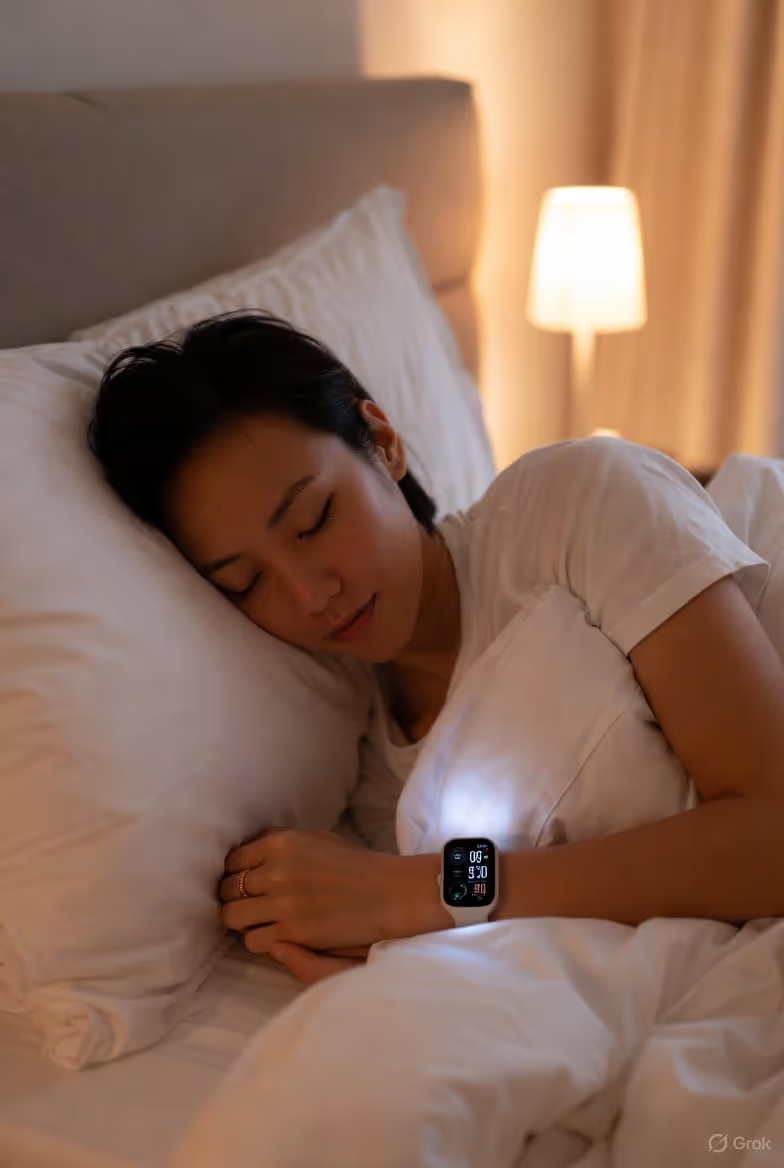
Your sleep score is not a direct measurement like temperature. It’s a composite grade, an algorithm’s best attempt to condense hours of biometric data into a single, digestible figure. To understand the final score, you must first meet its building blocks. While every brand has its proprietary formula, most draw from the same core pillars established by sleep medicine.
Sleep Duration is the most straightforward component: total time spent asleep. It’s the foundational metric. The National Sleep Foundation and the American Academy of Sleep Medicine provide age-based recommendations (7-9 hours for adults), which are typically baked into scoring algorithms. However, duration alone is a blunt instrument. Eight hours of fragmented, light sleep is not equal to eight hours of deep, consolidated rest.
Sleep Continuity (or Efficiency) is where the story gets richer. This measures how uninterrupted your sleep is. It’s calculated by dividing the total time asleep by the total time spent in bed. If you spend 9 hours in bed but are awake for 90 minutes tossing and turning, your sleep efficiency is 83.3% (7.5/9). Clinically, an efficiency of 85% or higher is often considered normal, while below 75% may indicate a sleep disturbance. This metric penalizes prolonged awakenings and difficulty falling asleep.
Sleep Architecture refers to the cyclical journey through sleep stages: Light Sleep (N1/N2), Deep Sleep (N3, or Slow-Wave Sleep), and REM (Rapid Eye Movement) Sleep. Each plays a distinct, vital role:
A "good" score often requires not just the right total duration, but a balanced proportion of these stages, typically with adequate amounts of both deep and REM sleep. Disruptions to this architecture are red flags.
Timing and Regularity is an increasingly valued component. Your circadian rhythm—your internal body clock—thrives on consistency. Algorithms may reward you for going to bed and waking up at similar times each day, and for aligning your sleep window with your natural chronotype (whether you're a night owl or early bird). Sleeping the same 7 hours every night is often scored higher than alternating between 5-hour and 9-hour nights.
Restlessness is typically derived from movement data (actigraphy). Minimal movement indicates solid sleep periods, while frequent tosses and turns suggest lighter, less stable sleep. Some advanced devices, like smart rings that sit on the finger where pulse movement is precise, can use heart rate variability and subtle motion to infer these disturbances with greater sensitivity than a wrist-worn device.
Finally, Physiological Markers are the cutting edge. This includes:
When you see your sleep score tomorrow morning, remember it is a weighted sum of these factors. The exact formula is a trade secret, but the ingredients are now clear. The next question is: how do these digital metrics stack up against the medical gold standard?

To critically evaluate your consumer sleep score, you need to know the benchmark it’s attempting to approximate. In the world of sleep medicine, the undisputed gold standard is the Polysomnogram (PSG), conducted in an accredited sleep lab.
A PSG is a comprehensive data harvest. While you sleep in a clinical room, a constellation of sensors collects a multi-channel narrative of your night:
A trained sleep technician observes you via video and audio, and a board-certified sleep physician later interprets the hundreds of pages of data. The result is not a simple score, but a detailed diagnostic report that can identify over 80 sleep disorders.
So, how does your smart ring compare? It’s essential to understand the distinction: Consumer devices are for estimation and trending; PSG is for diagnosis. Your device uses proxies—movement, heart rate, and sometimes blood oxygen—to infer sleep stages and quality. It’s making a highly educated guess based on algorithms trained on PSG data. Studies show that most wearables are reasonably good (≈80-90% accuracy) at distinguishing sleep vs. wake. However, their accuracy in differentiating specific sleep stages (Light, Deep, REM) is significantly lower and more variable.
This doesn’t render your sleep score meaningless. It provides immense value in tracking your personal trends over time. Is your deep sleep percentage dropping? Is your resting heart rate creeping up? Is your sleep consistency worse on weekends? This longitudinal data, visible in your weekly or monthly charts, is powerful for understanding lifestyle impacts. As one expert put it, "The absolute number might be off, but the direction of change is usually right." For a deeper look at how this technology translates into daily insights, you can explore our blog for more on the science of wearable tracking.
The takeaway is one of informed perspective. Don't fixate on whether your device says you got 72 minutes of REM while a PSG might have measured 88. Instead, use your score as a compass for your own sleep journey. A sudden, sustained drop is a signal worth investigating—perhaps by looking at your habits, stress levels, or eventually, consulting a professional who uses the true gold standard.
We've seen how sleep is measured and scored. But what is the target? What does authoritative, evidence-based research actually define as healthy sleep? The answer comes not from tech companies, but from global health bodies and extensive epidemiological studies.
The most cited source is the National Sleep Foundation (NSF), which convened a multi-disciplinary expert panel to review thousands of studies. Their recommendations, updated in 2015, provide age-specific duration ranges:
Crucially, the NSF emphasizes that these are not just numbers, but part of a framework of "Sleep Health"—multidimensional characteristics of good sleep. These include not just adequate duration, but also regularity, satisfaction, appropriate timing, and the absence of disturbances.
Similarly, the American Academy of Sleep Medicine (AASM) states that sleeping less than 7 hours regularly is associated with adverse health outcomes, including weight gain, diabetes, hypertension, heart disease, stroke, depression, and impaired immune function. They stop short of declaring a universal "optimal" amount beyond the 7-hour minimum for adults, acknowledging individual variability.
This individual variability is the critical bridge between guidelines and reality. The concept of "sleep need" is genetic, much like height. While the population average is 7-9 hours, your personal need might be a solid 6.5 or a required 9.5. How do you find yours? Research suggests looking for the amount that allows you to wake up naturally without an alarm, feel alert throughout the day, and not rely on caffeine to function. It's the amount that supports your personal best.
Beyond duration, the Quality Quadrant is where true health is determined. Research defines quality sleep by:
A person meeting these quality metrics with 7 hours may be far healthier than someone with 9 hours of fragmented, inefficient sleep. This is why the most advanced sleep trackers, including those designed with a holistic view of wellness like Oxyzen, aim to measure these facets of quality, not just duration. They attempt to quantify the elusive feeling of "restoration."
Ultimately, research defines healthy sleep as a consistent pattern that provides sufficient duration for you, with high efficiency and stability, aligned with your circadian rhythm, resulting in daytime alertness and long-term health resilience. Your sleep score should be a tool to help you discover and maintain that pattern, not an arbitrary trophy to chase.

Armed with clinical benchmarks and official guidelines, we can now translate the abstract into the practical. If you use Oura, Fitbit, Whoop, Apple Watch, or a smart ring, what number should you realistically aim for? The first, and most important, rule is: You are your own best control subject.
There is no universal "good" score because every device uses a different scale and algorithm. An 85 on one platform might be equivalent to a 72 on another. Therefore, the most powerful use of your score is trend analysis. A consistent score of 75 for you might be your healthy baseline. A sudden dip to 65 for several nights is a meaningful signal, regardless of the absolute number.
However, we can generalize based on common scoring patterns. Most devices that use a 0-100 scale tend to cluster their user bases in certain ranges:
Let's personify this with two examples:
The components behind the score tell the true story. A "Good" score of 84 could be achieved in different ways:
Both are "good," but they highlight different strengths. This is why you must dig into the breakdown. Is your score low because of duration, or because of high restlessness? The prescription for each is different.
Finally, listen to your body. The ultimate validation of a "good" sleep score is how you feel. If you score a 91 but feel groggy, something is off (perhaps illness or stress). If you score a 78 but feel vibrant, trust that feeling. Use the score as a data-informed guide, not the final judge. For many users, seeing this data correlation is a revelation, a sentiment echoed in the real-world experiences shared by our community.
Your sleep score is a nightly report card on your biology, but it's graded based on your daily choices. Understanding the levers you can pull is the key to moving from passive tracking to active improvement. These factors intertwine to directly impact the metrics your device measures.
1. Lifestyle & Behavior (The Foundation):
2. The Sleep Environment (The Stage):
3. The Mind & Nervous System (The Conductor):
4. Schedule & Rhythm (The Timing):
By auditing these areas, you can start to connect the dots. A poor score after a late-night work session + a glass of wine tells a clear story. A great score after a day of hiking, an early dinner, and no screens is equally explanatory. This process of correlation turns your sleep data into a personal science experiment. For those navigating these changes, our FAQ section offers practical support on integrating tracking into a healthy routine.
Modern sleep science recognizes that sleep cannot be siloed. The quality of your waking hours profoundly dictates the quality of your sleep, and vice versa. This is the core principle of sleep-wake homeostasis and the circadian rhythm. Your sleep score is not an isolated event; it's a chapter in a 24-hour story. The most insightful sleep trackers now integrate daytime data to provide this crucial context.
Daytime Activity & Readiness: How you move during the day sets the stage for sleep. High levels of sedentary behavior are linked to poorer sleep quality. Conversely, achieving a healthy balance of movement, including moderate exercise, builds a stronger sleep drive. However, overtraining without adequate recovery can lead to elevated resting heart rate and poor sleep—a sign you need rest, not more exertion. Some systems now provide a "Readiness" or "Recovery" score that uses last night's sleep data, combined with daytime activity and HRV trends, to advise how intensely you should train that day.
Heart Rate Variability (HRV): The Golden Metric of Balance. HRV is the subtle variation in time between heartbeats. A higher HRV generally indicates a resilient, adaptable autonomic nervous system that can smoothly transition from active (sympathetic) states to restful (parasympathetic) states. Your nighttime HRV, and particularly its trend over time, is a powerful indicator of recovery status. A consistently low or dropping HRV trend, even with "good" sleep duration, is a red flag for chronic stress, illness, or overreaching. It provides context that a sleep score alone cannot.
Nutrition & Hydration Tracking: While less directly integrated, logging meals can reveal powerful patterns. You may discover that scores dip on nights after high-sugar evening snacks or that your resting heart rate is elevated following a late, heavy meal. Dehydration can also increase nighttime heart rate and disrupt sleep.
Stress Tracking & Mindfulness: Some devices offer guided breathing sessions or passive stress tracking through metrics like skin temperature and HRV. Seeing a visible log of a stressful afternoon meeting can directly explain why you had trouble falling asleep that night, turning an abstract feeling into a concrete, manageable data point.
This holistic, 24/7 view transforms your sleep score from a judgment into a conversation. It allows you to see the feedback loop:
Breaking this cycle requires looking at the full picture. By using your device to monitor not just sleep but also activity, recovery, and stress, you can make informed interventions. If your readiness score is low, perhaps you choose a walk instead of a HIIT class. If you see stress building in the afternoon, you might do a 5-minute breathing exercise to down-regulate before the evening. This integrated approach is at the heart of the mission behind holistic wellness technologies, which aim to give you a complete picture of your health, not just fragmented metrics.
Understanding these connections is the first step. In the next sections, we'll put this knowledge into action, exploring how to optimize your own sleep ecosystem and when to look beyond the score for deeper answers.
Now that we understand the components of a sleep score and the myriad factors influencing it, we move from theory to practice. Optimization isn’t about gaming your device’s algorithm for a higher number; it’s about aligning your daily and nightly habits to support your unique physiology. This is a process of experimentation and self-awareness, using your data as a guide.
Step 1: Establish Your Personal Baseline. Before making changes, spend two weeks simply observing. Go about your normal routine while tracking consistently. Note your average sleep score, duration, deep/REM percentages, and resting heart rate. This is your starting line. Crucially, also journal how you feel each morning and afternoon on a simple scale (e.g., 1-5 energy level). This creates a personal correlation between your objective data and subjective experience.
Step 2: Implement One Change at a Time. The most common mistake is overhauling everything at once. You won’t know what actually worked. Use the framework of the factors we discussed. Choose one lever to pull for at least 5-7 nights, and observe the trend in your data.
Step 3: The Chronotype Factor – Working With Your Body Clock. Not everyone is meant to sleep from 10 p.m. to 6 a.m. Your chronotype—your genetically influenced predisposition for sleep timing—is a key variable.
Fighting your chronotype is a losing battle for sleep quality. Use your data to find your natural window. If you’re a Wolf who sleeps best from 1 a.m. to 9 a.m., a score in the 70s on an enforced 10 p.m.-6 a.m. schedule might jump to the 80s when you honor your natural rhythm.
Step 4: The Role of Napping. Does a nap help or hurt your nightly score? The data will tell you. For some, a short 20-minute "power nap" before 3 p.m. can boost afternoon alertness without affecting nighttime sleep. For others, any nap reduces their homeostatic sleep drive, leading to longer sleep latency and a lower score. Track your naps in your device’s app and see the correlation for yourself.
Step 5: Iterate and Refine. This process is cyclical. Once you’ve tested one variable and seen its effect (or lack thereof), move to the next. Over months, you will build a personalized sleep protocol—a combination of environmental tweaks, timing, and routines—that maximizes your score and how you feel. This is the true power of personal data: moving from generic advice to a customized blueprint for restorative sleep. For those seeking to document this journey, you can often find related articles and community insights on our blog.
Remember, the goal is sustainable progress, not perfection. A week of scores in the mid-80s with high energy is a tremendous victory. The occasional low score after a special event is part of life. The long-term trend is what matters for health.
As we embrace the insights from sleep tracking, it is equally vital to understand its limitations. An uncritical reliance on your sleep score can, paradoxically, become a source of sleep anxiety—a condition now colloquially termed orthosomnia (from ortho, meaning correct, and somnia, meaning sleep). This is the obsessive pursuit of perfect sleep data, which increases stress and further degrades sleep.
1. The Algorithm is a Black Box (and Can Be Wrong). We don’t know the exact weights and decision trees used by any commercial device. The algorithm might over-penalize a single nighttime bathroom break or under-value a night of exceptional REM sleep. It’s an estimate, not an oracle. Blindly trusting it over your own feelings is a mistake.
2. The Pursuit of Perfection is the Enemy of Good Sleep. The anxious nightly check of your score, the disappointment at an 79 instead of an 85, the frantic Google searches about “low deep sleep”—all of this activates the sympathetic nervous system, releasing cortisol and adrenaline. This state is chemically opposite to the state required for sleep. You can literally worry your way into a low score.
3. Individual Biometrics Vary Wildely. The population-based averages for sleep stages are just that—averages. Your personal, genetically determined “normal” might be 10% deep sleep, while the algorithm’s “ideal” is 20%. If you consistently feel great at 10%, chasing the 20% benchmark is futile and stressful. Renowned sleep researcher Dr. Matthew Walker often states, “The five most dangerous words in sleep science are: ‘People should get eight hours.’” The same principle applies to stage breakdowns.
4. Data Without Context is Noise. A low score tells you what, but rarely why. It could be due to stress, an oncoming illness, alcohol, a change in workout routine, or a noisy neighbor. Without detective work, the score is just an alert, not a diagnosis. This is why the journaling component is non-negotiable for serious trackers.
5. The Placebo (and Nocebo) Effect of Tracking. Believing the device can create a powerful placebo effect. If it says you slept poorly, you may feel poorly, even if your body feels okay. Conversely, a high score might make you feel invincible. It’s crucial to practice “feeling your body” first, then checking the data for correlation, not letting the data dictate your feeling.
How to Avoid the Pitfalls:
Using a sleep tracker wisely requires a balanced mindset: be a curious scientist of your own habits, not a graded student. The device is a tool for empowerment, not a source of judgment. This philosophy of balanced, human-centric technology is central to the vision and values behind thoughtful wellness products.
Not all sleep trackers are created equal. The device you choose—be it a smartwatch, a fitness band, a dedicated sleep sensor, or a smart ring—fundamentally shapes the data that generates your score. Each form factor has inherent strengths and limitations based on where it sits on your body and what sensors it can house.
Wrist-Worn Devices (Smartwatches & Fitness Bands):
Fingertip Pulse Oximeters or Bedside Devices:
Smart Rings (The Emerging Contender):
This form factor, worn on the finger, presents a compelling alternative for sleep tracking, and it's where companies like Oxyzen focus their engineering efforts.
Bed Sensors (Under-Mattress or Non-Wearable):
The Impact on Your Score: A device that overestimates movement (like a loose wristband) may chronically under-report your sleep efficiency. A device with a weak heart rate signal may misestimate your sleep stages. Therefore, your “85” on a ring might represent a different physiological reality than an “85” on a watch. When choosing a device, consider which form factor will provide the cleanest signal for you and which you will wear most consistently. Consistency of wear is, ultimately, more important than marginal gains in accuracy. To understand the specific approach of one such technology, you can learn more about the design philosophy behind smart ring development.
The sleep score of today is a static, retrospective number. The sleep score of the near future will be dynamic, predictive, and deeply integrated into a holistic health ecosystem. Driven by advances in artificial intelligence (AI), sensor fusion, and longitudinal health data, we are on the cusp of a revolution in personalized sleep medicine.
1. From Descriptive to Predictive and Prescriptive AI. Current algorithms describe what happened. Next-generation AI will:
2. The Multi-Modal Sensor Fusion Future. The gold-standard PSG uses multiple sensors. Future consumer devices will move in this direction through a combination of wearables and ambient sensors.
3. The Truly Personalized Baseline. Instead of comparing you to population averages, AI will establish a deeply personal baseline over months or years. It will know your personal normal deep sleep range, your ideal bedtime window, and how your body uniquely responds to stress, travel, or exercise. Deviations from your normal will become far more significant than deviations from a population mean.
4. Integration with Medical and Electronic Health Records (EHR). With proper privacy safeguards, you may one day be able to share your longitudinal sleep trend data directly with your physician. A pattern of gradually increasing resting heart rate and decreasing HRV, coupled with snoring sounds detected by your device, could provide a doctor with powerful pre-screening data for conditions like sleep apnea or cardiovascular risk, long before a crisis occurs. This shifts the paradigm from sick care to true health maintenance.
5. The Evolving “Score” Itself. The single number may disappear or become one of many facets. We may see a “Sleep Vitality” dashboard with separate scores for Recovery (deep sleep, HRV), Cognitive Preparation (REM sleep), Stability (efficiency, restlessness), and Alignment (circadian timing). This multidimensional report would give a much richer and more actionable picture than a single grade.
The pursuit of a "healthy" sleep score is not a one-size-fits-all endeavor. What constitutes optimal sleep—and how it's measured—undergoes dramatic shifts from the cradle to the later chapters of life. Understanding these physiological and architectural changes is crucial for setting realistic expectations and interpreting data correctly for yourself and your loved ones.
Sleep in Childhood and Adolescence: Building the Brain
For infants and young children, sleep is the primary activity of the brain, a time of immense neural wiring and physical growth. Their sleep architecture is profoundly different:
Sleep in Adulthood: The Peak and The Plateau
Early and middle adulthood (20-50s) is the reference point for most device algorithms. This is where the classic 7-9 hour recommendation, with ~20% deep sleep and ~25% REM sleep, is calibrated. However, even within this span, changes occur:
Sleep in Older Adulthood (65+): Redefining "Normal"
This is where the most significant—and often misunderstood—changes occur. The sleep of a healthy 75-year-old is structurally different from that of a 30-year-old.
Practical Implications for Trackers:
Understanding these lifespan variations fosters self-compassion and smarter data interpretation. It moves us away from an arbitrary, youthful ideal and towards a framework of age-appropriate sleep health. This nuanced understanding of human biology is part of the mission to create more intelligent and personalized health tools.
Your sleep score is more than a measure of rest; it is a vital sign, a nightly readout of your physiological resilience. A consistent pattern of low scores is not just about feeling groggy—it’s a biomarker correlated with an increased risk for some of the most prevalent chronic diseases of our time. The research here moves from correlation to increasingly clear mechanisms.
Cardiovascular Disease: The Heart of the Matter
Sleep is non-negotiable maintenance for the cardiovascular system.
Metabolic Dysregulation: The Sugar and Weight Connection
Sleep deeply influences the hormones that govern hunger and metabolism.
Cognitive Decline and Mental Health: The Brain's Nightly Reset
The brain's glymphatic system, which clears metabolic waste like beta-amyloid (associated with Alzheimer's disease), is most active during deep sleep.
Immune Function: Your Nightly Defense Recharge
During deep sleep, the body produces cytokines, proteins that target infection and inflammation. Skimping on sleep reduces this production and makes you more susceptible to common illnesses. Research has shown that people sleeping less than 7 hours are almost 3 times more likely to develop a cold than those sleeping 8 hours or more. A chronically low sleep score can be a sign of a system running on empty, with depleted immune resources.
The Takeaway: Scores as a Leading Indicator
It’s critical to note that a low sleep score does not diagnose any of these conditions. What the data shows is that the same physiological disruptions that produce low scores (lack of deep sleep, high fragmentation, elevated nighttime heart rate) are actively involved in the disease pathways.
Therefore, your sleep score trend is a leading indicator of systemic health. A steady, unexplained decline is a signal worth heeding—a prompt to see a doctor, not just to tweak your bedtime. It turns your wearable from a sleep gadget into a potential early-warning system for your most vital systems. This profound connection between nightly data and long-term wellness is why we are passionate about providing resources that help users understand and act on their health insights.
For some, the standard sleep guidelines and scoring benchmarks feel like a distant fantasy. Their lives are governed by non-negotiable schedules that directly conflict with circadian biology. For these populations, sleep tracking isn't about optimization for its own sake; it's a critical tool for damage mitigation, performance maintenance, and survival.
The Elite Athlete: Where Sleep is a Performance-Enhancing Drug
For athletes, sleep is the ultimate legal recovery tool. Their relationship with sleep scores is hyper-focused on physiological markers.
The Shift Worker: Fighting Biology for a Paycheck
This group experiences the most severe chronic misalignment between their internal clock and their sleep schedule, leading to a state of permanent "social jet lag."
The New Parent: The Art of Survival and Micro-Recovery
For parents of infants, the classic "sleep score" is often a source of demoralization. Reframing is essential.
The Common Thread: Compassionate Interpretation
For these populations, the standard "good vs. poor" scale breaks down. The advice is:
The technology must serve the human in their real-world context. This principle of human-centric design and empathy is woven into the story of how thoughtful wellness companies build products for real lives, not just ideal ones.
You can have perfect habits, but if your sleep environment is working against you, high scores will remain elusive. This is an engineering project for your bedroom, transforming it from a mere place to lie down into a true sleep sanctuary—a habitat scientifically optimized for sleep induction and maintenance. Let's move beyond "make it dark and quiet" to the masterclass level.
1. The Darkness Doctrine: Beyond Blackout Curtains
Light is the primary zeitgeber (time-giver) for your circadian clock. Even small amounts can fragment sleep.
2. Thermal Regulation: The Science of Cooling
The drop in core body temperature is a key signal for sleep onset. Your goal is to facilitate this drop.
3. Soundscaping: From Noise Cancellation to Sound Enrichment
The goal isn't always silence; it's auditory consistency.
4. The Air You Breathe: Air Quality and Olfactory Cues
5. The Tactile Domain: Mattress, Pillow, and Texture
Putting It All Together: The Pre-Sleep Ritual
Your sanctuary should be prepared before you enter. Make your final wakeful act the activation of this optimized environment:
This level of environmental control might seem extreme, but for those struggling with sleep, it removes variables and allows your biology to function as designed. It’s the ultimate act of self-care, and the resulting stability in your sleep scores will reflect the investment. For practical tips and product insights that can help build this sanctuary, our FAQ is a great place to find detailed guidance.
Beyond environment and behavior, a burgeoning industry promises to boost your sleep score through powders, pills, and potions. The realm of sleep supplements and targeted nutrition is a mix of robust science, traditional wisdom, and clever marketing. Let's separate the evidence-based tools from the hype, understanding what can genuinely move the needle on your sleep metrics.
The Heavy Hitters: Backed by Research
The Emerging and Context-Dependent Contenders
The Nutritional Symphony: What to Eat (and When)
Supplements are adjuncts, not foundations. Your daily diet creates the substrate for sleep.
The Red Flags and False Promises
The Data-Driven Approach to Supplementation
This is where your sleep tracker becomes a personal lab. The protocol is simple:
The goal is not to take a cocktail of pills, but to discover if a specific, evidence-backed compound addresses a specific gap in your sleep profile. For instance, if your data consistently shows long sleep latency, you might trial magnesium. If your scores are poor due to shift work, melatonin (timed correctly) could be your test. This method turns speculation into personalized insight, a philosophy aligned with a research-driven approach to wellness technology.
Your sleep tracker is a brilliant observer and a mediocre diagnostician. It can scream that something is wrong, but it cannot tell you what that something is. Knowing when to transition from self-experimentation to professional medical consultation is a critical skill. Certain patterns in your data are not just "bad sleep"—they are potential distress signals from your body that warrant a deeper look.
Red Flag #1: Consistently Elevated Nighttime Heart Rate (RHR)
While RHR varies, a sustained upward trend (e.g., your normal is 55 BPM and it's now consistently 65+ at night) while at rest is a significant signal.
Red Flag #2: Chronic, Severe Sleep Fragmentation (Low Efficiency) Despite Good Habits
You're doing everything right—dark, cool room, consistent schedule, no alcohol—but your efficiency score remains stubbornly below 75%, showing frequent, long awakenings.
Red Flag #3: Chronic, Unrefreshing Sleep with "Adequate" Scores
Perhaps the most insidious flag. Your scores are in the "fair" to "good" range (70s-80s), you're logging 7-8 hours, but you wake up exhausted and struggle with daytime sleepiness. The data and your lived experience are in conflict.
Red Flag #4: Severe Snoring or Gasping Sounds (Captured by Some Devices)
Some advanced wearables and rings now include microphones or vibration sensors that can detect snoring patterns.
Red Flag #5: A Sudden, Unexplained, and Persistent Change
You've been a consistent 85 scorer for months. Suddenly, for three weeks straight, you're in the low 60s without any change in routine, stress, or diet.
How to Prepare for the Doctor's Visit: From Data to Diagnosis
Walking in saying "my sleep score is low" is not helpful. Transform your data into a clinical asset:
Your sleep tracker empowers you to be a prepared, evidence-bearing patient. It helps move the conversation from "I'm tired" to "Here is objective data showing my sleep is disrupted, and it's been getting worse for X weeks." This shift can lead to faster, more accurate referrals and diagnoses. For support in navigating this process, our resources can help guide you on when and how to seek professional advice.
We have journeyed through the science of sleep scores, from their algorithmic foundations to their connection with lifelong health, and from environmental optimization to knowing when to seek help. Now, we arrive at the synthesis: a practical, personalized, and sustainable action plan. This is not a rigid 30-day challenge, but a mindful framework for making sleep health a seamless part of your life.
Phase 1: The Observational Audit (Weeks 1-2)
Phase 2: The Foundation Fortification (Weeks 3-6)
Phase 3: The Refinement & Personalization (Ongoing)
The Mindset Shift: From Score-Chaser to Sleep-Conscious Architect
Your journey with sleep data should culminate not in dependency on a device, but in a deepened attunement with your own body. The tracker teaches you the language of your physiology—the signs of good recovery, the feel of circadian alignment, the impact of stress—until this awareness becomes internalized. The ultimate success is when you can intuitively sense what your body needs and occasionally use the data for confirmation and fine-tuning. This journey of empowered self-knowledge is at the heart of our story and our commitment to creating tools that educate as they track.
We began with a simple, nagging question: What does a healthy sleep score look like? We've discovered that the answer is not a number, but a relationship—a relationship between you, your biology, your lifestyle, and the technology that observes it.
A healthy sleep score is not 100. A healthy sleep score is one that reflects a pattern of sleep that is adequate for your individual need, efficient in its structure, stable in its timing, and resulting in daytime alertness and long-term health resilience. It is a score that trends positively when you care for yourself and alerts you kindly when you are veering off course.
It is a score that sits quietly in the background of a life well-lived, not at the forefront of your anxiety. It is a tool that has helped you discover that you are a Wolf chronotype who thrives on a later schedule, that magnesium glycinate shaves 20 minutes off your sleep onset, that even 20 minutes of afternoon sunlight boosts your sleep efficiency, and that your resting heart rate is your most honest metric of life overload.
The research is clear: sleep is the non-negotiable pillar of health. But the path to achieving it is personal. Your sleep score, understood deeply and used wisely, is the map for that personal path. It turns the abstract advice—“get more sleep”—into a personalized, data-informed narrative of your own restoration.
So tomorrow morning, when you check your score, do so with this new lens. See it not as a grade, but as a conversation starter. A high score is a whisper of congratulations from your body. A low score is not a scolding, but a question: "What happened yesterday? What can we learn?" And a consistent pattern of low scores is a respectful but urgent tap on the shoulder, suggesting it might be time to ask for help.
In the end, the goal of all this technology, all this research, and all this personal experimentation is not a perfect number in an app. It is waking up feeling truly restored. It is having the energy for your passions and the patience for your challenges. It is providing your body and mind the nightly renewal they deserve. That is the ultimate standard of healthy sleep, and no single score can ever fully capture its profound value. Let your data guide you there, but let your own vibrant awakening be the final measure of success. To continue this journey of discovery, we invite you to explore more insights and join a community focused on meaningful wellness.
Your Trusted Sleep Advocate: Sleep Foundation — https://www.sleepfoundation.org
Discover a digital archive of scholarly articles: NIH — https://www.ncbi.nlm.nih.gov/
39 million citations for biomedical literature :PubMed — https://pubmed.ncbi.nlm.nih.gov/
Experts at Harvard Health Publishing covering a variety of health topics — https://www.health.harvard.edu/blog/
Every life deserves world class care :Cleveland Clinic - https://my.clevelandclinic.org/health
Wearable technology and the future of predictive health monitoring :MIT Technology Review — https://www.technologyreview.com/
Dedicated to the well-being of all people and guided by science :World Health Organization — https://www.who.int/news-room/
Psychological science and knowledge to benefit society and improve lives. :APA — https://www.apa.org/monitor/
Cutting-edge insights on human longevity and peak performance:
Lifespan Research — https://www.lifespan.io/
Global authority on exercise physiology, sports performance, and human recovery:
American College of Sports Medicine — https://www.acsm.org/
Neuroscience-driven guidance for better focus, sleep, and mental clarity:
Stanford Human Performance Lab — https://humanperformance.stanford.edu/
Evidence-based psychology and mind–body wellness resources:
Mayo Clinic — https://www.mayoclinic.org/healthy-lifestyle/
Data-backed research on emotional wellbeing, stress biology, and resilience:
American Institute of Stress — https://www.stress.org/


