


Sleep Score Trends: What Weekly Patterns Reveal About Your Health
Weekly patterns can show how work stress, weekend schedules, or exercise routines affect your sleep quality.
Weekly patterns can show how work stress, weekend schedules, or exercise routines affect your sleep quality.
%402x.svg)
You wake up feeling groggy, even though your smart ring reported a solid 8 hours of sleep last night. The weekend arrives, and despite staying up late, you feel oddly refreshed on Saturday morning. The inconsistency is maddening. For years, we’ve chased the holy grail of a single, perfect night’s sleep, obsessing over nightly scores as isolated events. But what if the true secret to restorative rest and long-term health isn’t hidden in last night’s data, but in the story your sleep tells over a week, a month, a season?
Welcome to the frontier of sleep science: longitudinal sleep analysis. By shifting our focus from nightly snapshots to weekly trends, we unlock a profound narrative about our physical resilience, mental state, and metabolic health. A single night of poor sleep is a data point; a pattern of weekend rebound, mid-week slumps, or consistent late declines is a diagnosis. Modern wearable technology, like the advanced sensors in the Oxyzen smart ring, is making this deep trend analysis accessible to everyone, moving beyond simple step-counting to become a 24/7 health biosensor.
This article will guide you through decoding the weekly rhythms of your sleep. We’ll explore why your sleep score dances to the tune of your workweek, how Friday night’s choices echo into Tuesday, and what recurring patterns can signal about underlying health conditions. This isn’t just about sleeping better; it’s about understanding the core biological cadence of your life. Let’s begin by unraveling why your sleep score is more than just a number.

Your sleep score—a tidy digit between, say, 60 and 100—feels definitive. It’s the verdict on your night. But this score is a complex algorithm’s output, a weighted symphony of multiple physiological movements. To understand weekly trends, we must first dissect what composes this nightly grade.
The Core Pillars of Sleep Measurement:
Most sophisticated sleep scores, like those generated by devices such as the Oxyzen ring, are built on several key pillars:
The Limitations of a Nightly Snapshot
Judging your sleep health on one night’s score is like judging a novel by one random sentence. A low score on Tuesday could be due to a single late-night work crisis (an outlier). A high score on Wednesday might be a recovery response. The magic happens when you string these scores together. Does your efficiency plummet every Sunday night ("Sunday Scaries")? Does your deep sleep peak predictably on Fridays after a week of physical training? These are the trends that matter.
For instance, you can explore our blog for more wellness tips on how to improve individual sleep score components, but the real power lies in the macro view. A device that seamlessly tracks these metrics across weeks, like the Oxyzen ring worn comfortably 24/7, provides the raw data for this life-changing analysis. It becomes less of a sleep tracker and more of a sleep historian, documenting the ongoing story of your body’s needs and responses.
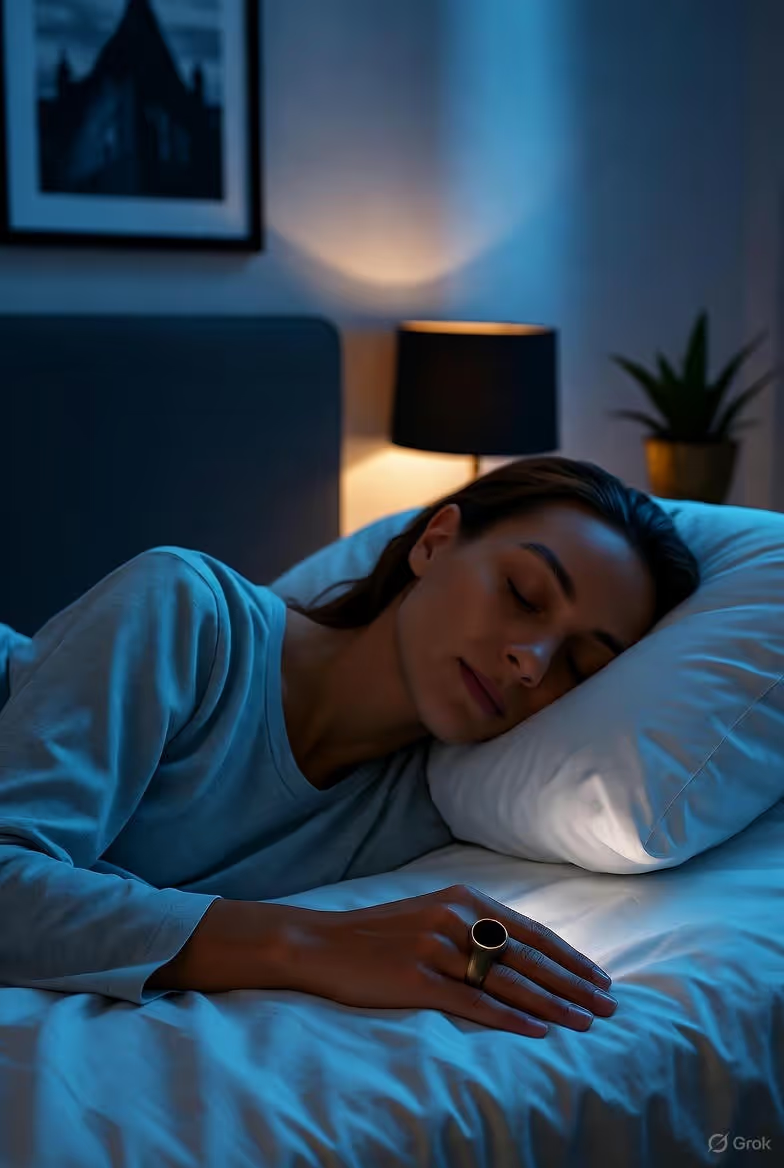
Now that we understand the components, let’s overlay them on the canvas of a standard week. For most adults, life is seismographically split between the structure of the workweek and the freedom of the weekend. This schism creates the most common and telling sleep trend of all: Social Jet Lag.
Social Jet Lag: The Monday Morning Hangover Without the Drink
Coined by sleep researchers, social jet lag is the mismatch between your body’s natural circadian rhythm (your internal clock) and your socially imposed sleep schedule. During the week, you might force yourself to sleep at 11 PM and wake at 7 AM for work. Come Friday, you socialize, staying up until 1 AM, and sleep in until 9 AM on Saturday and Sunday. By Sunday night, your body clock has shifted later. Trying to force it back to an 11 PM bedtime is akin to flying from Los Angeles to New York and expecting to perform immediately—you have jet lag.
A Typical Week’s Sleep Signature:
What This Pattern Reveals About Your Health:
Consistently severe social jet lag (a difference of 2+ hours in sleep midpoint) is linked by research to increased risks for metabolic disorders like obesity and type 2 diabetes, cardiovascular strain, and mood disturbances. Your weekly sleep trend is a direct measure of the stress your lifestyle imposes on your biology. A smooth, consistent line is the ideal; a sawtooth wave of weekly disruption is a red flag. Understanding this pattern is the first step to mitigating it, a topic we delve into deeply in our complete guide to sleep consistency.
If you could choose between a perfectly scored 90 every night but at inconsistent times, or a solid 80 at the exact same time every single night, which is healthier? Mounting scientific evidence points powerfully to the latter. Sleep consistency—going to bed and waking up at roughly the same time each day, even on weekends—is emerging as a pillar of health as critical as diet or exercise.
The Circadian Rhythm: Your Body’s Conductor
Imagine your body’s processes as an orchestra. Your circadian rhythm is the conductor. Every night and morning, it cues the release of hormones like melatonin (for sleep) and cortisol (for wakefulness), regulates digestion, controls body temperature, and manages cell repair. When you constantly change your sleep schedule, you’re firing the conductor and letting the orchestra play ad-lib. The result is cacophony inside your body.
The Health Benefits of a Rock-Solid Rhythm:
Studies show that individuals with high sleep consistency experience:
How to Read Consistency in Your Weekly Trend:
Look at your weekly sleep graph not for the highest peaks, but for the straightest line. Tools that provide a "Consistency Score" or clearly visualize your bedtime and wake-time bands are invaluable. A pattern showing a tight cluster of sleep/wake times from Monday through Sunday is a sign of excellent sleep hygiene and low circadian strain. A pattern that looks like a scatter plot, however, indicates your body is in a constant state of internal jet lag, working against you. The founding vision behind Oxyzen’s technology was rooted in providing this kind of clear, actionable insight into the body’s fundamental rhythms, not just step counts.
Life is a series of stressors—physical (a hard workout), mental (a big project), emotional (a personal conflict), and chemical (poor diet, alcohol). Sleep is your body’s primary recovery tool. Therefore, your weekly sleep trends are a direct ledger of your stress deposits and recovery withdrawals.
Identifying Recovery Signatures in Your Data:
The Weekly Recovery Cycle:
An ideal week shows a dynamic but balanced relationship. Stressors are applied (workouts, work deadlines), and the sleep data shows an appropriate adaptive response (increased deep sleep, slightly longer duration). By the week’s end, scores have returned to a healthy baseline, indicating full recovery. A problematic trend shows stressors with no adaptive sleep response, or a baseline that steadily declines throughout the week—a sure path to burnout. This makes your sleep trend the ultimate readiness indicator, telling you whether you’re prepared to take on more or need to pull back and rest.

You are not just what you eat; you sleep how you eat. The connection between diet and sleep is intimate and bidirectional, and its effects play out vividly across your weekly sleep scores. Alcohol, caffeine, meal timing, and macro-nutrient composition all leave distinct fingerprints on your sleep architecture.
Alcohol: The Seductive Saboteur
Caffeine and Late Meals:
The Positive Patterns:
Conversely, a week where you consciously finish eating earlier, hydrate well, and moderate alcohol might show a striking upward trend in sleep efficiency and restfulness scores by Thursday or Friday, as the negative echoes fade. It’s a powerful visual feedback loop that can motivate healthier habits. Many users of the Oxyzen smart ring report that seeing this direct, data-driven link was the final push they needed to change their evening routines for good.
In the modern world, one of the most pervasive influences on our weekly sleep trend is not dietary or social—it’s digital. The blue light emitted by smartphones, tablets, laptops, and TVs is biologically interpreted as daylight, directly suppressing melatonin production and pushing your circadian rhythm later.
The "Weeknight Scroll" Pattern:
Examine your sleep onset time and efficiency on nights you binge-watch a series or engage in late-night social media scrolling. You’ll likely see:
The Weekly Digital Detox Trend:
Now, contrast this with a week where you institute a "digital sunset"—no screens for 60-90 minutes before bed. The trend may show:
The Weekend Binge-Watch Spike:
This is a classic modern pattern. A week of decent, screen-limited sleep collapses on Friday night with a 3-hour streaming marathon. The data shows a stark outlier: very late bedtime, poor efficiency, and a decimated sleep score. The ripple effect can drag down Saturday night’s quality as well, as your rhythm is disrupted. Recognizing this self-inflicted pattern is the first step to reclaiming your sleep. For practical tips on managing technology for better sleep, our blog offers a wealth of science-backed strategies.
Sleep is not a one-size-fits-all metric. Biological sex and age are fundamental variables that create distinct baseline patterns in sleep architecture, which in turn influence the weekly trends you’ll observe. Understanding your own demographic context is crucial for setting realistic expectations and accurately interpreting your data.
The Female Sleep Rhythm: Hormonal Orchestration
The menstrual cycle, pregnancy, and perimenopause create powerful monthly and life-stage sleep trends that overlay the weekly pattern.
The Male Sleep Pattern:
While less cyclically variable, men face other challenges. They are more prone to sleep apnea, which can create a trend of chronically low deep sleep, high resting heart rate at night, and poor sleep efficiency—every night, with little weekly variation unless treated. The weekly trend for an untreated apnea sufferer is often a flat, low line of poor-quality scores.
The Age Factor:
Knowing these baselines helps you ask the right questions. Is a woman’s weekly dip in scores tied to her cycle or her work stress? Is a man’s consistently low score a lifestyle issue or a medical one? This nuanced understanding is part of the comprehensive approach to wellness we detail in our mission to personalize health insights.
Perhaps the most profound connection revealed by weekly sleep trends is the intricate, bidirectional loop between sleep and mental health. Poor sleep worsens anxiety and low mood, and psychological stress directly degrades sleep. This creates self-reinforcing cycles that are clearly visible in your data.
The Anxiety Signature:
Anxiety often manifests as difficulty initiating sleep. Your weekly trend might show a pattern of low sleep efficiency scores specifically on Sunday nights (anticipatory anxiety for the week) or on nights before important meetings (performance anxiety). You may also see elevated resting heart rate and lower HRV throughout the night on these high-stress days, even if you eventually sleep. The graph tells a story of a nervous system that cannot power down.
The Depression Signature:
Depression is more frequently linked to sleep maintenance insomnia and altered sleep architecture. The weekly trend might show:
The Vicious Cycle and the Path Out:
A bad week at work causes anxiety, leading to three nights of poor sleep. By Thursday, the sleep debt impairs emotional regulation, making small stressors feel overwhelming, which causes more anxiety and worse sleep. The weekly trend spirals downward.
Conversely, improving sleep consistency is a first-line intervention for mild to moderate anxiety and depression. A week focused on sleep hygiene—consistent wake time, morning light, wind-down routine—can show an upward trend in scores that correlates directly with an improved sense of well-being. The data becomes a tool for empowerment, showing that by hacking sleep, you can directly influence your mental state. Tracking this mind-sleep connection is a cornerstone of holistic health, a principle central to the philosophy behind Oxyzen's comprehensive tracking.
While weekly patterns are often reflections of lifestyle, sometimes they are the canary in the coal mine for underlying medical conditions. A persistent, unexplainable trend in your sleep data can be a powerful prompt to consult a healthcare professional.
Sleep Apnea: The Silent Disruptor
This condition, characterized by repeated breathing pauses during sleep, has a classic signature that nightly scores might miss but weekly trends highlight:
Insomnia Disorder:
Unlike occasional poor sleep, clinical insomnia shows a trend of escalating anxiety around sleep itself. You might see a pattern where a couple of bad nights trigger a week of increasingly early bedtimes (trying to "catch up") and later wake times, which fragment the circadian rhythm further and deepen the insomnia. The data shows a chaotic, deteriorating pattern rather than a stable one.
Restless Legs Syndrome (RLS):
This can create a trend of very low sleep efficiency specifically at sleep onset. The time it takes to fall asleep is consistently long, as the individual waits for sensations to subside.
The Importance of Longitudinal Tracking:
A doctor might ask, "How long has this been going on?" With a year of sleep trend data from a device like the Oxyzen ring, you have a concrete answer. You can show that your deep sleep has been on a steady decline for 6 months, or that your sleep latency has doubled since a specific event. This objective history is far more valuable than a subjective recollection. For anyone noticing persistent, unexplained negative trends, reviewing our FAQ on data and health insights is a good first step, followed by a conversation with a doctor armed with your personal data.
Understanding your weekly sleep pattern is enlightening, but the true power lies in using that knowledge to create positive change. You are not a passive observer of your data; you are the conductor of your own circadian orchestra. Let’s translate the insights from your trends into practical, actionable strategies designed to smooth out the peaks and valleys for a more restorative, consistent week.
Step 1: Conduct a "Sleep Trend Audit"
Before you change anything, spend a week as a detective. Using your wellness tracker’s weekly view, note the following:
This audit transforms abstract data into a personal roadmap. For many, as shared in real user experiences on our testimonials page, this moment of clarity—seeing the direct line between a Thursday night beer and a fragmented Friday sleep graph—is the catalyst for lasting change.
Step 2: Anchor Your Week with a Non-Negotiable Wake Time
This is the single most effective tactic for improving sleep consistency. Choose a wake time you can realistically maintain seven days a week. Yes, even Saturday and Sunday.
Step 3: Engineer Your Evenings for Success
Your evening routine is the runway for sleep. A bumpy runway leads to a turbulent night. Design a "wind-down" protocol for the 60-90 minutes before your target bedtime.
Step 4: Strategize for High-Risk Nights
Every week has its vulnerable points. Plan for them instead of being victimized by them.
By implementing these strategies, you stop chasing a perfect nightly score and start cultivating a resilient, consistent sleep trend. This is the foundation upon which all other health optimization is built. For a deeper dive into creating personalized routines, our blog features numerous guides on sleep hygiene optimization.
Your sleep score is the headline, but the subtext—written in the language of your autonomic nervous system—is found in metrics like Resting Heart Rate (RHR), Heart Rate Variability (HRV), and skin temperature. When analyzed weekly, these biomarkers provide a breathtakingly detailed picture of your recovery, stress, and immune status. They explain the why behind your sleep score.
The Nightly Narrative of Your Nervous System
The Weekly Biomarker Story
Imagine a week where you ramp up your training:
Without this biomarker context, you might only see stable sleep scores and miss the entire internal drama of stress and adaptation. Conversely, a week of poor sleep scores accompanied by crashing HRV and rising RHR is a loud, clear siren to pull back and prioritize rest.
Skin Temperature: The Circadian Candle
Your core body temperature follows a circadian rhythm, dropping to initiate sleep and reaching its nadir in the early morning before rising to wake you. Wearable devices that track skin temperature (like a smart ring) can detect this rhythm.
By learning to read these correlated trends, you graduate from a sleep tracker to a true health monitor. You’re not just told you slept poorly; you’re given clues about whether the cause was physical strain, immune activation, or nervous system dysregulation. This integrated view is at the heart of the Oxyzen smart ring's design philosophy, which seeks to provide a holistic picture of your well-being.
Your weekly sleep trend does not exist in a vacuum. It is embedded within the larger cycle of the seasons. Just as animals hibernate and plants bloom, human physiology responds profoundly to the changing length of day, light intensity, and temperature. Observing your sleep data across months can reveal a fascinating seasonal rhythm.
Winter's Grip: The Call for More Sleep
As daylight hours shorten and temperatures drop, a distinct pattern often emerges:
Summer's Light: Lively but Possibly Lighter Sleep
Spring and Fall: Transitional Turbulence
The shifting light in these transitional seasons can be subtly disruptive. The "spring forward" daylight saving time change is notoriously harsh, correlating with measurable increases in heart attacks and accidents due to the sudden circadian misalignment. Your data that week may show a cluster of poor sleep scores. Conversely, "fall back" often brings a week of slightly better scores as people gain an hour, though the earlier darkness can affect evening mood.
Adapting Your Strategy with the Seasons:
For athletes and serious fitness enthusiasts, sleep is not recovery—it is the fundamental component of training. It’s when muscles repair, hormones balance, and neural pathways for skill are cemented. An athlete’s weekly sleep trend is a direct readout of their training load, adaptation, and readiness to perform.
Periodizing Sleep with Training
Elite athletes don’t just periodize their workouts; they periodize their recovery, with sleep at the core.
Key Performance Indicators (KPIs) in Sleep Data:
Athletes should watch these trends closely:
The Travel Disruption:
For competing athletes, travel is a major sleep disruptor. The weekly trend surrounding competition is often chaotic. The strategy here involves using sleep data to guide jet lag adjustment: forcing wake times into the new time zone immediately, using light exposure strategically, and accepting that sleep scores will be sub-par for a few days. The return trip’s recovery trend is just as important to monitor.
For the everyday athlete, the lesson is the same: your workout is the stimulus, but your sleep is the builder. A week of perfect workouts paired with a week of poor sleep trends is a week of wasted effort and increased injury risk. Monitoring this balance is what allows for sustainable progress. Many in our community, whose stories you can discover here, have used this integrated view to break through plateaus by finally prioritizing what happens between training sessions.
Few life experiences reshape sleep as dramatically as parenthood. The weekly sleep trend of a parent is a graph of constant adaptation, sacrifice, and resilience. It’s a unique case study in how external demands can override innate biological rhythms, and how tracking can provide sanity and strategy.
The Newborn Phase: Survival Mode Graphing
In the first months, the parent’s sleep graph is a stark landscape of extreme fragmentation. The concept of a 90-minute sleep cycle is replaced by 2-3 hour chunks. Key trends to observe (and survive):
The Toddler & Young Child Years: Chasing Consistency
As children develop their own rhythms, the parent’s trend often reflects this journey.
The School-Age to Teen Years: Regaining Autonomy
As children sleep more reliably, parents can begin to reclaim their own sleep rhythm. However, new patterns emerge:
The Long-Term View: A Graph of a Lifetime
A parent’s multi-year sleep trend is a powerful biographical artifact. It charts the intense fragmentation of infancy, the gradual consolidation of the preschool years, the stable but often restricted years of childhood activities, and eventually, the return to a personal, controlled rhythm. Throughout, the key insight from tracking is managing sleep debt proactively. Seeing a week of cumulative deficit in the data is a signal to call in support, schedule a nap, or go to bed excessively early on a weekend night—guilt-free. This journey of adaptation and resilience mirrors the human-centric design thinking we champion in our approach to health technology.
For the nearly 20% of the workforce with non-standard hours, the concept of a "weekly" sleep trend is turned on its head. The body’s innate circadian rhythm, designed for daylight activity and nighttime sleep, is in a constant state of conflict with external demands. For shift workers, sleep data isn't about optimizing a natural rhythm; it's about strategizing to minimize the profound health risks (increased rates of metabolic disorder, cardiovascular disease, and certain cancers) associated with circadian disruption.
Mapping the Rotating Schedule:
The first task is to log your shift schedule alongside your sleep data. Patterns will emerge based on shift type:
Strategic Countermeasures Informed by Data:
The Unfiltered Truth in the Data:
For shift workers, the weekly trend offers no illusions. It objectively quantifies the physiological cost of their schedule. This data can be a powerful tool for self-advocacy (e.g., discussing schedule design with an employer) and for heightened vigilance about other health metrics. It underscores the non-negotiable need for impeccable sleep hygiene during every sleep opportunity. It’s a challenging path, but as we explore in resources on our blog about resilience, data-driven strategy is the most powerful tool for navigating it.
By this point, you understand that your weekly sleep trend is a rich, multi-layered story. But this story doesn’t exist in isolation. It is one chapter in the larger book of your holistic health. The final step in mastery is to integrate your sleep data with other key lifestyle metrics to create a personal health dashboard that reveals cause, effect, and opportunity.
The Core Integrations:
Creating Your Weekly Review Ritual:
Set aside 20 minutes each Sunday to review your integrated dashboard. Ask these questions:
This ritual moves you from passive tracking to active management. It turns data into wisdom and wisdom into actionable steps. It is the embodiment of the proactive health philosophy that drives our mission at Oxyzen.
The Long-Term Vision: Predictive Health
When you have months or years of this integrated data, you move from understanding to prediction. You learn your personal formulas:
This is the pinnacle of personalized health: using your own historical data to forecast your future needs and optimize your performance and well-being. It transforms you from a passenger in your body to its skilled pilot, navigating the weeks, seasons, and years with informed confidence.
We stand at an exciting inflection point in personal health technology. The current generation of devices, like advanced smart rings, provides a rich, descriptive narrative of our sleep—the what. The next frontier is prescriptive intelligence: systems that not only tell us our sleep was poor and our HRV is low, but also analyze our unique weekly trends, cross-reference them with our calendar, and offer a personalized, actionable why and how to fix it. This is where sleep trend analysis evolves from a fascinating hobby into a true health-coaching partner.
Contextual Awareness: The Next Leap
Future algorithms will move beyond simply analyzing last night's data. They will weigh it against your historical weekly patterns. Did you always sleep poorly the night before a big presentation? The system will learn this and may prompt you days in advance to start a wind-down routine. Did you consistently recover well after a hard workout during a past training block but are now struggling? It might suggest you look at your nutrition or stress levels.
Imagine a system that:
This level of personalization requires a deep, longitudinal dataset—exactly the kind of weekly and monthly trend history you build by consistently wearing a device like the Oxyzen smart ring. The more data you provide, the smarter and more specific the insights become.
Biomarker Integration and Early Detection
The future also lies in the fusion of multiple data streams. We are moving toward devices that can seamlessly integrate sleep architecture, continuous core temperature, advanced HRV analysis, blood oxygen, and even glucose trends (via non-invasive or minimally invasive monitors). The weekly trends from this fused data will be staggering in their diagnostic power.
A system might detect a subtle, week-long trend of rising nighttime resting heart rate and slightly elevated skin temperature, correlating it with a slight increase in sleep disturbances. Before you feel a single symptom, it could flag a potential immune response, suggesting you increase rest, hydration, and vitamin C. This is proactive, predictive health care at its finest.
The Role of Human Coaching and Community
Technology will not replace the human element; it will empower it. The future lies in seamless integration with certified sleep coaches or health platforms. You could share a quarterly trend report with your coach, highlighting a persistent 3 AM awakening pattern. Together, using the data as a objective starting point, you could work on cognitive behavioral therapy for insomnia (CBT-I) techniques.
Furthermore, anonymized, aggregated trend data can build powerful community insights. Understanding how sleep trends differ by demographics, geography, or profession on a large scale can lead to macro-level health recommendations and policy changes. The journey from raw data to collective wisdom is a core part of our vision for a healthier society.
As sleep tracking becomes mainstream, so do misconceptions. Let's use the lens of longitudinal trend analysis to debunk some common myths and set the record straight.
Myth 1: You Must Get 8 Hours Every Single Night.
Myth 2: Waking Up at Night Means You Have Insomnia.
Myth 3: More Sleep is Always Better.
Myth 4: You Can "Catch Up" on Sleep Perfectly Over the Weekend.
Myth 5: If My Smart Ring Says I Had a Bad Night, I Will Feel Terrible.
By grounding our understanding in the reality of weekly patterns, we move away from superstition and toward a nuanced, personalized relationship with our sleep.
Knowledge is only power when applied. This final section is your practical playbook. Here is a structured, four-week plan to move from analyzing your sleep trends to actively designing them. This plan leverages everything we've discussed: consistency, environment, routine, and data-driven iteration.
The Pre-Work: Gather Your Tools
Week 1: The Foundation Week – Lock the Wake Time
Week 2: The Environment Week – Engineer the Sanctuary
Week 3: The Routine Week – Craft the Wind-Down
Week 4: The Refinement Week – Analyze and Personalize
By the end of this month, you will have moved from being a passive subject of your sleep to an active architect of it. You will have a foundational rhythm that you can now fine-tune for the rest of your life.
Our journey through the world of weekly sleep score trends reveals a fundamental truth: health is not a destination reached by perfect days, but a rhythm sustained by consistent, supportive patterns. Your sleep trend is the most intimate and accurate reflection of how you are navigating the demands of life—physically, mentally, and emotionally.
We began by looking beyond the single nightly score, learning to see it as one frame in a moving picture. We explored how our workweek wars with our biology, how our plates and screens echo in the night, and how our age and gender write their own subplots. We discovered that the secret to resilience lies not in never falling, but in how consistently we can return to our baseline—a rhythm reflected in a stable HRV trend and regular sleep times.
This is not about achieving a perfect, flat line of sleep scores. Life is meant to be lived, with its late-night conversations, its celebratory meals, and its periods of intense focus. The power of trend analysis is that it allows for this fullness while giving you the tools to manage the recovery. It turns the occasional off-night from a source of frustration into a meaningful data point in your larger health narrative.
Embrace your weekly sleep trend as your personal biometrical story. Let it guide you toward greater consistency, use it to spot early warnings, and allow it to show you the undeniable connection between your daily choices and your nightly restoration. In the relentless pace of modern life, this rhythm is your anchor. By tuning into it, nurturing it, and respecting its messages, you do more than improve your sleep—you honor the fundamental cyclical nature of your well-being.
To begin decoding your own story and building your perfect rhythm, the journey starts with understanding your data. Explore the technology designed for this purpose and learn more about how Oxyzen can be your guide. For continued learning and support on your path, remember that a wealth of knowledge and a community of like-minded individuals awaits in our blog and resource center. Your most restorative nights, and your healthiest days, are patterned in the weeks to come.
Your Trusted Sleep Advocate: Sleep Foundation — https://www.sleepfoundation.org
Discover a digital archive of scholarly articles: NIH — https://www.ncbi.nlm.nih.gov/
39 million citations for biomedical literature :PubMed — https://pubmed.ncbi.nlm.nih.gov/
Experts at Harvard Health Publishing covering a variety of health topics — https://www.health.harvard.edu/blog/
Every life deserves world class care :Cleveland Clinic - https://my.clevelandclinic.org/health
Wearable technology and the future of predictive health monitoring :MIT Technology Review — https://www.technologyreview.com/
Dedicated to the well-being of all people and guided by science :World Health Organization — https://www.who.int/news-room/
Psychological science and knowledge to benefit society and improve lives. :APA — https://www.apa.org/monitor/
Cutting-edge insights on human longevity and peak performance:
Lifespan Research — https://www.lifespan.io/
Global authority on exercise physiology, sports performance, and human recovery:
American College of Sports Medicine — https://www.acsm.org/
Neuroscience-driven guidance for better focus, sleep, and mental clarity:
Stanford Human Performance Lab — https://humanperformance.stanford.edu/
Evidence-based psychology and mind–body wellness resources:
Mayo Clinic — https://www.mayoclinic.org/healthy-lifestyle/
Data-backed research on emotional wellbeing, stress biology, and resilience:
American Institute of Stress — https://www.stress.org/


