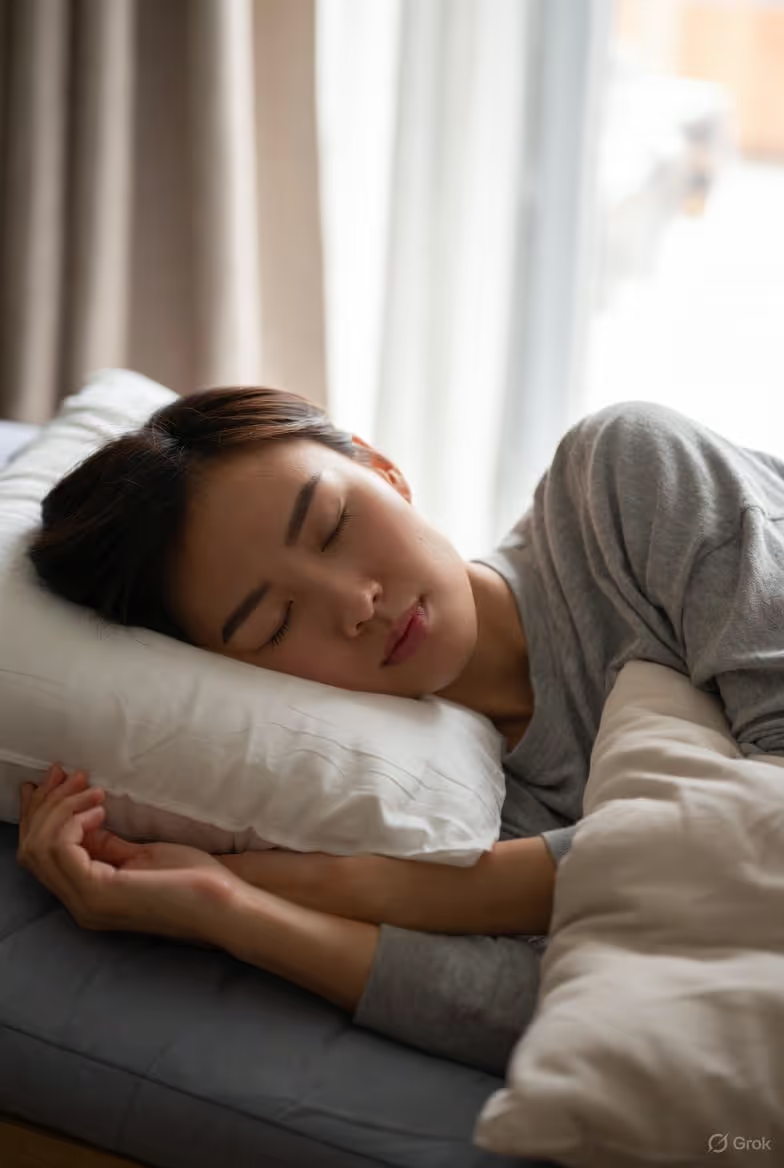
Sleep Score Troubleshooting: Fixing Common Problems
Common problems like a low score can often be fixed by addressing basics: a regular schedule, dark room, and avoiding late caffeine/alcohol.
Sleep Score Troubleshooting: Fixing Common Problems
You wake up after what felt like a solid eight hours. You’re groggy, your mind is foggy, and your smart ring—the one that promised to unlock the secrets of your rest—presents you with a dishearteningly low "Sleep Score." A wave of frustration hits. Was it the late-night snack? The stress from work? Or is the device itself not working right?
This moment of confusion is more common than you think. In the quest for quantified sleep, our wearable devices have become nightly oracles. But what happens when the oracle speaks in riddles? A low or inconsistent Sleep Score isn't just a number; it can feel like a personal failing, a metric of modern life you're not measuring up to. Before you resign yourself to perpetual fatigue or question your investment in health tech, know this: most Sleep Score issues are diagnosable and fixable.
A Sleep Score is a composite metric, a sophisticated algorithm that synthesizes data from multiple biometrics: heart rate variability (HRV), resting heart rate, movement, respiration, and often body temperature. It’s not a single measurement but a story—a story about your sleep stages, disturbances, and recovery. When that story seems off, the problem can lie in one of three areas: You, Your Environment, or Your Device.
This comprehensive guide is your diagnostic manual. We will move beyond simply accepting the number and embark on a troubleshooting journey. We’ll start by ensuring your device is capturing data accurately—because a smart ring is a precision instrument that requires proper partnership. From there, we’ll delve into the environmental and personal factors that silently sabotage sleep, often without you realizing it. Finally, we’ll learn how to interpret the components of your score (like deep sleep and REM) to create a personalized action plan for genuinely restorative sleep.
Think of this not as a critique of your habits, but as an optimization guide for your most powerful recovery tool: your sleep. Let’s begin by ensuring the foundation is solid, starting with the device on your finger.
Understanding Your Sleep Score: The Algorithm Behind the Number
Before you can troubleshoot a problem, you need to understand how the system works. Your Sleep Score isn't a direct measurement like weight or temperature; it's a calculated grade, much like a final exam score derived from multiple test results. Different wearable brands use proprietary algorithms, but the core components are remarkably consistent. Understanding these pillars demystifies the number and points you toward the right fix.
At its heart, a Sleep Score algorithm evaluates three fundamental aspects of your night: Duration, Quality, and Restoration.
Duration is the simplest pillar: Did you get enough total sleep? Most algorithms have a sweet spot, often around 7-9 hours for adults, with points deducted for significantly less or, interestingly, sometimes for too much. But this is just the starting line.
Quality delves into the architecture of your sleep. This is where the biometric sensors earn their keep. The algorithm analyzes:
Sleep Stages: The cyclical journey through Light, Deep, and REM (Rapid Eye Movement) sleep. Each plays a unique role. Deep sleep is for physical repair and immune function, while REM is for memory consolidation and emotional processing. An imbalance—like insufficient deep sleep—lowers your score.
Restlessness: Measured by your movement (via accelerometers). Frequent tossing, turning, or getting up fragments your sleep cycles.
Awakenings: The number of times you wake up, even briefly, and how long you stay awake. More than a couple of brief awakenings can impact the score.
Restoration is the physiological payoff. This is assessed through markers of your nervous system's recovery:
Resting Heart Rate (RHR): Did your heart rate drop sufficiently and stay low during the night? A lower overnight RHR generally indicates better recovery.
Heart Rate Variability (HRV): This critical metric measures the subtle variations in time between heartbeats. A higher HRV during sleep suggests a resilient, recovered, and adaptable nervous system—a major positive contributor to your score.
Respiratory Rate: A stable, low respiratory rate is another sign of autonomic nervous system calm.
The algorithm weights these factors, crunches the data, and outputs a score, typically on a 0-100 scale. A score of 85+ is often considered "excellent," 70-84 "good," and below 70 indicates room for improvement.
Why This Matters for Troubleshooting: If your score is low, you must ask why. Is the "Duration" pillar low because you simply didn't go to bed on time? That’s a behavioral fix. Is the "Quality" pillar low due to high restlessness? That could be environmental (a hot room) or device-related (a loose ring). Is the "Restoration" pillar suffering from a high resting heart rate? That could be linked to late exercise, alcohol, or illness.
By learning to view your sleep report through these lenses—either in your companion app's breakdown or by understanding what the algorithm seeks—you stop guessing and start targeted problem-solving. For a deeper dive into how this technology translates biometrics into insights, you can always explore our blog for articles on the science of wearables.
Now, with this foundational knowledge, let's ensure the data feeding this complex algorithm is accurate.
Ensuring Accurate Data Capture: Is Your Ring Working Properly?
A chain is only as strong as its weakest link, and in sleep tracking, the first link is raw data capture. If your smart ring is misreading your vital signs, the most sophisticated algorithm in the world will produce a misleading score. Before you overhaul your life, rule out these common device-related issues.
1. The Fit is King (or Queen): A smart ring is not a casual piece of jewelry; it's a medical-grade sensor array. Fit is the single most critical factor for accuracy.
Too Loose: A ring that spins freely will lose consistent contact with the skin underneath your finger. This can cause gaps in heart rate and HRV data, misread movement as restlessness, and completely miss temperature trends. The device may even interpret the ring spinning as you tossing in bed.
Too Tight: While it needs contact, it should never constrict. A too-tight ring is uncomfortable, can impede circulation (ironically affecting the very metrics it's trying to read), and cause skin irritation.
The Goldilocks Zone: It should sit snugly at the base of your finger, with slight resistance when you twist it off. It should not slide over your knuckle with ease. Your finger size can fluctuate throughout the day due to temperature, hydration, and salt intake, so try sizing in the evening when fingers are typically at their largest.
2. Sensor Contact and Cleanliness: The underside of your ring houses photoplethysmography (PPG) sensors—those little green lights that read blood flow. This surface must maintain clean contact with your skin.
Cleanliness: Regularly wipe the sensors with a soft, dry, lint-free cloth. Buildup of sweat, lotion, or dead skin can diffuse the light and corrupt the signal.
Placement: Wear the ring on your index, middle, or ring finger, as these typically provide the best vascular access for the PPG sensors. Avoid the pinky or thumb.
3. Battery and Syncing: A dead ring collects no data. Establish a routine, like charging during your morning shower or while at your desk. Ensure the ring is adequately charged before bed. Furthermore, regular syncing with the app is crucial. The ring stores data locally, but the full analysis often happens when it syncs. If you go days without syncing, you might be viewing stale or incomplete analyses.
4. Understanding Device Limitations: Even a perfectly fitted ring has its boundaries. Recognize these to set realistic expectations:
The First Night Effect: Your first few nights of data may be anomalies. Simply wearing a new device can subtly disrupt sleep.
Individual Physiology: Factors like very low blood pressure, certain skin tones, or dense finger hair can, in rare cases, affect optical sensor performance. Most modern devices have algorithms to compensate, but it's a known variable in the wearables industry.
It's an Estimator, Not a Lab: While incredibly advanced, a consumer ring is not a polysomnography (PSG) test in a sleep lab. It estimates sleep stages based on movement and heart rate patterns. Discrepancies, especially in the exact minute-by-minute staging, are normal.
If you’ve verified a proper fit, cleaned the sensors, and maintained battery life, but still suspect a hardware or data issue, your next step is to consult our comprehensive FAQ for technical support and guidance. Often, what feels like a device error is the ring accurately capturing a disturbance you weren't fully aware of—which leads us to your sleep environment.
Optimizing Your Sleep Sanctuary: The Environmental Audit
Your bedroom is more than a place to sleep; it’s a biological recovery chamber. Your smart ring’s sensors are exquisitely sensitive to the conditions within this chamber. Problems here manifest as increased restlessness, elevated resting heart rate, and fragmented sleep stages. Let’s audit the four key environmental pillars: Light, Temperature, Sound, and Air Quality.
Light: Your Master Circadian Cue Light exposure, especially blue light wavelengths, is the most powerful regulator of your circadian rhythm. It suppresses melatonin, the sleep-inducing hormone.
Troubleshooting Action:
Embrace Darkness: Aim for pitch black. Use blackout curtains or a quality sleep mask. Even small amounts of light from streetlamps or electronics can fragment sleep.
Dim the Blues: Install blue light filter apps on your devices (like f.lux or Night Shift) 2-3 hours before bed. Consider smart bulbs that shift to warmer, amber tones in the evening.
Banish LEDs: Cover or move any power strips, chargers, or electronics with status LEDs. That tiny green dot matters more than you think.
Temperature: The Goldilocks Metric Core body temperature must drop to initiate and maintain sleep. A room that’s too warm hinders this drop, leading to restlessness and more light sleep at the expense of deep sleep.
Troubleshooting Action:
Cool it Down: The science-backed sweet spot is between 60-67°F (15.5-19.5°C). Experiment within this range.
Leverage Bedding: Use moisture-wicking sheets (like bamboo or technical fibers) and layer blankets you can remove. A cool room with adaptable bedding is better than a warm room with just a sheet.
Pre-Cool: A lukewarm shower 60-90 minutes before bed can actually help by drawing heat from your core to your extremities.
Sound: The Fragmentation Factor Sound doesn’t just wake you up; it can shift you from a deeper sleep stage to a lighter one without conscious awakening, a phenomenon known as “sleep arousal.”
Troubleshooting Action:
Consistency Over Silence: Total silence isn’t always necessary (and can be unsettling). Consistent, masking noise is key. White noise, pink noise (deeper, more calming), or fan sounds are excellent options.
Address Intermittent Noise: Use earplugs if you have an unpredictable noise environment (e.g., traffic, a partner who snores).
Mind the Alerts: Ensure all phones, tablets, and smartwatches are on silent or Do Not Disturb mode. A single notification vibration can crater your sleep architecture.
Air Quality & Allergens: The Invisible Irritant Poor air quality, dust mites, or pet dander can cause subtle inflammation and nasal congestion, leading to increased breathing effort, snoring, and restless sleep—all of which your ring will detect.
Troubleshooting Action:
Purify: Consider a HEPA air purifier, especially if you have allergies or live in an urban area.
Humidify: Aim for 40-60% relative humidity. Air that’s too dry irritates airways; too damp encourages mold and dust mites.
Dust Mitigation: Wash bedding weekly in hot water and use allergen-proof covers on pillows and mattresses.
By systematically addressing these four factors, you create a habitat primed for high-quality sleep. This is the "set and forget" foundation. Once optimized, your environment works for you night after night, eliminating a major category of sleep score volatility. For more personalized tips on crafting the perfect sleep environment, our community often shares their successful setups in the testimonials and stories section.
Decoding Your Pre-Sleep Routine: The 90-Minute Wind Down
Your sleep doesn't begin when you close your eyes; it begins roughly 90 minutes before. This wind-down period is a deliberate transition from the sympathetic ("fight or flight") nervous system dominance of the day to the parasympathetic ("rest and digest") state required for sleep. A poor wind-down is like revving a car's engine and then expecting it to idle smoothly instantly. Your ring’s data—showing a high bedtime heart rate, low HRV, and long sleep latency—will reflect this mismatch.
The Cortisol & Melatonin Seesaw: As evening approaches, cortisol (your alertness hormone) should naturally decline, allowing melatonin to rise. Modern life hijacks this process. Troubleshoot your routine by auditing these common disruptors:
1. Light Exposure (Revisited): Beyond your bedroom, pre-sleep light is critical. Scrolling social media in bed is a triple threat: it’s mentally stimulating, emotionally activating, and bathing your retina in sleep-suppressing blue light.
Fix: Institute a "digital sunset" 60 minutes before bed. Put phones and laptops away. If you must read, use an e-ink reader (like a Kindle without a front light) or a physical book with a warm, dim lamp.
2. Cognitive & Emotional Activation: Stressful work emails, intense news cycles, or heated discussions trigger cortisol and emotional rumination, making it impossible for your mind to power down.
Fix: Create a "worry journal" or a to-do list for the next day to download thoughts from your mind onto paper. Practice a mindfulness meditation or simple breathing exercises (like the 4-7-8 technique) to signal safety to your nervous system.
3. Food & Drink Timing: Digestion is work. A large, heavy, or spicy meal too close to bedtime forces your body to focus on breaking down food instead of repairing your brain and body. Similarly, alcohol, while sedative initially, metabolizes into a compound that fragments sleep and suppresses crucial REM sleep later in the night.
Fix: Finish large meals at least 3 hours before bed. If you need a snack, opt for something small and blood-sugar-friendly, like a handful of almonds or a banana. Limit alcohol within 3 hours of sleep and notice its effect on your "Restoration" metrics.
4. Body Temperature (Revisited): While a cool room is vital, your body needs to initiate the temperature drop. Intense exercise too late in the evening raises core temperature and stimulates adrenaline.
Fix: Finish vigorous exercise at least 2-3 hours before bedtime. The wind-down period is perfect for gentle movement: restorative yoga, light stretching, or a leisurely walk.
Crafting Your Personalized Wind-Down Ritual: Your ritual should be a series of consistent, calming cues. It might look like: *9:00 PM – Put phone on charger in another room. 9:15 – Tidy living space (a clear space promotes a clear mind). 9:30 – Warm caffeine-free tea. 9:45 – Gentle stretching and 5 minutes of breathing. 10:00 – Read fiction book in dim light. 10:30 – Lights out.*
Track the impact of refining this 90-minute window. You’ll likely see improvements in "Time to Fall Asleep" (sleep latency) and your Restoration metrics almost immediately. The philosophy behind designing technology that respects this human need for transition is core to our story and vision at Oxyzen.
The Daytime Domino Effect: How Daily Choices Cascade Into Your Night
Your sleep score is not an island. It’s the culmination of choices made hours, even days, prior. Think of your daytime habits as dominoes you line up; when you go to bed, you tip the first one, and the chain reaction of your day determines the quality of your night. Here are the most potent daytime dominoes to align.
1. Morning Light Exposure: The Anchor The most powerful signal to set your internal clock is bright light within 30-60 minutes of waking. It suppresses lingering melatonin and triggers a timer for when it will be released again ~14 hours later.
Fix: Get 10-15 minutes of natural morning sunlight (without sunglasses if safe). On dark mornings, a high-quality light therapy lamp can be a game-changer.
2. Caffeine: The Long Shadow Caffeine has a half-life of 5-6 hours. That means if you have a coffee at 3 PM, at 9 PM, 50% of that caffeine is still circulating in your system, antagonizing adenosine (the sleep-pressure chemical).
Fix: Institute a "caffeine curfew." For most, this means no caffeine after 2 PM. Be mindful of hidden sources: green tea, dark chocolate, and some medications.
3. Exercise: The Timing Paradox Regular exercise is one of the best long-term promoters of deep sleep and sleep efficiency. However, its timing is crucial. As mentioned, late intense workouts can be disruptive, but consistent morning or afternoon exercise is profoundly beneficial.
Fix: Use your ring’s data! Notice if your sleep score dips on days you exercise after 7 PM versus days you exercise in the morning. Let your own restoration metrics guide you.
4. Hydration & Nutrition: Chronic under-hydration can lead to nighttime leg cramps and general discomfort. Conversely, over-hydration right before bed guarantees disruptive bathroom trips.
Fix: Front-load your hydration. Drink most of your water earlier in the day and taper off 60-90 minutes before bed. Nutritionally, diets high in processed sugars and low in fiber are linked to lighter, more fragmented sleep.
5. Stress Management (Not Just Pre-Bed): Chronic, unmanaged daytime stress leads to a sustained elevation of cortisol, which bleeds into the evening and flattens the natural cortisol curve.
Fix: Incorporate "stress resets" throughout the day. This could be a 2-minute breathing exercise between meetings, a walk outside at lunch, or a short meditation session. The goal is to prevent stress from accumulating to an unmanageable peak by bedtime.
6. Napping: The Double-Edged Sword Long or late naps can reduce your homeostatic sleep drive (your body's need for sleep), making it harder to fall asleep at night.
Fix: If you nap, make it a "power nap" of 20 minutes or less, and conclude it before 3 PM. This can boost alertness without significantly impacting nighttime sleep.
By viewing your day as preparation for sleep, you take proactive control. You’re not just reacting to a bad score; you’re proactively building a good one. Each positive choice is a domino lined up in your favor. To see how others have successfully integrated these daytime habits, you can find inspiration in real user experiences and reviews.
Interpreting Sleep Stage Data: When Deep Sleep or REM is Low
So, your overall Sleep Score is low, and the app breakdown points to a specific culprit: "Low Deep Sleep" or "Insufficient REM." This is where troubleshooting gets advanced. You’re no longer just looking for general sleep disruptors; you’re diagnosing a specific deficiency in your sleep architecture. Each stage has its own set of common thieves.
If DEEP SLEEP (Slow-Wave Sleep) is Consistently Low: Deep sleep is your physically restorative phase. It’s when tissue growth and repair occur, hormones are released, and your brain's glymphatic system does its deep cleaning.
Common Causes & Fixes:
Late Exercise or High Evening Body Temp: As covered, this can shift sleep architecture toward lighter sleep. Fix: Move intense workouts earlier.
Alcohol: This is a major deep sleep disruptor. Even one drink can significantly reduce deep sleep percentage. Fix: Avoid alcohol, especially within 3 hours of bed.
Sleep Deprivation or Irregular Schedule: Your body prioritizes REM sleep in the first half of a recovery night. After catching up on REM, it may then rebound with deep sleep on subsequent nights. Fix: Focus on consistency and avoiding all-nighters.
Aging: Deep sleep naturally decreases with age, but lifestyle factors can maximize what you get.
If REM SLEEP is Consistently Low: REM sleep is essential for emotional regulation, memory consolidation, and creativity. It’s when your brain is almost as active as when awake.
Common Causes & Fixes:
Alcohol & Some Medications: Alcohol and certain sleep aids (like benzodiazepines and some "Z-drugs") are notorious for suppressing REM sleep. Fix: Review medications with your doctor and minimize alcohol.
Sleeping Too Hot: A warm core body temperature particularly suppresses REM. Fix: Aggressively manage bedroom temperature and bedding.
Sleep Fragmentation: REM periods get longer as the night progresses. If you have undiagnosed sleep apnea or are woken frequently by noise, you may be cutting off your longest, most valuable REM periods in the early morning hours. Fix: Address environmental noise and consider a sleep study if you suspect apnea (snoring, gasping, daytime fatigue).
Antidepressants (SSRIs/SNRIs): These commonly reduce or even eliminate REM sleep. This is a known effect that should be discussed with your prescribing physician.
The Vicious Cycle of Stress: High stress and anxiety can create a pernicious loop: they suppress deep sleep, leaving you physiologically unrested. This lack of physical restoration then heightens anxiety and emotional reactivity the next day, which can further disrupt sleep. Breaking this cycle requires addressing both the daytime stress (see previous section) and the nighttime wind-down.
Important Note on Tracking: Night-to-night variability in sleep stages is normal. Don’t fixate on a single night's data. Look for trends over weeks. A pattern of low deep sleep across multiple nights is a signal; one off-night is noise. For a more detailed exploration of sleep stages and their functions, our blog features expert-written deep dives on these topics.
Navigating Life’s Inevitable Disruptors: Travel, Stress, and Illness
Life happens. Even the most diligent sleep optimizer will face periods where scores plummet due to factors largely outside their immediate control: crossing time zones, a major work project, or catching a cold. The goal here isn't to maintain a perfect 90+ score through these events—it's to understand the data, mitigate the damage, and recover efficiently.
1. Jet Lag and Shift Work: Resetting Your Circadian Rhythm Traveling across time zones decouples your internal clock from the external light-dark cycle. Your ring will show severely fragmented sleep, low Restoration scores, and oddly timed wake-ups.
Mitigation Strategy:
Use Light Strategically: Upon arrival, seek bright light exposure during the local morning to advance your clock, and avoid light during the local evening to help delay it. For eastward travel (e.g., NY to London), morning light is critical. For westward (e.g., LA to Tokyo), evening light helps.
Consider Melatonin (Consult a Doctor): A small dose (0.5-3 mg) of melatonin taken at local bedtime can help nudge your rhythm. For eastward travel, taking it for a few nights before departure may help.
Be Patient: Allow roughly one day per time zone crossed for your body to fully adjust. Your scores will reflect this gradual recalibration.
2. Acute Stress and Anxiety: A looming deadline, a family conflict, or financial worry creates a state of hyper-arousal. Your ring will show elevated resting heart rate, plummeting HRV, and high restlessness.
Mitigation Strategy:
Double Down on Routine: In times of chaos, your pre-sleep ritual is your anchor. Do not abandon it.
Practice "Physiological Sighs": A powerful, fast-acting breathing technique: a double inhale through the nose, followed by a long, slow exhale through the mouth. This can rapidly lower heart rate and induce calm.
Reframe the Data: Don't let a low score during a stressful week become another source of anxiety. View the data as confirmation that your body is under load, and use it as permission to prioritize recovery where you can.
3. Illness and Infection: When you're sick, your body is fighting a battle. Sleep is its primary weapon. Your sleep architecture will shift dramatically, typically showing a huge spike in deep sleep (as your body repairs) and a drop in REM. Your heart rate will be elevated, and HRV will crash.
Mitigation Strategy:
Listen and Surrender: This is not the time to fight for a high score. Let your body sleep as much as it wants. The increased deep sleep is therapeutic.
Hydrate and Isolate: Support the process with fluids and rest. Your scores will be abnormal until you recover.
Track Recovery: As you get better, watch for your resting heart rate to return to baseline and your HRV to climb back up. These are excellent, objective signs of recovery, often preceding the feeling of being "100%."
4. New Parenthood and Caregiving: This is the ultimate sleep disruptor, characterized by extreme fragmentation. The goal shifts from "optimal sleep" to "survival and grabbing restorative pockets where you can."
Mitigation Strategy:
Focus on Sleep Efficiency: When you do sleep, make it count. Perfect your environment so the sleep you get is as high-quality as possible.
Sleep When You Can: Prioritize naps when the baby naps, if possible. Even short naps can help mitigate total sleep debt.
Use Tag-Teams: If you have a partner, consider shifts to ensure each of you gets one 4-5 hour block of uninterrupted sleep, which is vital for preventing severe deprivation.
Understanding that these life events have a predictable and normal impact on your sleep data removes a layer of frustration. It allows you to shift from "What am I doing wrong?" to "My data confirms this is a challenging period. How can I support my body through it?" This empathetic, data-informed approach is at the heart of our mission, which you can learn more about here.
When to Seek Professional Help: Red Flags in Your Data
Your smart ring is a powerful screening tool, not a diagnostic device. Its true value often lies in its ability to reveal persistent, underlying patterns that warrant a conversation with a healthcare professional. While most score fluctuations are lifestyle-related, consistently abnormal data can be a crucial early warning sign.
Persistent Red Flags That Merit a Doctor's Visit:
1. Chronic, Severe Snoring/Gasping + Poor Scores: If your partner reports loud, chronic snoring punctuated by pauses in breathing or gasping sounds, and your ring data shows:
Consistently high resting heart rate during sleep.
Frequent, unexplained awakenings/restlessness.
Low blood oxygen saturation readings (if your ring has an SpO2 sensor).
Unrefreshing sleep despite adequate time in bed. This constellation of symptoms strongly suggests Obstructive Sleep Apnea (OSA), a serious condition requiring medical diagnosis and treatment.
2. Consistently Elevated Nightly Resting Heart Rate: While stress and illness can raise it temporarily, a resting heart rate that trends significantly higher (e.g., 10+ BPM) than your established baseline over several weeks, without an obvious cause (like new intense training), can indicate:
Overtraining Syndrome (if you're an athlete).
Chronic stress or anxiety disorder.
Thyroid issues (hyperthyroidism).
Cardiovascular concerns.
3. Chronically Low or Plummeting Heart Rate Variability (HRV): HRV is a key metric of resilience. A long-term downward trend in your HRV, especially if it stays low, suggests your nervous system is stuck in a state of stress and is not recovering. This can be a sign of:
Chronic fatigue.
Burnout.
Underlying inflammatory or autoimmune conditions.
Persistent overtraining.
4. Extreme Insomnia Patterns: If, despite perfecting all behavioral and environmental factors, your ring consistently shows:
Sleep Latency (time to fall asleep) of more than 45-60 minutes most nights.
Wake After Sleep Onset (time awake during the night) of more than 60 minutes most nights. This may indicate chronic insomnia disorder, which benefits from targeted therapies like Cognitive Behavioral Therapy for Insomnia (CBT-I), considered the gold-standard treatment.
5. Unusual Movement Patterns: If you experience an irresistible urge to move your legs when at rest in the evening, accompanied by uncomfortable sensations, and your ring data shows very high restlessness at the beginning of the night, this could point toward Restless Legs Syndrome (RLS).
How to Prepare for Your Appointment: Your ring data is your most powerful advocacy tool. Don't just say, "I sleep poorly." Show them.
Bring Trend Charts: Use your app to show 2-4 week trends in your Sleep Score, resting heart rate, HRV, and restlessness.
Note Your Symptoms: Keep a brief journal of daytime symptoms (fatigue, focus issues, mood) alongside your scores.
Mention Your Troubleshooting: Tell your doctor what you've already tried (environment, routine, etc.). This demonstrates proactivity and helps rule out behavioral causes.
Your wearable gives you a language to describe your sleep health with unprecedented precision. Use that language to start a more productive conversation with a professional who can provide diagnosis and treatment. For any technical questions about accessing and exporting your data trends, remember that our FAQ and support resources are here to help.
Advanced Interpretation: Beyond the Nightly Score to Long-Term Trends
You’ve optimized your environment, mastered your wind-down, and learned to read your sleep stages. You’ve transformed from a passive recipient of a score into an active sleep architect. Now, it’s time to shift your perspective once more—from the daily snapshot to the panoramic view. The true, transformative power of a smart ring lies not in any single night’s data, but in the long-term trends and correlations it reveals. This is where you move from troubleshooting problems to engineering peak performance.
Why Your 30-Day Average is Your True Baseline: A single night’s score is a data point; a 30-day rolling average is a trend line. This average smooths out the noise of life’s inevitable disruptions (that bad meal, the stressful day, the late flight) and reveals your foundational sleep health. It answers the critical question: Am I generally recovering well?
Tracking Progress: Did your average Sleep Score move from 72 to 79 after you implemented blackout curtains and a consistent bedtime? That’s meaningful progress no single “good night” can prove.
Identifying True Regression: A week of scores in the low 60s against a baseline of 82 is a clear, data-driven signal that something systemic has changed (e.g., new medication, chronic stress, onset of illness).
Setting Realistic Goals: Instead of aiming for a perfect 95 every night—an unrealistic target that leads to frustration—aim to elevate your 30-day average by 5 points. This encourages sustainable habit change.
The Power of Correlation: Connecting Sleep to Your Wider Life Your sleep data doesn’t exist in a vacuum. The most profound insights emerge when you correlate it with other metrics and life events. This is the practice of becoming your own biohacker.
Sleep & Next-Day Performance: Notice how a Sleep Score above 85 consistently correlates with a higher daytime HRV, lower stress readings, and more productive work sessions. Conversely, note how a score in the 60s leaves you reaching for caffeine and struggling to focus. This builds powerful intrinsic motivation.
Sleep & Fitness Recovery: Link your sleep data to your workout app. You’ll likely see that on nights with high deep sleep and a strong Restoration score, your next-day workout performance (power output, endurance) is better. Poor sleep often leads to perceived higher exertion at lower outputs.
Sleep & Nutrition/Substance Use: Log a glass of wine or a late, heavy meal in your app’s note feature. The next morning, see the direct impact: likely suppressed REM, elevated resting heart rate, and a lower score. This creates objective, personal feedback loops that are far more persuasive than general health advice.
Sleep & Menstrual Cycle: For those who menstruate, tracking sleep alongside your cycle can reveal profound patterns. Many see a dip in sleep quality and a rise in resting heart rate in the days leading up to menstruation (the luteal phase), with improvement during the follicular phase. This isn’t a “problem” to fix but a rhythm to understand and accommodate.
Embracing Seasonality and Adaptation: Your body is not a static machine. It adapts. A new, intense training regimen may initially lower your Sleep Score and HRV as your body struggles to recover—this is a sign of acute stress. Over 4-6 weeks, as you adapt, your scores should recover and potentially exceed their previous baseline, indicating improved fitness. This is known as the stress + rest = growth model. Without trend data, the initial dip might be misinterpreted as pure detriment, when it’s actually part of a positive adaptation process.
Actionable Steps for Trend Analysis:
Weekly Review: Pick a consistent time (e.g., Sunday morning) to review your weekly sleep report and your 30-day trend line. Look for directional shifts, not daily numbers.
Journal Integration: Use the note function in your companion app liberally. Tag nights with “Late Dinner,” “Intense PM Workout,” “Stressful Day,” “Started New Supplement.” Over weeks, patterns will emerge.
Focus on Leading Indicators: Learn which metrics are your personal “canaries in the coal mine.” For many, a sustained 3-day drop in HRV is a leading indicator of impending illness or overtraining, often appearing before you feel symptoms. Your nightly score is a lagging indicator of the previous day’s choices; HRV can be a leading indicator of tomorrow’s well-being.
By mastering trend analysis, you graduate from simply fixing what’s broken to proactively building resilience. You learn your body’s unique language of stress and recovery. This deeper understanding of holistic well-being is what drives our continuous innovation, a journey you can explore more about in our company’s story.
The Mindset Shift: From Obsession to Insightful Observation
In the quest for the perfect Sleep Score, a paradoxical danger emerges: orthosomnia – a coined term for an unhealthy preoccupation with achieving perfect sleep data. It’s the point where the tool meant to reduce anxiety about sleep becomes the source of it. You may find yourself lying awake, worrying about what your ring will say in the morning, or feeling a sense of failure over a number that, days prior, you wouldn’t have even known. This mindset is the ultimate sleep disruptor. Let’s cultivate a healthier relationship with the data.
Recognizing the Signs of Unhealthy Attachment:
Feeling genuine anxiety or dread before checking your morning score.
Making lifestyle choices based solely on optimizing a metric, rather than how you feel (e.g., avoiding a joyful social event because it might lower your score).
Experiencing conflict with a partner over their movement or snoring “ruining your data.”
A persistent belief that the device is “wrong” when it gives you a low score that doesn’t match your subjective feeling of having slept well.
Cultivating the Insightful Observer Mindset: The goal is to use the data as a compassionate guide, not a harsh judge. Make this shift:
Adopt a Curious, Not Judgmental, Stance: Instead of thinking, “My score is terrible, I failed,” ask, “That’s an interesting number. What might my body be telling me? Did I do anything differently yesterday?” This frame turns a “failure” into a detective game.
Prioritize Subjective Feeling: Start your morning with a simple 1-10 rating of how you feel before you look at your score. Do you feel rested, alert, and in a good mood? Over time, compare this subjective rating with the objective data. Sometimes they align perfectly; sometimes you’ll feel great with an 82 and groggy with an 85. Your lived experience is the ultimate metric.
Embrace the “Good Enough” Night: Not every night will be, nor needs to be, optimal. The human body is resilient and designed to handle variation. A few nights of subpar sleep within a month of generally good trends will have negligible impact on your long-term health. Let them go.
Take Data Holidays: If you find yourself slipping into obsession, it’s perfectly healthy to take the ring off for a night or a weekend. Reconnect with the intuitive sense of sleep. Remember what it was like to just go to bed and wake up without a number defining your rest.
Using Data for Self-Compassion, Not Self-Criticism: Your ring can be your greatest advocate for rest. Use the data to:
Validate Your Need for Rest: When you’re feeling run down but pushing through, a low HRV and poor sleep trend can be the objective proof you need to give yourself permission to cancel plans and prioritize recovery.
Communicate Your State: It can be powerful to show a partner or coach, “See, my data shows I’ve been under-recovering for two weeks,” to help them understand your need for support or a reduced workload.
Celebrate Non-Scale Victories: Did you stick to your wind-down routine for 7 nights straight, even if the scores are still variable? That’s a huge win! The habit is the victory; the improved scores will follow.
This balanced approach ensures your smart ring remains a tool for empowerment, not a source of anxiety. It’s about harnessing technology to become more in tune with your body’s natural signals, not overriding them with algorithmic anxiety. For more perspectives on building a healthy relationship with wellness tech, our blog features thoughtful discussions on this very topic.
Creating Your Personalized Sleep Optimization Plan
You are now armed with a comprehensive understanding of the factors influencing your Sleep Score, from device placement to circadian rhythms, from acute stress to long-term trends. It’s time to synthesize this knowledge into a actionable, personalized plan. Think of this not as a rigid set of rules, but as a dynamic framework you can adjust based on your ongoing data and life circumstances.
Step 1: Establish Your Baseline & Define Your “Why”
Gather Data: Commit to 2 weeks of consistent wear with your properly fitted ring, making only minor, obvious changes (e.g., charging regularly). Let this period establish your honest, no-pressure baseline 30-day average.
Clarify Your Goal: Why do you want to improve your sleep? Is it for better athletic recovery? Sharper mental focus at work? Improved mood? More stable energy? A specific goal (“I want to feel alert for my 8 AM meetings”) is more motivating than a vague “I want better sleep.”
Step 2: Implement Changes in Phases – The “Stacking” Method Trying to change everything at once is overwhelming and makes it impossible to know what’s working. Instead, implement changes in 2-3 week phases, “stacking” one new habit onto another.
Phase 1: The Non-Negotiable Foundation (Weeks 1-3)
Focus: Device Accuracy & Sleep Environment.
Actions:
Verify ring fit and cleanliness.
Optimize bedroom for darkness, cool temperature (67°F or below), and quiet/sound masking.
Set a consistent wake-up time (even on weekends), as this is the anchor for your circadian rhythm.
Phase 2: Ritual & Rhythm (Weeks 4-6)
Focus: Pre-Sleep Routine & Light Exposure.
Actions:
Implement a 60-90 minute digital sunset.
Create a relaxing, consistent wind-down ritual.
Get 10+ minutes of bright morning light within 30 minutes of waking.
Set a consistent bedtime within a 30-minute window.
Phase 3: Daytime Optimization (Weeks 7-9)
Focus: Fuel, Movement, and Stress.
Actions:
Institute a caffeine curfew (e.g., no caffeine after 2 PM).
Time your last large meal 3+ hours before bed.
Schedule vigorous exercise at least 3 hours before bedtime; note its impact.
Introduce one daily stress reset practice (e.g., 5-minute afternoon walk, lunchtime meditation).
Phase 4: Advanced Fine-Tuning (Week 10+)
Focus: Correlation & Personalization.
Actions:
Start using the journal/note function to tag unique events.
Analyze trends: How does alcohol affect your REM? Does a 20-minute nap after a bad night help or hurt the next night’s score?
Based on your unique data, create your personal “top 3” sleep boosters and “top 3” sleep disruptors.
Step 3: Measure, Iterate, and Pivot
Review: At the end of each 3-week phase, check your 30-day average and your subjective feeling. Did the changes in that phase move the needle?
Iterate: If something didn’t work or wasn’t sustainable, drop it. If something worked brilliantly, lock it in as a permanent habit.
Pivot for Life Events: Have a business trip coming up? Switch to “maintenance mode” and focus on just your top two non-negotiables (e.g., morning light and consistent wake time). Getting sick? Switch to “recovery mode” and abandon the plan entirely until your HRV rebounds.
Your Sleep Optimization Checklist (A Living Document): Create a simple list in your notes app or on paper. It might look like this:
Daily Non-Negotiables (√):
Morning light within 30 min of wake.
Caffeine only before 2 PM.
Last big meal by 7:30 PM.
Digital sunset at 9:00 PM.
In bed by 10:30, lights out by 11:00.
Weekly Review (Sunday AM):
Check 30-day Sleep Score & HRV trend.
Note 1 positive observation.
Note 1 area for gentle experiment next week.
Red Flags (Time to Step Back):
Feeling anxious about the ring/score.
A string of late nights due to life; pause tracking pressure.
Illness; focus on rest, not scores.
This plan turns troubleshooting from a reactive scramble into a proactive, empowering science experiment on yourself. You are both the researcher and the subject, guided by the most personal data set imaginable. For inspiration and to see how others have structured their journeys, browsing real user testimonials can be incredibly valuable.
Integrating with a Holistic Wellness Ecosystem
Your sleep is the foundation of your health pyramid, but it doesn’t stand alone. The final frontier of sleep optimization is understanding how it interacts with and influences every other aspect of your well-being. Your smart ring’s data becomes exponentially more powerful when viewed as one vital stream in a river of holistic health metrics. This is about creating a feedback loop where sleep, nutrition, fitness, and mental well-being continuously inform and enhance each other.
The Synergistic Links: Sleep as the Lever
Sleep & Metabolic Health:
The Connection: Poor sleep disrupts the hormones leptin and ghrelin, increasing hunger and cravings for high-calorie foods. It also impairs insulin sensitivity, making it harder for your body to manage blood sugar.
The Data Loop: Notice how a week of low Sleep Scores correlates with more frequent hunger pangs and poorer food choices logged in your nutrition app. Conversely, see how a consistent bedtime routine helps stabilize your energy and reduces late-night snacking.
Sleep & Immune Function:
The Connection: Deep sleep is when your body produces cytokines, proteins that target infection and inflammation. Chronic sleep deprivation makes you more susceptible to illness.
The Data Loop: Use your ring as an early warning system. A sudden, unexplained drop in HRV and rise in resting heart rate can be your first clue that your body is fighting something, prompting you to hydrate, rest, and maybe take a prophylactic zinc or vitamin C boost.
Sleep & Mental Resilience:
The Connection: REM sleep is crucial for processing emotional experiences and consolidating memories. Lack of REM is strongly linked to increased emotional reactivity, anxiety, and difficulty coping with stress.
The Data Loop: Correlate your Sleep Score (especially REM %) with your subjective mood ratings or stress metric readings throughout the following day. This builds self-awareness: “I feel irritable today, and my ring shows I had very low REM last night. That explains it. I need to be gentle with myself and prioritize sleep tonight.”
Sleep & Physical Performance:
The Connection: This is a two-way street. Exercise improves sleep quality, and quality sleep is essential for muscle repair, glycogen restoration, and motor skill consolidation (making “muscle memory”).
The Data Loop: Sync your ring data with your fitness tracker or training app. You’ll likely see that high Sleep Scores, particularly with strong Restoration metrics, predict better workout performance (higher output, faster recovery between sets). A poor sleep score can inform your training: maybe today is for light recovery work instead of a PR attempt.
Building Your Personal Health Dashboard: The goal is not to have 10 separate apps but to look for connections. Many wellness platforms allow for integration. At a minimum, practice manual correlation:
Weekly Reflection: Once a week, look at your sleep trend, your workout log, your food diary (if you keep one), and a few notes on your energy and mood. Look for patterns.
The “Big 3” Check-In: Each morning, assess: 1) Sleep Score/RHR, 2) Energy Level (1-10), 3) Readiness to Train (1-10). Over time, the relationship between these three will become crystal clear.
When Sleep is the Canary in the Coal Mine: Sometimes, despite perfect sleep hygiene, your scores will stubbornly languish. In these cases, sleep data becomes a diagnostic beacon, pointing to issues elsewhere in the system. It could indicate:
Nutritional Deficiencies: Low iron (ferritin) can cause restless legs and fragmented sleep. Magnesium deficiency is linked to poor sleep quality.
Hormonal Imbalances: Thyroid dysfunction, perimenopause, or low testosterone can all dramatically impact sleep architecture and thermoregulation.
Undiagnosed Conditions: As discussed, sleep apnea, but also conditions like GERD (acid reflux) or chronic pain.
In this holistic view, fixing your Sleep Score is rarely just about sleep. It’s about aligning your entire lifestyle. It’s a continuous, fascinating process of getting to know the complex, amazing system that is you. This integrative philosophy is central to our vision for how technology should serve human health, a vision you can learn more about on our About Us page.
Conclusion of This Section: Empowering Your Night, Transforming Your Day
We began this journey with a moment of frustration: a confusingly low Sleep Score staring back at you after a night that felt… okay. We’ve traveled through the intricacies of sensor accuracy, the sanctity of the sleep environment, the importance of circadian rhythms, and the profound impact of daytime choices. We’ve learned to interpret not just a number, but the story of deep sleep and REM, to spot red flags, and to cultivate a mindset of curious observation over anxious obsession.
The core truth that emerges is this: Your Sleep Score is not a grade, but a conversation. It’s your body’s nightly report card, spoken in the language of biometrics. Troubleshooting isn’t about silencing that voice with quick fixes; it’s about learning to listen deeply, to understand its dialect, and to respond with informed, compassionate action.
You now have a structured, phased framework to:
Diagnose accurately by ensuring device integrity.
Optimize systematically by addressing environment, routine, and daily habits.
Interpret wisely by analyzing trends and correlations, not isolated numbers.
Integrate holistically by connecting sleep to your overall wellness ecosystem.
This process transforms your relationship with sleep from one of mystery and frustration to one of agency and empowerment. A higher, more consistent Sleep Score is the reward, but the real victory is what that score represents: a nervous system that is resilient, a body that is effectively repairing itself, and a mind that is emotionally regulated and cognitively sharp. It means showing up for your day, your work, your relationships, and your passions as the most restored version of yourself.
The journey doesn’t end here. Sleep optimization is a practice, not a destination. Life’s seasons will change, and your sleep will ebb and flow with them. But now, you are equipped. You are no longer a passive consumer of a three-digit number. You are an expert sleep scientist, with the most important lab subject of all: your own life.
We’ve mastered the art of troubleshooting today’s Sleep Score. But what does the horizon hold? The field of sleep science and wearable technology is advancing at a breathtaking pace. The simple numerical score is evolving into a dynamic, predictive, and deeply personalized health navigation system. Understanding this trajectory isn't just about future-proofing your tech—it's about glimpsing a future where sleep data becomes a proactive guardian of your long-term health.
From Descriptive to Predictive and Prescriptive Analytics Current smart rings are brilliant historians. They describe what happened last night. The next generation will be forecasters and advisors.
Predictive Insights: Algorithms will analyze your multi-week trends in HRV, resting heart rate, and sleep latency to predict your sleep quality before you even go to bed. Imagine a notification at 7 PM: “Your recovery metrics are low tonight. Based on your data, you have a 70% chance of restless sleep. Consider an earlier bedtime and a longer wind-down.” This shifts the paradigm from reactive correction to proactive prevention.
Personalized Prescriptions: Instead of generic advice like “avoid blue light,” your device will learn what specifically works for you. It may correlate your high deep sleep nights with days you took a 20-minute afternoon walk and ate salmon for dinner. Over time, it could offer you a custom prescription: “For optimal sleep tonight: aim for lights out by 10:15 PM, consider a magnesium supplement, and avoid intense conversations after 8 PM.”
Multimodal Sensing and the Holy Grail: Sleep Staging Accuracy The limitation of current consumer wearables is their reliance on movement and heart rate to estimate sleep stages. The future lies in sensor fusion.
EEG-Lite Technology: Research is fervently underway to miniaturize electroencephalogram (EEG) sensors—which measure brain waves directly—into wearable form factors like headbands, earphones, or even the next evolution of smart rings. Direct brain wave data would provide lab-grade sleep staging accuracy, distinguishing, for example, between quiet wakefulness and genuine light sleep.
Core Temperature Dynamics: While current rings measure skin temperature, continuous, accurate core temperature monitoring (via advanced earpieces or ingestible sensors) would provide the gold-standard signal for circadian rhythm phase and readiness. A subtle pre-dawn rise in core temp could predict your optimal wake time with uncanny accuracy.
Respiratory Analysis: Beyond simple rate, advanced analysis of breathing patterns (via ultrasonic or radar sensors) could screen for sleep apnea with high fidelity or detect the shallow breathing patterns of stress during sleep.
Integration with Smart Environments: The Autonomous Bedroom Your ring won’t work alone. It will become the command center for an ecosystem of responsive devices.
Dynamic Climate Control: Your smart thermostat and bed cooling/heating system (like Eight Sleep or ChiliPad) will connect to your ring. As you enter deep sleep and your body temperature drops, the bed will warm slightly to prevent a disruptive cold-induced awakening. As you approach morning, it might cool to support the final REM cycles.
Adaptive Lighting: Your smart lights will not just dim on a schedule, but respond to your real-time circadian state. If your data shows a delayed rhythm, they’ll provide stronger morning light therapy. In the evening, they’ll shift to amber tones precisely when your melatonin begins to rise.
Soundscape Optimization: Your white noise machine or smart speaker will adjust its sound profile based on your sleep stage. It might play pink noise during deep sleep for stabilization and shift to gentle, rhythmic sounds to support REM.
The Longitudinal Health Record: Sleep as a Diagnostic Vanguard The ultimate promise of sleep tracking is its role in preventive medicine. Nightly biometrics create a dense, longitudinal health dataset unparalleled in history.
Early Detection Biomarkers: Subtle, long-term changes in sleep architecture (e.g., gradual reduction in REM sleep) or nocturnal heart rate patterns may serve as early, non-invasive biomarkers for neurological conditions like Parkinson’s or Alzheimer’s, long before clinical symptoms appear.
Mental Health Monitoring: Trends in sleep disruption, HRV, and resting heart rate can provide objective insights into the cycles of depression, anxiety, and bipolar disorder, helping individuals and clinicians monitor treatment efficacy.
Personalized Medicine: Your sleep data could inform drug timing (chronotherapy), showing a doctor the precise window of your circadian low for most effective chemotherapy, or the ideal time to take a blood pressure medication.
This future is not science fiction; it’s the logical extension of the troubleshooting work you’re doing today. By engaging deeply with your current Sleep Score, you’re preparing to be an informed, empowered user of technologies that will fundamentally reshape our approach to health, wellness, and longevity. To stay at the forefront of these developments, we are committed to continuous innovation, a journey detailed in our vision and ongoing story.
Case Study Deep Dive: Real-World Troubleshooting in Action
Theory and instruction are vital, but nothing cements understanding like real-world application. Let’s walk through three anonymized, composite case studies based on common user patterns. We’ll follow their data, their troubleshooting steps, and the outcomes. See if you recognize elements of your own journey in theirs.
Case Study 1: “The High-Performer’s Burnout”
Profile: Alex, 38, tech executive, avid cross-fitter, father of two young children.
Presenting Issue: “My Sleep Score has crashed from a consistent 85-90 to the low 60s over the past 3 months. I’m exhausted, irritable, and my workouts feel terrible. I’m doing everything ‘right’—I go to bed on time, my room is dark and cool. What’s wrong?”
The Data Dive:
Trends: 30-day Sleep Score average: 68. Resting Heart Rate: +8 BPM above his baseline. HRV: Down 25%. Deep Sleep: Consistently low. REM: Fragmented.
Correlations: Journal notes showed this decline began 4 months ago with a major promotion, requiring longer hours and international evening calls.
Troubleshooting Process:
Device/Environment Check: Ring fit and environment were optimal—no issues there.
Routine Audit: Alex’s “wind-down” consisted of answering emails until 10 PM, then immediately trying to sleep. His “consistent bedtime” was a source of stress, not relaxation.
Daytime Analysis: His 6 AM cross-fit class was now preceded by late-night work, meaning he was chronically underslept for intense exercise. This created a vicious cycle of physical stress on top of cognitive stress.
The Interventions:
Reframed the “Bedtime”: Alex shifted his focus from lights-out time to work-shutdown time. He instituted a hard 8:30 PM digital curfew for all work devices.
Created a True Wind-Down: From 8:30-10:00, he engaged in non-screen activities with his family, followed by 20 minutes of reading fiction.
Adjusted Training: For one month, he swapped two high-intensity cross-fit days for yoga or long walks, respecting his body’s signaled need for recovery (via the low HRV).
Used Data for Boundaries: He showed his manager the objective data trend linking late calls to his recovery metrics, successfully negotiating to move calls earlier.
The Outcome: After 6 weeks, Alex’s 30-day Sleep Score average climbed back to 82. His HRV recovered, and his RHR dropped. Subjectively, his energy and mood improved dramatically. The key wasn’t trying to sleep better; it was stopping work earlier and respecting his need for physiological recovery.
Case Study 2: “The Mystery of the Mid-Night Wake-Up”
Profile: Sam, 52, graphic designer, generally healthy, moderate alcohol consumer (1-2 glasses of wine most nights).
Presenting Issue: “I fall asleep fine but wake up like clockwork at 3:30 AM every single night. My mind races, and it takes me 45-90 minutes to fall back asleep. My Sleep Score is always in the 70s, but I feel exhausted.”
The Data Dive:
Trends: Sleep latency: excellent. Wake After Sleep Onset (WASO): consistently high (60+ minutes). The graph showed a sharp awakening around 3:30 AM. REM sleep percentage was notably low for his age.
Correlations: Sam usually had his last glass of wine with dinner, finishing around 8 PM.
Troubleshooting Process:
Environment Check: Sam used a white noise machine and blackout curtains. No environmental cause was apparent.
The Alcohol Experiment: Based on the low REM and known science, Sam’s first hypothesis was alcohol. He committed to a 3-week “alcohol holiday.”
The Intervention:
Eliminated Alcohol: Sam switched to non-alcoholic alternatives in the evening.
Added a 4-7-8 Breathing Protocol: When he inevitably still woke up at 3:30 AM (a common residual pattern), he did not look at the clock. He immediately began the 4-7-8 breathing technique (inhale 4, hold 7, exhale 8) for 5 cycles to calm his nervous system.
The Outcome: The first week was hard, with lingering awakenings. By week two, the 3:30 AM awakening became less sharp and shorter. By week three, it was often gone. His REM sleep percentage increased by 40%, and his Sleep Score jumped into the mid-80s. The “mystery” was solved by a classic disruptor: alcohol’s metabolization was causing a cortisol spike and REM suppression, leading to a predictable early-morning awakening.
Case Study 3: “The Perfect Sleeper Whose Score Dropped”
Profile: Jordan, 29, nurse on a rotating shift schedule, meticulous about sleep on days off.
Presenting Issue: “I’ve always been a great sleeper. On my off days, my ring shows scores of 88-92. But lately, even on my off days after I’ve ‘recovered,’ my scores are stuck in the high 70s. I feel fine, but the data says something’s off.”
The Data Dive:
Trends: A 60-day view showed the decline was gradual but steady. The “good” scores were becoming less frequent. Her resting heart rate trend was slightly up, and her HRV trend was slightly down.
Correlations: No changes to routine, diet, or stress were apparent from her notes.
Troubleshooting Process:
Advanced Trend Analysis: Jordan looked beyond sleep. She checked her daytime HRV and resting heart rate trends and saw the same gradual decline.
Considered Non-Obvious Factors: She ruled out device error (tried a different finger, cleaned sensors). The issue was systemic and physiological.
Sought Professional Insight: This pattern—a gradual, multisystem decline in recovery metrics without a clear lifestyle cause—was the red flag we discussed earlier.
The Intervention & Outcome:
Jordan took her 90-day trend charts to her doctor. Blood tests revealed she had developed significant iron deficiency (ferritin of 18 ng/mL), likely due to a combination of diet and her physically demanding job. Low iron can directly impact sleep quality, cellular energy production, and cardiovascular function.
With iron supplementation under medical guidance, Jordan’s metrics began a slow but steady recovery over 8-10 weeks. Her sleep scores returned to baseline. In this case, the smart ring didn’t diagnose the iron deficiency, but it provided the objective, longitudinal proof that something was systemically wrong, prompting a medical investigation that found the root cause.
These cases illustrate the spectrum of troubleshooting: from behavioral and environmental fixes (Alex, Sam) to using the data as a crucial signpost for underlying health issues (Jordan). They show that the path to a better Sleep Score is often a path to a better understanding of your whole self. For more diverse stories of discovery and improvement, our testimonials page is filled with such journeys.
The Competitive Landscape: How Smart Rings Stack Up Against Other Wearables
Your sleep troubleshooting journey is deeply personal, but it’s happening within a vibrant and competitive technological ecosystem. While this guide is principles-first, understanding the strengths and weaknesses of different form factors can help you contextualize your data and make informed choices if you ever consider a switch. Let’s compare smart rings to their primary competitors in the sleep-tracking arena.
Smart Rings vs. Smartwatches: The Discreet Specialist vs. The Jack-of-All-Trades
Smart Rings (e.g., Oura, Circular, Ultrahuman):
Pro – Unobtrusive & Sleep-Optimized: The ring’s greatest advantage is its passivity. You forget it’s there. This leads to higher compliance and, crucially, no discomfort that could cause sleep disruption. Its form factor is inherently optimized for nighttime wear.
Pro – Extended Battery Life: Multi-day battery life means you’re rarely caught with a dead device at bedtime, and you can charge during the day without missing data.
Pro – Finger-Based Biometrics: The finger’s vascular access can provide a strong, consistent PPG signal. Finger temperature is also a valuable metric for circadian tracking.
Con – Limited Daytime Functionality: While adding features, rings lack the immediate interactivity, notifications, and GPS of a smartwatch.
Con – Smaller Form, More Precise Fit: Fit is absolutely critical, and finger size fluctuation can be an issue.
Smartwatches (e.g., Apple Watch, Garmin, Whoop Strap):
Pro – Comprehensive Ecosystem: They offer seamless integration with notifications, music, payments, and fitness tracking. The screen provides immediate, rich feedback.
Pro – Wrist-Based Convenience: The wrist is a socially accepted place to wear a device 24/7.
Con – Potential Sleep Disruption: A bulky watch can be uncomfortable for some sleepers. The screen can emit light, and notifications can be disruptive if not meticulously managed.
Con – Daily Charging: Most require daily charging, often leading to gaps in sleep data when users forget to put them back on after an evening charge.
Smart Rings vs. Dedicated Sleep Trackers (Under-Mattress & Bedside)
Pro – No Wearable Required: Perfect for those who cannot tolerate anything on their body.
Pro – Can Track Couples: Some devices can distinguish between two sleepers in the same bed.
Con – Limited to Bed: They only collect data while you’re in bed, missing the critical daytime context (HRV trends, activity) that informs sleep.
Con – Less Personal Biometrics: They typically rely on ballistocardiography (movement/vibration) and may not provide HRV or detailed heart rate dynamics.
Smart Rings vs. Clinical & Near-Clinical Devices
EEG Headbands (e.g., Dreem, Muse S):
Pro – Gold-Standard Staging: Direct brainwave sensing provides the most accurate sleep staging available outside a lab.
Con – Intrusiveness: Wearing a headband is not practical or comfortable for many long-term.
Con – Limited Form Factor: They are almost exclusively for sleep, with little daytime utility.
The Verdict: It’s About Prioritization
Choose a Smart Ring if: Your primary goal is unobtrusive, continuous, and highly accurate recovery and sleep tracking with multi-day battery life. You value a device that disappears into your life and focuses on physiological insights over smart notifications.
Choose a Smartwatch if: You want an all-in-one device for fitness, communication, and sleep, and you don’t mind the form factor or daily charging. Sleep tracking is a feature, not the sole purpose.
Choose a Dedicated Tracker if: You cannot wear anything to bed and only care about in-bed metrics like time asleep and basic disturbances.
For the serious sleep optimizer focused on holistic recovery, the smart ring’s combination of comfort, biometric richness, and 24/7 wearability is uniquely powerful. It is a tool designed not to interrupt your life, but to seamlessly understand it. To understand how we’ve engineered our approach to this balance, you can delve into the details on our product and technology page.
The Psychology of Habit Formation: Making Better Sleep Stick
You can have the perfect plan, the most accurate device, and the deepest understanding of sleep science, but without consistent execution, it’s merely intellectual exercise. The final, and perhaps most human, frontier of sleep optimization is behavioral psychology. How do we turn the "shoulds" of good sleep hygiene into automatic, effortless "dos"? Let's leverage proven habit science to make your troubleshooting fixes permanent.
The Habit Loop: Cue, Routine, Reward Every habit, good or bad, follows this neurological loop. To build a new sleep habit, you must design each component.
Cue: The trigger that initiates the behavior. For sleep habits, the most effective cues are time-based or sequence-based.
Example: "At 9:30 PM" (time) or "After I brush my teeth" (sequence in an existing routine).
Routine: The behavior itself. This must be simple, specific, and achievable.
Bad Routine: "Relax before bed."
Good Routine: "Read a physical book on the couch for 15 minutes."
Reward: The positive feeling that reinforces the loop. With sleep, the reward is often delayed (feeling good the next morning). We need to create an immediate reward.
Example: The pleasure of reading a good book, the feeling of clean skin after washing your face, the cozy feeling of turning down the thermostat, or the satisfaction of checking off a habit tracker.
Applying This to Your Sleep Wind-Down: Let’s rebuild Alex’s failed routine from the case study using the habit loop.
Old, Vague Plan: "Stop working and relax earlier."
New, Habit-Stacked Plan:
Cue: 8:30 PM alarm on phone (time-based).
Routine: Close laptop → Place laptop in bag → Walk to kitchen and make a cup of herbal tea (simple, specific actions stacked).
Immediate Reward: The taste of the tea, the physical act of closing the workday, the mental separation signaled by leaving the workspace.
Next Cue: Holding warm mug of tea.
Routine: Sit on couch with family (no screens) for 15 minutes.
Reward: Social connection, laughter.
Final Cue: 9:45 PM.
Routine: Brush teeth, wash face, set thermostat to 67°F.
Reward: Feeling of cleanliness, the crisp coolness of the sheets (an immediate sensory reward linked to the sleep environment).
The Power of Identity-Based Habits James Clear, author of Atomic Habits, argues the most profound change comes from shifting your identity. Instead of “I’m trying to get better sleep,” adopt the identity: “I am the type of person who prioritizes recovery.”
This identity then guides choices:
Old thought: "I can't have another drink because it'll ruin my sleep score."
Identity-based thought: "I don't have late-night drinks because that's not what a person who prioritizes recovery does."
Old thought: "I should go to bed."
Identity-based thought: "It's time for me to begin my wind-down ritual."
Tools for Consistency:
Habit Tracking: Use a simple calendar or app. The act of marking an "X" for completing your wind-down ritual is a small, immediate reward in itself (the "Seinfeld Strategy").
The "Two-Day Rule": Never miss your new sleep habit two days in a row. This builds resilience and prevents a single slip from becoming a total collapse.
Environment Design (Revisited): Make good habits easy and bad habits hard. Charge your phone in another room (hard to scroll). Have your book on your nightstand (easy to read). Set your thermostat on a schedule (automatic).
By framing sleep optimization as a series of small, well-designed habit loops that reinforce a proud identity, you move from willpower-dependent effort to automatic, identity-congruent behavior. The data from your ring then becomes the feedback, not the driver, of this new, well-rested self. For ongoing motivation and community support in building these habits, connecting with others on a similar path can be incredibly powerful.
Navigating Setbacks and Maintaining Momentum
Progress is never linear. Even with the best habits and understanding, you will have bad nights. A vacation, a sick child, a work crisis, or simply an unexplained bout of insomnia will interrupt your streak. The danger isn't the setback itself; it's the narrative of failure that can follow, leading to abandonment of all your hard work. Let's build a resilient strategy for navigating these inevitable dips.
The "Forest Fire" Analogy for Sleep Setbacks: Think of your sleep hygiene as a healthy forest. A setback (a terrible night's sleep) is a lightning strike. Your reaction is the weather that follows.
Reaction of Panic & Over-Correction (High Wind): "My streak is ruined! I'm a failure. I need to fix this NOW!" This leads to frantic behavior: going to bed too early the next night, taking unproven supplements, obsessing over the data. This "wind" fans the flames, turning a single lightning strike into a raging forest fire of sleep anxiety.
Reaction of Acceptance & Return to Basics (Calm Rain): "That was a rough night. My body must have needed to process something. I'll trust my system and gently return to my foundational habits today." This "rain" contains the fire. The forest (your sleep health) is resilient and will regrow.
The 24-Hour Reset Protocol: When you have a bad night, institute this one-day plan to prevent a cascade.
Morning Of: Do NOT obsess over the score. Acknowledge it ("Well, that was a 64"), then set it aside. Prioritize your morning light exposure and gentle movement (a walk). Avoid excessive caffeine to compensate.
During the Day: Double down on hydration and nourishing food. Be mindful of stress, but don't add "sleep anxiety" to your list. Consider a short (10-20 min), early afternoon nap if you're truly dragging, but never after 3 PM.
The Following Evening: This is the critical period. Do not go to bed excessively early. This can fragment your sleep and reinforce wakefulness. Stick to your standard wind-down routine exactly. The goal is not to "make up" for lost sleep in one night, but to protect your circadian rhythm and re-establish normalcy.
The Mindset: Tell yourself, "One night does not define my sleep health. My body knows how to sleep. I am simply providing the right conditions for it to do so again."
When a Setback Reveals a New Normal: Sometimes, what seems like a setback is actually a permanent shift in life circumstances (a new job with earlier hours, a new baby, menopause). In these cases, the goal is not to reclaim your old Sleep Score, but to optimize within your new constraints.
Example: A new parent's 30-day Sleep Score average may permanently drop from 88 to 72. The goal shifts from "get back to 88" to:
"How can I maximize sleep efficiency within my 6-hour fragmented window?"
"What wind-down habit can I do in 10 minutes?"
"How can my partner and I use the data to optimize our tag-team schedule?"
The Importance of Periodic Re-Assessment: Every 3-6 months, conduct a full "Sleep System Audit." Revisit the sections of this guide as if for the first time.
Has your ring fit changed? (Finger size can!)
Has your environment been compromised? (A new streetlight outside?)
We began in a place of frustration, confronting a Sleep Score that felt like a verdict. We end in a place of profound empowerment, equipped not just with troubleshooting steps, but with a new lens through which to view our rest, our recovery, and our overall health.
You now understand that a Sleep Score is a complex conversation between your biology, your behavior, your environment, and a sophisticated piece of technology. You’ve learned to listen to that conversation by:
Ensuring the device is speaking clearly (proper fit, clean sensors).
Creating a sanctuary where the conversation can be peaceful (optimized environment).
Preparing your mind and body for a fruitful dialogue (wind-down ritual, daytime habits).
Interpreting the language of the discussion (sleep stages, HRV, trends).
Knowing when to call in a translator (recognizing red flags for professional help).
This journey transforms you from a passive patient of your own fatigue into an active architect of your vitality. The ring on your finger is no longer a mysterious oracle; it is a collaborator, a biofeedback tool providing a stream of objective insight into your most fundamental recovery process.
Remember, the ultimate goal is not a perfect 100. It is restorative sleep that enables you to live your days with energy, focus, and resilience. The score is a compass, not the destination. Some nights the compass will spin in a storm—and that’s okay. Your job is not to control the weather, but to learn to sail skillfully in all conditions, using your tools, your knowledge, and your self-compassion.
Take this knowledge, this structured plan, and this empowered mindset forward. Experiment, observe, iterate, and be kind to yourself. You are now part of a new generation of individuals who use data not for self-judgment, but for self-knowledge and profound self-care. The path to better sleep is, ultimately, a path to a more vibrant life. Continue to explore, learn, and connect—our entire platform is here to support that lifelong journey.



%402x.svg)