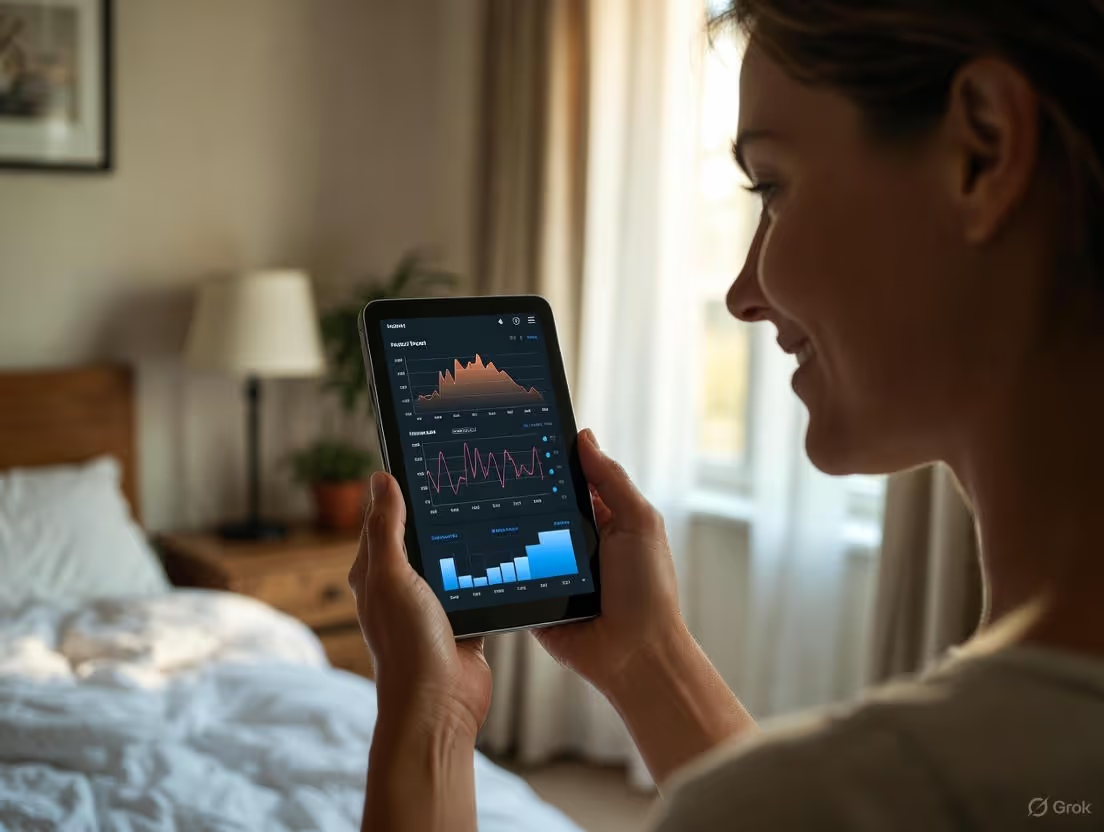
Sleep Tracking 101: Everything Beginners Need to Know
Sleep tracking 101 provides essential foundational knowledge beginners need to start monitoring rest effectively. This accessible guide explains basic concepts, device types, key metrics, interpretation strategies, and practical usage tips without overwhelming technical complexity or advanced optimization techniques.
Sleep Tracking 101: Everything Beginners Need to Know
You spend about a third of your life asleep. For years, this massive portion of your existence was a black box—a mysterious, unmeasured chasm between your waking hours. You’d wake up feeling drained and wonder, “Did I even sleep?” Or you’d bolt awake at 3 a.m., your mind racing, with no real understanding of what triggered the disruption. We’ve all been there, relying on gut feelings and coffee to gauge our rest. But what if you could open that black box? What if you could transform sleep from a vague concept into precise, actionable data?
Welcome to the modern era of sleep science, no longer confined to sterile laboratory polysomnography. Today, advanced sleep tracking technology puts the power of understanding directly on your finger or wrist. This isn't just about counting hours; it's about decoding the quality, architecture, and very physiology of your slumber. For beginners, the world of sleep stages, heart rate variability (HRV), resting heart rate (RHR), and SpO2 can seem overwhelming. But this knowledge is the foundation upon which you can build a fortress of restorative sleep, leading to improved mood, sharper cognition, better metabolic health, and a stronger immune system.
This comprehensive guide is designed to be your roadmap. We will start from the very beginning, demystifying why sleep tracking matters and how the technology actually works. We’ll journey through the biology of sleep cycles, explore the key metrics that matter most, and show you how to interpret the data to make tangible changes in your life. Whether you're using a smart ring like Oxyzen, a wearable, or a bedside device, the principles of using data to enhance your sleep are the same. By the end, you will no longer be a passive participant in your nightly rest. You will be an informed architect, equipped with the tools and knowledge to design your path to truly restorative sleep. Let’s begin.
Why Bother Tracking Your Sleep? Beyond Counting Sheep
For most of human history, our assessment of sleep was brutally simple: you close your eyes at night, and you open them in the morning. The interim was a blank space. The problem with this approach is that it confuses time in bed with quality sleep. You could spend 9 hours tossing and turning and feel worse than someone who slept a solid 6. This is the fundamental reason sleep tracking has moved from a niche curiosity to a mainstream wellness essential—it provides objective truth in a realm dominated by subjective feeling.
Think of it like managing your personal finances. You wouldn’t just guess how much money is in your bank account based on how you “feel” about your spending; you’d check your statements. Sleep tracking provides your nightly "financial statement." It shows you the deposits (deep sleep), the necessary expenditures (REM sleep for mental health), and the wasteful fees (frequent awakenings, restless periods). Without this data, you’re flying blind, trying to solve a problem you can’t see.
The implications of poor or misjudged sleep are profound and far-reaching. Chronically poor sleep is not just about fatigue. It's a key risk factor for serious health conditions. Research consistently links insufficient sleep to:
Emotional & Mental Health Struggles: Increased irritability, anxiety, and a higher vulnerability to stress and depression.
Metabolic Dysfunction: Disruption of hormones like leptin and ghrelin leads to increased hunger and cravings, raising the risk for weight gain and type 2 diabetes.
Cardiovascular Risk: Elevated blood pressure and increased strain on the heart.
Weakened Immunity: Reduced production of cytokines, the proteins that help fight infection and inflammation.
Sleep tracking moves you from a reactive to a proactive health stance. Instead of wondering why you’re constantly hitting an afternoon slump or struggling to manage your weight, you can look at your sleep data for clues. Perhaps your deep sleep is consistently low, preventing physical recovery. Maybe your resting heart rate is elevated, indicating your nervous system isn’t fully calming down at night. These are the insights that empower change. As you’ll see when you explore the Oxyzen blog for deeper dives into wellness science, sleep is the cornerstone upon which all other health habits are built. You cannot out-exercise or out-diet bad sleep. Understanding it is the critical first step to mastering it.
How Sleep Tracking Technology Works: From Labs to Your Wrist
To trust the data, it helps to understand where it comes from. The gold standard for sleep analysis is an in-lab sleep study called polysomnography. This involves being hooked up to a suite of sensors measuring brain waves (EEG), eye movements (EOG), muscle activity (EMG), heart rhythm (ECG), and breathing. It’s incredibly accurate but also expensive, inconvenient, and a far cry from a natural night's sleep in your own bed.
Modern consumer sleep trackers are marvels of miniaturization and algorithmic intelligence, designed to approximate this lab-grade analysis in a non-invasive, at-home format. They do this by measuring specific physiological signals that correlate strongly with sleep states.
The primary metrics these devices use are:
1. Actigraphy (Movement): This is the oldest and simplest method. Using a 3-axis accelerometer (the same sensor that tells your phone to rotate its screen), the device detects movement. The core assumption is that less movement equals deeper sleep. While useful for detecting broad periods of wakefulness and rest, it's not precise enough to distinguish between sleep stages on its own.
2. Photoplethysmography (PPG) - The Heart of Modern Tracking: This is the game-changer. PPG uses a tiny green LED light on the underside of a device (like a smart ring or watch) to shine into your skin. The light is absorbed by your blood, and a sensor measures the amount of light reflected back. Because blood absorbs green light, the sensor can detect the subtle changes in blood volume with each heartbeat. This provides a continuous pulse wave, from which the device can derive:
Heart Rate (HR): Beats per minute.
Heart Rate Variability (HRV): The millisecond variations between heartbeats. HRV is a powerful indicator of autonomic nervous system balance. Higher HRV during sleep generally indicates better recovery and more restorative rest.
Blood Oxygen Saturation (SpO2): By using red and infrared LEDs in addition to green, some advanced devices can estimate the oxygen level in your blood. Dips in SpO2 can signal sleep-disordered breathing events.
3. Skin Temperature: This is a more recent and sophisticated addition, particularly in devices like smart rings which sit snugly on the finger—a prime location for measuring core temperature trends. Your body temperature follows a distinct circadian rhythm, dropping to initiate sleep and reaching its lowest point in the early morning before rising to wake you up. Tracking this trend provides powerful context for your sleep timing and quality.
The Magic is in the Algorithm: The raw data from these sensors is just a stream of numbers. The true value is created by sophisticated machine-learning algorithms. These algorithms are trained on massive datasets that correlate movement, heart rate, HRV, and temperature patterns with verified sleep stages from lab studies. The algorithm learns that a specific combination of low movement, steadily declining heart rate, high HRV, and dropping temperature likely indicates the onset of deep sleep. Another pattern of elevated heart rate, rapid eye movement (inferred from pulse wave variability), and muscle atonia points to REM sleep.
It’s crucial for beginners to know that no consumer device is 100% accurate compared to a medical-grade EEG. However, for trend-based analysis—which is what truly matters for personal improvement—they are exceptionally reliable. Seeing that your deep sleep percentage consistently drops after late-night alcohol or that your HRV trends upward after a month of meditation provides profoundly actionable insights. The goal isn’t medical diagnosis; it’s personalized awareness and optimization. For a closer look at how one brand leverages this technology, you can learn more about the Oxyzen smart ring’s approach to multi-sensor fusion.
Understanding Your Sleep Architecture: The 4-Stage Nightly Journey
Sleep is not a monolithic state of unconsciousness. It’s a dynamic, highly structured process that cycles through distinct stages, each with its own unique physiological and neurological purpose. This cyclical pattern is known as your “sleep architecture.” Understanding this architecture is like learning the blueprint of your night—it helps you understand what “good sleep” actually looks like in the data.
A full sleep cycle lasts about 90-120 minutes, and a healthy adult will go through 4-6 of these cycles per night. The composition of these cycles changes as the night progresses, with deep sleep dominating the first half and REM sleep extending in the second half.
Stage 1 (N1): The Doorway to Sleep (1-5 minutes per cycle) This is the lightest stage of sleep, the transition from wakefulness to slumber. Your muscles begin to relax, your brain wave activity starts to slow from its waking alpha rhythms to theta waves, and you can be easily awakened. You might experience sudden muscle jerks or the sensation of falling. In sleep tracking data, this stage may appear as a brief period of settling, often with slightly elevated but dropping heart rate.
Stage 2 (N2): Light Sleep (10-60 minutes per cycle) This is where you spend the majority of your total sleep time—typically 40-60%. Your body continues to relax: heart rate and body temperature drop further, and eye movements stop. Brain activity is characterized by “sleep spindles” and “K-complexes,” which are thought to play a role in memory consolidation and sensory processing, preventing you from being awakened by minor noises. This stage is crucial for priming the body for the deeper, more restorative stages to come.
Stage 3 (N3): Deep Sleep or Slow-Wave Sleep (20-40 minutes early in the night) This is the most physically restorative phase. Brain waves slow into large, slow delta waves. It is very difficult to be awakened from deep sleep; if you are, you’ll likely feel groggy and disoriented (this is “sleep inertia”). This stage is critical for:
Physical repair and growth (human growth hormone is released).
Cellular regeneration and immune system strengthening.
Memory consolidation for facts and information. Your sleep tracker will show your heart rate at its lowest, your HRV potentially at its highest, and minimal movement. Prioritizing deep sleep is prioritizing physical recovery.
Stage 4: REM (Rapid Eye Movement) Sleep (10-60 minutes, longer later in the night) This is the stage most associated with dreaming. Your brain becomes highly active, with brain wave patterns resembling wakefulness. Your eyes dart back and forth rapidly under your eyelids. To prevent you from acting out your dreams, your body experiences temporary muscle paralysis (atonia). REM sleep is essential for:
Emotional and psychological processing and regulation.
Learning and memory consolidation for skills and procedures.
Creativity and problem-solving. On your tracker, REM sleep is often identified by an elevated and variable heart rate (similar to when you’re awake), increased breathing rate, and, of course, no major movement due to muscle atonia.
A healthy sleep architecture shows a rhythmic cycling through these stages. Disruptions—caused by stress, alcohol, sleep disorders, or poor sleep hygiene—can fragment this architecture, robbing you of the vital deep and REM stages. Tracking makes these disruptions visible, turning an abstract feeling of unrest into a clear chart showing where your night went off course.
Key Metrics Explained: What Your Sleep Data Actually Means
Now that you understand the stages, let’s translate them into the concrete metrics you’ll see on your sleep tracker’s dashboard. Moving from simple “sleep score” to understanding the individual components gives you real power.
1. Sleep Duration vs. Time in Bed: This is the most basic but critical distinction. Time in Bed is just that—the total minutes from when you lie down to when you get up. Sleep Duration (or Total Sleep Time) is the actual minutes you were asleep. The difference between them is your wakefulness or latency. A good goal is for sleep duration to be at least 85-90% of your time in bed. Consistently low efficiency points to insomnia habits or environmental issues.
2. Sleep Stages Breakdown (Light, Deep, REM): Your tracker will provide percentages or minutes for each stage. While individual needs vary, general benchmarks for adults are:
Light Sleep (N1+N2): 50-60%
Deep Sleep (N3): 13-23% (More crucial in the first half of the night)
REM Sleep: 20-25% (More crucial in the second half of the night) Instead of obsessing over a single night’s numbers, look at weekly averages and trends. Did your deep sleep drop after two consecutive hard workouts? Did your REM increase during a period of intense learning? These trends are your personalized sleep language.
3. Resting Heart Rate (RHR): This is your average heart rate during sleep, typically measured during your deepest periods of rest. A lower RHR generally indicates better cardiovascular fitness and a more efficient heart. Crucially, tracking the trend is more important than the absolute number. A sudden, sustained increase in your RHR can be an early warning sign of illness, overtraining, dehydration, or high stress. It’s your body’s whisper that something is off.
4. Heart Rate Variability (HRV): The Stress & Recovery Compass If you take away one advanced metric, make it HRV. It measures the tiny variations in time between successive heartbeats. Contrary to intuition, a higher HRV is better—it indicates a resilient, adaptable autonomic nervous system that can smoothly switch between stress (sympathetic) and rest/recovery (parasympathetic) modes. During deep, restorative sleep, you want to see your HRV rise. A downward trend in your nightly HRV average is one of the clearest signals of cumulative stress, inadequate recovery, or impending illness. It’s a direct line to understanding your body’s capacity to handle life’s demands.
5. Sleep Consistency (Bedtime & Wake Time Variability): This might be the most underrated metric. Your brain thrives on rhythm. Going to bed and waking up at wildly different times each day (e.g., a 3-hour difference between weekdays and weekends) is known as “social jet lag.” It disrupts your circadian rhythm, leading to poorer sleep quality, daytime fatigue, and metabolic confusion. A good tracker will show you your consistency, encouraging you to stabilize your schedule—perhaps the single most effective sleep hack of all.
6. Blood Oxygen (SpO2) & Breathing Rate: For those with advanced trackers, these metrics offer a window into breathing quality. Brief, minor dips in SpO2 are normal. However, frequent, significant drops could suggest sleep apnea or other breathing disturbances. Similarly, a stable, low breathing rate (12-20 breaths per minute) is normal; a high or highly variable rate can indicate disrupted sleep or stress. If you see concerning, consistent patterns here, it’s a strong prompt to consult with a healthcare professional for further guidance.
Learning to speak this data language transforms your morning routine from a groggy check of the clock to an insightful review of your body’s overnight report card.
Setting Up for Success: Pre-Sleep Rituals and Environment Optimization
You can have the most advanced sleep tracker in the world, but if your habits and environment are working against you, the data will just be a chronicle of your struggle. Tracking shines a light on the problem; optimization provides the solutions. Think of this as creating the perfect habitat for high-quality sleep.
Crafting Your Sleep Sanctuary (The Environment):
Darkness is Non-Negotiable: Even small amounts of light, especially blue light, can suppress melatonin production. Use blackout curtains. Cover or remove electronic LED indicators. Consider a comfortable sleep mask if total darkness isn’t possible.
Cool it Down: Your body needs to drop its core temperature to initiate sleep. The ideal bedroom temperature for most people is between 60-67°F (15-19°C). A cool room facilitates this natural drop. This is where devices that track skin temperature, like the Oxyzen ring, provide fantastic feedback, showing you how your body responds to different room temps.
Quiet & Calm: Sudden noises can fragment sleep stages, even if you don’t fully wake. Use earplugs, a white noise machine, or a fan to create a consistent, soothing auditory blanket. Many trackers will even log “noise events” that correlate with your awakenings.
Comfort is Key: Invest in a supportive mattress and pillows. Your bedding should help regulate temperature (e.g., natural, breathable fibers like cotton or bamboo).
Building Your Wind-Down Ritual (The Behavior):
Your body needs a signal that it’s time to shift from “go” mode to “slow” mode. A consistent 30-60 minute wind-down routine is that signal.
Dim the Lights & Ditch the Screens: At least 60 minutes before bed, start reducing light exposure. Use apps that shift screens to warmer tones at sunset, but better yet, put devices away. Read a physical book under soft, warm light.
Mind the Temperature (Again): A warm bath or shower 1-2 hours before bed is surprisingly effective. The rise and subsequent drop in body temperature as you cool down afterward is a strong sleep trigger.
Calm the Mind: This is where rituals like gentle stretching (e.g., yoga nidra), meditation, deep breathing exercises (like 4-7-8 breathing), or journaling are powerful. They lower cortisol and activate the parasympathetic nervous system. You can track the impact of these rituals by observing improvements in your sleep onset latency and HRV.
Beware of Evening Intake:
Caffeine: Its half-life is about 5-6 hours. Avoid caffeine (coffee, tea, soda, chocolate) for at least 6-8 hours before bed.
Alcohol: It may help you fall asleep faster, but it’s a sedative, not a sleep aid. It dramatically suppresses REM sleep and leads to fragmented, non-restorative sleep in the second half of the night. Your tracker will likely show elevated heart rates and reduced REM after drinking.
Food: A heavy meal right before bed forces your digestive system to work overtime, potentially causing discomfort and raising core temperature. Finish large meals 2-3 hours before bedtime.
The beautiful synergy here is that your sleep tracker provides direct feedback on what works for you. Try blackout curtains for a week and see if your deep sleep increases. Experiment with a 15-minute meditation and check your sleep score the next morning. This turns optimization from a guessing game into a data-driven experiment. For a wealth of practical tips on building these habits, the Oxyzen blog is a continually updated resource.
How to Interpret Your First Week of Sleep Data
You’ve set up your tracker, optimized your environment, and established a wind-down routine. Now you wake up to a week’s worth of detailed data. It can be information overload. The key for beginners is to avoid day-to-day nitpicking and focus on patterns, trends, and averages. Your sleep is not a daily performance to be judged; it’s a physiological process to be understood.
Step 1: Look for Baseline Averages Ignore the “best” and “worst” nights initially. Calculate your weekly averages for:
Total Sleep Time
Sleep Efficiency (Sleep Time / Time in Bed)
% Deep Sleep
% REM Sleep
Resting Heart Rate (RHR)
HRV (if available)
This gives you your personal baseline. Forget generic “8-hour” rules. Maybe your sweet spot is 7 hours 15 minutes with 20% deep sleep. This is your normal starting point.
Step 2: Identify Correlations with Lifestyle (The Detective Work) This is where the real magic happens. Cross-reference your daily log (which you should keep, even if just mentally) with your nightly data. Ask these questions:
Exercise: Did the night after your intense workout show more deep sleep (good for recovery) or a higher RHR and lower HRV (possible overtraining)?
Diet & Alcohol: Can you clearly see the impact of a late, heavy meal or two glasses of wine? Look for reduced REM, more awakenings in the second half of the night, and a higher RHR.
Stress: After a high-stress day, did it take you longer to fall asleep? Was your HRV lower?
Consistency: Did sleeping in on Saturday lead to a poor score on Sunday night, illustrating “social jet lag”?
Step 3: Embrace the “Why” Behind the Scores Most trackers give a composite “Sleep Score.” Don’t just look at the number; dive into the breakdown. Did you get an 82? Why wasn’t it a 90? The app will usually show contributions: “Duration: Excellent, Deep Sleep: Good, Consistency: Poor.” This immediately tells you where to focus your efforts—perhaps not on going to bed earlier, but on going to bed at the same time.
A Real-World Example:
Night 1 (Tuesday): Slept 7h 30m, Score 88. Notes: Finished work on time, light dinner, 20-min reading before bed.
Night 2 (Wednesday): Slept 6h 45m, Score 72. Notes: Late work deadline, scrolled phone in bed, had a late snack.
Insight: The data visually confirms what you likely felt. The lower score on Night 2 is likely due to shorter duration, longer sleep latency (from phone/ stress), and potentially less deep sleep. The actionable takeaway isn’t “I failed last night,” but “When I have a late deadline, I need to be extra strict about my phone cutoff and wind-down time to protect my sleep.”
This process of mindful review turns data into wisdom. It removes guilt and replaces it with curiosity and agency. You are no longer a victim of a “bad night”; you are a scientist learning the unique formula for your best rest. Many users find that sharing and comparing these journeys adds another layer of motivation, which is why platforms like Oxyzen testimonials can be so inspiring—they show real people solving real sleep puzzles.
Common Beginner Mistakes & How to Avoid Them
Embarking on a sleep tracking journey is exciting, but it’s easy to fall into pitfalls that can lead to frustration, anxiety, or misinterpretation of your data. Being aware of these common mistakes will help you use your tracker as the empowering tool it’s meant to be.
Mistake 1: Obsessing Over a Single Night’s Score Sleep is inherently variable. A single poor night is not a crisis; it’s normal. Stress, a minor illness, an unusual meal, or even a full moon can affect it. The power of tracking lies in the trend line, not the daily data point. Don’t let a low score on Tuesday morning ruin your Tuesday. Look at your 7-day and 30-day averages. Is the overall line moving in the right direction? That’s success.
Mistake 2: Equating More Time in Bed with Better Sleep “I’ll just go to bed earlier to boost my score!” This can backfire. If you lie in bed for 9 hours but only sleep 7, your sleep efficiency plummets. This can train your brain to associate the bed with wakefulness, potentially fueling insomnia. It’s better to have a slightly shorter but more efficient sleep than a long, restless one. Use the data to find your optimal duration, not your maximum possible time in bed.
Mistake 3: Ignoring Sleep Latency (Time to Fall Asleep) The goal is to fall asleep within 15-20 minutes of lights out. If your tracker consistently shows you taking 30, 45, or 60 minutes to fall asleep, this is a major red flag for your pre-sleep routine or schedule. You may be going to bed before you’re physiologically sleepy. This metric is a direct feedback loop on the effectiveness of your wind-down ritual.
Mistake 4: Misinterpreting “Awake” Time All trackers will show brief awakenings throughout the night. It is normal to have several micro-awakenings that you don’t remember, often at the end of a sleep cycle. Don’t panic over 5-10 minutes of awake time distributed across the night. The issue is prolonged awakenings (5+ minutes at a stretch) or a high frequency of them, which fragments your sleep architecture. Context is key.
Mistake 5: Using Data as a Cudgel, Not a Compass This is the most important mindset shift. If you find yourself feeling anxious, competitive, or defeated by your sleep data, you’re using it wrong. The data is not a judgment; it’s neutral feedback. It’s a compass pointing toward what works and what doesn’t for your unique biology. A low HRV reading isn’t a “fail”; it’s a signal saying, “Hey, I’m under stress. Can we dial things back or focus on recovery today?”
Mistake 6: Neglecting the Lifestyle Log Data without context is just numbers. If you don’t make simple notes on stress, exercise, diet, and alcohol, you’re trying to solve a mystery with half the clues. You don’t need a detailed journal; just a quick mental or actual note: “Hard workout, drank wine, stressful meeting.” This context is what turns correlation into actionable insight.
By sidestepping these mistakes, you position yourself to have a healthy, productive relationship with your sleep data. It becomes a fascinating window into your well-being, not a source of nightly performance anxiety. Remember, the ultimate goal is to feel better, not just to score better. For persistent questions on getting the most from your device, checking the Oxyzen FAQ can provide clear, technical guidance.
Using Data to Fix Specific Sleep Issues: From Insight to Action
You’ve identified your baseline and spotted some patterns. Now, let’s get tactical. How do you use this information to solve common sleep complaints? Here is a data-driven troubleshooting guide.
Problem: “I wake up feeling tired, even after 8 hours in bed.”
Data to Check: Sleep Stages & Efficiency. You’re likely lacking restorative deep or REM sleep.
Action Plan:
Protect Deep Sleep: Ensure the first half of your night is undisturbed. Absolute darkness, cool temperature, and no alcohol are critical here.
Protect REM Sleep: Protect the second half of your night. Avoid waking up with a loud alarm during a likely REM period. Use a smart alarm on a tracker that wakes you during light sleep near your desired time. Ensure you’re getting enough total sleep to accumulate sufficient REM cycles.
Check Efficiency: If your efficiency is below 85%, you’re spending too much time awake in bed. Consider “sleep restriction” therapy principles: get out of bed if you can’t sleep after 20 minutes, only return when sleepy. This rebuilds the association between bed and sleep.
Problem: “It takes me forever to fall asleep.”
Data to Check: Sleep Latency (consistently >20-30 mins).
Action Plan:
Strengthen Your Circadian Signal: Get bright, natural light exposure first thing in the morning. This sets your internal clock for a melatonin release ~14-16 hours later.
Build a Buffer Zone: Implement a strict, screen-free wind-down routine 60 minutes before bed. The data will show you if it’s working by reducing your latency.
Re-assess Timing: You may be going to bed before your body is ready. Use your natural dip in evening alertness and rise in melatonin as your cue, not just the clock.
Problem: “I wake up multiple times during the night.”
Data to Check: Awake Time / Sleep Fragmentation graph.
Action Plan:
Audit the Environment: Is noise or light causing the awakenings? Your tracker’s noise log or correlation with events (like a partner’s movement) can pinpoint this.
Manage Fluids: Reduce liquid intake 1-2 hours before bed to minimize bathroom trips.
Check Stress & HRV: High stress can lead to “hyperarousal” and frequent waking. If your pre-sleep HRV is low, double down on wind-down practices like meditation. Tracking can prove their efficacy over time.
Problem: “My sleep is all over the place—great some nights, terrible others.”
Data to Check: Sleep Consistency (bedtime/waketime variability).
Action Plan:
Anchor Your Schedule: This is the single biggest fix. Choose a wake-up time and stick to it every day, even weekends, within a 30-60 minute window. Your bedtime will naturally regulate.
Use the Data as Proof: After 2 weeks of consistency, look at your trend lines. You will almost certainly see improved scores, more stable RHR and HRV, and a more predictable sleep architecture. This visual proof is a powerful motivator.
Problem: “I feel like I never dream anymore.”
Data to Check: REM Sleep %. You are likely not getting enough REM, or you are waking up from it and forgetting the dreams.
Action Plan:
Avoid Alcohol & Certain Medications: These are potent REM suppressants. Your data will vividly show the REM rebound when you stop.
Get More Total Sleep: REM periods get longer later in the night. Cutting your sleep short sacrifices mostly REM.
Wake Up Gently: Use a gradual, gentle alarm. Being jolted from REM can cause dream amnesia.
By methodically linking a subjective problem to an objective metric, and then testing a targeted solution, you become the master of your sleep domain. This empirical approach is at the heart of the philosophy behind tools designed for deep wellness insight, much like the approach detailed in Oxyzen’s story of creating technology for meaningful, actionable health data.
The Role of Wearables: Smart Rings vs. Smartwatches vs. Bedside Devices
With a solid understanding of the why and how, the next question is: what tool is right for you? The market offers three primary form factors for sleep tracking, each with distinct advantages and trade-offs.
Smartwatches & Fitness Bands: The Jack-of-All-Trades
How They Track: Primarily use wrist-based PPG and accelerometry.
Pros: Comprehensive daytime functionality (notifications, fitness tracking, GPS). Convenient if you already wear a watch 24/7.
Cons for Sleep:
Comfort: Some find a watch bulky or uncomfortable for sleeping.
Battery Life: Often requires daily charging, making it easy to skip sleep tracking nights.
Sensor Placement: The wrist moves a lot during sleep, which can sometimes lead to less reliable movement data compared to the torso or finger. The wrist is also less ideal for consistent temperature and SpO2 readings than the finger.
Smart Rings: The Specialized Sleep & Recovery Device
How They Track: Use finger-based PPG, accelerometers, and skin temperature sensors. The finger provides a strong, consistent pulse wave (good for HRV) and is an excellent site for core temperature trend measurement.
Pros:
Comfort & Forgetability: Once sized correctly, a ring is unobtrusive and easy to wear 24/7, leading to consistent data.
Long Battery Life: Often 5-7 days, reducing charging anxiety.
Optimal Sensor Placement: The finger’s vascular access and reduced movement during sleep can yield very precise physiological data, especially for HRV and temperature trends—key metrics for recovery.
No Sleep Disruption: No screens or lights to bother you or your partner.
Cons: Limited daytime functionality (usually no display or notifications). Sizing is critical. Can be a dedicated wellness investment rather than a multi-function device.
Bedside/Nearable Devices: The Non-Wearable Option
How They Track: Use a combination of methods: under-mattress sensors (ballistocardiography to detect heartbeats and movement), bedside radar (RF sensors), or even highly sensitive microphones and sonar.
Pros: Nothing to wear. Can track two people independently in some cases. Often provides environmental data (room temp, humidity, light, noise).
Cons: They only track you in bed. You lose all daytime physiological context (how your daytime stress impacts your night). They can be less accurate at distinguishing between sleep stages compared to physiological wearables. They track “sleep” but not necessarily the full picture of “nocturnal recovery.”
Choosing What’s Right For You:
Choose a Smartwatch if: You want an all-in-one device and prioritize daytime features. You don’t mind nightly charging and find a watch comfortable to sleep in.
Choose a Smart Ring if: Your primary focus is on maximizing the accuracy and consistency of sleep and 24/7 recovery data (HRV, temp, RHR). You value comfort and long battery life for uninterrupted tracking. You want a dedicated wellness tool. To understand how this philosophy is engineered into a product, you can learn more about Oxyzen’s design and technology.
Choose a Bedside Device if: You absolutely cannot stand wearing anything to sleep, or you want to track a partner simultaneously without them wearing a device.
The best device is the one you’ll use consistently. For the serious sleep and recovery optimizer, the smart ring’s combination of comfort, physiological data quality, and 24/7 wearability is making it the tool of choice.
Beyond the Night: How Daytime Habits Drastically Impact Sleep Data
Your sleep is not an isolated event. It is the culmination of your entire day. The choices you make from the moment you wake up set the stage for the quality of your slumber hours later. Your sleep tracker’s data is the final report card on your daily lifestyle. Understanding these connections allows you to leverage your daytime to engineer a better night.
1. Light Exposure: Your Master Clock Regulator Light is the most powerful signal for your circadian rhythm. Morning sunlight (even on a cloudy day) is crucial. It suppresses melatonin, boosts cortisol (in a healthy, wakening way), and sets a precise 24-hour timer for when melatonin will be released that evening. Insufficient morning light can lead to a delayed or weak sleep-wake cycle. Conversely, avoiding bright, especially blue, light in the evening is equally important. Your tracker can show you the results: better sleep consistency and faster sleep onset when you manage light well.
2. Exercise & Movement: The Timing Matters Regular exercise is one of the best proven ways to improve sleep quality and duration—it increases deep sleep, reduces stress, and helps regulate circadian rhythms. However, timing is key. Intense exercise too close to bedtime (within 1-2 hours for most people) can raise core body temperature and stimulate the sympathetic nervous system, making it harder to wind down. Use your data: try ending vigorous workouts at least 3 hours before bed and see if your sleep latency decreases and your HRV improves. Gentle movement like yoga or stretching in the evening, however, can be beneficial.
3. Nutrition & Hydration: Fueling for Sleep
Caffeine: We mentioned its long half-life. Your data will starkly show the impact of an afternoon coffee on your sleep latency and potentially reduced deep sleep.
Alcohol: As noted, it’s a REM sleep wrecking ball. The data doesn’t lie.
Food Timing & Composition: Large, high-fat, or spicy meals too close to bed can cause discomfort and indigestion, leading to fragmentation. Your tracker may show more awakenings. A small, sleep-promoting snack (e.g., with tryptophan, like turkey or nuts, and complex carbs) 60-90 minutes before bed can sometimes help.
Hydration: Dehydration can elevate your resting heart rate. But drinking a large volume of water right before bed guarantees disruptive bathroom trips. Balance is key.
4. Stress & Mental Load: The Silent Sleep Thief Chronic stress keeps your nervous system in a state of “fight-or-flight” (high sympathetic tone), directly antagonizing the “rest-and-digest” (parasympathetic) state needed for sleep. This manifests clearly in your data as:
Elevated Resting Heart Rate (RHR)
Lower Heart Rate Variability (HRV) – one of the clearest indicators.
Longer Sleep Latency
Reduced Deep Sleep Daytime practices like mindfulness, meditation, focused breathing, and scheduled “worry time” can directly improve these metrics. Tracking your HRV throughout the day and night provides a powerful feedback loop, showing you which stress-management techniques truly calm your nervous system. For a deeper exploration of the mind-body-sleep connection, the Oxyzen blog regularly covers these integrative topics.
5. Napping: Friend or Foe? Short naps (20-30 minutes) early in the afternoon can be rejuvenating without significantly impacting nighttime
Creating Your Personal Sleep Optimization Plan
Data is inert without a plan. An optimization plan translates the insights from your weekly reviews into a structured, personalized experiment. Think of it as a hypothesis-driven approach to your own biology.
Step 1: The Baseline Audit (Week 1-2) As discussed, spend your first two weeks gathering data without making major changes. Establish your true averages for key metrics: Sleep Duration, Efficiency, Deep/REM %, RHR, and HRV. Note your current habits honestly. This is your "before" picture.
Step 2: Identify ONE Lever (The Focus) Based on your audit, choose the single biggest opportunity. Don’t try to fix everything at once. Common starting levers include:
Lever: Sleep Consistency. If your bedtime varies by 90+ minutes, this is almost always the highest-impact starting point.
Lever: Wind-Down Routine. If your sleep latency is high, focus here.
Lever: Evening Environment. If your deep sleep is low, prioritize absolute darkness and cool temperature.
Lever: Alcohol/Caffeine. If your REM sleep is suppressed or you have frequent awakenings, target this.
Step 3: Design Your Intervention (The Experiment) Formulate a clear, specific action for your chosen lever. For example:
Hypothesis: "If I stabilize my wake-up time to 6:30 AM every day for the next three weeks, my sleep efficiency will improve by 5%, and my HRV trend will rise."
Intervention: Set an alarm for 6:30 AM daily. Get immediate sunlight exposure. No sleeping in on weekends by more than 45 minutes.
Measurement: Monitor weekly averages for Sleep Efficiency, HRV, and overall Sleep Score.
Step 4: Implement & Track (The Trial) Run your experiment for a minimum of 3-4 weeks. Sleep changes are physiological and take time for your body to adapt. Consistently apply your new habit.
Step 5: Analyze & Iterate (The Learning) After the trial period, compare your data to your baseline. Did your target metrics move in the expected direction? Even a small positive shift is a win. Ask:
What worked?
What was surprisingly difficult?
What does the data say I should try next?
For example, you might find that fixing your consistency improved efficiency, but your deep sleep is still lacking. Your next experiment could focus on lowering bedroom temperature by 2 degrees. This cyclical process of Measure → Interpret → Intervene → Re-Measure turns you into an expert on your own sleep. For inspiration and to see how others have structured their journeys, the real-world experiences shared in Oxyzen testimonials can be incredibly valuable.
Advanced Sleep Metrics: HRV, Temperature Trends, and What They Reveal
While stages and duration are vital, the frontier of personal sleep science lies in the nuanced, continuous physiological signals. These metrics offer a profound look at your body’s readiness and resilience.
Heart Rate Variability (HRV): The Nervous System’s Symphony We’ve touched on HRV, but its depth deserves focus. It's not just a sleep metric; it's a 24/7 indicator of autonomic nervous system (ANS) balance.
High HRV: Indicates a healthy, adaptable ANS. Your body can efficiently switch between sympathetic (stress, action) and parasympathetic (rest, digest) states. During sleep, a rising HRV indicates deep, restorative, recovery-focused rest.
Low HRV: Suggests a dominant sympathetic tone or a fatigued system. Your body is stuck in a state of stress or is struggling to recover from accumulated strain.
How to Use HRV Data:
Track the Trend, Not the Daily Number: Daily fluctuations are normal. Look at your 7-day rolling average. A sustained downward trend is a red flag for overtraining, burnout, or illness. A sustained upward trend indicates improving fitness and recovery.
Use it for Daytime Decisions: Many advanced platforms provide a daily "Readiness" or "Recovery" score heavily based on overnight HRV. A low score isn't a command to quit the day; it’s a suggestion to prioritize rest, choose lighter exercise, and manage stress. It’s your body asking for a gentler day.
Correlate with Lifestyle: Did your HRV dip after a week of poor nutrition? Did it soar after a vacation? These correlations are gold for understanding your personal recovery drivers.
Skin Temperature Trends: Your Inner Rhythm Core body temperature follows a strict circadian rhythm, dropping to initiate sleep and hitting its nadir in the early morning. A smart ring, positioned perfectly on the finger to track this trend, provides incredible insights.
A Clear Dipping Pattern: A smooth, significant drop after bedtime and a steady rise before waking indicates a strong, well-timed circadian rhythm.
A Flattened or Erratic Curve: This can signal circadian misalignment (jet lag, shift work), the onset of illness (as the body fights infection), or hormonal fluctuations.
Actionable Insight: If your temperature doesn’t drop at night, your room might be too warm. If it rises too early, you might be waking up due to a circadian cue. This data can help you fine-tune your environment and schedule with precision.
Respiratory Rate: The Quiet Signal Your breathing rate during sleep is remarkably stable. Tracking it can reveal subtle disturbances.
A Sudden, Sustained Increase: Can be an early sign of respiratory infection, allergy flare-up, or the onset of a sleep disorder like apnea.
High Baseline Rate: May indicate chronic stress or poor cardiorespiratory fitness.
By learning this advanced language, you move beyond "how did I sleep?" to "how recovered and resilient is my body?" This is the shift from basic sleep tracking to holistic recovery optimization.
Sleep Tracking for Specific Goals: Athletes, Shift Workers, and Parents
Your life circumstances create unique sleep challenges. Tailoring your approach is key.
For the Athlete & Fitness Enthusiast: Sleep is your most potent performance-enhancing drug. It’s when muscle repair, memory consolidation for motor skills, and hormonal rebalancing occur.
Focus Metrics:
Deep Sleep: Critical for physical repair and growth hormone release. Track it religiously.
HRV & RHR: Your primary recovery indicators. A spike in RHR and a drop in HRV suggest you’re not recovered from your last training session. This data should inform whether you train hard, train light, or rest.
Sleep Duration: Intense training increases sleep need. You may require 8-9+ hours.
Optimization Tactics:
Post-Training: A cool-down routine and post-workout nutrition can improve sleep quality.
Game Day/Night: Use relaxation techniques to manage pre-competition nerves that can disrupt sleep.
Listen to the Data: If your metrics are in the gutter, it’s a sign to schedule a deload week or active recovery, not push through.
For the Shift Worker: Your challenge is fundamental: fighting your biology. The goal is damage control and strategic adaptation.
Focus Metrics:
Consistency (on a shifted schedule): While you can't be consistent with the sun, you can be consistent within your shift cycle. Try to keep the same sleep/wake times on your work days.
Sleep Efficiency: Maximizing every minute in bed is paramount.
Light Exposure Management: This is your most powerful tool. Use bright light therapy lamps during night shifts to signal "daytime" to your brain. Wear blue-light blocking glasses on your commute home in the morning to encourage melatonin production.
Environment: Your bedroom must be a fortress of darkness and quiet during daytime sleep. Blackout curtains, a white noise machine, and "Do Not Disturb" signs are non-negotiable.
For New Parents & Caregivers: The goal here shifts from "perfect sleep" to "strategic recovery" amidst fragmentation.
Focus Metrics:
Total Sleep Time (in 24 hrs): Let go of the single nighttime block. Track sleep across night sleep and naps. Hitting a cumulative target is the win.
Sleep Depth (when you get it): Focus on maximizing the quality of the sleep you can get. Perfect your sleep environment for when you are off duty.
Let Go of Perfectionism: The data will show fragmentation. That’s the reality. Use the data not to stress, but to identify small windows for improvement—e.g., when a partner takes a shift, ensuring your 4-hour block is as good as possible.
Optimization Tactics:
Sleep When the Baby Sleeps: It’s cliché but data-driven. Any sleep is better than none.
Tag-Teaming: Use data to have objective conversations with a partner about sharing the load based on each other's recovery needs.
Prioritize Recovery Metrics: A short period of high-quality sleep can be more restorative than a longer period of light, restless sleep. Aim for depth in the windows you have.
Each of these scenarios shows that sleep tracking isn't a one-size-fits-all pursuit. It's a flexible toolkit that can be adapted to provide crucial support and insight during life's most demanding chapters. For more tailored strategies on navigating sleep in challenging circumstances, resources like the Oxyzen blog often feature expert advice and community-shared solutions.
The Limitations and Ethical Considerations of Sleep Tracking
As with any powerful tool, it's crucial to understand its boundaries and use it responsibly. A balanced perspective prevents "orthosomnia" – the unhealthy obsession with perfect sleep data.
Understanding the Limits of Accuracy:
Consumer vs. Clinical: Your device is not a medical-grade polysomnogram. It cannot diagnose sleep disorders like sleep apnea, insomnia, or narcolepsy. It can, however, provide strong indicators (like frequent SpO2 dips or consistent long latency) that should prompt a visit to a sleep specialist.
Stage Estimation Errors: Algorithms can misclassify stages, particularly the boundary between light sleep and quiet wakefulness, or REM and light sleep. Trust the weekly trends over the nightly minute-by-minute breakdown.
Individual Variability: Algorithms are built on population averages. Your personal physiology might lead to consistent "errors" (e.g., you might have a naturally higher RHR). The tracker is best used to track changes in you over time, not to compare your absolute numbers to others.
Avoiding "Orthosomnia": The Dark Side of Optimization Coined by researchers, orthosomnia is the preoccupation with achieving perfect sleep, fueled by tracker data. Symptoms include:
Excessive anxiety over nightly scores.
Spending excessive time in bed to "improve" numbers.
Loss of trust in your own subjective feeling of rest in favor of the data.
Strained relationships due to rigid adherence to sleep routines.
The Antidote: Remember, the tracker is a servant, not a master. The ultimate goal is to feel better. If you score an 85 but feel terrible, listen to your body. If you score a 70 but feel refreshed, celebrate it. Use the data as a guide, not a gospel. Periodically, try a "data vacation"—wear the tracker but don't look at the app for a week. Reconnect with your innate sense of tiredness and alertness.
Data Privacy and Ownership: Your physiological data is deeply personal. It's essential to:
Read the Privacy Policy: Understand what data the company collects, how it is used, and if it is anonymized and aggregated for research or sold to third parties.
Know Your Rights: In many regions, you have rights to access, delete, or port your data. Companies that are transparent about data use, like those that detail their policies and mission openly, such as you can find on Oxyzen's about page, build greater trust.
Secure Your Account: Use strong, unique passwords for your wellness data accounts.
Using sleep tracking ethically means respecting its limits, protecting your mental health, and being an informed custodian of your own data. It’s a tool for empowerment, not a source of anxiety.
Integrating Sleep Data with Other Health Metrics
Sleep does not exist in a vacuum. It is the keystone habit that influences and is influenced by every other system in your body. The most powerful insights emerge when you connect your sleep data with other health and lifestyle metrics.
The Fitness Trifecta: Sleep, Activity, and Nutrition
Activity Impact on Sleep: As noted, exercise improves sleep. But deeper correlation is possible. Did a day of high-intensity interval training (HIIT) lead to more deep sleep that night? Did a day of inactivity lead to more restless sleep? Your tracker can show this.
Sleep Impact on Activity: More revealing is the opposite. Did a night of poor sleep lead to a less effective workout the next day (lower max HR, perceived exertion higher, poorer performance)? This creates a compelling case for prioritizing sleep to achieve fitness goals.
Nutrition’s Role: Can you see a correlation between days you hit a certain protein intake and improved deep sleep? Or between high-sugar days and sleep fragmentation? Some apps allow you to log nutrition, creating a direct line of sight between fuel and recovery.
Stress & Mindfulness: Quantifying Calm
Meditation and HRV: A direct, measurable impact. A 10-minute meditation session before bed should, over time, improve your sleep-onset HRV and latency. The data proves the efficacy of the practice.
Work Stress and Sleep: Tag days as "high stress" in your app's journal. Do they consistently correlate with lower HRV and higher RHR that night? This objective proof can be the motivation needed to implement better work-life boundaries or stress management techniques.
The Long-Term Health Picture: Trends Over Years This is the ultimate value. Over months and years, your sleep and physiological data becomes a unparalleled longitudinal health record.
You can see how improving your fitness gradually lowered your baseline RHR.
You can observe the positive impact of a consistent mindfulness practice on your baseline HRV.
You can identify seasonal patterns—perhaps your sleep quality dips every winter, pointing to a potential need for a light therapy lamp or Vitamin D supplementation.
You have concrete data to bring to a doctor: "My resting heart rate has trended up by 10 BPM over the last 6 months despite no change in activity."
By integrating these data streams, you move from isolated insights to a unified theory of your personal well-being. You understand the levers and how they interact. This holistic view is at the heart of modern, proactive health management, and it's the vision behind platforms designed to be central hubs for wellness data, encouraging you to explore a more integrated approach to your health.
Troubleshooting Persistent Poor Sleep Data
You’ve been consistent, run experiments, and optimized your habits, but your data still shows poor sleep metrics. What now? It’s time for systematic troubleshooting and knowing when to seek professional help.
Step 1: Verify Device and Data Integrity
Fit: Is your wearable snug but comfortable? A loose ring or watch can give poor PPG signals.
Battery: Ensure the device is adequately charged before sleep.
Data Syncing: Confirm the app is syncing and processing data correctly. Sometimes a reset can help.
Compare with Subjective Feel: Do you feel as bad as the data says? If not, there might be a sensor or algorithm issue. Contact customer support, such as through the Oxyzen FAQ for device-specific guidance.
Step 2: Conduct a "Sleep Hygiene Reset" Go back to basics with extreme rigor for one week, as if you were in a sleep study. This eliminates behavioral variables.
Schedule: Bed and wake time identical every day, even weekends.
Environment: Pitch black, 65°F, silent. Use mask and earplugs.
Routine: No screens 90 mins before bed. Read a physical book. Take a warm bath.
Intake: Zero caffeine after 12 PM. Zero alcohol. Light dinner 3+ hours before bed.
Measure: Did the data improve dramatically? If yes, your problem is likely behavioral drift. If no, the issue may be deeper.
Step 3: Look for Specific Data Patterns That Signal Medical Issues Certain patterns in your data are strong indicators to consult a healthcare professional:
Consistently High Sleep Latency (>30 mins nightly) + Frequent Awakenings: Could indicate chronic insomnia.
Loud, Chronic Snoring (per partner) + Data Showing: Frequent SpO2 dips (>5% drops), elevated nighttime heart rate, and high resting heart rate in the morning. This is a classic signature of Obstructive Sleep Apnea (OSA).
Overwhelming Daytime Sleepiness (falling asleep in meetings, while driving) despite 7+ hours of "tracked" sleep: Could indicate disorders like narcolepsy or idiopathic hypersomnia, where sleep architecture is abnormal.
Uncontrollable leg movements or sensations at night + data showing periodic leg movement spikes: Could indicate Periodic Limb Movement Disorder (PLMD).
Step 4: Seek Professional Guidance A sleep tracker is a screening tool, not a diagnostic one. If your data shows persistent, unexplained poor metrics—especially those matching the patterns above—schedule an appointment with:
Your Primary Care Physician: Start here. Bring your long-term trend data. They can rule out underlying conditions (thyroid issues, anemia, anxiety/depression) and provide a referral.
A Board-Certified Sleep Specialist: This is the expert. They may recommend an in-lab or at-home sleep study (HST) to get a definitive diagnosis.
Remember: The purpose of the tracker is to give you the awareness and evidence to take the next step. Using it to identify a serious but treatable condition like sleep apnea is one of the most valuable health interventions you can make.
The Future of Sleep Tracking: AI, Personalization, and Proactive Health
The technology you use today is just the beginning. The frontier of sleep science is moving towards hyper-personalized, predictive, and seamlessly integrated systems.
AI-Powered Personal Sleep Coaches: Future algorithms won't just report data; they will understand your unique patterns and offer tailored advice. Imagine an AI that analyzes your week and says: "Based on your elevated HRV and high activity load, you're primed for a performance peak. Schedule your important meeting for Thursday. Also, your data suggests you're sensitive to caffeine after 2 PM—limiting it tomorrow will protect your deep sleep." This moves from retrospective reporting to prospective guidance.
Predictive Health Insights: By combining sleep data with other biometrics (glucose, continuous body temperature), future wearables may be able to predict health events.
Detecting the subtle rise in skin temperature and heart rate that precedes illness by 24-48 hours.
Identifying patterns of sleep disruption that correlate with increased risk for metabolic or mood disorders, allowing for early lifestyle intervention.
Seamless Integration and the "Digital Twin": Sleep data will flow effortlessly into other aspects of your digital health ecosystem.
Your fitness app automatically adjusts tomorrow's workout based on your recovery score.
Your nutrition app suggests meals to support sleep based on your stage breakdown.
Your calendar app proposes meeting times aligned with your circadian energy peaks.
The concept of a "digital twin"—a comprehensive computational model of your physiology—could be informed in real-time by your sleep and recovery data, allowing for incredibly precise simulations of how lifestyle choices will affect you.
Non-Contact and Ambient Sensing: Technology will become even more invisible. Advanced radar sensors in your bedroom, coupled with ambient AI, will track sleep stages, respiration, and heart rate without any wearable, creating a truly natural sleep environment while still capturing rich data.
This future is not about more intrusive monitoring; it's about technology becoming so intuitive and insightful that it fades into the background, providing a continuous, gentle guidance system for lifelong health. It’s a future where understanding your sleep is as fundamental as understanding your diet, all part of a proactive approach to living well. This vision of integrated, human-centric technology is what drives innovators in the space, as often reflected in a company's core story and vision.
Conclusion of Part One: Your Journey to Becoming a Sleep Expert
You have now traversed the foundational landscape of sleep tracking. From understanding the intricate ballet of sleep stages to decoding the advanced language of HRV and temperature trends. You've learned how to choose your tools, interpret your data, avoid common pitfalls, and create a personalized optimization plan tailored to your unique life and goals.
Remember, this journey begins with a shift in perspective: sleep is not lost time; it is the essential, active process of recovery and preparation. Your tracker is the lens that brings this vital process into focus.
You are no longer a beginner guessing in the dark. You are equipped with the knowledge to:
Measure your sleep with understanding.
Interpret the data with context and trend-based wisdom.
Experiment with targeted changes to your habits and environment.
Integrate sleep insights with your overall health and fitness goals.
Recognize when data points to a need for professional guidance.
The path to better sleep is a marathon, not a sprint. There will be nights of perfect scores and nights of frustrating disruptions. The power lies not in perfection, but in the persistent, curious application of what you learn. Each night of data is a conversation with your body. Learn its language, respond to its signals, and you will build a foundation of restorative sleep that elevates every waking moment.
In the next portion of this guide, we will dive even deeper. We will explore advanced topics like chronotypes and genetic influences on sleep, delve into the science of naps and polyphasic sleep, examine the intricate relationship between sleep and mental health in detail, and provide comprehensive guides on choosing the right mattress, pillow, and bedding based on your tracking data. We'll also look at community case studies and build advanced, long-term optimization frameworks.
Your journey to mastering the art and science of sleep is well underway. Use this knowledge, trust the process, and sleep well.
Deepening Your Knowledge: Chronotypes, Genetics, and Your Unique Sleep Blueprint
So far, we’ve approached sleep as a universal human process governed by consistent rules. While the stages and cycles are biologically fundamental, the timing and expression of sleep vary dramatically from person to person. This is where the concepts of chronotype and genetics transform sleep tracking from a general guide into a deeply personal blueprint. Understanding your innate design is the key to true alignment.
What is a Chronotype? (And It’s Not Just "Morning" or "Night" Person)
Your chronotype is your body’s natural predisposition for sleep and wakefulness times within the 24-hour day. It’s governed by your circadian rhythm, which is, in turn, set by a "master clock" in the brain's suprachiasmatic nucleus (SCN) and influenced by genetics, age, and light exposure.
While often simplified, the most accurate model is the one proposed by sleep researcher Dr. Michael Breus, which categorizes chronotypes into four animal archetypes:
The Bear (≈55% of the population):
Pattern: Follows the solar cycle. Wakes easily, most productive in the mid-morning, experiences a post-lunch dip around 2-3 PM.
Ideal Sleep Schedule: 11 PM – 7 AM.
Tracking Insight: Bears respond well to standard sleep hygiene. Their data typically shows good sleep efficiency when aligned with a conventional schedule. Deviations (late nights) show clear penalties in deep sleep and next-day HRV.
The Lion (≈15% of the population):
Pattern: The true early riser. Alert immediately upon waking, peak productivity is before noon, energy declines steadily throughout the afternoon and evening.
Ideal Sleep Schedule: 9:30 PM – 5:30 AM (or even earlier).
Tracking Insight: Lions forced into late schedules show severe sleep deprivation markers. Their data thrives on early bedtimes. Their HRV may peak in the early morning hours, and they often get a significant portion of their deep sleep before midnight.
The Wolf (≈15% of the population):
Pattern: The true night owl. Groggy in the morning, hits stride in the late afternoon and evening, feels most creative and alert at night.
Ideal Sleep Schedule: 12 AM – 8 AM (or later).
Tracking Insight: Wolves on early schedules show chronically poor sleep efficiency and low deep sleep. Their data validates the need for a shifted schedule. Their body temperature minimum occurs later, delaying sleep onset. Fighting this chronotype is a recipe for consistently poor tracking scores.
The Dolphin (≈10% of the population):
Pattern: The light, anxious sleeper. Named after dolphins who sleep with one brain hemisphere at a time. Often intelligent, prone to insomnia, wake easily to noise, may have irregular sleep schedules.
Ideal Sleep Schedule: Often later (11:30 PM – 6:30 AM) and requires impeccable sleep hygiene.
Tracking Insight: Dolphins will see more frequent awakenings and lower sleep efficiency in their data, even in ideal conditions. Their focus should be on acceptance and maximizing sleep quality through perfect environment and stress reduction, not just duration. Their HRV data is crucial for managing nervous system hyperarousal.
How to Determine Your Chronotype:
The "Free Day" Test: On a vacation with no alarms, when do you naturally fall asleep and wake up?
Mid-Sleep Time: Calculate the midpoint of your sleep on free days. A midpoint before 3:30 AM suggests a Lion tendency; after 5:30 AM suggests a Wolf.
Use Your Tracker Data: Analyze your natural sleep onset and wake times on weekends or days off. Look at your "readiness" scores across the day if your device provides them. When do you feel best according to your body?
The Genetic Underpinnings of Sleep
Your DNA is the foundational script for your sleep. While lifestyle is the director, genetics sets the stage.
PER3 Gene Variants: Certain variants of this "clock gene" are strongly associated with morningness-eveningness. Longer alleles are linked to early chronotypes (Lions), shorter ones to later chronotypes (Wolves).
DEC2 Gene: A rare mutation in this gene allows some "short sleepers" to thrive on only 4-6 hours of sleep without apparent detriment. This is an exception, not the rule.
Genetics of Sleep Disorders: Susceptibility to conditions like Restless Legs Syndrome (RLS) and narcolepsy has strong hereditary components.
The Takeaway for Trackers: You cannot change your genetics. The goal of tracking is not to force your Wolf body into a Lion schedule because a productivity guru says so. It is to discover and then honor your innate design. A Wolf tracking their sleep will see objective proof that a 10 PM bedtime leads to 90 minutes of restless wakefulness, while a midnight bedtime yields swift sleep onset. This data is liberation from societal "shoulds." It’s the evidence you need to negotiate a later work start time or structure your creative work for the evening.
Aligning Your Life with Your Chronotype
Once you know your type, you can schedule your life for peak performance and well-being.
For Wolves & Late-Shifted Bears:
Schedule Important Work: Aim for deep work blocks between 2 PM and 8 PM.
Schedule Meetings: Push for late-morning or afternoon meetings when you’re more alert.
Exercise: Schedule workouts for late afternoon (4-6 PM) when your body temperature and coordination peak.
Light Management: Get bright light immediately upon waking (even if it's via a lamp) to signal your SCN. Critically, wear blue-light blocking glasses in the evening to prevent further phase delay.
Meals: Eat a protein-rich breakfast to stabilize energy, even if not hungry. Avoid heavy meals late at night.
For Lions & Early-Shifted Bears:
Schedule Important Work: Your golden hours are before noon. Protect this time fiercely.
Schedule Meetings: Advocate for morning meetings when you’re sharp.
Exercise: Morning workouts align perfectly with your rising cortisol and body temperature.
Light Management: Get morning sunlight. Be cautious of excessive bright light in the evening, which can further advance your phase and cause very early waking.
Meals: Eat a substantial lunch to fuel the afternoon. A lighter dinner helps prevent overnight digestion from disrupting sleep.
For Dolphins:
Focus on Wind-Down: Your nervous system needs extra calming. A 90-minute, screen-free, ritualistic wind-down is non-negotiable.
Environment is Everything: A perfect sleep cave is your primary tool.
Acceptance: Understand that your sleep may be lighter. Focus on the quality of wakefulness, not just the sleep numbers. Use naps strategically (see next section).
By syncing your life’s demands with your biological clock, you reduce internal friction. Your sleep tracker will reflect this with higher efficiency scores, more stable HRV, and a subjective feeling of ease. You are no longer swimming upstream. For more on designing a life in rhythm with your biology, the Oxyzen blog offers ongoing exploration of these themes.
The Science of Strategic Napping: Recharging Without Compromising the Night
Napping is a double-edged sword. Done correctly, it’s a potent tool for cognitive refresh, mood enhancement, and performance recovery. Done incorrectly, it can sabotage nighttime sleep and leave you feeling groggy. Your sleep data is the perfect guide to mastering this art.
Understanding Sleep Inertia vs. Sleep Drive
Sleep Drive: Your homeostatic pressure to sleep. It builds from the moment you wake up. A nap satisfies some of this drive.
Sleep Inertia: The groggy, disoriented feeling upon waking from deep sleep. It’s caused by the abrupt awakening of a brain still in slow-wave activity.
The goal of a strategic nap is to reduce sleep drive without entering deep sleep (N3), thus avoiding significant sleep inertia.
Physiology: Primarily stays in Stage N1 and N2 (light sleep). Avoids deep sleep inertia.
Best For: A midday energy dip (especially for Bears), pre-empting fatigue before a long drive or evening event.
Data Insight: A successful power nap should not significantly impact your nighttime sleep architecture or sleep onset latency. If your nighttime deep sleep drops after a nap, you may have napped too long or too late.
2. The Cognitive Nap (30-60 minutes)
Purpose: Enhances memory consolidation for learned facts and information.
Physiology: Enters and completes a full sleep cycle, including some deep sleep (N3).
Caveat: Waking from deep sleep will cause sleep inertia. Allow 30+ minutes for this to clear before demanding performance.
Best For: Students after studying, professionals learning a new skill.
Data Insight: This nap will satisfy more sleep drive. You may see a slightly longer sleep latency at night if the nap was too long or too late.
3. The Prophylactic Nap (90 minutes)
Purpose: Used strategically before anticipated sleep loss (e.g., before a night shift, an on-call period, or a red-eye flight).
Physiology: Completes a full ultradian cycle through all stages, including REM. Waking at the end of a cycle minimizes inertia.
Best For: Shift workers, medical residents, parents preparing for a rough night.
Data Insight: This is a significant sleep episode. It will delay and likely shorten your next nighttime sleep block. Track to see how your body adapts.
The Nap "No-Go" Zone
The most critical rule is timing. Napping too close to your regular bedtime creates two conflicting drives:
Your satisfied sleep drive from the nap.
Your circadian sleep signal.
The result is often difficulty falling asleep at night and fragmented sleep architecture. For most people, the nap cutoff time is before 3 PM. For Lions, it may be 2 PM; for Wolves, it could be 4 PM. Your sleep tracker provides the definitive answer: if your nighttime sleep latency increases and sleep efficiency drops after a nap, you napped too late.
Using Your Tracker to Optimize Napping
Experiment & Measure: Take a 20-minute nap at 2 PM for a week. Note your subjective feeling (inertia?) and check your next night’s sleep data. Then try a week with no naps.
Check Sleep Architecture: Did your nighttime deep or REM sleep suffer after napping? If you’re a Dolphin or light sleeper, napping might rob your night of its already-scarce deep sleep.
Listen to Your Data: Some people are natural "monophasic" sleepers (one block). Their data consistently worsens with naps. Others are naturally "biphasic." Their data shows stable or improved nighttime sleep with a consistent, early nap.
Napping is not a failure or a luxury; it’s a potential performance tool. But like any tool, it must be used with precision. Your sleep tracker removes the guesswork, showing you the true cost and benefit of your daytime rest. For individuals with highly variable schedules, understanding this balance is key, and platforms built for 24/7 recovery tracking, like those you can learn more about at Oxyzen, are essential for navigating it.
Sleep and Mental Health: The Bidirectional Link Revealed in Data
The connection between sleep and mental health is not just correlational; it is a profound, bidirectional causal relationship. Poor sleep worsens mental health, and poor mental health disrupts sleep. It’s a vicious cycle that sleep tracking can help you identify and interrupt.
How Sleep Deprivation Fuels Mental Strain
The Amygdala Hijack: Sleep deprivation weakens the prefrontal cortex—the brain's executive control center—while increasing activity in the amygdala, the emotional fear center. This means you are more reactive, less rational, and less able to regulate emotions. Your tracker will show the physical cost: after a poor night's sleep, your daytime HRV is lower, indicating a stressed nervous system primed for overreaction.
Negative Memory Bias: Tired brains latch onto negative memories and stimuli more readily while having difficulty recalling positive ones. This directly fuels anxiety and depression.
Rumination and Cognitive Intrusion: The brain's "default mode network," active during rumination, becomes hyperactive with sleep loss. This makes it harder to quiet repetitive, anxious thoughts, especially at bedtime, leading to longer sleep latency (clearly visible in your data).



%402x.svg)