Sleep Tracking Apps vs Wearables: Which Is Better?
Sleep tracking apps and wearable devices each have distinct advantages and limitations. This comprehensive comparison evaluates accuracy, convenience, cost, features, and usability to help you determine which monitoring approach best fits your needs, preferences, and budget constraints.
Sleep Tracking Apps vs. Wearables: Which Is Better?
Have you ever woken up feeling utterly drained, only to look at your sleep tracker and see a glowing “8 hours of quality rest”? Or perhaps you’ve spent a restless night tossing and turning, but your smartphone app claims you slept like a baby. In a world where one in three Americans has used an electronic sleep-tracking device, these contradictions are becoming a common morning ritual .
We are in the midst of a silent revolution in personal health. No longer is sleep a mysterious, unobserved part of our lives. Today, a multi-billion dollar industry offers us a window into our nights, promising data-driven insights to optimize our most fundamental biological process . From sleek smart rings that monitor your pulse as you dream to smartphone apps that listen to your breathing, the tools for self-quantification are more accessible and varied than ever. But this abundance of choice leads to a critical question: With so many options claiming to unlock the secrets of your slumber, how do you choose the right one?
This isn't just a question of gadget preference; it’s about understanding the fundamental trade-offs between convenience, accuracy, and insight. Is the simplicity of a free phone app on your nightstand sufficient, or does the deeper physiological data from a device on your wrist or finger justify the investment? The answer is more nuanced than a simple spec sheet comparison. It involves psychology, physiology, and the very human desire to understand ourselves better.
This exploration aims to cut through the marketing claims and dive into the evidence. We’ll dissect the two dominant paradigms in consumer sleep technology: the accessible world of sleep tracking apps and the sensor-rich domain of wearable devices. By examining how they work, what they measure, their proven accuracy, and their real-world impact on our behavior, we will build a framework to help you make an informed decision. The goal is not to crown a single winner, but to empower you to find the perfect tool to answer your unique questions about sleep. For a deeper look at how modern technology is redefining wellness, you can explore our brand's vision and journey on our story page.
The Modern Pursuit of Perfect Sleep: From Folklore to Data
The human preoccupation with sleep is ancient, but our methods for understanding it have undergone a radical transformation. For centuries, sleep was interpreted through the lens of folklore, spirituality, and later, rudimentary medicine. The concept of “good sleep” was subjective, often measured only by how refreshed one felt upon waking. The 20th century brought the first scientific revolution with the invention of polysomnography (PSG), the gold-standard sleep study conducted in clinical labs. By attaching a maze of wires to measure brain waves (EEG), eye movements (EOG), muscle activity (EMG), and heart rate, scientists could finally visualize the architecture of sleep—its cycles and stages .
While revolutionary for diagnosing disorders, PSG had a critical flaw for everyday life: it was cumbersome, expensive, and impossible to use at home. It provided a detailed snapshot for a single night in an unnatural environment, not a continuous picture of a person’s habitual sleep.
This gap between clinical precision and daily life created the perfect vacuum for a new industry. The rise of the “quantified self” movement—the drive to use technology to collect data on every aspect of one’s existence—merged with consumer electronics to create the market we see today . What began with simple pedometers evolved into wristbands that tracked movement 24/7. Developers realized the same accelerometers that counted steps during the day could infer sleep by measuring nighttime inactivity.
The catalyst was a combination of technological miniaturization, ubiquitous smartphone adoption, and a growing cultural emphasis on wellness and optimization. People were no longer satisfied with guessing; they wanted metrics. They wanted to know their “sleep score,” the minutes of deep sleep, and their resting heart rate. This desire turned sleep from a private experience into a stream of shareable data. As noted by sleep researchers, this trend is now firmly embedded in healthcare, with a growing proportion of patients arriving at clinics with printouts or screenshots of their sleep tracker data in hand .
Today, the sleep tracking landscape is broadly divided into three categories, as identified in a major 2023 multicenter study :
Wearables: Devices worn on the body, like smartwatches (Apple Watch, Fitbit) and smart rings (Oura Ring).
Nearables: Devices placed near the bed without direct contact, such as under-mattress pads (Withings) or bedside radar sensors (Amazon Halo Rise).
Airables: Smartphone apps that use the phone’s built-in microphone and accelerometer to analyze sounds and movement (e.g., Sleep Cycle, Pillow).
This article focuses on the first and third categories—wearables and airables (apps)—as they represent the most common and directly comparable approaches for the average consumer. The central conflict is between the high-convenience, low-friction approach of apps and the high-data, higher-commitment approach of wearables. To understand which path is right for you, we must first delve into the mechanics of how each tries to solve the puzzle of your sleep.
How Sleep Tracking Apps Work: The Power of Your Smartphone
Sleep tracking apps represent the most accessible entry point into the world of sleep data. With just a download, your smartphone transforms into a sleep lab, or so it seems. The magic—and the limitation—lies in leveraging the sensors already built into your device.
The Technology Behind the Curtain
Most sleep apps operate using a combination of two primary smartphone sensors:
The Accelerometer: This is the same component that knows when you rotate your screen. Placed on your mattress near your pillow or worn on your body, it detects gross body movement. The core assumption is simple: when you’re in deep sleep, you’re very still. Periods of tossing and turning or getting out of bed are interpreted as wakefulness or light sleep.
The Microphone: This is where apps attempt to go beyond simple movement. By passively listening throughout the night, the app can analyze the soundscape of your sleep. It detects patterns in your breathing, the presence and intensity of snoring, sleep talking, and even external noises like traffic or a partner’s movements . Some apps use sonar technology, emitting inaudible sound waves to detect minute chest movements associated with breathing.
By fusing these data streams—movement and sound—the app’s algorithm makes an educated guess about your sleep stages. It identifies when you likely fell asleep (a sustained period of quiet and stillness), plots periods of deep sleep (prolonged stillness), REM sleep (associated with rapid eye movements, which can sometimes be inferred from subtle sound or movement patterns), and wakefulness.
The Promise and the Appeal
The value proposition of sleep apps is powerful:
Zero-Cost Entry: Many core apps are free or very low-cost, removing the financial barrier to sleep tracking.
Ultimate Convenience: There’s no new device to buy, wear, or charge. You use hardware you already own and interact with daily.
Passive Tracking: Once set, they often require no further action. You just place your phone on the mattress and forget about it.
Rich Sound Analysis: The microphone can provide insights no basic wearable can, such as documenting snoring episodes, which can be a crucial indicator of sleep apnea .
The Inherent Limitations
However, this approach has fundamental constraints. As experts point out, a smartphone has “definite limitations when it comes to measuring sleep quality” . The primary issue is that apps are measuring proxies for sleep, not sleep itself.
The Stillness Fallacy: The app cannot distinguish between being still while awake (reading in bed, lying still with insomnia) and being in deep sleep. Conversely, it may register a sleeping partner’s movement or a pet jumping on the bed as your own wakefulness .
Indirect Physiology: Apps have no direct way to measure key physiological signals that are hallmarks of sleep stages. They cannot measure heart rate, heart rate variability (HRV), or blood oxygen saturation (SpO2)—metrics that wearables use to dramatically improve stage detection accuracy.
Environmental Dependence: Their accuracy is highly dependent on proper phone placement and can be thrown off by a shared bed.
In essence, sleep apps are skilled at tracking behavioral sleep—your physical quietude—but they are making an inferential leap to neurological sleep. They provide a useful, broad-strokes picture of your night, especially for tracking time in bed and major disturbances, but the finer details of sleep architecture remain educated guesses. For those seeking a more physiological and precise approach, the world of wearables offers a different set of tools and trade-offs, which you can explore further in resources on our blog.
How Wearable Sleep Trackers Work: Biosignals on Your Body
If sleep apps are like listening outside your bedroom door, wearable trackers are like having a personal attendant in the room with you, taking vital signs throughout the night. By moving the sensors onto your body, wearables gain access to a direct stream of physiological data, moving beyond inference to measurement.
The Sensor Suite on Your Wrist or Finger
Modern wearables, whether smartwatches or smart rings, are equipped with a sophisticated array of sensors that work in concert:
Photoplethysmography (PPG): This is the core technology. A small green LED light shines into your skin, and a sensor measures the amount of light reflected back. As your blood vessels expand and contract with each heartbeat, the amount of reflected light changes. This allows the device to measure your heart rate and, by analyzing the subtle variations in the time between beats, your heart rate variability (HRV)—a key indicator of nervous system recovery and stress .
Accelerometer and Gyroscope: Like phone apps, wearables use these to detect movement and body position. However, when combined with heart rate data, the interpretation becomes far more nuanced. For example, a spike in heart rate without movement could indicate a nightmare or a sleep disorder event, not just wakefulness.
Blood Oxygen (SpO2) Sensors: Using red and infrared lights, some wearables can estimate the oxygen saturation in your blood throughout the night. Prolonged dips (desaturations) can be a critical sign of sleep apnea.
Skin Temperature Sensors: Particularly prominent in smart rings like the Oura, these sensors track your peripheral body temperature, which follows a distinct circadian rhythm and can be influenced by sleep stages, illness, and, for women, hormonal cycles .
From Raw Data to Sleep Stages: The Algorithmic Brain
The raw data from these sensors is a complex, continuous stream. The wearable’s true intelligence lies in its proprietary algorithm—often powered by machine learning—that synthesizes this multi-modal data.
Deep Sleep is typically associated with a lower, stable heart rate, very low HRV, and almost no movement.
REM Sleep shows a more variable heart rate (similar to awake states), rapid eye movements (which can sometimes be detected via precise gyroscope data), and body paralysis (no major movement).
Light Sleep is a catch-all stage with more frequent movement and a heart rate beginning to descend from wakeful patterns.
Wakefulness is marked by significant movement, a heart rate pattern associated with consciousness, and often, a rise in skin temperature.
By training these algorithms on thousands of hours of data from polysomnography studies, companies teach their devices to recognize the unique biosignal fingerprints of each sleep stage . This is why different brands can give different results—each has its own “recipe” for interpreting the same basic ingredients.
The Evolution of Wearables: From Watches to Rings
The wearable category itself has diversified:
Smartwatches (e.g., Apple Watch, Fitbit, Garmin): These are powerful, multi-function devices. Their strengths are vibrant displays, comprehensive daytime fitness tracking, and, increasingly, FDA-authorized health features like ECG and sleep apnea risk notifications (available on certain Apple and Samsung models) . Their main drawback for sleep is size and battery life; some users find them uncomfortable to wear at night, and daily charging is often required.
Smart Rings (e.g., Oura Ring, Samsung Galaxy Ring): This form factor has surged in popularity for sleep tracking. As noted by PCMag, rings like the Oura Ring 4 excel due to their comfortable, unobtrusive design and week-long battery life, making them ideal for continuous wear . Their position on the finger provides a strong PPG signal and excellent skin temperature data. They prioritize holistic health and recovery insights over screen-based interactions.
The leap from app-based tracking to wearable tracking is a leap in data fidelity. It shifts the question from “Was I quiet?” to “How was my body functioning while I was quiet?” This physiological depth is what fuels the intense debate over which method is truly “better,” a debate that can only be settled by looking at hard numbers from scientific validation studies.
The Accuracy Debate: What Does the Science Actually Say?
With both apps and wearables making bold claims, consumers and scientists alike have demanded proof. How well do these consumer devices stack up against the clinical gold standard, the in-lab polysomnography (PSG) study? The answer, derived from a growing body of research, is nuanced but revealing.
The Gold Standard Benchmark
A landmark 2023 multicenter study published in the Journal of Medical Internet Research provides one of the most comprehensive head-to-head comparisons to date. Researchers simultaneously tested 11 popular consumer sleep trackers (CSTs)—including wearables, nearables, and airables—against PSG over 3890 hours of sleep sessions .
The study’s key finding was that performance varies substantially, not just between categories, but between individual devices. They used a metric called the macro F1 score (where 1.0 is perfect agreement with PSG) to evaluate sleep stage classification. The scores ranged from a high of 0.69 to a low of 0.26 . This wide range tells us that some devices are moderately good at estimating sleep architecture, while others perform poorly.
More revealing were the trends based on device type:
Wearables (like the Oura Ring, Fitbit, and Apple Watch): These devices generally showed good ability to detect deep sleep, as their heart rate and movement data strongly correlate with this stage. However, they tended to show a “high proportional bias in sleep efficiency,” meaning they often overestimated total sleep time by misclassifying quiet wakefulness as sleep . This aligns with the American Academy of Sleep Medicine’s assessment that such devices have “high sensitivity for sleep but lower specificity for wake” .
Airables (Apps): The study found that specific apps, like SleepRoutine, excelled at detecting wake periods and REM sleep stages . This is likely because the microphone is sensitive to the breathing patterns and subtle sounds associated with REM and wakefulness. However, without physiological data, their overall sleep stage consistency was mixed.
The Consensus from Sleep Medicine
The broader scientific and medical community has coalesced around a clear, practical conclusion:
For Tracking Trends, They Are Useful: As summarized by the Sleep Foundation, consumer sleep trackers “perform as well, or even better, than actigraphy,” the clinical wrist-worn movement trackers doctors have used for decades . For observing patterns over time—seeing how late dinners, exercise, or stress affect your sleep duration and perceived quality—both good wearables and apps are excellent tools.
For Absolute Diagnosis, They Are Not: No consumer device is a substitute for a medical diagnosis. “None replace polysomnography or home sleep apnea testing for diagnosis,” emphatically state sleep physicians from the AASM . The numbers on your app or wearable are estimates, not clinical measurements.
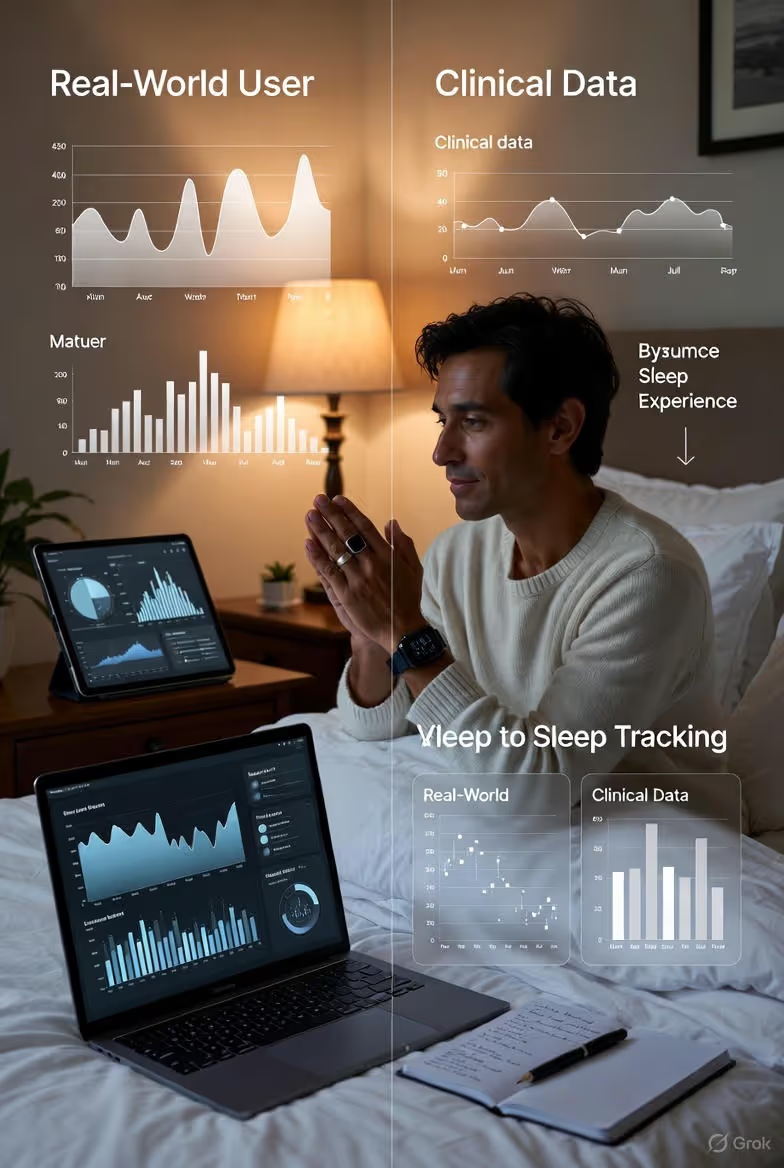
Real-World User Experience vs. Clinical Data
This scientific perspective is echoed in detailed personal experiments. In a rigorous two-month self-tracking project, a user compared four systems (Oura Ring, Whoop band, 8Sleep mattress, and Apple Watch with AutoSleep app). He found a high correlation (0.65) between the top-tier wearables (Oura and Whoop), whose scores closely matched how he felt each morning. In stark contrast, the Apple Watch + app combination showed almost no correlation (0.14) with the other devices, leading him to conclude its scores were “basically almost random” .
The takeaway is clear: Not all trackers are created equal. High-quality wearables that use multiple biosensors currently offer the most consistent and physiologically grounded estimates of sleep stages. Apps can provide valuable macro-level insights, especially regarding sleep duration and snoring, but their micro-level stage analysis should be viewed with more caution. When choosing a tool, understanding this accuracy landscape is crucial, and for personalized support in navigating these choices, our FAQ page can be a helpful resource.
The Psychology of Tracking: How Monitoring Sleep Changes Your Sleep
The impact of a sleep tracker extends far beyond the numbers on a screen. It engages in a complex psychological dance with the user, influencing behavior, perception, and even the sleep it aims to measure. This psychological dimension is critical to understanding the true value—and potential pitfalls—of both apps and wearables.
The Empowerment of Awareness
At their best, sleep trackers function as powerful facilitators of self-awareness and behavior change. A 2024 survey found that 78% of sleep tracker users found them helpful, and a remarkable 68% reported changing their behavior based on the data .
Habit Formation: Seeing a tangible “sleep score” can motivate people to establish a consistent bedtime, reduce evening screen time, or limit caffeine. As one sleep clinic notes, trackers “raise awareness about sleep habits and the importance of a full night of rest,” helping users “prepare and plan for bedtime” .
The Cause-and-Effect Loop: Wearables with rich data (like HRV and body temperature) allow users to run personal experiments. As highlighted in a review, one user learned that choosing a lighter blanket gave her “about 17% more REM sleep,” directly linking an environmental change to a physiological outcome . This turns sleep from a mystery into a manageable system.
The Dark Side: Orthosomnia and Sleep Anxiety
However, this intense focus can backfire. Sleep specialists have identified a new condition dubbed “orthosomnia”—a preoccupation with achieving perfect sleep data, ironically leading to worse sleep and increased anxiety .
Data Dogmatism: Users may become overly fixated on optimizing their “deep sleep” or “HRV” numbers, treating the estimate as an infallible report card. If the device reports a poor night’s sleep, they may wake up feeling doomed and anxious, creating a self-fulfilling prophecy of daytime fatigue.
The Trust/Stress Dichotomy: A 2025 study in Frontiers in Sleep surveyed young adults on their sleep app experiences and identified three key psychological factors: trust/objectification, negative effects (e.g., stress), and positive effects (e.g., prioritizing sleep) . Crucially, it found that individuals with higher insomnia symptoms and the personality trait of emotionality (similar to neuroticism) were more likely to report negative, stressful effects from tracking. Conversely, those who trusted the data without anxiety reaped more benefits.
The Personality of a Tracker User
Who is most likely to use and benefit from these tools? The same Frontiers study offers clues:
The Engaged Optimizer: Sleep app use was positively associated with conscientiousness—the personality trait of being organized, thorough, and self-disciplined . This suggests the primary users are those already inclined toward self-improvement and systematic habits.
The Symptom-Checking User: Use was also higher among those with insomnia symptoms, indicating many turn to trackers to understand and validate their sleep struggles .
The psychological lesson is that the best sleep tracker is one that serves you, not one you serve. It should be a tool for curiosity and insight, not a source of nightly performance anxiety. Whether a simple app or a detailed wearable is better depends largely on your individual temperament. If you are prone to anxiety or obsessive tendencies, a simpler app that provides less granular, potentially stress-inducing data might be the healthier choice. For the data-driven optimizer who finds motivation in details, a comprehensive wearable could be ideal. Hearing about real-world experiences can help gauge this fit, which is why many find value in reading testimonials from other users.
Design, Comfort, and Daily Life: The Wearability Factor
A device can have flawless accuracy in a lab, but if it’s a nuisance to live with, it will end up in a drawer. The long-term success of any sleep tracker hinges on its integration into daily life. This is where the fundamental design philosophies of apps and wearables create starkly different user experiences.
The Effortless Integration of Apps
Sleep tracking apps win hands-down on immediate convenience and zero lifestyle adjustment.
No New Gear: You carry the tracking device (your phone) everywhere already. There’s nothing new to buy, wear, or remember.
Zero Wearability Concerns: There is no discomfort, no charging routine for a secondary device, and no worry about damaging an expensive piece of hardware.
The Hidden Cost: The primary friction is the need to place your phone correctly on the bed and ensure it’s plugged in. For those who use their phone as an alarm or keep it on a nightstand, this is a minor shift. For others, it can be a forgettable step that breaks the tracking habit.
The Commitment of Wearables: Watches vs. Rings
Wearables require a conscious adoption of a new accessory. Their success depends entirely on comfort and utility.
Smartwatches: The Jack-of-All-Trades
Daytime Value: Their strength is multifunctionality. They are fitness coaches, notification centers, and payment devices. This daytime utility can justify the wearing habit.
Nighttime Drawbacks: For sleep, they can be bulky. Some people find it physically uncomfortable to sleep with a watch on their wrist. Furthermore, most require daily or every-other-day charging. If you forget to charge it during the day, you likely won’t have enough battery to track your sleep, creating data gaps.
Smart Rings: The Specialized Sleep Sleuths
The Comfort Advantage: As PCMag’s testing confirms, smart rings like the Oura are “comfortable” and “unobtrusive,” with a week-long battery life that removes daily charging anxiety . Their lightweight, low-profile design makes them easy to forget you’re wearing, day and night.
The Lifestyle Quirks: They are not without compromises. As noted in a personal long-term test, a ring “has to be sized correctly and your finger changes its size,” and it can interfere with activities like weightlifting at the gym or extensive handwashing . They are also more easily damaged in manual tasks than a watch on your wrist.
The Abandonment Problem
A critical challenge for all wearables is user retention. Research indicates that a significant number of users stop wearing their tracker after about six months, as the initial novelty wears off and motivation wanes . The device that wins is the one you don’t think about—the one that seamlessly collects data without demanding attention or compromising comfort.
In this battle of design, apps ask for a minor change in routine, while wearables ask for a change in identity—you become a person who wears a tech ring or sleeps in a watch. The “better” choice depends on which ask you are more willing to accept. For a device that prioritizes this seamless, comfortable integration, exploring a modern smart ring like the OxiZen provides a clear example of how form factor is designed around the user’s life; you can learn more about Oxyzen to see this philosophy in action.
Beyond Sleep Stages: The Expanded Ecosystem of Insights
Modern sleep trackers, especially wearables, are no longer one-trick ponies that simply spit out a sleep duration number. They have evolved into holistic wellness platforms that contextualize your night within the broader story of your day, health, and environment. This expansion of insights is a major differentiator in the value proposition.
The Readiness and Recovery Model
Leading wearables have shifted from asking “How did you sleep?” to asking “What are you ready for today?” This is epitomized by metrics like Oura’s Readiness Score and Whoop’s Recovery Score.
Integration of Data: These scores don’t just look at sleep. They synthesize last night’s sleep data (duration, stages, disturbances) with daytime activity levels, resting heart rate (RHR), and heart rate variability (HRV) to gauge your body’s stress and recovery state .
Actionable Guidance: A low readiness score might suggest prioritizing light activity or meditation, while a high score could indicate you’re primed for an intense workout. This turns passive tracking into active daily planning.
Unique Physiological Metrics
Wearables provide a dashboard of health indicators that apps cannot access:
Heart Rate Variability (HRV): This is a cornerstone metric for advanced wearables. As the CEO of Oura explained, HRV is “super sensitive to stress,” reflecting how lifestyle choices like diet and exercise impact your nervous system’s resilience . Tracking HRV trends can reveal your body’s response to training, illness, or psychological stress.
Nocturnal Blood Oxygen (SpO2): Continuous SpO2 monitoring can flag potential breathing issues during sleep. While not diagnostic, persistent low levels can be a prompt to consult a doctor about possible sleep apnea.
Skin Temperature Trends: Smart rings excel here. Tracking your baseline temperature and deviations can help identify the onset of illness, understand menstrual cycle phases, and see how environmental temperature affects sleep quality .
Respiratory Rate: The number of breaths you take per minute during sleep is a vital sign that can also indicate sleep disturbances or health issues.
The App Ecosystem and Coherence
Both standalone apps and wearable companion apps often try to become health hubs. They may offer:
Sleep Coaching and Content: Guided wind-down routines, educational articles on sleep hygiene, and personalized tips.
Integration with Other Apps: Syncing data with nutrition apps (like MyFitnessPal), meditation apps (like Calm), or fitness platforms to build a more complete health picture.
Social and Community Features: Some, like Whoop, include community challenges or sharing, which can be motivating for certain personalities .
The wearable, with its broader sensor array, inherently enables this richer, more interconnected health narrative. An app that only uses sound and motion is telling a much narrower story, focused almost exclusively on the behavioral events of the night itself. For those seeking to understand the interplay between sleep, daily activity, stress, and overall wellness, the wearable’s expanded ecosystem offers a compelling advantage. To delve deeper into how these insights can be woven into a coherent wellness strategy, our blog offers ongoing analysis and tips.
Privacy, Cost, and Long-Term Value: The Hidden Trade-Offs
Choosing a sleep tracker involves more than comparing specs on accuracy and comfort. Two of the most practical, yet often overlooked, considerations are what happens to your intimate data and what the true financial commitment looks like over time. Here, the paths of apps and wearables diverge significantly.
The Privacy Paradox of Bedroom Data
Sleep data is uniquely sensitive. It can reveal not just your bedtime, but potentially your health status, nightly routines, and even intimate moments. Where does this data go?
Freemium App Models: Be particularly cautious with free or low-cost apps. As noted in research, there are legitimate “concerns related to potential data privacy and potential misuse of data collected through sleep apps” . Their business model often relies on aggregating and monetizing user data for advertising or research. Always read the privacy policy to understand what is collected (audio recordings are especially sensitive) and who it is shared with.
Subscription-Based Wearables: Companies like Oura, Whoop, and Apple generally adopt a more guarded approach, emphasizing that health data is stored securely and used primarily to improve your personal insights. However, they too may use anonymized, aggregated data for research. The key is transparency—reputable companies clearly state their data practices in their privacy policies.
The rule of thumb: If you’re not paying for the product, you are the product. Paying for a device or a subscription often aligns the company’s incentives more closely with protecting your privacy.
The True Cost of Ownership: Upfront vs. Ongoing
The price tag is only the beginning. The total cost of ownership unfolds over years.
Sleep Tracking Apps:
Upfront Cost: Typically $0 - $10 for a premium app download.
Ongoing Cost: Often free, or a small annual subscription fee (e.g., $20-$50/year) for advanced features.
Value Proposition: Extremely low-cost access to basic tracking and insights. The risk is low, making it easy to try and abandon.
Smartwatches:
Upfront Cost: High. Ranges from $200 for basic models to $800+ for premium smartwatches like the Apple Watch Ultra .
Ongoing Cost: Usually $0 for core features after purchase. No required subscription.
Value Proposition: A one-time purchase for a multi-purpose device that does far more than sleep tracking (fitness, notifications, etc.). The sleep tracking is a feature within a broader ecosystem.
Smart Rings (e.g., Oura):
Upfront Cost: High. Rings range from $199 - $450+ .
Ongoing Cost: This is the critical differentiator. Many, like Oura, require a mandatory monthly subscription ($5.99-$6.99/month) to access the very insights and scores that make the ring valuable. Others, like the RingConn or Samsung Galaxy Ring, offer all features with no subscription .
Value Proposition: A specialized device for holistic health and recovery tracking. The subscription model funds continuous software updates and new feature development but creates an ongoing financial commitment.
Assessing Long-Term Value
Ask yourself:
For an App: Is the low cost worth the potential privacy trade-offs and simpler data?
For a Watch: Will I use its many daytime functions enough to justify the high upfront cost and potential sleep-time discomfort?
For a Subscription Ring: Do I believe in the long-term value of the coaching and insights enough to pay a “wellness membership” fee indefinitely?
There is no universally correct answer. A budget-conscious user wary of subscriptions might find a no-subscription ring or a basic smartwatch ideal. Someone deeply invested in biohacking might gladly pay Oura’s subscription for its detailed analytics. And a casual user just curious about sleep patterns may find a reputable app is perfect. Understanding your own priorities in this cost-value-privacy matrix is essential, and reviewing the company’s about us information can provide clarity on its values and business model.
Making Your Choice: A Framework for Selecting Your Ideal Sleep Tracker
We’ve navigated the technological intricacies, the psychological impacts, the design compromises, and the financial considerations. Now, it’s time to synthesize this into a practical framework. The question is not “Which is universally better?” but “Which is better for me, given my goals, lifestyle, and personality?”
To guide this decision, consider the following key dimensions:
1. Define Your Primary Goal
Your intention dictates the tool.
Goal: “I want a basic understanding of my sleep schedule and duration.”
Recommendation: A high-quality sleep app (like Sleep Cycle or Pillow) is likely sufficient. It can accurately track when you get in and out of bed and identify major disturbances, all at minimal cost and hassle.
Goal: “I want to optimize my athletic performance and understand recovery.”
Recommendation: A wearable with strong HRV and recovery metrics is essential. This points to a smart ring (Oura, Whoop) or an advanced sports watch (Garmin, high-end Fitbit). The app-only approach lacks the physiological data needed for this.
Goal: “I am concerned I might snore or have sleep apnea symptoms.”
Recommendation: Start with a microphone-based app that records sound. It can provide compelling initial evidence of snoring or breathing pauses to bring to a doctor. For more advanced screening, certain FDA-authorized smartwatches (Apple, Samsung) can assess sleep apnea risk, but they are not diagnostic .
Goal: “I want a holistic view of my stress, readiness, and overall wellness.”
Recommendation: A multi-sensor wearable, particularly a smart ring known for comfort and continuous wear, is the best fit. It connects sleep with daytime physiology for a 360-degree view.
2. Audit Your Lifestyle and Comfort
Be ruthlessly honest.
Can you sleep with something on your wrist? If not, rule out watches and consider a ring or an app.
Are you forgetful about charging? A smart ring with a 7+ day battery (Oura, RingConn) beats a watch needing daily charging.
Do you work with your hands or lift weights? A ring might need frequent removal, making a watch or app more practical.
Is your phone always in bed with you? If you leave it charging across the room, an app is useless.
3. Know Your Psychological Profile
This is crucial for long-term benefit.
Are you data-driven and motivated by metrics? You’ll likely thrive with a detailed wearable.
Are you prone to anxiety or obsessive tendencies? A simpler app that provides less granular, potentially stress-inducing data (like HRV or sleep stage breakdowns) might be the healthier choice. Avoid orthosomnia.
Based on the collective evidence, here is a simplified guide:
Choose a SLEEP APP if: Your goal is simple awareness, your budget is minimal, you prioritize zero lifestyle change, and you are cautious about data obsession.
Choose a SMARTWATCH if: You want a versatile daytime gadget (for fitness, notifications), sleep tracking is a secondary bonus, and you prefer a one-time purchase over a subscription.
Choose a SMART RING if: Your primary focus is optimizing sleep and recovery, you want the most comfortable, forgettable device for 24/7 wear, and you value deep physiological insights (HRV, temperature) enough to pay a potential subscription.
The future of sleep tracking is not a battle for supremacy between apps and wearables, but a diversification of tools for different human needs. By aligning your choice with your personal priorities across these dimensions, you can select a tool that truly enhances your understanding of sleep, rather than becoming a source of friction or anxiety. The best tracker is the one you use consistently, trust reasonably, and learn from positively. For continued learning and to stay updated on the evolving landscape of sleep technology and wellness, we invite you to explore further resources on our blog.
Part 11: The Role of Artificial Intelligence and Personalization
As sleep tracking technology evolves, the most significant leap forward is no longer just about collecting more data—it’s about understanding what that data means for you personally. This is where Artificial Intelligence (AI) and machine learning are quietly revolutionizing both apps and wearables, transforming them from passive data loggers into proactive wellness advisors.
From Generic Data to Personalized Insights
Early sleep trackers provided everyone with the same metrics: total sleep, deep sleep, REM sleep. The interpretation was left to the user. Modern systems now use AI to establish your personal baselines and detect meaningful deviations.
Adaptive Baselines: Advanced algorithms in devices like the Oura Ring don’t just compare your last night’s sleep to population averages. They learn your personal norms over weeks of observation. For example, your normal resting heart rate might be 55 BPM, while the “healthy” range is 45–75 BPM. An AI-powered system flags deviations from your baseline as significant, not just deviations from a general average. This prevents unnecessary alarm over normal personal variations and highlights true anomalies.
Pattern Recognition: AI excels at finding subtle correlations you’d miss. It might detect that on days you have two cups of coffee after 2 PM, your deep sleep decreases by an average of 12%, or that on days with high work stress, your sleep latency (time to fall asleep) increases by 30 minutes. As one tech reviewer noted, modern systems “turn a raw feed of biometrics into a narrative about your body,” identifying the unique lifestyle factors that help or harm your sleep.
Predictive Analytics and Proactive Guidance
The next frontier is moving from description to prediction and prescription.
Predicting Sleep Readiness: Some platforms now forecast your next day’s readiness or recovery score based on your current day’s activities, stress levels, and cumulative sleep debt. This allows for pre-emptive adjustments—like suggesting a lighter workout if the system predicts poor recovery tomorrow.
Contextualized Notifications: Instead of generic tips like “avoid caffeine,” AI-driven apps can provide specific, contextual advice. If your heart rate is elevated and your sleep app’s microphone detects late-night typing sounds, it might suggest: “You were working late last night, and your body showed signs of stress. Consider a 10-minute wind-down routine tonight to help transition to sleep.”
Integrative Health Models: The most sophisticated systems, often found in higher-end wearables, don’t treat sleep in isolation. They build integrative models that connect sleep quality with daytime activity, nutrition (if you log meals), menstrual cycle phases, and environmental data (like local pollen count or weather). The AI looks for complex interactions, providing insights like: “Your HRV tends to dip and sleep becomes more fragmented during the luteal phase of your cycle. You may benefit from slightly longer sleep durations during this week.”
The Human-in-the-Loop: AI as a Coach, Not a Replacement
A critical understanding is that the best AI systems are designed to augment human intuition, not replace it.
The Feedback Loop: You confirm or deny the AI’s insights. If it suggests that afternoon walks improve your sleep, and you try it and feel better, you provide positive feedback that reinforces the algorithm’s learning. This creates a collaborative partnership between you and your tracker.
Avoiding Algorithmic Over-reliance: The risk, as with any AI system, is treating its outputs as infallible oracles. The most ethical and effective platforms frame suggestions as possibilities—“Your data suggests this might help”—rather than commands. They encourage users to remain the final judge of what feels right for their body.
The integration of AI marks the point where sleep tracking transitions from a fascinating hobby for data enthusiasts to a potentially powerful tool for genuine lifestyle medicine. However, this power raises important questions about data security, algorithmic bias, and the ethical responsibility of companies providing health guidance—topics we must consider as we rely more on these digital advisors.
Part 12: Integration with Smart Home and IoT Ecosystems
Your sleep doesn’t exist in a vacuum. It’s profoundly affected by your bedroom environment: the temperature, light, and noise. The most forward-thinking sleep tracking solutions now recognize this and are evolving from standalone devices into command centers for your sleep environment, integrating seamlessly with the Internet of Things (IoT) and smart home ecosystems.
Creating the Perfect Sleep Environment Automatically
This represents the ultimate in passive optimization: your tracker noticing you’re entering a light sleep phase and automatically making adjustments to help you stay asleep.
Temperature Regulation: This is one of the most powerful integrations. Through partnerships or standard protocols like IFTTT or Apple HomeKit, a wearable that tracks your skin temperature can communicate with a smart thermostat (like Nest or Ecobee) or a smart bed (like Eight Sleep or Sleep Number). If the system detects your temperature rising during the night—a common cause of awakenings—it can gently lower the room temperature or cool your side of the bed to help you maintain stable sleep.
Light Management: As your wake-up time approaches and you enter lighter stages of sleep, your tracker can signal your smart blinds (like those from Lutron or IKEA) to begin letting in natural sunlight gradually, supporting a more natural circadian awakening. Conversely, when it detects you’re going to bed, it can trigger your smart lights to dim to a warm, sleep-supporting hue.
Sound Control: Integration with smart speakers (like Amazon Echo or Google Nest) or white noise machines (like Hatch Restore) allows for dynamic soundscapes. The system can play calming sounds as you fall asleep, reduce volume or switch to masking noise if a sudden external sound (like a siren) is detected by your phone’s microphone, and gently ramp up with a sunrise alarm at your optimal wake time within a chosen window.
The Data Feedback Loop: Understanding Environmental Impact
Beyond control, integration provides profound learning. When your sleep data is correlated with environmental data, you gain insights previously impossible.
Correlation Discovery: Your system might generate a report showing: “On nights when your bedroom temperature was above 70°F, you experienced 25% more wake-ups after sleep onset.” This turns a vague feeling (“I sleep better when it’s cool”) into a data-driven fact.
Holistic Sleep Scoring: Some platforms are beginning to incorporate environmental factors into their overall sleep score. A night with perfect physiology but in a room that was too hot and noisy might receive a lower “environmental readiness” score, prompting you to address those factors.
The Challenges of a Connected Ecosystem
While promising, this interconnected future isn’t without hurdles.
Fragmentation and Compatibility: The smart home world is notoriously fragmented. Getting a wearable from Brand A to talk reliably to a thermostat from Brand B and lights from Brand C often requires technical savvy and patience. Ecosystems like Apple HomeKit, Google Home, and Amazon Alexa are trying to solve this, but universal compatibility remains a dream.
The Privacy Multiplier: Integrating your intimate sleep data with your home automation system creates a vastly more detailed picture of your life. It’s crucial to understand how this aggregated data is stored, used, and protected by all the companies involved.
Cost and Complexity: Optimizing your sleep environment can become a costly project of smart gadgets. The value must be weighed against the benefit.
For the tech-savvy sleeper, this integration is the holy grail—a closed-loop system that not only monitors sleep but actively nurtures it. For others, it may feel like over-complication. Yet, as these technologies mature and become more plug-and-play, the ability to have your bedroom automatically adapt to your sleep needs will likely move from a luxury to a standard expectation of high-end sleep tracking. To see how one brand envisions this connected wellness future, you can explore the vision behind Oxyzen’s approach.
Part 13: Special Considerations for Different Populations
Sleep needs and patterns are not universal. A tool or metric that’s invaluable for a 25-year-old athlete might be irrelevant or even misleading for a 65-year-old retiree or a pregnant woman. The most effective use of sleep tracking requires understanding how its application and interpretation should shift for different demographics and life stages.
For Athletes and Highly Active Individuals
This group often pushes their bodies to the limit, making recovery—of which sleep is the cornerstone—a critical component of performance.
Key Metrics: For athletes, Heart Rate Variability (HRV) and Resting Heart Rate (RHR) are often more important than traditional sleep stage breakdowns. A downward trend in HRV or an elevated RHR is a strong, objective sign of inadequate recovery, overtraining, or impending illness, often appearing before the athlete subjectively feels “off.”
Tracking Focus: Wearables like Whoop and Oura, which emphasize recovery scores based on physiological strain, are particularly popular in this demographic. The goal is to use sleep data to guide training intensity: a high recovery score means go hard; a low score means prioritize rest or light active recovery.
The Risk: Athletes can become overly dependent on the numbers, ignoring subjective feelings. The best practice is to use the data as one input among many, including energy levels, motivation, and muscle soreness.
For Older Adults
Sleep architecture naturally changes with age. Deep (slow-wave) sleep decreases, nighttime awakenings become more frequent, and the circadian rhythm often shifts earlier.
Key Metrics: For older adults, sleep continuity (minimizing awakenings) and consistent timing often become more meaningful goals than chasing elusive deep sleep. Tracking can help identify patterns in nighttime disruptions (e.g., linked to bathroom visits, pain) and reinforce the importance of daylight exposure to regulate the circadian clock.
Specialized Functions: Some devices offer features particularly useful for this group. Fall detection (on smartwatches) provides safety. Tracking blood oxygen (SpO2) overnight can be a useful screening tool for sleep apnea, which is more prevalent and often under-diagnosed in older populations.
Interpretation Adjustments: It’s vital to adjust expectations. A sleep score of 80 might represent excellent sleep for an 80-year-old, whereas a 20-year-old might be disappointed. Apps and wearables that use age-adjusted baselines provide more relevant feedback.
For Women and Hormonal Health
Female physiology, governed by hormonal cycles, has a dramatic and often overlooked impact on sleep.
Cycle Syncing: Advanced wearables like the Oura Ring and Apple Watch (with third-party apps) now offer menstrual cycle tracking and integrate it with sleep data. They can show how sleep duration, quality, and body temperature fluctuate predictably across follicular, ovulatory, and luteal phases.
Personalized Insights: A woman might learn that her HRV consistently dips and her sleep becomes more light and fragmented in the week before her period. This reframes what might have felt like “bad sleep” into a normal, predictable pattern, reducing anxiety and allowing for proactive adjustment (e.g., scheduling harder workouts earlier in the cycle, prioritizing more sleep during the luteal phase).
Pregnancy and Postpartum: Sleep tracking during pregnancy can monitor significant changes in resting heart rate and breathing patterns. Postpartum, it can help new parents grab sleep when they can, though the extreme fragmentation of newborn care often renders standard “sleep scores” discouragingly low—a time when self-compassion is more important than data optimization.
For Individuals with Chronic Conditions or Sleep Disorders
For those managing conditions like insomnia, sleep apnea, or chronic pain, tracking can be a double-edged sword.
Therapeutic Tool vs. Anxiety Source: Used under the guidance of a cognitive behavioral therapist for insomnia (CBT-I), sleep trackers can help challenge misconceptions (e.g., “I never sleep”) with data. However, for those prone to orthosomnia, the constant monitoring can exacerbate anxiety and perpetuate the sleep problem.
Screening vs. Diagnosis: Trackers with SpO2 and microphone capabilities can provide compelling data to take to a doctor, such as recordings of loud snoring and gasping or graphs showing frequent oxygen desaturations. This can accelerate the path to a professional sleep study and diagnosis. They are screening tools, not diagnostic devices.
Understanding these nuances is key to getting value, not frustration, from sleep technology. A one-size-fits-all approach to interpreting sleep data often leads to misinterpretation. The future lies in platforms that not only collect data but also contextualize it within the user’s specific life stage, biology, and health status, offering tailored guidance that truly resonates.
Part 14: The Verdict on Apps vs. Wearables for Specific Goals
After a comprehensive exploration of technology, psychology, design, and personalization, we can now move toward synthesis. The following verdicts are not absolute, but evidence-based recommendations tailored to specific, common user goals.
Goal 1: Maximizing Budget and Minimizing Hassle
Verdict: A Premium Sleep App is Your Best Bet. If your primary constraints are financial and you want zero new hardware, a well-reviewed app like Sleep Cycle or Pillow is a legitimate starting point.
Why it wins on budget: For a one-time fee or low subscription (often <$30/year), you get actionable insights into your sleep schedule, consistency, and snoring.
The trade-off: You must accept that sleep stage data (deep, REM) is an educated estimate at best. The insights will be behavioral (“you went to bed late”) rather than deeply physiological (“your nervous system recovery was low last night”).
Best user profile: The casual, curious sleeper who doesn’t want another gadget and is content with macro-level trends.
Goal 2: Optimizing Athletic Performance and Recovery
Verdict: A Wearable with Advanced Physiology (Ring or Strap) is Non-Negotiable. For serious athletes and fitness enthusiasts, the physiological metrics from a wearable are indispensable.
Why wearables win: HRV and RHR trends are the gold standards for measuring training load and recovery readiness. No app can provide these. Devices like the Oura Ring, Whoop Strap, or high-end Garmin watches are built for this purpose.
Key differentiator: Look for a device that provides a single, actionable recovery score that synthesizes sleep data, daily strain, and HRV. This simplifies complex data into a clear guide for your training day.
Best user profile: The dedicated athlete, CrossFitter, marathon trainer, or anyone whose daily performance is tied directly to physiological recovery.
Goal 3: Investigating Potential Sleep Apnea or Snoring
Verdict: Start with a Microphone-Based App, Then Consider a Clinical-Grade Wearable. This is a two-stage process, beginning with screening and potentially moving to more advanced monitoring.
Stage 1 – Screening: Use a reliable sleep app with sound recording (like SnoreLab) for 1-2 weeks. It can provide undeniable evidence of loud, chronic snoring and record gasps or pauses—powerful data to present to your doctor.
Stage 2 – Advanced Screening: If you have high risk factors (overweight, high blood pressure, neck circumference >17 inches for men), consider a wearable with FDA-authorized sleep apnea features. Certain models of the Apple Watch and Samsung Galaxy Watch can estimate your risk of apnea by analyzing breathing disturbances and blood oxygen levels during sleep. Crucially, these are not diagnoses but risk assessments designed to prompt a clinical sleep study.
Best user profile: Anyone who has been told they snore loudly or gasp at night, or who suffers from unexplained daytime fatigue and high blood pressure.
Goal 4: Holistic Wellness and Stress Management
Verdict: A Comfortable, Always-On Wearable (Especially a Smart Ring) Excels. For those viewing sleep as one pillar of a broader wellness picture, a device that gathers 24/7 data is essential.
Why comprehensive wearables win: Stress and recovery are full-day cycles. Understanding your sleep requires understanding your day. A device that tracks your all-day HRV, activity, and body temperature can show how work stress, a difficult conversation, or a poor meal impacts your sleep hours later.
The smart ring advantage: For 24/7 comfort, the ring form factor is superior. Its continuous wear provides more consistent temperature and HRV baselines than a watch you might take off. Brands like Oura build their entire platform around this holistic “readiness” model.
Best user profile: The biohacker, the wellness enthusiast, the chronically stressed professional, or anyone wanting to understand the interconnectedness of their lifestyle, stress, and sleep.
Goal 5: Managing a Specific Sleep Disorder (Like Insomnia) with Therapy
Verdict: Use a Simple Tracker ONLY as Directed by Your Therapist, or Avoid It. This is the most delicate use case, where trackers can be counterproductive if used incorrectly.
The CBT-I Protocol: In Cognitive Behavioral Therapy for Insomnia, a therapist may use simple sleep diary data (bedtime, wake time, estimated sleep onset) to calculate sleep efficiency and set gradual sleep restriction schedules. A basic app that only logs times can be useful here.
The Major Risk: Using a device that provides detailed sleep stage scores can fuel the performance anxiety and clock-watching that perpetuate insomnia. For many with insomnia, the prescription is often to remove all trackers and clocks from the bedroom to break the cycle of obsessional monitoring.
Best user profile: Someone actively engaged in CBT-I under professional guidance, who can use data dispassionately as a therapeutic tool, not a report card.
By aligning your tool choice with your primary objective, you maximize your chances of gaining useful insight while minimizing frustration, expense, and anxiety. Remember, the most expensive, advanced device is not “better” if it doesn’t serve your specific goal. For a deeper exploration of how different devices serve these varied needs, our blog features ongoing comparisons and user experiences.
Part 15: The Future of Sleep Technology: Beyond the Wrist and the Nightstand
The sleep tech landscape is not static. Driven by advances in sensor technology, materials science, and AI, the next generation of tools promises to be less obtrusive, more accurate, and more integrated into the fabric of our lives. Here’s a glimpse at what’s on the horizon.
Invisible Sensing: The Dream of Zero-Contact Tracking
The ideal sleep tracker would be one you never have to wear, charge, or even think about. This is the promise of advanced “nearable” technology.
Radar and RF Sensing: Devices like the Amazon Halo Rise and upcoming innovations use low-power radio waves or radar to map the micro-movements of your breathing and heartbeat from your nightstand. They claim to achieve wearable-level accuracy for sleep staging without any body contact. The challenge is accuracy in shared beds and accounting for pets.
Smart Bed Integration: Beds from Sleep Number, Eight Sleep, and Withings have sensors embedded directly into the mattress. These can measure heart rate, breathing, and movement across the entire sleep surface, distinguishing between partners. When combined with active features like dynamic temperature control and adjustable firmness, the bed itself becomes the ultimate all-in-one sleep tracker and optimizer.
Biomarker Expansion: From Sleep Staging to Health Forecasting
Future devices will look beyond traditional sleep metrics to biomarkers that signal broader health issues.
Core Body Temperature: While current wearables measure skin temperature, researchers are developing earpieces and patches that can estimate core body temperature continuously. This circadian rhythm biomarker is a more direct driver of sleep-wake cycles and a potential early indicator of infection or metabolic changes.
Blood Glucose and Metabolic Sleep Links: Non-invasive glucose monitors are the holy grail of biotech. While not yet consumer-ready, their integration with sleep data would revolutionize our understanding of how sleep quality affects metabolic health and vice-versa.
CNS Arousal and Sleep Depth: Researchers are exploring ways to measure central nervous system arousal levels during sleep using advanced HRV analysis or even dry-EEG headbands. This could provide a more direct measure of true “restorative” sleep than movement-based stage estimates.
The Standardization and Regulation Imperative
As these devices make more health-related claims, pressure will grow for greater oversight and standardization.
The FDA’s Evolving Role: We’ve already seen the FDA grant clearances for the sleep apnea features on the Apple Watch and Samsung Galaxy Watch. This trend will continue, creating a new class of “software as a medical device” (SaMD) within consumer wearables. This will lend more credibility to certain functions but also may create a two-tier market: regulated (and potentially more expensive) features vs. unregulated wellness data.
Open Algorithms and Benchmarking: There is a growing call from the scientific community for companies to be more transparent about their validation studies and algorithms. In the future, we might see independent, standardized benchmarking of sleep trackers—similar to how DxOMark rates cameras—allowing consumers to compare accuracy based on a common standard.
The Long-Term Vision: The Autonomous Sleep Health Platform
The endgame is a fully autonomous, closed-loop system:
Monitors your sleep physiology and environment passively.
Analyzes the data using a personalized AI model that knows your health history, genetics, and preferences.
Acts by adjusting your bedroom environment (light, temperature, sound).
Advises you the next day with personalized recommendations for diet, activity, and schedule to correct sleep deficits or optimize recovery.
Connects seamlessly with your electronic health record, providing your physician with actionable long-term trend data.
In this future, the debate between “apps vs. wearables” may become obsolete. The tracking will be ambient and multi-modal, and the value will reside entirely in the intelligence of the platform and the usefulness of its guidance. The goal will shift from simply measuring sleep to curating it as the foundational element of lifelong health. To stay updated on these emerging trends and what they mean for your wellness journey, consider following our latest analyses and stories on the Oxyzen blog.
Conclusion: Finding Your Personal Path to Better Sleep
Our journey through the intricate world of sleep tracking reveals a fundamental truth: there is no single “best” tool, only the best tool for you at this moment in your life. The competition between apps and wearables is not a war with one victor, but a healthy ecosystem offering different paths to the same destination: a deeper, more conscious relationship with your sleep.
The Core Reconciliation
Sleep Tracking Apps are tools of accessibility and awareness. They democratize sleep data, inviting millions to pay attention to their rest for the first time. Their strength is in raising the question, not necessarily in providing the deepest answer. They teach us about routines, consistency, and the gross architecture of our nights.
Wearable Sleep Trackers are tools of depth and personalization. They answer the questions that apps raise, diving into the physiological underpinnings of sleep. Their strength is connecting the night to the day, sleep to recovery, and behavior to biology. They are for those ready to move from awareness to optimization.
Your Decision Checklist
As you choose, ask yourself:
What is my true goal? (Awareness? Performance? Health screening?)
What is my tolerance for lifestyle change? (Can I wear and charge a device every day?)
How do I react to data? (Does it motivate or anxiety me?)
What is my total cost of ownership budget? (Including subscriptions over 2+ years)
How important is privacy and data security to me?
The Unchanging Foundation
Regardless of your choice, remember that technology is an assistant, not a savant. The most sophisticated algorithm cannot force sleep. It can only illuminate the path. The timeless foundations remain:
A consistent sleep schedule.
A dark, cool, and quiet bedroom.
Managing stress and light exposure.
Avoiding caffeine and alcohol too close to bedtime.
A tracker’s greatest gift may be proving to you, through your own data, that these boring, ancient rules actually work.
A Final Word of Caution and Hope
Be wary of letting any device, whether a $5 app or a $500 ring, become the final authority on how you feel. You are the conscious experiencer of your own life. If you feel refreshed and energetic, but your ring gives you a low score, trust your body. The data is a suggestion, not a sentence.
The hope embedded in this technology is profound. It represents a mass cultural shift toward honoring sleep as a pillar of health. By choosing a tool that fits your life and using its insights with wisdom and self-compassion, you join a quiet revolution—one that uses bytes and sensors not to make us more machine-like, but to help us reclaim something deeply, wonderfully human: the power of restorative rest.
For those ready to explore a device built on the principles of holistic, comfortable, and insightful tracking, we invite you to learn more about the Oxyzen smart ring and discover how it fits into this modern pursuit of better sleep. And for any remaining questions on how to choose or use a sleep tracker, our comprehensive support resources are available at the Oxyzen FAQ. Sleep well.
The Business Model Behind Free Sleep Technology
Most free sleep apps operate on one of three revenue models that directly involve user data:
Advertising-Driven Models: These apps collect basic sleep patterns, device information, and usage habits to serve targeted ads. A 2024 study found that 78% of free health apps share data with third-party advertisers, with sleep apps being among the most prolific data collectors due to their access to sensitive nighttime routines.
Data Licensing and Research: Some app developers anonymize and aggregate user data to sell to academic institutions, pharmaceutical companies, or market research firms. While anonymized, researchers have demonstrated that "de-identified" health data can often be re-identified when combined with other available information.
Freemium Upsells: The free version provides basic functionality while collecting comprehensive data, then uses insights from that data to push premium features. For example, an app might detect frequent snoring patterns and repeatedly prompt you to purchase the "advanced snore analysis" package.
What Exactly Are They Collecting?
Beyond the sleep metrics themselves, many apps collect additional information that creates a comprehensive profile:
Audio Recordings: Apps using microphone-based tracking often record and analyze sounds throughout the night. While companies claim these are processed locally, privacy policies frequently retain the right to store and analyze these recordings for "service improvement."
Cross-App Tracking: Many apps use tracking pixels and software development kits (SDKs) that share information with parent companies and partners. A 2023 investigation found that a popular free sleep app was sharing sleep duration and wake-up times with 14 different third-party data brokers.
Environmental Data: Your app may be collecting information about your location (if permissions allow), network information, and other devices on your network, creating a detailed picture of your living environment.
The Legal and Ethical Landscape
The regulatory environment for health data remains fragmented:
HIPAA Limitations: In the United States, the Health Insurance Portability and Accountability Act (HIPAA) primarily covers healthcare providers, insurers, and their business associates—not most consumer health apps. As noted in a Johns Hopkins privacy analysis, "Once you enter your health data into a non-covered app, it essentially becomes commercial data subject to far fewer protections."
GDPR and Its Global Impact: The European Union's General Data Protection Regulation (GDPR) offers stronger protections, requiring explicit consent for data processing and granting rights to access and delete data. However, enforcement remains challenging across borders, and many apps use complex consent frameworks that effectively force agreement to continue using the service.
Emerging Legislation: States like California (with the California Consumer Privacy Act) and countries like Canada and Australia are developing stronger digital privacy laws, but implementation and enforcement lag behind technological development.
Practical Privacy Protection Strategies
For users who want to use sleep apps while minimizing privacy risks:
Read Beyond the Highlights: Don't just skim the promotional material. Read the full privacy policy, focusing on sections about data sharing, retention periods, and user rights.
Limit Permissions Strategically: Only grant permissions essential to core functionality. Does a sleep tracker really need access to your contacts or location? Use your device's permission settings to restrict access.
Use Secondary Email and Identifiers: Consider using a dedicated email address for app registrations and avoid linking apps to your primary social media accounts.
Regular Data Audits: Many apps now offer data download options. Periodically review what information they've collected about you.
Consider Paid Alternatives: Subscription-based apps and devices often have business models less dependent on data monetization, though this isn't universally true—always verify their privacy practices.



%402x.svg)